Last updated on September 4th, 2025
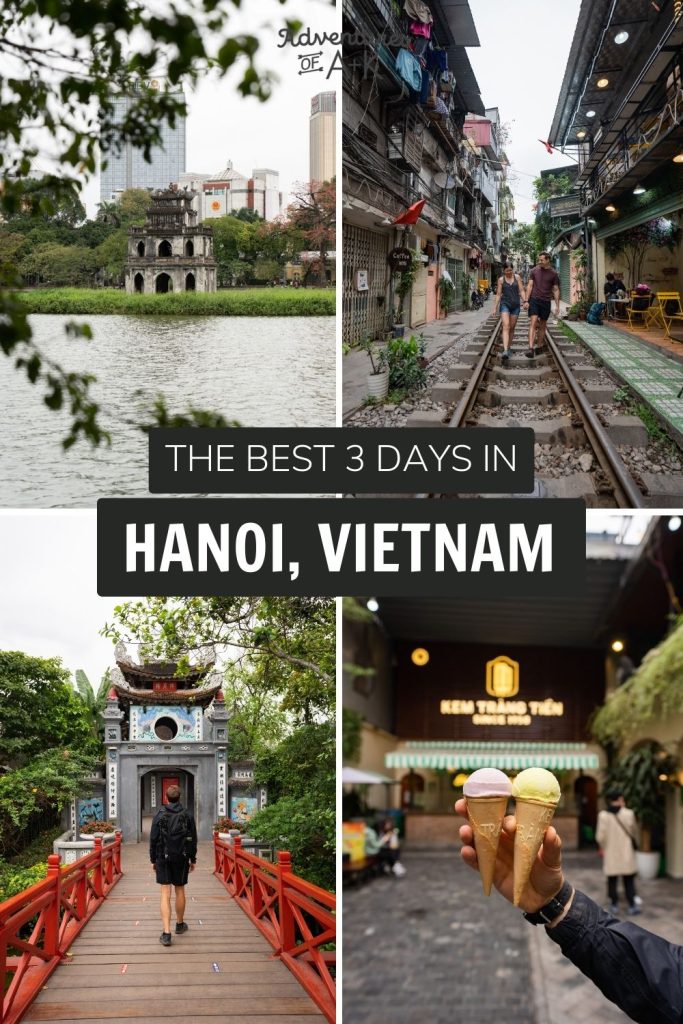
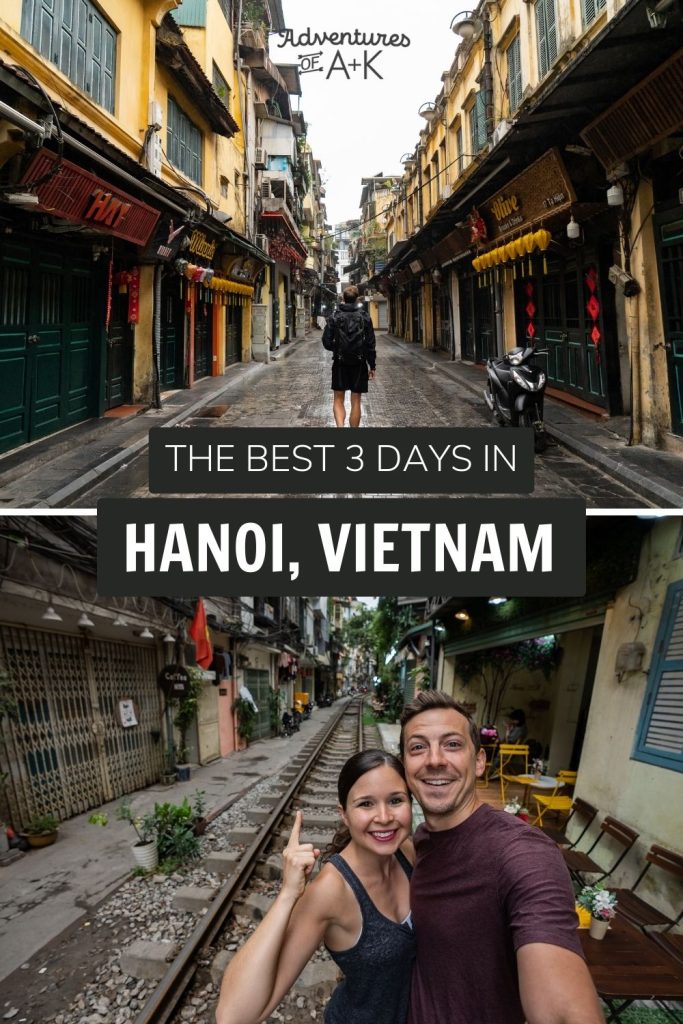
Experience culture, delicious street foods, historic architecture, and so much more with our 3 days in Hanoi Itinerary! Plus, helpful tips to make your time in Hanoi a breeze.
Welcome to Vietnam’s bustling capital of Hanoi! Located in Northern Vietnam, this city has history dating back over 1,000 years, making it one of the world’s most ancient capitals.
Here you can find a charming and chaotic Old Quarter, delicious street food, endless historic sites, cultural activities, and beautiful nature nearby, like Ninh Binh or Ha Long Bay. Oh, and LOTS of motorbikes. In fact, this is where we rode on our first one! And where one of us walked into one…oops.

Watch our experiences in Hanoi, including exploring the Old Quarter, visiting Train Street, and going on an epic food tour!
Being such a large city (the second largest in Vietnam) and one of the best cities to visit in Vietnam, there are tons of things to do in Hanoi. From street food tours to water puppet theater to visiting an old prison. And in this 3 days in Hanoi itinerary we’re sharing all of our favorite spots from our time in the city. Plus, helpful logistics and tips to help you plan your own Hanoi adventure!

3 days In Hanoi Itinerary
Here is a glance at our 3 days in Hanoi itinerary, which we will detail below. Later on in this guide we’ll cover where to stay, when to visit, and how to get to Hanoi, plus some general Vietnam tips!
Day 1
- Go on an epic street food tour
- Explore the Old Quarter and French Quarter
- Eat our favorite spring rolls for dinner
- Watch the Water Puppet Theater
- End the night with ice cream
Day 2
- Have coffee while surrounded by books
- Enjoy a huge breakfast spread
- Visit Temple of Literature and the Hoa Lo Prison Relic
- Have lunch at one of our favorite Bun Cha or Bun Bo Nam Bo spots
- Watch a train whip right by you at Train Street
- Have dinner at one of our favorite spots
- Experience Hanoi’s nightlife
Day 3
- Enjoy coffee and breakfast at a hidden gem
- Pick up a banh mi for lunch later
- Visit more of Hanoi’s historic sites, like the Imperial Citadel of Thang Long and Ho Chi Minh Mausoleum
- Visit the Tran Quoc Pagoda
- Walk around West Lake
- Dinner in the West Lake area
Need help planning your Vietnam trip? Check out our 2 week and 3 week Vietnam itineraries, plus our Ultimate Guide to Visiting Vietnam eBook, which is loaded with tips and things to know before you go!
Day 1
The first day of this Hanoi itinerary will give you a great introduction into the city’s street food scene, plus the iconic Old Quarter!

Go on a street food tour
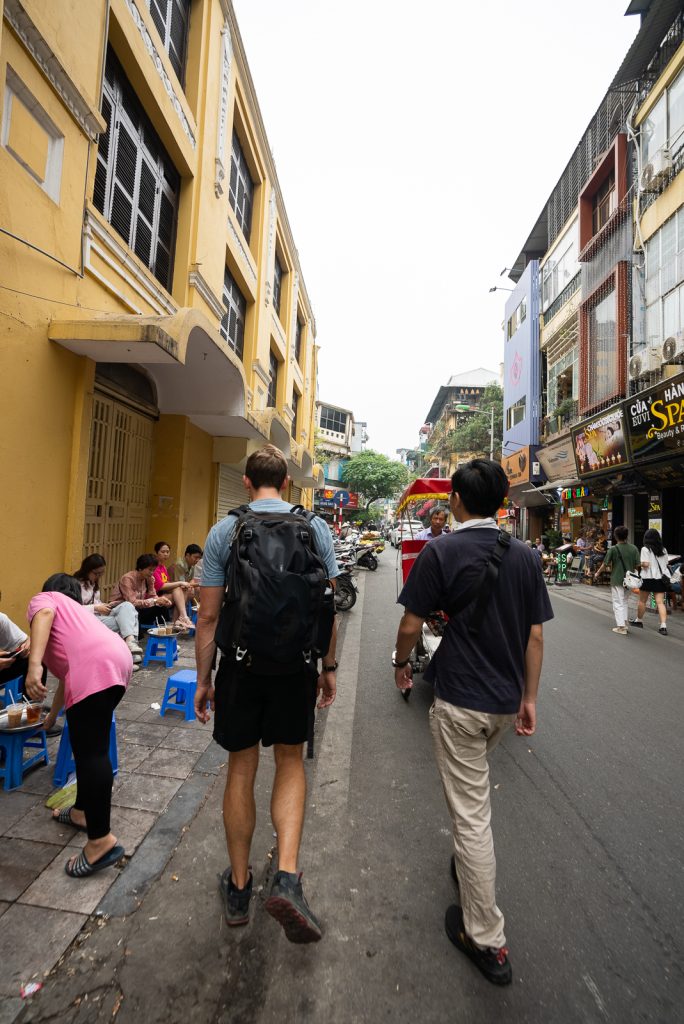
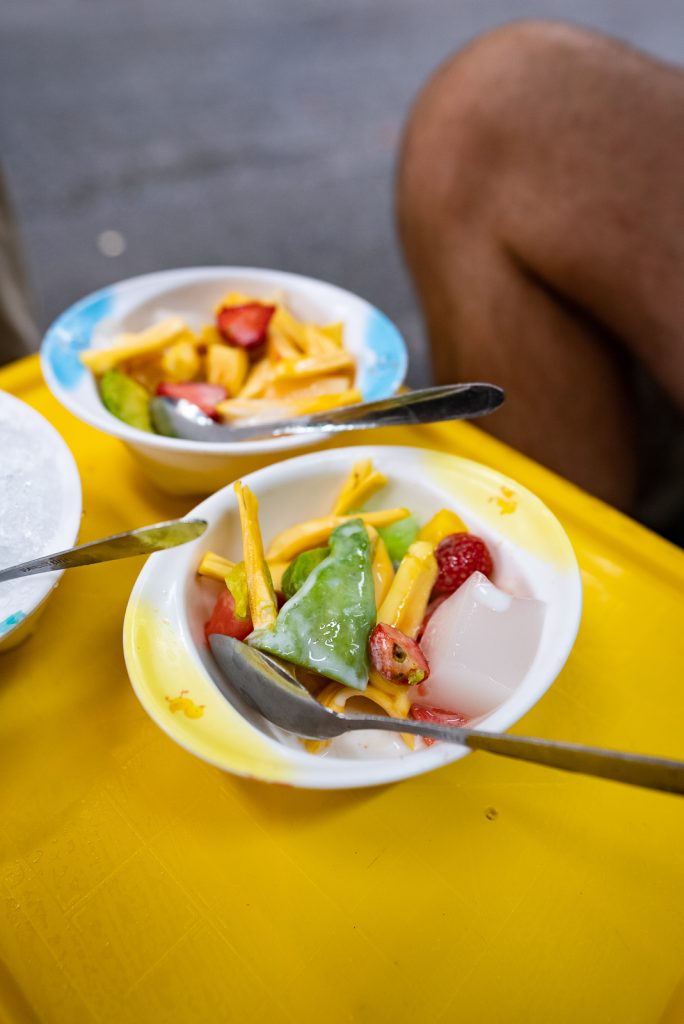
Hanoi is known for being one of the best food cities in Vietnam. So there is no better way to kick off your time in Hanoi than a street food tour!
Not only will you get to try some of the best Vietnamese dishes in Hanoi, but you’ll also get to experience the city with a local. They’ll explain the food’s history, share insight into the different areas you’re walking through, and teach you things about Vietnamese culture that you may not learn on your own.
During our time in Hanoi, we went on a food tour with Hanoi Soul on Airbnb Experiences. Our guide Minh was great and you can see everywhere we went in our Hanoi food tour video. But there are lots of other great tours as well. Here are a couple more options:
Private Hanoi Street Food Walking Tour With Real Foodie
Small Group Hanoi Street Food Tour with a Real Foodie
Tip: We suggest doing a tour in the morning, since you’ll want to be hungry! Also, all tours will stop for Hanoi’s famous egg coffee (which is SO GOOD!), but you may want to get another coffee first, just in case it’s not the first stop.
Want to save some money on this tour or experience? Join Tripadvisor Rewards to earn 5% Trip Cash on any hotel or experience booking made in their app, which can be applied to future in-app bookings!
Explore the Old Quarter and French Quarter

Let your stomach settle the rest of the day by walking through the Old Quarter and French Quarter. These two areas are right next to each other and are probably the most popular areas to explore. And for good reason!
Hanoi’s Old Quarter dates back to the 11th century, when after independence from China, the Emperor moved the capital from Hoa Lu in Ninh Binh to Hanoi. The Old Quarter is a collection of 36 streets, with each dedicated to a particular trade and many are still named after what they specialized in. For example, you’ll find bamboo street, silk street, silver street, etc.
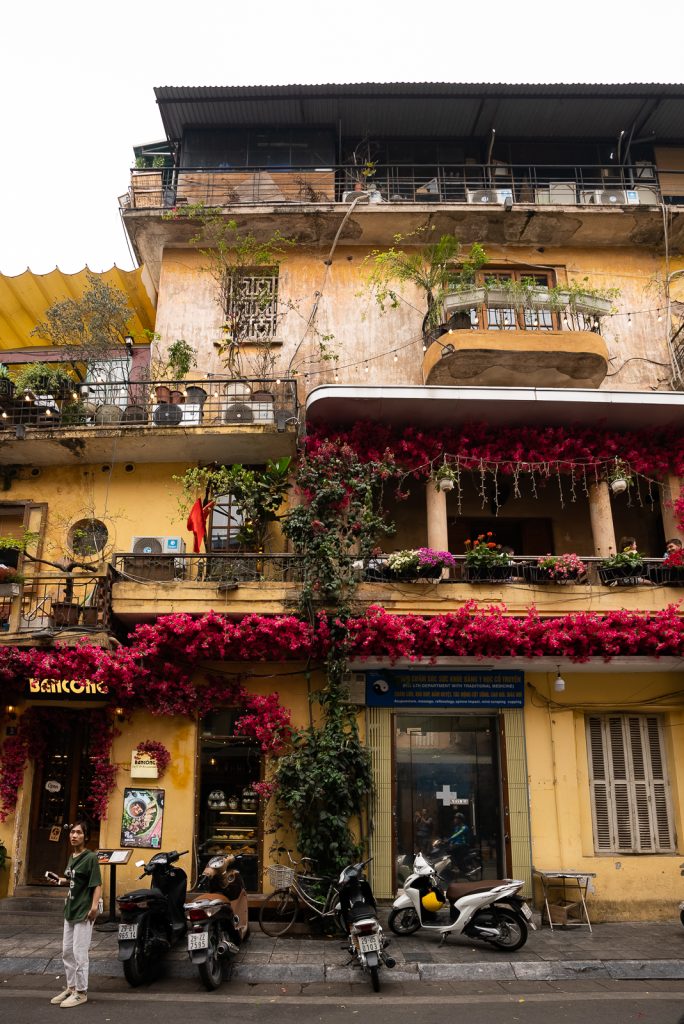
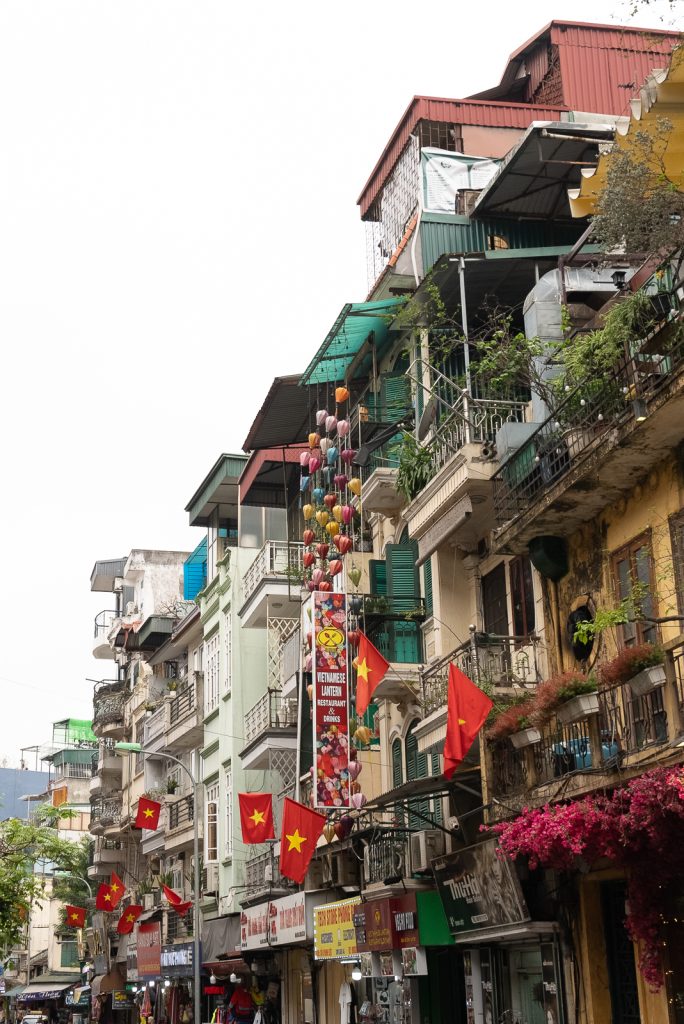
As you walk around the Old Quarter and French Quarter you’ll see a mix of Vietnamese and French architecture. Similar to in Ho Chi Minh City, when the French colonized Vietnam in the 1800s, they influenced a lot of things around town, especially the architecture.
Beyond the French inspired buildings, one other thing you’ll notice in the Old Quarter is that the houses are narrow, with an average width of 3-4 meters (9.8-13.1 feet). We read that this is because of a French imposed property tax that was once calculated based on the building’s width. So they began building narrow houses! And while the tax no longer exists, the tradition still remains due to the limited space.
You will probably have seen several of these Old Quarter sites on your food tour, but we suggest visiting them in more depth. Here are a handful of stops we recommend to check out!

St. Joseph Cathedral
The St. Joseph Cathedral opened in 1886 and is the oldest church in Hanoi. The church is built in Gothic Revival style and has two square towers. It often draws comparisons to Notre Dame, which the architects sought to emulate.
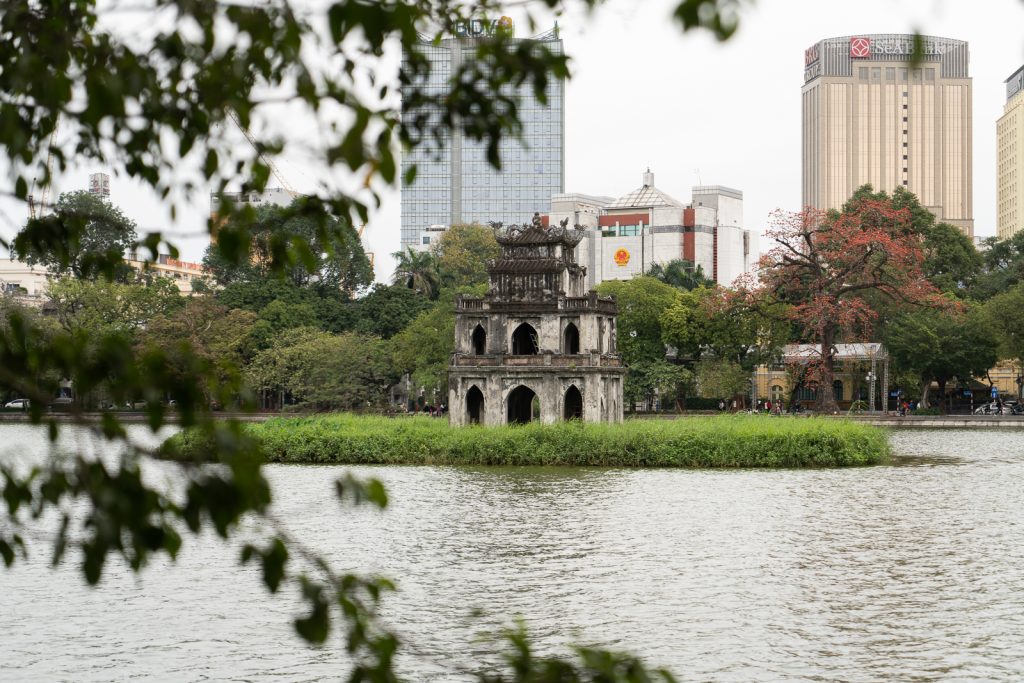
Hoan Kiem Lake
Hanoi is known as the “city of lakes” and Hoan Kiem Lake is one of the most popular!
Many of the lakes have a legend attached to them and Hoan Kiem Lake is no exception. This lake is also known as “Lake of the Returned Sword” because legend has it that a warrior named Lê Lợi was boating on the lake after returning from 10 years of battle, using a magic sword. When suddenly, a golden turtle appeared and told him that his work is complete and to return his sword back to the sea.
The turtle took the sword and dove under the water and returned the sword to the King of the Sea. From this legend, the turtle has become a symbol of Vietnamese independence and longevity.
But not only is the turtle part of this legend, there have actually been giant turtles that lived in the lake, with the largest being 550 lbs! The most recent turtle passed away in 2016 and is now embalmed and located in the Ngoc Son Temple temple to view.
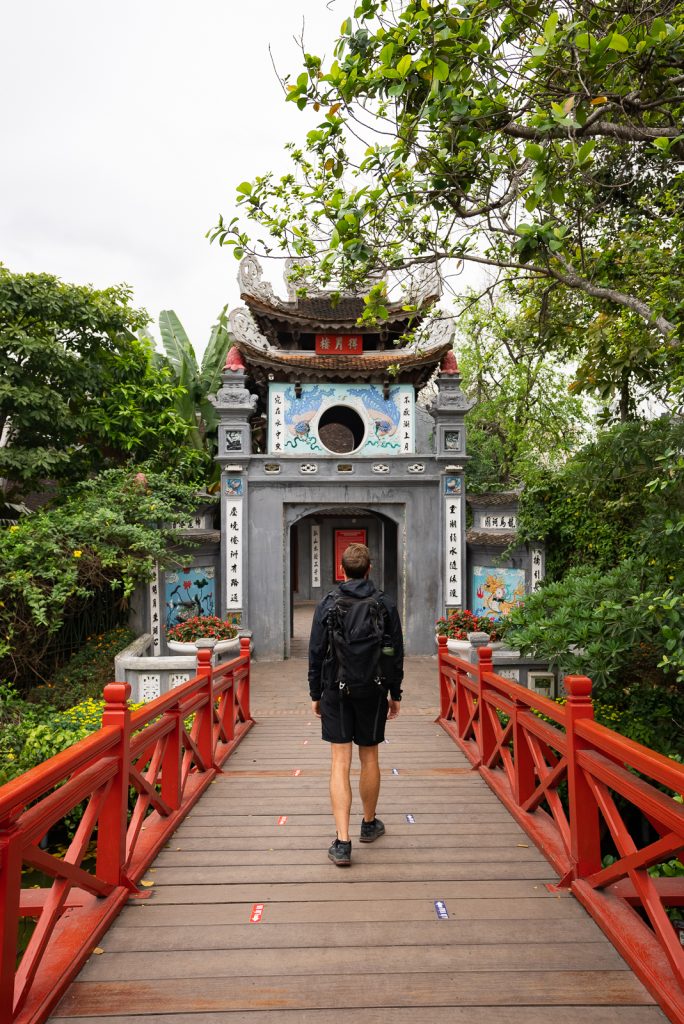
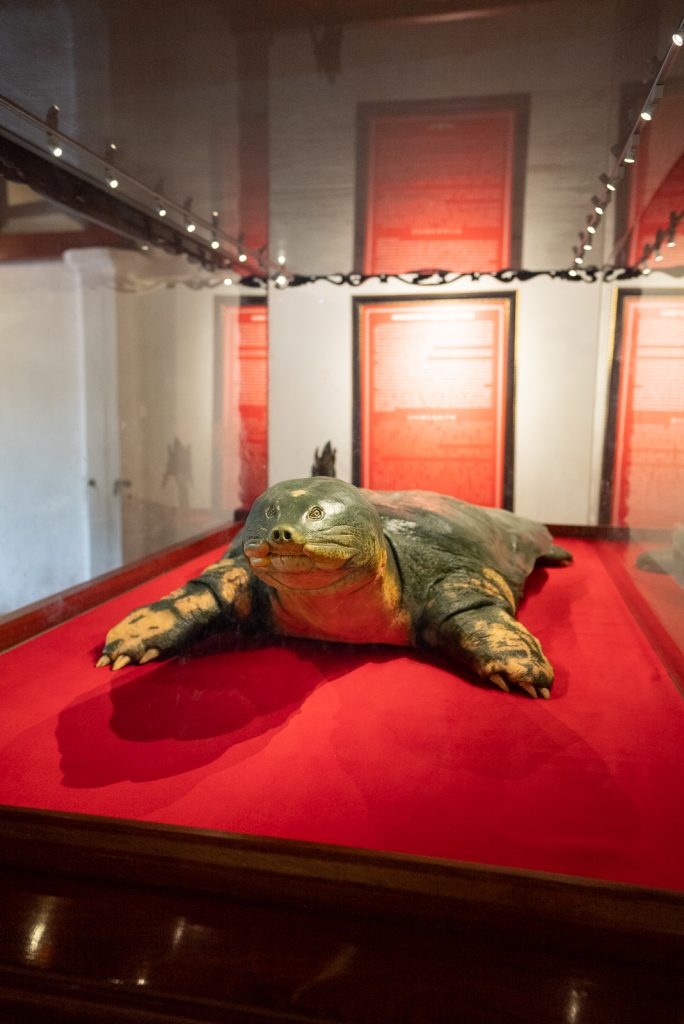
Ngoc Son Temple
After crossing the cute, red bridge across Hoan Kiem Lake, you’ll enter the Ngoc Son Temple. Here you can learn more about the turtles and the legend. Including two embalmed 500+ pound turtles!
There is a fee to enter the temple, which is 30,000 VND (~$1.25 USD) per person. You are also expected to wear proper temple attire (shoulders and knees covered).
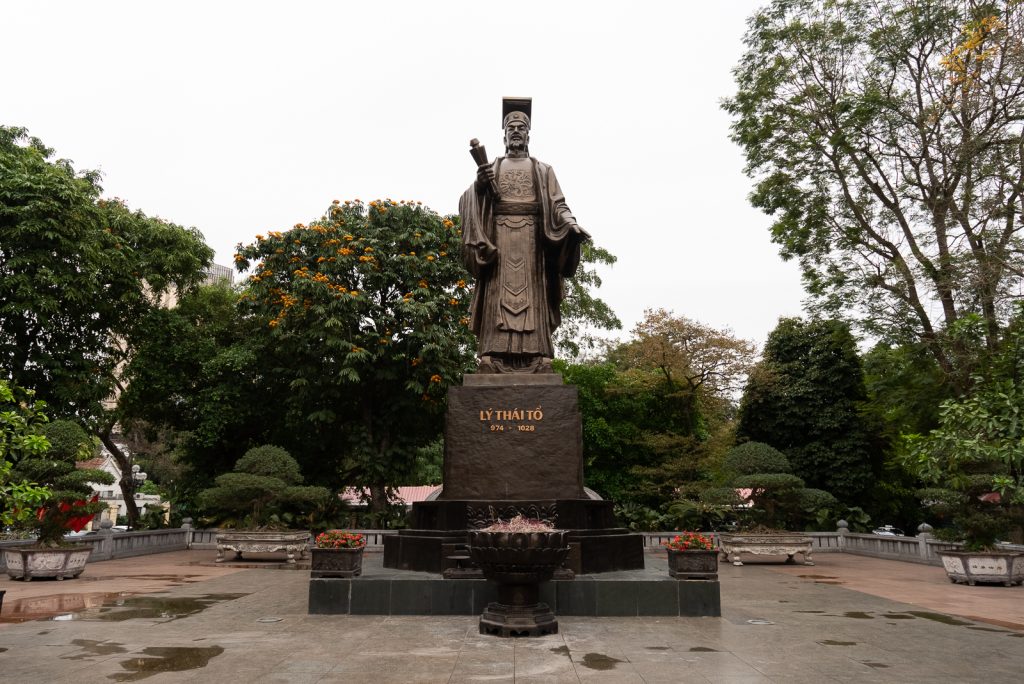
Emperor Ly Thai To Monument Statue
The Emperor Ly Thai To Monument Statue is a quick stop, but worth a look. In this plaza on the southeast corner of Hoan Kiem Lake, you’ll spot a 10 meter tall statue of Emperor Ly Thai. He is the emperor who moved the capital of Vietnam from Ninh Binh to Hanoi.
Hanoi Opera House
Another example of French architecture is the Hanoi Opera House. After the French arrived, they wanted a center for art and culture. The opera house was opened in 1911 and was modeled after Garnier Place in Paris.
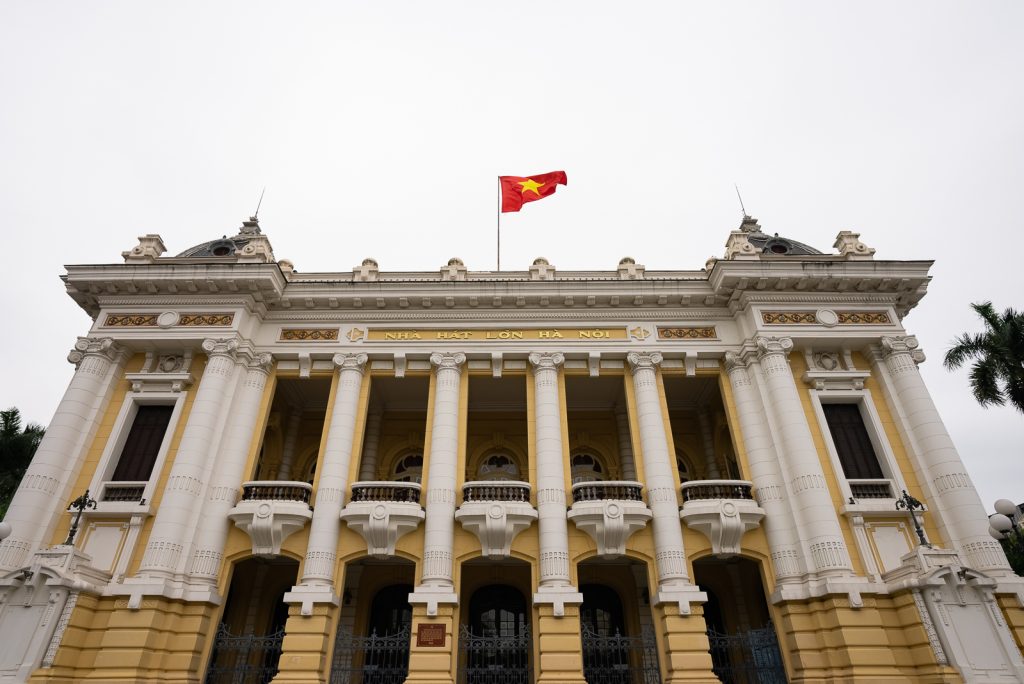
Old City Gate
The Old City Gate (Ô Quan Chưởng) was one of 16 gates that protected the city and the entrance to the citadel of Thang Long. It is now the only surviving city gate of the citadel. The gate was built in the 1700s and then rebuilt in the 1800s.
Ma May Ancient House
Similar to the ancient houses you can visit in Hoi An, the Ma May Ancient House gives you a glimpse into a traditional Vietnamese house. It costs 10,000 VND (~$0.41 USD) to visit and is open everyday, but they do take a break for lunch between 12:00-1:30PM.
Get banh ran
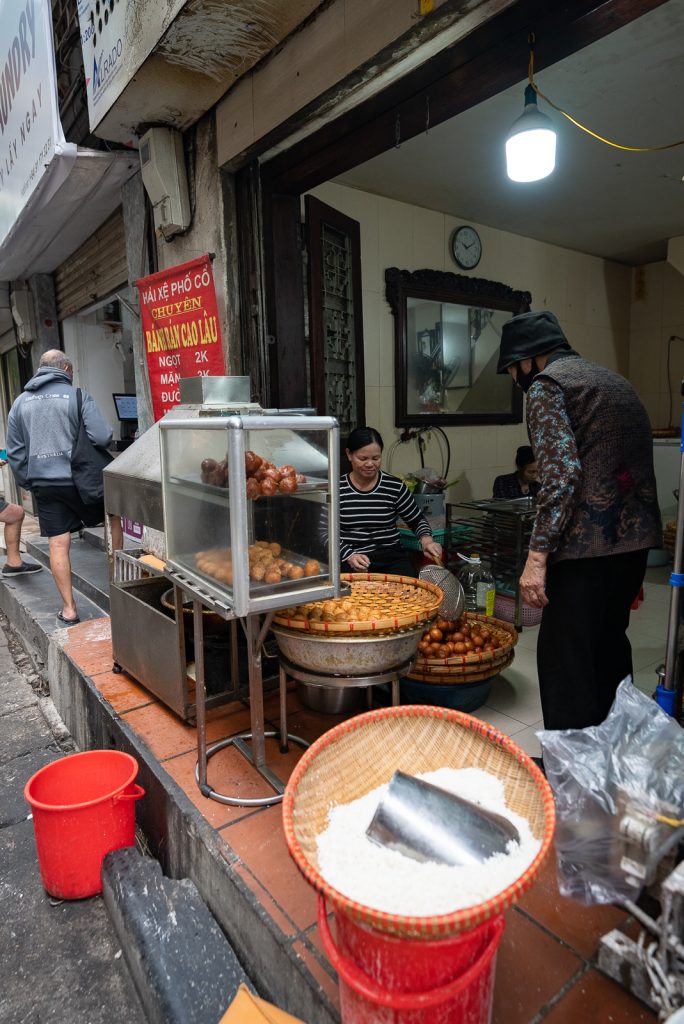
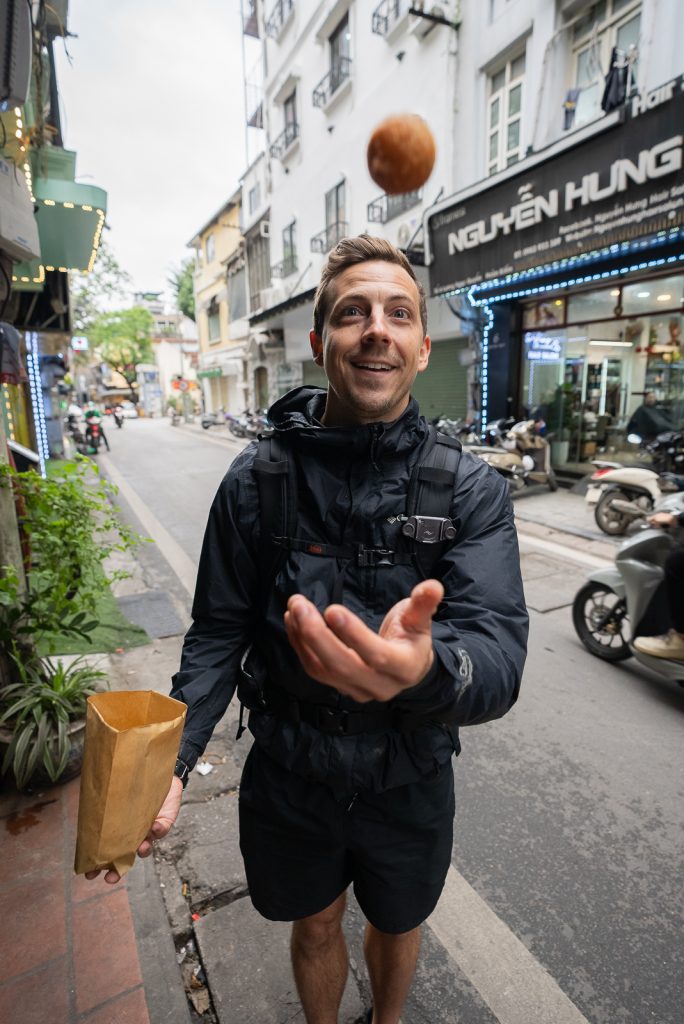
While exploring the Old Quarter, you must try banh ran! You may have had this on your food tour, but if you’re like us, you’ll want more! These are deep fried rice balls, with mung bean inside, which are slightly crispy on the outside and chewy in the middle.
These are a northern Vietnamese specialty, so you’ll see them being sold all over town. The ones sold on the streets aren’t as fresh and overpriced. For the best ones, head to this little hole in the wall donut cart!
This stand had 3 different varieties to choose from: savory with sesame seeds on the outside, one covered in glazed sugar, and a darker one covered in honey. Oh man…they were so good!
Dinner at Nem Nướng Nha Trang Quế Hoa
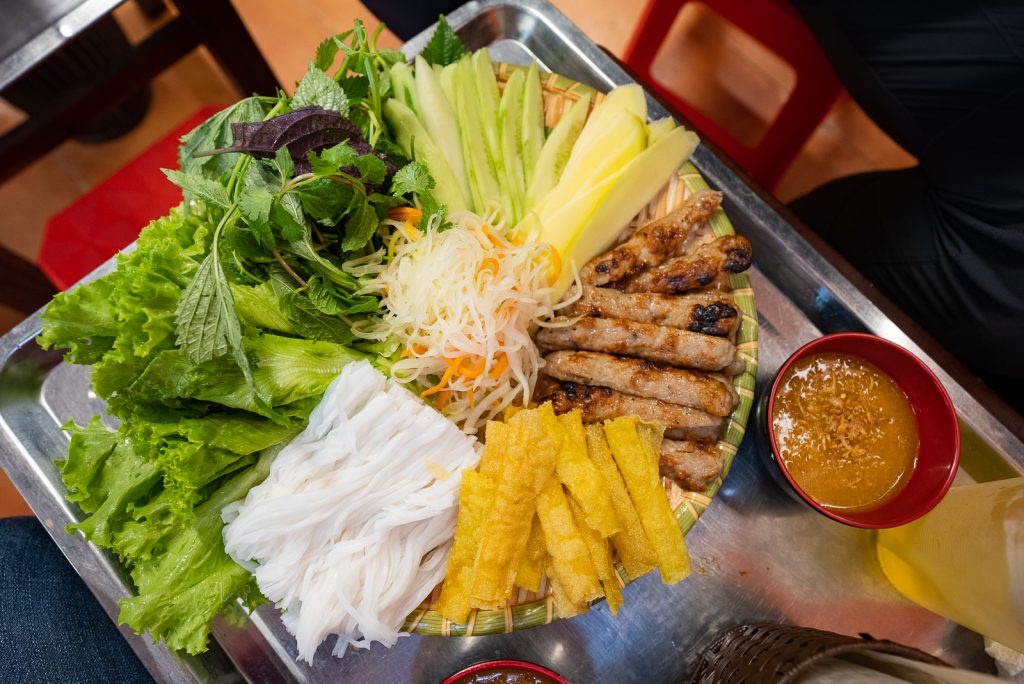
After walking around all day, hopefully you’ve worked up an appetite! For dinner, head to one of our favorite spots in Hanoi for nem nuong nha trang (spring rolls). You can order a plate of spring rolls, which you get to assemble yourself. The mix of pork, cucumber, mango, herbs, and crispy rice sticks, plus the delicious dipping sauce, is perfect.
We ate at this place four times during our time in Hanoi and have tried to recreate it many times since in the van!
Thang Long Water Puppet Theater

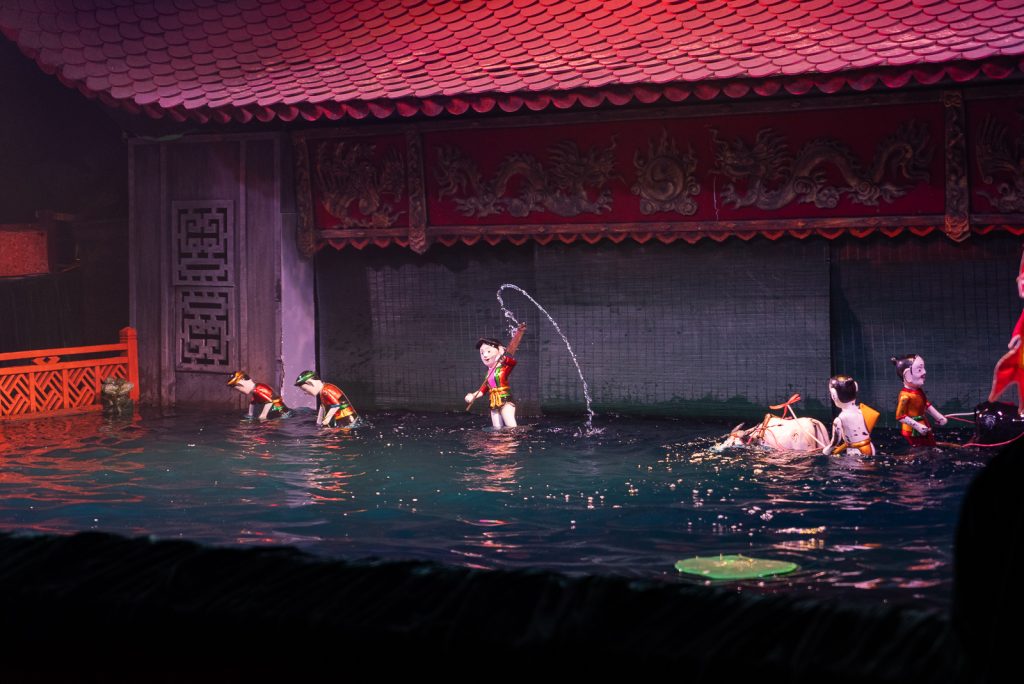
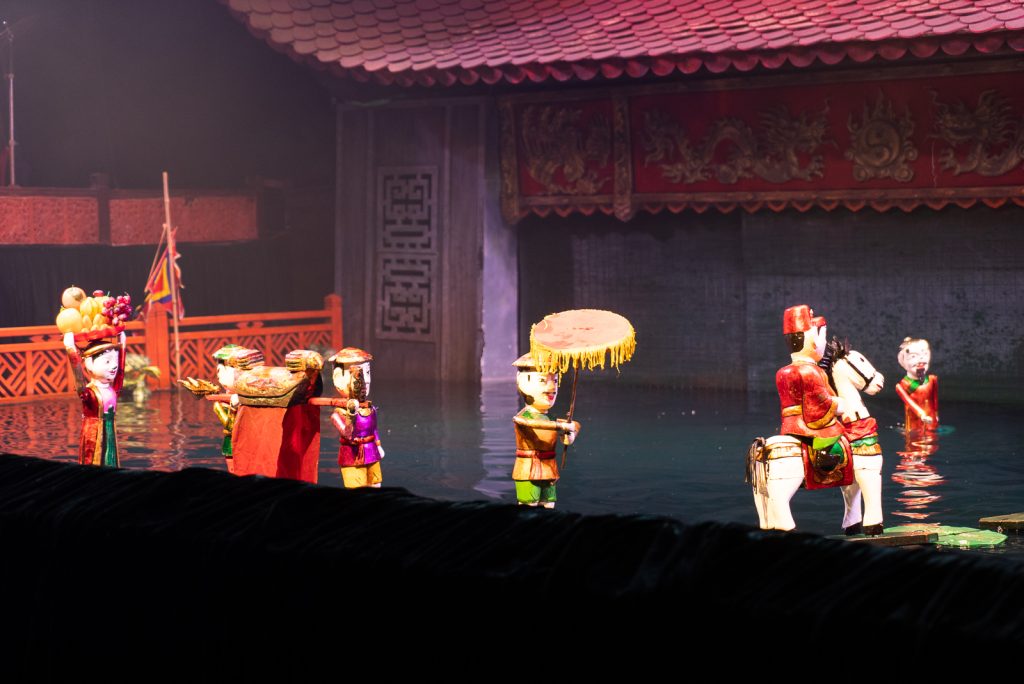
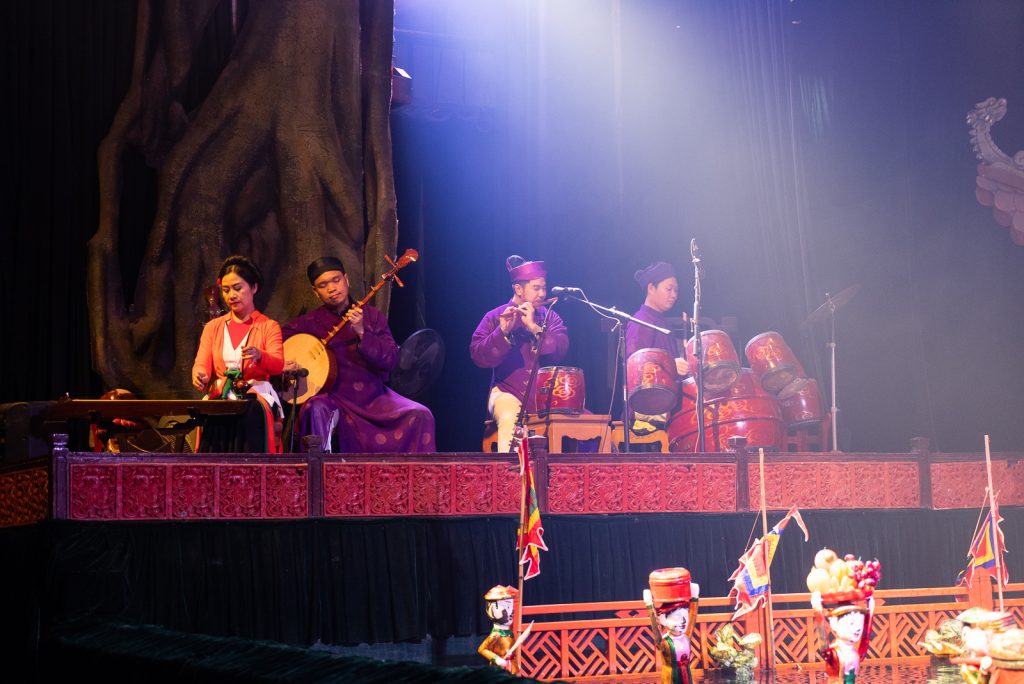
The thing that surprised us the most during our time in Hanoi was the Thang Long Water Puppet Theatre.
Over 1,000 years ago, water puppetry originated in the rice paddies of the Red River Delta. And today, you can see water puppet shows here in Hanoi, which depict traditional Vietnamese legends and historical tales with an orchestra.
We were worried it was going to be mega touristy, but we enjoyed it SO much! The singing and instruments were so beautiful and watching the puppets was mesmerizing. It was such a highlight of our time in Vietnam!
There are several show times per day and you can get your tickets the day of at the box office, but we got ours in advance just to make it easier. We got the VIP tickets so we could sit closer to the front, which was worth it! You can also pay for an audio guide to hear translations, but we loved hearing the Vietnamese music and didn’t mind not having it.
Ice cream at Kem Tràng Tiền
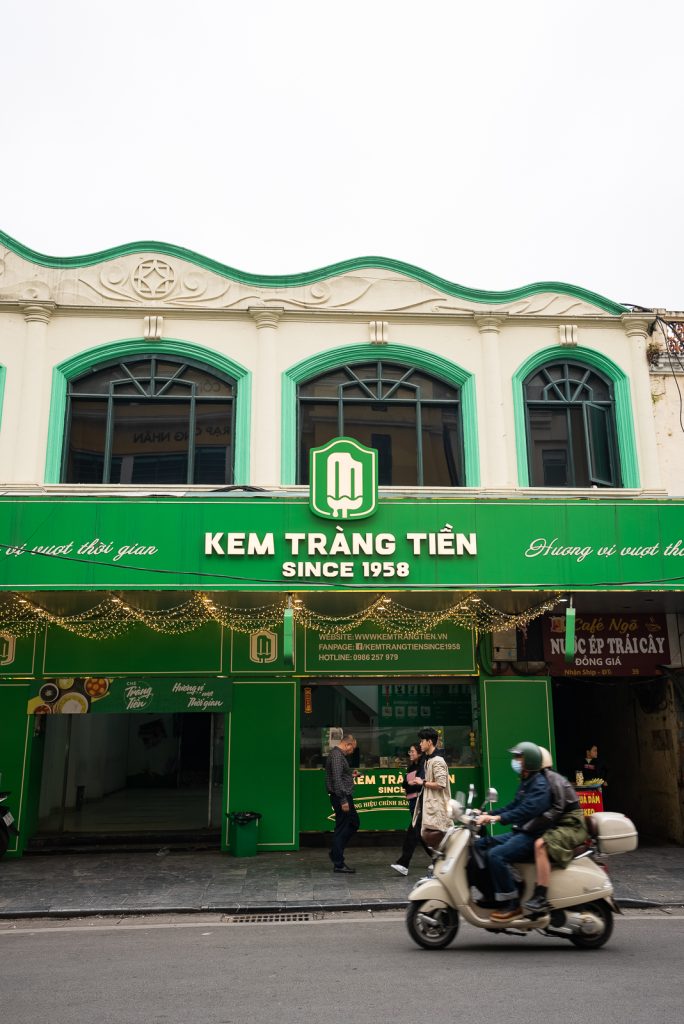
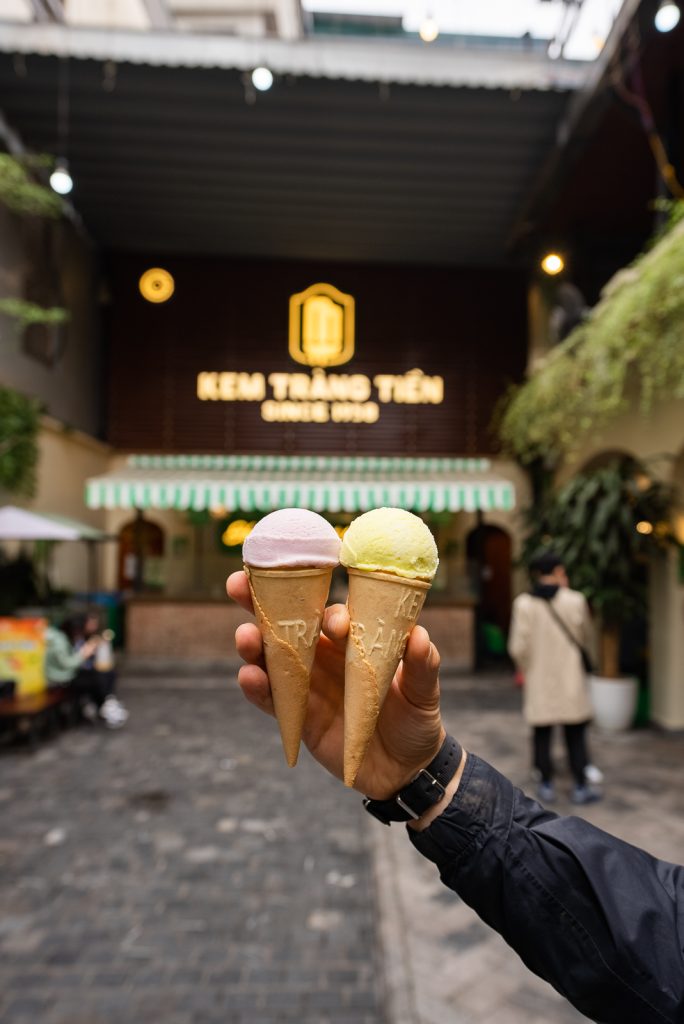
After enjoying the puppet theater, head to Kem Tràng Tiền for ice cream! This spot has been open since the 1950s and has been a Hanoi staple ever since. They have several flavors of ice cream on a cone, as well as popsicles. We really enjoyed the taro and rice flake flavors! It’s more of an icy texture, but still maintains creaminess.
Note: This place is large inside, with many different counters to order. Some counters only service one style (cone or popsicle), while others may only have some flavors. It is a bit confusing!
Day 2
The second day of this Hanoi itinerary includes a mix of historic and cultural sites, plus a very unique and iconic Hanoi attraction!
Coffee at Tranquil Books & Coffee

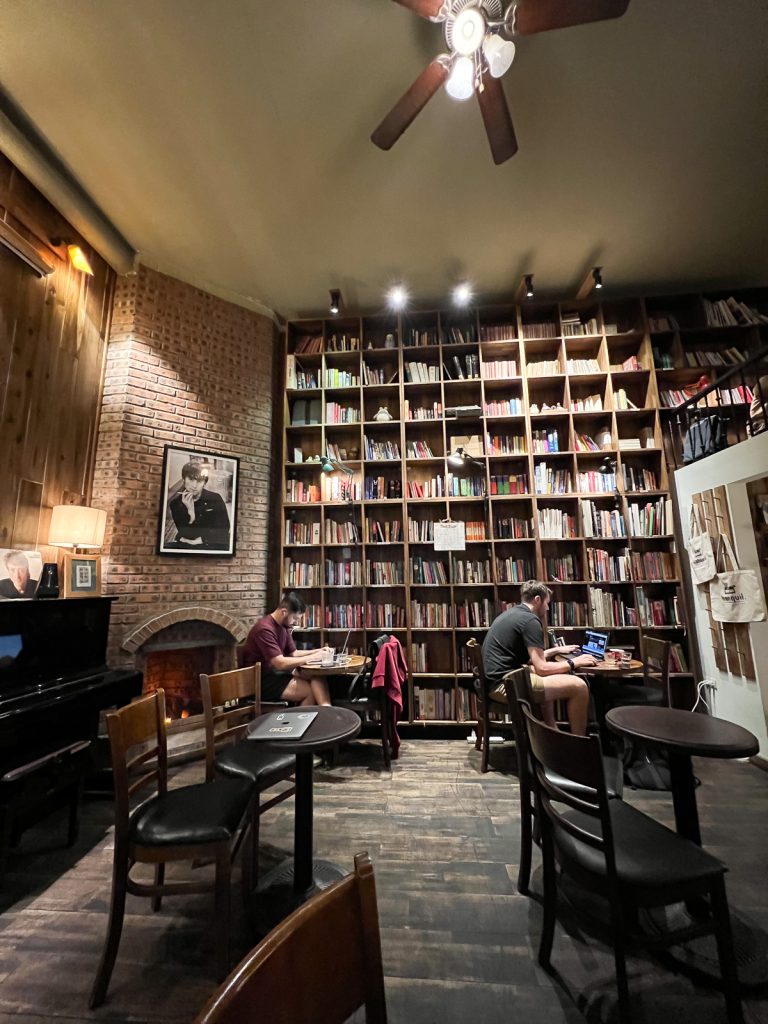
Have a peaceful start to your morning at Tranquil Books & Coffee. This is an amazing coffee shop lined with bookshelves, plus a nice outdoor seating area. We tried some of their specialty drinks and they were so good that we had to order more!
Some other coffee shops we loved were Sonder Coffee Bar and THE WISELANDS Coffee.
Have breakfast at Muối Tiêu – Salt n’ Pepper Kitchen
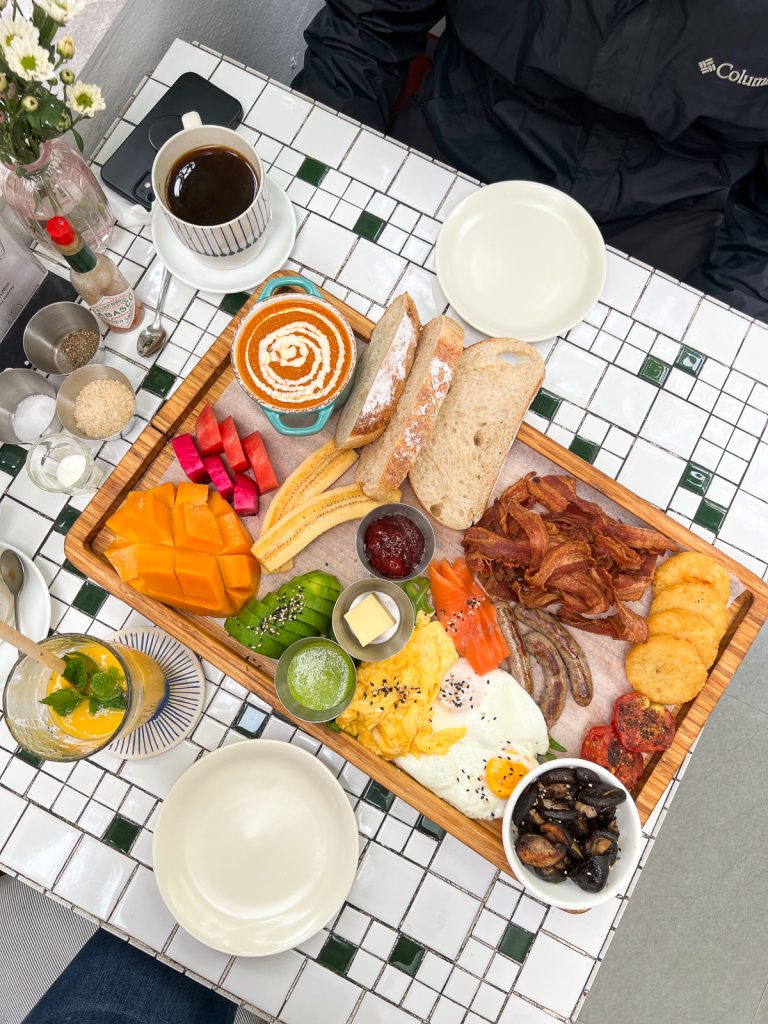
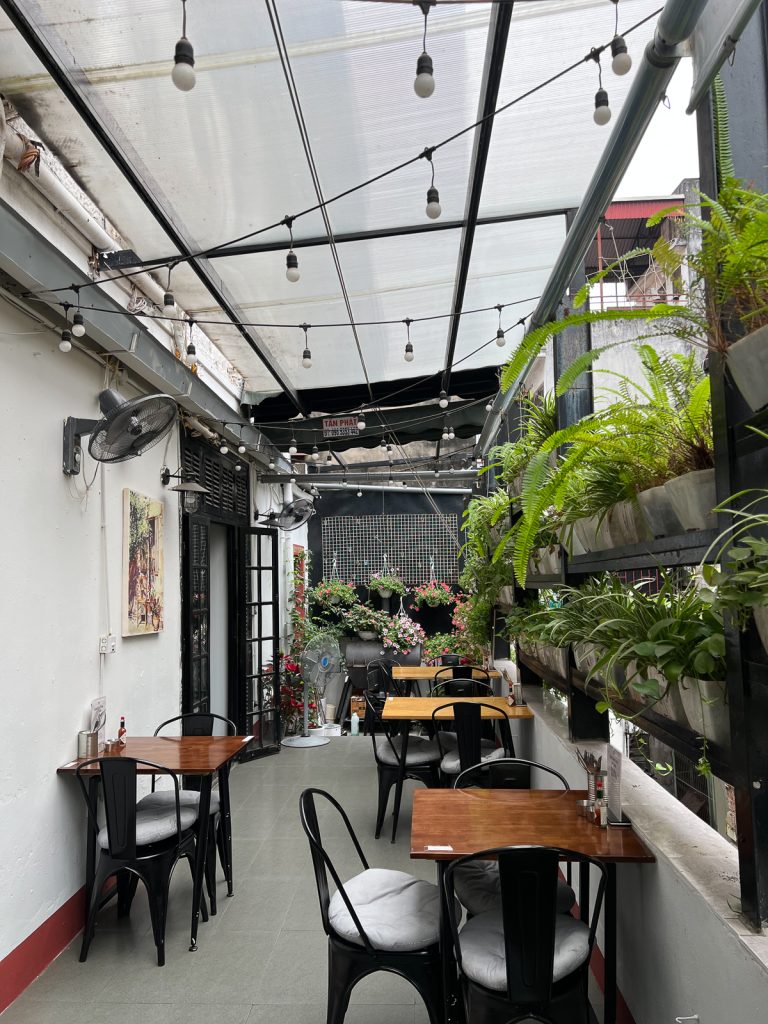
If you’re wanting a more traditional breakfast, Muối Tiêu – Salt n’ Pepper Kitchen is a delicious choice! We shared their Muối Tiêu platter, which had eggs, meat, potatoes, avocado, fruits, bread, tomato soup, and more. It was huge and SO good!
Visit some of Hanoi’s historic sites
Spend the rest of the morning visiting a temple and museum. These are the two we’d highly recommend!
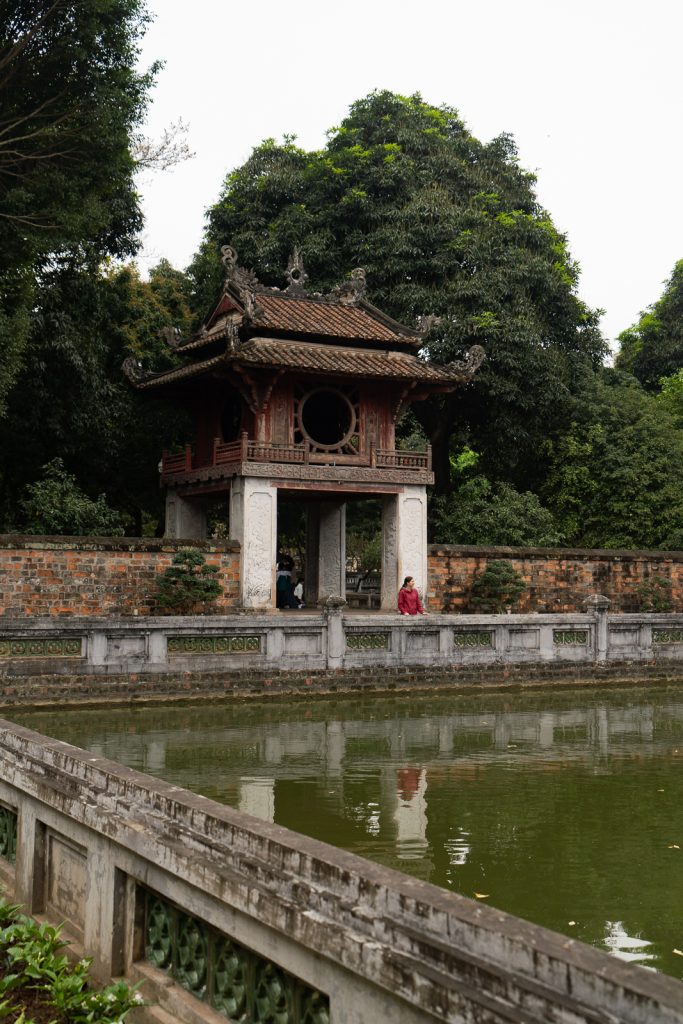
Temple of Literature
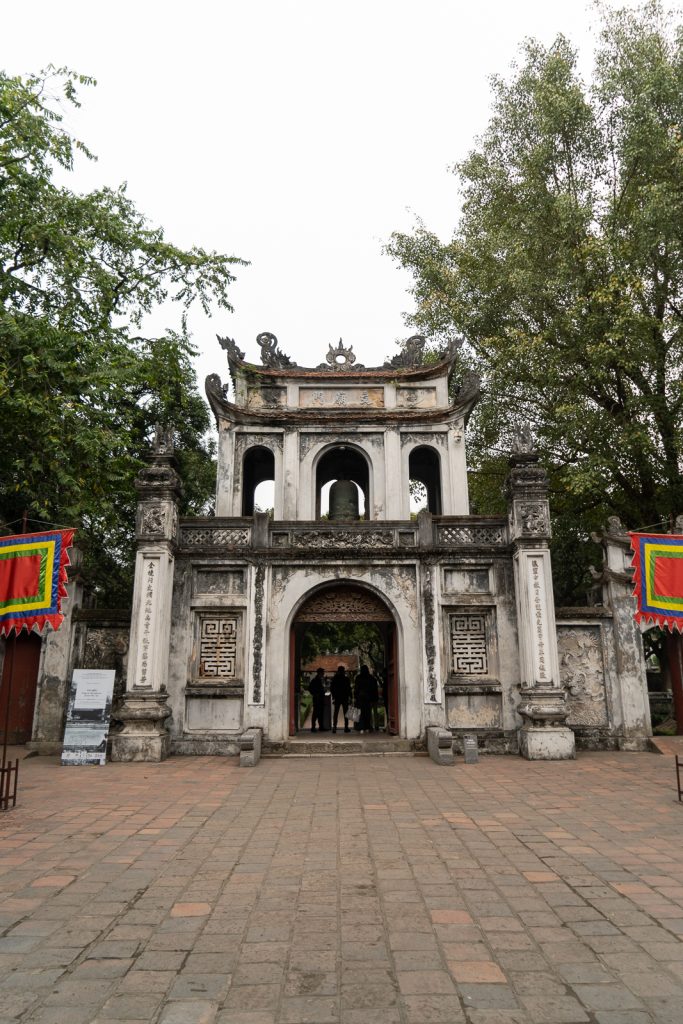
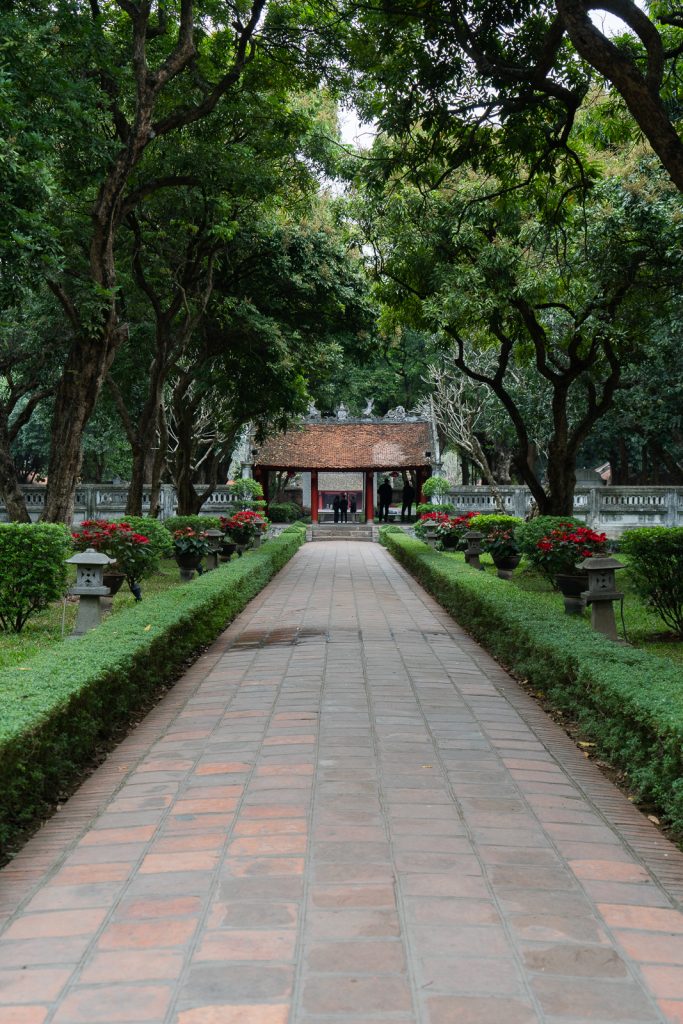
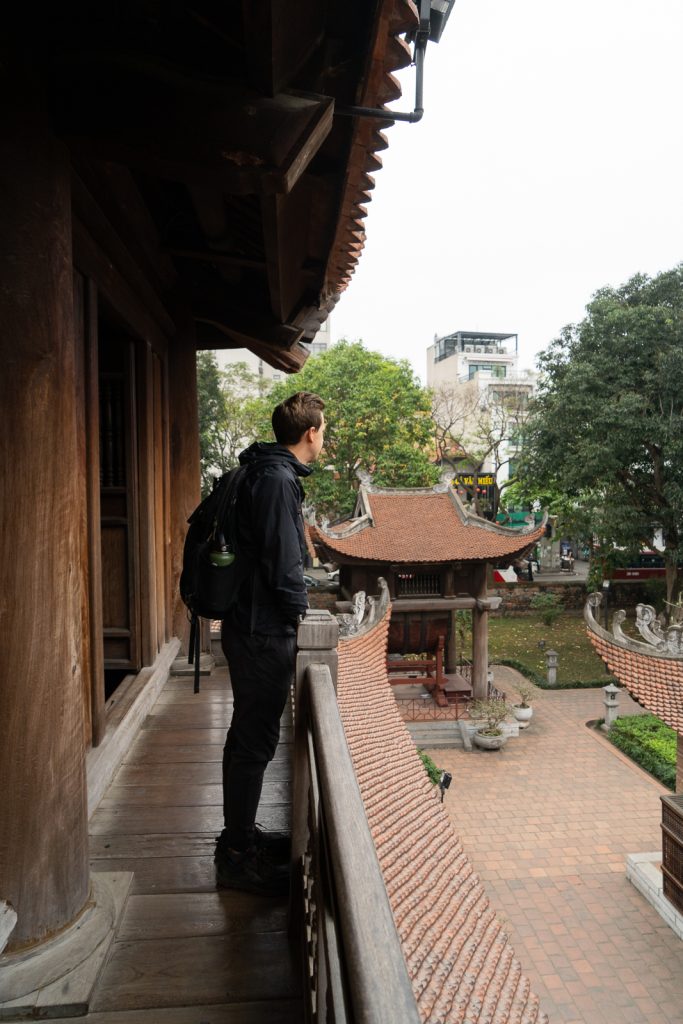
The Temple of Literature was built in 1070 as a place to worship the Chinese philosopher Confucius. In 1076, it became the site of the oldest Vietnamese national university.
The temple is surrounded by a red brick wall and consists of 5 courtyards of different styles. With possibly the most recognizable courtyard being the second courtyard, which is the Pavilion of Constellation, built in 1805. You’ll find a depiction of this courtyard on the 100,000 Vietnamese banknote!
The temple is a beautiful, tranquil spot in the middle of the city center. Well, unless you visit during a massive school field trip like we did. The kids were adorable though and LOVED saying hi to us and asking where we were from!
It costs 30,000 VND per person to enter and you should have proper temple attire, including your shoulders and knees covered.
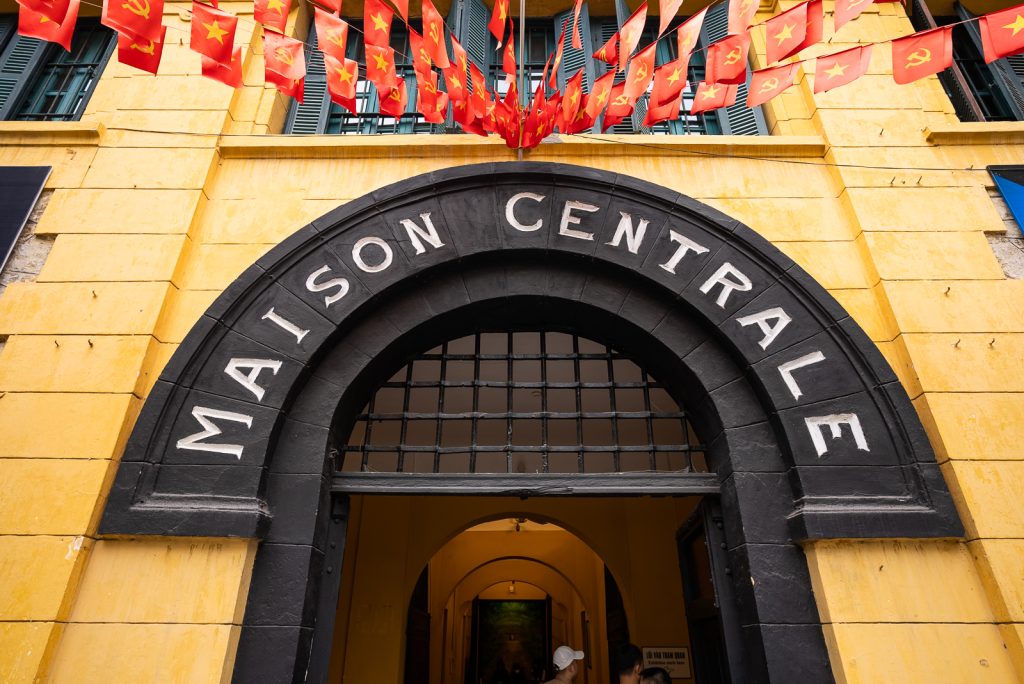
Hoa Lo Prison Relic (Hanoi Hilton)
One interesting historical site in Hanoi is the Hoa Lo Prison Relic. This prison complex was originally built in 1896 by the French. It was built on the land of the Phu Khanh village, also referred to as Fiery Furnace, as the village was known for its pottery. The prison was one of the largest prisons in the area at this time and unfortunately displaced this village.
During the earlier years of the prison, it was used by the French to hold Vietnamese who were opposed to the French colonial rule. Prisoners were given horrible living conditions, including chained to the floor and walls, and occasionally executed by guillotine.
After the French left Vietnam, the prison was renamed Hỏa Lò and was then used by the North Vietnamese to hold US prisoners of war, mostly shot down pilots, during the Vietnam War.
This prison became one of the most notorious POW camps in Vietnam during the war, with one of the most well known prisoners being the late Arizona senator John McCain. Despite the museum sharing that the POWs were treated well and enjoyed their time here, many of the American soldiers have shared the opposite. They have recounted stories of how they were tortured and endured terrible conditions, giving the prison the ironic nickname the Hanoi Hilton.
So while you should take everything in the museum with a grain of salt, we still think it is worth a visit. It costs 30,000 VND (~$1.25 USD) per person, with an optional audio guide add-on for an additional fee (we personally did not get this). Just don’t expect to leave feeling happy! It is a sad experience, but one that is important to understand some of the country’s history.
Looking for other museums to check out?
Two other museums that may interest you are the Vietnamese Women’s Museum and the Vietnam National Fine Arts Museum. The Vietnamese Women’s Museum has exhibits about women’s roles during resistance wars, women’s fashion, different ethnic groups, and much more. It is very valuable for all genders – not just women! The National Fine Arts Museum shares fine art from all eras of Vietnamese history.
Enjoy a local spot for lunch

Two of our favorite dishes in Hanoi (and Vietnam) were Bun Bo Nam Bo and Bun Cha! For lunch, we suggest checking out one of these spots to try it for yourself (or get it again if you’ve already had it).
Bún Bò Nam Bộ Bách Phương: Bun Bo Nam Bo is a mix of rice noodles, meat, veggies, and peanuts, served with a fish sauce. We discovered this spot on our last day in the country and we were so sad we didn’t try it sooner!
Bun Cha Dac Kim or Bún chả Hương Liên (famous for Obama and Anthony Bourdain eating here): This is a Hanoi specialty, which consists of grilled pork patties, with sometimes pork belly as well, plus pickled veggies, all in a fish sauce based broth. On the side, you’ll have vermicelli noodles, herbs, and fresh veggies. We visited both of these spots multiple times!
Visit Train Street

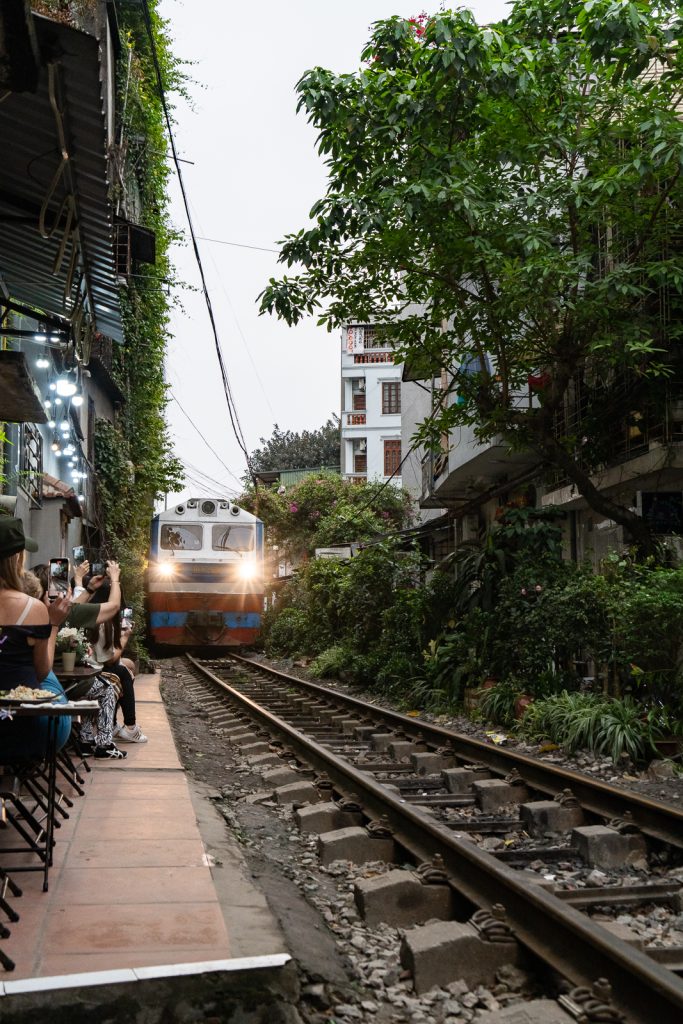
One of the top things to do in Hanoi is visit the Hanoi Train Street! This is a narrow section of street where a couple times a day, a train rushes through, with not much space between the buildings and the train. It is an exhilarating experience to sit alongside a building as the train whips past you. Feeling the ground rumble beneath your feet and the wind on your face as a hulking train rushes by literally mere feet away is something we’ll never forget!
There are two main areas to go along the tracks, both lined with restaurants, cafes, and bars, where you can watch the train. However, the most popular spot was shut down during our visit, due to safety issues. So instead, we headed to Hanoi 1990s, a great little cafe located further south down the track. And just like the more popular area, you are RIGHT on the tracks!
Since the train time can vary daily, we suggest reaching out to a cafe via WhatsApp in advance to confirm the time. Depending on the time, you may have to restructure this day a bit to see the train. But trust us, it is worth it!
To learn more details about visiting the Hanoi Train Street, including more cafe options, the train times, tips to get a spot, and what to expect, check out our guide!
Dinner
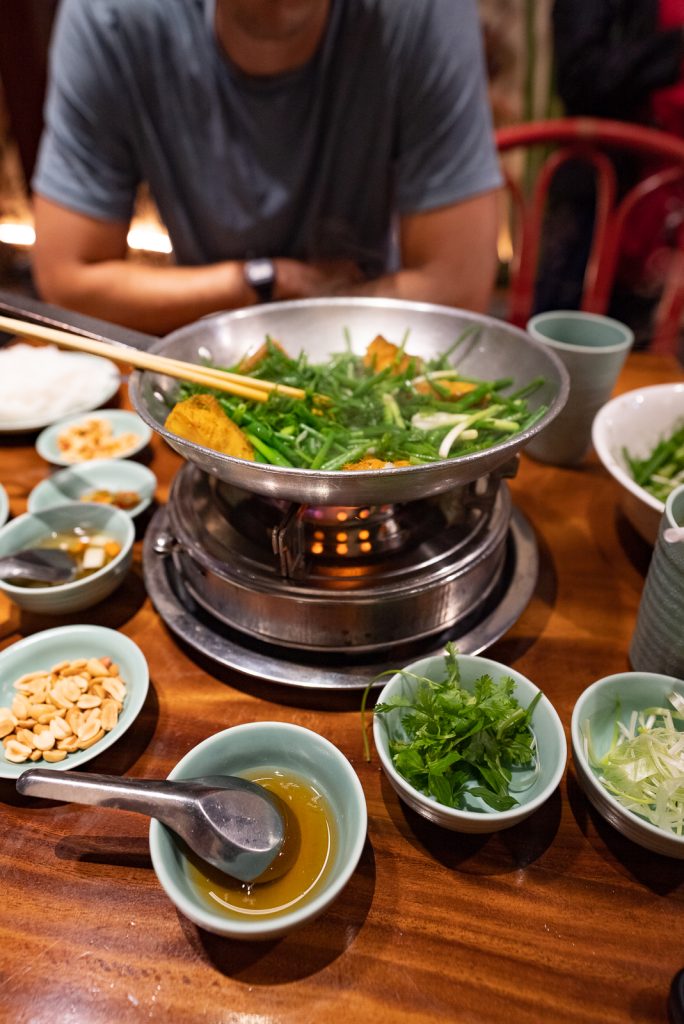
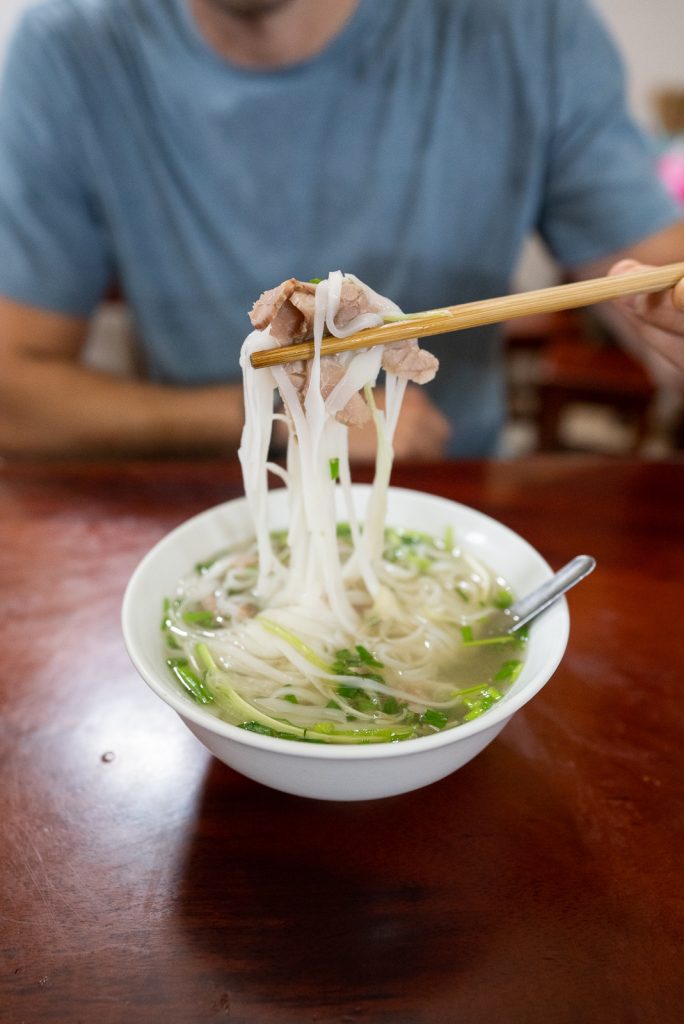
For dinner, you have a few options!
Cha Ca Thang Long: This a great spot to try Cha Ca, which is catfish marinated in turmeric, galangal, fermented rice paste, and then topped with dill and other herbs. The fish is grilled right in front of you and is super tender and flavorful!
Phở Gia Truyền Bát Đàn: For Northern Style pho, head here! This spot came recommended to us by our local food tour guide. It is only open for breakfast (6 AM-10 AM) and then again for dinner (6 PM-8:30 PM). And there is always a line!
Quán thịt nướng khói: This street food stand has delicious meat skewers. There were tons of locals here, plus some food tours (which is how you know it’s good)! Make sure to get the fried bananas afterwards for a sweet treat.
Check out our guide to the top 10+ Vietnamese foods you MUST try!
Enjoy Hanoi’s nightlife
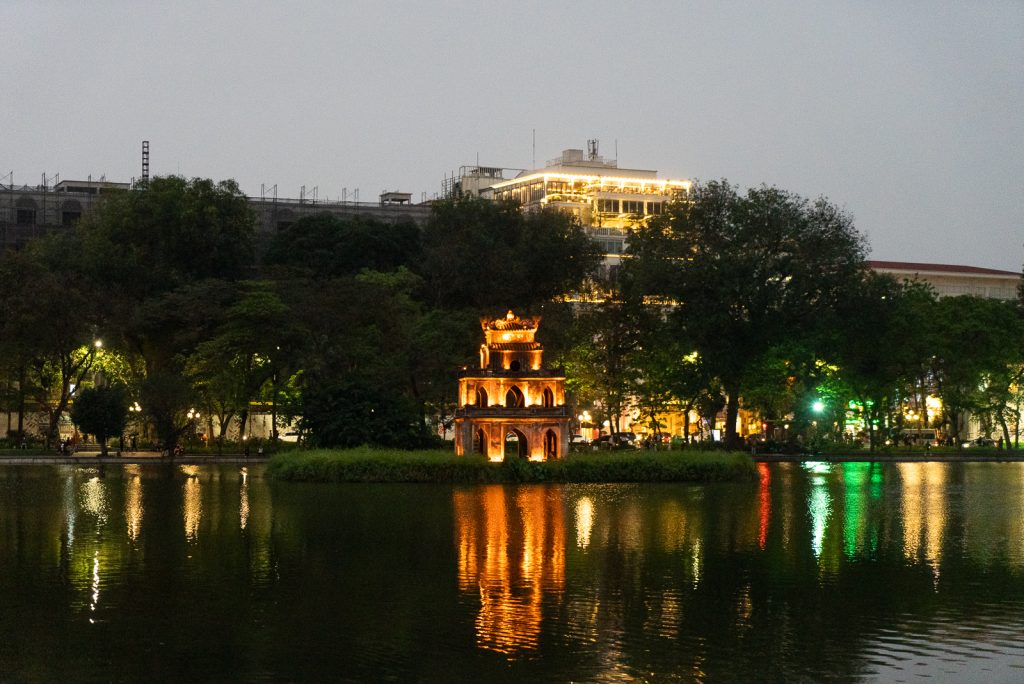
Hanoi is not only fun during the day, but after dark as well! One of the most famous things to do at night in Hanoi is visit Beer Street (Ta Hien) in the heart of the Old Quarter.
Here you’ll find everyone from backpackers, the average tourist, to even locals, all sitting in the tiny, colorful chairs lining the street enjoying cheap beers and having a good time.
Not a beer drinker? Hanoi has some fun speakeasies and cocktail bars as well. Here are a few to check out:
Kumquat Tree: To find this speakeasy, just look for the big red door. You’ll need the passcode to enter though!
Nê Boong-ke: This bar is known for its creative cocktails – like the “Pho” cocktail!
The Hanoi Social Club: This spot is known for its live music, including Vietnamese ethnic music!
If you’re like us and don’t drink, you still have options! We LOVED just wandering around the city at night and seeing everything lit up. And if you visit on the weekends, you can check out the Weekend Night Market. This runs Friday through Sunday nights from 6PM to 11PM. At this night market you’ll find hundreds of stands selling handicrafts, souvenirs, clothes, and food.
Day 3
For the final day of our 3 day Hanoi itinerary you’ll continue to check out some historic sites, but also visit a new (to you!) part of town!
Have coffee and breakfast at Hidden Gem Coffee
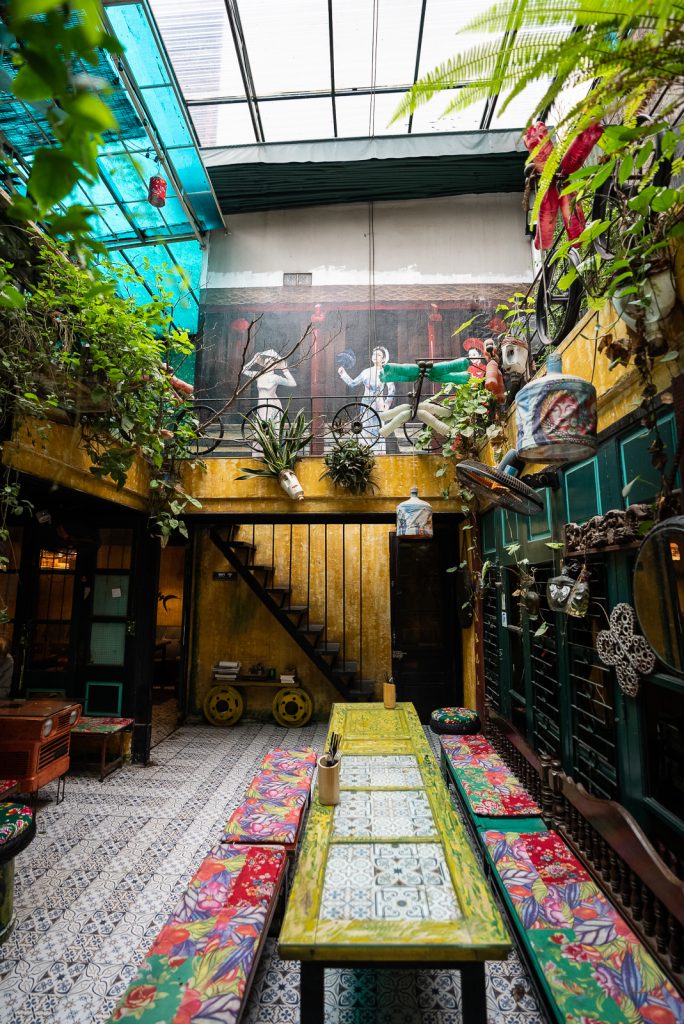
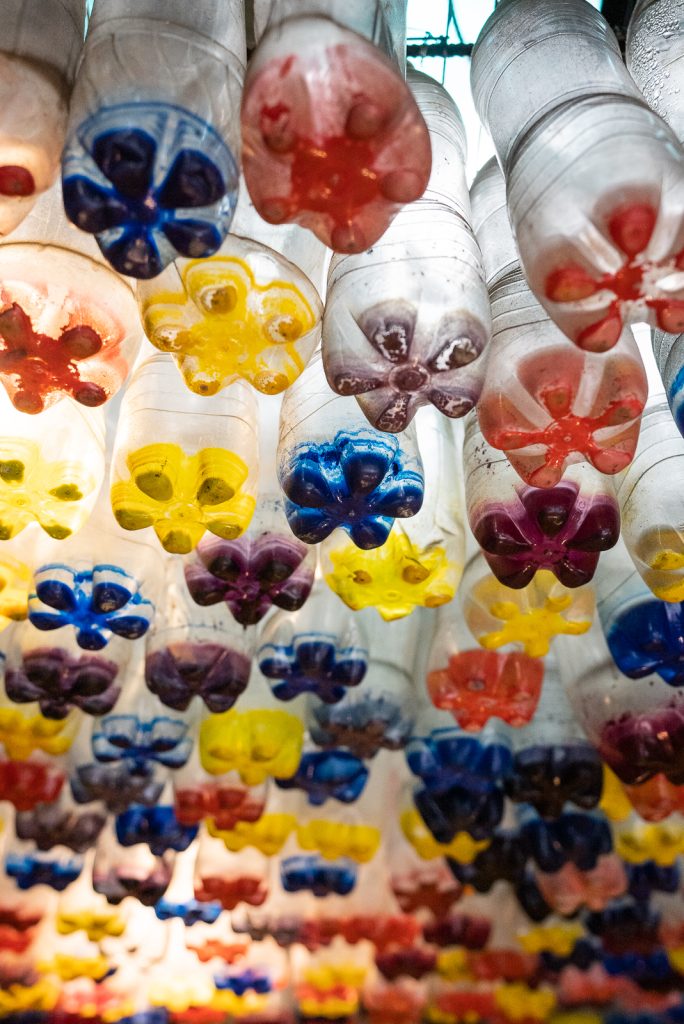
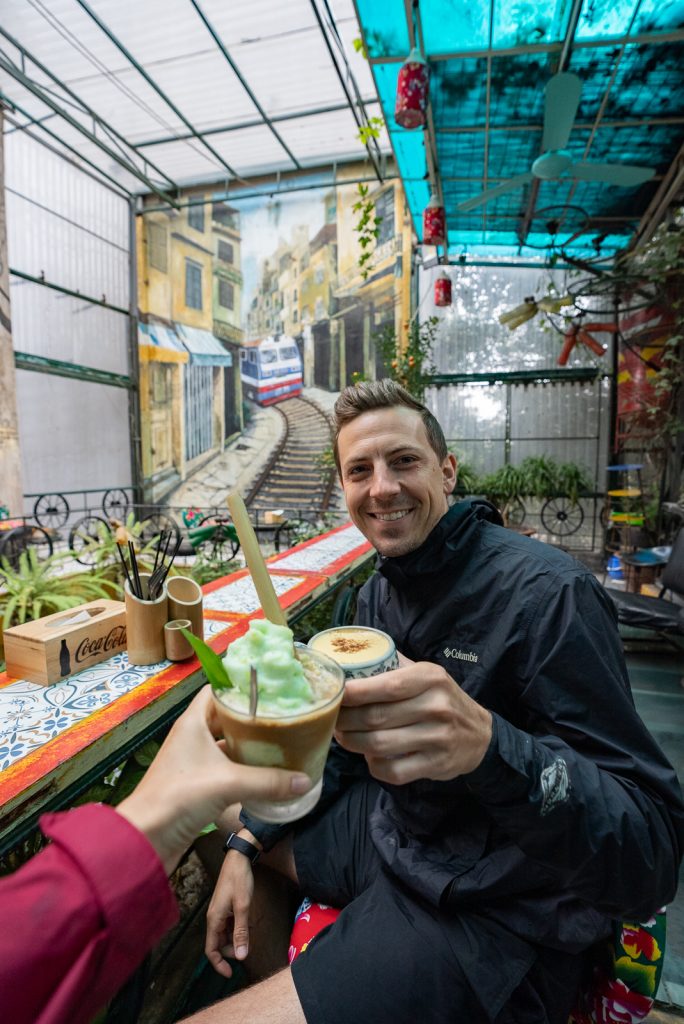

One of our favorite cafes in Vietnam was Hidden Gem Coffee. As the name implies, it is a hidden gem!
To get to the cafe, you go down a small alley, enter a building, then climb some stairs to the third floor. The cafe itself is multiple levels and what makes it extra cool is that it is decorated using recycled items. You’ll see aquariums and seats made out of old tires, water jug lights, and more!
We enjoyed a delicious egg coffee, a sticky rice pandan leaf coffee drink, and a noodle dish here. Everything was super good!
Pick up lunch for later
Since the next few stops are in an area without a ton of great dining options around, we suggest stopping by Banh Mi 25 and getting a banh mi for takeout! You can then enjoy it between historic sites.
Visit more of Hanoi’s historic sites
Spend the rest of the morning and afternoon checking out a few more of the popular historic sites around Hanoi.
Imperial Citadel of Thang Long
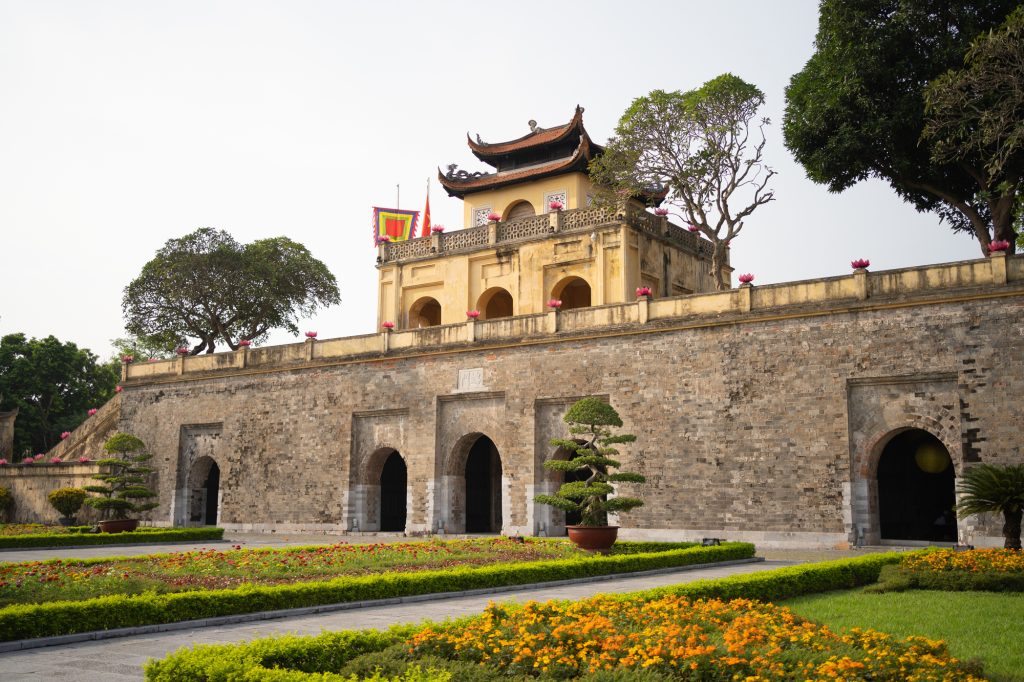
The Imperial Citadel of Thang Long is considered to be one of the most important sites in Hanoi. The citadel was originally built in the 7th century and is now a UNESCO World Heritage site. It has gone through many iterations over the centuries, but it remained the seat of government until 1810. And from 1954 to 1975, it was used as the headquarters of the North Vietnamese.
And what makes visiting extra exciting is that it’s under ongoing excavation and archaeologists unearth artifacts often, so they are constantly learning new things!
It costs 30,000 VND (~$1.25 USD) to visit and some of the major sites to see in the citadel are the Flag Tower, Kinh Thien Palace, the South and North Gates, and the D67 house and tunnel.
Ho Chi Minh Mausoleum
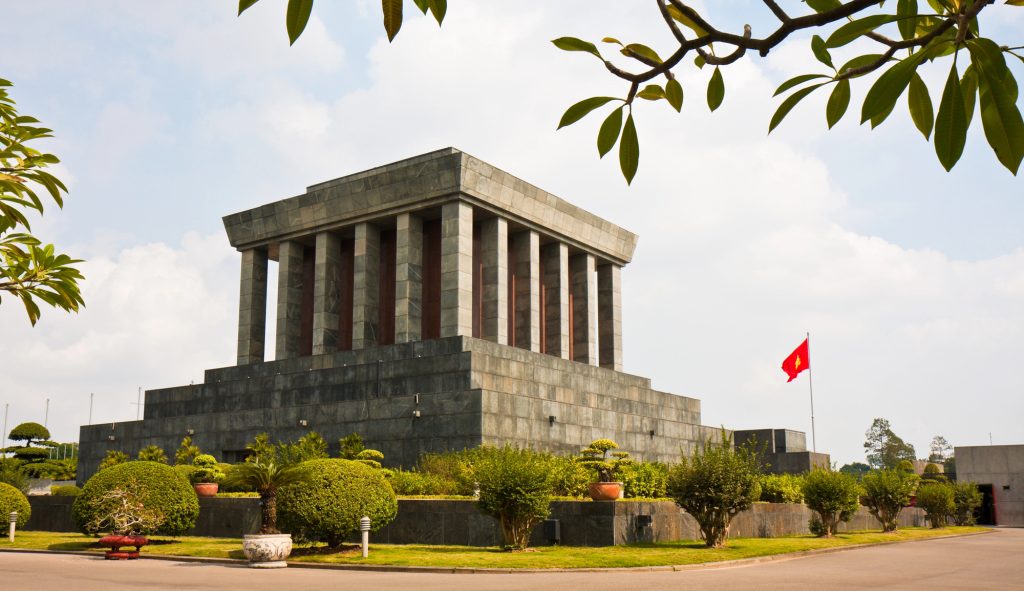
Possibly the most quirky or peculiar site to visit in Hanoi is Ho Chi Minh’s Mausoleum. At the mausoleum you can learn about the life and legacy of the famous Vietnamese leader, Ho Chi Minh. Not only can you learn about Uncle Ho, but you can also view his embalmed body. 😳
It costs 25,000 VND (~$1 USD) to enter and you cannot enter without proper attire (no shorts or sleeveless shirts). Also, food is not allowed in, so if you packed a banh mi, make sure to eat it beforehand!
Tran Quoc Pagoda
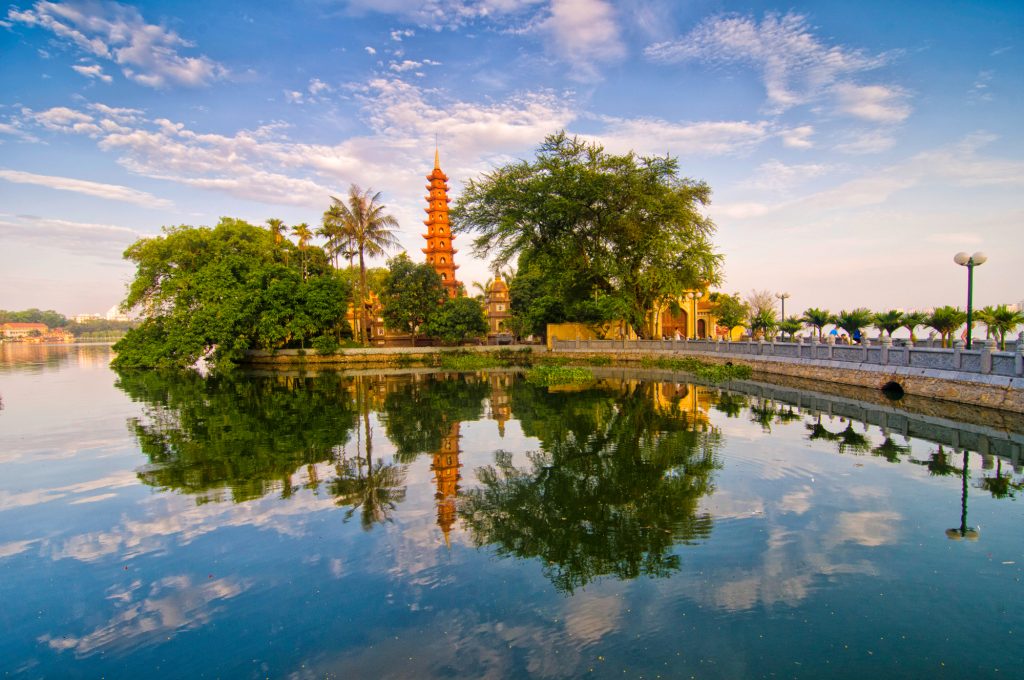
West Lake (Ho Tay Lake) is Hanoi’s largest natural lake. And located on an island on the lake is Hanoi’s oldest Buddhist pagoda, the Tran Quoc Pagoda. This free pagoda is over 1,500 years old and is considered one of the most important sites in Vietnam.
Walk around West Lake (Ho Tay Lake)
Spend the rest of the afternoon walking around West Lake. This area is home to lots of expats and is really nice! But be warned, it’s a pretty large lake so you may not want to walk the 7+ miles of lakeshore. We’d suggest walking just enough to work up an appetite!
Need an afternoon pick me up? Head to Ta Coffee!
Have dinner in the West Lake area
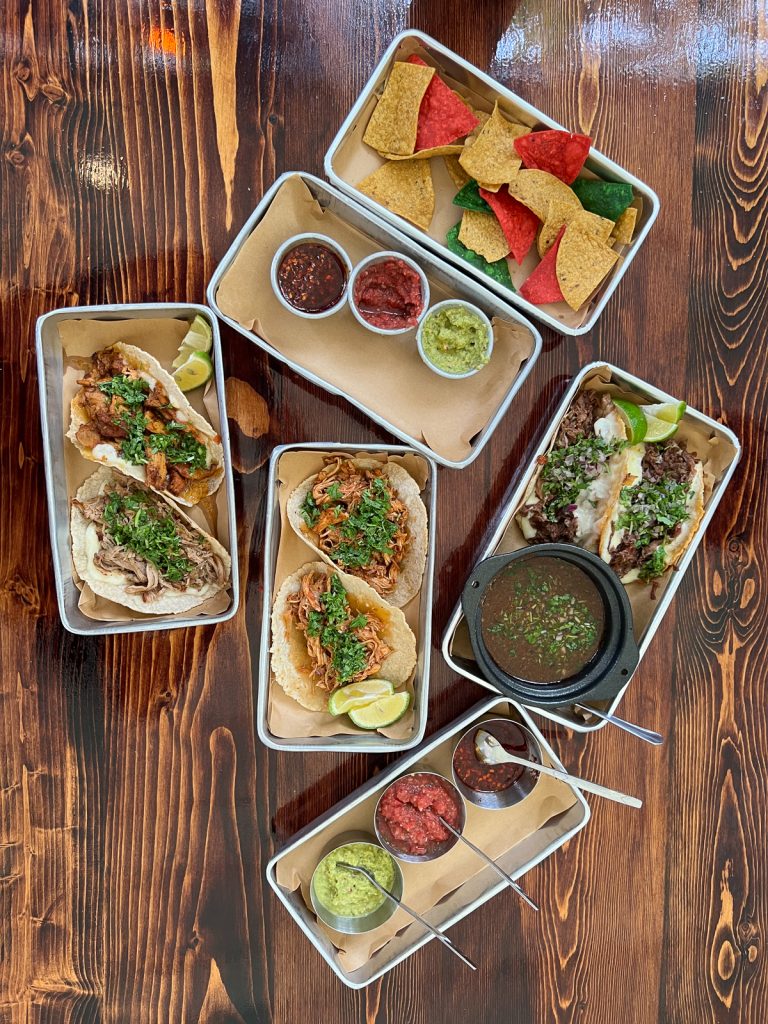
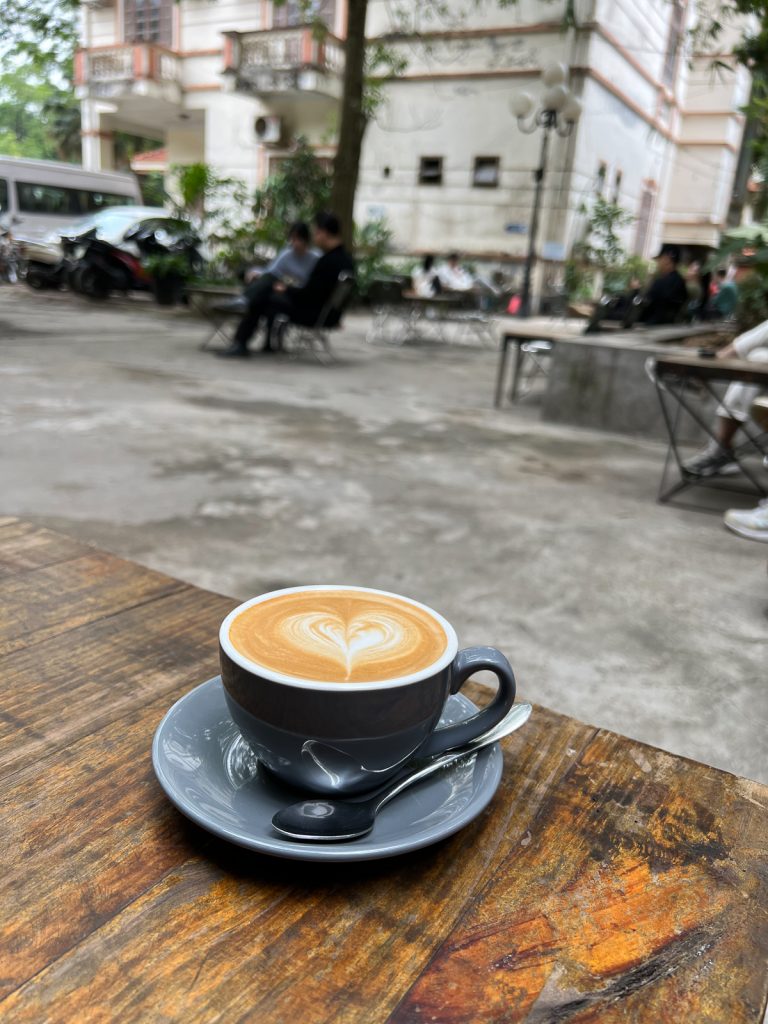
For your final night in Hanoi, have dinner in the West Lake area! There are two restaurants here that we LOVED and we can’t seem to choose. So we’re going to make you make the tough choice!
You may not think of pizza when you think of Vietnam, but Pizza 4P’s is whipping up some legit Italian pies. Their menu has so many fun flavor profiles, including classics and some with an Asian twist. Pizza 4P’s have locations around the city, including one at West Lake.
It’s usually a good idea to keep your expectations low for tacos in a country on the opposite side of the world from Mexico, but at Naco Taco we were blown away! Maybe it was just the 6 weeks away from Texas talking, but these tacos were legit.
Planning your trip to Hanoi
Before you plan your trip to Hanoi, here is some helpful logistical information, such as how to get there, how to get around, when to visit, and more!
Getting to Hanoi, Vietnam
For most visitors, Hanoi usually marks the beginning or the end of their time in Vietnam. And since it’s the capital city, it’s very easy to get to, whether you’re coming from another destination in the country, or arriving for the first time!
Flying to Hanoi
Hanoi is home to the Noi Bai International Airport (HAN). One drawback of this airport is that it is located pretty far from the city. It’s about a 40 minute drive north of the city and with traffic it will likely take a bit longer.
From the airport you can take a bus, taxi, or a Grab ride to get to the Old Quarter, or wherever you are staying during your time in Hanoi.
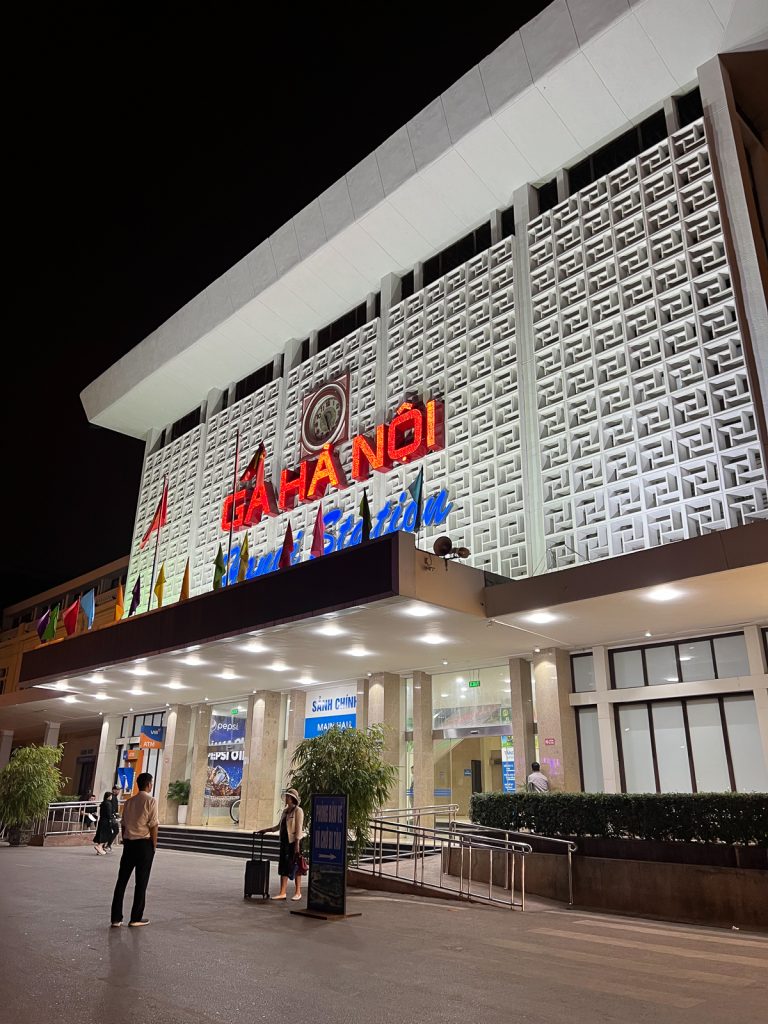
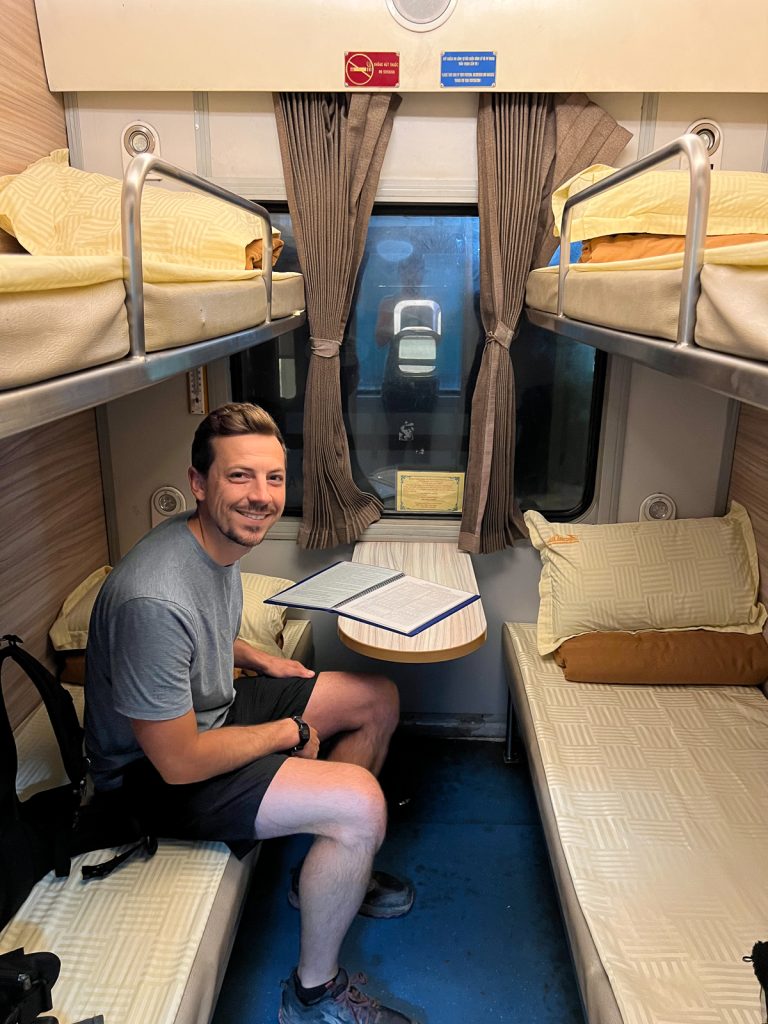
Train to Hanoi
If you take a train to Hanoi, you’ll be dropped off right in the heart of the action. The Hanoi Railway Station is located just southwest of the Old Quarter, a quick walk or Grab ride from your likely lodging. And if you are arriving from the south, you’ll get to be ON the train that goes through Train Street, which is a fun, different perspective.
Want a unique experience in Vietnam? Ride a sleeper train! We took the sleeper train from Ho Chi Minh City to Da Nang and it was an experience we’ll never forget! We booked our train on 12Go. You can have a similar experience riding from Da Nang or Hue to Hanoi.
Check out our video riding the sleeper train and our guide to riding a sleeper train in Vietnam to learn more about the experience. Both the highs…and the lows!
Taking a bus to Hanoi
Depending on where you’re arriving from, you can also take a bus to Hanoi, including a sleeper bus. To be honest, we haven’t heard great things about the sleeper buses, but they are an option if you’re on a tight budget! You can see the bus options from all over Vietnam at 12Go.
When to visit Hanoi
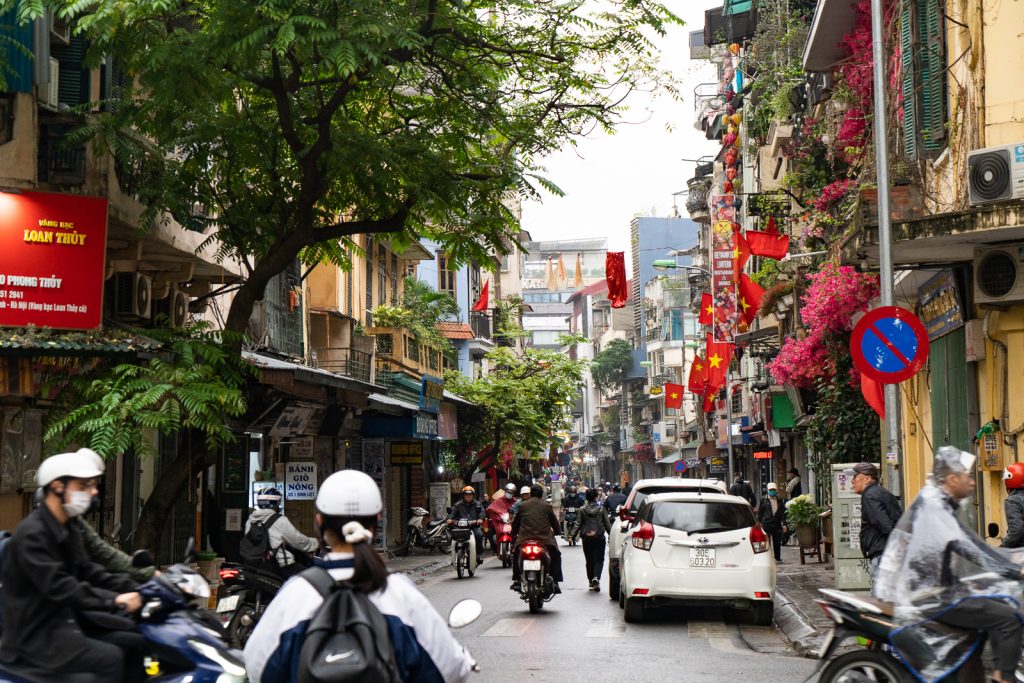
Since Hanoi is located more north than other popular areas of Vietnam like Hoi An and Ho Chi Minh City, it experiences closer to 4 seasons instead of a rainy season and a dry season.
Winter
Winter is cold and damp in Hanoi, but still can be a good time to visit. However, keep in mind that the Vietnamese Lunar New Year celebration, known as Tet, takes place in late January or early February. Many shops and businesses close down and people travel to see extended family for about a week to celebrate. For 2026, Tet will begin on February 17, 2026.
Spring
During February through April, the weather will be very pleasant. Plants around the city will be reawakening and blooming and the temperatures will be mild with little precipitation.
Summer
From May to August, temperatures can become very uncomfortable and heavy rain is a big possibility.
Fall
In September through November, Hanoi really shines with lower humidity and mild and pleasant temperatures. The fall weather will likely be perfect for exploring the city and other outdoor activities.
In our experience, the best time to visit is between November and April. We visited in early April and we had a mix of cool and warmer days, with little rain. It was very comfortable to explore. Plus, this is a good time to visit other areas of Vietnam too!
Check out our ultimate Vietnam packing list with downloadable list!
How to get around Hanoi
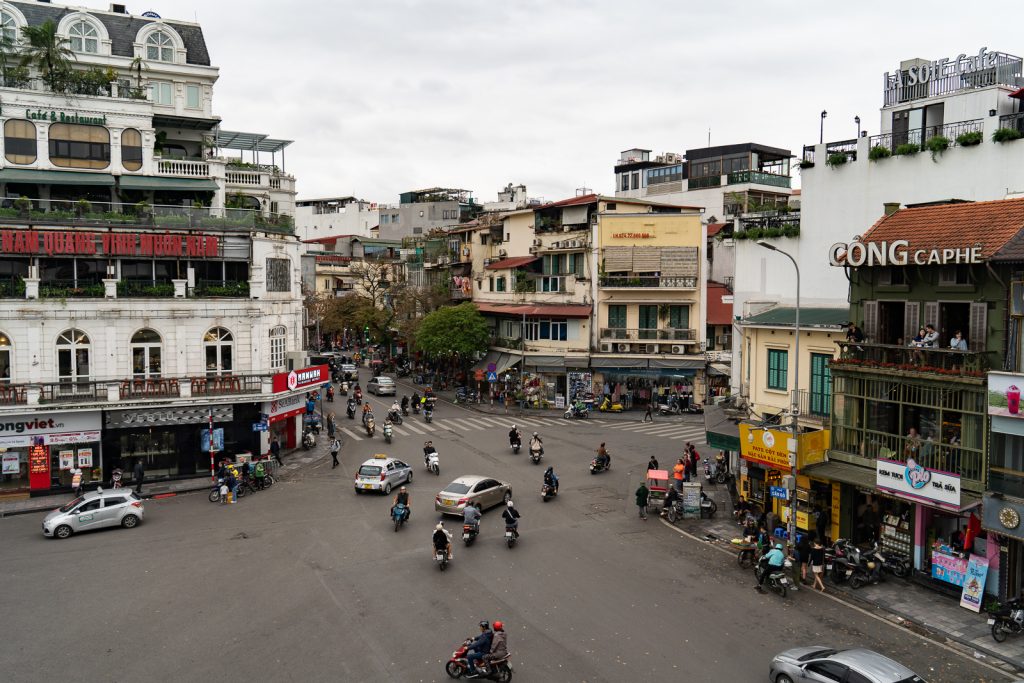
Walk
We loved walking around Hanoi! It felt very walkable, especially around the Old Quarter and French Quarter. So if the weather is nice and the distance isn’t too long, we highly recommend walking! Not only will it give you some exercise, but it will enable you to see things you may have missed otherwise.
Grab
Grab is the easiest and cheapest way to get around Hanoi. It’s the Southeast Asia version of Uber or Lyft. We took Grab cars and Grab bikes just about anytime we needed to go somewhere that was too far to walk.
Rent a motorbike
No visit to Hanoi is complete without a ride on a motorbike! Whether you drive your own or just ride on the back of one on a Grab ride, it’s an exhilarating experience!
However, if you rent a motorbike, make sure to check motorbike laws for your country’s driver’s license. You will need an IDP, which is an International Driver’s Permit. However, only IDPs from countries under the 1968 Vienna Convention are legal.
Unfortunately for US, Canadian, and Australian citizens, your IDP will not qualify. Without an IDP the only way to legally drive a motorbike without a license is to drive one 50ccs or less. This may work in cities, but it will not be powerful enough in mountainous areas.
Also, whether you drive or are a passenger, helmets are required by law in Vietnam for anyone on a motorbike. So make sure to wear one!
Where to Stay in Hanoi, Vietnam
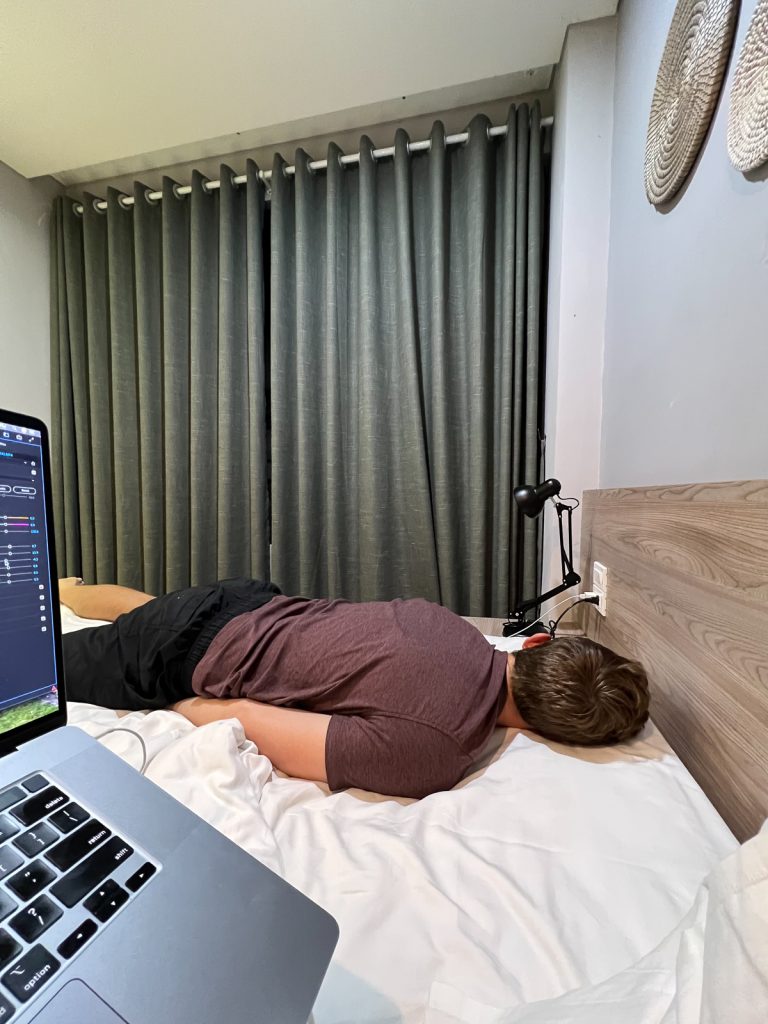
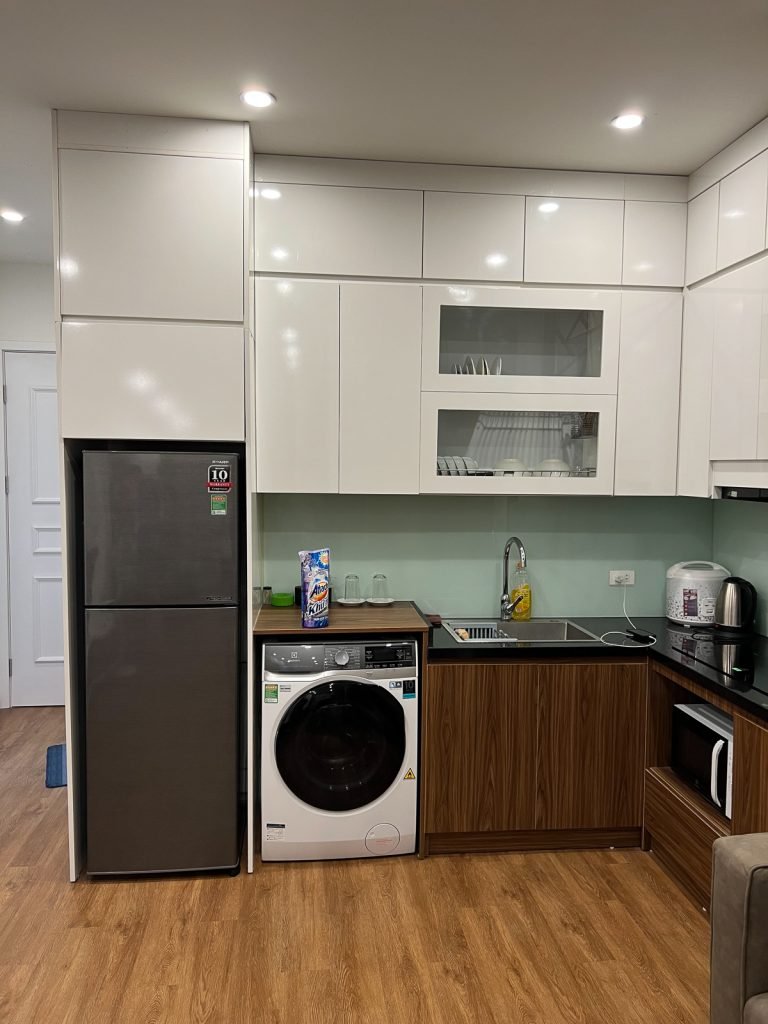
We highly recommend staying in or near the Old Quarter when visiting Hanoi. This will make it easier to get around by foot (or a short Grab) to see the top sights! Below are some suggestions of where to stay, including the three places we stayed during our 11 total nights in Hanoi.
Hotels
Hanoi Allure Hotel
Hanoi Salute
Airbnbs
Luxury Apartment Near Hoan Kiem Lake
We stayed here for two, one night stays when traveling from Hanoi to other destinations. It was close to the train and had a washer and dryer!
XOI Zion 3
We stayed in this Airbnb for a few nights. It was quiet, clean, and had a washer and dryer on the building roof!
XOI Zion 7
We also stayed here a few nights. It’s hosted by the same host as the one above. It was just as clean and comfortable as the other.
Some other options:
Garden house center of Old Quarter
Penthouse | View 360 Old Quarter – this is a super cool loft with amazing views and a jacuzzi!
Tranquil Rustic Apt with Bathtub near Old Quarter – bright and airy apartment close to Old Quarter
Hostels
Hanoi has many hostel options, with both bunks and private rooms. We suggest checking out Hostelworld to see your choices and read reviews!
Final tips for visiting Hanoi, Vietnam
Before heading to Hanoi, we have a few final tips to help your time in both the city and Vietnam go a bit smoother. Some of these we had to learn the hard way (like the 5th one…yikes). To see more tips, check out our blog post, where we share 20+ things to know before you visit Vietnam!
Make sure you have a visa (if required)
As American citizens, we were required to get a visa. But depending on your nationality and length of visit, you may not need one.
While you can get a visa upon arrival, getting an e-visa in advance is much easier! To get an e-visa you will want to go to this website. Yes, it looks a tad outdated and sketchy, but this is the website run by the Vietnamese government. There are other websites that you can get your visa from, but they may charge more.
The e-visa costs $25 USD per person, which can be paid by credit card. You will need to provide your passport information, arrival and departure dates, and entry and exit points. You also have to provide a passport photo. We used this app to take photos at home.
After filling out the information, you will likely hear your results within 3 business days. We suggest planning for longer, just in case. Once approved, make sure to print it to bring with you!
Get an eSIM
Want to use your phone while in Vietnam? We highly recommend getting an eSIM from Airalo! This is a SIM that you can download to your phone. You can get an eSIM for a specific country or for an entire region, making it extra easy to use if you plan to hop between countries.
Note: this SIM only works for data, not calling. If you need to make a call, WhatsApp will be your best bet. More on that below!
Buy travel insurance
We never travel internationally without travel insurance. And SafetyWing is our go to!
SafetyWing is travel medical insurance that will cover you outside of your home country for however long you need it. We purchase their Nomad Insurance plan, which not only gives us travel medical insurance, but also provides coverage for lost baggage and travel delays!

Always have cash
While some places do take credit cards, we found that many restaurants, street food stalls, public restrooms, and even homestays will only take cash. For this guide, it’s a safe assumption that most food vendors will be cash only.
You can find ATMs all over town and we suggest going to a bank ATM for the best rates.
Carry toilet paper
Make sure to carry some toilet paper (or tissue) while out and about in Vietnam. Otherwise, you may get into a crappy situation…literally! We found bathroom conditions to vary a lot. And sometimes they either did not have toilet paper or you had to pay for it. While many toilets have bum guns (spray gun bidets), you will want something to dry off. Don’t ask how we know…
Use WhatsApp
WhatsApp is the go-to app for communicating while in Vietnam. Many lodging and tour companies use it to book things and communicate with you. Make sure to download it in advance and give any guides your number!
One perk of WhatsApp is that you can also make calls on the app. This is very helpful if you have a data-only eSIM!
Learn how to cross the street
Crosswalks really don’t mean much in Vietnam. Locals told us that the best way to cross the street is to just start walking. Look for a small window in traffic and walk at a consistent pace (don’t run or stop). The motorbikes will go around you. It feels unnatural, but it eventually gets easier.
One thing to know is that red lights don’t always mean anything in Vietnam. I learned this the hard way in Hanoi when I began crossing at a crosswalk (we had the walk sign) and a motorbike decided to run the red light and I walked right into them. Thankfully no one was hurt (physically at least)!
Temple etiquette
When visiting temples, you may need to remove your shoes. For the ladies, make sure you cover your shoulders. We also both covered our knees as well.
Looking for more things to do in Vietnam?
- eBook: The ULTIMATE guide to visiting Vietnam
- 3 week Vietnam Itinerary
- 2 week Vietnam Itinerary
- 12 best cities to visit in Vietnam
- The top 10+ Vietnamese foods you MUST try
- The 13 best coffee shops in Hanoi
- The BEST foods in Hanoi
- The ULTIMATE guide to the Ha Giang Loop
- How to visit Hanoi Train Street in 2024 (+ the BEST cafe to visit!)
- The 13 BEST coffee shops in Hanoi
- The BEST food in Hanoi: 19 dishes to try!
- 9+ AMAZING things to do in Ninh Binh! (+ 2 day itinerary)
- 13+ FUN things to do in Hoi An, Vietnam
- The ULTIMATE guide to planning a trip to Vietnam
- 20+ Vietnam tips: things to know before you go!
- Watch all of our Vietnam videos
- Check out all of our Vietnam guides
Ready to explore Hanoi, Vietnam?
Pin this 3 days in Hanoi itinerary to help plan your trip!