Last updated on June 11th, 2026
Searching for the best National Parks to visit in May? Look no further. As the world comes to life in the Spring, we’ve crafted a guide to the top 17 National Parks you won’t want to miss during the month of May.
Spring has sprung, and there’s a whole list of good reasons why May is a great time to visit the national parks in the U.S. and embrace this season wholeheartedly.
During this month, the snow has mostly melted and roads are reopening, meaning national parks are accessible and bursting with life! You can witness baby animals taking their first clumsy steps, and watch waterfalls at their peak flow. Plus, May has comfortable temperatures (hello, shorts and T-shirt weather!). And you can dodge the peak season crowds, which means you’ll have the trails pretty much to yourself (score!).

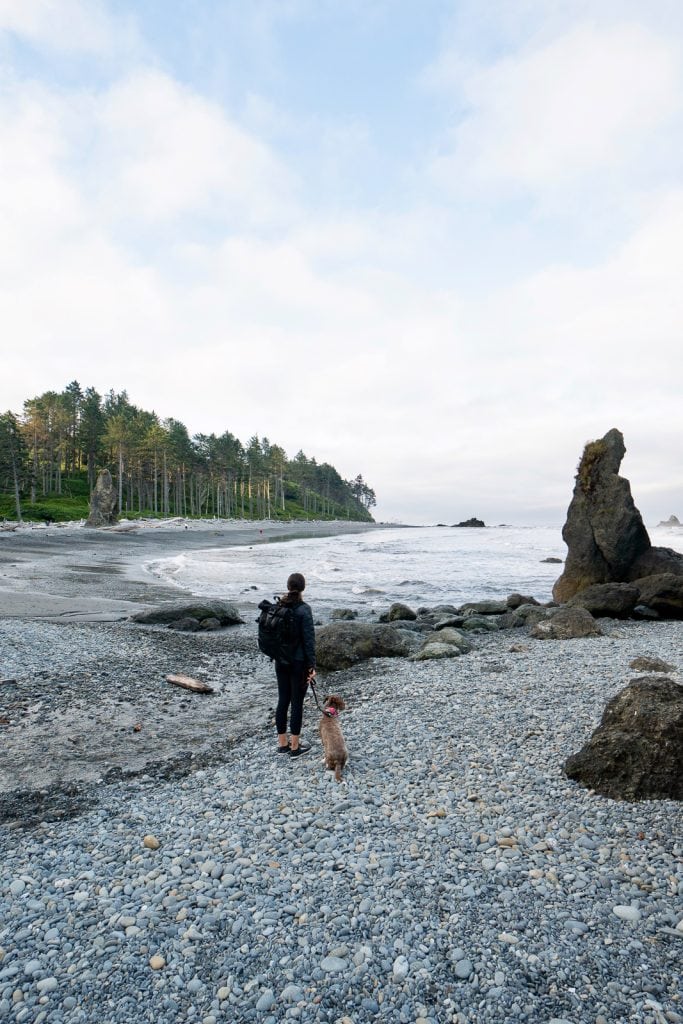
With 52 national parks under our belt (Yes, you read that right!), we’ve learned a thing or two about timing our visits. And truly, there’s no better time to explore the U.S. National Parks than in May.
To help you make the most of this season, we’ve compiled a list of the 17 best National Parks to visit in May. You’ll find helpful tips and logistical information to ensure your trip is a success!
Quick Disclaimer About Our Monthly National Parks Series
Welcome to our monthly series, where we share our handpicked recommendations for the best national parks to visit each month. We’re on a mission to give each and every U.S. National Park (that we have personally visited) its moment to shine in our series—at least once. And yes, you might notice that certain iconic spots make a repeat appearance here and there—because honestly, they’re just that amazing.
In our series, we dive into all the nitty-gritty details that can make or break your park experience: things like the best time of year to dodge the crowds, when the trails are just perfect, any cool happenings, and more.
While we haven’t hit every National Park just yet, rest assured that every tip we share comes from real-life adventures and a whole lot of love.
- Tips for Exploring National Parks in May
- 15 best National Parks to visit in May
- 1. Yellowstone National Park
- 2. Acadia National Park
- 3. White Sands National Park
- 4. Badlands National Park
- 5. Black Canyon of the Gunnison National Park
- 6. Shenandoah National Park
- 7. Cuyahoga Valley National Park
- 8. Great Sand Dunes National Park
- 9. Great Smoky Mountains National Park
- 10. Hot Springs National Park
- 11. Indiana Dunes National Park
- 12. Mesa Verde National Park
Tips for Exploring National Parks in May

Plan Ahead: Even during the quieter spring season, popular national parks can fill up faster than you might expect. If your adventure includes camping or staying in park accommodations, lock in your reservations early to skip the stress (because who needs that?).
Download Maps in Advance: Since signal can be spotty, download your maps before you lose reception. AllTrails is our go-to app for this (it’s saved our bacon more than once), ensuring you can always find your way, even without signal.
America the Beautiful Pass: For just $80 bucks a year, you’re covered for every park entry—seriously, it pays for itself after just a few visits.
Pet-Friendly Planning: If your adventure buddy barks and has four paws, remember to look up the park’s pet policies. Some trails are off-limits to pets to protect the wildlife and keep things clean.
Leave No Trace: Stick to trails, pack out what you pack in, and leave only footprints. Let’s keep our parks pristine, now and for every future explorer who follows in our footsteps.
17 best National Parks to visit in May
1. Yellowstone National Park
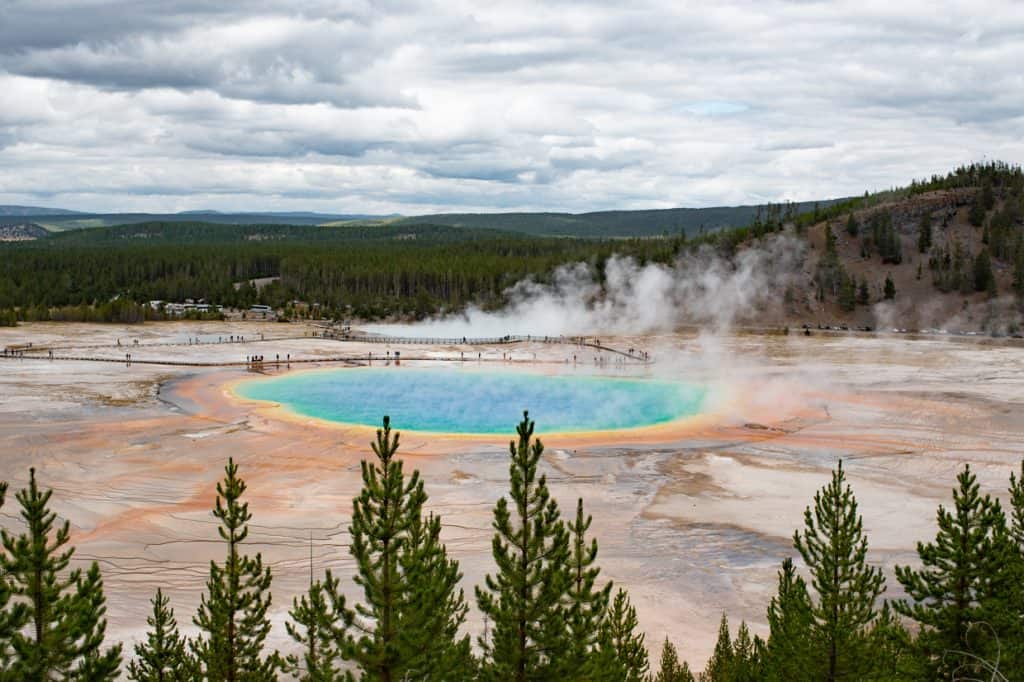
Welcome to Yellowstone, America’s first national park, and a place that pretty much wrote the book on the wild, rugged spirit of the West (and if you’ve been, you know that’s no exaggeration). Geysers, hot springs, mudpots, and fumaroles—it’s like walking on a different planet. Old Faithful, the park’s superstar geyser, is so punctual you could almost set your watch by it. But wait, there’s more. The wildlife! You’ve got bison roaming around like they own the place (which, frankly, they kind of do), elk, wolves, and even the occasional bear.
Where is Yellowstone National Park?
Located predominantly in Wyoming, with sections stretching into Montana and Idaho, Yellowstone is massive. The town of West Yellowstone in Montana serves as the west entrance to the park, just a few miles away. If you’re coming from Idaho, the town of Ashton is approximately 30 miles from the park’s west entrance. Cody, a city in Wyoming, is about 50 miles east of the park’s east entrance.
Why Visit in May
In May, you get to see the park shake off winter and burst into spring, with rivers running high from melting snow and baby animals on the move. The crowds this time of year are like the geysers, not fully erupted yet. Plus, the weather is ideal. It’s warm enough for hiking yet cool enough for comfort.
Weather in May
May swings from crisp mornings to pleasant afternoons, with temperatures ranging from a fresh 40°F to 60°F (4°C to 15°C). At night, it often dips below freezing, ranging from the high 20s to low 30s°F (-3°C to 0°C). Sun, rain, snow. It’s a mixed bag, so pack for all possibilities.


Best things to do at Yellowstone National Park
Wildlife Watching in Lamar Valley: Dubbed ‘America’s Serengeti’ for good reason, you can spy on bison, bears, and wolves—oh my! (Keep a safe distance, these beauties aren’t for petting).
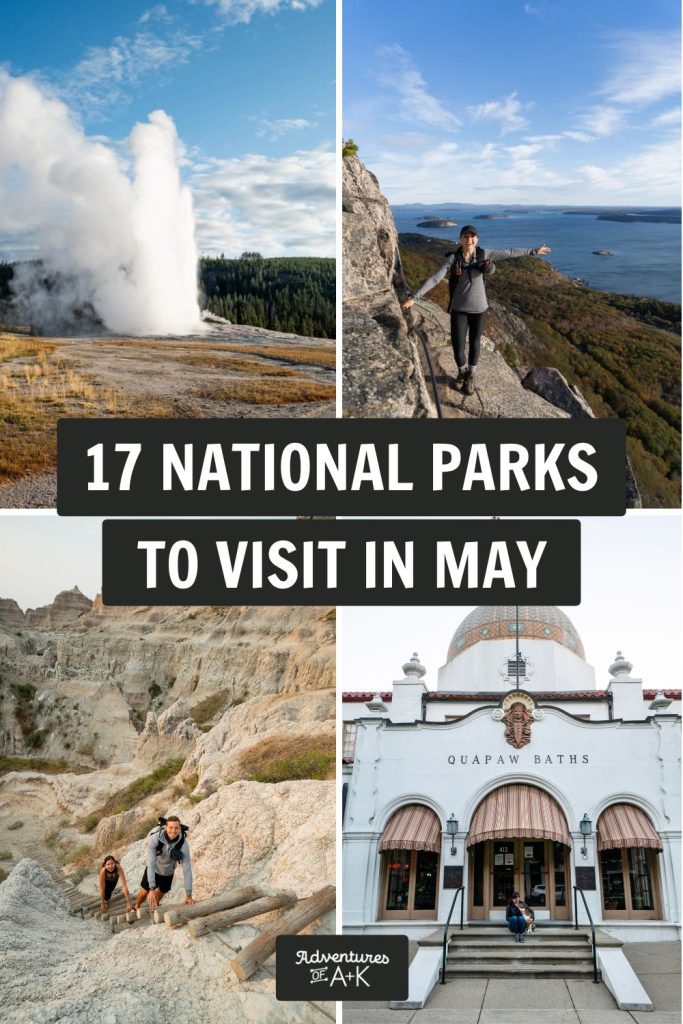
Old Faithful: Old Faithful is the most famous geyser in the world, and it’s located in the Upper Geyser Basin. You can watch Old Faithful erupt every 90 minutes, and you can also explore the other geysers in the area.
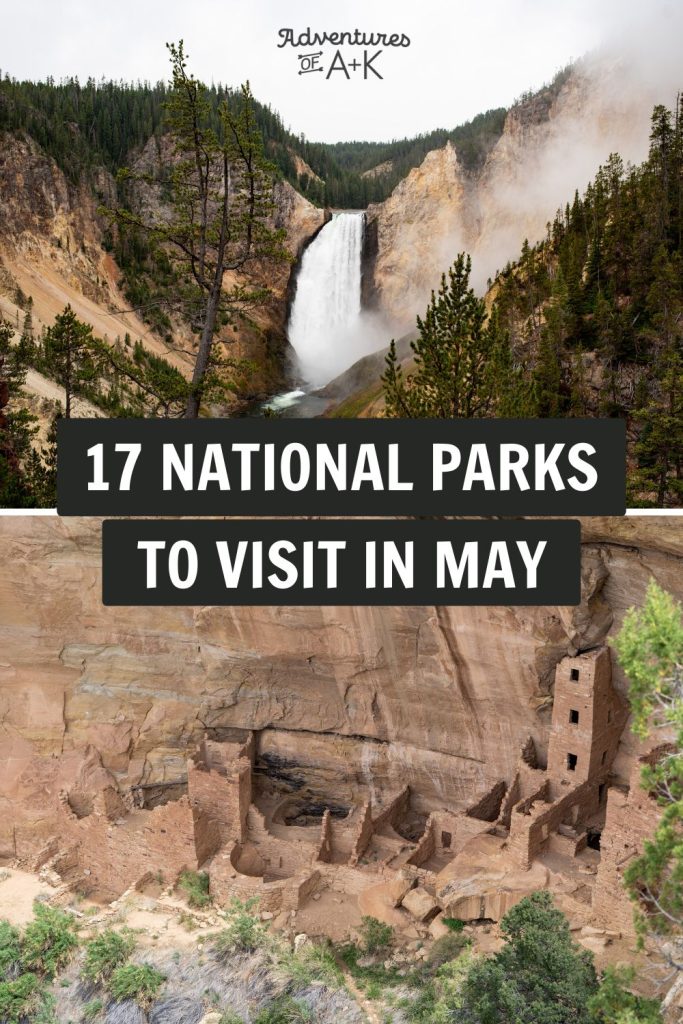
See the Grand Canyon of the Yellowstone: Yellowstone is more than just geysers! The Grand Canyon of the Yellowstone is a rugged, colorful canyon with an impressive 300+ foot waterfall and the Yellowstone River rushing below. There are a variety of different overlooks to check out on both sides of the canyon!
Know Before You Go
Be Bear Aware: Carry bear spray, make noise, and be bear aware—it’s their home you’re strolling through.
Start Early: As the 5th most visited national park, trails can get pretty busy. By getting to the park a bit earlier, you’ll have a head start to beat the crowds.
Learn more about Yellowstone National Park
Blog post
2 Days at Yellowstone National Park Itinerary
YouTube videos
Yellowstone National Park Day 1: Old Faithful, Grand Prismatic Spring, & Fairy Falls
Yellowstone National Park Day 2: Canyons, Waterfalls, and Mammoth Hot Springs
2. Acadia National Park

Located on the rugged coast of Maine, Acadia National Park is a gem of the American Northeast. Covering an expanse of over 49,000 acres, the park spans across several islands, including the majority of Mount Desert Island, as well as portions of Isle au Haut and the Schoodic Peninsula.
Acadia boasts a diverse range of habitats, from dense forests and serene ponds to rocky cliffs and sandy beaches. The park is home to Cadillac Mountain, which, at 1,530 feet, stands as the tallest mountain along the U.S. Atlantic Coast!
Where is Acadia National Park
Acadia National Park is located in the state of Maine. It is the only national park in the northeastern United States. Acadia National Park is located about 2.5 hours north of Portland, Maine.
Why Visit in May
If you’re thinking about a trip to Acadia National Park, May is a fantastic time to go. You’ll dodge the big summer crowds and still get to see the park spring to life. The trees are turning green the wildflowers are blooming, and the whole place is shaking off the last chills of winter.
Weather in May
In Acadia National Park, May weather can be quite variable. Typically, you can expect average high temperatures to range from 55-70°F (13-21°C) and lows from 40-50°F degrees Fahrenheit (4-10°C). It’s a time of transition where you could experience a cool spring breeze or a warmer sunny day, so it’s wise to check the forecast closer to your visit and pack layers!
Best Things to do at Acadia National Park
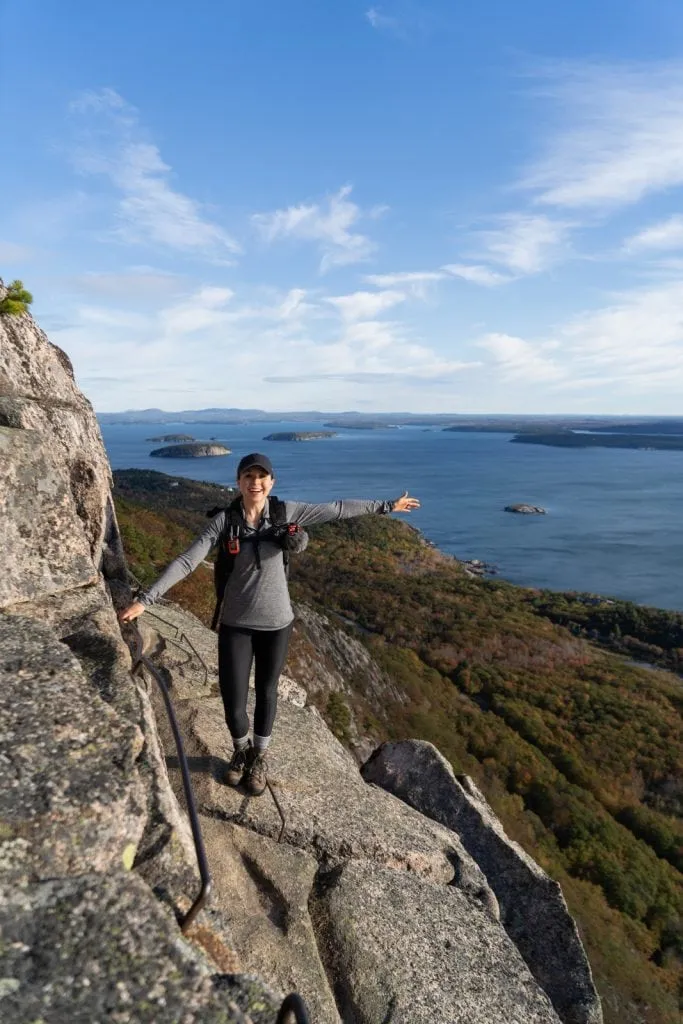
Hike the Precipice Loop: This strenuous 2.1-mile loop hike takes you up the east face of Champlain Mountain. It’s a challenging adventure, with iron rungs and ladders to climb, so it’s not for those afraid of heights. But the reward at the summit is well worth the effort! It was our favorite hike in the park!
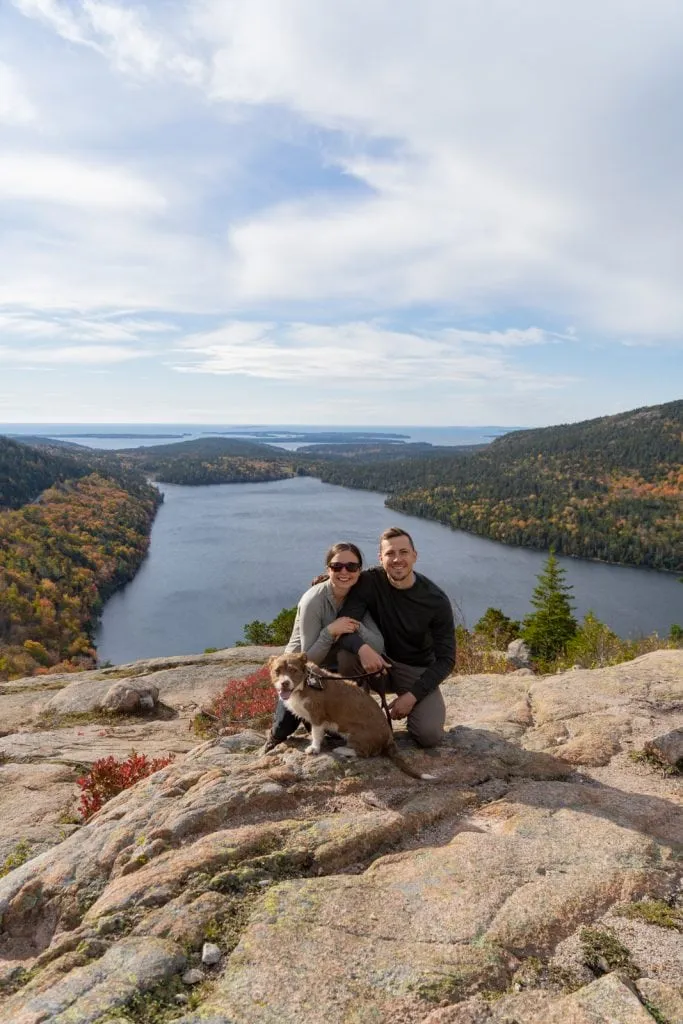
Explore Jordan Pond: A leisurely 3.1-mile loop trail encircles this pristine pond, providing stunning views of the surrounding mountains (and there’s even popovers waiting at the end if you time it right!). For an extra challenge, head up to the South Bubble!
Drive the Park Loop Road: This 27-mile scenic drive takes you through some of the park’s most stunning landscapes, including Sand Beach, Thunder Hole, and Otter Cliff!
Know Before You Go
Driving up Cadillac Summit Road: From late May to mid-October, secure a vehicle reservation online beforehand. These are not sold at the park, so make sure to plan ahead! These do sell out for sunrise, which is the most popular time to visit the summit.
Learn more about Acadia National Park
Blog posts
Hiking the Precipice Trail at Acadia National Park (everything you need to know!)
How to see the sunrise at Cadillac Mountain in Acadia National Park
Our Favorite Hikes in Acadia National Park
The Best Things to do in Acadia National Park
The Perfect 4 Day Acadia National Park Itinerary
YouTube videos
Hiking the Precipice Trail at Acadia National Park! (+ Gorham Mountain Loop & Great Head)
Our FIRST time at Acadia National Park: Cadillac Mountain, South Bubble, Popovers, & Beech Cliff!
3. White Sands National Park

White Sands National Park is famous for its vast, wave-like dunes of gypsum sand—the largest of its kind in the world. The sand here is very white and fine, and it is constantly shifting due to the wind, creating dunes that can be up to 60 feet tall. The park is 275 square miles, which is massive—you could easily get lost in this otherworldly landscape, and it’s right in the heart of New Mexico (of all places!).
Where is White Sands National Park?
White Sands is situated in the Tularosa Basin, 52 miles away from the nearest city, Las Cruces. The closest town, about 15 miles southwest is Alamogordo.
Why Visit in May
Visiting White Sands National Park in May is a real treat. You get the beauty of the park without the intense summer heat, making outdoor activities like hiking and sand sledding much more pleasant. Plus, May is right before the summer vacation rush, so it often sees fewer visitors, which means you can enjoy more solitude amidst the dunes.
Weather in May
The weather is warm but not overbearing, with daytime temperatures hovering between 75-85°F (24-29°C), perfect for dune sledding. Nighttime temperatures often drop to around 50-60°F (10-15°C).


Best things to do at White Sands National Park
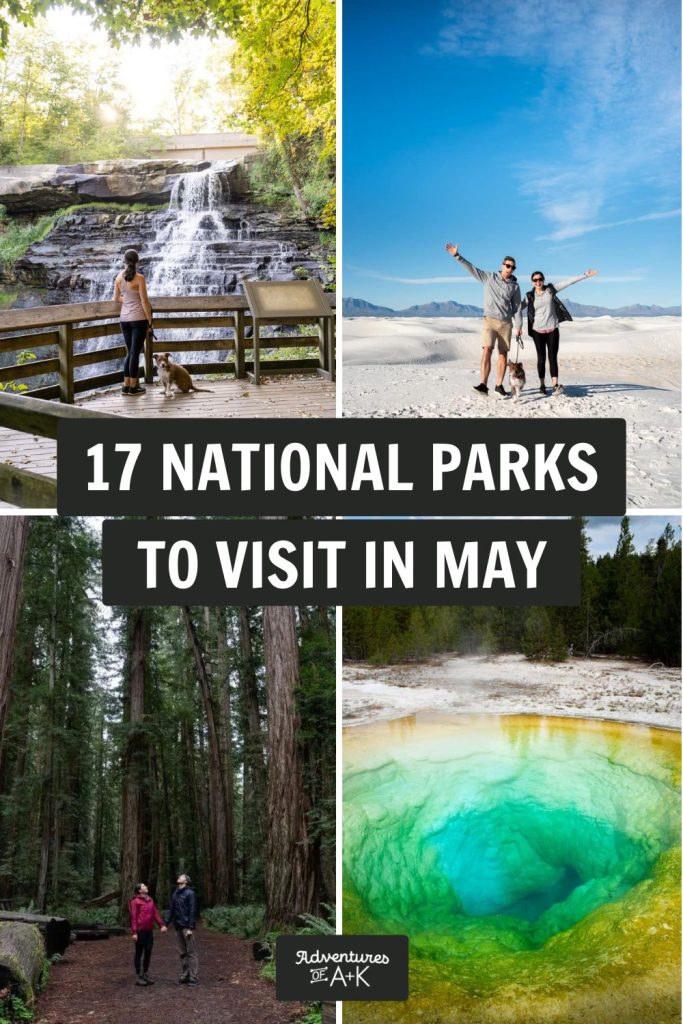
Dune Sledding: Not just a winter sport! Bring your own sled or buy one at the Visitors Center for around $20 and whoosh down the dunes. (For the best sliding experience, we recommend using waxed plastic snow saucers.)
Stroll the Interdune Boardwalk: This 0.4-mile jaunt is perfect for snapping pics and learning cool desert facts (did you know the sand isn’t really sand? Mind-blowing, right?).
Dune Life Nature Trail: This is a 1-mile loop trail that winds through the white gypsum sand where you can learn all about the critters that call the dunes home.
Know Before You Go
Hydration is your best friend here: The desert is still a desert, even in May, so carry plenty of water.
Dogs ARE allowed: Your furry friend is allowed to join you as you explore the park’s white sands. They must be on leash and are not allowed in buildings though!
Bring sun protection: Sunscreen and sunglasses? Non-negotiable. The white sand reflects sunlight like nobody’s business.
The park can close for missile testing: Yes, you read that right, as it borders a missile range. Check the schedule before you visit to avoid unexpected closures.
Learn more about White Sands National Park
Blog post
5 Things to do at White Sands National Park
YouTube video
Weekend in New Mexico: White Sands, Las Cruces, & Carlsbad Caverns National Park
4. Badlands National Park

Situated in the heart of South Dakota, Badlands National Park is full of striking geologic formations, vast prairies, and rugged badlands. With 244,000 acres to explore, you’ve got layers upon layers of sedimentary rock, carved into intricate canyons, spires, and pinnacles by water and wind over millions of years. It’s not just rocks and rugged terrain, though—the park is also home to some cool critters like bison, pronghorns, and bighorn sheep. Plus, there are fossils. Yep, prehistoric bones are all over the place!
Where is Badlands National Park
You’ll find Badlands National Park in southwestern South Dakota, with the nearest town being Wall, located about 7 miles to the north.
Why Visit in May
May is a special time in the Badlands. As winter fades away, the park comes alive with the freshness of spring. It’s a sweet spot before the summer crowds flood in, giving you a more peaceful experience. Plus, the wildlife is becoming more active, and if you’re lucky, you might catch a glimpse of bison calves or bighorn lambs taking their first steps.
Weather in May
In May, the weather at Badlands National Park begins to warm up, offering pleasant conditions for exploring. Expect highs around 65-75°F (18-24°C). Nights can be cooler, typically around 40-50°F (4-10°C).
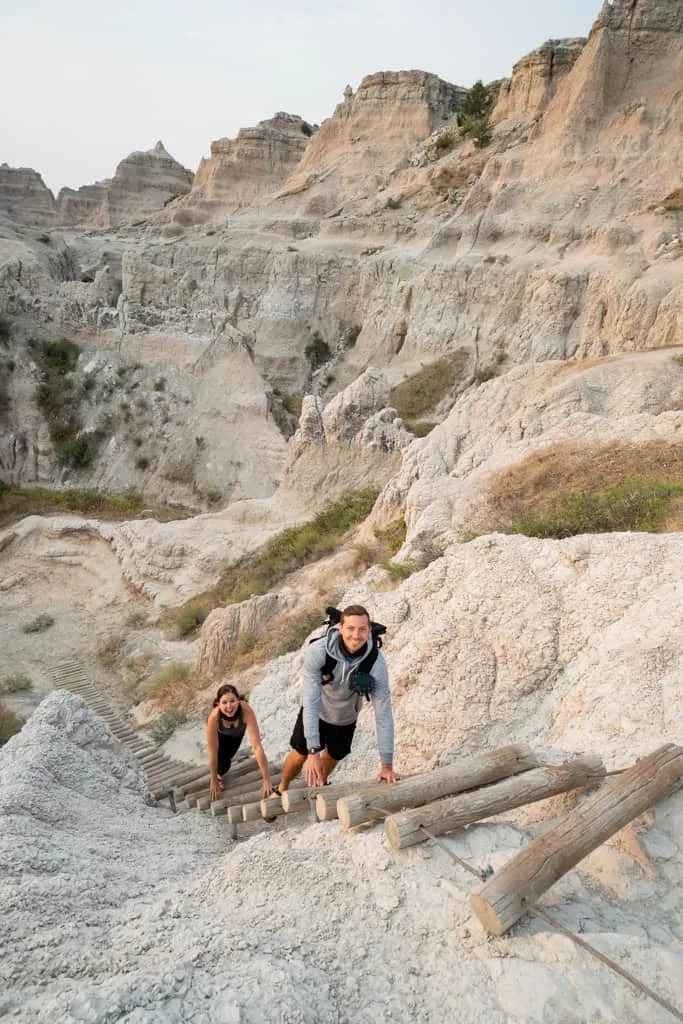

Best things to do at Badlands National Park
Hike the Notch Trail: This 1.5-mile round-trip hike is a must-do. It’s short but packs a punch with a ladder climb and stunning views of the White River Valley. If you can only do one hike, make it this one!
Drive the Badlands Loop Road: A 39-mile scenic drive that takes you through some of the park’s most iconic landscapes.
Door Trail: A 0.75-mile round trip that’s super easy and offers a portal to a moonscape vista that’s both eerie and beautiful.
Know Before You Go
Stay on the Trails: The badlands are extremely fragile, so help protect them by sticking to designated trails and overlooks.
Prepare for Wind: The Badlands breeze can turn into a bluster. Hold onto your hats (literally) and layer up to shield from the gusts.
Be cautious of wet conditions: When the clay-like terrain becomes wet, it can become very slippery, and the sticky clay may accumulate on your shoes. If you plan to visit during or after rain, stick to paved or boardwalk trails.
Learn more about Badlands National Park
Blog posts
A Complete Guide to Hiking the Castle Trail in Badlands National Park
The Best Things to do in Badlands National Park (+ Where to stay & itineraries!)
YouTube videos
One Day at Badlands National Park: Notch Trail, Badlands Loop Road, & visiting Wall Drug!
5. Black Canyon of the Gunnison National Park

If you’ve never been to Black Canyon of the Gunnison National Park in Colorado, you’re in for a treat. This place isn’t massive (it’s around 30,750 acres) but wow, does it pack a punch! The canyon here is super deep and narrow, with some spots going down more than 2,000 feet. And it’s not just about the views—there’s hiking, bird watching, and even rock climbing for the adventurous souls out there.
Where is Black Canyon of the Gunnison National Park
You’ll find Black Canyon of the Gunnison in western Colorado. The nearest town is Montrose, about 15 miles away, providing easy access to the park’s South Rim. The North Rim is more remote, requiring a bit more of a drive.
Why Visit in May
May is a fantastic time to visit the Black Canyon. The crowds are minimal, giving you the space to truly enjoy the park’s beauty. Everything’s in full bloom, the river’s roaring, and the wildlife is out and about. Plus, the days are nice and long, giving you plenty of time to explore.
Weather in May
May brings in the good stuff, weather-wise. We’re talking daytime temps around 60-70°F (15-21°C), and nights that are cool but not too chilly, dropping to around 30-40°F (-1 to 4°C). It’s prime time to enjoy the park without breaking a sweat or freezing your toes off.


Best things to do at Black Canyon of the Gunnison National Park
Rim Rock Nature Trail: An easy, pet-friendly 1.7-mile stroll along the South Rim that gifts you with stellar views and places to ponder life’s big questions (like why isn’t this canyon on everyone’s bucket list?).
Tackle an inner canyon route: Want a challenge? “Hike” one of the park’s inner canyon routes. We put “hike” in quotes because these are not traditional trails, but rather STEEP, rugged, unmaintained routes. They are not for the faint of heart, but for those up for an adventure and are physically able, it’s a MUST do! There are six routes to choose from, but we did the Gunnison Route. This is the most common one to choose and we highly recommend it!
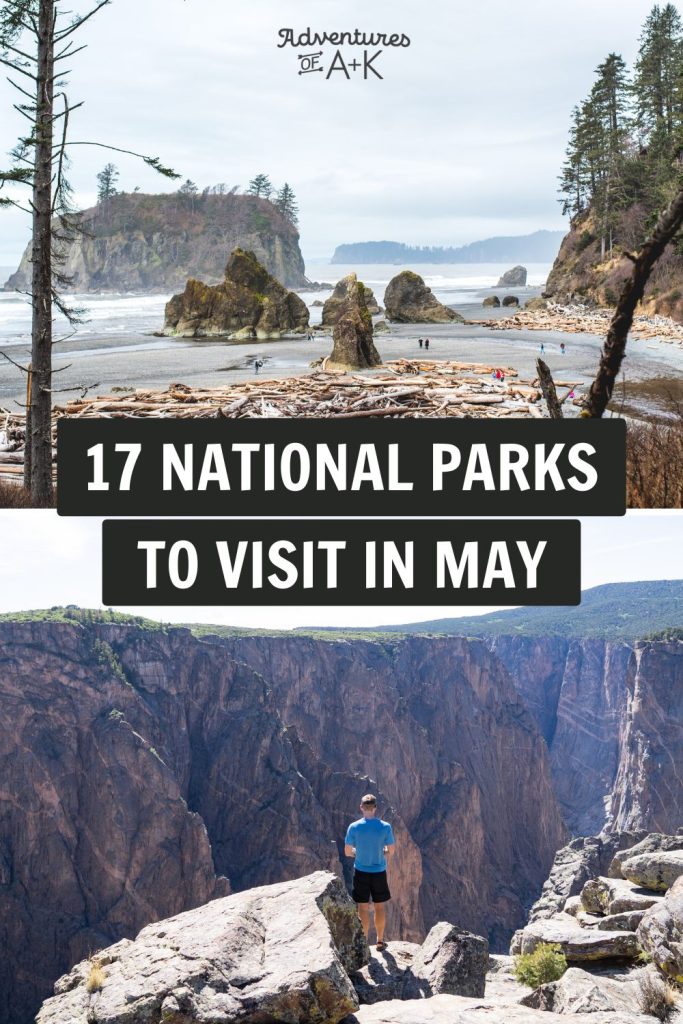
South Rim Road: Gear up for a scenic drive with twelve overlooks over 7 miles. Each stop presents a new angle on the canyon’s grandeur. Don’t forget to stop at the Painted Wall—it’s pretty much the Grand Canyon of Colorado.
Oak Flat Loop Trail: A moderate 1.4-mile trek that is definitely not ‘flat’ with a descent into the canyon with epic views of the steep, craggy walls and pinyon-juniper woodlands.
Know Before You Go
The two rims are not connected: The canyon has a north and south rim. And while they look close on the map, there is no bridge to get from one rim to another. To go between the two requires a 1 hour, 45 minute drive.
Dress in layers: You never know what May is going to throw at you, weather-wise, so it’s smart to come prepared.
Be careful: With those deep canyons, you’ve got to watch your step and stay back from the edge.
Dogs can visit overlooks: Dogs are allowed to visit the paved overlooks. Please do not leave them in your vehicle during the summer months. The park gets VERY hot!
Learn more about Black Canyon of the Gunnison National Park
Blog posts
How to hike the Gunnison Route at Black Canyon of the Gunnison National Park
Things to do in Black Canyon of the Gunnison National Park
YouTube video
Hiking the Gunnison Route at Black Canyon of the Gunnison National Park (+ Overlooks!)
6. Shenandoah National Park

Nestled in the heart of Virginia’s Blue Ridge Mountains, Shenandoah National Park is a lush, Appalachian jewel that offers sweeping vistas, cascading waterfalls, and quiet wooded hollows. It’s a hiker’s paradise, famous for its portion of the Appalachian Trail and over 200,000 acres of protected lands brimming with rich biodiversity.
Where is Shenandoah National Park?
Shenandoah National Park is located in the Commonwealth of Virginia. It’s situated along the Blue Ridge Mountains, part of the larger Appalachian Mountains range. The park stretches over a significant portion of Virginia’s western region and is approximately 75 miles west of Washington, D.C.
Why Visit in May?
May in Shenandoah is when the park is alive with blooming wildflowers and the fresh green of new leaves. The crowds? They’re there, but it’s not peak season yet!
Weather in May
May weather is pretty darn perfect for exploring. Daytime temperatures averaging a comfortable 60-70°F (15-21°C), which in my book is ideal for hiking, picnicking, and generally frolicking in nature. Nights can be cooler, often dipping into the 40s°F (around 4°C to 9°C). While it’s not the wettest month, it’s wise to have a raincoat or an umbrella handy, just in case.

Best things to do at Shenandoah National Park
Hiking Old Rag Mountain: This hike is a must—it’s a 9.3-mile loop of pure rocky and rewarding goodness. Sure, it’s a workout, but those views at the summit? Stellar. A day-use ticket is required for Old Rag between March 1 and November 30.
Dark Hollow Falls: This is one of the most popular waterfalls in the park. Located near the Big Meadows area along the Skyline Drive, this stunning waterfall is about 70 feet tall and can be reached by a 1.6-mile trail.
Skyline Drive: Traverse this 105-mile road that hugs the park’s ridgeline, offering stunning vistas at every turn. Don’t miss the sunset from one of the 75 overlooks.
Know Before you go
Poison ivy: Poison ivy is common in Shenandoah National Park. Be able to identify poison ivy and avoid contact with it.
Pet policies: Pets are welcome on most trails in Shenandoah National Park, but familiarize yourself with the pet regulations because there are a few exceptions. Old Rag, for example, is one where dogs are not allowed.
Learn more about Shenandoah National Park
Blog post
How to hike Old Rag Mountain at Shenandoah National Park
YouTube video
Hiking up OLD RAG Mountain at Shenandoah National Park in Virginia (+ sunset on Skyline Drive)
7. Cuyahoga Valley National Park


Cuyahoga Valley National Park is tucked away in Northeastern Ohio and offers over 32,000 acres of lush forests, rolling hills, and serene waterways. This park beautifully intertwines the charm of rural landscapes with the ruggedness of steep valleys, creating a truly diverse environment. Here, you can explore more than 125 miles of hiking trails, indulge in the scenic beauty of Brandywine and Blue Hen Falls, or take a leisurely ride along the Towpath Trail, following the historic Ohio & Erie Canal.
Where is Cuyahoga National Park?
Cuyahoga National Park is located in the state of Ohio, just south of the city of Cleveland and north of the city of Akron.
Why Visit in May?
May in Cuyahoga Valley is the prime time to visit. The flowers are blooming, the trees are green again, and the waterfalls? Oh, they’re at their most majestic. Plus, the migratory birds are back! It’s the sweetest time to visit if you’re looking to beat the summer rush but still want to catch the park showing off.
Weather in May
The weather in May is as pleasant as it gets, with daytime temperatures averaging a comfortable 60-70°F (15-21°C), while the nights are cooler, ranging from 40-50°F (4-10°C). It’s the perfect climate for hiking, wildlife spotting, and simply enjoying the great outdoors. While there is a chance of rain in May, it is not typically heavy or long-lasting.


Best things to do at Cuyahoga National Park
Ledges Trail: This 2.3-mile loop is an absolute must, leading you through lush forests and past stunning rock formations.
Ohio & Erie Canal Towpath Trail: Grab your bike or your walking shoes and explore this historic trail, stretching over 85 miles through the park. We LOVED renting bikes from Century Cycles and exploring the park this way!
Cuyahoga Valley Scenic Railroad: Take a break from hiking and enjoy the park from a different perspective aboard this scenic train ride. You can even take your bike on board and explore the park by bike and train!
Know Before You Go
Dogs are Allowed: Another big perk of the park is that dogs are totally welcome on the trails! Just remember to keep them on a leash, and you’re good to go.
Biking Along the Towpath: If you’re planning to bike the Towpath Trail, ensure your bike is in good condition. The trail can be busy in May, so keep an eye out for other bikers and hikers.
The Park is FREE: This national park is unique in that it’s completely free to visit, with no entrance fee required!
Learn more about Cuyahoga National Park
Blog post
Things to do in Cuyahoga Valley National Park (+ a one day itinerary!)
YouTube video
Exploring Cuyahoga Valley National Park (Ohio) by foot, bike, & train!
8. Great Sand Dunes National Park

Welcome to Great Sand Dunes National Park, a place where you can find the tallest sand dunes in North America, set against a backdrop of the rugged Sangre de Cristo Mountains! This unique landscape stretches across 149,000 acres in southern Colorado and offers a variety of activities, from sand sledding and hiking to stargazing. The park is home to diverse ecosystems, with grasslands, wetlands, and forests to explore.
Where is Great Sand Dunes National Park
Tucked away in the San Luis Valley of southern Colorado, Great Sand Dunes National Park is about 35 miles northeast of Alamosa.
Why Visit in May
May is a stellar time to visit the Great Sand Dunes. The Medano Creek begins its seasonal flow, creating a beach-like atmosphere right at the base of the dunes. The sand also tends to be cooler during May, making it a perfect time for barefoot adventures up the dunes.
Weather in May
Springtime in the park brings milder temperatures, with daytime highs averaging around 60°F (15°C) and nights cooling down to around 30°F (-1°C). But remember, this is Colorado, so it’s wise to be prepared for any kind of weather.


Best things to do at Great Sand Dunes National Park
Star Dune: The park’s tallest dune stands at 741 feet. It’s a strenuous hike, so start early, and you’ll have the summit to yourself.
Medano Creek: This seasonal stream is perfect for splashing around and is a unique feature not to be missed (think beach day with mountains).
Stargazing: Sand Dunes National Park has very dark skies, and there is little light pollution. On a clear night, you can see the Milky Way Galaxy and millions of stars.
Know Before you go
Check the Wind Forecast: Sand can whip up without warning, so be prepared with a hat and a bandana for protection.
Learn more about Great Sand Dunes National Park
Video: Hiking to High Dune at Great Sand Dunes National Park
9. Great Smoky Mountains National Park

Great Smoky Mountains National Park, affectionately known as the Smokies, is a true jewel of the American South. Straddling the border between North Carolina and Tennessee, this park is famed for its rolling mountains, rich biodiversity, and mist-shrouded landscapes that inspired its name. As one of the most visited national parks in the United States, the Smokies form a part of the renowned Appalachian Mountain Range and is home to some of the highest peaks in eastern North America.
Where is Great Smoky Mountains National Park
Nestled right between the bustling towns of Gatlinburg, Tennessee, and Cherokee, North Carolina, the Great Smoky Mountains are surprisingly accessible. Gatlinburg is about 20 miles away.
Why Visit in May
May is the park’s grand opening for the summer season, with everything coming to life and the weather just right. The wildflowers are having a field day, the wildlife is out and about, and the summer crowds are still packing their bags. Plus, with the rivers and streams full from spring rains, the waterfalls are absolutely stunning.
Weather in May
In May, daytime temperatures hover around 70-80°F (21-27°C). As the sun sets, it cools off to a comfortable 40-50°F (4-10°C).

Best things to do at Great Smoky Mountains National Park
Clingmans Dome Observation Tower: Perched at 6,643 feet, it’s the highest point in Great Smoky Mountains National Park and in all of Tennessee. Getting there is half the adventure, and the view? Absolutely worth every step.
Laurel Falls Trail: A moderate 2.4-mile round trip hike leads to an 80-foot waterfall that cascades down a rocky hillside into a pool below.
Cades Cove Loop: This 11-mile one-way loop drive offers abundant wildlife viewing opportunities, historic buildings, and access to multiple trails. This drive can get very busy, so we suggest going early!
Know Before You Go
Bear Awareness: Over 1,500 black bears are active in May, so always keep a safe distance, carry bear spray, and store food properly.
Rain Gear Ready: May showers brings flowers to the smokies, so pack a rain jacket to stay dry during those unexpected drizzles.
Expect Crowds and Traffic: As the most visited national park in the United States, it attracts a large number of visitors throughout the year, even during the shoulder season. Consider starting your day early to avoid peak hours and heavy traffic.
Learn more about Great Smoky Mountains National Park
Blog: 9 Best Hikes in the Smoky Mountains
10. Hot Springs National Park

Tucked away in the stunning Ouachita Mountains, Hot Springs National Park is one of the most accessible and urban national parks. Across its 5,550 acres, this Arkansas gem does more than just bubble and steam—it invites you to dip your toes (literally) into history, bask in nature’s wonders, and let’s be honest, take that much-needed soak. Known for its 47 thermal springs that produce over a million gallons of 143°F water daily, visitors have flocked to the park for centuries to bathe in the healing waters. In addition to bathing, there are many other ways to enjoy Hot Springs National Park. You can hike through the park’s wooded trails, visit Hot Springs Mountain Tower, or take a guided walking tour of the historic downtown area.
Where is Hot Springs National Park
Situated in the Ouachita Mountains, this unique park is located about 55 miles southwest of Little Rock. The adjacent city of Hot Springs provides easy access to the park’s attractions.
Why Visit in May
May in Hot Springs National Park offers the best of both worlds—comfortable weather for outdoor adventures and the right temperatures for enjoying the thermal waters, all with fewer people around!
Weather in May
During May, the park offers a comfortable climate for outdoor activities. Daytime temperatures are pleasant at around 78°F (25°C), while evenings provide a cooler atmosphere at approximately 58°F (14°C).


Best things to do at Hot Springs National Park
Hot Springs Mountain Tower: At 216 feet tall, the view is, well, pretty epic. You can see for miles, which includes the surrounding Ouachita Mountains and the city below.
Bathhouse Row: Stroll along this historic row and perhaps take a dip in the thermal waters at one of the operating bathhouses, like the Buckstaff or the Quapaw Baths & Spa.
The Fordyce Bathhouse Museum: This is one of the most popular tourist attractions in the park. The museum is housed in the former Fordyce Bathhouse, which was built in 1915 and is one of the largest and most ornate bathhouses on Bathhouse Row.
Know Before you go
About the springs: The thermal springs are hot, like really hot. But bathing in them inside the park is a no-go. To soak in the park’s steamy waters, you’ll need to visit one of the bathhouses.
Drink plenty of water: Especially if you’re planning on bathing in the thermal springs. The water in the springs is very hot, and it’s easy to get dehydrated.
Learn more about Hot Springs National Park
Things to do in Hot Springs National Park
11. Indiana Dunes National Park

Indiana Dunes National Park, nestled on the shores of Lake Michigan, is a little slice of beach-meets-forest paradise in Indiana, not far from Chicago. With sandy shores, towering dunes, and lush woodland expanses, there’s so much to explore, all packed into a generous 15,000 acres.
Where is Indiana Dunes National Park
Indiana Dunes National Park is located in the northern part of Indiana, right on the southern shore of Lake Michigan. It’s quite close to the Indiana-Illinois state line, making it easily accessible from Chicago. In fact, it’s only about 50 miles southeast of Chicago!
Why Visit in May
First off, the weather’s just right—warm enough to ditch the heavy jackets but not so hot that you’re melting. Everything’s blooming, and the park is alive with color and wildlife. Plus, it’s before the summer crowds, so you get to enjoy a bit more peace and quiet (and who doesn’t love that?).
Weather in May
Expect daytime highs to be pleasant in the mid-60s to low 70s°F (18-22°C) range. And when the sun dips down, it cools off to comfy sweater weather, with lows typically around 40-50°F (5-15°C). However, it’s always wise to check the local forecast close to your visit, as weather can be unpredictable, especially in transitional seasons like spring.

Best things to do at Indiana Dunes National Park
Mount Baldy Beach Trail: Admire Mount Baldy as you stroll to the beach along this short trail!
The 3 Dune Challenge: For an adventurous spirit, this 1.8-mile trail offers a rigorous trek across the park’s highest dunes. Conquer Mt. Jackson, Mt. Holden, and Mt. Tom for a triumphant view over Lake Michigan. Technically this hike is in the neighboring state park, but it’s right by the National Park, so we’re counting it!
Birding: The park is a hotspot for migratory birds in May. Bring your binoculars to the Great Marsh Trail, a gentle 1.3 miles, and see the flurry of feathered friends.
Know Before you go
Respect the Lake: The beach is stunning, but remember, Lake Michigan is a force to be reckoned with. Keep an eye on the weather and water conditions, especially if you’re planning to take a dip.
Tick Check: Spring in the dunes means tick season. Stay on the paths, and check for ticks after your adventures.
12. Mesa Verde National Park

Mesa Verde National Park, perched in the heart of Colorado, is not your typical walk in the park. Here, ancient Puebloan cliff dwellings cling to canyon walls, offering a glimpse into the lives of the Ancestral Pueblo people who lived there for over 700 years. The park is world-famous for its well-preserved cliff dwellings, particularly the Cliff Palace, which is the largest cliff dwelling in North America. But Mesa Verde has more to offer than just cliff dwellings. The park is also home to a variety of other archaeological sites, including pit houses, kivas, and petroglyphs!
Where is Mesa Verde National Park
Mesa Verde National Park is located in the southwestern part of the state of Colorado. It is situated approximately 35 miles west of Durango, Colorado.
Why Visit in May
May is a wonderful time to visit Mesa Verde. The climate is mild, the tours to the cliff dwellings kick off in mid-May (coincidentally, when we decided to drop by), and the crowds? Nonexistent.
Weather in May
In May, temperatures range from a comfortable 40-70°F (4-21°C). The air is usually crisp in the morning and pleasantly warm by afternoon, perfect for exploring the park’s many archaeological sites.


Best things to do at Mesa Verde National Park
Cliff Palace Tour: Take a ranger-guided tour of Cliff Palace. The 1-hour tour covers about 0.25 miles and involves climbing five, 8-10 foot ladders on a 100-foot vertical climb.
Balcony House and Long House: Other notable dwellings include the Balcony House, with its adventurous ladder climbing and tunnel crawling to access, and the Long House, which provides insight into the daily lives of the Ancestral Puebloans.
Petroglyph Point Trail: For those seeking a more solitary hike, this 2.4-mile trail offers not just an incredible view of petroglyphs, but also a panoramic vista of the entire park.
Know Before You Go
Be Prepared for Altitude: Mesa Verde sits at over 7,000 feet above sea level. If you’re not used to high altitudes, take it slow to avoid sickness.
Book Cliff dwelling tours in advance: To visit the cliff dwellings, such as Cliff Palace, Long House, and Balcony House, you must book a ranger-led tour. These tours operate from May 14 to October 21, so you’ll need to snag your tickets online 14 days in advance.
Learn more about Mesa Verde National Park
Blog post
A Complete Guide to Visiting Mesa Verde National Park
YouTube video
Mesa Verde National Park Highs & Lows | Square Tower House Tour, Far View Sites, & a hit and run
13. Congaree National Park
Congaree National Park, tucked away in South Carolina, is not your typical park with towering mountains or deep canyons; instead, it boasts some of the tallest trees in the eastern U.S. and preserves the largest tract of old growth bottomland hardwood forest in the United States. We’re talking about 26,000 acres of lush, green wilderness. But, one of the park’s most impressive features is its biodiversity. It’s home to deer, bobcats, feral pigs, and a diverse array of bird species!
Where is Congaree National Park
Congaree National Park is located in central South Carolina, United States. It’s situated approximately 20 miles southeast of Columbia, the state’s capital.
Why Visit in May
May is when Congaree truly comes alive. The water levels usually recede, bidding farewell to the winter floods and making the boardwalks accessible. Plus, it’s firefly season! A magical experience you won’t want to miss. The park is alive, and the summer crowds haven’t arrived yet, giving you plenty of space to enjoy all that Congaree has to offer.
Weather in May
Expect pleasant temperatures during your May visit, with daytime highs hovering around 75-85°F (24-29°C) and cooler evenings between 55-65°F (13-18°C). It’s comfortable weather for hiking, bird watching, and enjoying the firefly show at night.


Best things to do at Congaree National Park
Boardwalk Loop Trail: A popular way to explore the park is via the Boardwalk Loop Trail. This 2.4-mile walkway meanders through the forest.
Canoeing and Kayaking: The park’s waterways, including Cedar Creek, offer routes for canoeing and kayaking. Paddling here is a fantastic way to experience the park’s beauty and observe wildlife like turtles, river otters, and tons of bird species!
Weston Lake Loop Trail: Clocking in at 4.7 miles, this trail offers a peaceful stroll along the water’s edge. You’ll see the reflections of massive trees called ‘champion trees’.
Know Before You Go
Bring Bug Spray: Even though the bugs aren’t at their worst in May, it’s still a good idea to come prepared.
Watch for Flooding: Since Congaree is a floodplain forest, it’s subject to periodic flooding, which can affect access to trails and camping areas.
No Entrance Fee: Unlike many national parks, Congaree does not charge an entrance fee!
14. Olympic National Park

Tucked in the Pacific Northwest corner of Washington State, Olympic National Park is a place where tall mountains meet lush, green forests and wild, rugged coastlines. One of the park’s most remarkable features is its variety of ecosystems. You can wander through lush rainforests, like the Hoh Rainforest, known for its towering trees and vibrant green mosses and ferns. The park is also home to the stunning Olympic Mountains, with Hurricane Ridge offering accessible mountain vistas. The park’s coastline is wild and unspoiled, featuring rocky shores and tidepools. Beaches like Ruby Beach offer dramatic sea stacks and the chance to spot marine life such as sea stars and crabs.
Where is Olympic National Park?
Spanning nearly one million acres, Olympic National Park is located on the Olympic Peninsula in northwestern Washington State. The nearest town is Port Angeles, situated about 5 miles from the park’s visitor center.
Why Visit in May?
May is a great time to visit Olympic National Park because it’s before the peak tourist season, so the trails and facilities are less crowded. The spring bloom is in full swing, providing vibrant colors and the opportunity to see the park’s diverse plant life. Additionally, the weather is beginning to warm up, making outdoor activities more comfortable.
Weather in May
In May, Olympic National Park typically experiences mild weather. You’re looking at daytime temps around 60°F (15°C), perfect for hitting the trails without working up too much of a sweat. Nights are a bit chillier, dipping to around 40°F (4°C). Just a heads up: it’s the Pacific Northwest, so a rain shower might surprise you. Be sure to pack a raincoat!

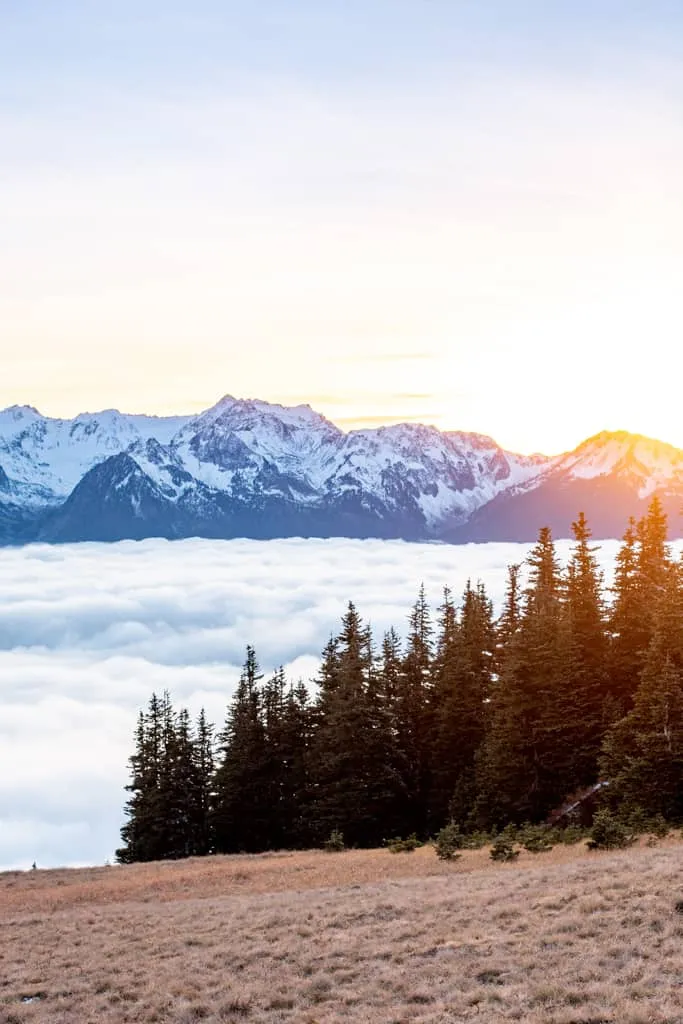
Best things to do at Olympic National Park
Hiking Hurricane Ridge: This area provides panoramic views of the park and surrounding areas. There are various trails ranging from easy to challenging. The Hurricane Hill Trail is a popular choice, offering a 3.2-mile round-trip hike with stunning views.
Exploring the Hoh Rain Forest: This temperate rainforest is famous for its lush vegetation, moss-covered trees, and wildlife. There are several trails, including the Hall of Mosses (1.1 miles) and the Spruce Nature Trail (1.4 miles).
Visiting Rialto Beach and Hole-in-the-Wall: Rialto Beach offers dramatic coastal scenery with sea stacks and driftwood. A 3.3-mile round-trip hike will take you to Hole-in-the-Wall, a natural arch carved by the sea.
Know Before you go
Layer Up: Weather can change rapidly in the PNW, so dress in layers, especially if you’re venturing into the higher elevations. Make sure one item is a rain jacket, as it can be a bit rainy in Washington in May!
Remote Locations: Some areas of the park are quite remote, so plan ahead in terms of travel time and supplies. Make sure to download offline maps to help navigate as well.
Learn more about Olympic National Park
Blog post
The ULTIMATE Olympic Peninsula Road Trip Itinerary
27+ Fun Things to do on the Olympic Peninsula
20+ Best Things to Do in Olympic National Park (A Locals Guide!)
YouTube videos
Exploring the Olympic Peninsula | Cape Flattery, Hurricane Ridge, Mount Ellinor, & Murhut Falls
Conquering Mount Storm King + visiting a lavender farm and hobbit house! (Olympic Peninsula)
5 days on Washington’s MAGICAL Northern Olympic Peninsula
15. Redwood National & State Parks

Redwood National and State Parks, tucked away on California’s rugged northern coast, are a collaboration between the National Park Service and the California State Parks system, and protect vast expanses of pristine old-growth redwood forests. The stars of the show are, without a doubt, the towering redwoods. These are the tallest trees on Earth, reaching more than 300 feet! They are also incredibly long-lived, with some trees estimated to be over 2,000 years old.
Where are Redwood National & State Parks?
Redwood National and State Parks are a complex of one national park and three California state parks located along the coast of northern California, just north of the town of Arcata to Crescent City.
Why Visit in May
May is the perfect time to be at Redwood National and State Parks! This time of year, not many folks are around, so if you’re looking to have a bit of the forest to yourself, this is your time. Plus, everything’s waking up—the wildflowers are popping up like crazy, and the whole forest feels fresh and alive.
Weather in May
In May, the weather in Redwood National and State Parks is typically mild and enjoyable, perfect for exploring the great outdoors. Daytime temperatures usually hover around 50 to 60°F (10 to 15°C). It’s pleasantly cool, ideal for hiking among the giant redwoods or strolling along the coast. Nights can be a bit chillier, often dipping into the 40s°F (around 4 to 9°C), so packing some warm layers for the evenings is a good idea.


Best things to do at Redwood National & State Parks
Hike the Tall Trees Grove: This grove is home to some of the tallest trees on Earth, including the Hyperion tree, which is the tallest known living tree in the world. The hike is a moderate 3.6-mile loop.
Drive the Howland Hill Road: A scenic and rugged drive through old-growth redwoods with access to short trails like the 0.6-mile Stout Grove loop, which meanders through some of the world’s tallest trees.
Trek the Coastal Trail: Try a section of the Coastal Trail! One of the more accessible segments is the 1.3-mile out-and-back to Enderts Beach, rewarding hikers with ocean vistas and possible whale sightings!
Know Before You Go
Prepare for variable weather: Bring waterproof gear and layer up, as May weather can be unpredictable.
Trail closures: Always check the park’s official website or visitor centers for the latest information on trail and road closures.
Do not approach the elk: Elk can be aggressive, so please keep your distance!
Learn more about Redwood National & State Parks
Blog posts
The ULTIMATE Guide to visiting Redwood National Park (+ state parks!) in California
How to hike the Fern Canyon Trail in Redwood National Park (Permit info, what to bring, & more!)
YouTube videos
Two days in REDWOOD National & State Parks! (Fern Canyon, Gold Bluff Beach, Stout Grove, & MORE!)
16. & 17. Sequoia and Kings Canyon National Parks
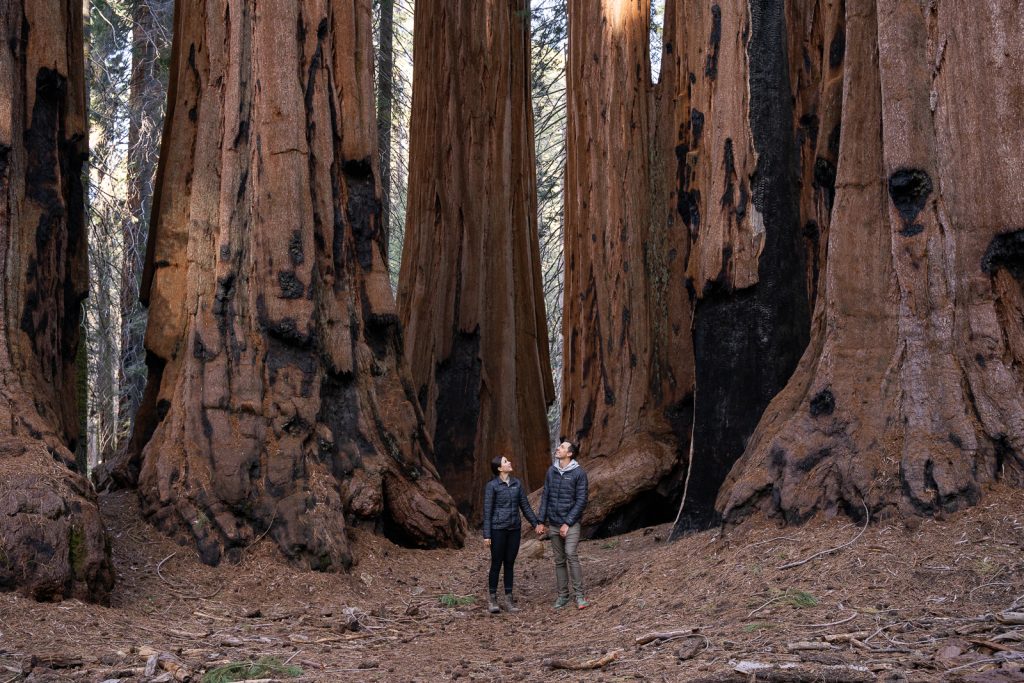
Located in California’s stunning Sierra Nevada Mountains, Sequoia and Kings Canyon National Parks are home to Giant Sequoias, the largest trees in the world (by volume), gorgeous mountain views and rugged peaks, rushing rivers and waterfalls, scenic drives, and almost endless backcountry adventures.
While two separate parks, we are including them together because as next door neighbors, it’s super easy to explore both at the same time!
Where are Sequoia and Kings Canyon National Parks?
Sequoia and Kings Canyon National Parks are located on the western slope of the Sierra Nevada Mountains, just east of Fresno. If you’re road tripping from other areas of California, you can expect to drive 4.5 hours from San Francisco and 3.5 hours from Yosemite National Park.
Why Visit in May
We personally visited both parks in late May, before Memorial Day, and thought it was a great time to go. While it was too early for the backcountry (we suggest September for this!), all frontcountry hikes were free of snow, plus the summer heat and crowds hadn’t quite arrived yet.
Weather in May
Sequoia and Kings Canyon National Parks range in elevation. The Foothills region of Sequoia is around 1,370 feet, while the popular General Sherman tree is around 6,900 feet. And the park goes higher as well! You can actually find the highest point in the lower 48, Mount Whitney (14,505 feet), within Sequoia National Park.
Because of this range in elevation, the park’s weather varies. In the lower elevations, you can expect to have highs close to 80ºF. While higher up near the Sequoia Groves, the temperatures typically reach the 60s.
Best Things to Do in Sequoia and Kings Canyon National Parks
Visit General Sherman and General Grant: You can’t visit these parks without visiting their iconic trees! And while there are many Giant Sequoias in the park, General Sherman (the largest in the world!) and General Grant (the second largest) are two must-sees!
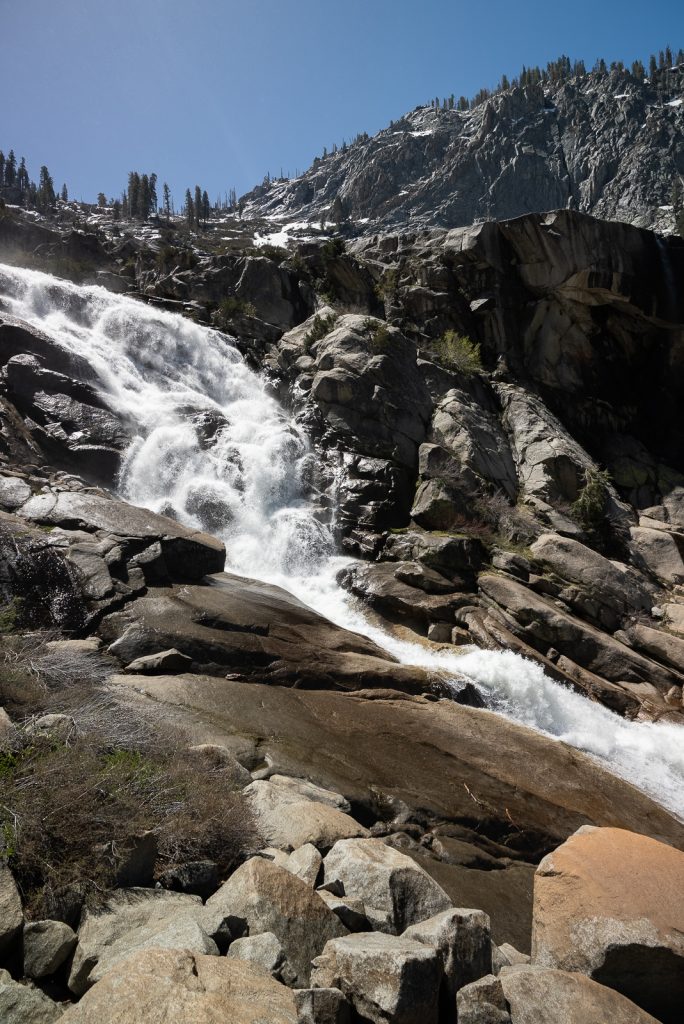
Hike to Tokopah Falls: One of our favorite hikes in the parks was Tokopah Falls. This 1,200 foot tall waterfall cascades down multiple levels and May is the perfect time to see it with lots of water!
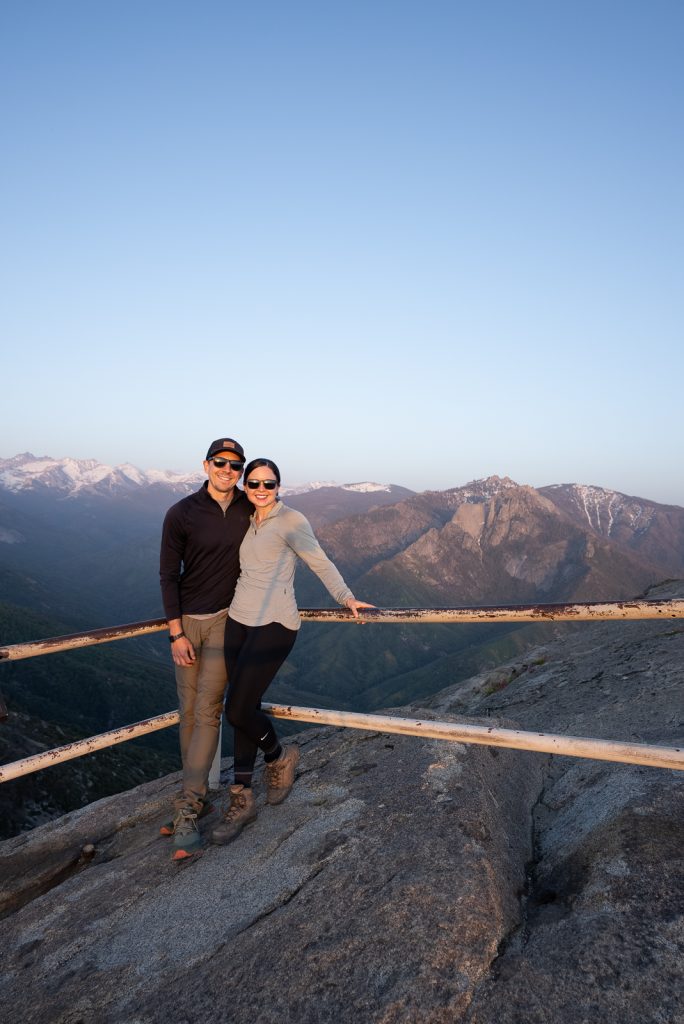
Climb up Morro Rock: Another favorite in the parks is Morro Rock. Along this hike you’ll climb up a granite dome, with steps and handrails along the way. At the top, you’ll have sweeping views of the snowcapped Sierra Nevada Mountains! We recommend hiking this for sunset.
Drive the Kings Canyon Scenic Byway: Kings Canyon is split into two areas and connecting the two is the Kings Canyon Scenic Byway. While most of this drive is in the National Forest, it offers some amazing scenery of the park’s namesake, Kings Canyon. Make sure to stop at Boyden Cavern and Grizzly Falls!
Know Before You Go
Download offline maps: Cell service is scarce in the parks, so make sure to download offline Google Maps and AllTrails maps in advance! To download offline AllTrails maps you will need an AllTrails+ account. Use our code APLUSK30 for 30% off a subscription!
Your entrance covers both parks: To enter the parks it costs $35 for private vehicles, $30 for motorcycles, and $20 per person for those walking or biking in. This entrance fee is good for 7 days and covers you for both Sequoia and Kings Canyon National Parks, as they are managed together.
Book ahead: These parks are very busy, especially starting in late May. Make sure to book your campsite or lodging well in advance.
Learn more about Sequoia & Kings Canyon National Parks
The 17 Best Things to Do in Sequoia National Park
The Perfect One Day in Sequoia National Park Itinerary
General Sherman Tree & Congress Trail: The Ultimate Giant Sequoia Hike!
15 Fun Things to Do in Kings Canyon National Park
Video: TWO National Parks in TWO DAYS: Sequoia and Kings Canyon
Visiting the National Parks a different month?
- 10 best National Parks to visit in January
- 15 best National Parks to visit in February
- 12 best National Parks to visit in March
- 11 best National Parks to visit in April
- 17 best National Parks to visit in May
- 15 best National Parks to visit in June
- 14 best National Parks to visit in July
- 15 best National Parks to visit in August
- 19 best National Parks to visit in September
- 16 best National Parks to visit in October
- 10 best National Parks to visit in November
- 10 best National Parks to visit in December
About the Author
This monthly national park series was written by our writer Nicoll, using our monthly lists and incorporating our experiences at each park. Learn a bit about her below!
I’m Nicoll, an adventurous soul fueled by hiking, dirt biking, and traveling. When I’m not busy crafting captivating tales, you’ll find me exploring the world alongside my partner-in-adventure, Jake. Back in 2019, our insatiable wanderlust led us to embrace the nomadic lifestyle with our fearless pack of canine sidekicks, including a mid-content wolf dog. You can catch my adventures and musings on livingtinywithawolf.com.
Ready to visit the National Parks?
Pin this guide with the best National Parks to visit in May to plan your adventure!