
Last updated on June 10th, 2026
We’re sharing over 20 of the best things to do in Olympic National Park, including top hikes, when to visit, and all the logistics you need to see most of the park without backtracking!
Olympic National Park is widely considered one of the most ecologically diverse national parks in the lower 48. And we couldn’t agree more! It’s one of the few places on Earth where you can stand on a glaciated mountain peak, walk through some of the last remaining temperate rainforests in the U.S., and explore a moody and entirely undeveloped Pacific coastline, all within a few hours of each other. We’ve spent years exploring this region of Washington, and even as locals, the landscape still leaves us speechless.
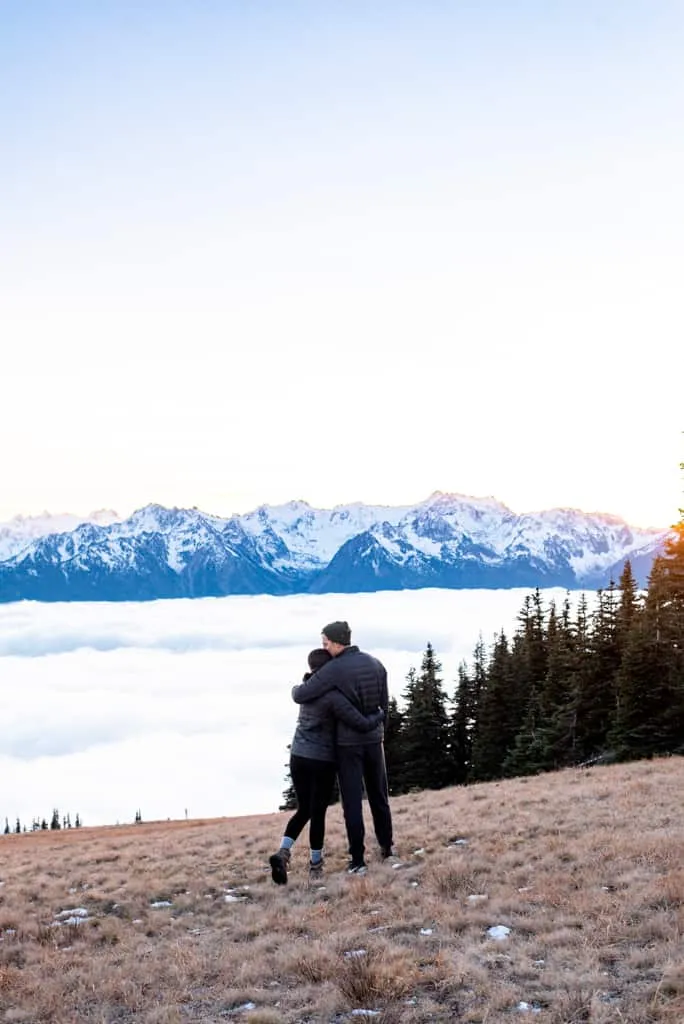
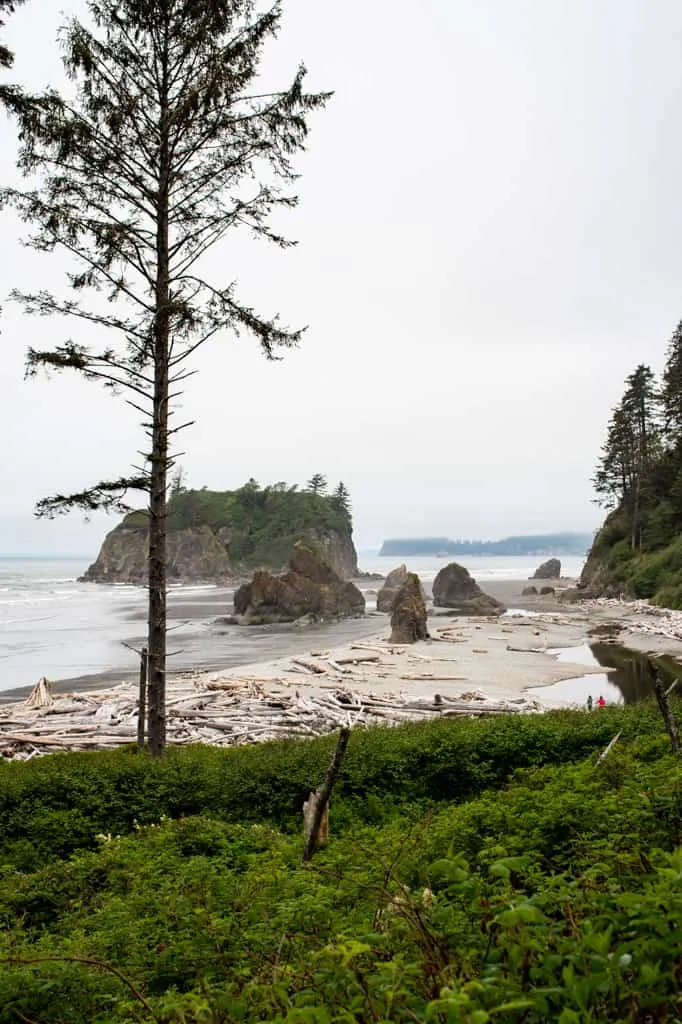
While the Olympic Peninsula as a whole is filled with so many amazing things to do, in this guide we’re sharing the best things to do inside the National Park boundaries. We’re also including everything you need to know to plan your own trip to Olympic National Park like how to get there, the best time to visit, where to stay, and more!
looking for more things to do in washington?
- 2 Day Olympic National Park Itinerary: See the best of the park!
- 27+ Fun Things to do on the Olympic Peninsula
- 3 Days in Seattle Itinerary
- 35+ Fun Things to Do in Washington State (According to Locals!)
- 25+ Best Places to Visit in Washington State
- 24 Washington Waterfalls You Have to See
- 15+ Unforgettable Things to Do on Whidbey Island
- A Weekend in North Cascades National Park
- Our 37 Favorite Hikes in Washington
- The Top 30 FUN things to do at Mount Rainier + park tips!
- All of our Washington guides
The Best Things to Do in Olympic National Park
To make the most of your time, we’ve organized this guide from East to West, which is how we usually explore the park ourselves. This follows a counter-clockwise loop, perfect if you’re coming from the Seattle/I-5 corridor. You’ll start at Staircase, move north toward Port Angeles, head west to the Coast and Rainforests, and finally exit south through Aberdeen.
To make your planning easier, we’ve put all these spots into a Google Map that you can save directly to your phone. We update it regularly as we explore more, so you’ll always have access to our latest recommendations.
The East Side
This is the park’s most isolated entrance. From the I-5 corridor, you’ll head toward Hoodsport before driving about 16 miles to the Staircase Ranger Station. Since this is a dead-end road, you’ll have to drive back out to Highway 101 to head north toward Port Angeles to continue the loop.
1. Visit the Staircase Region

Located in the (often overlooked) southeast corner of Olympic National Park, the Staircase region is home to some of the most impressive old growth forests on the peninsula, the clear waters of the North Fork Skokomish River, and the craggy peaks of the Sawtooth Range. To reach it, you’ll drive along the edge of Lake Cushman, a man made reservoir that’s popular for swimming with gorgeous views of Mount Ellinor.
One of the best hikes in this area is the Staircase Rapids Nature Loop, a 2.1-mile trail that takes you through a mossy old growth forest and across a suspension bridge over the river. If you’re looking for a much bigger challenge, the Flapjack Lakes Trail is a 15-mile roundtrip hike that leads you up to two beautiful alpine lakes sitting side by side with insane views of the mountains.
Important Note: As of early 2026, the Staircase Rapids area and nearby trails are currently closed due to impacts from the Bear Gulch Fire. Always check the NPS current conditions before heading out!
Hurricane Ridge Road
This section of Olympic National Park is based around Port Angeles, the largest town on the peninsula. Hurricane Ridge Road is a dead-end road, so after exploring the ridge, you’ll head back down into town before continuing west on Highway 101 toward the Elwha Valley.
2. Drive up to Hurricane Ridge
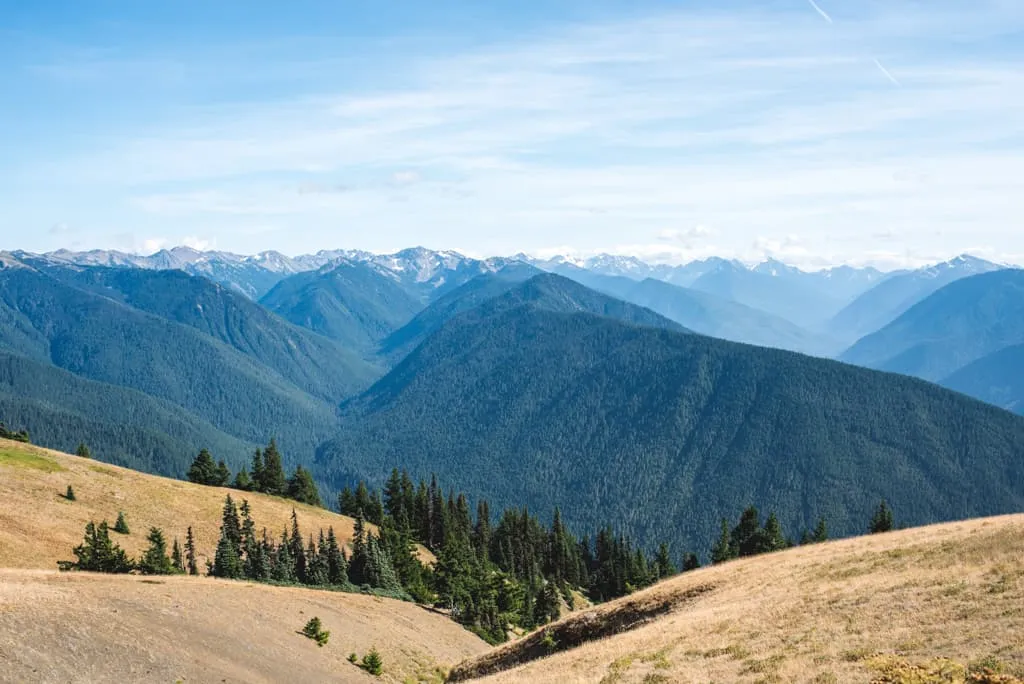
Located about 45 minutes south of Port Angeles, Hurricane Ridge is the most easily accessible mountain area in the park. It’s one of the few places in the country where you can go from sea level to 5,242 feet in about 17 miles. All without having to do any hiking!
The views from the top are nothing short of incredible. You can see the Strait of Juan de Fuca, Vancouver Island, and Mount Olympus. Plus, if you’re visiting in the winter, you can even ski here! It’s actually one of the only ski areas inside a National Park.
If you want to skip the Hurricane Ridge crowds, head to Obstruction Point Road or Deer Park. Just note that both are narrow gravel roads best suited for smaller vehicles (no trailers or RVs allowed).
After you make your way back down the mountain, head into Port Angeles for a bite to eat. We love the broth bowls at Yodelin Broth Company and New Zealand-style fruit ice cream at Welly’s!
Important Note: the main Visitor Center building burned down in 2023. Currently, facilities are limited to temporary restrooms. Also, the parking lot fills up fast, so arrive early!
3. Hike the trails along Hurricane Ridge Road

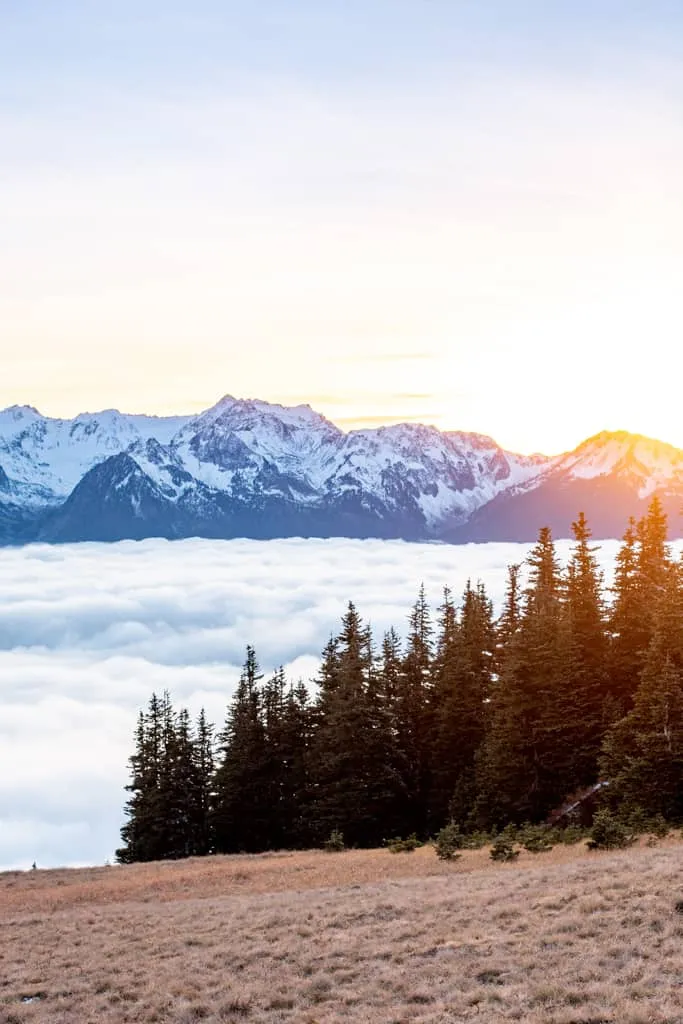
While the views from the parking lot are great, the best way to really experience the gorgeous alpine landscape along Hurricane Ridge Road is to get out on the trails! Here are a few hikes that we absolutely love.
If you want big mountain views, Hurricane Hill is our top pick! Located at the end of the road, this is a 3.4-mile paved trail that takes you up to a 5,757-foot summit. The views looking down into the Elwha Valley are some of our favorites in the entire park!
Alternatively, the 7.2-mile trail to Lake Angeles takes you up to a beautiful subalpine lake tucked into a mountain cirque. The trailhead is located just before you reach the Heart O’ the Hills entrance station.
For the most dramatic views in the park, you have to get up onto Klahhane Ridge. The Switchback Trail is by far the fastest (and steepest), gaining 1,700 feet in just 1.5 miles. But, if you prefer to start from the visitor center, you can take Sunrise Ridge, which is 7.1 miles, or you can hike all the way up from Lake Angeles at 13.1 miles. Whichever trail you choose, the views from the ridge are absolutely mind blowing. On a clear day, you can see all the way to Mount Baker!
Important Note: Access to the ridge is notoriously temperamental. In the winter, the road is typically only open Friday through Sunday, and in the spring, access depends entirely on the weather. Always check the current road conditions before you start the drive!
The Interior
In this region, you’ll be driving along Highway 101 from Port Angeles, along the south shore of Lake Crescent. To get to Sol Duc Falls, you have to detour onto Sol Duc Hot Springs Road, which is a 12-mile dead-end road. You’ll need to drive in and back out to continue your loop west toward the coast.
4. Stop by Madison Falls
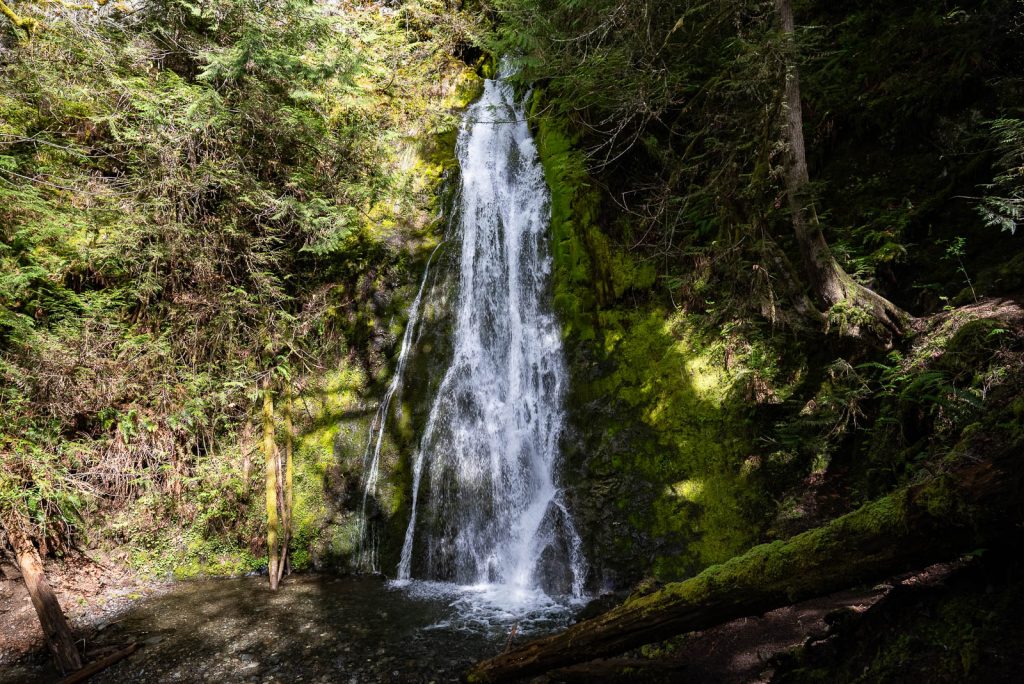
Just inside the Elwha Valley entrance, you will find Madison Falls, one of the most accessible waterfalls in the park. It’s also one of the best things to do in Olympic National Park if you are short on time.
The trail to the falls is a flat, paved 0.2-miles through a lush forest that leads directly to the base of the 60-foot falls tucked into a mossy rock wall. It’s also one of the few trails in the park that is dog friendly, as long as they’re on a leash.
5. See the Glines Canyon Dam Overlook
While you’re in the Elwha Valley area, head a few miles further to the Glines Canyon Dam Overlook. This spot is actually the site of the largest dam removal project in U.S. history, which was completed in an effort to restore the river to its original state.
Today, you can stand on a platform directly above where the 210-foot dam once stood and see how the river is carving its new path through the old lakebed.
Important Note: Because of major road washouts, you can no longer drive all the way to this overlook. To reach it, you will need to park at the Madison Falls parking lot and either hike or bike about 3.4 miles one way along the old roadbed. It’s a relatively easy walk with some steady elevation gain, and is a popular route for bikers since the road surface is still mostly intact.
6. Visit Lake Crescent

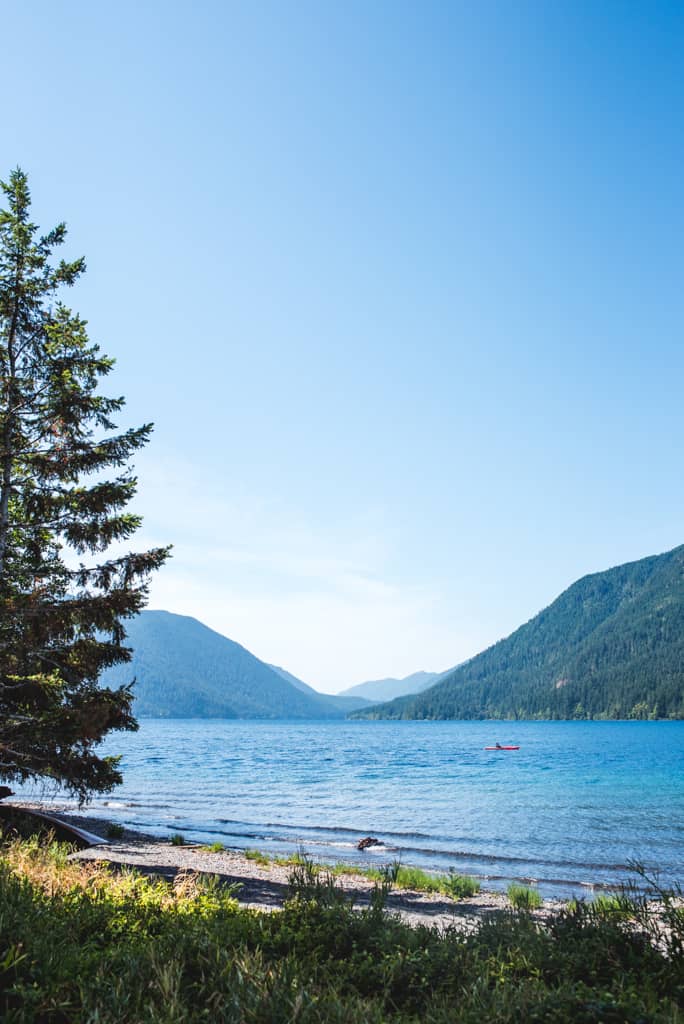
Sitting in the northern interior of the Olympic Peninsula, Lake Crescent is a glacially carved lake that holds the title of being the second deepest lake in Washington (over 600 feet deep!). However, it’s actually most famously known for its super clear, blue water. Because the lake has so few nutrients, you can see down 60 feet or more!
While many people just admire the lake from the pullouts along Highway 101, the absolute best way to experience Lake Crescent is from the water. You can find rentals at Lake Crescent Lodge, Log Cabin Resort, and the Fairholme General Store.
Other things you can do around the lake include visiting Lake Crescent Lodge, even if you aren’t staying the night. Originally built in 1915 as a Singer’s Tavern, today it’s a great place to check out! There is also a dining room if you want to grab a meal with a view of the lake.
On the west end of the lake, you’ll find the Fairholme Campground. This spot has a boat launch, a general store (with soft serve ice cream!), and a small pebble beach. It’s a bit quieter than the lodge area. If you are just looking for a place to eat lunch, La Poel Day Use Area has several picnic tables tucked into the trees right along the shoreline.
7. Summit Mount Storm King
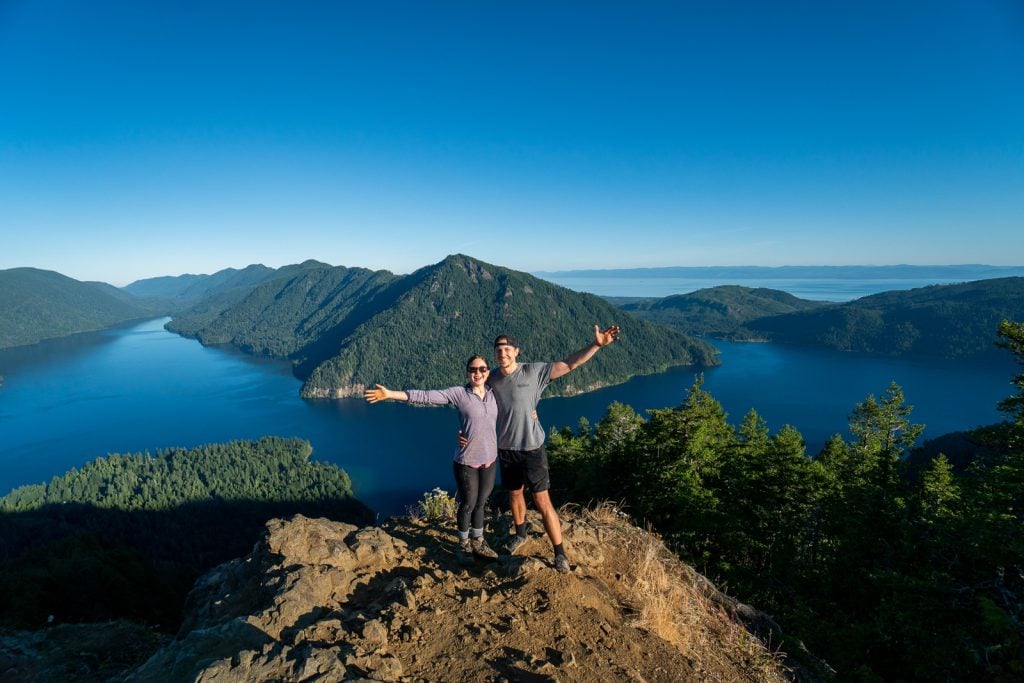
For a view that is truly iconic, we highly recommend conquering Mount Storm King. Looking down at Lake Crescent from the summit is one of the best things to do in the park. However, you should be prepared for a serious workout because this hike is tough! You will gain over 2,100 feet of elevation in just over 2 miles (one way!).
The hike begins at the Storm King Ranger Station. You will pass under the highway on a shared trail with Marymere Falls for about half a mile. After that, you veer off the main path and start a never ending series of steep switchbacks through the trees.
The maintained trail technically ends at a rocky outcropping, but most people continue to the actual summit. To get there, you have to navigate a series of sketchy rope sections where you will be pulling yourself up steep and loose rock. We highly suggest bringing your own pair of work gloves to save your hands from rope burn.
8. See Marymere Falls

One of the best ways to see the lush forest around Lake Crescent is by visiting Marymere Falls. This 1.8-mile trail starts from the same parking lot as Mount Storm King, but is much less strenuous.
The trail to Marymere falls winds through some of the most stunning old-growth forest on the peninsula. You will cross two wooden bridges over Barnes Creek and Falls Creek before you reach the 90-foot waterfall. There are two different viewing platforms to check out. One platform is at the base and the other is slightly higher, we recommend checking them both out!
9. Bike or Walk the Spruce Railroad Trail
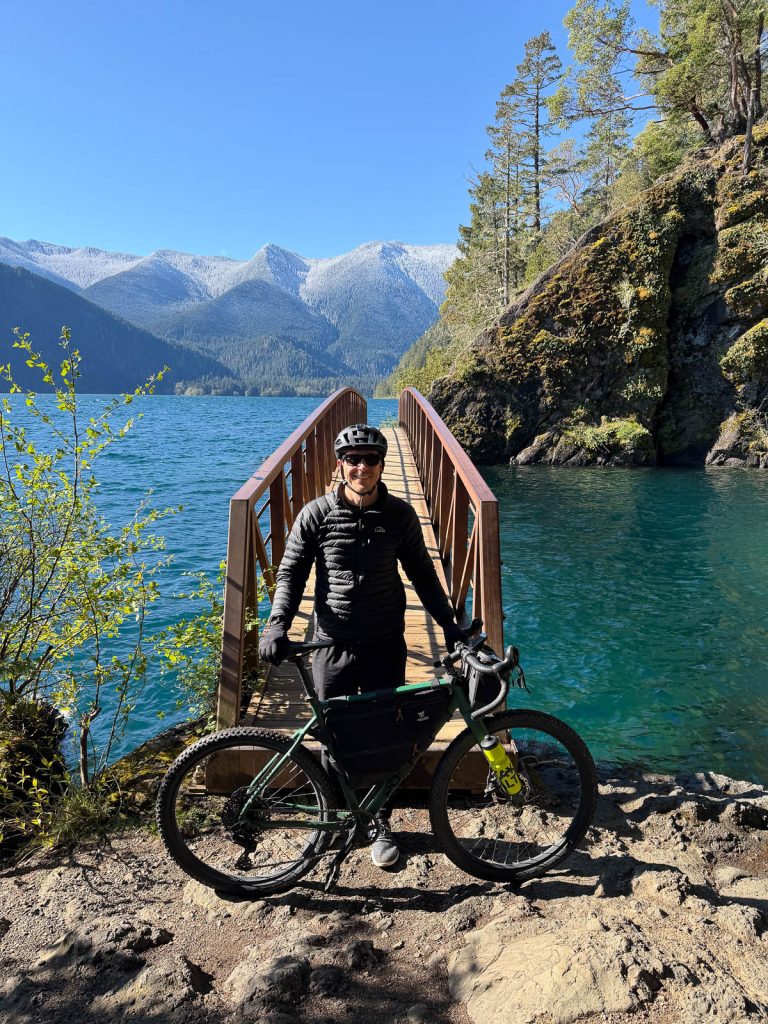
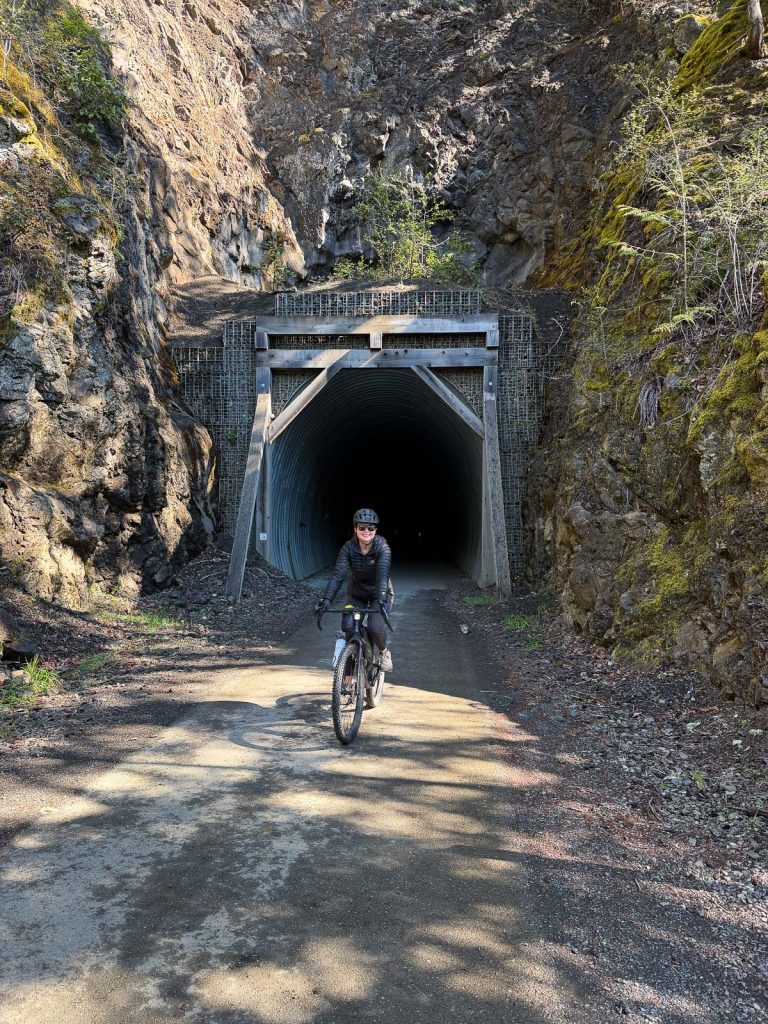
For one of our favorite ways to see Lake Crescent, we suggest heading to the north shore to explore the Spruce Railroad Trail. We biked this route and it was a lot of fun! Plus it’s dog friendly, as long as they remain on a leash.
This trail follows an old 1918 railroad line built during World War I to transport spruce timber for airplanes. While the war ended before it ever transported a single piece of timber, today it is a fully paved trail that is part of the Olympic Discovery Trail.
While the Spruce Railroad Trail is about 11 miles out-and-back, you can do as much or as little as you’d like. About 1.2 miles in from the East Beach side, you will reach Devil’s Punchbowl, a swimming hole with a bridge over a deep, sheltered cove. Even though the water is freezing, you will often see people jumping from the bridge during the summer!
Another unique part of this trail is getting to pass through two historic tunnels: the Daley-Rankin Tunnel and the McFee Tunnel. Both have been beautifully restored and it’s so much fun to walk through them!
10. See Sol Duc Falls & Explore the Valley
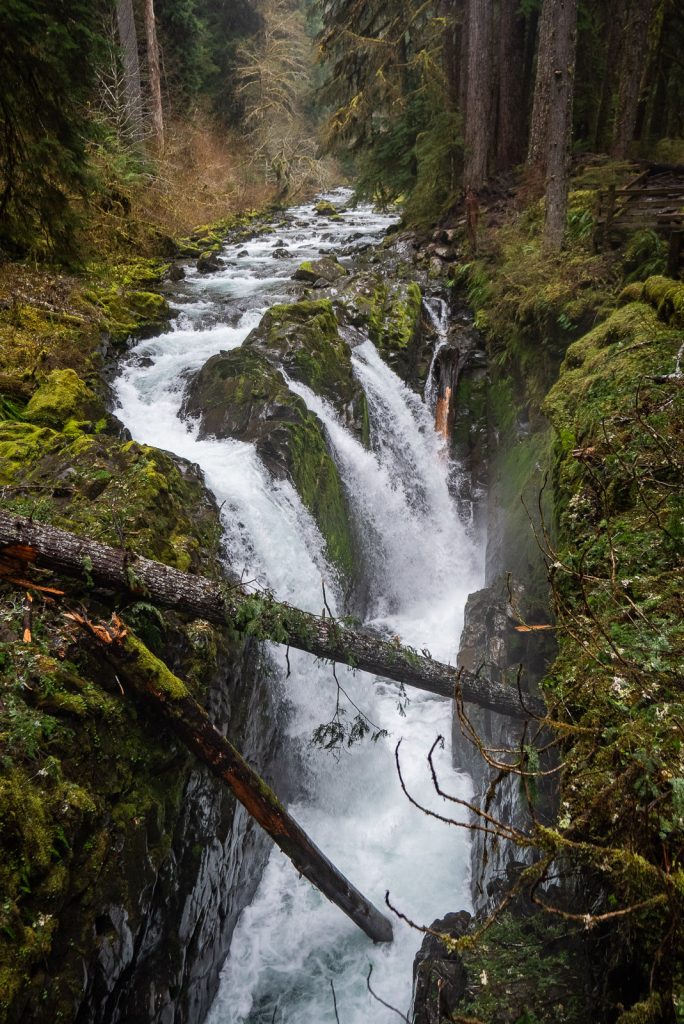
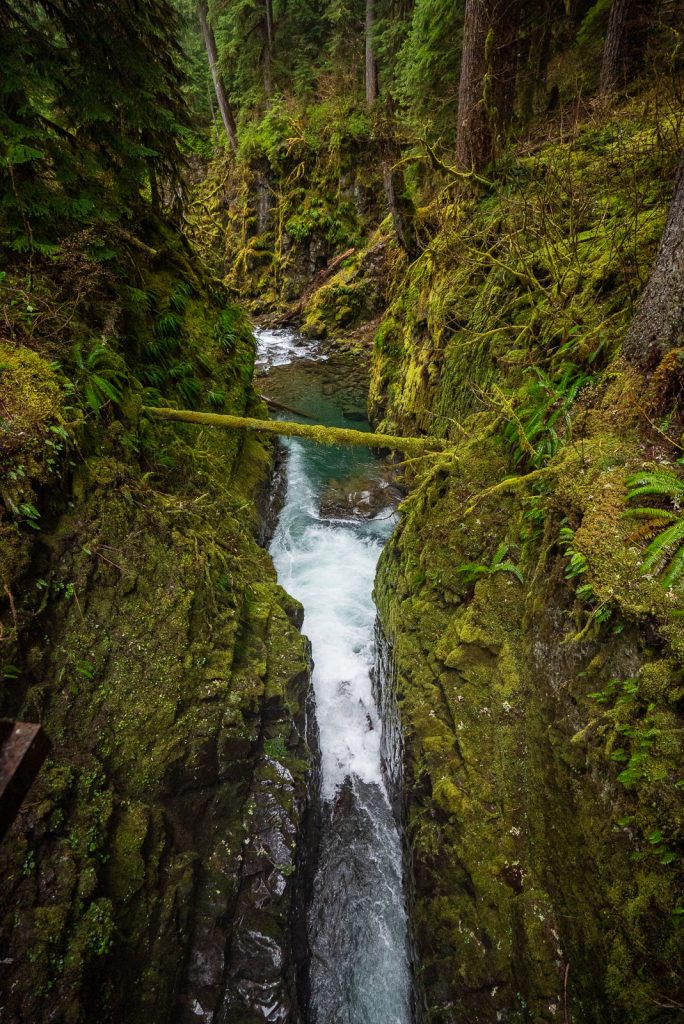
Deep in the Sol Duc Valley, you will find one of the most iconic waterfalls on the Olympic Peninsula. Sol Duc Falls actually splits into several separate channels before plummeting 50 feet into a narrow, rocky canyon.
The hike to the falls is an easy 1.6-mile round trip. What makes this spot so unique is the rustic wooden bridge spanning directly over the falls, where you can look straight down into the rushing water!
But the drive down Sol Duc Hot Springs Road offers more than just the falls!
On your way in, make a quick roadside stop at the Salmon Cascades (especially in October) to watch Coho salmon literally hurl themselves out of the water to clear the falls as they head upstream to spawn. After your hike, you can head over to the Sol Duc Hot Springs Resort to soak in their mineral pools, which are among the most renowned in Washington State!
The West Coast
This is the longest stretch of driving in Olympic National Park. Highway 101 will take you through Forks and down the coast, but the beaches and rainforests are reached via several long dead-end spur roads (like Upper Hoh Road and La Push Road).
Note: The Ozette Triangle is a significant detour (about an hour north of Forks). If you are on a tight schedule, you may want to skip Ozette.
11. Hike the Ozette Triangle Trail
For a hike that makes you feel like you are at the edge of the world, head to the remote northwest corner of the park for the Ozette Triangle. This 9.4-mile loop starts at the Ozette Ranger Station and leads to Cape Alava, the westernmost point in the contiguous U.S.
The trail forms a perfect triangle in 3 mile sections and two of the sections are on cedar plank boardwalks that wind through a coastal forest and swamp. Once you reach the ocean, you will walk 3 miles along the beach to connect the two forest paths. About halfway along the beach, keep an eye out for the Wedding Rocks, where you can see ancient petroglyphs carved into the stones by the Makah people. Some are 300 to 500 years old!
Important Note: You must check the tide charts before you start this hike! During high tide, sections of the beach are completely underwater and impassable. You will want to time your hike so you are walking the beach portion during an outgoing or low tide to ensure you have plenty of room to navigate around the rocky points.
12. Visit the Beaches in La Push
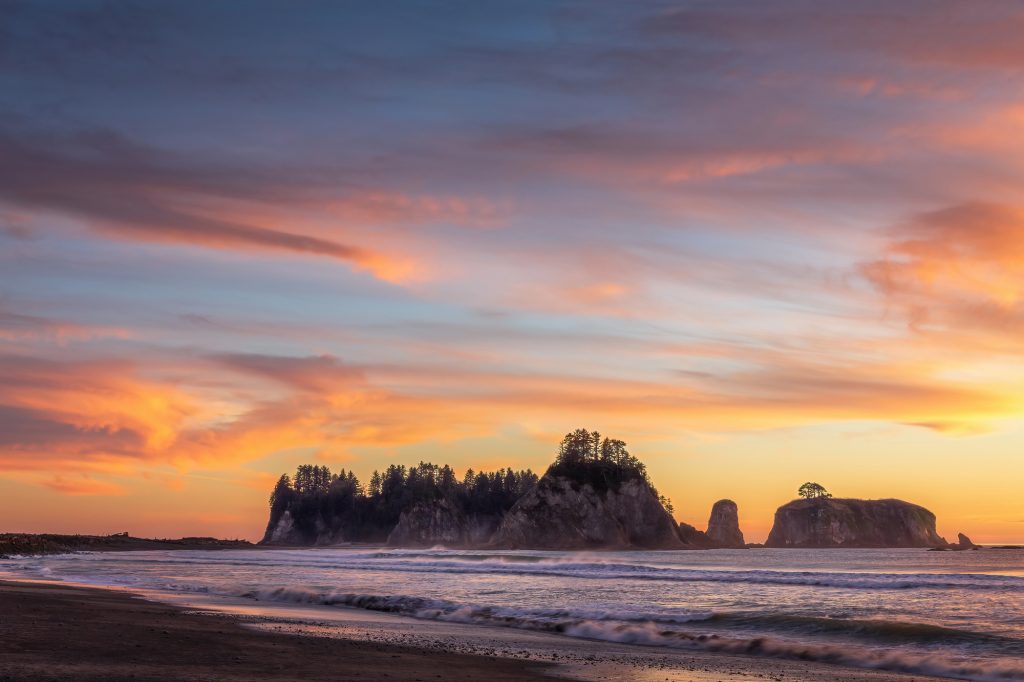
The beaches near the small town of La Push are some of the most scenic in the park. They are some of our favorite beaches to explore and easily rank among the best things to do in Olympic National Park, especially if you want to see gorgeous coastal forests, massive driftwood beaches, and sea stacks all in one spot!
First Beach is the easiest to visit because you can drive right up to it! The beach here is crescent shaped with tons of giant driftwood and views of the James Island sea stack. This is the only dog friendly beach!
For some of the best tidepooling in this area, head to Second beach! It’s also home to a collection of sea stacks called the Quileute Needles. To get there, you’ll park at the Second Beach Trailhead and take a short, beautiful 1.4 mile round trip trail through the forest.
If you’re looking for a bit more solitude and a slightly longer walk, Third Beach is a great option. A 2.8-mile round trip hike through the forest brings you to the shores of Strawberry Bay. If you wander to the south end of the beach, you’ll find a waterfall that tumbles right off the cliffs and onto the sand!
While these beaches are right next to each other, it’s important to note that First Beach is located on the Quileute Indian Reservation, while Second and Third Beach are within the boundaries of Olympic National Park. You may need a tribal parking permit for First Beach, which can be purchased locally at the Lonesome Creek Store.
13. Hike to Hole-in-the-Wall (Rialto Beach)

The main reason most people (including us!) visit Rialto Beach is to hike to Hole-in-the-Wall. This is a massive natural arch carved out of the basalt rock by thousands of years of waves. When the tide is low, you can literally walk right through it! The receding water also reveals some of the best tidepooling in the park.
About halfway into your hike, you’ll reach Ellen Creek. There are usually driftwood logs to create a makeshift bridge, but if the log bridge has washed away or looks sketchy, you’ll have to wade through. Leashed dogs are allowed on Rialto Beach only up to Ellen Creek.
Important Note: You can only safely reach and walk through the arch during low tide. Check the tide chart before heading out there! Also from July 8 to October 5, 2026, Mora Road (the road to Rialto) will be completely closed for bridge construction. The La Push beaches are your best alternative during this time.
14. Wander through the Hoh Rainforest
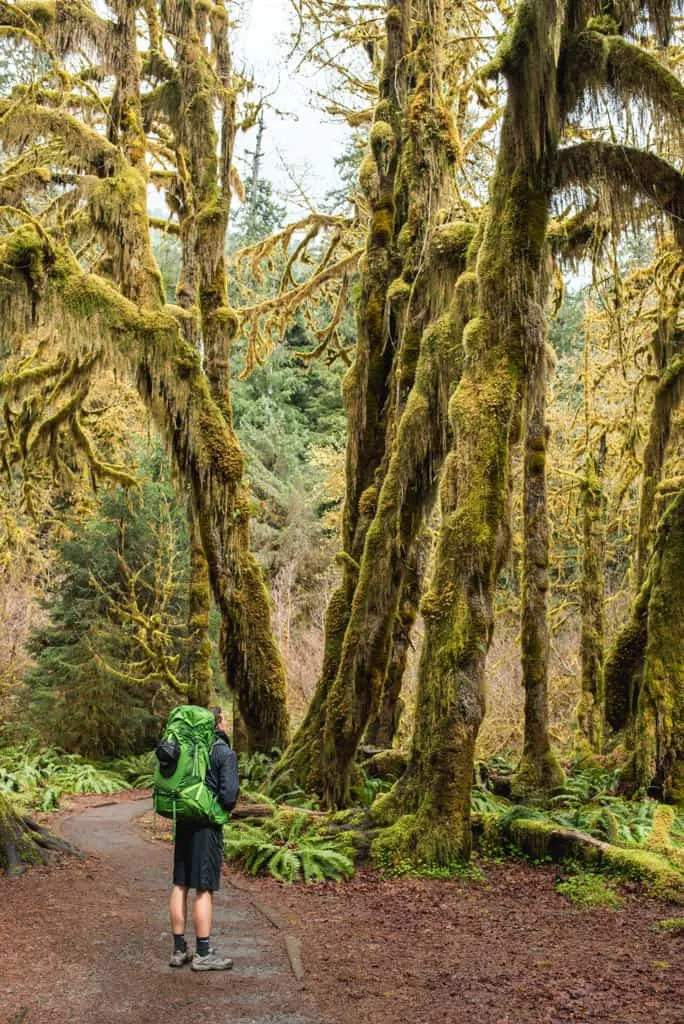

You cannot visit Olympic National Park without stepping into the Hoh Rainforest. As one of the few remaining temperate rainforests in the U.S., it receives over 12 feet of rain a year, creating a canopy so thick, every square inch of the forest floor is covered in ferns and moss! The Sitka spruce and Western hemlocks here are also truly massive.
If you only have time for one thing, the Hall of Mosses is our top pick! It’s a very easy, 1.1-mile loop that starts right behind the Visitor Center. On this trail, you’ll get to wander through a grove of ancient Bigleaf Maples with branches that are weighed down by thick, shaggy moss.
Another trail we recommend doing is the Spruce Nature Trail. It’s an easy 1.3-mile loop that takes you through giant Sitka Spruce and Douglas Fir trees and down to the banks of the gorgeous milky blue Hoh River.
A+K Tip: This is the most popular spot in the park. Expect 1–2 hour wait times at the entrance station if you arrive between 10:00 AM and 5:00 PM. We highly suggest arriving before 8:00 AM!
15. Explore Ruby Beach
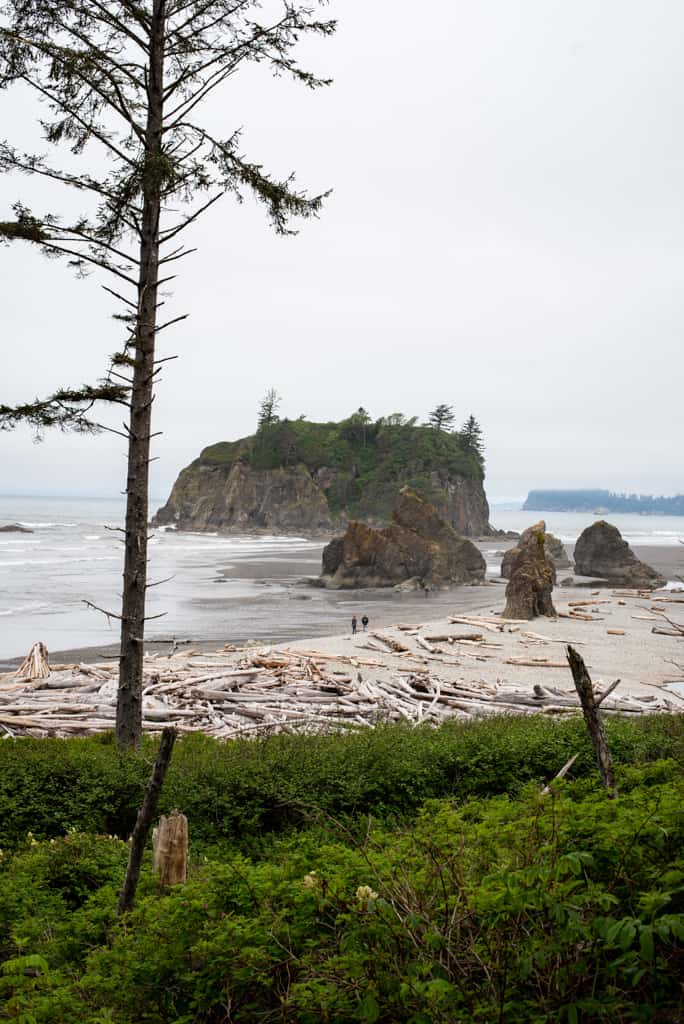

Ruby Beach is widely considered one of the most photographed beaches on the Washington coast, and it’s easy to see why! It actually gets its name from tiny ruby colored crystals, called almandite garnet, that wash up on the shore. But the landscape here is just as impressive, with huge sea stacks, specifically Abbey Island, and a shoreline that is piled high with massive cedar and fir logs that have been bleached gray by the salt and sun.
It’s a short 0.5-mile trail down to the water, making it one of the easiest beach spots to reach. Once you reach the shoreline, we suggest you wander north toward Cedar Creek for the best views of the sea stacks. Dogs are allowed at Ruby Beach, as long as they stay on a leash!
16. Go Tidepooling
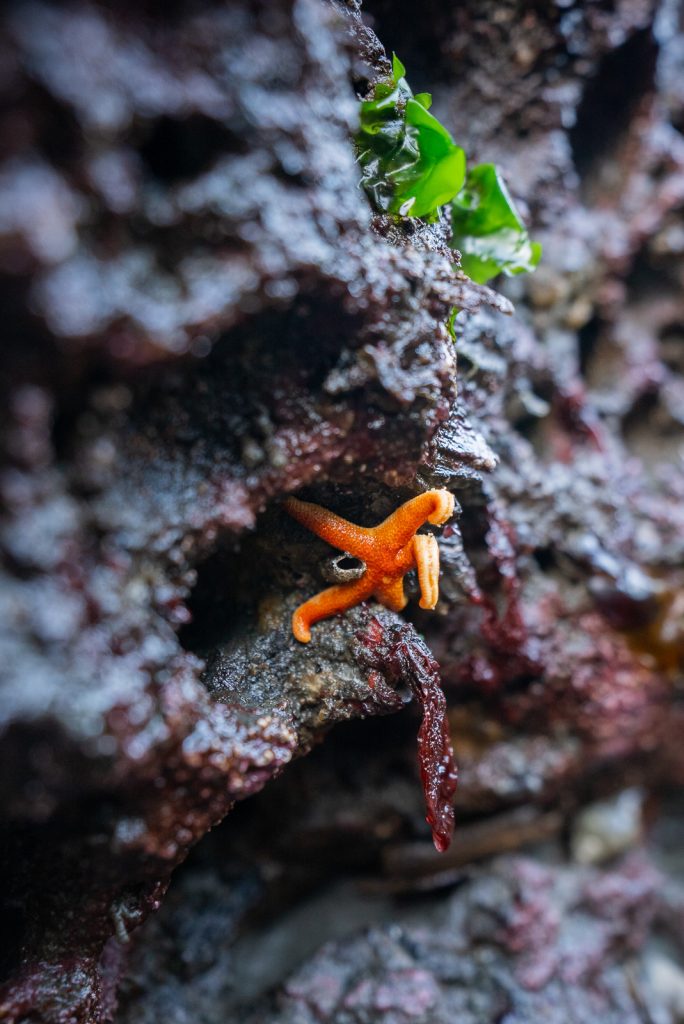
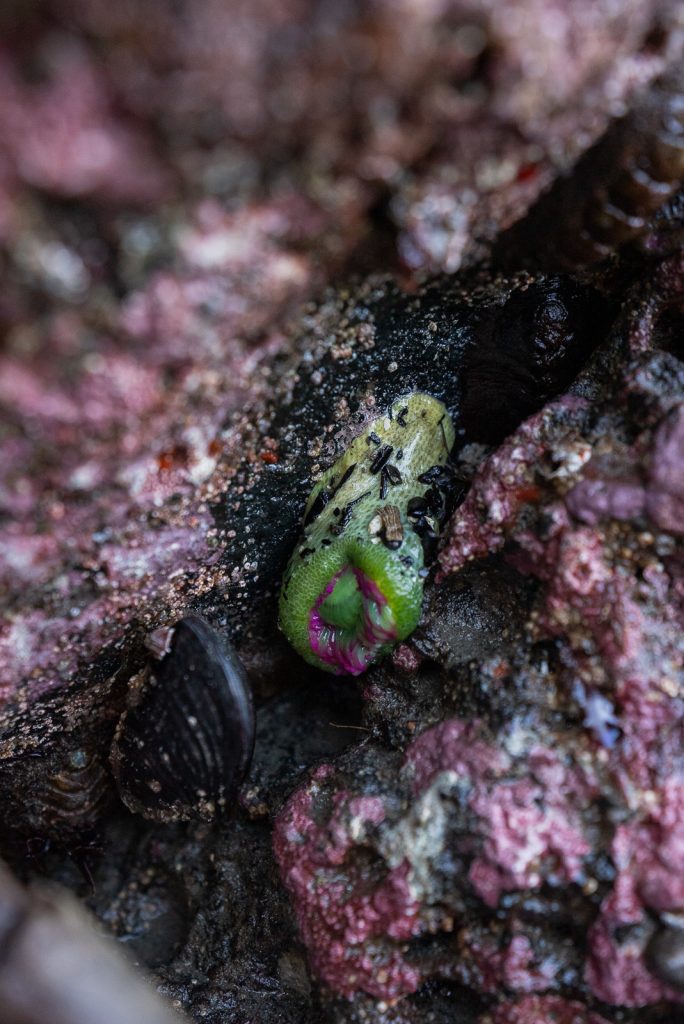
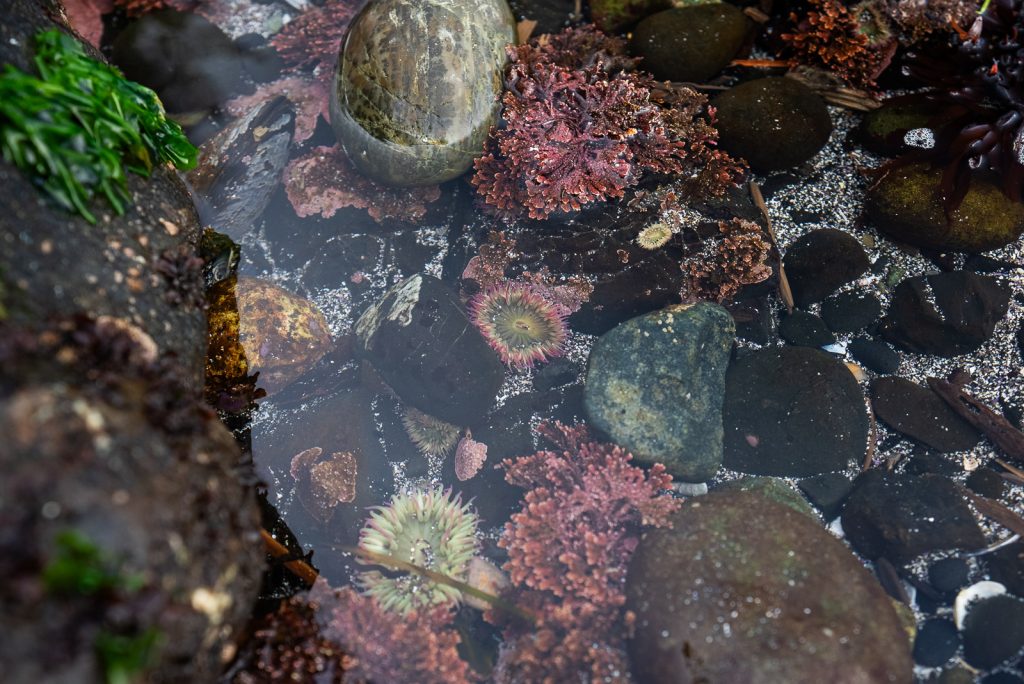
One of our favorite things to do at the beaches in Olympic National Park is go tidepooling. Because the ocean level rises and falls twice a day, rocky areas that are completely covered by deep water at high tide become exposed at low tide. This leaves behind pools in the rocks where little creatures like sea anemones, sea stars, and tiny crabs are trapped until the water returns. This is the only time you can actually see them, so make sure you check a tide chart before you go. Any tide below +1.5 feet is good, but negative tides are best!
While any of the beaches we’ve already mentioned (like Rialto, Ruby, and the La Push beaches) are excellent for this, Kalaloch Beach 4 is widely considered one of the best beaches in the entire park for tidepooling. If you have extra time and don’t mind a longer hike, Shi Shi Beach (at the very northern tip of the park) also has fantastic tidepooling around the Point of the Arches.
It’s a lot of fun to explore the rocks and see what you can find, but just remember that these are living creatures. Be very careful where you step, and never remove anything from the pools.
17. See the Tree of Life
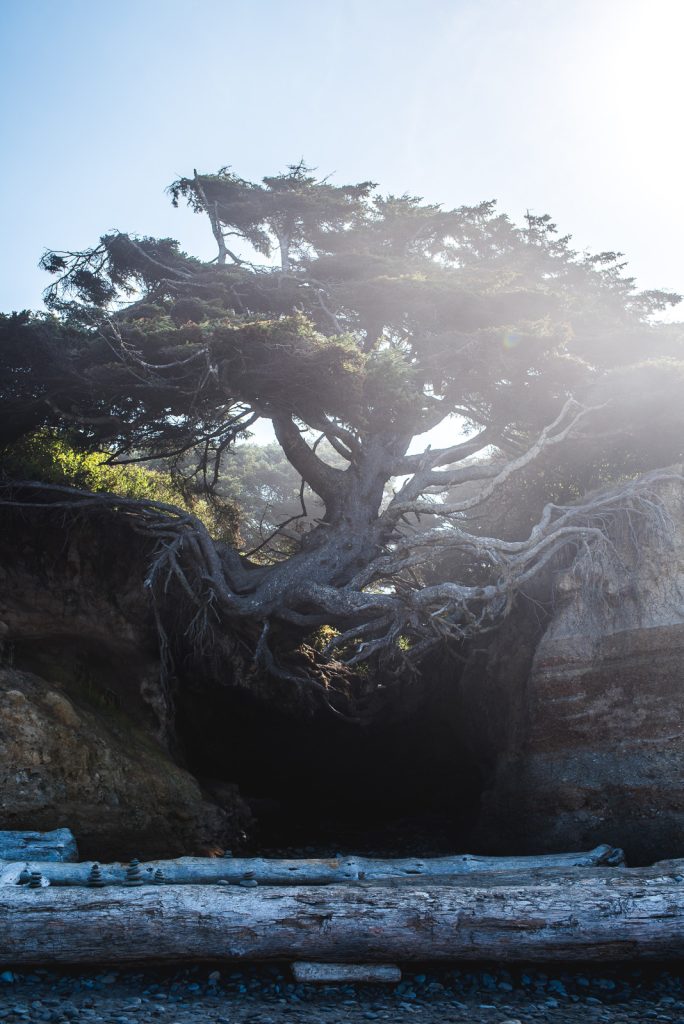
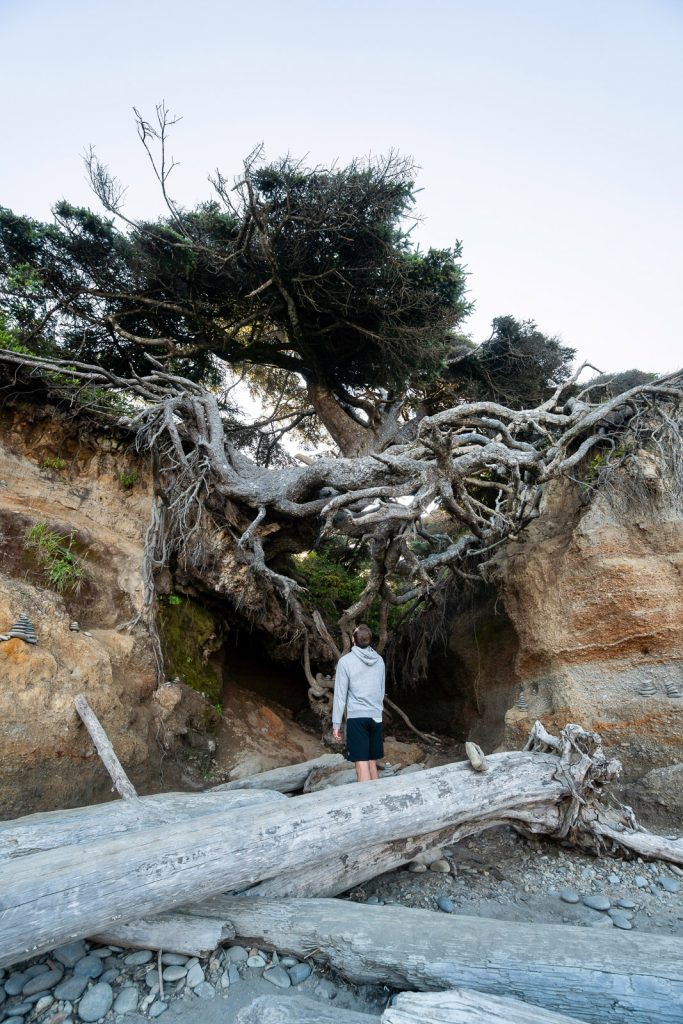
The Tree of Life (also called the Kalaloch Tree) is a massive Sitka spruce that is literally hanging on for dear life between two eroding bluffs by a few, very tough roots. Over the years, a small stream underneath the tree washed away all the soil, creating a hollow cave underneath where the root system is just… dangling. It’s mind boggling, but that’s exactly what makes it one of the best things to do in Olympic National Park!
Somehow, the tree is still alive despite having no soil directly under its trunk. However, it’s important to mention that the tree is in a very fragile state and appears to be slowly collapsing as the bluffs continue to move apart. It likely won’t be around much longer!
To check it out yourself, park at the Kalaloch Campground day use area and take the stairs down to the beach. Once you’re on the sand, walk just a little ways north and you can’t miss it! Dogs are allowed here and on Kalaloch beaches on a leash.
18. Explore the Quinault Valley
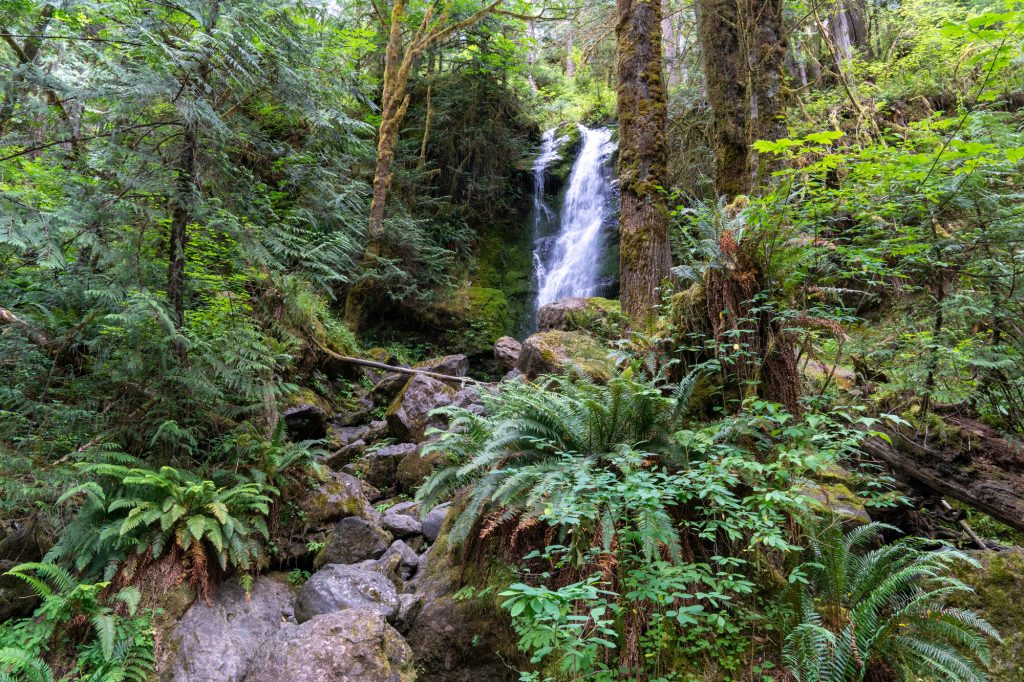
If you want the rainforest magic without the 2-hour wait times at the Hoh, the Quinault Valley is the place to be! Often called the Valley of the Rain Forest Giants, this area is home to some of the largest trees in the world and offers a much less crowded experience.
On the South Shore, one of the best things to do is check out the World’s Largest Sitka Spruce, which is reached by a very short .25-mile walk. This 1,000-year-old giant towers 191 feet in the air and is over 18 feet in diameter! For a true Hall of Mosses experience, head to the North Shore to hike the 0.5-mile Maple Glade Trail. It’s a flat, stunning loop through moss-draped maples.
To see it all, the 31-mile Quinault Lake Loop Drive is a must if you want to see lots of roadside waterfalls and the giant trees that live in this rainforest (all from the comfort of your rig!). Be sure to stop at the historic Lake Quinault Lodge for a coffee and a view of the lake!
The South Shore of Quinault is located in the National Forest, so leashed dogs can hike through the rainforest with you! Just keep in mind that once you cross to the North Shore, you’re back in the National Park, where trails are off limits for dogs.
Important Note: The Graves Creek Road section is currently experiencing some major washouts in early 2026, so we recommend checking the latest road status before you commit to the full loop!
Backcountry
While most people stick to the popular day-use areas, if you really want to see the remote territories of the park, you have to head into the backcountry! There are many different routes you can consider, which are spread out among the park.
Note: Backpacking here requires a permit and bear canisters, which you can rent at most Ranger Stations. In 2026, permits for popular areas like Royal Basin and the High Divide are competitive and must be reserved months in advance on Recreation.gov.
19. Go backpacking!
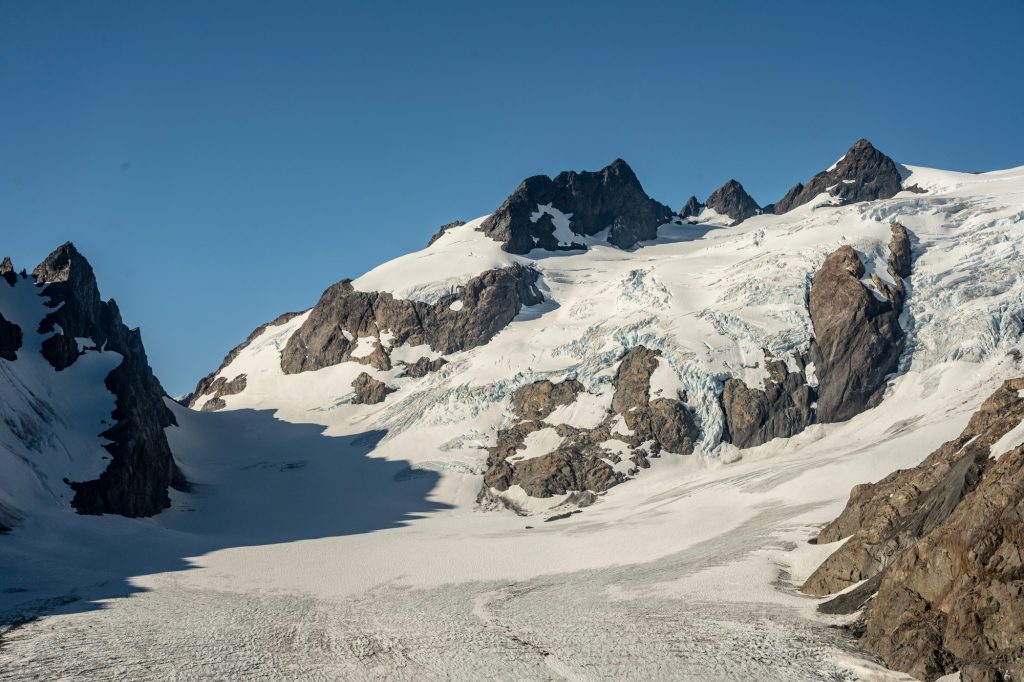
Looking for some backpacking ideas? Here are a handful of the most popular routes in the park:
The Hoh River Trail to Blue Glacier is a must-do backpacking adventure if you want a wide variety of scenery. We did a portion of this hike (just along the river) as our first ever backpacking trip! You start in the Hoh Rainforest and end at the base of Mount Olympus, with a view Blue Glacier. It’s on our list to complete the entire hike soon!
Commonly called the Valley of 10,000 Waterfalls, the Enchanted Valley trail is a 25-mile hike that leads to a massive meadow with a historic 1930s chalet.
For a more high alpine adventure, the High Divide and Seven Lakes Basin loop offers a 22-mile hike with some of the best views of Mount Olympus and the massive Blue Glacier.
Royal Basin and Royal Lake is a 16.1-mile trail that takes you to the shores of Royal Lake and to the milky blue glacial tarns and jagged peaks of the upper Royal Basin.
Planning your trip to Olympic National Park
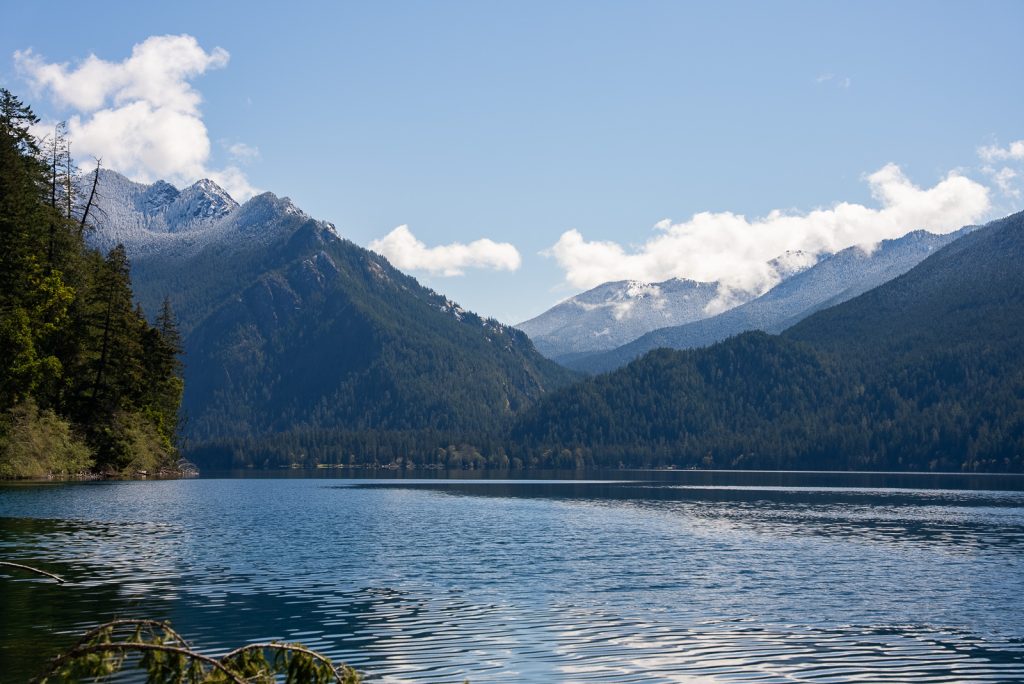
How to get to Olympic National Park
Most people fly into Seattle-Tacoma International Airport (SEA). It’s typically a 2.5 to 3 hour trip to Port Angeles, depending on which way you go.
Our preferred way to start our trip to Olympic National Park is taking one of the Seattle ferries. You can take the Bainbridge Island ferry from downtown Seattle or the Kingston ferry from Edmonds. Both land you on the Kitsap Peninsula, leaving you with about a 1.5 to 2-hour drive to reach Port Angeles. These ferries cannot be booked in advance, so you will need to arrive at least 30 to 45 minutes early to secure a spot.
Alternatively, you can take the south route by driving through Tacoma and Olympia to hop on Highway 101 north. This is often the fastest choice if ferry waits are long (more than 2 hours) or if you’re coming from Portland.
If you’re traveling from Victoria, B.C., Skagit Valley, Bellingham, or Whidbey Island, the Port Townsend Ferry is a great pick. You can actually reserve this ferry in advance, which we highly recommend since it does fill up!
A+K Tip: We prefer taking the ferry to the park and driving the highway back home. This way, our final day is not dictated by the ferry schedule. However, if you are starting your loop at Staircase like we do in this guide, skip the ferry! Driving south through Tacoma and Olympia is the best way to reach the southeast corner.
Getting around Olympic National Park

You definitely need a car to see Olympic National Park. There is no park shuttle system here, and the different regions like the mountains, the coast, and the rainforest are hours apart. You’ll be doing a fair amount of driving, so make sure you have a reliable vehicle and a full tank of gas.
A standard rental car works great since the main park roads are paved and easy to navigate. If you are interested in exploring Olympic National Park by van, check out our Stoked to Camp guide for the best rentals!
We also highly recommend the Guide Along audio tour. It’s worth every penny. Since it uses GPS, it works even when you have zero cell service, sharing history and stories as you drive. It also alerts you when to stop for specific sights. Plus, these guides are so fun to listen to!
Where to stay in Olympic National Park
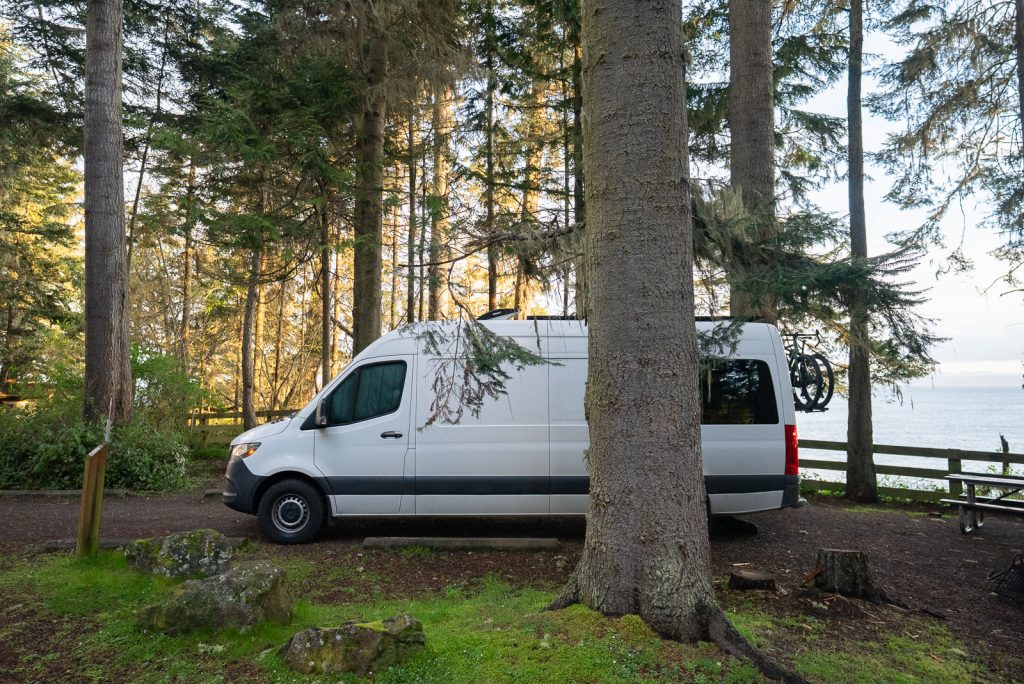
Since Olympic National Park is essentially a giant circle with no roads through the center, the best way to avoid backtracking is to split your stay between the north side (Port Angeles) and the west side (Forks or the Kalaloch Area).
We have a much more detailed guide with where to stay in Olympic National Park, with thebest campgrounds (FREE and paid), historic lodges, and hotels. So be sure to check that out for the specifics!
Best time to visit Olympic National Park
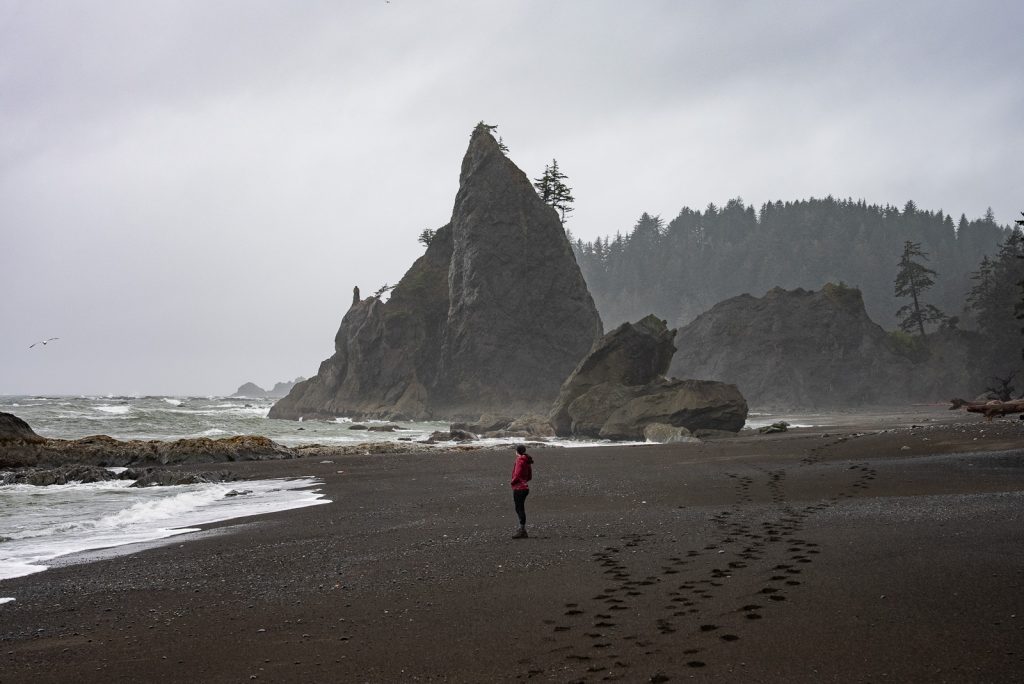
The weather in Olympic National Park is famously unpredictable. But, we still think it’s a great place to visit year around, each season just has its pros and cons.
Spring (March to May): This is a very rainy time of year, but it’s also the best season for waterfalls as the snow melts! It’s also a great time to check out the coast and rainforest with far fewer crowds.
Summer (June to August): This is the peak season and offers the most reliable weather. This is the only time of year when high elevation spots like Hurricane Ridge and the backcountry are consistently accessible.
Fall (September to November): This is one of our favorite times to explore as the summer crowds start to dwindle. The air gets crisp and you can find gorgeous fall colors.
Winter (December to February): If you don’t mind the rain, winter is a much quieter time to visit. Sol Duc Falls and many higher areas aren’t accessible, though Hurricane Ridge typically stays open with limited weekend hours.
Things to know before you go

Entrance Fees: You will need to pay an entrance fee ($30/vehicle) or use your America the Beautiful Pass. Keep in mind that unlike some parks, there isn’t one main entrance here. There are booths scattered around, but some areas don’t have one at all. Make sure your pass is clearly displayed on your dashboard!
Download Offline Maps: Cell service is almost non-existent inside the park. We highly recommend downloading offline maps on Google Maps and AllTrails before you hit the road.
Check for Road Closures: Always check the current road conditions on the NPS website before you start your drive.
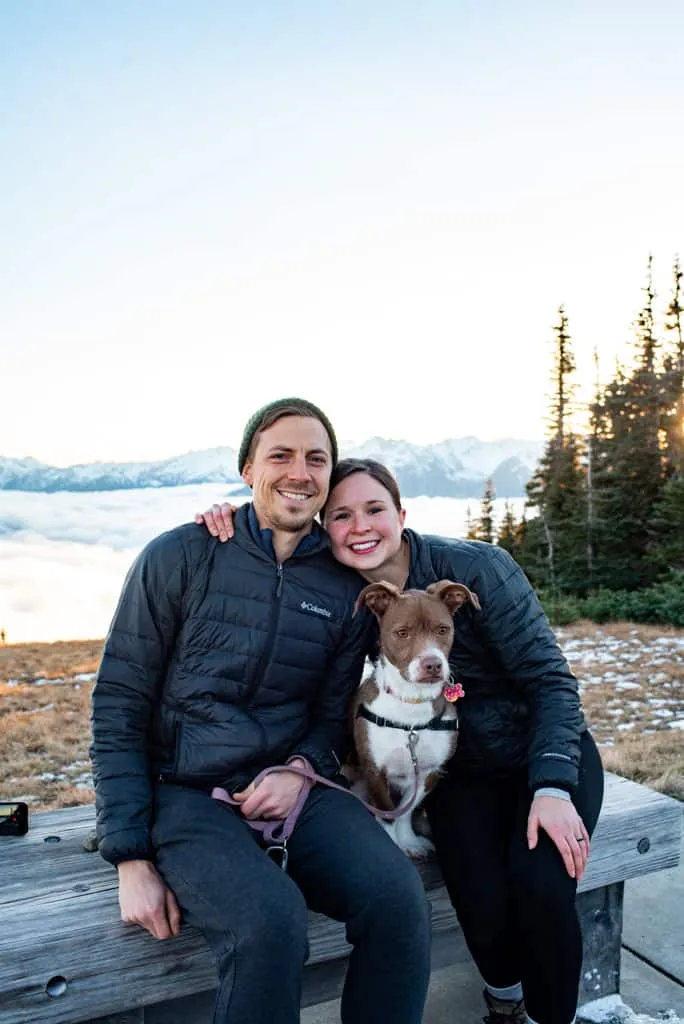
Dogs: We love bringing Kona along whenever we can, but national parks are pretty restrictive with pets. Pups aren’t allowed on most trails, but we’ve made sure to mention the specific spots where they can go!
Read the Tide Chart: If you’re planning on doing any coastal hikes or tide pooling, you must check the tide charts! High tide can roll in fast and leave you stranded. We recommend using NOAA to track the tides in advance.
What to bring to Olympic National Park
Because you’ll be jumping between several completely different ecosystems, you need to come prepared. Beyond the 10 essentials, here are the specific items we recommend for the park.
Layers: You’ll likely experience every type of weather in Olympic National Park, so pack a pullover (Adam’s, Kathryn’s), rain jacket (Adam’s, Kathryn’s), and puffy jacket (Adam’s, Kathryn’s).
Hiking shoes: You’ll want shoes with great grip for both muddy trails and slick rocks while tide pooling. We love our Altra Lone Peaks (Adam’s and Kathryn’s), because they are lightweight and dry out fast if they get wet.
Microspikes: If you’re visiting in the colder months or early spring, bring microspikes.
Sun protection: Even on gloomy Washington days, the sun can be intense at higher elevations. Pack a sun hoodie, a hat, and sunglasses. Adam wears KALIYADI sunglasses and Kathryn wears Ray-Bans.
Hydration: To stay hydrated on the trail, we use 3-liter Camelbaks and make sure to drink LMNT electrolytes (the sample pack is great for trips!).
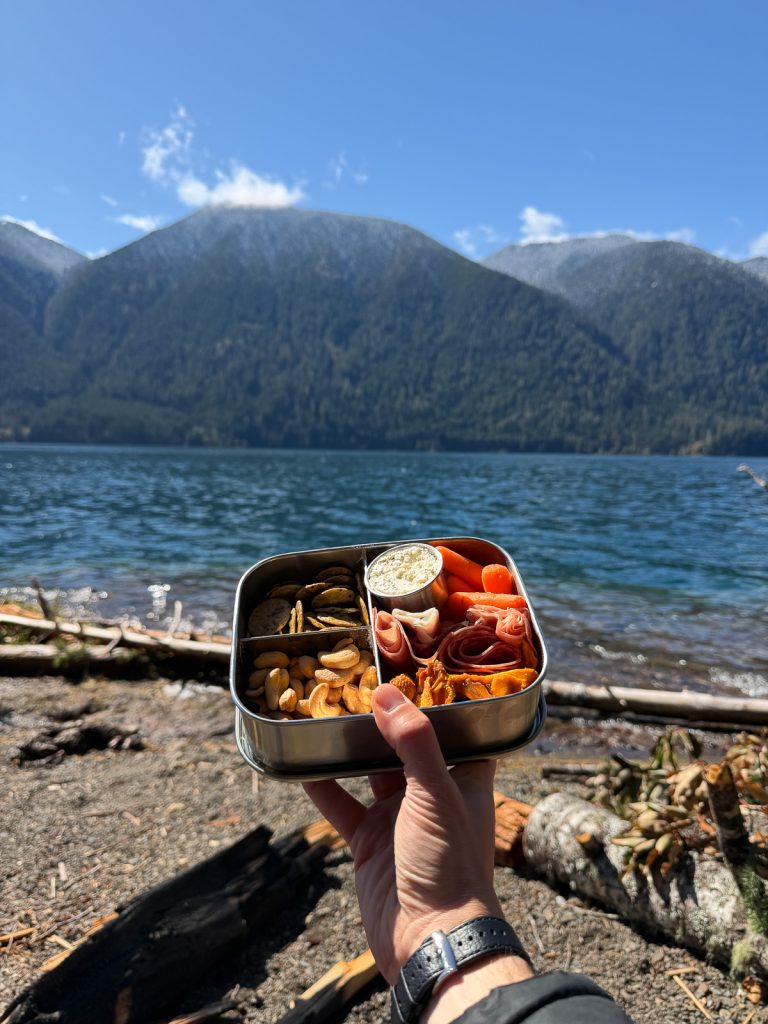
Cooler and food supplies: Dining is very limited inside the park, so we always bring our own food. We suggest stocking up in Port Angeles or Sequim and keeping everything in a YETI Tundra 45. Looking for food ideas? Check out our favorite hiking snacks and easy camping meals!
How much time do you need?
Because the park is massive and requires driving around the entire perimeter, give yourself at least 2 days. It will be a very busy trip, but it is doable.
We put together a 2 day Olympic National Park itinerary to help you make the most of your time! This itinerary hits up the highlights, but does miss many of the best things to do in Olympic National Park.
If you can stay for 3 to 5 days, this will allow you to spend one full day on the alpine ridges, another in the rainforests, and a third along the coast, accounting for the long drive times between regions.
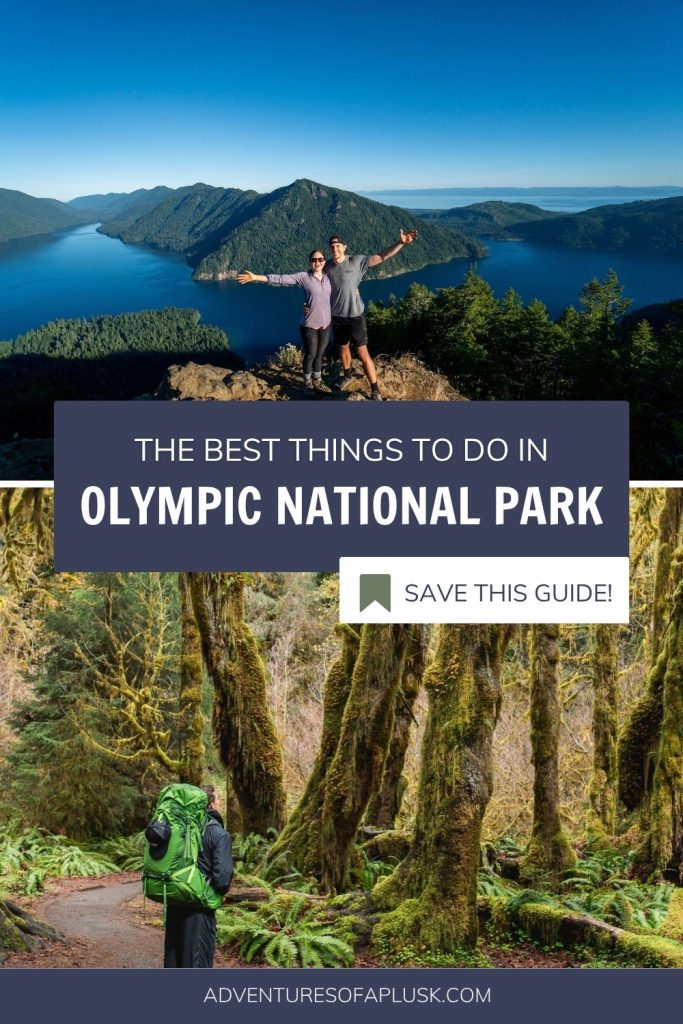
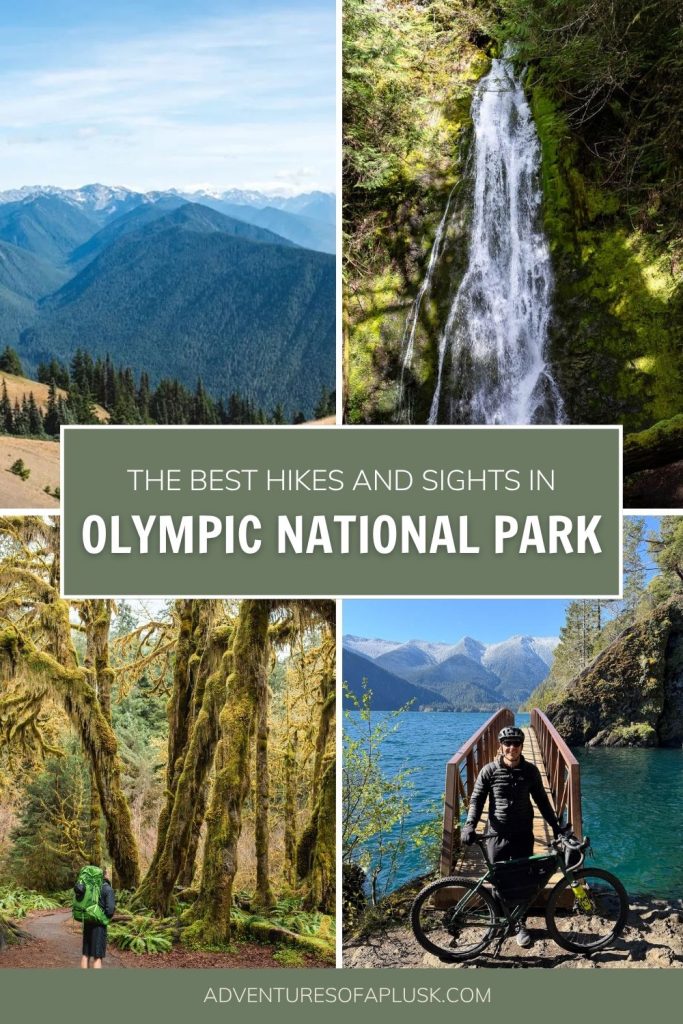
Save this guide with the best things to do in Olympic National Park
About the author
This blog post was written by our writer Nicoll. Learn a bit about her below!
After six years of full-time travel, Nicoll is now a mountain-loving mama living in Colorado with her husband Jake, their sweet baby girl Teagan, and their pup Gunner. She loves hiking, riding her dirt bike, and finding joy in the little things.