Last updated on September 17th, 2026
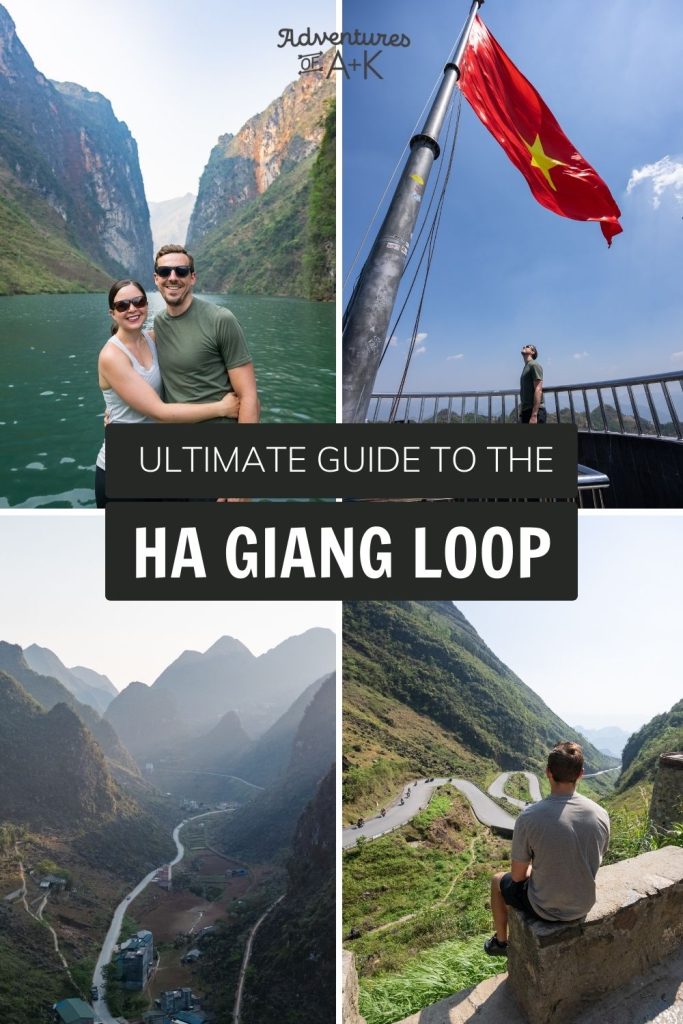
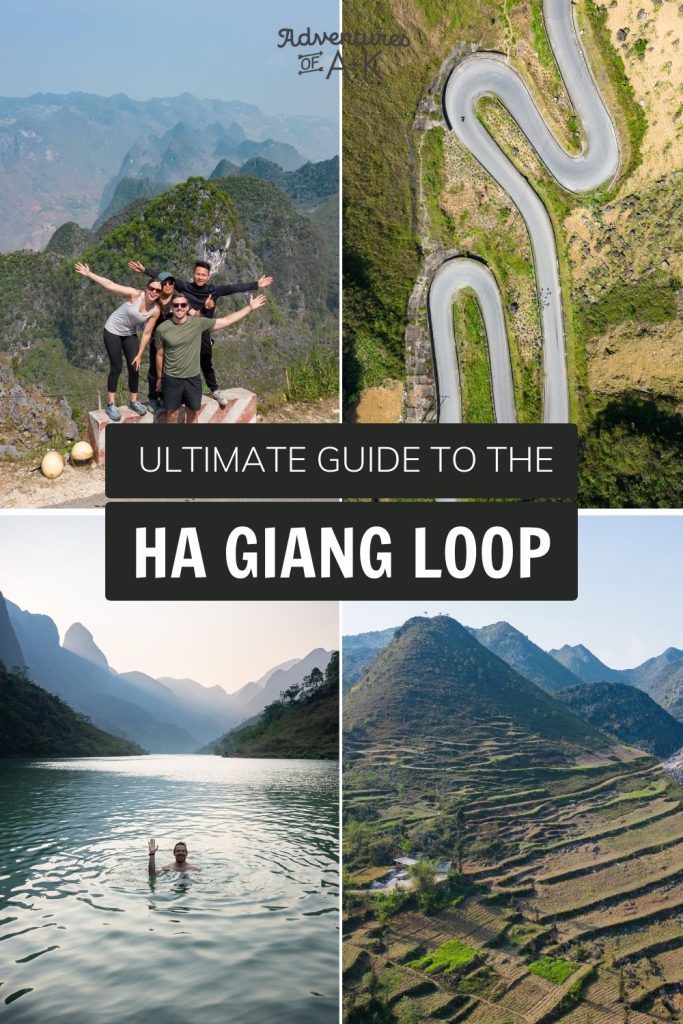
Motorbiking the Ha Giang Loop was without a doubt one of our favorite and most impactful travel experiences. This winding route through Northern Vietnam’s mountains is home to some of the most stunning scenery that Vietnam has to offer, including dramatic mountains, deep canyons, rice fields, and rivers. There are picture perfect landscapes at every turn!
But beyond its scenery, the Ha Giang Loop is a chance to get immersed into Vietnamese culture. We got to experience a completely different way of life, learn about the area’s ethnic minorities, and connect with locals on a deeper level than ever before.

Watch our epic motorbike trip in Northern Vietnam, including the Ha Giang Loop, plus the Cao Bang Province, where we saw the country’s tallest waterfall!
Whenever we think back on our time on the Ha Giang Loop, we get a tad emotional. It was all of the best things about travel: epic views, cultural experiences, new foods, and meaningful connections. In our opinion, it’s one of the must-do activities while traveling in Vietnam.
If you want to experience this slice of Northern Vietnam paradise for yourself, we’re sharing everything you need to know before tackling the Ha Giang Loop. Including the many logistics to consider, the best stops to make along the way, itinerary options, and so much more.
Whether you’re conquering the Ha Giang Loop on your own, or hiring a guide (like we did and highly recommend), we hope that this guide can give you a solid idea of what to expect along the way!

- What is the Ha Giang Loop?
- Ha Giang Loop Map
- Do you need a guide for the Ha Giang Loop?
- The best Ha Giang Loop tour
- Ha Giang Loop Trip Planning Logistics
- Frequently Asked Questions about the Ha Giang Loop
- Is the Ha Giang loop safe?
- How are the roads on the Ha Giang Loop?
- Where can I store my luggage?
- What is the food like on the Ha Giang Loop?
- Where do you sleep every night?
- Should you book your accommodations in advance or as you go?
- What is the cell signal like on the Ha Giang Loop?
- Is the Ha Giang Loop busy?
- How much does the Ha Giang Loop cost?
- Should you tip your guide?
- The best stops along the Ha Giang Loop
- Ha Giang
- Bac Sum Pass
- Quan Ba (Heaven’s Gate)
- Twin Mountains Viewpoint (aka Fairy Breast Mountains)
- Lung Khuy Cave
- Lung Tam Weaving Village
- Yen Minh
- Tham Ma Pass
- Hmong King’s Palace
- Dong Van
- Lung Cu Flag Tower
- Ma Pi Leng Pass
- Ma Pi Leng Skywalk
- Boat ride on Nho Que River
- Meo Vac
- Mau Due
- Viewpoints
- Du Gia Waterfall
- Back to Ha Giang
- Sample Ha Giang Loop Itineraries
- What to pack for the Ha Giang Loop
What is the Ha Giang Loop?

The Ha Giang Loop is a roughly 350 km (217 mile) multi-day motorbike loop through Vietnam’s northernmost region of Ha Giang, close to the Chinese border. It is known for its mountain passes, windy and narrow roads, drop offs, and rocky cliff sides. Plus its many small villages, which are home to some of Vietnam’s 54 ethnic minorities, including the Hmong, Red Dao, and Tay.
While this road is now a popular motorbike trip for tourists, it hasn’t always been what it is today. From 1959 to 1965, thousands of local workers, plus volunteers from nearby provinces, built this road using mostly hand tools and enduring tough terrain and conditions. And upon its completion, it was given the nickname “Happiness Road” because of how many people came together to open rural parts of Vietnam to the rest of the country, giving locals more opportunities. And we can confirm it brought a lot of happiness to us as well!
Ha Giang Loop Map

The Ha Giang Loop route follows this general route, but you can also do it in reverse:
- Start in the city of Ha Giang
- Follow the road to Yen Minh and Dong Van
- Detour north to Lung Cu Tower
- Return back south to the village of Dong Van
- Head south to Ma Pi Leng pass and the village of Meo Vac
- From there, you’ll loop back toward Ha Giang, traveling through Mau Due and Du Gia. You can either DT176 south until you intersect with QL34 (dark blue line) OR you can cut through DT181 and repeat some of the road back to Ha Giang (pink line).
We’re sharing all the best stops to make along the route later on in this guide!
How long does the Ha Giang Loop take?

The Ha Giang Loop can be done between 2 to 4 days. However, we think 2 days is a bit too rushed to experience everything that this loop has to offer. The most common length is 3 days/2 nights, with 4 days/3 nights offering a more relaxed pace.
Unsure which is the best choice for you? We’re including different itineraries later on in this guide.
Our route

We actually did not complete the full Ha Giang Loop. Instead, we decided to do a 6 day adventure where we completed most of the Ha Giang Loop, plus added on the Cao Bang Province.
Instead of turning south at Meo Vac to complete the loop, we instead headed east to the Cao Bang Province, where we visited Pac Bo, the famous Ban Gioc waterfall, Angel Eye Mountain, the city of Cao Bang, and Ba Be Lake.

We highly recommend the route we took! This route allowed us to experience so much more of Northern Vietnam, including many areas that had ZERO tourists.
To see our full adventure and all of the stops we made, check out the two YouTube videos we filmed on the trip. Including a video on the Ha Giang Loop portion and a video in the Cao Bang Province. We are also sharing our day to day itinerary later on in this guide!
Do you need a guide for the Ha Giang Loop?

You technically do not need a guide on the Ha Giang Loop. But we HIGHLY recommend having one!
Depending on where you’re from and your type of license, you may legally be required to hire a guide (more on that next!). But even if you are able to drive your own motorbike, there are so many benefits to having a guide!
First off, they know these roads like the back of their hand. They can safely navigate the roads in many conditions, plus know of all the best spots. Including many places that are not on Google Maps and would be hard to find otherwise.
You also get to learn tons from your guides about the culture and lifestyle in these remote regions. They make the experience so much more meaningful. Plus, they handle all logistics for you, including food and lodging.
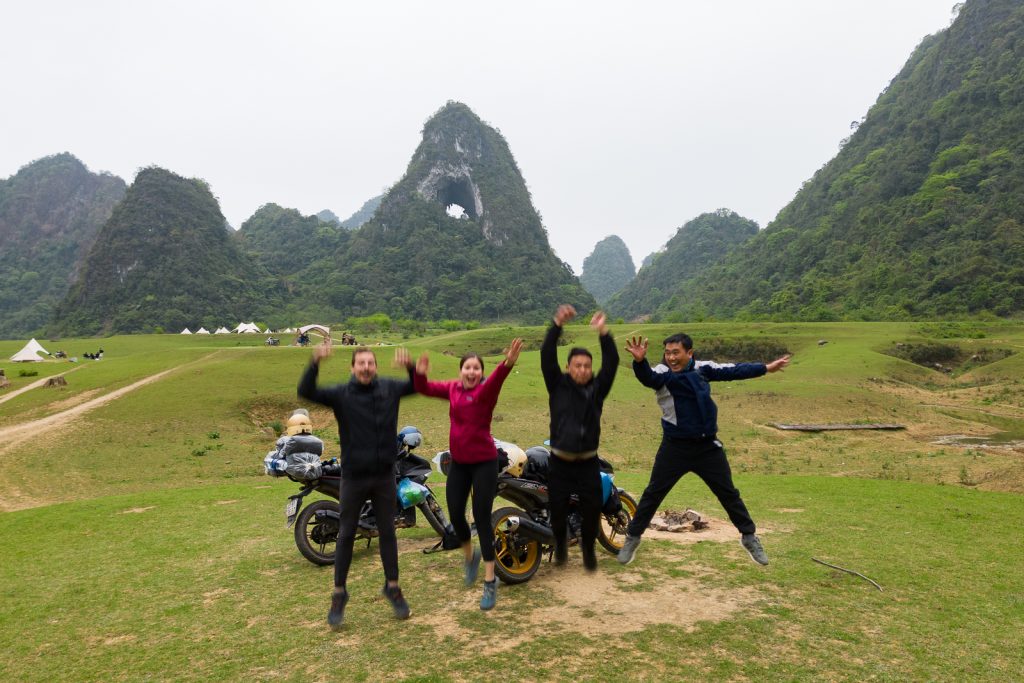
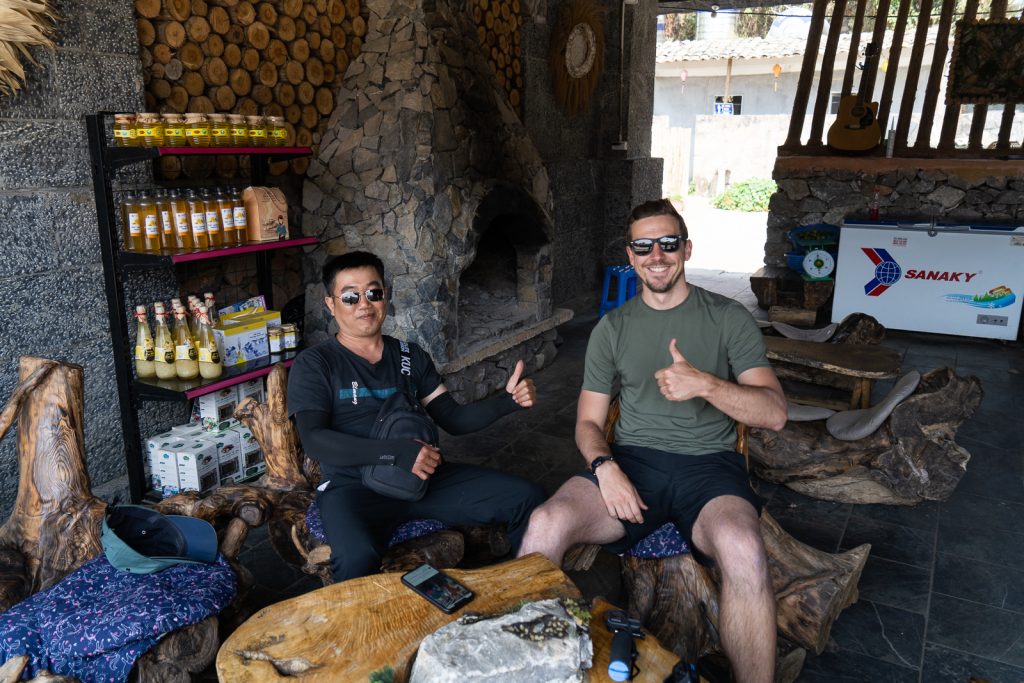
Our guides, Nô Vàng and Hieu, became our family and it was so hard to say goodbye. We danced and played da cau with them in the streets, taught each other new words, and had many laughs. When we think back on our time on the Ha Giang Loop, they are what we miss the most.
One of our favorite moments with our guides is when Nô Vàng decided to skip some of the busier, more popular stops and take us to his home village. We got to see the inside of his uncle’s house and even got to meet his aunt! This is something we would’ve never experienced on our own!

Motorbike laws
If you rent a motorbike, make sure to check motorbike laws for your country’s driver’s license. You will need an IDP, which is an International Driver’s Permit. However, only IDPs from countries under the 1968 Vienna Convention are legal.
Unfortunately for US, Canadian, and Australian citizens, your IDP will not qualify. Without an IDP, the only way to legally drive a motorbike without a license is to drive one 50ccs or less. This may work in cities, but it will not be powerful enough in mountainous areas like the Ha Giang Loop.
Because of an increase in accidents and even deaths from motorbike crashes over the past few years along the Ha Giang Loop, there has been a stronger police presence in some sections. Right after leaving Ha Giang, there is often a police checkpoint, where they’ll check your license.
We’ve heard and read many stories about how the officers can confiscate your license, and even your bike, if you don’t have the correct license. Another issue with driving illegally is that if you get in an accident, your travel health insurance may not cover your medical costs.
Regardless of whether you drive or are a passenger, helmets are required by law in Vietnam for anyone on a motorbike. So make sure to wear one!
Easy rider

If you are unable or do not want to drive your own motorbike, you can have an easy rider. Easy riders are basically when you hire a guide to drive the motorbike and you sit on the back. When we first learned about easy riders, we thought we would feel lame not driving ourselves. You hear all these stories about how driving a motorbike in these epic areas of Vietnam is a must do bucket list experience.
And it is! But we had never driven a motorcycle before and didn’t think the crazy roads of the Ha Giang Loop would be the best time to do it for the first time. Plus legally, we couldn’t. And despite having some hesitations about having an easy rider, we ended up LOVING it. We personally think it’s the best way to experience the loop!
By having an easy rider, you still get to enjoy the best parts of the motorbike journey, like the views, the wind whipping through your hair, and being on a motorbike. But without worrying about driving or figuring out directions. It was super comfortable sitting on the back and also made it way easier to film and snap photos.
Private tour or group tour

If you do choose to do the Ha Giang Loop with a tour, you can either book a group tour or a private tour. There are pros and cons to each option!
For group tours, this is a great way to meet other travelers. However, the downside is that some group tours we saw were HUGE (think 40-50 people). Which personally did not look fun to us. Another thing we hear about the group tours is that it’s a party atmosphere. Some large groups will stay in dorms, which is cheaper and can be fun, but isn’t what we were after on this trip.
So if you choose a group tour, we suggest looking into their group size. The company we chose, Ha Giang Road Trip, focuses on smaller groups of up to 10 people. But we have seen them go with less as well.
We personally did a private tour. This was mostly because we were filming and wanted the freedom to stop wherever, fly our drone, and get photos. It also gave us flexibility. We could ask our guides to add stops or alter the route, giving us more of an “on our own” experience, but with the safety and expertise of guides. While we didn’t meet many other travelers, we got to spend a ton of time with our guides, which as we mentioned, was the highlight of the experience.
Visiting the Ha Giang Loop by car
If you aren’t comfortable on a motorbike, you can also do the Ha Giang Loop in a car. Many tour companies offer this option. It might be a slightly safer way to experience it, but not nearly as fun, in our opinion.
The best Ha Giang Loop tour

For our Ha Giang Loop tour, we went with Ha Giang Road Trip. We chose them because they had amazing reviews and a great price. And we would HIGHLY recommend them! As we mentioned above, they focus on smaller groups, handle all logistics (and from our experience, the restaurants and lodging were all great!), and are overall just incredible people.
You can book their shorter tours (2-4 days) on Tripadvisor, or by contacting them through WhatsApp (+84.948.242.421) or email (hagiangmotorbiketour@gmail.com). Since we went on a longer Ha Giang Loop tour, which isn’t on their website or Tripadvisor, we reached out to them directly. We had to pay a small amount upfront and then paid the rest when we got there, but this may work differently for Tripadvisor bookings.
If you book your tour on Tripadvisor, use our code APLUSK10 for 10% off your tour!
The only complaint we had, which is something we experienced a handful of times in Vietnam, is that communication was a bit slow at times. We are HUGE planners, but we learned that many people only plan their Ha Giang Loop weeks or days in advance. So don’t be super alarmed if communication is a bit slow.
Ha Giang Loop Trip Planning Logistics
How to get to the city of Ha Giang

Ha Giang is located in Tuyên Quang Province in very far north Vietnam. It lies about 5.5 hours north of Hanoi and the most common way to get there is by bus or van. Some tour providers will coordinate a bus or van for you from Hanoi as part of the tour or you can book on 12Go, like we did.
A popular option is to take an overnight bus and get to Ha Giang very early, stay in a hostel, and then ride the next morning. But we have heard that the sleeper buses aren’t very comfortable. What we did instead was take a daytime van from Hanoi, which took about 7 hours with stops, and arrived in Ha Giang the day before our ride. That gave us time to take care of any last minute tasks and be well rested.
The best time to do the Ha Giang Loop
The Ha Giang Loop can be enjoyed year round, but since parts of the route are located at a slightly higher elevation (over 1,000 meters/3,000 feet), each season can bring a different experience. In our opinion, the best seasons to enjoy the Ha Giang Loop are spring and fall.
Spring (March-May)
In the spring, the temperatures will be cooler with occasional rain and the foliage and flowers should be in bloom. We visited in early April and had pretty perfect weather, minus one day. While some areas were more lush, others hadn’t come back to life yet from the winter. But it was still gorgeous!

Summer (June-August)
The summer is the rainy season. It will be very warm and rain can be heavy and frequent. Heavy rains will cause the roads to be very muddy, slippery, and dangerous. The perk of visiting at this time is that the scenery is very green and lush!
Fall (September-November)
The fall offers very pleasant conditions. It’s a drier time of year and is the most popular time for tourists. If you visit between September and October, you will also get to see the rice fields with a beautiful golden hue!
Winter
During the winter, there will likely be chilly temperatures. The scenery will be a bit more dry looking and you may run the risk of icy roads.
Keep in mind the Tet Holiday when visiting this time of year. Tet marks the first day of the Lunar New Year and is a huge week-long celebration across the country. Many Vietnamese return to their hometowns during this time and many businesses shut down for days to celebrate, so you may struggle to find dining options and activities open.
For 2026, Tet will begin on February 17, 2026.
Where to stay in Ha Giang before and after doing the Ha Giang Loop

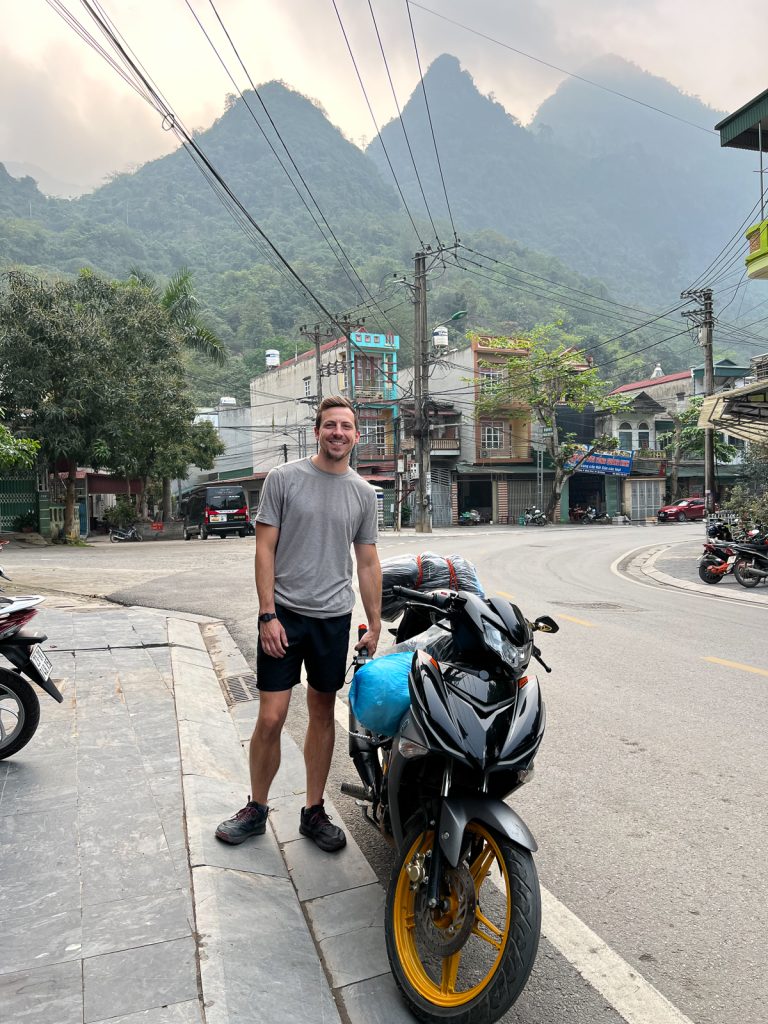
There are many accommodation options to choose from in Ha Giang. If you go with a guide, your accommodation the night before your Ha Giang Loop tour might be included.
We booked our own lodging beforehand and stayed at Be’s Home. It’s a hostel, with bunks, but we had one of their private rooms. The owners are very friendly and helpful! A homemade breakfast of bread and jams is included as well.
Some other options to check out are:
Sun Ha Giang Hotel
Tí Lầu Homestay
Ha Giang Historic House
Palm Ha Giang Ecolodge
Odyssey Hostel
Lucky House Villa & Hostel
Because this is such a hotspot with backpackers, who tend to be a bit more spontaneous than us, it’s not too hard to show up and find a room somewhere. But we prefer to book in advance, to ensure we get a nice spot.
Frequently Asked Questions about the Ha Giang Loop
Is the Ha Giang loop safe?
The Ha Giang Loop is very safe from a personal safety perspective. In our experience, we didn’t encounter anything sketchy and always felt safe. We came across nothing but kindness and hospitality along the way. Of course, it’s always good to be alert of your surroundings, plus keep an eye on valuables.
The biggest danger of tackling the Ha Giang Loop tour is the road itself, plus other drivers. We’ll explain more about road conditions below, but with a guide, you have a much higher chance of staying safe on the roads. However, we highly recommend getting travel insurance before tackling the Ha Giang Loop.
We’ve been using SafetyWing for a few years now and although we haven’t had to actually use it, it’s been a nice peace of mind. SafetyWing offers very affordable plans with great coverage, including covering motorbike trips.
How are the roads on the Ha Giang Loop?

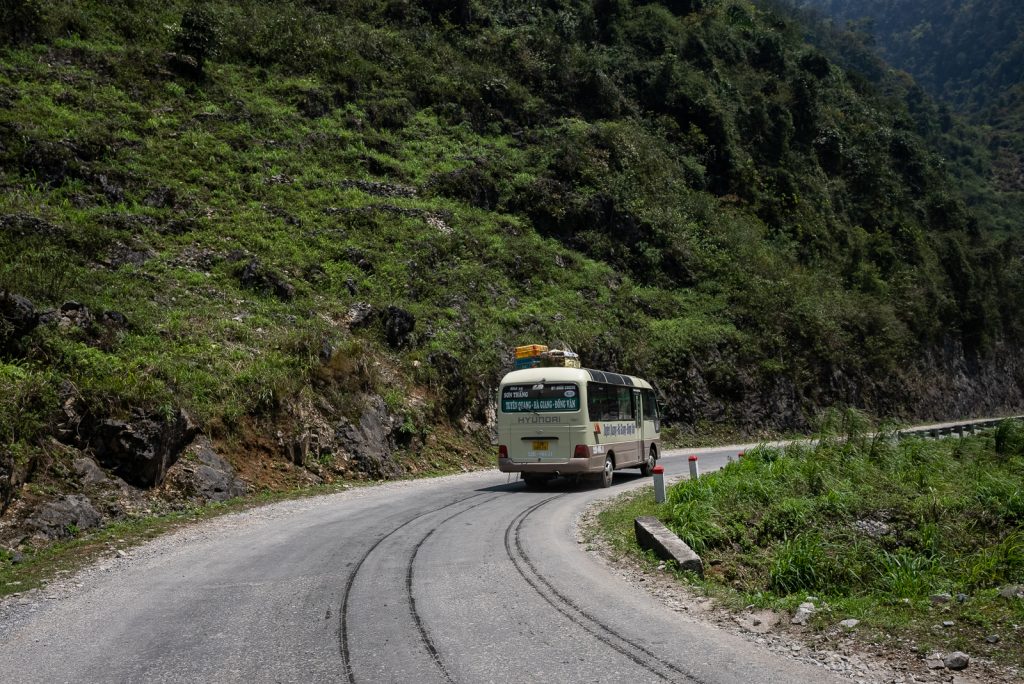
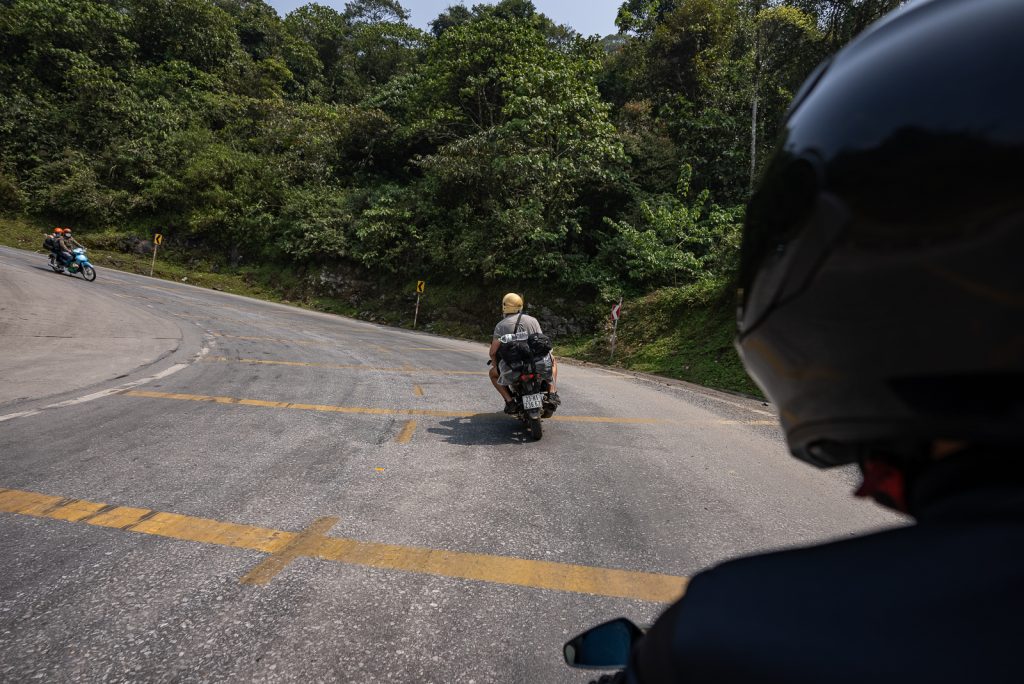
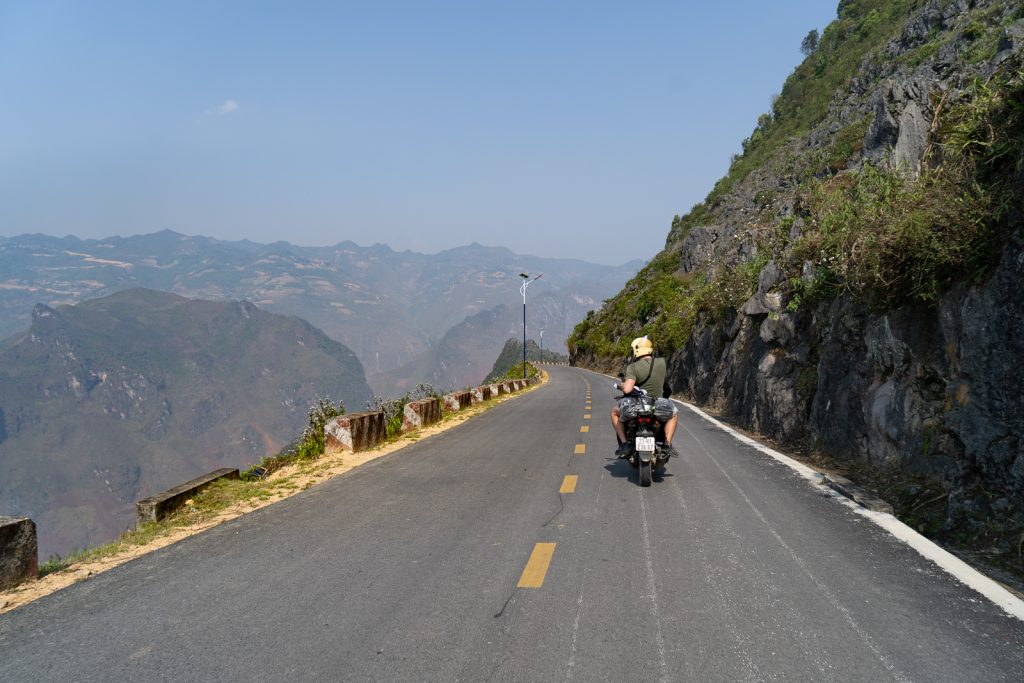
The roads vary throughout the journey. Some parts have very nice, smooth pavement. While others are either under construction, completely dirt, or a bit more rugged. There are some sections with wide shoulders, while others will have drop offs on one side. The road is used by both motorbikes, cars, and semi trucks, but at no point did we ever notice anyone driving unsafe. It is common to pass people though!
When conditions are dry, the roads are generally very safe, as long as you drive at a proper speed. When it’s wet, you’ll need to take your time and slow down for the conditions.
We did have one incident during our week-long ride. On our final full day, it was raining and Adam and his driver slid out while taking a turn (at a safe speed). Thankfully, everyone was okay (minus our camera lens…RIP) and the bike was fine to keep driving. While it shook us up a bit, we still fully recommend our guides, as they were nothing but cautious and safe the entire trip. Accidents can happen, even to experienced and safe drivers.
But for 99% of people on a Ha Giang Loop tour, you will have zero issues with safety, as long as you are responsible or you hire an expert driver.
Where can I store my luggage?
Since you’ll be on a motorbike, there isn’t much room for luggage. Your bag will be strapped to the back of the bike (and covered in case of rain), plus your guide will have some items they need to bring as well. Tour providers will have a place you can leave the rest of your luggage throughout your journey, so only pack what you need!
Besides the bag you strap onto the bike, we suggest bringing a small backpack or fanny pack to wear on the bike. This is where you’ll want to put any items you want easily accessible, like sunglasses, your phone, a camera, etc. While you could get things out of the bag that is strapped down, it takes time and is kind of a hassle.
For us, we were not starting and returning in the same spot, so we had to bring everything with us. Because of this, we only traveled with one backpack each (plus a small foldable backpack) for our entire 6 weeks in Vietnam. It was tough!
What is the food like on the Ha Giang Loop?

In this part of Vietnam you won’t find much Western food. Most of the meals you eat will be Vietnamese cuisine. Since we went on a Ha Giang Loop tour, our guides chose the restaurants and ordered for us. We would typically eat family style, with lots of local dishes to sample, including meat, vegetables, and rice. It was always delicious!
Although they ordered, there were a couple times where we mentioned foods we loved and they found spots for us to have it. They are also able to accommodate different dietary restrictions. For vegetarians or vegans, the restaurants always had options, including tofu based dishes.
Besides food, one thing you’ll encounter a lot on the Ha Giang Loop is happy water. This is a rice wine and is VERY popular across the country. While we don’t drink alcohol, we saw many groups at restaurants and lodging enjoying happy water after their ride.
Where do you sleep every night?

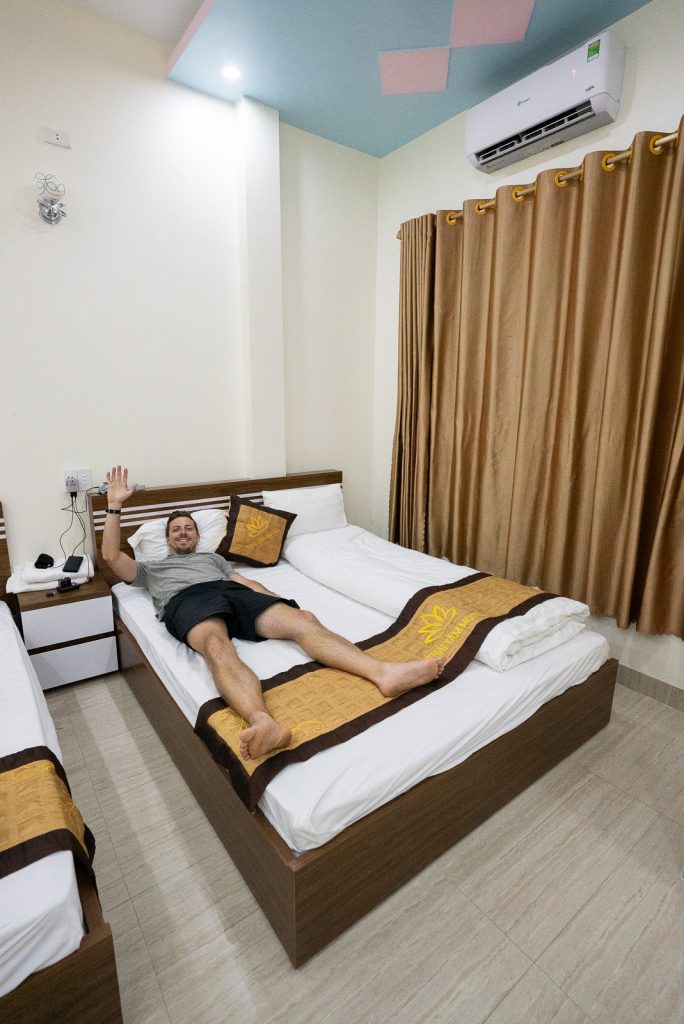
There are many small towns and villages along the Ha Giang Loop, all of which will have small, family run hotels or homestays. We stayed in a mix of both and while all lodging was relatively basic, they were all clean.
Our favorite accommodations were the homestays! They had more of a boutique hotel feel, served meals (and sometimes had entertainment), and often were in a gorgeous setting surrounded by mountains, along a river, or both.
We will share where we stayed, plus other options, later on in this guide. Be warned, Vietnamese beds are very firm!
Should you book your accommodations in advance or as you go?

If you go on a Ha Giang Loop tour, they will set up the accommodation for you. For those experiencing the Ha Giang Loop on your own, you likely wouldn’t have issues finding availability in each town. There are a bunch of options! Not booking in advance will give you lots of flexibility, but you may be slightly more limited in your options.
What is the cell signal like on the Ha Giang Loop?
We shockingly had cell service almost the entire Ha Giang Loop. While we had SIM cards from Vietnamese cell phone providers back during our trip, we have recently switched to using eSIMs from Airalo, which is much easier!
Is the Ha Giang Loop busy?

The Ha Giang Loop is less busy and touristy than other areas of Northern Vietnam, like Sapa, but is rapidly gaining popularity. During our Ha Giang Loop tour in early April, it was pretty busy at times. We’d often see huge packs of tour groups on the road and many of the popular spots were congested.
To avoid some crowds, we highly recommend giving yourself more time in the region so you can venture further than the Ha Giang Loop. When we left the Ha Giang Loop and went towards Cao Bang, we hardly saw any tourists until we got to the Ban Gioc Waterfall.
How much does the Ha Giang Loop cost?

The cost of doing the Ha Giang Loop tour varies depending on the tour you choose (or if you go on your own), the number of days, and whether or not you have an easy rider.
Choosing to go without a guide will be the cheapest option, with motorbike rentals ranging anywhere from 180,000 VND-550,000 VND per day (about $7.40-$22.50 USD), plus insurance. Lodging is usually $20 or less per night.
With a Ha Giang Loop tour, you can expect to pay anywhere from $200 to $300 per person, with an easy rider. Going on a private tour will likely cost a little bit more. While you can likely find cheaper tours than this, it’s worth paying a bit more for a reputable tour company.
Our week-long private tour on the Ha Giang Loop and over to Ban Gioc and Ba Be Lake cost $660 each.
Should you tip your guide?

Although tipping isn’t customary in Vietnam, it is highly appreciated. You should consider tipping when the service is polite, friendly, or above your expectations. Many people tip at upscale restaurants and for massages.
When it comes to your Ha Giang Loop tour guide, they play a huge role in making your trip special. They book the accommodation, find places to eat, and make the overall experience amazing. On top of all that, they are spending many days away from their families.
A good rule of thumb for tipping is $10-$15 USD per day of the tour or about 10% of your tour price. However, if you can, we suggest doing even more. We paid our guides 20% each ($132 USD), which was about $22 per day.
Make sure to get out cash at an ATM in Ha Giang before you go!
Do Ha Giang Loop guides speak English?
It is pretty common for the guides to speak some level of English, but easy rider drivers may only speak Vietnamese or their local language. Our guide Nô Vàng spoke pretty good English, but Adam’s driver Hieu did not. We were able to communicate just fine with Nô Vàng translating for us!
The best stops along the Ha Giang Loop
From tourist sites, like temples and boat rides, to simply just pulling over on the side of the road and admiring the view, there are endless things to do along the Ha Giang Loop. Which is why hiring a guide is the best choice! They know of all of the popular stops and secret spots.
But for those going on their own, or if you’re like us and just like to know what to expect beforehand, here are some of the best stops and top sights you’ll see along the Ha Giang Loop!
These are only some of the best places to stop, there is so much to see out there and you’ll be stopping a lot. Keep this in mind when you’re planning your time and expect to be out there longer than you think!
Ha Giang

While Ha Giang is the largest city along the Ha Giang Loop, there isn’t a ton to do in the town of Ha Giang itself. It’s mostly just used as a basecamp before your Ha Giang Loop tour.
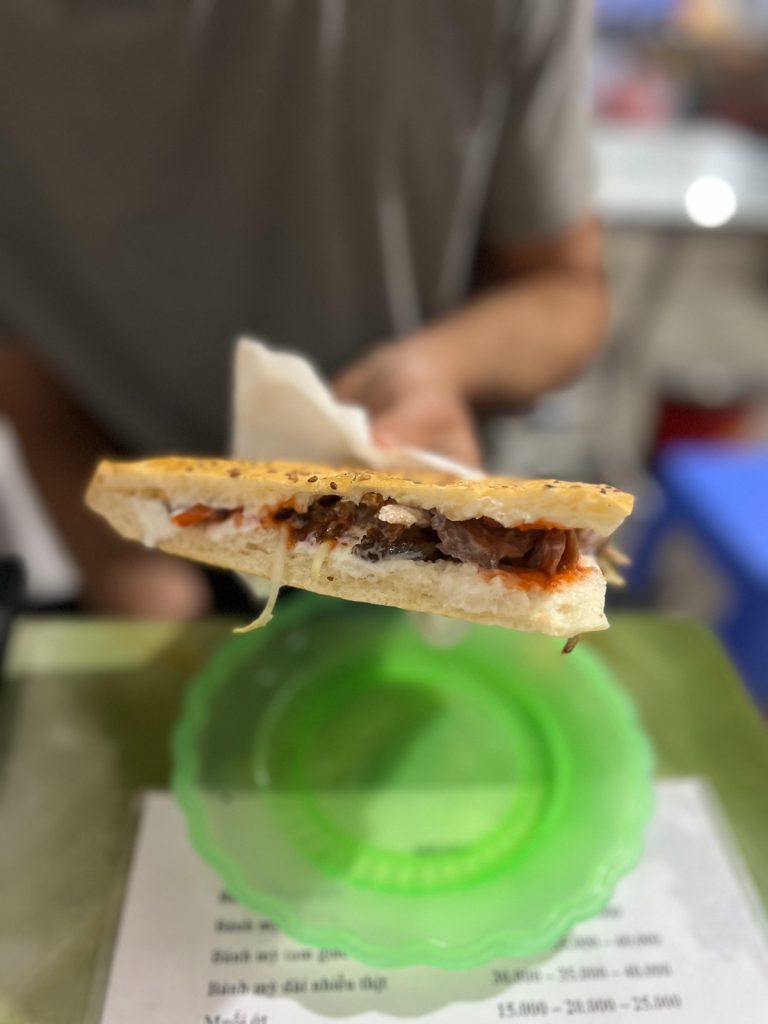
We spent some time here before our ride and it was very quiet during the day, due to most people being out on motorbikes. But a couple spots we really enjoyed were Lofita 247 Nguyen Thai Hoc for coffee, tea, and a nice spot to work, as well as Phương Hạnh DONER KEBAB Bánh mỳ for delicious doner kebabs!
Bac Sum Pass

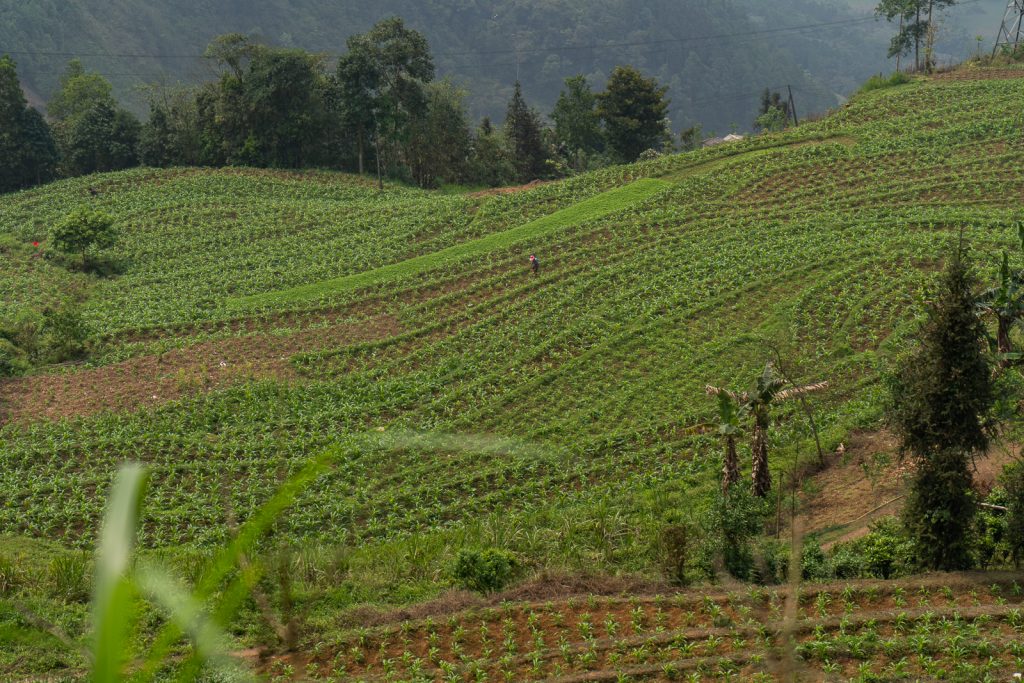
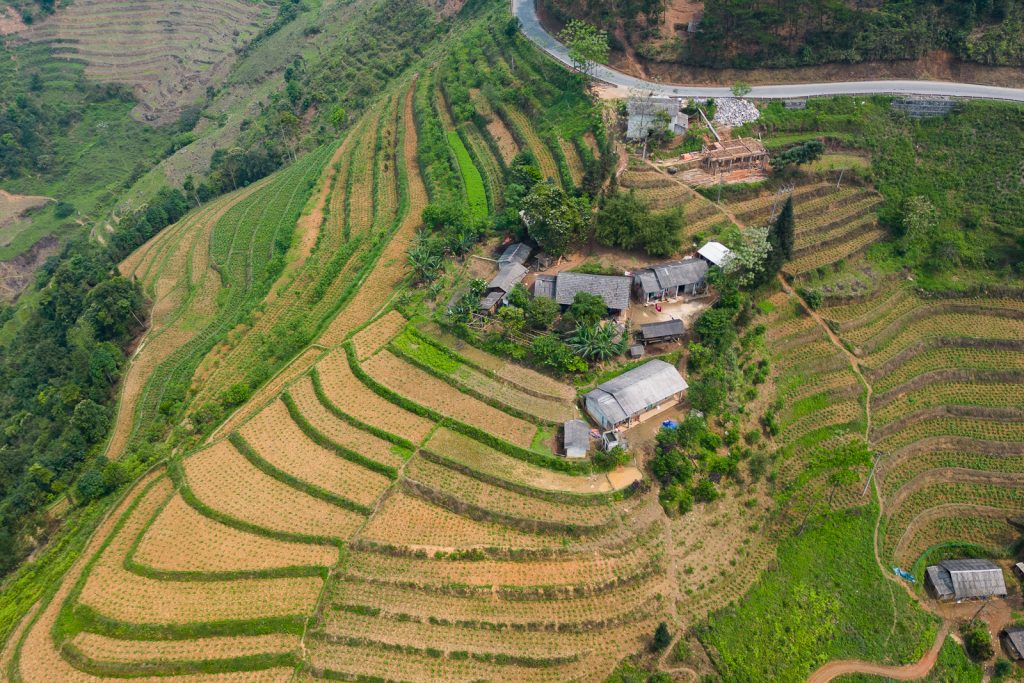
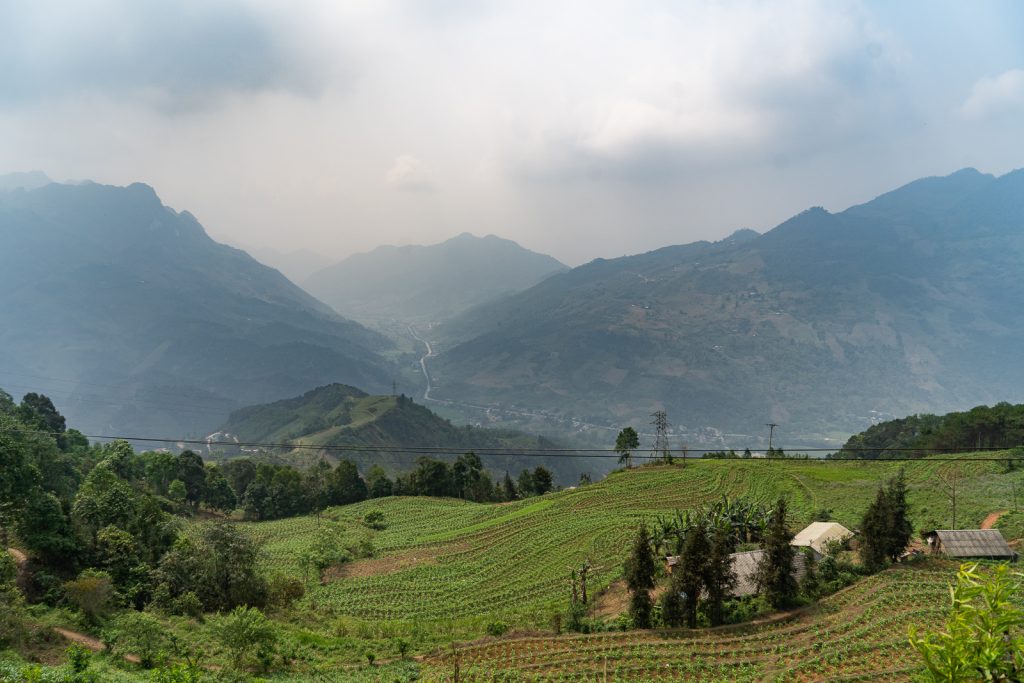
As soon as you leave Ha Giang, the scenery is incredible. But the Bac Sum Pass will be your first major pass and landmark. This is where the road starts to get really mountainous and windy! There are a handful of spots to pull over and enjoy the views from up here.
Quan Ba (Heaven’s Gate)

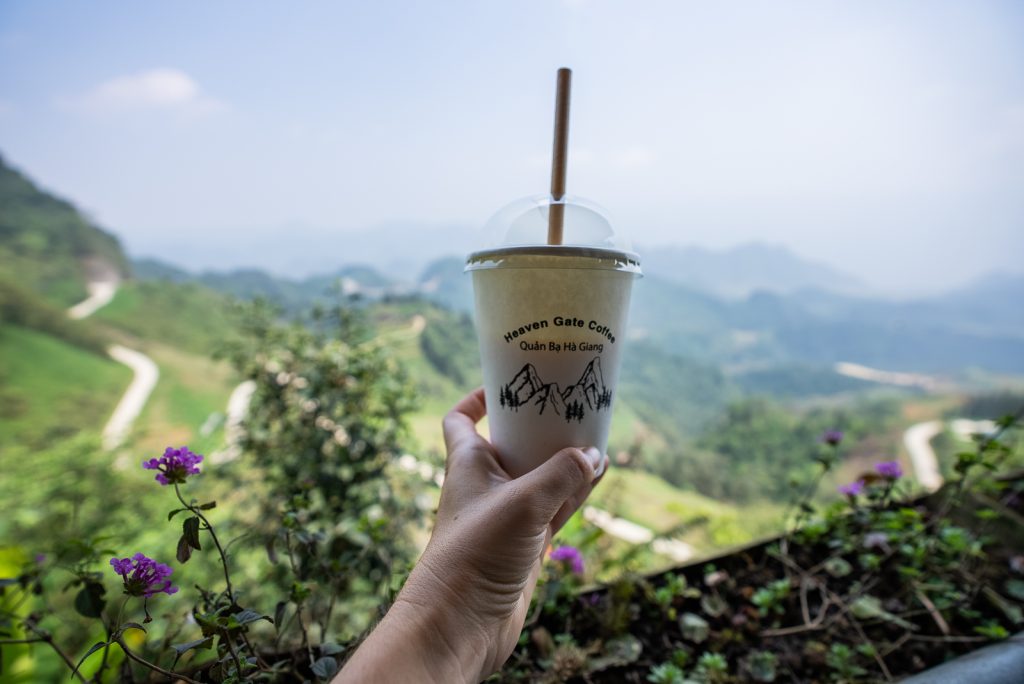
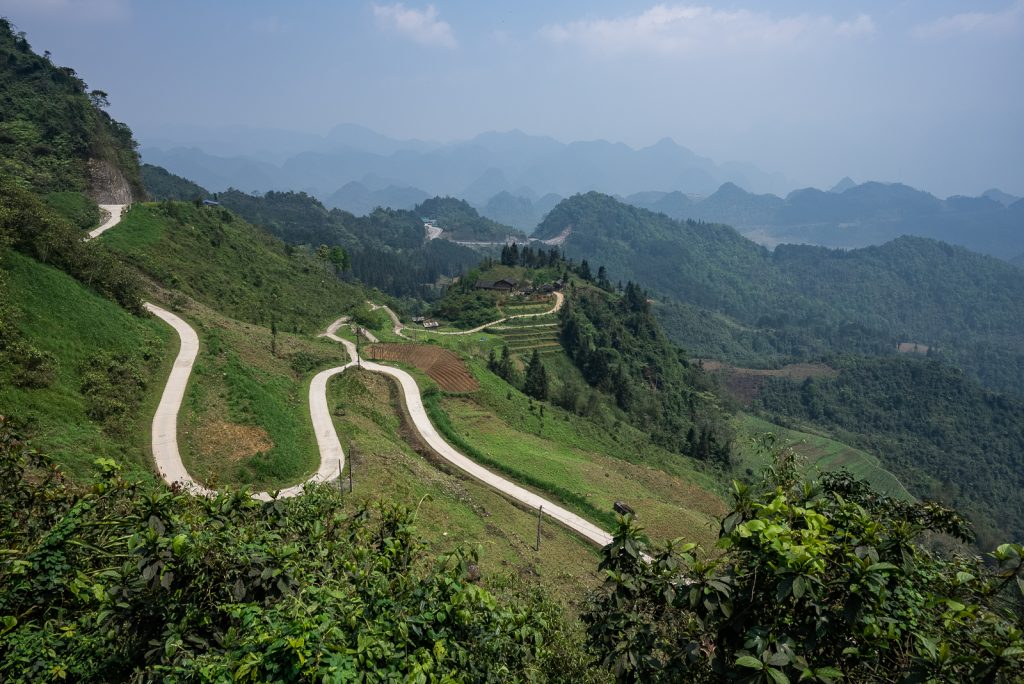
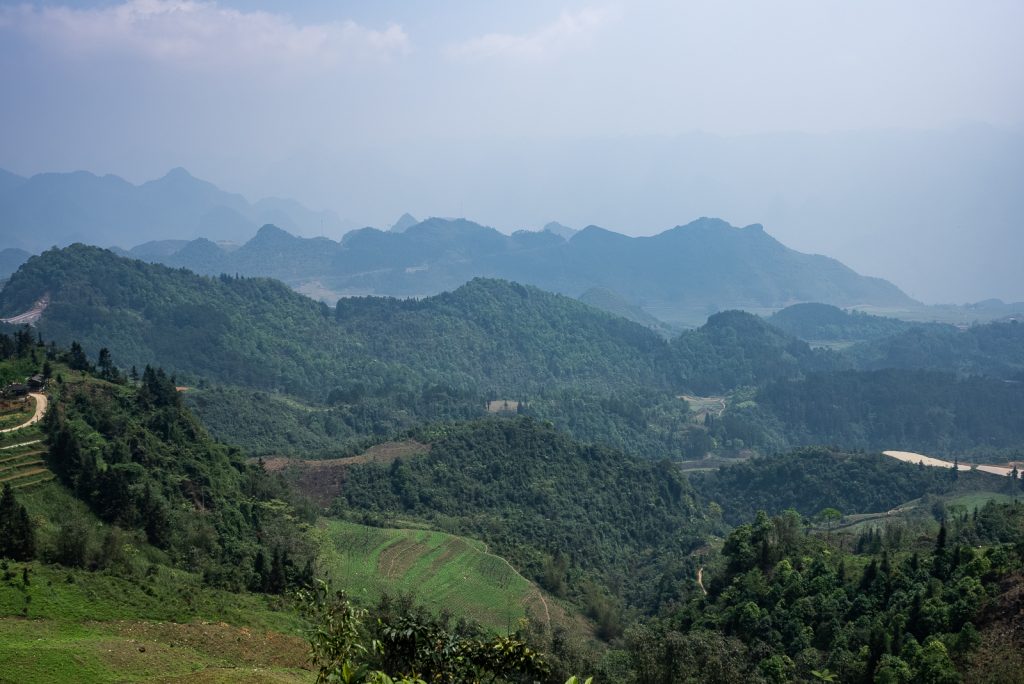
The next major stop after Bac Sum pass is Heaven’s Gate, which sits around 1,500 meters (4,291 feet). This is the gateway to theDong Van Global Karst Plateau Geopark, which is the first geopark in Vietnam and a UNESCO site.
Up here you can see sweeping views of the mountains, rice fields, and villages. And it has a cafe where you can grab drinks. We enjoyed a mango smoothie (not included in our tour price) with a view!
Just about every single tour group stops at this view point. This is where the views really start to get good. It’s best if you can stop here in between the large tours, because this spot will be very busy.
Twin Mountains Viewpoint (aka Fairy Breast Mountains)

Not too far down the road and around a few bends you’ll see the Twin Mountains down in a valley off to the right. Or as our guides called them…Fairy Breast Mountains! This is a quick roadside stop to pull over and snap a few photos.
Lung Khuy Cave
The Dong Van Global Karst Plateau Geopark is home to many caves, but one easy one to explore is the Lung Khuy Cave. The cave was discovered in 2015 and is considered one of the most beautiful in the area.
It’s a short detour to get to the cave from the main Ha Giang Loop. Inside there is a 1km walkway that circles you through, so you can admire the large amount of stalactites!
Cost: 50,000 VND per person
Lung Tam Weaving Village
In the Lung Tam Weaving Village you can see and learn from the Hmong people the ancient process of hemp weaving. You can watch the Hmong women preparing the fiber, dying it using natural processes and colors, and finally weaving. All of this is done by hand!
Note: This stop can either be made on your way to Yen Minh or as you loop back around on the Ha Giang Loop.
Yen Minh

The next leg of the journey includes winding roads, epic views of the mountains, and even a forest that you’ll ride through. There are tons of pullouts to stop at, many of which aren’t on Google Maps. So if you see a group stopped, it’s probably worth checking out!
After a bit of driving, you’ll make it to Yen Minh, which is the first larger town you’ll reach after Ha Giang. Yen Minh makes for a perfect stop for lunch. During our Ha Giang Loop tour, we stopped at Nhà hàng Hóa Cường to eat.
If you’re doing a 4 day route on the Ha Giang Loop, this is a good town to stay in for your first night. Tom Homestay is a great homestay. You could also stay closer to the Lung Khuy cave at one of the many homestays in the area, including Dồn Dao Homestay & Bungalow.
Tham Ma Pass

The next major mountain pass you’ll encounter is Tham Ma Pass. This steep road winds you up nine bends through a narrow mountain valley. It’s one of the most popular stops along the Ha Giang Loop!
At the top you’ll get to admire the pass that you just went up, which is a very cool perspective. But one thing to be aware of here is that you’ll encounter lots of cute local kids, dressed in traditional attire.
As cute as they might be, resist the temptation to take photos of them or give them money. We’ve read that unfortunately they are forced to be there, instead of in school, to make money. The more people give them money the more incentive they have to be there.
Hmong King’s Palace
The Hmong King’s Palace is one of the most important sites for the Hmong people. It was built in 1902 and was the residence of two wealthy landowners and their families who were regarded as kings by the local Hmong people. This is a popular stop on most Ha Giang Loop tours!
Cost: 10,000 VND per person
Dong Van

After driving through some of the most epic peaks of the trip for sunset, we made it to the next major town along the Ha Giang Loop, Dong Van. It was a much larger town than we expected!
This is where we stayed the first night of the motor bike trip, at Thái Tâm Motel. We also had dinner at Nhà hàng Tình Cốc Đồng Văn, plus breakfast the next morning at Ethnic House lounge bar, hostel & restaurant. After visiting the Lung Cu Flag Tower the next day, we had lunch at Big Hai Rice (one of our favorite meals on the loop!) and grabbed coffee at Cà Phê Tam Giác Mạch.
One of the neatest parts of Dong Van is the Ancient Town area. It reminded us of an even more authentic Hoi An! If you happen to be here on a Sunday, there is a big market where many of the local ethnic groups come and trade.
Lung Cu Flag Tower

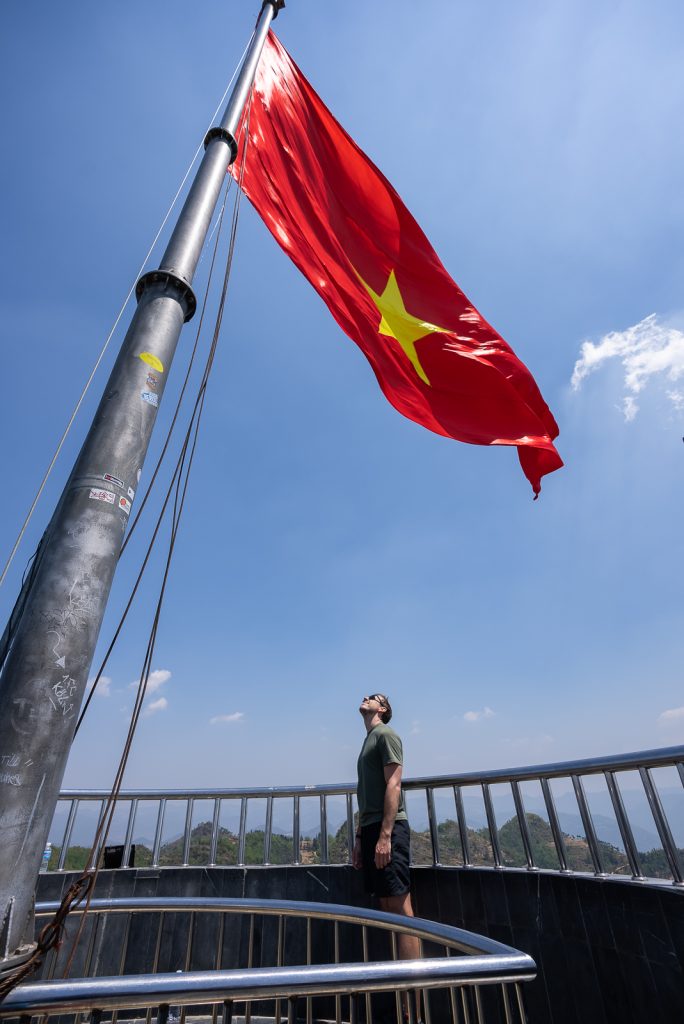
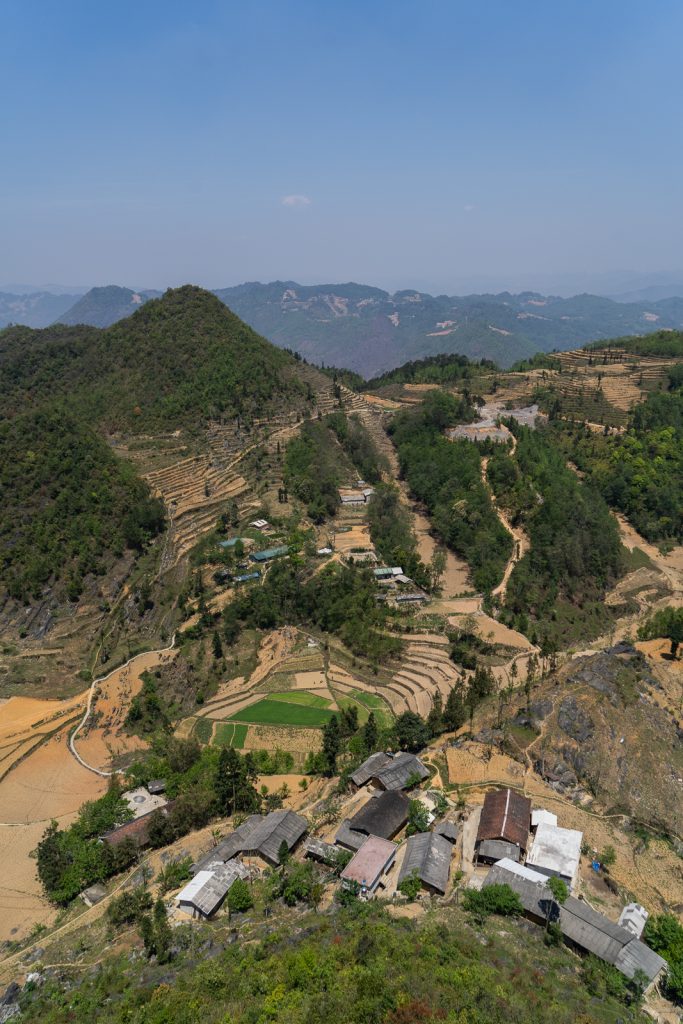
The Lung Cu Flag Tower is a 33m (108 ft) flag tower representing the northernmost point of Vietnam! The border with China and the actual northernmost point is another few kilometers north. But as you drive here, you will have the fenced Chinese border on the left of you. It’s pretty wild!
To get here, you will have to take a detour off the main Ha Giang Loop, which is accessible from Dong Van. But it’s totally worth it! The scenery on this stretch was pretty insane, as were the roads. We made a quick stop at Khe Lia Panorama on the way to the flag tower, which has nice views, plus snacks and drinks for sale.
At the Lung Cu Flag Tower itself, you’ll find the biggest Vietnamese flag that you’ll ever see! The flag is 54 square meters, representing the 54 ethnic groups of Vietnam. It costs 25,000 VND per person to enter and climb about 100 steps to the top, which we highly recommend! You’ll have 360 degree views and it’s especially cool to look into China!
Ma Pi Leng Pass

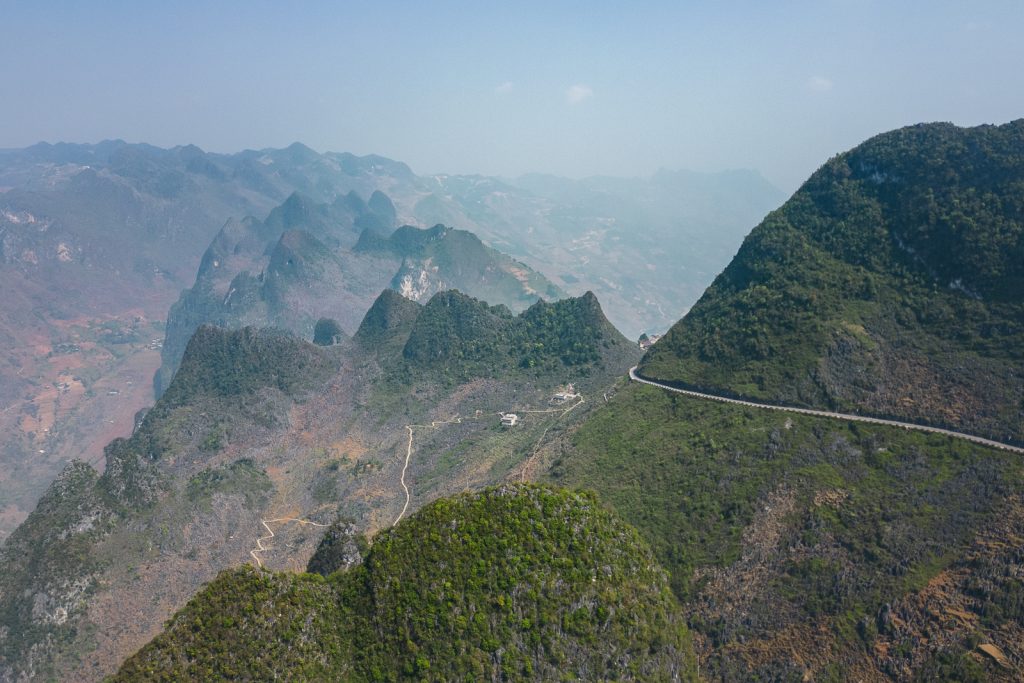
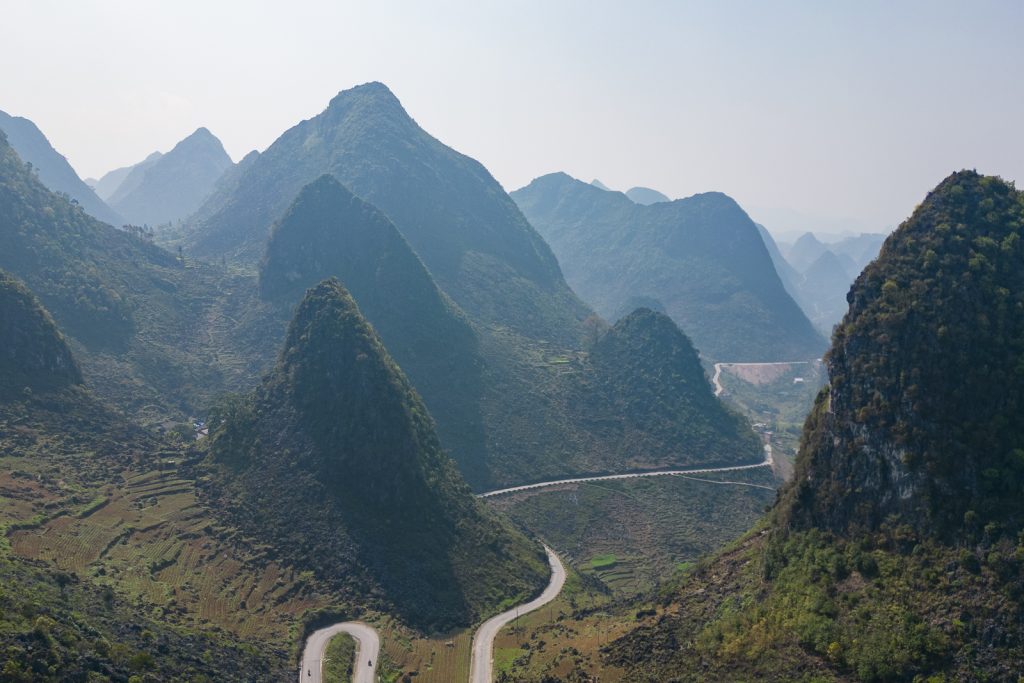
After the Lung Cu Flag Tower we headed back into Dong Van for lunch and coffee, before riding east to the famous Ma Pi Leng Pass.
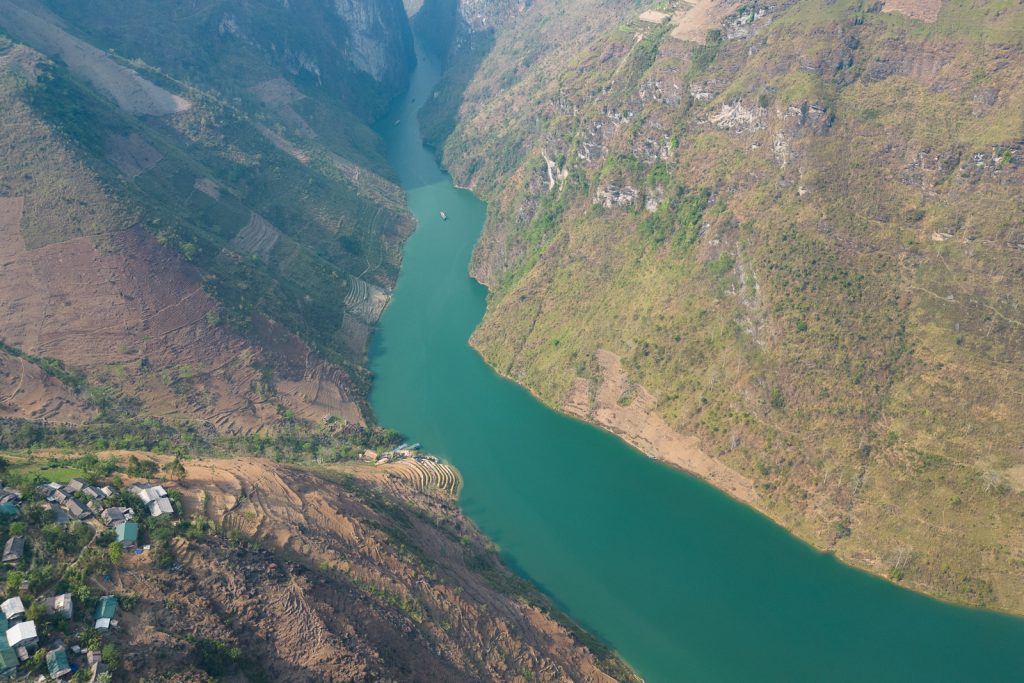
The Ma Pi Leng pass is an epic stretch of road looking down into the Tu San Canyon, the largest canyon in Southeast Asia! You’ll have an evolving view every few minutes, so you’ll want to stop in different spots to capture it. But this spot is one of the most iconic!
It’s hard to make this claim, but the views from this pass are one of the best views on the Ha Giang Loop!

Ma Pi Leng Skywalk
The Ma Pi Leng Skywalk is a short hike to get above the road and have an even better view of the valley below and mountains in the distance. At this spot you’ll find a large monument and a side road that will take you out to a precarious looking rock that sticks out from the side of the mountain.
Despite there being a sign indicating no motorbikes, many people still drive to the viewpoint. Much of the path is a narrow sidewalk and the path will soon turn to slick rock to the viewpoint, so we suggest walking instead. Just be careful! It is very narrow and has a steep drop off on one side.
Boat ride on Nho Que River

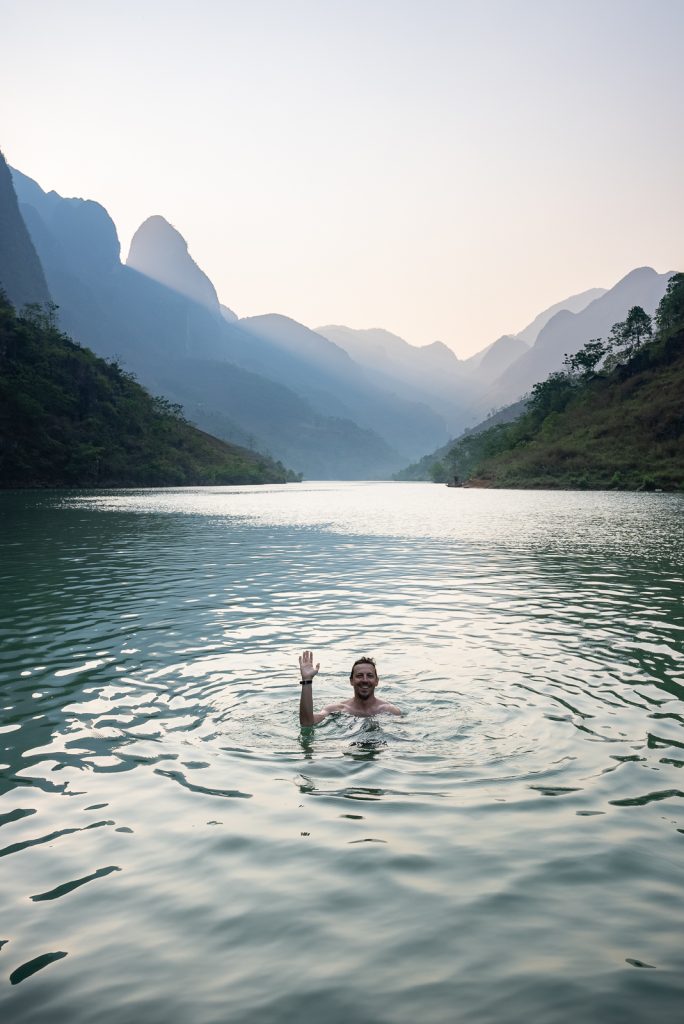
Hands down our favorite activity along the Ha Giang Loop portion of our Northern Vietnam motorbike trip was the boat ride on the Nho Que River.
Not only is it a journey to get down to the river (it’s VERY steep and winding), but once you get to the bottom, you then get to ride through the canyon!
When you get to the parking area you must pay 5,000 VND for parking and then walk to the ticket counter. Tickets for the boat ride are 120,000 VND per person and the boat ride is about an hour long. From the ticket office you’ll get on a bus which will shuttle you to the actual marina and you’ll be assigned a boat. If you booked a Ha Giang Loop Tour, this will all be included in the price!
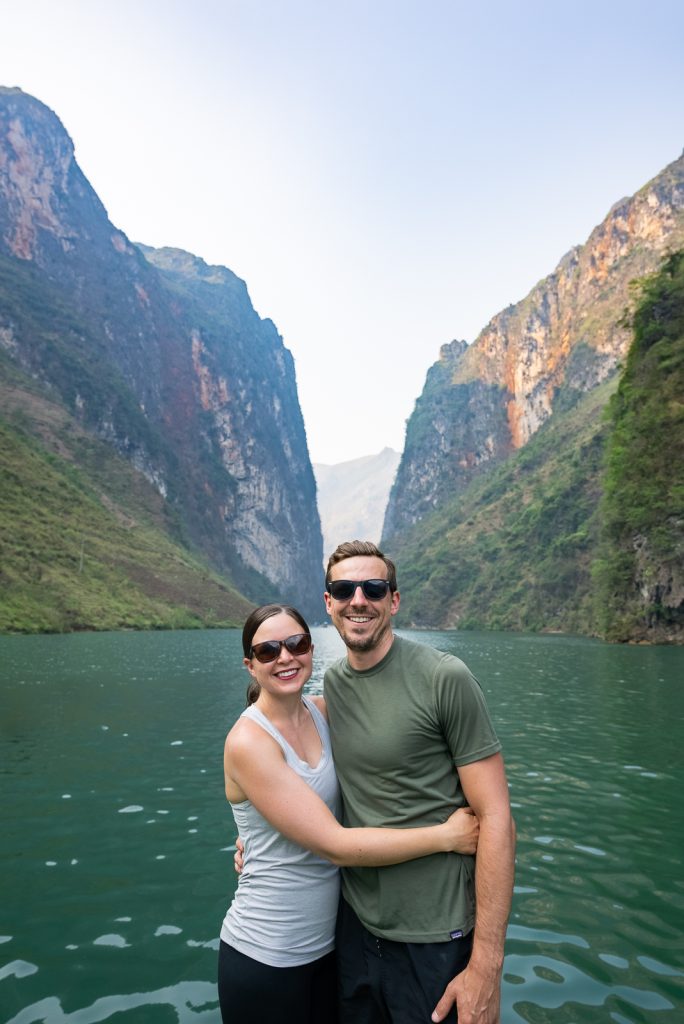
It was so wild gliding through the canyon, with its massive canyon walls towering over us. We went close to sunset, so the golden light just made the canyon even more magical!
After you ride through the canyon, the boat will pull up to a beach and you can get off the boat for a few minutes. Make sure you bring your swimsuit, because you can jump off the back of the boat. The water is so nice and refreshing!

Meo Vac
Meo Vac is a short drive from the Nho Que River. Depending on your itinerary, you may stop here for lunch or stay the night, which is what we did. During our time in Meo Vac we ate at the Thanh Phương Restaurant and Tuấn Hen restaurant, grabbed coffee at Cafe Phố Đá Mèo Vạc, and stayed at Khách Sạn Mai Đào
Note: The typical Ha Giang Loop tour turns west from Meo Vac, down towards Mau Due. But this is where our time on the Ha Giang Loop ended. Instead of looping back to Ha Giang, we continued southeast toward Cao Bang and other major destinations in Northern Vietnam. If you’d like to see those stops, check out our 6 day itinerary below!
Mau Due
Mau Due is another town on the Ha Giang Loop that you could stop at for lunch. Nhà Hàng Giang Điệp 1976 or Nhà Hàng Hoàng Thắm look like good choices! Instead of staying the night here, we’d recommend Meo Vac or Du Gia, which have more options.
Viewpoints
After leaving Mau Due, there will be tons of different viewpoints to stop at. One of the first is Sa Li Pass, which has beautiful views of the rice terraces! From there, you can also stop by Di tích đồn Pháp, which has free ruins of an old French military building. As you continue south, you’ll make it to the Lung Ho Viewpoint, where you can grab a coffee with a view at Mountain Coffee.

Du Gia Waterfall
One of the highlights of the final stretch of the Ha Giang Loop (and the thing we were most bummed to miss) is the Du Gia waterfall. Not only is the waterfall beautiful, but you can swim here! This is a very popular spot on the Ha Giang Loop tours, so if you are riding on your own, we suggest getting here very early or later in the day, to avoid the crowds.
If you’d like to stay the night in Du Gia, check out Du Già Coffee View Homestay or Du Già Village Homestay. Both look INCREDIBLE!
Back to Ha Giang
After Du Gia, you have a couple options to get back to Ha Giang. You can either continue south on DT176 until you intersect with QL34 OR you can cut through DT181 and repeat some of the road back to Ha Giang. We think the DT181 option would have more sights to see!
Sample Ha Giang Loop Itineraries
If you’re going with a guide, they will have an itinerary planned for you, which will include many of the stops above. But if you are going on your own, here are some sample itineraries to help you plan your time!

3 Day Ha Giang Loop Itinerary
Day 1 (Ha Giang – Heaven’s Gate – Yen Minh – Dong Van)
- Have breakfast in Ha Giang and then hit the road!
- Drive up Bac Sum Pass
- Stop at Heaven’s Gate and enjoy a drink
- Twin Mountains Viewpoint
- Lunch in Yen Minh
- Drive Tham Ma Pass
- Visit the Hmong King’s Palace
- Arrive in Dong Van and check in with hotel
- Get dinner in Dong Van
Day 2 (Dong Van – Ma Pi Leng Pass – No Que River – Meo Vac – Du Gia village)
- Have breakfast in Dong Van
- Drive Ma Pi Leng Pass
- Walk the Skywalk (also known as Sky Pass)
- Ride the Nho Que River boat
- Have lunch in Mau Due village
- Visit the many viewpoints between Mau Due and Du Gia
- Swim at the Du Gia waterfall
- Check into a homestay in Du Gia
- Enjoy dinner at your homestay
Day 3 (Du Gia village – Lung Tam – Ha Giang)
- Have breakfast at your homestay
- Begin your drive back to Ha Giang. Depending on your route, you could stop at the Lung Tam Village and Lung Khuy cave. If you go this way, you can also stop at Caffe Yến Ngọc ( Xa Lạ Quán) for lunch!
- Arrive back in Ha Giang by the late afternoon

4 Day Ha Giang Loop Itinerary
Day 1 (Ha Giang – Heaven’s Gate – Lung Khuy Cave – Yen Minh)
- Have breakfast in Ha Giang and then hit the road!
- Drive up Bac Sum Pass
- Stop at Heaven’s Gate and enjoy a drink
- See the Twin Mountains Viewpoint
- Visit the Lung Khuy Cave
- Have lunch at Caffe Yến Ngọc ( Xa Lạ Quán)
- Stop at overlooks on your way to Yen Minh
- Check into your hotel in Yen Minh
- Have dinner in Yen Minh
Day 2 (Yen Minh – Lung Cu Flagpole – Dong Van)
- Have breakfast in Yen Minh
- Drive Tham Ma Pass
- Visit the Hmong King’s Palace
- Make the detour to the Lung Cu Flagpole
- Have lunch in Lung Cu
- Drive to Dong Van
- Check into a hotel in Dong Van
- Get dinner in Dong Van
Day 3 (Dong Van – Tu San Canyon boat tour – Du Gia)
- Have breakfast and coffee in Dong Van
- Drive Ma Pi Leng Pass
- Hike up to the Skywalk
- Go on the Tu San Canyon boat tour
- Have lunch in Meo Vac
- Drive to Du Gia, stopping at different overlooks along the way
- Check into a homestay in Du Gia
- Have dinner at your homestay
Day 4 (Du Gia – Du Gia Waterfall – Lung Tam – Ha Giang)
- Have breakfast at your homestay
- Swim in the Du Gia waterfall
- Begin your drive back to Ha Giang. Depending on your route, you could stop at the Lung Tam Village
- Arrive back in Ha Giang by the late afternoon
6 Day Ha Giang Loop + Cao Bang Itinerary

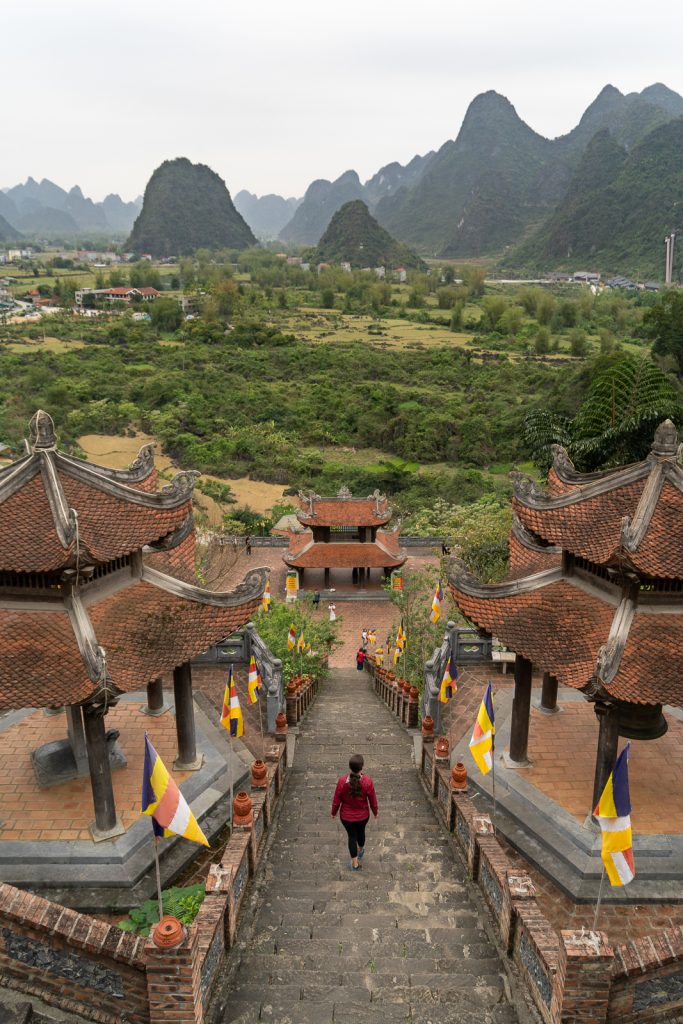


We were lucky enough to spend 6 days exploring the Ha Giang Loop and Cao Bang Province. This route enabled us to see some of the best highlights on the Ha Giang Loop, explore a much more remote, less visited region of the country, and see a beautiful waterfall and lake! Some of our days on this route included a lot of driving, with just quick stops to eat and see viewpoints.
But we loved it! We rode through so many small towns and villages, where tourists rarely go, and got many squeals and waves from the local kids. It was awesome!
Here’s our exact 6 day Northern Vietnam motorbike itinerary!
Day 1 (Ha Giang – Heaven’s Gate – Yen Minh – Dong Van)
- We had breakfast at our hostel in Ha Giang (Be’s Place)
- Our drivers picked us up, we went to the Ha Giang Road Trip office to pay our final balance, pack up the bikes, and hit the road.
- Drive up Bac Sum Pass
- Stop at Heaven’s Gate and enjoy a drink
- Twin Mountains Viewpoint
- Lunch in Yen Minh
- Drive Tham Ma Pass
- Our guide Nô Vàng surprised us by taking us to his village. It was such a highlight!
- We rode until sunset, with amazing views along the way, before checking into our hotel in Dong Van
- We enjoyed dinner with our guides in Dong Van
Day 2 (Dong Van – Lung Cu – Ma Pi Leng Pass – boat ride – Meo Vac)
- We had breakfast in Dong Van
- Took a detour up to the Lung Cu Flag Tower
- Popped back into Dong Van for lunch and afternoon coffee
- We drove Ma Pi Leng Pass
- Boat ride on No Que River
- We checked into a hotel in Meo Vac
- Had dinner all together in Meo Vac
Day 3 (Meo Vac – Cao Bang – Khau Coc Cha Pass – Me Farmstay)
- We had breakfast and coffee in Meo Vac
- Continued east to Bao Lac. On the way, we stopped at a river where we got to watch local kids jump off a bridge into the water. They filmed some of it on our GoPro, which was fun!
- We stopped in Bao Lac for lunch at Nhà Hàng 3 Miền /Vua Gà Tươi (chicken rice) Nhận Đặt Cơm.
- Drove up the CRAZY Khau Coc Cha Pass, with its 14 turns
- Stopped for a drink and snack at the top of the pass
- Spent the rest of the afternoon stopping at viewpoints until we made it to the Me Farmstay
- Enjoyed dinner at Me Farmstay
Day 4 (Me Farmstay – Pac Bo and Lenin River – Yen Nhi Homestay)
- We had breakfast at Me Farmstay
- Drove to Pac Bo and the Lenin River
- Had lunch at Nhà hàng Nhiếp Vánh
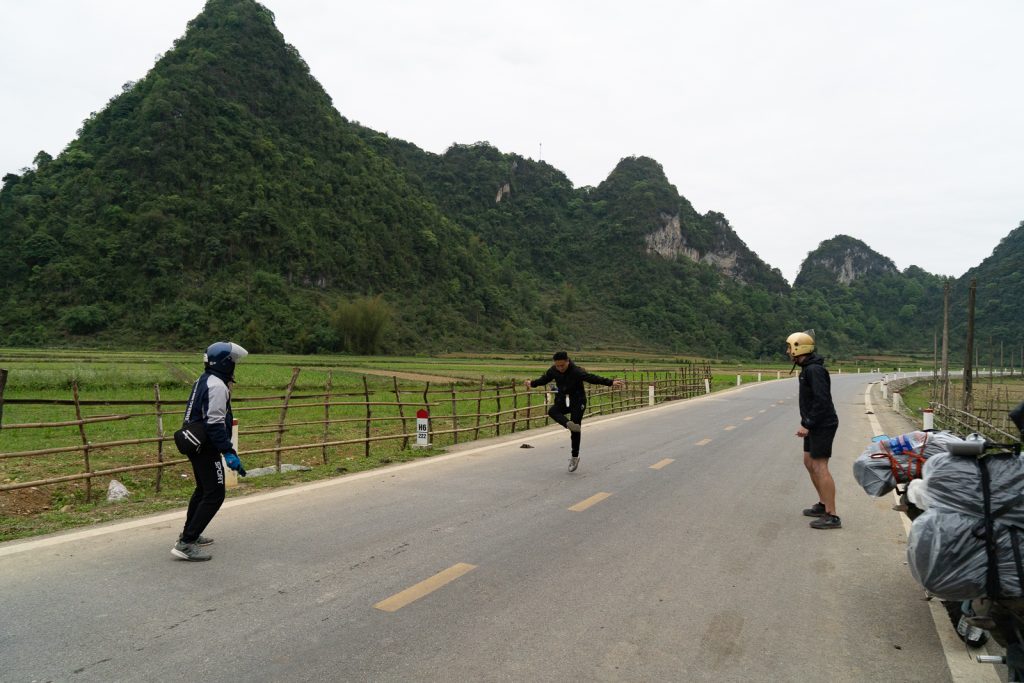
- Spent the rest of the day driving. Along the way, we stopped at Khách Sạn, CaFe Hoa Hồng for coffee and played da cau (foot badminton) in the middle of an epic road!
- We made it to Yen Nhi Homestay for the night. This was our favorite place we stayed! It has a cave and the cutest puppies!
- If you have time, you can also check out Động Ngườm Ngao cave.
- We had dinner at Yen Nhi Homestay, where we also got to listen to traditional music from the Tay Ethnic Minority and do a traditional dance!

Day 5 (Yen Nhi Homestay – Ban Gioc Waterfall – Angel Eye Mountain – Cao Bang)
- We started our morning with breakfast at the Yen Nhi Homestay
- Made a quick stop at Tich Truc Lam Temple to see the amazing views of the area and the Ban Gioc Waterfall.
- Saw the EPIC Ban Gioc Waterfall, the tallest waterfall in Vietnam! We also road a boat closer to the falls for a small fee. You can read our full guide to the Ban Gioc Waterfall here.
- Spent the afternoon driving towards the city of Cao Bang. We grabbed lunch at Koi Garden and stopped at Angel Eye Mountain.
- Once we made it to Cao Bang (which is a large city!), we checked into the Thanh Loan Hotel.
- We had dinner at Cơm Phượt Quán Toan.
- Spent the night at the night market in Cao Bang, which was an unexpected surprise! We got to do the traditional dance with locals and take many photos, as we were one of the few foreigners there.
Day 6 (Cao Bang – Ba Be Lake – Homestay)
- We started our morning with coffee at Nâng café, which was a GEM!
- After telling our guides that we love Bun Cha, they found us a spot in town to get breakfast at. We forgot to pin the location though 😫
- The rest of the day was spent driving to Ba Be Lake. It was a LONG day and rainy. This is when Adam’s crash happened. We had lunch at Quán Cơm Loan Kiệm before making it to Duy Tho Homestay.
- Spent the rest of the afternoon on a Ba Be Lake boat ride, which was beautiful!
- We had dinner at homestay and hit the hay, before taking a long van ride back to Hanoi (which our guides coordinated) the next day.
What to pack for the Ha Giang Loop

Clothing
Layers: Since this is a mountainous route, the weather can be unpredictable. Make sure to bring layers! Some days we started in jackets and ended in tank tops. Or vice versa!
Rain jacket: Even if visiting in the dry season, you may experience rain (we did!). Kathryn wears the Patagonia Torrentshell jacket and Adam wears a Columbia rain jacket. Our guides did have ponchos for us as well, which came in handy on a very rainy day.
Temple attire: If you plan to visit any temples, make sure you have pants or a skirt that covers your knees and something to cover your shoulders. We suggest bringing something light and airy to avoid getting too hot!
Shoes: Since you’ll spend a lot of time on motorbikes, we suggest having good, enclosed shoes. We wore ALTRA Lone Peak 6 Trail Running Shoes!
Gloves: If you’re traveling in the colder months, these will be a big help!
Check out our ultimate Vietnam packing list for everything you’ll need in Vietnam!
Toiletries
Feminine hygiene products: They may not have the exact kind you like along the way, so make sure to bring enough!
Toilet paper: This is something you can buy there, but we highly recommend carrying some with you. Some restrooms do not offer any or charge you a small amount to get some.
Dual voltage items: In the US, the outlets are 120V, but in Vietnam they are 220V. Make sure to bring a hair dryer, straighter, or curling iron that will work with their outlets. I brought a small, dual voltage hair dryer with me to Vietnam.
Bug spray: We did not encounter many bugs, but this is always good to have, just in case!
Sunscreen: Depending on the weather, your body may be pretty exposed to the sun. Make sure to lather up!
Medicine
We highly suggest bringing Advil, a small first aid kit, and stomach medicine, like imodium or pepto, just in case.

Technology
Camera: You will want a camera for this drive! Whether you bring just your phone, GoPro, or a larger camera, the Ha Giang Loop makes for some epic photos. You can see all of our camera gear here.
Camera strap: We had our camera out during the entire ride, so we could film and take photos as we moved. To keep it safe, make sure you have a camera strap. We love our strap from Peak Design!
Drone: Droning along the Ha Giang Loop was EPIC! The only spot we could not drone was close to the China border, the Lung Cu Flag Pole, and when we made it to the Ban Gioc waterfall.
Outlet adapters: While some outlets in Vietnam were just like the US, others were two prong and we had to use an outlet adapter to be able to use our electronics.
Portable charger: We liked carrying a portable charger with us in case our phone or camera batteries got low during the day.
Google Translate: Make sure to download Vietnamese for offline use on Google Translate!

Miscellaneous
Cash: Make sure you have cash to pay for any extra items along the Ha Giang Loop, as well as tip your guide.
Sunglasses: These were not only helpful to have for sunny days, but also to protect our eyes along the ride.
Identification: Don’t forget your passport and visa, just in case!
Fanny Pack/Small Bag: Like we mentioned, it’s good to have a fanny pack or small bag to wear on the bike to carry any items you’ll want easy access to.
Looking for more things to do in Vietnam?
- eBook: The ULTIMATE guide to visiting Vietnam
- The top 10+ Vietnamese foods to try in Vietnam
- How to visit the EPIC Ban Gioc Waterfall
- How to visit Hanoi Train Street
- The 13 best coffee shops in Hanoi
- The BEST foods in Hanoi
- How to visit Hanoi Train Street in 2024 (+ the BEST cafe to visit!)
- The 13 BEST coffee shops in Hanoi
- The BEST food in Hanoi: 19 dishes to try!
- 9+ AMAZING things to do in Ninh Binh! (+ 2 day itinerary)
- 13+ FUN things to do in Hoi An, Vietnam
- The ULTIMATE guide to planning a trip to Vietnam
- 20+ Vietnam tips: things to know before you go!
- Watch all of our Vietnam videos
- Check out all of our Vietnam guides
Ready to tackle the Ha Giang Loop?
Pin this guide with everything you need to know before you go!