Last updated on June 7th, 2026
Explore mining ruins, sand dunes, hot springs, and so much more along the Loneliest Road in America, Nevada’s best road trip!
Throughout our 6 years of van life, we’ve explored every corner of the United States. And as we’ve driven all around the country, we have learned that some of the places we enjoy the most are the ones a bit more off the beaten path, with way less people and with sights that you may have never heard of. These overlooked spots may not be as “sexy” as some of the popular destinations, but they are often full of surprises!
And one of the best examples of this is the Loneliest Road in America. This epic Nevada road trip combines solitude, with ample things to see and do. During our time driving this highway we stopped by so many gems that we would’ve missed had we not known where to look!
So if you’re ready to experience one of the ultimate road trips out west, keep on reading for all of the best stops on the Loneliest Road in America. Plus our top tips for visiting!
Looking for more things to do in Nevada?
10 Fun Things to Do in Great Basin National Park
Our ULTIMATE 3 Days in Lake Tahoe Itinerary
The 11 BEST Lake Tahoe hikes
23+ Fun Things to Do in Lake Tahoe in the Summer
10 Best Things to Do at Valley of Fire State Park in Nevada
18 Things to Do in Las Vegas (Without alcohol!)
- What is the Loneliest Road in America?
- The best stops along the Loneliest Road in America
- Our top tips for driving the Loneliest Road in America
- The best time to drive the Loneliest Road in America
- How much time do you need to drive the Loneliest Road in America?
- Where to stay along the Loneliest Road in America
- Loneliest Road in America itinerary
- Save this guide to the Loneliest Road in America
What is the Loneliest Road in America?
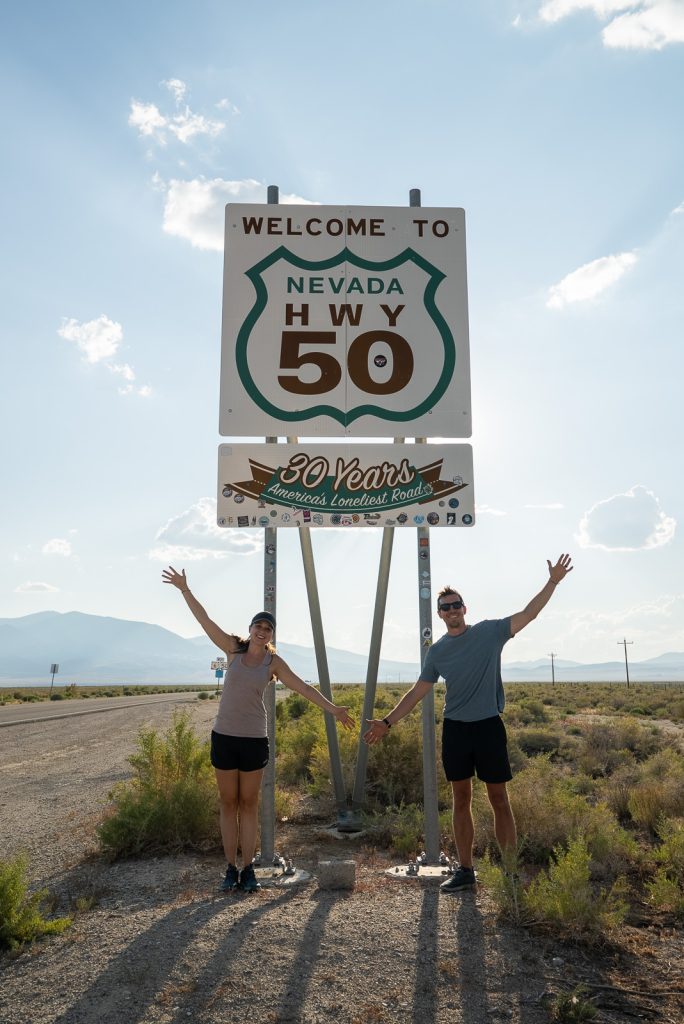
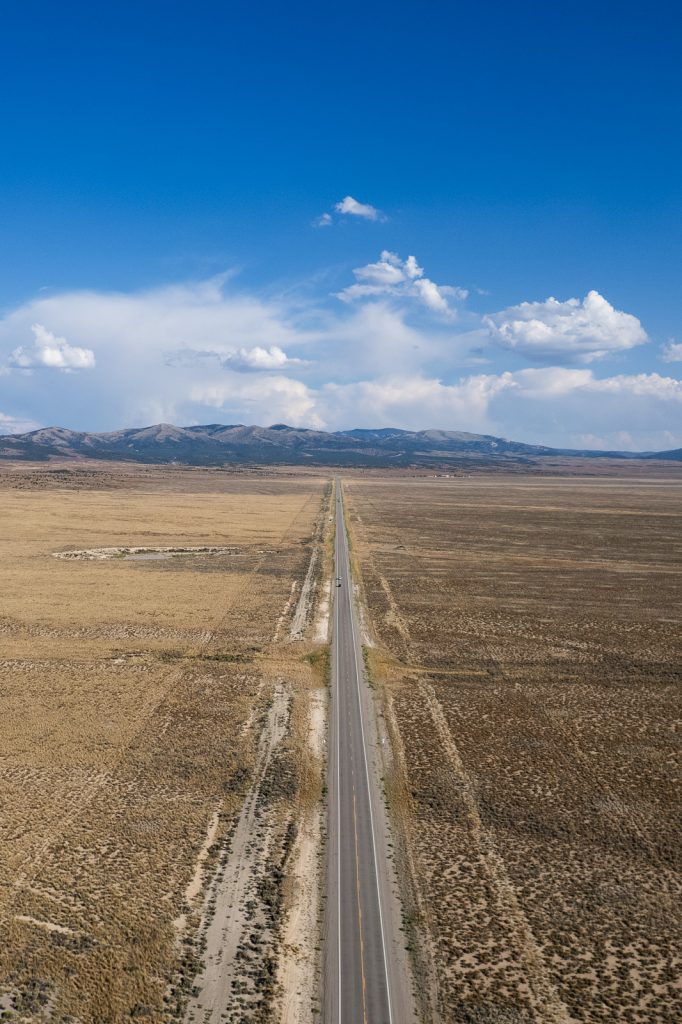
The Loneliest Road in America is a nearly 400 mile stretch of Highway 50 that runs from Carson City, Nevada, near Lake Tahoe, all the way across the state to Great Basin National Park.
It was given this nickname by Life Magazine in 1986. The magazine warned that there were no points of interest along the way and that it should only be traveled by those confident in their survival skills.
But what we found was a unique and fun road trip full of hidden gems, wide open spaces, beautiful views, old mining towns and saloons, and tons of natural sights like sand dunes, hot springs, and ancient fossils. Oh and the craziest burger we have EVER seen. In our opinion, it’s the ultimate Nevada road trip!
The best stops along the Loneliest Road in America
In this guide we’re covering our must-visit stops along the Loneliest Road in America, which you can view on the map above and read more details about below. It includes both stops right along the highway, plus ones that require a bit of a detour.
We’re ordering the list from west to east, as that is how we did our Loneliest Road in America road trip. But you can easily do it in reverse!
Lake Tahoe
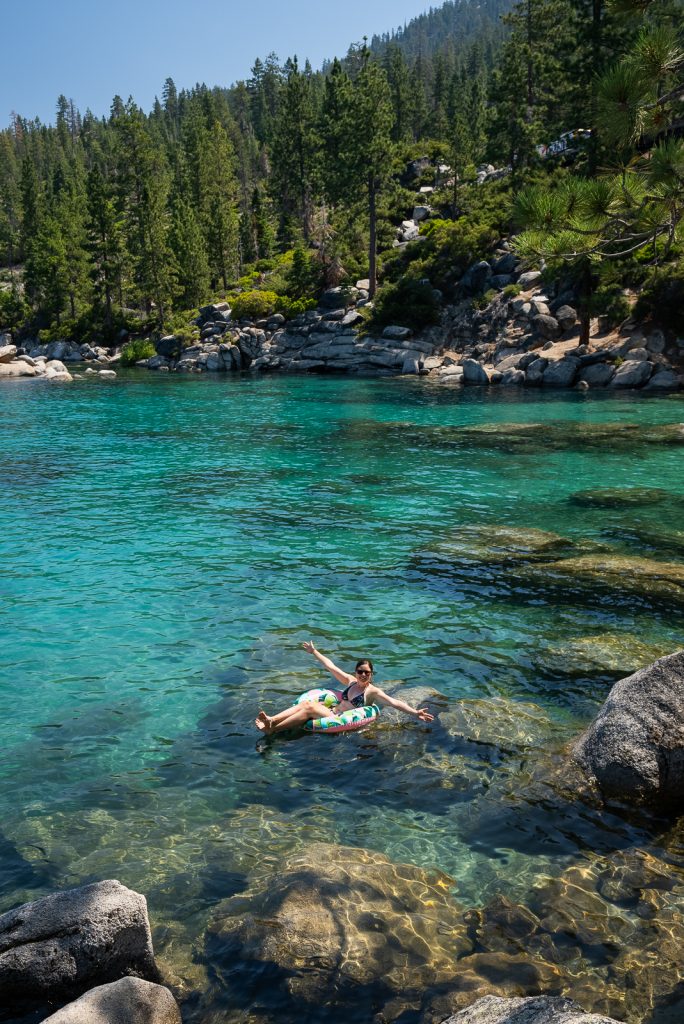

While not technically along the Loneliest Road in America, Lake Tahoe is a must stop on any Nevada road trip!
Located in both California and Nevada, Lake Tahoe is the second deepest lake in the US, at 1,645 feet deep, plus the largest alpine lake in North America. And with crystal clear waters, pristine beaches, epic skiing and snowboarding, and countless hiking trails, it is a year-round outdoor paradise.
In our opinion, the Nevada side of the lake is the most scenic and offers some of the best things to do! So before you start the official drive in Carson City, make sure to swing by Lake Tahoe for a few days. We have a full 3 day itinerary to help you get started, but some of our can’t miss stops (on both sides of the lake) are:
- Biking the East Shore Trail and stopping by different coves along the way.
- Kayaking at Emerald Bay State Park.
- Swimming at Fallen Leaf Lake.
- Hiking to Monkey Rock for sunset (look for butt crack rock too 😜)!
- Grabbing a smoothie and sandwich at Sprout’s Cafe.
Carson City, Nevada
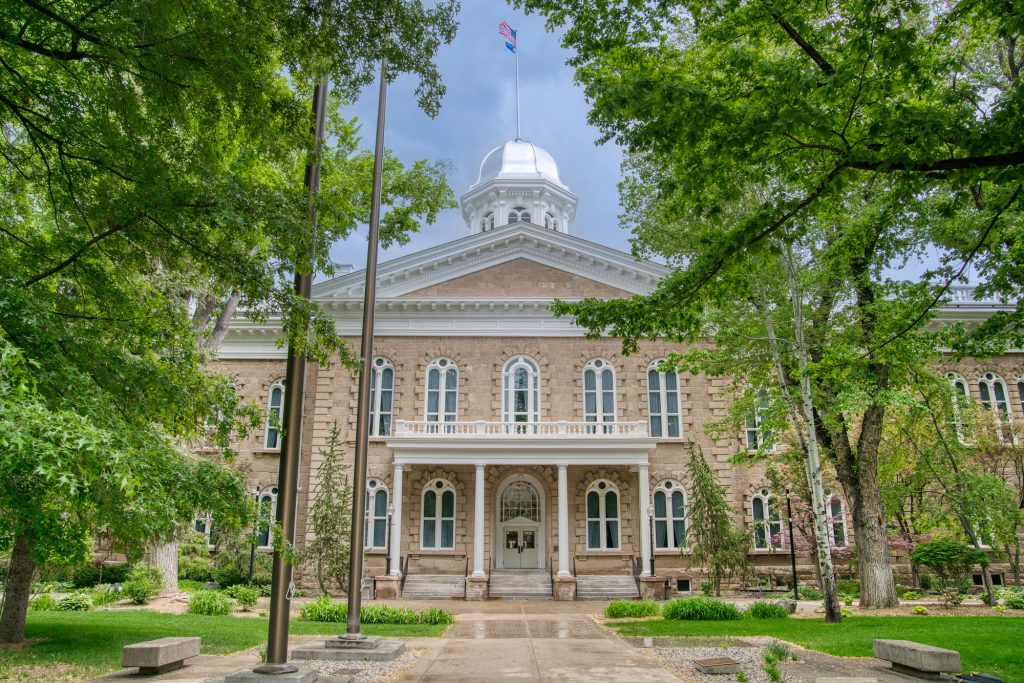
The Loneliest Road in America officially starts in Carson City, the capital city of Nevada! Not only is this city the gateway to Lake Tahoe on the Nevada side, but it also boasts some fun things to do on its own!
Before hitting the road, grab breakfast at Villa Basque Café, plus a coffee at Old World Coffee Roasters. And then go learn about Nevada’s history while walking along the Kit Carson Trail and visiting the Nevada State Museum. For the hikers, check out Kings Canyon waterfall or for something more difficult, the Ash Canyon to Kings Canyon Trail. And for the beer drinkers, check out Shoe Tree Brewing Co., which is named after a stop along the Loneliest Road in America.
Virginia City (a fun detour!)
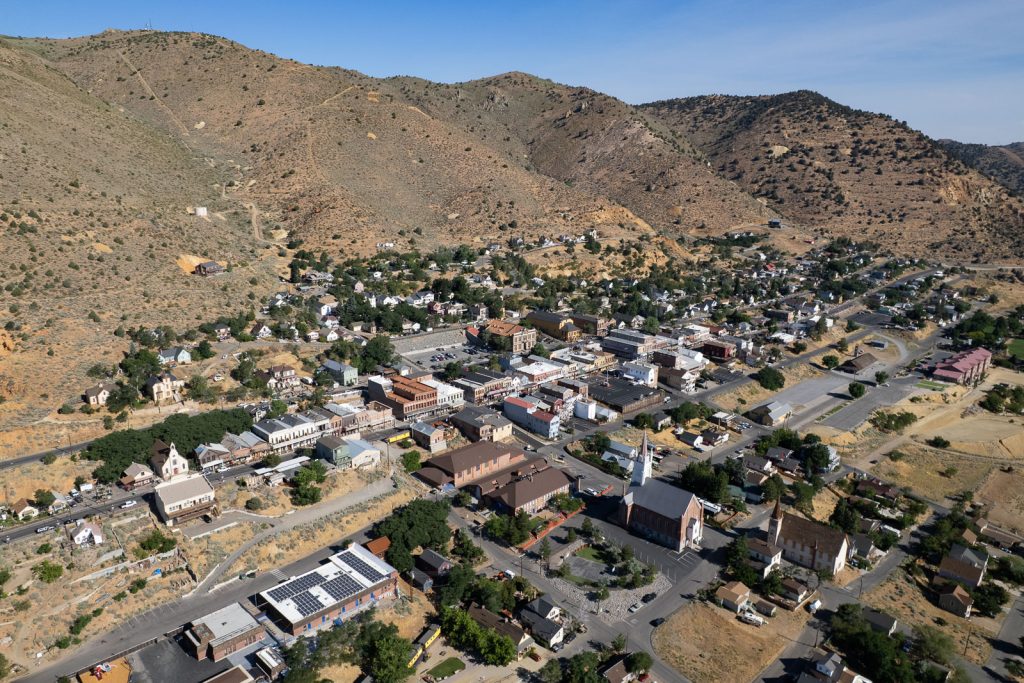
Not long after leaving Carson City, you will reach the turnoff for Virginia City. And while not located on the Loneliest Road in America itself, it makes for a fun detour!
Virginia City was established in 1859, after a rich deposit of silver ore was discovered by Henry Comstock, leading to the Comstock Lode silver rush. It attracted thousands of miners, entrepreneurs, and settlers, with 25,000 residents at its peak. And between the over 100 mines in the area, seven million tons of silver ore were produced. This not only helped the city prosper, but also helped fund building San Francisco into what it is today, as well as finance the Union in the Civil War.
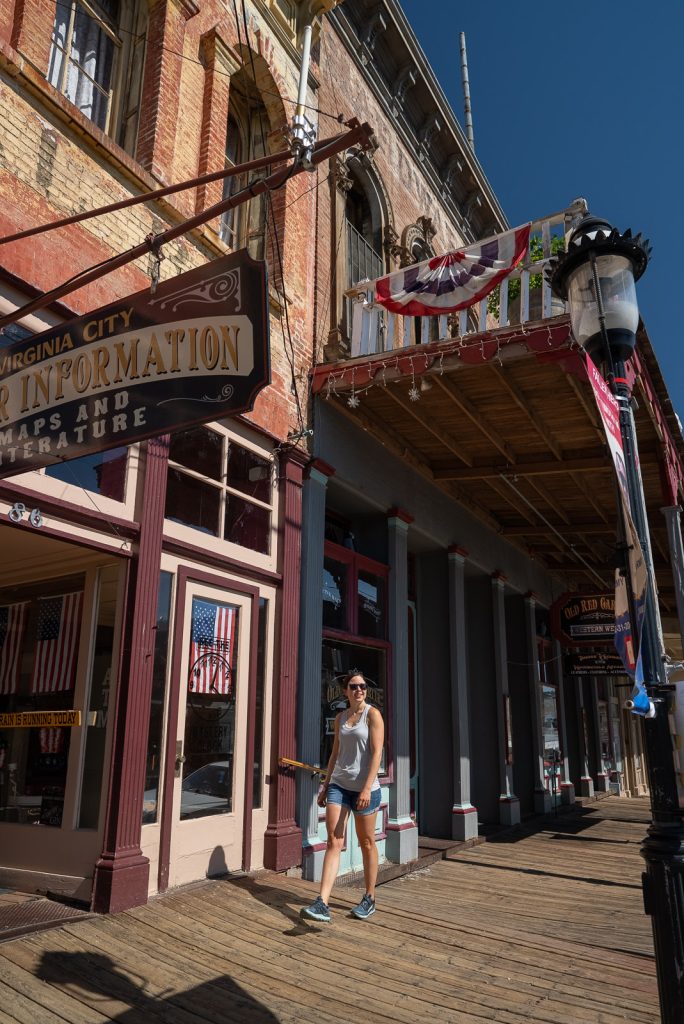
Today, it’s a popular tourist town with well-preserved old buildings, wooden sidewalks, and paranormal activity. Here are a handful of fun things to do while there!
Tour the Washoe Club
Virginia City is said to be one of the most haunted towns in America, with many buildings having some interesting activities and stories. And the Washoe Club is considered one of the most haunted spots of them all.
This club was built in 1870 as a private club for the wealthy in the area, known as the Millionaire’s Club. Over the years, there were many deaths that occurred here, including an explosion that killed 12 people in 1873, several suicides, missing prostitutes, and bodies stored in a large freezer called the crypt during a typhoid outbreak.
The Washoe Club has been featured on just about every ghost hunting show. And to experience it, you can go on a guided ghost tour ($10/adults, $5/kids). You will need to show up in person to book a spot, which does fill up. While we aren’t totally convinced about the building’s spooky occurrences, we will say, the tour was interesting!
Visit a museum
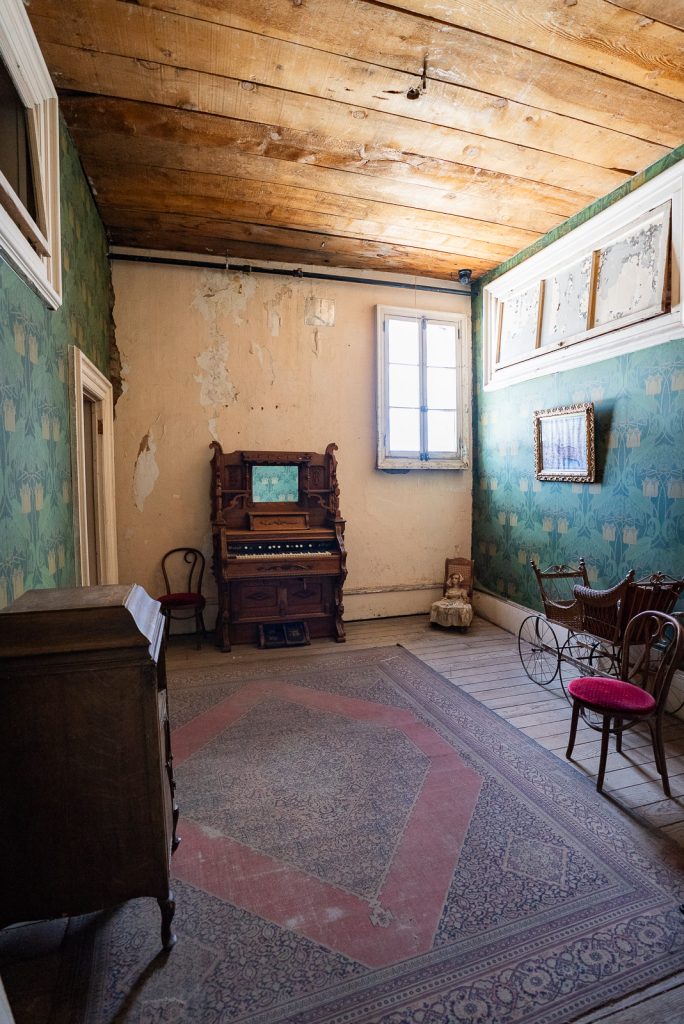
With so much history in the area, make sure to spend some time in one of the town’s museums. The The Way It Was Museum features tons of artifacts from the town over the years. While the Historic Fourth Ward School Museum takes you through an old school, plus shares about the town’s history.
See the Virginia City Outlaws
Want to be transported back to Virginia City’s heyday? Go see the Virginia City Outlaws! Everyday they put on a gunfight (see the schedule here), with a dose of comedy on the side.
Check out different saloons
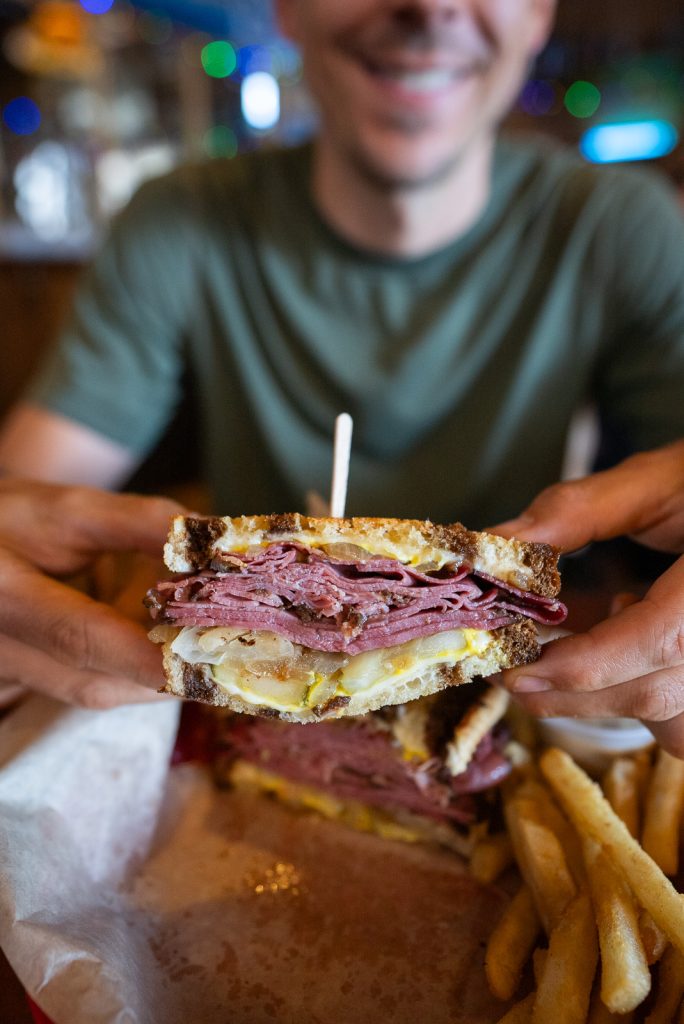
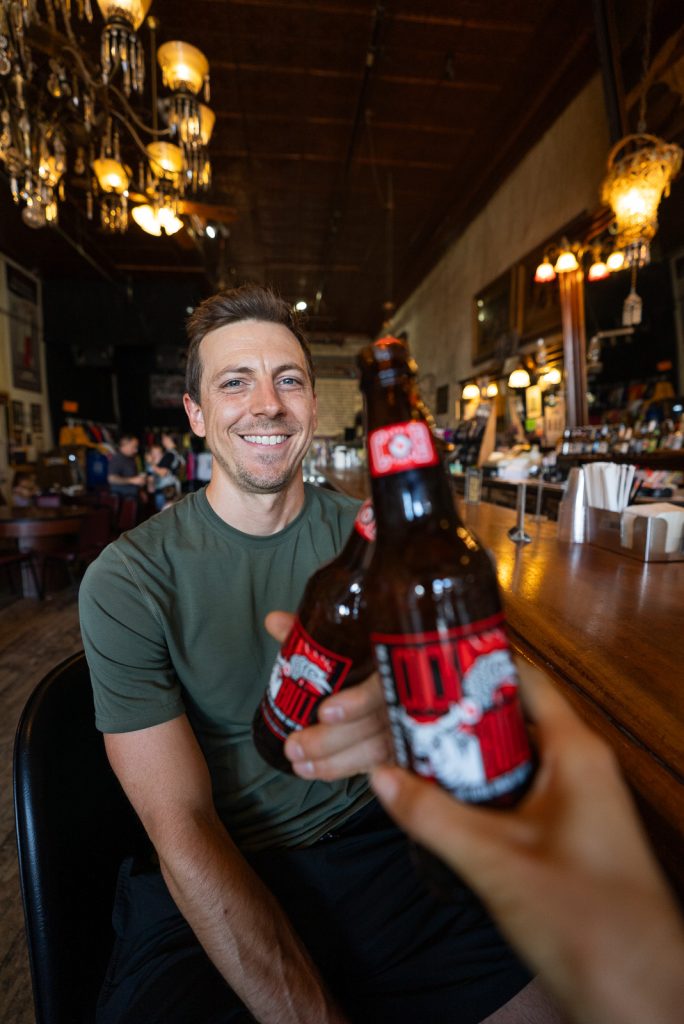
As one would expect in a former mining town, there are many saloons to check out in Virginia City. We personally went to Palace Restaurant & Saloon for a delicious Reuben sandwich. But if you just want a drink, head to the Bucket of Blood Saloon!
Fallon, Nevada
Once starting the Loneliest Road in America, the first town you’ll come across along the highway itself is Fallon, about 1 hour and 15 minutes east of Carson City. This will be the best stop for a while for groceries and fuel, with both a Walmart and Safeway, plus gas stations!
A+K Tip: If you visit in late August, make sure to check out the Fallon Cantaloupe Festival!
Sand Mountain Recreation Area
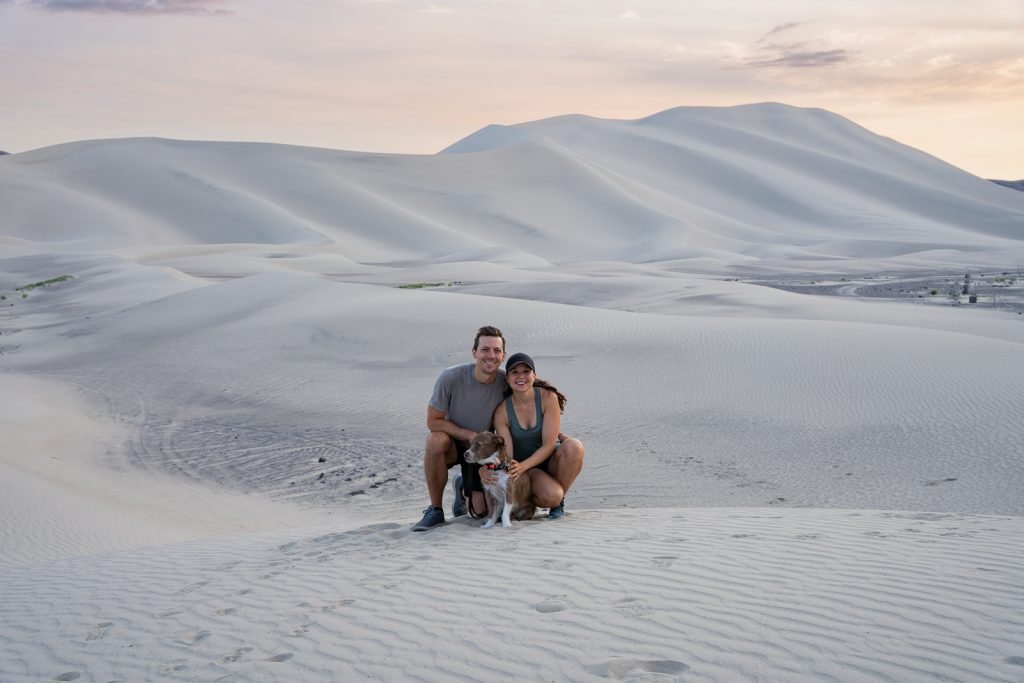
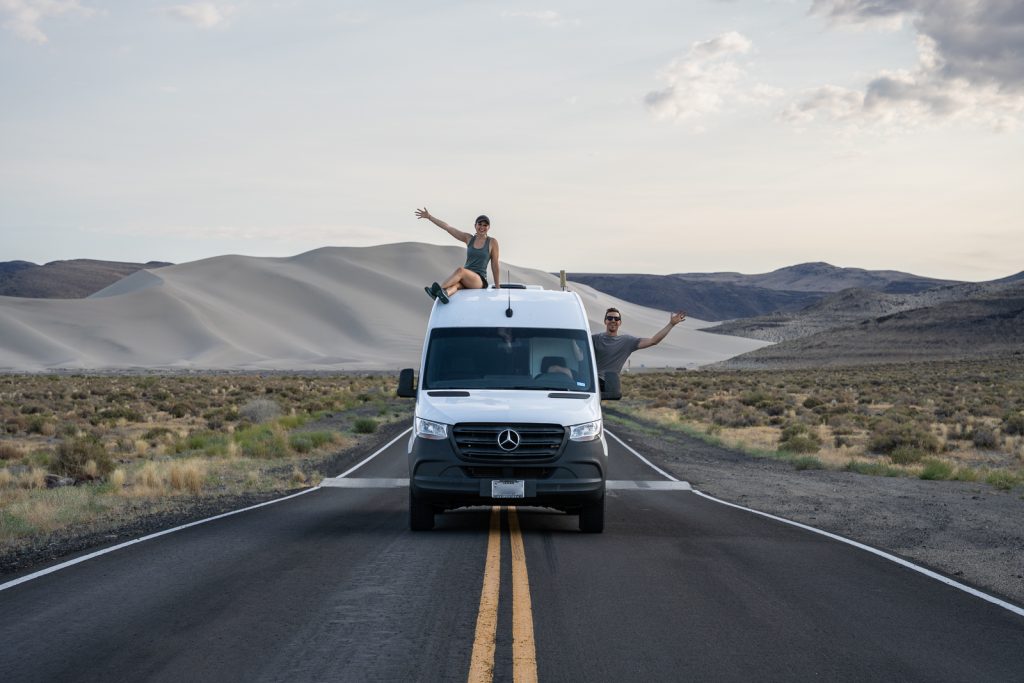
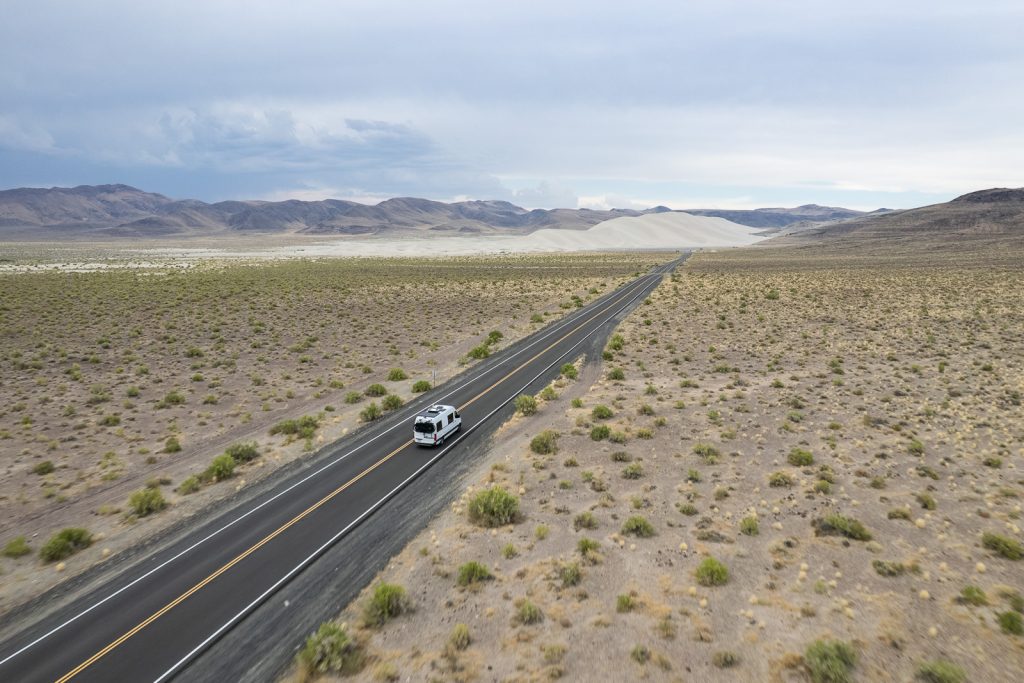
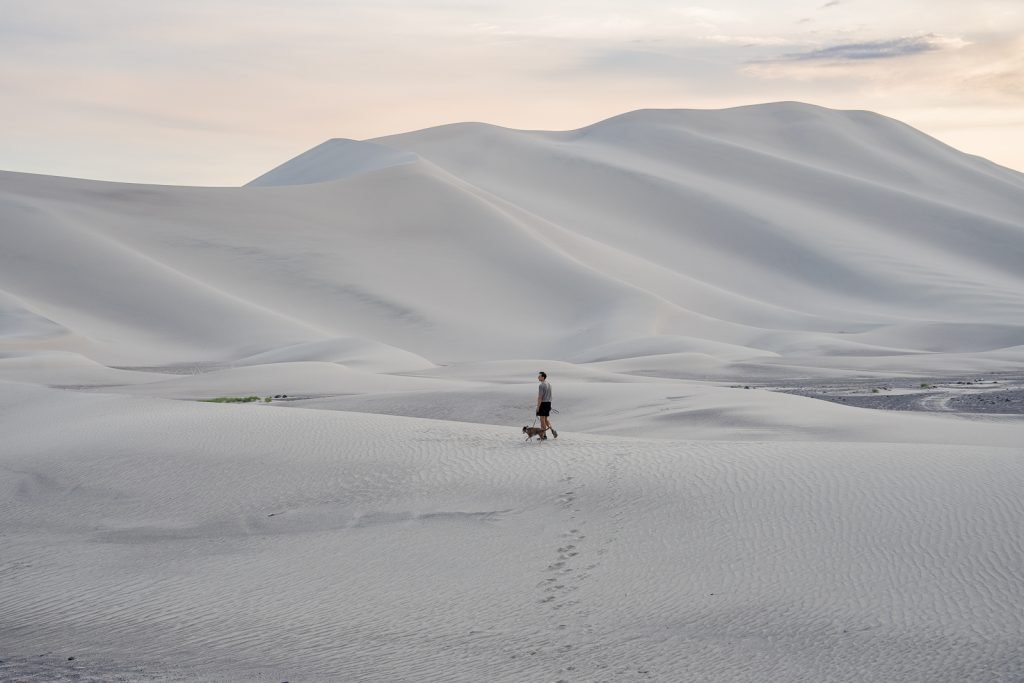
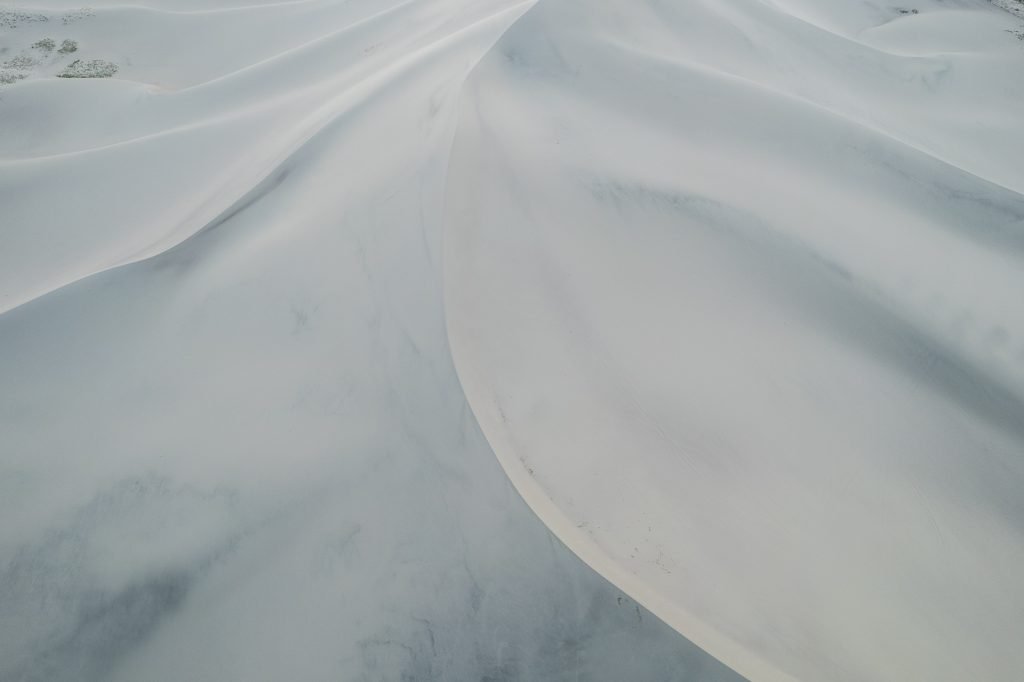
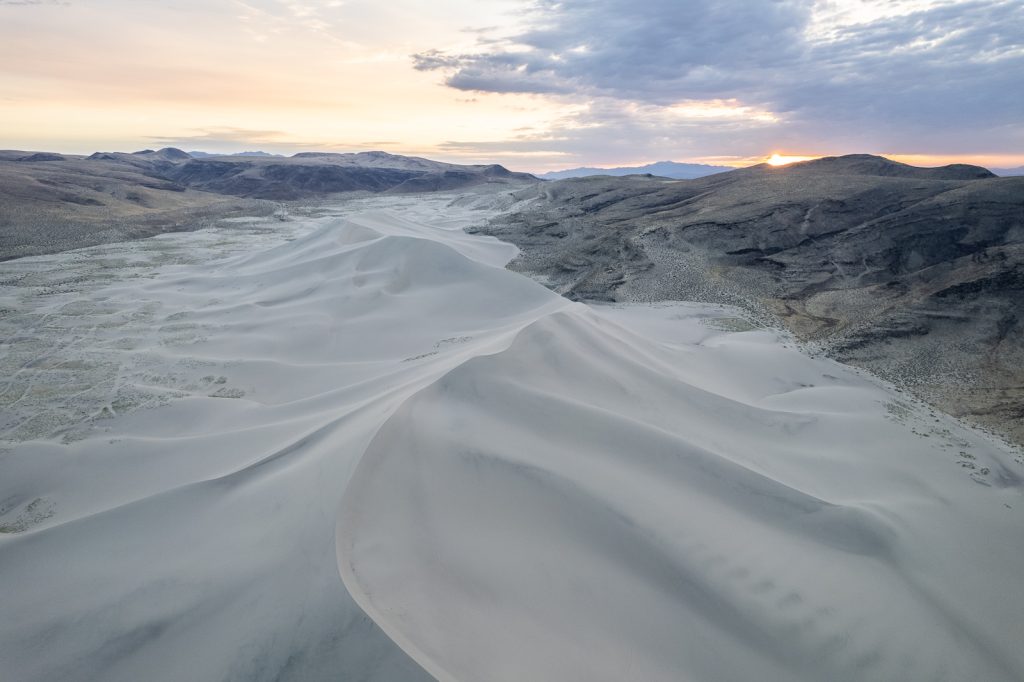
One of our favorite stops along the Loneliest Road in America is the Sand Mountain Recreation Area. This area was once home to the ancient Lake Lahontan, which mostly dried up 9,000 years ago and created the dunes you see today. Including Sand Mountain, which is 6 stories tall!
Today, it’s a haven for ATVers, plus people like us, who just enjoy playing in the sand! While here, make sure to listen to the dunes. Sand Mountain is one of only a handful of singing sand dunes in the world. When wind blows across the dune it creates a natural sound phenomenon that can reach 105 decibels, lasting as long as several minutes. We didn’t hear anything, but it was a pretty calm morning when we visited!
Important things to know
There is a fee to visit Sand Mountain Recreation Area, which is $40 for up to a week (no daily options). But on Tuesdays and Wednesdays it is free, so make sure to come one of those days to avoid the fee!
You can also camp out here for free (or included in the fee). The camping area is just the flatter spots surrounding the dunes, on a layer of sand, with pit toilets dispersed throughout. There is no water, picnic tables, or fire rings. During our visit, we were the only ones camping, but we have seen photos where it’s packed with trucks and RVs with ATVs.
Also some areas are sandier than others. Our van got a tad stuck in one spot, 😅 so drive with caution!
Middlegate Station
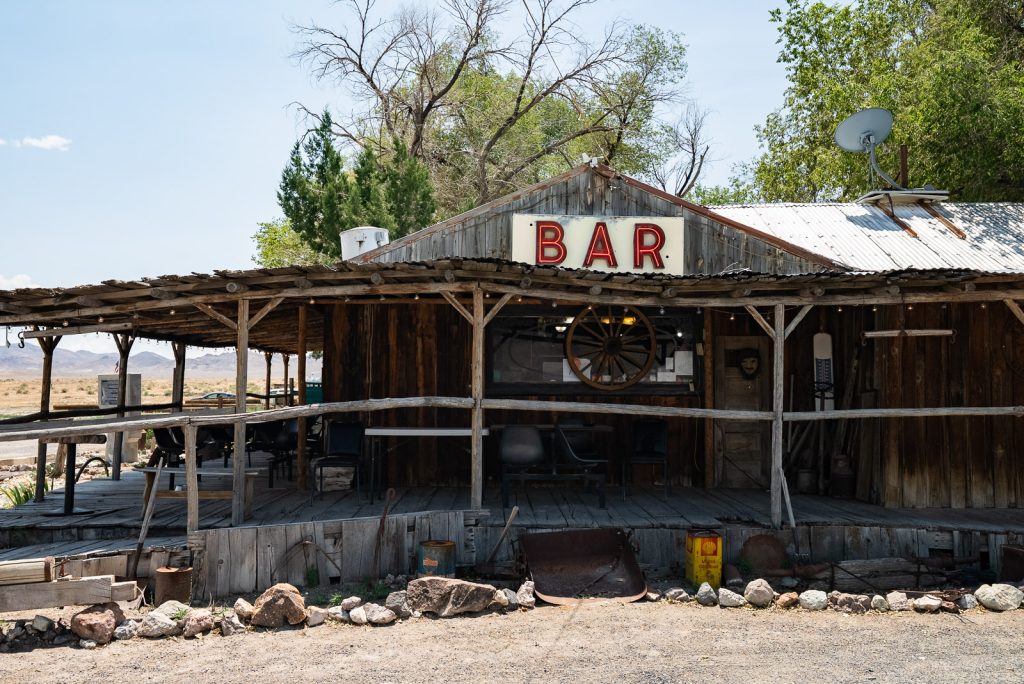
If you can only eat at one spot along the Loneliest Road in America, make sure it’s Middlegate Station. It was established in 1860 as a Pony Express Station. And today it is one of Nevada’s historic Sagebrush saloons and is full of character!
It has a true small town, western vibe with a wooden exterior, different signage on the walls, a cool old bar, plus dollar bills all over the ceiling. Apparently this tradition started when prospectors would pin a dollar to the ceiling before venturing out. That way, if they failed, no one could say they “don’t have a dollar to their name!”
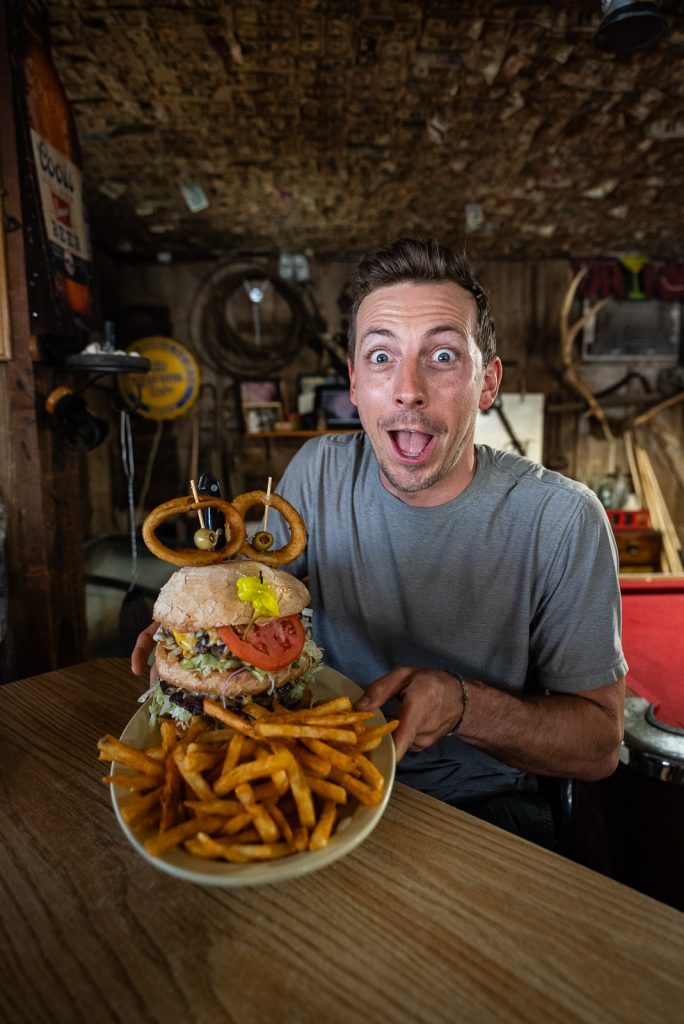
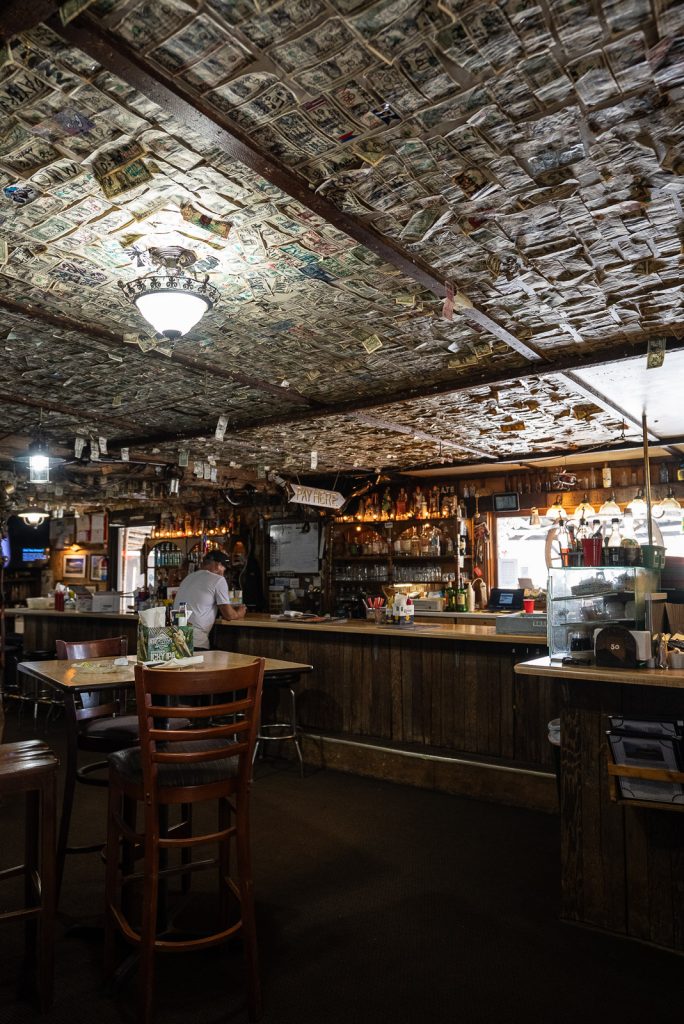
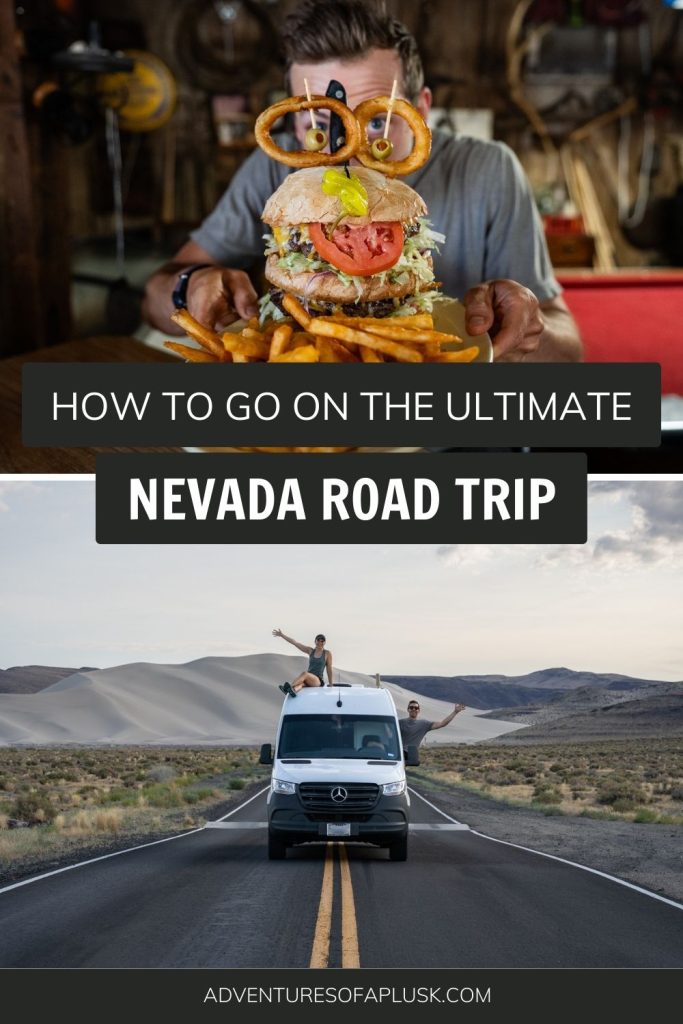
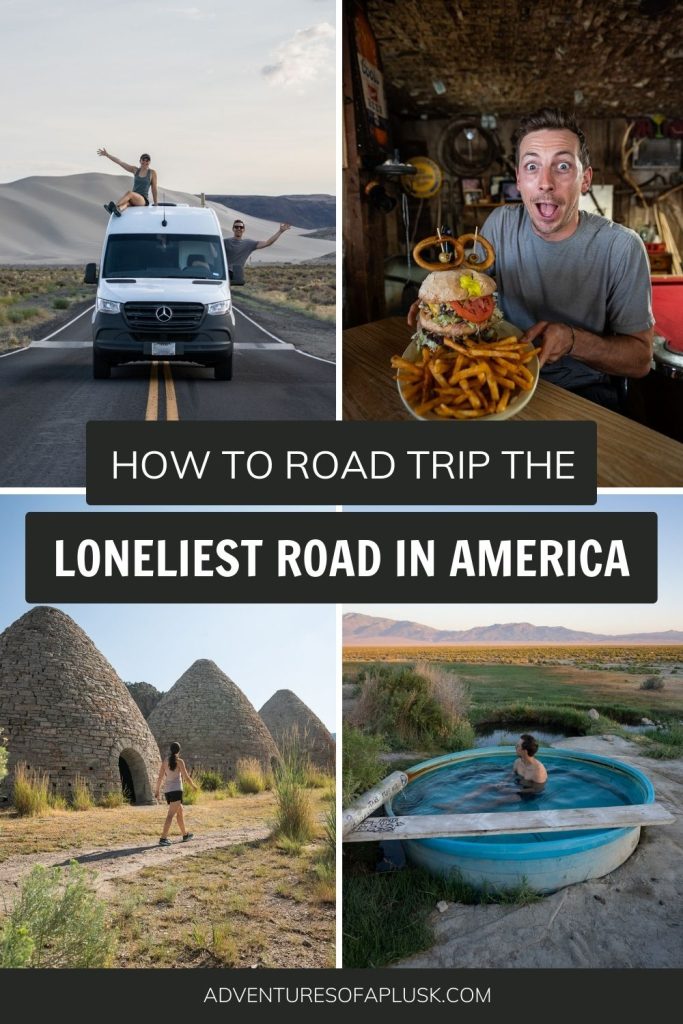
They are mostly known for their burgers, including the Middlegate Monster Burger, a burger challenge with 1.3 lbs of meat, multiple buns, decorated to look like a monster, with onion ring eyes. It’s super cute! If you successfully finish it, you get a free shirt (and probably a stomachache)! We attempted to tackle this beast and even sharing it, we couldn’t finish it.
However we will say, the burger was very solid. So we can imagine their regular burgers are great as well!
Berlin Ichthyosaur State Park
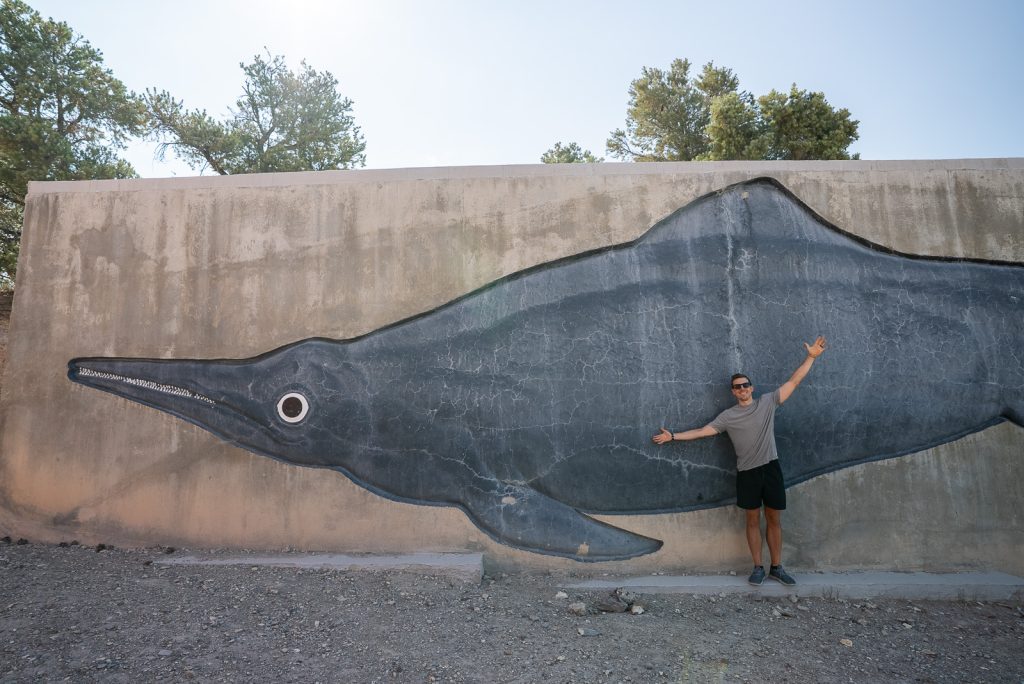
Located about a 50 minute detour off the Loneliest Road in America, partially on a gravel road, is Berlin Ichthyosaur State Park. And in our opinion, it’s well worth the detour!
The name Berlin Ichthyosaur refers to the Berlin mining town that was established in the late 1800s, plus the abundance of Ichthyosaur fossils that were found here. And the park is split up between these two different sights.
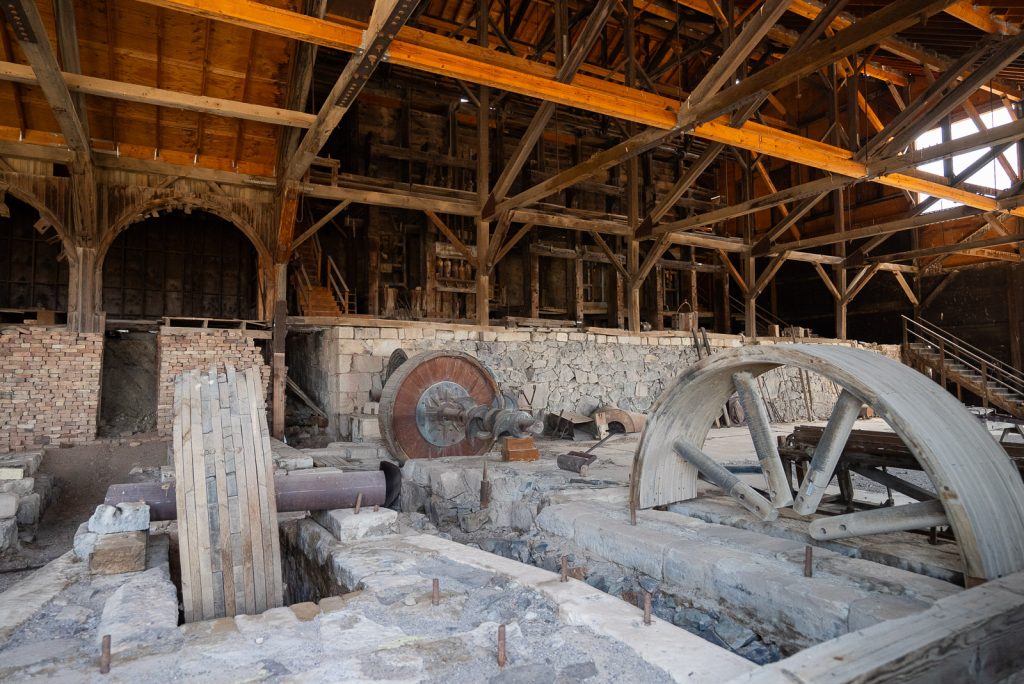
In the mining portion of the park you can find some old buildings, like a mill, assay office, and machine shop. But for us, the star of the show was the fossil shed, which is home to North America’s most abundant collection of Ichthyosaur fossils.
What is an ichthyosaur you might ask? Ichthyosaurs are an ancient marine reptile, with a fish-like appearance, which swam in an ocean that covered central Nevada 225 million years ago, during the same period as the dinosaurs. Their length can reach over 50 feet and they could swim 1,000 feet, up to 35 mph. And they have some of the largest eyes out of any animal, about the size of a dinner plate.
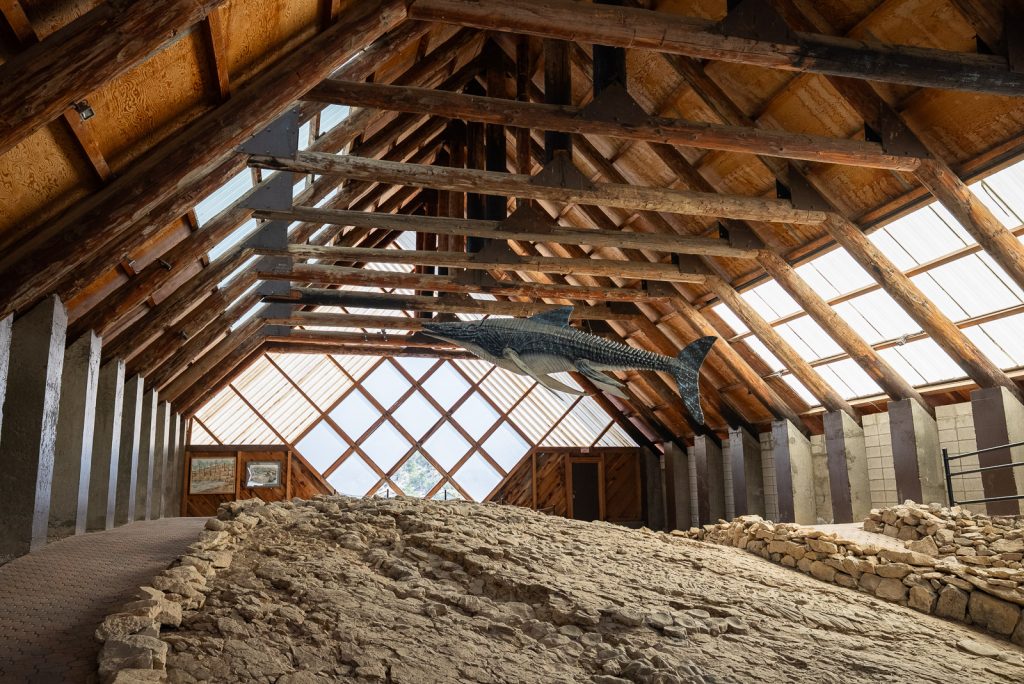
To view the fossils, you can go on a tour with a ranger, which is super educational! These tours are offered at different times and dates, depending on the month. You can see the full schedule here! The tours cost $5 per person, which is on top of the park entrance fee ($5 for NV residents, $10 for non-residents). Make sure to bring cash!
The Shoe Tree
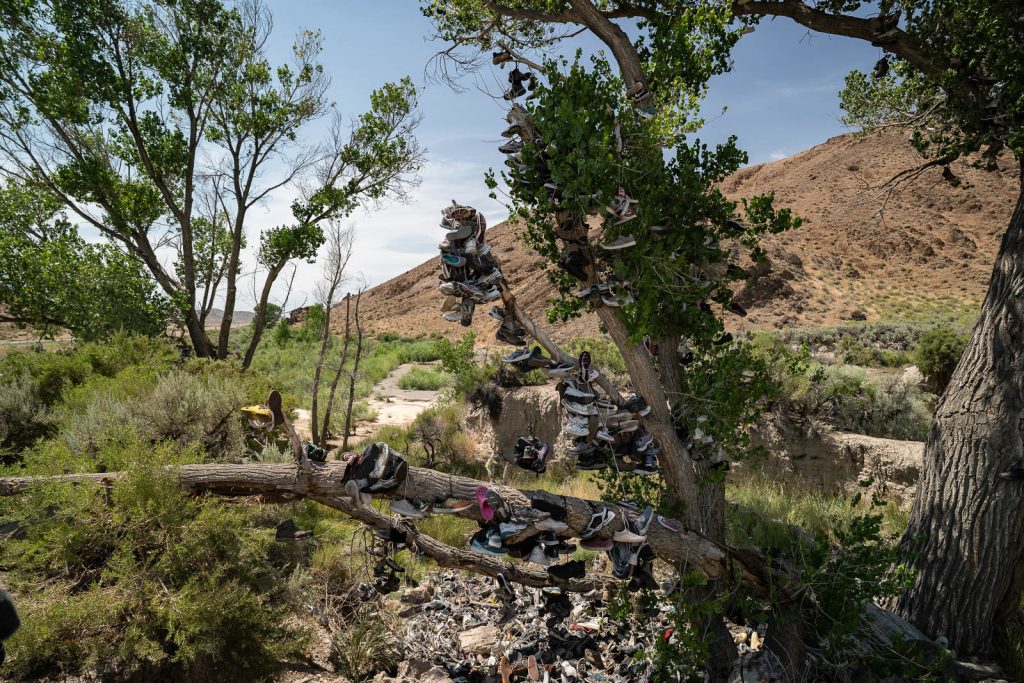
A quick, but quirky stop on your Nevada road trip is The Shoe Tree. As the name implies, this is a tree that is covered in hanging shoes.
There are different stories on how this came to be. But our favorite version is that back in the 1990s, a newly married couple was arguing on a road trip. The woman said she would rather walk home than be stuck in the car any longer. So the husband said if you’d rather walk home, you can do it barefoot, leaving her there and tossing her shoes into the tree. He then went to a bar and the bartender convinced him to go back for her. They reunited and lived happily ever after. And the following years, they returned on their anniversary and tossed a pair of shoes over the tree. And other travelers joined in by adding their own!
While we aren’t fans of leaving a trace and therefore did not add shoes of our own (plus we live in a van with zero spare shoes), it was fun to stop and see!
Stokes Castle
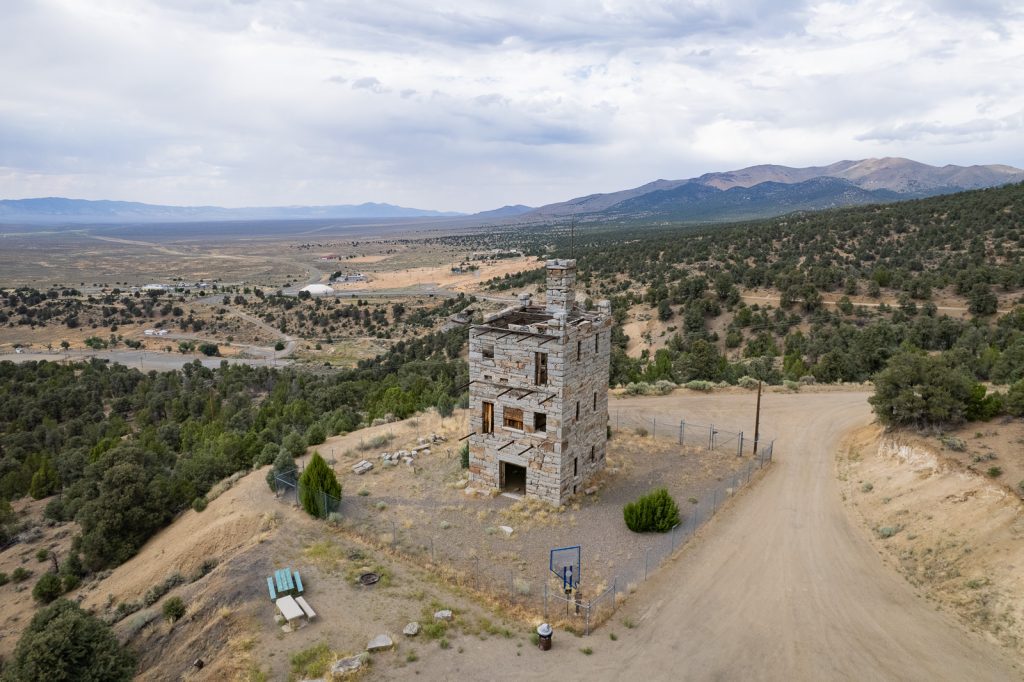
Continue about 1 hour up the highway to the town of Austin, where you can find Stokes Castle! Like many towns in the area, Austin has a lot of mining history. And this castle was built by wealthy mine developer and banker Anson Phelps Stokes for his wife, to make western life more comfortable for her. It was modeled after a real tower in Rome and was intended to be a summer home, but was only lived in for one month before leaving Austin.
It has fallen into disrepair a bit and is now fenced off, but it’s still a fun little stop. Especially because the views from up here are gorgeous!
The castle is located up a steep, dirt road, but is doable in any vehicle. We will warn you though, this area is where we saw the most Mormon Crickets (more of those creepy fellas later on!).
Spencer Hot Springs
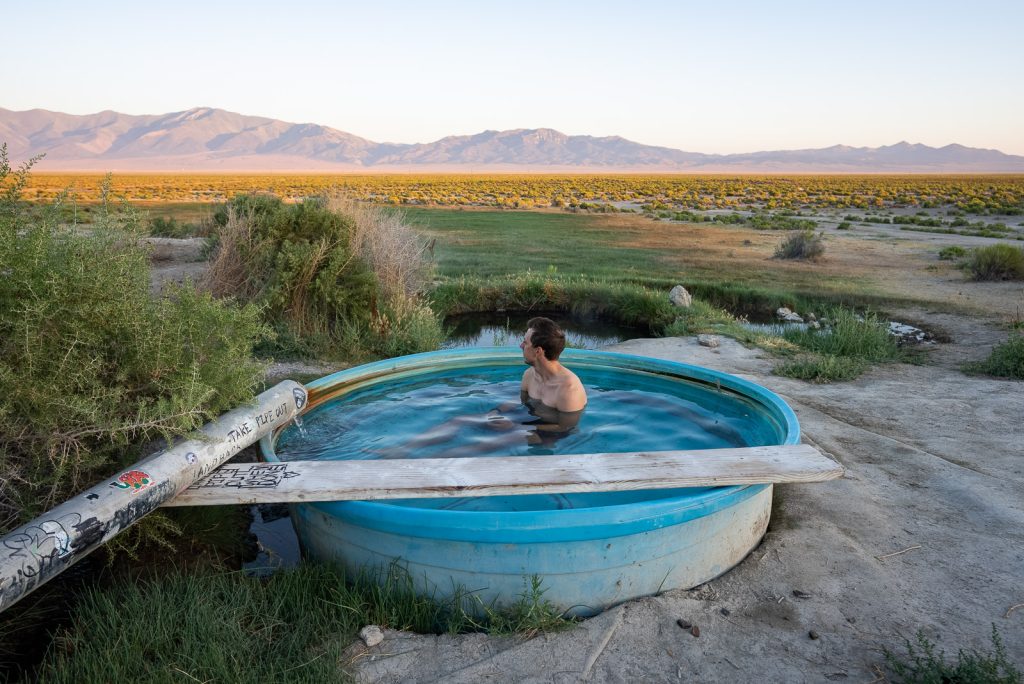
Another can’t miss stop along the Loneliest Road in America is Spencer Hot Springs. This region boasts quite a few hot springs, but this is said to be the best!
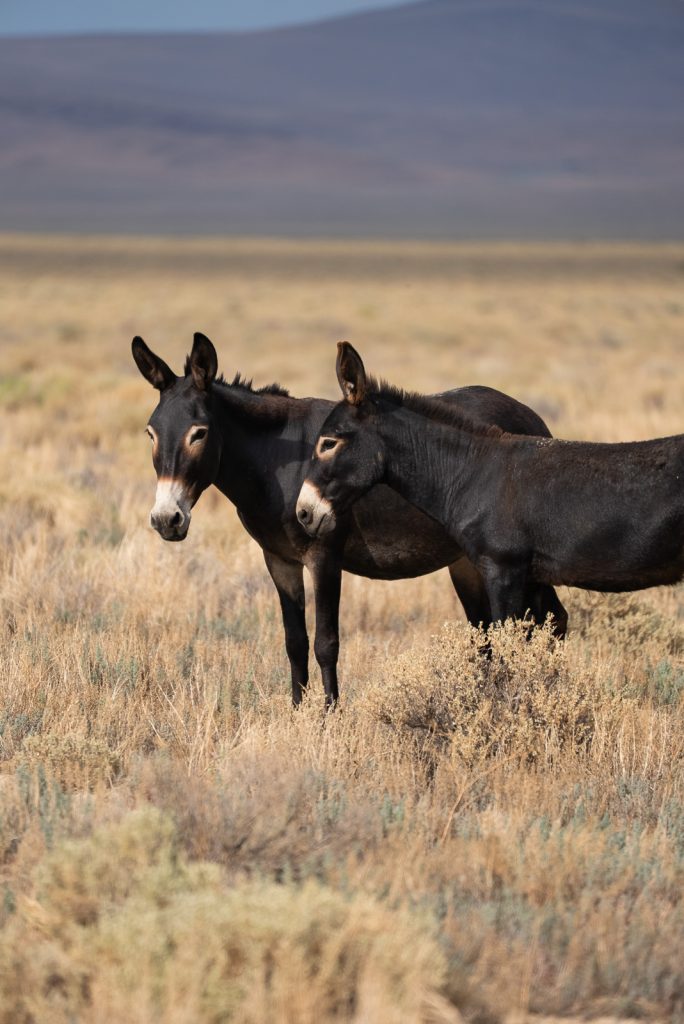
To get here, you will detour off the highway and follow a dirt road for about 7 miles. Along the way, keep an eye out for wild burros! They are usually along the road, as well as by the hot springs.
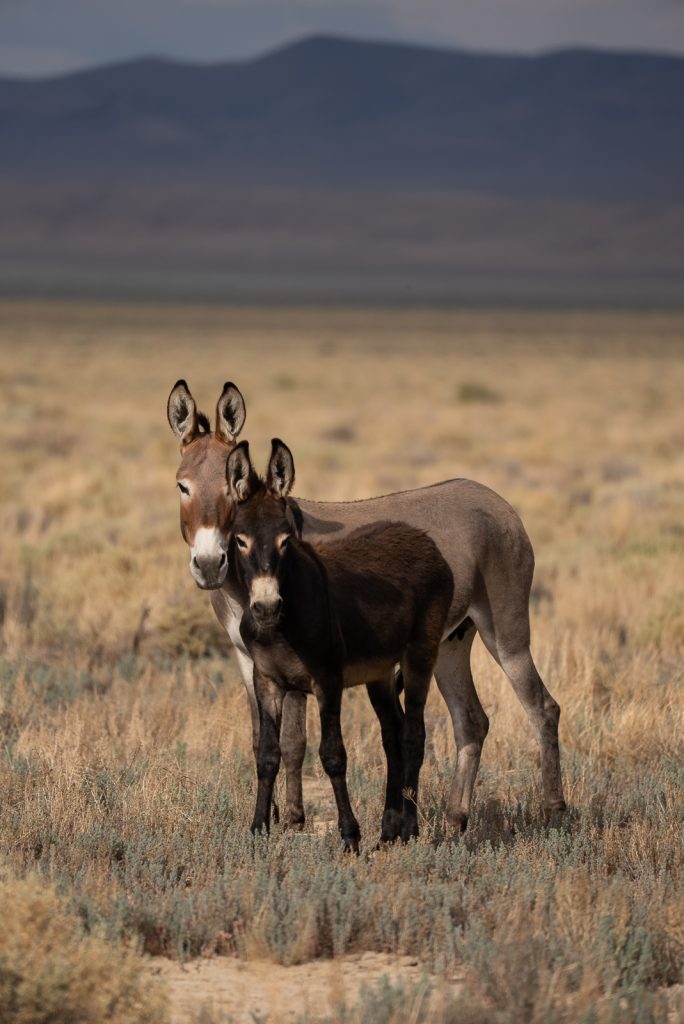
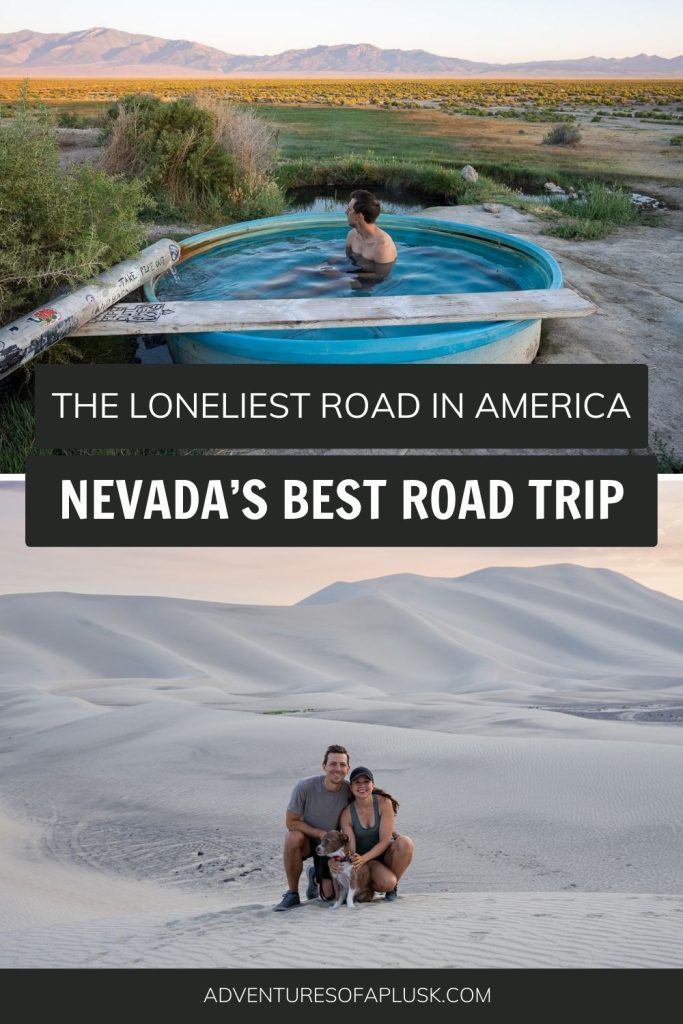
What we loved about these hot springs is that there are multiple to choose from, all with fantastic mountain views. This means that even if other people are around, you can likely enjoy one on your own at some point. While it wasn’t busy during our visit, we do hear it can get busy at times.
The first hot spring is a blue kiddie pool/stock tank. There is a hot pipe that you can drag over the pool, heating it up with hot springs water. If it has been sitting for a while, you may have to add more hot water to heat it back up. And when you’re done, make sure to take the pipe out so it’s not scalding hot for the next person.
The second hot spring is a natural pool with wooden decks around. It’s the largest one, however the water is murkier.
Finally, there is a third hot spring up on the hill even further. This one is a tub set within a pool of water. In the pool of water there are goldfish swimming, which is super random and unique. Unfortunately, the deck was broken when we visited, so this one was unusable.
Another big perk is that you can camp out here, which is what we did. This makes it easier to do a sunset or sunrise soak!

A+K Hot Spring Etiquette
If you’re camping out here, please do not park right against the hot springs. This is public land and the hot springs are open to everyone. But when people park right next to a hot spring, claiming it as their own, it can make it uncomfortable for other visitors who want to use it. There is plenty of space to park close to the hot springs, but far enough away that you can give other soakers privacy.
And of course, always practice Leave No Trace principles and pack out your trash!
Toquima Cave
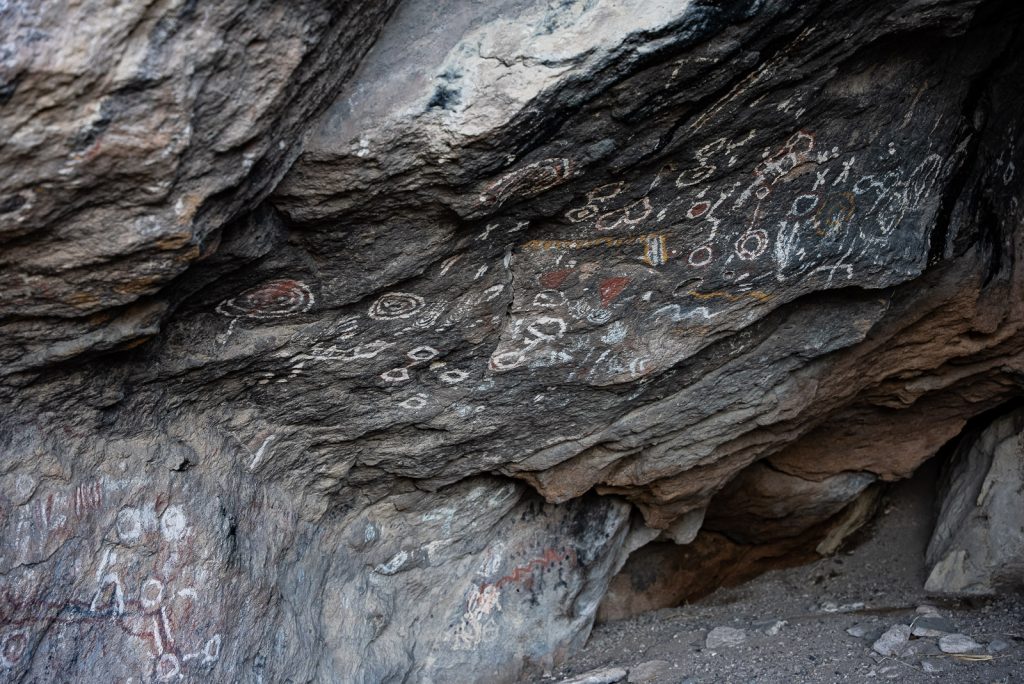
If you can handle more dirt roads after leaving Spencer Hot Springs, continue 30 more minutes down the road to Toquima Cave! The drive alone is worth it, as you’ll be in a much more vegetative area, with lots of green trees.
To access the cave you will park at the campground and hike up a short trail, where you’ll reach the gated off cave (and have nice views of the area)!
This cave was used by the Western Shoshone thousands of years ago as a rock shelter, storage of many cultural artifacts, and gathering place. And they left behind more than 300 pictographs, images drawn or painted on rock. Due to the orientation of the cave, plus gate, they have been able to remain protected from the elements, making them some of the best preserved pictographs in North America. It’s a spectacular sight!
Eureka, Nevada
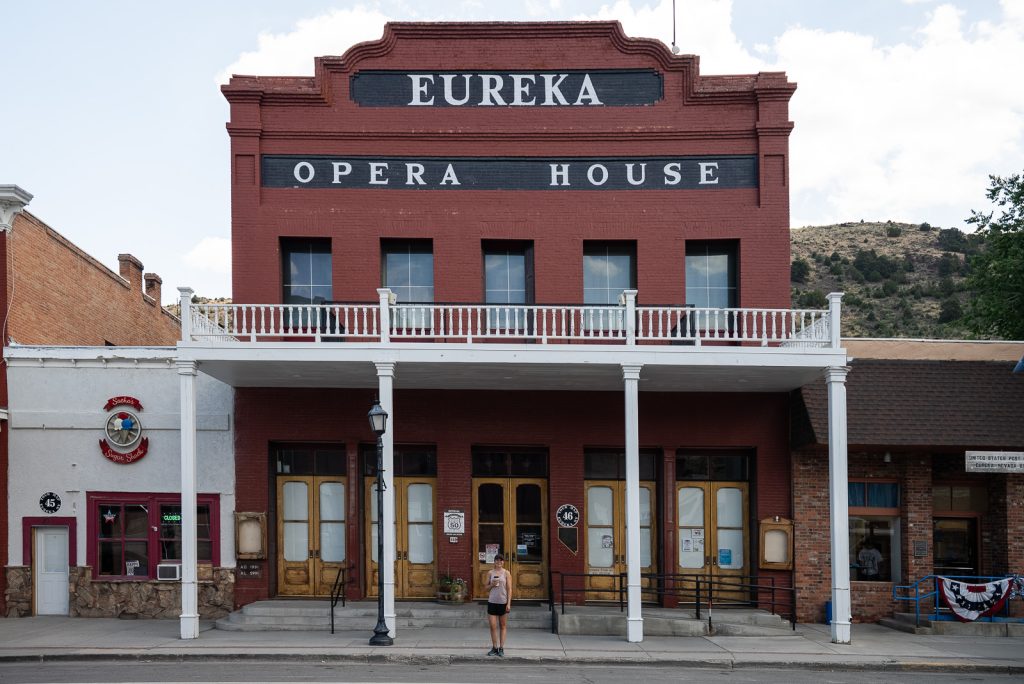
Hands down our favorite town along the highway is Eureka. In fact, it has been deemed the “friendliest town along the Loneliest Road in America!” And not only that, it’s the cutest as well!
Here you’ll find tons of well preserved historic buildings, like the Eureka Opera House, plus lots of murals. We loved walking around here!
And as you explore, make sure to pop into Eureka Depot for coffee and you MUST visit Afterlife Antiques & Oddities. The store is full of neat items and the owner Kristan is so nice! She ended up giving us a tour of the tunnels underneath the store, which was absolutely wild. We had no idea there was a whole world underground here!
To set up a tour, make sure to email her in advance at afterlifenevada@gmail.com. Let her know we sent you!
Ely
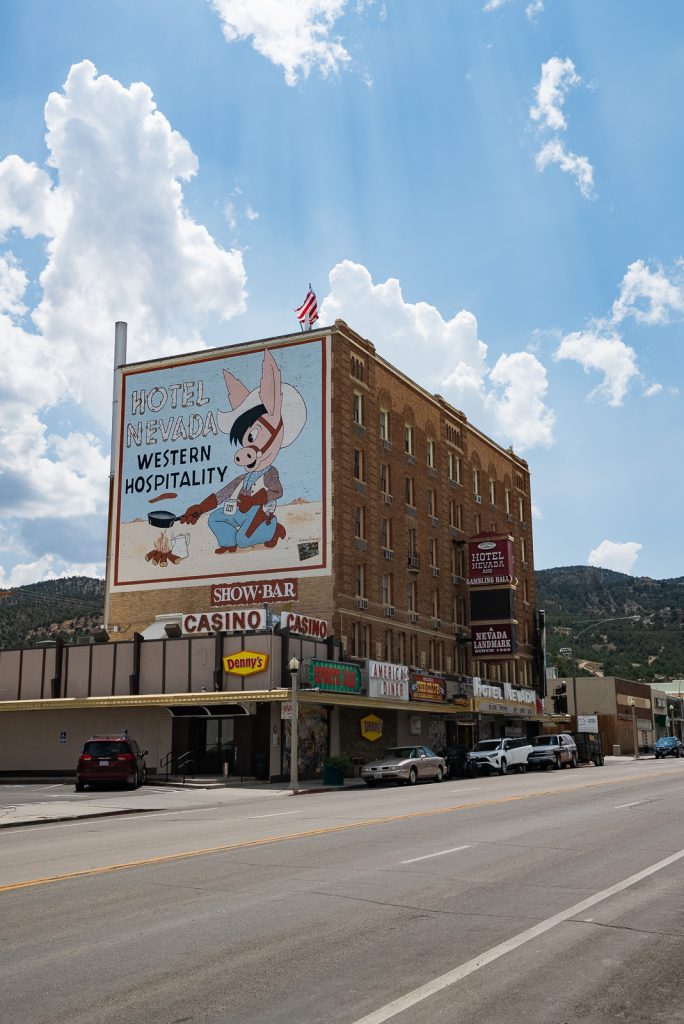
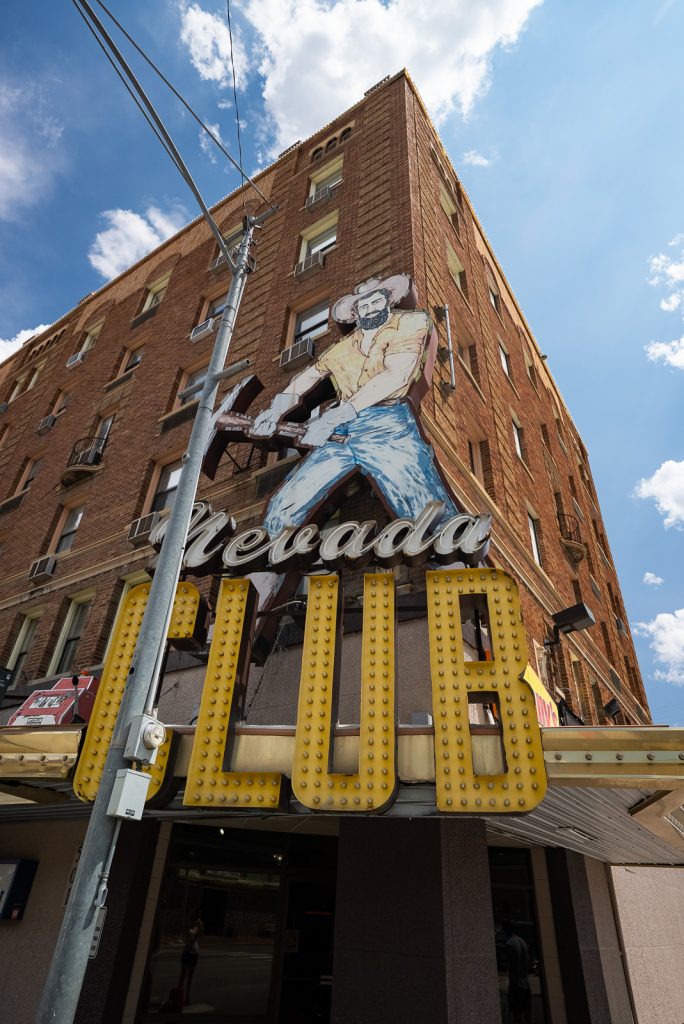
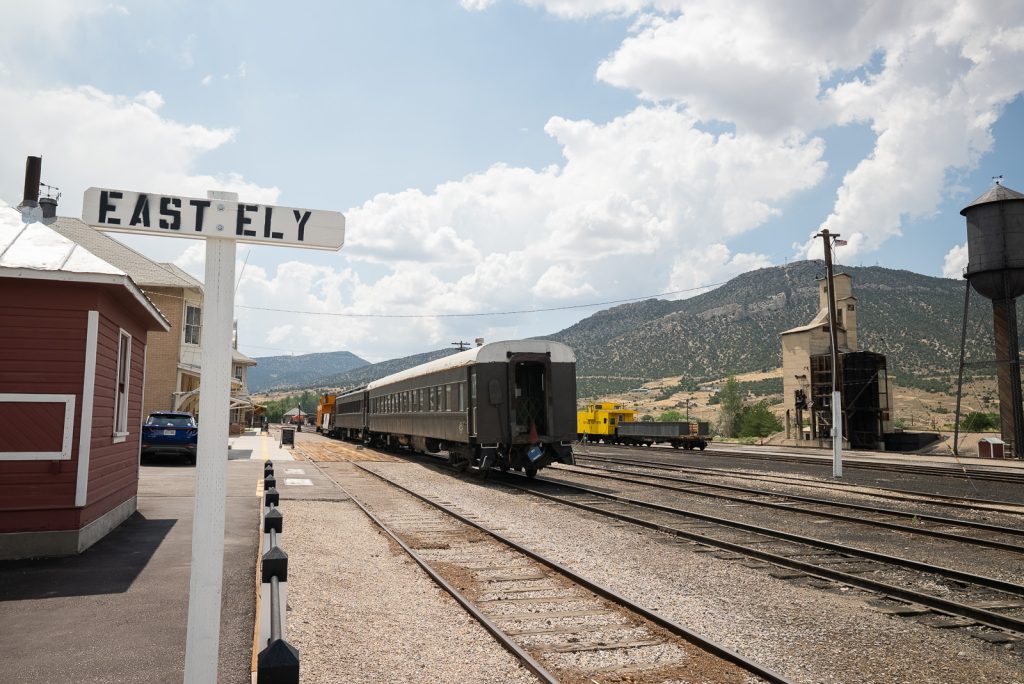
The final major town along the Loneliest Road in America is Ely. Which is kind of like a (very) mini Las Vegas! This town is full of casinos, which isn’t really our vibe. But one thing that they do offer that is great for all ages is the Nevada Northern Railway Museum. This museum houses tons of train artifacts, plus offers hands-on experiences.
But the best part is that they have train rides you can book! They offer a wide variety of rides, including a stargazing tour, themed rides, and daily excursions. You can see their schedule here!
Besides this museum, one other must-do task while in Ely is to go grocery shopping. This will be your last larger grocery store before Great Basin National Park. So make sure to stock up!
Ward Charcoal Ovens
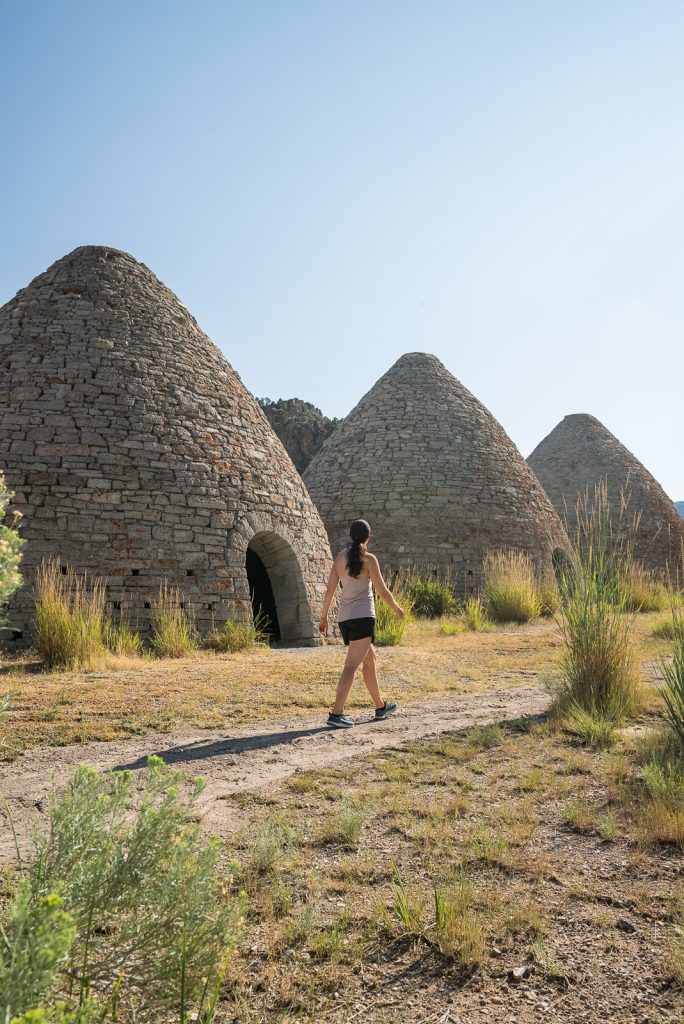
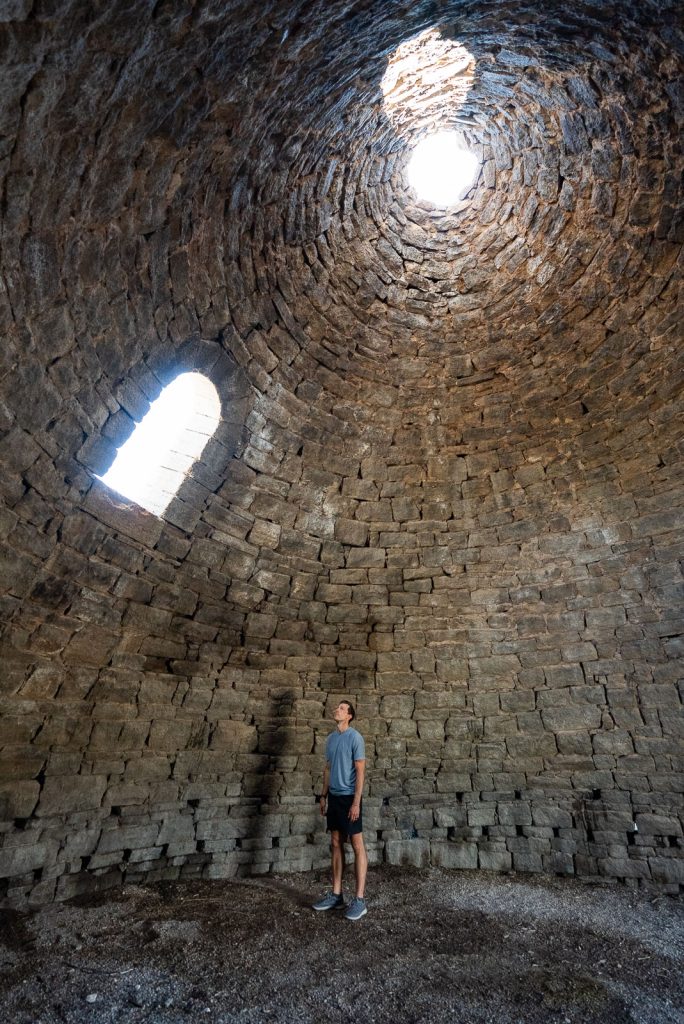
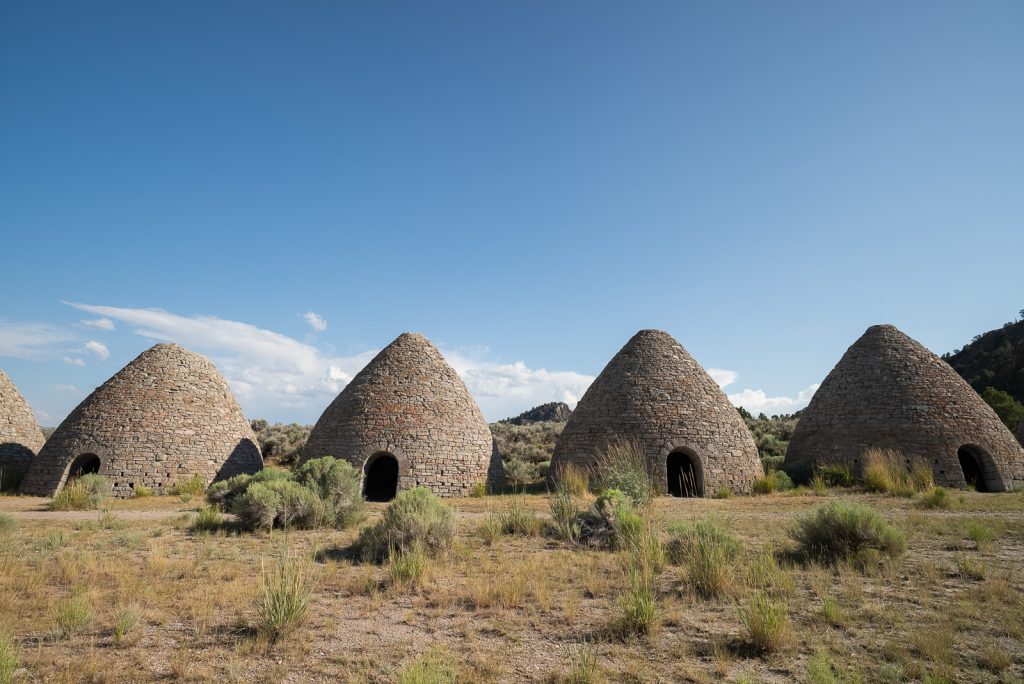
Located a 6.4 mile drive down a dirt road, Ward Charcoal Ovens State Historic Park is home to a group of six beehive shaped charcoal ovens. These were used to produce charcoal for the region’s mining smelters from 1876 through 1879.
Their beehive shape allowed them to more efficiently burn pinyon pine and juniper into charcoal, by allowing heat to reflect back into the center of the oven. Each oven could hold 35 cords of wood at a time and produce 1,750 bushels of charcoal at a time!
Once mining ended, the ovens were used to shelter travelers and it is said that they were used as a hideout for stagecoach bandits. Today, you can walk among and inside these ovens, learning about some of their history along the way.
To visit, there is a fee ($5 for Nevada residents/$10 for nonresidents–cash only!), which may be a bit steep if you only plan to see the ovens. We personally felt it was worth it, as we hadn’t seen anything like this before. But they do have other trails to explore as well!
Great Basin National Park

The Loneliest Road in America ends at Great Basin National Park, one of the most underrated parks in the United States!
The term Great Basin refers to a 200,000 square mile region that encompasses most of Nevada, plus parts of the neighboring states. It is an area where no water drains to an ocean, but rather evaporates, sinks underground, or flows into mostly saline lakes. And is known for having long, flat valleys spanning between numerous mountain ranges.
In the park you can find alpine lakes, rugged peaks, ancient trees, dark skies, Nevada’s only remaining glacier, and a vast cave system. It offers a lot of variety in a relatively small park! Plus, it’s the 10th least visited National Parks in the United States. Which means you won’t be fighting the crowds nearly as much as other parks!
To see all of the best things to do in Great Basin National Park, check out our detailed guide for visiting. But some of our top experiences included:
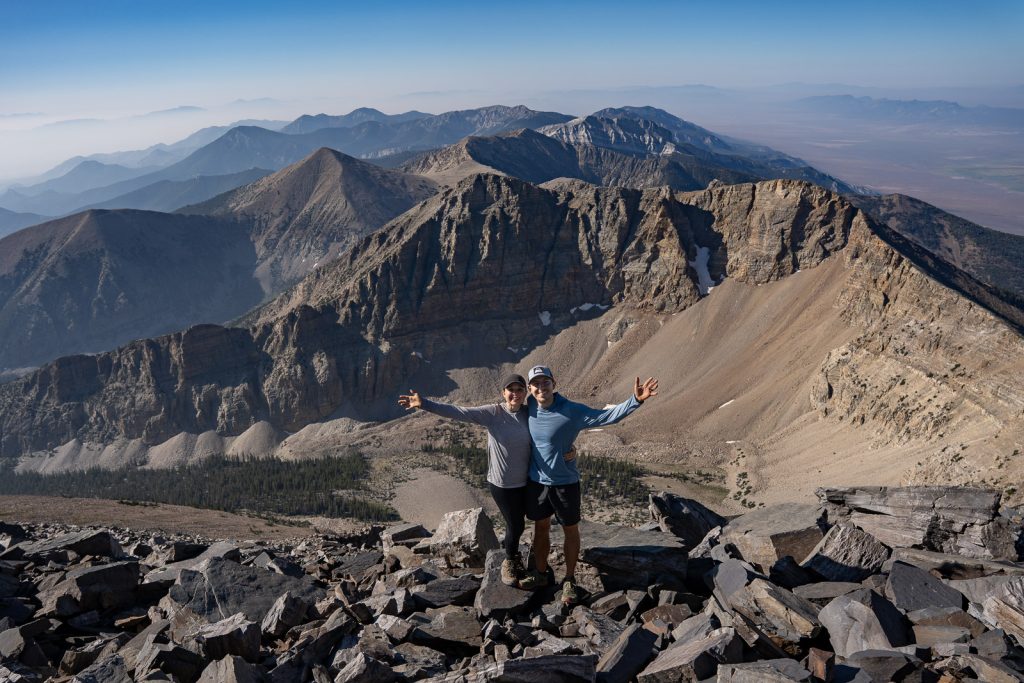
- Hiking to the top of Wheeler Peak, the second tallest peak in Nevada.
- Seeing alpine lakes, bristlecone pines, and a glacier on this hike!
- Touring Lehman Cave.
- Stargazing!
Our top tips for driving the Loneliest Road in America
The closest airports
If you’re flying in to drive the Loneliest Road in America, we suggest flying into Reno and flying out of either Las Vegas (4.5 hours from Great Basin) or Salt Lake City (3.5 hours from Great Basin).
It is very remote
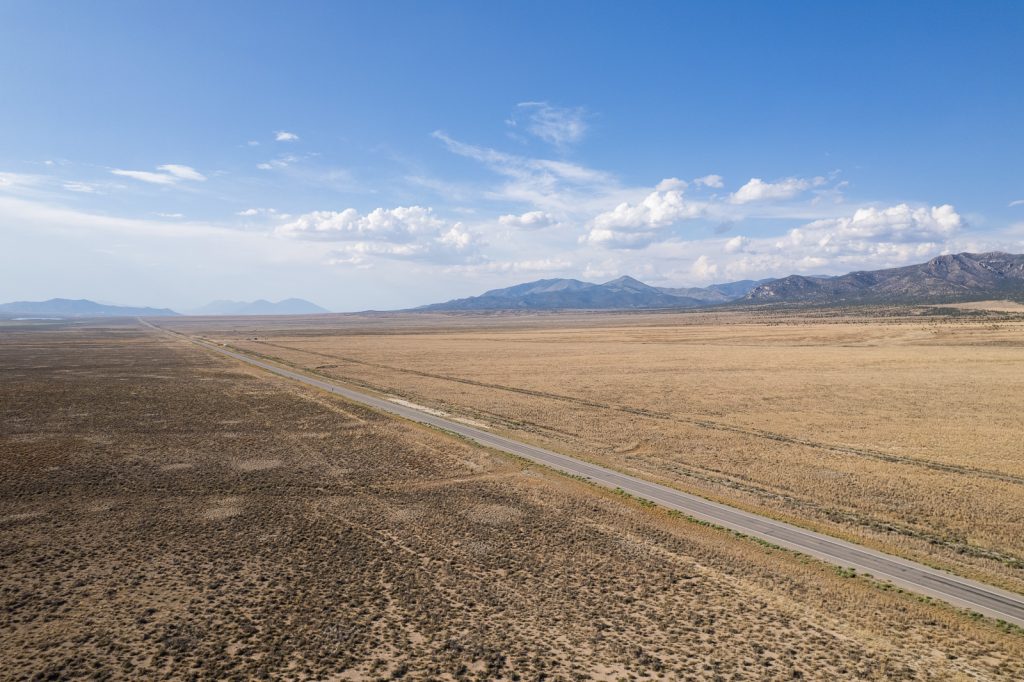
The Loneliest Road in America is a remote road trip. There is limited cell service at times and only a handful of smaller towns along the way. So be prepared to not have access to many amenities as you road trip along the Loneliest Road in America.
With that said, you may be wondering, “is the Loneliest Highway in America” actually lonely? And for us, it mostly was! The drive is full of vast, open spaces and very little civilization at times. While we did see people, many stops we made were pretty empty, including some of the towns. And we had multiple stretches where we saw no cars for a bit.
Fuel up as often as possible
There are enough towns along the way that running out of fuel isn’t a big concern. But to avoid the risk of running low, make sure you fill up at any gas station you come across, just in case.
Carry enough food & water
There are places to stop for food and to grab a drink along the highway, but just in case you get stuck or decide to stay in a remote area, make sure to bring plenty of food and water with you.
Bring a roadside kit
With many remote stretches and limited cell service to call for help, it’s crucial to be prepared for something to happen to your vehicle. So make sure to pack a roadside assistance kit! In these kits you’ll find jumper cables, tow straps, a safety triangle, poncho, and more.
Download offline maps
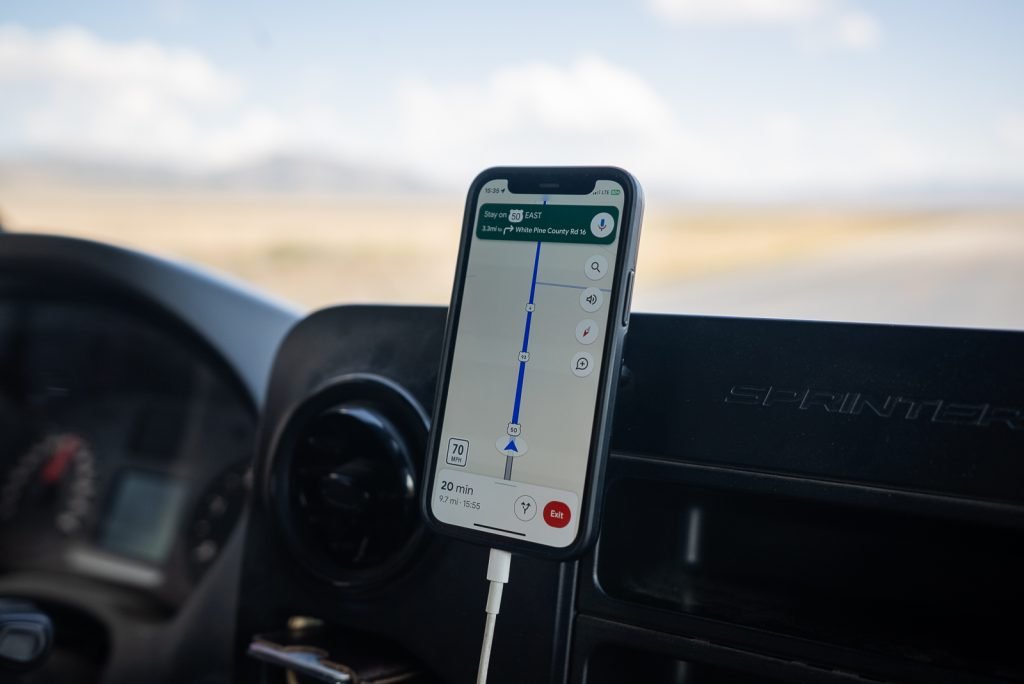
While technically the Loneliest Road in America is just a straight shot down Highway 50, many of the best things to do require getting off the main road. So having Google Maps downloaded is very important to ensure you can find your way. There isn’t always signage for some of these stops!
Get a Nevada Highway 50 Survival Guide
One fun little addition to your Loneliest Road in America road trip is the Highway 50 Survival Guide. This is a passport you can get stamped at various locations across the drive. You can fill out the form on their website to get yours sent to you in advance!
Beware of the Mormon Crickets
The only negative thing we have to say about the Loneliest Road in America are the Mormon crickets. Not sure what they are? Just picture crickets, but 5x larger and 10x grosser. These crickets invade parts of Nevada in the summer, including some areas along this highway. It gets so bad that they can COVER buildings and roads.
While they mostly just will make you squeamish, they do pose a small threat. When squished (by car tires), they release a sludge that can make the roads slick. People have actually gotten in accidents because of this, so drive carefully! We noticed a traffic sign warning us about the roads on the way into Austin, Nevada.
The best time to drive the Loneliest Road in America
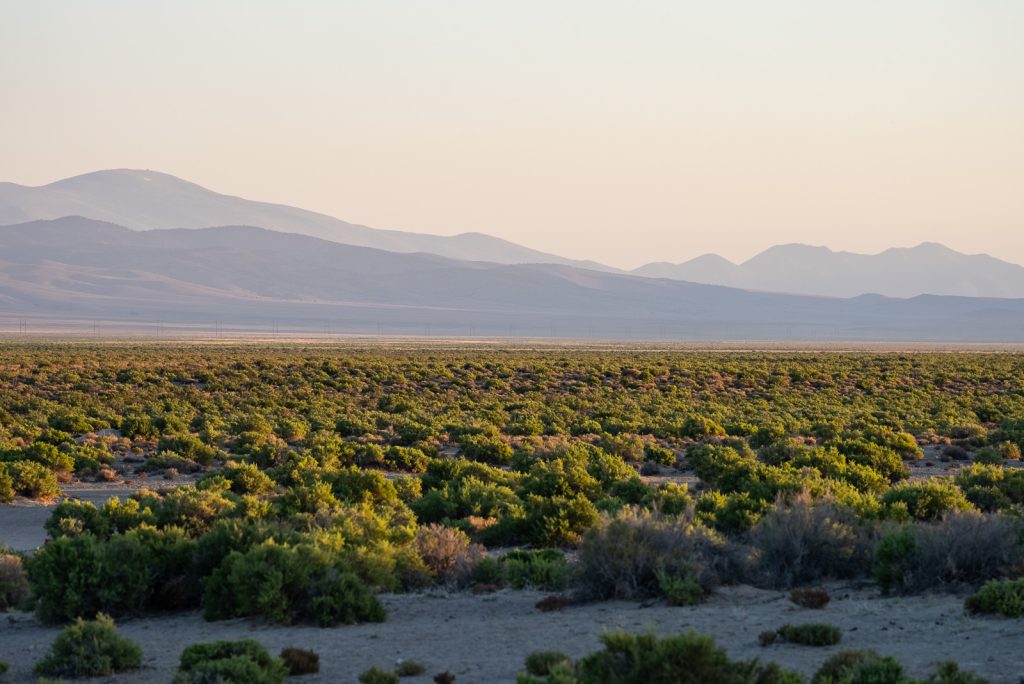
To ensure you can experience as much as possible, we’d suggest driving the Loneliest Road in America in the late spring-early fall. This is when the road should mostly be snow-free and most attractions and restaurants will be open.
If visiting in the spring, keep in mind that some spots, like Great Basin National Park, will still be partially closed until the summertime. So if hiking there is a top priority, we’d suggest doing the drive in the summer or fall.
We personally drove the Loneliest Road in America in late July. While overall this was a good time, as everything was accessible, the first part of the drive was very hot. With temperatures reaching 100ºF! But thankfully as we headed east, it did cool down a bit.
In the future, we’d love to do this road trip in the early fall. Not only will the temperatures likely be more enjoyable, but we hear that Great Basin National Park has some amazing fall colors.
How much time do you need to drive the Loneliest Road in America?
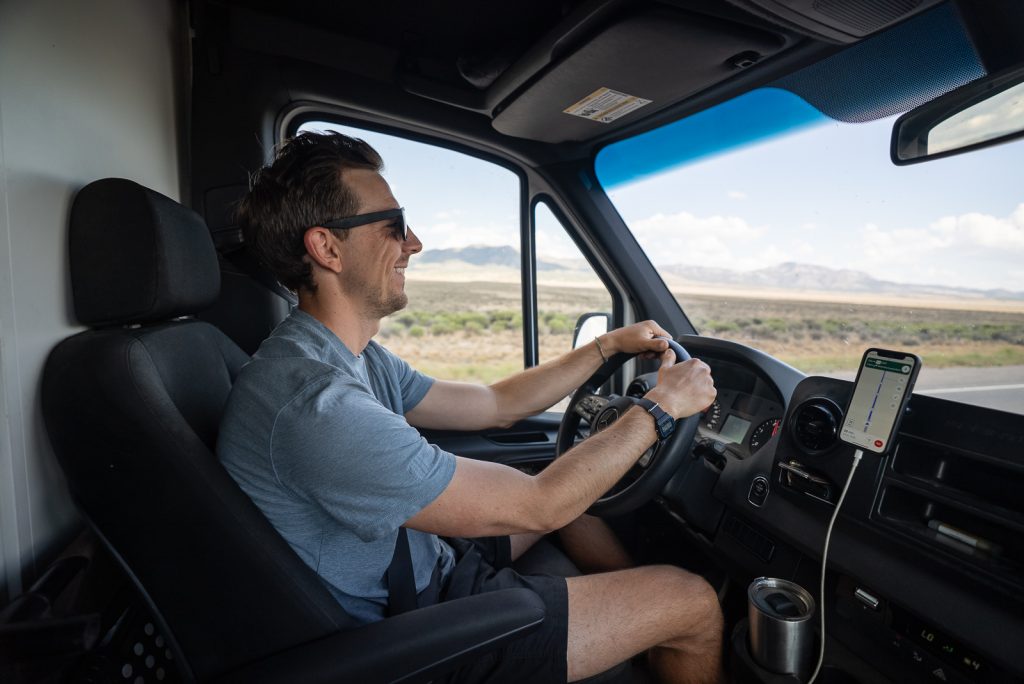
To ensure you have enough time for all of the stops along the Loneliest Road in America, we suggest spending 3-5 days. This will give you time to visit most of the best stops along the way!
We personally drove the Loneliest Road in America, plus explored Great Basin National Park, in 5 days, with some days requiring less driving than others. For us, it felt like a good amount of time! Many of the stops are quick, but we started our days early (around sunrise) to ensure we had enough time for everything.
If you need help planning your time along the road, we’re including a sample itinerary below!
Where to stay along the Loneliest Road in America
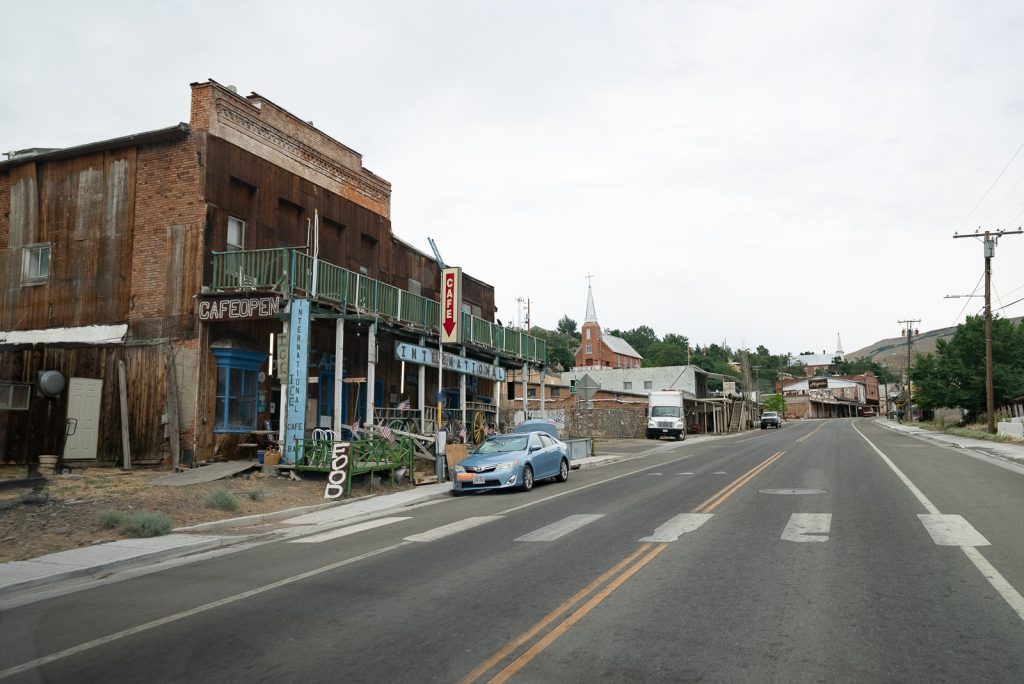
Since the Loneliest Road in America is a remote drive, figuring out where to stay can be a bit tricky. Here’s a rundown of your best lodging options along the way!
Hotels
If you plan to road trip by vehicle and want to stay in hotels every night, here are some options in the larger cities along the route.
Carson City: Hampton Inn & Suites and Staybridge Suites
Fallon: Quality Inn & Suites and Best Western Inn & Suites
Middlegate: Middlegate Station Motel
Austin: Cozy Mountain Motel
Eureka: SureStay Hotel by Best Western Eureka
Ely: Holiday Inn Express & Suites, La Quinta, and Prospector Hotel & Casino
Great Basin National Park: Stargazer Inn
Camping
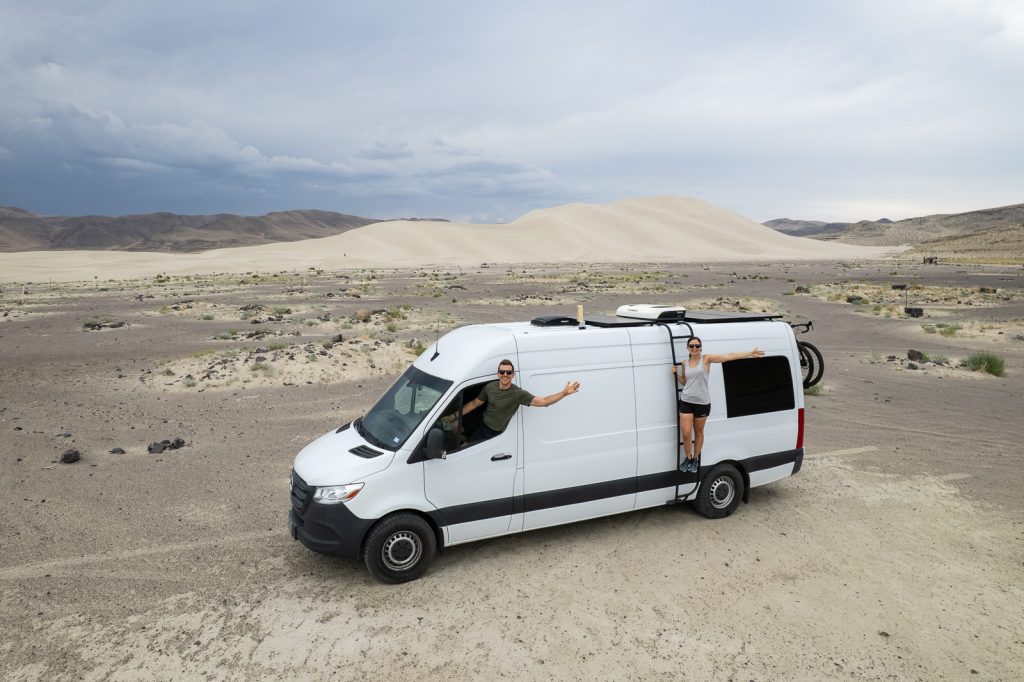
We traveled this highway in our Sprinter van, so we camped (for free!) every night along the way. This gave us the flexibility to change plans and stop in areas that otherwise have zero lodging options.
If you’re traveling in a van or RV like us, here is where we stayed along the way:
- Sand Mountain Recreation Area
- Spencer Hot Springs
- Sacramento Pass BLM Campground (Warning: we did have multiple mice find their way into the inside of our van here! Adam still hasn’t mentally recovered 😂)
To see even more camping options, check out our guide to finding free camping!
Loneliest Road in America itinerary

Optional Day: Lake Tahoe
If you have time before starting the drive, spend at least a day in Lake Tahoe! You can see all of our favorite things to do here.
First Day
- Kickoff your drive in Carson City! Grab a coffee at Old World Coffee Roasters and then walk along the Kit Carson Trail.
- Make a detour to Virginia City. Spend a few hours walking the streets, touring the Washoe Club, and grabbing a bite to eat or drink at a saloon.
- Head to Sand Mountain Recreation for sunset! If you’re camping, we’d suggest staying the night here. Otherwise, head back to Fallon to stay in a hotel.
Second day
- Visit Berlin Ichthyosaur State Park! Check out their historic mining ruins and then head to the fossil shelter to learn about the Ichthyosaurs.
- Stop by Middlegate Station for lunch! We suggest the Middlegate Monster, if you’re brave enough.
- Swing by the Shoe Tree to admire the hundreds of shoes hanging from it.
- Drive to the town of Austin and see the Stokes Castle.
- If you have enough time, do the short hike to Toquima Cave. For those camping at Spencer Hot Springs, we’d suggest doing this on Day 3 in the morning!
- End the day with a soak at Spencer Hot Springs. If you’re camping, stay out here for the night (you could soak at sunrise instead)! For those staying at a hotel, head onto Eureka.
Third Day
- Kickoff the day with coffee from Eureka Depot and wander around the town of Eureka.
- Head to Ely and visit the Nevada Northern Railway Museum. Try to time your visit to go on one of their train rides!
- Visit the Ward Charcoal Ovens.
- Drive the final stretch of the Loneliest Road in America and end at Great Basin National Park!
Fourth & Fifth Days
Spend the next two days exploring Great Basin National Park. Check out our full guide to Great Basin National Park to plan your time there!
Save this guide to the Loneliest Road in America