Last updated on March 11th, 2026
Unsure what to pack for a trip to Peru? We’re sharing a detailed Peru packing list, with everything you need to bring for a variety of destinations. Plus a printable version you can download!
We’ve been traveling full time for over 5 years now, visiting a wide variety of climates, like humid Southeast Asia, frigid Finland, and other destinations across the world. So we feel like we’re packing pros at this point!
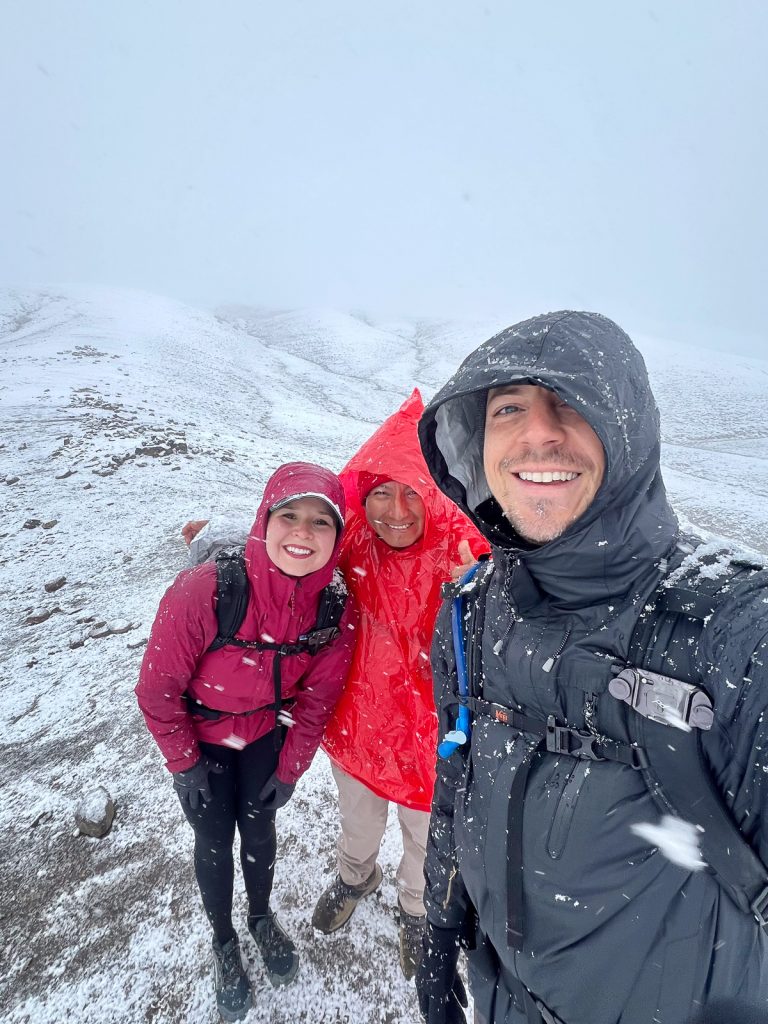

But Peru can be a bit daunting of a destination to pack for. During our one month trip to the country we would be going from sea level to almost 17,000 feet in altitude as we explored cities, raced across sand dunes, visited ruins, and hiked two treks next to glaciers. With the variety of activities we’d be doing, plus weather we’d be encountering, there was a long list of items we needed to bring to ensure we were ready for all scenarios.
And if you’re feeling overwhelmed with packing for Peru and don’t know where to start, our Peru packing list is here to save the day! We’re sharing everything we brought with us for the various destinations we visited. As well as items we did not bring, but wish we had. Plus, we created a downloadable packing list that you can save to your phone or print before you go!
Looking for more Peru tips? Check out our Peru guides:
- Our top 25 Peru travel tips & things to know
- The 13 BEST places to visit in Peru
- The Perfect 2 Weeks in Peru Itinerary for First-Timers
- The 19+ BEST things to do in Lima, Peru
- 18 FUN things to do in Cusco, Peru
- The 12 BEST day trips from Cusco, Peru
- Visiting Machu Picchu in 2025: A step by step guide!
- How to hike Peru’s Salkantay Trek without a guide
- 11 FUN things to do in Paracas, Peru
- How to spend 24 hours in the Huacachina Oasis near Ica, Peru
- Read all of our Peru travel guides
- Watch all of our Peru videos
Peru packing tips
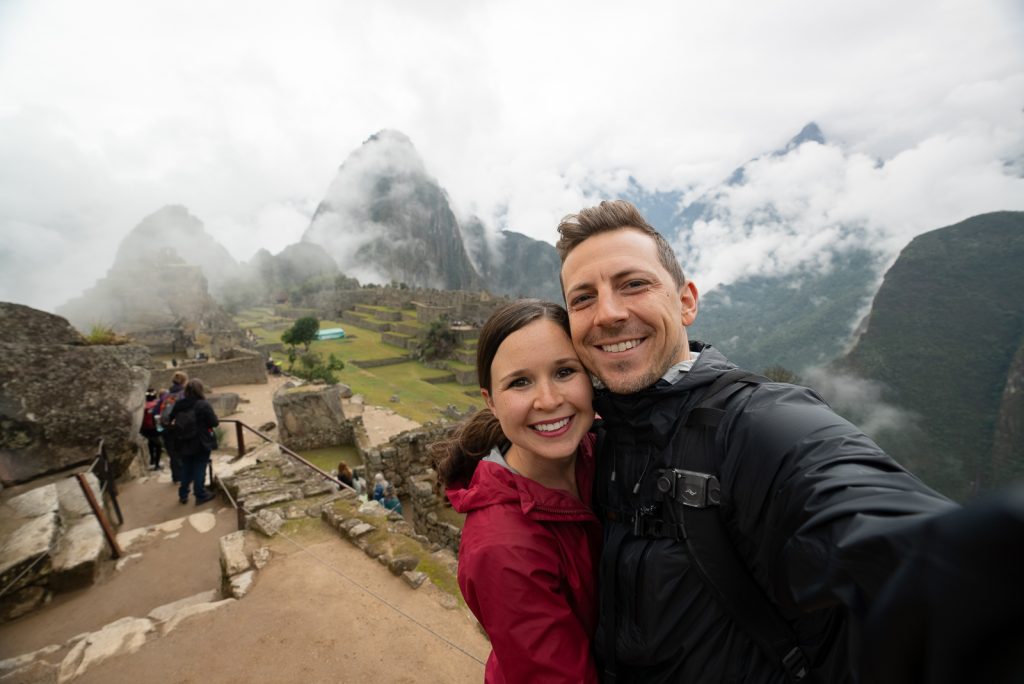
Before we dive into the specifics of what to pack for Peru, here are a handful of things to consider before you start packing your bag! Looking for more tips for traveling to Peru? We share our top 25 things to know here!
Weather and seasons in Peru
Peru has two main seasons, a rainy season and dry season. Rainy season is typically from November through March, while the dry season is April through October. The dry season brings pleasant temperatures and sunny days, while the rainy season is very wet and hot.
Also, remember, if you’re coming from the Northern Hemisphere Peru is in the Southern Hemisphere so the seasons are the opposite. If it’s summer in the north, it’s winter in the south.
Different altitudes
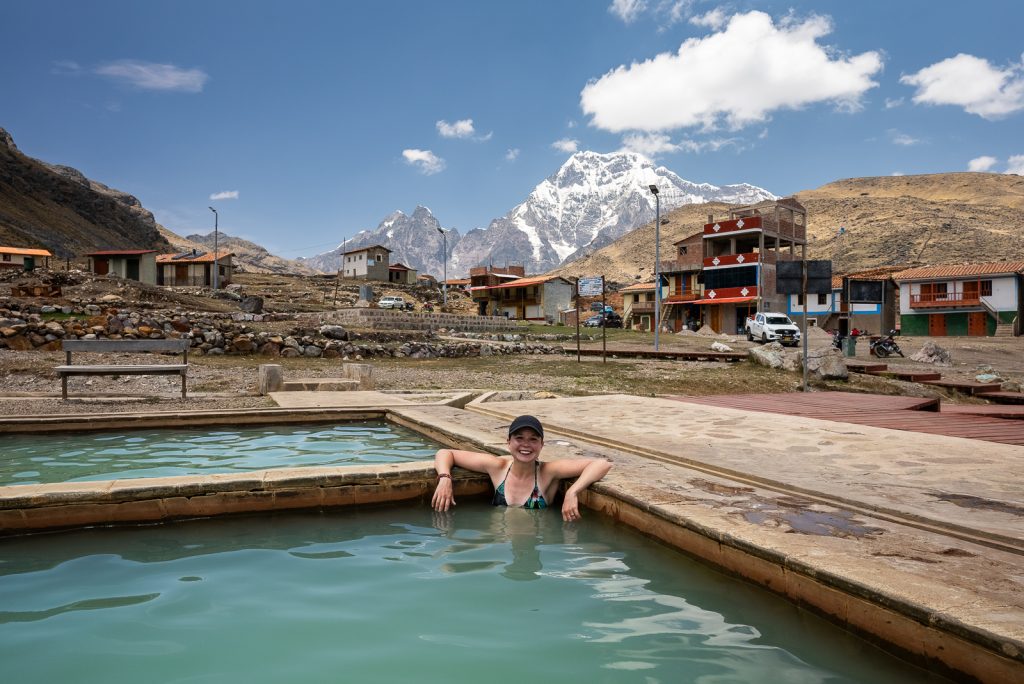
Most visitors to Peru will go to both Lima and Cusco. And while they are only a short flight from each other, they are vastly different altitudes. Lima is located right on the ocean, while Cusco is at over 3,300 meters (11,000 feet) in altitude. So as you create your Peru packing list, keep this in mind. You may need vastly different clothing options for the different regions you visit. We wore puffy jackets one day and then a couple days later, had swimsuits on!
Rent gear if needed
If you’re going on treks in Peru and don’t have all of the gear you may need (or don’t want to travel with everything), there are places in Peru you can rent from. For those trekking from Cusco, check out Speedy Gonzalo Camping Equipment and El Gato Camping Equipment for rentals. And if you need to buy items that you forgot, check out Tatoo Adventure Gear.
Laundry
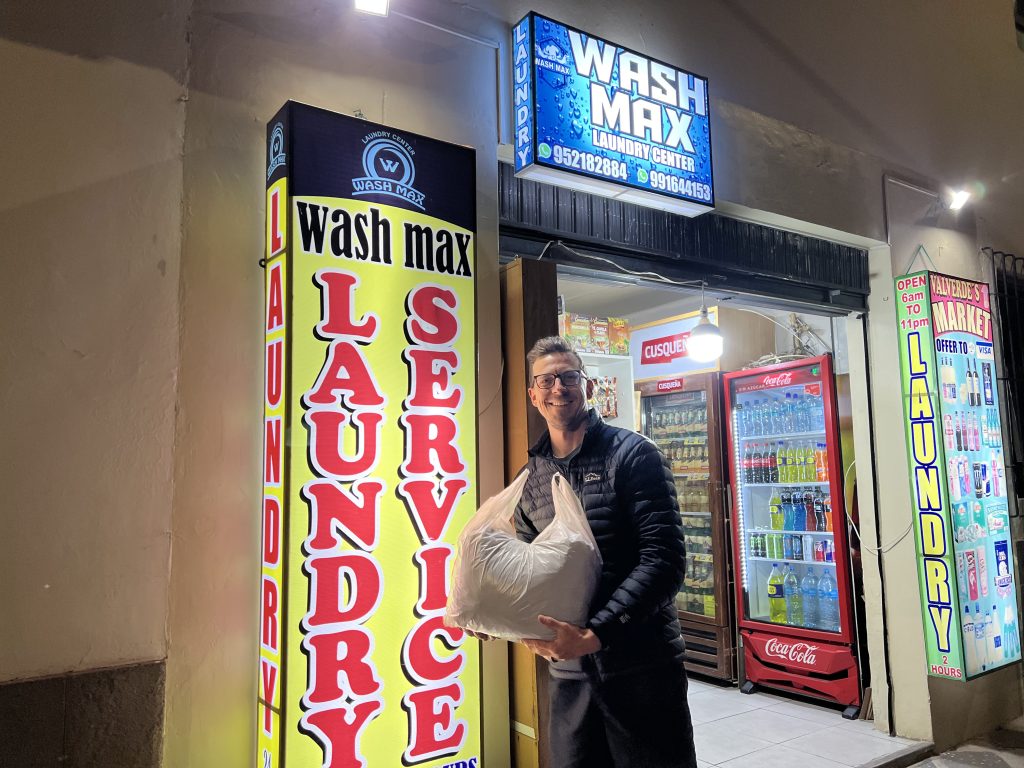
If you’re visiting Peru for several weeks you’ll likely want to have your clothes washed. Unlike the US, where you can find laundromats and do your own laundry, you will likely need to pay someone to wash your clothes for you. We washed our clothes in Cusco (Wash Max) about half way through our month-long trip. There were lots of places to choose from and it was pretty cheap ($10-15 USD) for a large load of laundry.
The ULTIMATE Peru packing list
In this Peru packing list we’re sharing all of the most important items to bring on your Peru trip, ranging from what to wear, important documents to bring, technology to have, and more.
All of the items in this Peru packing list are broken down by category. And we’re also sharing a downloadable version of this Peru packing list at the end of this guide, which you can save to your phone or print!
Important items and documents to bring to Peru
Passport
You will need a passport to visit Peru. And your passport must be valid for six months after your trip ends. Make sure to check your passport expiration date before booking your trip, to ensure you have enough time to get a new one, if needed.
Not only do you need to bring your passport with you to Peru, but make sure to always have it on you. Hotels will always ask to see it when you check in and many attractions will require you to show it as well.
A+K Tip: At many of the popular sites around Peru like Machu Picchu and Rainbow Mountain there will be a stand where you can stamp your passport. As neat as this sounds, know that this is technically illegal and could potentially void your passport. Instead, bring a notebook or journal to stamp if this is something you’d like to do.
Visa
As US citizens we did not need to apply for a visa before our visit. Be sure to check Peru’s visa requirements for your specific country well ahead of time.
Cash + Debit card
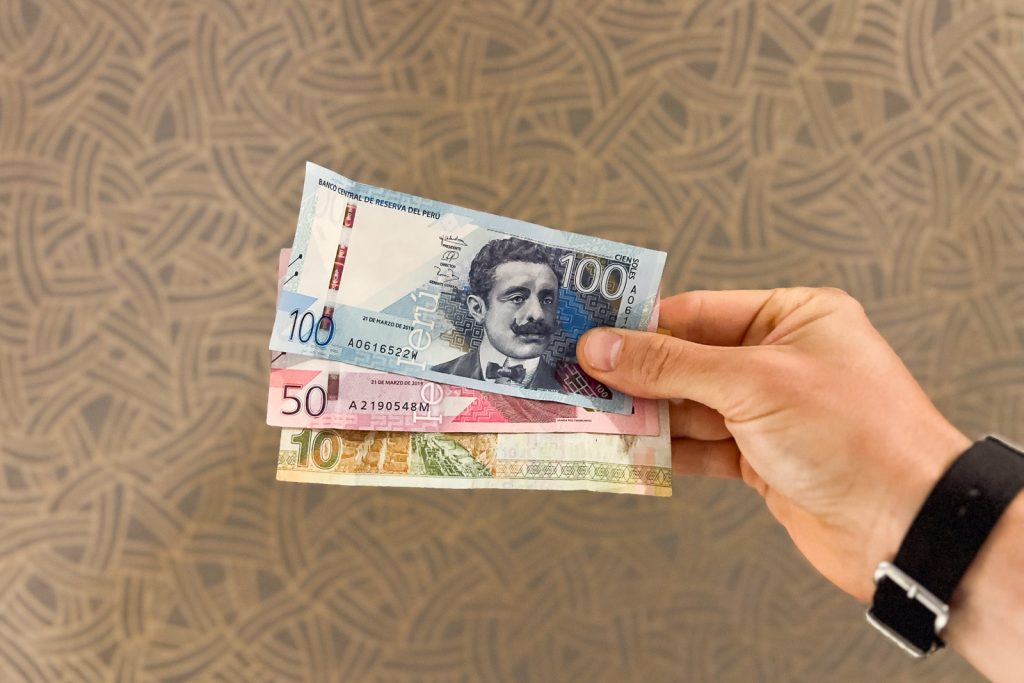
In our experience, many businesses in Peru’s cities accept credit cards. But in the smaller towns, at street food stalls, and public restrooms you will need cash in the form of Peruvian Soles. You don’t need to bring cash to Peru, but we suggest getting cash out as soon as you arrive, as you may need it quickly.
You can find ATMs all over Peru and we suggest going to a bank ATM for the best rates. Want to avoid ATM fees? We have a Charles Schwab checking account specifically for international travel. They refund ATM fees from ANY ATM worldwide! This gave us lots of freedom to use whichever ATM was most convenient.
When we could use a credit card in Peru, we used one of our travel credit cards to earn points and miles for future trips. Curious which ones we use? Learn more about our favorite travel credit cards.
Travel insurance
One big travel tip not just for Peru, but any international destination, is to get travel insurance. We are personally big fans of SafetyWing!
SafetyWing is travel medical insurance that you can purchase for short, individual trips or as a monthly subscription, if you’re traveling long term. Their Nomad Insurance includes both travel medical insurance for any emergencies, but also coverage for lost baggage and travel delays, plus add-on coverage for adventure sports and electronics.
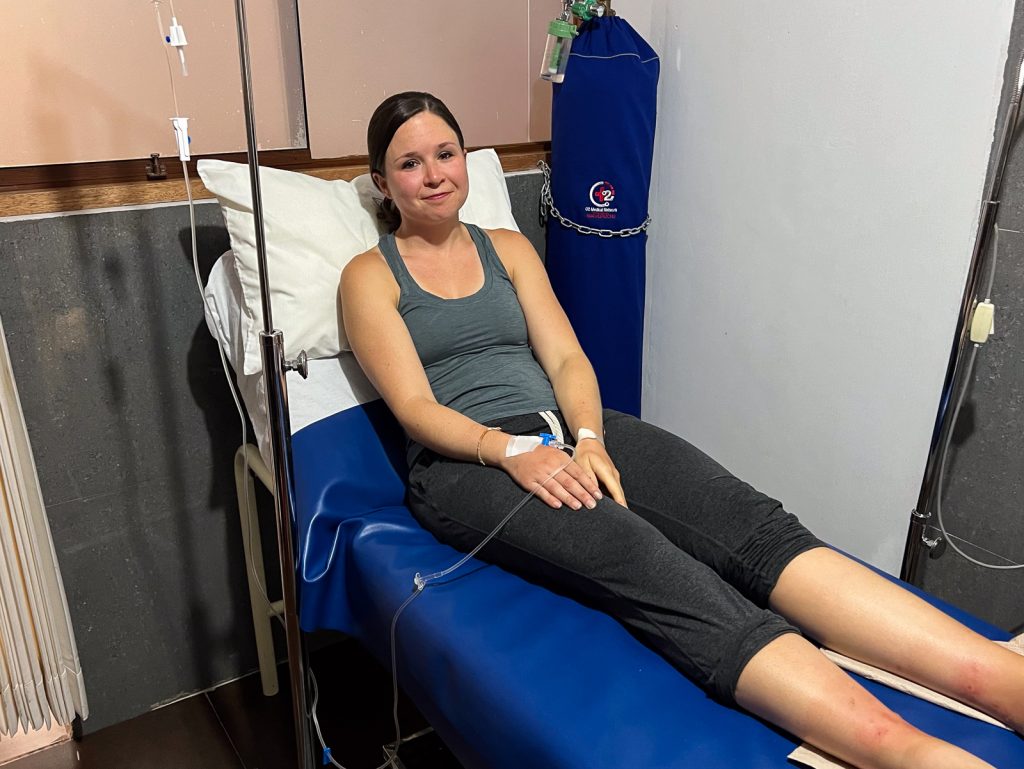
After purchasing SafetyWing for many trips over the years and never having medical issues (thankfully!), our luck changed in Peru. Kathryn was bitten by some bugs on the Salkantay Trek and she had to go to a clinic in Aguas Calientes. Getting medical help in another country, especially with a language barrier, was a daunting process, but we are grateful for how easy the claim process with SafetyWing was. The treatment cost several hundred US dollars and SafetyWing covered all of it! And we got reimbursed within just a few days of filing our claim.
eSIM
You have a few options for cell service while in Peru: Pay for an expensive international plan with your home provider, only use Wi-Fi (not recommended), get a physical SIM, or what we have started to do, get an eSIM from Airalo!
This is a SIM that you can download to your phone. It saves the hassle of having to get a physical SIM. Plus, you can get an eSIM for a specific country or for an entire region, making it extra easy to use if you plan to hop between countries in South America. If you want to try it for your trip to Peru, use our code AK3 for $3 USD off your first eSIM!
Prefer to get a physical SIM? You can get these at the airport or at any cell phone provider in the different towns and cities.
Vaccinations
Depending on where you’re visiting from and which vaccinations you have had, you may need (or want) to get additional vaccinations for Peru. This did not apply to us, but it’s worth looking into!
AirTag
Whether you’re checking a bag or just want extra safety for your bag, we highly recommend getting an AirTag (iPhone users only). This small little device can be placed in any bag and then tracked on your iPhone. While we didn’t run into any lost bags in Peru, we did lose a bag on a previous trip and the AirTag helped us track it down!
Clothing Items

From sea level in Lima, Paracas, and Huacachina to very high altitudes of the Andes Mountains in Cusco and Machu Picchu, your trip to Peru will likely be taking you to vastly different landscapes. So packing layers is key!
We highly suggest casual, comfortable, and breathable clothing. While you may want one nicer outfit for a fancier dinner (like at one of Lima’s top restaurants!), for the most part, casual attire and athleisure is very acceptable in Peru.
Shirts
A good basic shirt is a must on your Peru packing list. We love our Vuori Strato Tech T shirts and Vuori Lux Performance Tank Tops, as they are light, don’t smell too bad after one wear, and do well with sweat. This is what we almost always wore under our other layers.
But besides these shirts, we did pack a couple nicer options, like a button up for Adam and also a cardigan and sweater for Kathryn.
Pullover and sun hoodie
It’s important to have a few different layers with you for variable temperatures throughout the day. Wearing a pullover or a light jacket over your tank top or shirt will help keep you warmer during cool mornings or at higher altitude.
But for the hotter days, where a pullover may be too warm, we opted for a sun hoodie to protect ourselves from the sun, without making us sweat a lot.
Puffy jacket
Both Cusco and the Andes Mountains can get pretty chilly at night and in the morning. So having a puffy jacket is a must! Especially if you’re going to hike the Inca Trail, Salkantay Trek, or another longer trek. We both wear an L.L. Bean Ultralight 850 Down jacket and it worked great in Peru!
Rain jacket
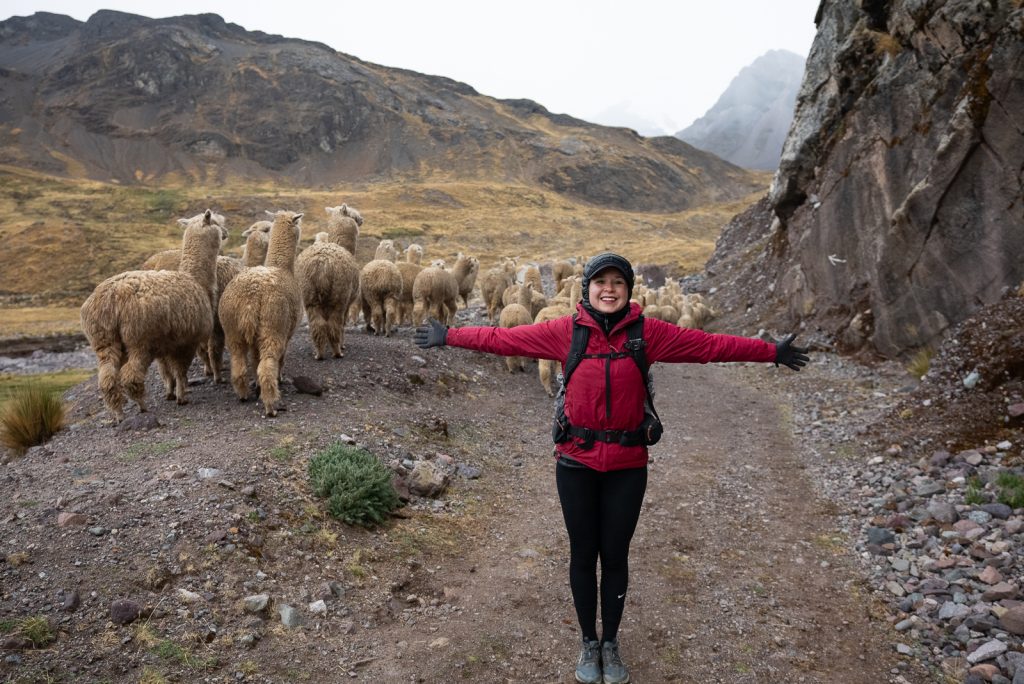
Although we did not have much rain during our time in Peru, always be prepared by carrying a rain jacket. Especially if visiting during the rainy season! Kathryn wears a Patagonia Torrentshell rain jacket and Adam wears a Columbia rain jacket.
Pants
Not only will you want a pair of jeans or casual pants, but if you’re planning to trek or be active in Peru, you will want workout shorts or pants as well. Adam wears these light Patagonia pants and these shorts, while Kathryn wears Nike leggings and Patagonia shorts.
Pajamas
Make sure to have something comfy to wear at night! We personally just rock a shirt and our FAVORITE Vuori joggers (mens and womens).
Swimsuit
If you plan to visit Paracas, any hot springs, or do other water activities, make sure to bring a swimsuit!
Buff, gloves, and beanie
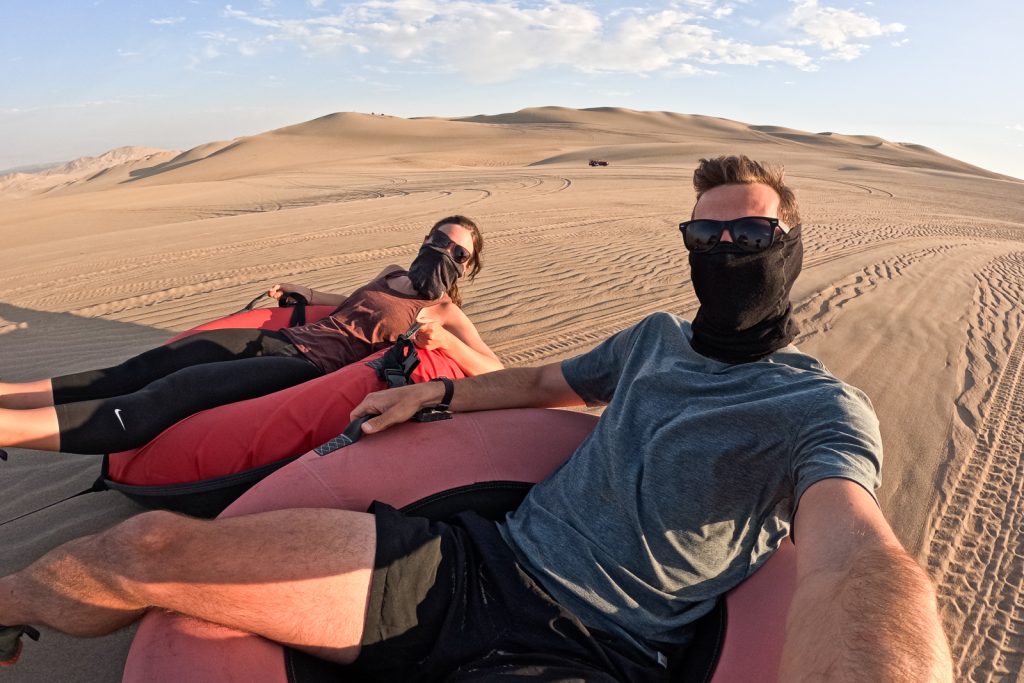
A buff, gloves, and beanie are nice to have on the cool mornings. Plus a buff can be another layer of sun protection AND sand protection in Huacachina!
Footwear
Hiking shoes
With most visitors to Peru doing some sort of hiking or lots of walking, solid hiking shoes are a MUST!
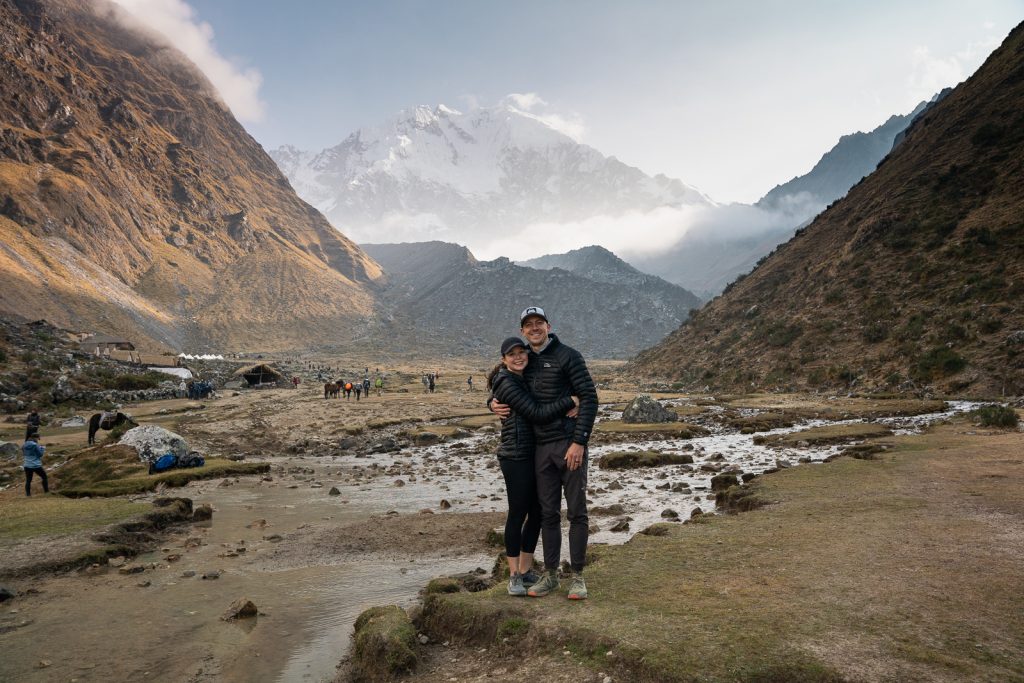
Kathryn sometimes hikes in Lowa Renegade boots, but since we had limited space in our suitcase, we both brought Altra Lone Peaks 8s. They are lightweight, dry quickly if they get wet, and are super comfortable!
Casual shoes
Our hiking shoes are the only shoes we wore on the entire trip, as we pack as light as possible. But for those who have more space, pack a pair of casual shoes as well. These would come in handy for any nicer restaurants.
Sandals
Anytime we stay in hostels, hotels, or camp we bring along sandals. It’s nice to get out of your shoes at the end of the day and let your feet breathe. Plus, we aren’t a fan of having our bare feet in public showers. While we used to bring flip flops, we are switching to lightweight foam sandals so that we can wear socks with them on colder days.
Socks
Besides regular, everyday socks, make sure to bring some good hiking socks. Preferably ones that go up to your shin, to ensure your skin is covered from bugs. This is one of our biggest Peru packing regrets! During our time on the Salkantay Trek, we wore low socks and our exposed skin got bit by some bugs.
However, not all socks are created equal. Wool socks are the best for hiking as they breathe well, don’t smell as bad, and do well with moisture and sweat.
Toiletries
Daily toiletry items
Make sure to pack your toothbrush, toothpaste, contact solution, deodorant, feminine hygiene products, and any other daily toiletry items you need. While you can find pharmacies and small stores that sell items you may have left at home, they may not have your preferred brand and type.
Medicine
Besides any daily medication, make sure to have Advil, Benadryl, and Imodium, just in case some food doesn’t agree with you.
Plus some antibiotic cream and anti-itch cream! These were MAJOR items we left off our Peru packing list and it ended up biting us in the foot (literally)! After Kathryn got bit by some bugs around her ankle, she scratched them, which led to her getting cellulitis. Had we had anti-itch cream to help with the itching, plus antibiotic cream for right after she scratched them, we could’ve possibly avoided an urgent care visit.
Prescription medicine for altitude
A popular prescription medication for high altitude is Diamox. We didn’t personally take it, but after talking to our doctor after our trip, he said he would recommend it. So check with your doctor before heading to Peru to see if it’s a good fit for you.
Dual voltage items
In the US, the outlets are 120V, but in Peru they are 220V. Make sure to bring a hair dryer, straighter, or curling iron that will work with their outlets. I brought a small, dual voltage hair dryer with me to Vietnam. While most hotels will have hair dryers, we ran into some hostels that did not.
Sun protection
Peru can be very sunny and when at high altitude, the sun is extra powerful. Make sure to pack sunscreen (or buy some when you arrive) and reapply sunscreen often to avoid getting burned. In addition to sunscreen, we suggest packing a sun hoodie, hat, and sunglasses. Adam wears KALIYADI sunglasses and Kathryn wears Ray-Bans.
Bug Spray
We experienced lots of tiny biting sand flies and other insects in the jungle areas of Peru, so if you’re visiting Machu Picchu (whether by a tour or by trek), make sure to pack bug spray. This will also be VERY handy if you also visit the Amazon while in Peru.
Chapstick
With so much sun and wind exposure, chapstick is a must!
Shampoo and conditioner
While hotels in Lima and Cusco will likely provide this, in the more remote areas of Peru we noticed many accommodations didn’t provide shampoo and conditioner. Bring at least one travel size bottle of each just in case!
Toilet paper
One important thing to know in Peru is that you will have to pay to use public toilets. These are usually just a few Soles and while they typically include toilet paper, we suggest packing some of your own so you don’t have an issue. We just took a bunch off a roll and put it into a ziploc bag before flying to Peru.
And remember, you cannot flush toilet paper in Peru, so please throw it in the trash can next to the toilet.
For the ladies, Kathryn LOVES her Kula cloth. This is an antimicrobial pee cloth that can strap onto your pack and is very handy if nature calls while on the trail. She used it multiple times while on our various treks!
Hand Sanitizer
Most of the paid toilets have some sort of hand washing station, but we suggest bringing hand sanitizer just in case.
Ear plugs
Some of the places we stayed at in Peru were a bit loud at night. Whether it was from cars on the street, Cusco’s random fireworks, or animals on our treks. Packing some ear plugs could make a big difference for a quiet night’s sleep!
Hiking (Trekking) Gear
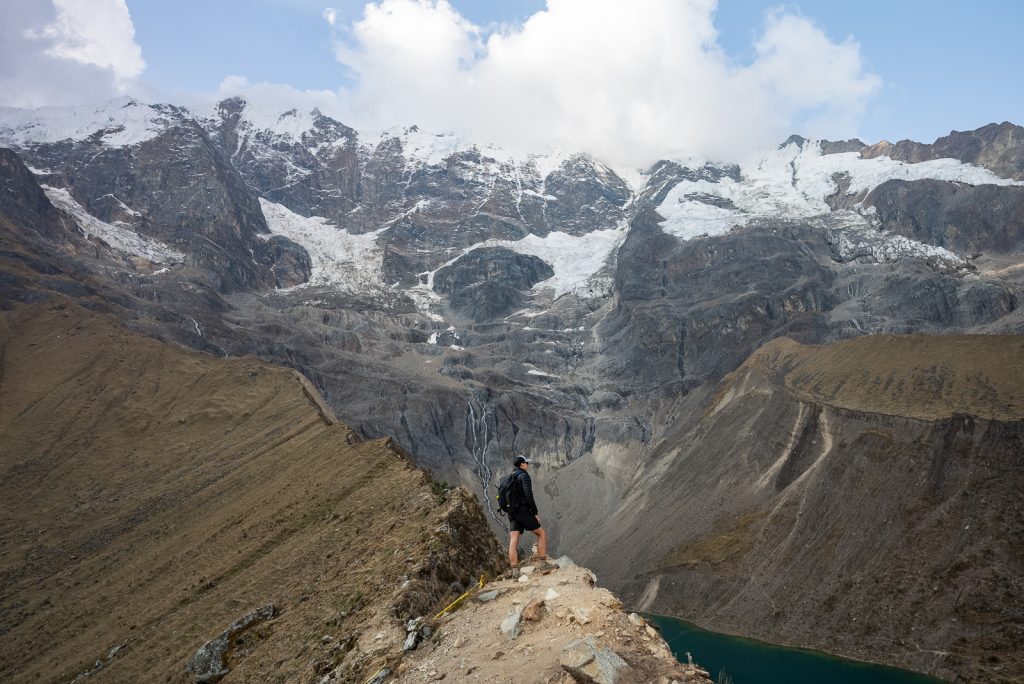
If you plan on doing any treks in Peru like the Salkantay Trek, Inca Trail, or Ausangate Trek, there are a handful of extra items you will want to bring. While guided treks will provide some of these items for you, we did the Salkantay Trek without a guide and had to pack many of these items ourselves. You can see our full Salkantay Trek packing list here, but here are some of the most important items to bring!
The 10 essentials
We always carry the 10 essentials on any hike and we highly suggest you do the same!
One of the 10 essentials we want to especially highlight is a first aid kit, with bandaids and antibiotic cream. You’ll be miles away from medical help and there are no pharmacies or doctors along most trekking routes. Make sure you have ways to take care of minor bites, cuts, scrapes, etc.
Backpack and pack cover
You’ll need a backpack to carry all of your trekking supplies. We both carry a REI Co-op Trail 40 L Pack, which is great for both exploring cities and trekking. And even with carrying lots of camera equipment, we both had enough room for everything we needed for 6 days along the Salkantay Trek and Machu Picchu.
This backpack comes with a pack cover for rain, but if you don’t have one, make sure you find one that fits your bag.
Hiking poles
Hiking poles can be very helpful with long downhill sections! You could bring your own or rent some from the nearby city.
Water storage and filtration
We take a Camelbak on just about every hike and backpacking trip. It makes it super easy to drink while on the move. Before leaving your hotel, make sure to fill it up (with filtered water) so you start with plenty of water!
Water filter
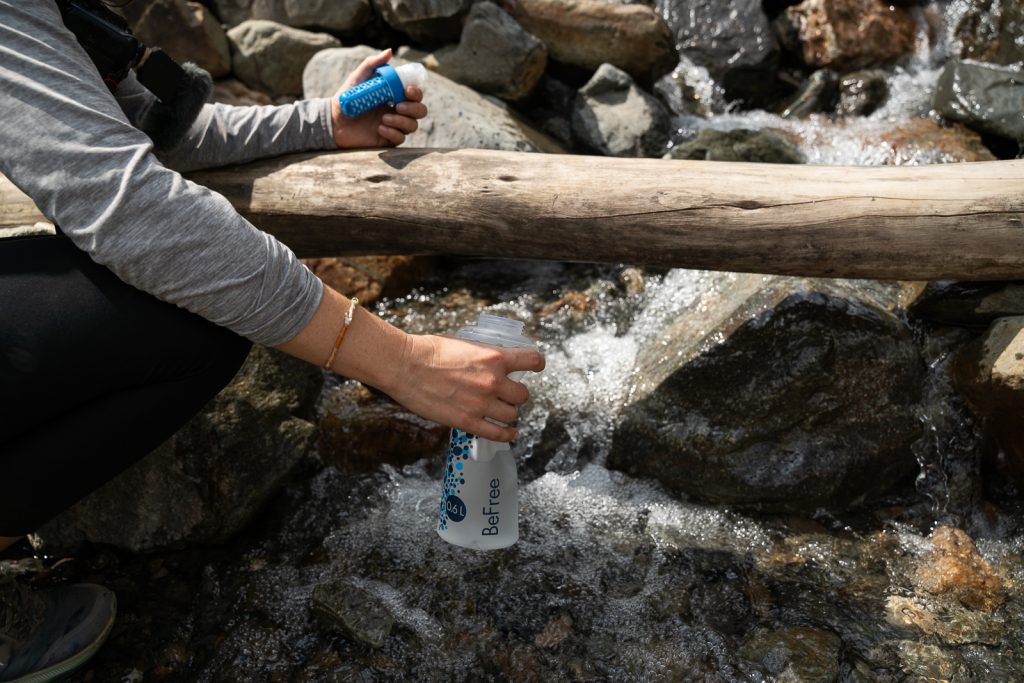
You cannot drink tap water in Peru. So make sure to bring a water filter! We brought our Katadyn BeFree water filter bottle which allowed us to carry less water throughout the day because we could filter sink water and river water as we hiked. And it reduces our plastic usage by limiting how many bottles we need to buy!
You could bring a Sawyer water filter instead and filter it into any bottles or your Camelbak, but the Katadyn water filter bottle makes it even easier, since you can drink directly from it as well.
Electrolytes
On our particularly strenuous adventures, especially in the heat or altitude, we like to carry electrolytes. LMNT is our absolute favorite! We brought a water bottle just to put LMNT in, as it’s not something we want to put in our CamelBak or Katadyn filter bottle.
PS: If you use this link, you get a free sample pack (8 flavors!) with any order!

Downloaded trail map
It’s always a good idea to have the AllTrails map downloaded for offline use. This is especially important if trekking without a guide!
Want to get 30% off an AllTrails Plus membership? Use our code aplusk30 (you must redeem this code on the website, not the app)!
We use AllTrails Plus on every single hike and it is the most helpful hiking tool out there! Some of the features we love are offline maps (so we can navigate even without cell service), wrong-turn alerts, and its 3D maps feature, so we can get a feel for trails before we hike.
Headlamps (with batteries)
If you plan on hiking early in the morning or later in the day you’ll need a headlamp. Don’t forget to pack some extra batteries!
Meals & snacks
If you’re going on guided treks, your meals will be prepared by a chef. And they’ll provide snacks!
But if you are doing a trek without a guide, you will have to either cook your own meals or eat at your lodging. Most lodging will serve breakfast and dinner (sometimes at an extra cost), but for lunch, you’ll be on your own.
Along these treks there are sometimes opportunities to buy snacks or meals, but not always. Make sure to pack snacks or backpacking meals, so you have something to eat between meals!
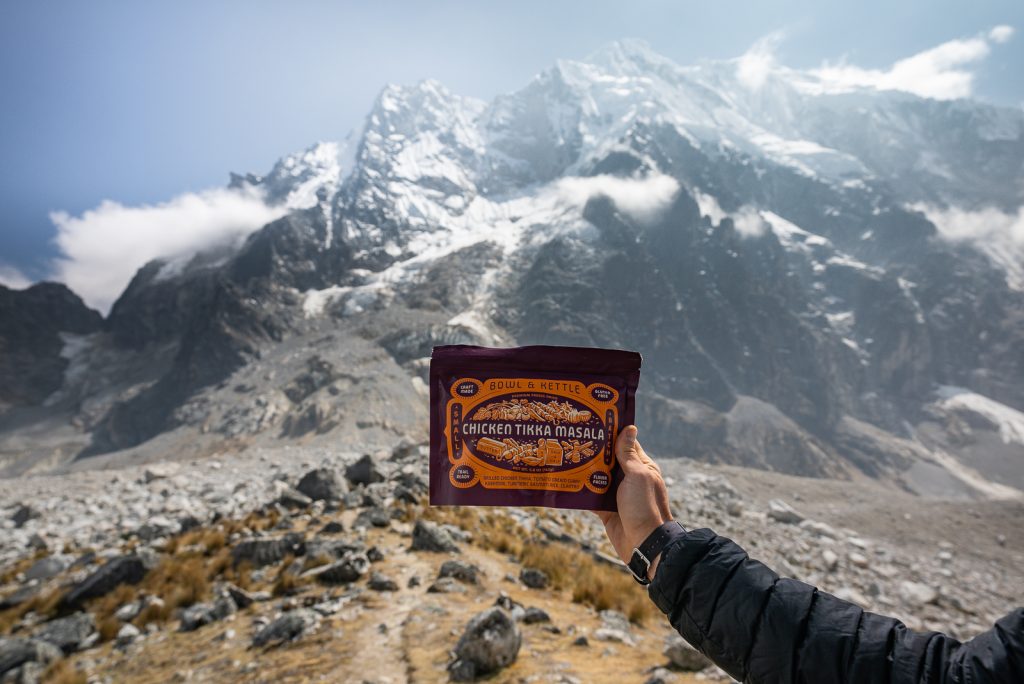
We have tried many backpacking meals over the years. But our absolutely favorite are Bowl& Kettle. All three flavors are loaded with flavor, have great texture, and are so satisfying after a day of hiking. Use code TAKE10 for 10% off your order!
Some meals we enjoy are Wild Zora, Backpacker’s Pantry Chicken Pad Thai, Peak Refuel Chicken Coconut Curry, and Mountain House Beef Stroganoff.
If you need snack ideas, you can see a list of our favorite hiking snacks here!
Coca Leaves
You also may want to bring coca leaves to help with altitude sickness. These can be bought at many stores in Cusco or other towns in the Andes. Most accommodations will have them as well! Just make sure to throw away any extras before you fly home. These leaves are illegal in the US, as they are used to make cocaine.
Coffee
Most lodging will have coffee (and tea) in the mornings, but sometimes we want an afternoon pick me up. So we brought some of our own! Both Kuju coffees and Steeped coffee tea bags are great easy options to make while trekking, or even just in your hotel room.
If you plan to make your own coffee, make sure to pack a cup! We love these collapsible mugs.
Kettle
In order to make your own coffee and tea you will need the ability to boil water. We use the Sea to Summit X-Pot Kettle, which collapses and packs down really small! In the past, we used a kettle like this for backpacking, which worked well too. We would store items inside of it to help maximize space.
Camping Stove
The Ultralight Portable Outdoor Backpacking Camping Stove is about the size of a deck of cards and makes it easy to boil water and cook food while backpacking.
Another option is to get a Jetboil, which combines a kettle and camp stove in one. We haven’t personally tried it, but know people love them!
Propane
Make sure to have propane if you plan to heat up water for meals or drinks! You cannot fly with propane, but you can pick it up in Cusco at Tatoo Adventure Gear.
Lighter or matches
Our camping stove struggled on the Salkantay Trek and wouldn’t light, possibly due to the stove being old or the altitude. So make sure to bring a small lighter or matches just in case this happens to you!
Technology
Outlet adapters
While some outlets in Peru were just like the US, others were two prong and we had to use an outlet adapter to be able to use our electronics. What is nice about these is that they have an outlet for laptops and larger devices, as well as USB slots. This item is a MUST on your Peru packing list!
Camera
The scenery in Peru is incredible and you’ll want to capture it! For most, a phone camera will be enough, but if you want to truly capture the country’s epic terrain, you may want to bring an actual camera.
You can see all of our camera gear here, but for cameras, we have both a Sony FX3 (mostly for filming) and Sony a7 III (for photos). We also brought our zoom lens to be able to zoom in on the massive landscapes!
If you bring a camera, don’t forget extra camera batteries!
Camera strap or clip
In our opinion, the best way to carry a camera is clipped to our chest using the Peak Design Capture Camera Clip. It gives us easy access to the camera and keeps our hands free when we aren’t filming/taking photos.
Not carrying a backpack to attach a camera clip to? We also love our camera strap from Peak Design!
Tripod
We’ve used this tripod for a few years now and like how light and compact it is. While tripods are not allowed at Machu Picchu, it came in handy everywhere else to get photos together, do night photography, and film our videos.
Drone
We love getting epic shots with our drone on adventures! The DJI Mini 3 Pro is our go-to drone for our international trips because it’s lightweight and meets international flight rules.
Keep in mind, drones are NOT allowed in some popular sites, like at Sacred Valley sites, Humantay Lake or Machu Picchu. We had no issues flying the drone elsewhere!

Portable charger
If you plan to use your phone and camera during the day, consider bringing a portable charger. This has saved us many times when our phones have gotten low on battery during hikes or long days out and about.
Don’t forget to pack all of your charger cords as well!
Google Translate
No Peru packing list is complete without Google Translate! If you’re like us and not fluent in Spanish, make sure to download Spanish for offline use. English is spoken some, but many people only speak Spanish (or Quechua, the indigenous language).
Miscellaneous Items
Small day pack
If you don’t want to carry a larger backpack around while exploring, we suggest bringing a small day pack as well. We love this foldable day pack, as it packs down to a small size and is easy to carry around if we don’t need it. Compared to our REI Co-Op Trail 40 Pack, it isn’t as sturdy and comfortable, so we wouldn’t use it as our sole backpack.
But since we travel so light, this bag was great to have to carry any souvenirs we collected along the way.
Fanny Pack
A fanny pack is great to wear when exploring different cities and towns. You can keep your items on your chest or at your waist and have easy access to important things, like your phone, credit card, etc. Plus, it zips, which is a good deterrent for theft.
Packing cubes
We use Tripped compressible packing cubes and it helps us fit lots of clothes into a smaller space, plus keep it organized.
Books or entertainment
Between the long flight to Peru, as well as the travel days to get between destinations in the country, you’ll want some entertainment. We suggest downloading books, Netflix movies, and podcasts!
You can follow us on Fable (Adam and Kathryn) to check out what we’ve been reading. If you’re new to Fable and create your own Fable account with this link, you can get $5 off an eBook! (All Fable users have this special invite link, so make sure to invite your friends too!)
Headphones
And speaking of entertainment, you may need a way to listen to it! Airlines often provide headphones on long haul flights, but we prefer to use our own. We love our Sony WH-1000XM4 headphones and AirPods for watching or listening to things on our phone.
Download our Peru packing list
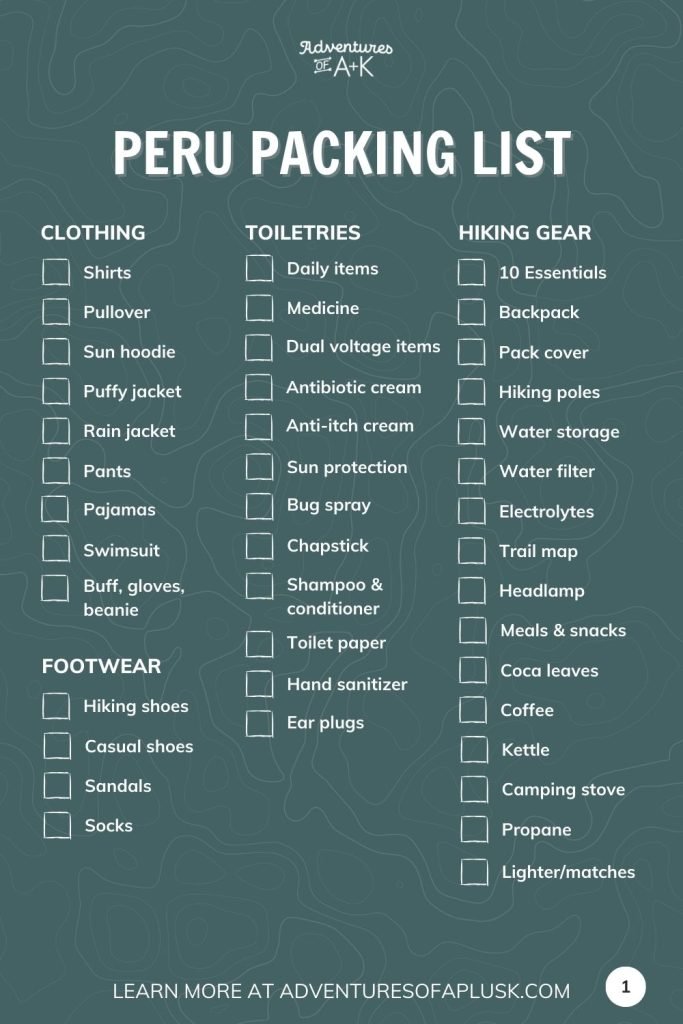
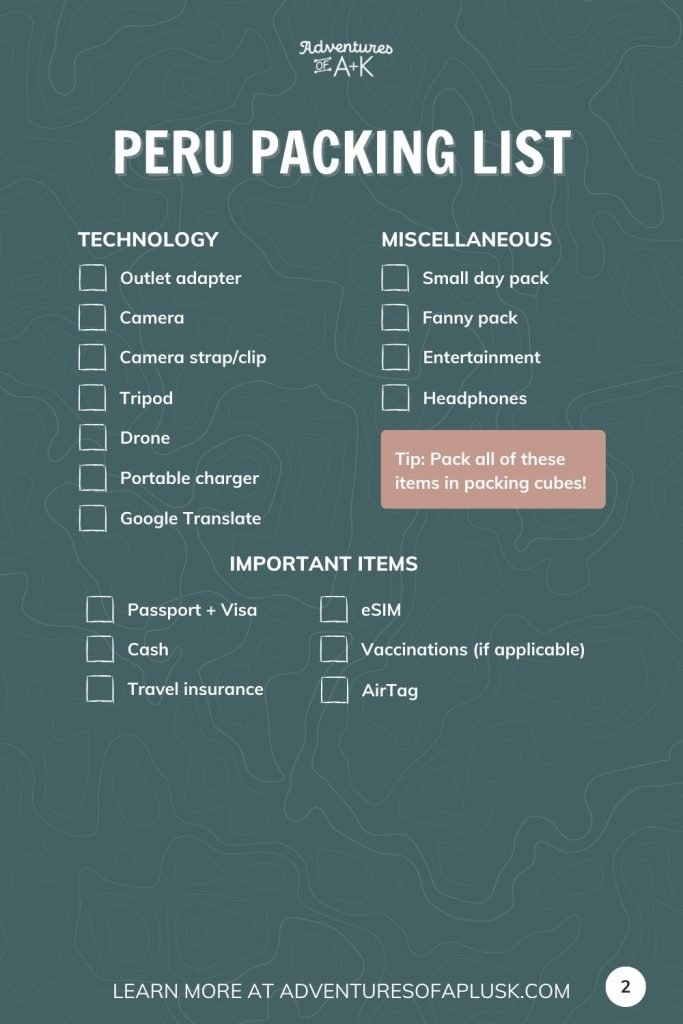
Save this Peru Packing List