
Last updated on October 11th, 2026
Looking to explore one of North America’s most remote and untouched wildernesses? We’re sharing the best things to do at Isle Royale National Park!
Floating isolated in the crisp waters of Lake Superior, Isle Royale National Park is an underrated gem! This rugged archipelago is known for its wolf and moose populations, inland lakes, rocky coastlines, and dense boreal forests.
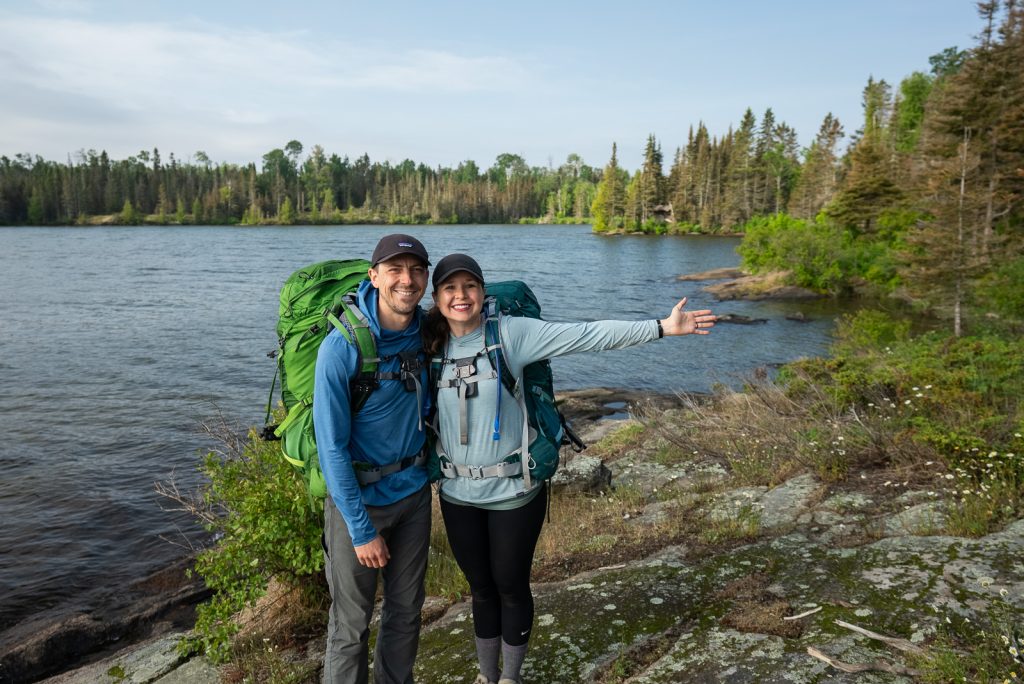
We spent 7 days backpacking across the entire island, from Windigo to Rock Harbor, which allowed us to experience many of the best things the park has to offer! But between how remote the island is and the fact that there are no roads, figuring out how to explore can be a bit tricky. Once you arrive, your only options for getting around are by boat or on foot.
In this guide, we’re sharing the top things to do at Isle Royale National Park, plus all the logistics you need to know before stepping foot on the island. Including how to get there, where to stay, the best time to visit, and helpful tips to know before you go!
LOOKING FOR MORE THINGS TO DO IN THE GREAT LAKE STATES?
- How to Get to Isle Royale National Park: Ferries, Seaplane & Logistics Guide!
- The BEST things to do on Minnesota’s North Shore (Duluth to Grand Portage road trip)
- 8 Must-Visit Minnesota North Shore state parks
- Things to do at Porcupine Mountains Wilderness State Park in Michigan
- Hiking the Chapel Loop Trail at Pictured Rocks National Lakeshore
- Things to do in Cuyahoga Valley National Park in Ohio
- Watch all of our Great Lakes Videos
- About Isle Royale National Park
- Best Things to Do at Isle Royale National Park
- 1. Go backpacking across the island
- 2. Camp on the Island
- 3. Go on a day hike
- 4. Climb up the Mount Ojibway Tower
- 5. Get out on the water
- 6. Attend a ranger-led talk
- 7. Take a scenic tour aboard the MV Sandy
- 8. Look for wildlife
- 9. Enjoy a meal at the Greenstone Grill
- 10. Have a campfire at the Rock Harbor Lodge
- Planning your trip to Isle Royale National Park
- Save this guide with things to do at Isle Royale National Park
About Isle Royale National Park
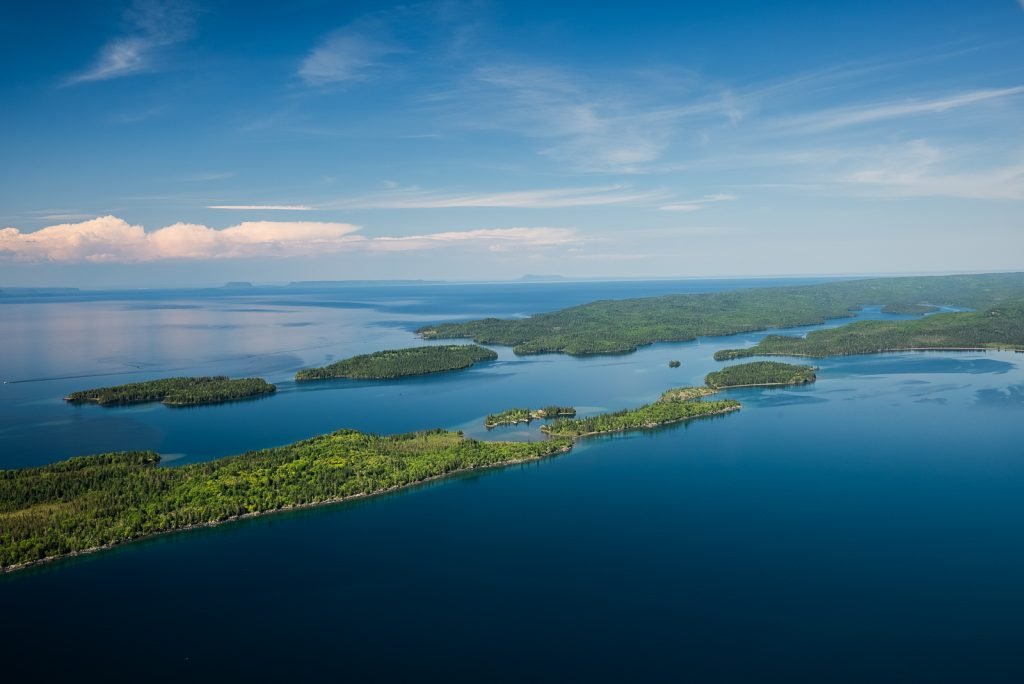
Spanning over 850 square miles across one main island and roughly 450 smaller surrounding islands, Isle Royale is a remote archipelago tucked into the northwestern corner of Lake Superior. While it sits close to Minnesota’s North Shore and the Canadian border, the island is technically part of Michigan.
Because the park is completely surrounded by cold Lake Superior waters, has a short operating season, and is only accessible by boat or seaplane, it holds the title of the least-visited national park in the lower 48! In fact, Isle Royale receives fewer visitors in an entire year than Yellowstone gets in a single busy day. However, those who do make the trip keep coming back, giving Isle Royale the highest repeat-visitor rate in the entire park system!
The main island is 50 miles long, 9 miles wide and is divided into two main visitor areas on opposite ends of the island: Rock Harbor on the eastern side, and Windigo on the western side. Both offer visitor centers, campgrounds, rustic lodging, small camp stores, and limited services.
Best Things to Do at Isle Royale National Park
1. Go backpacking across the island
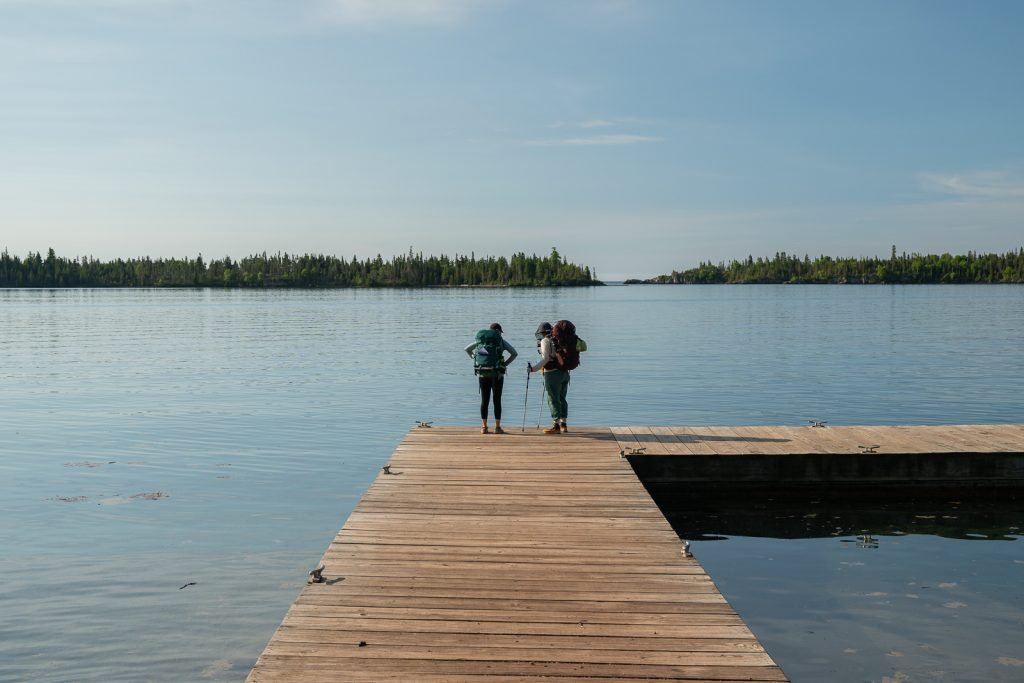
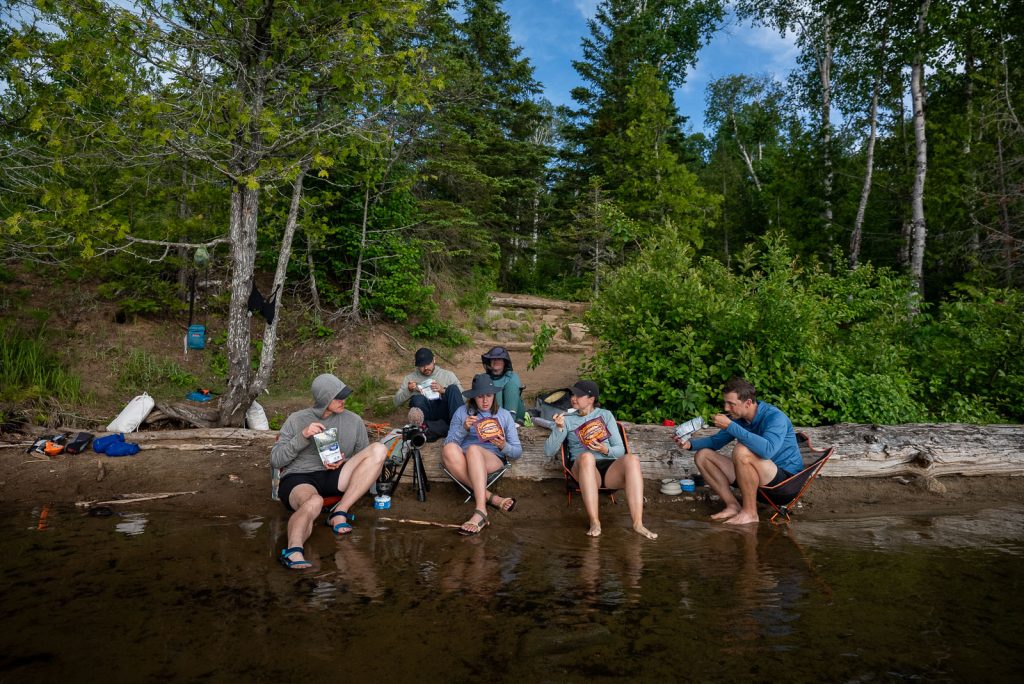
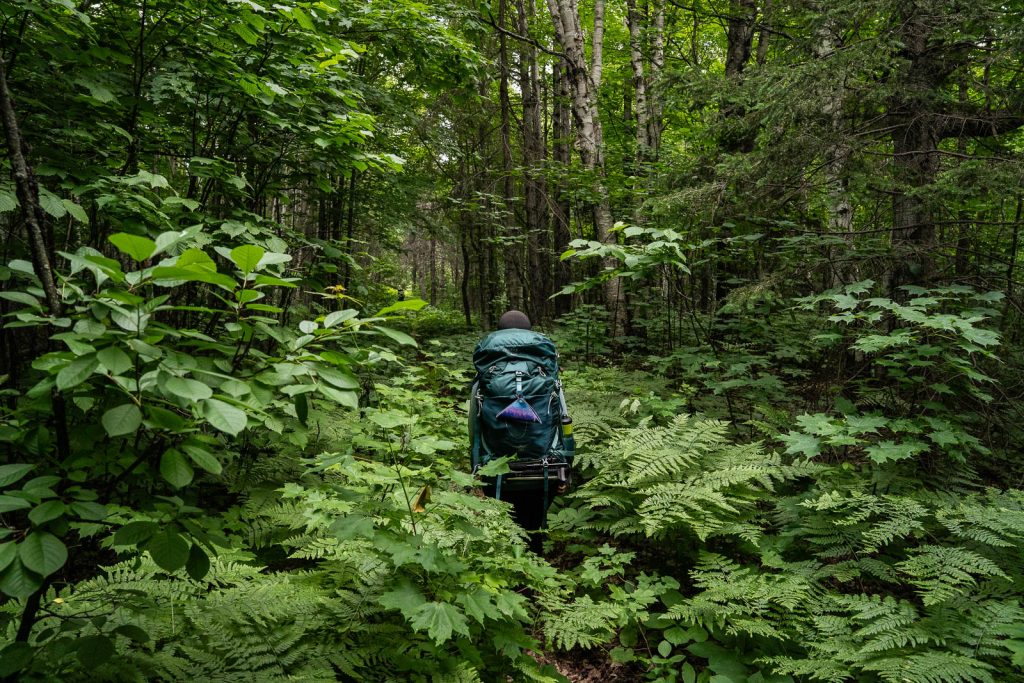
Backpacking is the absolute best way to experience the incredible diversity of Isle Royale! Because the island has no roads, all of Isle Royale’s 36 backcountry campgrounds can only be reached by foot or boat. They’re all free and operate on a first-come, first-served basis with rangers issuing your permit upon arrival, if your group has fewer than seven people.
With over 165 miles of interconnected trails, most hikers generally choose to either traverse the length of the island point-to-point or form loops starting and ending at the same port. The most popular multi-day itineraries revolve around one of three main routes:
- Greenstone Ridge, the most well-known backpacking route that starts in Rock Harbor and ends in Windigo.
- Minong Ridge Trail, that goes across the northern side of the island.
- Feldtmann Loop, a coastal loop that starts and ends in Windigo.
Because the trail system is so well connected, you can easily customize loops to fit your schedule. We backpacked 51 miles across the entire island from Windigo to West Chickenbone Lake, down to Moskey Basin, and along the Rock Harbor Trail. We absolutely loved it! Well, minus the mosquitoes.
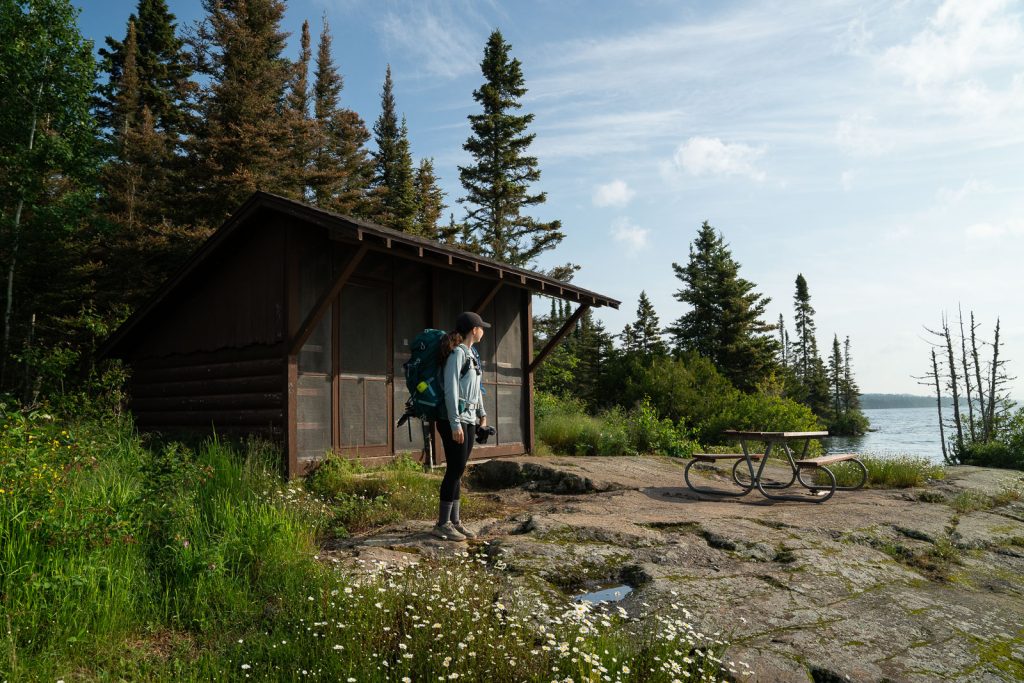
But one of the best perks of backpacking on Isle Royale is that over half of the campgrounds feature Adirondack style shelters. These have a slanted roof, 3 wooden sides, and a screened in wall with a screen door! We managed to snag a shelter for half of our nights, and they were incredible. Our favorite was at Moskey Basin, where our shelter sat along the water with insane sunrise views.
If you’re curious about the many route options, backpacking logistics, and our exact itinerary, check out our complete guide to backpacking at Isle Royale National Park! And you can watch our experience here.
2. Camp on the Island
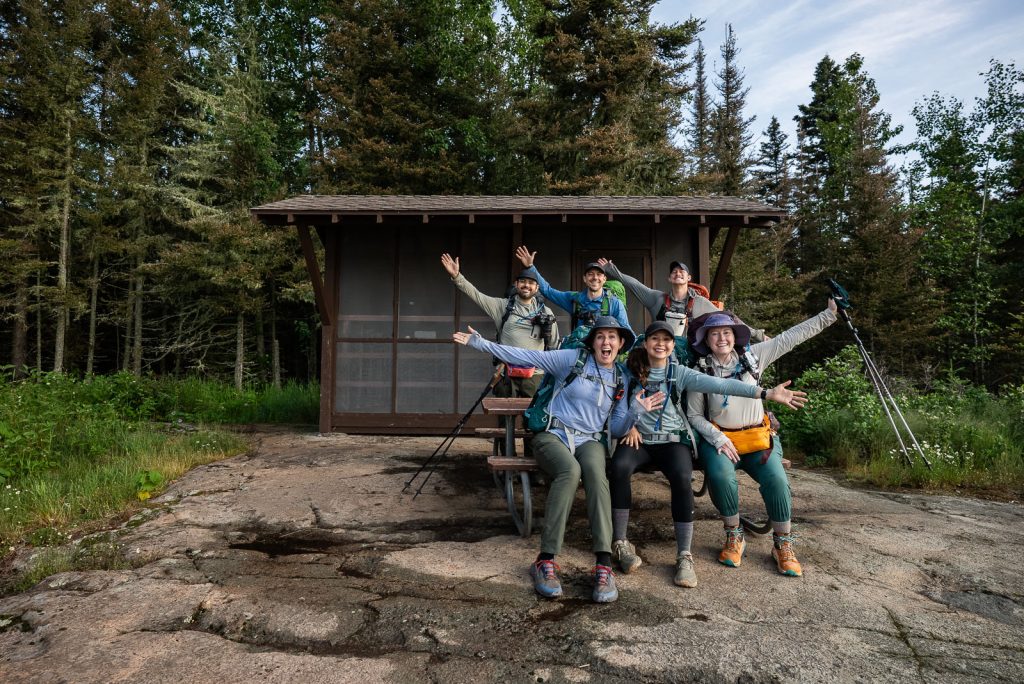
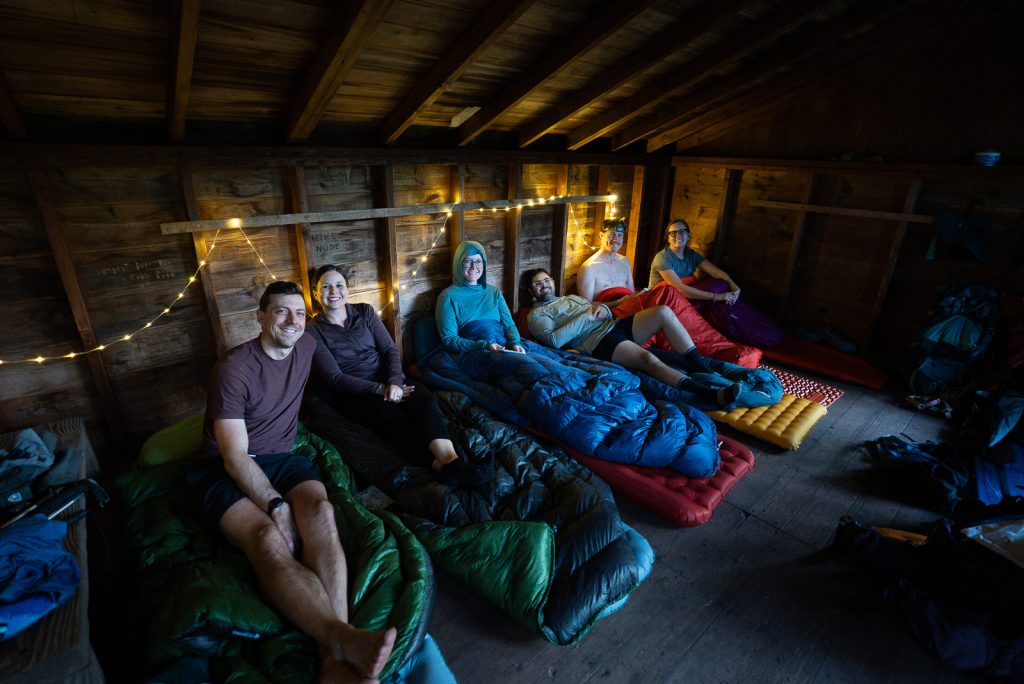
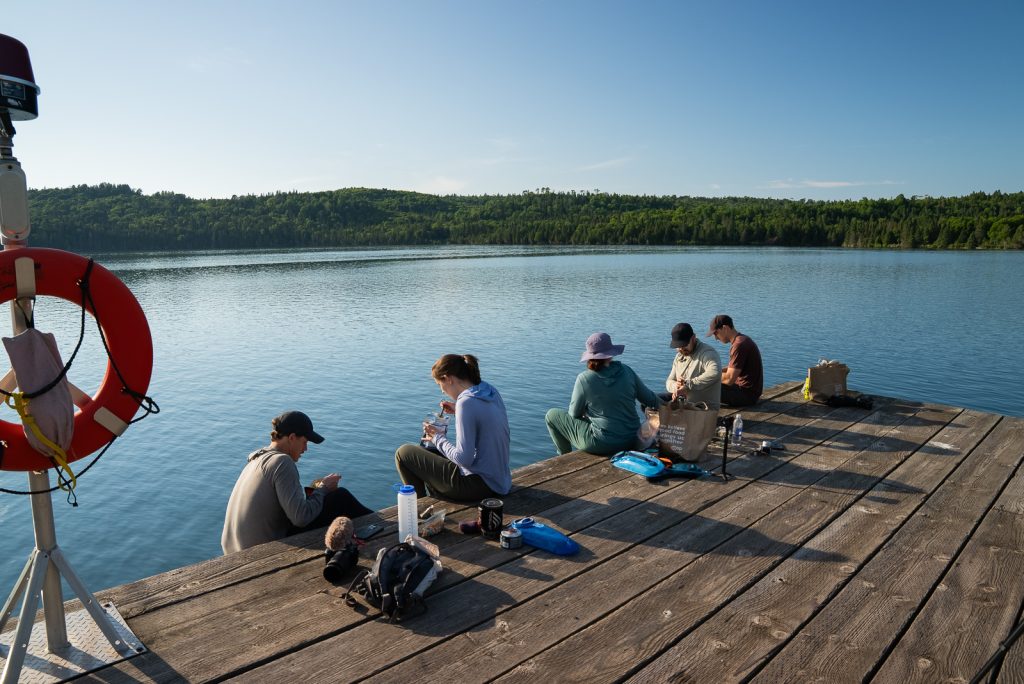
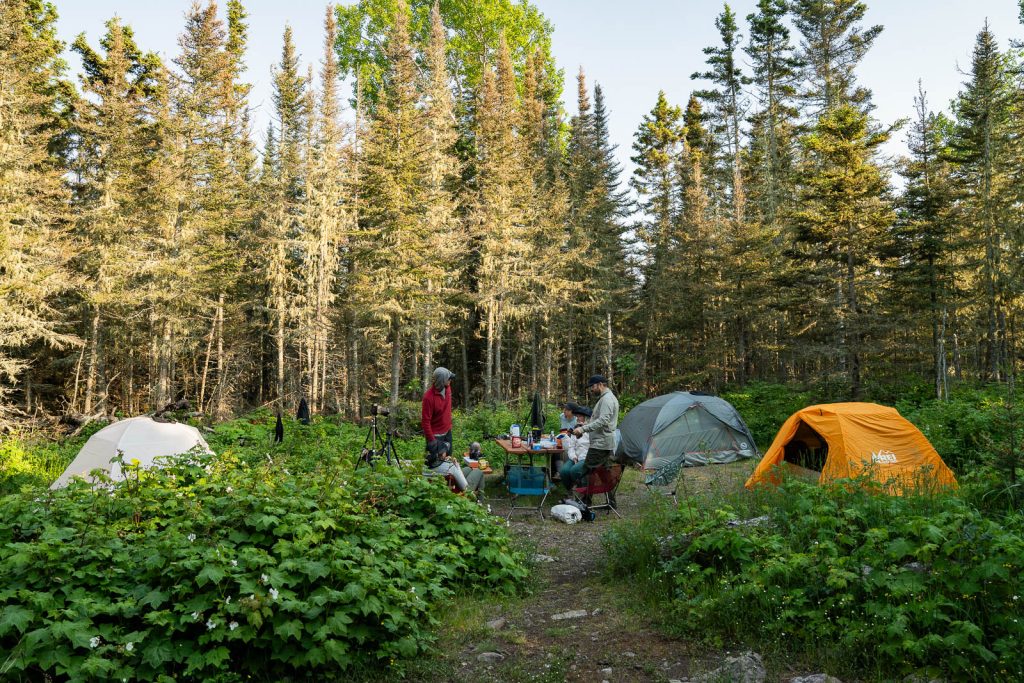
Unlike backpacking, where you haul your gear to a new location every day, you can pick a single basecamp to stay at for your entire trip and explore via scenic day hikes! This is a fantastic option if you want to experience all the best things to do on Isle Royale without carrying a heavy pack miles down the trail.
The easiest way to do this is to stay at one of the main ports. Both Windigo and Rock Harbor have great campgrounds just a short walk from where the ferries and seaplanes drop you off.
Camping on the Rock Harbor Side (East End)
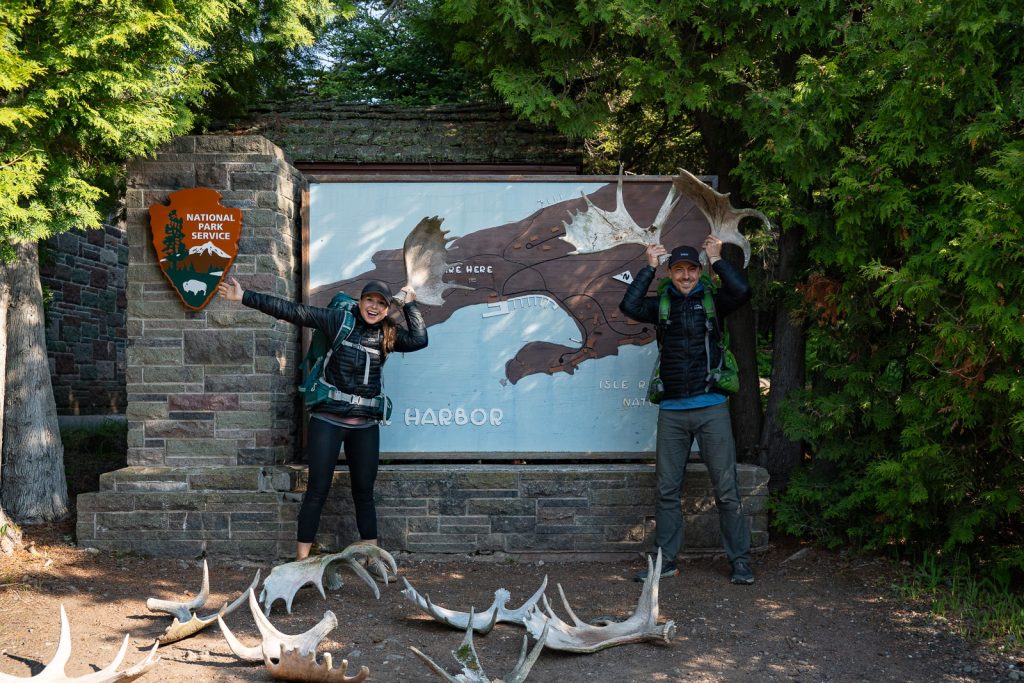
On the east end of the island, Rock Harbor Campground is located just a short walk from the seaplane and ferry docks. This campground features paid showers, flush toilets, and laundry facilities. You’ll also have access to the park visitor center, two restaurants, and a general store stocked with food, supplies, and fuel canisters. Just keep in mind that during peak summer months, there’s a 1-night maximum stay limit!
If you want to camp for a second night on the east side, you’ll need to hike 2.7 miles out to Three Mile Campground, which also has a 1-night stay limit or take a water taxi deeper into the park (more on that in a bit).
Camping on the Windigo Side (West End)
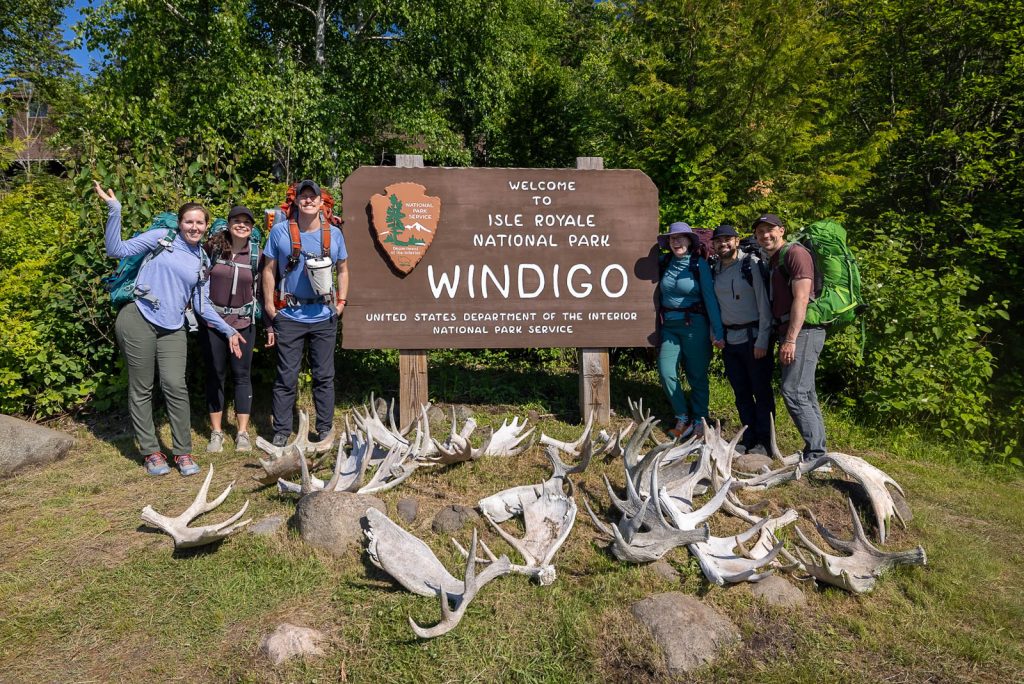
On the west end of the island, Washington Creek Campground is located along Washington Creek, just a short walk from the Windigo docks. This campground features rustic pit toilets, but full amenities are just 0.3 miles away at the Windigo Visitor Center area. There, the Comfort Station provides flush toilets, paid hot showers, and laundry. Nearby, at the Windigo Store, you can find camp supplies, stove fuel, snacks, and cold drinks. Plus, Washington Creek allows up to a 3-night maximum stay.
Take a Water Taxi to Backcountry Campgrounds
If you want to stay at a remote backcountry campground without hauling all your gear for miles down the trail, book a ride on a water taxi! Operating out of the Rock Harbor Lodge Marina, the water taxi can drop you and your gear off directly at backcountry dock sites like Daisy Farm or Moskey Basin.
Both of these campgrounds have a 3-night maximum stay. While water taxis can be a bit pricey, they are a great compromise for experiencing these backcountry sites without the long trek!
For a full breakdown of site amenities, shelter tips, and top campgrounds, head over to our complete guide on camping at Isle Royale National Park!
3. Go on a day hike
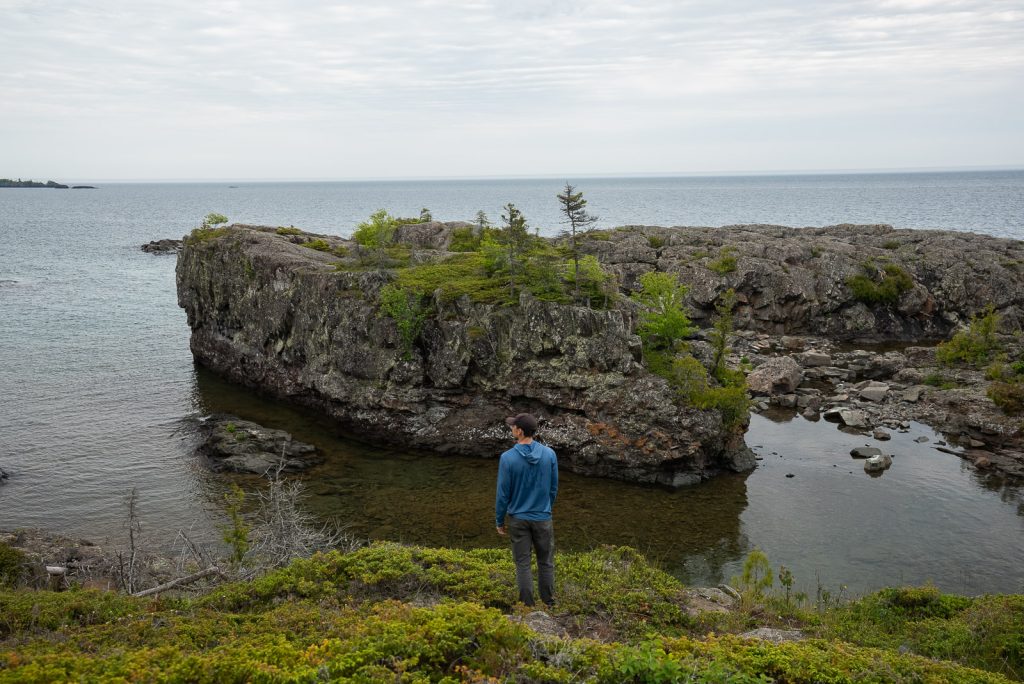
While many of the Isle Royale trails are long and interconnected and can be used to create longer backpacking trips, there are several options for incredible day hikes in Isle Royale from both Windigo and Rock Harbor.
Best Day Hikes in Rock Harbor
Scoville Point via Stoll Trail (4.7 miles round trip): If you only do one day hike on the east end, make it this one! The trail leads out along a narrow, rocky finger of land jutting straight into Lake Superior, with incredible views of Tobin Harbor. This hike had our favorite coastal scenery in the entire park and is easily one of the best things to do on Isle Royale!
Suzy’s Cave Trail (4 miles round trip): Suzy’s Cave is an inland sea cave formed thousands of years ago when Lake Superior’s water levels were much higher. You can step inside the rocky archway and see how wave erosion carved out the cliffside long before the forest grew around it.
Mount Franklin (9.8 miles round trip): Located along the Greenstone Ridge, Mount Franklin is one of the highest points on the east end. It’s a longer day hike option from Rock Harbor that has incredible views stretching all the way across Lake Superior to Canada. If you want to extend your day hike, you can also connect this trail over to Mount Ojibway.
Lookout Louise (1.9 miles round trip + boat ride): Lookout Louise is another stunning viewpoint at the start of the Greenstone Ridge Trail. However, it requires a little extra logistics from Rock Harbor since you’ll need to cross Tobin Harbor first. You can book a water taxi or take the MV Sandy boat tour over to the Hidden Lake dock. From there, you’ll have a 1.9-mile round-trip hike past Hidden Lake up to a cliffside overlook with views of the northern barrier islands.
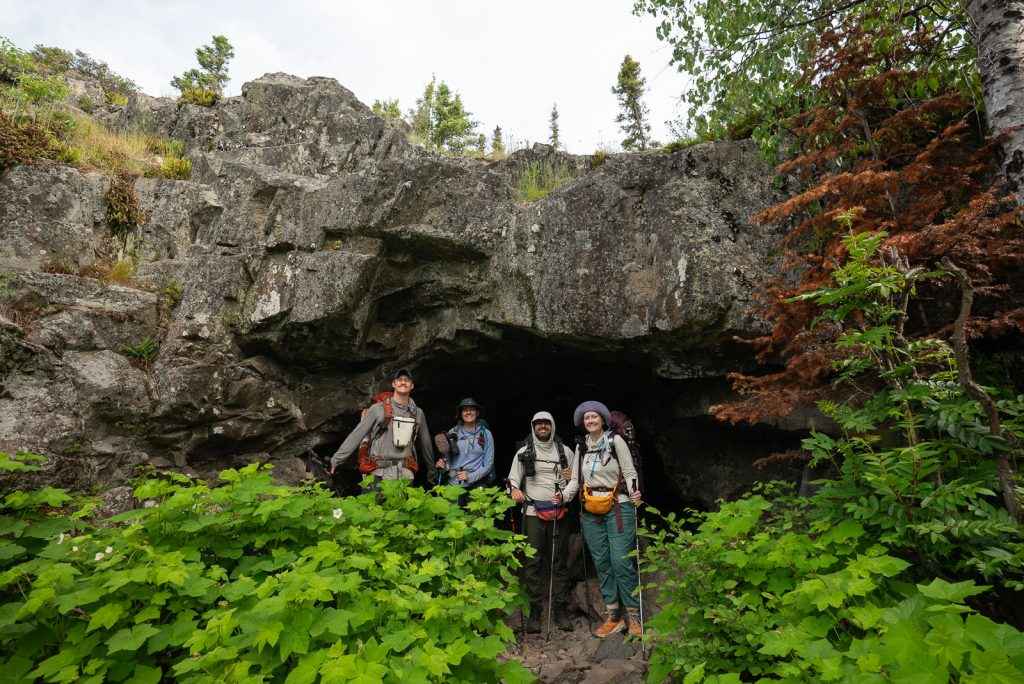
Best Day Hikes in Windigo
Grace Creek Overlook (3.5 miles round trip): A hike through northern wetlands and spruce forests up to a rocky ridge, giving you gorgeous views across Grace Harbor and out toward Lake Superior.
Huginnin Cove Loop (9.2 miles round trip): A hike through dense hardwood forests down to a secluded, rocky cove right on Lake Superior, featuring a primitive campground.
Minong Ridge Trail (6 miles round trip): A great way to taste the rugged Minong Ridge Trail without backpacking the whole thing! You’ll hike 3 miles out from Windigo to a massive bedrock outcrop with expansive wilderness views across the west end.
Windigo Nature Trail (1.2 mile loop): If you’re looking for an easy, flat walk near the harbor, this short trail takes you through a forest filled with island history including the Moose Exclosure, which shows the impact the moose population has on the island’s vegetation. That said, we hiked this loop and found it very buggy with limited views. We’d personally recommend the other trail options on this list.
Note for Day Visitors: If you’re visiting for just a few hours via ferry or seaplane, stick to shorter hikes like Scoville Point, Suzy’s Cave, or Grace Creek Overlook. Longer trails like Mount Franklin and Huginnin Cove, and Lookout Louise require more time and are best for overnight visitors!
We are working on a detailed day hiking guide for Isle Royale that will break down every single trail on the island. Coming soon!
4. Climb up the Mount Ojibway Tower
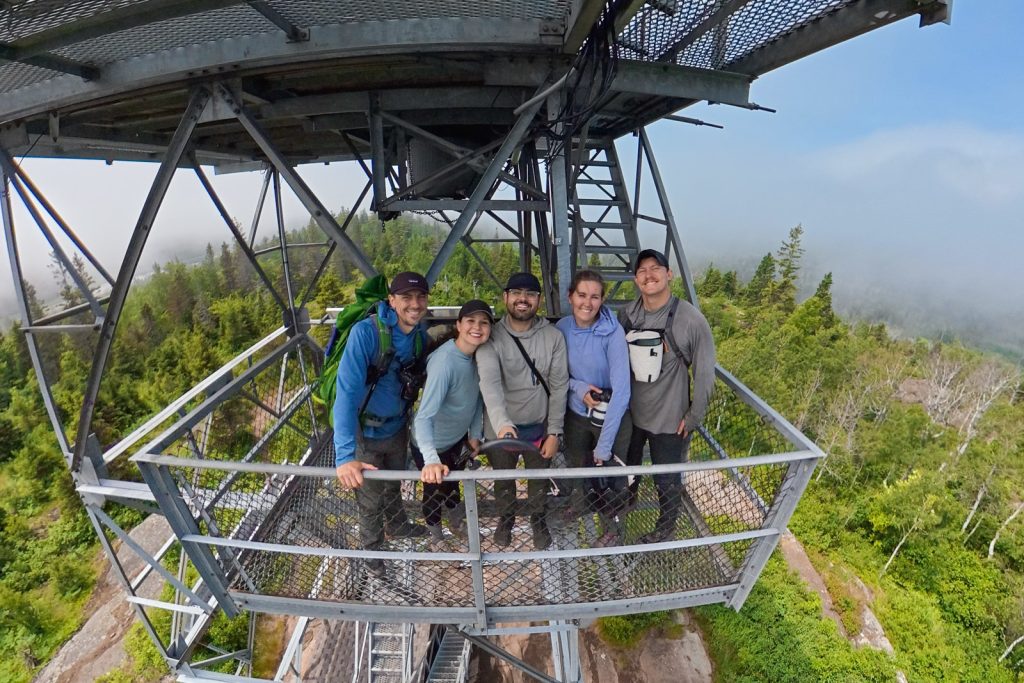
The Mount Ojibway Tower is another worthwhile stop if you’re exploring the Rock Harbor side of the island. Sitting at roughly 1,133 feet above sea level, it is the highest point on the island’s eastern end.
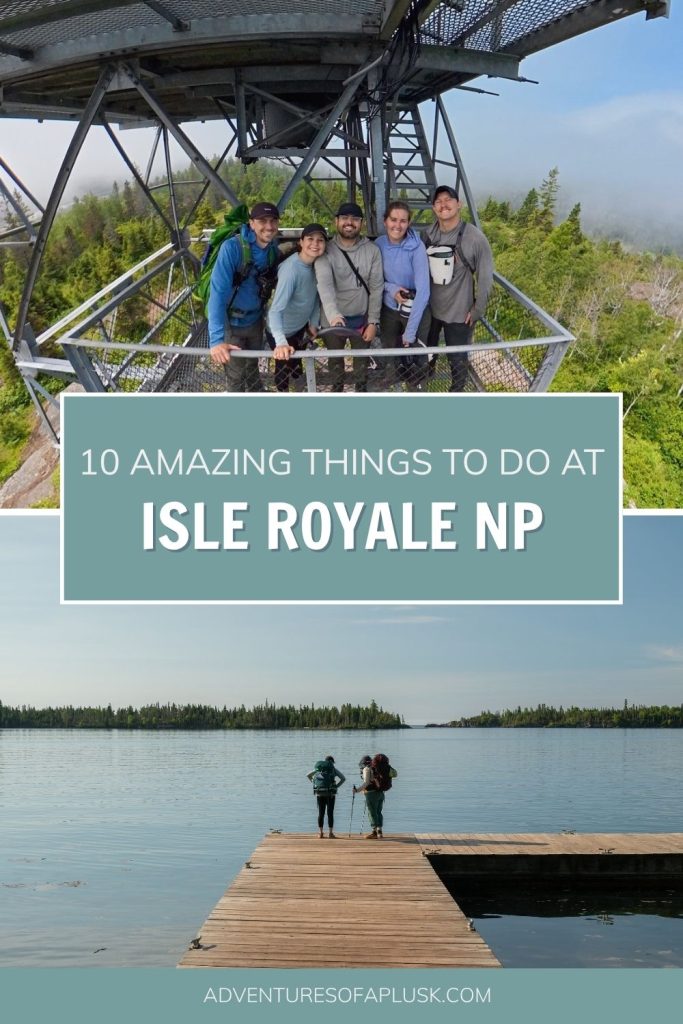
Located along the Greenstone Ridge, this old fire tower now houses environmental monitoring equipment. And while you cannot go all the way to the top, you can still walk up the metal open stairs to an upper platform. From here, you can see miles of endless green forest, inland lakes, and views all the way out across Lake Superior to Canada on a clear day!
The easiest way to get here is from Daisy Farm Campground (a 3.6-mile round trip hike up the Mount Ojibway Trail). If you’re staying at Three Mile Campground or hiking from Rock Harbor, you can turn it into a loop by hitting Mount Franklin on the Greenstone Ridge Trail on your way over.
5. Get out on the water
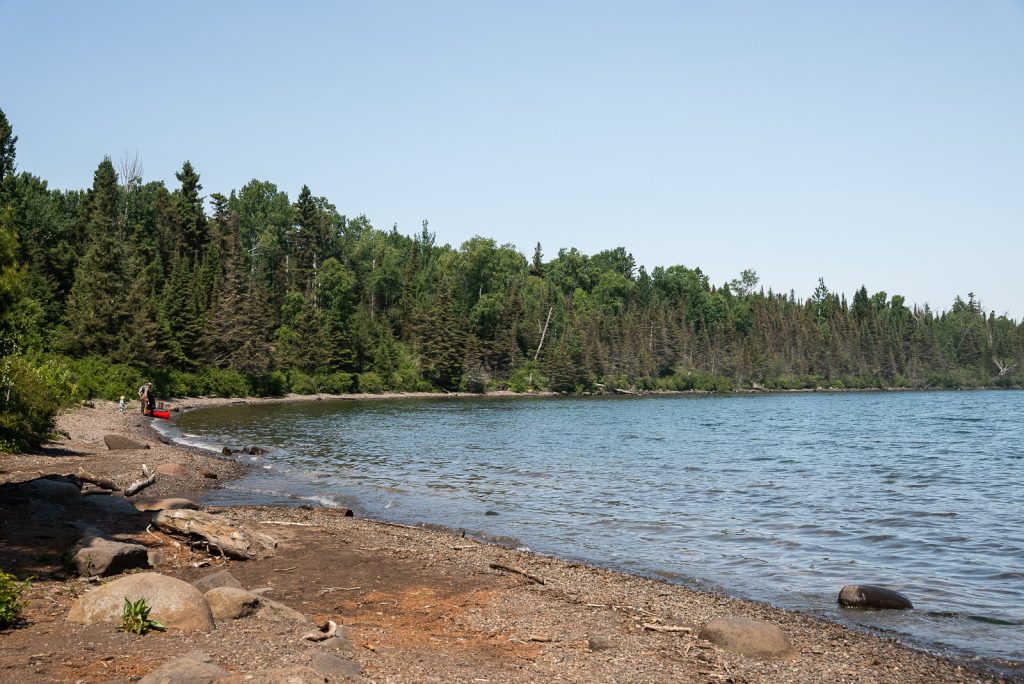
Since Isle Royale is completely surrounded by Lake Superior, getting out on the water is one of the coolest ways to explore!
There are two main ways to get out on the water depending on the kind of experience you want: exploring the coastal harbors of Lake Superior or heading inland to paddle the interior lakes.
Lake Superior
Staying in Isle Royale’s protected bays is by far the easiest and safest way to get out on the water! The two best areas for this are Rock Harbor on the east end and Windigo on the west end.
At Rock Harbor, you can rent a canoe, kayak, or even a small 15-foot motorboat to explore Tobin Harbor and the nearby islands. It’s protected from the big lake waves, making it easy to paddle over to Raspberry Island or across to the Hidden Lake dock to hike the Lookout Louise trail. Over in Windigo, you can rent a canoe or kayak to paddle through Washington Harbor or up Washington Creek.
Safety Note: Outside these protected bays, Lake Superior is notoriously dangerous. Freezing temperatures, sudden fog, and abrupt wind changes make open water paddling hazardous. For this reason, the NPS strongly encourages using a proper sea kayak alongside cold-water gear and solid experience for all open water paddling, while discouraging canoes and short recreational kayaks due to high capsize risks.
If you want an epic paddling adventure around Isle Royale’s outer barrier islands and coastlines without dealing with logistics, book a trip with an authorized outfitter. Companies like Keweenaw Adventure Company offer multi-day guided sea kayaking expeditions. It looks incredible!
Chain of Lakes and Portaging
You can also paddle Isle Royale’s interior waterways, where a network of inland lakes are linked together by land trails called portages. The famous Chain of Lakes route lets you cross the island between McCargoe Cove and Chippewa Harbor, paddling across lakes like Chickenbone, Richie, and Siskiwit while hauling your boat and gear over the trail from one lake to the next.
Unlike harbor day rentals, you cannot rent multi-day portaging canoes on the island. You’ll need to bring your own boat or rent one from a mainland outfitter, then pay a fee to transport it over on the ferry (like the Ranger III, Voyageur II, or Isle Royale Queen IV).
6. Attend a ranger-led talk
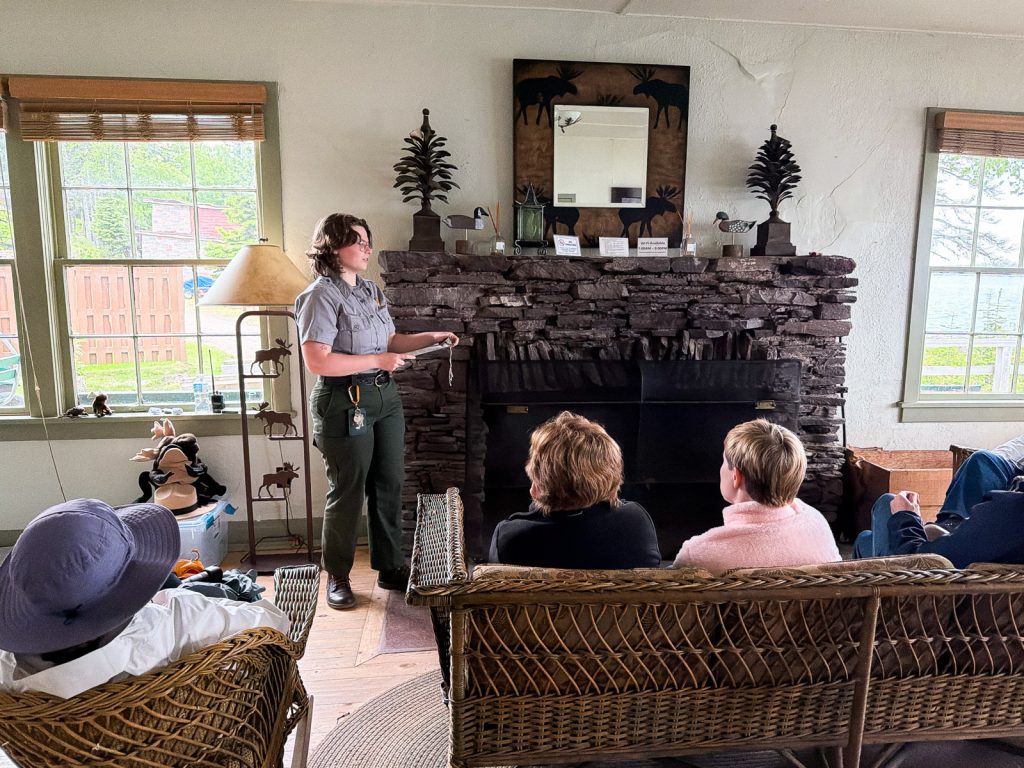
Almost every night, rangers host free programs in both Rock Harbor and Windigo, covering everything from shipwreck history to local flora/fauna, wolves, moose, and island geology!
During our trip, we went to a talk on island biogeography to learn how different animal species actually made it out to this isolated island in the middle of Lake Superior. Some swam, some floated on ice, and some didn’t make it at all! It was very interesting and made us appreciate the wildlife we saw even more.
Just check the bulletin boards outside the visitor centers or ranger stations when you arrive to see what topics are scheduled during your stay!
7. Take a scenic tour aboard the MV Sandy
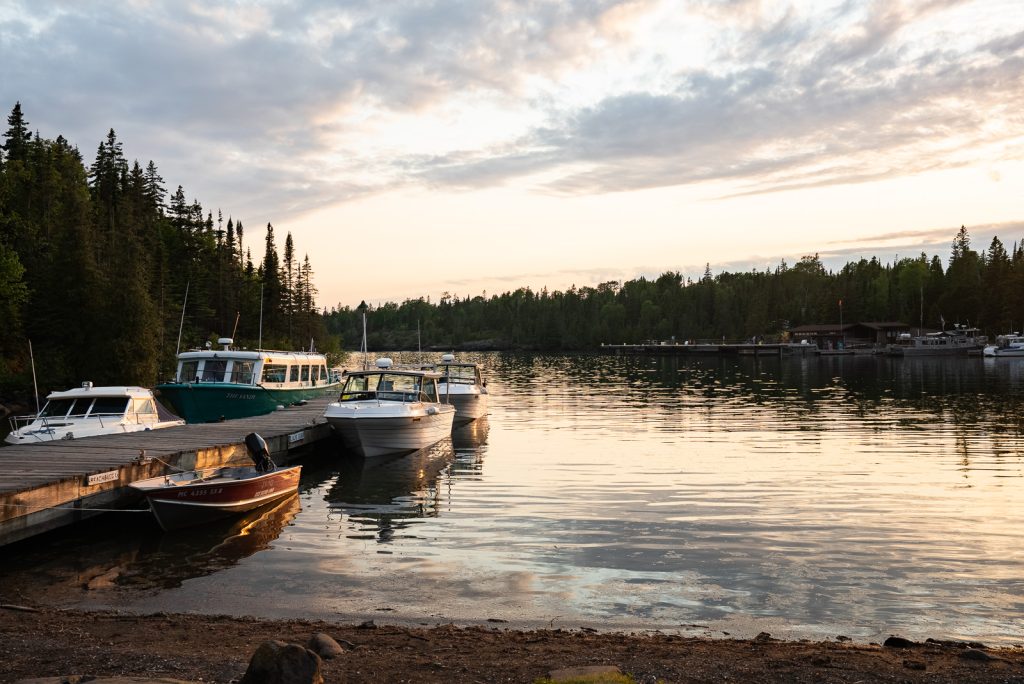
Operating out of Rock Harbor, taking a cruise on the MV Sandy is one of the easiest ways to explore the outer islands, historic lighthouses, and remote trailheads around the east end without having to paddle long distances yourself. This passenger boat is operated by the Rock Harbor Lodge from early June through mid-September.
Depending on the day of the week, the boat offers four different day excursions:
- Trips out to Passage Island for a guided hike to an 1882 lighthouse.
- Drop-offs at Hidden Lake to hike up to Lookout Louise.
- Visits to the historic Edisen Fishery and Rock Harbor Lighthouse.
- Scenic cruises over to Raspberry Island’s spruce bog.
You can check out all the available MV Sandy tour options listed here.
We didn’t personally get to go on any of the MV Sandy tours during our trip because the schedule didn’t align with our backpacking itinerary, but they all look fantastic! If you want to take one of these cruises during your visit, keep in mind that tickets can only be purchased in person at the Rock Harbor Lodge Office once you are on the island.
8. Look for wildlife
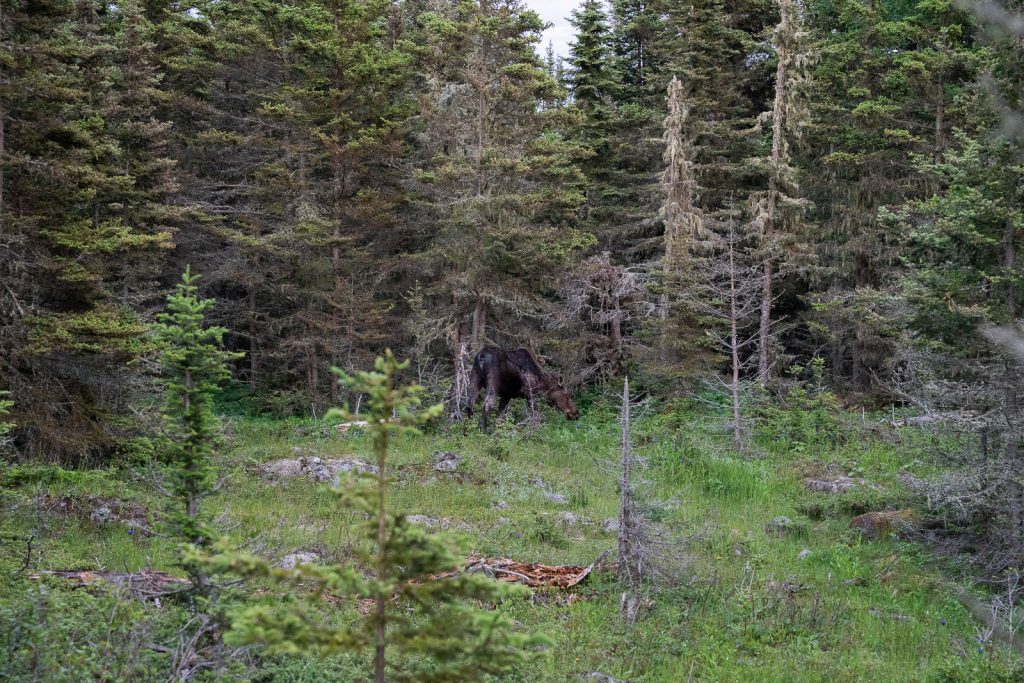
Wildlife watching is a huge part of the Isle Royale experience, and it’s one of the best things to do on the island. This national park is particularly famous for its moose and wolf populations, and is home to one of the world’s longest-running predator-prey studies. While moose and wolves get most of the attention, they aren’t the only animals you’ll see around the island. Although only 18 mammal species live in the park, visitors regularly spot wildlife like red foxes, beavers, and river otters!
We were lucky enough to spot a moose near Rock Harbor, but you will frequently see them wading through Washington Creek or around the inland lakes. A fox also visited us at camp one night and was not afraid of us humans.
Wolves are usually much rarer to catch sight of, but we actually had an encounter with one along our backpacking trip! This particular wolf was clearly very used to humans, showing almost no fear as it walked up to multiple groups. In fact, there have been a lot of wolf issues in 2026 with wolves approaching camps too closely. Several east-end campgrounds have had tent camping restrictions because of this activity.
To keep both visitors and the island’s animals safe, the park strictly enforces food storage rules. All food, trash, cooking utensils, and scented items must be locked in the metal food storage lockers located at the campgrounds, or secured inside an approved hard-sided container (like a bear canister). And of course, always remember to give all wildlife plenty of distance and know what to do if you have a close encounter.
9. Enjoy a meal at the Greenstone Grill
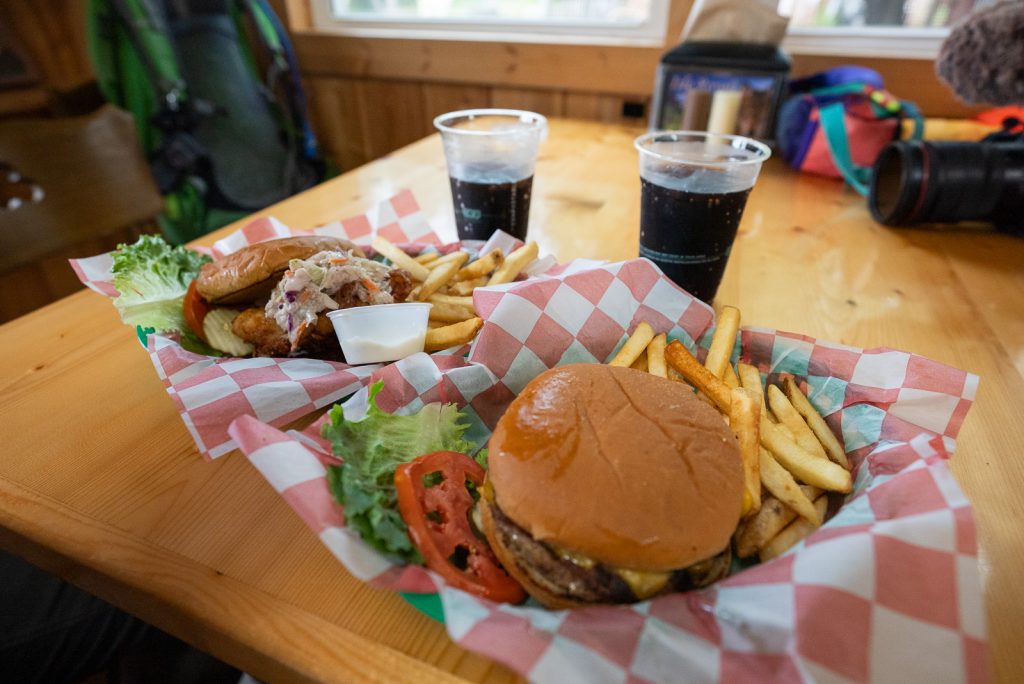
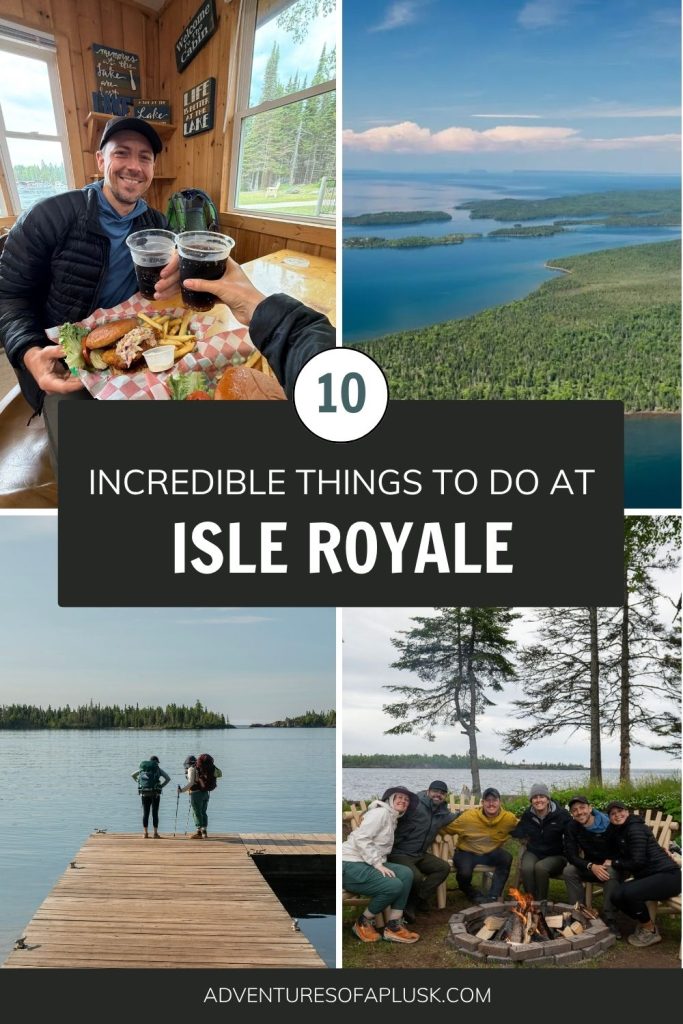
Despite being a remote island, there are a couple restaurants in Rock Harbor. Getting to enjoy a hot meal while on the island is a real treat, especially if you’re like us and ate freeze-dried backpacking meals for 6 days. During our trip, we ate both breakfast and dinner at the Greenstone Grill. Their burgers and fried fish sandwich hit the spot and the breakfast burrito we had the next morning was surprisingly tasty!
10. Have a campfire at the Rock Harbor Lodge
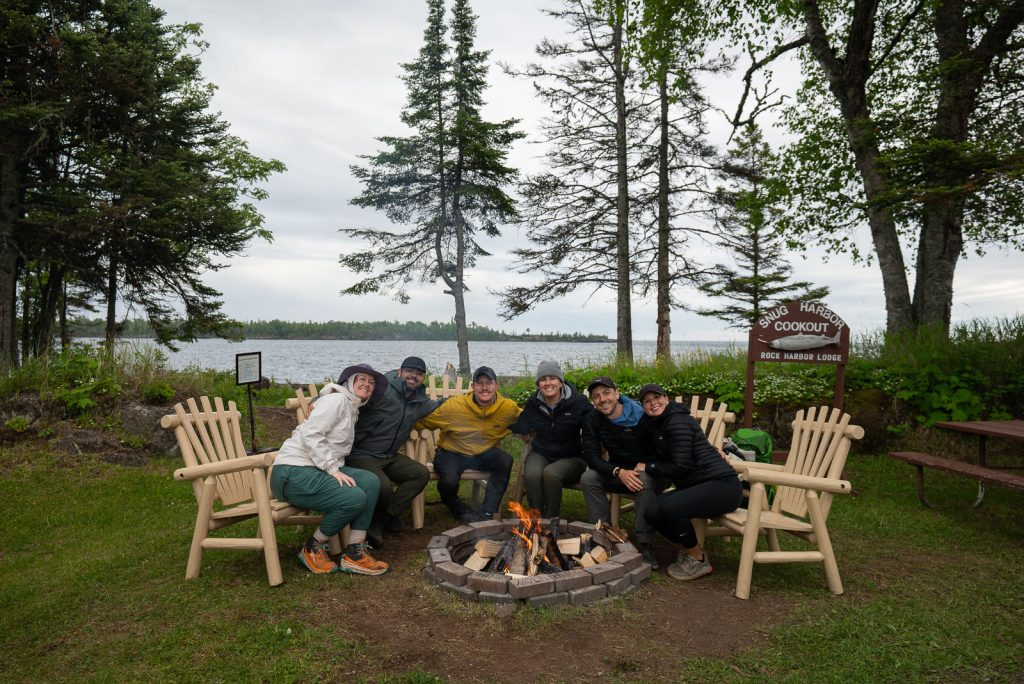
Because campfires are banned at almost all interior backcountry sites to protect the island’s wilderness, sitting around a fire on our last night was the perfect way to end our trip! The Rock Harbor Lodge features an outdoor community fire pit complete with comfortable Adirondack chairs and even complimentary firewood. We double-checked with the staff to make sure it was okay to use since we weren’t staying at the lodge, and they confirmed the fire pit is open to everyone!
Planning your trip to Isle Royale National Park
How to get to Isle Royale National Park
Since Isle Royale is a roadless island in the middle of Lake Superior, getting here requires a little extra planning. You have two main ways to reach the island: taking a passenger ferry or flying in on a seaplane.
Depending on whether you’re traveling from Michigan’s Upper Peninsula or Northern Minnesota, you have a few different routes and modes of transit to choose from:
Passenger Ferries
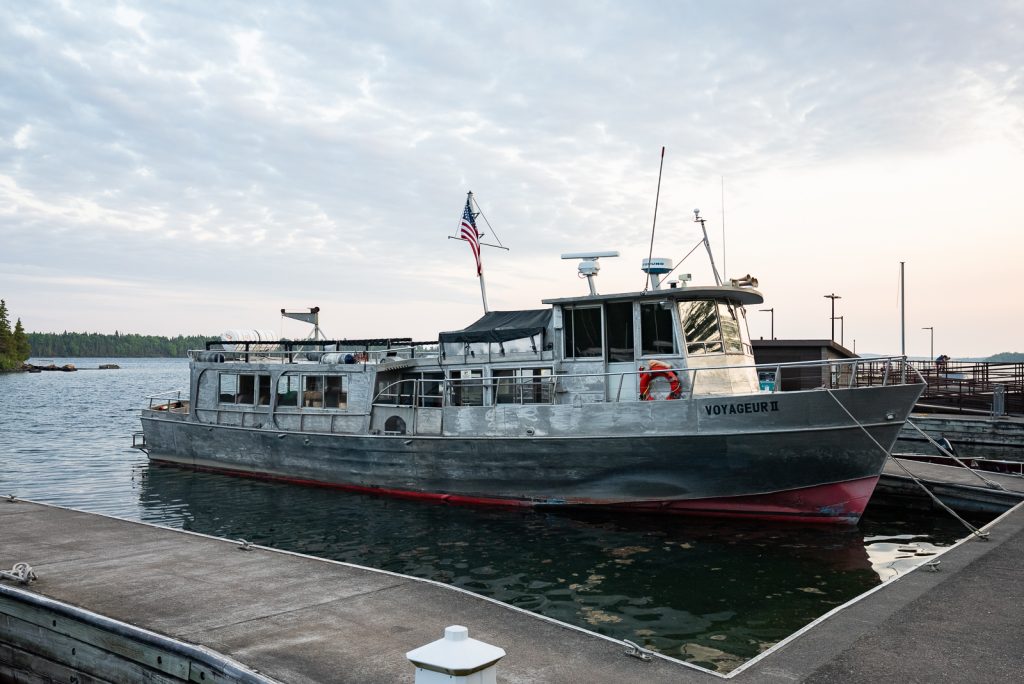
Four main passenger ferries service the island, taking anywhere from 1.5 to 6 hours depending on your departure port and destination.
Departing from Michigan:
Ranger III (from Houghton, MI): The official National Park Service vessel and the largest ship servicing the island (165 feet long!). It docks at Rock Harbor after a 6-hour crossing.
Isle Royale Queen IV (from Copper Harbor, MI): A popular 3.5-hour crossing straight to Rock Harbor. Because it makes a daily round trip, it’s a great option for both overnight backpackers and day-trippers.
Departing from Minnesota:
Voyageur II (from Grand Portage, MN): This ferry connects Grand Portage to Windigo and Rock Harbor, while also making pre-arranged drop-offs at backcountry docks along the way (McCargoe Cove, Daisy Farm, Chippewa Harbor, and Malone Bay). Note: Runs on Central Time!
Sea Hunter III (from Grand Portage, MN): A fast 1.5-hour trip to Windigo on the island’s west end. This is the primary ferry used for Windigo day trips, giving visitors about 4 hours to explore before heading back. Note: Runs on Central Time!
Taking a seaplane
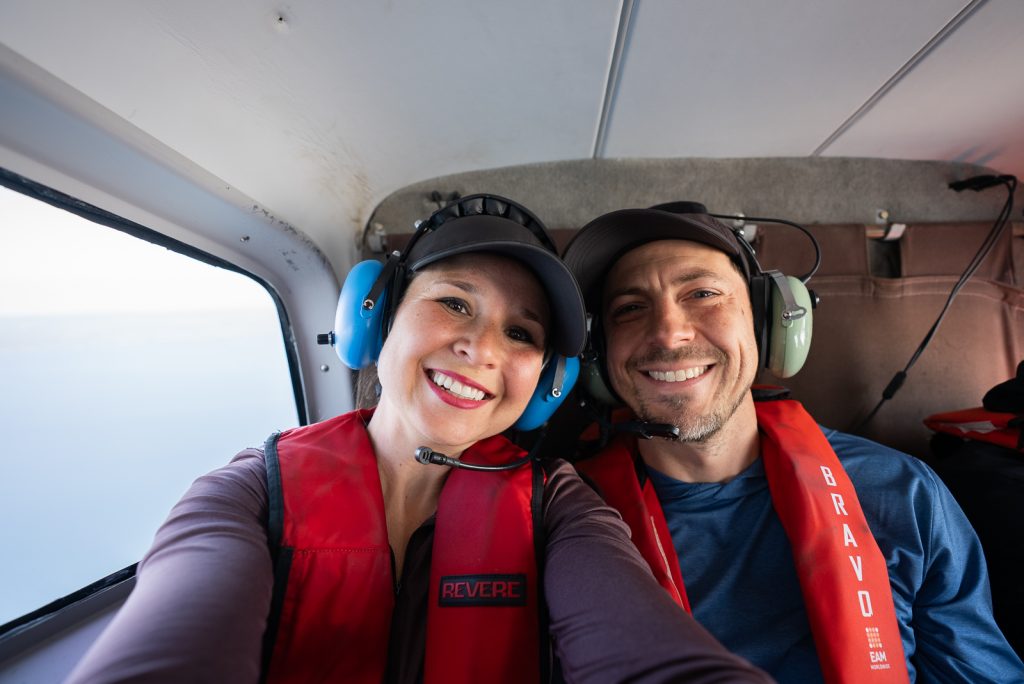
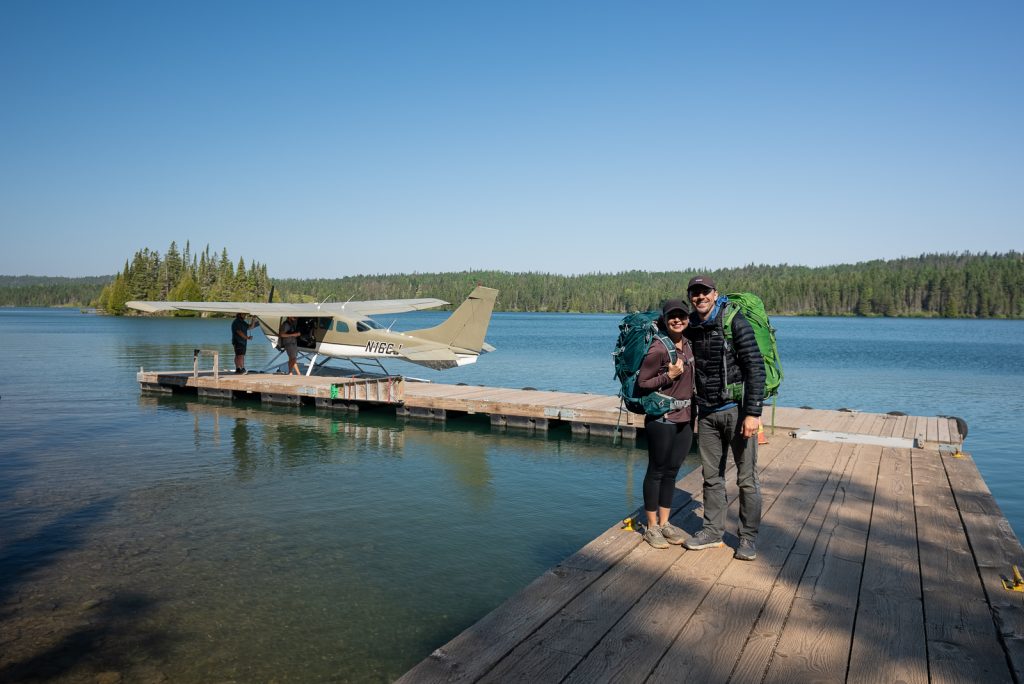
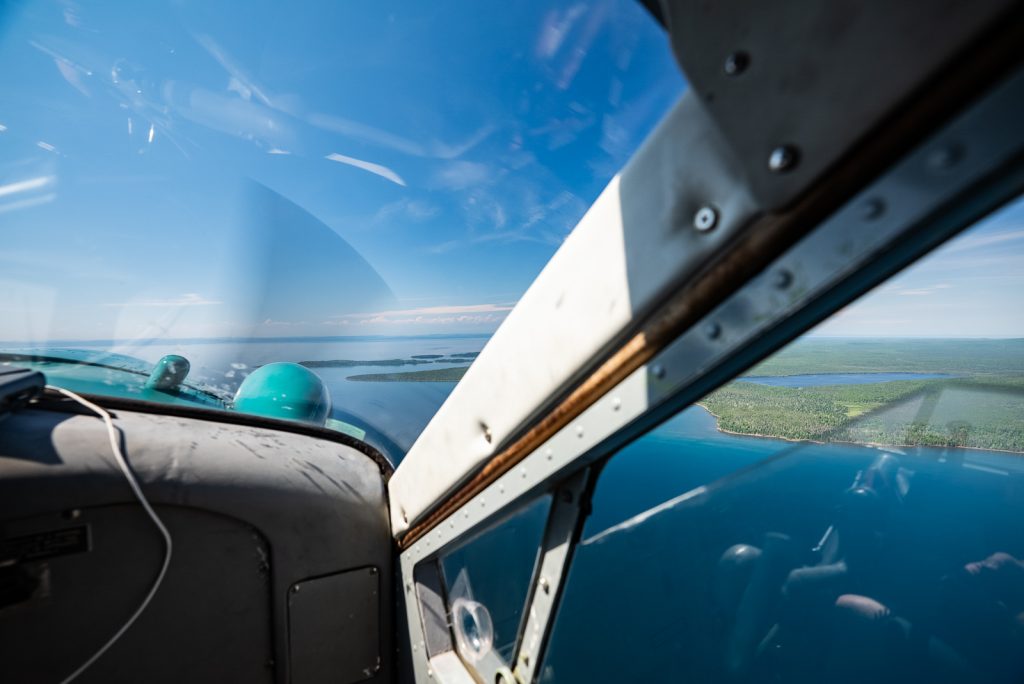
Taking a seaplane with Isle Royale Seaplanes is what we did, and we’d do it again in a heartbeat! Flights depart out of Hubbell, MI (and Grand Portage, MN) and land on the water at either Rock Harbor or Windigo in just 35 to 45 minutes.
While it’s definitely pricier than taking a ferry, saving hours of transit time and getting a bird’s-eye view of the island’s archipelago, reefs, and inner lakes is well worth it!
The main downside to keep in mind is weather delays. If heavy fog or bad weather rolls in, the planes cannot fly, so your travel dates carry a bit more risk compared to the ferries.
Note: No fuel on planes! TSA rules prohibit carrying stove fuel canisters on seaplanes. You’ll need to buy your white gas or Isobutane canisters at the general store in Windigo or Rock Harbor upon landing. Or grab leftover canisters from the community donation bin outside the Windigo store!
We put together a guide on how to get to Isle Royale with all the details on booking a seaplane and ferry routes!
Getting around Isle Royale National Park
Getting around Isle Royale National Park is such a unique experience, mostly because it’s one of the few national parks in the entire country with no roads and no cars! Once you get off the ferry or seaplane at either Rock Harbor on the east end or Windigo on the west end, your legs or the water are officially your only modes of transportation.
You can also hop on the Rock Harbor Water Taxi, which operates out of the marina on the northeast end and can shuttle you, your gear, and canoes/kayaks to popular trailheads and campsites along the northeast half of the island. Including Daisy Farm, Moskey Basin, Hidden Lake, or McCargoe Cove.
Alternatively, the Voyageur II ferry acts as a scheduled inter-island shuttle, making designated stops at main ports around the island (Windigo, McCargoe Cove, Belle Isle, Rock Harbor, Malone Bay) on specific days of the week.
Where to stay on Isle Royale National Park
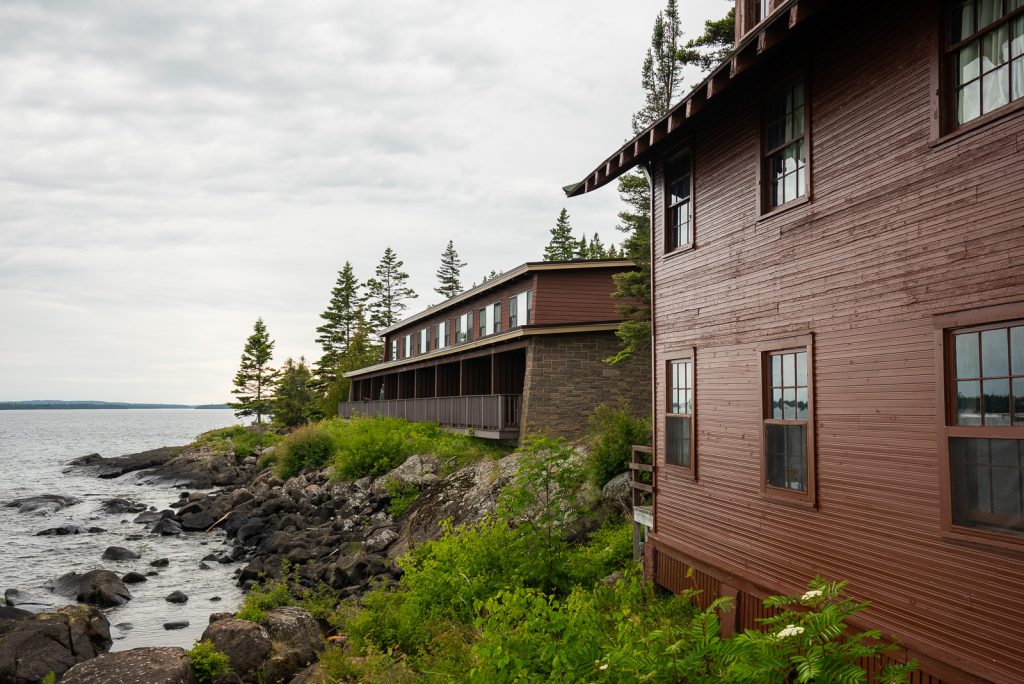
Besides the 36 backcountry campgrounds scattered across the island and the two main front-country options on each end (Rock Harbor and Washington Creek Campground), there are also a couple of lodging options if you want a roof over your head!
Rock Harbor Lodge
This is the only true hotel on Isle Royale. Located on the water in Rock Harbor, it features 60 lakeside lodge rooms plus 20 housekeeping cottages that come with kitchenettes.
Windigo Camper Cabins
Over on the west side at Windigo, these two one-room cabins are a fun step up from traditional tent camping. Inside, you get real mattresses, a couch, a table and chairs, and electricity, though you will still be cooking on outdoor grills and using the nearby public restrooms.
Best time to visit Isle Royale National Park
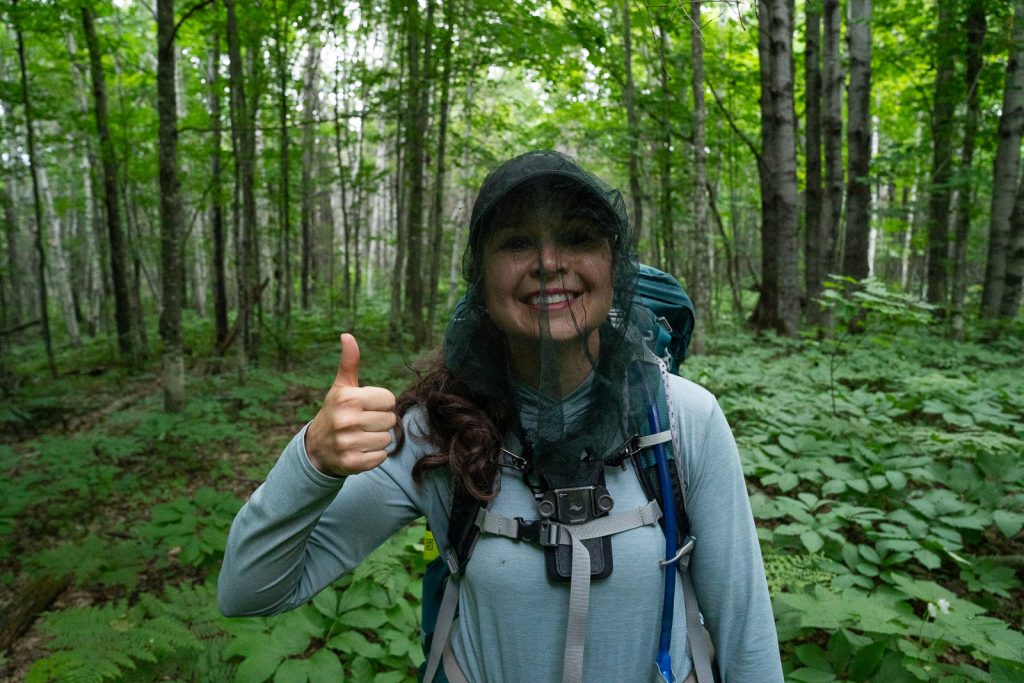
Isle Royale is technically open for camping from April 16 through October 31, but unless you own a private boat or floatplane, you can’t actually get here during early spring or late fall. Commercial ferries and seaplanes only run from May through September, which narrows down when most of us can visit.
Spring (May to June): May brings the first commercial ferries, but temperatures stay pretty chilly and trail conditions can be muddy or icy. By late June, daytime weather warms up and the island is still relatively quiet. We went in late June and loved having fewer people on the trails, but the mosquitoes and black flies were absolutely relentless. If you come during this window, pack a head net and strong bug spray!
Summer (July to August): This is peak season on the island for a reason. Lake Superior calms down, daytime temperatures are warm, and all park amenities, stores, and visitor centers are fully open. The big downside is competition for campsites and wooden shelters. Popular spots near Rock Harbor and Windigo fill up fast, so you need to start your hikes early to grab a shelter or tent site.
Fall (September to October): September is hands-down one of the best times to visit if you want to dodge both the summer crowds and the bugs. The mosquitoes die off, the fall colors pop along the ridges, and campgrounds are much quieter. Keep in mind that ferry and plane schedules start winding down by mid-September, and services on the island close up completely by October.
Things to know before visiting Isle Royale National Park
Book your transportation and lodging far in advance
Isle Royale requires serious advance planning. The Rock Harbor Lodge and popular ferry routes sell out early, and the seaplane has limited daily flights. We have actually met multiple people who booked their room at the lodge first, only to discover later that all the ferries were completely booked up, forcing them to cancel their entire trip. Lock in your boat or plane ticket the second your dates are set!
Be aware of time zone changes
Isle Royale is part of Michigan, so the island operates on Eastern Time. However, if you are flying or taking a ferry out of Grand Portage, Minnesota, you’ll be leaving from the Central Time Zone. Pay close attention to time zone changes when planning your travel logistics so you don’t accidentally miss your boat or flight.
National Park Fees & Passes
The park charges a daily $7 entrance fee per person, which you pay online ahead of time or upon arrival depending on your transport method. If you have an America the Beautiful Pass, it covers your entry fee completely, so make sure to pack your physical card!
Backpacking permit & campsite reservations
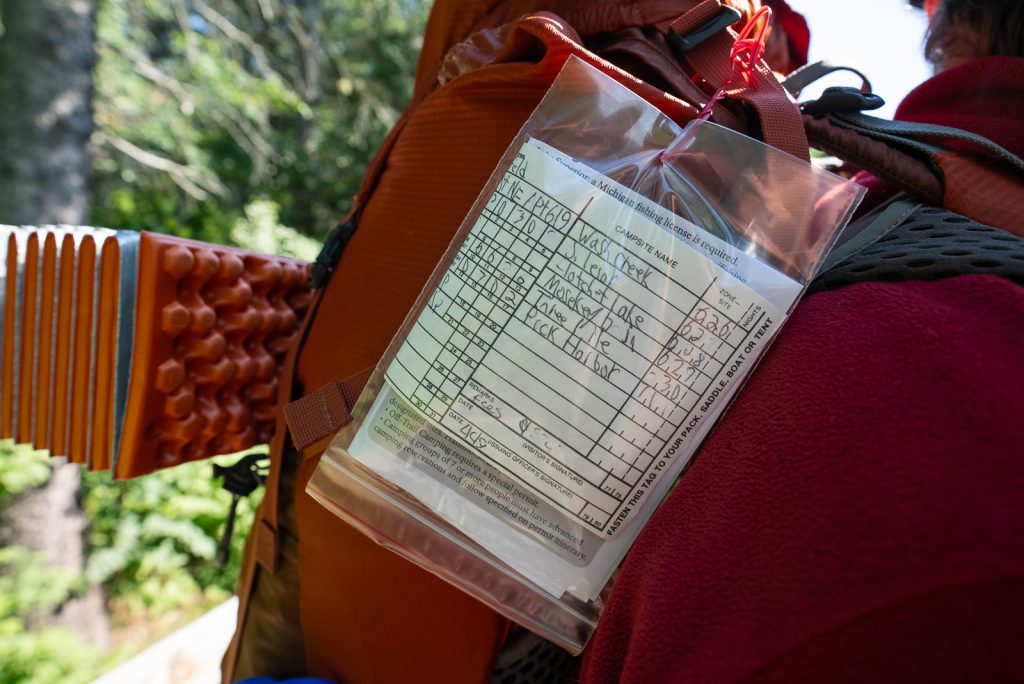
Backpacking permits are free and obtained upon arrival during your initial ranger orientation at the dock. Camping is strictly first-come, first-served for individuals and small parties. You cannot reserve individual tent sites or wooden shelters in advance unless you are traveling with a group of seven or more people, which requires a group reservation.
Dogs are not allowed
Pets are strictly banned on the island to protect native wildlife and prevent the spread of diseases to the local wolf population. Leave your dog at home, as they are not permitted on boats, docks, or trails.
The island creates its own weather
Being isolated in the middle of Lake Superior means Isle Royale generates its own local weather patterns. Temperatures right along the lakeshore can feel freezing cold due to icy water breezes, while the inland ridges can get surprisingly hot and humid. We experienced a massive temperature range on our cross-island hike, so packing versatile layers is a must.
Check for trail and campground closures
Campgrounds can be closed due to wildlife activity and wildfires have also closed entire areas in the past. When a campground closes, it pushes everyone into neighboring sites, making getting a campsite much more difficult. Always check for park alerts before hitting the trail.
Download offline AllTrails maps
Cell service drops the second you leave the mainland. You might snag Wi-Fi signals at Windigo or Rock Harbor, but that’s it. Download your AllTrails maps and offline routing before you leave home.
Download a PDF of The Greenstone Guide
Save a digital copy of The Greenstone newspaper to your phone before you board the ferry or plane. It’s the official park guide, and having the PDF saved gives you an offline breakdown of every campground, exact trail miles between junctions, how many shelters each site has, and where to find water. We utilized this guide every day on our trip!
Save this guide with things to do at Isle Royale National Park
about the author
This blog post was written by our writer Nicoll. Learn a bit about her below!
After six years of full-time travel, Nicoll is now a mountain-loving mama living in Colorado with her husband Jake, their sweet baby girl Teagan, and their pup Gunner. She loves hiking, riding her dirt bike, and finding joy in the little things.