Last updated on June 6th, 2026
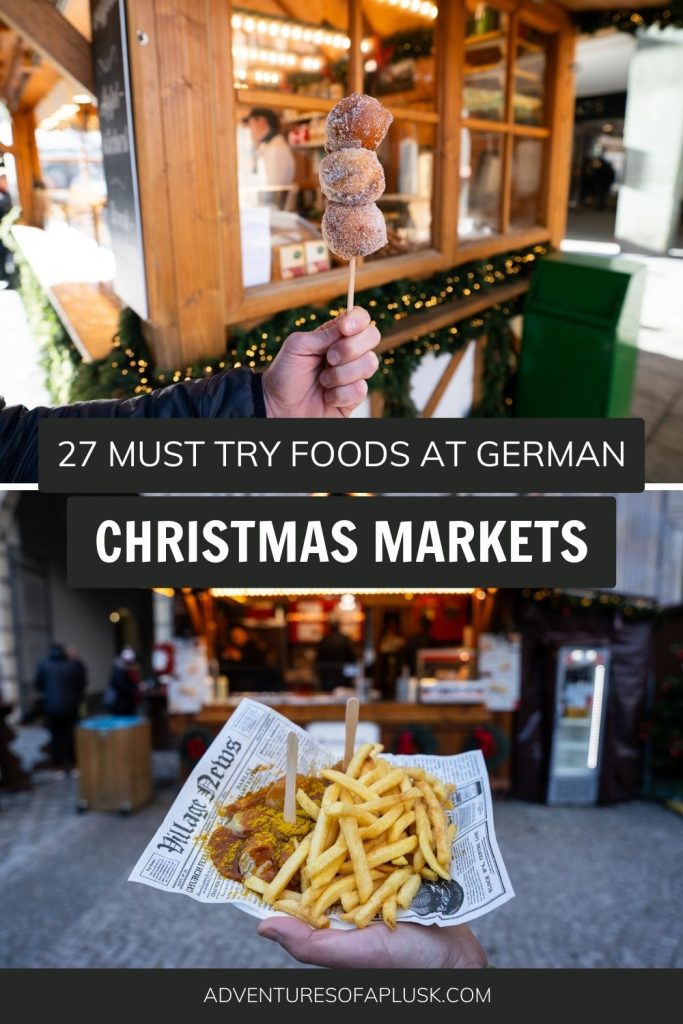
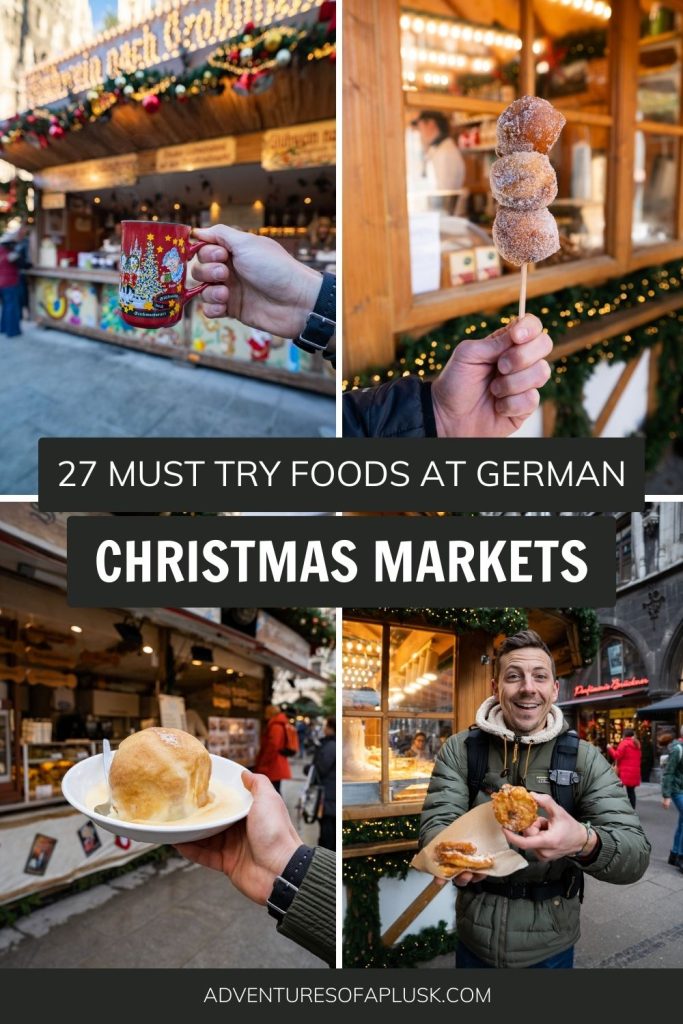
Ready to eat your way through German Christmas markets? We’re sharing 29 German Christmas market foods and drinks that you must try!
Cheesy noodles. Delightful strudel. Warm, sugary almonds. Pillowy rolls covered in a sweet vanilla sauce. Fried apple rings. Hot bratwursts. Spiced drinks. Does that sound like your version of food heaven? Then you must visit the German Christmas markets!
Let’s be honest. We mostly visited Germany’s Christmas markets solely to eat. And boy, did we eat! Over the course of a couple days in Munich, we checked out many of the city’s best Christmas markets, indulging in a bit too much food at each one.
And if you’re planning a trip to the German Christmas markets and are unsure what food items to expect, plus which you should prioritize, we’re here to help! In this guide we’re covering 29 of the most common German Christmas market foods and drinks to try. Plus, some helpful tips for visiting the markets!
Explore more of Germany!
- 5+ Munich Christmas markets you MUST visit in 2024!
- The PERFECT 2 days in Munich itinerary
- 14 FUN things to do in Füssen, Germany
- How to visit Neuschwanstein Castle in the winter
- The 15 BEST things to do in Garmisch-Partenkirchen in the winter
- 32 Epic Hikes in Europe You Need to See to Believe
- Watch our Germany videos
29 German Christmas market foods and drinks to try
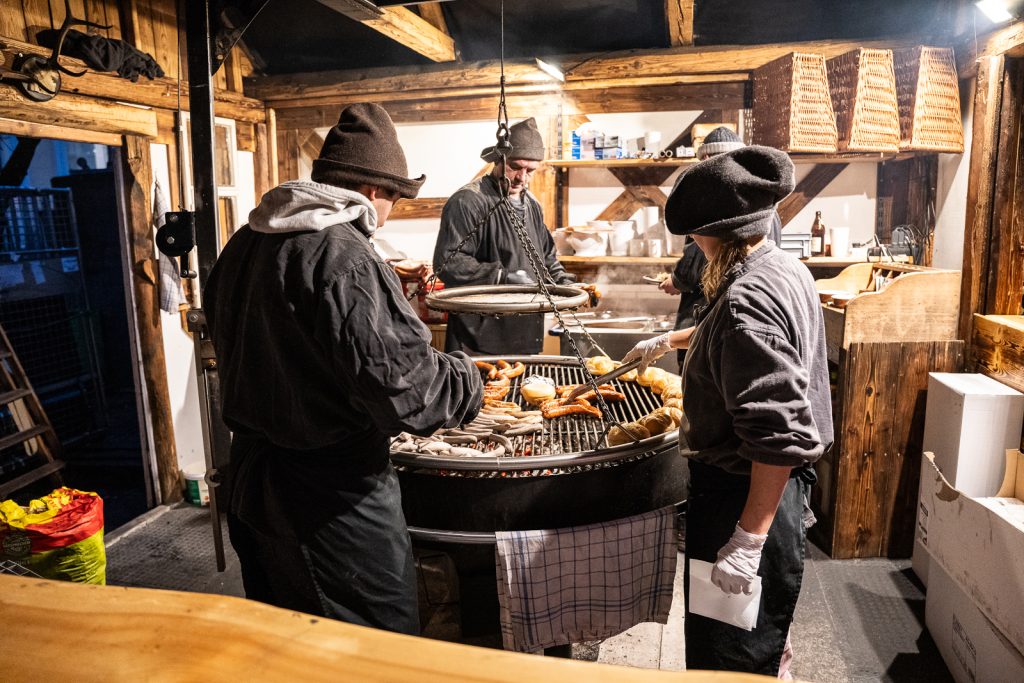
In this list we’re sharing 29 different German Christmas market foods and drinks to try. However, not all of these are specifically German. Some are just common European Christmas market foods that you’ll see at many of the German Christmas markets.
This list is split up by savory foods, sweet treats, and drinks. And for each, we’ll share a little bit about what the item is, our thoughts on it, and where you can find it. However, since we mostly only went to Christmas markets in Munich, our “where to find them” suggestions will be focused specifically on Munich. But based on our experience, many of these won’t be that hard to find!
Savory German Christmas market foods
There are countless savory German Christmas market foods to try. We loved snacking on these throughout the day, instead of eating proper meals. They really help balance out the sweetness of the many dessert items and drinks!
1. Wurst
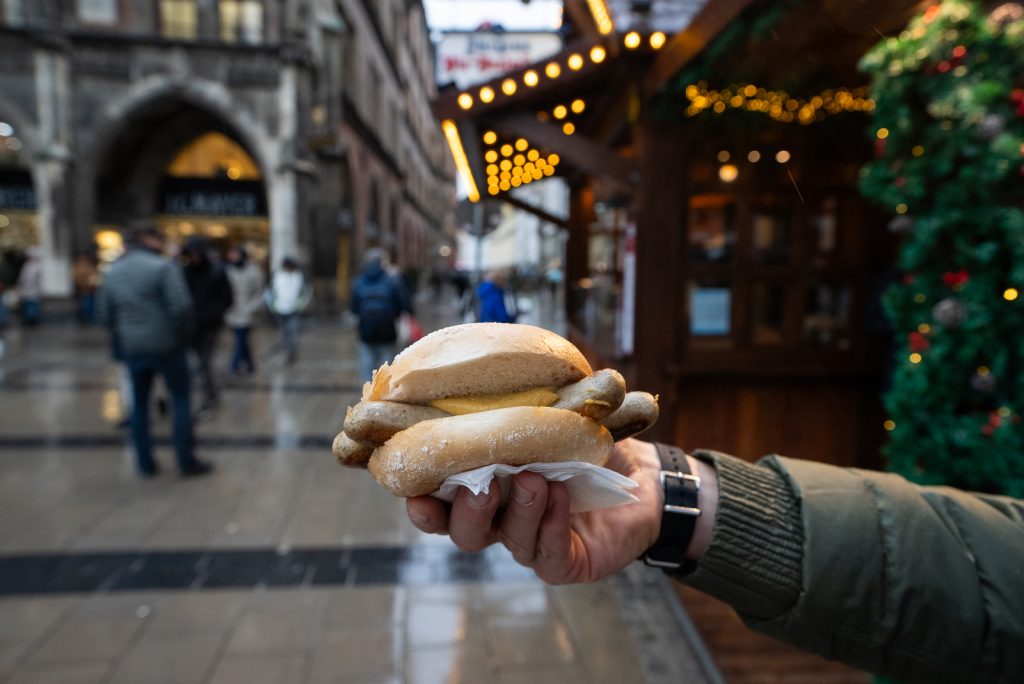
First is the wurst!
Quite possibly the most ubiquitous and typical German Christmas market food item is wurst (pronounced “vurst”), or sausages. There are many types of wurst to choose from, including the traditional bratwurst, spicier options, and weißwurst, a Bavarian white sausage with a unique blend of spices, like cardamom, lemon, and parsley. It is especially popular for breakfast!
We are a bit embarrassed to admit just how many wurst we ate while in Germany. But it makes for a super easy and typically cheap snack when exploring the city. It’s hard to choose a favorite, as they are all different, but we really enjoyed the unique flavor of the weißwurst. If you’re visiting a German Christmas market in Bavaria, we highly suggest choosing one of these!
Where can you find it?
We saw and tried wurst at almost every Munich Christmas market we went to! Plus at smaller markets in other towns in Bavaria. This will be one of the easiest German Christmas market foods to find.
2. Käsespätzle
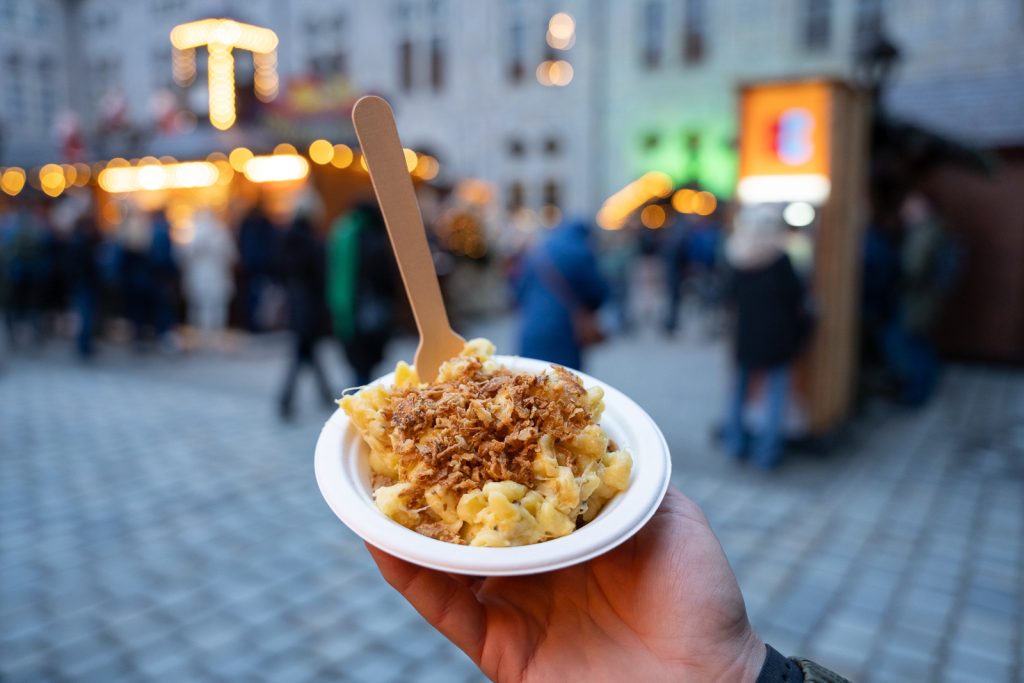
One of the ultimate German comfort foods is käsespätzle. The best way we can describe it is that it’s German mac and cheese, but even better! Instead of macaroni, the noodles are a bouncy egg noodle and the super creamy cheese is made up of a mix of cheeses, including emmentaler cheese. It’s then topped with crispy fried or caramelized onions and sometimes chives! This is a must try food item!
Where can you find it?
We saw käsespätzle at basically every German Christmas market. You can also get it at many restaurants too! One thing we noticed is that every single one we tried was different. Some were a bit drier and some were creamier. So make sure to shop around and pick one that looks best to you!
3. Kartoffelpuffer
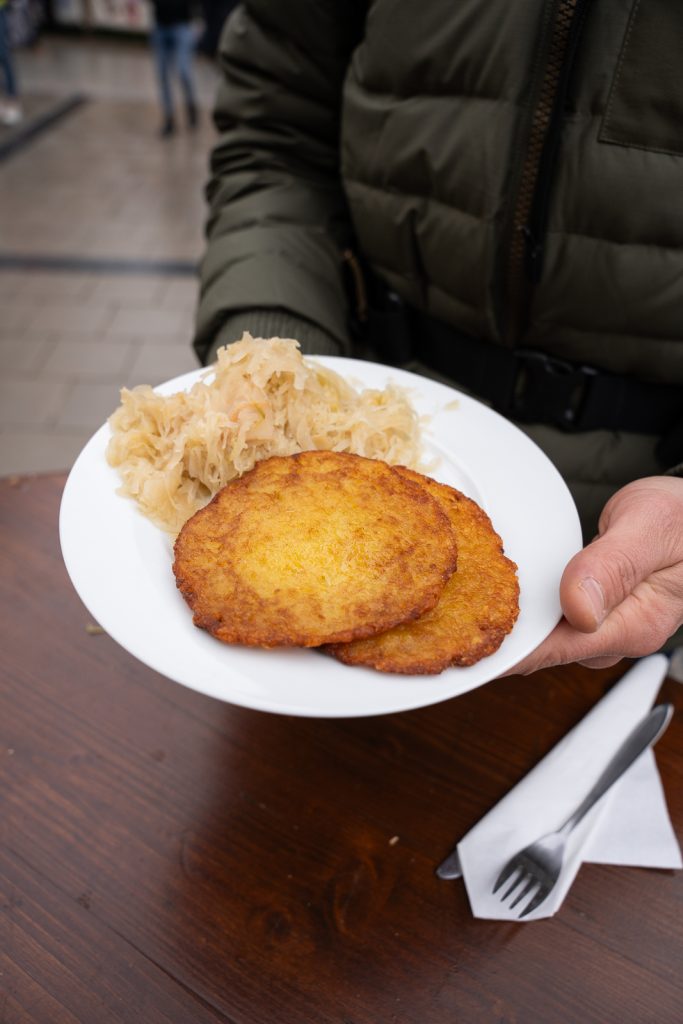
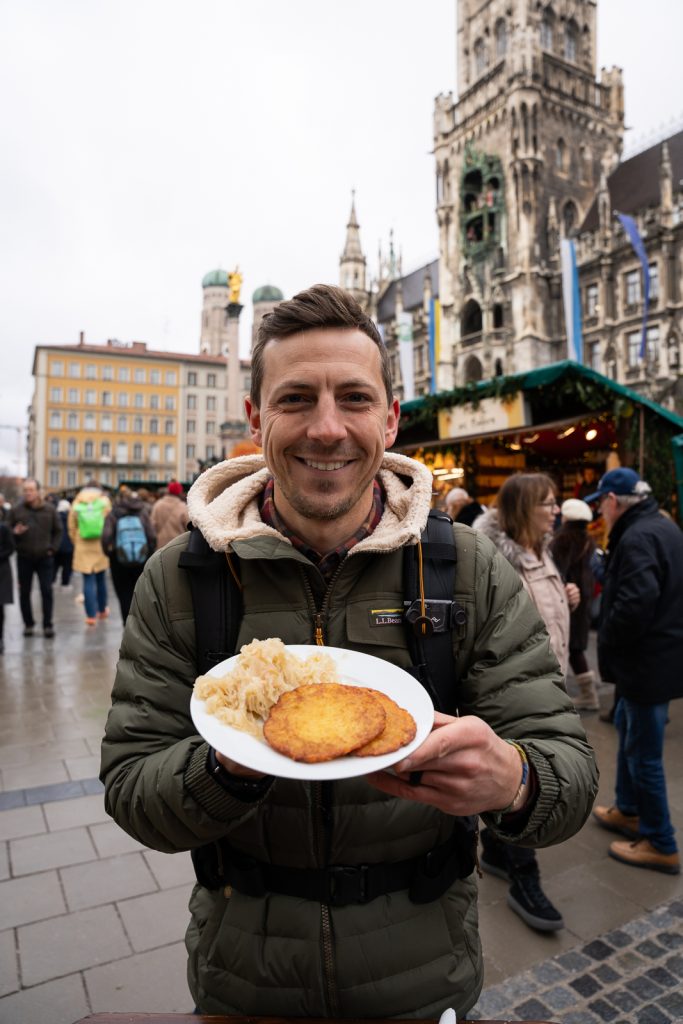
Kartoffelpuffer are fried potato pancakes with a crispy exterior and soft interior. They are delicious as is, but are even better when paired with applesauce, sour cream, or sauerkraut. When we tried them we went with sauerkraut, which gave a nice tang to the potato pancakes. But we would love to try the applesauce, for a bit of a sweet accompaniment, or sour cream, which is always a great combination with potatoes.
Where can you find it?
We tried this at the Marienplatz Christmas Market. There was a stand mostly dedicated to these, which is usually a decent sign that they will be pretty good!
4. Currywurst
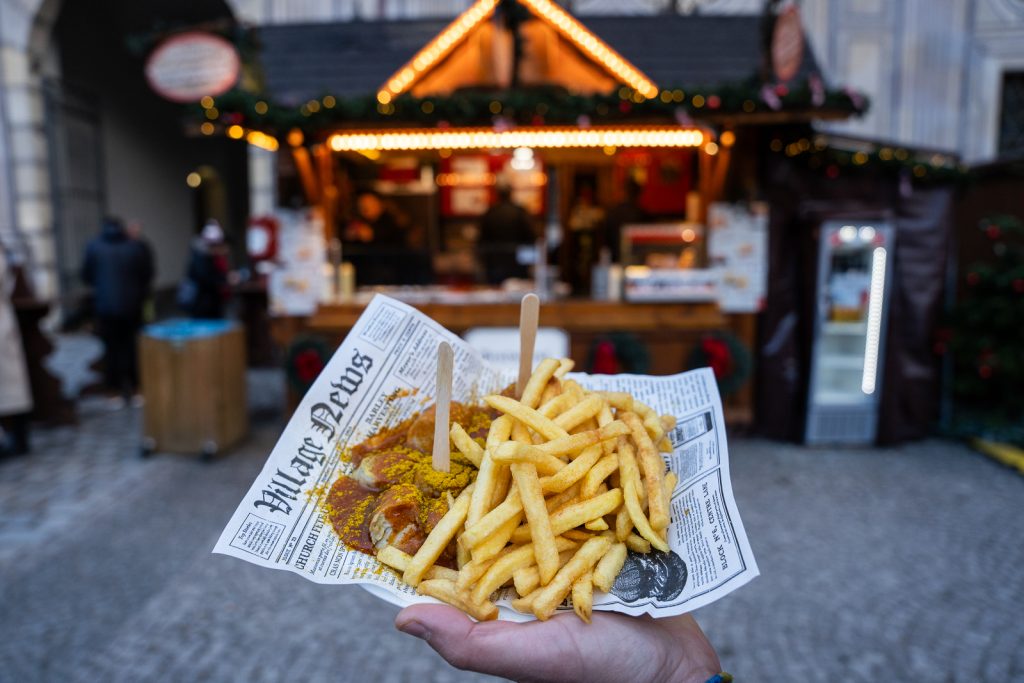
One of our favorite Christmas market foods was currywurst. This is basically sliced wurst that is tossed in a curry ketchup and typically served with pommes frites (french fries). The curry ketchup gives the wurst a great burst of flavor and added moistness, while the pommes frites balance it out with a nice crispy texture.
While this was one of our favorite German Christmas market foods, we were both pretty nervous to try it. We both aren’t huge ketchup people, with Kathryn really detesting it. But shockingly, we both loved it! The ketchup definitely has a curry flair to it, which masks the basic ketchup taste a good bit. We ordered it multiple times during our time in Germany, so that speaks to how much we enjoyed it!
Where can you find it?
You can find currywurst at many markets. We had it multiple times at the Christmas Village at the Residenz.
5. Champignons
Champignons are mushrooms sauteed in garlic and herbs, then served smothered in a garlic cream sauce. For mushroom and garlic lovers, it looks like absolute heaven. It is one of the dishes Adam was most excited to try at the German Christmas markets, but….
Where can you find it?
We never did find it. 😩 Despite reading about how it was a must try German Christmas market food, we searched all over and never did discover it. Perhaps we just had bad luck or maybe Munich isn’t as common for this. We hope that you have better luck than we did!
6. Flammkuchen (tarte flambee)
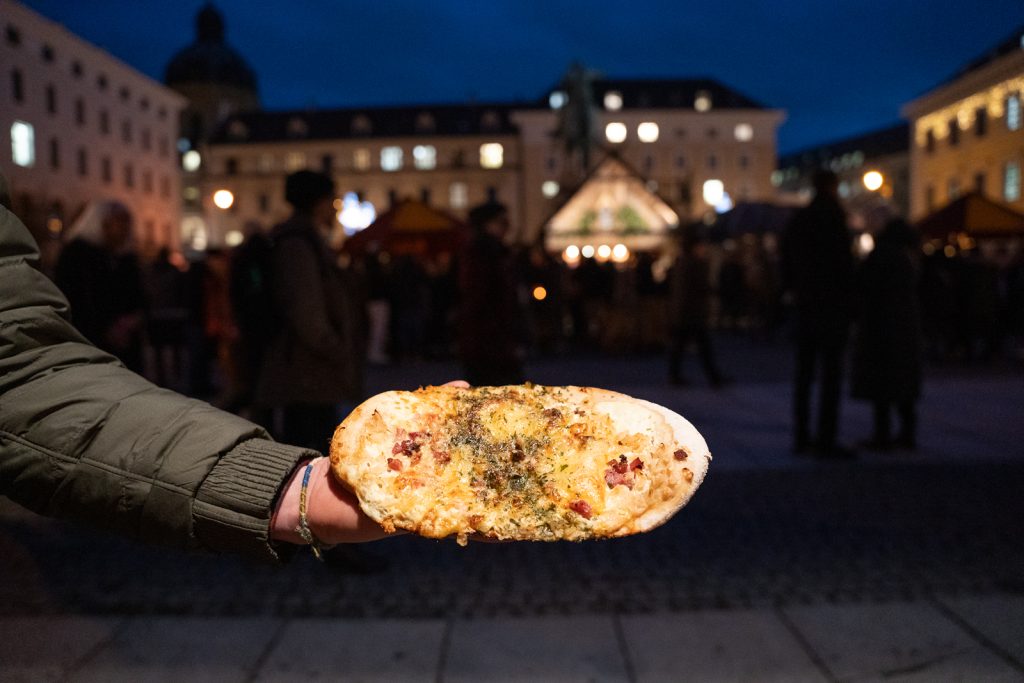
Another one of our all time favorite German Christmas market foods is flammkuchen, also known as tarte flambee.
This is a flatbread with a variety of topping options, including bacon, potatoes, onions, and cheese, which is sometimes a creamy creme fraiche. The toppings are placed on the flatbread and then it is baked in a wood fired oven. It makes for a delicious savory snack while wandering around the markets!
Where can you find it?
You can find flammkuchen at many German Christmas markets, but for what is claimed to be a traditional take on it, try it at the Medieval Christmas market in Munich.
7. Pommes frites (french fries)
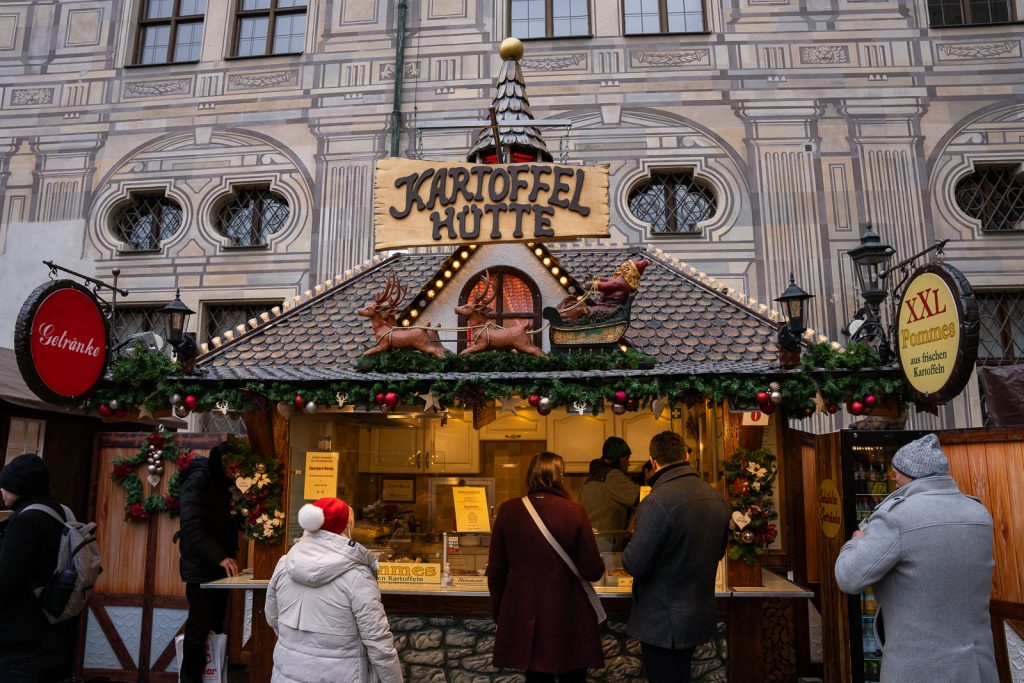
Pommes frites are simply french fries. It may not be the most exciting or unique food item on this list, but everyone likes french fries! You can get them with a garlic sauce or other sauces and they make a great little snack. Especially since they are typically served in a cone which makes it easy to walk around while eating them.
Where can you find it?
These are another super common German Christmas market food item. We saw them all over, so you won’t have to look far, but the ones at the Christmas Village at the Residenz looked especially good!
8. Pretzel (brezel)
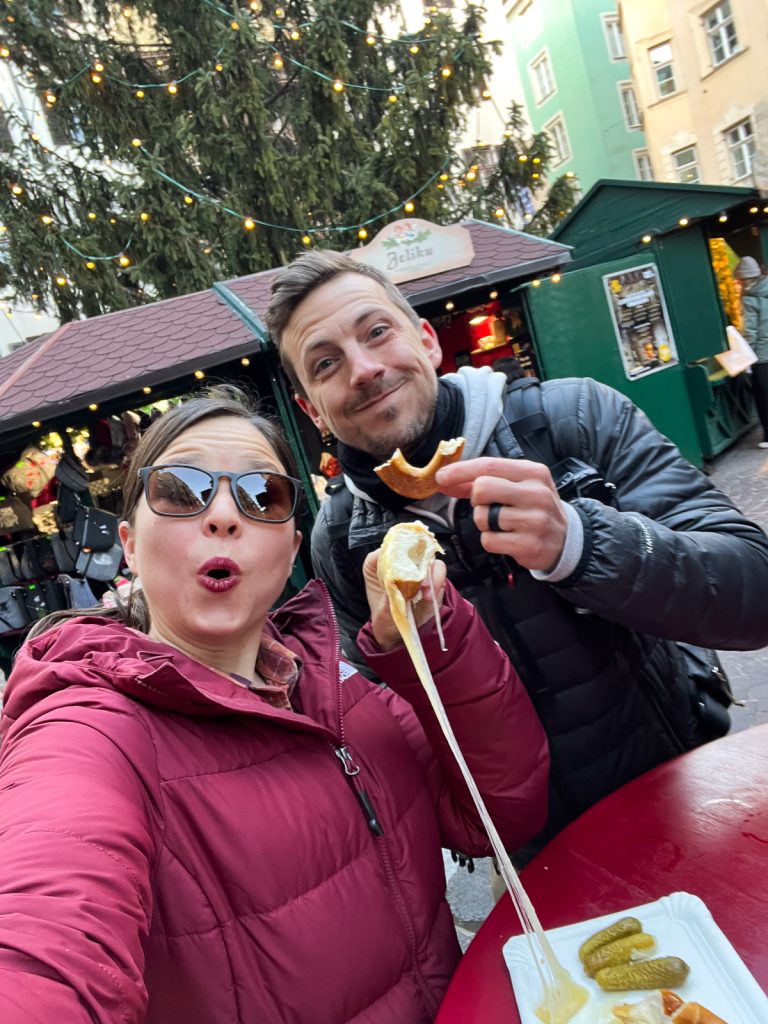
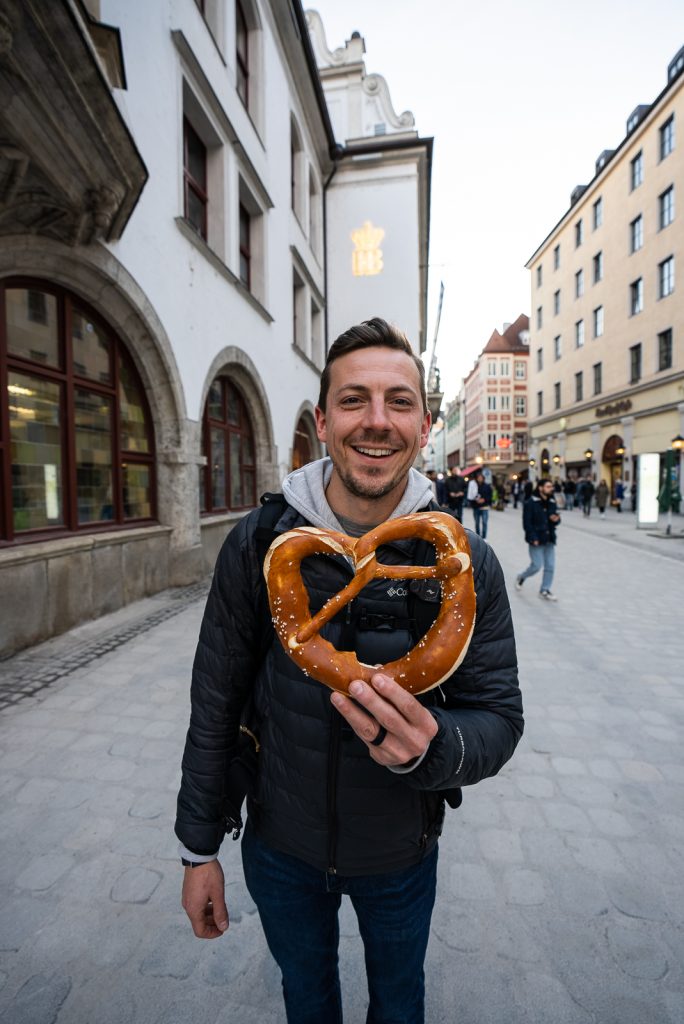
You can’t visit a Christmas market or Germany in general without a pretzel or two (or three or more)! Pretzels are especially popular in Bavaria, and they are not only popular to eat by themselves, but also alongside wurst, especially with weißwurst.
Where can you find it?
Pretzels can be found in just about every German Christmas market, plus at many biergartens!
9. Sauerkraut
Sauerkraut–you either love it or hate it! But it can’t be denied that it’s a German staple food. This fermented cabbage has a tangy, sour flavor. And it is usually served alongside wurst, kartoffelpuffer, spaetzle, or schupfnudeln.
Where can you find it?
As a popular German food, sauerkraut is not hard to find. However, we don’t recall seeing sauerkraut specific stands. You usually will find it when ordering the other items above.
10. Raclette
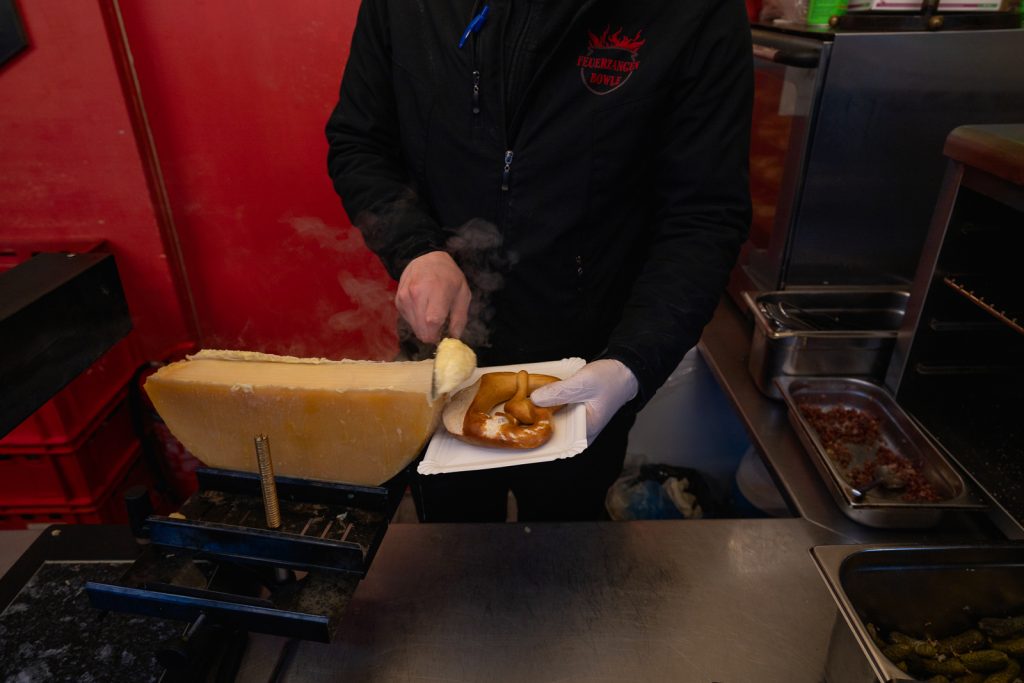
As big cheese lovers, raclette is a DREAM! This is a specific type of cheese from Switzerland, which is then heated up and the melted top layer is scraped off. It can be added to potatoes, bread, pretzels, and more!
While not a German dish, it has become very popular at Christmas markets all over Europe. Not only because it tastes SO good, but also because it has a cool presentation.
Where can you find it?
To be honest, we didn’t see this a ton in Germany. However, we do know it is a very popular European Christmas market food, so maybe we just didn’t go to the right places. We ended up trying it on a day trip to Innsbruck, Austria and loved it!
11. Flammlachs (Fire cooked salmon)
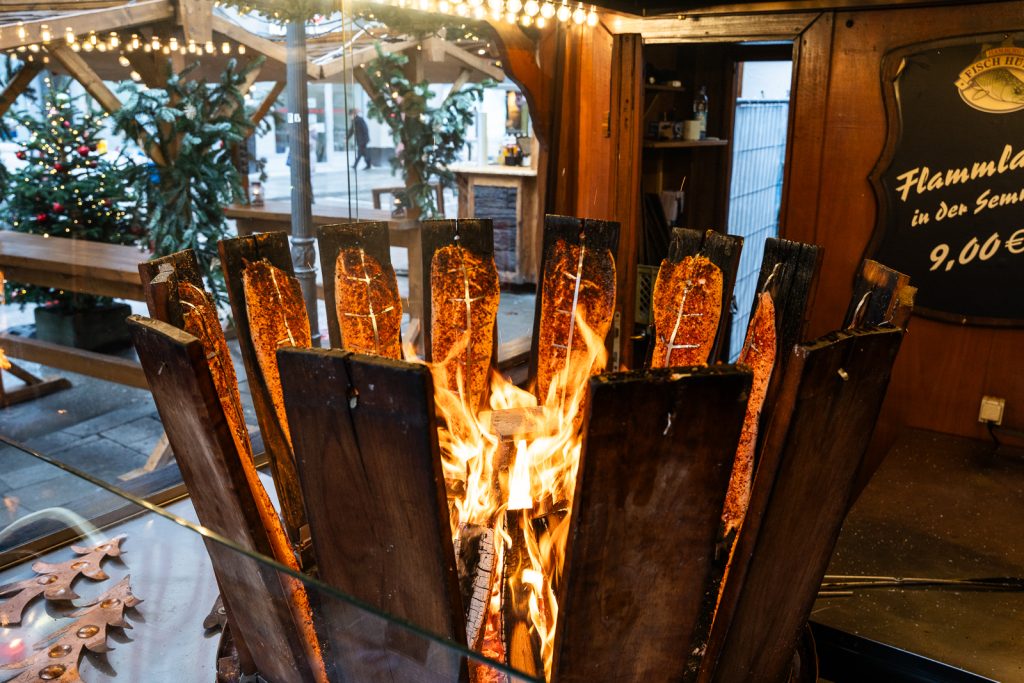
For the salmon lovers, try flammlachs! This is salmon cooked right on the fire, which is not only fun and mesmerizing to watch, but from our experience trying this in Finland, it is absolutely delicious!
Where can you find it?
We saw flammlachs at a couple different markets in Munich, including at the city’s famous market in Marienplatz, plus at Märchenbazar!
12. Schupfnudeln
One dish that wasn’t really on our radar when visiting the German Christmas markets, but absolutely loved, was schupfnudeln. This is a German potato noodle, which has a similar taste and texture to gnocchi. But instead of little pillow shapes, it has more of an elongated shape, almost resembling a green bean.
While often served with sauerkraut, we tried some with cheese at Märchenbazar and it was delightful!
Where can you find it?
Märchenbazar in Munich is an amazing spot to try this, as they have a whole stand dedicated to it with a bunch of different varieties.
Sweet German Christmas market foods
We highly recommend trying all the savory foods you can, but make sure to save lots of room for the real stars of the show…the desserts!
13. Dampfnudeln
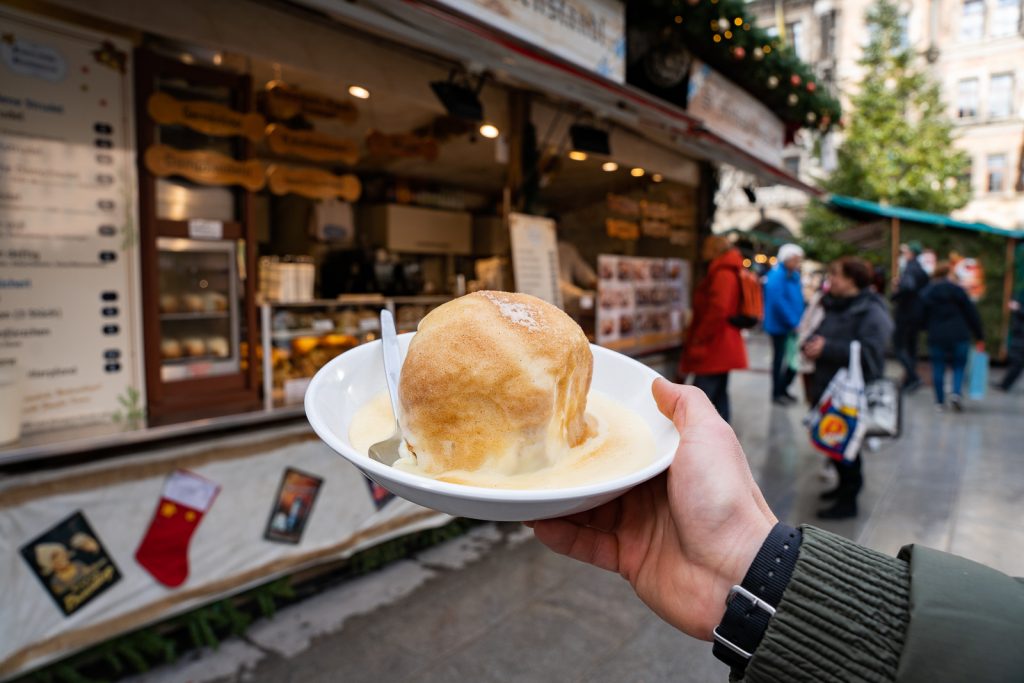
One of our absolute favorite treats at the Munich Christmas markets was the dampfnudeln. These are huge, pillowy, steamed yeast rolls bathed in a vanilla cream sauce. Heavenly is an understatement!
The rolls are the perfect vessel to sop up the sweet sauce. But we will warn you, it is a very filling dish, so make sure to share this one!
For something similar to dampfnudeln, try germknödel. This is a yeast dumping that is filled with spiced plum jam and has melted butter, poppy seeds, and sugar on top. Often stands that serve dampfnudeln will also serve this. But we were so hooked on the dampfnudeln that we didn’t get to try it this past trip. Next time!
Where can you find it?
We tried dampfnudeln at the Marienplatz Christmas Market. There was a stand towards the back, close to the road to the St. Peter’s Church Tower, which sold dampfnudeln, germknödel, strudel, and other delicious carby treats.
14. Apfelkücherl
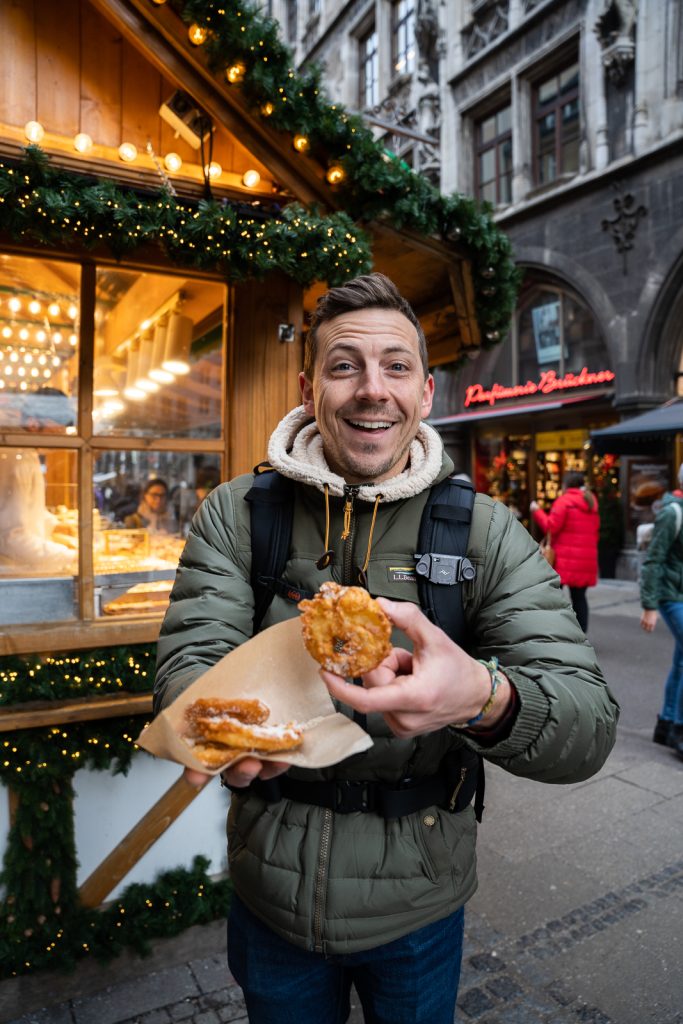
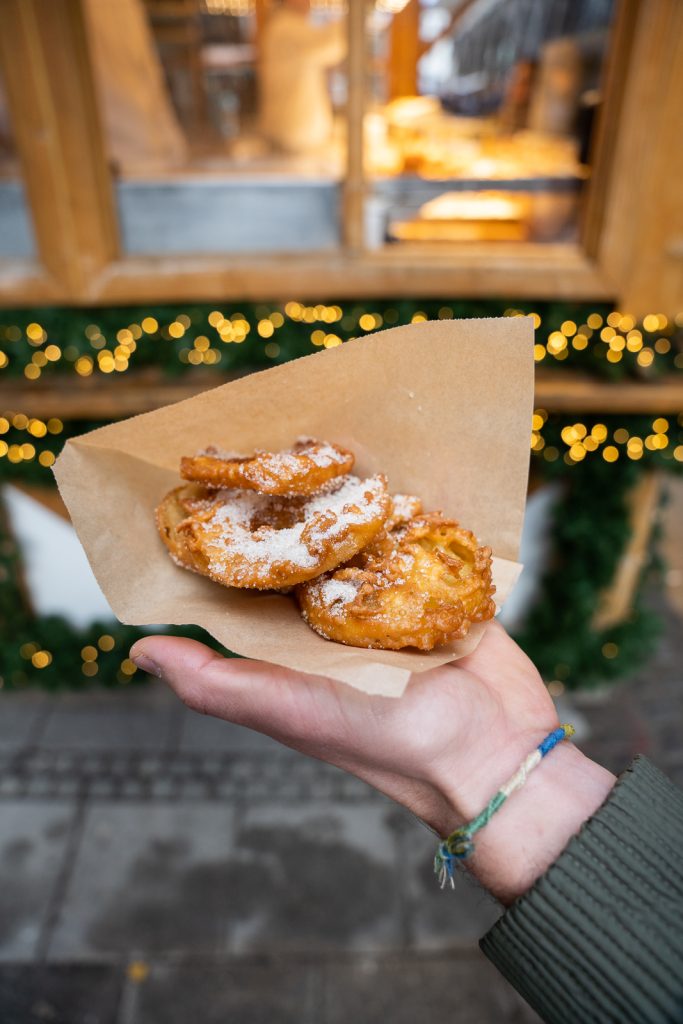
Afelkücherl are thinly sliced apples dipped in batter, fried, then covered in sugar! What’s not to love about that!? You get the crispy, fried, sugary exterior, with a juicy apple interior. This was easily another one of our favorite sweet German Christmas market food items!
Where can you find it?
We tried these at a stand right by Marienplatz, along Weinstraße, which also had another favorite item (see item #15!). You can watch them make them fresh!
15. Quarkbällchen
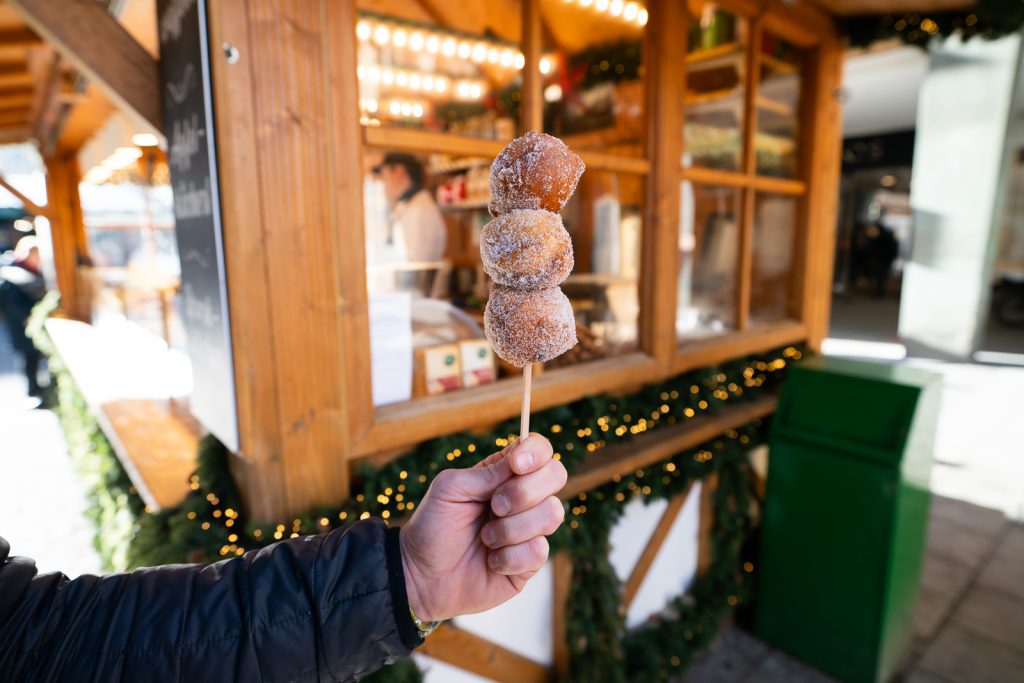
Quarkbällchen are German donut holes made with quark, a creamy cheese, and coated in sugar! And while this may sound a bit interesting, trust us, it’s an amazing combination. They are light, fluffy, moist, and have a perfect hint of the cheese, which helps cut some of the sweetness.
If you like sour cream donuts or cheese type desserts, you will LOVE these! But even for those who don’t, the cheese isn’t overpowering at all. It mostly just creates the perfect texture!
Where can you find it?
We tried them at the Marienplatz Christmas Market at the same place as the apfelkücherl.
16. Stollen
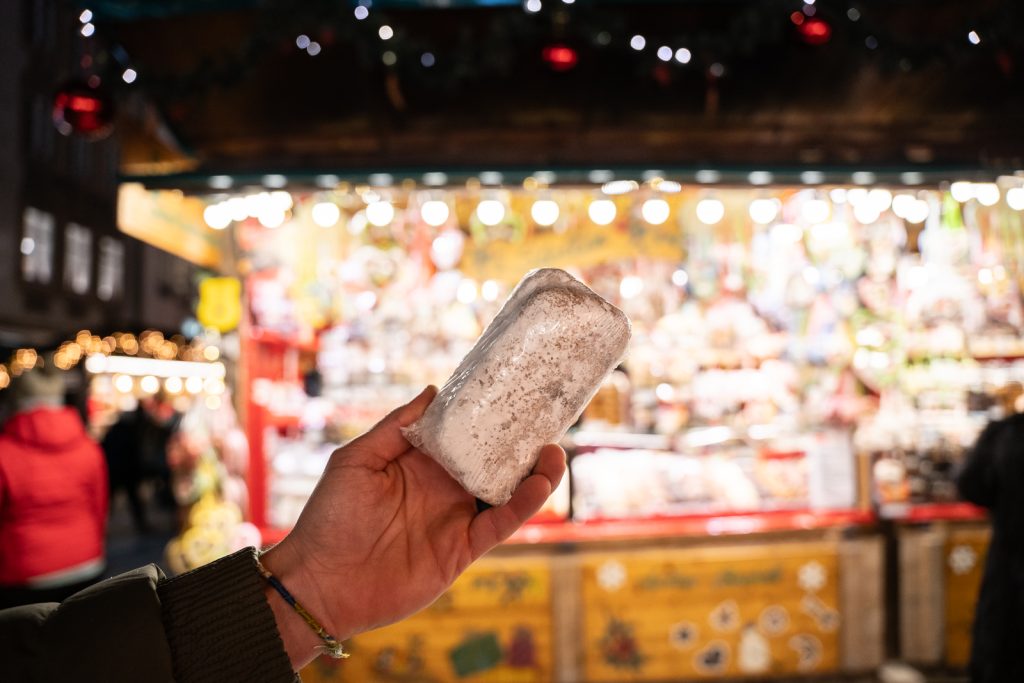
Stollen is a classic German bread that dates back to the 14th century. It is sometimes compared a bit to a dense fruit cake, as it is baked with dried fruits, candied citrus peel, nuts and spices, and wrapped in powdered sugar.
Since fruit cake can be a very polarizing food item, we weren’t totally sure how we’d feel about it. But surprisingly, we both really enjoyed it! The piece we tried was a lot sweeter than we anticipated and was both dry, but also moist, at the same time. The different spices and fruits reminded us of what kinderpunsch would taste like in cake form.
While stollen doesn’t beat out items 13-15 for us, but since it’s an iconic German dish, we highly suggest trying it! Unlike some items, which are best fresh, it keeps well and you can try a bite and then save it to snack on during the following days.
Where can you find it?
We tried it at the Marienplatz market, but it’s likely found at most German Christmas markets. We saw a really good looking stand for this at the Viktualienmarkt too!
17. Strudel
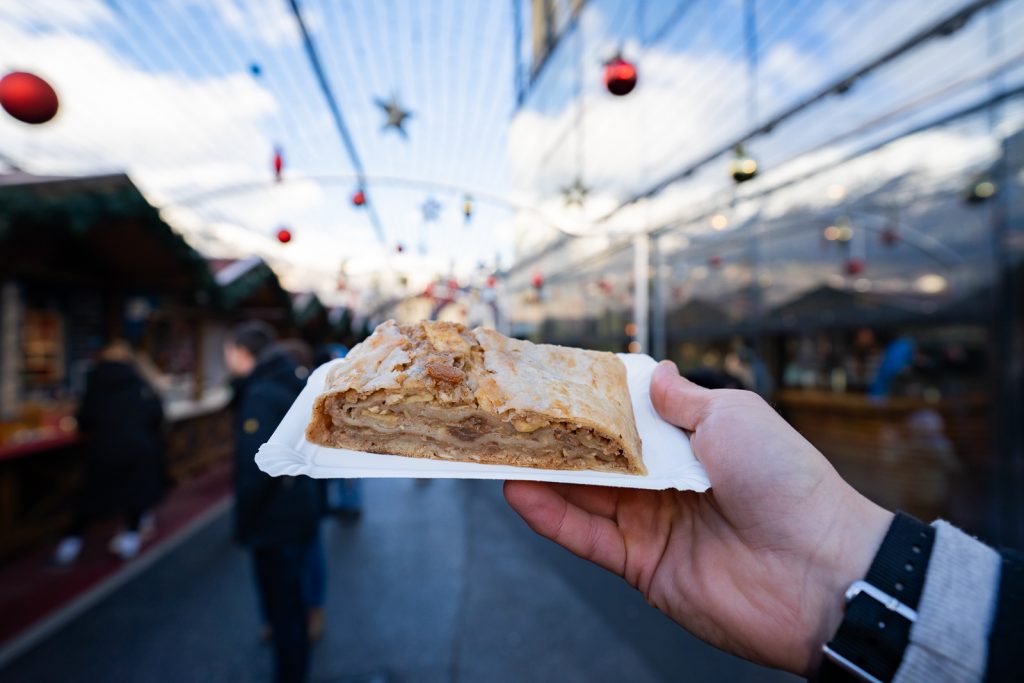
Maybe one of the most classic Austrian and German desserts is the simple strudel. This is a flaky, layered pastry, usually filled with sweet items inside. Apfelstrudel (apple) may be the most common variety, but they can be stuffed with all kinds of varieties of fruits or nuts. While delicious on its own, it’s extra good with ice cream or whipped cream.
Where can you find it?
You’ll find some form of this at most markets across Germany! We actually tried it in Innsbruck and it was served to us cold, which we aren’t 100% sure if that is normal or not, but something to be prepared for. It was tasty cold, but would’ve been next level warm!
18. Fruchtspieße (Chocolate covered fruit skewers)
Another ubiquitous German Christmas market dessert at fruchtspieße, which are chocolate covered fruit skewers. It may not be the most unique item, but if you’re looking for something a bit more fresh and not baked, then these can be a good option.
Where can you find it?
We saw fruchtspieße at just about every market we went to!
19. Gebrannte Mandeln
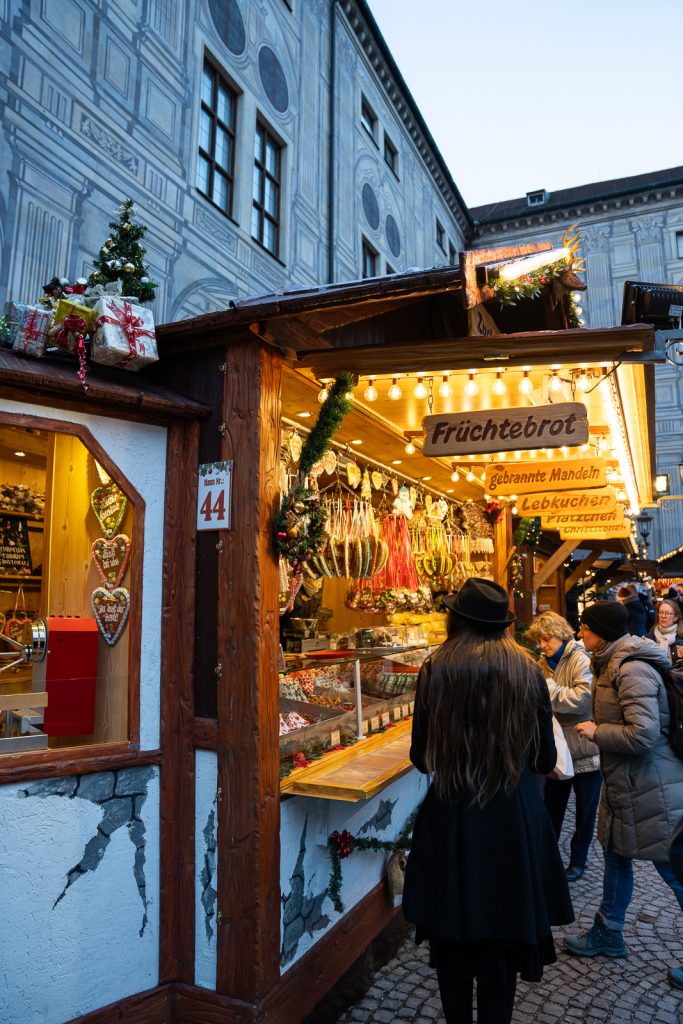
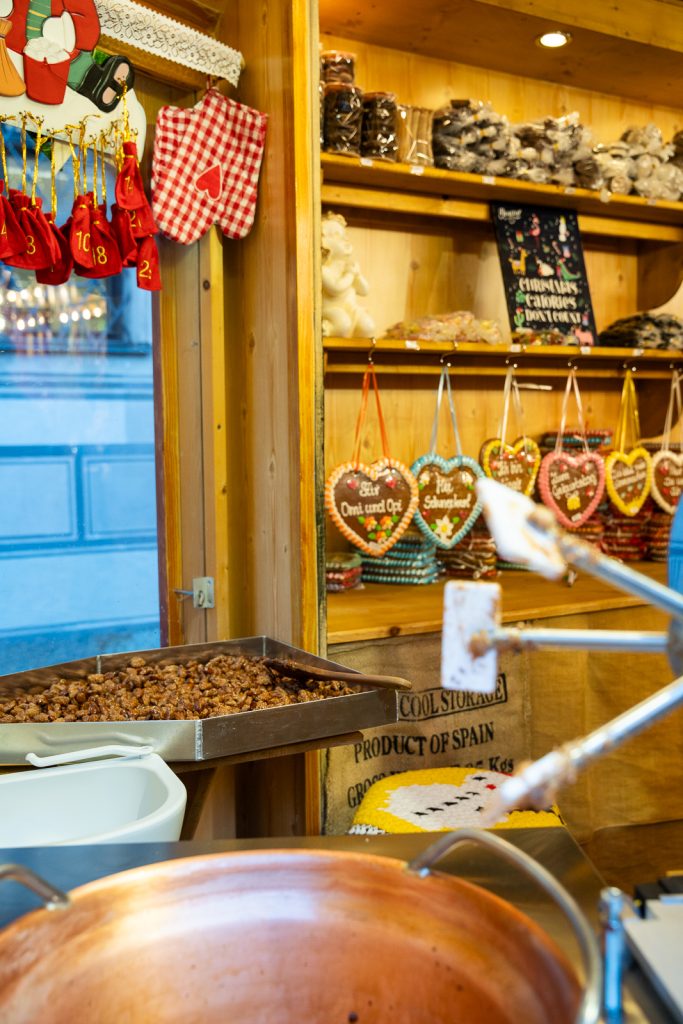
As you wander around the German Christmas markets you’ll smell a delicious sweet, cinnamony smell. Follow your nose and you’ll likely end up at a stand making and selling fresh gebrannte mandeln (candied almonds). They are super addictive and make for the perfect walking around snack as you browse souvenirs and people watch!
Prefer something less sweet? Most of these stands sell maroni (roasted chestnuts) as well!
Where can you find it?
You can find these everywhere! It is a super common German Christmas market food item. We tried ours at the Christmas Village at the Residenz.
20. Schmalznudeln
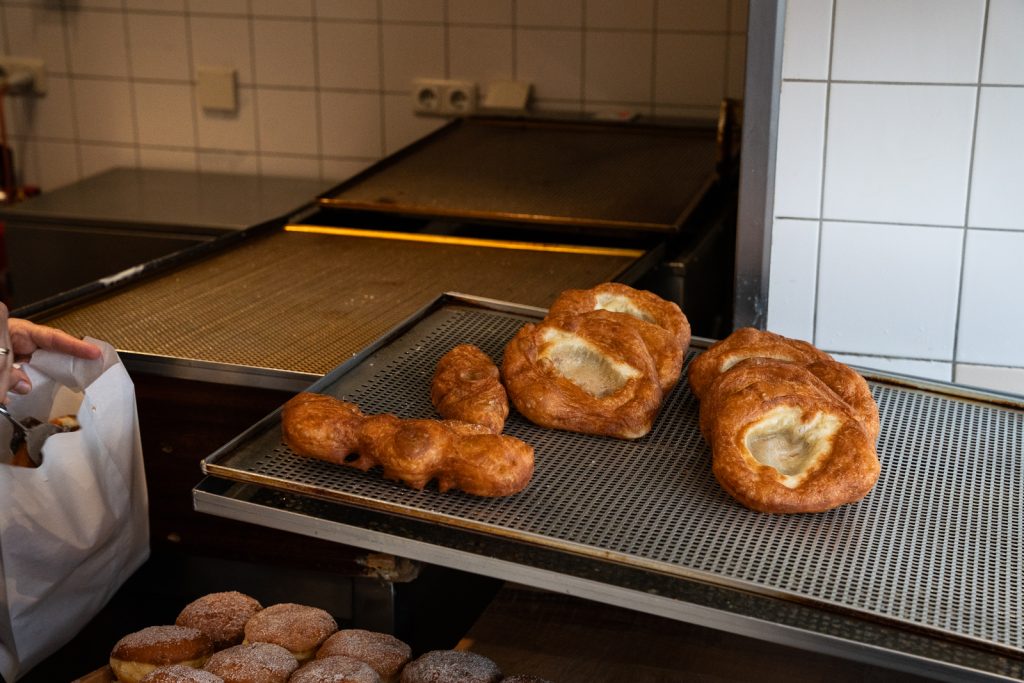
Another one of our top German food items, not even just at Christmas markets, is schmalznudeln (also called Ausgezogene). These are a Bavarian style pastry that has tall doughy walls and then a thinner layer in the middle. You’re supposed to pour sugar in the middle before you eat it or it may come dipped in sugar.
It is absolutely delicious! The dough itself isn’t sweet, but has a nice crispy and flaky texture, which when combined with the sweetness and crunchiness of the added sugar is perfect.
Where can you find it?
We only saw this at the Chinese Tower Christmas Market, but you can also get it at Schmalznudel – Cafe Frischhut in Munich!
21. Marzipan
Marzipan is a German staple that dates back to the 15th century. It consists of ground almonds and sugar, with sometimes rosewater, honey, and eggs being added. The paste that it makes can be shaped into all kinds of forms. You’ll see it formed into animal shapes, flowers, balls, and just about anything you can imagine! And you’ll sometimes find it covered in chocolate or with lebkuchen.
Where can you find it?
This is a popular item so you should be able to find it at most markets. Depending on if it’s chocolate covered or how it is presented, it may be difficult to notice right away, so make sure to read signs!
22. Lebkuchen
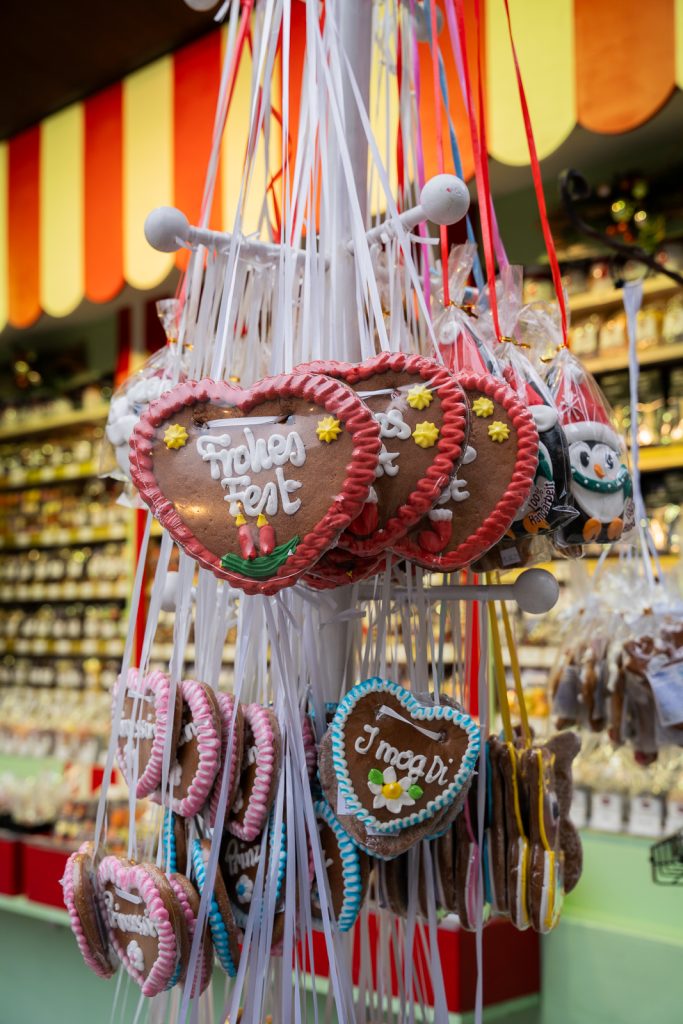
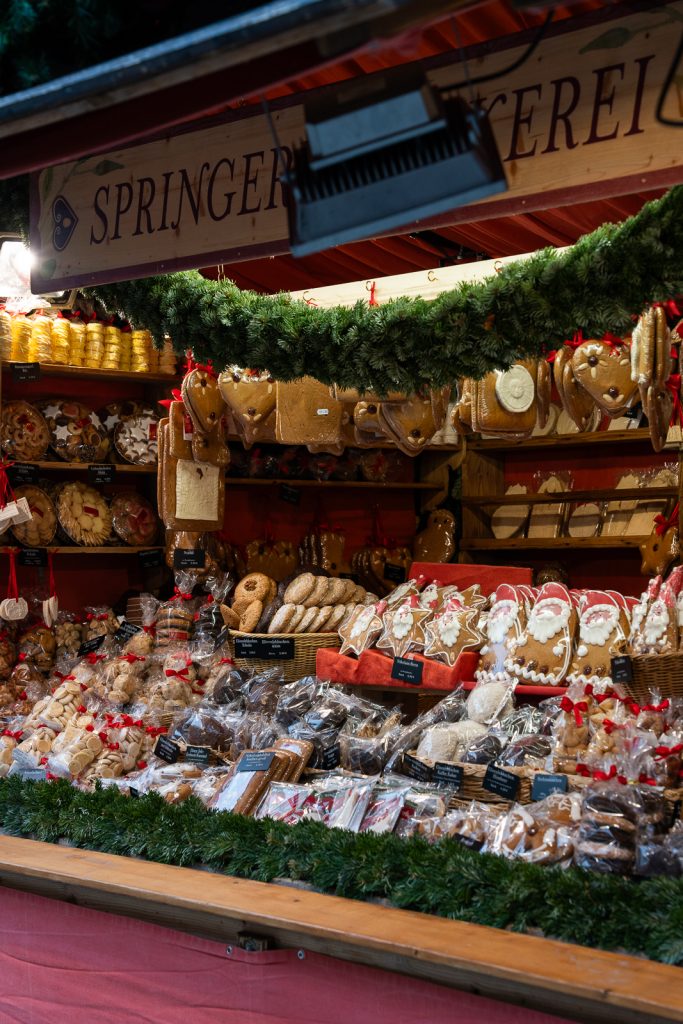
Another classic German dessert found at Christmas markets is lebkuchen, which originates from Nuremberg and is a spiced pastry. While they are often compared to gingerbread cookies due to their spices, they are slightly different. They are somewhere between a cookie and cake texture wise. And unlike thin and crispy gingerbread cookies, they are usually a bit thicker and softer.
They can be baked into all sorts of shapes and you’ll often see them as a giant, decorated cookie that is bigger than your face! However, we will say that these massive ones aren’t the same as the traditional lebkuchen. They resemble traditional gingerbread a bit more. While you can certainly try those, here’s a good example of what a more traditional Nuremberg lebkuchen looks like!
Where can you find it?
For the ultimate and most authentic Lebkuchen, head to the Christmas markets in Nuremberg. But you will be able to find some iteration of it at most German Christmas markets.
23. Schaumkuss
Schaumkuss are marshmallows covered in chocolate. However, the marshmallow inside is closer to an airy marshmallow fluff than a typical marshmallow, which are a little more stiff.
While we did not try these in Germany, we tried something very similar in Copenhagen called flødeboller and loved it. So we are kicking ourselves that we didn’t try them in Germany too!
Where can you find it?
We saw these at just about every market, usually with the chocolate covered fruit. Make sure to try one for us!
24. Schneeballen
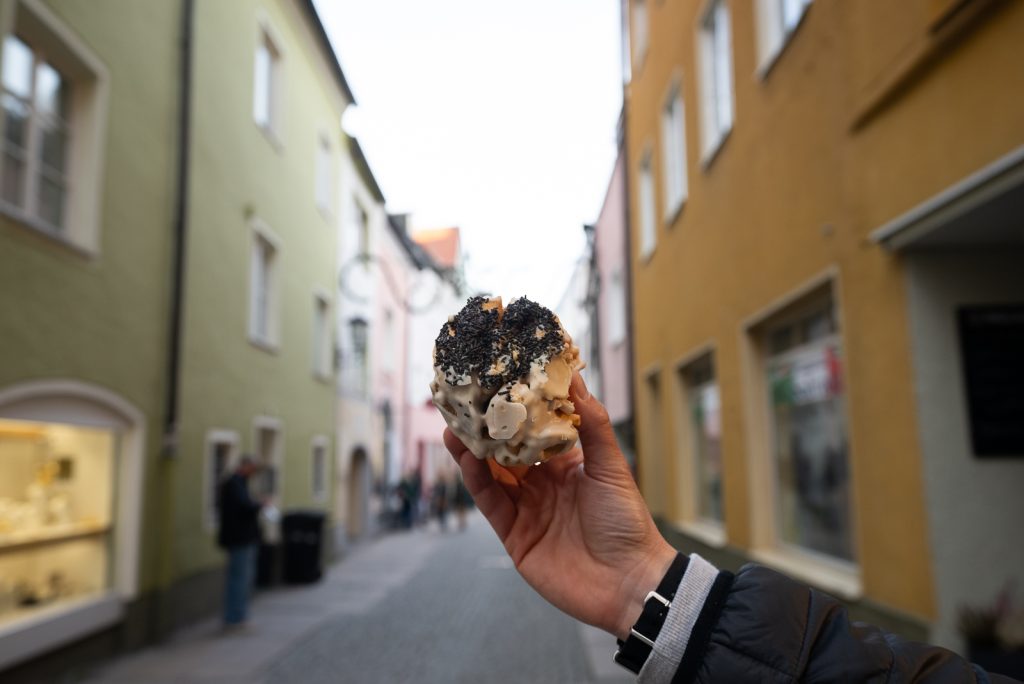
Schneeballen, which translates into snowball in English, is a deep fried pastry that is made up of a ball of dough strips. The shape kind of looks like you balled up a piece of paper.
We had heard mixed things about these, as some say they are pretty dry, but decided to try them for ourselves anyways. And while they are crispy and sort of dry, they are actually a bit softer than we thought they’d be (at least the ones we tried).
The dough itself isn’t very sweet, so they are often covered in powdered sugar (the most traditional) or other toppings, like chocolate, nuts, etc.
Where can you find it?
These are especially popular in Rothenburg ob der Tauber, which is where they originated from. But we actually tried them at a shop in Füssen. If you’re visiting Christmas markets in Bavaria, they’ll likely be easier to find than in Northern Germany!
German Christmas Market drinks
And now for the drinks! You’ll definitely want something to wash down all of the hearty and sweet German Christmas market foods. While we do not drink alcohol, we still got to enjoy quite a few festive drinks at the Christmas markets. And for those who do drink alcohol, Germany has a couple classic drinks you must try!
25. Gluhwein
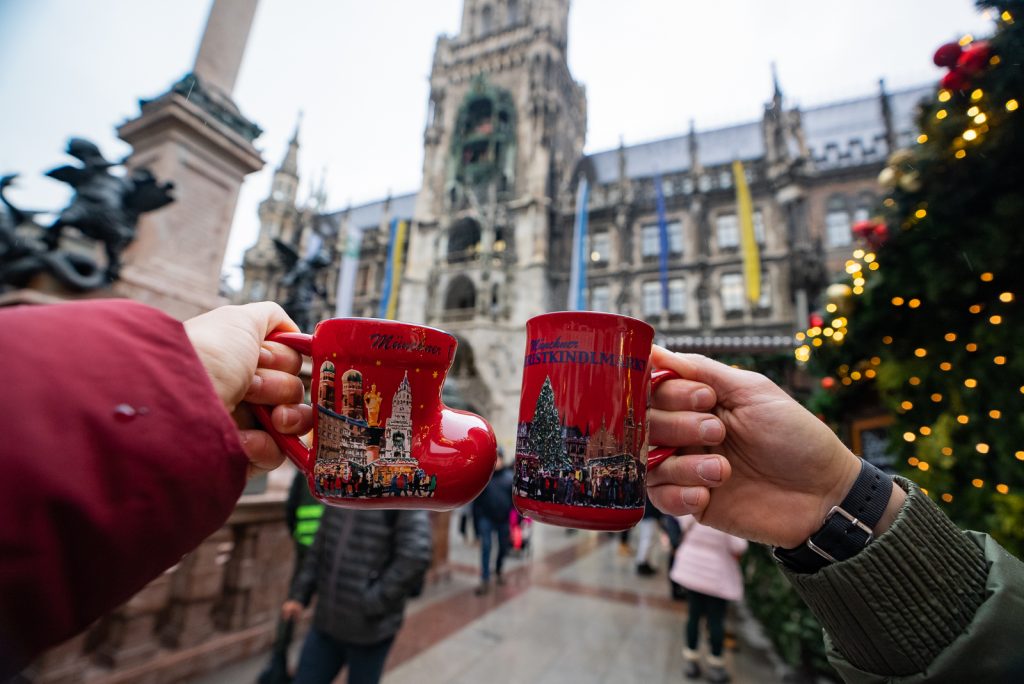
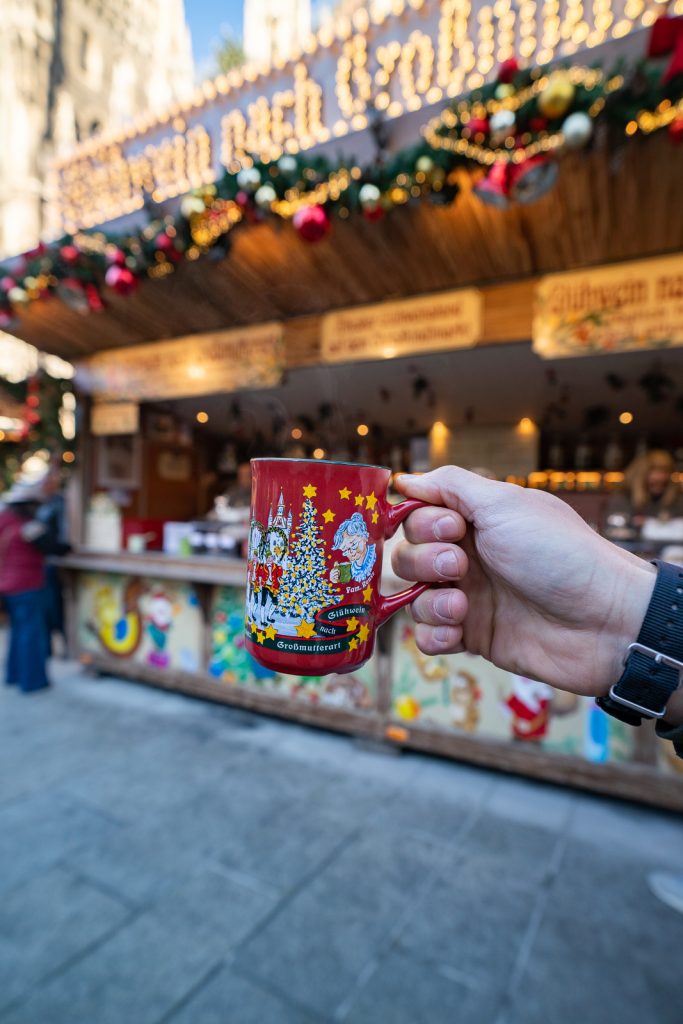
The most classic German Christmas market drink is gluhwein. Gluhwein (pronounced glue-vine) is a spiced wine or mulled wine made with mulling spices, served hot or warm. If there is one thing we saw the most at markets, it was gluhwein.
Where can you find it?
This can be found everywhere! Sometimes multiple within feet of each other! Our secret to picking which to visit? Choose the one who has the mug you like the best. That way, you can keep it as a souvenir (more on that later)!
26. Kinderpunsch
If you don’t drink alcohol, try kinderpunsch! This is similar to gluhwein, but is made out of fruit juices and mulling spices. One thing we loved about this drink is that there are so many varieties, depending on the juices and spices used, and everyone we tried was different. They also serve these in the fun Christmas market mugs, so you feel like you get the true gluhwein experience!
Where can you find it?
Similar to gluhwein, kinderpunsch is super popular and easy to find. Basically all stands that sell gluhwein will also have a non alcoholic version.
27. Feuerzangenbowle
The award for coolest looking drink at the Christmas markets certainly goes to the feuerzangenbowle!
The name of this drink means “fire tongs punch,” and is named after the tongs that hold a sugarloaf soaked in rum above a kettle. This fiery sugarloaf is then put into mulled wine, giving the drinks a flaming appearance.
Where can you find it?
This is a very popular drink and won’t be hard to find. For the most traditional version, check out the Feuerzangenbowle at the Isartor, a Christmas market dedicated to the drink! But we will say, the feuerzangenbowle at Munich’s Medieval Christmas Market looked extra cool in the clay goblet they serve it in.
28. Eierpunsch
Eierpunsch is a German egg punch that is made with egg liqueur and white wine. It is served warm and topped with whipped cream and sometimes a cinnamon stick. Some people call it a German style egg nog, but instead of milk, it uses white wine. This gives it a slightly less thick and creamy appearance.
Where can you find it?
We saw tons of people drinking this at the Christmas Village at the Residenz in Munich. But like most of these drinks, they are common at many German Christmas markets.
29. Heiße Schokolade
You’ll find this drink to be very familiar because it is hot chocolate, typically topped with whipped cream! It’s non alcoholic and is a great option for just about everyone. But of course, you can always spike it with some alcohol if you so choose!
Where can you find it?
This is another easy to find drink! We were so focused on trying as much kinderpunsch as possible that we missed it, but it’s high up on the list for our next German Christmas market visit!
German Christmas market tips
Before you head out on your wonderful German Christmas market adventures, read these tips so you know what to expect!
Opening dates and hours
Most markets begin just after American Thanksgiving (end of November) and end just before or after Christmas. If you’re visiting in late December, many of the markets may be closed, so we suggest visiting in early to mid December for the most options. Make sure to double check the dates and hours in advance!
Bring Cash
Cash is definitely king at the Christmas markets! Especially because of the deposits (more on that in a second). While many of the markets we went to did accept cards at some of the stalls, definitely plan to use cash for most.
ATMs
We suggest getting cash out at an ATM before visiting the markets (bank ATMs usually have the best rates), but if you happen to run low, all of the markets we visited had ATMs. These will have a fee, so be prepared to spend a little extra to use them.
Want to avoid ATM fees? We have a Charles Schwab checking account specifically for international travel. They refund ATM fees from ANY ATM worldwide! This gave us lots of freedom to use whichever ATM was most convenient.
When we could pay with a credit card, we always did, since we utilize travel credit cards to travel for free and cheap. See our top travel credit cards here!
Toilets
We have good news and bad news about the toilets. First, the bad…you’ll most likely have to pay to use the restroom when in public in Germany. The good news is they are usually attended, which means the bathrooms will be nice and clean!
Every Christmas market we visited in Munich had toilets. We saw bathrooms priced around €1 or less per person. Some did take credit cards or Apple Pay, but for the most part, they took cash.
Deposit (pfand) for mugs and plates
One thing we really liked about the European Christmas Markets were all of the reusable mugs and plates. To cut down on waste, many stalls charge a bit extra (called a pfand) to use their plates and mugs. So don’t be alarmed when you go to pay and it is a few euro higher than what is listed on the menu.
Once you’re finished with the dish, take it to the return stand and you’ll get your deposit back! The return area is usually in a different area, often on an edge of the stall.
You’re certainly welcome to keep the mugs also, in fact, this is a very common souvenir! Every town and market has different mug designs, so make sure to shop around to see which you like best. If you decide you want to keep some, make sure you have enough room in your luggage. And to keep them safe while traveling, we suggest wrapping them in your clothes.
Most menus are in German
We did find that most stalls listed items in German, so make sure to have a list of what you want to try in advance so you know what to look for. As well as have the Google Translate app on your phone and have German downloaded for offline use.
Despite many signs being in German, we found that most stall workers understand English.
See if the market has a speciality food item
While many German Christmas markets have the same food items, they aren’t all the same! Some markets, like Märchenbazar in Munich, focus on offering foods from around the world, while others, like the Chinese Tower market, specialize in an ox sandwich that would be hard to find elsewhere. Before you visit the markets, see if they have any unique items that they are known for and make sure to try them!
It’s not just German foods
We pretty much exclusively covered German foods on this guide, but if you have a hankering for other types of food at the markets – you’re in luck! At some markets we saw ramen, butter chicken, hamburgers, banh mi, and all kinds of other cuisines.
Food allergies/restrictions can be tough
While some markets have a variety of options including vegetarian, vegan, and gluten free, especially at the large markets, overall it can be tough. Vegetarian is definitely the easiest to find, but vegan and gluten free will have fewer options.
Make a plan and do a lap
Go into your German Christmas Market adventure with a few markets in mind and what foods and items you want to purchase. Then, when you first get to a market, do a lap around and scout out what foods you’d like to try and souvenirs you may want to purchase. This helped make it a little less overwhelming for us!
Try lots of foods and split
If you’re traveling with a partner who is open to sharing, we highly recommend splitting the meals and treats you get so you don’t have to buy two of everything and can try many different items.
Bring a bag
Make sure to bring a tote bag or backpack to carry all your gifts, leftover treats, and souvenirs!
Pin this guide with the best German Christmas market foods & drinks