Last updated on June 6th, 2026
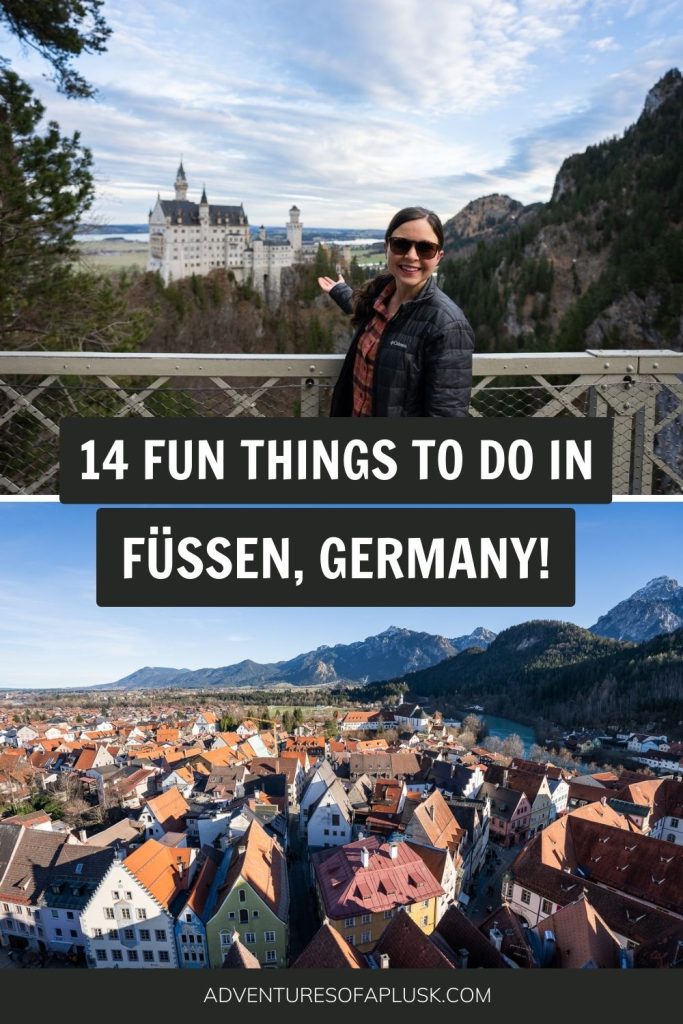
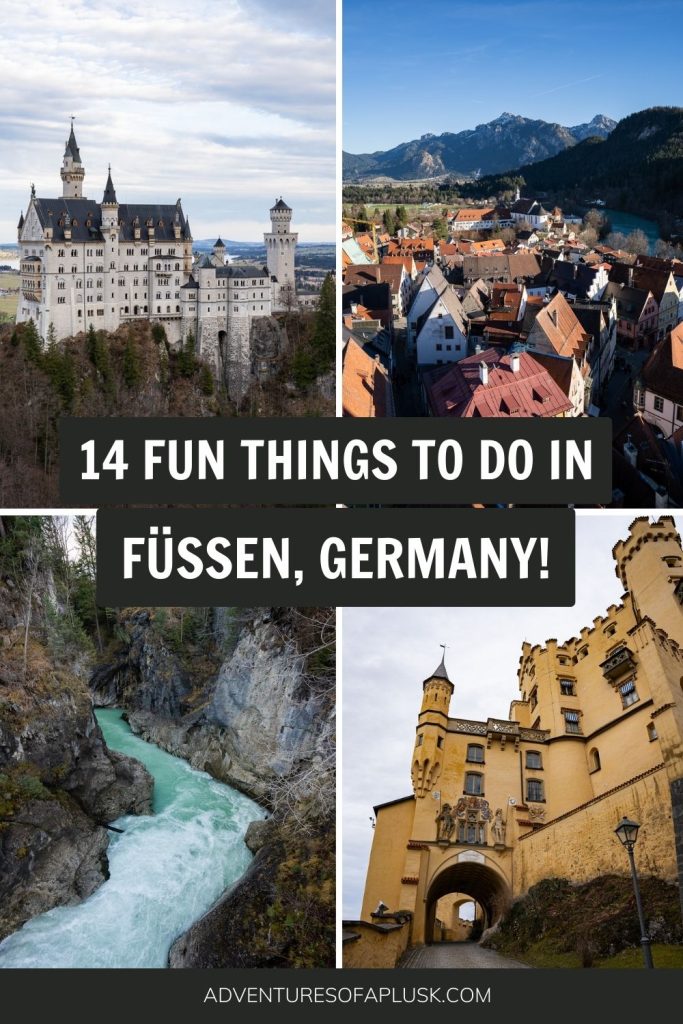
Want to visit a German fairytale? We’re sharing the best things to do in Füssen, Germany, including the famous Neuschwanstein Castle.
With numerous castles to explore, cobblestone streets, colorful medieval buildings, farmland and meadows, and a stunning mountain backdrop, the Bavarian town of Füssen offers plenty to make you feel like you’ve stepped into a storybook. In fact, it’s even known as the “Romantic Soul of Bavaria!”
Like many visitors to Southern Germany, Füssen was a must visit stop during our two weeks in Germany. And while this region may be most known for the popular Neuschwanstein Castle (which is pretty magical), there’s so much more to the area!
In this guide we’re sharing 14 fun things to do in Füssen, including both the popular sights and lesser known gems. Plus helpful planning logistics and tips to ensure that your trip is a fairytale…and not a nightmare.
Explore more of Germany:
- How to visit the Partnach Gorge (Partnachklamm) in Garmisch-Partenkirchen
- How to visit Neuschwanstein Castle in the winter
- The PERFECT 2 days in Munich Itinerary
- 5+ Munich Christmas Markets you must visit in 2024
- 29 German Christmas Market food and drinks to try
- The 15 BEST things to do in Garmisch-Partenkirchen in the winter
- 32 Epic Hikes in Europe You Need to See to Believe
- Watch our Germany videos
- 14 FUN things to do in Füssen, Germany
- 1. Visit the castles
- 2. Hike around Schwangau
- 3. Hang out at Alpsee
- 4. Visit the Museum of the Bavarian Kings
- 5. Explore other lakes in the area
- 6. Explore Füssen’s Altstadt
- 7. Wander around the Hohes Schloss
- 8. Visit Benedictine Monastery of St. Mang
- 9. Admire Lechfall
- 10. Visit Tegelberg
- 11. See Ludwig 2 The Musical
- 12. Visit the Falkenstein Castle ruins
- 13. Try Bavarian food at local restaurants
- 14. Go on a day trip
- Planning your trip to Füssen, Germany
14 FUN things to do in Füssen, Germany
1. Visit the castles
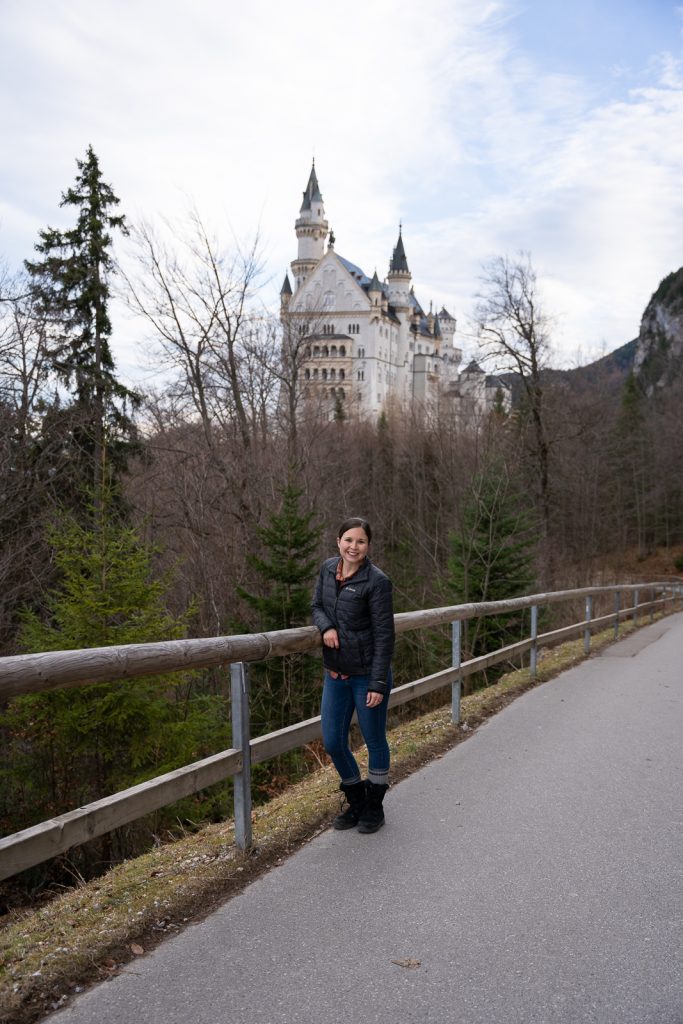
Without a doubt, one of the best things to do in Füssen, Germany is visiting the Neuschwanstein Castle and Hohenschwangau Castle! Yes, it’s touristy, but there’s a reason they are so popular. They are pretty spectacular!
You can find both of these castles in Schwangau, a small town 5 minutes from Füssen. It’s a short bus ride or taxi ride from town (or you can walk!). Once in Schwangau, the castles are either a 30-40 minute walk or you can take a shuttle or horse drawn carriage.
Below is a rundown of both castles, what to expect when visiting, the best viewpoints, tour information, and our top tips!
Neuschwanstein Castle
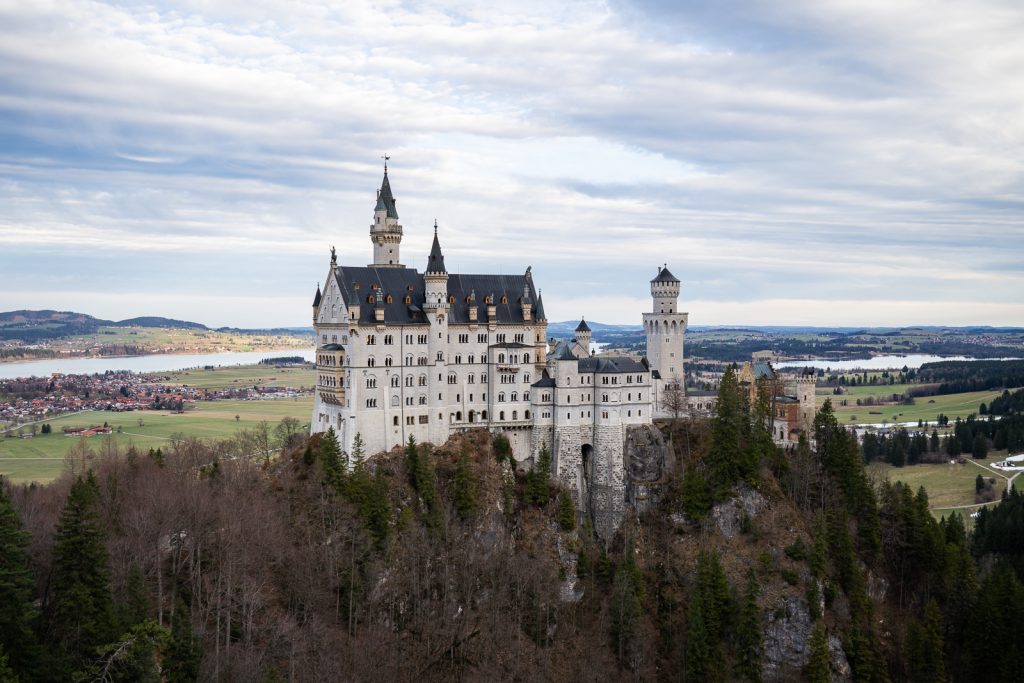
For years, Bavaria was ruled by the Wittelsbach dynasty, with King Ludwig II taking the throne in 1864. However, he was a reluctant king. Instead of focusing on state affairs he was much more interested in art and architectural projects. He spent the majority of his private royal revenues on lavish palaces, with one of his most famous projects being the Neuschwanstein Castle.
Construction of the Neuschwanstein Castle began in 1869 and was intended to be an escape and private residence for King Ludwig II. However, it was never fully completed. Ludwig moved in as construction was ongoing, but he began to run out of money and died in 1886, after only living in it for a total of 172 days. It was then opened to the public shortly after in order to recoup the debt of the construction.
Since then, it has been featured in movies and inspired art, most notably Disneyland’s Sleeping Beauty Castle. However, despite being called a castle, it is technically a palace, as it didn’t have any fortifications.
Today it is now one of the most popular tourist destinations in all of Europe, with over 1.4 million visitors per year!
Viewpoints of Neuschwanstein
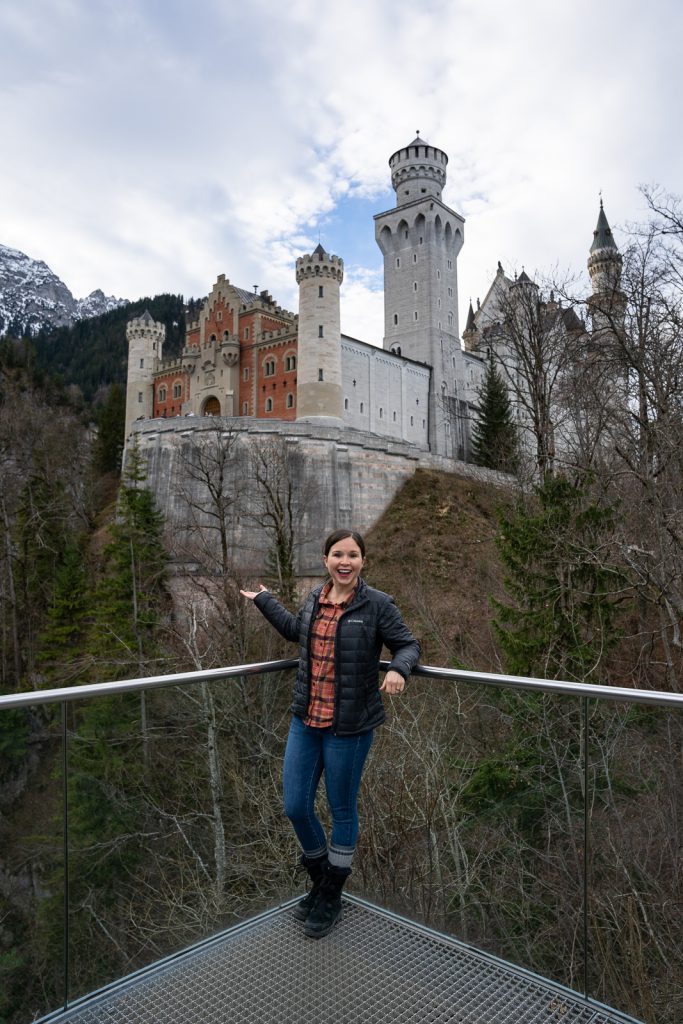
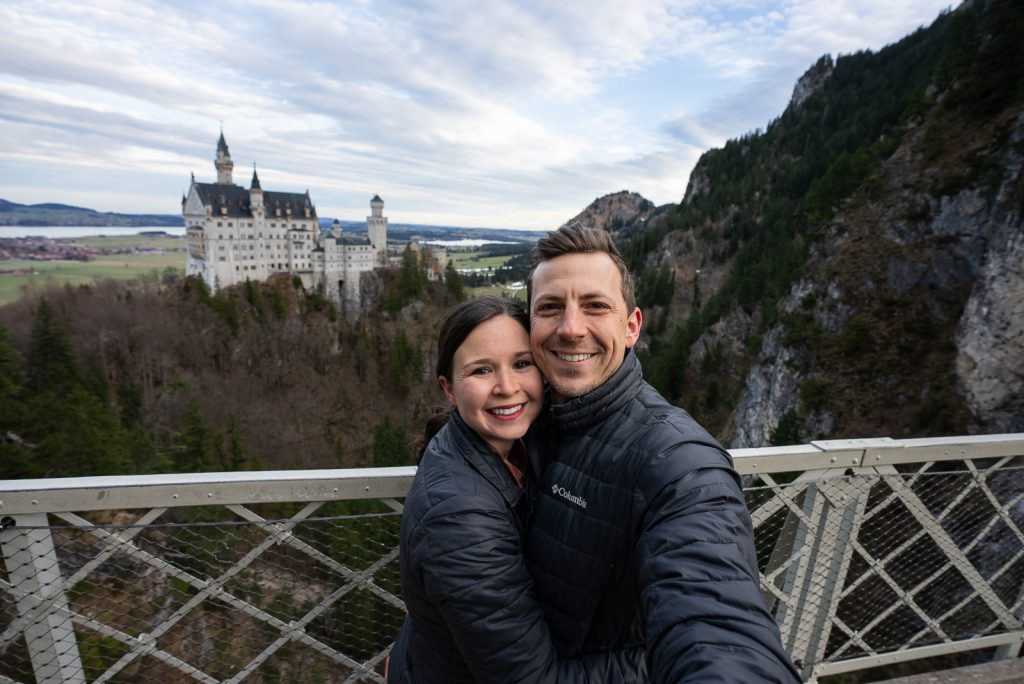
You can view Neuschwanstein Castle for free from a variety of viewpoints, with the most popular being Marienbrücke (Mary’s Bridge). This bridge rests over a gorge, with a head on view of Neuschwanstein. Despite seeing photos from this vantage point for years, seeing it with our own eyes was very special (it looks closer and bigger in real life)!
One important thing to know is that Marienbrücke is often closed in the winter. Despite visiting in the winter, we lucked out and it was still open. You can see its current status under “latest news” on this website.
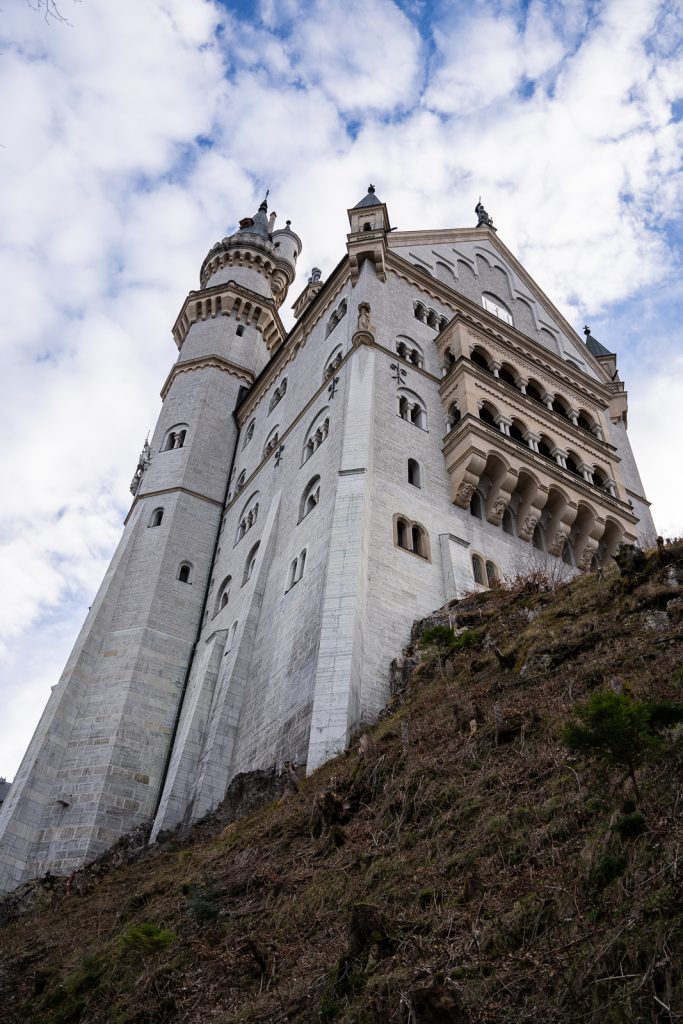
Besides this overlook, we highly recommend visiting this viewpoint as well for a completely different perspective. This side of the castle has a much different look than the rest of the castle. Also, near this viewpoint you can find a small cafe with snacks and coffee, a souvenir shop, and a restaurant. Plus restrooms!
Planning to visit Neuschwanstein in the winter (like we did)? We’re sharing everything you need to know in this guide, including what will and will not be open, the best things to do, and more!
Hohenschwangau Castle
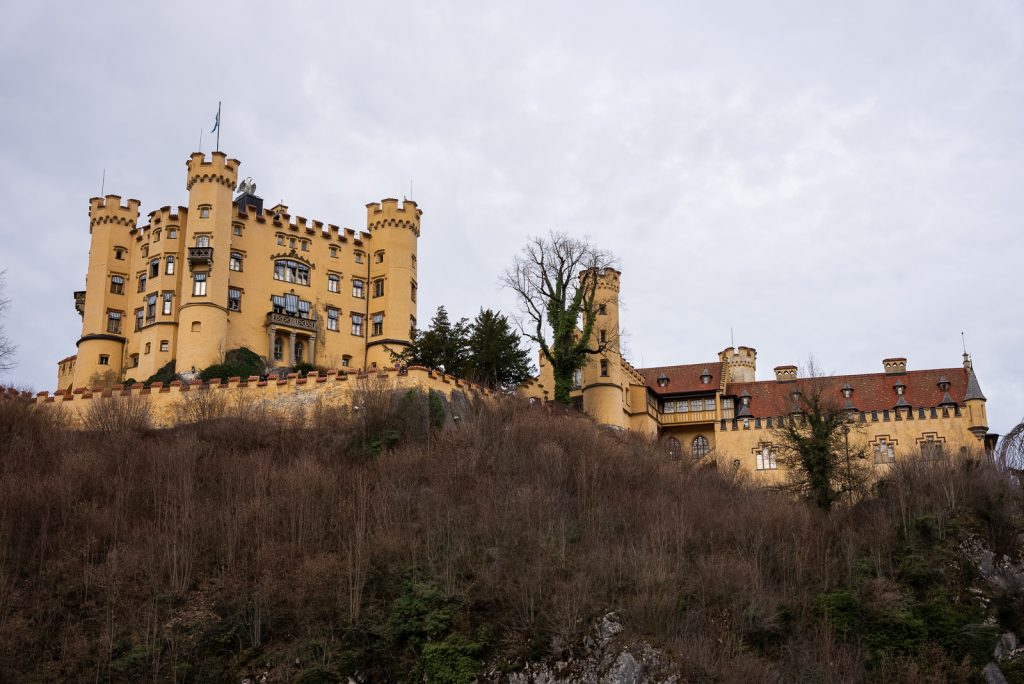
While Neuschwanstein is the most famous castle in the area, do not sleep on Hohenschwangau Castle! This castle has been mentioned in records since the 12th century, changing owners over time and being partially destroyed during different wars. In 1832, King Maximilian II, father of King Ludwig II, acquired the ruin and had the castle rebuilt. So while the current version wasn’t built by King Ludwig II, he spent much of his childhood living in it.
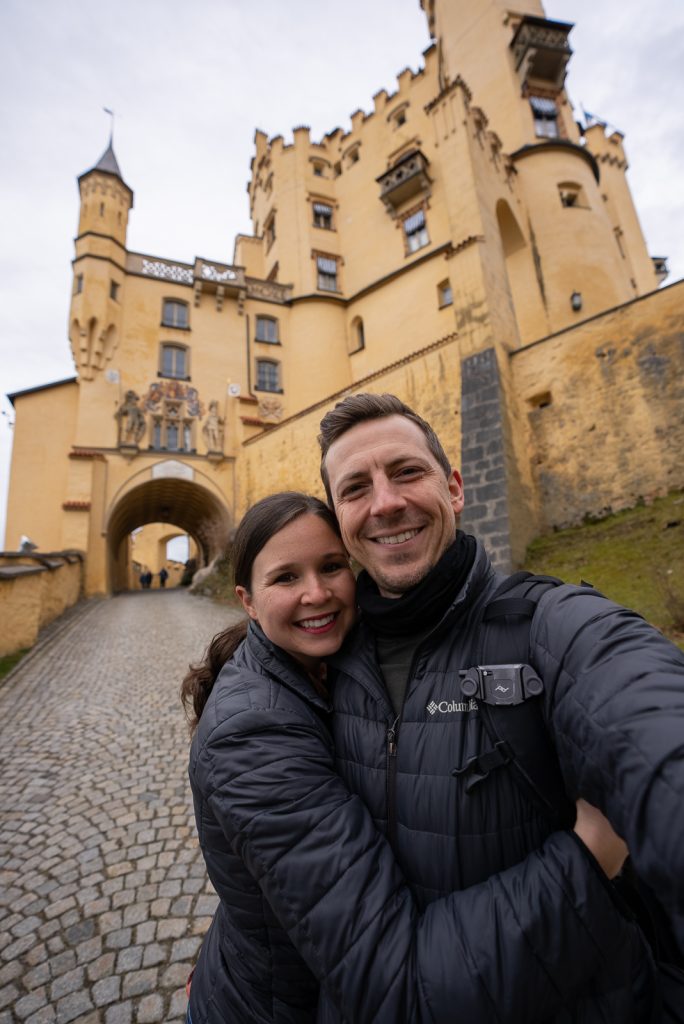
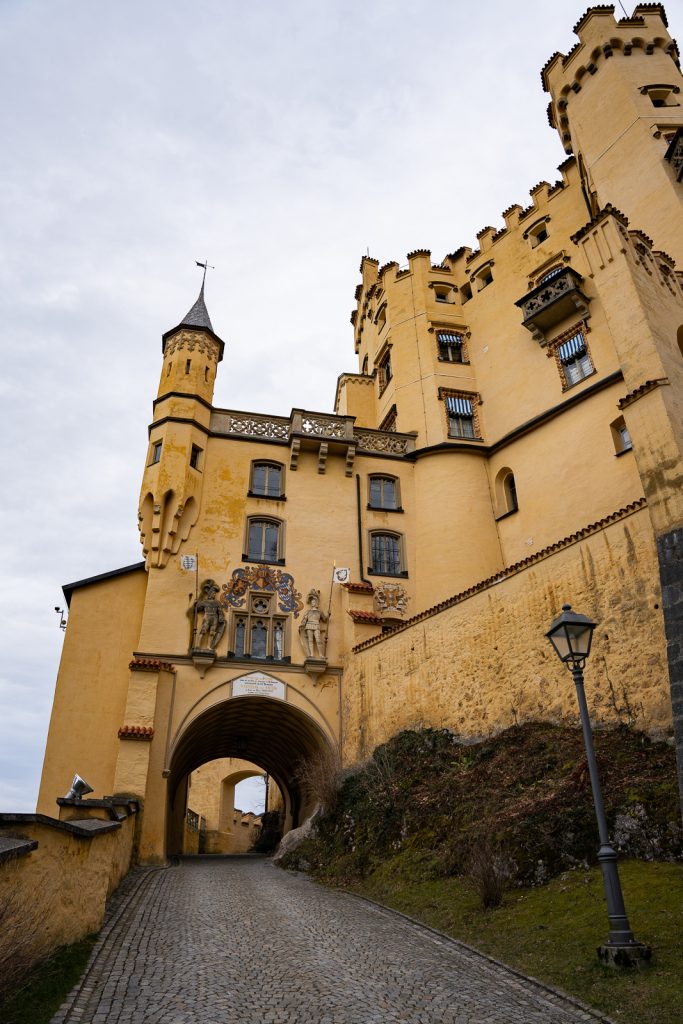
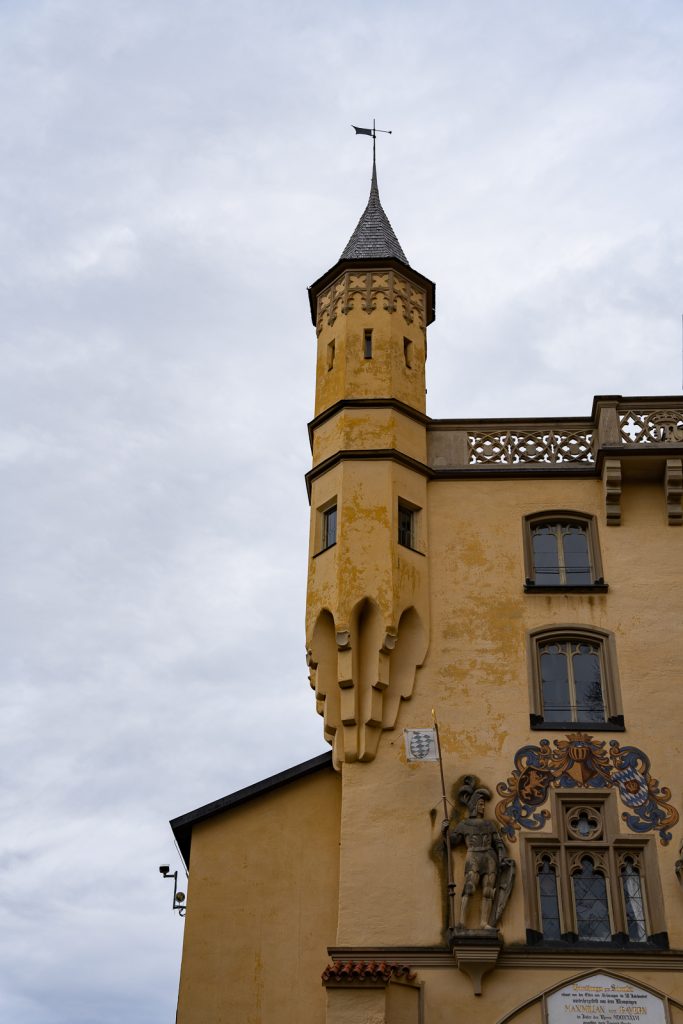
The exterior is vastly different from Neuschwanstein! While Neuschwanstein has a very grand, palatial look, Hohenschwangau has a bright yellow exterior, with a more medieval look to it. Its shape reminds us of how we’d draw a castle as kids!
Similar to Neuschwanstein, you can view the exterior of Hohenschwangau for free. You are able to walk around the majority of its exterior. There is a viewing platform with a great view of Alpsee, Neuschwanstein, and the surrounding area.
Touring the castles
If you’d like to visit the inside of the castles, you must go on a guided tour. You can visit the Neuschwanstein and Hohenschwangau Castles’ website to find out more about tickets and tour info.
While you can tour both castles, we opted to just tour one. And despite Neuschwanstein being the more famous of the two, we decided to tour Hohenschwangau. The reason for this is that we heard Hohenschwangau was more interesting inside, since it was actually lived in. We can’t speak for the Neuschwanstein tour, but we found the Hohenschwangau tour to be both fascinating and beautiful.
Some important things to know before touring the castles:
- Photos and video are NOT allowed inside.
- The castle tours do sell out so be sure to purchase tickets in advance.
- Do not be late! We’ve read that once your time passes, they will not let you in and you’ll have to purchase more tickets (if any are available).
A+K Tip: Arrive early! We started our hike up to Marienbrücke right after sunrise and had the bridge all to ourselves for about 10 minutes. Which was a very special experience! Shortly after, HUGE groups of people came and the bridge was packed. While you should expect lots of crowds when visiting the castles, starting early will allow you to enjoy some of it with a little bit of solitude.
2. Hike around Schwangau
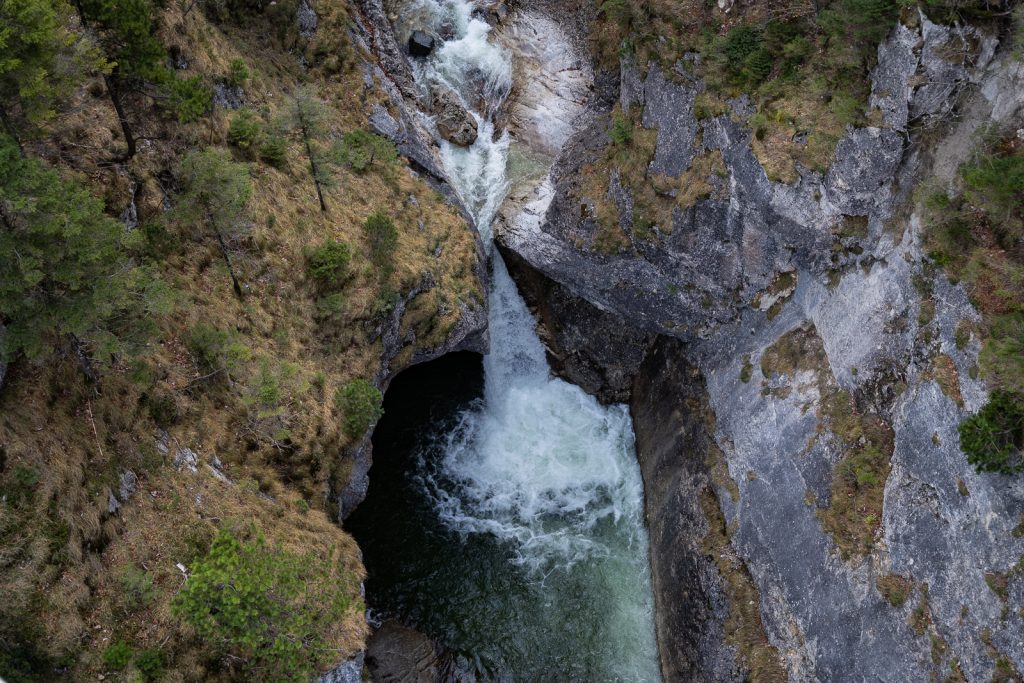
While the castles themselves are worth the trek, we honestly may have enjoyed the mountain scenery just as much, if not more!
Right by Schwangau you can find a variety of hiking trails. This trail will take you past Marienbrücke and into the mountains, where you can see a higher up view of the castles. Normally you can also hike down into the Pöllat Gorge, but it’s currently closed for safety reasons, with no opening date announced. The Pöllat Gorge is the gorge you’ll see running below you from Marienbrucke.
You can also hike around Alpsee, which we will share about next!
3. Hang out at Alpsee
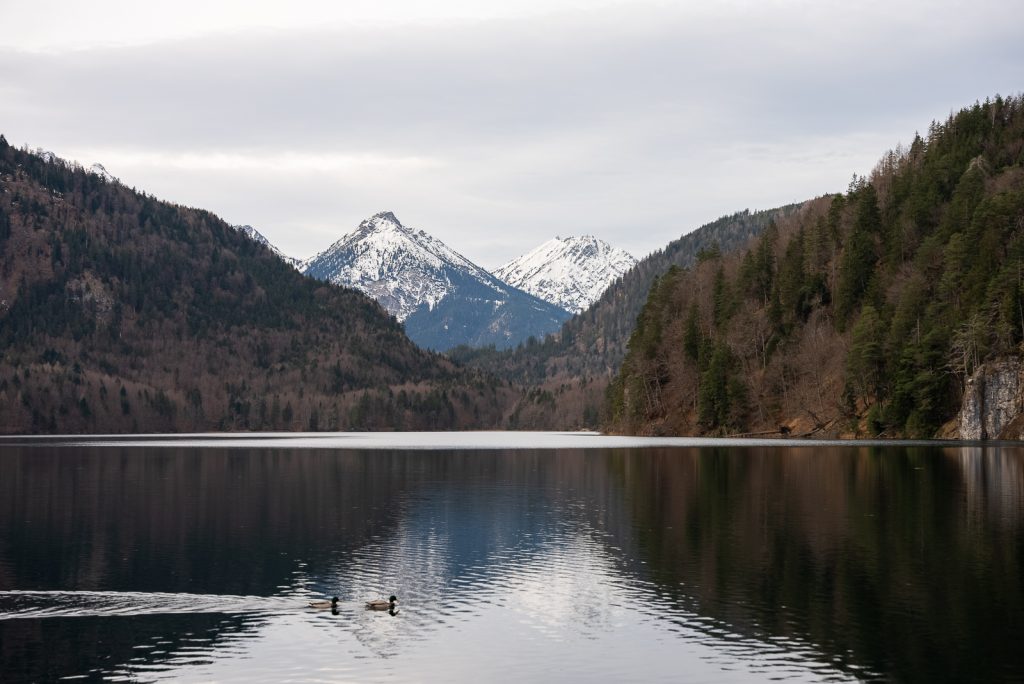
Located at the base of Hohenschwangau is Alpsee, a gorgeous lake with clear, deep turquoise waters. Plus a mountain backdrop! It makes for the perfect spot to have a picnic while visiting the castles, go boating (in the summer), or go for a hike around the lake.
4. Visit the Museum of the Bavarian Kings
Another attraction in Schwangau, right by Alpsee and the castles is the Museum of the Bavarian Kings, a small museum that shares more of the history of the Wittelsbach dynasty.
When purchasing your tickets for the castle tours, you can also get a combo ticket that includes the museum. If you have a full day to spend in this area, it’s a worthy add on!
5. Explore other lakes in the area
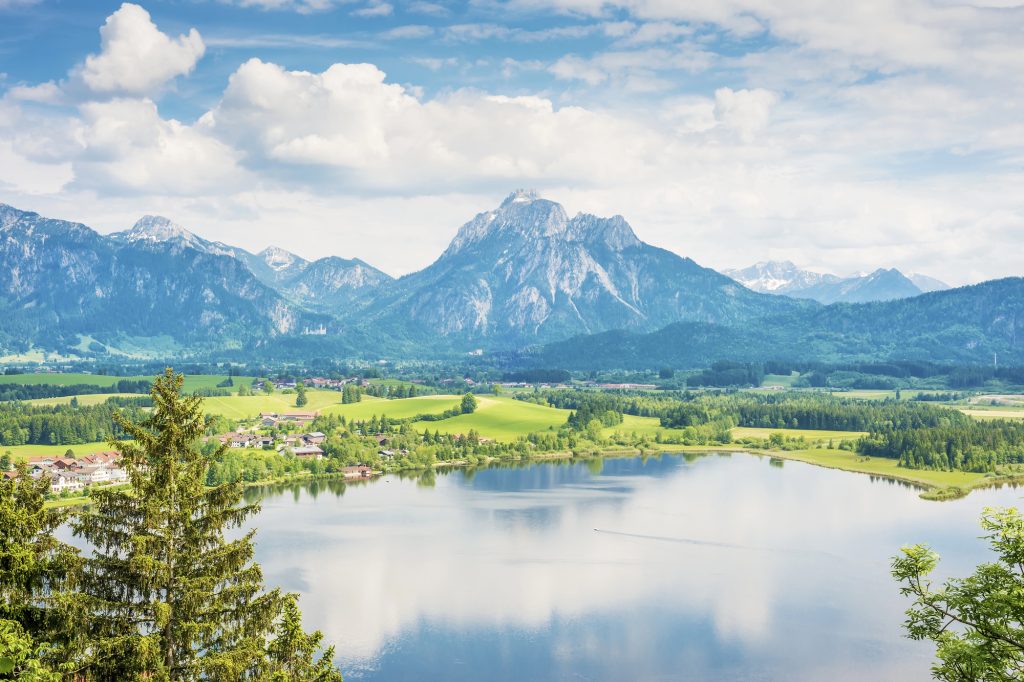
Besides Alpsee, the Füssen area is home to a plethora of other lakes to explore! During our visit, we stopped by Weißensee, where you can watch windsurfers in the morning or go for a stroll along the lake!
Another great lake to check out is Hopfensee. It is a great spot to swim, fish, and get on the water. You can rent an e-boat, paddle boat, or row boat at the Marina Hopfensee. You can also hike around the lake on this trail!
The largest lake in the area (and fifth largest in Bavaria!) is Forggensee. And the best way to see it is on one of their boat trips, which run in the summertime. Prefer to explore by bike? This cycling route will not only take you to Forggensee, but also Bannwaldsee.
6. Explore Füssen’s Altstadt
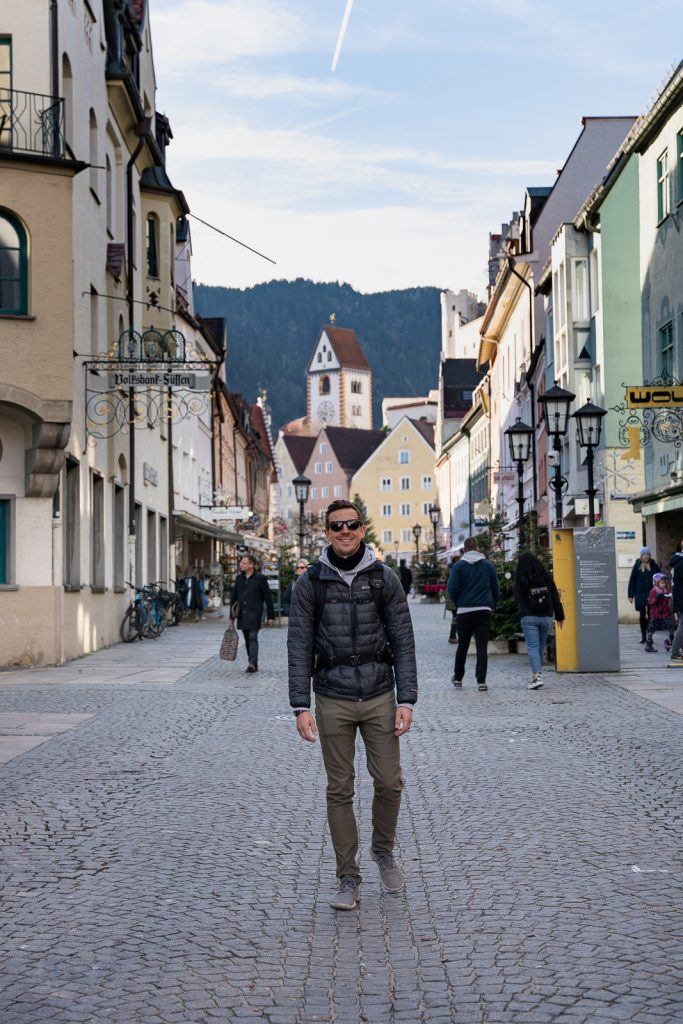
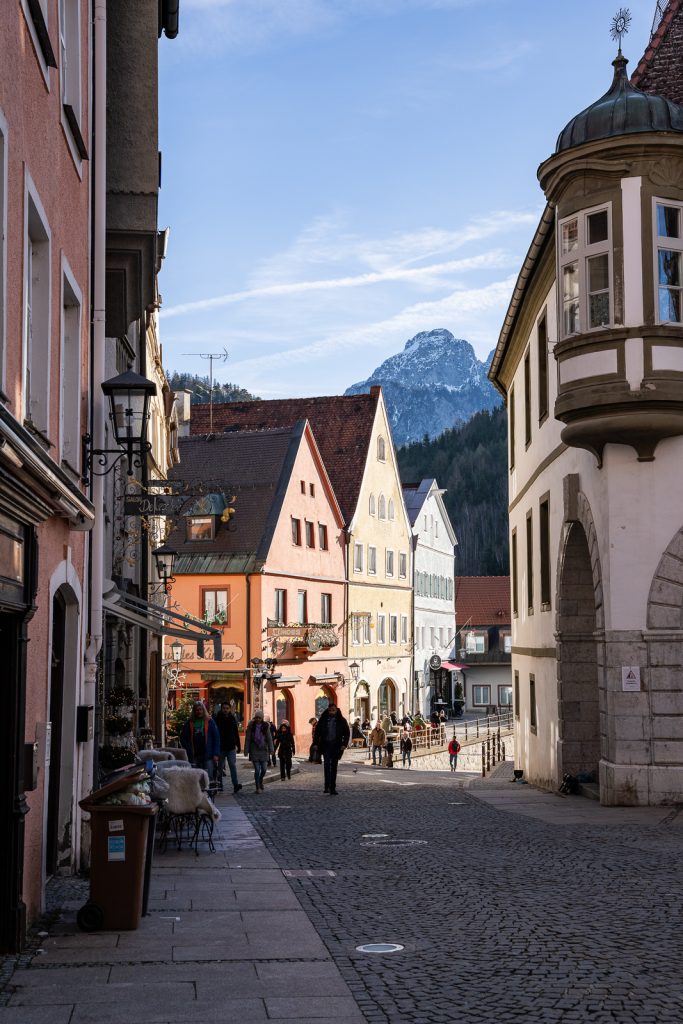
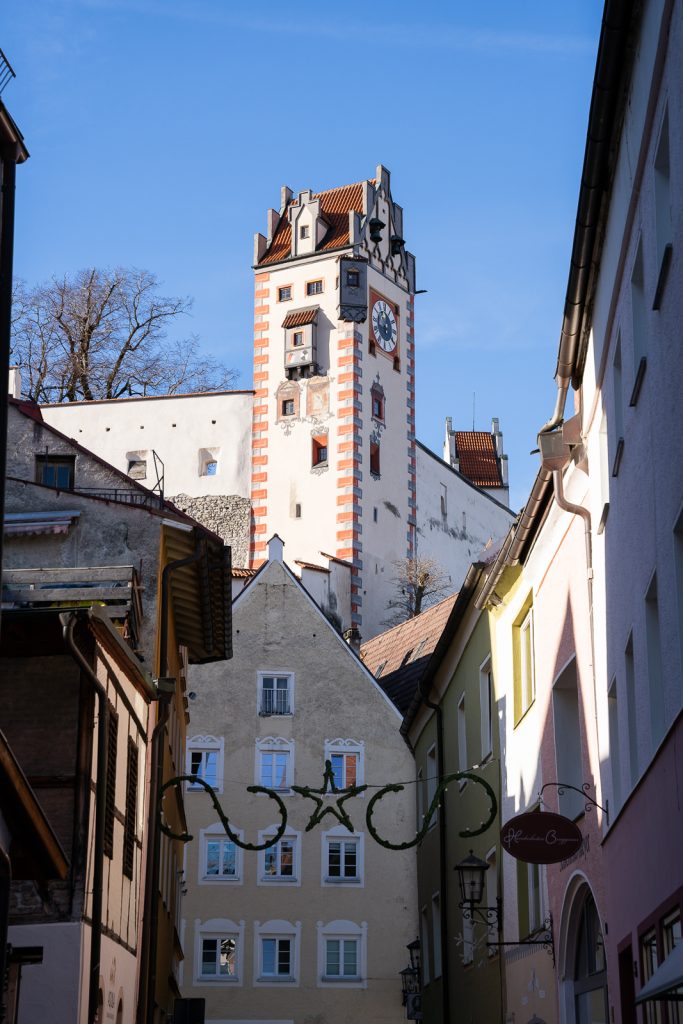
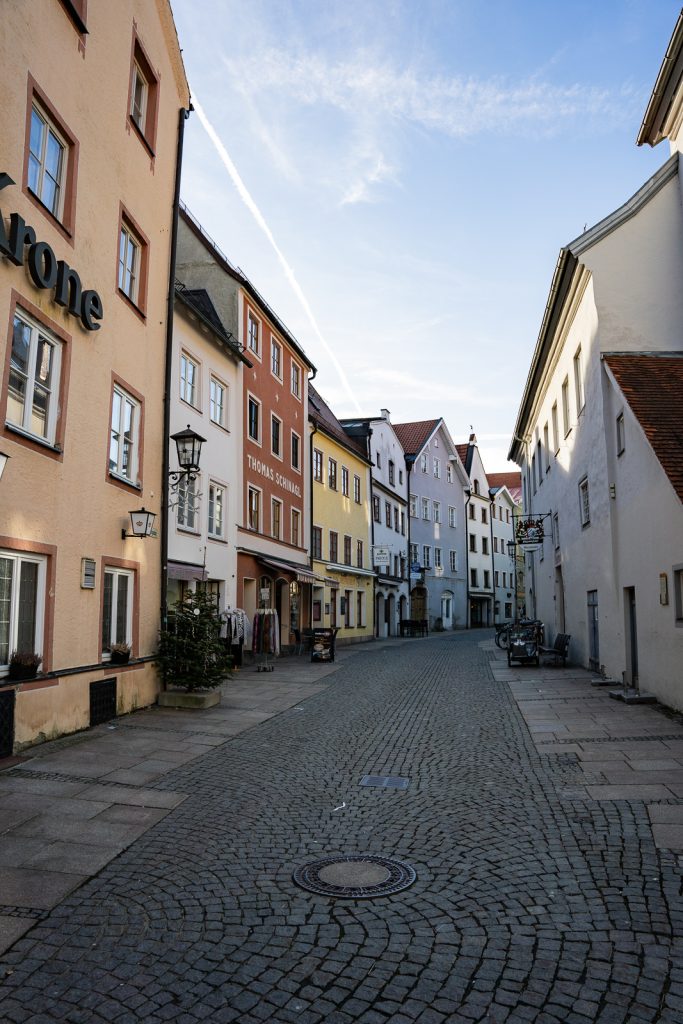
One of the best things to do in Füssen, Germany is to explore its Altsadt (Old Town)! The town dates back over 700 years and is loaded with character. The streets are lined with cafes, shops, and restaurants and we loved wandering around and admiring the colorful buildings.
While you explore, we suggest popping into Bio Café Baumgarten or Füssener Kaffeerösterei for a coffee! And for the ultimate experience, sit outside to enjoy your drink, while people watching and soaking up the Bavarian charm.
7. Wander around the Hohes Schloss
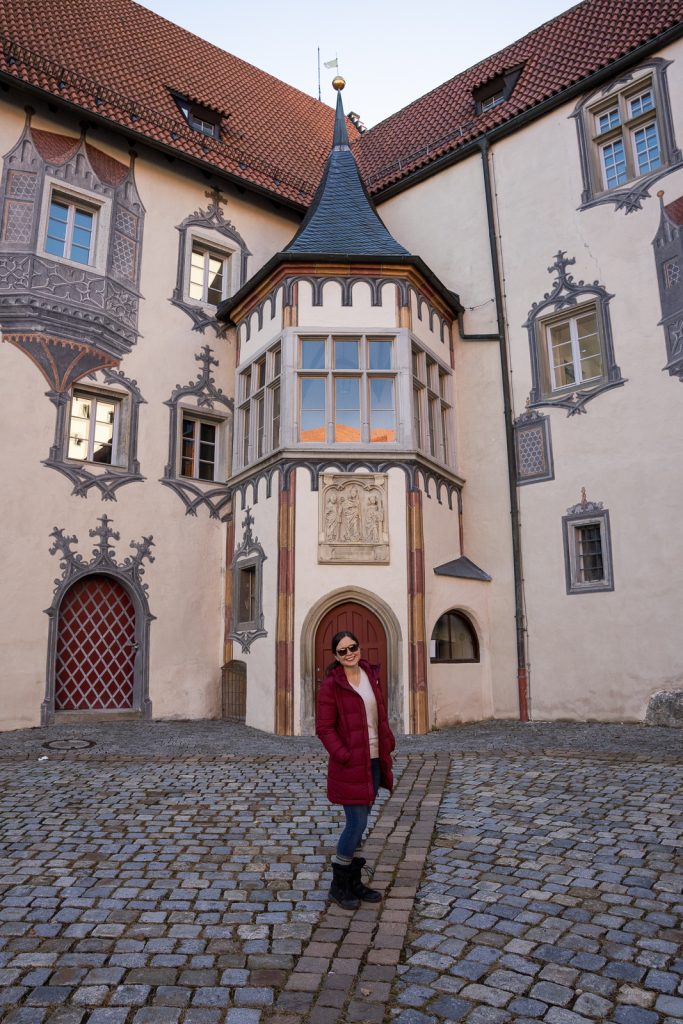
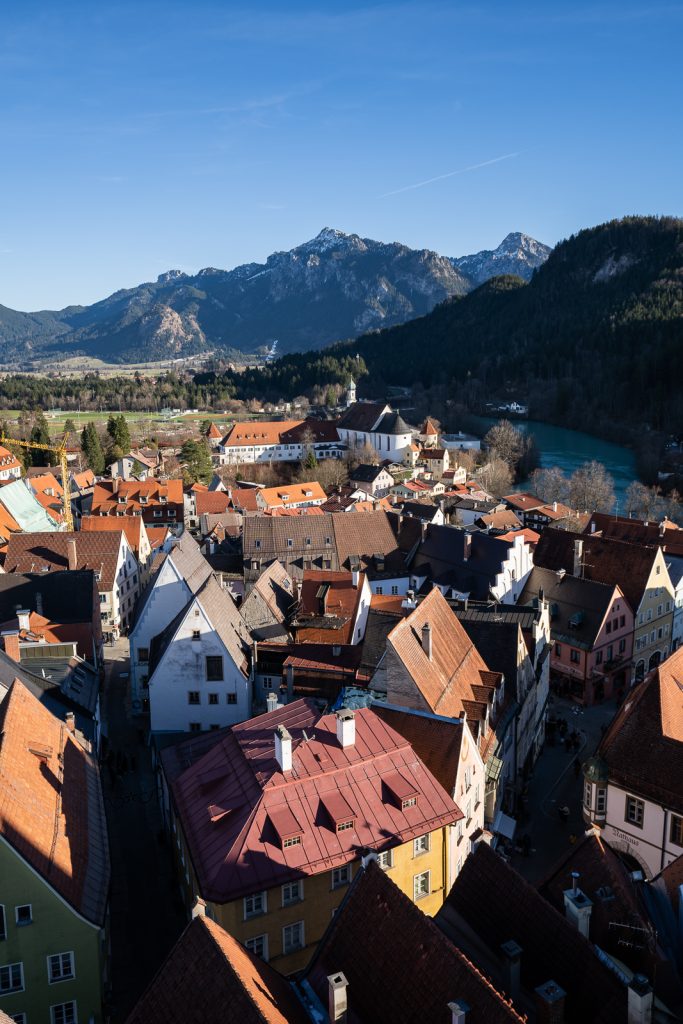
A must-do in Füssen’s Altstadt is visiting Hohes Schloss, or “High Castle,” which towers over town. Built in the 15th century, it was once used as a summer residence for the Prince Bishops of Augsburg. Today it is home to the City Gallery and Gallery of the Bavarian State, plus you can climb up to the gate tower for views of the city!
The courtyard is free to walk through, but to walk the castle walls and go in the gate tower, you’ll need to pay the entrance fee (5 EUR/person during our visit). It’s totally worth it! We loved seeing the Altstadt from above. All of the buildings have orange, curved rooftops, which look really neat from this perspective. Plus, the mountain views are top notch!
8. Visit Benedictine Monastery of St. Mang
Another popular attraction in the Altstadt is the Benedictine Monastery of St. Mang. This dates back to the 8th century and is one of the most culturally significant landmarks of Füssen.
There are a couple ways to explore here. You can tour the inside of the monastery, view German baroque sculptures and frescos, plus check out the Museum of Fussen.
At this museum you can see exhibits on the city’s history of lute and violin making. Other highlights of the museum include the Prince’s Hall, the library, and the Anna Chapel. Housed in the Anna Chapel is the Füssen Dance of Death cycle, which is the oldest Dance of Death cycle preserved in Bavaria.
9. Admire Lechfall
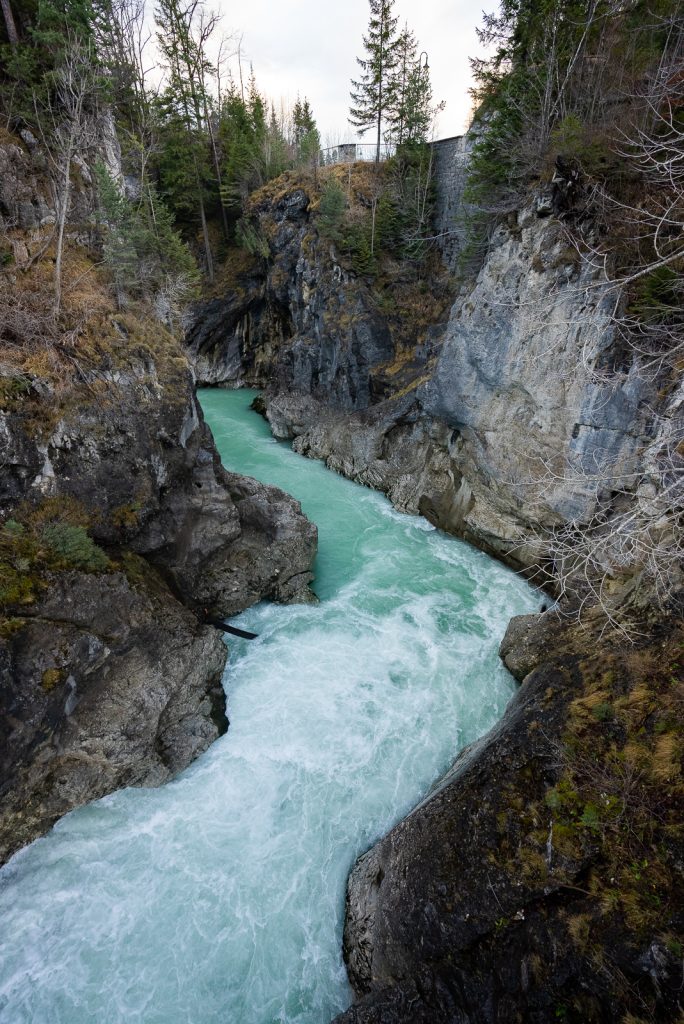
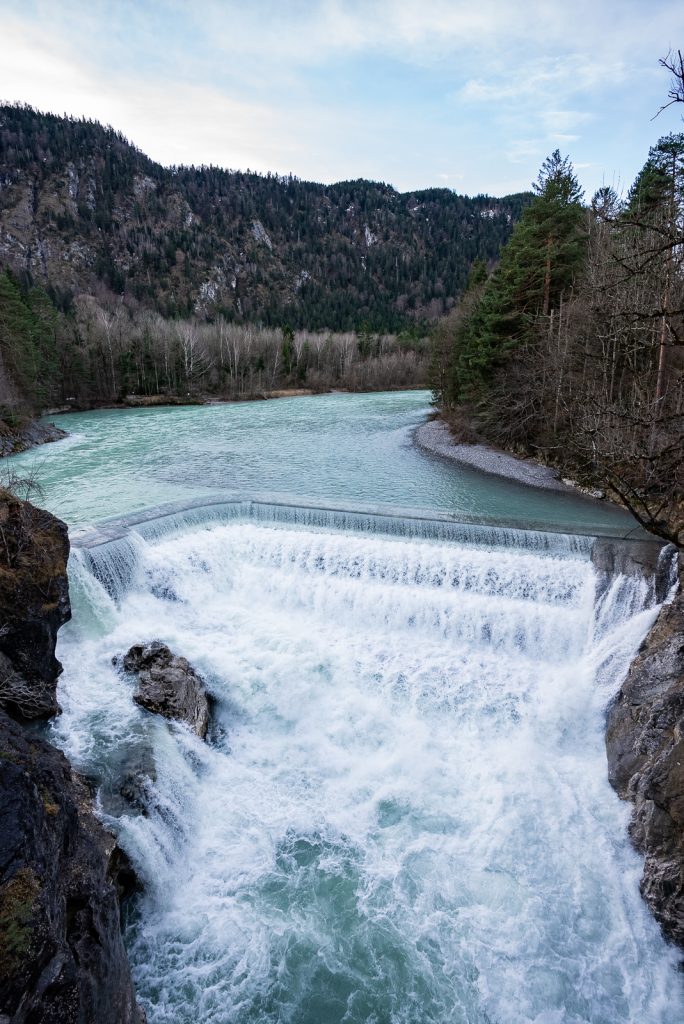
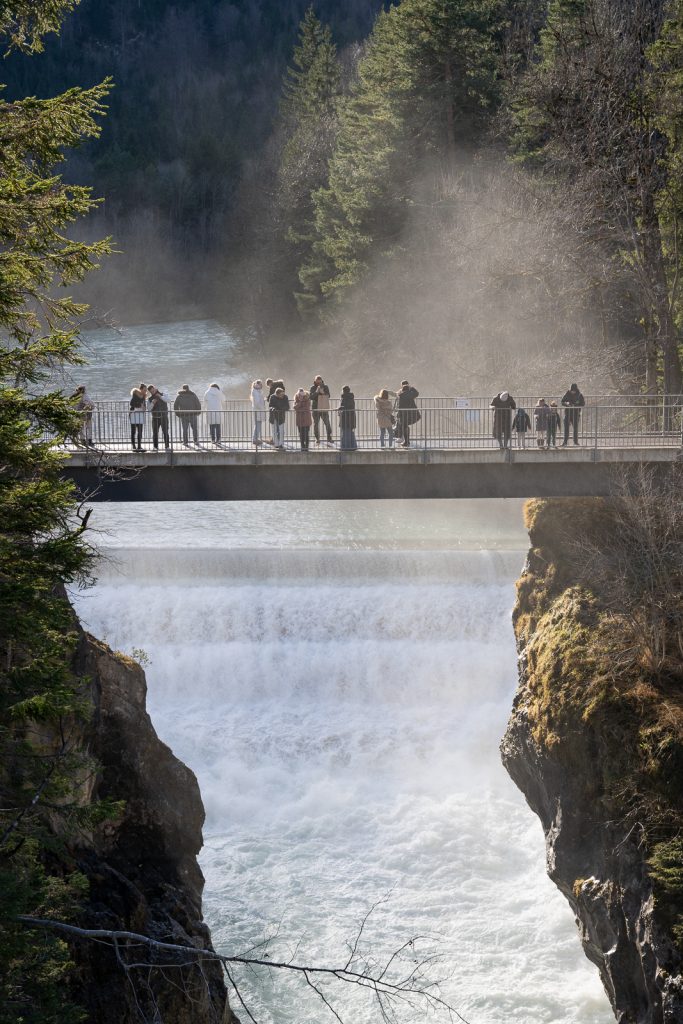
For nature lovers like us, one of the absolute best things to do in Füssen is visiting Lechfall! This is a man made waterfall along the Lech River, which has milky blue water due to the mix of the mineral content of stones and the low water temperature. The waterfall, while not tall, flows down multiple levels, before winding through a narrow gorge.
It is stunning! And the best part? It’s only a 10 minute walk from town!
10. Visit Tegelberg
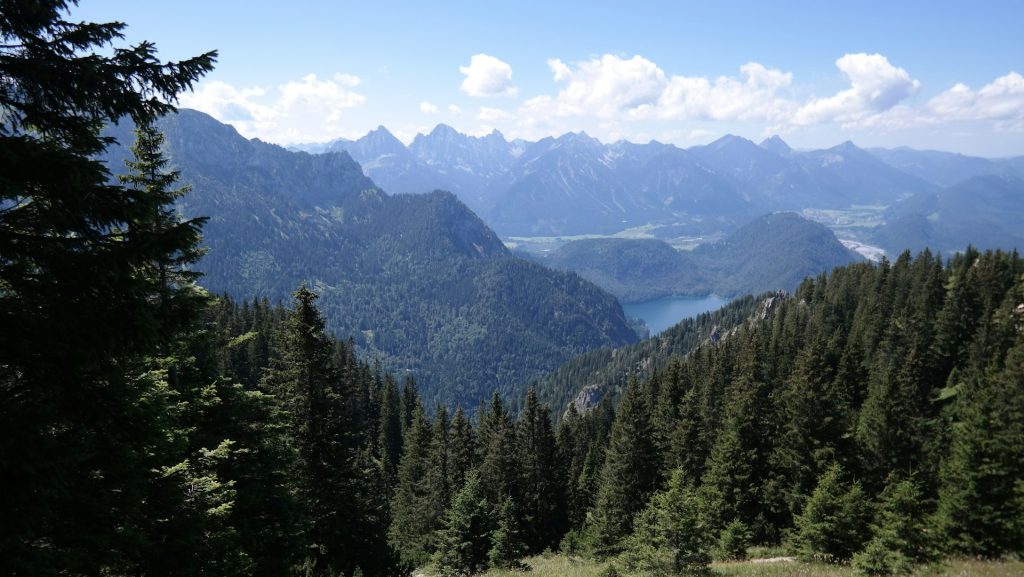
Tegelberg is a mountain recreation area above and to the east of Schwangau. To get there, you can either hike up or take the Tegelbergbahn cable car to the top. Once there, you can blaze down the summer toboggan run, climb a via ferrata, ski in the winter, and enjoy food with amazing views at Panoramarestaurant Tegelberg or Rohrkopfhütte – Die Berghütte.
Not only is this area super scenic, but it also was an area that King Ludwig II used to love to hang out. There is a short panoramic trail at the top called the Königsrunde that has multiple viewpoints of the surrounding area, including Neuschwanstein Castle!
There are also several mountain huts you can hike to. If you decide to hike anywhere in Tegelberg, there will likely be a hut along the way to take a break and recharge. Check out the interactive map on the Tegelberg website to learn more about the various huts and see their current hours, plus learn about the hiking trails on the mountain.
11. See Ludwig 2 The Musical
If you’re into musicals and theatre, head over to the beautiful Festspielhaus Neuschwanstein and watch a performance of Ludwig 2 The Musical. This musical is an award winning show that takes the audience into the life of The Fairytale King. It shares how he had to balance the expectations of a monarch, with his desire for artistic expression and desire for a private personal life.
Another popular show at the theatre is The Dream King. If you want more insight into King Ludwig II before or after visiting the castles, either of these shows would be a fun way to learn more about him!
12. Visit the Falkenstein Castle ruins
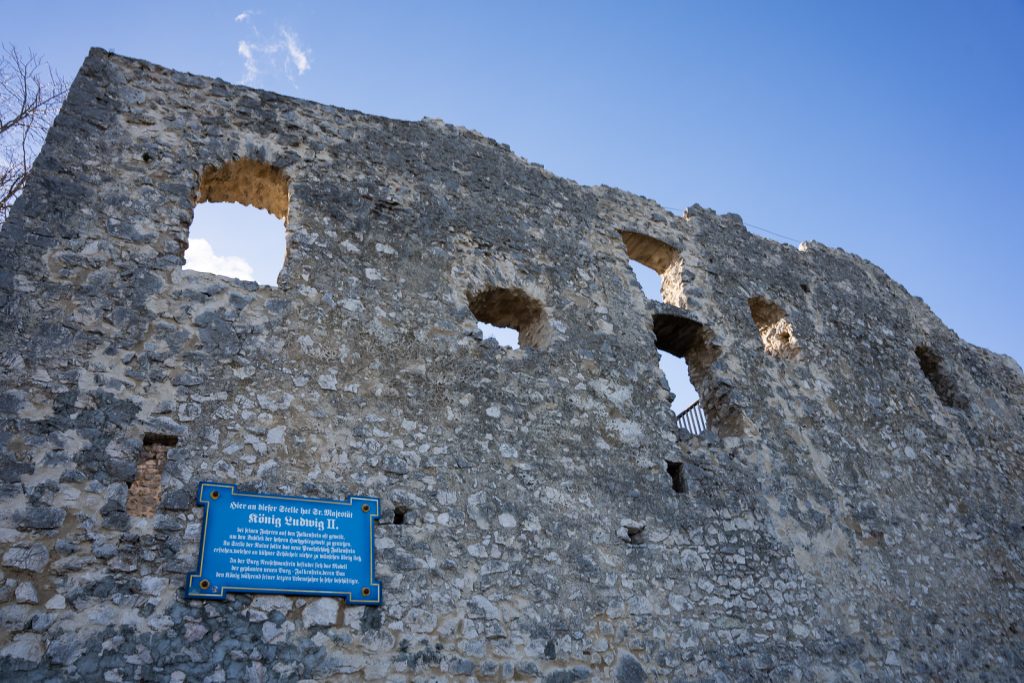
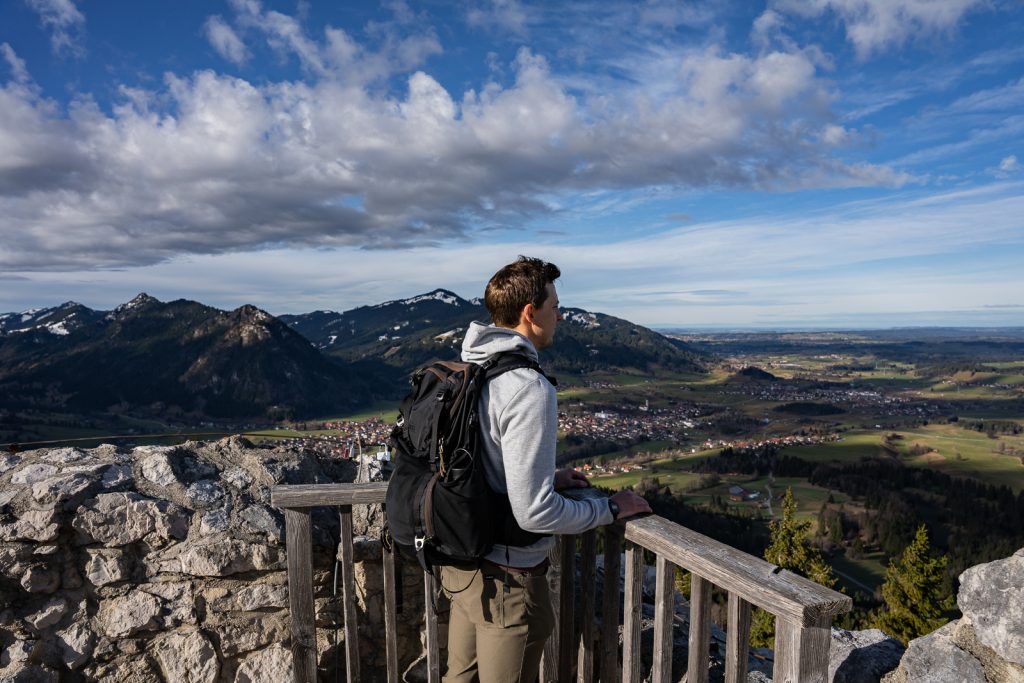
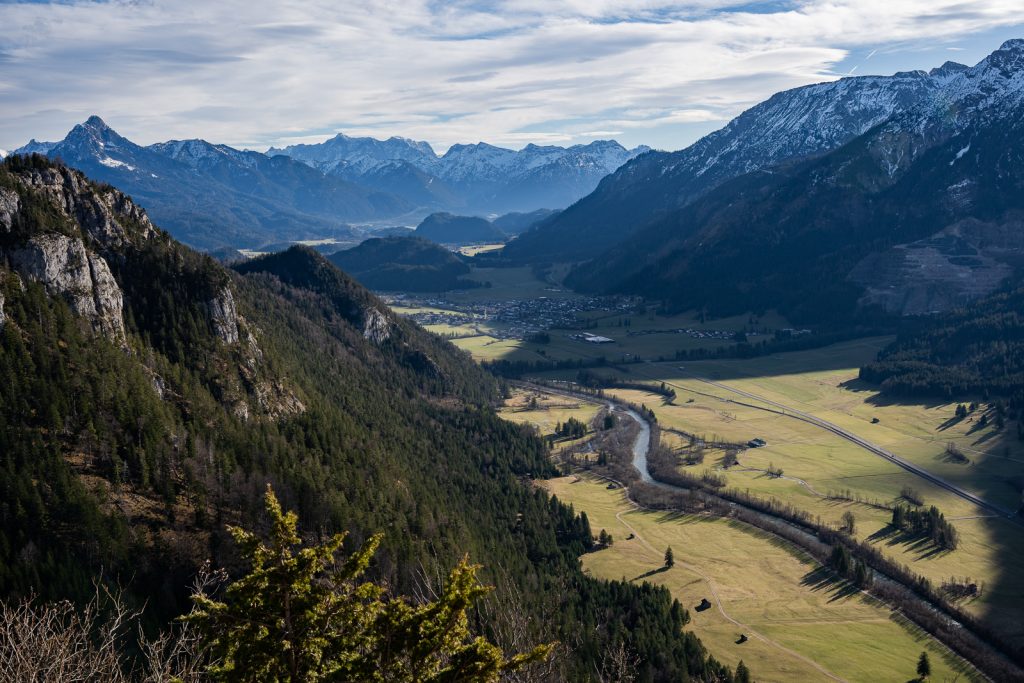
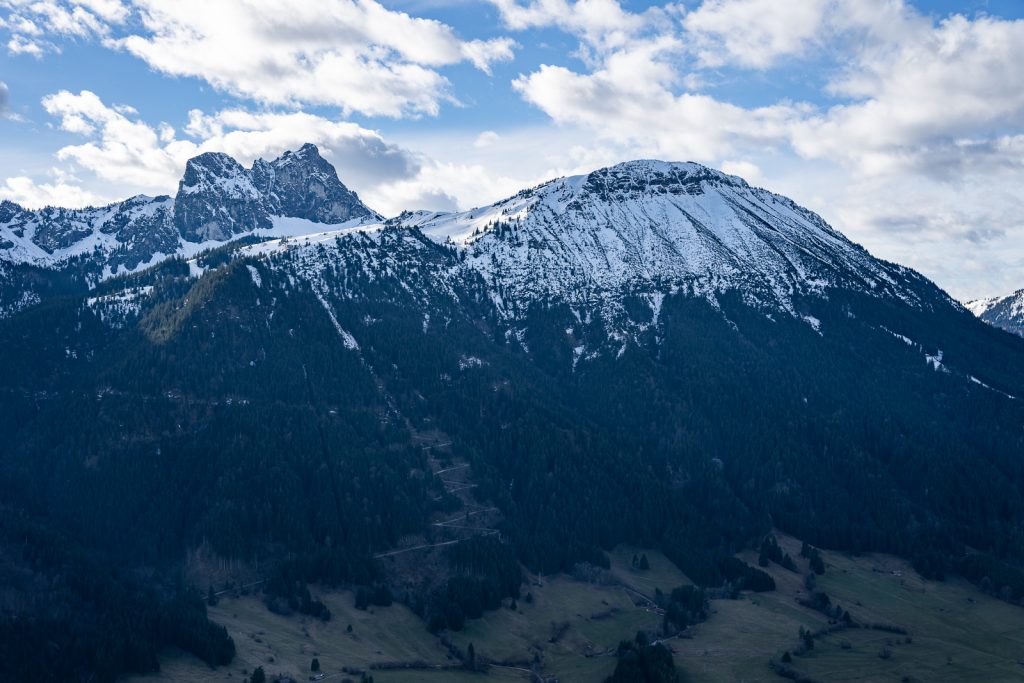
Hands down one of our favorite things we did in Füssen was see the Falkenstein Castle Ruins! Füssen is the highest town in the Bavarian Alps and these castle ruins are the highest in Germany at 1,277 meters (4,189 feet).
The history of this castle dates back to the 16th century. It was even purchased by King Ludwig II in 1883 to be rebuilt, but he died shortly after and it was never finished.
The ruins are free to visit and the scenery from up there is incredible, with 360º views of bright green meadows, lakes off in the distance, different towns and villages, epic mountain peaks, and a river running through a valley.
To get there, driving is the easiest option and you can park near the ruins. And if you want to stay at the top there is the Boutique-Hotel Blaue Burg, which looks really nice!
We opted to hike, as there was a trail right behind our Airbnb. But for those staying outside of the small village we stayed in, you can take this trail, which leaves from the west side of Weißensee.
13. Try Bavarian food at local restaurants
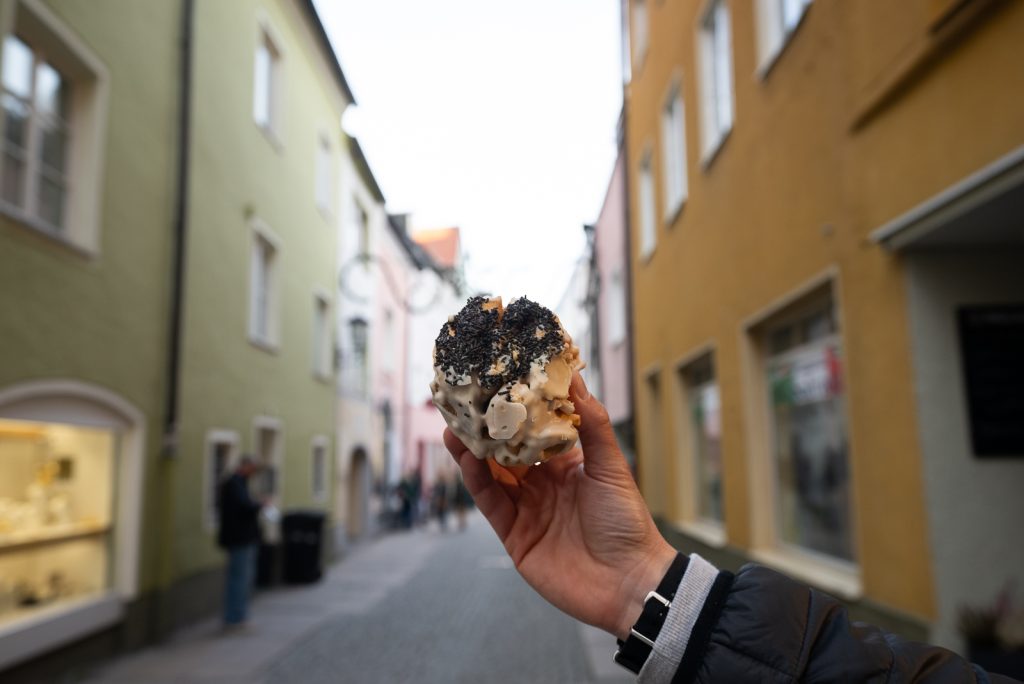
No visit to a Bavarian town is complete without trying the local fare! If you haven’t tried flammkuchen, schnitzel, apfelstrudel, schweinshaxe, schneeballen, kaiserschmarrn, and other Bavarian classics, Füssen is a good spot to taste a few.
If you’re not familiar with these German dishes, check out our guide to the best German Christmas market foods. Even though some are synonymous with Christmas time, many of them are available year round.
Beim Ditsch, Schwangau Castle Brewery, and Madame Plüsch are great places in town to try Bavarian food. And if you’re looking for other options besides Bavarian food, head to KYŌDAI, Annapurna Indisches Restaurant, or Pizza Pub Döner & more.
14. Go on a day trip
While there are many things to do in Füssen itself, one huge perk of visiting the town is that it’s the perfect homebase or gateway to exploring other nearby destinations! Here are a handful of day trip ideas if you have extra time to spare.
Garmisch-Partenkirchen
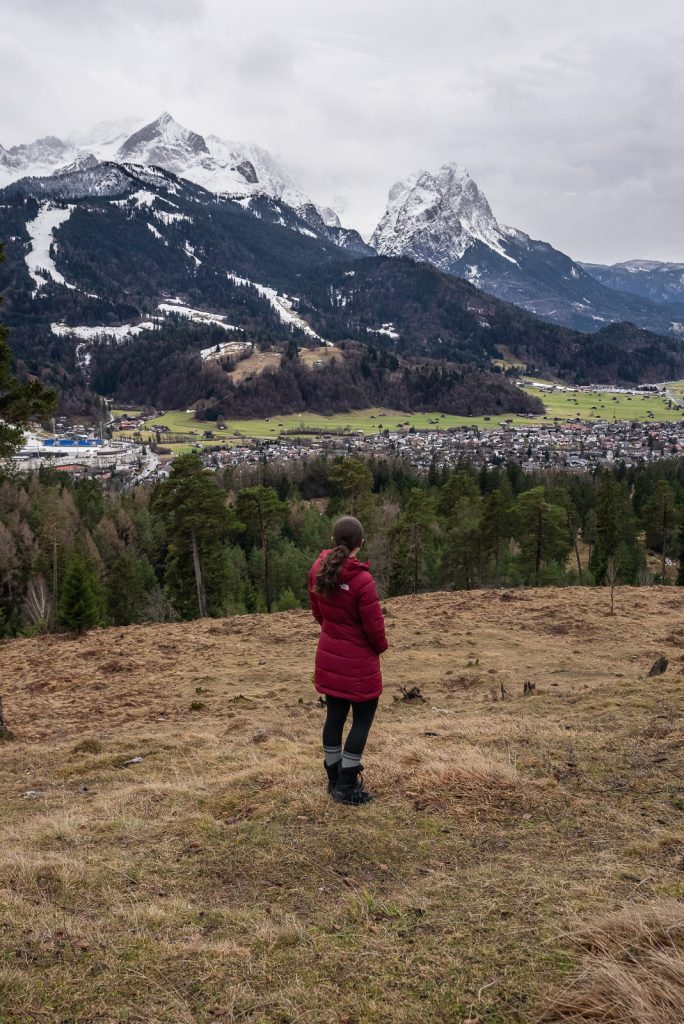
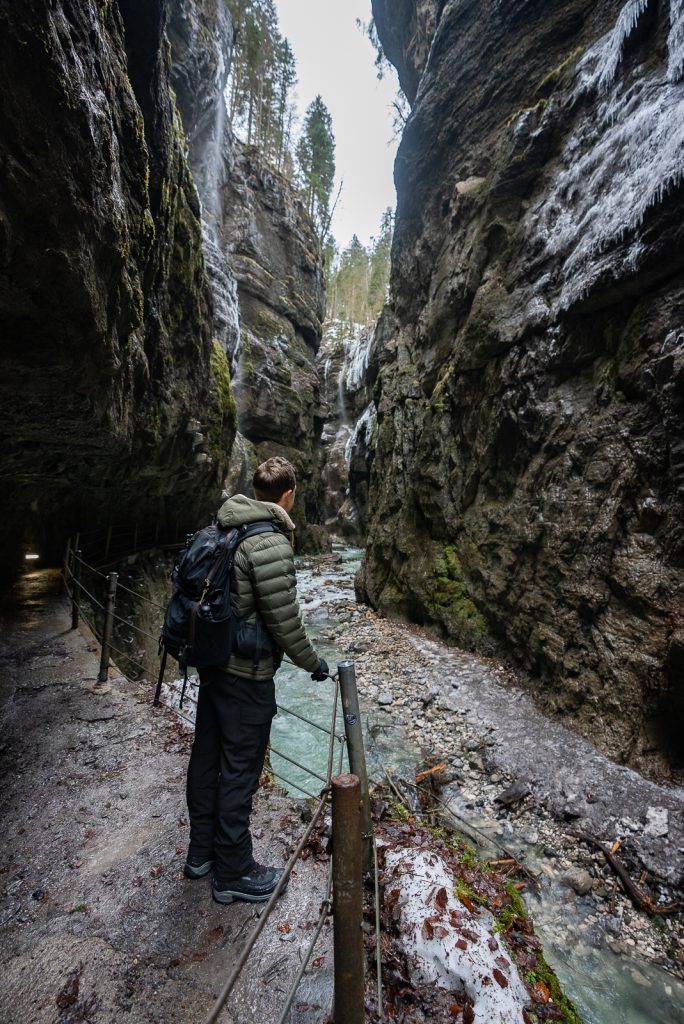
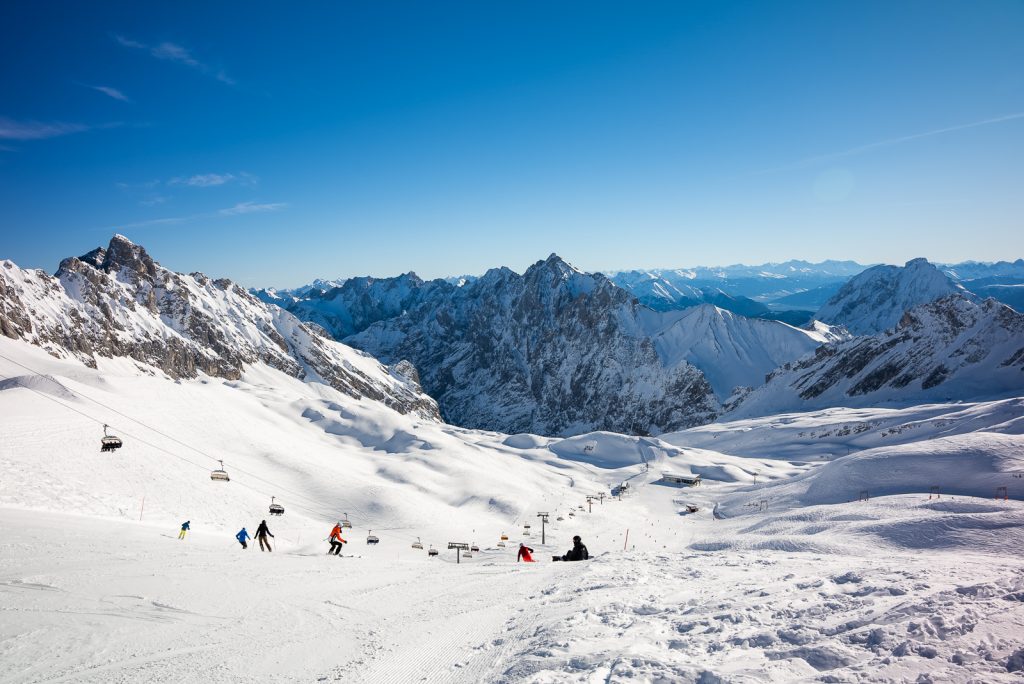
Garmisch-Partenkirchen is located only an hour’s drive from Füssen and was our favorite place in Germany! This mountain town is an outdoor paradise, with skiing in the winter, hiking in the summer, a breathtaking gorge to explore, a variety of mountain huts, and access to Germany’s highest peak, Zugspitze. There is tons to do to keep you busy for a few days!
To see all of our recommendations for Garmisch-Partenkirchen, check out our guide with the 15 best things to do!
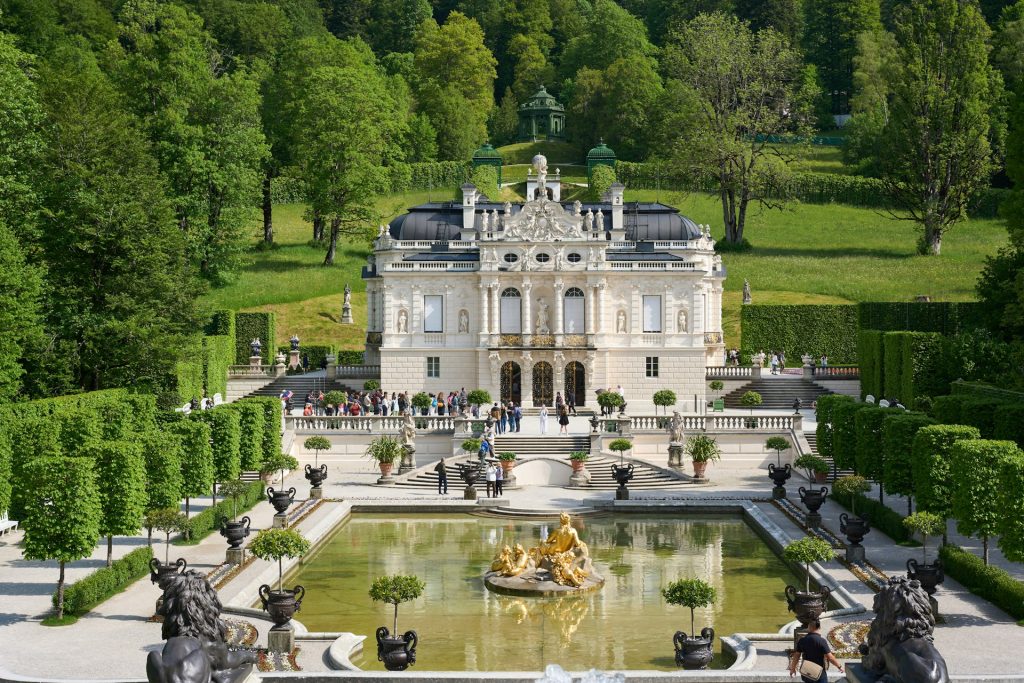
Visit Linderhof Palace
The Linderhof Palace is one of King Ludwig II’s three palaces and the only one completed and lived in by the King most of the time.
Linderhof Palace’s architecture was heavily inspired by French architecture, like Versailles, and it is not only one of the most popular historical sites to see in Southern Germany, but is also a UNESCO World Heritage Site. Visits to the palace are only possible through a guided tour and tickets can be bought online or at the castle box office.
Hike to Schrecksee
If you’re up for a challenge, you can hike to Schrecksee, the highest alpine lake in Germany, located about an hour from Füssen! Since we visited Füssen in the winter, we weren’t able to do any major hikes, but this is high up on our list for next time. To learn more about the hike and how to get there, check out this blog post.
Visit Reutte, Austria
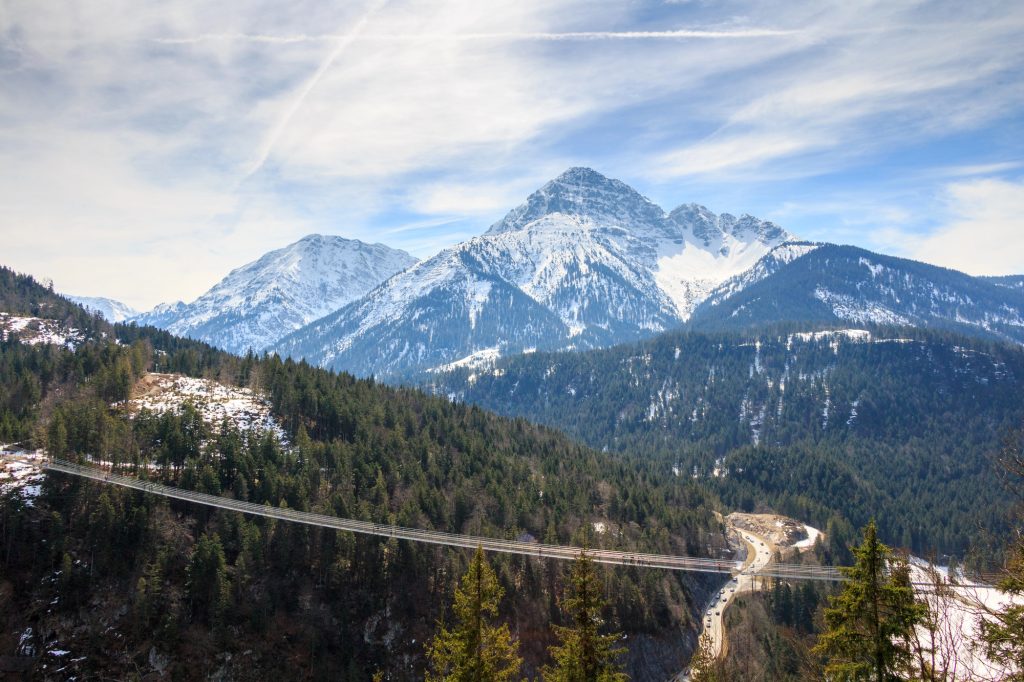
One thing we really wish we could’ve done while in Füssen was spend time in Reutte, Austria. Located less than 30 minutes from Füssen, it’s a super easy day trip! And you can access it by bus, which makes it doable to visit even without a car.
The top things we wanted to do in Reutte were visit the Ehrenberg Castle ruins, which was built around 1290 and was home to many royal figures over the years. And to get to the castle ruins, you walk on the Highline179, which is a suspension bridge that sits 114 meters (374 feet) above the ground and spans 406 meters (1,332 feet) across the road and valley! On the other side of the bridge is also Festung Schlosskopf, which is another castle ruin you can explore.
Besides the castle ruins and bridge, another fun activity in Reutte is Alpentherme Ehrenberg. This complex has heated pools and an outdoor pool with a giant slide! That would be a fun way to enjoy a warm summer day if you’re looking for a different activity than sightseeing.
But if you would prefer to swim in a lake, head to Sandstrand Plansee! And for the waterfall lovers, we really want to visit Stuibenfälle.
Drive the Romantic Road
Fussen lies at the end of the “Romantic Road.” This tourist route was created in 1950 to boost tourism after World War II. It travels between Füssen in the south and Würzburg on the north end, loosely following an old Roman trade route.
Along the way you’ll visit popular medieval walled towns like Rothenburg ob der Tauber and Dinkelsbühl as well as the historic town of Augsburg. The Romantic Road is a wonderful way to see the Bavarian countryside and learn more about its culture and history. Next time, we’ll be renting a car so we can do this!
Planning your trip to Füssen, Germany
Getting to Füssen, Germany
Füssen is located about 1.5 hours southwest of Munich, Germany, just minutes from the Austria border. Getting to Füssen is easy to get to either by car, as well as by train!
The train from Munich is about 2 hours, but the ride flies by because it is so gorgeous. German trains are very nice and efficient and the scenery takes the ride to the next level. We recommend buying train tickets through Trainline.
How to get around Füssen, Germany
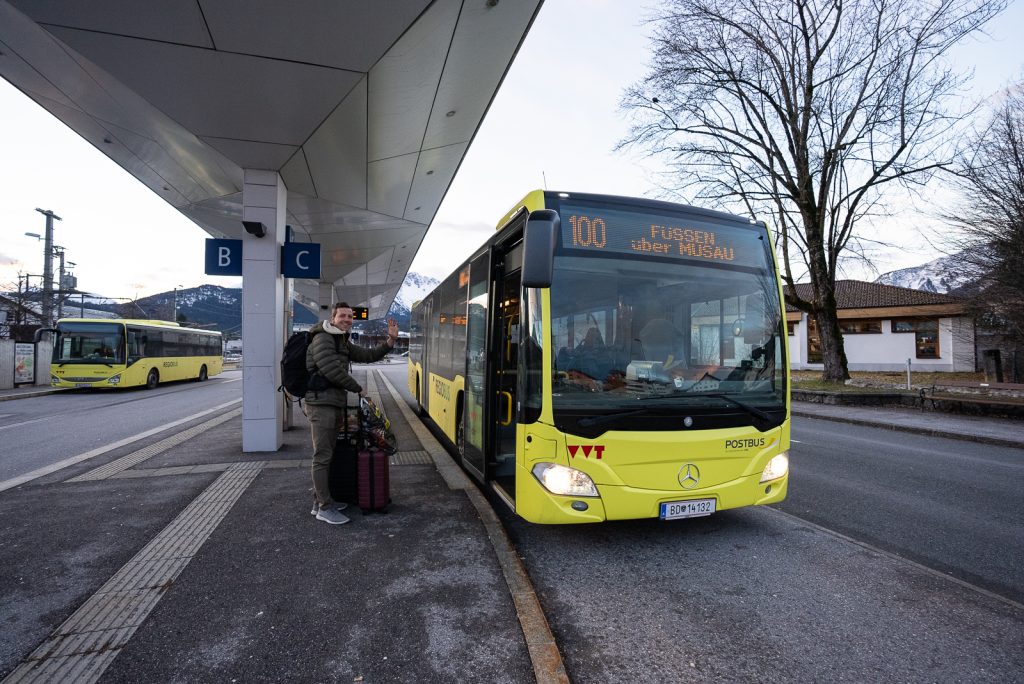
If you’re staying in the heart of Füssen’s Altstadt, you can easily walk or take a bus to most major destinations listed on this guide. Most accommodations in Füssen provide a free bus pass, making it a great way to get around!
During our visit, we stayed a bit outside of town and while there was a bus, the schedule was a bit limited, especially since we visited during Christmas. Our Airbnb host was SUPER kind and picked us up from the train on Christmas Eve, but the day after Christmas (which is still somewhat of a holiday in Germany), we had to pay a lot of money for a taxi to get us to Neuschwanstein. In the future, despite being walkable, we would rent a car to explore Füssen and the neighboring small towns.
When to visit Füssen
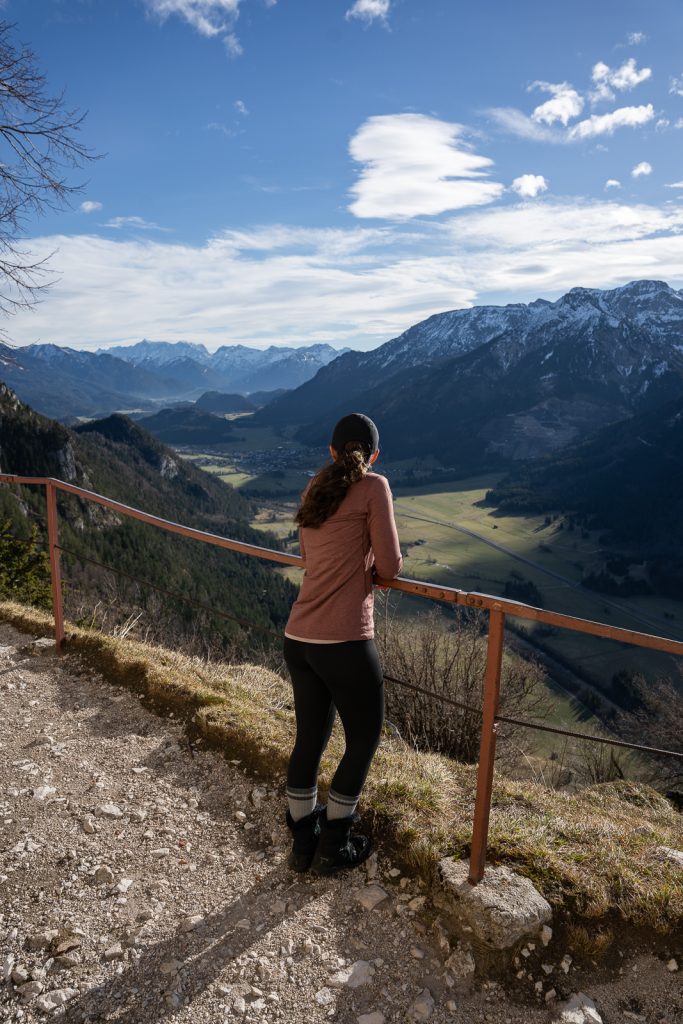
Füssen is a year-round destination! The summer brings great hiking and chances to be out on the water, while the winter turns the mountains into a winter wonderland, perfect for skiing. And if you plan to visit Neuschwanstein don’t worry, it is open year-round! When we visited the day after Christmas it wasn’t too horribly busy, compared to what we hear the summer crowds are like.
However, one thing to keep in mind when visiting Neuschwanstein during the winter is that Marienbrücke, the most iconic viewpoint, is often closed. If getting that iconic shot is top priority for you, we’d suggest going during spring-fall. We lucked out that it was open for us!
How much time do you need in Füssen?
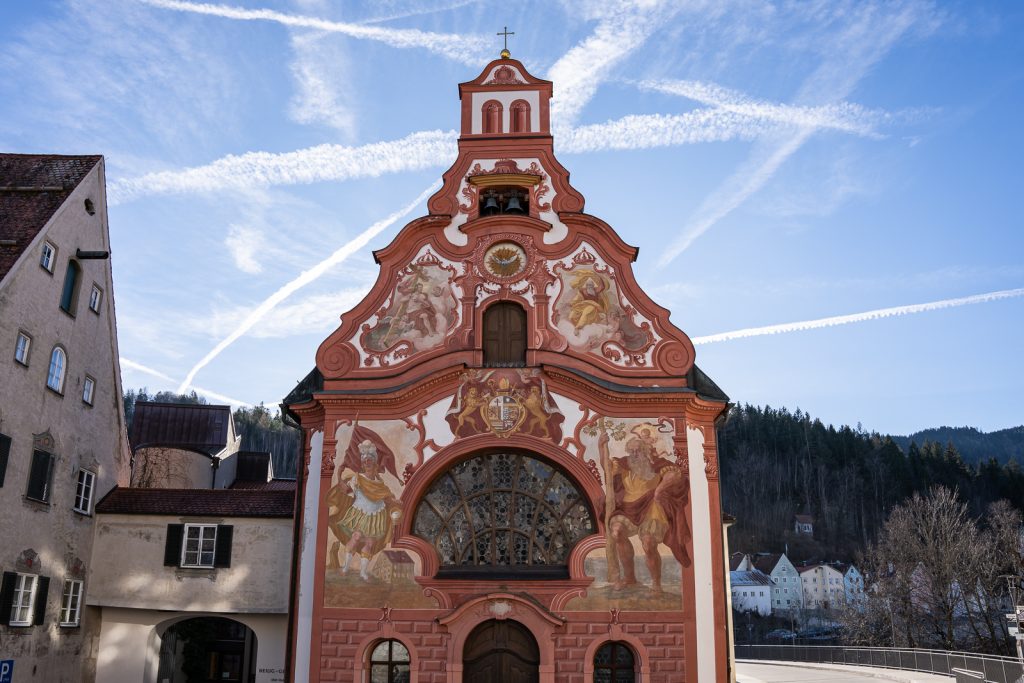
While many people will visit Füssen just for a day to see the castles, we suggest spending at least two days in the area!
Your first day could be spent visiting Neuschwanstein, Hohenschwangau, and Alpsee. While your second day could be spent exploring the Altstadt, checking out Lechfall, and visiting the Falkenstein Castle Ruins.
Visiting Füssen for just a day? This day trip tour from Munich will take you to Neuschwanstein, plus give you the chance to bike around the area and swim in a lake! Use our code APLUSK10 for 10% off!
Where to stay in Füssen, Germany
Füssen is a very popular tourist destination, so there are plenty of hotels and rentals in town, as well as in the neighboring communities. Below are a handful of options, including where we stayed!
Hotels
Best Western Plus Hotel Füssen
Villa Fantasia Budget Boutique Hotel
Hotel Christine
Vacation Rentals
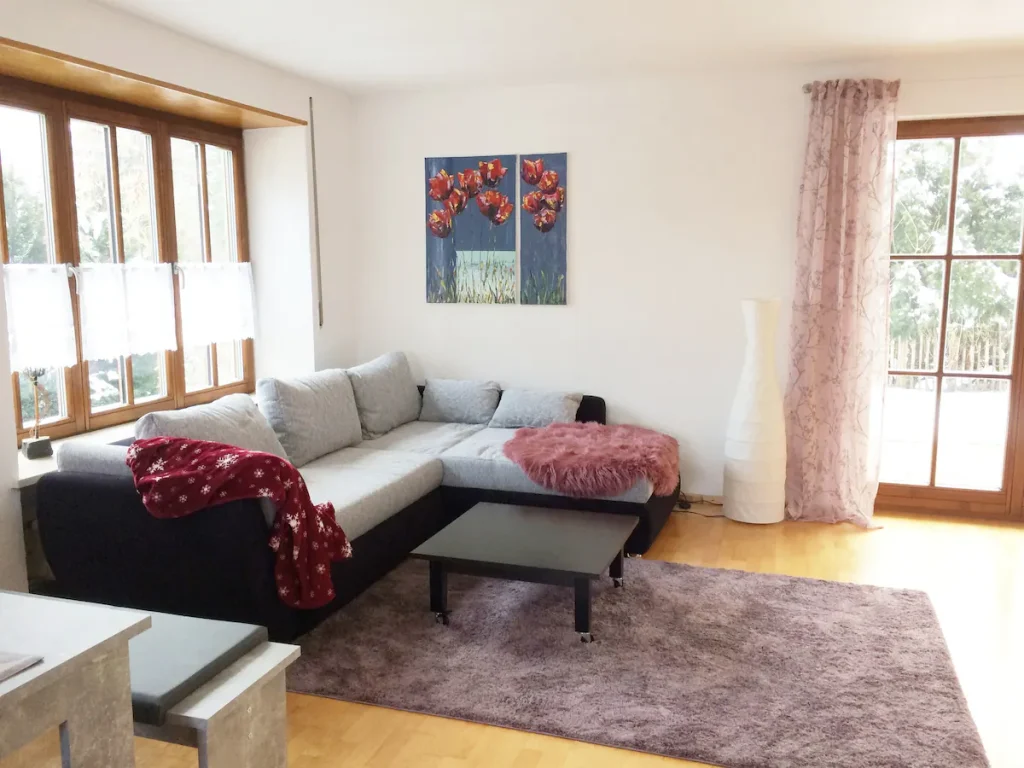
We personally stayed at this Airbnb and it was wonderful! While a bit out of town, the village it was in was SO charming and the scenery just outside of the apartment was breathtaking. We loved getting to hike to the Falkenstein Castle Ruins from here! The apartment itself was spacious for two people, had a great kitchen and dining area, plus a comfortable and large couch.
Some other options include:
Nice Apartment in Füssen (1 bedroom, 1 bathroom)
Four Star Comfort Apartment (1 bedroom, 1 bathroom)
Apartment on the Lech (2 bedrooms, 1 bathroom)
Save this guide with the best things to do in Füssen, Germany to help plan your trip!