Last updated on March 11th, 2026
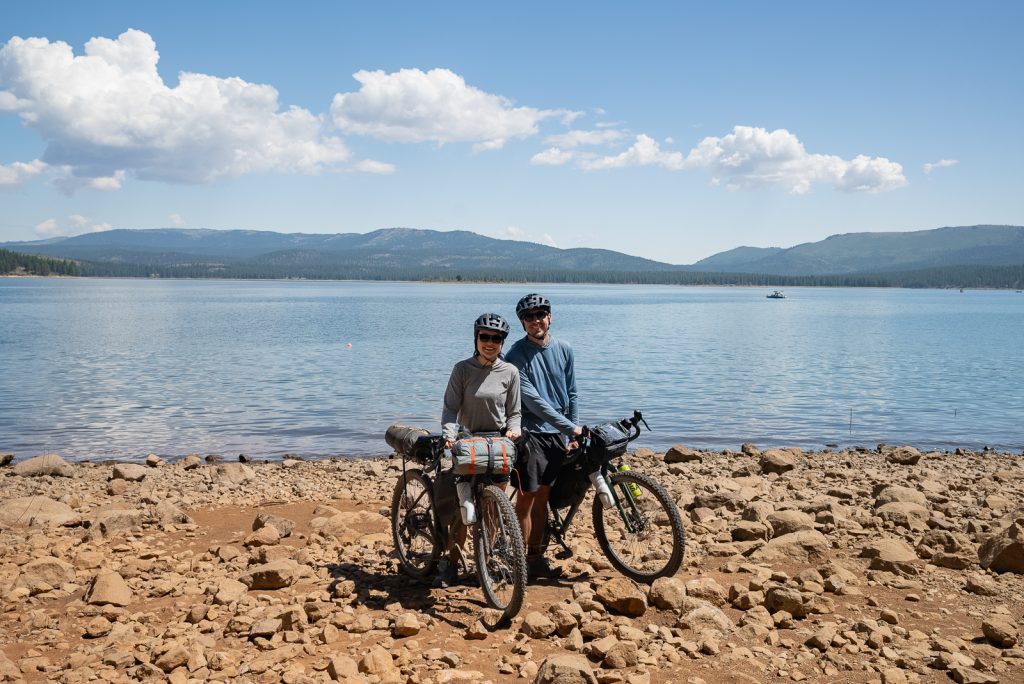
Cycling and bikepacking have become some of our favorite new ways to adventure! After years of renting bikes while traveling, including to ride 500 miles across Iowa, we finally bought our own bikes, installed a bike rack onto our Sprinter van, and purchased bike gear to help us hit the trail.
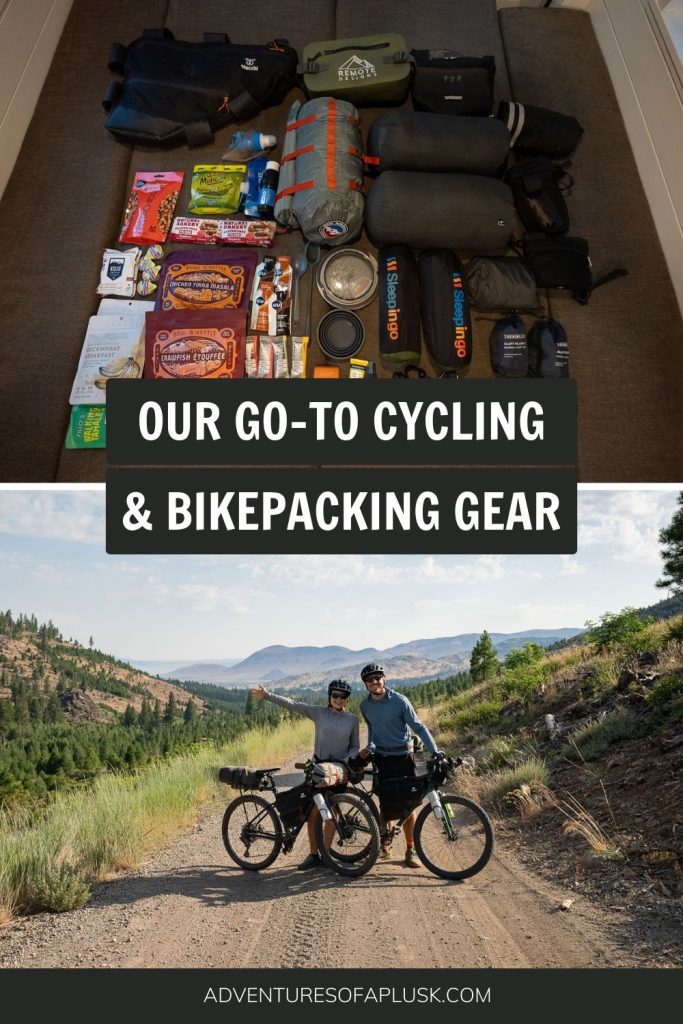
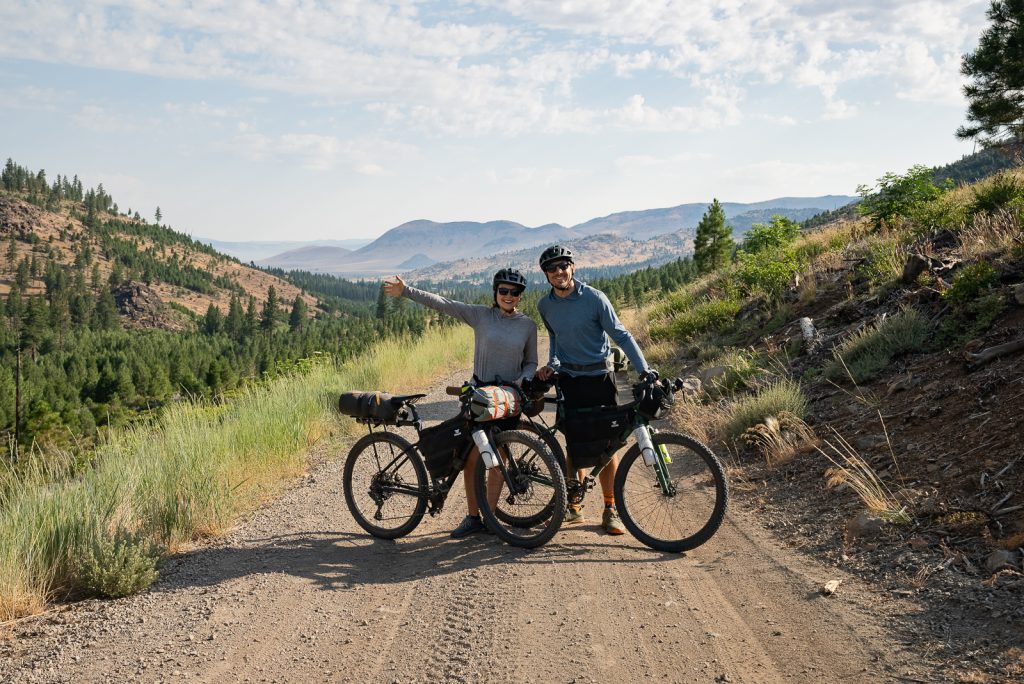
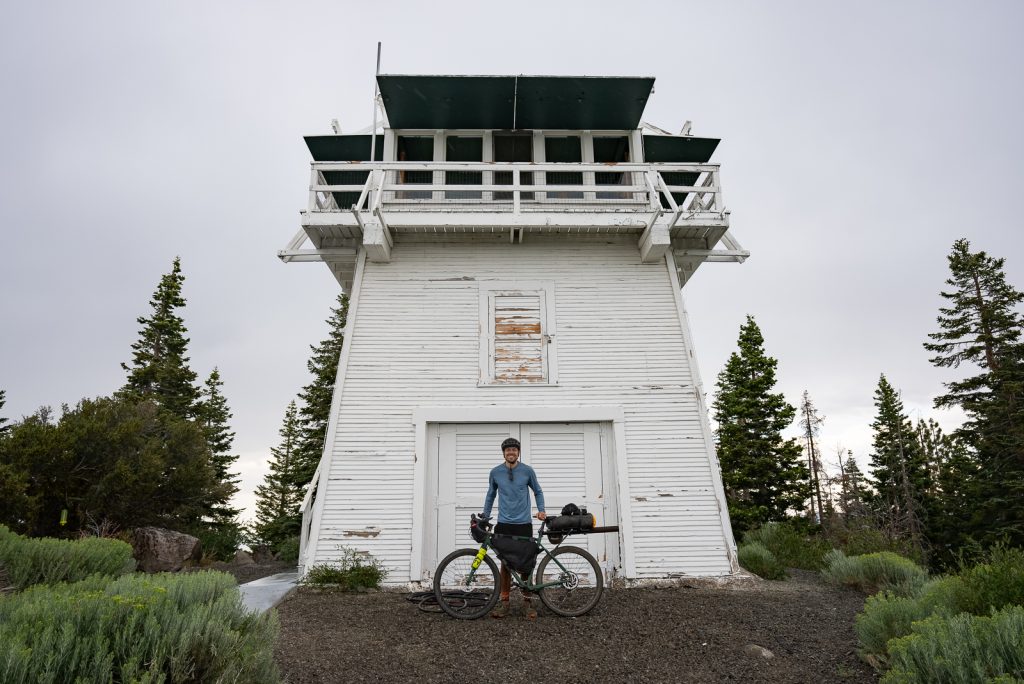
Since then, we have had a blast exploring new areas on two wheels! We have ridden gravel trails in Utah and California. As well as beautiful paved paths along Lake Tahoe and through Eastern Washington. And we even tackled a couple bikepacking trips, including the Sardine Lookout Tower Overnighter, plus a 240 mile ride across part of Montana’s Great Divide Mountain Bike Route.
In this guide we’re sharing all of our cycling gear, including both the basics for shorter rides and camping gear for longer bikepacking adventures. Plus how we pack up the bikes with all of this gear.
Since we’re still getting started in our cycling and bikepacking journey, we opted to buy more affordable entry level gear. But after hundreds of miles riding, we have few complaints so far and are happy with our choices!
Bike
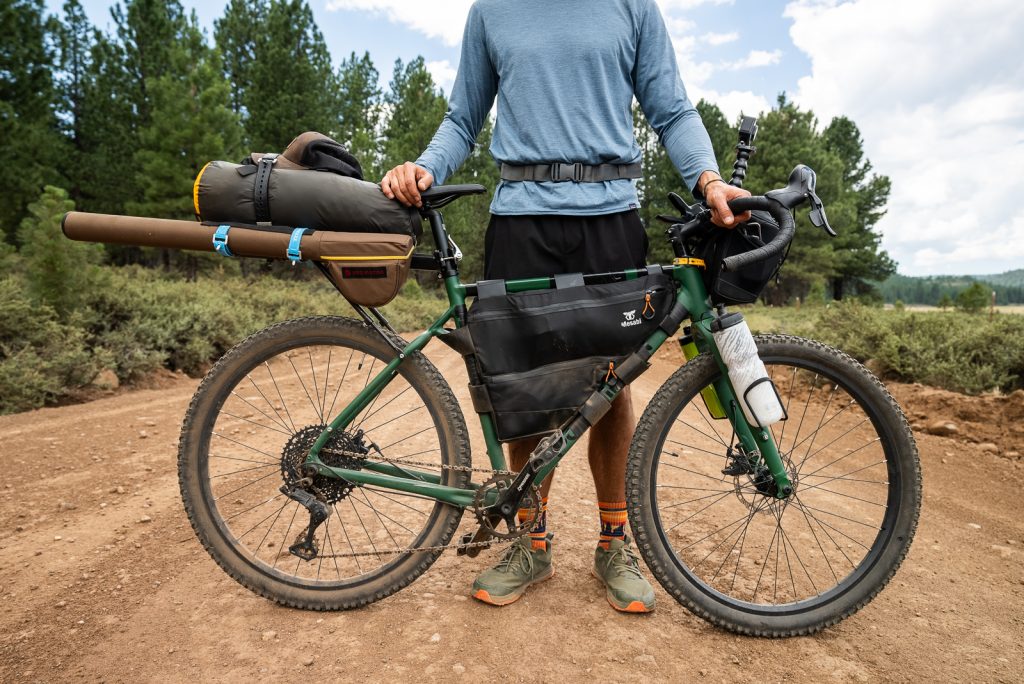
We both ride Poseidon Dropbar Redwood bikes. When choosing a bike, we were overwhelmed by all of the choices. But our main focus was finding a gravel bike that looked sleek and was affordable. We also wanted a dropbar bike because we enjoyed riding this style at RAGBRAI and liked the multiple hand placement options.
Compared to most options, these bikes were more “budget” and with a nice Black Friday sale we got them for a pretty good deal. And overall, we are happy with our choice, minus a few things.
Our biggest complaint with the bikes out of the box were the brakes. They didn’t provide very good stopping power even with an unloaded bike. We did some research and upgraded the brake housing to compressionless housing. This immediately provided much better stopping power!
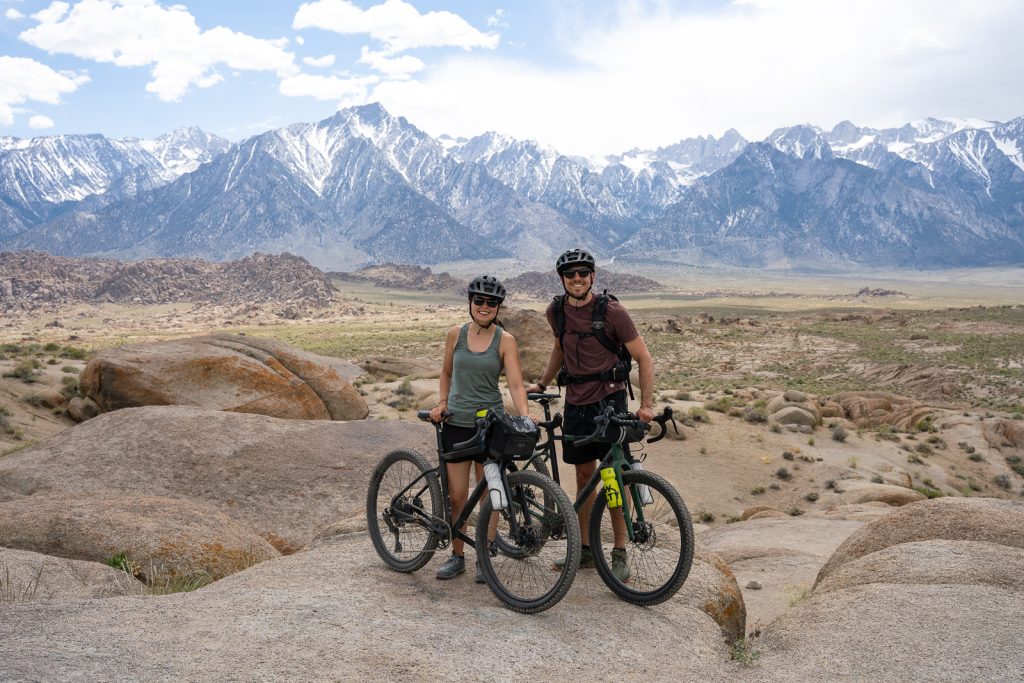
Also, after a few hundred miles, we’ve noticed the gears can be a bit problematic and jerky. In fact, Kathryn named her bike “Jerky” for this reason. Adam has had to adjust the rear derailleur a couple times now, but since this is the only bike we’ve ever owned, we’re not sure if this is unique to this bike. It isn’t a huge issue, but it’s something to keep in mind.
Lastly, we’ve noticed the paint is not very durable. We added black electrical tape to the bike where our bags attach so they don’t scuff off the paint. The paint has scuffed a bit where the brake cables rub on the front. And there are a few other spots where the paint has been chipped.
Despite these issues we still love our bikes. They have been a great entry level bike for the price!
Bike gear
Helmet
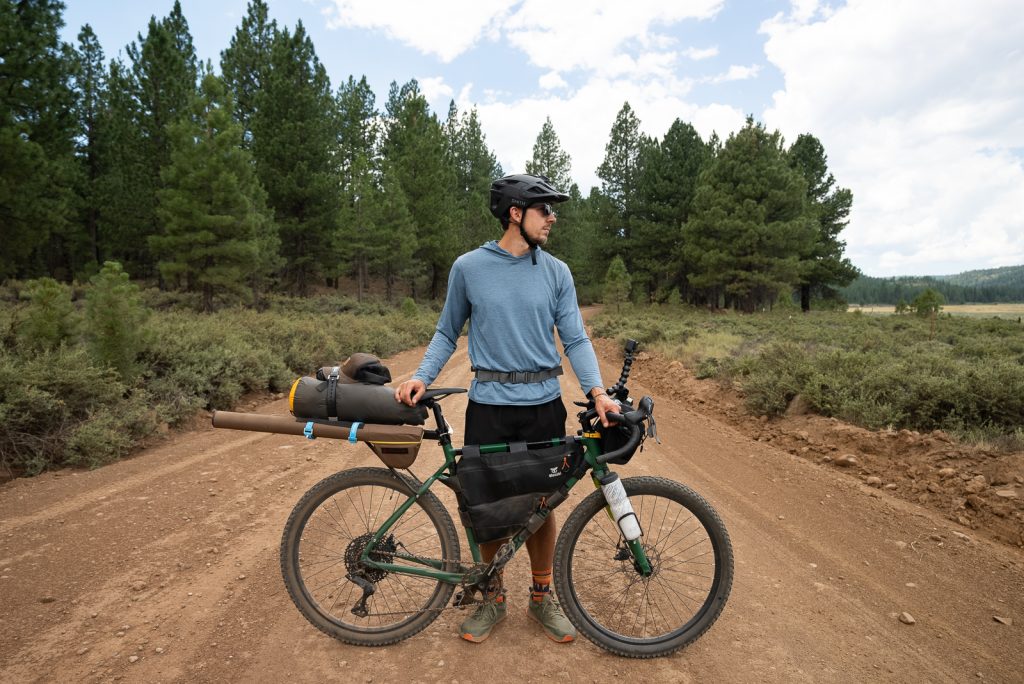
A helmet is the most crucial piece of gear! We never ride without wearing one and we both wear a Smith Engage Mips helmet.
Lock
If you’ll be riding through a town or prefer to lock your bike, make sure to carry a lightweight lock. This Abus lock has good reviews and packs very small. We personally have this lock, but wouldn’t bring it on a bikepacking trip because it’s pretty heavy. It works great for shorter rides though!
Straps
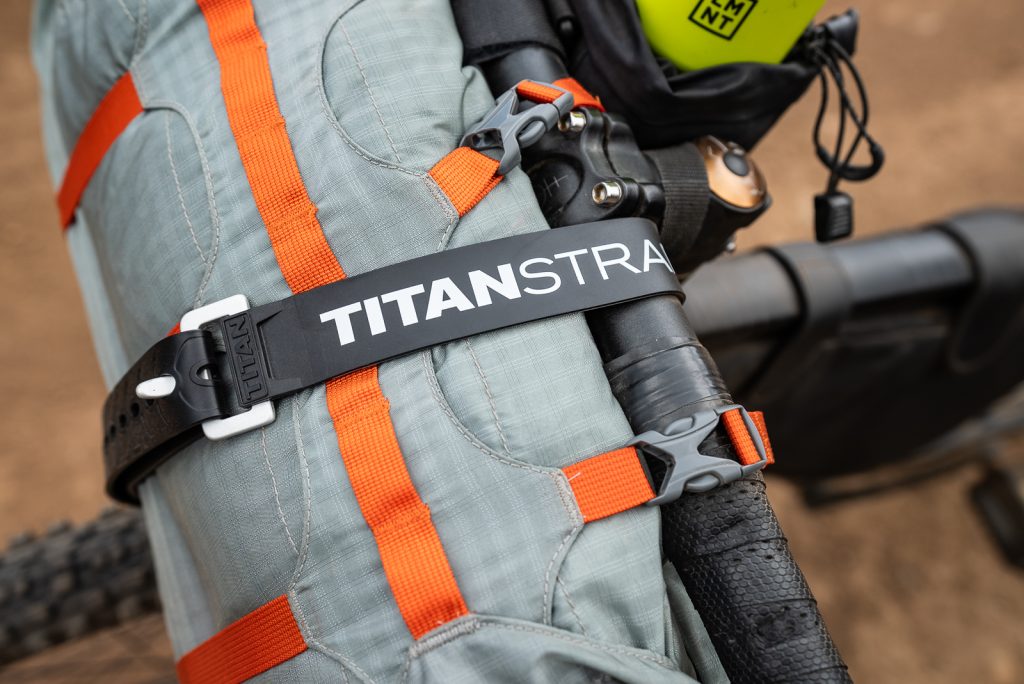
The most versatile piece of gear we have are our Titan Straps! We use these to strap Adam’s fly rod to the bike, reinforce our tent onto Kathryn’s handlebars, plus attach our tripod and bags to our rear rack. Make sure to carry a variety of sizes!
Bike lights
Whether you planned to ride in the dark or not, be prepared with bike lights. These are rechargeable and are easily strapped on.
Bike bags and rack
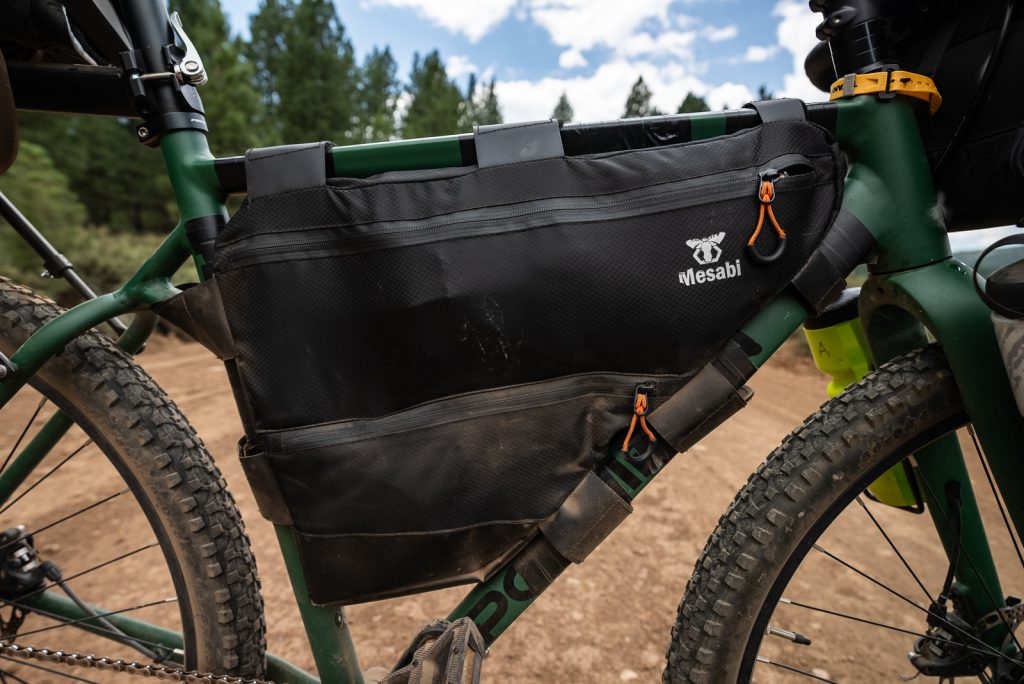
Frame Bag
For our frame bag we use a Moosetreks Full Frame Bag. It can fit quite a bit of gear, including our food, cooking supplies, and bike tools. It has a velcro divider so you can have two compartments inside or you can leave it as one big compartment. Before buying a frame bag, make sure you measure your frame to get one that will fit in the space.
Handlebar bags
We have two different handlebar bags. Adam has this bag, which is where we store our main filming camera while riding. Plus a combo of GoPro batteries, a portable charger, and other items.
We also have another bag where we store bike maintenance items like tire tubes, bike multi-tool, and a tire lever.
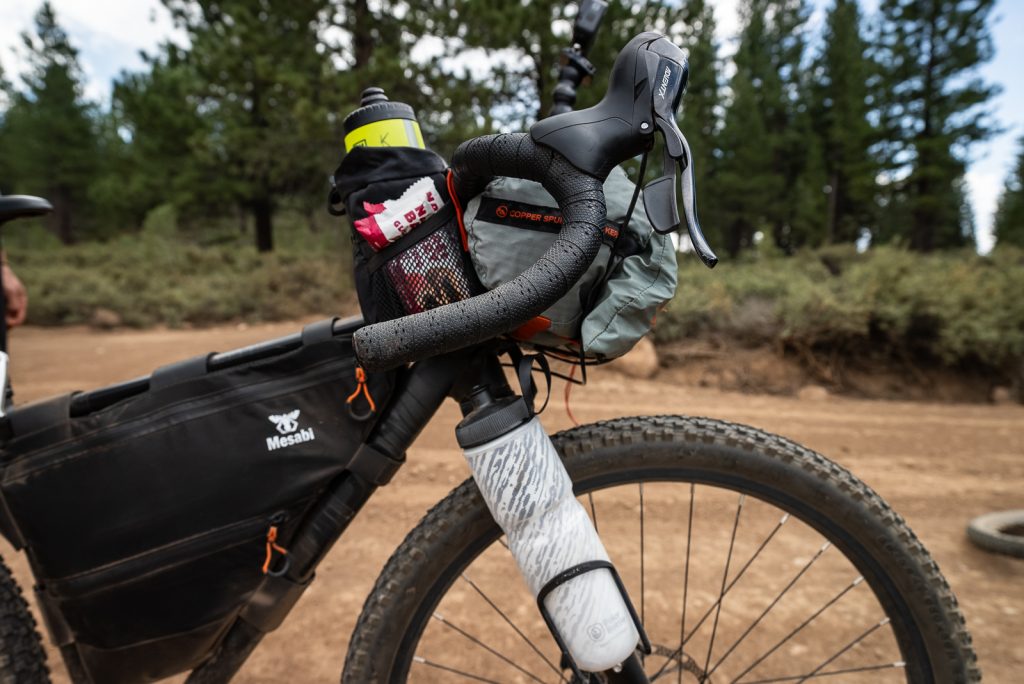
Water bottle storage
We both can carry up to three water bottles on our bikes. On both of our bikes we have two water bottle cages on the front fork. And we each have a cup holder bag that can carry a water bottle and snacks.
Sea to summit dry bags
We each carry a Sea to Summit Dry Bag when bikepacking, which is where we store our sleeping items, clothing items, and a jacket. And after getting rained on, we can confirm that it is in fact waterproof!
This set up works well for now, but for longer trips, we will likely need to add on panniers or additional bags.
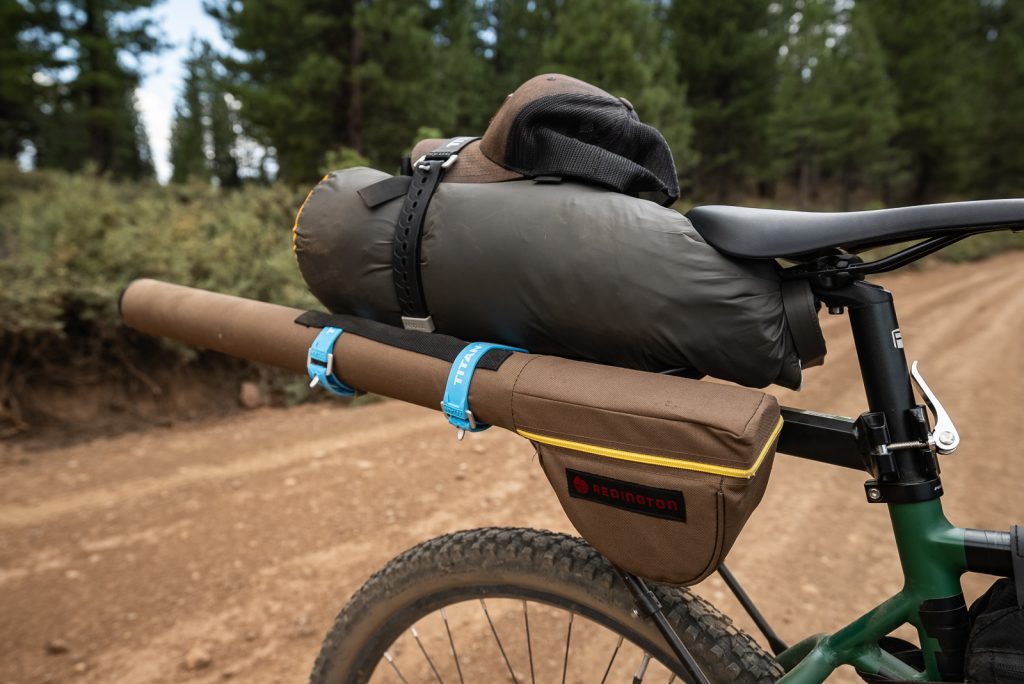
Rear tire rack
Instead of a seat bag, we went with a ROCKBROS rear cargo rack. This rack is where we attach our Sea to Summit Dry Bag using Titan Straps. We also use the rack to attach a fly rod and can stack other items on top of the Sea to Summit bag, like additional bags, a tripod, etc.
Hip bag/fanny pack
We both like to wear a hip bag to keep smaller items, phones, our drone, etc. Adam wears a Remote Designs hip bag. These aren’t currently available, but they are similar to this bag. And Kathryn wears a Patagonia fanny pack.
Tools and spares
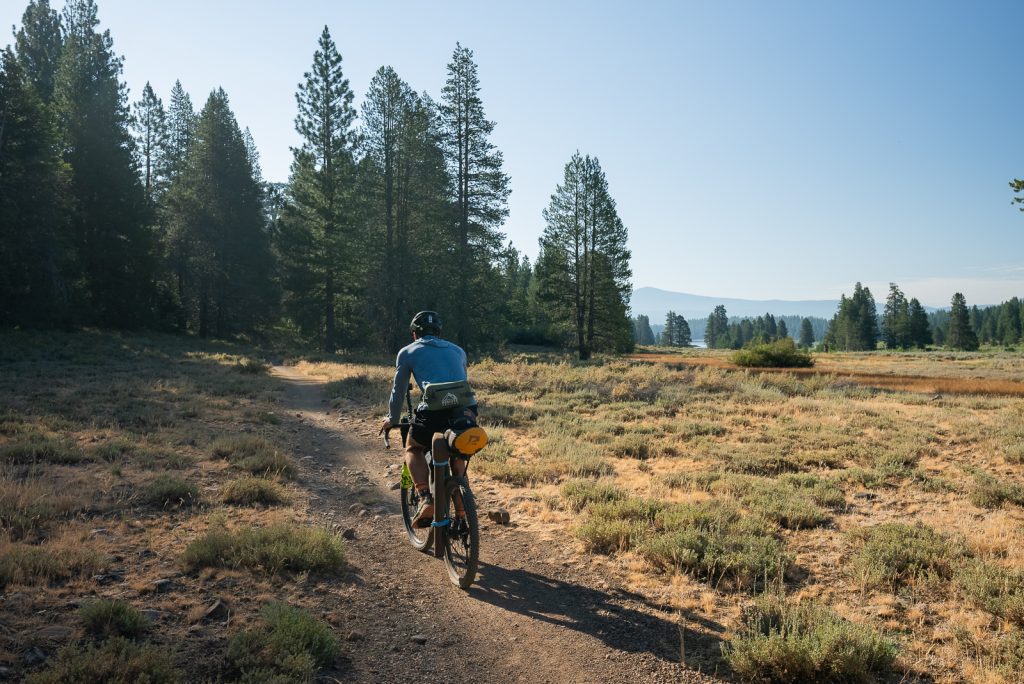
Chain Lube
Be sure to carry a small tube of chain lube with you and a rag to wipe off excess.
Bike multi tool
A bike multi tool is one of the most important pieces of gear! This tool is needed for almost any bike fix.
Tire tubes
If you run tires with tubes, you’ll want to have at least one spare tire tube on you. Make sure to get the right size and width. Also, double check the stem type, either Presta or Schrader.
Tire pump
You’ll need to pump up your tires occasionally. We carry this Topeak Pump. It’s light, compact, and works great!
Tire patch kit
We carry this tire patch kit in case we get a puncture in a tire tube.
Tire boot
A tire boot is used to patch a punctured tire. This is an important piece of gear for rough, rocky terrain.
Bike Tire Lever
A bike tire lever is needed to remove and install bike tires. Definitely carry one of these!
Duct tape and zip ties
If a piece of gear gets damaged or breaks, you can always piece it together with some duct tape and zip ties until you get home or to a bike shop. We wouldn’t bring the whole roll of duct tape, since it’s heavy and bulky. Instead, just rip 10 or so strips.
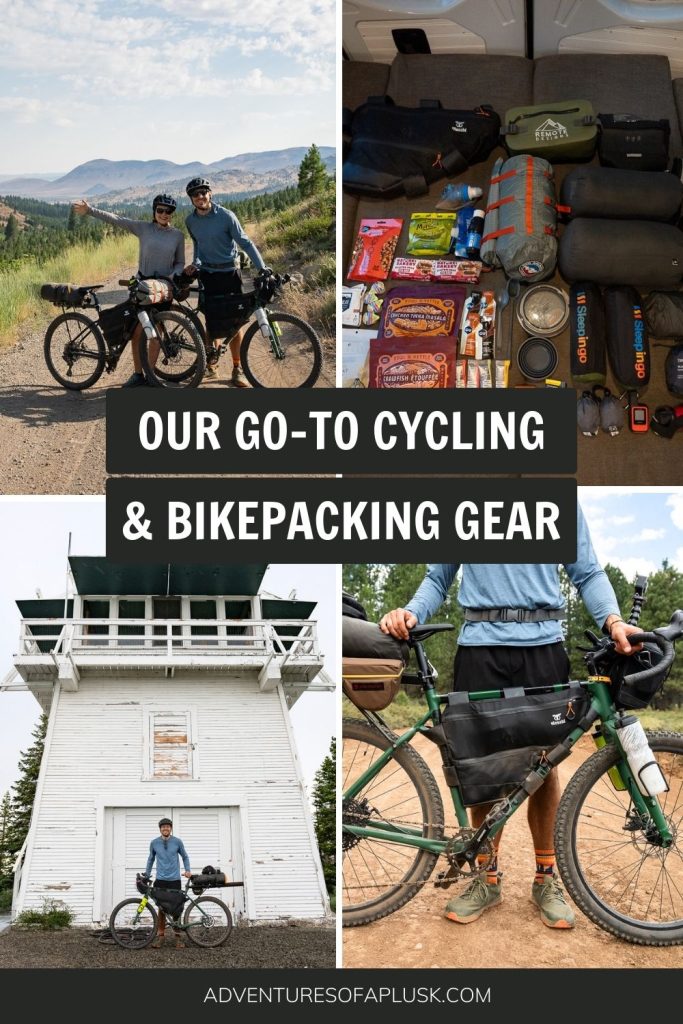
Sleeping Items
Tent and footprint
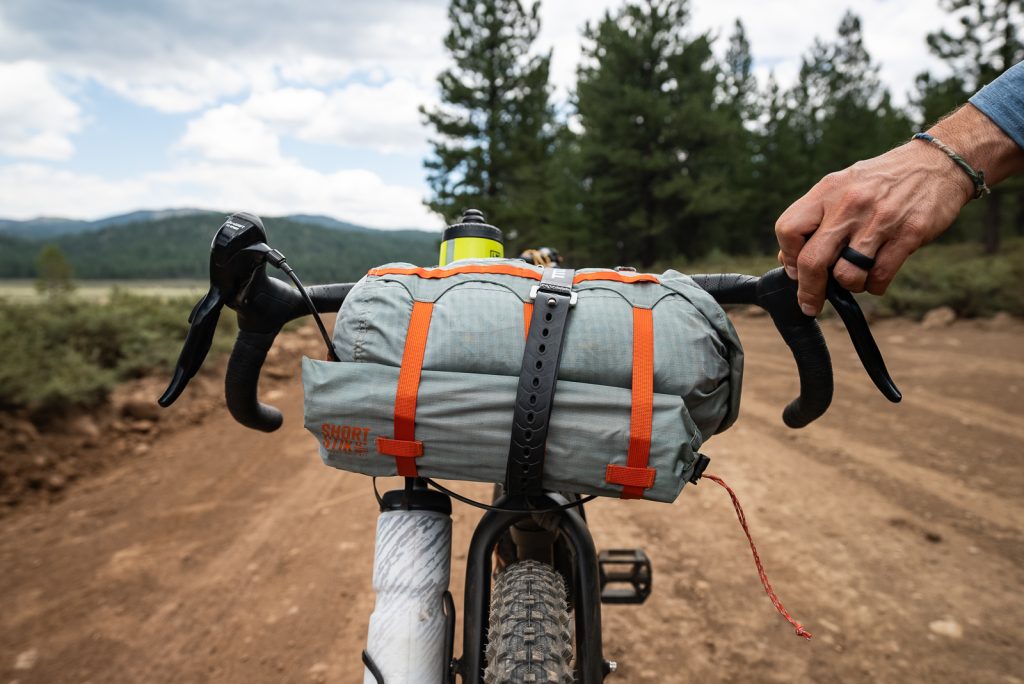
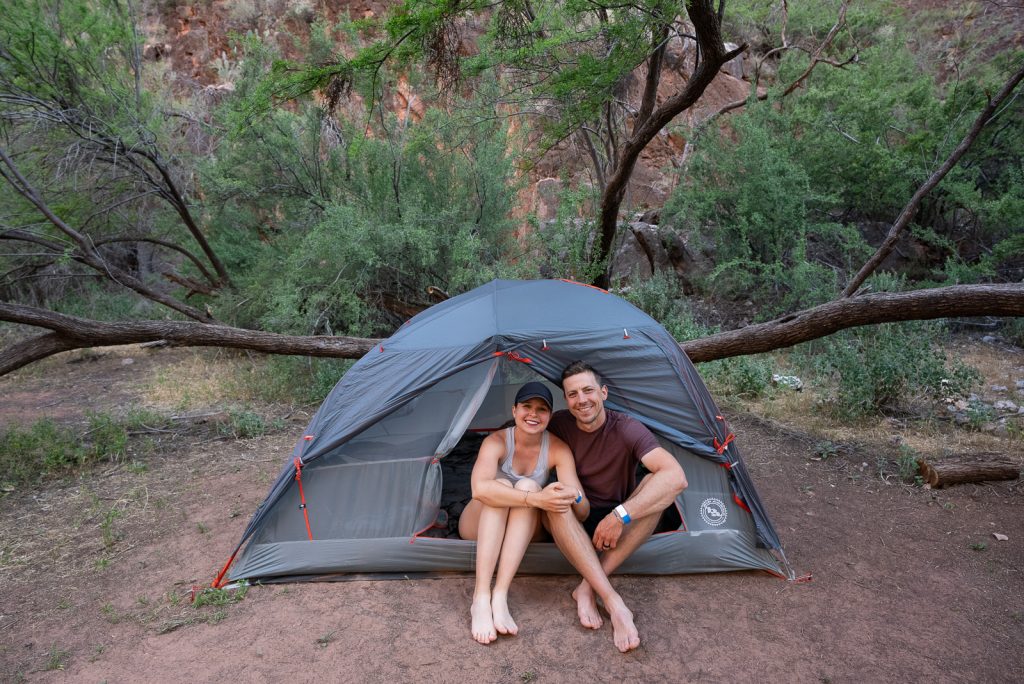
We recently upgraded to a Big Agnes Copper Spur HV UL3 bikepacking tent for both bikepacking and backpacking. It is an expensive tent, but thankfully we got lucky and snagged it on a pretty good sale.
And we LOVE it! Since it’s a bikepacking tent, it has smaller poles, which not only makes it fit great on handlebars, but also fit better into our backpacking packs. It’s also spacious inside, perfect for two people, a dog (when backpacking), and some gear.
It did not come with a footprint, so we purchased this footprint to protect the floor of the tent. And while the tent can attach via buckles onto the handlebars, we also reinforce it with one Titan Strap, which holds up great on rough terrain!
Sleeping bag or quilt
We use Enlightened Equipment Revelation Sleeping Quilts. These quilts are MUCH lighter and smaller than a sleeping bag and keep us super warm. They are pricey, but so worth it if you have plans to bikepack or backpack a lot.
Sleeping pad
We are currently both using the Sleepingo Sleeping Pad, which is affordable, relatively comfortable, and packs down small.
Pillow
For us, a pillow is a MUST when sleeping in a tent. We use the TREKOLOGY inflatable pillow. It’s very comfortable and packs down small. We also like that it can be strapped to your sleeping pad and has rubber dimples on the bottom, which help keep it from sliding away from you while you sleep.
Cooking, food, and water
Stove
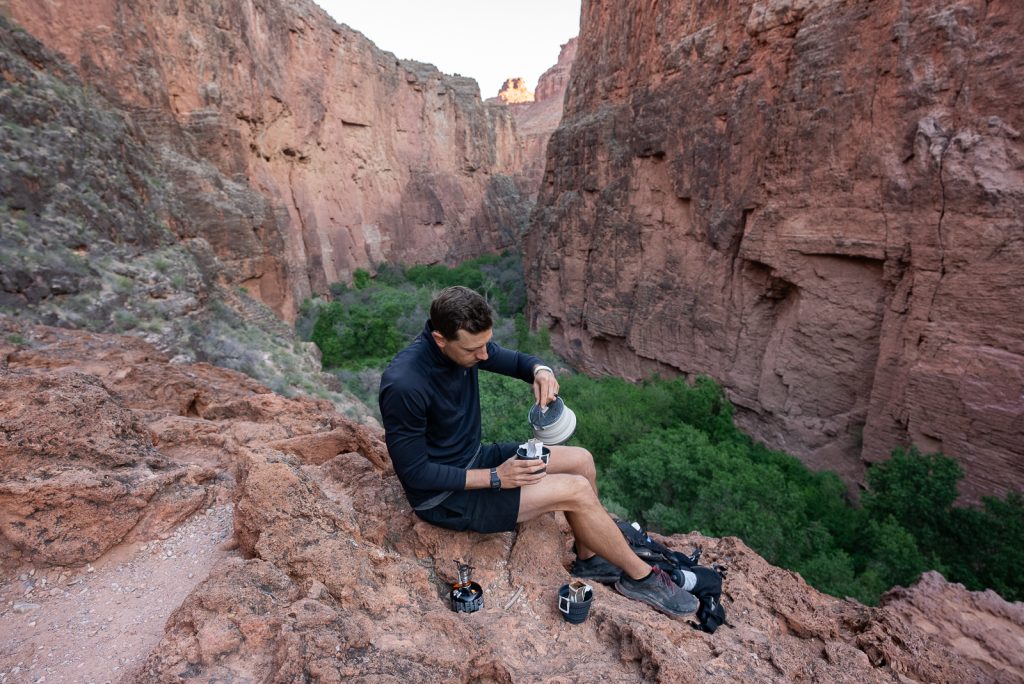
The Ultralight Portable Outdoor Backpacking Camping Stove is about the size of a deck of cards and makes it easy to boil water and cook food while bikepacking. We have used it for many, many years with no issue. Don’t forget to pack propane!
Kettle
We use the Sea to Summit X-Pot Kettle, which collapses and packs down really small!
Cup
For coffee in the morning, a measuring cup for our dehydrated meals, or as a makeshift bowl, we use a Sea to Summit collapsible cup.
Water bottle
These Polar bottles are great for cycling and help keep your water cooler longer.
Utensil
Don’t forget a spoon or spork! For something lightweight, we suggest one of these. And for those who don’t want to get their hands dirty digging into backpacking meals, we LOVE this long spoon!
Favorite meals
There are so many options when it comes to bikepacking food. You can bring sandwiches, supplies to make burritos, or any “just add” water type meals.
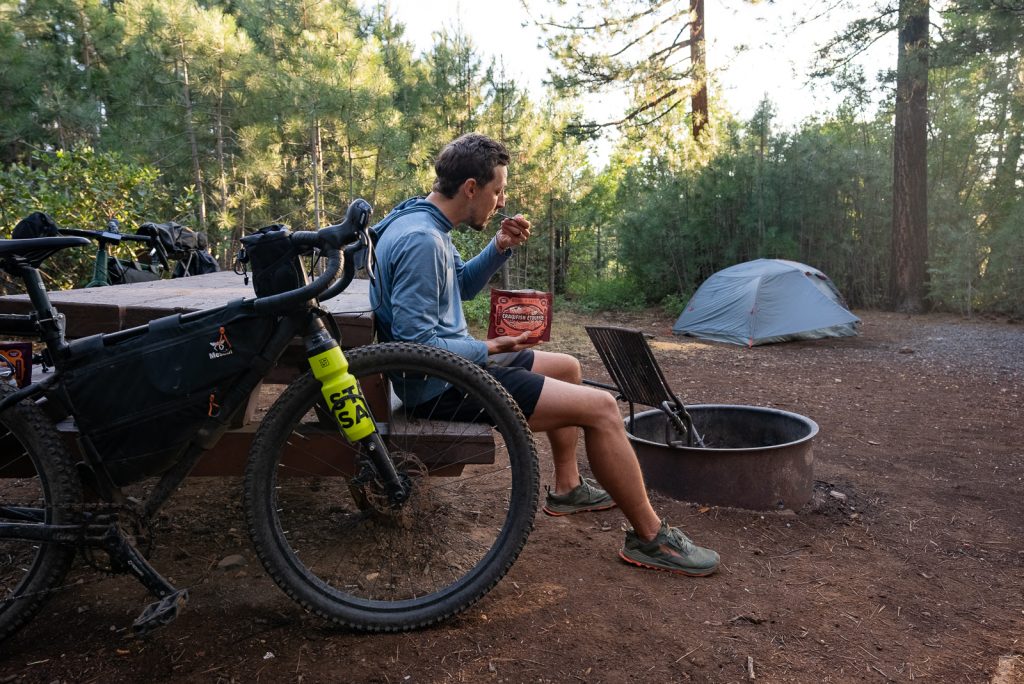
Personally, we love dehydrated backpacking meals and try to always have one per day (we’d eat them more, but they are expensive!). We have tried a handful of dehydrated meals over the years and have quite a few favorites.
Right now, our absolute favorite is Bowl & Kettle. This company was founded by a friend from college and her husband, who hiked the PCT (so they clearly know backpacking meals!). And even though we may be biased, they are genuinely the BEST backpacking meals we have ever had. They only have three flavors currently and every single one is insanely delicious. We would eat these even when we aren’t backpacking! If you’d like to try them, you can get 10% off with code TAKE10!
Other meals we love are Wild Zora, Backpacker’s Pantry Chicken Pad Thai, Peak Refuel Chicken Coconut Curry, and Mountain House Beef Stroganoff.
NOTE: These meals will usually say it is 2 servings, but we always eat the whole thing by ourselves. So don’t plan to share!
Snacks
We bring along a variety of Bobo Bars, Kate’s Real Food Bars, and Nature’s Bakery fig bars. A new snack we’ve found recently are Fillo’s Walking Tamales, which are really good! Besides bars, we also like to bring meat sticks and Chili Roasted Wonderful Pistachios. You can see more of our favorite snacks here!
Electrolytes
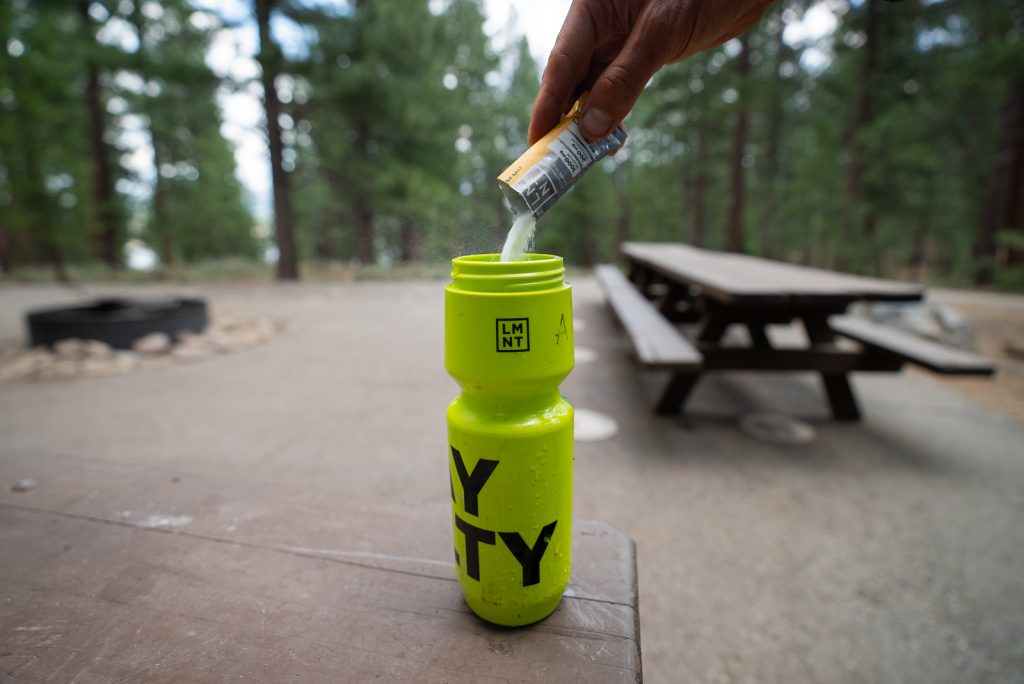
On our particularly strenuous adventures, especially in the heat, we like to carry an electrolyte drink. Our favorite is LMNT (use our link for a FREE sample pack with any order)! We carry a separate water bottle just to put LMNT in, as it’s not something we want to put in our CamelBak or Katadyn filter bottle, since the taste/smell lingers.
Another electrolyte item we love to bring is GU. This is great for a burst of energy and electrolytes while riding. We personally love the espresso and salted caramel flavors the best.
Water storage and filtration
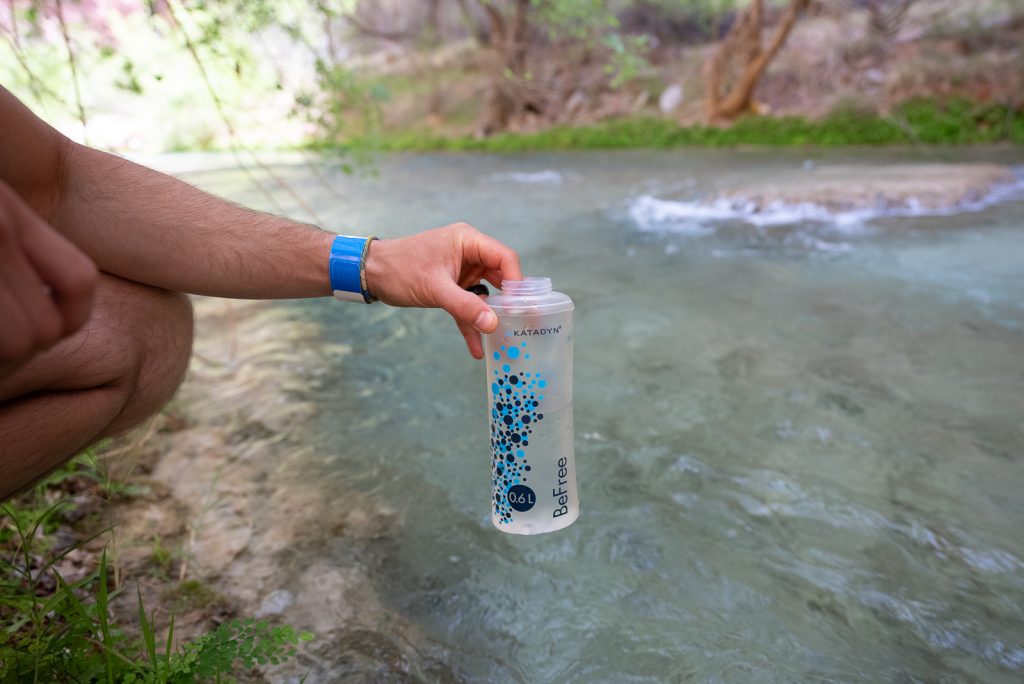
On our bike trips we carry a Katadyn Water Filter Bottle and a Sawyer water filter (as backup). These allow us to easily fill up from rivers, lakes, and streams, when available, which reduces how much water we need to carry.
Coffee
We make coffee in a variety of ways on our trips. We love taking our Aeropress when we have space, which makes great coffee (don’t forget the filters and some grounds!). However for bikepacking, we prefer options that take up less space, like Kuju coffees or instant coffee tea bags.
Gallon ziplocs
Ziploc bags are a versatile piece of gear to bring. We use these to store all of our trash. They can also protect your phone from water if it rains or you’re exploring near waterfalls or rivers.
Food storage container
Depending on where you’re biking you may need a food storage solution to protect yourself and food from bears, rodents, or other animals.
You can either use a bear can (which could be tough to bring on a bike) or hang a bear sack. It is important to keep your food and any items with scent (including toothpaste, toiletries, etc.) in this food storage mechanism. Make sure whatever you choose is large enough!
If you go the sack route, bring some paracord to hang it! And make sure you know how to properly hang it.
Survival gear
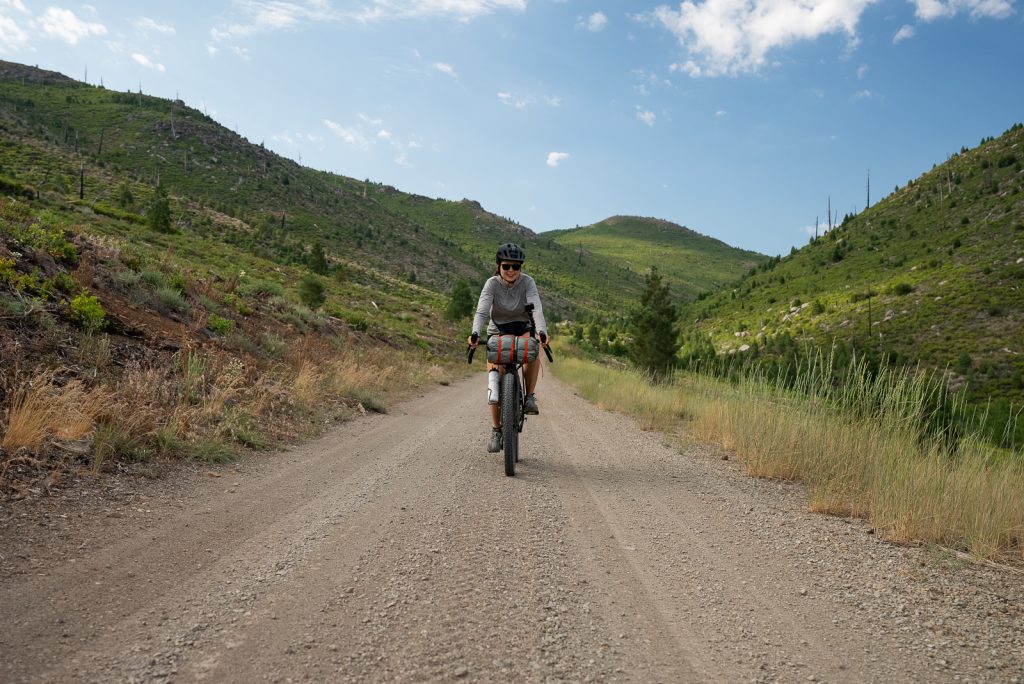
We always carry the 10 essentials on any bike ride and we highly suggest you do the same. Two big items to make sure you bring bikepacking are a first aid kit and a headlamp. Don’t forget to pack some extra batteries!
Clothing
Bike shorts
When on bikepacking trips we need all the cushion for our bottoms as we can get. We both wear bike shorts from BALEAF. Adam wears these, with these shorts over them. And Kathryn wears these!
Shirt
Adam usually wears a Vuori shirt and Kathryn wears Vuori tanks. We love the softness, durability, and they tend to not smell too bad after a day of sweating.
Sun hoodie
We both wear a Patagonia Sun Hoodie on sunny days when we ride. They are very light and help prevent sunburns. It also makes for a nice, light layer in case it gets chilly at night or in the morning. Another option for sun protection is a Buff.
Jacket
If it’s going to get cold at night we bring our L.L. Bean puffers. We pack these into our Sea to Summit dry bags on our rear rack.
Rain Jacket
Even if the forecast does not call for rain, we highly suggest bringing a rain jacket. If you’re backpacking in the mountains, surprise storms can occur quickly. We got unexpectedly rained on during our bikepacking trip. Adam wears this rain jacket and Kathryn has this rain jacket.
Socks
We highly recommend wearing wool socks! They perform the best with sweat, water (if you have to cross any rivers), and are comfortable. We are big fans of Smart Wool and wear both low rise and high rise socks, depending on the shoes we wear.
Shoes
We have flat pedals, so we are able to wear regular shoes while we ride. Our go-to shoe is the ALTRA Lone Peak 8 trail running shoes.
Camp clothes and flip flops
These are more luxury items, but they make a huge difference! It’s so nice to get to camp and change into some more comfortable clothing. We also bring some light flip flops to wear at camp so we don’t have to wear our shoes.
Toiletries and personal items
Everyone has slightly different needs when it comes to toiletries, but here are a few of the most common items that most people will need when bikepacking.
Daily items
Don’t forget your toothbrush and toothpaste, deodorant, chapstick, contacts and solution, and any other items you use daily.
Chapstick and lotion
If visiting a drier climate, these are both great things to have!
Sunscreen
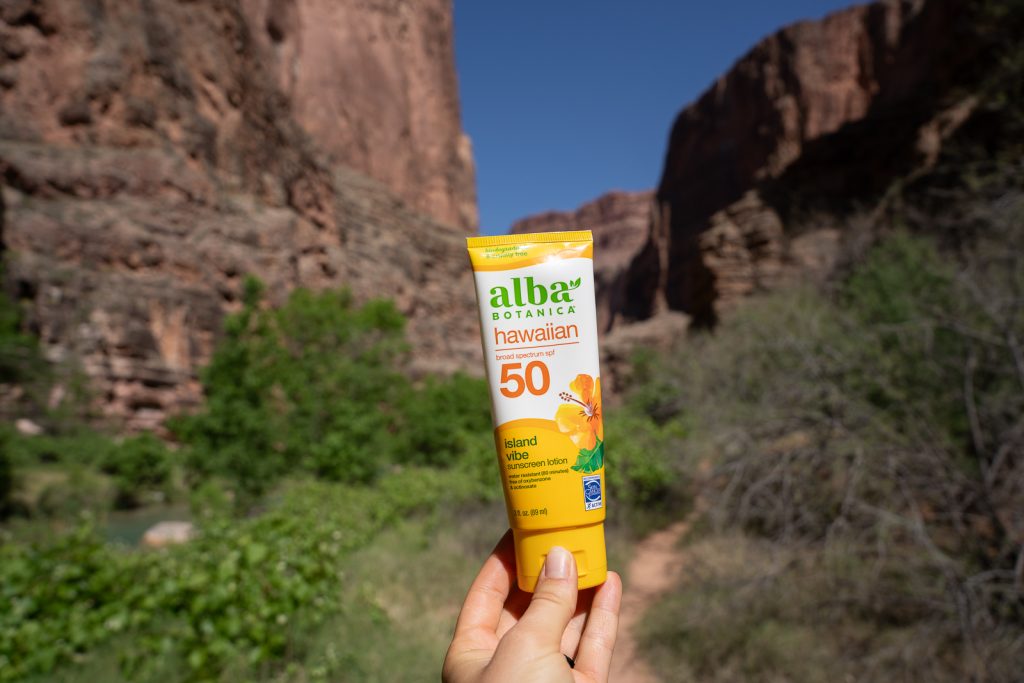
Again, protection from the sun is very important so make sure to bring some travel sized sunscreen!
Medicine
We recommend bringing Advil, a small first aid kit, and allergy medicine, just in case. Plus any daily medicines you need!
Chamois butter or body glide
Keeping your undercarriage happy is crucial when riding a bike. Chamois butter is a popular option. Another option is Body Glide, which is an anti-chafing stick that you can put on your thighs, armpits, feet, etc. to prevent chafing and blisters.
Bug spray
If you’re worried about bugs, pack some insect repellent.
Toilet paper
We typically take a bunch of toilet paper off a roll and put it in a ziploc. This saves a lot more space than bringing an entire roll! Make sure you pack out ALL of your toilet paper trash.
Cathole trowel
Be sure to follow the Leave No Trace principle #3 and dispose of human waste properly. We use this trowel when we have to do our business in the wild. Not all places allow this though and may require you to use a WAG bag, so make sure to check the rules in advance.
Feminine hygiene products (optional)
For the ladies, bring enough feminine hygiene products with you. Please remember to pack out any trash!
Kula cloth (optional)
One new addition to Kathryn’s gear is a Kula cloth. This is an antimicrobial pee cloth. It folds down small and is very handy if nature calls while on the trail.
Electronics and entertainment
Camera
Hopefully your bikepacking trips are taking you somewhere gorgeous. Make sure you pack your camera! You can see what we carry here. Since we have limited space on a bike, we typically just bring one larger camera, GoPros, and a drone (when allowed).
Tripod
If you want to capture photos of yourself, bring a tripod! We use the SIRUI AM-225 tripod.
External battery charger
For both phones and cameras, you’ll need an external battery charger to keep them charged. Don’t forget any cords!
Bike computer
We use the Garmin Edge 540 bike computer and doesn’t have the most intuitive controls, but is a very solid and reliable bike computer.
Garmin InReach mini
We always bring our Garmin InReach Mini on any outdoor adventure. This gives us the ability to message family, to let them know we are okay, plus has SOS capabilities, which we thankfully have never used. It’s an expensive piece of gear, but truly one of the best investments you can make for your safety.
Book or entertainment
If you plan on lounging at your campsite or having some downtime, make sure to either bring a book. Or if you don’t want to carry it, download some audiobooks or eBooks.
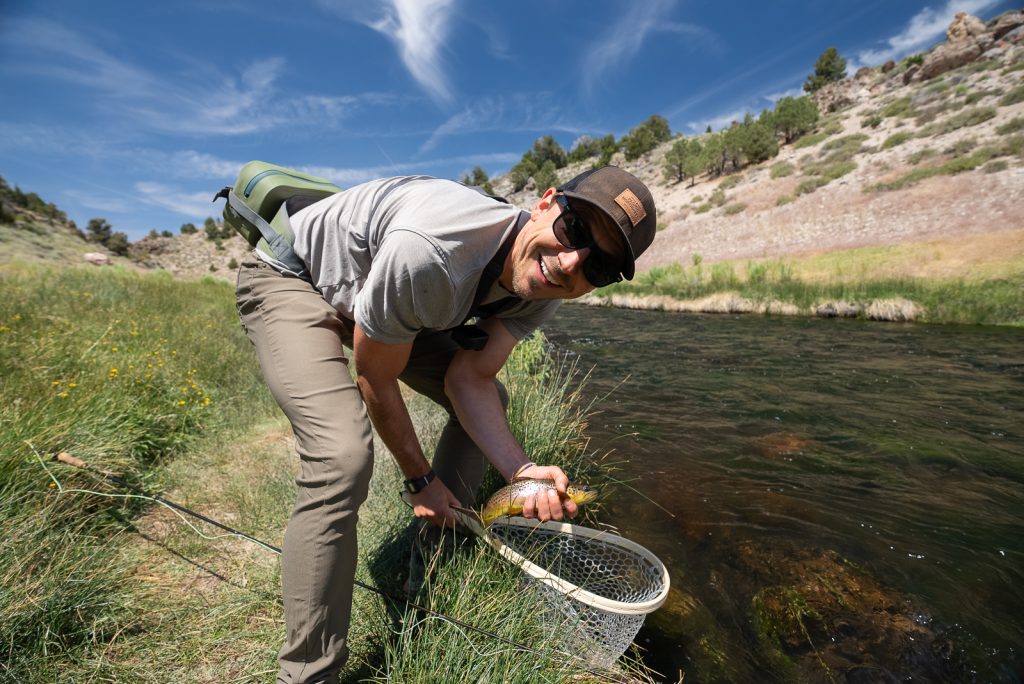
You could also download podcasts to listen to, bring a deck of cards, fishing gear, or whatever other hobby sounds fun to you!
How we pack for bikepacking
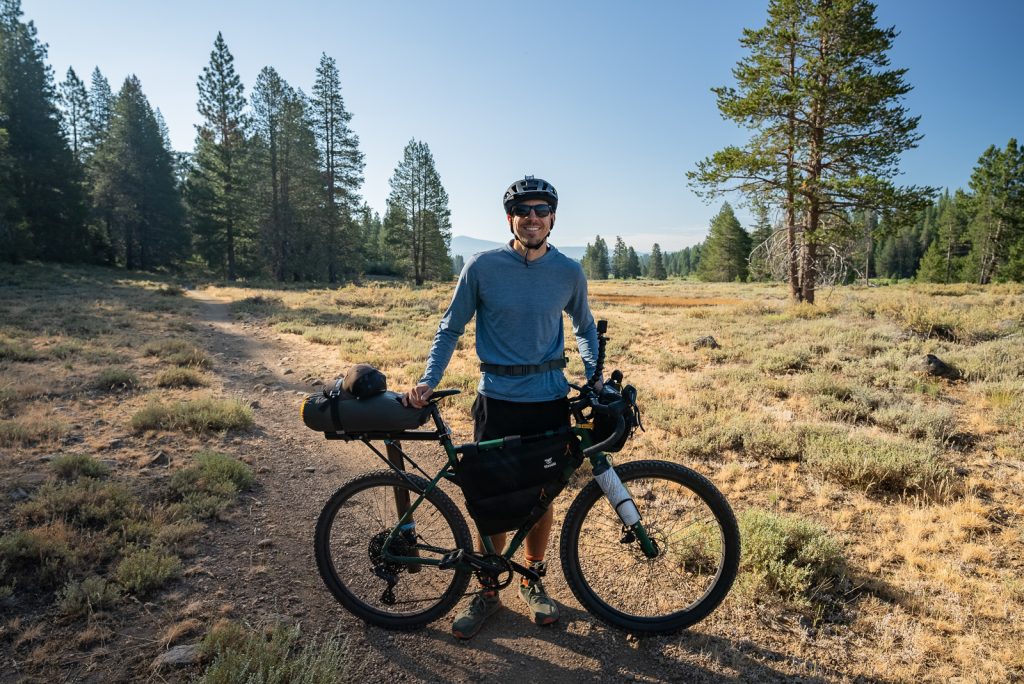
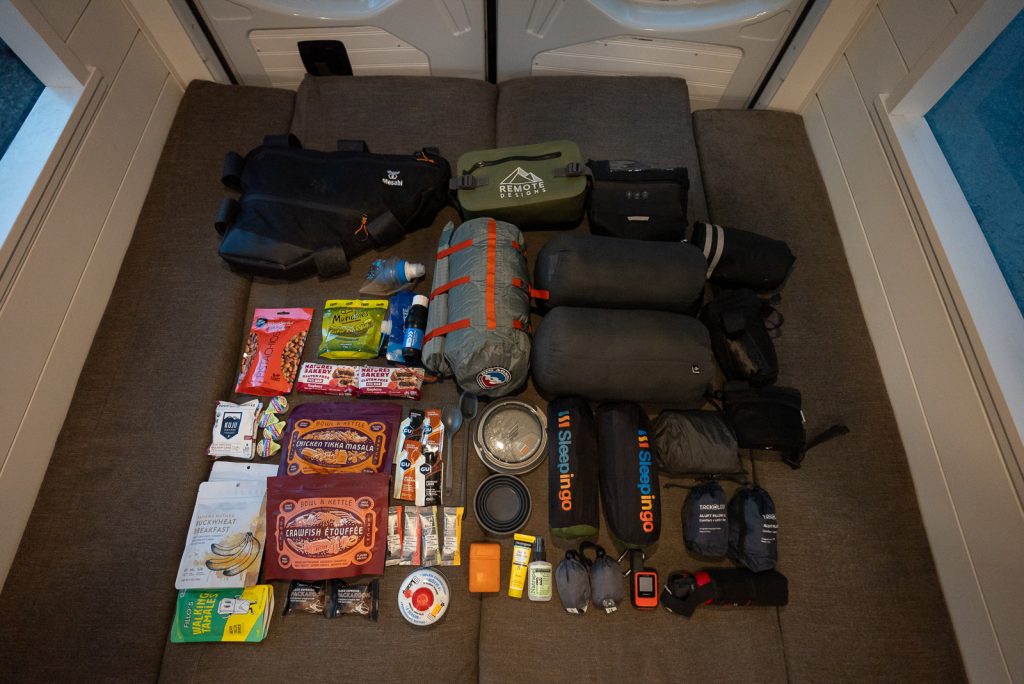
So you may be wondering, “how did you fit all of this onto a bike?!” Below is a quick rundown of how we packed all of this gear.
It’s important to know that we have invested a lot in more “ultralight” gear over the years, which makes packing a bit easier. If you have a traditional bulky sleeping bag or large tent, this may be a bit tougher.
Adam’s bike
Handlebar bag: Main filming camera, external battery, GoPro batteries, and Garmin InReach.
Frame bag: Two extra water bottles, bike pump, water filters, toiletries bag, 10 essentials bag, clothes, and lights.
Sea to Summit Dry Bag on rear rack: Sleeping quilt, sleeping pad, pillow, puffy jacket, pants, and tent footprint.
Small bag on rear rack: Tire tubes, multi tool, tire lever, chain lube, and tire patch kit. This bag was strapped on top of the Sea to Summit bag.
Hip bag: Drone and batteries, drone controller, fishing gear, and sunscreen.
Kathryn’s bike
Handlebar: Tent (which attaches to the handlebars), a cup holder bag that fits a water bottle, plus some snacks, GU, and LMNT.
Frame bag: Kettle, camping stove, cups, utensils, propane, all of our food and snacks, coffee, and trash.
Sea to Summit Dry Bag on rear rack: Sleeping quilt, sleeping pad, pillow, puffy jacket, and a pair of shorts and joggers. We also attached a tripod to the top of this with smaller Titan Straps.
Fanny pack: Phone, chapstick, sunglasses, and our van keys.