Last updated on December 17th, 2025
There is a lot to know before planning your trip to Guatemala! And we’re sharing our top Guatemala travel tips from our 2 weeks in the country.
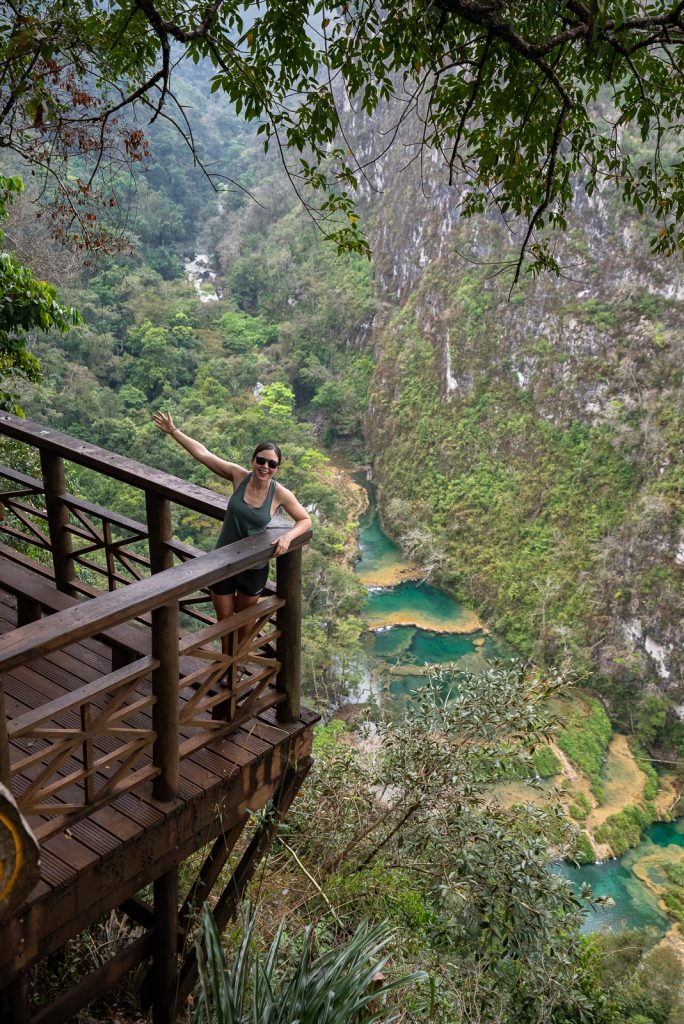
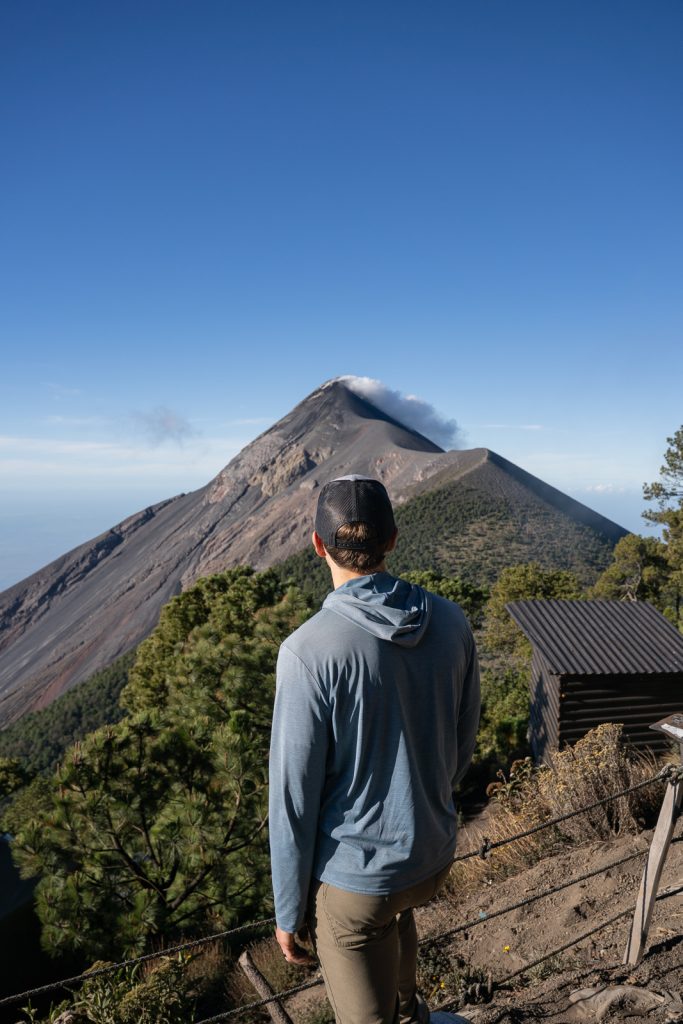
Guatemala is an outdoor lover’s paradise! Here you can hike to an active volcano, swim in bright blue pools, explore a sketchy cave, wander around historic, cobblestone streets, and relax at a lake surrounded by mountains. It’s truly a bucket list destination!
And if you’re planning a trip to Guatemala you may have quite a few questions before you go. Such as: “How do I get around?” “Can I use a credit card?” “Is Guatemala safe?” But we’re here to help you feel prepared for your trip! In this guide we’re sharing our top 22 Guatemala travel tips from our two weeks in Guatemala. Including some that will save you a bit of money!
- Our top 22 Guatemala travel tips & things to know
- 1. Guatemala City is the only major international airport
- 2. Getting between areas can take time
- 3. Take tourist shuttles to smaller towns
- 4. Understand how transportation pricing works
- 5. Prepare to wait for your shuttle pick up
- 6. Get an eSIM
- 7. Understand the seasons
- 8. Pack for multiple climates and activities
- 9. Purchase travel insurance
- 10. Prepare for little to no air conditioning
- 11. Give yourself time to acclimate
- 12. Only drink purified water
- 13. Cash is king in some areas
- 14. Carry small bills
- 15. Download offline Google Translate & Maps
- 16. Learn some spanish
- 17. Understand the tipping culture
- 18. Download WhatsApp
- 19. Always carry toilet paper (& don’t flush it!)
- 20. You will need to ask for your bill
- 21. Download a VPN
- 22. Guatemala IS safe (but know what to be on alert for)
Looking for more help planning your trip to Guatemala?
- The Ultimate Guatemala Packing List (with downloadable list!)
- The Perfect 2 Week Guatemala Itinerary (for first-timers!)
- 21 Fun Things to Do in Lake Atitlán, Guatemala
- The 23 Best Things to Do in Antigua, Guatemala
- Guatemala’s EPIC Acatenango Volcano Hike: Everything to know in 2025
- The Ultimate Guide to Visiting Semuc Champey in Guatemala
- Watch our Guatemala YouTube series
- Read all of our Guatemala travel guides
Our top 22 Guatemala travel tips & things to know
1. Guatemala City is the only major international airport
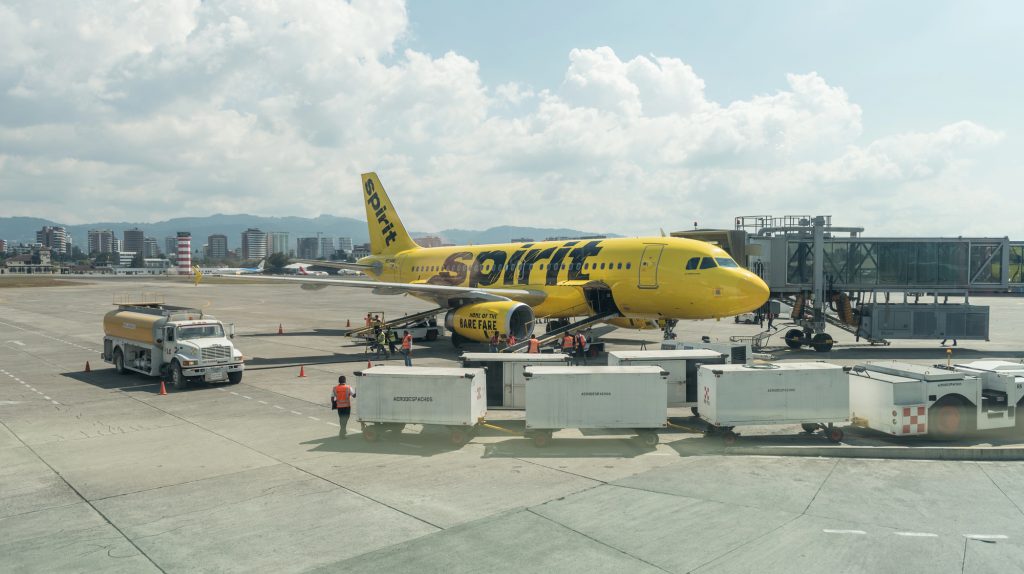
While Guatemala does have a handful of airports, including one in Flores, the major airport in Guatemala is Guatemala City’s La Aurora International Airport (GUA). This is the airport that all tourists typically fly into. It is located about 39 km (24 miles) from Antigua and 114 km (71 miles) from Panajachel on Lake Atitlán.
We weren’t totally sure what to expect from this airport, but it’s pretty nice! It even has an amazing Priority Pass lounge, with a full hot meal included. This was a HUGE perk before our flight back to the US!
Unsure how to get access to this lounge? Check out our favorite travel credit cards to see how we get free food and drinks at airports!
To get from the airport to Antigua or Lake Atitlán, you will want to grab a shared shuttle from the airport’s shuttle stand. This stand is easy to spot, as it’s right before you exit out of the airport. It cost us $20 USD (they accepted US dollars) per person for a ride to Antigua. We paid upfront, which meant there was no chance to get scammed later, which could happen with shuttles located outside the airport. And we were quickly on our way!
The ride was pretty quick (it can be long depending on traffic) and safe. We’d highly recommend using this option to get to Antigua, but you can also book an Uber if you want a private ride. This will be a bit more expensive though!
2. Getting between areas can take time
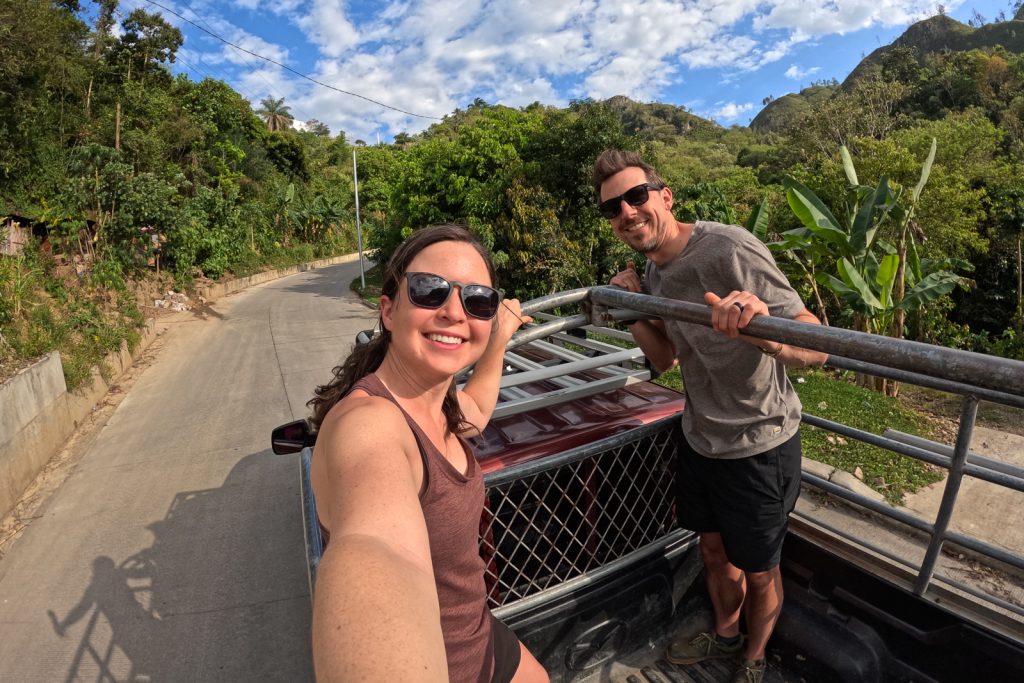
While Guatemala isn’t that large of a country, due to having fewer airports and transportation options, it can take quite a bit of time to get around. For example, while Lake Atitlán is only 114 km (71 miles) from Guatemala City, you can expect to spend six hours traveling to get there!
So it’s important to keep this in mind when planning your trip, as getting between most destinations can take a half to full day of travel.
If you only have 7-10 days, we’d suggest sticking to the main sights of Antigua and Lake Atitlán. But if you have two weeks or more, you can venture to some of the further destinations, like Semuc Champey or Flores/Tikal. We personally spent two weeks in Guatemala and you can see our exact itinerary here!
3. Take tourist shuttles to smaller towns
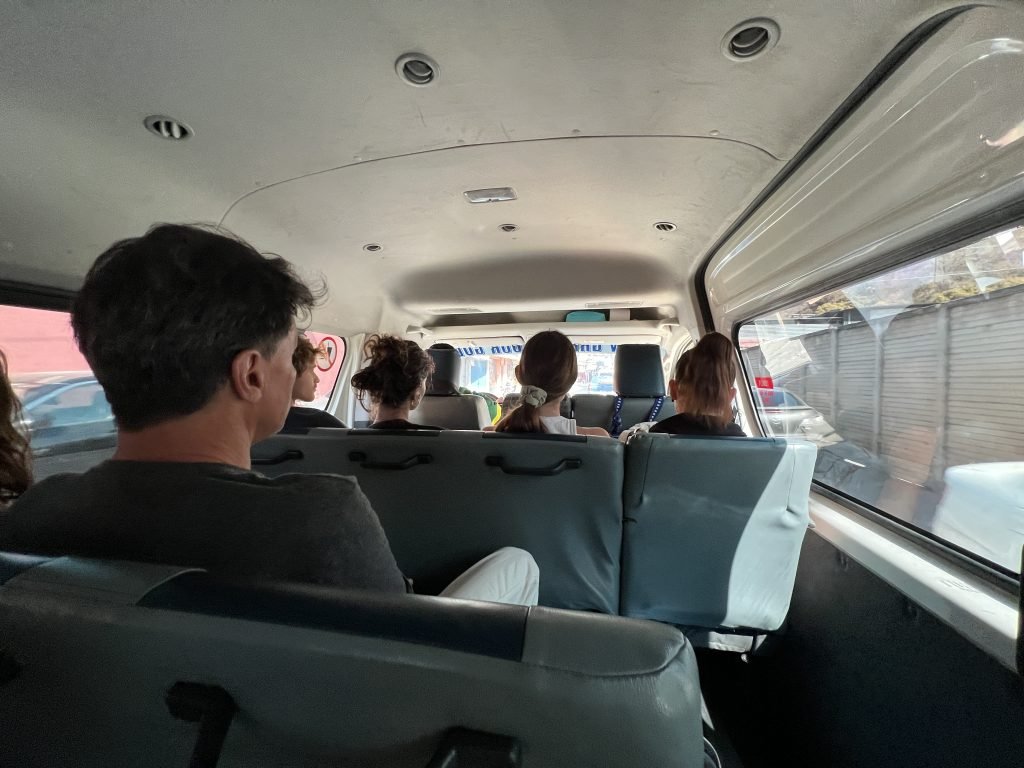
Unless you plan to visit Flores, which has an airport, the best way to get around Guatemala is on tourist shuttles. You can book shuttles from tour providers in the different towns you’re visiting, but if you’re like us and prefer to plan ahead, you can book through Due South Travels (what we did) or GuateGo.
These shuttles will range from a small van to a bus, depending on the destination and provider. We took multiple tourist shuttles around the country, including an 8 hour ride to Semuc Champey and for the most part, it was a super smooth, scenic, and enjoyable ride. Minus one jam packed ride, our shuttles were never totally full and we had a bit of space to spread out. Plus they all stop at least once (minus the airport ride) for a snack and toilet break.
Once you get to a town, tuk tuks, camionetas (in Semuc Champey), and lanchas (at Lake Atitlán), will be the best way to get around.
What about chicken buses? You will see these colorfully designed buses all around Guatemala. They are popular with locals, but can be used by tourists. And are an option to consider if you’re on a tight budget. But due to them being slightly less safe than the tourist shuttles, we opted to skip them.
4. Understand how transportation pricing works
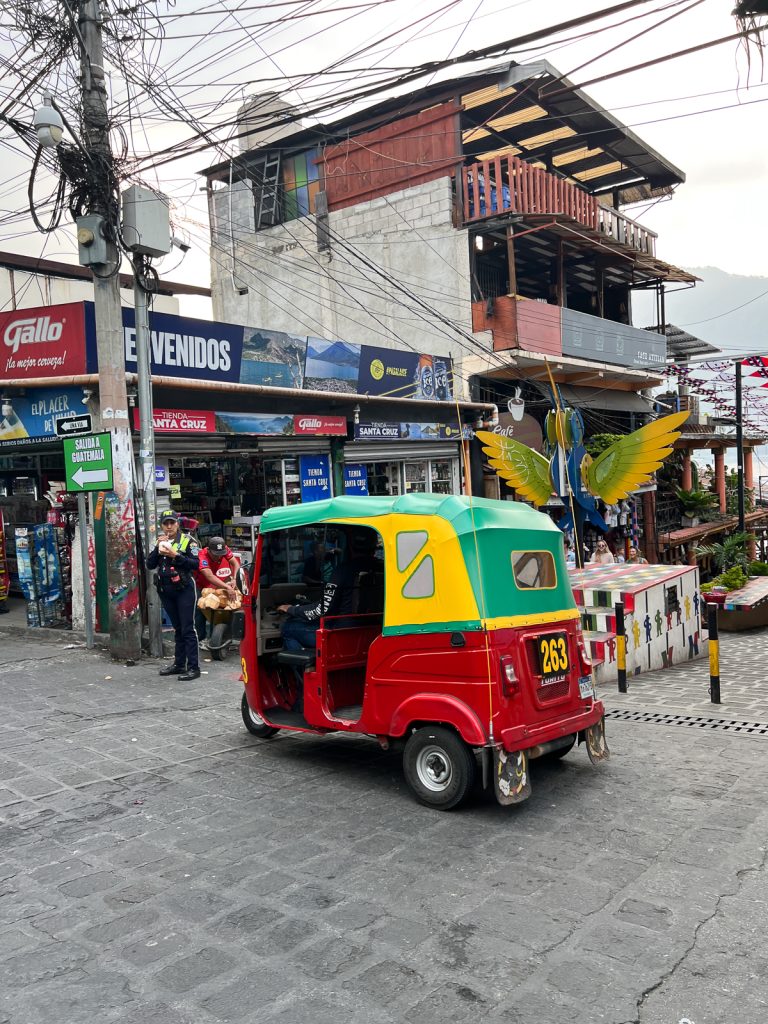
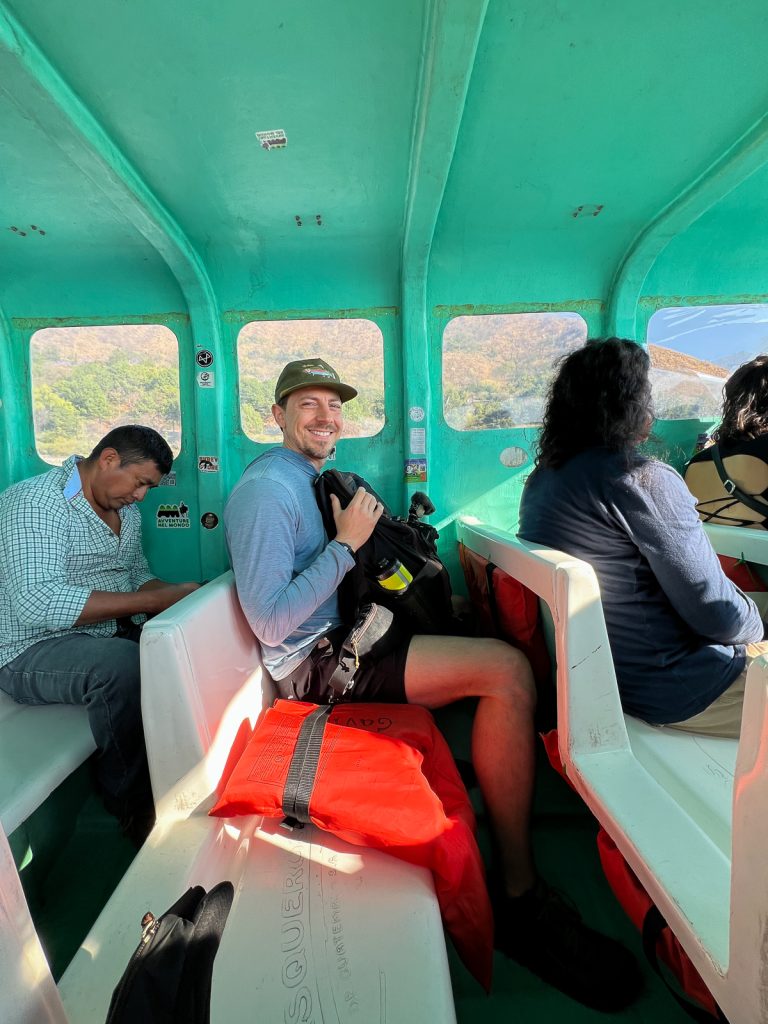
One big money saving Guatemala travel tip is to understand how transportation pricing works. And how to avoid paying too much, as it is very common for tourists to be overcharged for tuk tuks (all across the country) and lanchas (in lake Atitlán).
Tourist vs. local prices
One thing to be aware of is that tourists and locals pay different prices for transportation in Guatemala. So if you hear a local get charged one price, don’t be alarmed if you’re charged more. This is normal and expected, as this is their daily transportation.
Research transportation costs
Make sure to research prices to understand what you should be paying for tuk tuks, camionetas, and lanchas. There used to be pricing signs at the lancha docks, but we didn’t see any during our time. And we hear that even with the signs, they would still try to charge you more.
Both our Lake Atitlán and Semuc Champey Airbnbs gave us insight into how much rides should cost, which was SO helpful when negotiating rides. So if you’re unsure, ask your lodging if they have advice on how much you should pay.
Our tactics for pricing
For tuk tuks and camionetas, you will want to agree on a price beforehand. Do not hop into a tuk tuk without agreeing to a price, as they could seriously try to rip you off when you arrive at your destination. We never had a driver try to change the pricing on us from what we agreed upon.
For lanchas, make sure to understand what you should pay ahead of time. At first, we would ask the price before getting on. But then a local told us to just hand them the amount it should be (based on your research) as you get off and then walk away. After overpaying for a lancha, we tried this method twice without any issues. The worst that could happen is that they ask for more!
5. Prepare to wait for your shuttle pick up
Unless you book a private shuttle (not recommended, as it costs a lot more), you will likely have to wait a bit for your shared shuttle to arrive. It was not uncommon for our 8 AM shuttle to not pick us up until 8:45 AM. Since they are shared, the driver has to go pick up people all around town, which can take a while.
One reason we liked booking our shuttles through Due South Travels is that they have amazing customer service. While waiting for our first shuttle, we were worrying that they forgot us, so I sent them a message via WhatsApp and they confirmed the driver would be there soon.
6. Get an eSIM
You have a few options for cell service while in Guatemala. You can pay for an expensive international plan with your home provider, only use Wi-Fi (not recommended), get a physical SIM, or what we have started to do, get an eSIM from Airalo!
This is a SIM that you can download to your phone. It saves the hassle of having to get a physical SIM. Plus, you can get an eSIM for a specific country or for an entire region, making it extra easy to use if you plan to hop between countries in Latin America.
If you want to try it for your trip to Guatemala, use our code AK3 for $3 USD off your first eSIM!
7. Understand the seasons
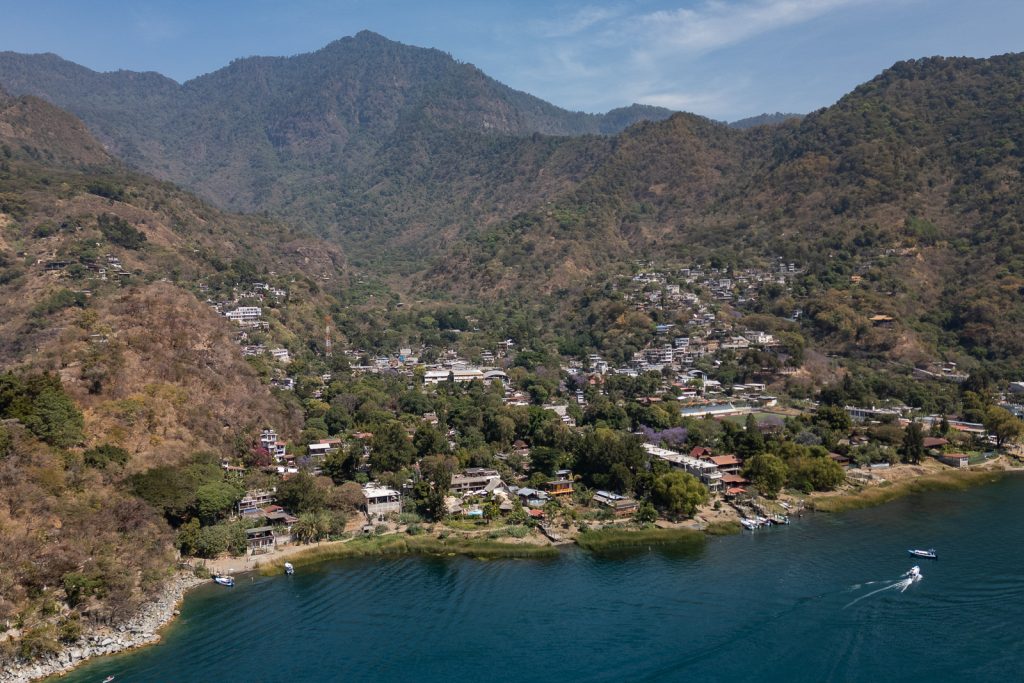
Guatemala has two seasons: the rainy season (May-October) and the dry season (November-April). During the rainy season, it may just rain in the afternoon, but if there are hurricanes or storms in the area, it can rain quite a bit more.
Like most visitors, we chose to visit in the dry season (specifically in mid March) to avoid rain and have perfect weather for outdoor activities. Minus some rain in Semuc Champey and fog at Acatenango, we had sunny, clear weather.
However, there were two downsides to visiting when we did. First, the scenery, especially around Lake Atitlán, is not as lush. Aso, every day, shortly after sunrise, the skies got very hazy. So visibility wasn’t the best at times, but it was still beautiful!
In the future, we’d like to visit at the beginning of the dry season, when the scenery is more green and the skies are likely clearer.
8. Pack for multiple climates and activities
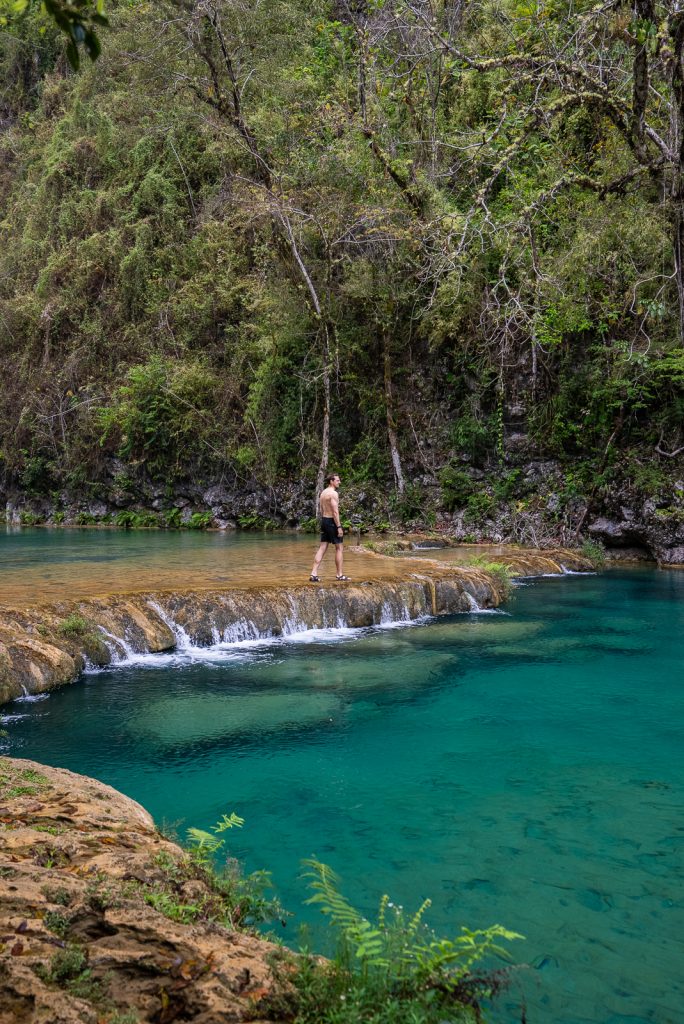
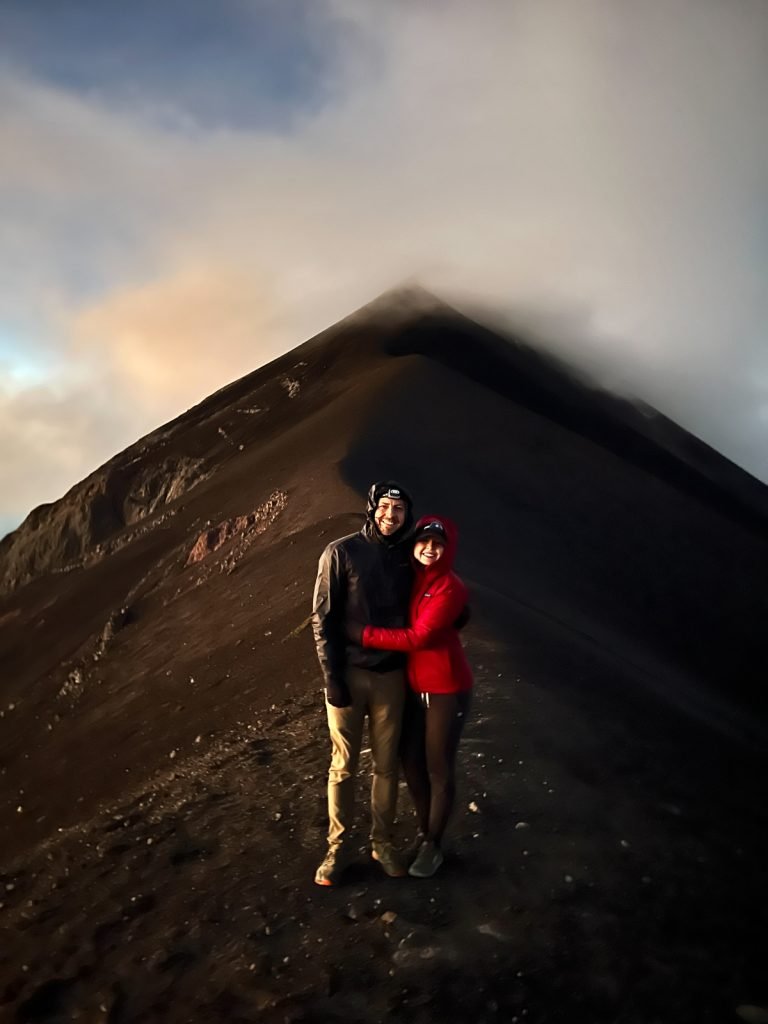
Most of Guatemala has a pretty mild climate, with lows between 50-60ºF (10-15ºC) and highs reaching around 80ºF (26ºC) in both Lake Atitlán and Antigua. But if you plan to visit Semuc Champey or do the Acatenango hike, you will experience both warmer and much colder temperatures.
So make sure to pack for all types of weather you might experience, including the frigid wind of Acatenango, the muggier heat of Semuc Champey, and the possibility of rain (even in the dry season). As well as outfits suitable for whatever activities you choose! With the help of packing cubes, we were able to fit two weeks worth of items (including some hiking gear) in just two backpacks and two carry-ons.
Also, if you’re visiting for more than a week, you may need to do laundry. You can find laundry services in Antigua, which will do your laundry for you. Or you can do laundry in the hostel sink like we did. 😜
Want a ready to go Guatemala packing list? You can download ours for free!
9. Purchase travel insurance
One of the most important Guatemala travel tips is to get travel insurance! This is something we suggest for any international trip. But it is especially important in Guatemala, due to the higher altitude and more adventurous activities.
We are big fans of SafetyWing! SafetyWing is travel medical insurance that will cover you outside of your home country for however long you need it. We purchase their Nomad Insurance plan before any international trip, which not only gives us travel medical insurance, but also provides coverage for lost baggage and travel delays.
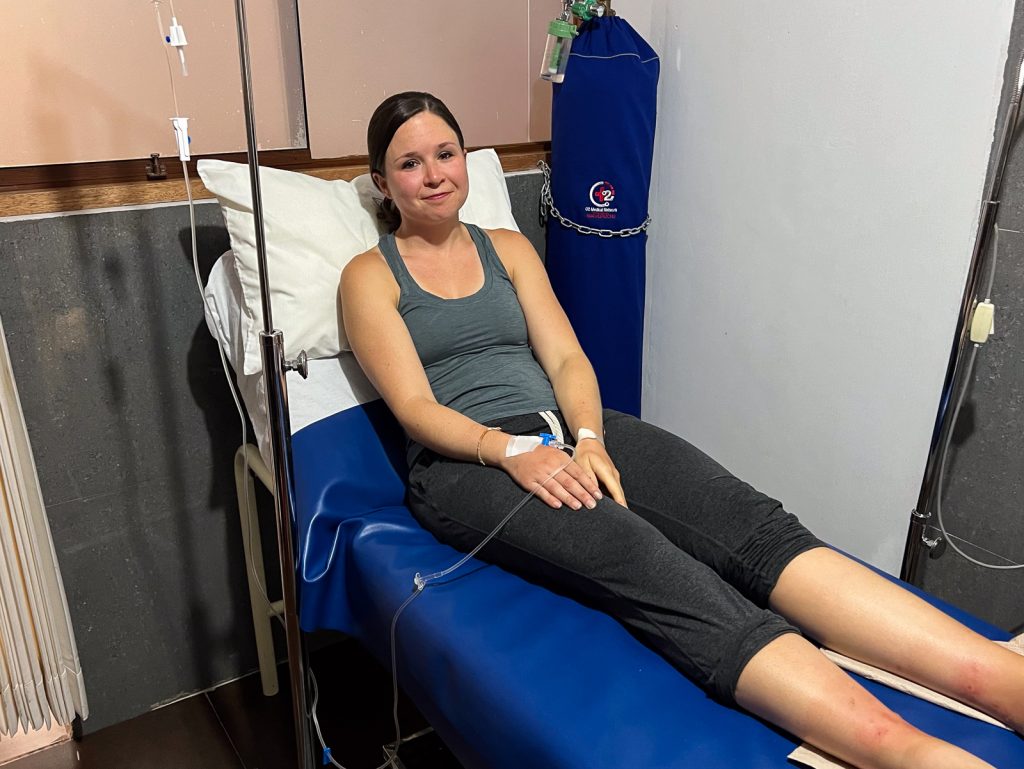
After always purchasing it for many trips over the years and never needing it, we actually had to use it on a previous trip to Peru in 2024. Kathryn was bitten by some bugs on the Salkantay Trek and had to go to urgent care. The treatment at the clinic cost $367 USD and SafetyWing covered all of it! And we got reimbursed within just a few days.
10. Prepare for little to no air conditioning
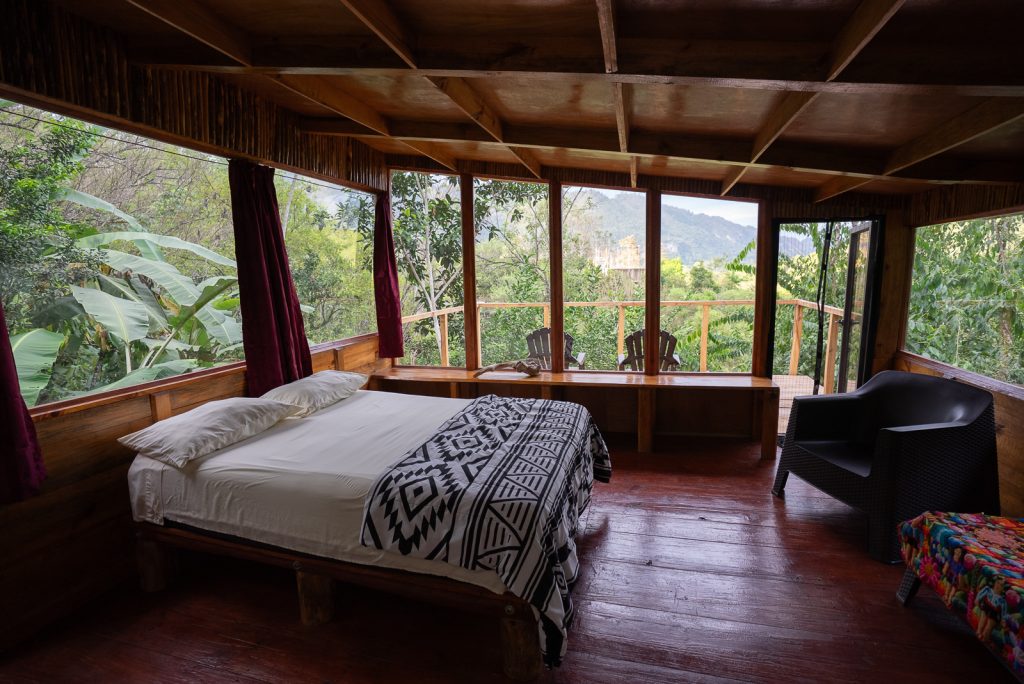
Minus our hotel in Guatemala City, none of our accommodations had air conditioning and some do not have fans either.
While the temperatures aren’t too hot during the day and it cools off quite a bit at night, we did find that our rooms could get a bit stuffy. Make sure to check and see if your lodging has air conditioning or a fan if that’s important to you!
11. Give yourself time to acclimate

Another crucial Guatemala travel tip is to acclimate. Both Lake Atitlán and Antigua are both located over 1,500 meters (5,000 feet) in altitude. While this isn’t nearly as high as Peru, if you’re coming from sea level, you may show some signs of altitude sickness if you do not take care of yourself.
This is especially true if you do the Acatenango Volcano hike, which goes up to 3,600 meters (11,800 feet) or more! It’s relatively common for people to experience some sort of altitude sickness on this hike, especially given how tough it is. But we have a handful of tips to hopefully help you avoid it, like we did!
Give yourself time to adjust
Since you’ll immediately land in Guatemala at a higher altitude, you won’t be able to acclimate to visit Lake Atitlán or Antigua. You’re thrown right into the higher altitude and for most visitors, it’s no problem. But it is important to be aware of symptoms of altitude sickness and just know that going uphill may feel a bit tougher.
For those doing the Acatenango hike, we’d suggest spending at least a day or two in either Antigua or Lake Atitlán before tackling this. That way, you’re not immediately flying in and hiking up to such a high altitude.

Drink LOTS of water
Hydration is key when at higher altitudes. We especially recommend adding electrolytes to your water. LMNT is our absolute favorite! And if you use this link, you’ll get a free sample pack (8 packets!) with any order!
Get altitude sickness medicine
If hiking Acatenango, ask your doctor about altitude sickness medicine before you go to Guatemala. Our doctor in the US has recommended Diamox in the past. We didn’t personally take it, but it’s worth looking into!
12. Only drink purified water
It is not safe to drink tap water in Guatemala, so make sure you only consume filtered water, to reduce getting sick.
It’s easy to find bottled water at convenience stores around Guatemala and most lodging and restaurants will have filtered water available as well. To reduce plastic waste, bring a reusable water bottle!
13. Cash is king in some areas
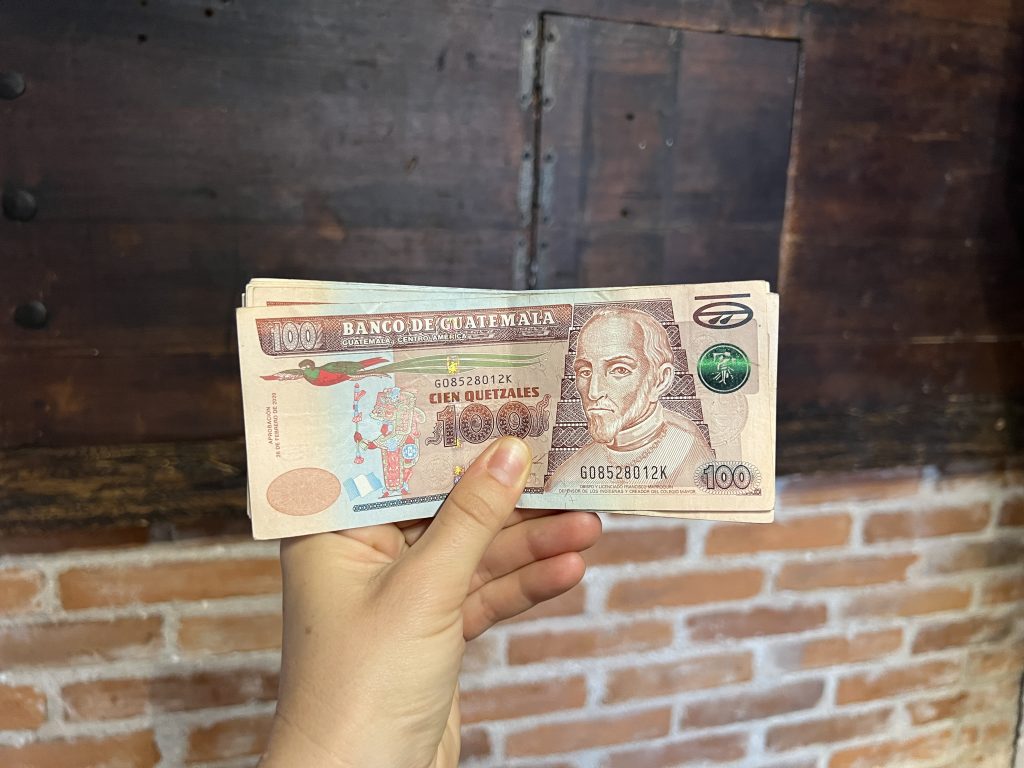
Guatemala’s currency is the Quetzal (denoted as Q or GTQ) and you can find the current conversion for your country’s currency here.
It’s pretty hit or miss whether or not a place accepts credit cards in Guatemala. While many restaurants and cafes in Antigua took credit cards, street food stalls, tuk tuks (and lanchas in Lake Atitlán), plus some more local restaurants were cash only. And the Semuc Champey area basically only accepts cash.
So make sure to always have some on hand! Here are some additional tips regarding paying in cash or by credit card in Guatemala.
There may be a fee for credit cards
When credit cards are accepted, there is sometimes an extra fee. For example, when paying the remaining balance for both our hostel in Antigua, plus our Acatenango trek, there was a 3% extra charge for using our credit card. We opted to pay the fee, as we prefer to use credit cards to accumulate points and miles as much as we can. Plus, then we could save our cash for places that did not accept credit cards at all.
Using ATMs in Guatemala
You don’t necessarily need to bring cash to Guatemala, but we suggest getting cash out as soon as you arrive, as you may need it quickly.
You can find ATMs in Antigua, plus in many towns around Lake Atitlán. We suggest going to a bank ATM for the best rates. In Antigua, this ATM was our go-to, as the fees were lower than the others nearby.
Want to avoid ATM fees? We have a Charles Schwab checking account specifically for international travel. They refund ATM fees from ANY ATM worldwide! This gave us lots of freedom to use whichever ATM was most convenient.
When we could use a credit card in Guatemala, we used one of our travel credit cards to earn points and miles for future trips. Curious which ones we use? Learn more about our favorite travel credit cards.
14. Carry small bills
One thing we really struggled with in Guatemala was having enough small bills. The ATM would give us Q100 bills, but in some situations, like tuk tuk or lancha rides, they either won’t want to break a Q100 or you’ll need exact change.
In order to have enough small bills on hand, try to think ahead of what you may need cash for and get smaller bills, if possible. One way to do this is to pay for a meal (even if it’s one you could use a credit card for) with a larger bill and get cash back. Or go buy a cold drink or snack to break the bill.
15. Download offline Google Translate & Maps
Even if you have an eSIM, make sure to download offline Google Translate and Google Maps beforehand. This will come in handy if for some reason you do not have service or if you get a small data plan.
16. Learn some spanish
Speaking of Google Translate, it’s a good idea to learn some Spanish before you go (this list is helpful)! Guatemala is a Spanish speaking country, with many people in the more rural areas speaking different Maya languages as well. While we found most tourist focused spots, like hotels, hostels, and tours, spoke English, many people at cafes and restaurants did not.
While we are far from fluent, we know a little bit and between our limited knowledge and Google Translate, we were able to get by just fine.
17. Understand the tipping culture
Figuring out how much to tip when traveling is always a bit stressful for us. Coming from the US, 20% is typically expected for any type of service. But this really varies across the world!
In Guatemala, tipping is not required in all scenarios. Some restaurants in Antigua had tip jars, gave you the choice to tip, or included it in the bill (make sure to check for this). We’d typically give at least 10% of our bill when eating out.
But when it came to tours, we tried to always tip our guides 20%, as they were all knowledgeable and worked very hard.
Our mindset when traveling to more affordable countries, where the average pay is extremely low, is that an extra $1-$2 will not hurt us much, but for the locals, could mean a lot. So we try to be a bit more generous when we can. But you can typically tip a lot less than in the US and it will still be greatly appreciated.
18. Download WhatsApp
Make sure to download WhatsApp before heading to Guatemala! We used it to book a lunch reservation, chat with our shuttle drivers, and also to receive information for our Acatenango tour. It’s an extremely helpful way to be able to communicate with international phone numbers!
19. Always carry toilet paper (& don’t flush it!)
Minus the inside of most cafes and restaurants (that you’re a customer of), you will likely have to pay to use public toilets. These toilets are usually around Q5 and while they typically include toilet paper, we suggest packing some of your own so you don’t have an issue. We just took a bunch off a roll and put it into a ziploc bag before flying to Guatemala and replenished it from our hostels as needed.
Also, you cannot flush toilet paper in Guatemala, so please throw it in the trash can next to the toilet.
For the ladies, Kathryn LOVES her Kula cloth. This is an antimicrobial pee cloth that I mostly use on hikes, but it could also be handy when exploring town!
20. You will need to ask for your bill
Something that confused us a bit when we first started traveling to Latin America is that unlike the US, where your server brings you the bill at the end of your meal, you typically have to ask for the bill in Guatemala.
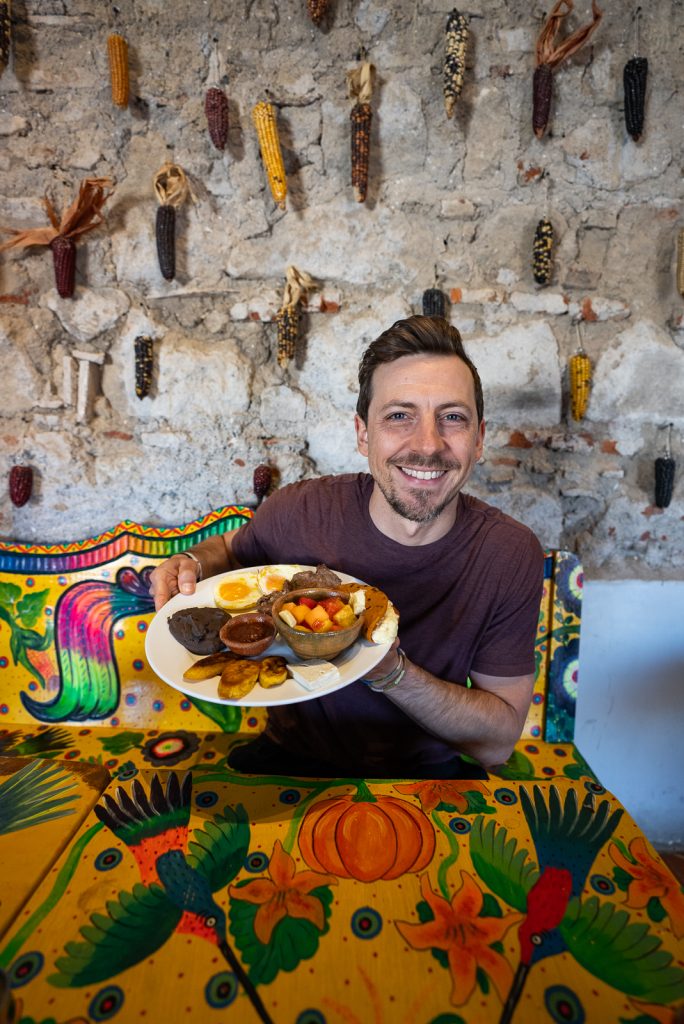
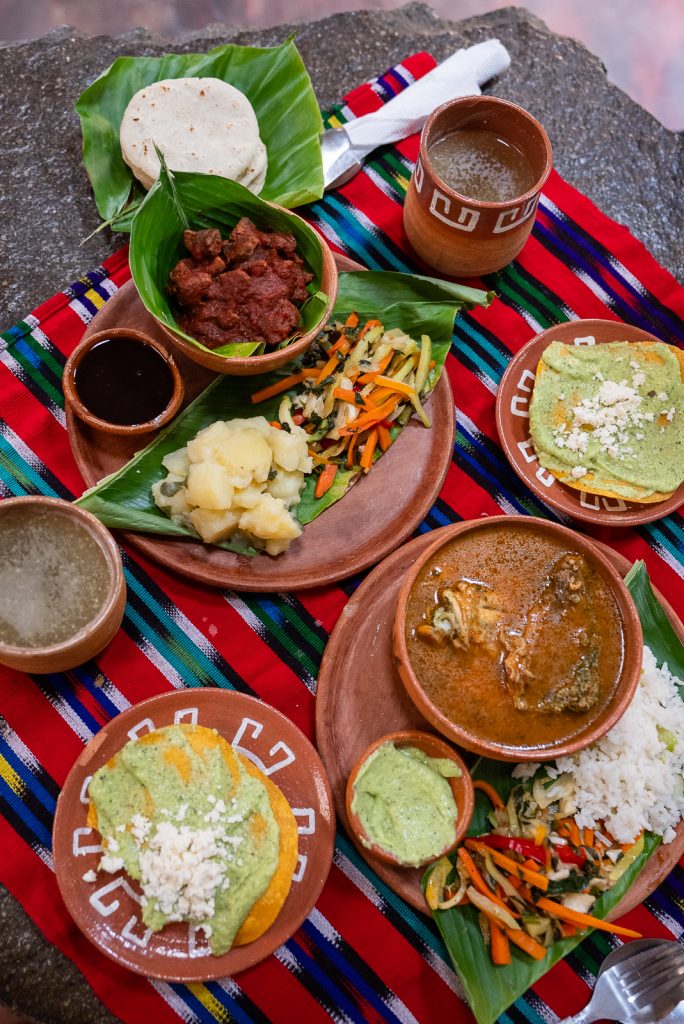
We like that this means they aren’t rushing you to get out, but you can sometimes end up waiting a while if you don’t realize this. To get your waiter’s attention, wave your hand and say “la cuenta, por favor!”
This also sometimes applies to coffee shops. Some of the coffee shops we visited didn’t make us pay until after we finished our drink.
21. Download a VPN
If working remotely, you may want to download a VPN to be able to access specific websites while in Guatemala. There are tons of VPN options and you can get a trial for most, if you just want to test it out for your trip.
22. Guatemala IS safe (but know what to be on alert for)
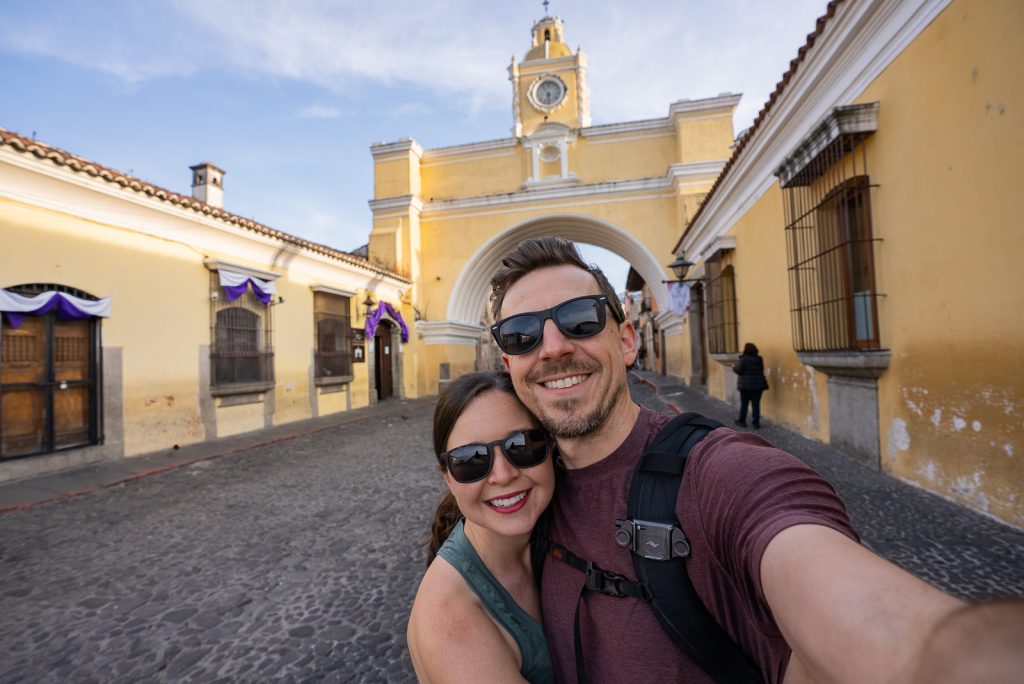
While bad things can happen anywhere, we felt 100% safe in Guatemala and had zero issues. However, there are a couple things to keep in mind in terms of safety.
Be alert & keep your valuables secure. As for any travel destination, it is always good to be aware of your surroundings and keep your valuables secure. The largest risk to tourists in Guatemala is theft. We suggest keeping your wallet and phone in a front pocket (preferably zipped). During our visit, we were walking around with expensive camera gear and never once felt unsafe. But we never took our hands off of them either.
There could be political unrest. During our visit to Guatemala, the country was trying to pass a new law regarding vehicle insurance. And many Guatemalans were NOT happy about it, which led to protests and roads being blocked. While these did not pose a safety threat to us, they did make it significantly harder to travel on the days this occurred. Thankfully, we weren’t traveling the days it happened, but we heard many stories of people being stuck and unable to get to the airport or their next town.
Scams are possible. The most common scam that could occur is being overcharged with transportation. So make sure to follow the tips we shared above!
Save this guide with our top Guatemala travel tips