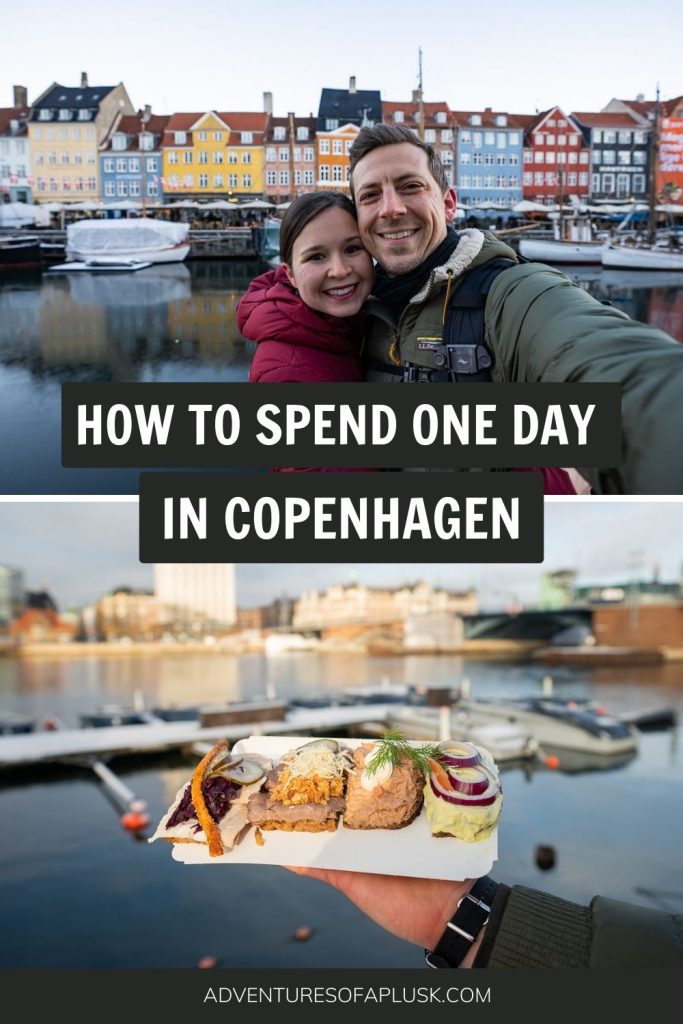
Short on time in Copenhagen? We’re sharing the best things to do with only one day in Copenhagen, based on our experience!
Famous for its biking culture, harbor and canals, colorful architecture, and world class restaurants, Denmark’s capital city of Copenhagen is a must-visit when exploring Europe’s Nordic countries.

And on our way back to the United States from Finland, that’s exactly what we did! We love finding cheap flights and the most budget friendly way home was by flying through Copenhagen. Instead of just spending a short layover in the airport, we opted to add on a couple days to experience the city. And we are SO glad we did!
While there are tons of things to do in this beautiful city, one day in Copenhagen gives you enough time to get a taste for what it has to offer. Literally! You can try a bunch of Danish foods, walk the popular Nyhavn area, go on a canal boat, and see the highlights of the historical sites.
And in this guide we’re sharing how to spend one day in Copenhagen, based on our own short layover in the city. Plus some tips for your visit!
Explore more of Europe:
- How to go on a Copenhagen to Malmö, Sweden day trip
- The 15 BEST things to do in Helsinki in the winter
- 14 FUN things to do in Finnish Lapland in the winter
- How to take a fun day trip to Tallinn, Estonia from Helsinki, Finland
- 32 Epic Hikes in Europe You Need to See to Believe
- The PERFECT 2 days in Munich itinerary
- 5+ Munich Christmas markets you MUST visit in 2024!
- The 15 BEST things to do in Garmisch-Partenkirchen in the winter
- 14 FUN things to do in Füssen, Germany
- Watch our entire winter Europe series
Copenhagen in one day at a glance


This itinerary mostly follows how we spent our one day in Copenhagen (you can watch our visit here!). It is a fast paced itinerary, as we wanted to squeeze in as much as possible. But you can easily adjust it to fit your interests and preferred speed!
Most of the major sites in Copenhagen are located around the city center, which makes it easy to explore the city in one day! Here’s a quick rundown of what you can expect on this one day in Copenhagen itinerary:
- Enjoy coffee and breakfast
- Walk around Nyhavn
- Explore the City Centre
- Visit a castle or museum
- Try smørrebrød for lunch
- Explore the canals by boat
- See city views from the Round Tower
- Try a danish hot dog
- Enjoy a local evening
One day in Copenhagen itinerary
Stop by a bakery for breakfast

Kick off your one day in Copenhagen by visiting Skt. Peders Bageri, the oldest bakery in Denmark. They have lots of pastries to choose from. We suggest getting wienerbrød and a spandauer, which is a rich, custard filled pastry!
A+K tip: The wienerbrød is the typical pastry Americans would refer to as a “Danish.” Only people outside of Denmark call it a pastry, though. There is actually no such thing as a “Danish.” So if you go to a bakery asking for this, you might get some funny looks.
Grab coffee at Coffee Collective

Next up, grab some high quality coffee from Coffee Collective, a local roaster in Copenhagen. They have several locations around town, but we went to their Berkinow location, which has a beautiful indoor courtyard with a glass ceiling.
Walk around Nyhavn

One of the most iconic sights in Copenhagen is Nyhavn! Nyhavn, which is pronounced “new-hown,” means “New Harbor” and was originally a commercial port where ships from all over the world would dock. But today it has become a popular spot for visitors because of all of its colorful buildings that line the water!
We had seen photos of this area for years and it was a surreal feeling to finally be there and actually see it for ourselves. It not only makes for a great photo spot, but it is also a fun place to people watch. We arrived here early in the morning and instead of being filled with tourists, it was full of locals biking and walking to work.
Explore the City Centre

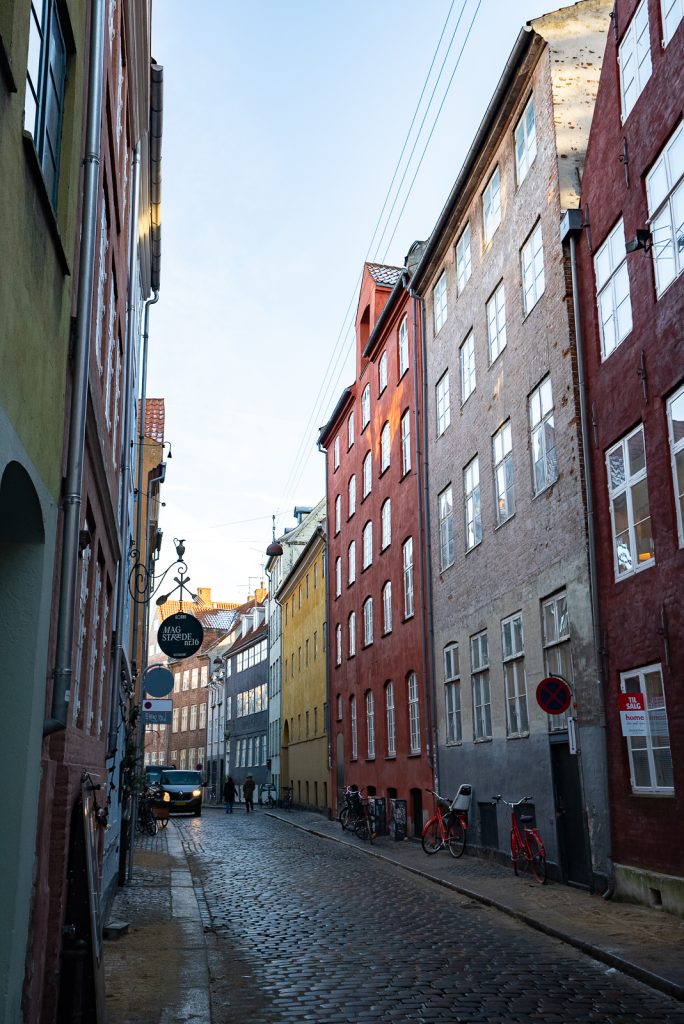
For the next part of your morning, explore the city centre! This stretch of town is full of gorgeous buildings, historic sites, and canal views. There are tons of streets to check out, but here are a few we suggest prioritizing.
First up we have Strøget Pedestrian Street, which was Europe’s first major pedestrian boulevard and now includes several streets and squares. On Strøget you’ll find lots of shopping and restaurants along the stone streets.
Just a few blocks away are Magstræde and Snaregade, which are two of the oldest streets in the city. The buildings here date back to the 1600s!
Lastly, check out Larsbjørnstræde. This is an area loved by locals because of the casual and cozy vibes of the cafes and boutiques. It’s right by Skt. Peders Bageri, so you may have seen this one already!
A+K tip: Depending on where you’re staying and the route you took this morning to get to the first few stops, you may have walked by some of these already. And you may end up walking on or by some of these streets later to get to other destinations. So once you decide your exact itinerary, you can then map out the most efficient way to see these streets.
Visit a castle or museum
Copenhagen is home to one of the oldest monarchies in the world, so you’ll find lots of castles and palaces. Plus as the capital city, it offers many museums on a variety of topics.
But since you only have one day in Copenhagen, you unfortunately will not have time to see them all. We suggest picking one that you want to see the most and spending a couple hours checking it out. Here are a handful to choose from!

Amalienborg Palace
The Amalienborg Palace is the residence of the Danish Royal Family and is currently home to King Frederic X (who became king the day we left Copenhagen!) and Queen Mary. When visiting the palace, you can tell if they are in residence if the Danish flag is flying.
It is free to walk the grounds of the palace and we highly recommend doing this, even if you don’t plan to go inside. And if you time your visit for noon, you will get to see the changing of the guards at the palace courtyard. During this procession, the guards march through the streets from their barracks by the Rosenborg Castle to Amalienborg.
But besides seeing the grounds and the changing of the guards, you can also go inside to visit the Amalienborg Museum. This museum will give you a peek at the private rooms of the most recent royal figures, dating back 150 years.
Rosenborg Castle
Originally built by King Christian IV in 1606, the Rosenborg Castle served as a country summer house. Today, it houses some of Denmark’s cultural treasures, including the Danish crown jewels and crowns.
Not only can you see these prized possessions, but you can also see what life was like for the royalty that once lived here.
Christiansborg Castle
Another former home to Danish Royalty, the Christiansborg Castle now houses the Parliament, Supreme Court, and the Ministry of State. The highlight of the Castle for many is the Great Hall, where you’ll see 11 tapestries gifted to Queen Margarethe II for her 50th birthday in 1990.
Fun fact, the Christiansborg Palace is the tallest palace in Copenhagen!
The National Museum
The National Museum is Denmark’s premier national history museum. Here you can learn about the history of Denmark through the centuries including Vikings, the Renaissance, and Frederick III’s art chamber. Other exhibitions include the antique collection, a children’s museum, and items from Denmark’s antiquity.
Designmuseum Danmark
If you’re a fan of design or just want to learn more about the impact of Danish design, check out the Designmuseum Danmark. There are exhibits on fashion, architecture, and graphic design, just to name a few.
Glyptoteket
Another interesting museum is the Glyptoteket, which is an art and sculpture museum with a winter garden. Divided into ancient and modern collections you’ll find Egyptian, Greek, and Roman art, as well as Danish paintings and sculptures.
And don’t miss the winter garden, where you can take a break with some coffee and cake!
Try Smørrebrød for lunch

By now you’ve likely worked up quite an appetite so it’s time for a classic Danish lunch, smørrebrød (don’t ask us how to pronounce it 😂)!
Smørrebrød is essentially a Danish open faced sandwich. The first half of the word (smørre) means butter, while the second half of the word (brød) means bread. It is specifically made with rye bread and it is slathered with a layer of butter. From there, you have almost an endless possibility of additional toppings! Common toppings include pickled herring, other types of fish, pork, and cheese.
You can find these Danish open faced sandwiches all over the city. If you order them in a restaurant we hear they can be overpriced, but in a dedicated shop or from a stand they’ll be much cheaper and just as good.
One highly regarded spot is Lillian’s Smørrebrød. Unfortunately during our visit, they were closed, so we headed to T.S. Smørrebrød instead, which was a delicious, small local spot. A few other places that we heard good things about are Rådhus Smørrebrød, Restaurant Kronborg, and Restaurant Schønnemann.
Smørrebrød are usually pretty small, so make sure to order a few! And because of their size, you typically eat them with a fork and knife. We LOVED splitting these and getting to try all of the different flavor combinations!
Prefer more food options? Check out Torvehallerne!
If you’d like something a bit different, check out the TorvehallerneKBH food hall. Here you can find all kinds of things like Spanish tapas, ice cream, oysters, crepes, tacos, pastries, pizza, and more!
Explore the canals by boat

An activity on every visitor’s list to Copenhagen is going on a canal tour. Seeing the city from the water is a ton of fun and a great way to admire its blend of architecture with just one day in Copenhagen.
And to explore the city by boat you have two main options. You can either go on a traditional canal tour or drive your own boat!
Most visitors will opt for a canal tour because they are very cheap, a good length, and you learn a bit about the history of Copenhagen. On this 1 hour tour you’ll see Christianshavn, the Copenhagen Opera House, the Amalienborg Palace, and more! However, one thing to note is that these canal tours can have up to 100 other people on a boat.
If you’d like to experience the city with a smaller group, check out Hey Captain. Their tours are a bit longer at 2 hours, but the groups are capped at 12 people. On their Social Sailing tour, you’ll learn about Copenhagen’s history, culture, and modern life and be able to ask the guide all the questions you’d like.

While the tours are great options, on our visit we wanted to view the city at our own pace. So instead, we rented a small boat from GoBoat. With GoBoat you can be your own captain of an electric motorized boat. It isn’t a cheap option (especially for two people), but you can fit up to 8 people, which makes it much more cost effective.
You can rent the boat for 1-5 hours and when you check in, they have a couple routing options you can follow. They’ll also go over how to operate the boat and how to be a good captain on the water. This is a great spring through fall activity, but might not be the best for winter. Even though they offer heated seat warmers, we still froze our butts off in January!
See the city from the Round Tower (Rundetaarn)

After your water adventure, make your way to the Round Tower, which was built by King Christian IV in 1642 and is the oldest functioning observatory in Europe. It was built to enable astronomers from the University of Copenhagen to gaze at the stars above the lights and smoke of the city.
What makes this tower unique is that instead of stairs, it has a spiral ramp that winds 7.5 times around the tower’s hollow core. And you can even peek into the core on one of the levels!
While the ramp would be stroller and wheelchair friendly, there are some narrow stairs to the very top. These stairs are one way traffic only. So once you get to the base of the stairs, you will have to wait for it to be your direction’s turn.
Once at the top, there is a viewing area that goes along the entire perimeter of the tower. And the views of the city are amazing!
Try a Danish Hot Dog

Dinner awaits you right outside the Round Tower at DØP – The Organic Sausage Stand. One thing you likely have noticed exploring Copenhagen is that there are tons of hot dog stands (called hot dog vans).
Denmark got its first hot dog vendors in 1920 and at the time, weren’t a super cheap meal, but despite this, they took off! By 1950, there were over 400 hot dog vans in Copenhagen. And while this number has heavily declined, it’s still a beloved food item!
The most traditional hot dog is the ristet pølse (roasted sausage), which comes with ketchup, mustard, remoulade, fresh and fried onions, and pickled cucumber. It is easily the best hot dog we have ever had!
Make sure to wash it down with Cocio (Danish chocolate milk), a common drink to have with it. It sounds weird, but it works!
Prefer something fancier? Copenhagen is known for having a highly regarded culinary scene, with 15 restaurants with a Michelin Star rating and quite a few restaurants being ranked on the World’s Best Restaurants list over the years, like Alchemist. If you would rather enjoy the city’s fine dining, make sure to make a reservation well in advance. Some of these spots are VERY hard to get into.
End the day at Bastard Café


End a fun day exploring Copenhagen at Bastard Cafe, which is a board game cafe! While this isn’t a uniquely Danish concept, Danes love to spend quality time with family and friends and a board game cafe is the perfect way to do it in our eyes.
Bastard Cafe is VERY popular with locals (in fact, it felt like we were the only tourists there). Because of this, it’s recommended to make a reservation in advance, especially if you’re visiting on a weekend. When we visited it cost 150 DKK for the both of us to make the reservation, but that does include a drink per person and free access to all 5,500 games they have! They also have food for purchase.
The biggest decision you’ll need to make is choosing which game to play! Thankfully they have them very well organized by difficulty and how long they typically take to play. Another nice touch is they have game gurus that can help you learn the rules so you can get playing ASAP!
If you have more time in Copenhagen
If you have more than one day in Copenhagen or are just looking for more ideas for things to do, here are some other popular things to do in Copenhagen!
Tivoli Gardens

Copenhagen is home to two of the oldest amusement parks in the world, Bakken and Tivoli Gardens. Tivoli Gardens opened in 1843 and is the most visited amusement park in Scandinavia!
In the park you can ride roller coasters and other thrill rides, as well as enjoy the gardens and whimsical landscape and design. They also hold a concert series and various dance performances in the summer, plus decorate the park for Halloween and Christmas.
The entrance fee per person is pretty affordable (under $20) and every ride has a separate fee, unless you buy the unlimited ride ticket. It’s nice that they offer different tickets depending on how thrilling you want your experience to be.
We would’ve LOVED to have gone here, but unfortunately, the park is not open year round. Tivoli Garden’s spring and summer season lasts from April to September. And then it is open for a couple weeks for Halloween and again for its Christmas Market. While we were bummed we couldn’t visit, It’s top of the list for next time!
The Little Mermaid

Possibly the most popular tourist stop in the entire city is the The Little Mermaid statue. Denmark is the birthplace of Hans Chritian Andersen, an author who is best known for his literary fairy tales, including The Little Mermaid.
The statue symbolizes the city’s literary and maritime history. We personally didn’t have an interest in seeing this, especially since it’s a bit of a trek from some of the city’s other top spots. But many people do enjoy it!
Visit Freetown Christiania

Freetown Christiania, also known as Christiania, is an independent intentional community that was founded in 1971. The original inhabitants of the neighborhood cut a hole in the fence of the military base and began the community through squatters rights. Originally it was an area to buy and sell hash and pot, but more and more people began to move in and build their own housing.
It’s a community that makes their own rules. As you walk into the neighborhood you’ll see a sign that says you are leaving the European Union. There is an area inside called Pusher Street, which is where marijuana is openly sold. They do not allow photos and discourage talking on the phone, especially around Pusher Street.
While visiting here isn’t for everyone, it does offer a unique glimpse into another way of life within the city. Inside the community you’ll find murals, eco restaurants, shops, and some cafes. Cafe Nemoland and Morgenstedet look good!
You are free to explore the community on your own, but if you’d feel safer with a guide, locals offer tours year round.
Church of Our Savior’s Tower
Since Copenhagen has been around since the Middle Ages, there are lots of towers around the city. One of the coolest looking ones, in our opinion, is the Church of Our Savior’s Tower. The black and gold spire is 90 meters (295 feet) tall and has a corkscrew staircase winding around it.
The tower is only open to visitors from 11:00-15:30 and is not open during church services. Since the stairs up to the top are very narrow, capacity is limited. During the busy summer season it’s highly recommended to buy your tickets in advance to reserve a time slot to enter.
Copenhill

One of the most unique attractions we’ve ever heard of is CopenHill. Denmark doesn’t have any mountains, so skiing is not typically a thing here, especially in the city of Copenhagen. But CopenHill changes all of that!
This is a power plant with a sloped roof that is covered in an artificial ski surface, where you can ski, sled, hike, or climb year round. It’s a pretty unique sight and even if you don’t want to ski, it is free to hike, visit the cafe, and bar.
Take a day trip to Malmö

If you have two days in Copenhagen you can certainly check out the suggestions from above or you can easily see a new country and city…Malmö, Sweden!
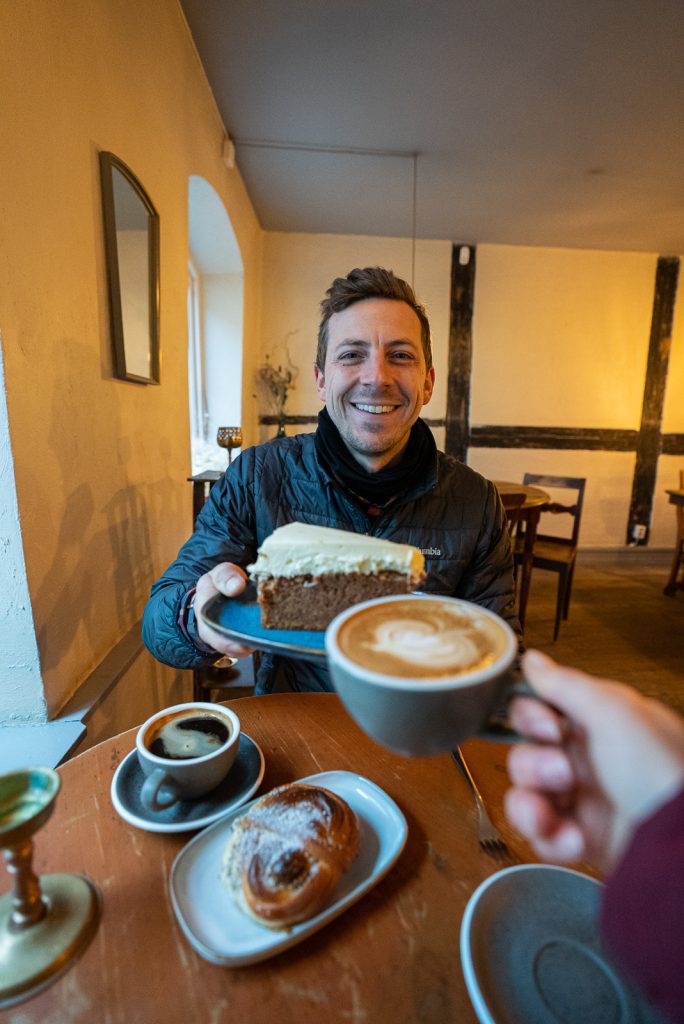
Malmö is located just across the Øresund Bridge, the longest combined road and railway bridge in Europe. It’s a quick train ride over and once there, you can wander around the city’s historic streets, enjoy a fika break with coffee and a cake, visit a castle with a moat, expand your food horizons at the Disgusting Foods Museum, and more!
We had a blast in Malmö and wrote a guide on how to take a day trip to Malmö, Sweden. The guide includes how to get there and back, the best things to do, plus a ready to go one day itinerary!
Planning your one day in Copenhagen

How to get to Copenhagen
Copenhagen is home to Copenhagen Airport (CPH), which has flights from all over Europe, plus flights to the US and Canada. It is located just a 20 minute train ride from the city centre, which makes it super easy to go explore!
Copenhagen is also accessible by public transportation from other countries in Europe, including Sweden, Germany, and the Netherlands!
Getting around Copenhagen

Walking
Copenhagen is one of the most walkable cities in the world! Despite visiting on a cold winter day, we opted to walk almost everywhere because it made for a great way to see the city.
Bike
Copenhagen is consistently ranked as one of the most bikeable cities in the world. Many Danes use a bike as their main way to get around the city and 9 out of 10 people own at least one bike!
You will see bikes all over the city. And if you want to partake in the local’s way to get around, you can use one of the public bike share systems, like Bycyklen or Donkey Bike. Or rent a bike! There are lots of places to rent a bike in the city, like beCopenhagen, City Bike Adventures, and Bike Rental Copenhagen.
If you’re not used to riding bikes in a city, we’d suggest staying off the bike during the morning and afternoon rush hours (7:00-9:00 and 15:00-17:00). And before you hop on the bike, be sure to check out the basic rules of the road.
Metro
Copenhagen has 4 metro lines that run 24 hours a day all year. They can get you to just about any area or neighborhood you want within minutes. We loved taking the metro to and from the airport, plus to some further spots in town. You can view the map of the lines to help plan your trip!
When to visit Copenhagen

Late Spring through Fall is the best time to visit Copenhagen. The temperatures will be pleasant, trees will look alive, and it’ll provide a nice environment to enjoy this wonderful city.
We visited in the winter (mid January) and while you can of course see and do most of what’s on this itinerary, you’ll need to be ready for the cold. We tend to not let weather stop us for most activities, but our cold and drizzly day definitely made it more challenging!
Another factor with visiting in the winter is that you’ll have less daylight. This forced us to rush around a bit more to maximize our limited light.
Where to stay in Copenhagen

For your one day in Copenhagen, we highly recommend staying close to the city centre, to maximize your time in the city. While lodging is pretty pricey in Copenhagen, it is worth it to have a convenient place to stay. Here are a few options!
Hotels
Urban House – This is where we stayed. It is a hostel with private rooms, so it is nothing fancy, but it is affordable (compared to other options) and convenient.
Generator Copenhagen
Ibsens Hotel
Good Morning City Copenhagen Star
Vacation Rentals
Charming apartment with private balcony (1 bedroom, 1 bathroom)
City Centre Apartment (1 bedroom, 1 bathroom)
One fine place (1 bedroom, 1 bathroom)
Things to know before visiting Copenhagen

Denmark doesn’t use the Euro
One thing that is good to know when visiting Copenhagen is that unlike many of the nearby European countries, the Euro is not used here. They use the Danish Krone instead!
Most places take credit cards and we didn’t have to get any cash out during our one day in Copenhagen. But if you need or prefer to carry cash, you’ll need to get some at an ATM.
When we need to get cash on our international travels we have a Charles Schwab checking account. They refund ATM fees from ANY ATM worldwide! This gives us lots of freedom to use whichever ATM is most convenient.
To see which travel credit cards we use, which give us zero foreign transaction fees, check out this post!
Is Copenhagen expensive?
We have always heard that Copenhagen is an expensive city. But is it true? In our experience, it was a bit pricier. Despite spending time in Finland before this, which is also said to be expensive, we found Copenhagen to be more expensive in most categories.
Our best example is the flat white we ordered. In most countries, this was $4 USD or less, but in Copenhagen, it was over $6 USD. Lodging was also more expensive, which is why we opted to stay in a hostel. And eating pastries, smørrebrød, and Danish hot dogs definitely helped save some money.
However, for just one day in Copenhagen, it’s totally worth the slight splurge!
Dutch is a VERY difficult language
We try our hardest to learn some of the local language when traveling, but all bets were off when it came to Dutch. It is easily the most difficult language we have encountered so far. Not only are there characters that do not exist in English, but the pronunciations are tricky.
But thankfully, pretty much everyone we encountered spoke some English too!
Should you buy the Copenhagen Card?
The Copenhagen Card offers free entry to 80+ top attractions and free unlimited transportation. Many of the activities we suggest on this itinerary are included with the card like Tivoli Gardens (not the unlimited ride pass), canal tours, several castles and museums, the zoo, and more.
It makes sense to buy the Copenhagen Card if you are going to about 6 attractions. But if you’re not, we’d say skip it. We personally did not buy it.
Many museums are closed on Mondays
Something to be aware of is that many attractions are closed on Mondays, including places like Designmuseum Danmark and The National Museum. Make sure to check hours and opening days before you go!
Read The Little Book of Hygge before you go
Denmark is consistently rated one of the happiest countries in the world. Danes have several ways they prioritize their happiness like spending more quality time with friends and family, embracing hygge (usually pronounced “hoo-guh”), and regularly exercising.
Before visiting Copenhagen we recommend learning a bit about Danish culture. And one way to do so is reading The Little Book of Hygge. The author Meik Wiking explains the concept of hygge very well and gives lots of tips and insights into how you can incorporate it into your lifestyle. It has inspired us a lot for our life back in the US!
Save this guide with how to spend one day in Copenhagen