
Last updated on May 8th, 2026
In this guide, we’re sharing the best things to do on the Olympic Peninsula. Plus all of our local tips to help you plan your own trip to this iconic corner of the Pacific Northwest!
If there is one place in Washington that we find ourselves returning to over and over again, it’s the Olympic Peninsula.

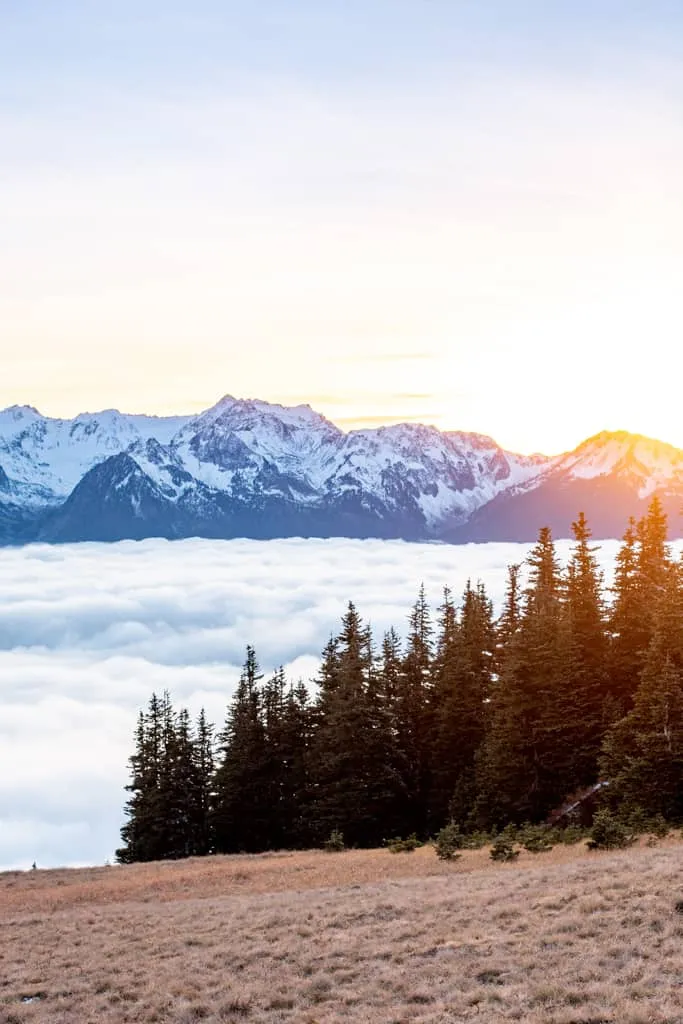
Between the rugged coastline, multiple temperate rainforests, mountains with waterfalls and super cute small towns, it’s one of the most geographically diverse places we have ever explored! We have been here countless times over the years, and while it’s home to Olympic National Park, there are also so many incredible places to explore outside of the park boundaries.
We still have plenty left to see, but this guide covers our absolute favorite things to do so far! Plus, some spots high up on our list. We’re also including everything you need to know to plan your own trip to the Olympic Peninsula, like how to get there, the best time to visit, where to stay, and more.
Things to do on the Olympic Peninsula
A few notes about this list of things to do on the Olympic Peninsula
- We’ve ordered these from East to West to help you plan your route.
- We’ll keep updating this post as we continue to explore more of this beautiful region. If you save the Google Map above, you’ll always have access to our most recent recommendations.
- Some of these places are located within the national park and have an entrance fee. Or you can use the America the Beautiful pass. We’ve put an asterisk (*) by the spots in the park so you can plan accordingly!
1. Visit Lake Cushman

There truly is no better introduction to the region than Lake Cushman. Just an hour from Olympia, this is easily one of the best things to do on the eastern side of the peninsula. Especially for a day trip! Although it’s actually a man made reservoir, it’s so stunning that you’d never know it!
The lake itself is technically just outside the National Park boundary. There are tons of pull offs along State Route 119 to check out the incredible views of Mount Ellinor.
But one of the best things about this area is that the north end of the lake serves as the gateway to the Staircase entrance of the national park. It’s well worth driving to the end of the road to explore it! We highly recommend hiking the Staircase Rapids Nature Trail. It is a relatively flat 2.1 mile trail that takes you through a mossy old growth forest and across a suspension bridge over the North Fork of the Skokomish River. You will need your National Park pass once you reach the trailheads at Staircase.
Important note: The Staircase Rapids area is currently closed due to fire damage. Make sure to check conditions before heading out there!
2. Hike Mount Ellinor


If you’re looking for the absolute best view on the eastern side of the Olympic Peninsula, Mount Ellinor is the hike to do. It’s a steep, challenging climb, but on a clear day, you can see Mount Rainier, the Olympics, and the entire Puget Sound.
To hike this, you can either summit via the Lower Trailhead or the Upper Trailhead. If you have a vehicle with enough clearance for the access road, starting at the Upper Trailhead makes for a much shorter 3.2-mile round trip. Alternatively, starting at the Lower Trailhead offers a 6.3-mile round trip, and an extra 900 feet of elevation gain, but you’ll get to hike through a beautiful stretch of old growth forest.
Both trails eventually meet at a junction. From that point on, the trail becomes the relentless stair stepper that Mount Ellinor is known for. You’ll be gaining 2,400 feet of elevation in less than 2 miles! This is also a very popular spot for mountain goats.
This hike is located outside of the national park, so it is dog friendly. However, a Northwest Forest Pass is required to park at either trailhead. Your America the Beautiful Pass also works here!
3. Grab oysters at Hama Hama Oyster Saloon
If you like seafood, visiting the Hama Hama Oyster Saloon is without a doubt one of the best things to do on the Olympic Peninsula. It’s a fifth generation family run oyster farm right on the banks of the Hood Canal. The saloon is an outdoor eatery with big wooden tables overlooking the tide flats where your lunch was harvested!
However, reservations are required if you want to dine in. Which has a set fee per table and comes with two dozen oysters. If you can’t snag a reservation for the saloon, don’t worry! You can always pop into the Farm Store on site. They sell fresh oysters by the dozen, jars of their famous pickled veggies, and everything you need for a picnic. You can grab a bag of oysters to shuck yourself and head to a nearby beach like Potlatch State Park just down the road to enjoy them with a view!
4. See Murhut Falls

Located in the eastern part of the Olympic Peninsula near Brinnon is Murhut Falls, a 130 foot, two-tiered waterfall in a narrow ravine that is seriously gorgeous.
The trail to get there is an easy 1.5-mile round trip hike with only 396 feet of elevation gain. The trail follows an old logging road before descending into a lush forest of giant cedars. If you visit in May or June, the trail is lined with Pacific rhododendrons (which is Washington’s state flower!). It’s also one of the few waterfall hikes in the area where dogs are allowed, which is always a plus.
If you’re looking to chase more Washington waterfalls, we’ve put together a guide with our absolute favorites!
5. Enjoy a meal and drinks at Finnriver Farm & Cidery
As you keep heading north, you’ll reach the tiny town of Chimacum, which is home to Finnriver Farm & Cidery. This 80-acre working organic farm and orchard has a massive outdoor Cider Garden with a pavilion and picnic tables scattered across the grass.
You can pair a flight of their craft ciders with a meal from one of the local food vendors on site. The Finnriver Kitchen offers a seasonal menu all week long, and if you’re visiting on the weekend, be sure to try Dented Buoy for their delicious wood fired pizza. It’s made in an oven reclaimed from an old marine buoy! If you want something sweet afterward, Fiddlehead Creamery has some of the best vegan ice cream.
On weekends, they often have live music under the pavilion, and you can walk through the orchards to see the different varieties of heirloom apples they grow for their cider production. No dogs are allowed in the actual Cider Garden, though there are several dedicated dog friendly areas on the premises.
6. Explore Port Townsend
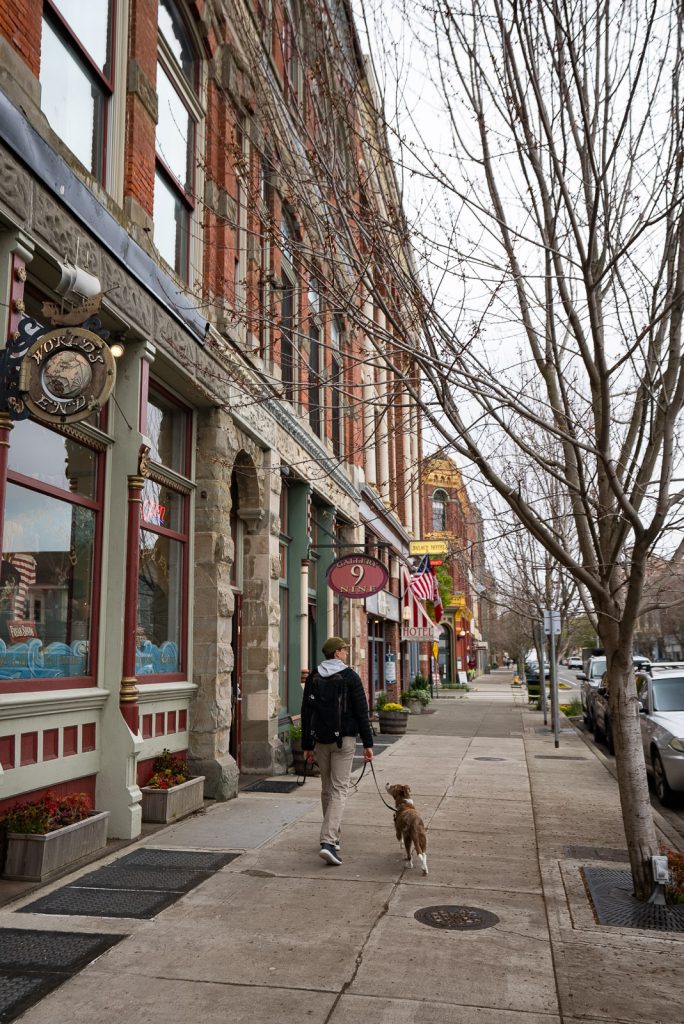
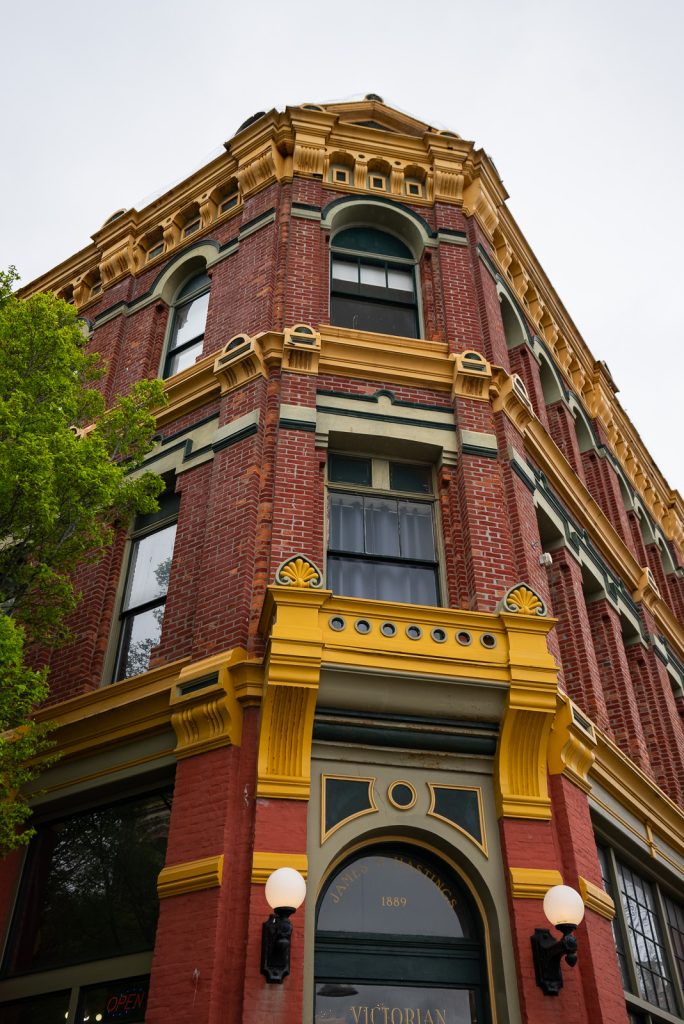
A short drive further north brings you to the northeastern tip of the peninsula and the charming town of Port Townsend. It’s one of only three Victorian seaports in the U.S.! In the late 1800s, it was actually originally intended to be the largest harbor on the West Coast. While that didn’t quite happen, it left behind some of the most beautiful Victorian architecture you’ve ever seen!
The historic downtown area is incredibly walkable and sits right on the edge of the Admiralty Inlet, where you can watch the ferries cross the water toward Whidbey Island. We usually spend our time here popping into the local shops and, of course, finding the best coffee and food.
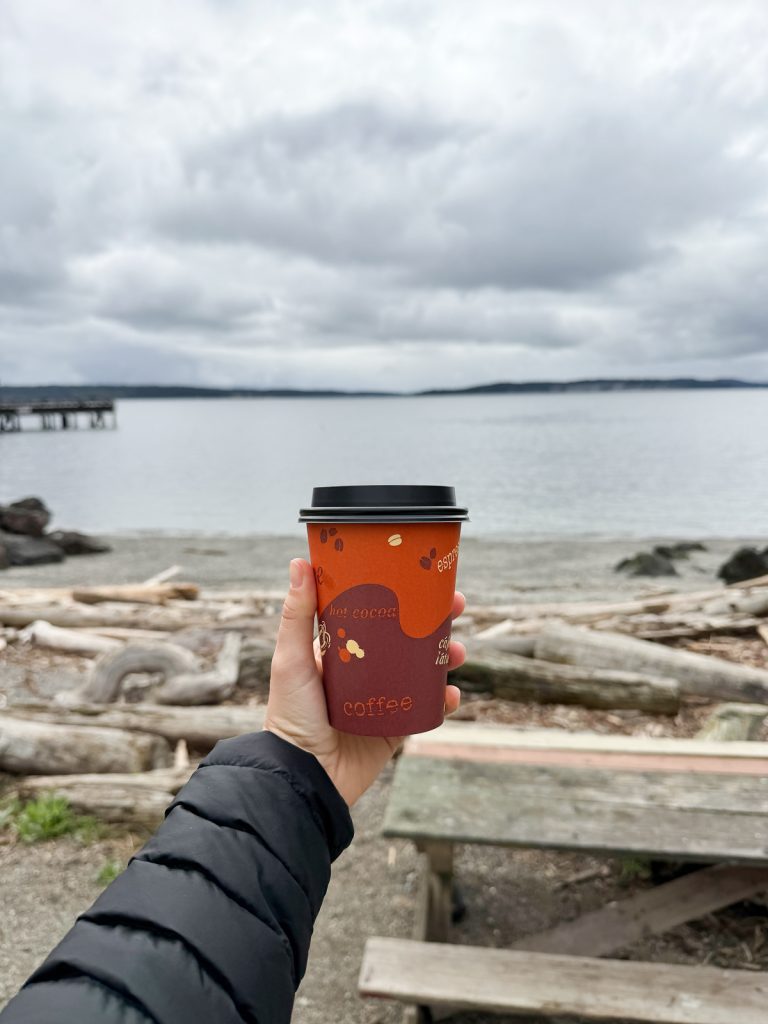
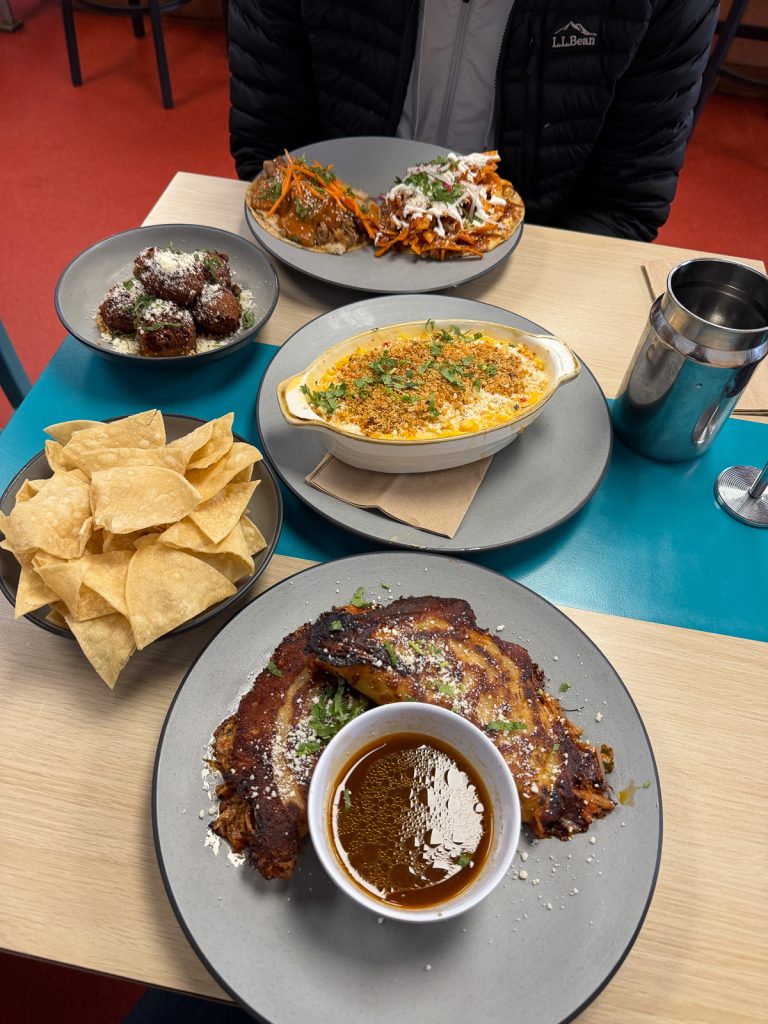
We love to grab a salted caramel latte at Better Living Through Coffee. Or head to the shipyards for breakfast at Blue Moose Cafe! If you want a tasty lunch before hitting the road, the pork birria tacos at Green Crow Tacos are fantastic. Filled with pork, pickles, and mustard, it was a unique spin on birria and reminded us a lot like a Cubano. The baked corn and tamale tots were also delicious!
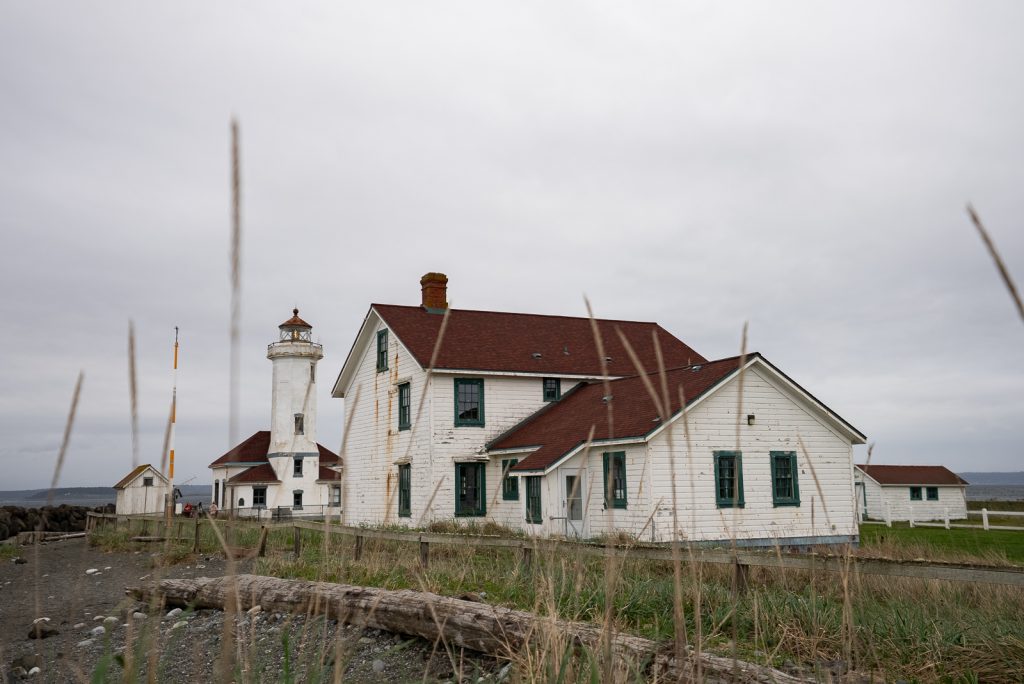
While in Port Townsend, you can also spend a few hours at Fort Worden Historical State Park. This was a former active military base until the 1950s, and you can walk through some of the old concrete bunkers and batteries. It’s also where you’ll find the Point Wilson Lighthouse, which stands as the tallest beacon on the Puget Sound. Just a reminder that since this is a State Park, you will need your DiscoverPass to park here.
7. Visit Purple Haze Lavender Farm
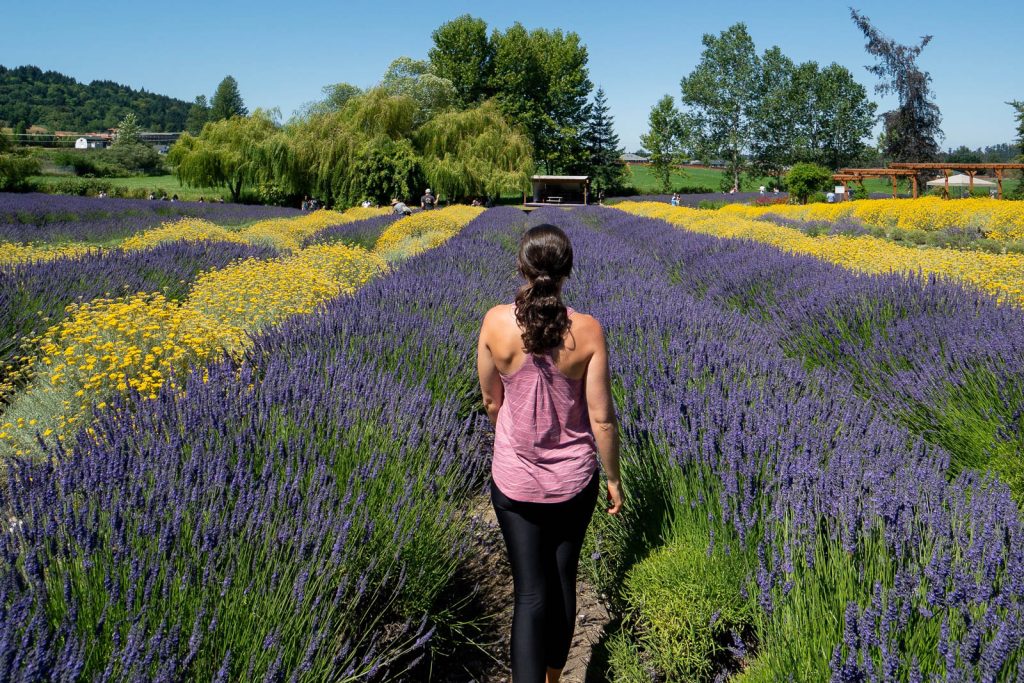
As you keep heading west toward Sequim (pronounced skwim), you’ll start to see why this area is nicknamed the Lavender Capital of North America. It sits in a rain shadow and only gets about 16 inches of rain a year. Which is the perfect dry microclimate that lavender loves!
Purple Haze is easily one of our favorite stops here. You can wander through rows of over 50 varieties of lavender. And during the summer harvest (June through early August), they offer U-pick opportunities, so you can take a fresh bouquet home with you! While you’re exploring the farm, keep an eye out for the resident peacocks, chickens, and bunnies.
Once you are done exploring the rows, head to the Farm Store and Gift Shop. They make everything from lavender-infused honey, herbs and essential oils. Plus, their lavender lemonade and lavender ice cream are legendary!
8. Walk on the Dungeness Spit
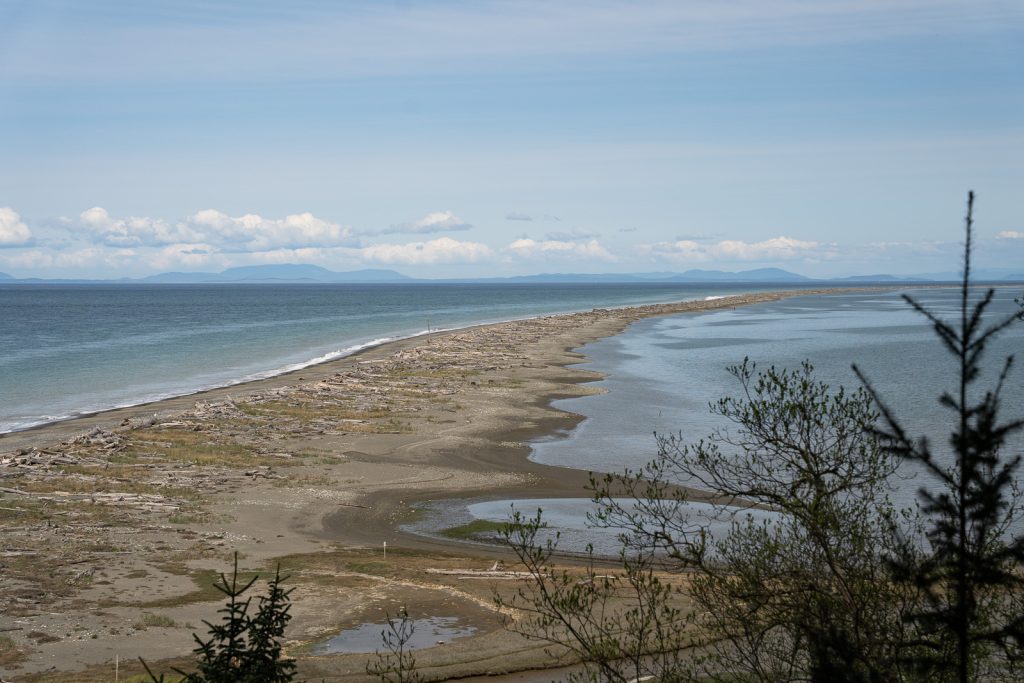
Just a few minutes from Sequim is the Dungeness National Wildlife Refuge, which is home to the Dungeness Spit. This is easily of the best things to do on the northern edge of the Olympic Peninsula! It is one of the longest natural sand spits in the world, stretching about five miles out into the Strait of Juan de Fuca. Fun fact: the spit is actually growing! Because of the way the currents and erosion work, the spit gets about 15 feet longer every single year!
If you have the time and the energy, you can hike the full 5 miles all the way to the New Dungeness Lighthouse at the very tip. But just remember, you’ll have to hike five miles back too! Even walking just a mile or two out onto the logs and sand is totally worth it for the views of the Olympics behind you and Canada across the water. And if you’re lucky, you might even see seasonal orcas passing through the Strait!
Because this is a National Wildlife Refuge, dogs are not allowed here at all. There also is a small fee to park. But if you have America the Beautiful Pass, it covers your entrance fee!
9. Grab a bite to eat in Port Angeles
As you continue west, you’ll arrive in Port Angeles, the largest town on the peninsula and the gateway to Olympic National Park!
We love stopping here for a bite to eat. For something quick in the morning, Atomic Bagels is the local favorite for a solid bagel and Buena Luz Bakery has amazing fresh baked pastries.
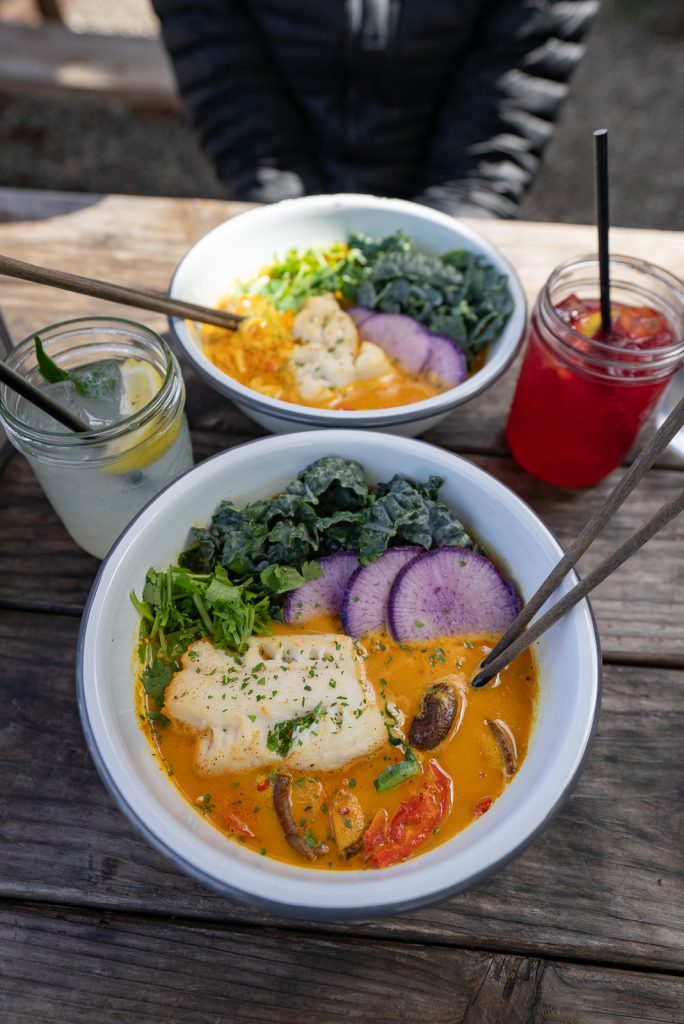
For a hearty meal, the broth bowls at Yodelin Broth Company are incredible. We loved the Yodelin broth bowl with cod. It was tangy, sweet, spicy, and super flavorful. Sabai Thai is another great spot if you’re in the mood for excellent curries, noodles, or stir-fry.
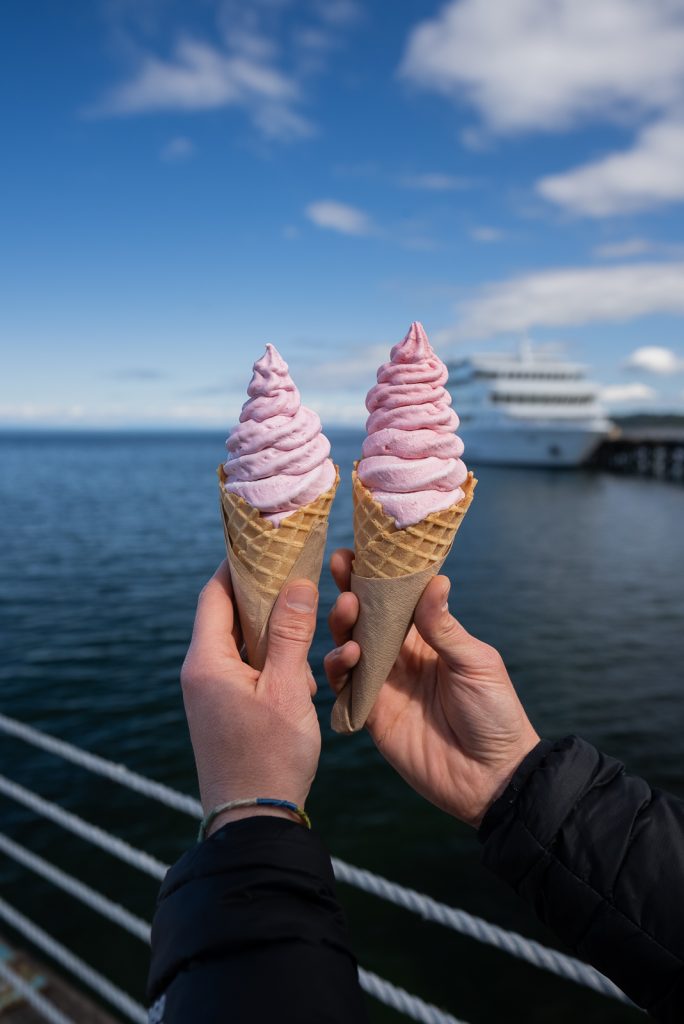
If you want a treat before heading out, Welly’s Real Fruit Ice Cream is located in the Port Angeles Wharf. They make New Zealand-style ice cream where they blend fresh cream with real Washington berries.
Aside from the food, Port Angeles is the last place to grab major groceries or gas before heading into the west side, and it’s also where you’ll find the main National Park Visitor Center.
10. Drive up to Hurricane Ridge*
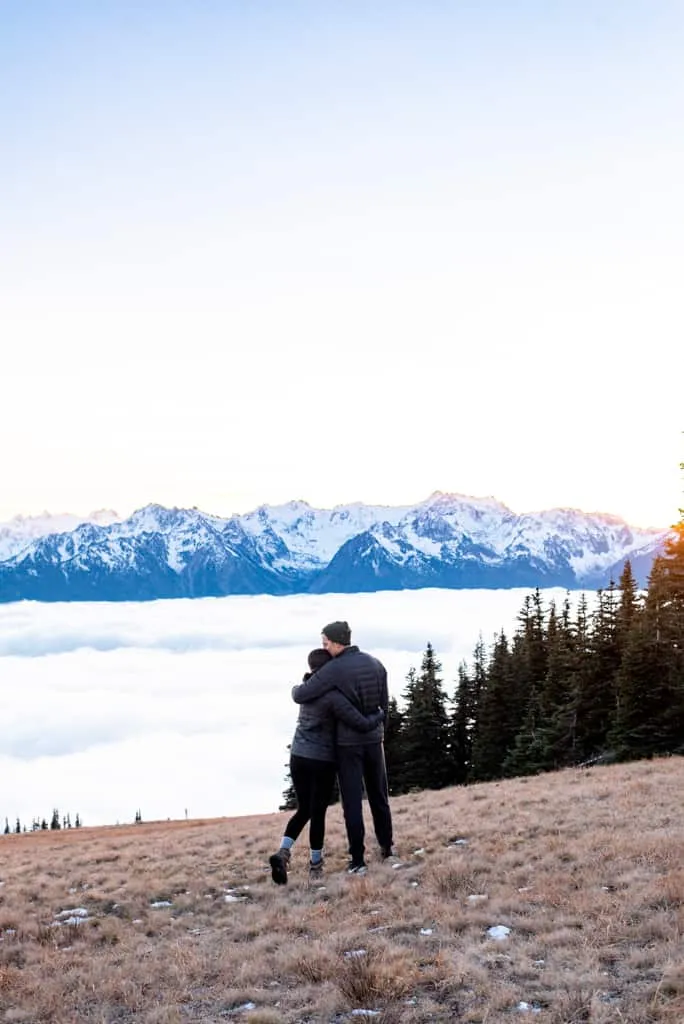

As the most accessible high alpine area in the park, Hurricane Ridge is the best way to experience the Olympic mountains without having to do any hiking. The road up to Hurricane Ridge takes you from sea level to over 5,242 feet in just 17 miles. It’s incredible!
While you have amazing views just from the parking lot, there are some hikes you can tackle up here as well. One of the most popular is the Hurricane Hill Trail. This is a 3.4-mile paved trail that takes you to a 5,757-foot summit. On a clear day, you can see across the Strait of Juan de Fuca all the way to Victoria and the Canadian Cascades!
For a bigger challenge, try hiking the Klahhane Ridge via the Switchback Trail. This route gains 1,500 feet in just 1.5 miles. True to its name, you’ll have to conquer a series of relentless switchbacks, but you’ll be rewarded with incredible views of the Olympic interior. Or you can tackle Klahhane Ridge from the Sunrise Ridge Trail, which starts from Hurricane Ridge.
A+K Tip: Keep in mind that the ridge is notoriously temperamental. In the winter, the road is generally only open Friday through Sunday, and in the spring it depends entirely on conditions. It was closed on our most recent visit in April due to a snow storm, but we have visited in November without any issues before. Always check the park’s road conditions before you start the drive!
11. See Madison Falls*
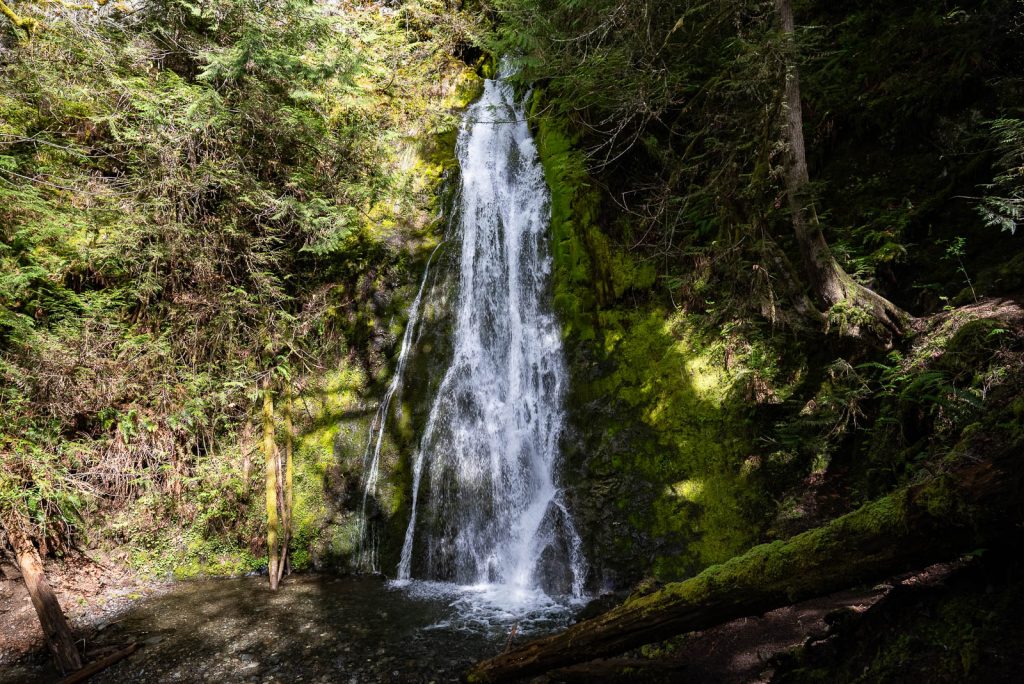
Just a few minutes off Highway 101 near Port Angeles, Madison Falls is one of the most accessible waterfalls in the park. The trail is a flat, paved 0.2 mile round trip walk through a lush forest that leads directly to the base of the falls. This beautiful 60 foot waterfall drops into a clear pool surrounded by ferns and moss. Plus, it is dog friendly, which is a rare find for trails in the park!
While you are at the Madison Falls parking lot, be sure to walk across the road to see the Elwha River. This river was the site of the largest dam removal project in U.S. history, where two massive dams were removed to restore the river to its original state. Salmon have even returned to their spawning grounds here for the first time in a century!
To see the scale of the restoration, drive a few miles further to the Glines Canyon Dam Overlook. You can stand on a platform directly above where the 210-foot dam once stood and see the river carving its new path through the old lakebed.
Important note: The road past Madison Falls trailhead is currently closed, but you can walk or bike the 3.7 miles (one way) from the Madison Falls trailhead to the Glines Canyon Dam Overlook.
12. Explore the tide pools at Salt Creek Recreation Area
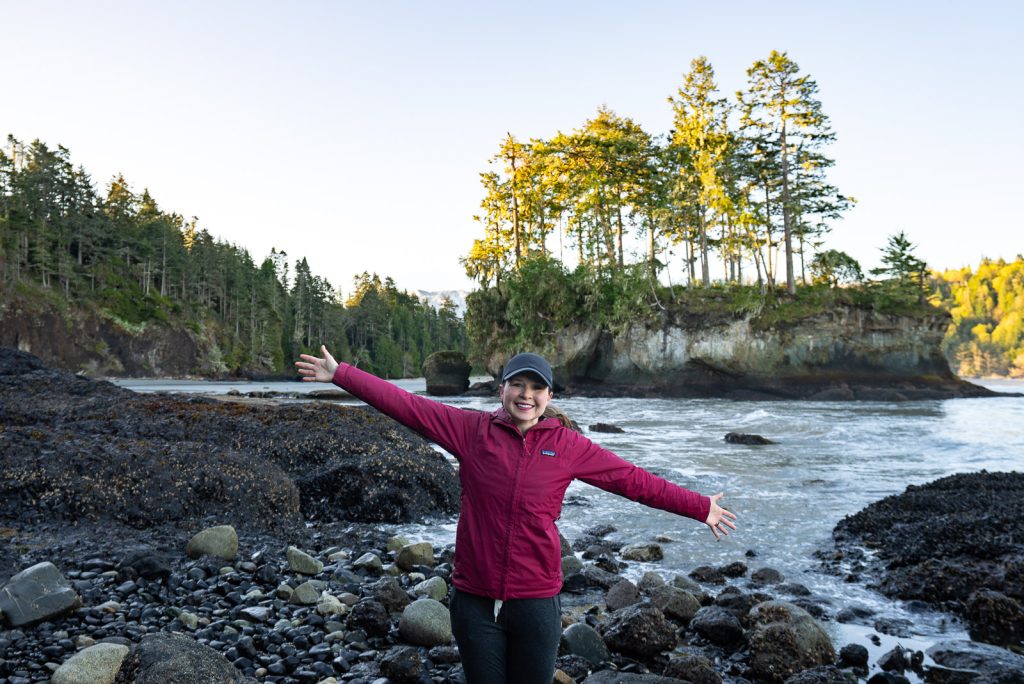
A lot of people skip this because it’s a bit of a detour off the main 101, but Salt Creek Recreation Area is one of our new favorite parks on the northern coast of the peninsula! It’s a Clallam County park sitting right on the Strait of Juan de Fuca, offering insane coastal scenery with a rock island, mountain views, and a sandy beach.
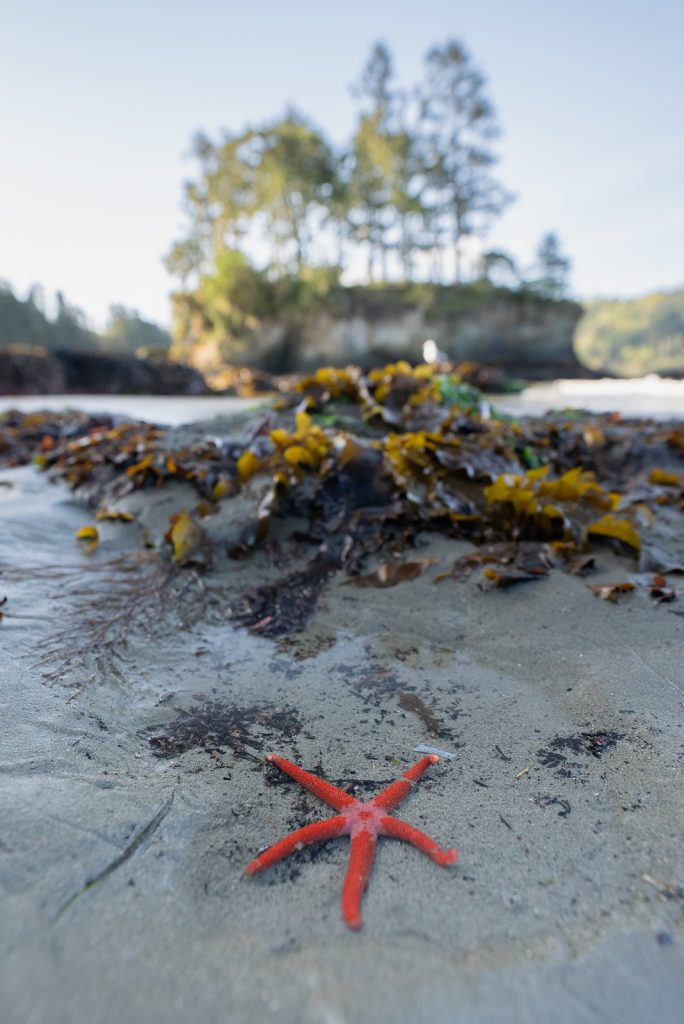
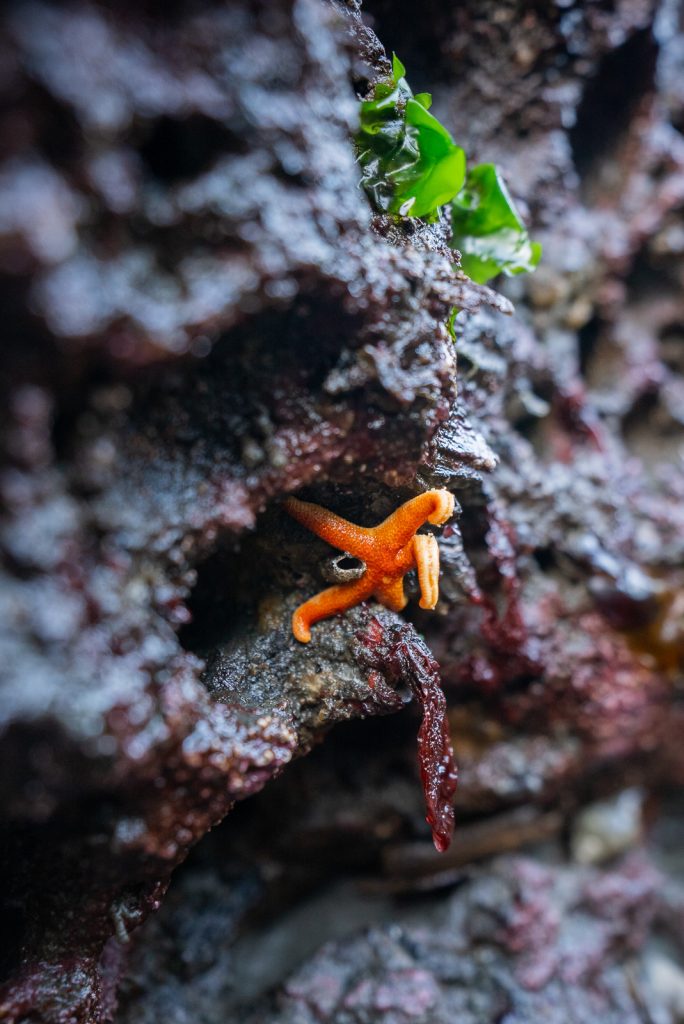
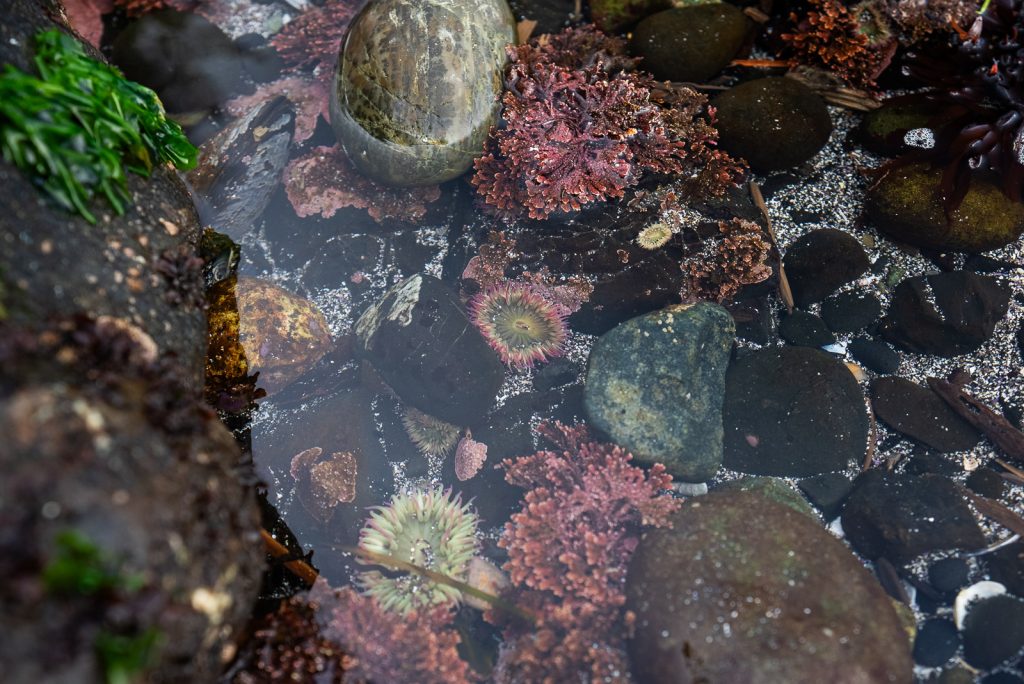
During low tide, these are some of the best pools in Washington! While a negative tide is ideal, you’ll still see plenty of life even at 1 foot or slightly higher. We recommend walking out on the rock peninsula and exploring near the rock island. On our last visit, we saw eight starfish, sea urchins, and tons of anemones!
It’s also a really cool spot for history as it’s the site of Camp Hayden, a WWII harbor defense camp. You can wander through the massive concrete bunkers (Battery 131 and 231) built to protect the sound from a potential invasion.
While in the area, hike the Striped Peak Loop. This 5-mile loop through a lush forest offers incredible views of the water. If you visit between November and May, there is even a hidden 30-foot seasonal waterfall that tumbles over a mossy rock right along the trail!
A+K Tip: Day use is free for this park, but there is a gate that is only open certain hours, depending on the month. If you want to visit outside of these hours, you can park here and walk the beach to the tide pools. You can also camp in the park, which we highly recommend!
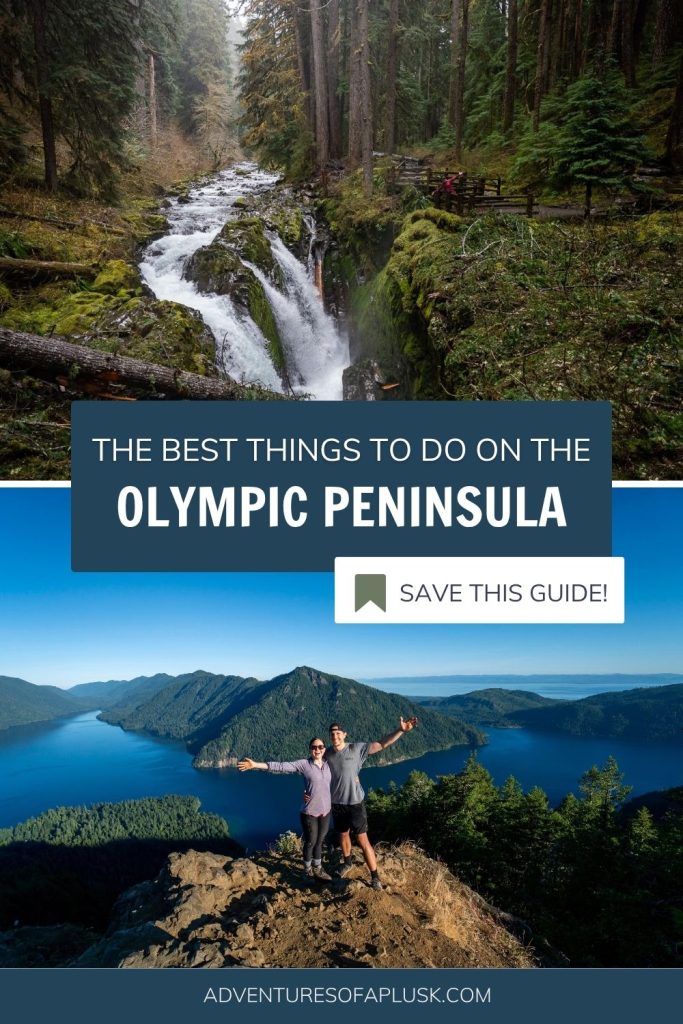
13. Visit Lake Crescent*
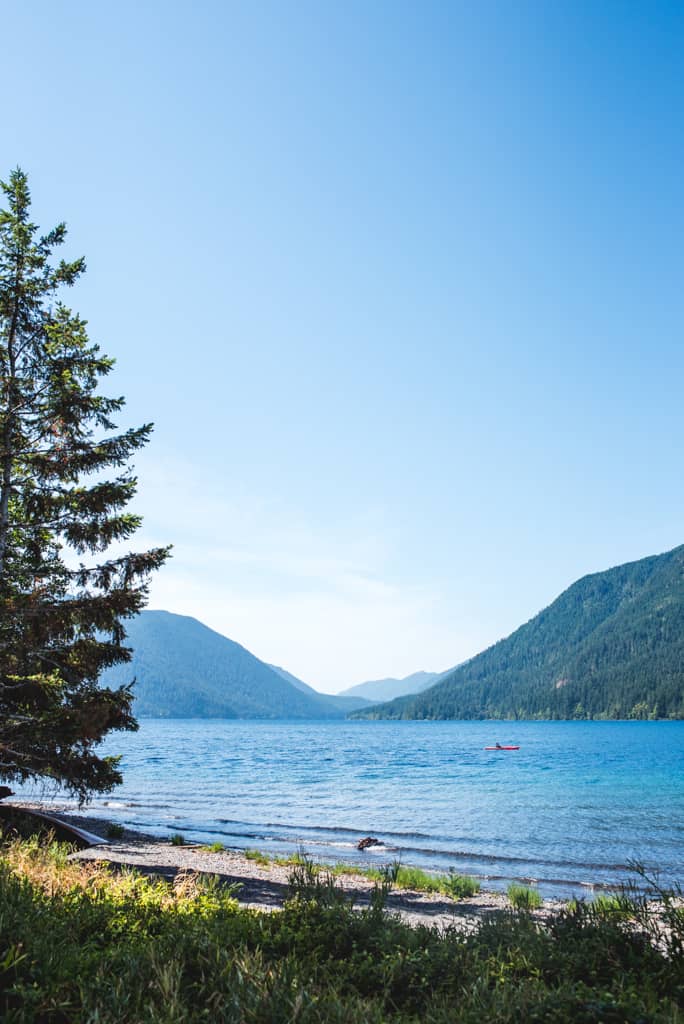

As you keep heading west, you’ll reach the shores of Lake Crescent, a glacially carved lake that is famously known for its super clear water. The lake is over 600 feet deep and is actually ultra-oligotrophic. This means it has so few nutrients, so plant life can’t grow, which is exactly what keeps the water a gorgeous pristine blue! Fun fact: because it’s so deep, the lake never freezes.
While you’re there, stop by the historic Lake Crescent Lodge. Originally built in 1916 as Singer’s Tavern, today it’s a great place to grab a coffee and relax by the large stone fireplace in the sunroom. You can also rent kayaks, paddle boards, or canoes and explore the shoreline from the dock. Dogs allowed by the lakeshore, but not on the hikes nearby.
14. Conquer Mount Storm King*
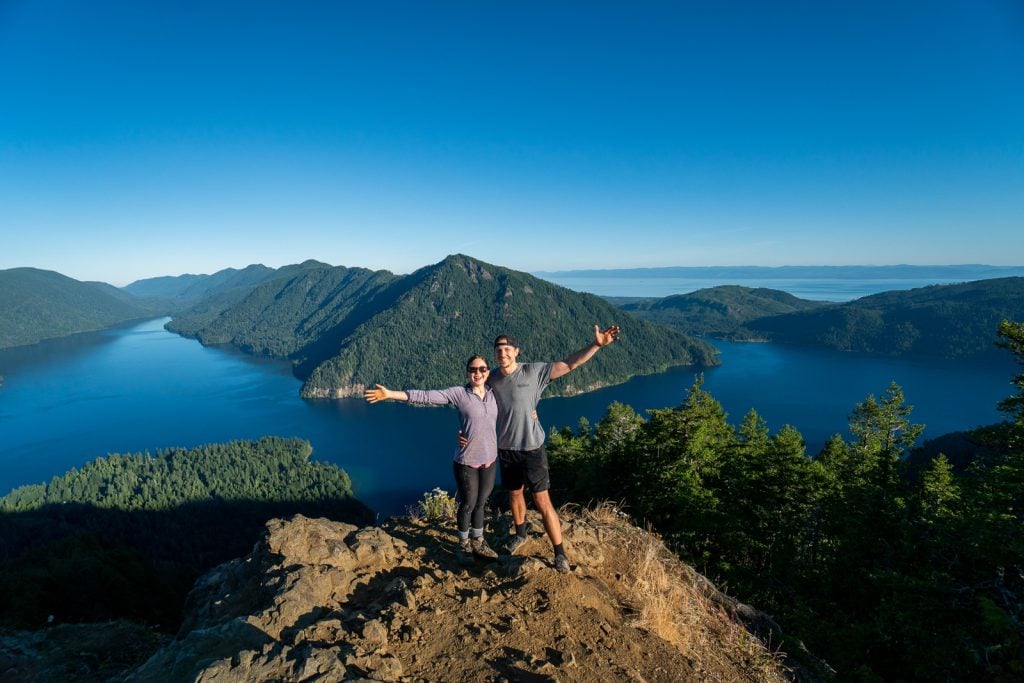
One of the best ways to experience Olympic National Park is on its trails, and for a view that is truly one of the most iconic, we highly recommend conquering Mount Storm King. Looking down at Lake Crescent from the summit is legendary. However, the hike is tough. You’ll gain over 2,100 feet of elevation in just over 2 miles (one way!).
The hike begins at the Storm King Ranger Station, passing under the highway on a shared trail with Marymere Falls for half a mile before veering off and essentially becoming a never ending series of steep switchbacks through the trees.
The maintained trail ends at a rocky outcropping, but most people keep going to the summit. To get there, you have to navigate a series of sketchy rope sections where you’ll be pulling yourself up steep, loose rock. We suggest youbring your own pair of work gloves to save your hands from rope burn!
15. See Marymere Falls*

If you aren’t up for the grueling climb of Mount Storm King, Marymere Falls is a great alternative! Starting from the same trailhead, this 1.8-mile round trip trail is mostly flat, wandering through some of the most stunning old-growth forest on the peninsula. You’ll be surrounded by massive Douglas firs and Western hemlocks.
About 0.7 miles in, you’ll cross two log bridges over Barnes Creek and Falls Creek. After the bridges, there’s a short, steep loop with two different viewpoints of the falls. The waterfall itself is a 90-foot drop into a small pool inside a cliffside alcove.
16. Bike or walk the Spruce Railroad Trail*
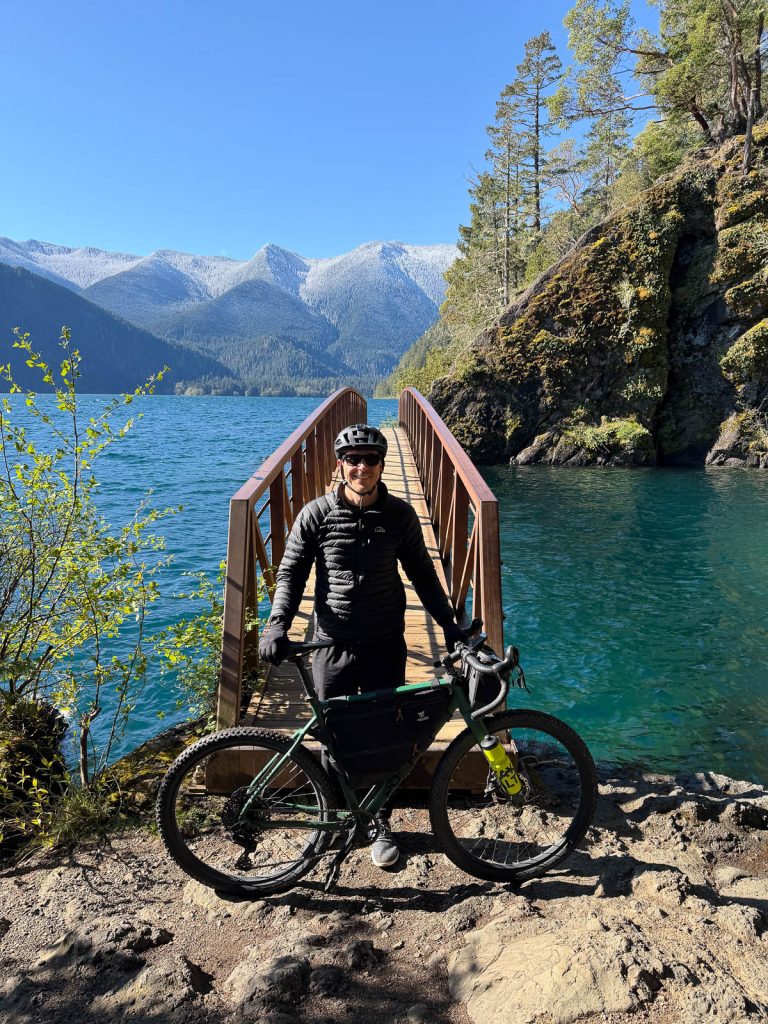
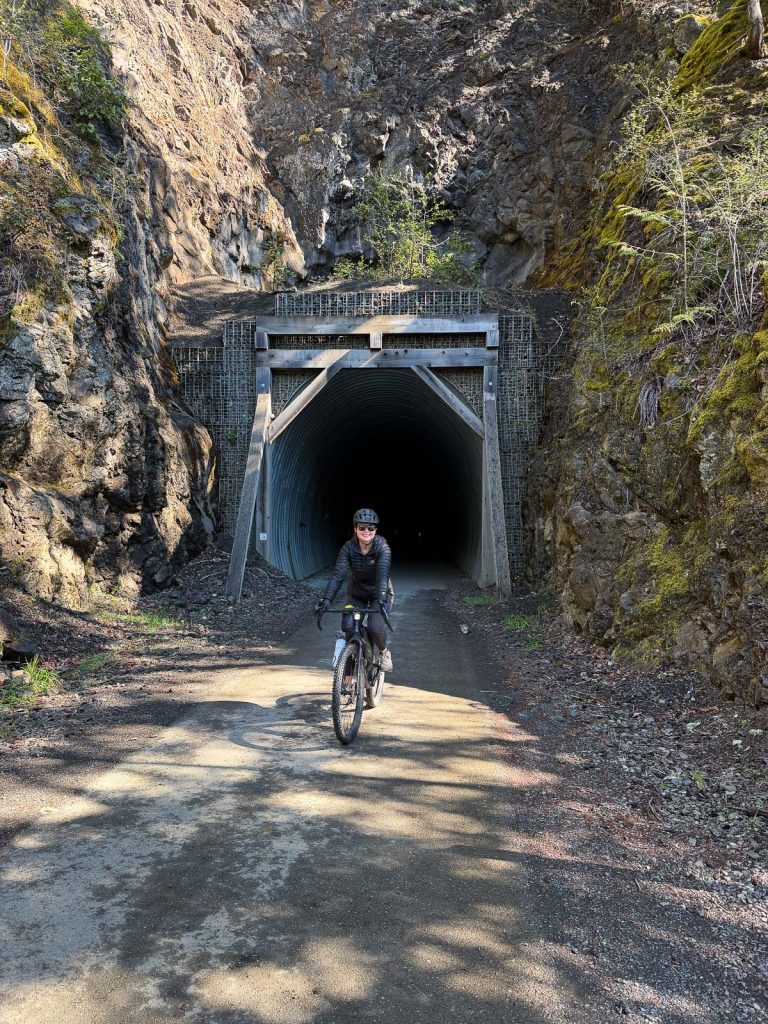
If you have extra time and want more lake views along the north shore of Lake Crescent, the Spruce Railroad Trail is a must. We biked this route and it was a lot of fun! It’s also one of the few places in the park where dogs are allowed, and the views of the lake are just beautiful.
This paved trail follows an old railroad grade, originally built back in 1918 by the U.S. Army Signal Corps to transport aircraft-quality Sitka spruce for biplanes during World War I. However, World War I ended before the railroad was complete, causing zero spruce trees to ever go along the tracks for its intended purpose. After becoming abandoned in the 1950s, it eventually turned into a rail trail for hikers and cyclists. It is part of the longer Olympic Discovery Trail, which goes across the entire northern Peninsula, from Port Townsend all the way to La Push.
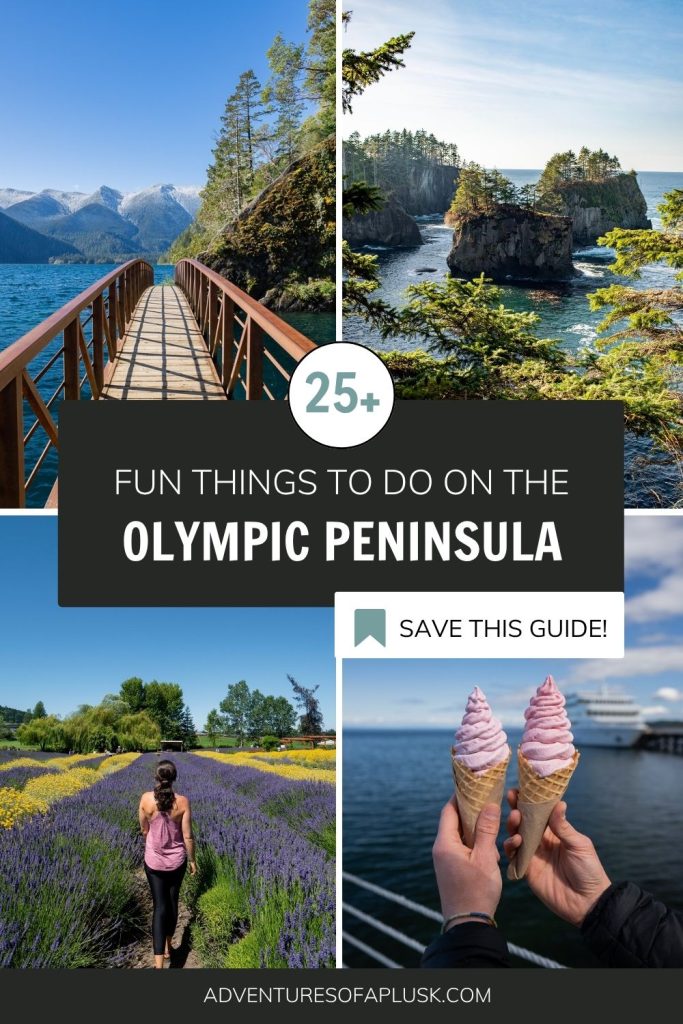
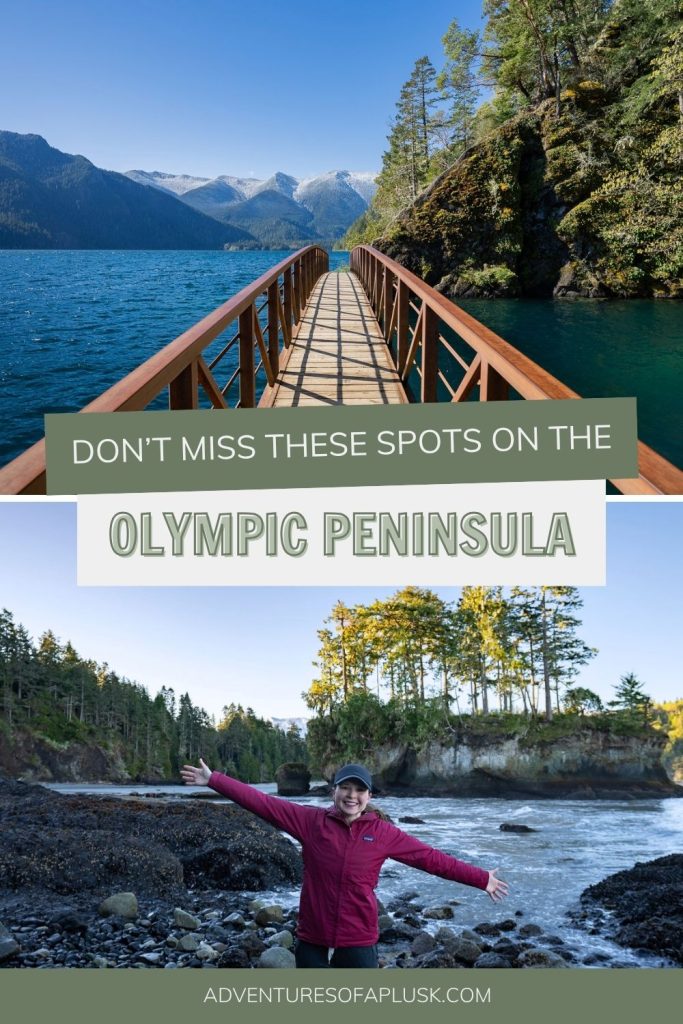
While the Spruce Railroad Trail is about 11 miles out-and-back, most people just head to the famous Devil’s Punchbowl, which is located about 1.2 miles from the East Beach trailhead. Here, a scenic bridge arches over a sheltered cove of deep, blue water that can reach depths of 300 feet! It’s a great spot for swimming or cliff jumping, if you can handle the frigid waters.
Along the route, you’ll also get to pass through the restored 450-foot McFee Tunnel and the shorter Daley-Rankin Tunnel, which was reopened in 2020. Going through the dark tunnels is an experience in itself and one of the most fun parts of the trail!
17. See Sol Duc Falls*
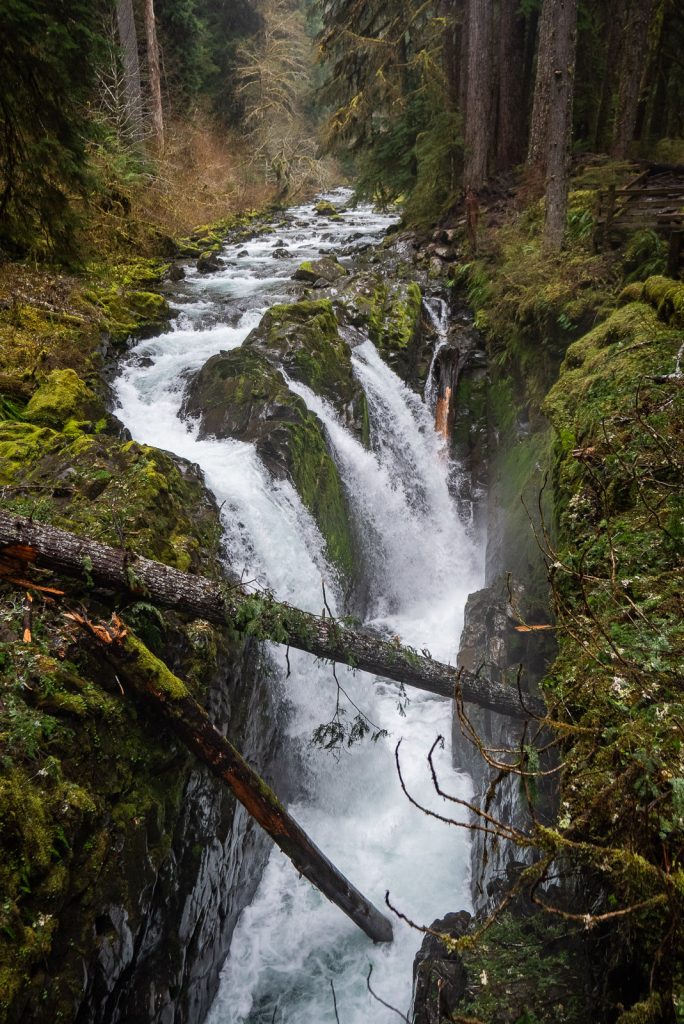
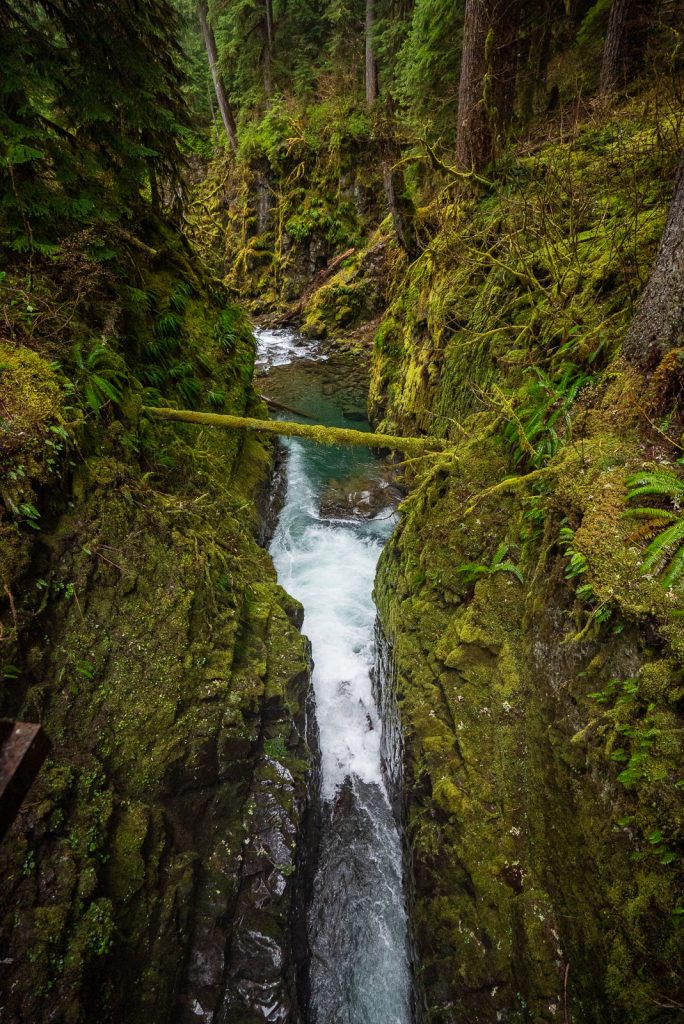
If you only have time for one waterfall in the park, Sol Duc Falls is a strong contender for the top pick. Located about 40 minutes from Lake Crescent, it’s easily one of the most photographed places in Washington, and for good reason!
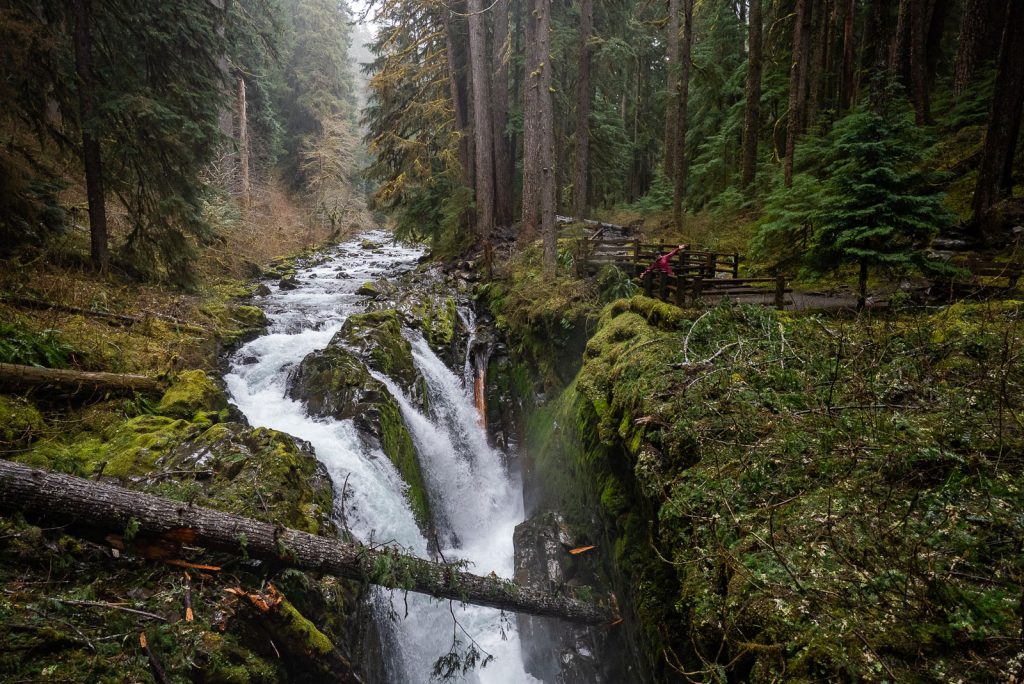
What makes this spot so unique is that you can view the falls from a wooden bridge directly above the cascading water. The Sol Duc River splits into three or four separate channels (depending on how much rain we’ve had!), and plummets 50 feet into a narrow, moss-covered canyon below.
The trail to the falls is 1.6-miles round trip with only about 200 feet of elevation gain, making it a great hike for just about anyone. However, keep in mind that the road to the falls is closed seasonally during the winter months, typically from late fall through early spring.
If you have extra time, the Sol Duc Hot Springs Resort is located right by the trailhead where you can soak in the pools or grab a bite at the lodge!
18. Visit Cape Flattery

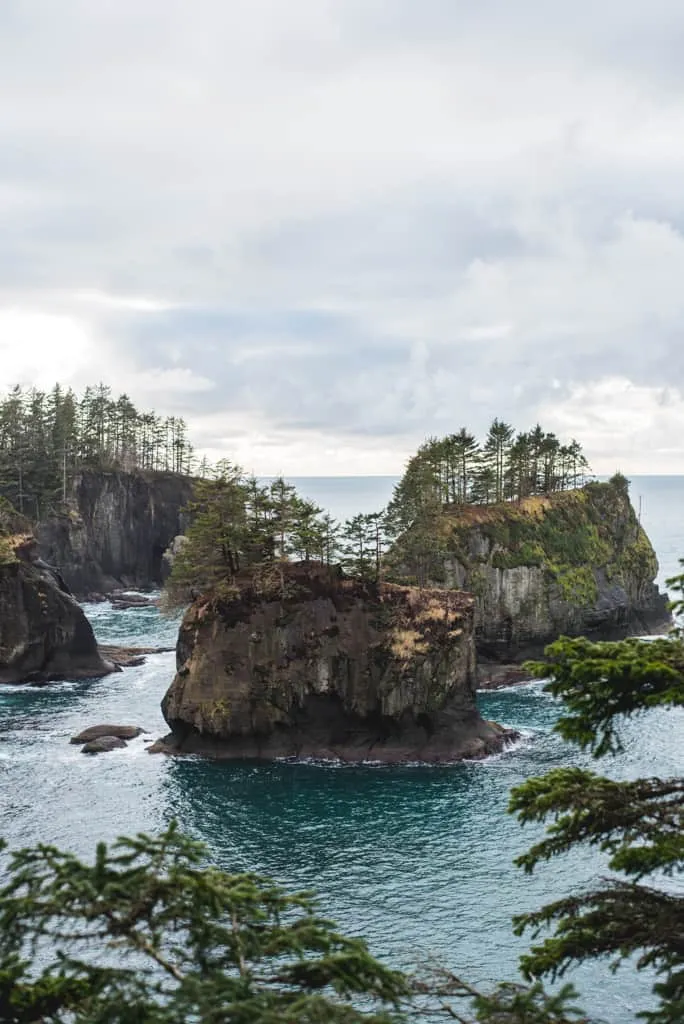
To stand at the edge of Cape Flattery is to stand at the absolute northwesternmost tip of the contiguous United States. It’s where the Strait of Juan de Fuca meets the Pacific Ocean, and the scenery here is unreal.
The trail itself is a 1.2-mile round trip walk on a boardwalk that winds through a dense forest of Sitka spruce. There are four separate observation decks along the cliffs, each offering a different perspective of the churning water below, and we highly recommend hitting all of them! You’ll see sea stacks, sea caves carved into the cliffs, Tatoosh Island and the historic Cape Flattery Lighthouse.
While here, look for puffins! This is one of the best places in Washington to spot Tufted Puffins. They have bright orange beaks and nesting colonies on the cliffs. The best time to see them is during the summer months, specifically June through August.
Because Cape Flattery is located on the Makah Reservation, a National Park pass won’t work here. You must purchase a Makah Recreation Pass ($20 per vehicle, valid for the calendar year). You can pick one up at several spots in Neah Bay, like the Makah Mini Mart or Washburn’s General Store.
19. Hike the Ozette Triangle Trail*
Hiking the Ozette Triangle Trail is one of the best things to do on the Olympic Peninsula. It takes you to Cape Alava, which is technically the westernmost point in the contiguous United States. This 9.4-mile loop starts at Lake Ozette, then wanders through dense coastal forest and across open cedar bogs before eventually spitting you out onto some of the most rugged coastline in Washington.
About a third of the way down the beach leg, keep your eyes peeled for Wedding Rocks. This is where you can find ancient Makah petroglyphs carved into the boulders near the high tide line.
Tide Warning: you must check a tide chart before starting the beach leg! There are two headlands you have to cross that are impassable at high tide.
20. Live out your Twilight dreams in Forks
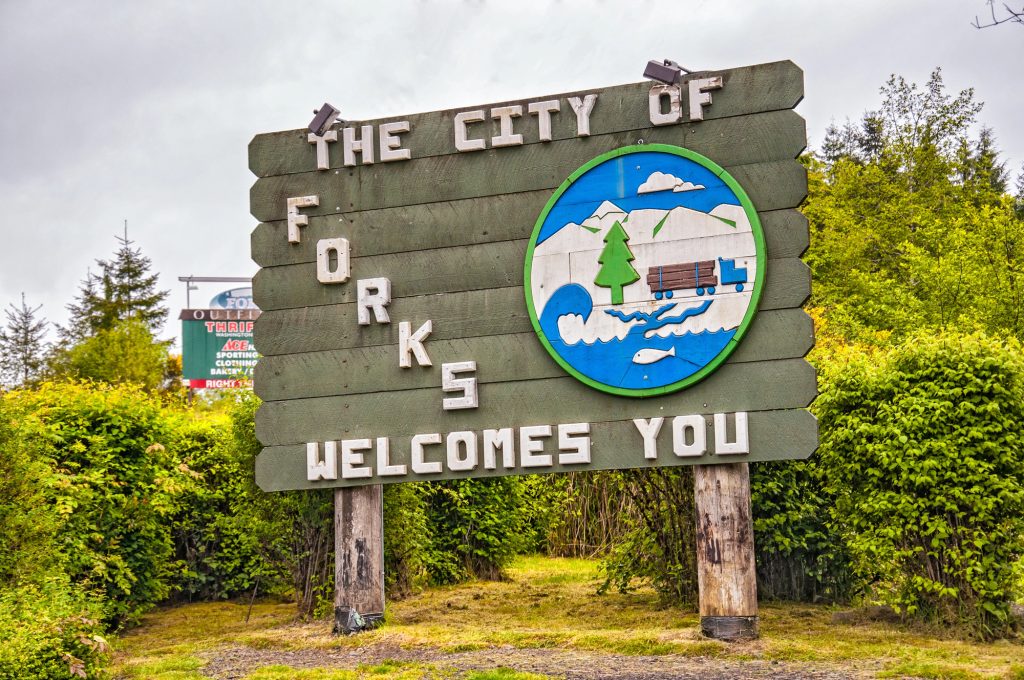
Even if you haven’t seen the movies (guilty!), you can’t really visit Forks without checking out some of the Twilight fandom. The town was originally known as the logging capital of the world, but in the 1980s, the industry declined. Since then, the town has found a second life as a huge destination for literary tourism.
Fun fact: the movies weren’t actually filmed here! Most of the filming took place in Oregon and Canada. But since the books were set in Forks, the town has fully embraced its role as the home of the series. To see Bella’s red Chevy trucks (both the movie and book versions), head to the Forks Chamber of Commerce. You can also find a collection of film props and costumes at the Rainforest Arts Center, or take a self-guided tour to the different Twilight stops throughout town.
If vampire movies aren’t your thing, you can check out some of the logging history at the Forks Timber Museum, which is packed with vintage logging gear and a massive display of old-growth logs and antique machinery.
Forks is also the last major grocery store and reliable gas station before you head into the more remote parts of the coast, so be sure to stock up!
21. Visit the beaches in La Push*
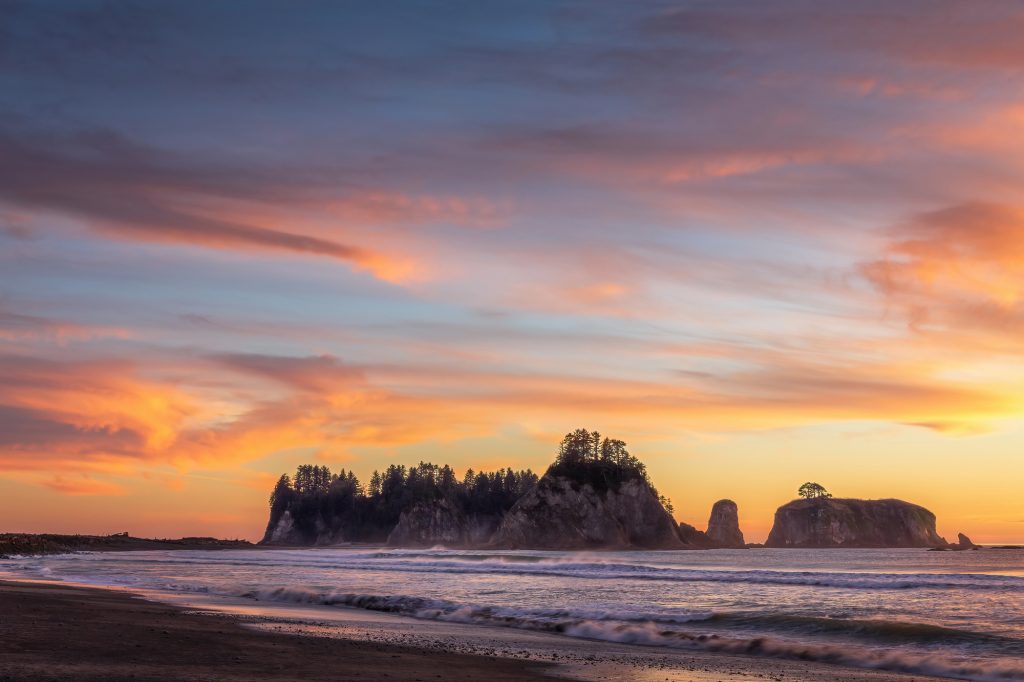
Exploring the shores of La Push is the best way to see gorgeous coastal forests, massive driftwood beaches, and sea stacks rising out of the ocean. Located at the mouth of the Quillayute River on the west coast of the Olympic Peninsula, this small village is home to three beaches, and we suggest you check them all out!
First Beach is a massive, crescent shaped shoreline with views of James Island just offshore. And because you can drive right up to the sand, it’s the most accessible of the three. This beach is located entirely on the Quileute Indian Reservation, which means no National Park pass is required to park here. It’s also the only beach of the three where dogs are allowed.
Sitting within the boundaries of Olympic National Park is Second and Third Beach. To get to Second Beach you’ll take a 1.4 mile round trip trail through a Sitka spruce forest. Then the trail opens up to a sandy beach with towering sea stacks. This is also a great beach for checking out tide pools at low tide!
Third Beach has a slightly longer hike to reach at 2.8 miles round trip, but it leads to a secluded cove and gorgeous views of Strawberry Bay. If you time your visit with a receding tide, you can often find a small waterfall cascading directly onto the beach at the southern end.
22. Visit Rialto Beach & Hole-in-the-Wall*

Rialto Beach is famous for its massive driftwood graveyard of bleached cedar logs and the towering sea stacks that sit just offshore. It’s easily one of the best things to do on the western edge of the Olympic Peninsula.
If you visit, the one thing you absolutely have to do is the hike to Hole-in-the-Wall. This is a 3.3-mile round trip hike that takes you north along the shoreline to a massive natural arch carved into a rock headland. About halfway, we came across Ellen Creek and had to carefully balance our way across a downed log. Once you reach the arch, you’ll find some of the best tide pools in Washington, filled with tons of sea stars and anemones!
If you are traveling with furry friends, leashed dogs are allowed on the beach, but only from the parking lot to Ellen Creek.
Tide Warning: This spot is strictly low tide only! You can only safely walk through the arch when the water is out. If the tide is coming in, do not try to squeeze through, as the rising water can easily pin you against the steep cliffs. Make sure to check the tide chart and plan around low tide!
23. Explore Ruby Beach*

Located on the southern end of the Olympic coastline, Ruby Beach is famous for its massive sea stacks (specifically Abbey Island), and a shoreline that is usually piled high with bleached drift logs. It’s one of our personal favorite beaches on the Olympic Peninsula!
From the parking lot, it’s just a short, 0.5 mile walk to the shore. The name actually comes from the garnet fragments in the sand that can give the beach a slightly reddish hue, especially right after the tide goes out.
We suggest you wander north toward Cedar Creek. At low tide, the base of the sea stacks are home to tide pools filled with bright green anemones and purple sea stars. And dogs are allowed at Ruby Beach, as long as they stay on a leash!
24. See the Tree of Life*
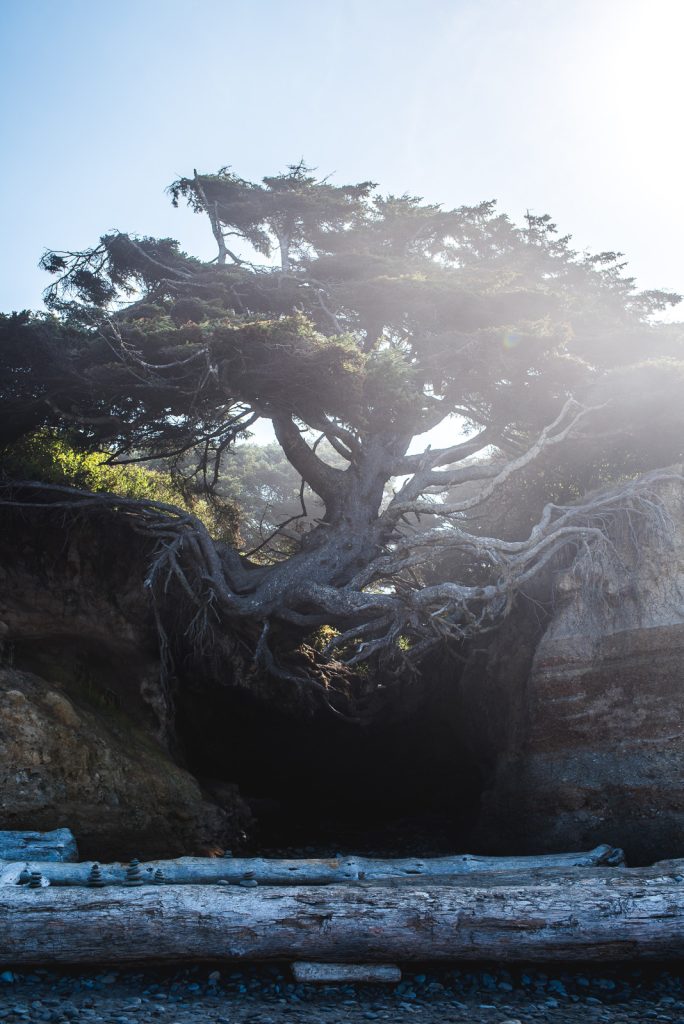
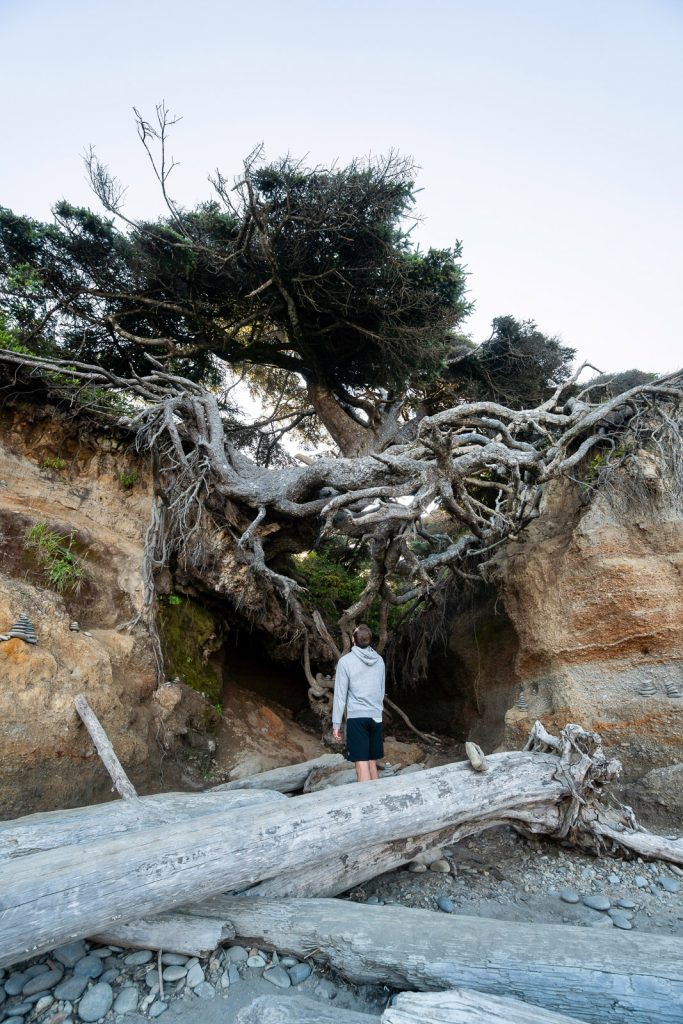
Just south of Ruby Beach, you’ll find one of the most interesting sights on the Washington coast. The Tree of Life (also known as the Kalaloch Tree) is a massive Sitka spruce that is literally hanging on by its roots.
The tree is famous because the ground beneath it has completely eroded away, leaving it straddling a cavern with its roots exposed. It looks like it should have fallen decades ago, yet it continues to grow vibrant green needles every year. However, it is sinking and may not be around much longer, so visit it while you still can!
It’s located next to the Kalaloch Campground. From the parking area, it’s a very short walk down a flight of stairs to the beach. This is another great spot to bring your pup since dogs are allowed here!
25. Wander through the Hoh Rainforest*
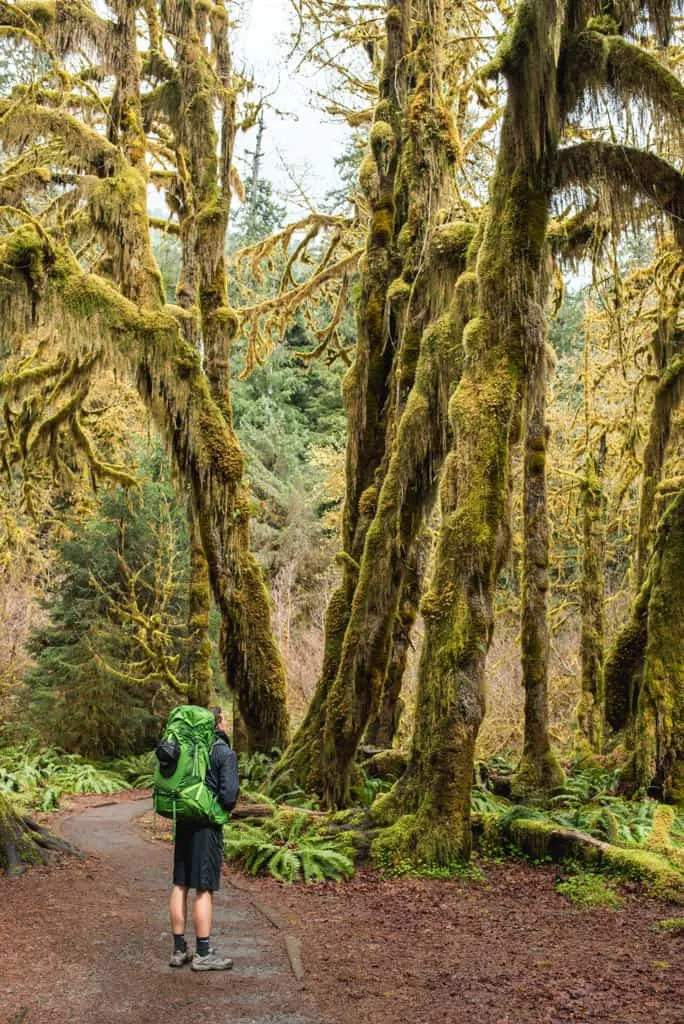
The Hoh Rainforest is one of the few remaining temperate rainforests in the United States. Located on the west side of the Olympic Peninsula, it receives roughly 12 to 14 feet of rain annually, causing the Sitka spruce and Western hemlocks to grow to massive sizes. And early every square inch of the forest floor is covered in ferns and moss!
It’s one of the most popular stops in Olympic National Park. And if you only do one thing here, make it the Hall of Mosses. It’s a super easy 1.1-mile loop that takes you through a grove of Bigleaf Maples draped in moss. The Spruce Nature Trail is another great 1.3-mile loop that takes you down to the Hoh River.
For those looking for a bigger adventure, the Hoh River Trail is a ton of fun. This was actually our first ever backpacking trip, and because it’s almost entirely flat as it follows the river valley, it’s a great trail for beginners.
26. Hike to Blue Glacier*
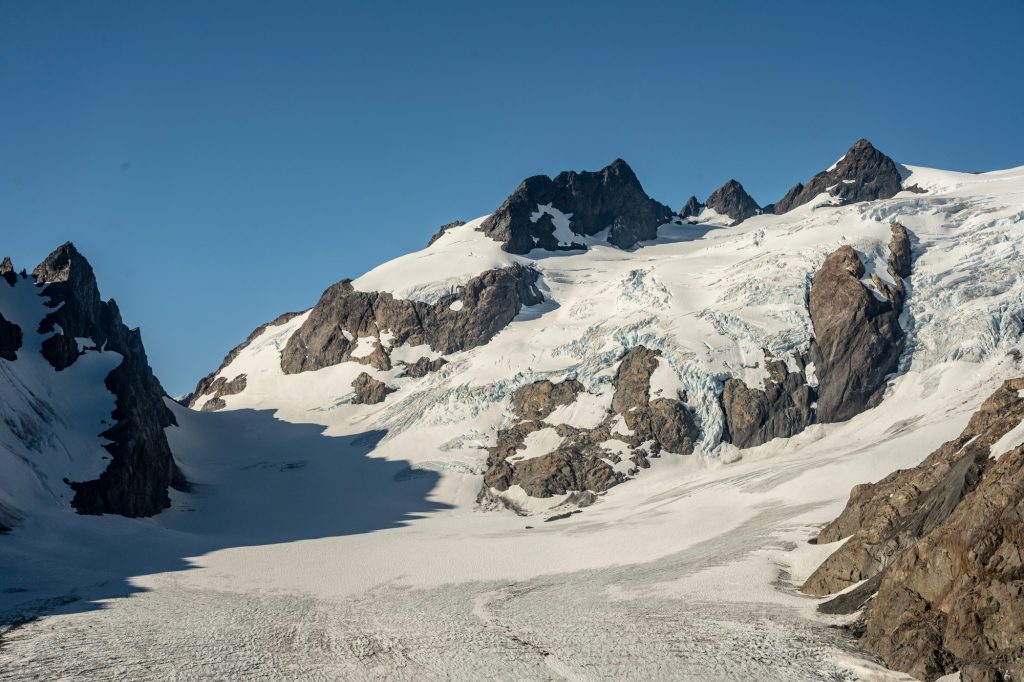
If you are looking for a big adventure in this part of the park, Blue Glacier is it. It’s a 35 mile roundtrip hike that most people do over 3 or 4 days. While the first 12 miles are a mostly flat stroll through the Hoh Rainforest, the final stretch is a vertical climb that puts you right at the edge of the largest glacier on Mount Olympus.
We haven’t done this one yet, but it is very high on our list. You do need a wilderness permit to camp out here, which you will need to get well in advance.
27. Explore around Lake Quinault
If you’re heading toward the southern edge of the peninsula, exploring the Quinault Valley is one of the best things to do. It’s often called the Valley of the Rainforest Giants because the growing conditions here are so perfect that several trees in this drainage are actually the largest of their species in the entire world!
One of the best things to see here is the World’s Largest Sitka Spruce. This tree is over 1,000 years old, nearly 200 feet tall, and almost 59 feet in circumference! It’s a quick 0.4-mile walk from the road to see the tree. For a bit of history, stop by the Lake Quinault Lodge.
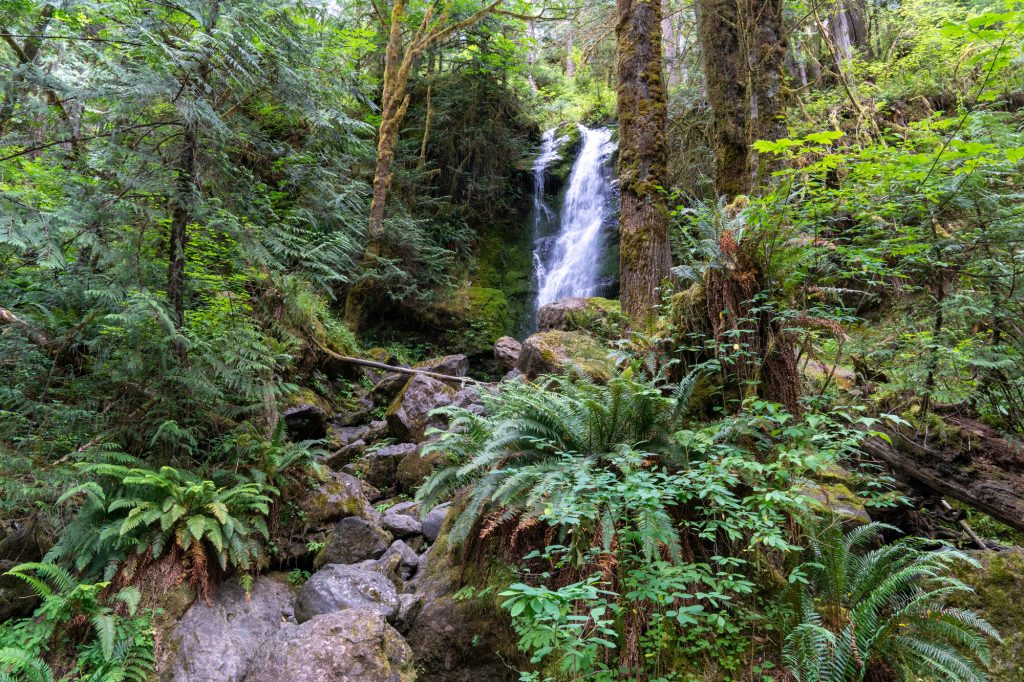
If you are looking for a quick roadside stop, Merriman Falls is located on the side of South Shore Road. You don’t even have to leave the pavement to see the 40 foot waterfall! If you do want to get on the trail, the Quinault Rainforest Nature Trail is a 0.9-mile loop that winds through some of the oldest trees in the valley.
Note: This area borders the park, but the stops above are outside of the park, so dogs are allowed!
28. Backpack the Enchanted Valley Trail
Located on the southwestern side of the Olympic Peninsula, the Enchanted Valley Trail is a 26 mile roundtrip hike that takes you deep into the Quinault rainforest and ends at a massive, sheer walled valley floor often called the Valley of 10,000 Waterfalls.
The trail follows the East Fork of the Quinault River and is famous for the historic Enchanted Valley Chalet. Built in 1931 as a backcountry lodge, it later served as a WWII aircraft observation post. The chalet has faced multiple closures and was even moved 100 feet from the eroding riverbank in 2014 to save it from collapsing.
To do this hike as a backpacking trip, you will need a wilderness permit.
Planning your trip to the Olympic Peninsula
How to get to the Olympic Peninsula
If you’re flying in, you’ll likely be coming from Seattle-Tacoma International Airport (SEA). Depending on your route, it’s usually about a 2.5 to 3-hour drive to reach Port Angeles via one of three primary routes.
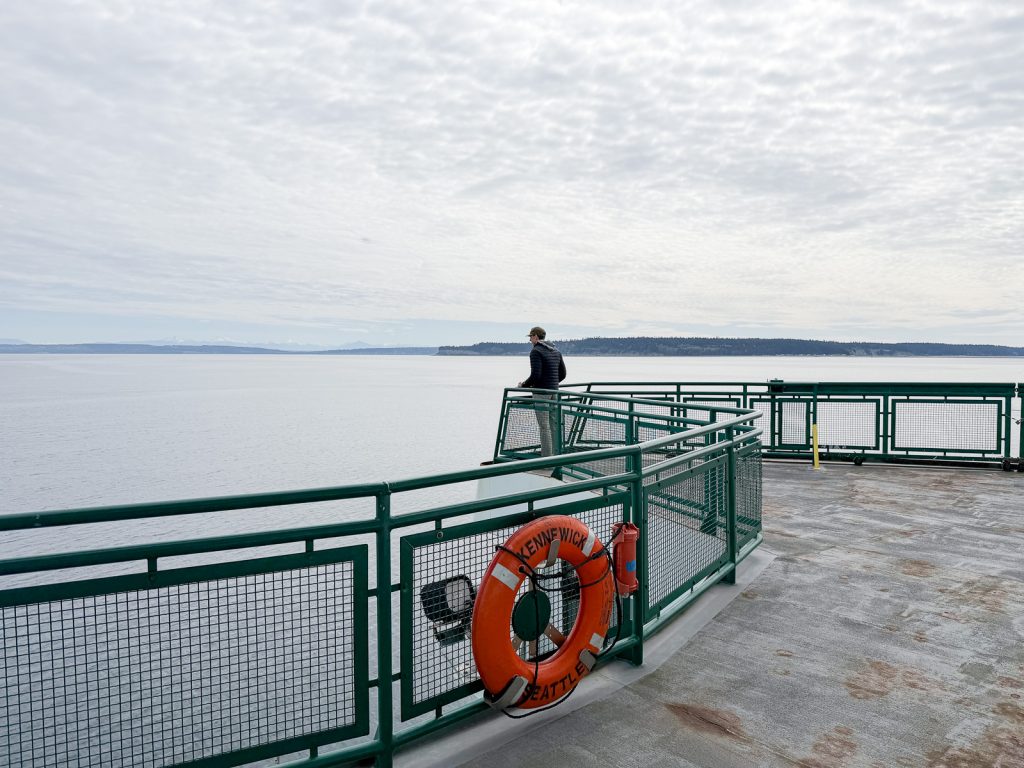
The most iconic start to the trip is the Seattle Ferry (Bainbridge, Bremerton, or Kingston routes). It’s the most scenic option, offering incredible views of both the city skyline and Mt. Rainier while cutting out significant driving time through traffic. These ferries cannot be booked in advance, so you will need to arrive at least 30-45 minutes early to secure a spot.
Alternatively, you can take the South Route by driving through Tacoma and Olympia to hop on Highway 101 north. This is often the fastest choice if ferry waits exceed 90 minutes or if you’re coming from Portland.
If you’re traveling from Victoria, B.C., Skagit Valley, Bellingham, or Whidbey Island, the Port Townsend Ferry from the north lands you directly on the northeast corner of the peninsula. You can reserve this ferry in advance, which is highly recommended, as it does fill up!
You can take the ferry both ways, but we tend to prefer taking the ferry to the Olympic Peninsula and then driving back home. That way, our final day on the peninsula isn’t dictated by the ferry schedule and we have more flexibility. However, if you don’t have a jam packed final day or plan to head back in the morning, taking the ferry back is a good option.

Getting around the Peninsula
You definitely need a car to see the Olympic Peninsula. Unlike some other popular National Parks, there is no park-wide shuttle system here, and the different regions (the mountains, the coast, and the rainforest) are often hours apart. You’ll be doing a fair amount of driving, so make sure you have a reliable vehicle and a full tank of gas!
For the most part, a standard rental car works great for the main paved roads. If you are interested in a more adventurous stay, check out our guide on Stoked to Camp for the best campervan rentals in the U.S. Having a van is a blast on the peninsula, especially if you plan on staying at some of the more remote campgrounds!
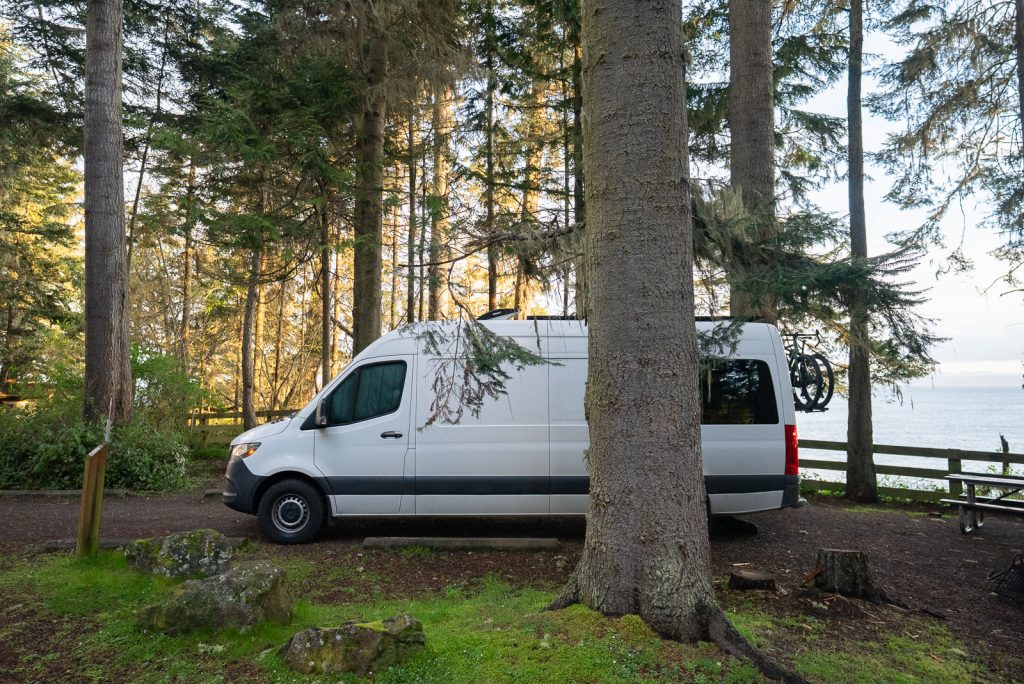
Where to stay on the Olympic Peninsula
Because the Olympic Peninsula is so large, we highly recommend splitting up your stay between two different spots to cut down on driving.
Camping
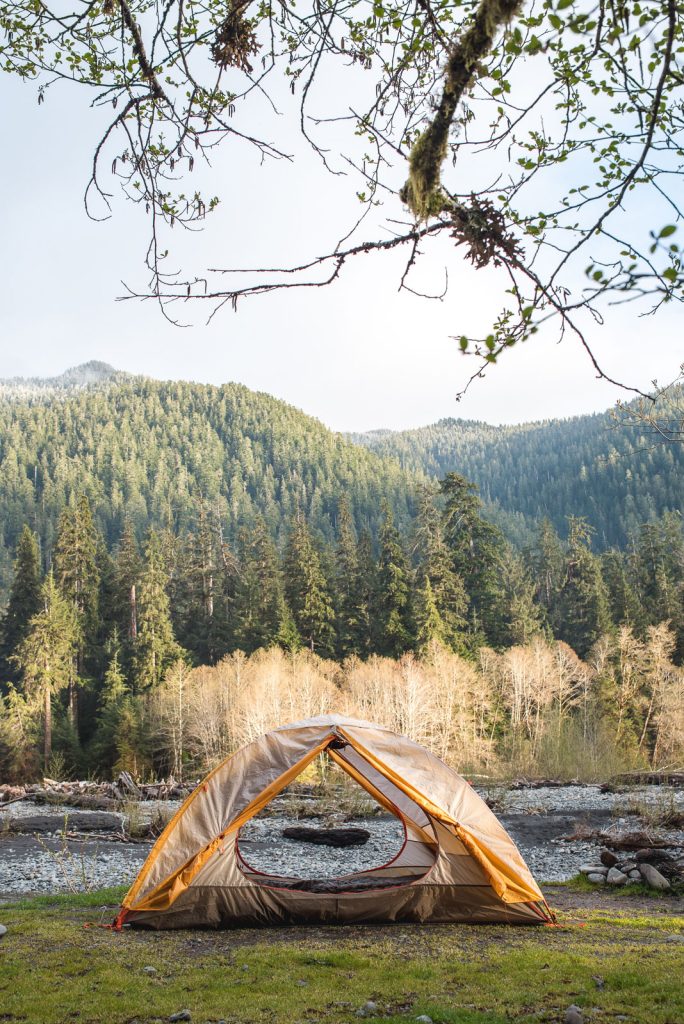
There are TONS of established park campgrounds on the peninsula, but a few we suggest are Salt Creek Campground (pictured above), Mora Campground, Kalaloch Campground, Sol Duc Campground, Fairholme Campground and Hoh Campground.
Hotels & Historic Lodges
If you don’t want to camp, a hotel or lodge will be your next best bet. Lake Crescent Lodge is the park’s most iconic historic stay, while Sol Duc Hot Springs Resort or Woodland Inns are also very convenient picks.
For a central base with more amenities, Port Angeles is best for hotels and vacation rentals on the north side. On the west side, Forks is the most convenient for reaching the beaches and the Hoh Rainforest. For a unique experience, Aliya Preserve near the coast looks like a really cool spot to check out!
Free Options
For free camping, there is a dispersed area along Forest Road 29. Also, 7 Cedars Casino offers free dry camping for travelers. There are also plenty of free spots in the surrounding Olympic National Forest or state managed lands that only require a Discover Pass. You can learn more about how we find free camping here!
Best time to visit the Olympic Peninsula
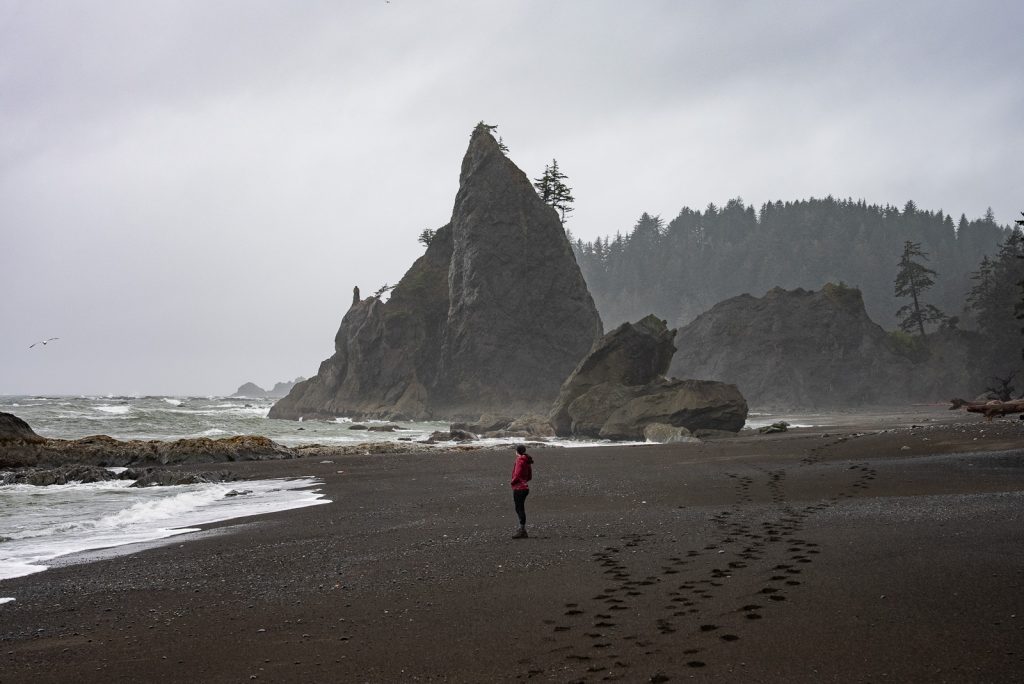
The Olympic Peninsula is a great year round spot since there is always something to do! While the weather varies wildly between the coast and the mountains, each season offers a completely different way to experience the peninsula.
Spring (March to May): This is a very rainy time of year, but it is also the prime season for waterfalls as the snow begins to melt! While higher elevation areas are still under snow, it is a great time to check out the coastal towns and beaches with far fewer crowds.
Summer (June to August): This is the peak tourism season and offers the most reliable weather for exploring. This is the only time of year when high elevation spots like Hurricane Ridge road are consistently accessible. It’s also the absolute best time for hiking and alpine views, but keep in mind you will be sharing the trails with plenty of other people!
Fall (September to November): This is one of our favorite times to explore as the summer crowds start to dwindle. The air gets crisp and you can find gorgeous fall colors. Most high elevation roads stay open through October, though you should be prepared for the first sightings of snow. We have visited in early November and been able to visit high elevation spots just fine, but this can vary week by week. Just be aware that some campgrounds and roads may begin to close during this time.
Winter (December to February): If you do not mind the rain, winter is a much quieter time to visit. Most higher elevation areas are not accessible, though Hurricane Ridge typically stays open with limited weekend hours.
Things to know before you go

Fees: Many of the spots in this guide are located within the National Park and require an entrance fee ($30/vehicle for 7 days) or your America the Beautiful Pass! It covers National Parks, National Forests, and Wildlife Refuges. However, it does not work at State Parks. For those, you will need a Discover Pass.
Dogs: As much as we love traveling with Kona, national parks aren’t the most dog friendly. Generally, pups aren’t allowed on trails in the park, but we’ve noted the specific spots where they can tag along!
Tides: If you’re planning on doing any coastal hikes, or spend time tide pooling, checking the tide charts is a safety requirement. High tide can roll in quickly and leave you stranded far out on the beach with no way back. We recommend using NOAA to track the tides in advance so you can plan your visit during a receding tide.
Pack Layers: The weather here changes fast, especially when moving between the coast and the mountains. Make sure to pack layers, like a pullover (Adam’s, Kathryn’s), rain jacket (Adam’s, Kathryn’s), and puffy jacket (Adam’s, Kathryn’s).
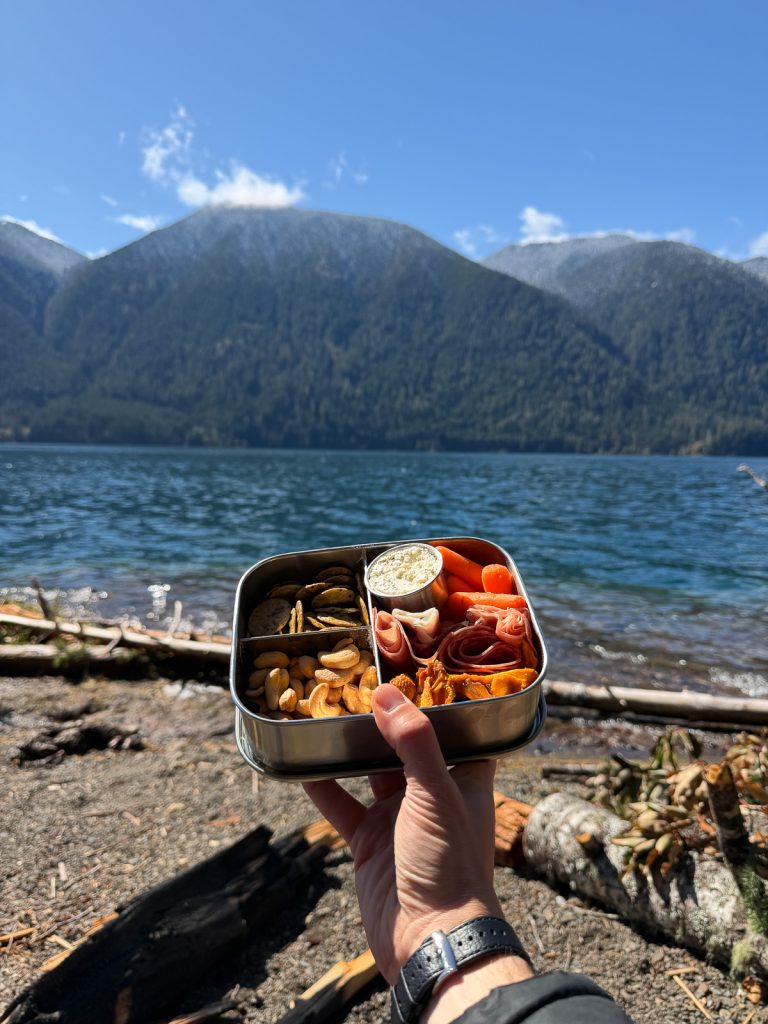
Bring food & snacks: The dining options are pretty limited in Olympic National Park, so make sure to pack a cooler and bring your own food! There are grocery stores in Port Townsend, Sequim, and Port Angeles, so you can definitely stock up while out there. But to save time, we suggest coming prepared. We love our YETI Tundra 45 Cooler! If you need any snack ideas, these are some of our favorites. We also have a list of easy camping meals here, plus car camping kitchen essentials.
How much time do you need?
You could spend months on the Olympic Peninsula and still find new things to do. If the national park is your main priority, give yourself at least 2 days. It will be very busy, but it is doable. For first-timers to the park this 2 day Olympic National Park itinerary focuses on what we’d prioritize with a short amount of time.
If you can stay for 3 to 5 days, you will have more time for longer hikes and things to do outside of the park boundaries.
Save this guide with the best things to do on the Olympic Peninsula

About the author
This blog post was written by our writer Nicoll. Learn a bit about her below!
After six years of full-time travel, Nicoll is now a mountain-loving mama living in Colorado with her husband Jake, their sweet baby girl Teagan, and their pup Gunner. She loves hiking, riding her dirt bike, and finding joy in the little things.