Last updated on September 4th, 2025
Visiting Vietnam? In this guide we’re sharing the ultimate 3 day Ho Chi Minh City itinerary, including the top sights and best local eats. Plus where to stay, how to get around, and so much more!
For years we had dreamt of visiting Southeast Asia. We were eager to experience its delicious street food, mix of cities and nature, friendly locals, and affordable prices. And in 2023 we finally made it happen!
We packed our bags and spent almost 6 weeks exploring Vietnam. For our first stop, we headed to Ho Chi Minh City. We had a friend from Seattle living in the city at the time and it felt like the perfect spot to start our time in the country. And we had the best time!

Check out our video from Ho Chi Minh City where we explore all over the city, plus take a day trip to the Cu Chi Tunnels!
Over the course of 4.5 days, with our local friends as guides, we explored the city’s iconic buildings, sat in tiny chairs as we ate street food, experienced the bustling streets, learned some of the country’s history, and so much more. We went into our time in Vietnam not totally sure what to expect of Ho Chi Minh City, with fears of it being too overwhelming. But we LOVED it!
And in this guide we’re sharing a 3 day Ho Chi Minh City itinerary that is loaded with our favorite stops, delicious street food, and fun tours. Plus helpful tips for your trip, like when to visit and where to stay. We hope that you love the city (and Vietnam) as much as we did!

About Ho Chi Minh City, Vietnam
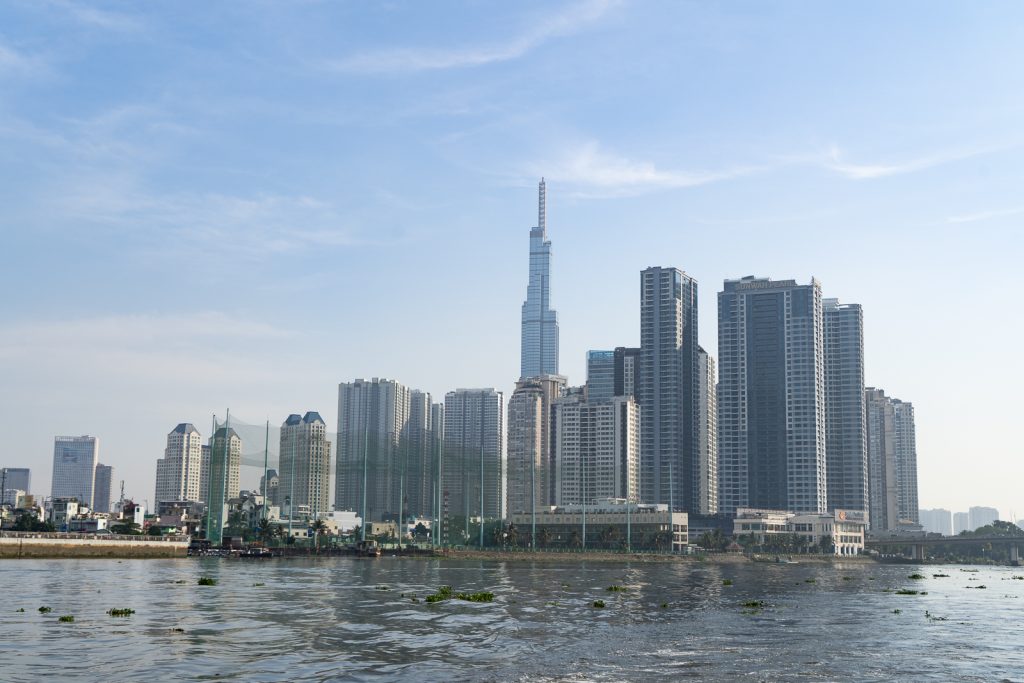
Located in Southern Vietnam, Ho Chi Minh City is the largest city in the country, with 9 million residents. The city is split up into 24 districts, with District 1 (and 3) being home to the majority of the tourist sites. Here you’ll find a mix of French colonial and modern buildings, markets, museums, street food, fine dining, parks, nightlife, and more!
If we had to describe Ho Chi Minh City in a few words it would be lively, delicious, and fun. The city is flooded with motorbikes that zip all around you (it’s scary at first, but then becomes exciting), streets are lined with food stalls, and there are no shortage of cool buildings to look at.
Ho Chi Minh City or Saigon?
Up until 1975, the city was named Saigon. But after the Vietnam War ended, the name changed to Ho Chi Minh City (HCMC for short) after one of the leaders of the North Vietnamese, Ho Chi Minh.
Both names are still used to refer to the city, with Saigon being more common in southern Vietnam. But for the sake of this guide, we’ll be referring to the city as Ho Chi Minh City.
Is Ho Chi Minh City safe?
We had zero safety concerns in Ho Chi Minh City. Well, except for riding in the car. The drivers go so fast, zip around, and pass people. And seatbelts are sometimes missing from cars. Thankfully we survived! 😅
But besides that, when walking around cities, even with our cameras out or at night, we never once felt unsafe or encountered anything sketchy. Our female friends who live in Ho Chi Minh City also said they have always felt safe in the country.
Of course things can happen anywhere, so be alert! The major crime you would encounter would be pickpocketing or theft. Neither of which we experienced.
Need help packing? Check out our ultimate Vietnam packing list with free downloadable list!
3 Day Ho Chi Minh City Itinerary
Our 3 day Ho Chi Minh City itinerary is perfect for first timers to the city, who want to experience a variety of what the city has to offer. It’s a fast paced itinerary, but there are many ways to customize it for your interests or combine sites through tours.
Want to have these recommendations handy on the go? We created a custom Google Map above, which you can save to your own Google Maps to reference later. The activities are color coded and organized by day, so you can get a quick glance as to where everything is in relation to one another.
Day 1
- Coffee at Cheo Leo Cafe
- Grab breakfast at Bánh Mì Hồng Hoa
- Walk through Tao Dan Park
- Visit the Reunification Palace
- Enjoy street food for lunch
- Explore District 1
- Visit the Ben Thanh Market
- See the city from the Saigon Skydeck
- Grab dinner
- Nguyen Hue Walking Street
Day 2
- Coffee at Saigon Roastery
- Pho for breakfast
- Visit the War Remnants Museum
- Check out some temples
- Cool down with a drink
- Spend the afternoon and evening going on a street food tour
Day 3
- Take a day trip with a guide
- Have a sunset picnic beneath Landmark 81
Day 1
Your first day in Ho Chi Minh City will give you a great overview of the city as you visit some of the top, must see sites. And you’ll get to try some of our favorite Vietnamese dishes!
Have coffee at Cheo Leo Cafe
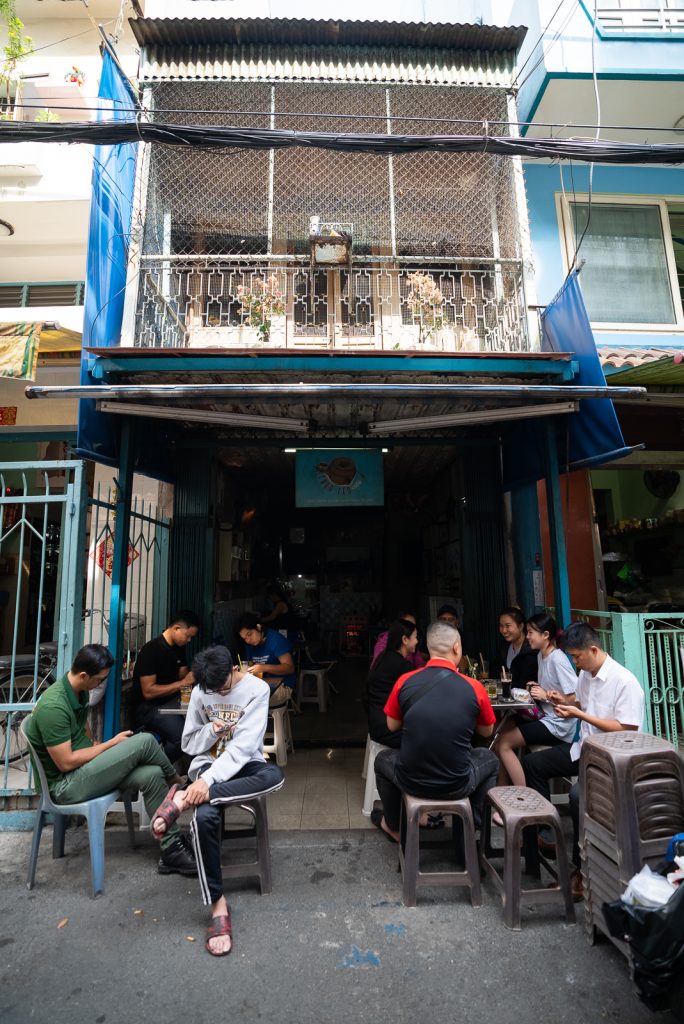
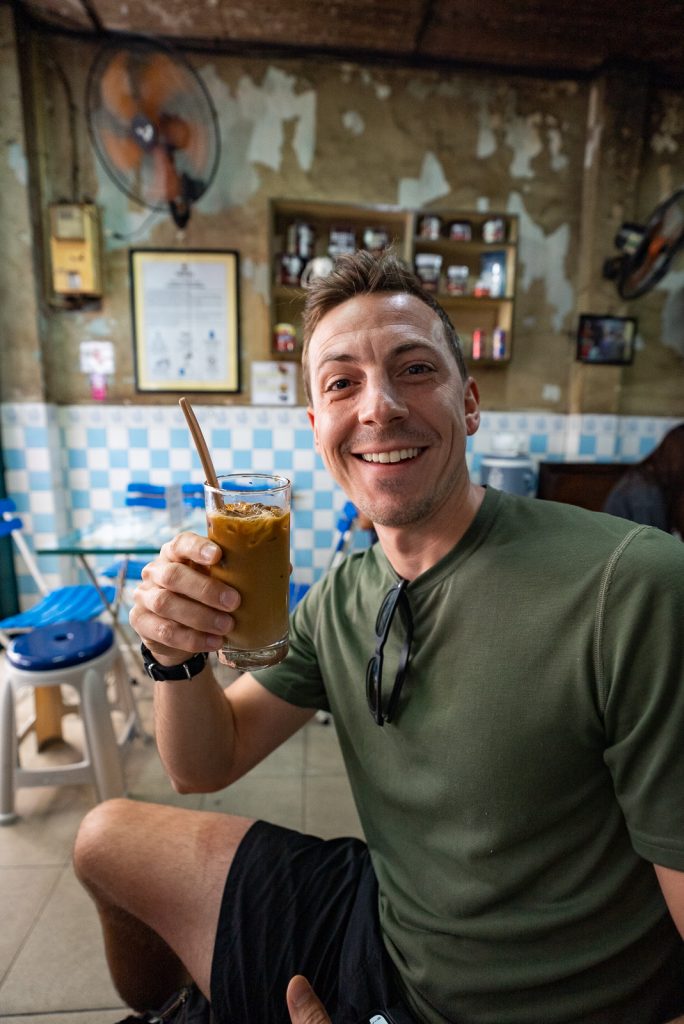
Coffee was first introduced to Vietnam by the French in the 1850s and Vietnam is now the world’s second largest coffee producer, after Brazil. So it is only fitting to start your time in the city with some Vietnamese rocket fuel, otherwise known as Cà Phê Sữa Đá!
This is a Vietnamese iced coffee with condensed milk, which is a refreshing, sweet, and rich drink. And one of the best places to try it is at the iconic Cheo Leo Cafe, the oldest coffee shop in the city, established in the 1930s!
We loved getting to experience the history and authenticity of this cafe. It is tucked down an alley and has a rustic, old school vibe. They also use a nearly extinct old-fashioned method of brewing Vietnamese coffee using a clay pot and cloth strainer. We got to watch them doing this and it was really neat to see!
Important thing to know about Vietnamese coffee: the main bean produced in Vietnam is the Robusta bean. This has almost twice the amount of caffeine of Arabica beans (what you likely drink at most coffee shops) and has a more bitter and strong taste. Condensed milk helps cut the intensity, but it’s still pretty strong!
Grab breakfast at Bánh Mì Hồng Hoa
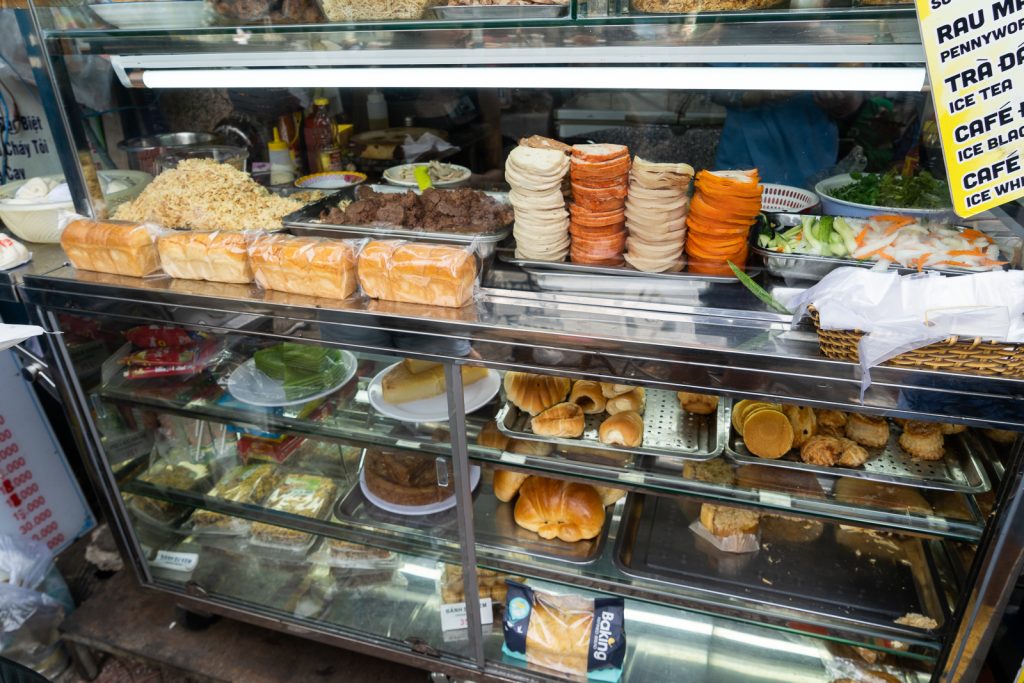
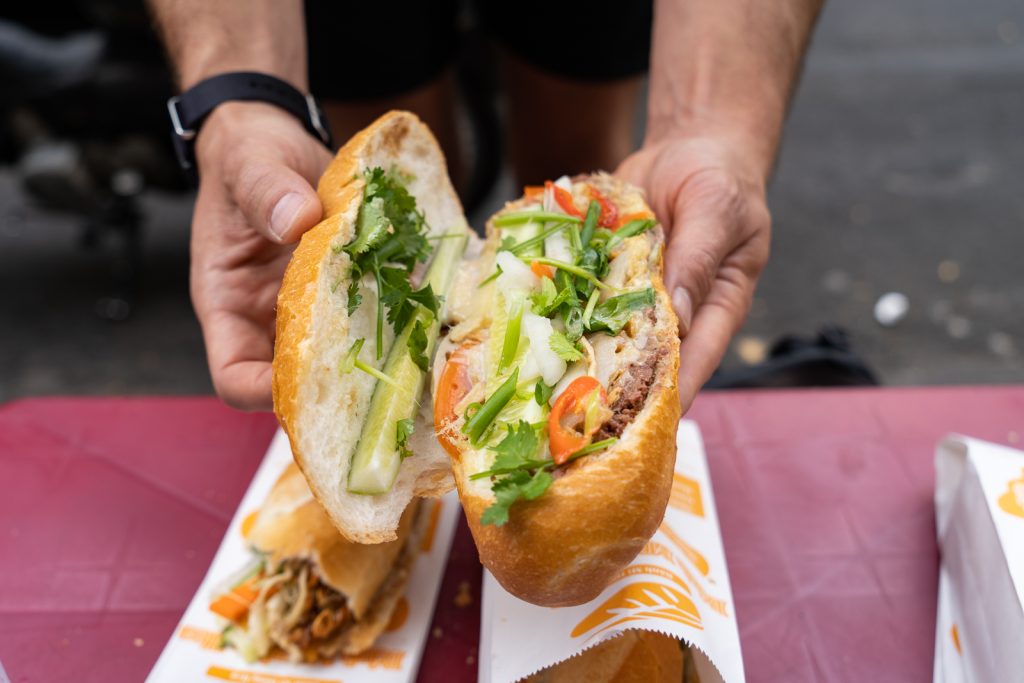
Next up, it’s time to try one of the most iconic Vietnamese dishes, the bánh mì. The phrase bánh mì just means “bread” in Vietnamese, but it is actually a sandwich and has become one of the most iconic food items in Vietnam, especially for breakfast, originating in Ho Chi Minh City in the late 1950s.
Back in the 1850s, the French invaded Vietnam, plus Laos, Cambodia, and part of China, creating a group of colonies called French Indochina, and didn’t leave until the 1950s. Over those 100 years they had a heavy influence on the area, both positive and negative, and one of which was the baguette, which has become the vessel for the bánh mì sandwich.
A typical banh mi consists of pork, cucumber, pickled carrots, cilantro, pate, daikon, and a buttery mayonnaise. We tried our first legit bánh mì from Bánh Mì Hồng Hoa and we highly recommend it!
Walk through Tao Dan Park
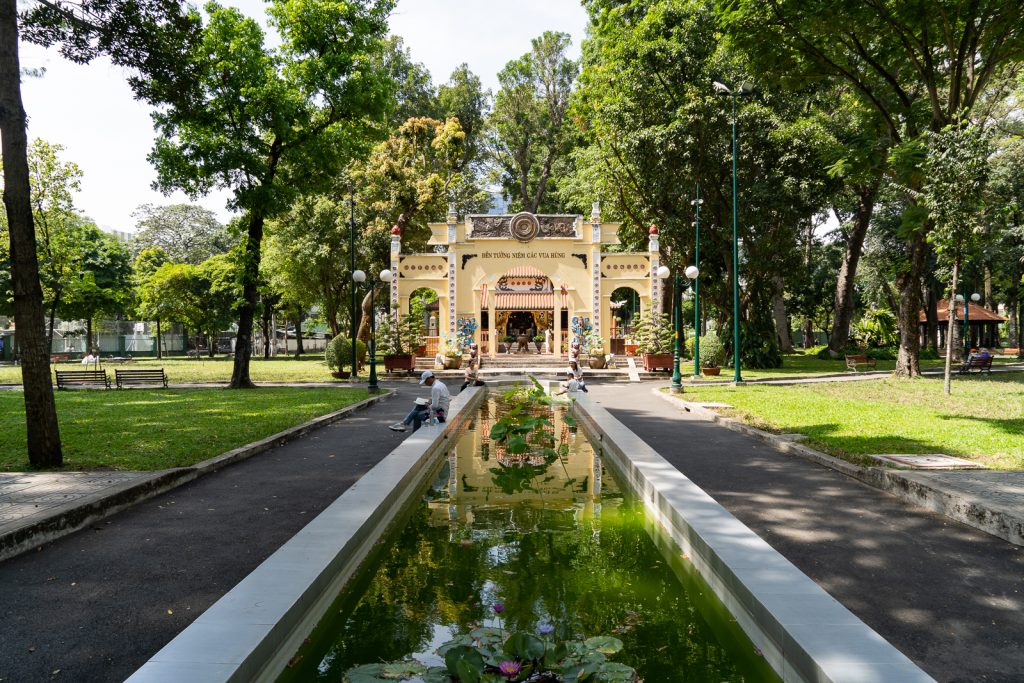
After a delicious start to your day, take a walk through Tao Dan Park (which ends at the backside of the Reunification Palace–your next stop!). This beautiful city park has lots of flowers, sculptures, and even a Buddhist temple. If you’re lucky, you’ll even get to see some locals playing đá cầu, or foot badminton, the national sport of Vietnam!
Visit the Reunification Palace
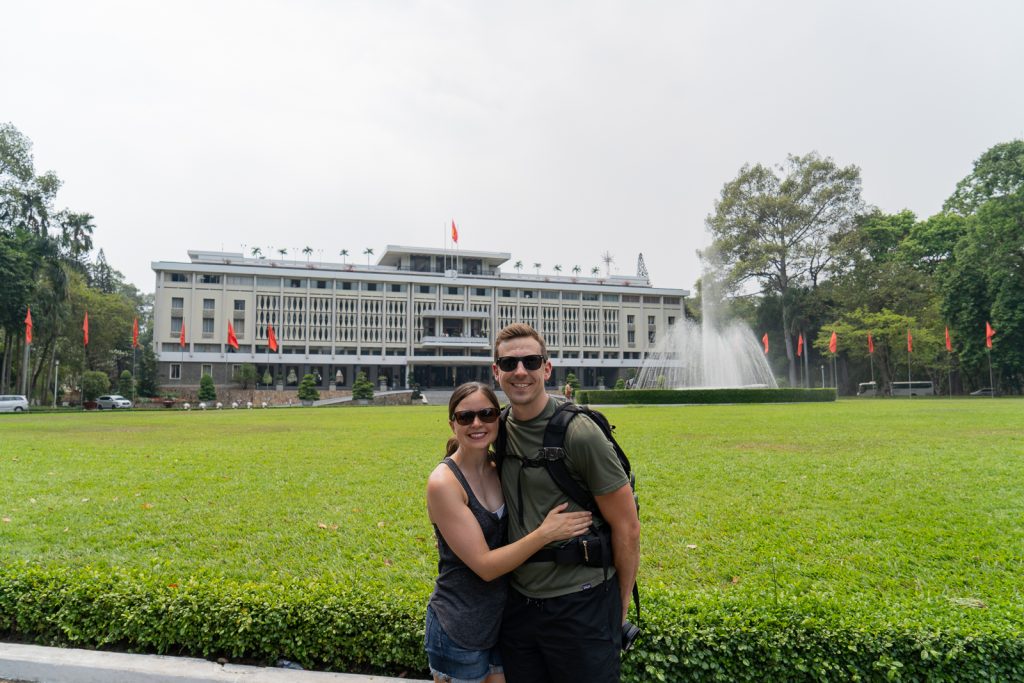
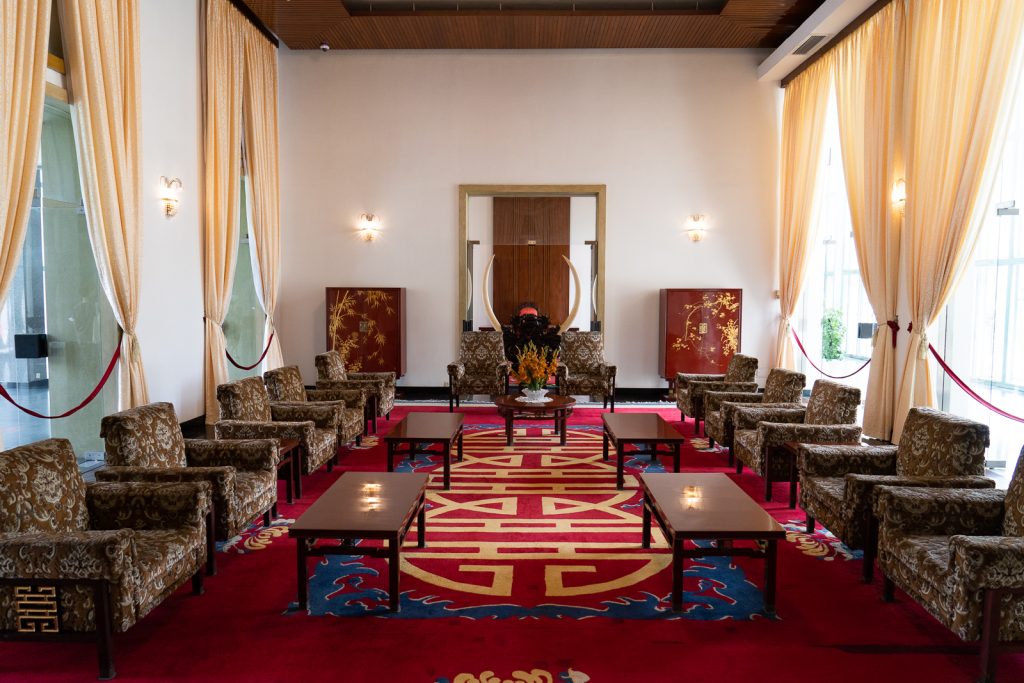
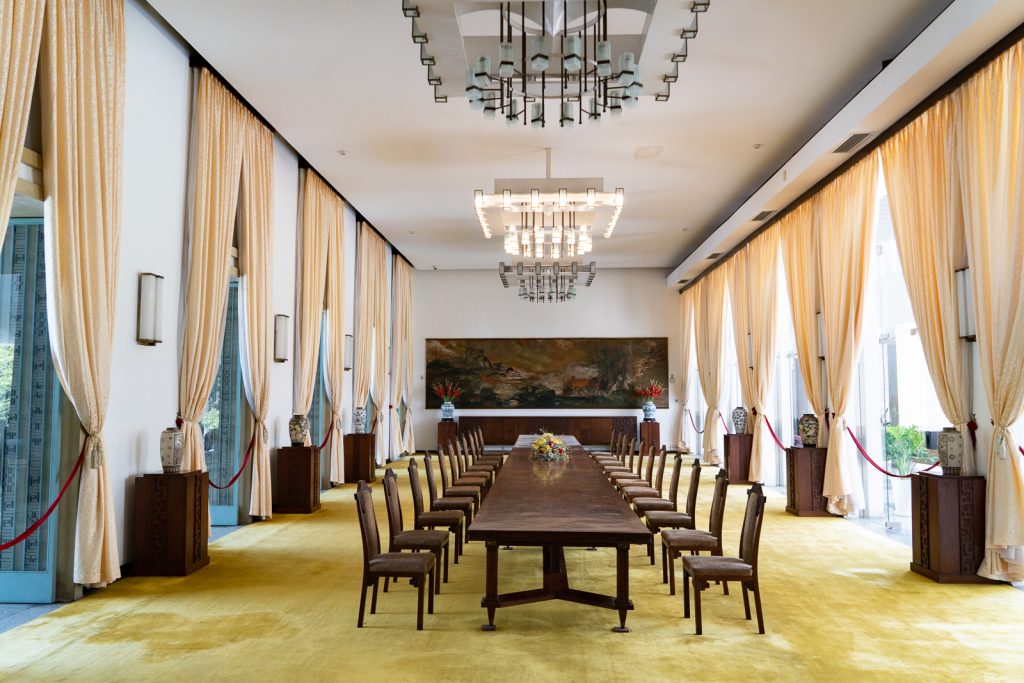
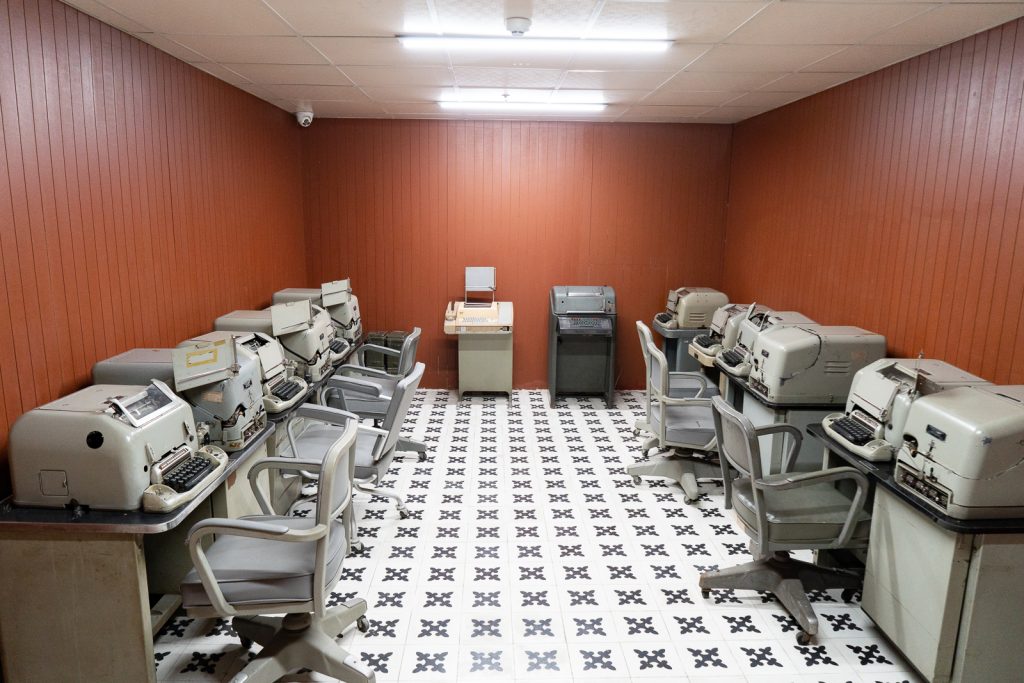
The Reunification Palace, also known as Independence Palace, was originally built in 1871, but was replaced by the current version of the palace in 1962. This building is the former South Vietnamese government building and was the scene of a dramatic event when North Vietnamese tanks rolled through the front gate in 1975, signifying the fall of Saigon.
Today, the building is open to visitors and you can tour the different levels and rooms. At the time of our visit, tours cost 65,000 VND (~$2.75) per adult.
We enjoyed wandering the different floors and seeing the beautiful decorated rooms, plus a sort of creepy basement with old school technology. Not much had changed on the inside since the 1970s, which it certainly felt like!
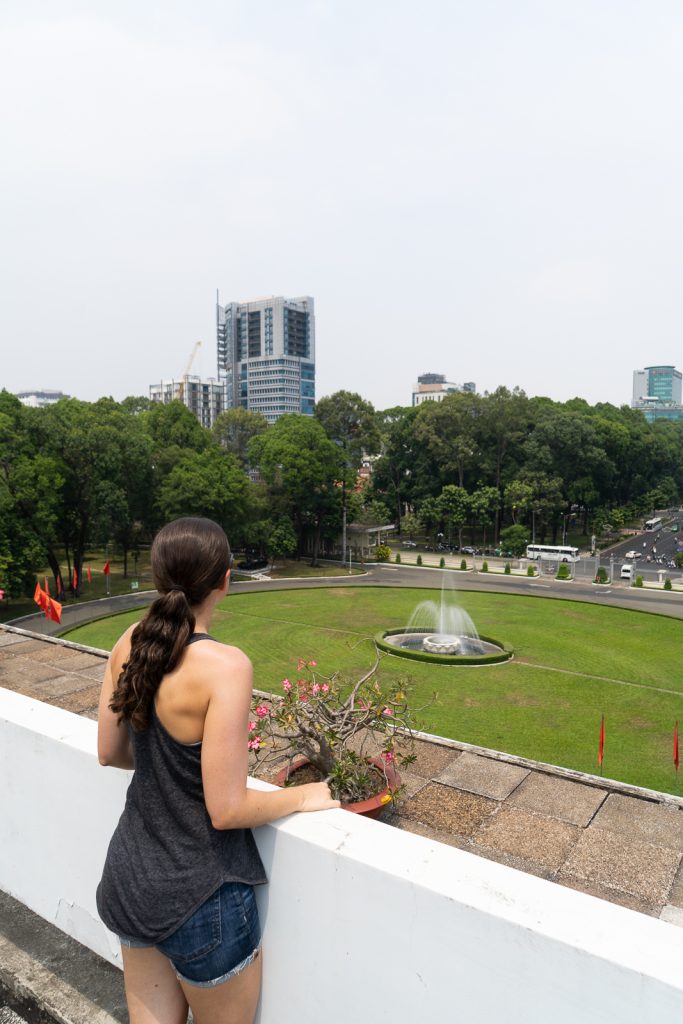
After exploring inside, make sure to go to the roof for a nice view!
Enjoy street food for lunch
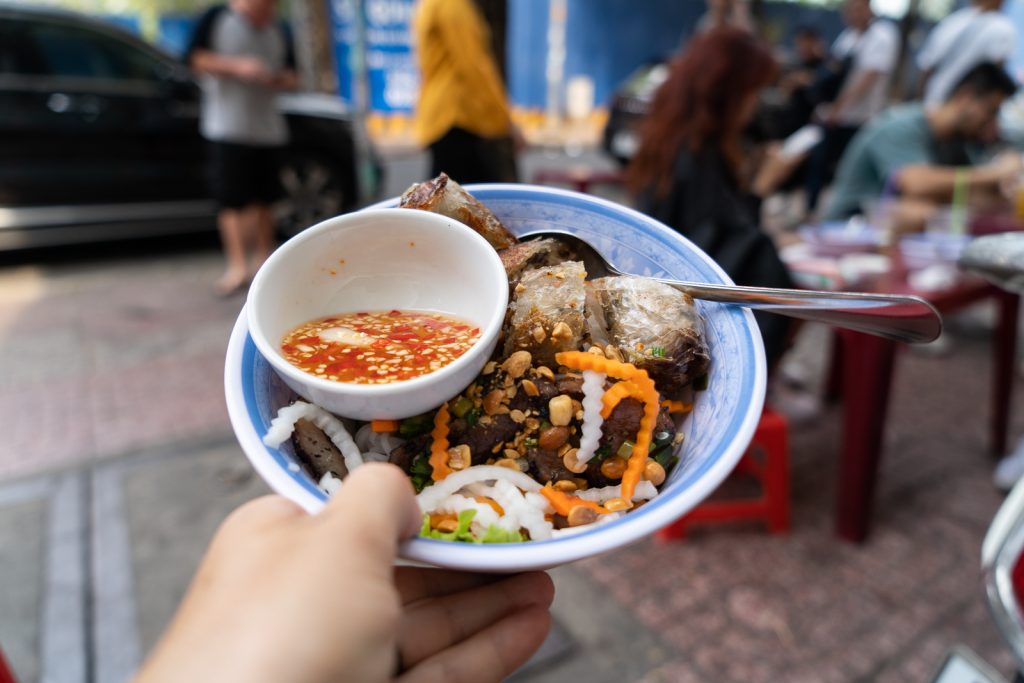
One of our favorite dishes from our entire time in Vietnam was bún thịt nướng. This is a delectable combination of grilled pork, fried spring rolls, noodles, veggies, fresh herbs, peanuts and fish sauce.
We tried this dish for the first time at this spot and we loved it so much we went multiple times! Not only is the food delicious, but it is a true street food spot. It seems they have much of the ingredients prepared ahead of time and then they assemble the dish right from their little thrown together station!
This is the perfect Vietnamese street food experience. Make sure to get the lemon tea to wash it down with!
Explore District 1
For the rest of the afternoon, explore more of District 1! Below are five buildings that we highly recommend checking out while in the area. It may look like a lot, but everything is in close walking distance and for the majority of these sites, you’ll just want to see the outside or quickly pop inside.
Prefer to explore District 1 with a guide? This motorbike tour will take you to the spots we listed below, plus some extras!
Want to save some money on this tour or experience? Join Tripadvisor Rewards to earn 5% Trip Cash on any hotel or experience booking made in their app, which can be applied to future in-app bookings!
Notre Dame Cathedral
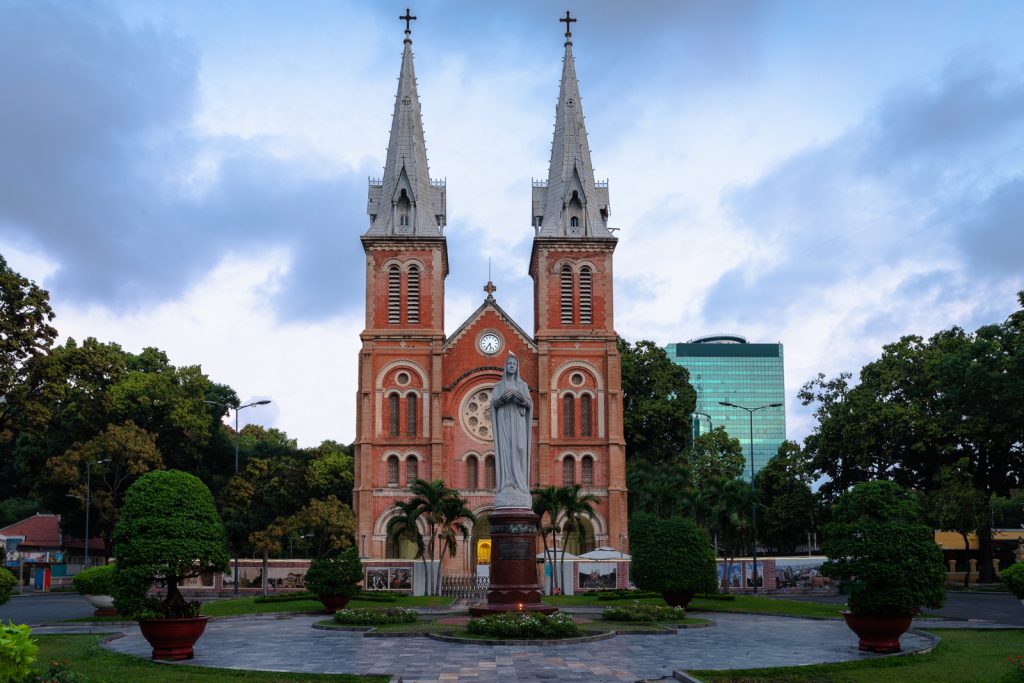
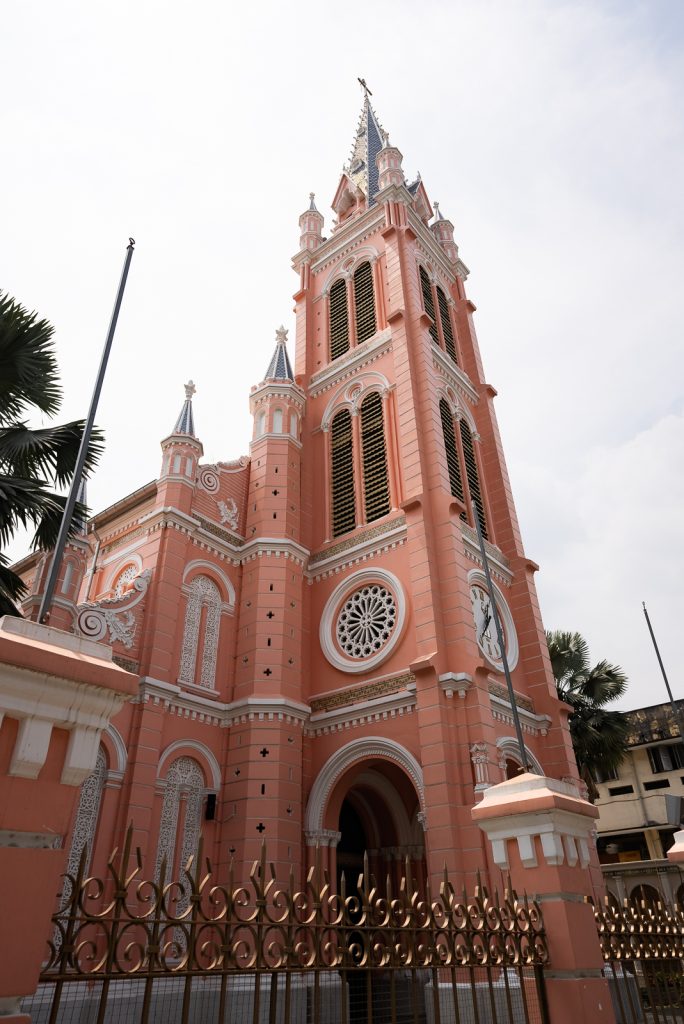
Another influence the French had on Vietnam is the architecture. You’ll notice many buildings around District 1 have a European feel to them. And one of the most obvious is the Notre Dame Cathedral, which was built between 1863-1880, with the original materials all being imported from France.
The outside was unfortunately under renovation during our visit, so we couldn’t see the entire building. But it is definitely worth a quick stop, under renovation or not!
Ho Chi Minh City Book Street
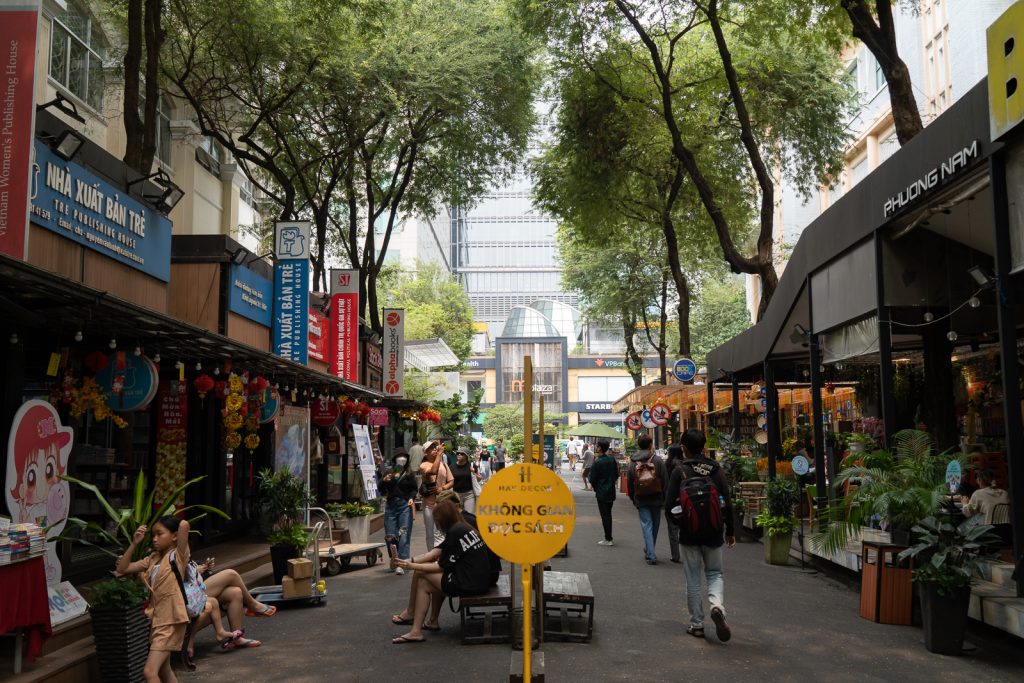
Right next to the Notre Dame Cathedral is Ho Chi Minh City Book Street. The purpose of this street is to provide a space to spread the love and habit of reading. A whole street about books is not something you see every day and since we love visiting libraries and bookstores, we had to stop by!
We loved walking down this street and trying to spot books that we have read, but in Vietnamese. There are also some cafes if you want to take a break, grab a drink, and read.
Send a letter at the Ho Chi Minh City Central Post Office
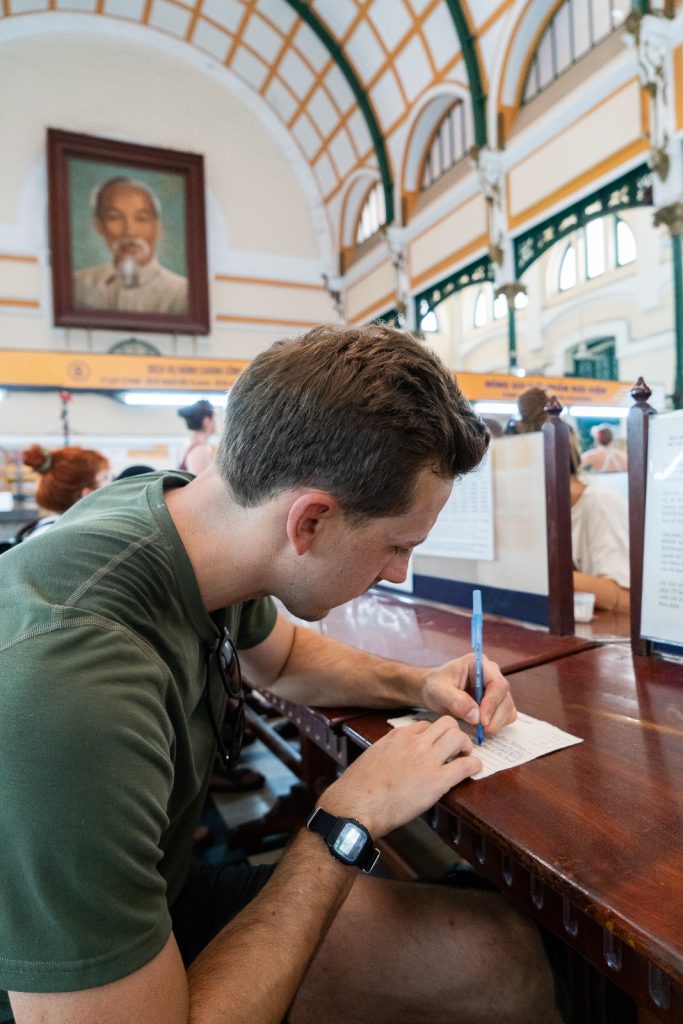
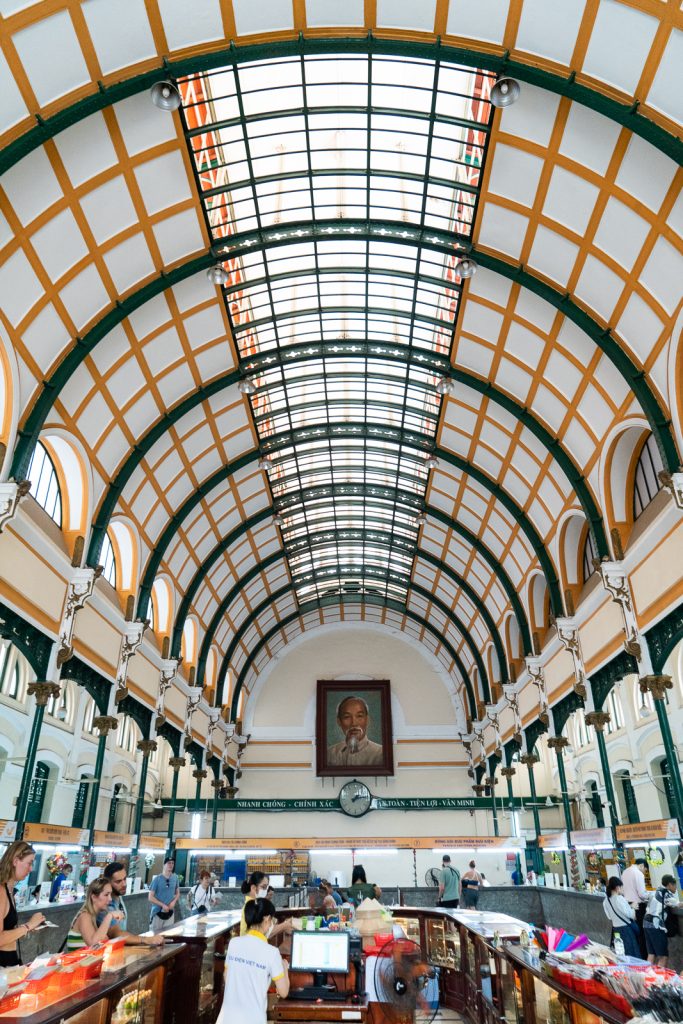
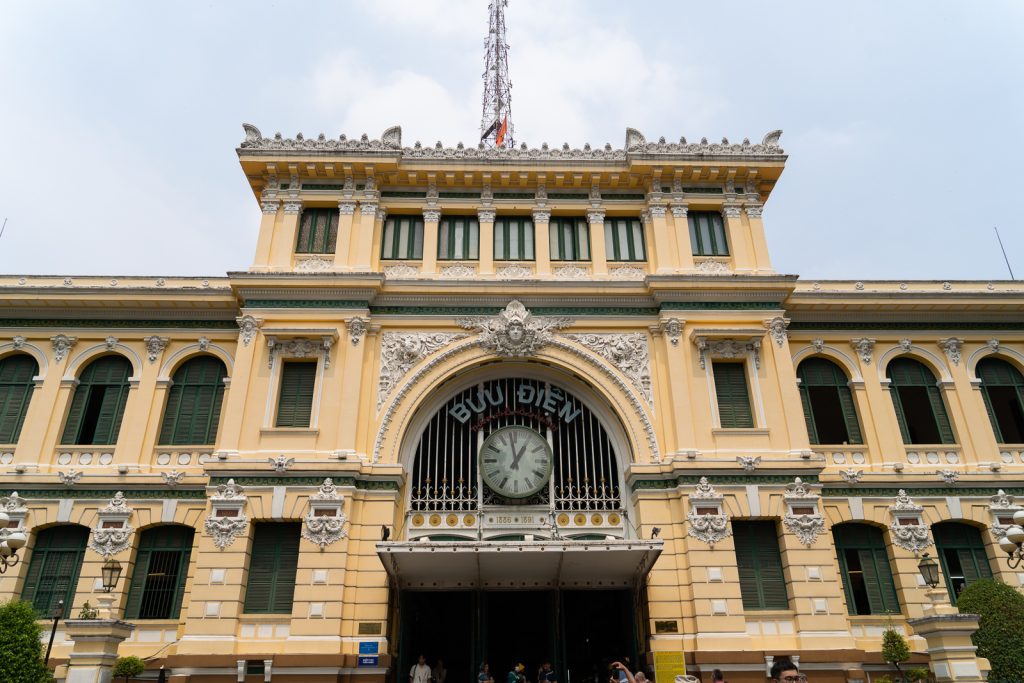
The Saigon Central Post Office is one of the oldest and most iconic buildings in the city. With its French architecture it kind of reminded us of a fancy European train station from the outside!
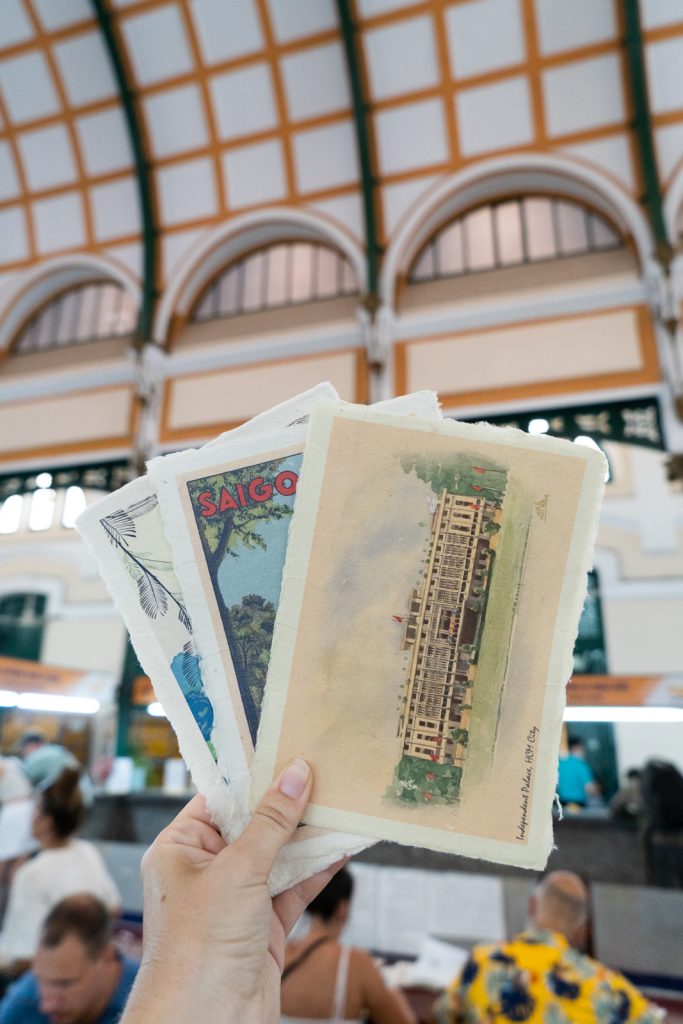
It’s a working post office, which may not sound fun to visit, but one popular thing to do here is send a postcard or letter back home! Inside you’ll find a bunch of postcards for sale, plus tables to sit at and write.
Mailing is pretty simple and there is staff that can help you with postage. Our postcards took about a month to arrive, but they did eventually make it to the US!
People’s Committee Building
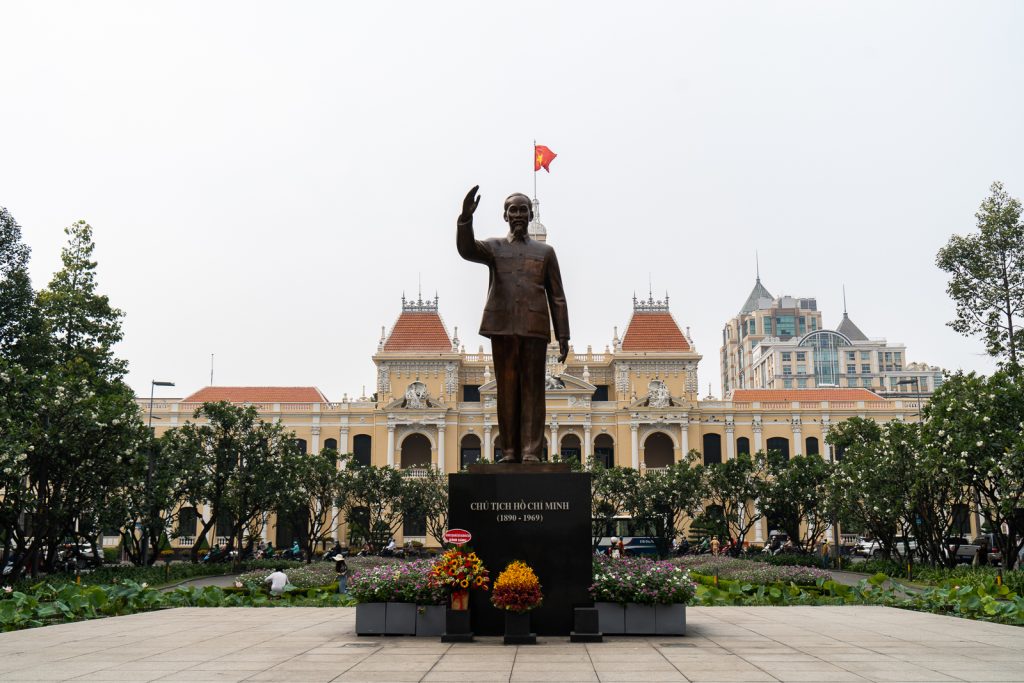
The People’s Committee Building was built in the early 1900s and is now the city hall. We only admired this one from the outside, but it may have been our favorite in terms of architecture. It has a beautiful and ornate yellow and white exterior, with red roofing.
This building is located at the end of Nguyen Way Walking Street, a very quiet street during the day, but hoppin’ at night. It’s fun to see it during the day and then come back later to see the difference!
Ho Chi Minh City Opera House
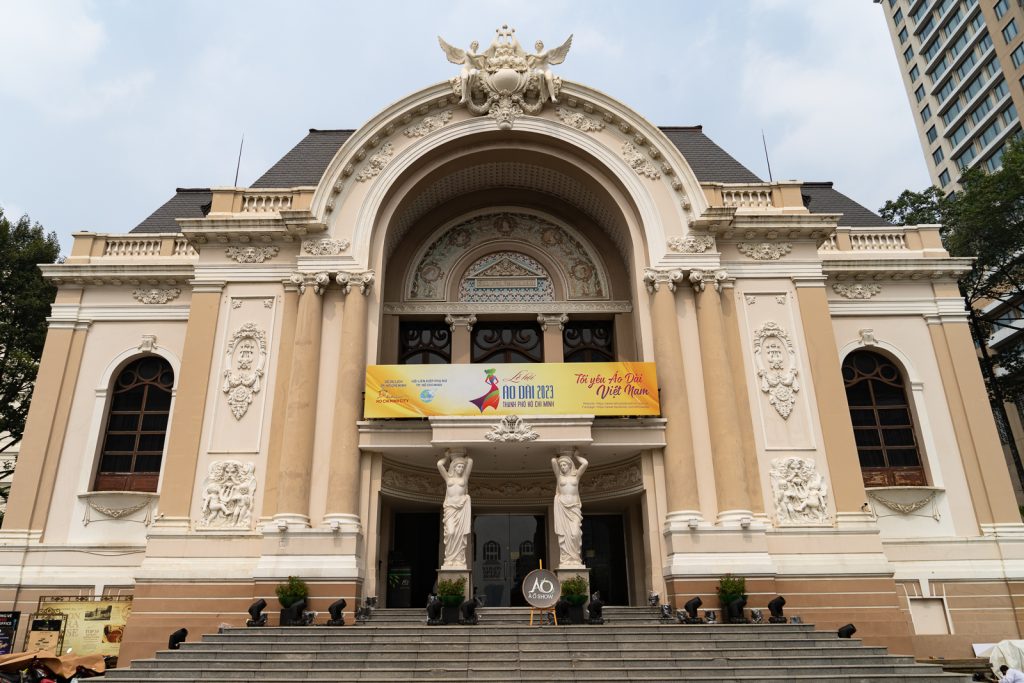
The Opera House is yet another gorgeous French inspired building to see while in Ho Chi Minh City. This is the home of the city’s orchestra and ballet. You can even watch a Vietnamese bamboo circus here!
Visit the Ben Thanh Market
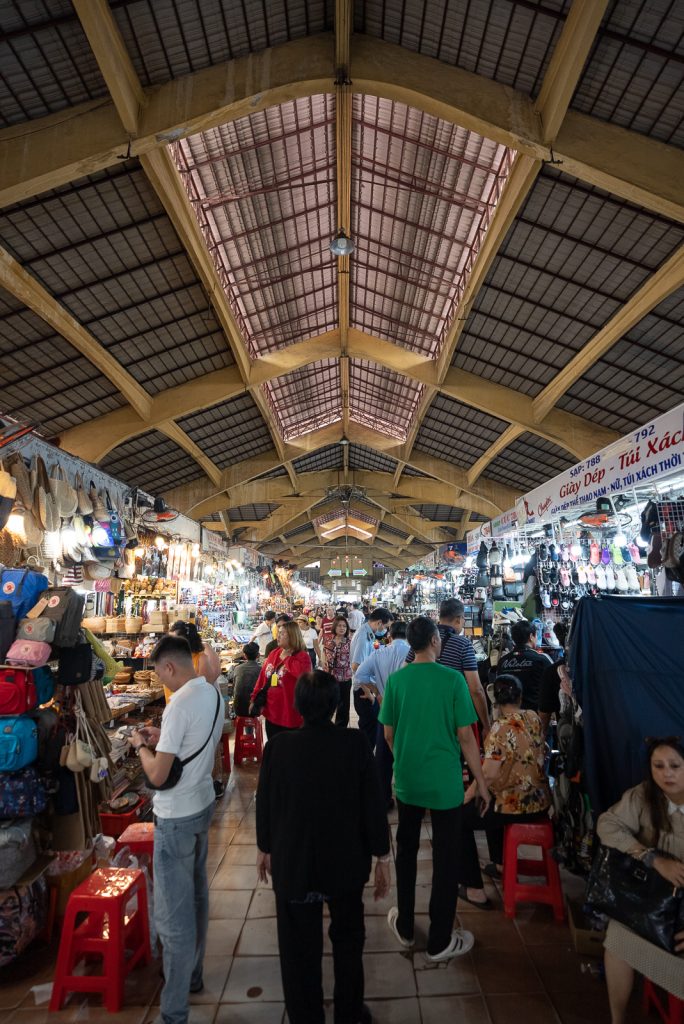
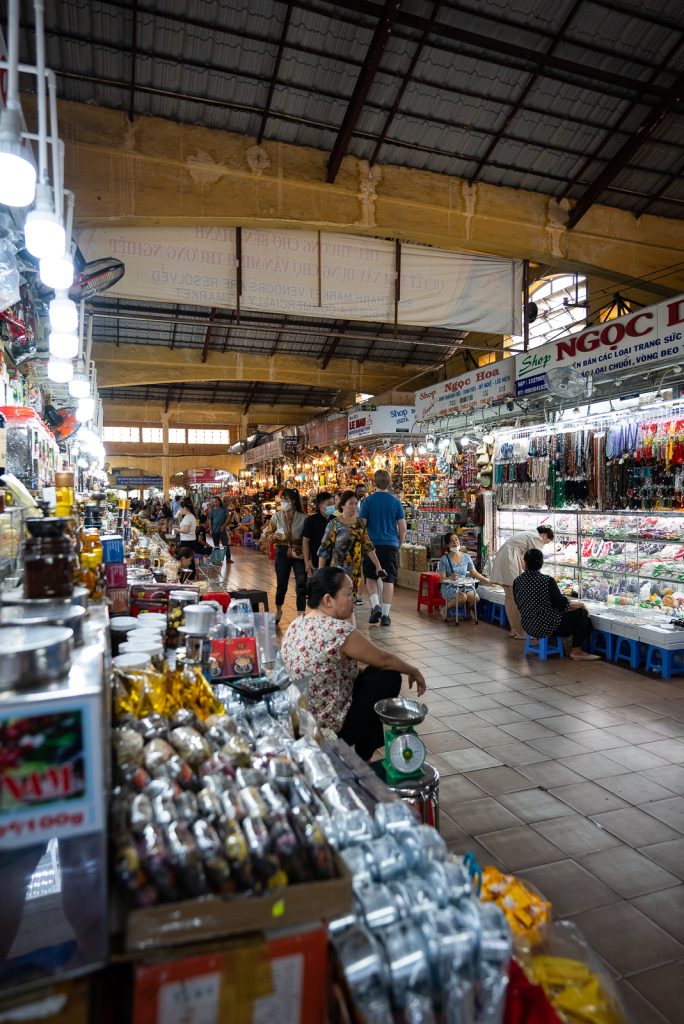
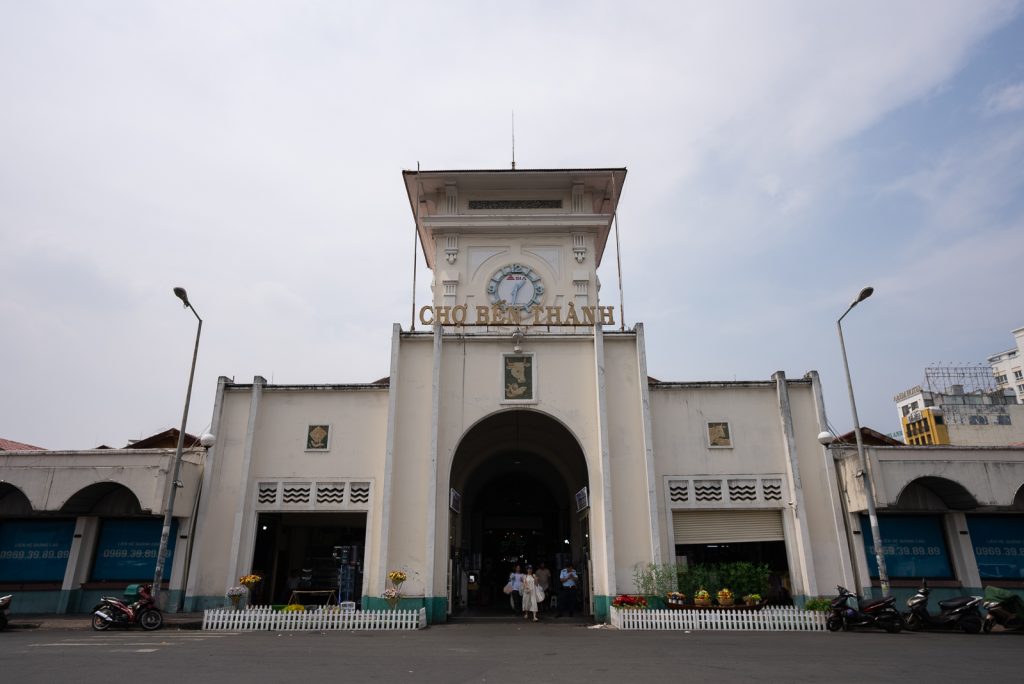
The Ben Thanh Market is the most famous and oldest surviving market in the city and has been in the same spot, in some form, since the early 17th century!
It’s a bustling market with tons of vendors selling all sorts of items, like coffee, nuts, trinkets, souvenirs, household items, meat, and fish. On top of all the shopping you can do, there are also several food stalls inside with food and drinks.
Whether you want to buy something or not, it is a fun experience to walk around. We didn’t find the vendors to be annoying or overly pushy, but they will try to make you feel special, calling you “friend” to get you to stop by their stand.
And since this market is mainly for tourists, prices are a little higher and price haggling is expected. For some people it’s a real thrill, but for us it’s super awkward. We aren’t sure what is too much or not enough. A few tactics we learned:
- Shooting for 50% of the asking price is a good starting point. They will always come down in price and likely meet you in the middle.
- Don’t have all of your money bundled together. That way, you can play the “this is all I have” card. Also, you can always walk away and they might come running after you to cut you a deal!
- Be sure to shop around to different shops for an item you want. This will help you get a better idea of how much you could ask off!
See the city from the Saigon Skydeck
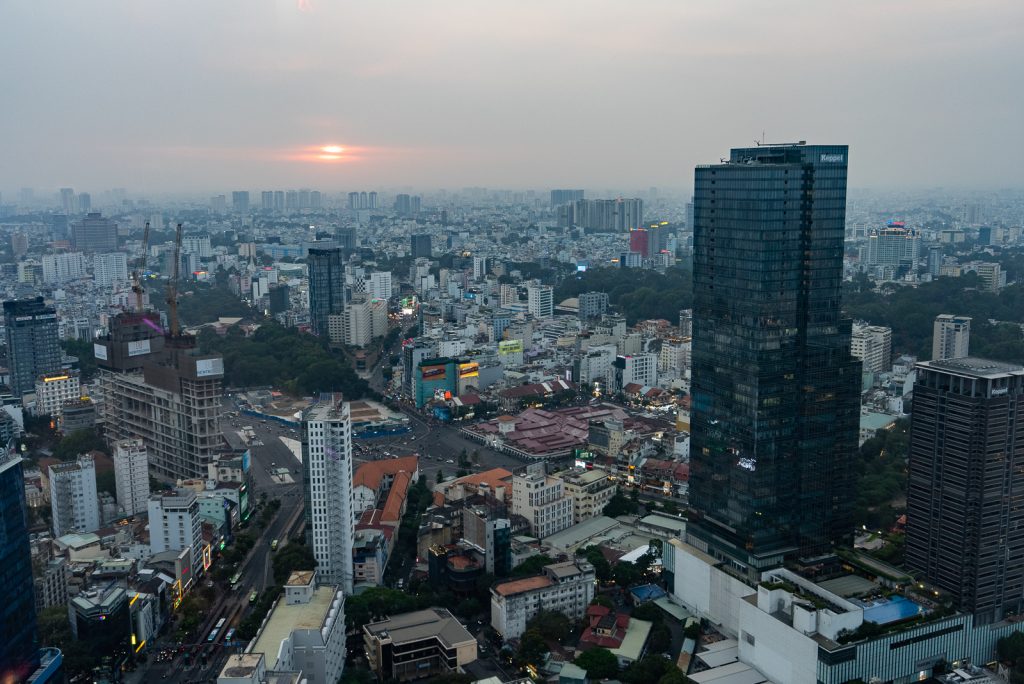
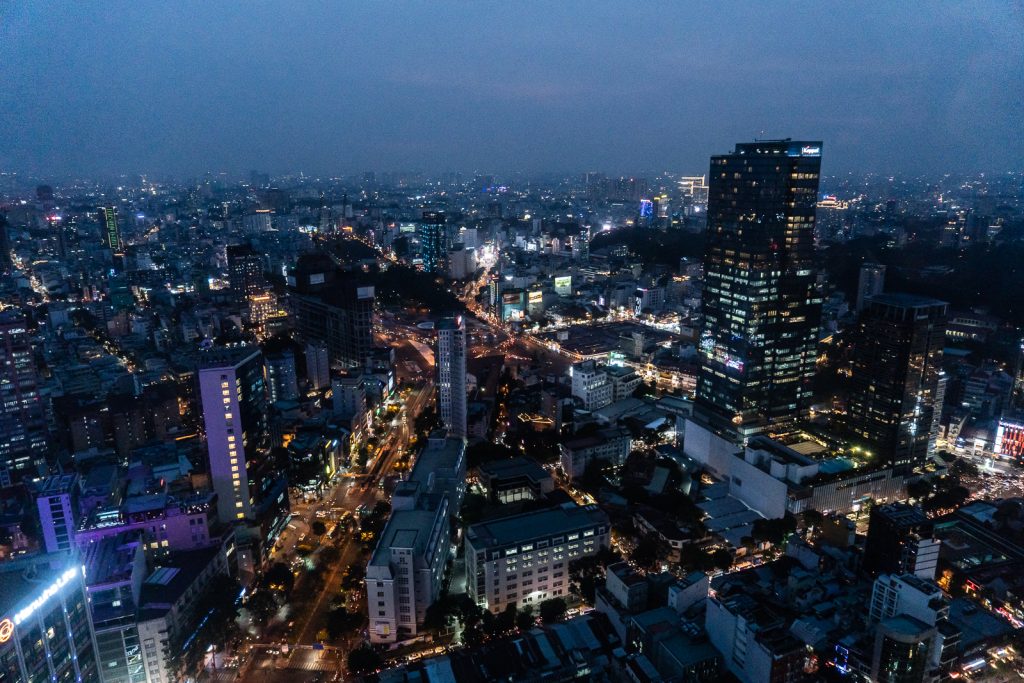
For sunset, head up to the Saigon Skydeck in the Bitexco Financial Tower. This very unique, modern skyscraper is the second tallest building in the city. And it is not only cool to look at from ground level, but has a spectacular overlook 49 floors up!
Seeing the city from above really puts into perspective how large and busy it is. And after a day of sightseeing, we loved being able to look down and pick out all the spots we visited!
It costs around 240,000 VND per person to visit, which is pricier for Vietnam, but in our opinion totally worth it! You can buy your ticket in advance (and if you use our code APLUSK10, you’ll save 10%!) or wait in line at the door!
Grab dinner
For dinner, you have some options! Quan Bui is a great Vietnamese restaurant with a ton of options to choose from. It is an actual restaurant (not street food), so prices are higher, but it has a nice ambience and is very high quality.
If you want a break from Vietnamese food (you’ll still have plenty ahead!) we really loved Pizza 4P’s. We tried it in Hanoi, but they also have a location in Ho Chi Minh City and it was amazing pizza.
Another good spot is Bandido. This is one of our friend’s favorite restaurants in Ho Chi Minh City. While tacos may not be a food item you’d seek out in Vietnam, these really impressed us! And we’ve have tons of tacos in Mexico City to compare to! Plus the place is SUPER cute too!
Nguyen Hue Walking Street
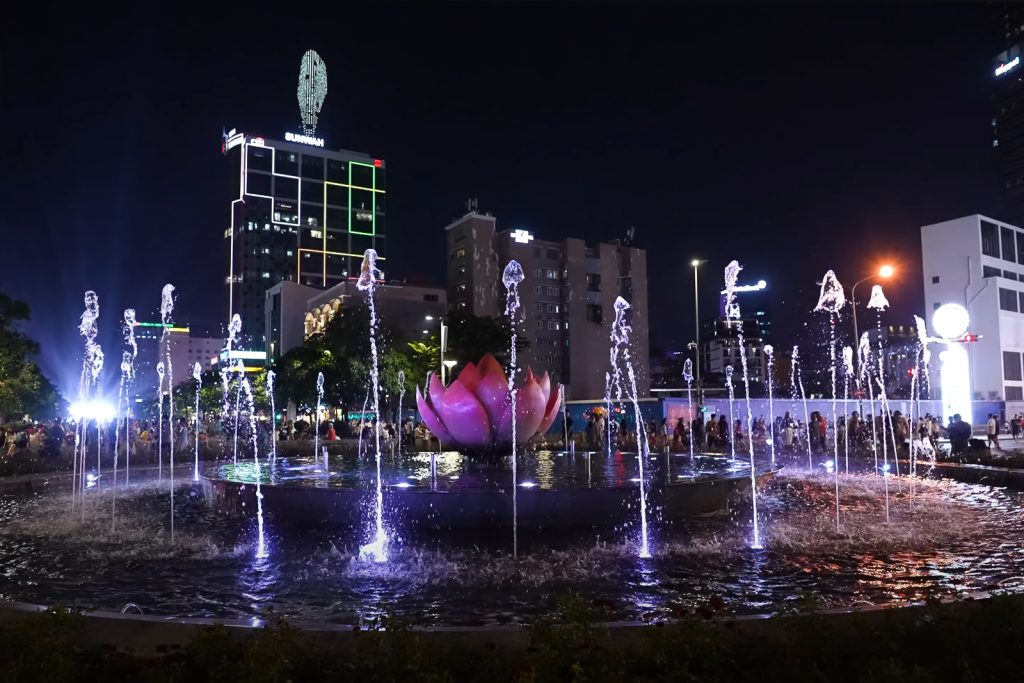
End your day walking around the Nguyen Hue Walking Street. This is a pedestrian street in the heart of the city. By day it is peaceful and calm, but by night it is vibrant and fun–especially on a weekend night!
Here you’ll find tons of locals and tourists walking and having a good time. We lucked out and visited during the Ao Dai Festival, which celebrates Vietnam’s traditional dress. It was super cool to experience!
Day 2
Your second day in Vietnam will include LOTS of Vietnamese food! One of the reasons we love traveling is to experience other cuisines. So if you’re like us, today will be a very fun day for you! But don’t worry, there is some sightseeing mixed in to help give your stomach some rest.
Check out our guide to the top 10+ Vietnamese foods you MUST try in Vietnam (& where to get them!)
Coffee at Saigon Roastery
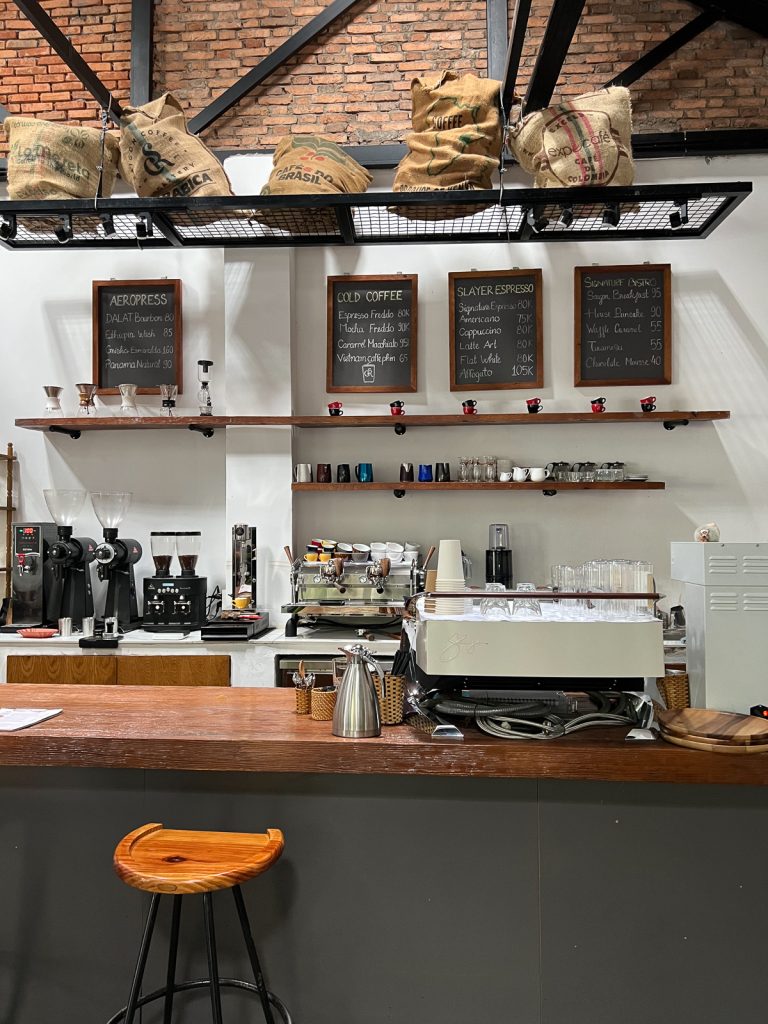
Kick off your morning at Saigon Roastery! This is a third wave coffee shop, with high quality espresso and drinks like lattes and cappuccinos. While we loved Vietnamese coffee, it was nice to get a break from the condensed milk every once in a while and have one of our favorite drinks from back home!
Pho for breakfast
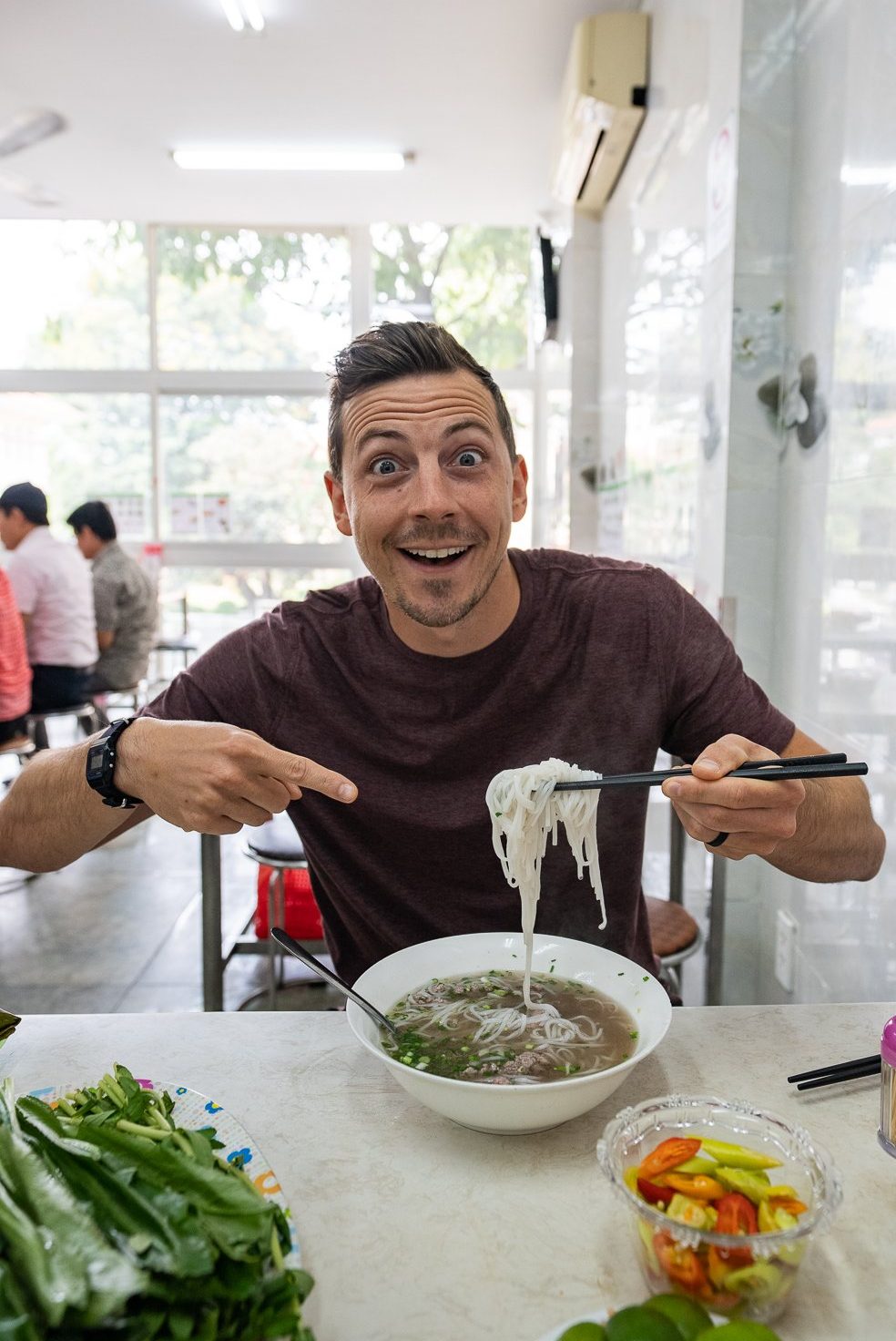
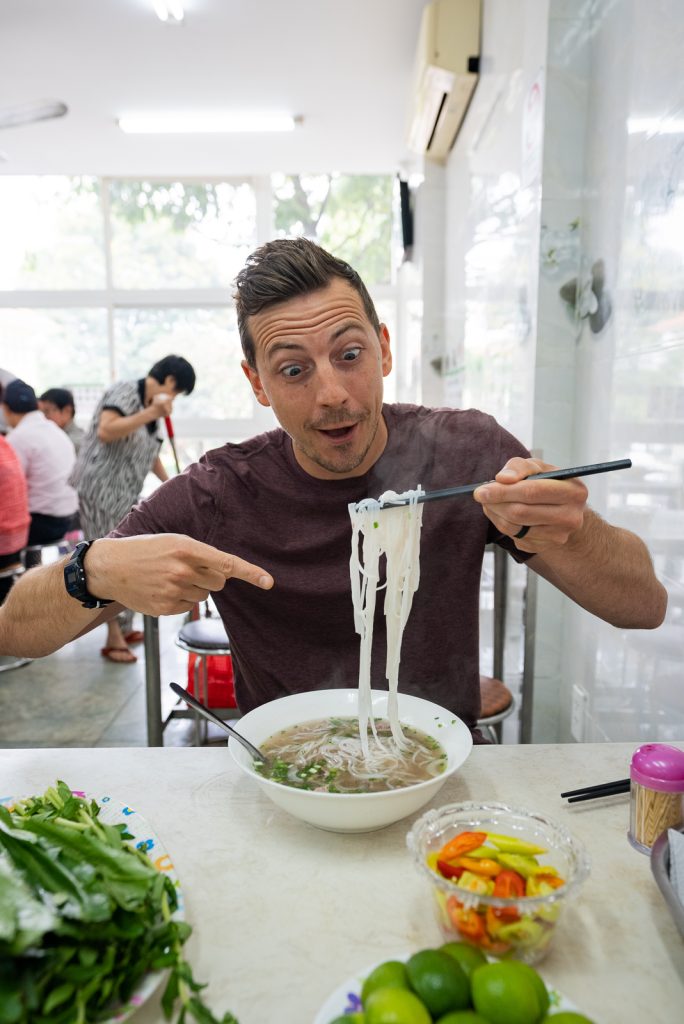
Quite possibly the most well known Vietnamese dish is pho. Many believe pho originated in northern Vietnam during the French colonial times. And when the French colonial period ended in 1954, many North Vietnamese migrated south and pho began to take on new variations and adapted to different tastes, culture, and produce of different regions.
In Ho Chi Minh City, the pho is served Southern style, which has thinner noodles, primarily uses beef, and has a sweeter, fattier, and richer broth. It is served with a plate of cilantro, lime, bean sprouts, basil, and jalapeño.
You can find pho all over the city. But we chose to visit Phở Hòa Pasteur and it was delicious!
Visit the War Remnants Museum
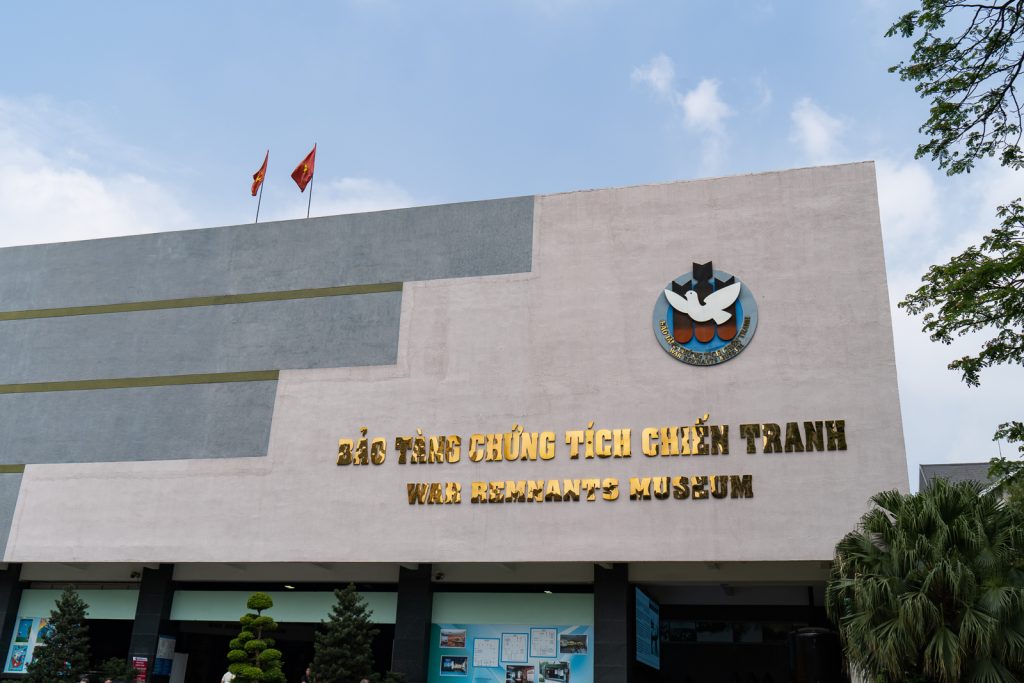
Besides French colonialism having impacts on Vietnam, another event that heavily impacted the country was the Vietnam War, known as the American War by the Vietnamese.
This war took place between 1955 and 1975 and was officially fought between North and South Vietnam, with the United States intervening heavily in the 1960s. The war had many negative effects on Vietnam, including massive bombings, Agent Orange, and so much more.
As Americans, we really wanted to better understand the war, both before our visit and during. Before visiting, we watched the Ken Burns PBS documentary, which shares perspectives from all three sides involved. We highly recommend it!
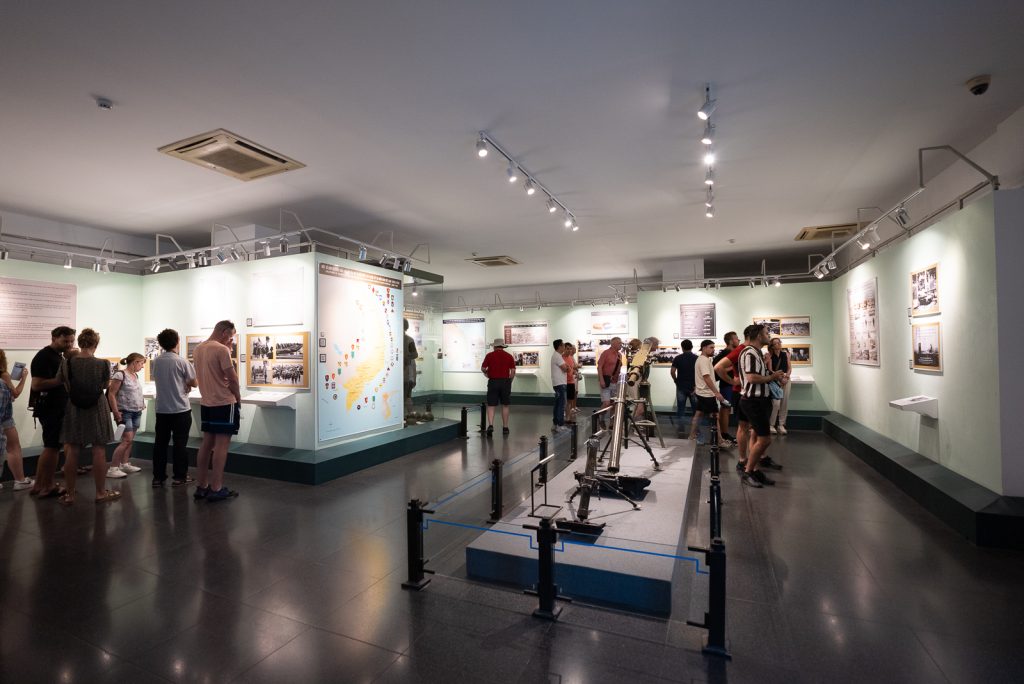
And during our time in Vietnam, we visited the War Remnants Museum in Ho Chi Minh City. This museum has multiple exhibits about the war from the Vietnamese perspective. It is very graphic at times and hard to look at, but really important to understand what the Vietnamese went through and still experience the after effects of to this day.
You may wonder how we felt being Americans in Vietnam, given everything that happened in the war. But we can honestly say we felt nothing but welcome in the country. We spoke to multiple guides about the war and their perception of Americans and they all told us “the past is the past.”
Check out some temples
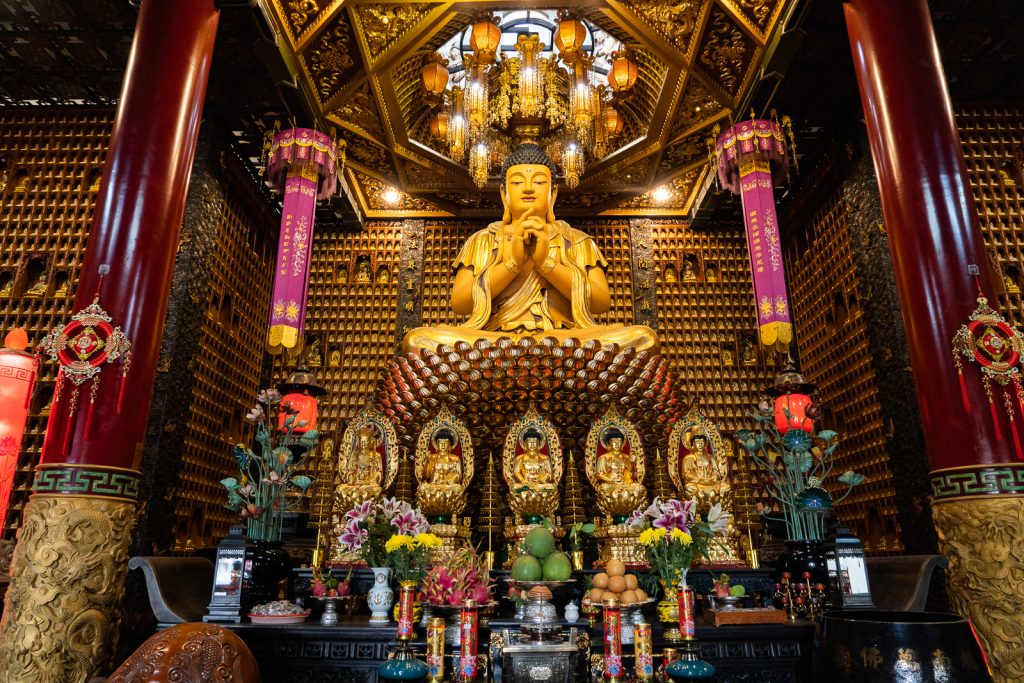
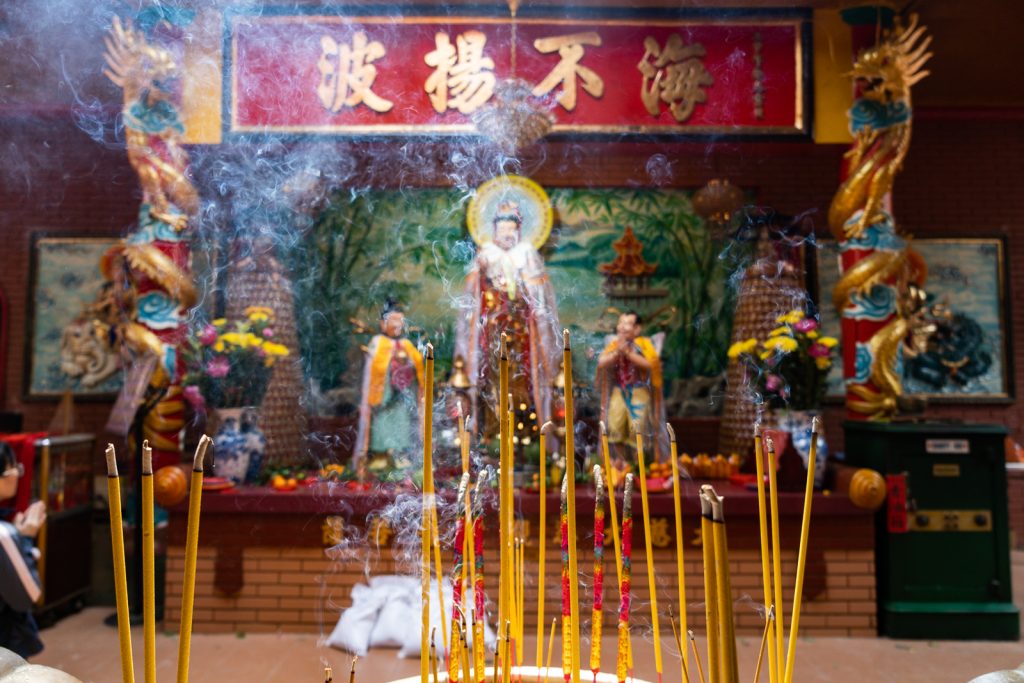
After visiting the museum, you may have some free time before your afternoon/evening activity. If so, we suggest checking out some temples! During our visit, our friends took us to the Ten Thousand Buddha Temple and Ba Thien Hau Temple.
These are both a bit of a trek from the War Remnants Museum. But it is a cheap Grab ride!
Temple etiquette: When visiting temples, you may need to remove your shoes. For the ladies, make sure you cover your shoulders. We also both had our knees covered as well.
Cool down with a drink
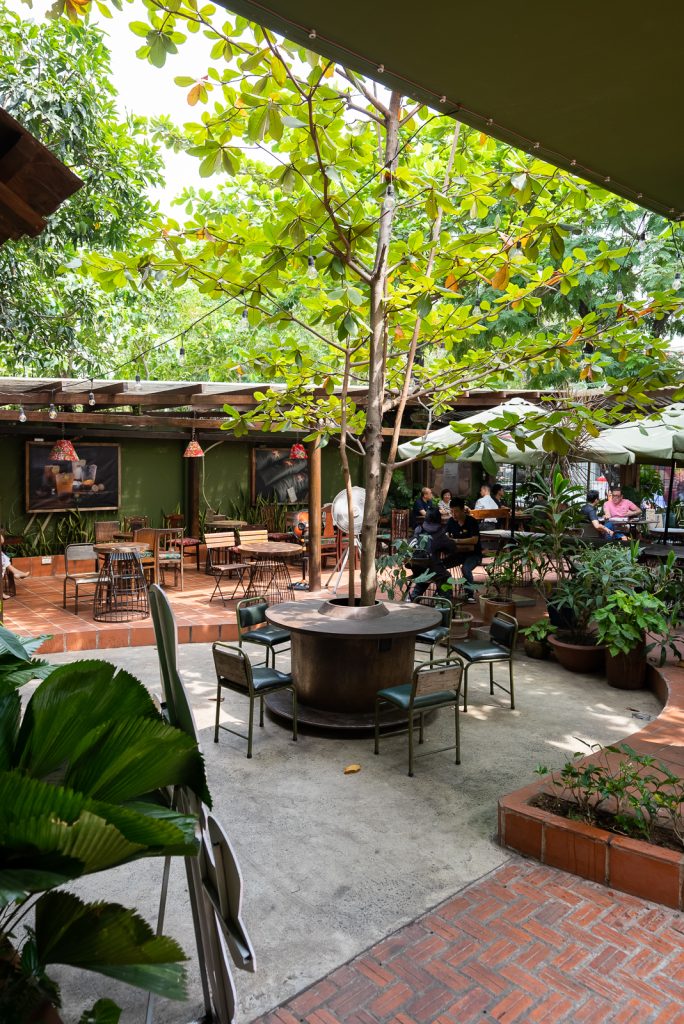
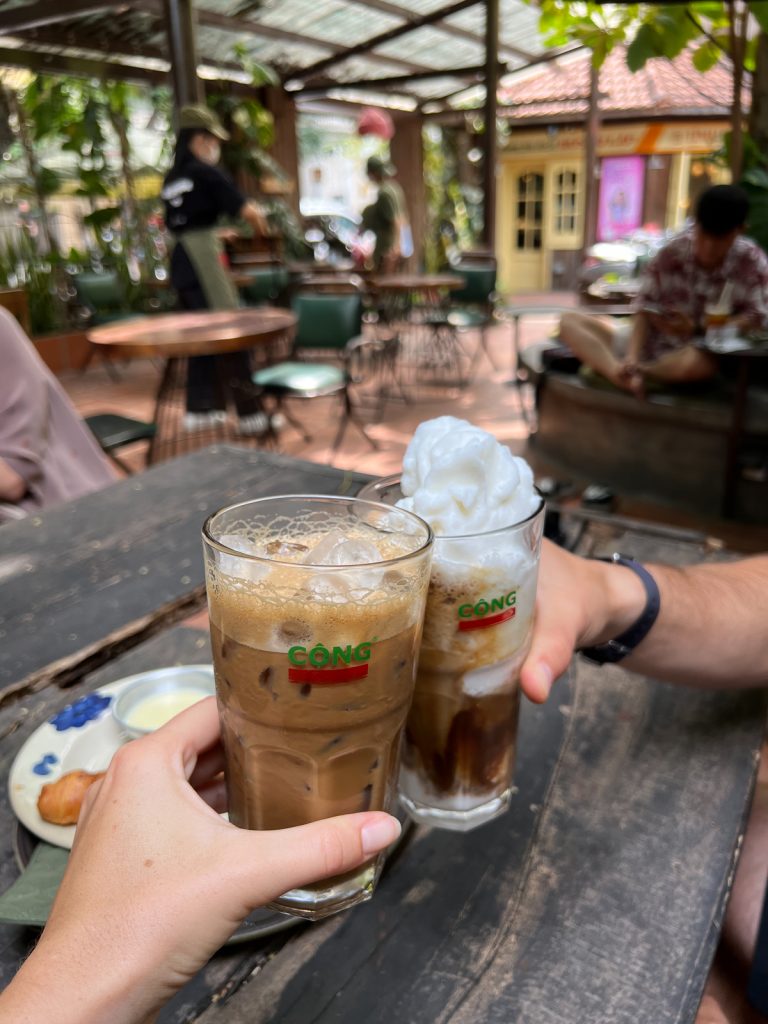
No matter what time of year you go, Ho Chi Minh City can be pretty warm. We loved spending our afternoons cooling off indoors or with a cold coffee! Besides Cà Phê Sữa Đá, another cold Vietnamese coffee drink we loved was coconut coffee.
Coconut coffee is basically a blended coconut slush with coffee. It is sweet, ice cold, and refreshing! One spot that we loved to get this drink from in Ho Chi Minh City was Cộng Cà phê.
Spend the afternoon and evening going on a street food tour
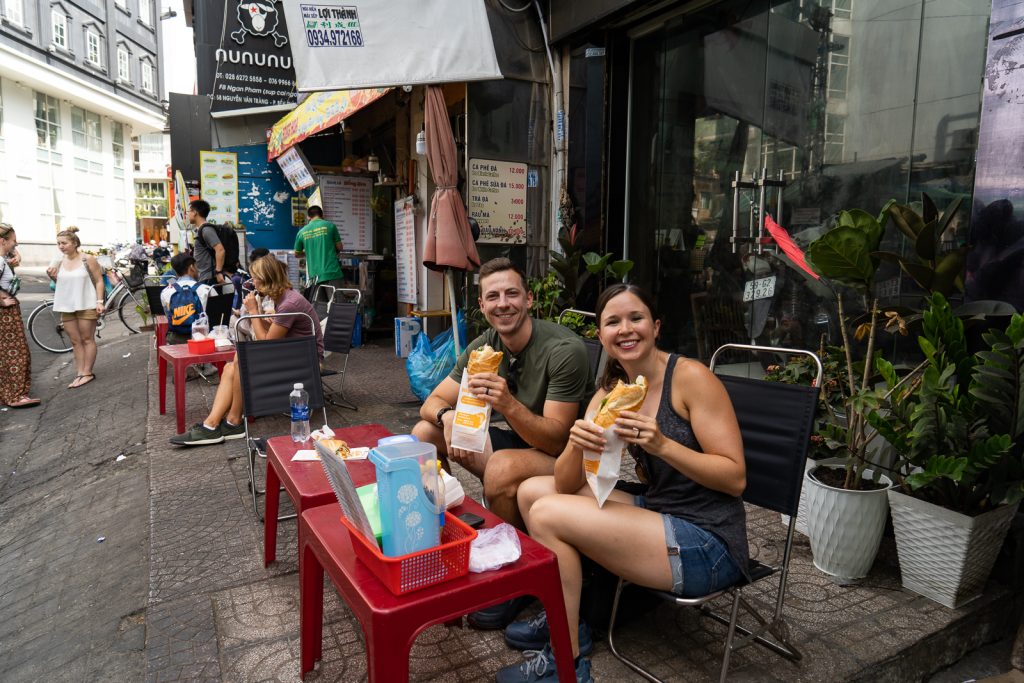
For the rest of the day, go on a street food tour! This is one of the BEST ways to experience Vietnam!
While we didn’t do an official food tour in Ho Chi Minh City, we did go on one in Hanoi, and it was one of the highlights of our trip. By going on a street food tour, you’ll get to experience local spots that you may not have visited otherwise (which have been vetted by a local), get to see more of the city, and will learn so much about Vietnamese food, Ho Chi Minh City, and Vietnam.
Here are some good looking food tour options in Ho Chi Minh City:
- Private Street Food Walking Tour: this one includes foods we haven’t listed already, including bo la lot (one of our favorites)!
- Ho Chi Minh Street Food Tour by Motorbike
- Private Street Food Tour by Motorbike/Car with Local Students
WARNING: Do not eat much before this!
Day 3
The final day on this Ho Chi Minh City itinerary will take you out of the city for a day trip, where you’ll get to experience more of the country’s history. And it’ll end with a fun, local picnic!
Take a day trip with a guide!
One great thing about Ho Chi Minh City is that there are a couple day trip options nearby, with the most popular being the Cu Chi Tunnels (what we did!) and the Mekong Delta. Below is a quick rundown of each and the different tour options you can choose from!
Cu Chi Tunnels
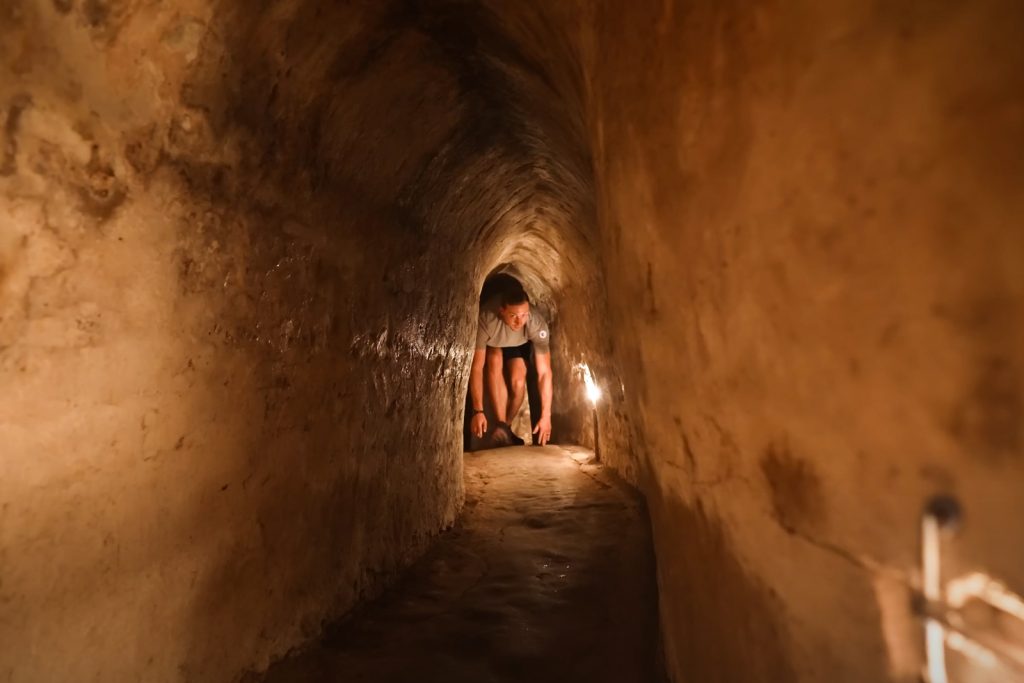
The Cu Chi Tunnels are located about 1.5 hours northwest from the center of Ho Chi Minh City. These are a huge network of tunnels that were used as a base of operations for the North Vietnamese forces during the war. They have a very interesting history and it is an enlightening experience learning about how the soldiers lived and survived in such harsh conditions.
At the tunnels you’ll learn their history, get to go inside a couple of them (they are tight!), and get to try some tapioca.
During our visit, we did a private tour through Saigon Adventure, which was great! We chose the morning tour, which we HIGHLY recommend because they get you to the tunnels before the large tour bus crowds. Plus it will be much cooler in the morning. The van ride (they call them limos) to and from the tunnels was very nice. You’ll travel through smaller communities and a forest of rubber trees along the way.
Some other tour options are this luxury tour by Vietnam Adventures and this small group tour by Kim Travel.
Want to save some money on this tour or experience? Join Tripadvisor Rewards to earn 5% Trip Cash on any hotel or experience booking made in their app, which can be applied to future in-app bookings!
Mekong Delta Tour
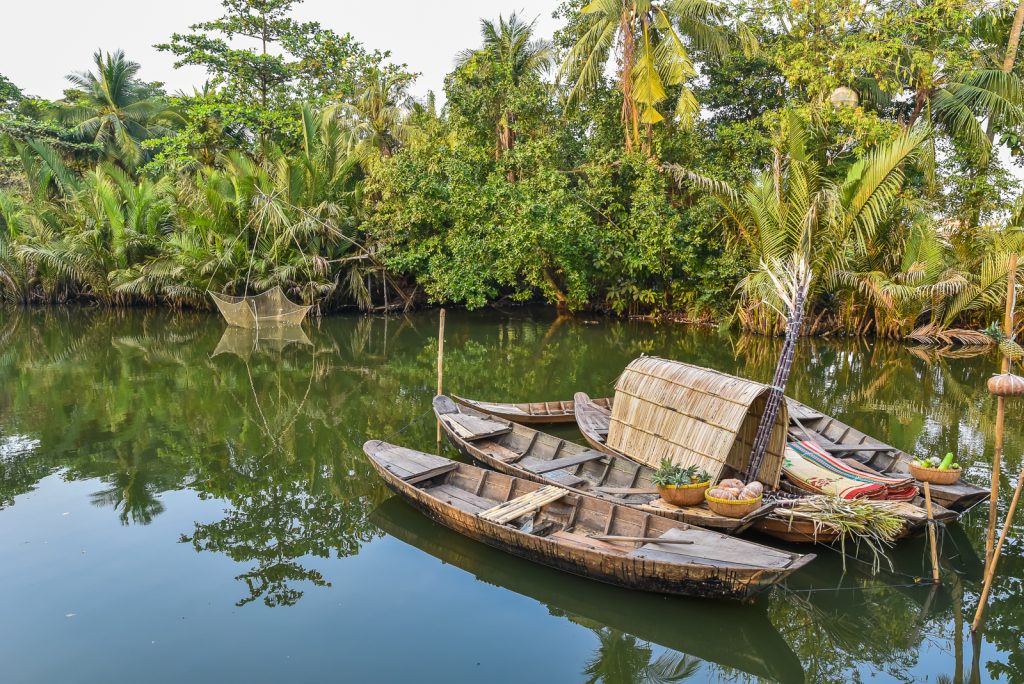
The Mekong Delta is a delta along the Mekong River with swamps, islands, and rich soil that makes it a great agricultural area.
On a full day Mekong Delta tour you’ll drive out to the Mekong Delta and hop on a small sampan boat that will take you by four different islands. You’ll learn about village life, stroll through the villages, sample fresh fruits, and listen to Vietnamese folk music. You’ll then ride on a smaller sampan that will row you through more narrow canals and have lunch at a local restaurant.
If you have more time, we’d highly suggest staying the night in the Mekong Delta. This tour is for 2 days and 1 night and will enable you to experience more of the delta and get a bit more off the beaten path.
Can you do the Cu Chi Tunnels and Mekong Delta in one day?
Technically, yes. This tour takes you to both in one day. However, you will spend a lot of time in the car and would have a more rushed experience at both sites. We’d personally suggest just picking one!
Have a sunset picnic beneath Landmark 81
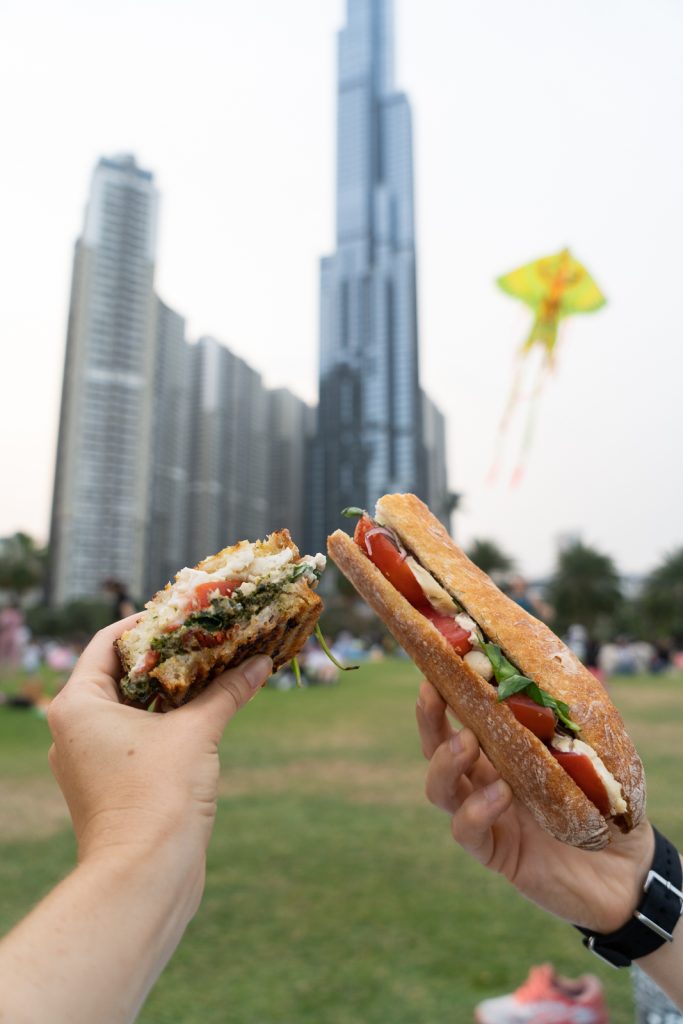


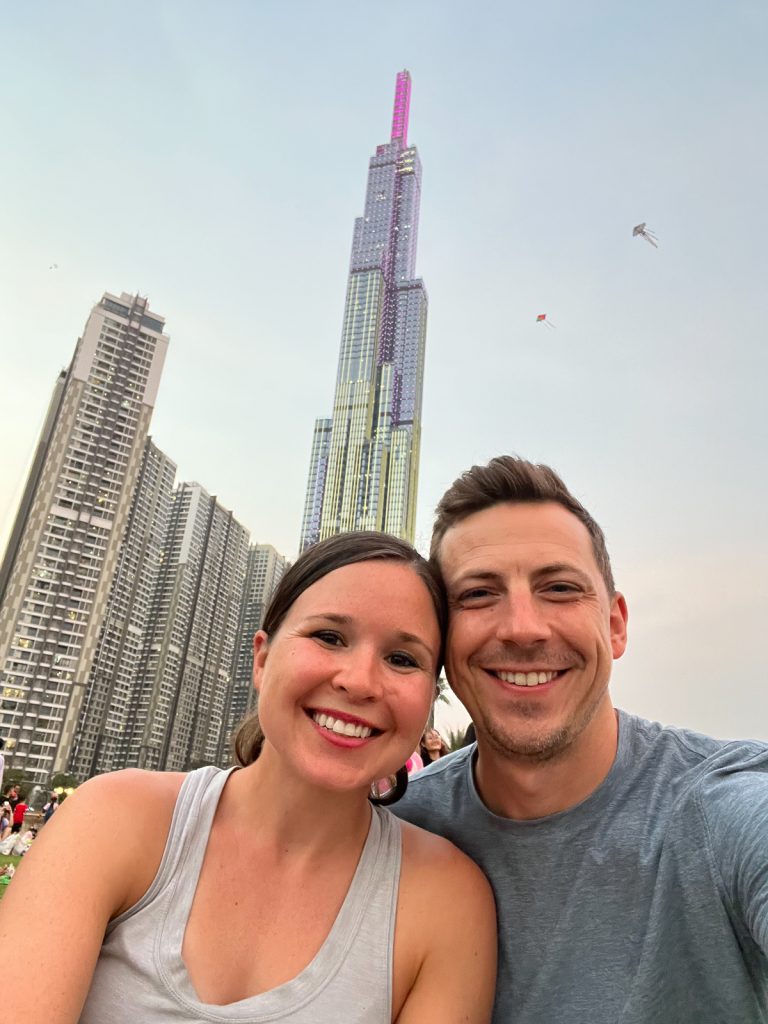
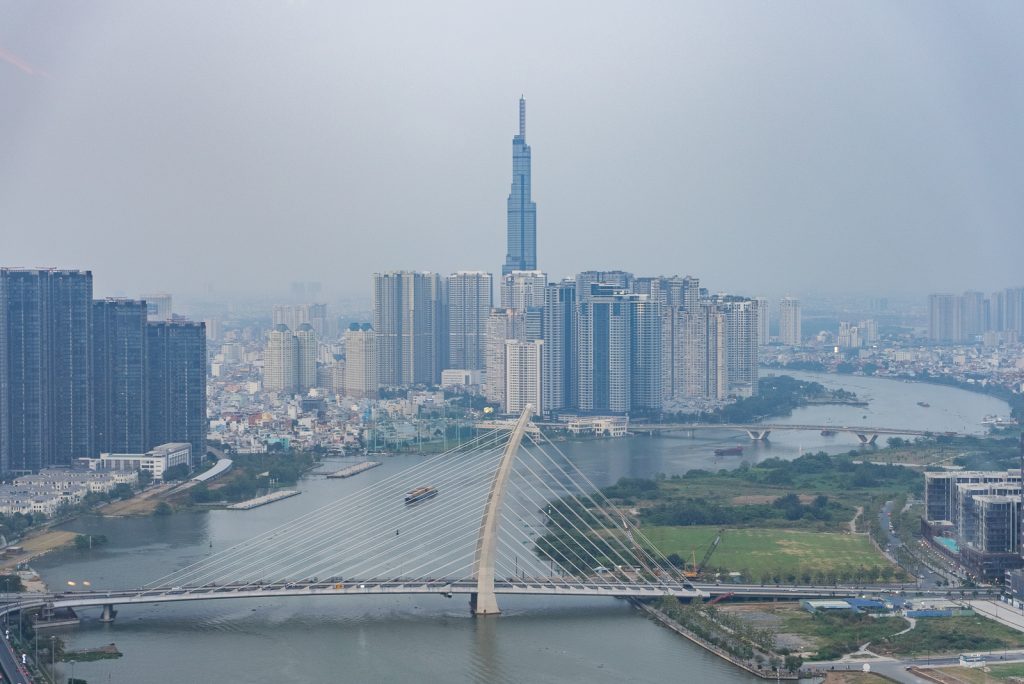
The perfect way to end your time in Ho Chi Minh City is a sunset picnic beneath Landmark 81! This is the tallest building in Vietnam, the second tallest building in Southeast Asia, and the world’s 17th tallest building.
Having a picnic here felt like a very local activity and is probably something we wouldn’t have thought to do on our own. So a big shout out to our local friends for taking us! We picked up sandwiches from Kashew, laid out a blanket, and enjoyed all of the people and families around us having a fun time and flying kites.
There were so many kites in the air, it was a spectacle! Beware though – kites weren’t the only thing flying through the air! As the sun sets, you’ll quickly start to see lots and lots of bats flying around. They dip and dive through the air and even swoop just over your head. We aren’t going to lie, it was a bit terrifying, but also a pretty memorable experience.
When to visit Ho Chi Minh City
Ho Chi Minh City can be visited year round, but each season brings different weather, which can impact your trip. Here’s a rundown of the three main seasons in Ho Chi Minh City and what to expect!
Dry Season (December to April)
Many consider this the best time to visit Vietnam because of the mostly pleasant weather. It’s the perfect weather for exploring the city and any other outdoor activities!
We visited Ho Chi Minh City in March and experienced some pretty warm (90ºF), but dry weather.
Tet Holiday
Keep in mind the Tet Holiday when visiting this time of year. Tet marks the first day of the Lunar New Year and is a huge week-long celebration across the country. While visiting during Tet can provide a unique glimpse into Vietnamese culture, it can also be more challenging.
Many Vietnamese return to their hometowns during this time. Transportation and lodging tend to be in high demand, so you would need to plan further in advance. Also, many businesses shut down for days to celebrate, so you may struggle to find dining options and activities open.
For 2026, Tet will begin on February 17, 2026.
Hot Season (April to June)
It will likely be very hot during these months with temperatures often over 100º and very humid. Being outside will not be a very pleasant experience and you’ll want to have plenty of indoor spots to escape to.
Rainy Season (July to November)
As the name implies, you will likely experience lots of heavy rain during this season. Temperatures are still very hot and it will be humid and the rain can lead to flooding both in and outside the city.
Getting to Ho Chi Minh City
Flying to Ho Chi Minh City
Flying to Ho Chi Minh City is very easy, as the city is home to the largest airport in the country, the Tan Son Nhat International Airport (SGN). It is located about 4 miles north of District 1, the main tourist area of Ho Chi Minh City.
Many major airlines fly to Ho Chi Minh City, both internationally and domestically. If arriving from outside of Vietnam, be warned that the immigration lines get VERY long here. And they move very slowly.
To leave the airport, we recommend taking a Grab, which is the main ride share service in Vietnam.

Train to Ho Chi Minh City
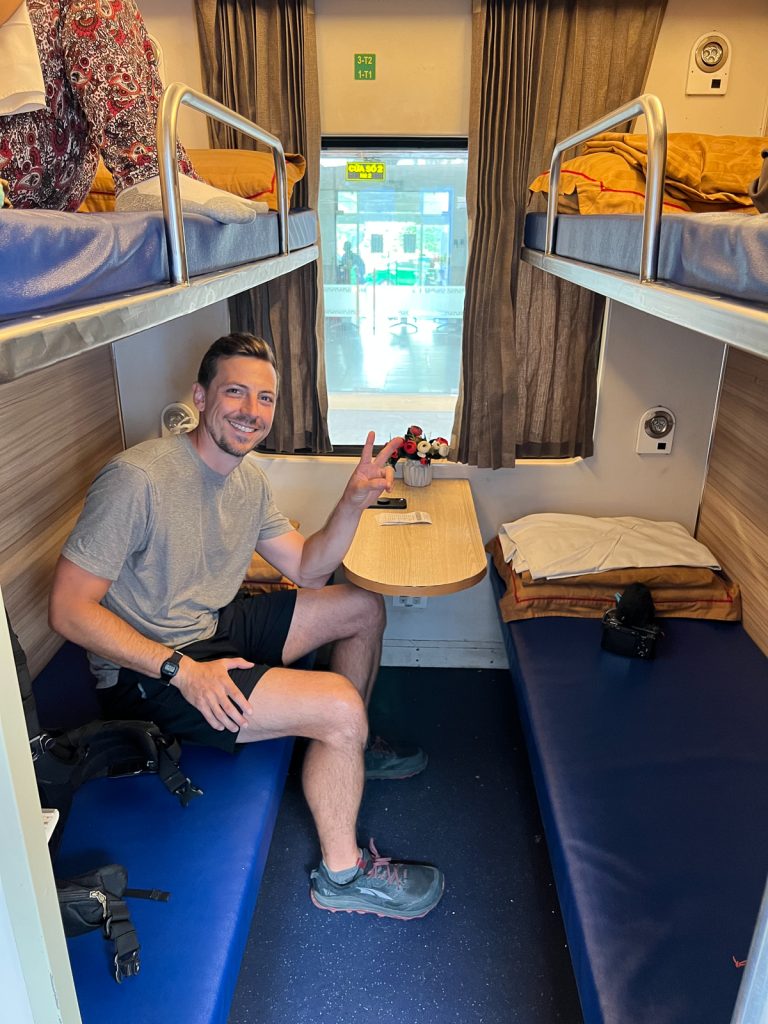
Another popular way to travel to and around Vietnam is by train. You can take a train to Ho Chi Minh City from many other destinations in Vietnam, such as Da Nang (17+ hours), Hue (21+ hours), and Hanoi (34+ hours).
This is the longer way to travel, but we really enjoyed getting to see the scenery from the train. We took one overnight sleeper train and multiple shorter trains throughout our time in Vietnam.
Read all about taking an overnight train in Vietnam, including the cabin types, how to book, and our experience!
How to get around Ho Chi Minh City
Walk
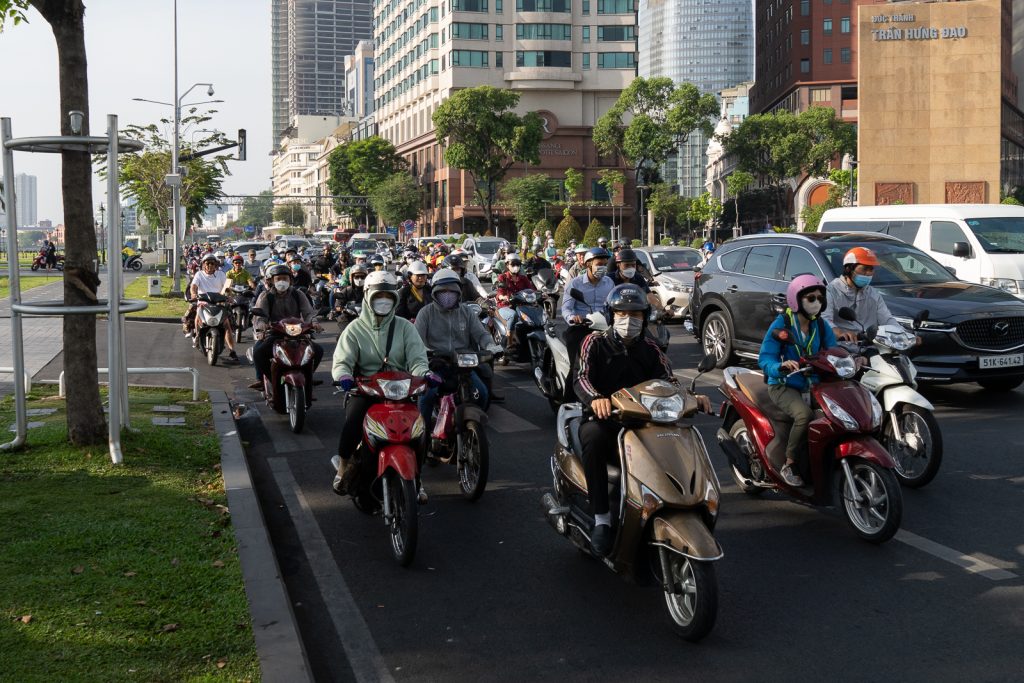
We loved walking around Ho Chi Minh City! The districts are all super walkable. So if the weather is nice and the distance isn’t too long, we highly recommend walking! Not only will it give you some exercise, but it will enable you to see things you may have missed otherwise.
Grab
Grab is the easiest and cheapest way to get around Ho Chi Minh City. It’s the Southeast Asia version of Uber or Lyft. We took Grab cars and Grab bikes just about anytime we needed to go somewhere that was too far to walk.
Rent a motorbike
One of the best ways to experience Vietnam is on a motorbike! You can either motorbike around the different cities on a GrabBike, rent a bike to explore the country, or hire a driver (called an Easy Rider).
If choosing to drive your own motorbike, make sure to check motorbike laws for your country’s driver’s license. You will very likely need an IDP, which is an International Driver’s Permit.
However, not all country’s IDPs are valid in Vietnam. Only IDPs from countries under the 1968 Vienna Convention are legal. And unfortunately for US, Canadian, and Australian citizens, your drivers licenses do not apply. The only way for these travelers to legally drive a motorbike without a license is to drive one 50ccs or less.
Also, whether you drive or are a passenger, helmets are required by law in Vietnam for anyone on a motorbike. So make sure to wear one!
Water taxi
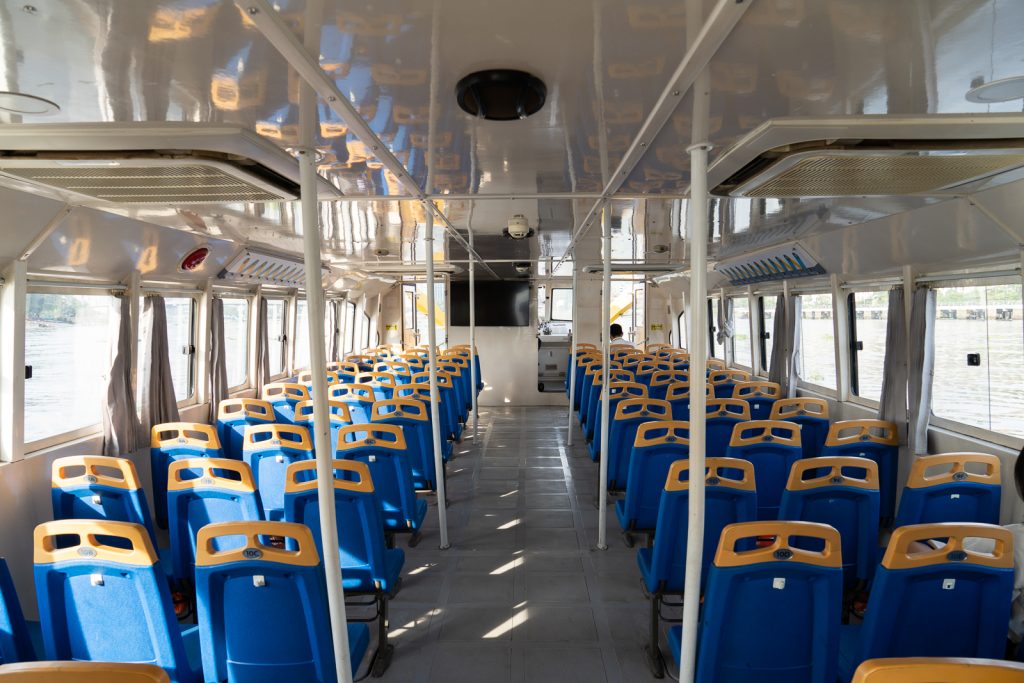
One fun way that we got around Ho Chi Minh City was on a water bus! Since our friends lived in District 2, we got on the water bus here and then got off here. It was a neat way to see the city!
Where to Stay in Ho Chi Minh City
Ho Chi Minh City is made up of 24 districts, but the most common for visitors to stay in are Districts 1, 2, and 3. Here is a rundown of each district and some lodging suggestions!
Note: While Vietnam is overall more affordable to visit, we did find the lodging prices in Ho Chi Minh City to be higher than other destinations in the country. If you really want to save money during your visit, the cheapest option would be to stay in a hostel!
District 1
This would be our top pick of places to stay while in Ho Chi Minh City due to its convenience! District 1 is the main business district and is where you’ll find most of the tourist attractions, including almost all of the stops on day 1 of this Ho Chi Minh City itinerary.
Hotels
Little Saigon Boutique Hotel
LOTTE Hotel Saigon
Auc Lac Charner Hotel
Intercontinental Saigon
Vacation Rentals
Rooftop Hidden Gem (1 bedroom, 1 bathroom)
Penthouse Suite with Rooftop Pool (2 bedrooms, 2 bathrooms)
Saigon Skyline Suite (3 bedrooms, 2 bathrooms)
District 2
Formerly one of the poorer neighborhoods in Ho Chi Minh City, District 2 has been completely revitalized over the past few years. It is now home to many expats and you’ll find lots of western food, trendy restaurants and bars, and international schools.
When we visited Ho Chi Minh City, we were visiting friends who lived in District 2, so this is where we stayed. And we really liked the vibe of it here! However staying here will require you to take a Grab quite a bit to get around.
Hotels
Vacation Rentals
Luxury Balcony (1 bedroom, 1.5 bathrooms)
ThaoDien apt near Landmark 81 (2 bedrooms, 2 bathrooms)
District 3
Right next to District 1 is District 3. This is where you’ll find the War Remnants Museum, so it’s still extremely walkable to many of the top attractions in District 1.
Hotels
ÊMM Hotel Saigon– We stayed here on our last night in Vietnam and it was great!
Sherwood Suites
Vacation Rentals
AustinHome (1 bedroom, 1 bathroom)
Saigon Center (3 bedrooms, 2 bathrooms)
Final tips for visiting Ho Chi Minh City
Before heading to Ho Chi Minh City we have a few final tips to help your time in both the city and Vietnam go a bit smoother. Some of these we had to learn the hard way (like the 5th one…yikes). To see more tips, check out our blog post, where we share 20+ things to know before you visit Vietnam!
Make sure you have a visa (if required)
As American citizens, we were required to get a visa. But depending on your nationality and length of visit, you may not need one.
While you can get a visa upon arrival, getting an e-visa in advance is much easier! To get an e-visa you will want to go to this website. Yes, it looks a tad outdated and sketchy, but this is the website run by the Vietnamese government. There are other websites that you can get your visa from, but they may charge more.
The e-visa costs $25 USD per person, which can be paid by credit card. You will need to provide your passport information, arrival and departure dates, and entry and exit points. You also have to provide a passport photo. We used this app to take photos at home.
After filling out the information, you will likely hear your results within 3 business days. We suggest planning for longer, just in case. Once approved, make sure to print it to bring with you!
Get an eSIM
Want to use your phone while in Vietnam? We highly recommend getting an eSIM from Airalo! This is a SIM that you can download to your phone. You can get an eSIM for a specific country or for an entire region, making it extra easy to use if you plan to hop between countries.
Note: this SIM only works for data, not calling. If you need to make a call, WhatsApp will be your best bet. More on that below!
Buy travel insurance
We never travel internationally without travel insurance. And SafetyWing is our go to!
SafetyWing is travel medical insurance that will cover you outside of your home country for however long you need it. We purchase their Nomad Insurance plan, which not only gives us travel medical insurance, but also provides coverage for lost baggage and travel delays!
Always have cash
While some places do take credit cards, we found that many restaurants, street food stalls, public restrooms, and even homestays will only take cash. For this guide, it’s a safe assumption that most food vendors will be cash only.
You can find ATMs all over town and we suggest going to a bank ATM for the best rates.
Carry toilet paper
Make sure to carry some toilet paper (or tissue) while out and about in Vietnam. Otherwise, you may get into a crappy situation…literally! We found bathroom conditions to vary a lot. And sometimes they either did not have toilet paper or you had to pay for it. While many toilets have bum guns (spray gun bidets), you will want something to dry off. Don’t ask how we know…
Use WhatsApp
WhatsApp is the go-to app for communicating while in Vietnam. Many lodging and tour companies use it to book things and communicate with you. Make sure to download it in advance and give any guides your number!
One perk of WhatsApp is that you can also make calls on the app. This is very helpful if you have a data-only eSIM!
Learn how to cross the street
Crosswalks really don’t mean much in Vietnam. Locals told us that the best way to cross the street is to just start walking. Look for a small window in traffic and walk at a consistent pace (don’t run or stop). The motorbikes will go around you. It feels unnatural, but it eventually gets easier.
planning a trip to Vietnam?
- eBook: The ULTIMATE guide to visiting Vietnam
- 3 week Vietnam Itinerary
- 2 week Vietnam Itinerary
- 12 best cities to visit in Vietnam
- The ULTIMATE Vietnam packing list
- The top 10+ Vietnamese foods you MUST try in Vietnam (& where to get them!)
- 3 days in Hanoi, Vietnam Itinerary
- 9+ AMAZING things to do in Ninh Binh
- 3 day Hoi An Itinerary
- 13+ things to do in Hoi An
- What to expect on a first class Vietnam Sleeper Train
- The ULTIMATE guide to planning a trip to Vietnam
- 20+ Vietnam tips: things to know before you go!
- WATCH: Our first time in Vietnam! Exploring Ho Chi Minh City
- Watch all of our Vietnam videos
Ready to explore Ho Chi Minh City?
Pin this 3 day Ho Chi Minh City itinerary to help plan your trip!