
Last updated on February 24th, 2026
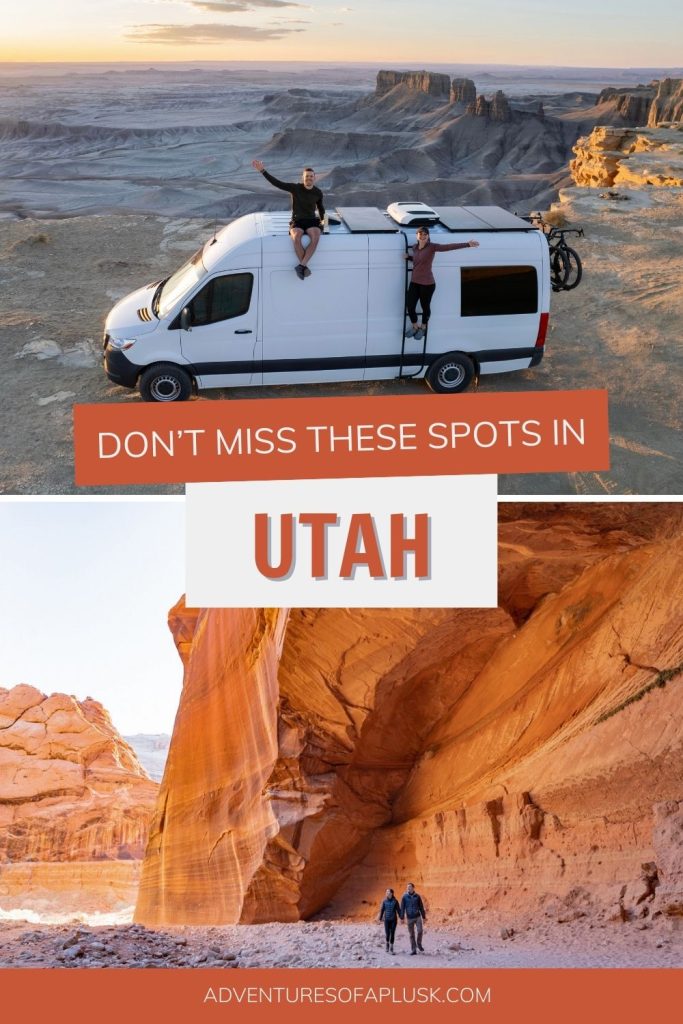
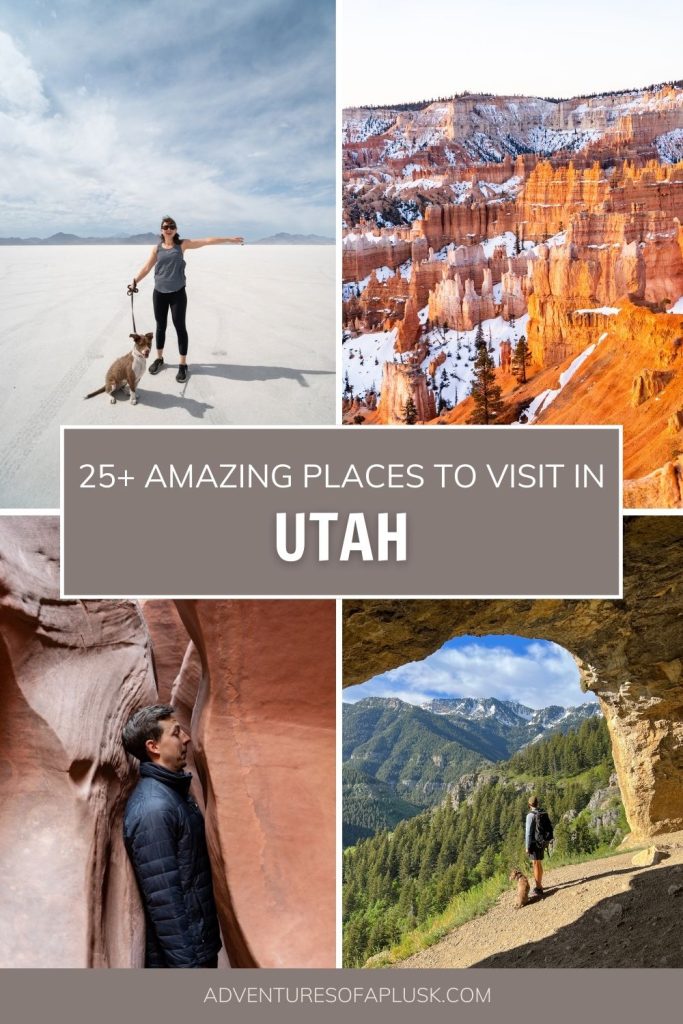
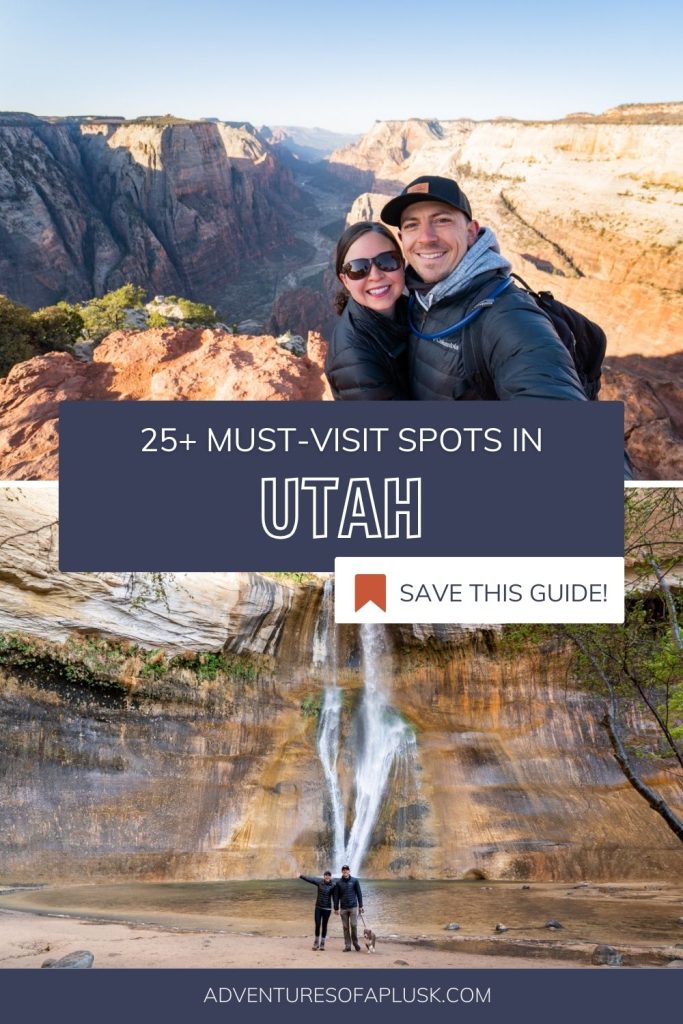
In this guide, we’re sharing 28 of the best places to visit in Utah. We’ll cover what we did, where we ate, and what made each place worth the stop.
Utah is one of the most visually mind-blowing places we’ve explored in the U.S. We may have started our adventure to see the Mighty Five national parks, but left completely obsessed with how wildly diverse the rest of the state is.
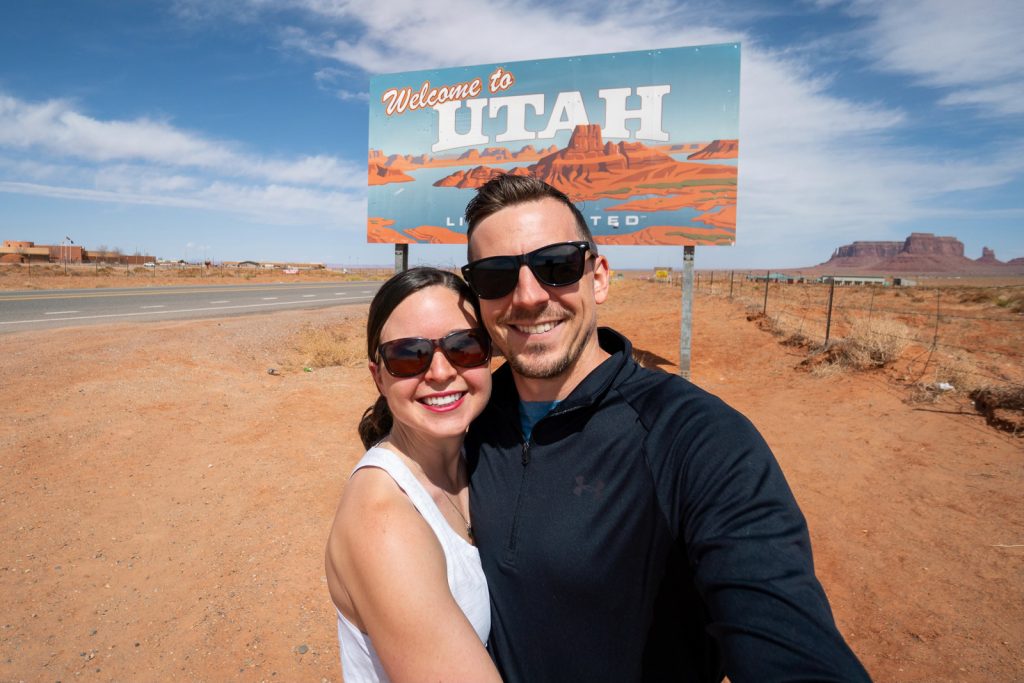
From red rocks and arches to towering hoodoos and otherworldly desert landscapes, to alpine mountains, geothermal hot springs, and salt flats that feel like another planet, there is just so much to see.
In this guide, we’re sharing 28 places we’ve personally explored and loved in Utah. You’ll find the popular parks, of course, but also some hidden gems we think deserve a spot on your itinerary. For each one, we’ll share what to do, where to eat, and what made the place memorable for us!
Looking for more things to do in Utah?
- The ULTIMATE Utah National Parks Road Trip Itinerary (10 days)
- The 15+ BEST things to do in Moab, Utah
- The 14 Best Things to Do in Zion National Park
- Arches National Park Itinerary: Spend One Day at Arches
- Capitol Reef National Park Itinerary: Spend 1-4 Days in the Park
- The Best Things to do in the Needles District at Canyonlands National Park
- 20 Best Things to Do at Capitol Reef National Park
- Visiting the Great Salt Lake: Things to do at Antelope Island State Park
- The Ultimate 3 Day Road Trip from Zion to Bryce Canyon National Park
- 10 Day Utah national Parks Road Trips Itinerary eBook
28 Places to Visit in Utah
Want to Learn More as you explore?
We highly suggest downloading the Guide Along – Utah Bundle audio tours (totally worth the cost!) to navigate you on the road. Even when you don’t have service it knows where you are and provides commentary and history about the area. Plus it will alert you when to stop for specific sights. These guides are interesting to listen to and the narrator feels like a fun friend in the car with you!
Utah National Parks

1. Zion National Park
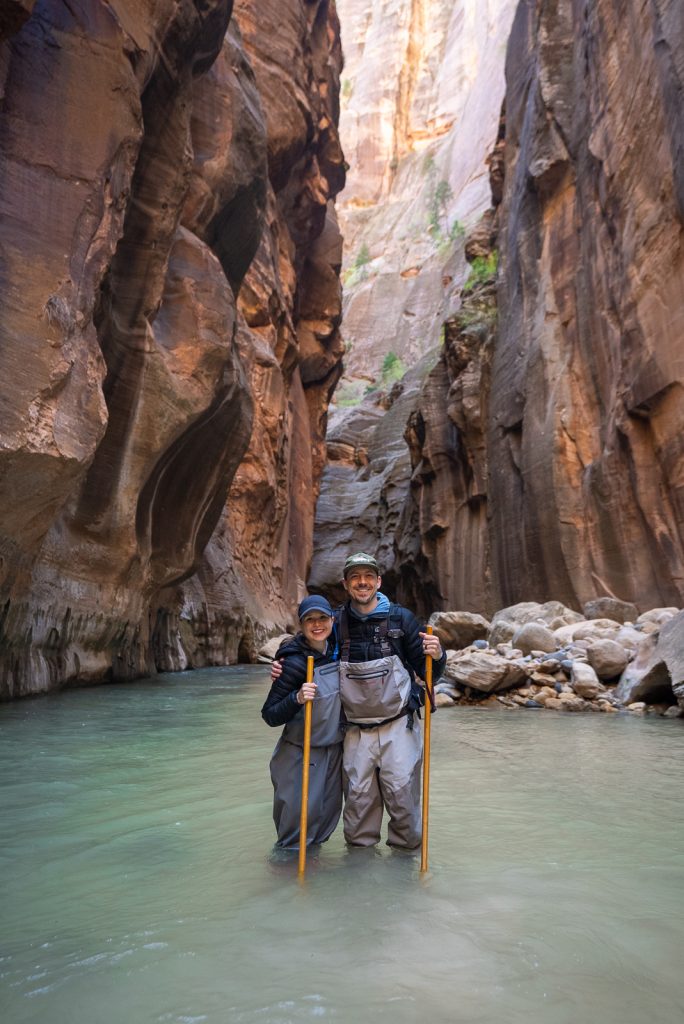
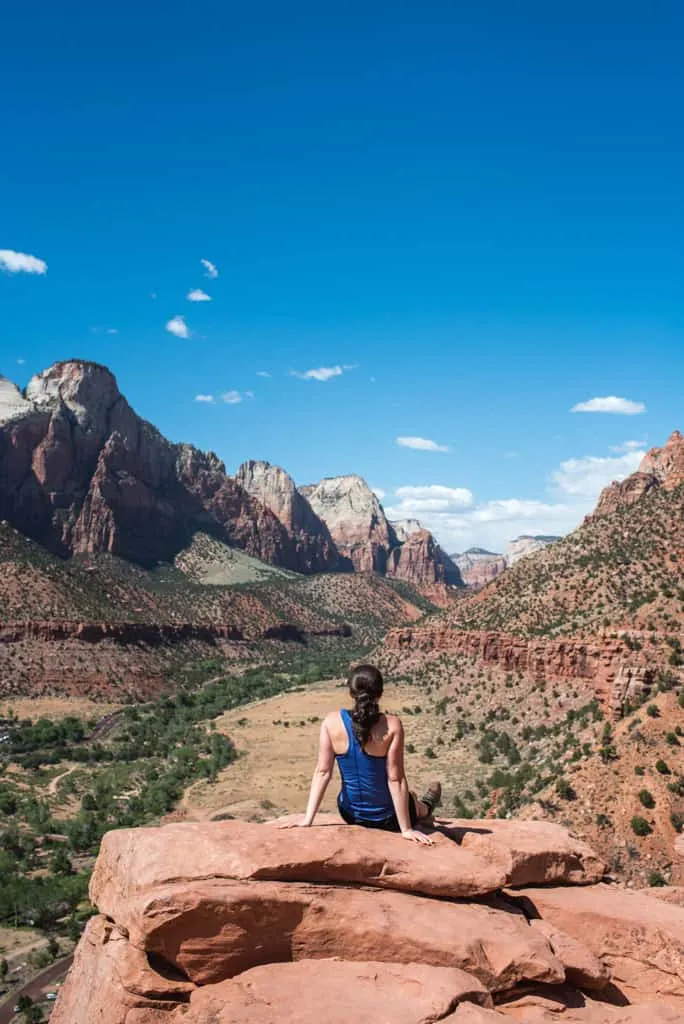
Zion was our first Utah national park. And after visiting, it immediately became one of our favorite places to visit in Utah! We’ve now been three times and each time we’re reminded why this park is one of the most popular in the country. With gorgeous red cliffs, narrow slot canyons, and the Virgin River winding through the valley, Zion feels dramatic in a way that’s hard to fully capture until you’re there.
Some of our favorite hikes include:
Canyon Overlook Trail (1 mile): This short hike packs in one of the best views in the park. It’s located on the east side of Zion Canyon, just past the Zion-Mount Carmel Tunnel. The trail is short but does have a few narrow sections along the cliff.
East Mesa Trail to Observation Point (7 miles):This is hands down one of our favorite hikes in Zion. Instead of climbing up from the canyon floor, this trail approaches Observation Point from the east side of the park. From the overlook, you can see the entire canyon, Angel’s Landing below, and the Watchman in the distance.
Watchman Trail (3.3 miles): Starting near the visitor center, this trail doesn’t require a shuttle. it is a great option if you want a shorter hike with big views. We did this one at sunset!
After long days of hiking, we really appreciated how close Zion is to good food. In Springdale, Deep Creek Coffee was a favorite for breakfast and coffee. Oscar’s Café is a great spot for a filling meal after hiking!
We’ve written a bunch of guides for Zion, including how to hike Observation Point (our favorite view in the park), everything you need to know about hiking The Narrows, and a full 2-day itinerary to help you plan your visit.
2. Bryce Canyon National Park


Bryce Canyon National Park is easily one of the best places to visit in Utah if you love a landscape that feels like it belongs on another planet! Despite the name, it’s not a canyon at all, but a collection of natural amphitheaters lined with thousands of towering rock spires called hoodoos. And while the views from above are incredible, we’ve found that the real magic happens when you hike down into the hoodoos and wander among them.
We’ve been to Bryce Canyon three times now, including once with a dusting of snow. It was absolutely freezing, but totally worth bundling up for.
Here are a few of our favorite trails if you’re heading to Bryce:
Navajo / Queen’s Garden Loop (3 miles): This is a moderate loop with switchbacks through towering hoodoos, walk-through archways, and epic views of formations like Thor’s Hammer.
Figure Eight Trail (6.4 miles): If you want to pack in a lot of Bryce’s highlights into one hike, this loop connects the Navajo, Queen’s Garden, and Peekaboo Loop trails. It’s a longer, harder hike with some steep climbs, but it takes you through some of the most condensed, colorful parts of the park.
Mossy Cave Trail (0.9 miles):This short and easy hike is outside the main area of the park, but definitely worth the short drive. The trail leads to a small mossy cave and, depending on the time of year, a surprising little waterfall. The waterfall exists because of a hand-dug irrigation ditch from the 1800s that still brings water to nearby towns. We loved this hike in winter too!
Rim Trail (1.2 miles): The paved section between Sunrise and Sunset Points is perfect for sunrise!
After a day of hiking, we found Valhalla Pizza, tucked behind the lodge. A hot pizza that tasted amazing after 12 miles on our feet!
Check out our one-day itinerary for Bryce Canyon, plus a detailed guide to the best hikes in Bryce Canyon. We also filmed a video during one of our visits where you can watch our experience in the park!
3. Capitol Reef National Park


Capitol Reef is one of the most underrated places to visit in Utah. This park is centered around a long stretch of uplifted rock called the Waterpocket Fold, which runs for almost 100 miles. The main area near Fruita is the most accessible and packed with tons of natural and historic spots. But if you have time, we highly recommend exploring a little further out too.
There are a bunch of great trails in the park including:
Navajo Knobs Trail (9.2 miles): Our top hike in the park! It’s long and steep, but you get to see the whole Waterpocket Fold stretching out in every direction.
Hickman Bridge (1.8 miles): A shorter trail that leads to a massive natural arch and some fun viewpoints along the way.
Cassidy Arch (3.3 miles): Named after Butch Cassidy (an outlaw who had a hideout in the area), this trail climbs up to an arch you can actually walk on, which is kind of wild.
If you need a break from hiking, the Capitol Reef Scenic Drive (7.9 miles one way) winds past cliffs, domes, and canyon walls. You can stop along the way to explore areas like Capitol Gorge.
The Fruita Historic District is part of the park that was once a small Mormon settlement, and the NPS still maintains over 1,900 fruit trees that you can pick from in season. Make sure to visit the Gifford Homestead, where you can get locally made pie and ice cream. It may be one of the best food stops in any national park!
Watch how we spent 24 hours in Capitol Reef in this video! Or for detailed guides, check out our list of the 20 best things to do in Capitol Reef and a 1–4 day itinerary to help you build your perfect trip.
4. Arches National Park


Arches National Park is home to over 2,000 natural stone arches, each one shaped by millions of years of erosion and weathering. While we have been to Moab many times, it took us a few trips to finally get to Arches, and it totally lived up to the hype.
Some of our favorite hikes in Arches include:
Delicate Arch Trail (3.3 miles): A steep but unforgettable hike to the park’s most iconic landmark.
Devils Garden Loop (8.1 miles): Our favorite hike in the park! This adventurous loop passes eight arches, including Landscape Arch, Partition Arch, and Double O Arch, and includes some rock scrambling and a fun primitive section.
Double Arch (0.6 miles): Two arches sharing the same base, forming one of the largest spans in the park.
The Windows and Turret Arch (1.1 miles): A short loop that includes two window-like arches and the turret-shaped arch.
Besides hiking, you can drive the full Arches Scenic Drive (19 miles), which winds past rock formations, overlooks, and trailheads. One of the best overlooks was the La Sal Mountains Viewpoint, especially early in the day. We also explored the Garden of Eden and Skyline Arch.
In Moab, Thai Bella is one of our go-tos. The penang curry and khao soi were delicious. We also love stopping at Moab Garage Co for coffee and breakfast!
Planning a trip to Arches? Check out our guide to the 15+ best things to do, top hikes in the park, a one-day itinerary, and watch our full experience in this video!
5. Canyonlands National Park
Canyonlands is the largest national park in Utah, and it’s split into multiple districts, with Island in the Sky and The Needles being the most accessible. They’re technically part of the same park, but the experiences in each feel totally different.


Island in the Sky
Island in the Sky sits on top of a massive mesa, offering panoramic views over the canyons carved by the Colorado and Green Rivers. This is the most visited part of the park and is an easy day trip from Moab. We visited for sunrise at Mesa Arch and drove the scenic road to various overlooks.
Some hikes we loved in Island in the Sky:
Mesa Arch (0.6 miles): This is a short hike to a cliffside arch that’s especially stunning at sunrise.
Grand View Point Trail (1.9 miles): This hike follows the canyon rim with sweeping views the entire way.
Upheaval Dome (1.3 miles): A short but steep trail to a strange, crater-like formation scientists are still debating about.


The Needles
The Needles is located in the southeastern part of the park and feels much more remote. It’s known for its colorful rock spires, slot canyons, and backcountry trails. We camped nearby and spent a full day exploring this area.
Some hikes we loved in the Needles:
Druid Arch to Chesler Park Loop (14.3 miles): This is hands down the best hike in the park. There is tons of variety, epic views, and even a fun slot canyon section. If the full hike is too long, you can just hike to Druid Arch or Chesler Park.
Cave Spring Trail (0.6 miles): A short loop with a historic cowboy camp and some ancient rock art.
Pothole Point (0.5 miles): A quick trail with views of the Needles formations and cool little pothole ecosystems after it rains.
Canyonlands is huge, so let us help you plan your visit! Check out our guides to 25 things to do in Island in the Sky and the best things to do in the Needles District. You can also watch our Island in the Sky video and Needles District video to see what it’s like to explore each area!

Southern Utah
6. Lone Rock Beach
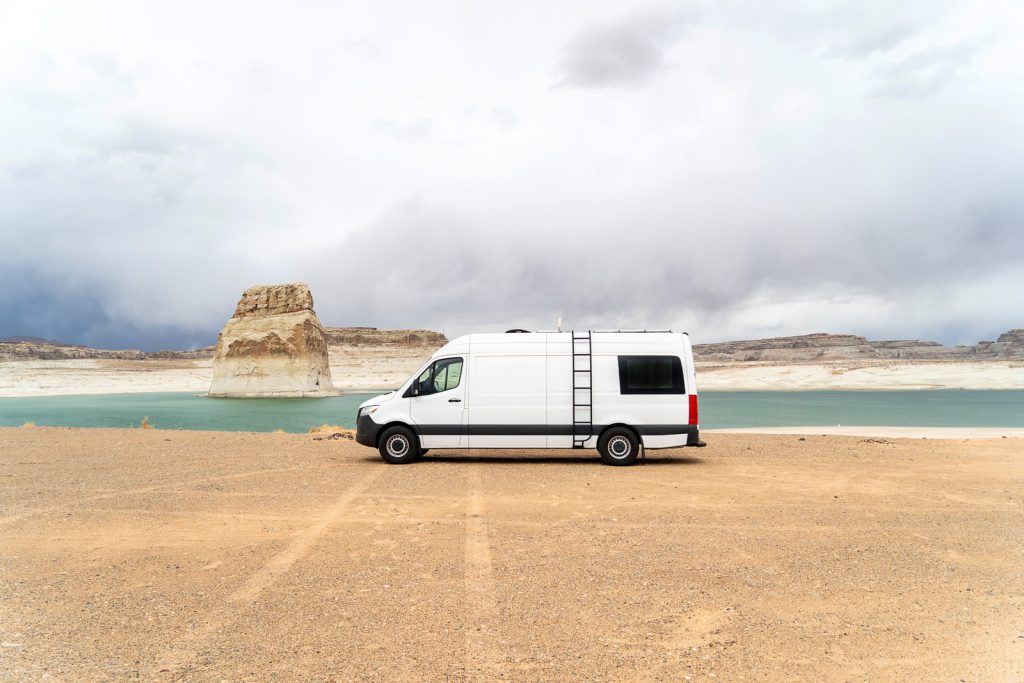
Tucked along the shores of Lake Powell just over the Utah border, Lone Rock Beach is a wide open stretch of sand with endless views, turquoise water, and a big rock rising straight out of the lake. It’s technically part of Glen Canyon National Recreation Area, and it’s one of the few places in the U.S. where you can drive and camp right on the beach, making it one of the best places to camp in Utah!
There is a fee to visit Lone Rock Beach ($30 per vehicle), plus a $14/night camping fee. The entrance fee is free if you have the America the Beautiful Pass.
Utah is definitely the BEST state for camping and boondocking. On our sister website, Stoked to Camp, we have guide to the best campsites in Utah!
7. Grand Staircase-Escalante National Monument



Spanning over a million acres of rugged canyons, cliffs, and mesas, Grand Staircase-Escalante is one of the most wild and remote places in Utah. You can access it from either the north near Boulder and Escalante or from the south near Kanab, and no matter which direction you come from, you’ll find some of the most unique and adventurous hikes in the state.
Some of our favorite hikes in the monument include:
Lower Calf Creek Falls (6.2 miles): A scenic trail that ends at a stunning waterfall in the middle of the desert. We started early to beat the crowds and were blown away by how massive the falls are.
Peekaboo & Spooky Slot Canyons (6.5 miles): This adventurous loop takes you through two narrow, twisting slot canyons. There’s some climbing and squeezing involved, but it was one of the most fun hikes we’ve ever done.
Buckskin Gulch (11.9 miles): One of the longest and deepest slot canyons in the world. We’ve hiked a portion before and it’s a bucket list-worthy experience.
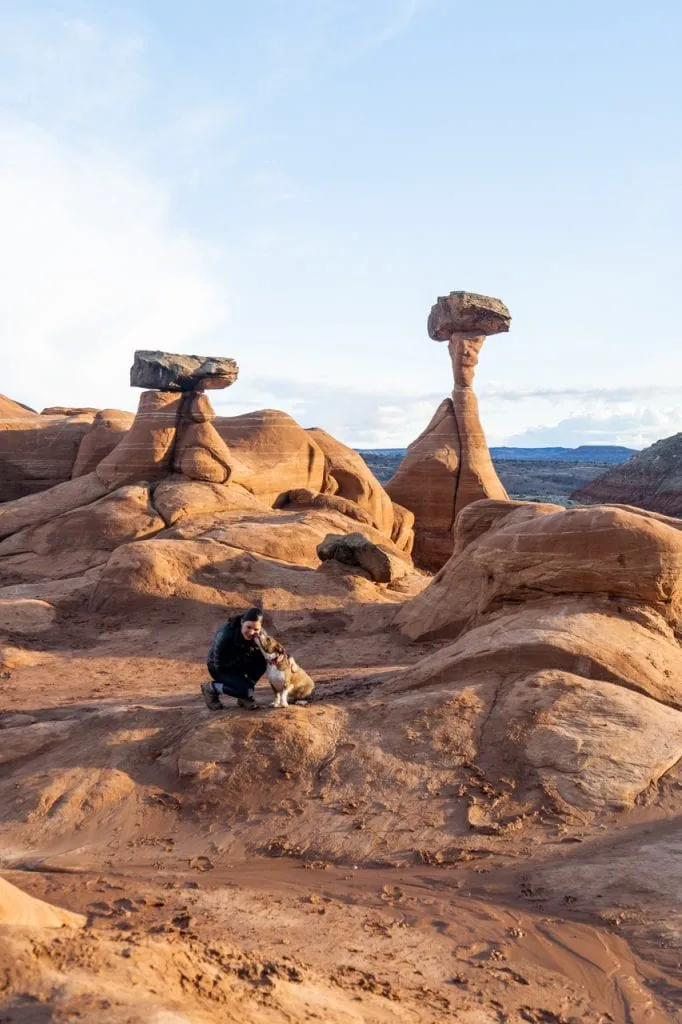
Toadstool Hoodoos (1.7 miles): A short hike just off Highway 89 that leads to funky hoodoo formations that look like giant mushrooms.
If you don’t feel like hiking, the Burr Trail Scenic Drive is an epic way to see the landscape. It winds through narrow canyons, slickrock, and massive cliffs.
For food, we loved Magnolia’s Kitchen, a bright blue school bus turned food truck serving up fantastic breakfast burritos and tacos. And Kiva Koffeehouse might be one of the best coffee views we’ve ever had! It’s built right into the cliffside and overlooks the whole valley.
We’ve created detailed guides for Lower Calf Creek Falls, Wire Pass to Buckskin Gulch, and the Peek-A-Boo and Spooky Slot Canyons, covering trail conditions, permits, and everything you need to know before you go. Or watch our full adventure in this video!
8. Kanab

Tucked between some of the Southwest’s most iconic landscapes, Kanab is one of our favorite adventure destinations in Utah. We spent over a week here and barely scratched the surface. With sand dunes, caves, hoodoos, and easy access to national parks, Kanab makes the perfect basecamp for Southern Utah exploring.
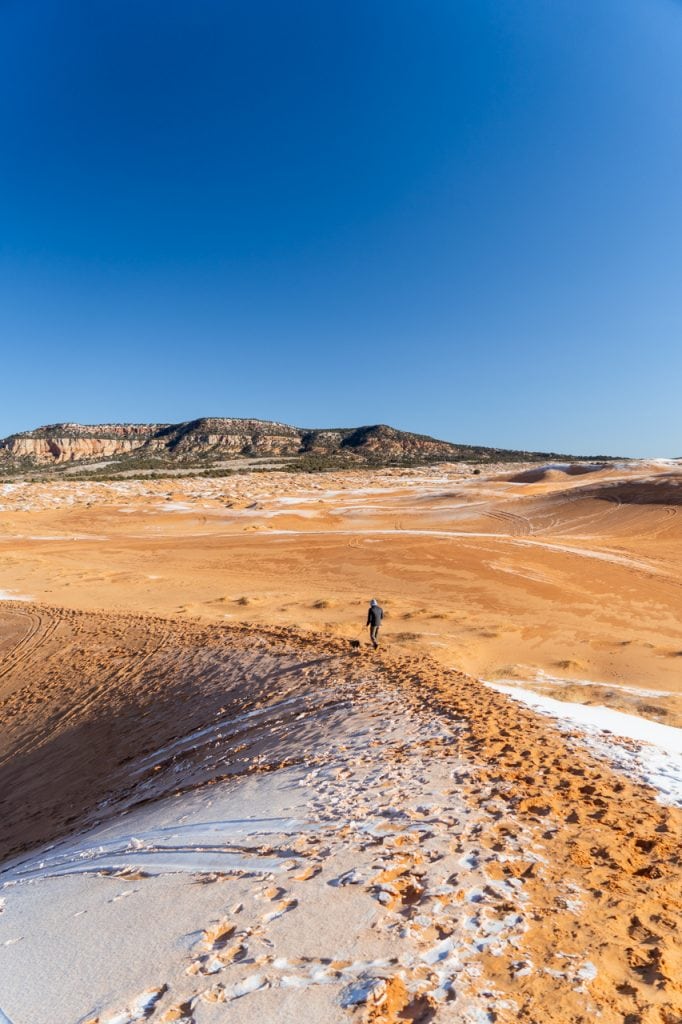
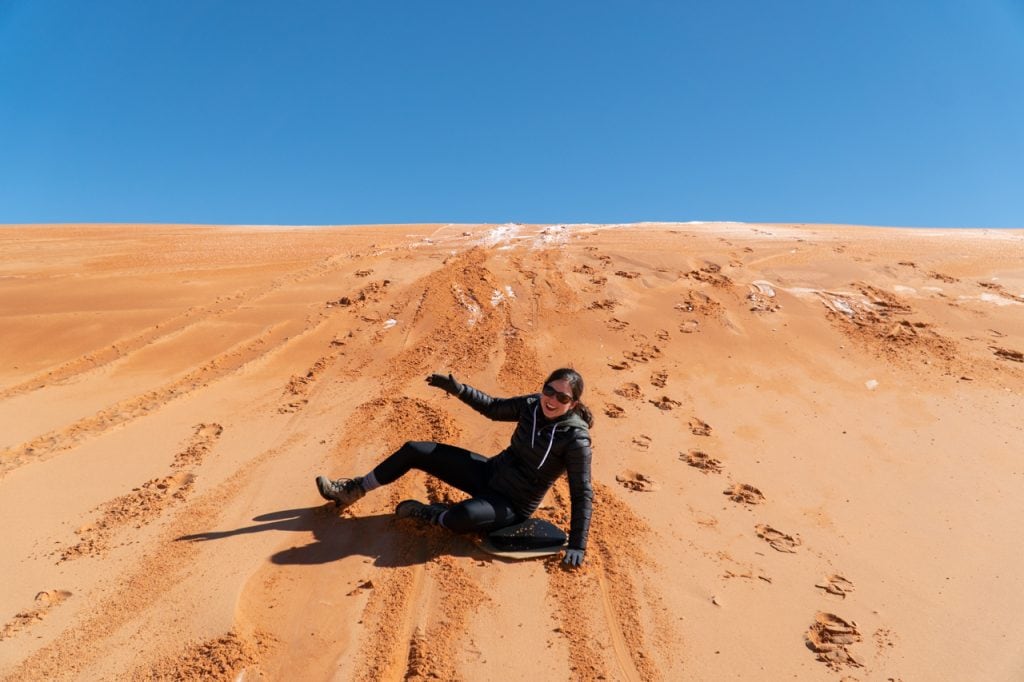
One of the most fun things we did in the area was visit Coral Pink Sand Dunes State Park. The dunes get their color from the surrounding pink-hued Navajo sandstone, and while they’re not the tallest we’ve seen, they are gorgeous. We rented a sand sled and spent the morning flying down the dunes and laughing the whole time. It’s $10 to enter and about 30 minutes from town.
Another unique stop is the Sand Caves, which are manmade caves carved in the 1970s and are free to explore. You do have to climb a sloped sandstone wall to reach them, but once you’re inside, you’ll find soft sand, giant cave openings, and views out over the highway.
In town, Kanab has surprisingly good food and coffee. We loved Rocking V Cafe for dinner, especially the deep dish veggie enchiladas and the Kanabadabadoo burger. For coffee and a light breakfast, Kanab Creek Bakery and Willow Canyon Outdoor were both delicious stops. There’s also Peekaboo Canyon Wood Fired Kitchen for vegetarian options.
We share even more things to do in our full Kanab guide, including places like White Pocket and The Wave (if you can snag a permit!). Watch our Kanab adventure in this video!
9. St. George
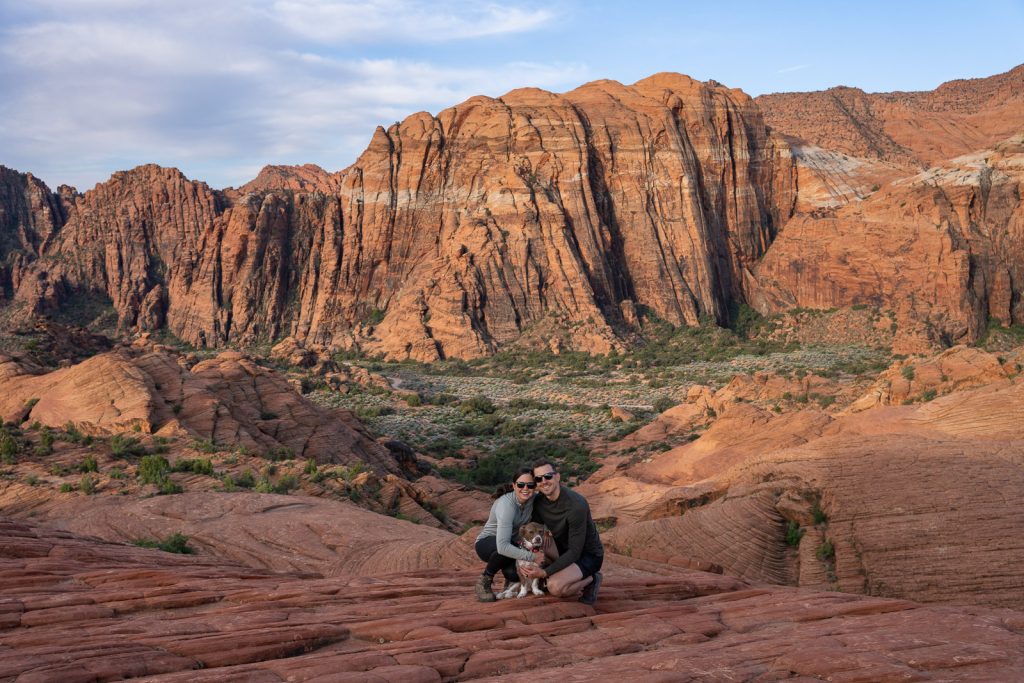
St. George is one of the most popular places to visit in Utah, and it’s easy to see why. With red rock landscapes, palm trees, and almost year-round sunshine, it feels more like Arizona than the rest of Utah. We’ve stopped here a few times while exploring Southern Utah and love how much there is to do, both in nature and in town.
One of the biggest highlights nearby is Snow Canyon State Park. It’s often overshadowed by the national parks, but we think it’s just as stunning. The landscape is a mix of red and white sandstone cliffs, lava fields, and winding slot canyons, and there’s a whole network of hiking and biking trails to explore too. We absolutely loved the Loop Hike we did to see petrified dunes and lava tubes! Make sure to stop at FeelLove Coffee near the park entrance for a latte with one of the prettiest canyon views.
Beyond Snow Canyon, you can head to Red Cliffs Desert Reserve, which has miles of trails, slot canyons, and a chance to spot desert tortoises. And if you’re up for a mini day trip, Gunlock State Park and Sand Hollow State Park are both under 30 minutes from town. Gunlock is especially beautiful in the spring when the waterfalls are flowing over the red rocks.
10. Kanarra Falls


If you’re looking for a Narrows-style adventure without the Zion crowds, Kanarra Falls is the perfect alternative! Located just outside Zion National Park in the small town of Kanarraville, this permit-only trail includes creek crossings, a slot canyon, and a metal staircase beside a waterfall. It’s a blast!
The trail is 3.7 miles round trip with a little over 656 feet of elevation gain, but you don’t need to hike the whole thing to enjoy it. We hiked to the second waterfall and turned around.
Permits are required and often sell out weeks in advance. They cap the number of hikers at 150 per day, which keeps the trail from getting too crowded. Dogs aren’t allowed, and you’ll want to pack light and wear water-appropriate shoes. We grabbed neoprene socks last minute at Ace Hardware, which helped a lot.
After your hike, grab a post-hike treat at the Kanarra Falls Snackery!
We cover everything you need to know, including permits, gear, and tips, in our guide to hiking Kanarra Falls.
11. Parowan
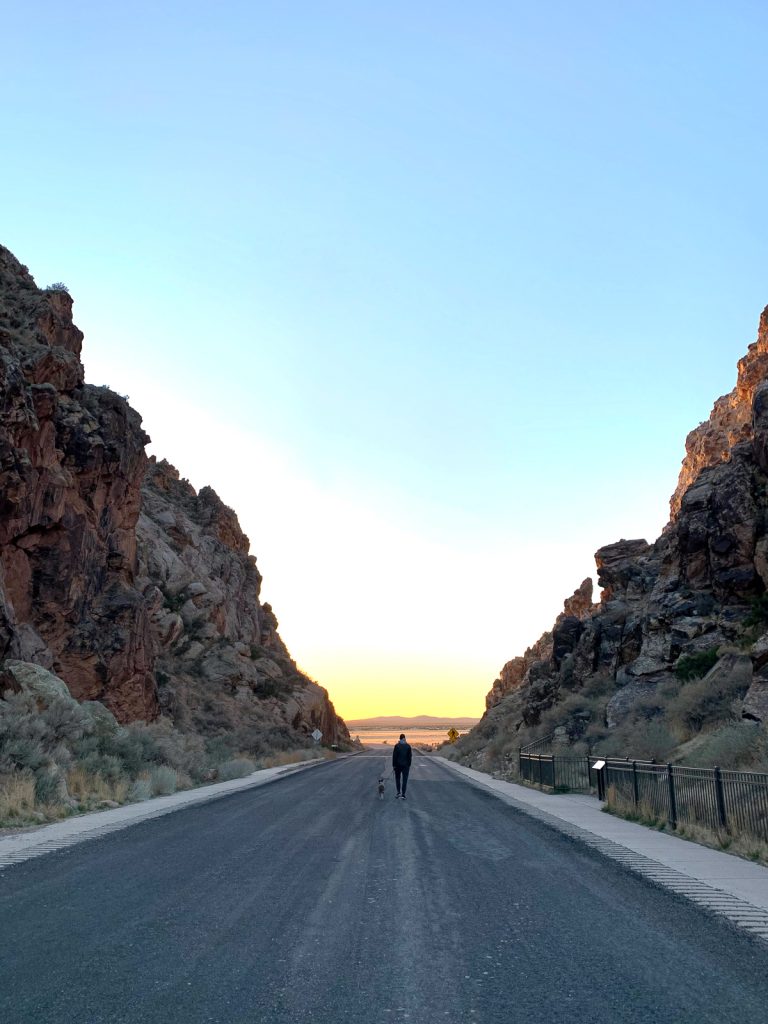
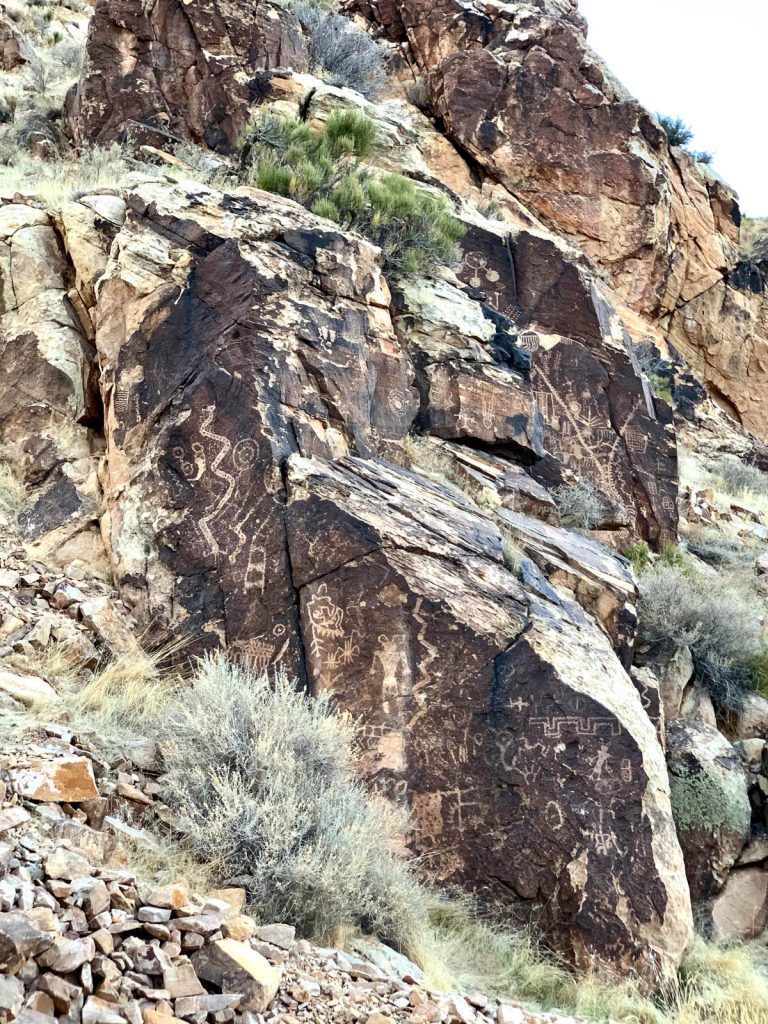
Located just northeast of Cedar City, Parowan is considered the “Mother Town of Southern Utah,” with roots dating back to 1851. The town is full of pioneer history, with over 40 preserved buildings and heritage sites. One of the most notable is the Old Rock Church, the oldest church building in southern Utah, which now serves as a museum.
While the historic charm is reason enough to visit, it’s also home to one very important thing… cinnamon rolls! You can follow a full “Sweet Tour” in town, where multiple spots serve cinnamon roll-inspired treats. DeDe’s Farmhouse Cafe and Parowan Cafe are both popular choices!
And if you’re into ancient history, don’t miss the Parowan Gap Petroglyphs, just outside of town. This short, paved walk leads you past over 1,500 remarkably well-preserved rock carvings dating back thousands of years. It’s one of the largest concentrations of petroglyphs in the West!
Just up the road is Brian Head Resort, Utah’s highest-elevation ski area. Instead of skiing, we opted for snow tubing and had an absolute blast flying down the hill, followed, of course, by hot chocolate.
12. Cedar Breaks National Monument
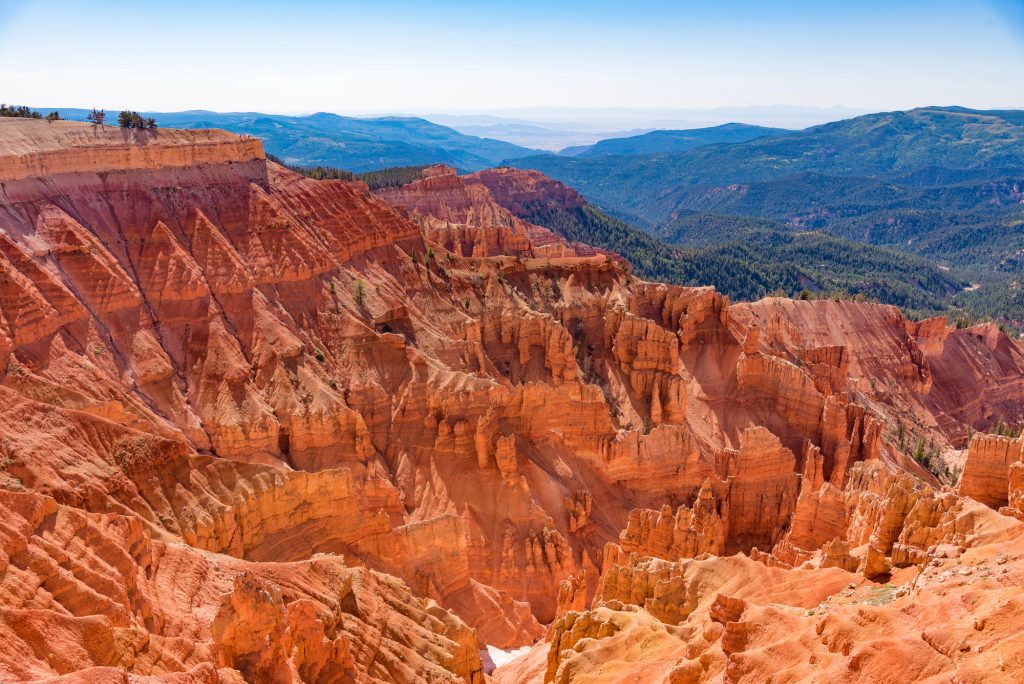
Located at over 10,000 feet in elevation, Cedar Breaks National Monument is like a mini Bryce Canyon, but with way fewer people. The amphitheater here is about three miles wide and over 2,000 feet deep, with vibrant red and orange hoodoos carved into the cliffs and is one of the best places to visit in Utah!
Since it’s so high up, the monument is typically only open from late spring through fall due to snow. There are a few short and scenic hikes here, including the Spectra Point & Ramparts Trail, which follows the rim and offers nonstop views into the canyon.
13. Red Canyon
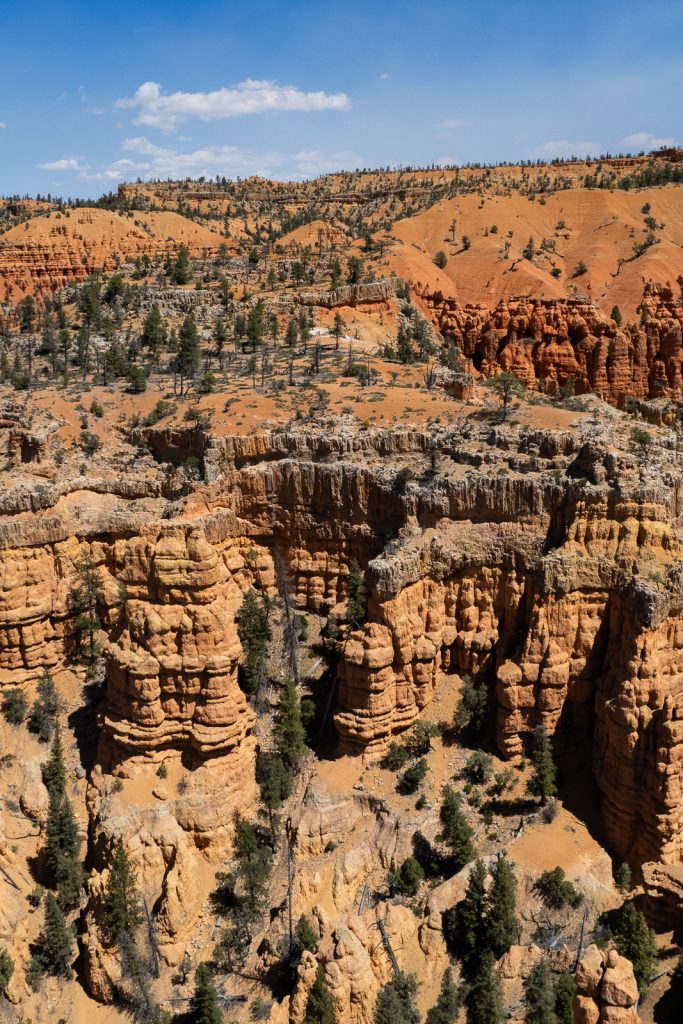
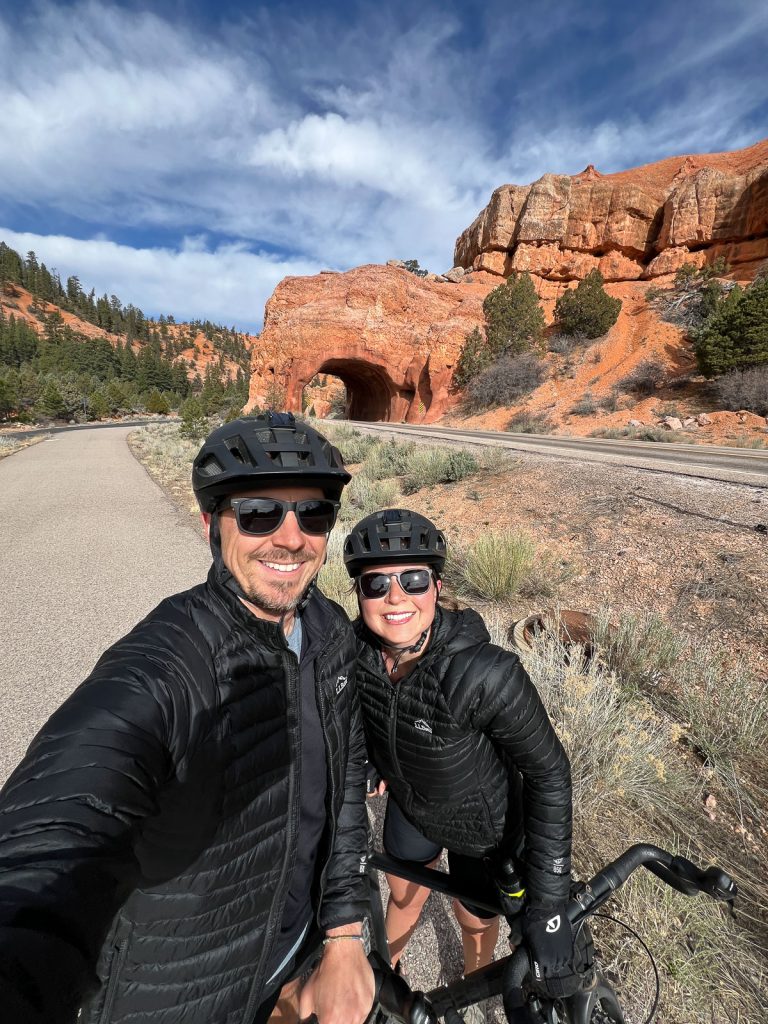
Just outside of Bryce Canyon, Red Canyon is one of the most overlooked places to visit in Utah. With bright orange hoodoos, tall pine trees, and scenic trails, it has a very similar feel to Bryce Canyon, but with fewer crowds and more flexibility since it’s both free to visit and dog friendly.
We have explored Red Canyon a couple times and loved the Golden Wall Trail. This trail winds through towering rock formations and offers some pretty epic views.
But Red Canyon is also a great place for biking! A paved path runs right through the canyon and connects to Bryce Canyon City. You’ll cruise past cliffs, tall pine trees, and even ride through two rock tunnels carved into the red sandstone. It’s one of our favorite bike rides we have done so far.
14. Kodachrome Basin State Park
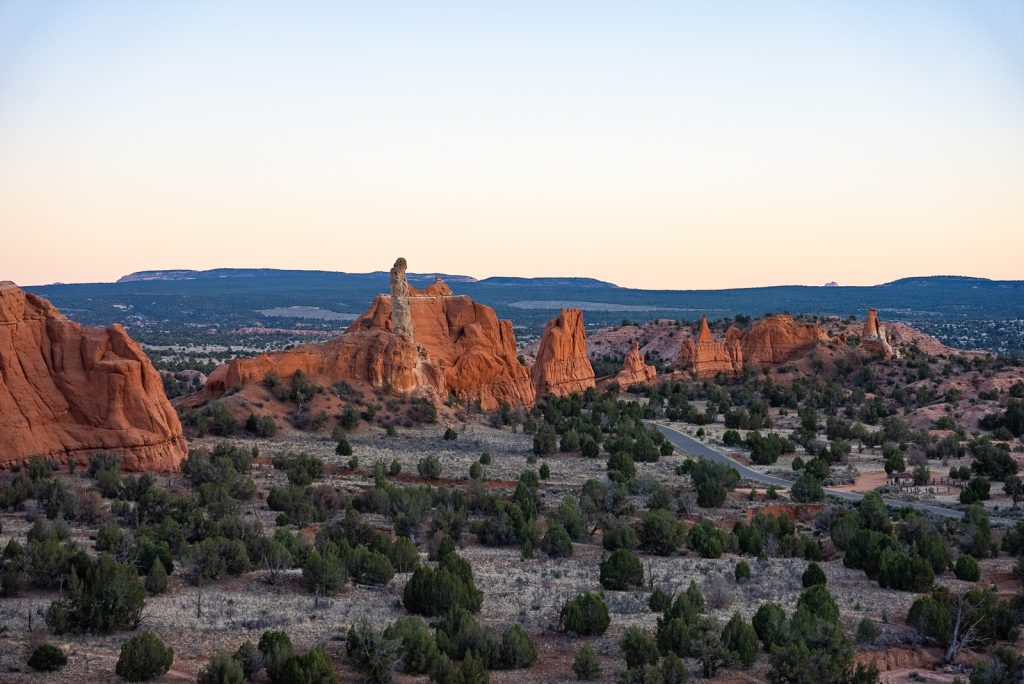
Tucked just outside of Bryce Canyon, Kodachrome Basin is a colorful State Park that is named after the Kodak film that was known for its rich, vibrant colors that look completely different from anywhere else nearby.
The park is home to nearly 70 unique stone spires, called sedimentary pipes, that rise dramatically from the ground. The scenery is wild, colorful, and totally different from the hoodoos just up the road. We hiked the Panorama Trail, which gave us great views, cool rock formations, and plenty of solitude. For sunset, we loved the Angel’s Palace Trail, a short loop that climbs up to a ridge with sweeping views of the park.
15. Hanksville
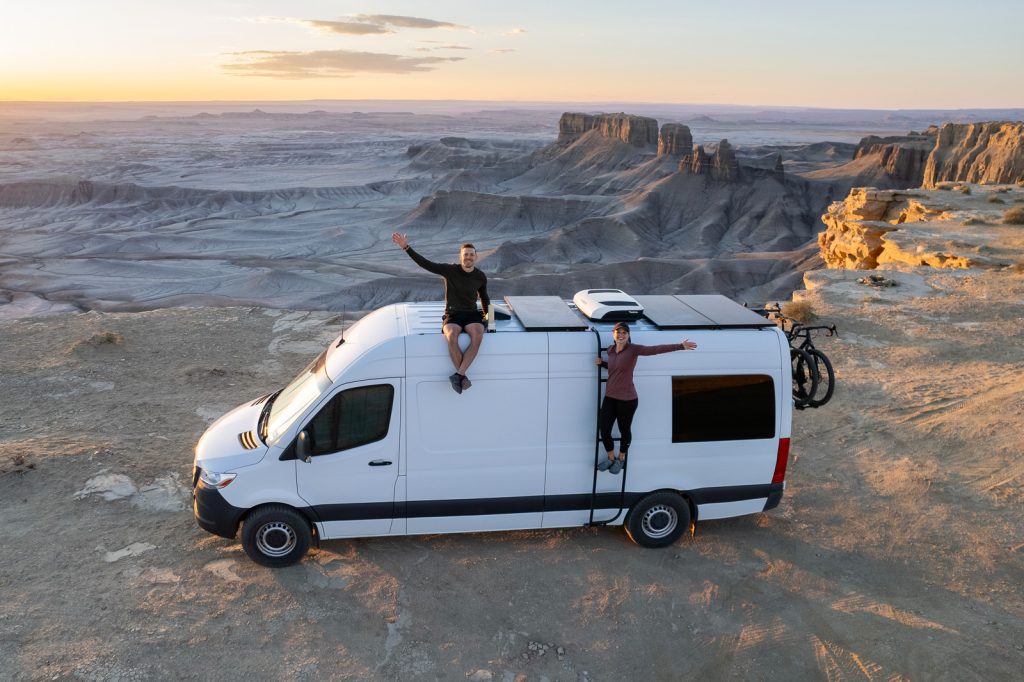
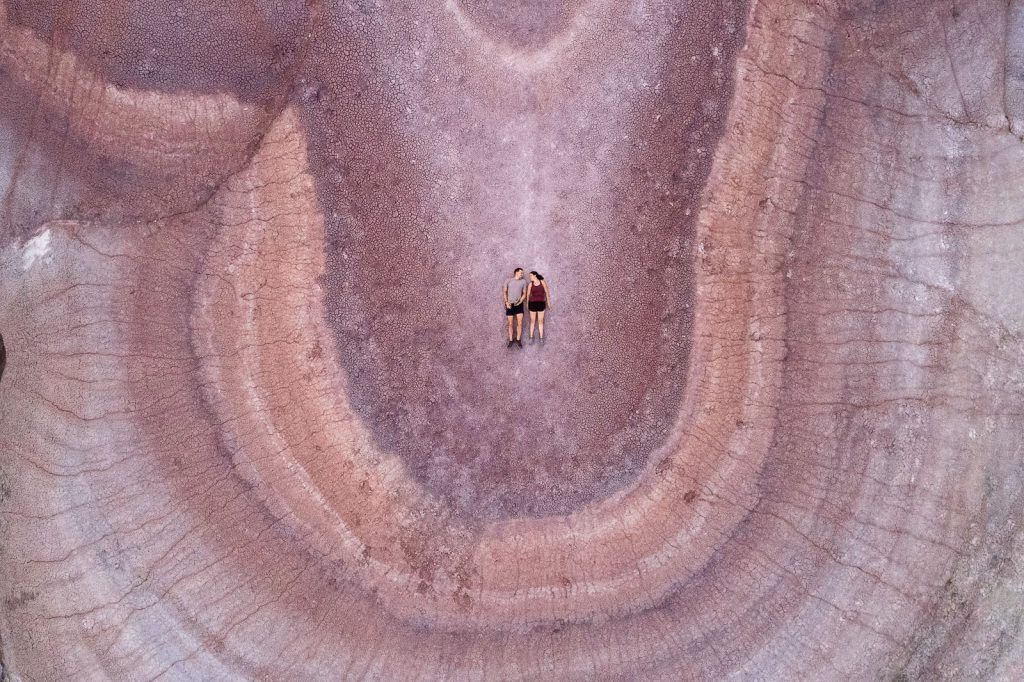
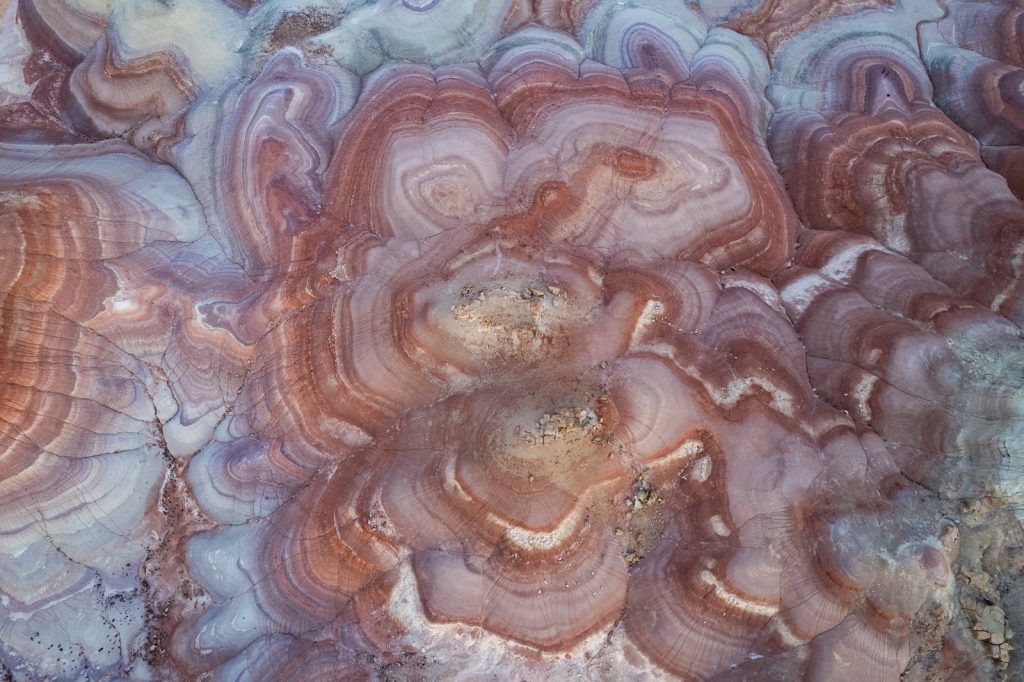
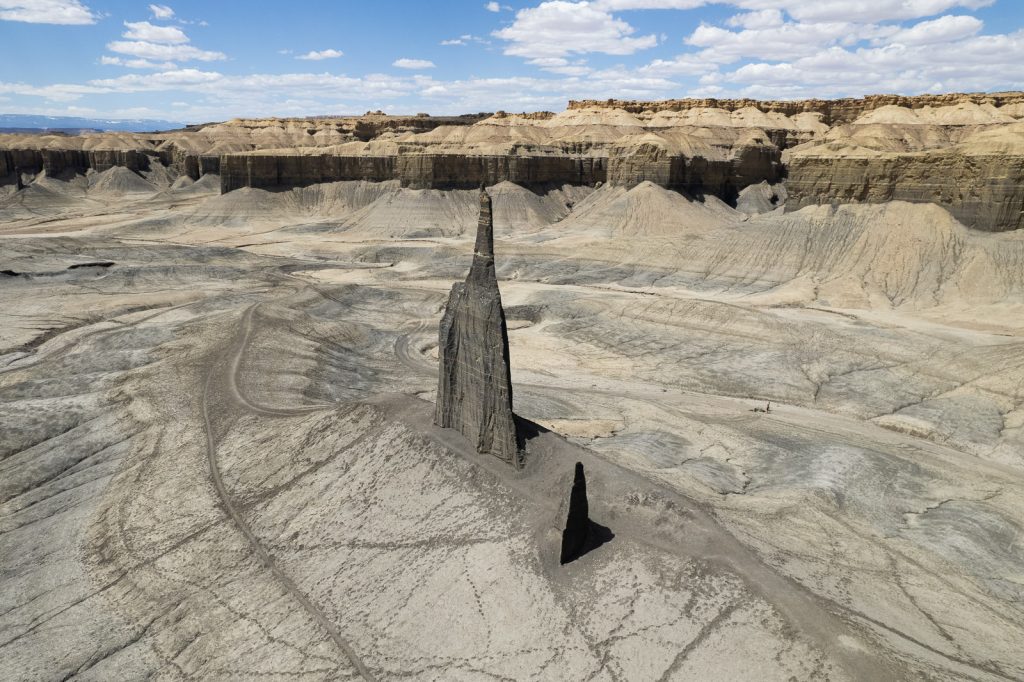
Hanksville may be a small town, but the landscapes surrounding it are some of the wildest we’ve seen in Utah. This area is full of otherworldly terrain, colorful hills, and bizarre rock formations that make it one of the best places to visit in Utah.
One of the most unique places nearby is the Bentonite Hills, known for their striped patterns and soft pastel colors that shift depending on the light. Drone footage really shows off the patterns here, but even from the ground, it’s incredibly surreal.
And then there’s Long Dong Silver. We biked the last mile out to it, as the road is closed to vehicles and could not stop laughing at the name. As Adam put it, “We came, we saw, we Donger’d.”
16. Goblin Valley State Park
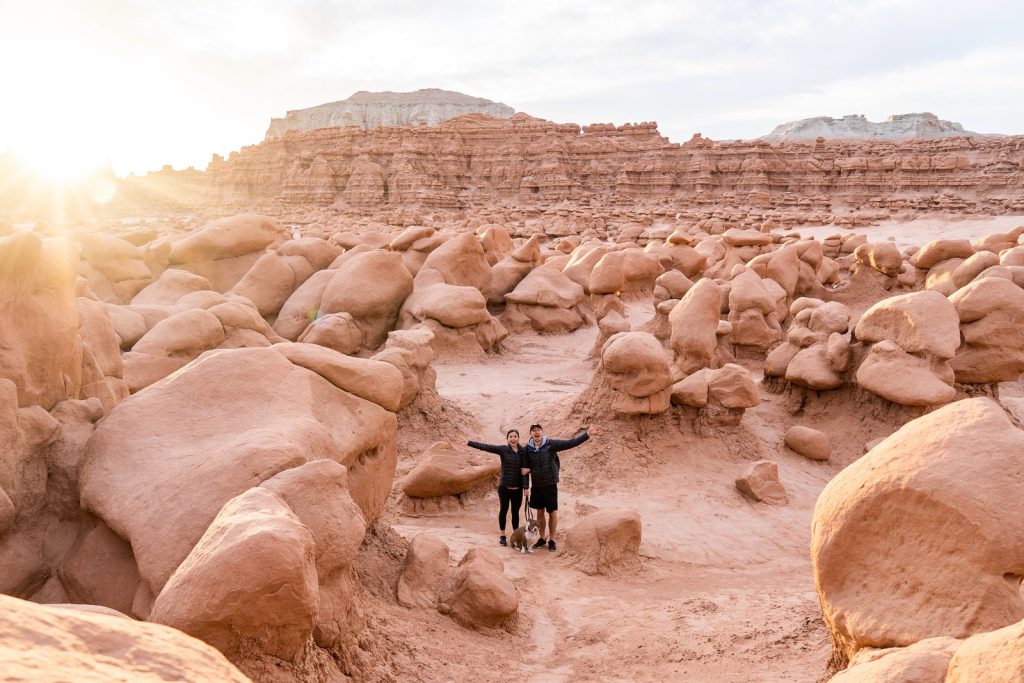
Located between Capitol Reef and Green River, Goblin Valley State Park is one of the weirdest and most wonderful places we’ve explored in the state. The landscape is packed with thousands of mushroom-shaped hoodoos (aka “goblins”) that were formed over millions of years by erosion that you can wander around and climb on. We felt like we were on Mars the entire time we were there!
While you’re in the area, don’t miss Little Wild Horse Canyon, one of Utah’s best and most accessible slot canyon hikes. It’s located just a few minutes down the road and makes a perfect addition to Goblin Valley.
We shared our full experience at Goblin Valley in this video, including footage that shows just how wild the landscape is!
17. Moab

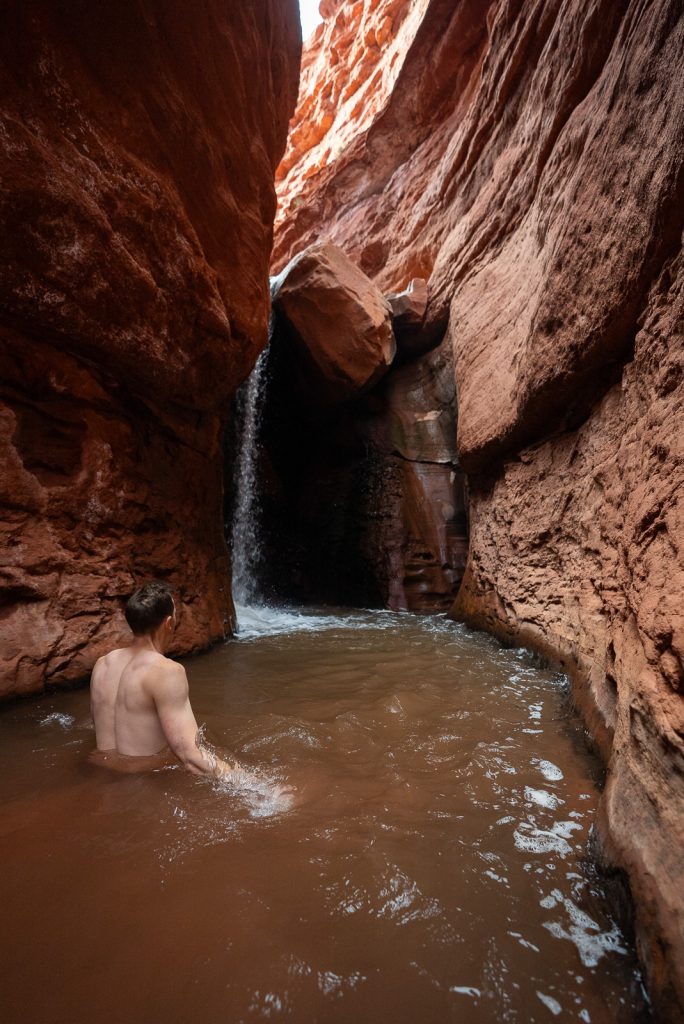
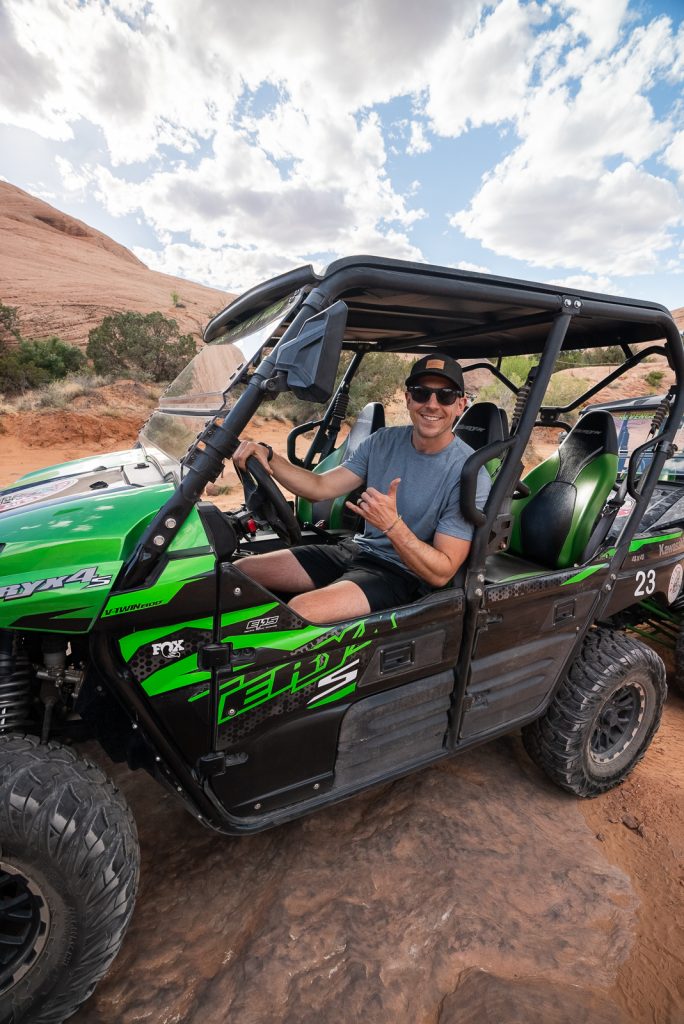

Moab is one of the best places to visit in Utah, especially if you love being surrounded by red rock cliffs, deep canyons, and the La Sal Mountains. With two national parks just minutes away, plus unique arches, 4×4 trails, mountain biking routes, rafting on the Colorado River, and tons of hikes (including dog-friendly ones!) you’ll never run out of ways to pack your day with adventure.
We’ve visited several times and still feel like we’ve barely scratched the surface. Some of our favorite adventures so far include hiking to Corona Arch, off-roading Hell’s Revenge (one of the wildest things we’ve ever done), and catching sunset views at Dead Horse Point State Park, which has scenery just as stunning as Canyonlands but with fewer crowds.
We also loved hiking Grandstaff Canyon and Jeep Arch. And if you’re up for something longer, the Professor Creek and Mary Jane Canyon Trail is a fun, wet hike that follows a creek nearly the entire way and ends at a waterfall. Just be prepared for dozens of creek crossings and some very cold water.
After a full day outside, head downtown for dinner and treats. Quesadilla Mobilla serves up massive cheesy quesadillas, Doughbird has amazing hot chicken and donuts, and Miss Gelato is our go-to for something sweet.
We have a guide with 15+ things to do in Moab, including what to see beyond the national parks. Don’t miss our guides for Corona Arch and the best hikes in Moab. You can also watch our Moab video to see what made this town one of our favorites.
18. Little Grand Canyon
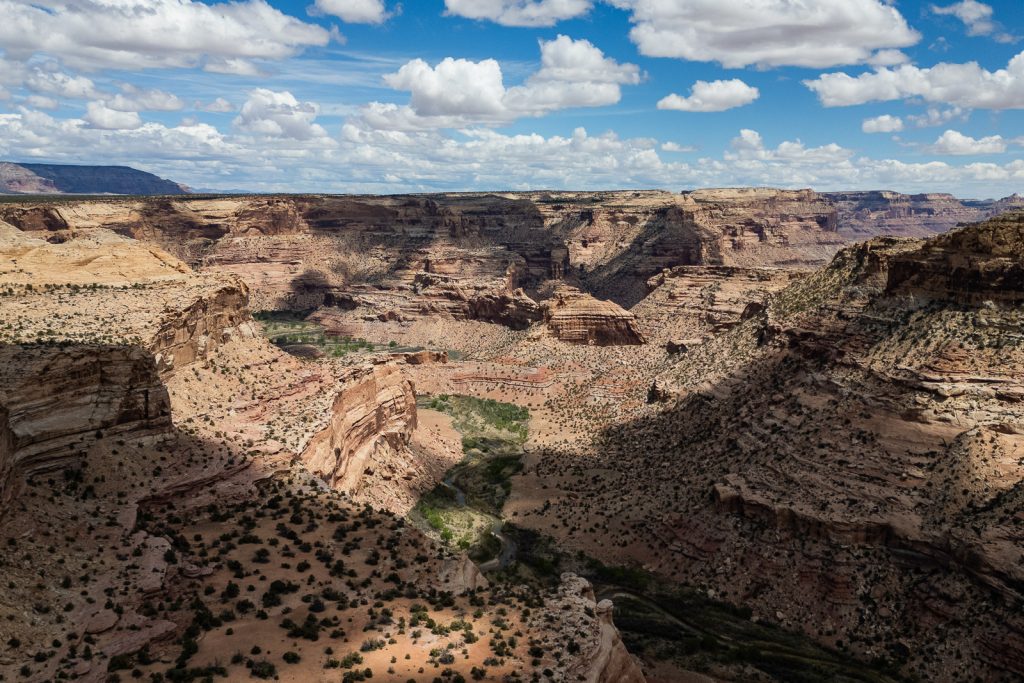
Tucked away in the northern part of the San Rafael Swell, the Little Grand Canyon is one of the most underrated places we’ve visited in Utah. The views here totally surprised us.
From the Wedge Overlook, you can see the San Rafael River winding through colorful canyon walls that look like a mini version of the Grand Canyon. It’s seriously stunning. We camped right on the rim of the canyon and it was definitely one of our favorite campsites in Utah!
It is a long, rough journey to get here, so make sure you have a vehicle that can handle washboarded roads.
19. Mexican Hat & Valley of the Gods
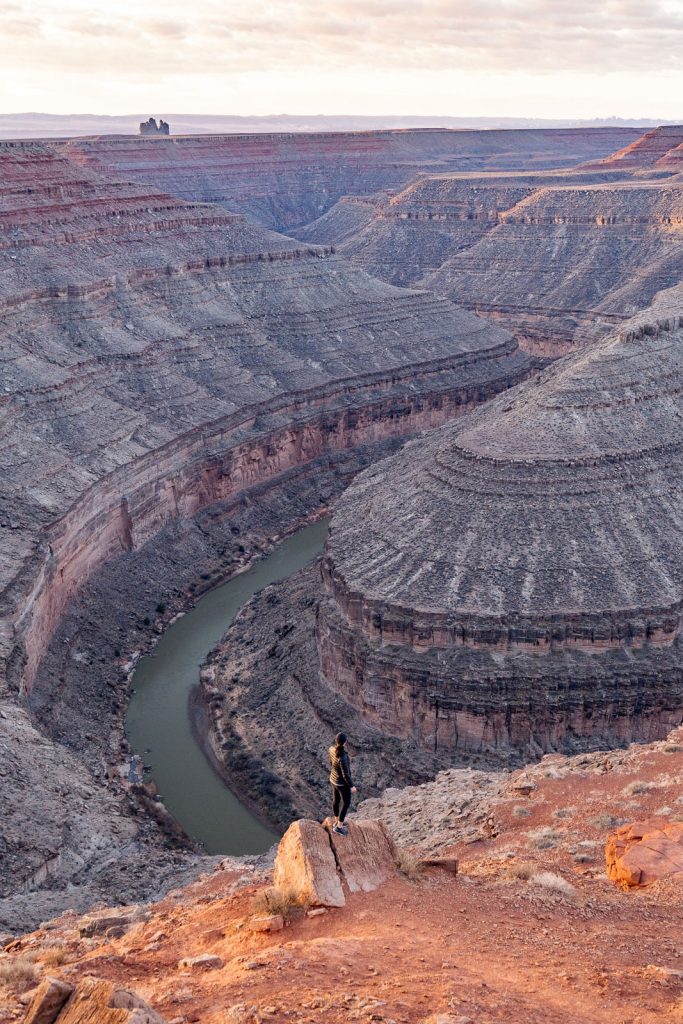
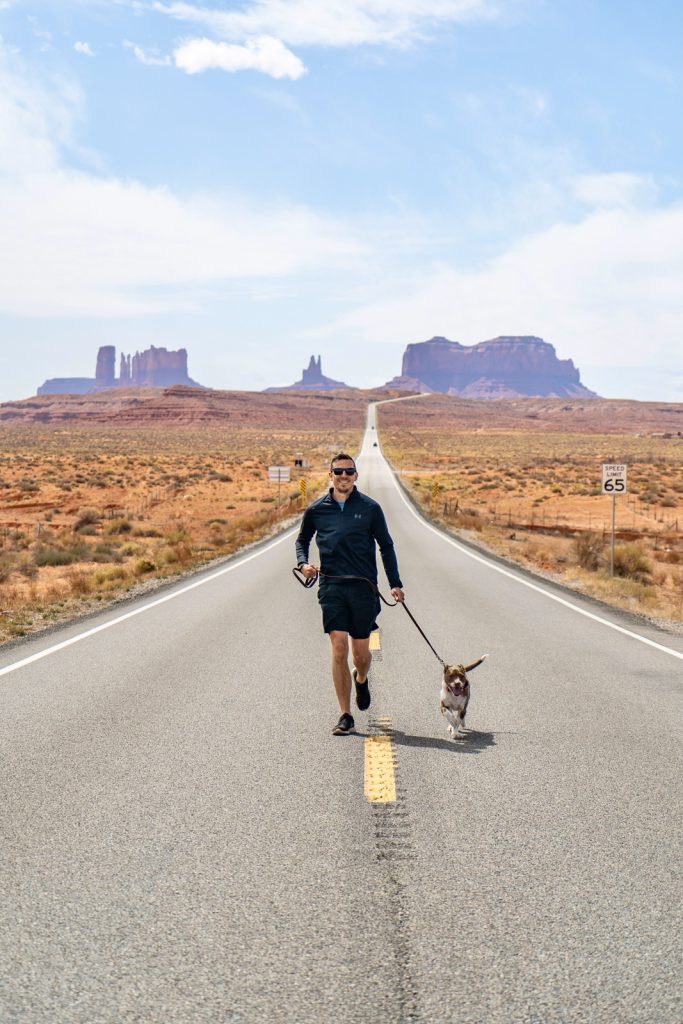
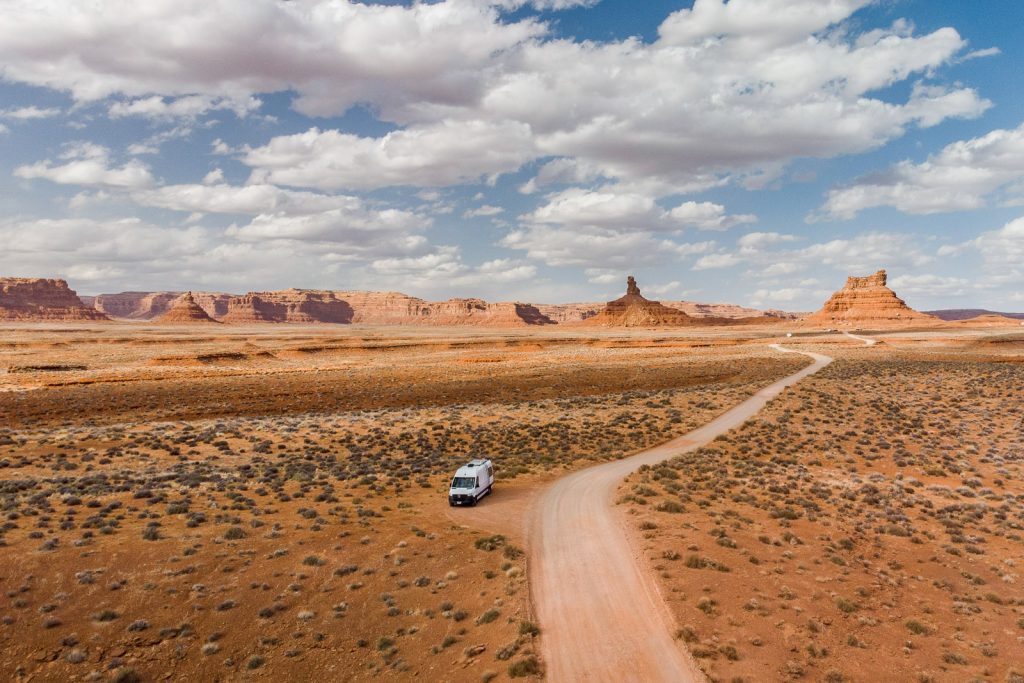
Tucked into the corner of southern Utah, this area is full of massive red rock columns, mesas and buttes, with sweeping desert views, and almost no crowds.
We loved driving through Mexican Hat, named after a rock formation that really does look like a sombrero! But the best thing to do here is visit Valley of the Gods, which has similar scenery to Monument Valley, just on a smaller scale and with fewer people. You can drive the 17-mile gravel loop that winds past all the rock formations.
Outside the valley, Goosenecks State Park overlooks one of the best examples of an entrenched river meander, where the San Juan River winds through the canyon in tight curves. We watched the sunrise here and had it all to ourselves!
Just up the road, Moki Dugway climbs up the cliffs on a narrow dirt road (with crazy switchbacks!). It was originally built to haul uranium from a nearby mine. At the top, a short drive takes you to Muley Point, with sweeping views of the whole area. You can see Monument Valley, the Goosenecks, and miles of desert in every direction.
Oh, and you can’t leave without recreating the iconic scene from Forrest Gump!
If you want to see what it’s like, you can watch us explore Valley of the Gods (and camp at one of our favorite spots ever) in this video.
Northern Utah
20. Fifth Water Hot Springs
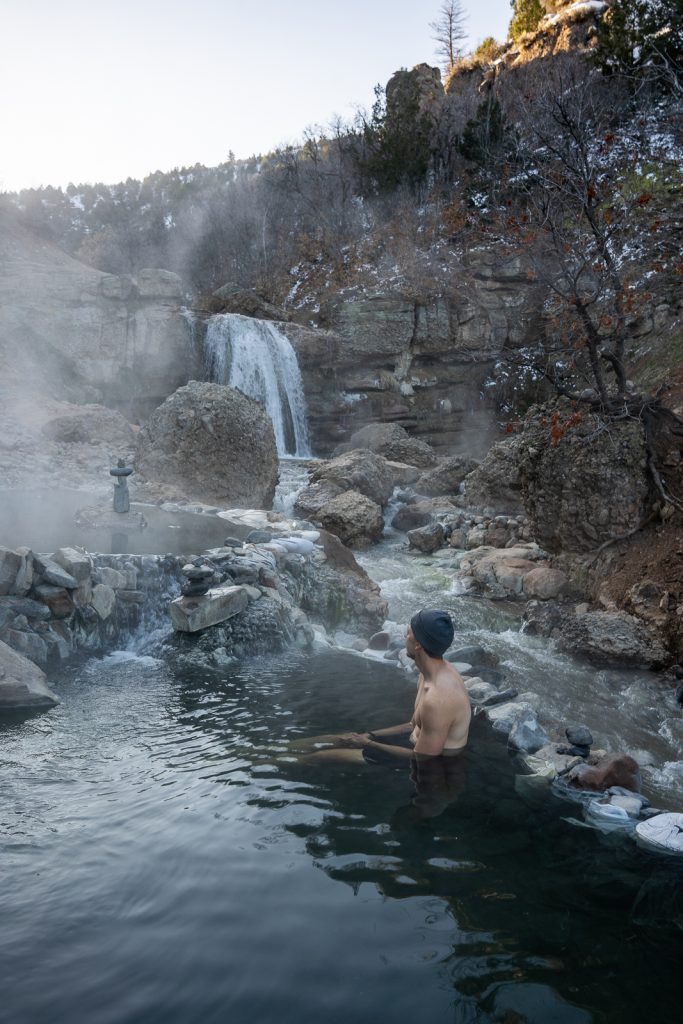
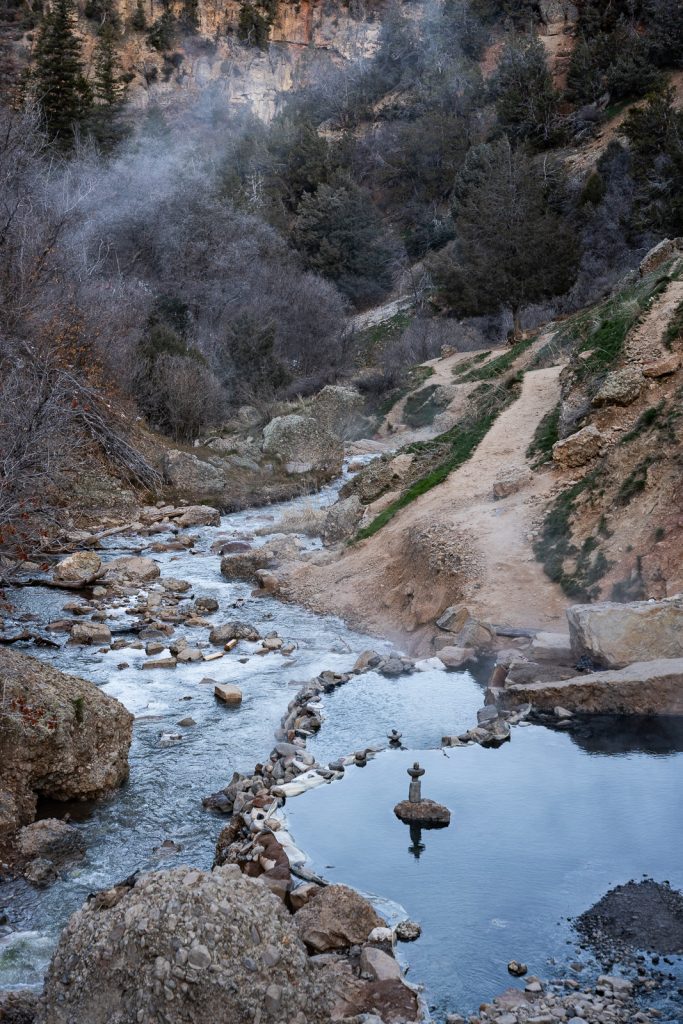
If you’re looking for one of the best hot springs in Utah, Fifth Water Hot Springs (also known as Diamond Fork) needs to be on your list. Tucked into a forested canyon near Spanish Fork, these steamy blue pools are absolutely dreamy… and just a little bit smelly, thanks to the classic hot spring sulfur.
The hike is usually 4.5 miles roundtrip, but in the off-season when the road is closed, it turns into 8 miles. Some pools are warmer than others, so you can move around until you find the perfect one.
Check out our blog post for everything you need to know before you go, and watch the hike and soak in this video from our trip!
21. Salt Lake City

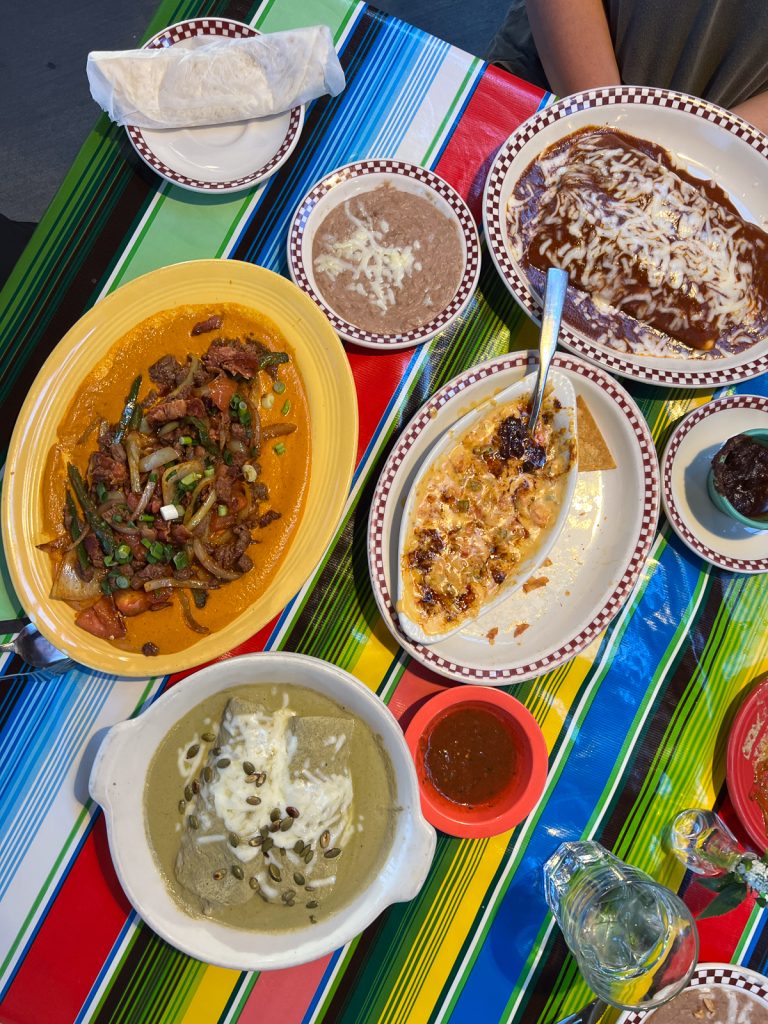
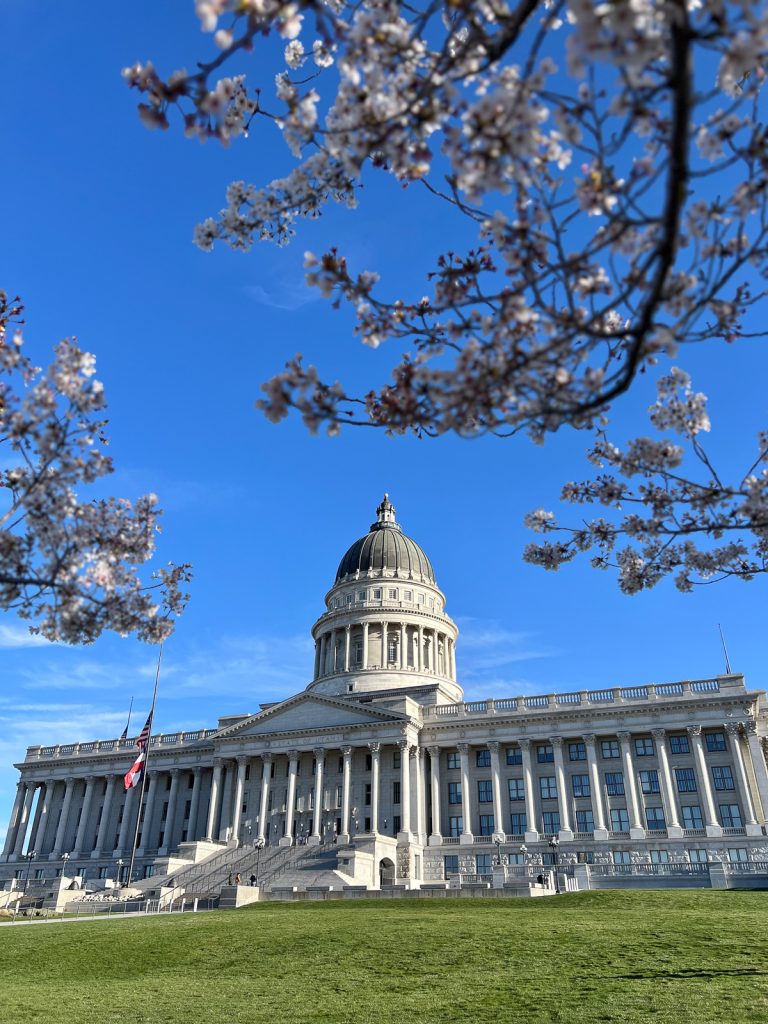
Salt Lake City surprised us with how much we loved it, and not just for the nearby mountains, but for the city itself. We based ourselves here to explore the Wasatch Mountains and ended up enjoying the local sights and food just as much.
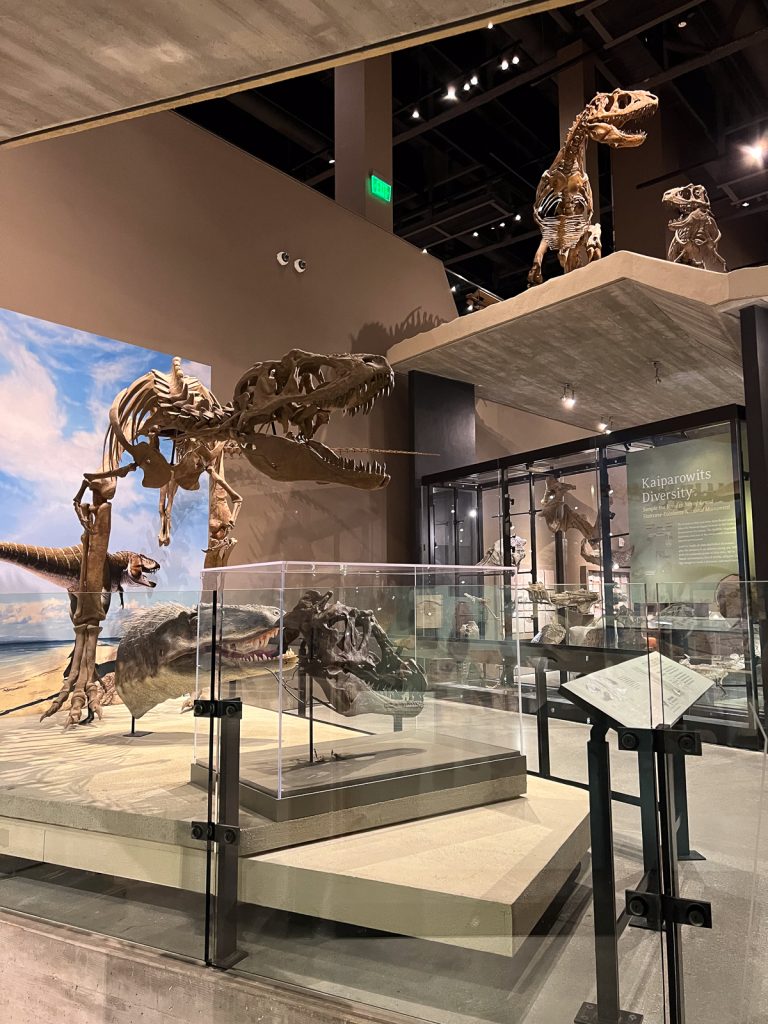
In town, you can visit the Natural History Museum of Utah, which is seriously cool, especially the dinosaur exhibit. You can also wander around Temple Square, drive up to the Utah State Capitol, or explore local neighborhoods like the Maven District for murals, boutiques, and dessert (get the soft serve at Normal Ice Cream!).
As for food, Red Iguana is a must for killer mole, or head to Spitz for a quick Mediterranean bite. We also tried dirty soda (soda with cream and syrups) for the first time at Thirst, and even as non-soda drinkers, we were impressed. The “You’re Killin’ Me Smalls” was a root beer float lover’s dream.
Check out our Salt Lake City weekend itinerary for where to hike, eat, and explore. Plus you can see our adventure in this video.
22. Wasatch Mountains
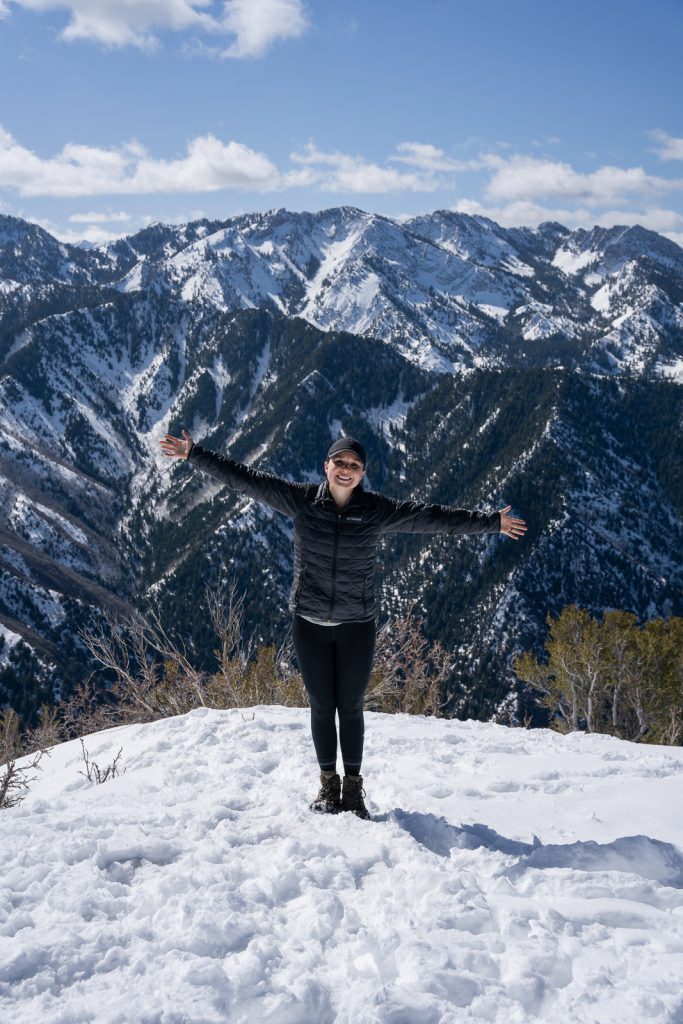
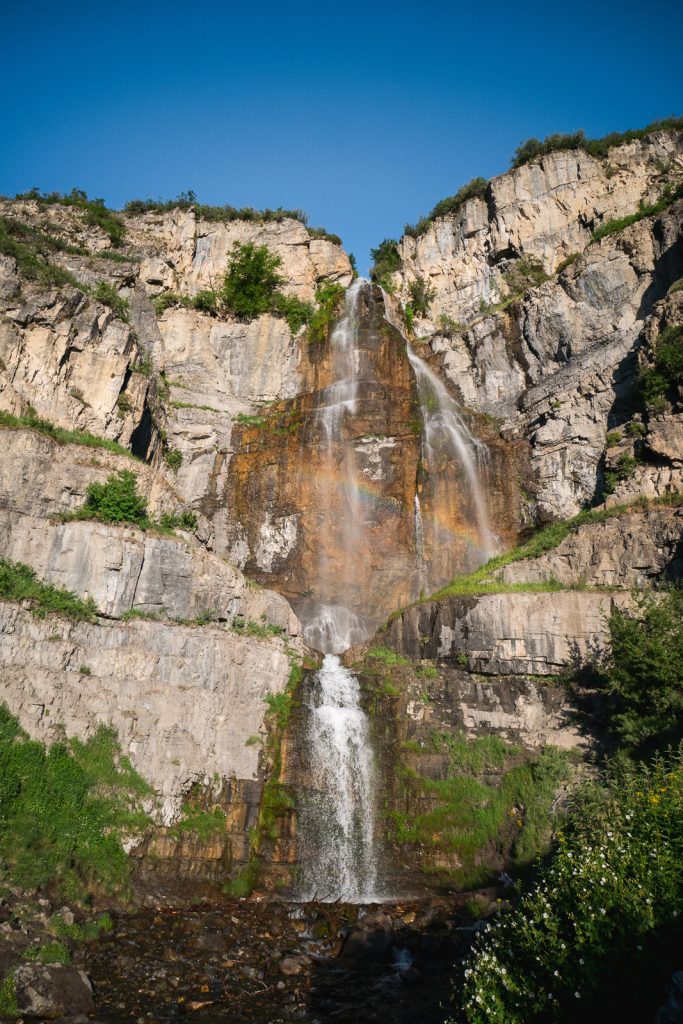
Just east of Salt Lake City, the Wasatch Mountains are one of the best places to visit in Utah if you love alpine lakes, rugged peaks, and scenic drives. We’ve done a handful of hikes here and have a long list of trails we still want to explore.
Some of our favorite hikes (or ones we’re dying to do) include Lake Blanche, a tough climb with an incredible lake and mountain backdrop, Stewart Falls a more mellow hike to a two-tiered waterfall (plus we saw a moose!), and Christmas Meadows, which we haven’t done yet but looks absolutely stunning in the summer. If you’re feeling ambitious, Mount Timpanogos is one of the most iconic summits in the state.
Even if you don’t hike, the drives through the canyons are beautiful. Little Cottonwood, Big Cottonwood, and American Fork Canyon all have winding roads with views of cliffs, wildflowers, and fall colors if you time it right. Late September is a great time to see the golden aspens!
23. Homestead Crater
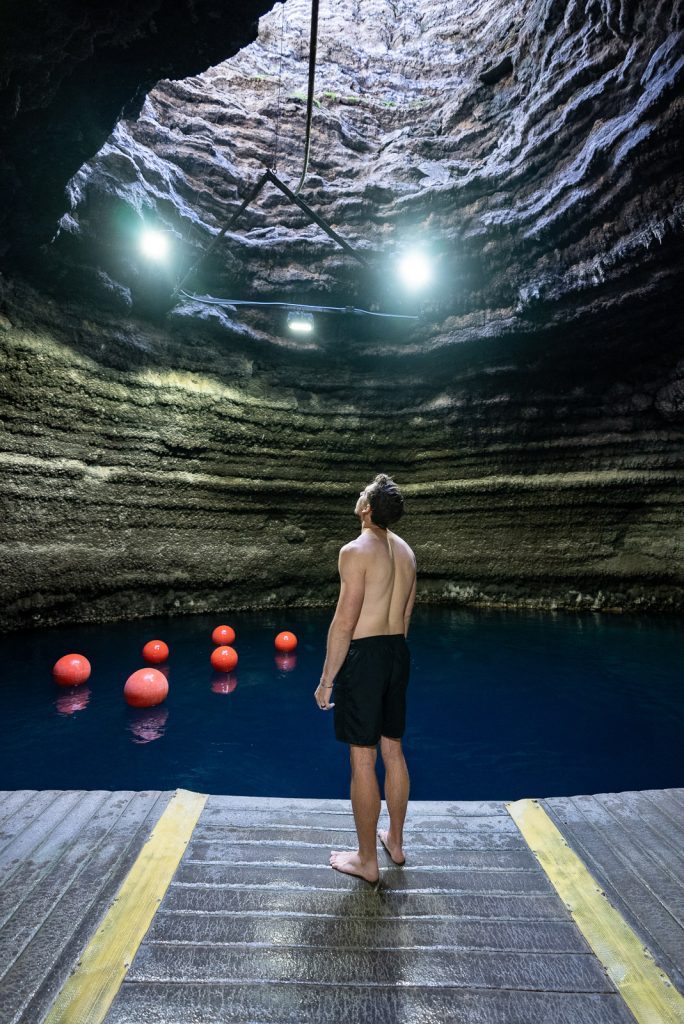
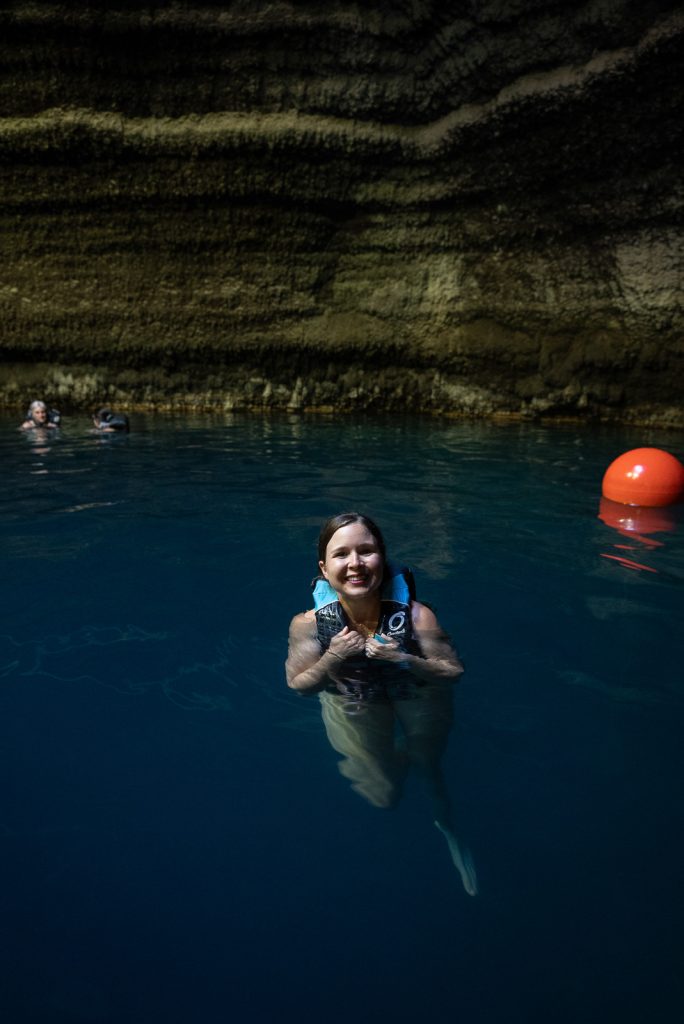
For a unique hot spring experience, head to Homestead Crater in Midway. This 10,000-year-old geothermal spring is tucked inside a 55-foot tall beehive-shaped limestone dome that you can actually swim inside!
The water stays a toasty 95°F year-round, and you can book a 40-minute soak for around $15 per person. It feels more like a warm pool than a true hot spring, but it’s still super relaxing.
Besides soaking, you can also snorkel or scuba dive here. It’s actually the only warm water scuba diving destination in the U.S.! We stuck to floating, but the whole experience reminded us of a cenote in Mexico. Definitely worth a stop if you’re in the Heber Valley area.
24. Park City
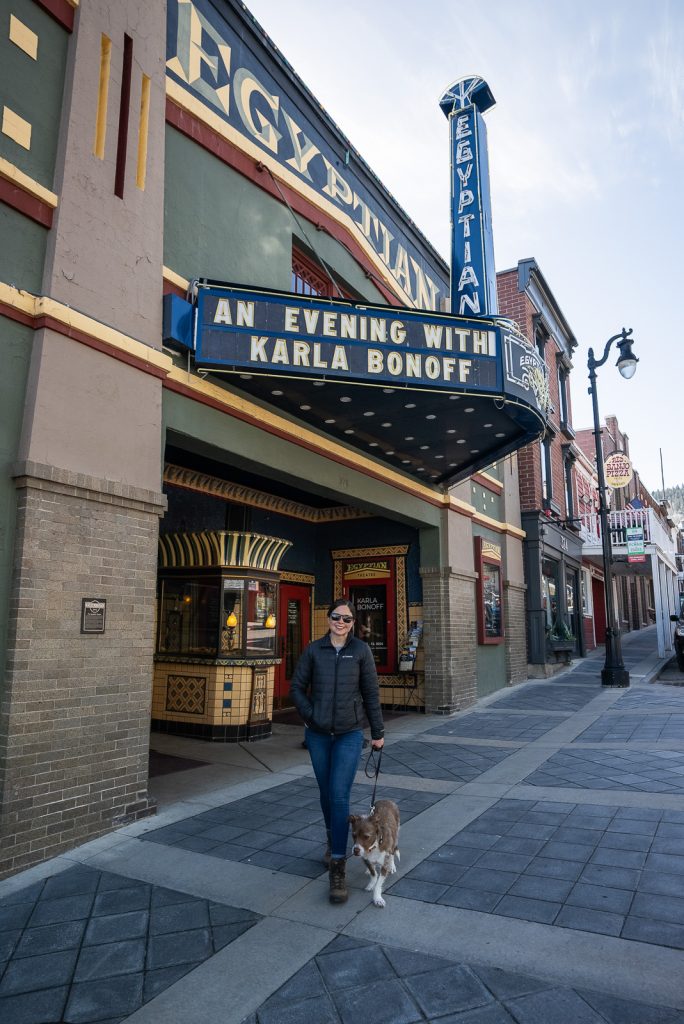
Park City might be best known for its world-class skiing and the Sundance Film Festival, but it’s a great place to visit year-round. This former silver mining town has transformed into one of Utah’s most charming mountain getaways, with beautiful trails, a walkable downtown, and a surprisingly great food scene.
You can stroll along historic Main Street, where you’ll find boutiques, coffee shops, and galleries, or ride the Town Lift right from downtown in ski season. If you’re visiting in winter, there are two major resorts to explore: Park City Mountain and Deer Valley Resort, which together offer over 7,000 acres of skiable terrain.
If skiing isn’t your thing (or you’re visiting during shoulder season like we did), check out Utah Olympic Park. Built for the 2002 Winter Olympics, it now has free museums, ski jumps, and fun simulators like bobsledding and parachute skiing.
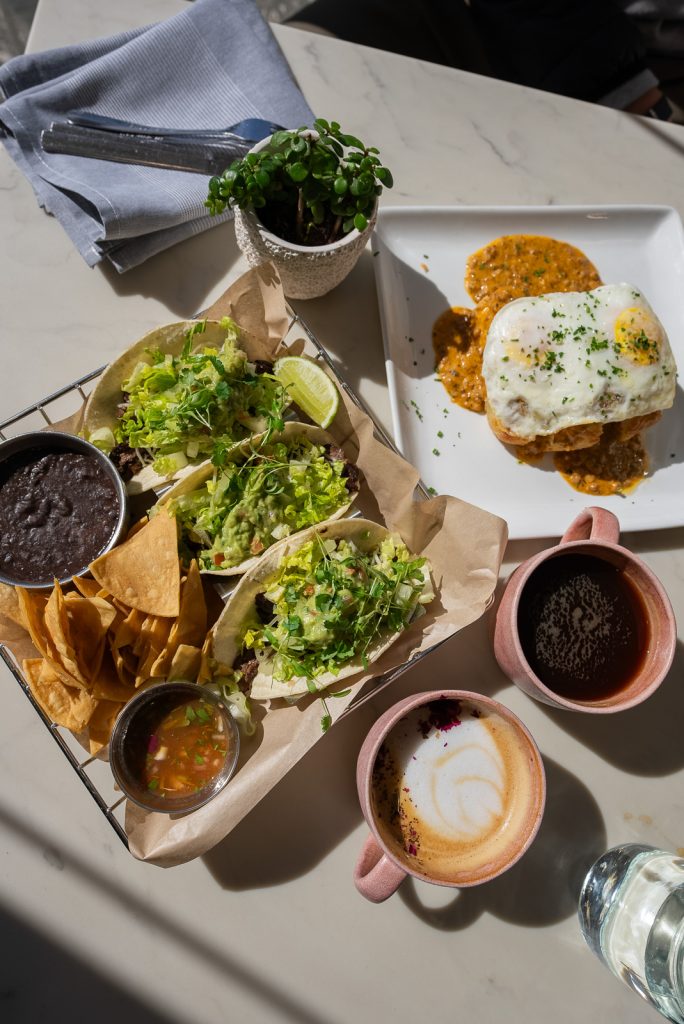
For food, head to SALTBOX for a killer brunch. We loved the fluffy biscuit loaf with housemade sausage gravy and the loaded steak tacos.
25. Antelope Island State Park
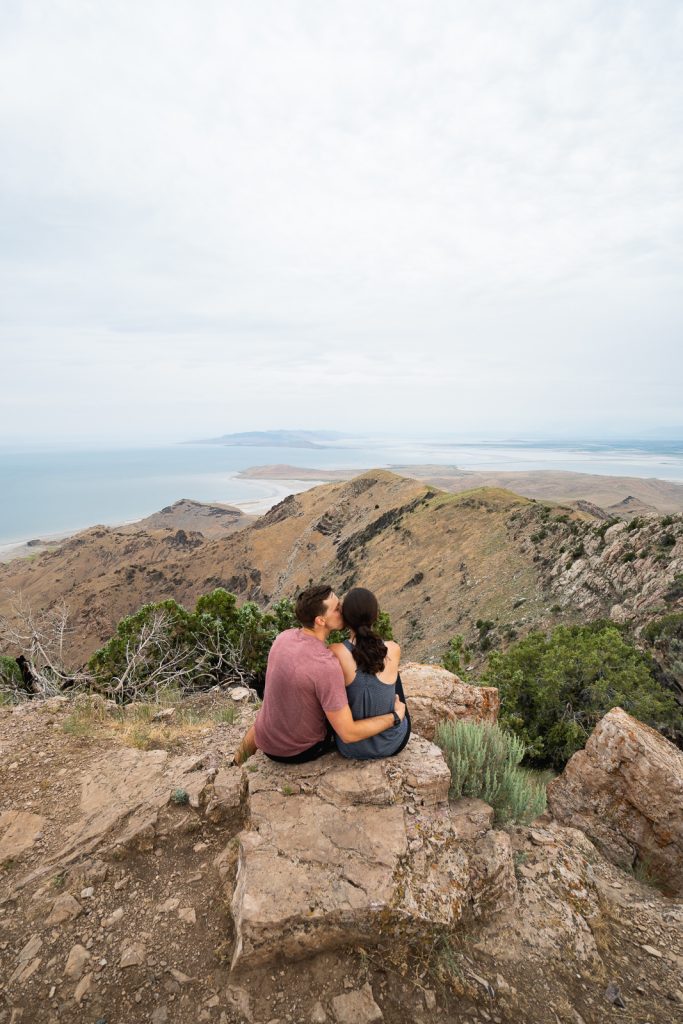
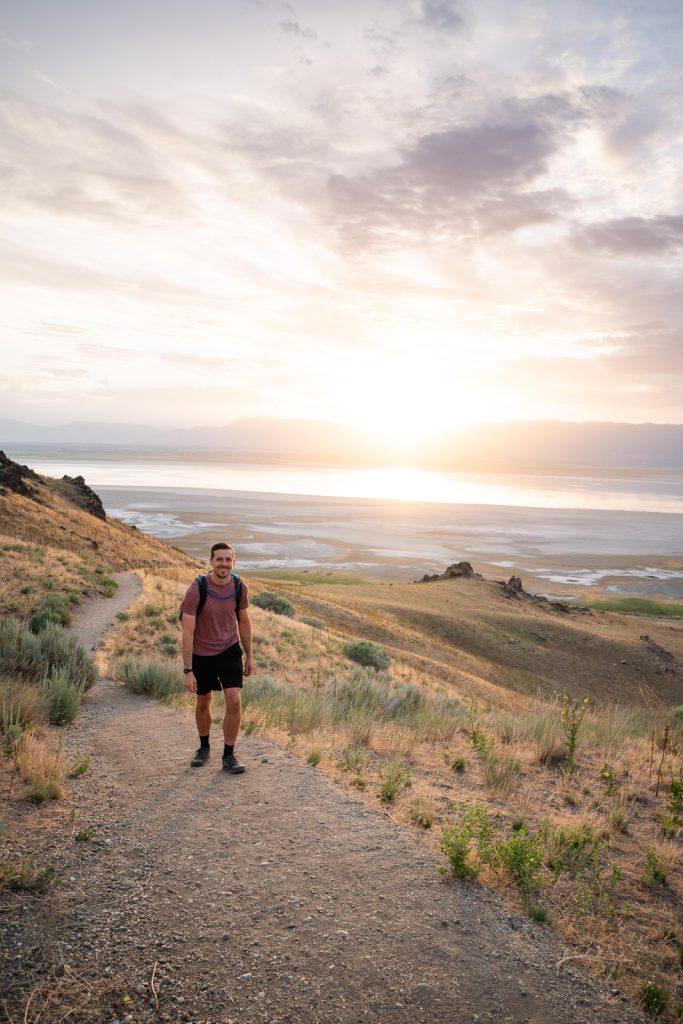
Antelope Island State Park is the largest island on the Great Salt Lake and home to sweeping desert views, salty beaches, and hundreds of bison.
We camped at White Rock Bay to get an early start on the Frary Peak hike, which is the highest point on the island. The 7.2-mile round trip gains over 2,300 feet of elevation, but the views are incredible the entire way up.
After the hike, we headed to Bridger Bay Beach to float in the Great Salt Lake. The salty water makes you bob like a cork, and while the smell and brine flies were definitely not pleasant, it was such a fun thing to check off our bucket list. You can rinse off in the outdoor showers and grab a bite (including a buffalo burger) at the Island Buffalo Grill nearby.
If you have extra time, stop by the historic Fielding Garr Ranch, go wildlife spotting (we saw bison, deer, and a coyote), or hang around for stargazing since Antelope Island is a certified Dark Sky Park. There are easy hikes like Buffalo Point and Dooley Knob if Frary Peak isn’t your thing.
We have a full guide to visiting the Great Salt Lake and Antelope Island. Or watch our adventure hiking to Frary Peak and floating in the Great Salt Lake in this video!
26. Bonneville Salt Flats
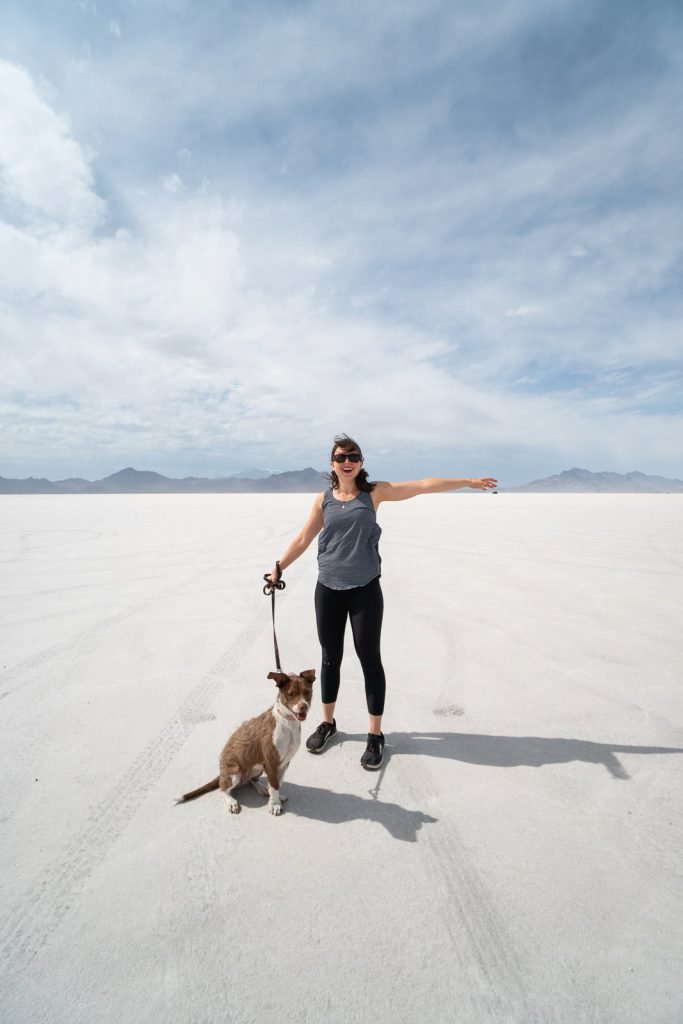
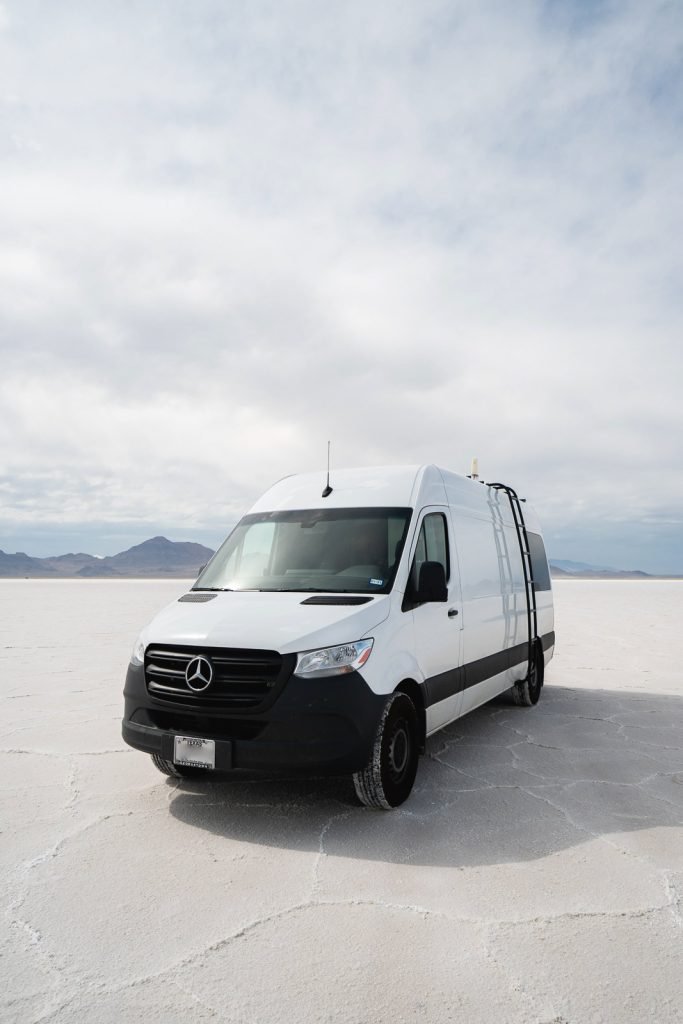
If you’re looking for one of the saltiest landscapes in Utah, the Bonneville Salt Flats are a must. Located about two hours west of Salt Lake City near the Utah–Nevada border, this massive, otherworldly expanse of white salt crust stretches for miles in every direction and it will blow your mind.
You can drive your car out onto the flats (as long as it’s totally dry), snap some fun photos, or just soak up the silence and surreal views. We were nervous at first, but after seeing a few cars go out, we gave it a try and had a blast driving the van around.
27. Logan
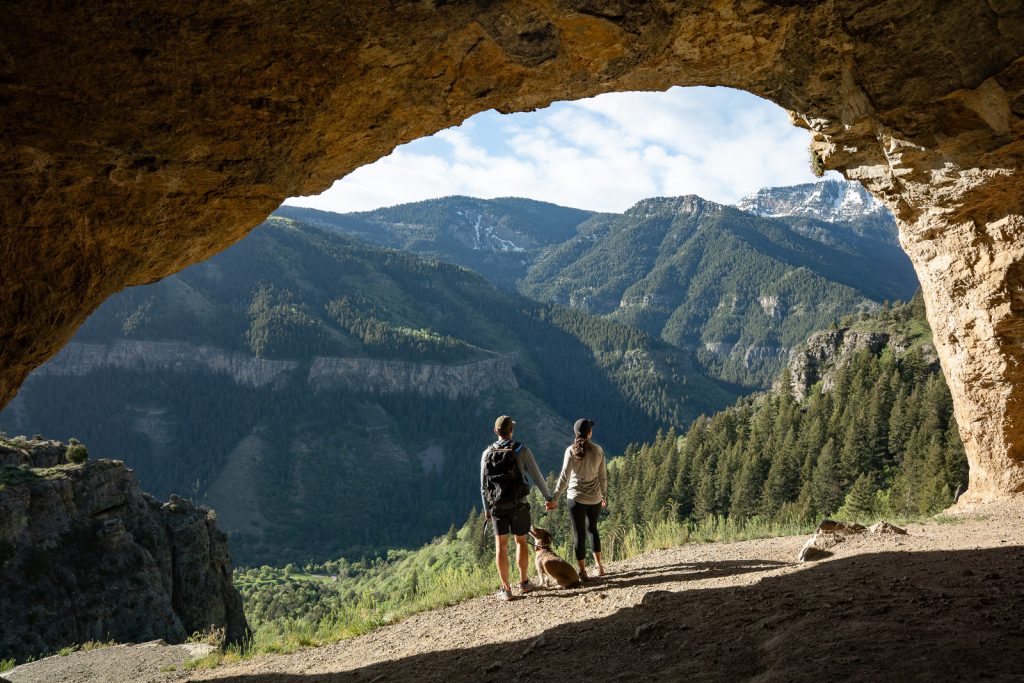
We weren’t sure what to expect, but the little mountain town of Logan in northern Utah ended up being one of our favorite stops in Northern Utah. It’s surrounded by beautiful scenery, has a super cute downtown, and makes a great place to visit, even if you are just driving through!
We came to hike the Wind Cave Trail, a popular 3.7-mile roundtrip hike in Logan Canyon that leads to a set of natural limestone caves overlooking the canyon. The trail climbs steadily but offers gorgeous views the entire way, and the cave formations at the top are super cool to explore.
28. Bear Lake
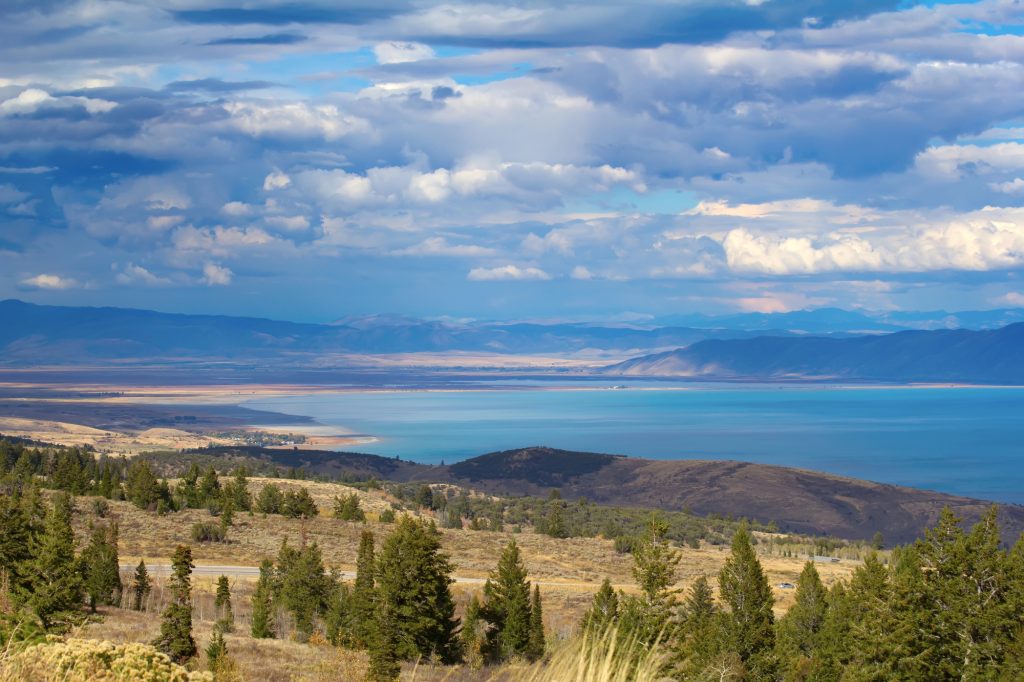
Straddling the Utah-Idaho border, Bear Lake is known as the “Caribbean of the Rockies” thanks to its insanely blue water. It’s one of the best places to visit in northern Utah during the warmer months, especially if you’re looking to relax by the water or get out on a boat.
You can swim, paddleboard, rent jet skis, or just hang out on the beach! But one thing you can’t miss while you’re here… raspberry shakes! There are tons of shake shops around town, but we’ve heard Zipz is really good and known for being sweet, creamy, and loaded with berries.
Planning Your Trip to Utah
Airports to fly into
If you’re heading to Northern Utah or want a central base to start your trip, fly into Salt Lake City International Airport (SLC). It’s the biggest airport in the state and gives you quick access to the Wasatch Mountains, Salt Lake City, and several national parks.
If you’re starting in the south, Harry Reid International Airport (LAS) in Las Vegas is another great option. It’s especially convenient for visiting Zion, Bryce Canyon, Kanab, and the surrounding areas.
For more direct access to some of the smaller towns, there are also a few regional airports:
St. George Regional Airport (SGU) is closest to Zion and Snow Canyon.
Cedar City Regional Airport (CDC) is a good option for Bryce Canyon or Cedar Breaks.
Moab’s Canyonlands Field Airport (CNY) gets you close to Arches and Canyonlands, though flights are limited.
Getting Around Utah
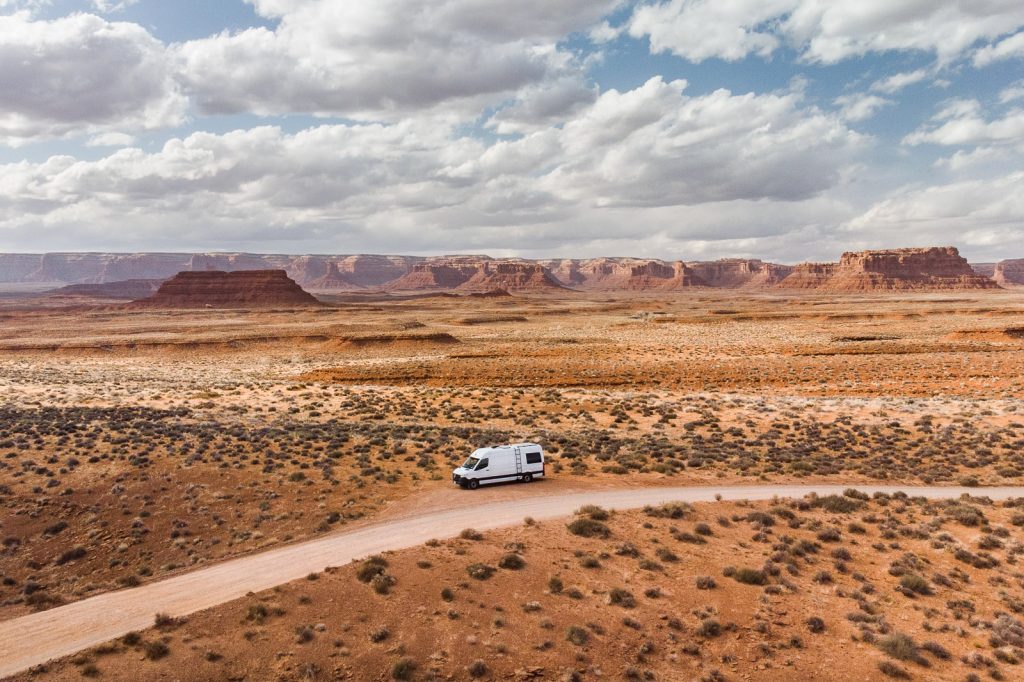
To explore Utah properly, you’ll need a car. Most of the best hikes, viewpoints, and small towns aren’t accessible by public transportation. A regular rental car works well for national parks and scenic drives, but if you want more flexibility, plan to explore off-road, or want to camp, consider renting a campervan or SUV. High clearance, 4×4, or AWD is a plus!
We have a full guide on Stoked to Camp that shares our favorite campervan rental companies in Utah, including options based in Salt Lake City.

Best Time to Visit Utah
Spring (March–May): Spring is a great time to explore Southern Utah. The temperatures are ideal for hiking, wildflowers start to pop, and the crowds are lighter than in summer. It’s also a good time to visit the Great Salt Lake and some lower-elevation mountain trails near Salt Lake City.
Summer (June–August): Summer is perfect for the Wasatch Mountains and northern Utah. High-elevation hikes are clear of snow, alpine lakes are great for swimming or paddling, and scenic drives are fully open. It does get very hot in the desert, but early mornings and higher elevations can still be manageable.
Fall (September–November): This is one of the best times to visit! The aspens light up the mountains with gold, temperatures are cooler in the desert, and popular hikes are less crowded.
Winter (December–February): Winter is ski season in Utah, especially around Park City, Salt Lake City, and Ogden. The desert parks are quiet and beautiful too, as long as you’re prepared for chilly weather. You might even get lucky with a dusting of snow on the red rocks. This is also a great time to visit the Utah national parks with less crowds.
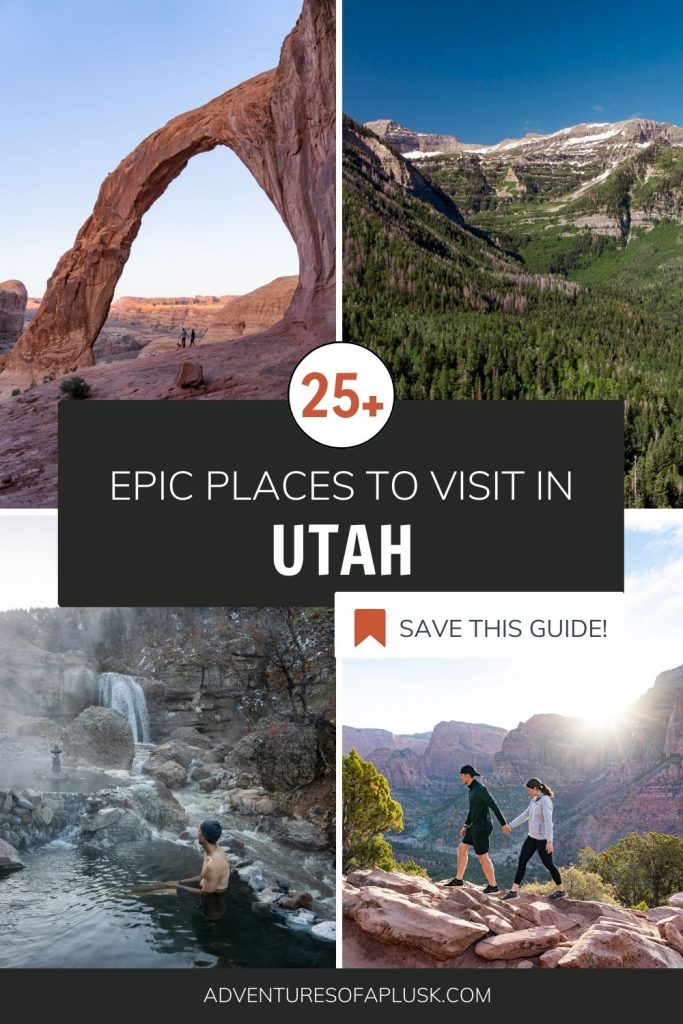
Save this guide with the best places to visit in utah
About the author
This blog post was written by our writer Nicoll. Learn a bit about her below!
After six years of full-time travel, Nicoll is now a mountain-loving mama living in Colorado with her husband Jake, their sweet baby girl Teagan, and their pup Gunner. She loves hiking, riding her dirt bike, and finding joy in the little things.