
Last updated on October 4th, 2026
Planning a trip in Minnesota? We’re sharing the 8 best Minnesota North Shore state parks to visit along the way. Including the best things to do in each, tips for visiting, what to pack, and everything you need to know before you go!
If you’ve ever driven up Minnesota’s North Shore, you already know that it’s stunning. The road hugs Lake Superior the entire way, with rocky cliffs, crashing waves, thick forests, and some of the prettiest state parks in the whole Midwest. Plus, they’re all super close to Duluth, which makes them easy to explore!

We’d heard a few locals talk about how incredible this area was, but we honestly didn’t realize just how beautiful it would be until we saw it for ourselves. The area actually reminded us so much of the Pacific Northwest (where we lived for three years) and a little bit of Coastal Maine, too.
In this blog post, we’re sharing 8 must-see Minnesota North Shore State Parks to add to your list! We’re listing them from south to north to make road trip planning easy, and we’re also throwing in a few food stops you won’t want to miss along the way!
If you’re planning to visit the Minnesota North Shore state parks, just know there is so much more to do in the area. We packed a ton into our trip and had an absolute blast exploring beyond the parks. Be sure to check out our full North Shore blog post, where we share all the other things we did, plus where to stay, how to get there, the best time to visit, and more!
LOOKING FOR MORE THINGS TO DO IN THE GREAT LAKE STATES?
- 10 Incredible Things to Do at Isle Royale National Park
- How to Get to Isle Royale National Park: Ferries, Seaplane & Logistics Guide!
- The BEST things to do on Minnesota’s North Shore (Duluth to Grand Portage road trip)
- Things to do at Porcupine Mountains Wilderness State Park in Michigan
- Hiking the Chapel Loop Trail at Pictured Rocks National Lakeshore
- Things to do in Cuyahoga Valley National Park in Ohio
- Watch all of our Great Lakes Vlogs
- 8 Must-Visit Minnesota North Shore State Parks
- 1. Gooseberry Falls State Park
- 2. Split Rock Lighthouse State Park
- 3. Tettegouche State Park
- 4. George H. Crosby Manitou State Park
- 5. Temperance River State Park
- 6. Cascade River State Park
- 7. Judge C.R. Magney State Park
- 8. Grand Portage State Park
- Bonus! Grand Portage National Monument
- Tips for Visiting Minnesota’s North Shore State Parks
- Where to Stay on Minnesota’s North Shore
- What to bring to explore the Minnesota North Shore State Parks
8 Must-Visit Minnesota North Shore State Parks
1. Gooseberry Falls State Park
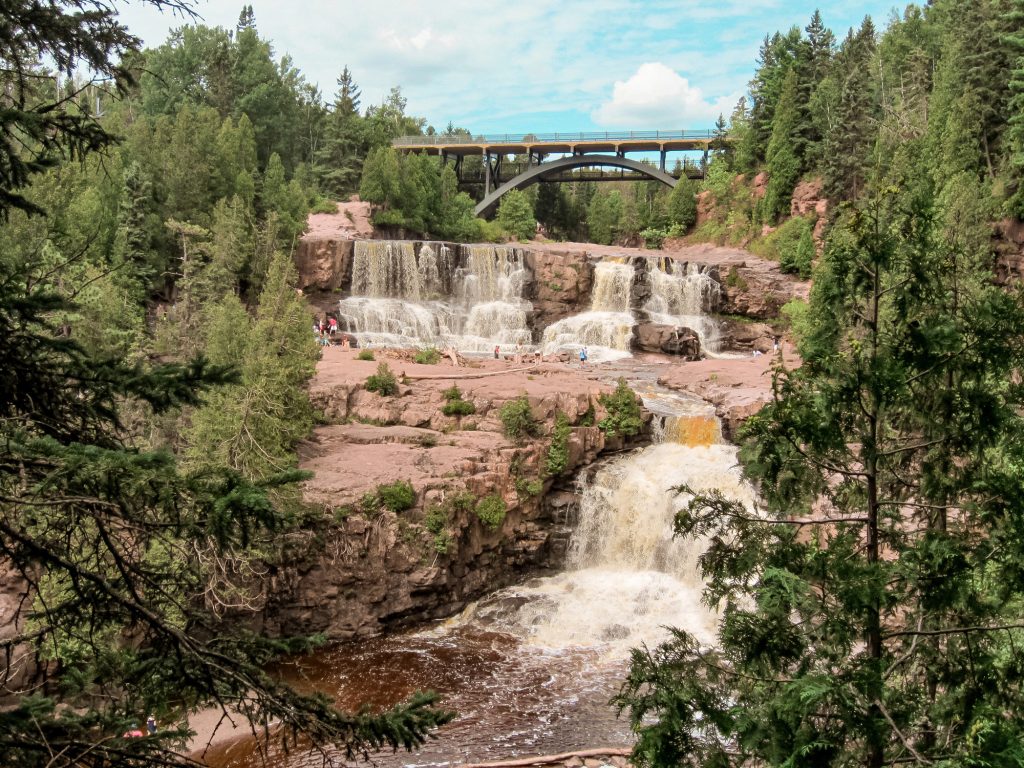
Located near Duluth and Two Harbors, Gooseberry Falls is not only one of the most popular state parks on the North Shore, but it’s also the most visited park in all of Minnesota, with over 750,000 visitors a year! The park is home to five waterfalls, including Gooseberry Falls, where the Gooseberry River flows over layered basalt rock that was formed by lava over a billion years ago.
And fun fact: the Gooseberry River actually flows into Lake Superior right at the edge of the park. You can walk down to the lakeshore and see where the river meets the lake, which is so cool to see!
Top Things to Do at Gooseberry Falls State Park
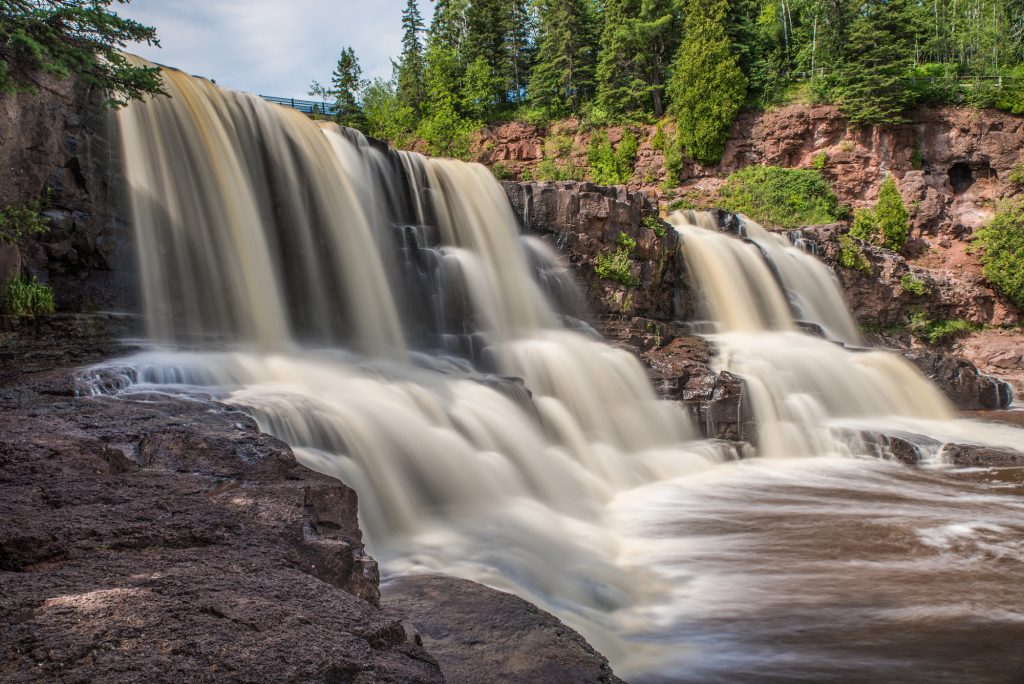
Gooseberry Falls State Park Riverview Trail
If you want an easy hike with some seriously pretty views, the Riverview Trail is a great pick. It’s 2.6 miles out and back and starts from the parking area off County Highway 100. The trail follows the Gooseberry River, and you’ll pass the Lower Falls before the trail opens up to views of Lake Superior.
Hike to Fifth Falls
If you’re looking to escape the crowds a bit and want more of a traditional hike, head out on the Fifth Falls and Superior Hiking Trail Loop. This 3-mile loop takes you past the main waterfalls, follows the Gooseberry River upstream, and leads you to Fifth Falls, a smaller waterfall tucked farther back into the park.
Check Out the Gitchi Gummi Trail
For lake views and some great overlooks of the Gooseberry River and Lake Superior, check out the Gitchi Gummi Trail. This trail is about 2.2 miles round trip and climbs up to scenic viewpoints above the treeline, where you can look down at the river and out across the lake. It’s not a hard hike, but it does have a few uphill sections.

Don’t miss: Grabbing pie on your way here! There’s a long-standing debate between Betty’s Pies and Rustic Inn Café. We’ll let you decide who wins, but we’re always down for any excuse to eat pie.
2. Split Rock Lighthouse State Park

If we had to pick one of the most iconic and photographed spots along the Minnesota North Shore, it would hands down be Split Rock Lighthouse. Even if you’ve never been to Minnesota, there’s a good chance you’ve seen a photo of this lighthouse. And seeing it in person is just as breathtaking as you’d hope.
Built back in 1910 after a devastating storm in 1905 damaged or destroyed nearly 30 ships on Lake Superior, Split Rock Lighthouse was designed to help guide ships safely through these often rough waters. Its light could reach 22 miles out over the lake, warning ships of the dangerous coastline. While the lighthouse itself is no longer operational, it’s now preserved as a historic site and remains one of the North Shore’s most well-loved landmarks.
You can either visit the lighthouse itself (managed by the Minnesota Historical Society, with its own fee) or view it from the lakeshore at the state park, which is what we did!
Top Things to Do at Split Rock Lighthouse State Park


See the Lighthouse from the Lakeshore
One of the most popular (and budget-friendly) ways to see Split Rock Lighthouse is from the lakeshore within the state park. If you’re not looking to tour the inside of the lighthouse, this is definitely the way to go!
We parked at the Little Two Harbors parking lot and followed the short path down to Pebble Beach, where you get an absolutely gorgeous view of the lighthouse on the cliff. From here, you can walk along the lakeshore and get different angles of the lighthouse. It makes for some awesome photos, especially if the skies are a little moody (which they often are along the North Shore!).
Visit the Lighthouse Grounds and Museum
If you just want to climb to the top of the lighthouse for the full experience, you can visit the Split Rock Lighthouse Historic Site, which is managed separately by the Minnesota Historical Society and has its own entrance fee.
Inside the grounds, you can tour the lighthouse keeper’s house, check out the museum exhibits, and even climb to the top of the lighthouse for an epic view of the lake and shoreline. The historical displays do a great job telling the story of the shipwrecks, storms, and life as a lighthouse keeper back in the day!
Hike the Day Hill Trail
If you’re looking for a longer walk along the shoreline, we highly recommend the Day Hill Loop, a 3.5-mile trail that offers some awesome lake views and a different perspective on the lighthouse. The trail climbs up to Day Hill, where there are the remains of a stone structure that was once part of an early settler’s plan to build a home overlooking the lake (though the house was never completed).
3. Tettegouche State Park


If we had to pick one park that totally surprised us during our time on the North Shore, it would be Tettegouche State Park. (And if you’re wondering how to say it, it’s Tet-uh-gooch.) We weren’t quite sure what to expect here, but it quickly became one of our favorite Minnesota North Shore state parks. This park has everything we love, including rugged cliffs that drop into the lake, waterfalls, great hiking trails, and even a suspension bridge that swings over a river gorge.
Tettegouche is actually the largest state park on the North Shore, and while Shovel Point is probably the most photographed spot in the park, there’s so much more to see beyond the lakeshore. Including the Baptism River, a handful of quiet inland lakes, hardwood forests, and High Falls, the tallest waterfall entirely within Minnesota!
Top Things to Do at Tettegouche State Park
Hike the Shovel Point Trail
If you only do one hike while you’re here, make it the Shovel Point Trail (we LOVED this hike!). This trail is about 1.2 miles round trip and starts right from the visitor center. It takes you out along the cliffs, with several viewpoints along the way where you can look out at Lake Superior and down at the waves crashing into the rocks below.
%22%2C%22url%22%3A%22https%3A%2F%2Fadventuresofaplusk.com%2Fvisiting-minnesotas-north-shore%2F%22%2C%22image%22%3A%22https%3A%2F%2Fadventuresofaplusk.com%2Fwp-content%2Fuploads%2F2021%2F12%2FDSC00060.jpg%22%2C%22publicationDate%22%3A%222021-12-19T01%3A25%3A12.000Z%22%2C%22lastUpdatedDate%22%3A%222025-04-27T17%3A22%3A19.000Z%22%2C%22authors%22%3A%5B%22Kathryn%20Frazer%22%5D%7D&_ir=U8%7C7d20223d-d356-11ee-ab18-cf2aaf57afa4%7C1745788959562%7C151b1d71)
Visit High Falls on the Baptism River
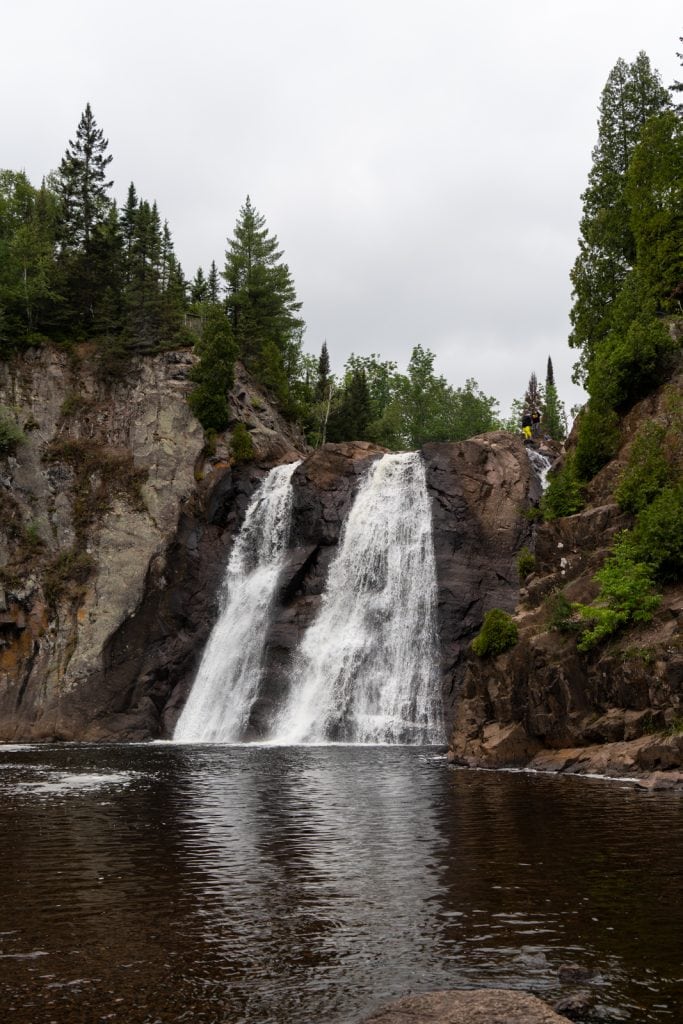
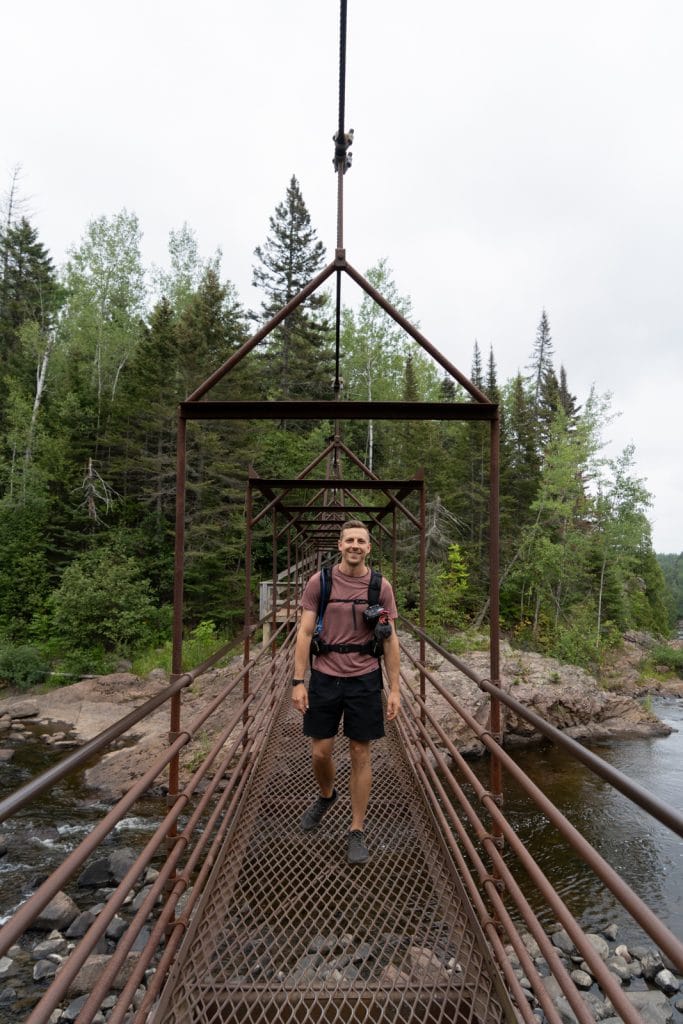
Not to be confused with the one in Grand Portage, this High Falls is the tallest waterfall entirely within Minnesota, which reaches a height of roughly 70 feet. The trail to reach it is 2.8 miles round trip and takes you through the woods, across a cool suspension bridge, and out to an incredible overlook. It’s one of the park’s best hikes!

Explore Black Beach
Located in Silver Bay, Black Beach is one of the only beaches like it on the North Shore, and while the origin isn’t exactly natural, the result is super pretty. Black Beach actually gets its name from the dark sand created by taconite tailings, which are leftover bits from iron ore processing. Back when mining was booming in the area, waste from the nearby taconite plant flowed into Lake Superior and eventually settled here, creating a totally unique black shoreline!
4. George H. Crosby Manitou State Park
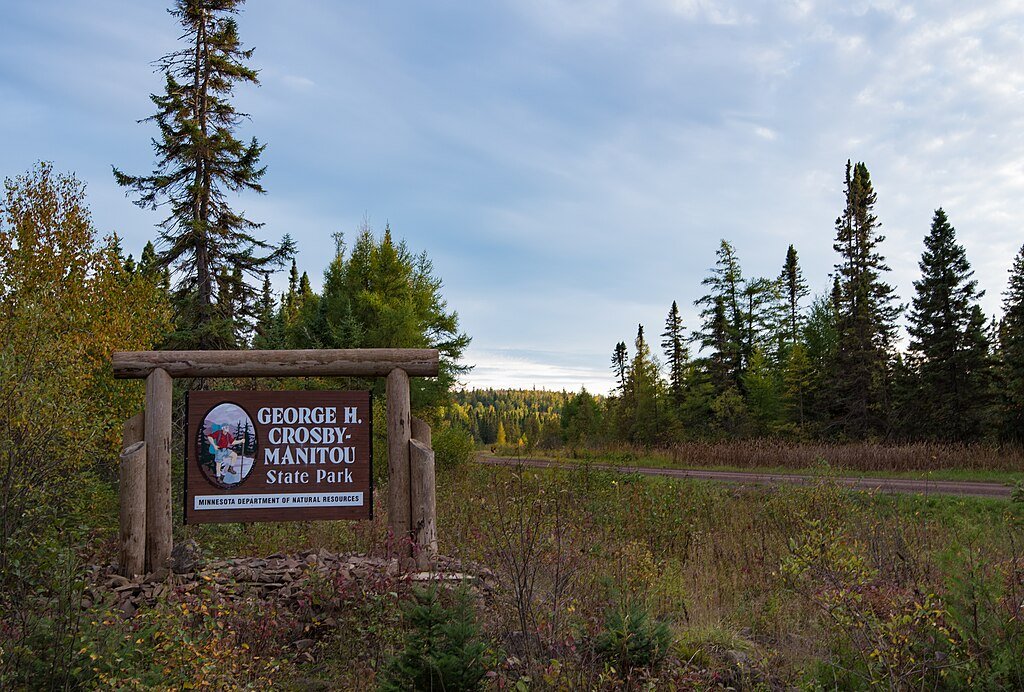
George H. Crosby Manitou State Park is a remote, rugged wilderness park located near Finland, Minnesota, just inland from Lake Superior’s North Shore, and is only accessible by dirt road. Donated by mining magnate George H. Crosby in 1955, it was Minnesota’s first state park designed specifically for backpackers!
The park is intentionally undeveloped, with no visitor center or drive-in campsites, offering a true backcountry experience. It’s known for its steep, challenging trails and beautiful waterfalls that cascade along the Manitou River.
Important note: Getting to George H. Crosby Manitou State Park requires driving on a dirt road. While doable in any vehicle, keep in mind that it could be muddy after it rains.
Top Things to Do in George H. Crosby Manitou State Park
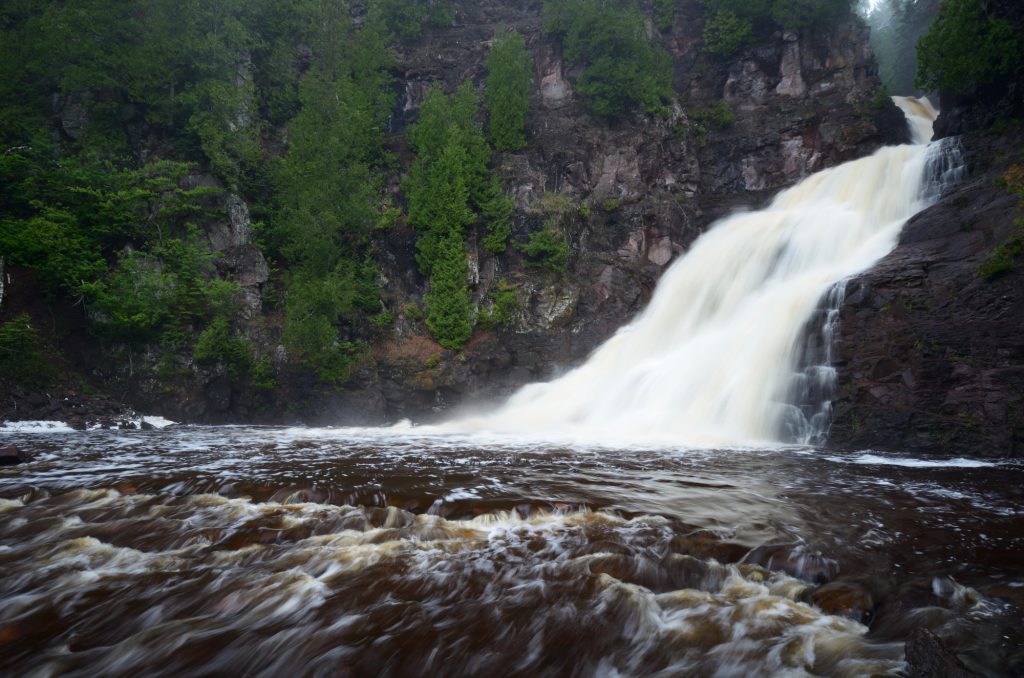
Hike the Humpback Loop
The Humpback Loop is a 2.6-mile trail that shows off some of the best scenery in the park! It winds through a dense forest, follows the Manitou River for a bit, and even crosses over it with some seriously pretty views. You’ll also pass the Manitou Cascades along the way!
Stroll the Benson Lake Loop
Benson Lake Loop is a short and easy 1.3-mile trail that loops around the edge of Benson Lake. Most of it is on a boardwalk, so it’s super manageable and a great option if you just want something mellow. You can also fish here, and it’s stocked with trout.
Explore Caribou Falls
Just outside the park near Finland, this 1.3-mile hike to Caribou Falls is one of the prettiest short trails along the North Shore, and makes a great quick stop on your way to the State park! It starts at the Superior Hiking Trail parking lot on Voyageur Highway and follows the Caribou River. Once you reach the falls, a set of stairs takes you down to the river, where you get a gorgeous view of the cascading waterfall.
5. Temperance River State Park
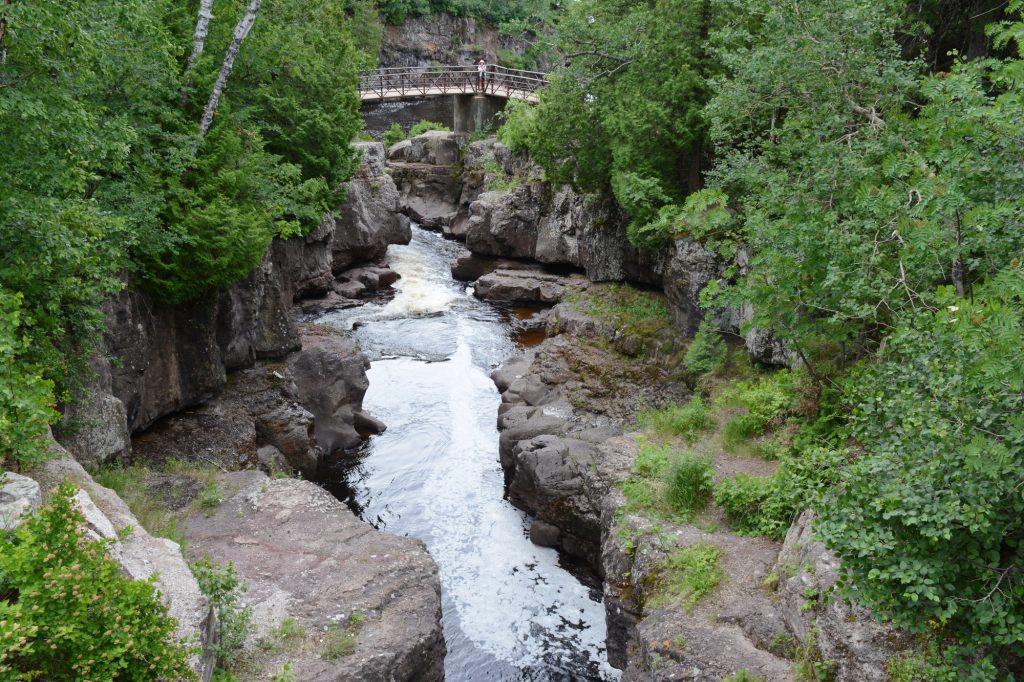
Temperance River State Park is home to the Temperance River Gorge, which is a narrow crack that has a river rushing through it as it makes its way to Lake Superior. The river has worn deep potholes and chutes into the volcanic rock over time, creating a really unique landscape that you can walk right alongside.
This park is also one of the few places where you can see a river empty directly into Lake Superior without a sandbar. You can walk all the way down to the shoreline and watch the river pour straight into the lake, which is so cool to see!
Top Things to Do at Temperance River State Park
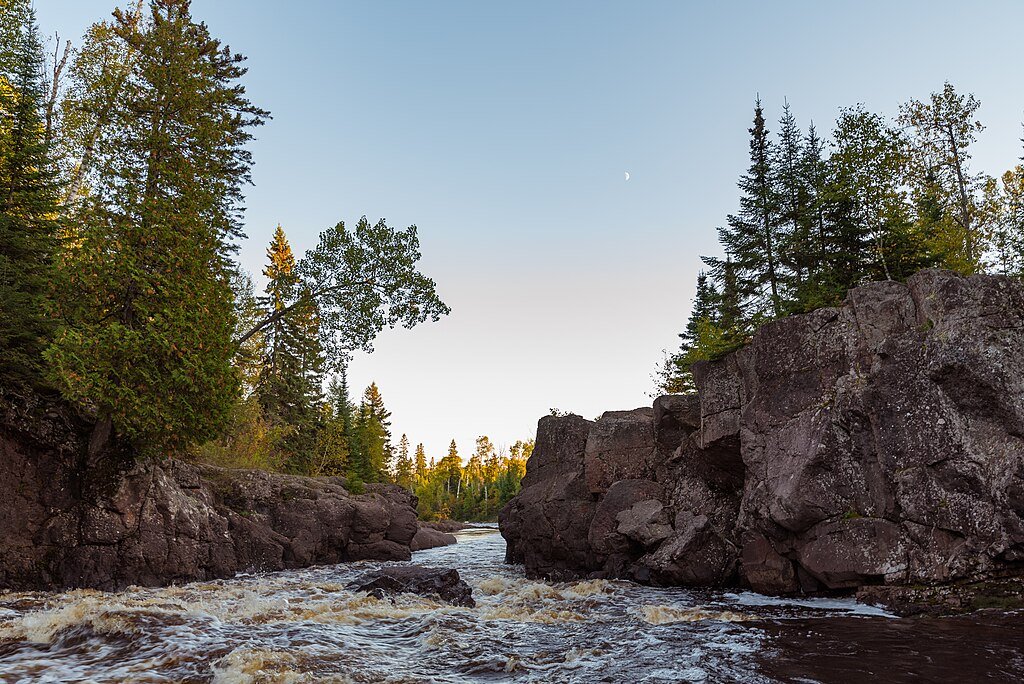
Walk the Temperance River Falls Loop
The Temperance River Falls Loop is an absolute must-do. It takes you along the rim of the gorge with tons of spots to peek down at waterfalls and pools. It’s 2.9 miles so it’s not a long hike, but it packs a punch with how much there is to see in such a short distance.
Walk to the mouth of the river
After exploring the gorge, keep following the trail down toward the lake. You’ll reach a rocky beach where the Temperance River flows right into Lake Superior, which is kind of rare for this area. It’s a great spot to sit for a bit, dip your feet (if you’re brave), and take in the views.
Hike up to Carlton Peak
If you’re up for more of a challenge, the trail to Carlton Peak starts from just across Highway 61. It’s about 7 miles round trip and climbs through the forest to a rocky summit with sweeping views of the lake and inland hills. It’s a solid hike and one of the better long trails in this area.
6. Cascade River State Park
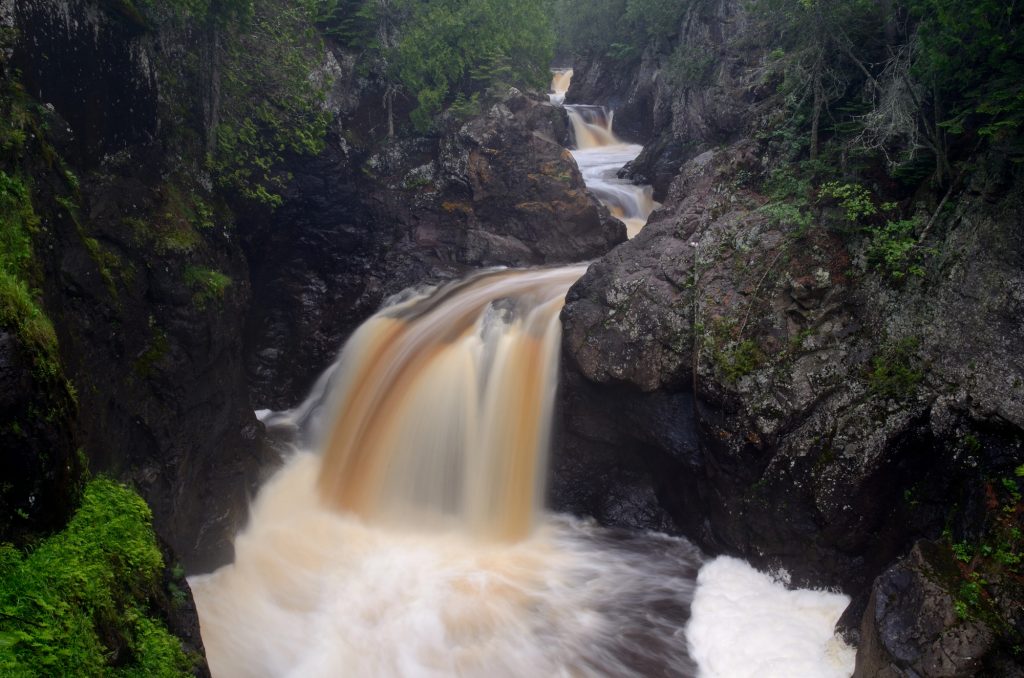
Cascade River State Park is another gorgeous stop on the North Shore, just 15 miles south of Grand Marais, but it actually feels slightly less busy than some of the bigger parks. As the name hints, the Cascade River is the main attraction here. The river drops down a steep, rocky gorge in a series of waterfalls, and the trail follows right alongside them.
The park is also home to some beautiful forest trails, quiet backcountry areas, and one of the best views on the North Shore if you’re up for a longer hike.
Top Things to Do at Cascade River State Park


Cascade River Loop
The Cascade River Loop is an awesome trail if you want to see more of the river beyond the quick roadside stop. It’s 7.5 miles out and back, starting and ending at the Lookout Mountain Trailhead. From there, you’ll follow the Superior Hiking Trail north, with plenty of chances to take in views of the lower cascades, cross the river a few times, and wind through the forest.
Hike to Lookout Mountain
For some serious views, take the trail up to Lookout Mountain. It’s about 3 miles round trip and climbs steadily through the woods before popping out at an overlook with sweeping views of Lake Superior and the hills all around.
Explore the inland trails
The Superior Hiking Trail runs right through the park, so you can extend your adventure and get deeper into the forest if you want a quieter experience. These trails are usually less crowded and take you past creeks, through dense woods, and up into higher terrain.
7. Judge C.R. Magney State Park

Judge C.R. Magney State Park is one of the most unique and mysterious spots along the North Shore. Located about 10 miles northeast of Grand Marais, this park is best known for the Devil’s Kettle, a waterfall where half the river literally disappears into a deep, swirling hole in the rock. For years, no one knew where the water went, which made it one of the North Shore’s most famous natural mysteries.
People had all kinds of wild theories about where the water went, but eventually scientists figured out that the water reenters the river just below the falls through an underground path. It happens so forcefully and out of sight that you can’t see where it comes back. Even though the mystery is solved, seeing it in person is still absolutely mind-blowing.
Top Things to Do at Judge C.R. Magney State Park

Hike to the Devil’s Kettle
Devils Kettle is the main reason most people visit this Minnesota North Shore state park, and we can confirm it doesn’t disappoint. The 1.9-mile trail follows the Brule River upstream, with lots of rushing water and smaller waterfalls along the way. After a climb up about 175 stairs, you’ll reach the overlook where the river splits in two and the kettle swallows half the water.
Try trout fishing on the Brule River
The Brule River is known for brook and brown trout, and you’ll often see anglers casting lines in the deeper pools near the bridge or along the upper river. You’ll need a Minnesota fishing license, and catch and release rules apply in some sections, so be sure to check the latest regulations.
8. Grand Portage State Park

Grand Portage State Park is the very last stop on the North Shore before you hit the Canadian border, and it’s such a fun one to end on. The main reason most people visit is to see High Falls, which just so happens to be the tallest waterfall in Minnesota (even if it’s technically shared with Canada). The Pigeon River plunges 120 feet over a rocky cliff, creating one of the most dramatic scenes on the entire North Shore.
What makes this park extra special is that it’s the only state park in Minnesota that’s co-managed with a tribal nation. The Grand Portage Band of Lake Superior Chippewa helps care for the land, and you’ll find signs and info throughout the park that highlight the area’s Indigenous history and connection to the land.
There’s no camping here, and it’s day-use only, but it’s a perfect stop if you’re heading north or making the full North Shore drive. Plus, no state park pass is required to visit, so you can just pull in and start exploring.
Top Things to Do at Grand Portage State Park


Walk to High Falls
High Falls is the main attraction, and it’s super easy to get to. The paved trail is just 1.1 miles round trip and totally accessible. It takes you through the woods to a series of overlooks where you can watch the Pigeon River thunder over the cliff into a rocky gorge. Keep going past High Falls to Middle Falls. On clear days, you can even see into Canada from parts of the trail.
Susie Islands Overlook
If you’re driving up Highway 61 to Grand Portage State Park, Susie Islands Overlook is an easy and beautiful stop just a few miles before you get there. The overlook sits high above Lake Superior and gives you an incredible view of the Susie Islands, a group of uninhabited islands near the Canadian border. On a clear day, you might even catch a glimpse of Isle Royale across the lake. The largest island, Susie Island, was once mined for copper but is now protected by the Grand Portage Band to preserve its rare arctic plant life.
Mount Josephine Lookout Tower Trail
This hike to Mount Josephine technically isn’t in Grand Portage State Park, but it’s super close and totally worth mentioning. We didn’t get to do it ourselves because the trailhead parking was tiny and we couldn’t squeeze the van in. But the payoff at the top looks unreal. It’s a 2.5-mile hike, and you’ll get sweeping views looking north into Canada and south across Lake Superior into Minnesota. Plus, there’s also a cool old tower foundation up there!


Don’t miss: On your way up to Grand Portage, stop in Grand Marais. It’s hands-down the best little town on the North Shore. We loved grabbing coffee at Java Moose, donuts from World’s Best Donuts, and tacos from Hungry Hippie Tacos.
Bonus! Grand Portage National Monument

While it’s not part of Grand Portage State Park, Grand Portage National Monument is just down the road and definitely worth a visit. Plus, it’s free to check out!
Here, you can tour a fully reconstructed version of the North West Company’s summer headquarters, complete with a kitchen, dining room, and other buildings from the fur trade era. The North West Company actually came to this area to challenge the Hudson’s Bay Company’s monopoly and ended up controlling 80 percent of the North American fur trade. Pretty wild!
Top Things to Do at Grand Portage National Monument

Explore the site
As you walk through the site, you’ll find costumed interpreters sharing what daily life was like back then and how the Ojibwe and the North West Company worked together. There’s also a recreated Ojibwe village to explore, and the whole place sits right along the shore of Lake Superior, which makes the setting that much more beautiful.
Hike Mount Rose
For a quick hike with a view, check out the Mount Rose Trail. It’s 1.2 miles round trip and overlooks the monument, Lake Superior, and the surrounding forest. We started this trail… but didn’t get too far before running into a black bear. He was heading the same direction we were, so we decided to let him have the trail and turned around.
Trek the Grand Portage Trail
If you’re up for a real adventure, the historic Grand Portage Trail is 8.3 miles out and back and follows the route the voyageurs used to carry goods between the Great Lakes and inland Canada. The trail ends at Fort Charlotte, right near the Canadian border, where you can even camp overnight with a free permit. Just keep in mind, the water here contains Giardia, so don’t let your pups get in!
Tips for Visiting Minnesota’s North Shore State Parks


Get a Minnesota State Parks Pass
If you’re planning to visit more than one park (which you totally should), grab a Minnesota State Parks day pass or annual permit. It’s $35 for a year or $7 per day. You can buy one online or at most park entrances. A day pass is good at any park until 10 PM, so you can bounce between parks all day. Grand Portage State Park is the only one that’s free, but the rest do require a permit to park.
Don’t rely on cell service
Service gets spotty the farther north you go, especially once you get past Silver Bay. Download offline maps in advance (we love using AllTrails) and maybe keep a paper map on hand if you’re really heading deep into the woods. Most trailheads have signs and maps, but it’s always nice to have your own backup.
Lake Superior is ICE cold
Even in the middle of summer, Lake Superior is freezing. The surface only hits around 60 to 68 degrees, and it’s usually way colder than that. It’s refreshing if you’re brave, but don’t expect a warm swim. It’s more of a “dip your toes and scream a little” situation.
You’re in the Central Time Zone
This might be obvious, but if you’re on a longer road trip like we were, you’ll likely cross a few time zones between states. Minnesota runs on Central Time, so if your phone or watch is bouncing around, that’s why.
The best time to visit
While you can enjoy the Minnesota North Shore state parks year round, for the ultimate experience, head there in the summer or fall! The summer is when trails will be snow free and you can enjoy the many swimming holes in the area. Just keep in mind that the mosquitoes can be gnarly in the summer though!
We personally visited the Minnesota North Shore state parks in early August. And while a tad chilly, foggy, and rainy at times, it was overall a perfect time to visit! However in the future, we’d love to visit in the fall to see the area’s stunning fall foliage!
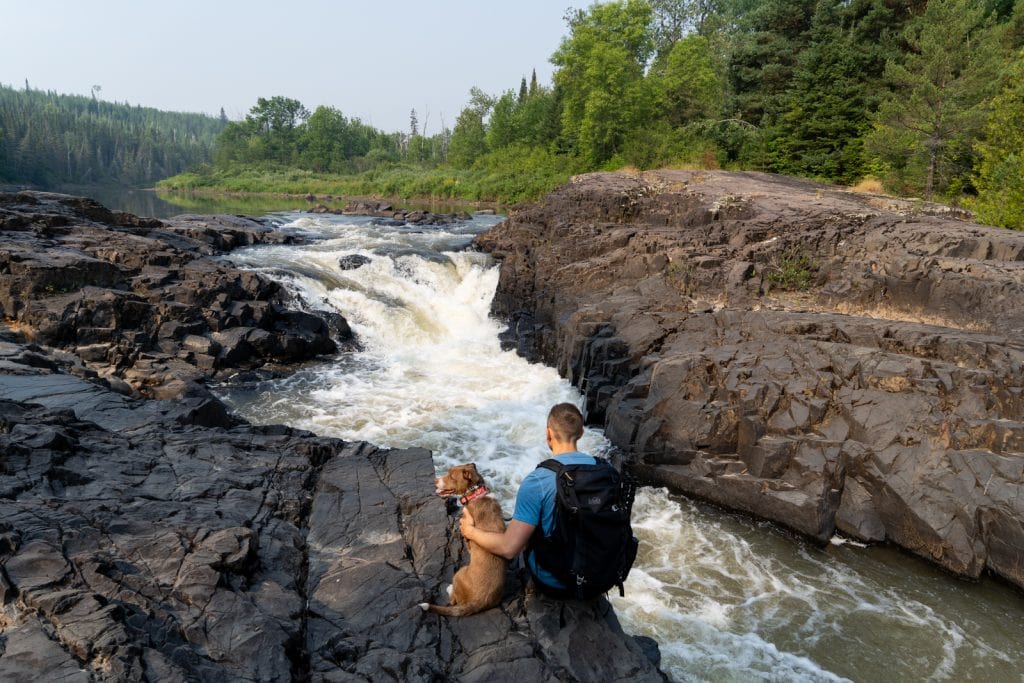
Be ready for stairs
We were surprised by how many stairs the trails on the North Shore have. Minnesota’s known as the “land of 10,000 lakes,” but after this trip, we’re pretty sure it should be “the land of 10,000 stairs.” A lot of the hikes are short and manageable, but just know there are stairs on most trails, especially around waterfalls and overlooks.
Bring your pup!
Dogs are welcome in all the North Shore state parks as long as they’re leashed. Be sure to bring along poop bags and water!
Start early if you can
Some of the popular parks like Gooseberry Falls, Split Rock, and Tettegouche fill up fast (especially on weekends and during fall). If you can get an early start, you’ll beat the crowds. Plus, parking is way easier.
Be bear aware
This is black bear country, and while sightings are rare, they do happen (ask us about our Mount Rose hike). Keep your distance if you see one, make a little noise on the trail, and don’t leave food lying around. It’s also a good idea to have bear spray. While black bears tend to not be aggressive, we’d rather have it and not need it than need it and not have it!
Where to Stay on Minnesota’s North Shore
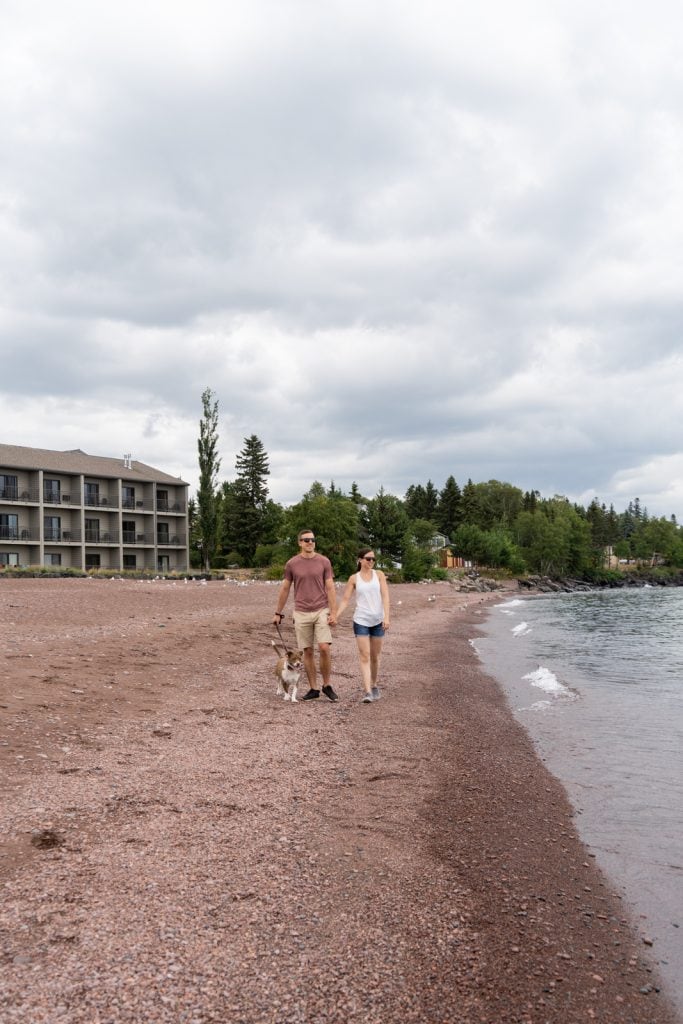

Most of the state parks along Minnesota’s North Shore offer camping options. Gooseberry Falls, Split Rock Lighthouse, Tettegouche, Temperance River, Cascade River, and Judge C.R. Magney State Parks all have campgrounds with varying amenities. Reservations are required and can be made through the Minnesota State Parks Reservation System.
If camping isn’t your thing, we suggest picking two main spots to base yourself. Duluth for the start of your trip and Grand Marais for when you head farther north. That way you’re not unpacking and repacking every day, and you’ll be close to a ton of great parks and hikes.
Duluth is a great place to kick off your North Shore adventure. It’s a fun lakeside city with good food, walkable neighborhoods, and plenty of options for places to stay.
Grand Marais is our favorite place to stay farther up the shore. It’s a super cute harbor town with restaurants, shops, and easy access to the northern state parks. We stayed in a few different spots during our trip, and we rounded up a ton of options, which you can check out here.
What to bring to explore the Minnesota North Shore State Parks

sturdy shoes and layers
The trails are often rocky, rooty, or muddy depending on the weather, so good hiking shoes make a big difference. We love our Altra Lone Peaks, as they are less bulky than boots, but have good traction. They are also great for hiking in water, as they dry fast!
Layers are also key since the temps along Lake Superior can change fast, especially if you’re hiking up into the hills or catching lake breezes.
snacks and water
Most of the parks don’t have food options nearby, and while some have water fountains or visitor centers, it’s always a good idea to come prepared. If you need snack ideas, you can see a list of our favorite hiking snacks here!
For water, we love our 3L Camelbak bladder, which makes it easy to carry and drink water while hiking. And since many of these hikes have natural water sources, you can also bring a Katadyn BeFree water filter bottle to fill up and filter on the go!
Bug spray and sunscreen
Depending on the season, you’ll either be sweating in the sun or swatting at mosquitoes (sometimes both).
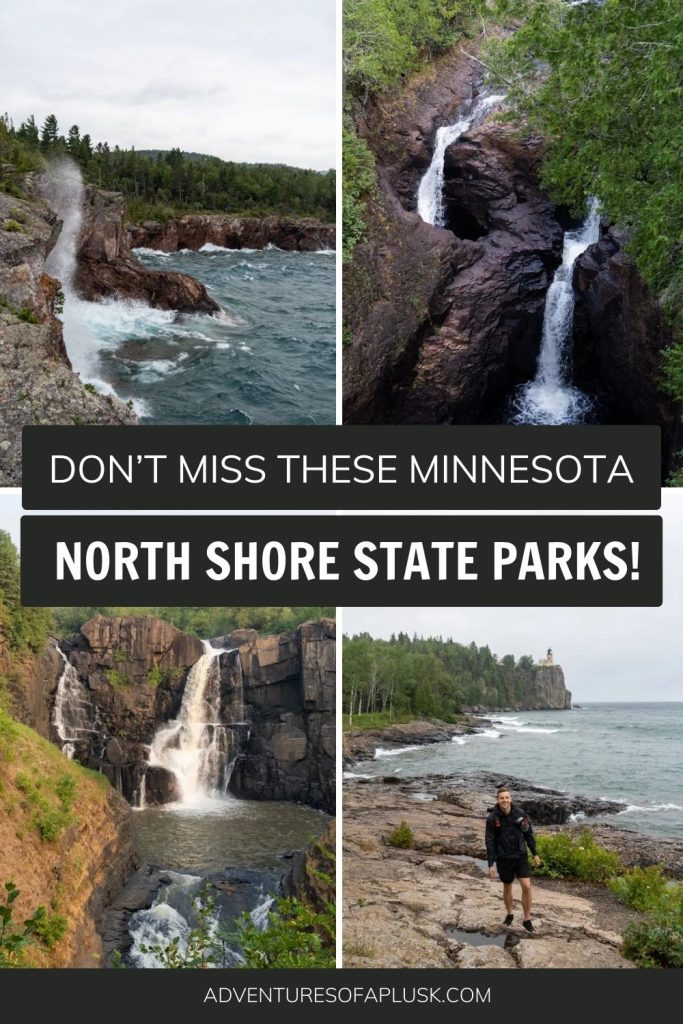
Save this guide to the Minnesota North Shore State Parks

About the author
This blog post was written by our writer Nicoll. Learn a bit about her below!
After six years of full-time travel, Nicoll is now a mountain-loving mama living in Colorado with her husband Jake, their sweet baby girl Teagan, and their pup Gunner. She loves hiking, riding her dirt bike, and finding joy in the little things.