Want to experience Japan’s most iconic mountain? We’re sharing 20+ fun things to do in Mount Fuji’s Five Lakes region!
For most first time visitors to Japan, seeing Mount Fuji is at the top of their bucket list. And for good reason!
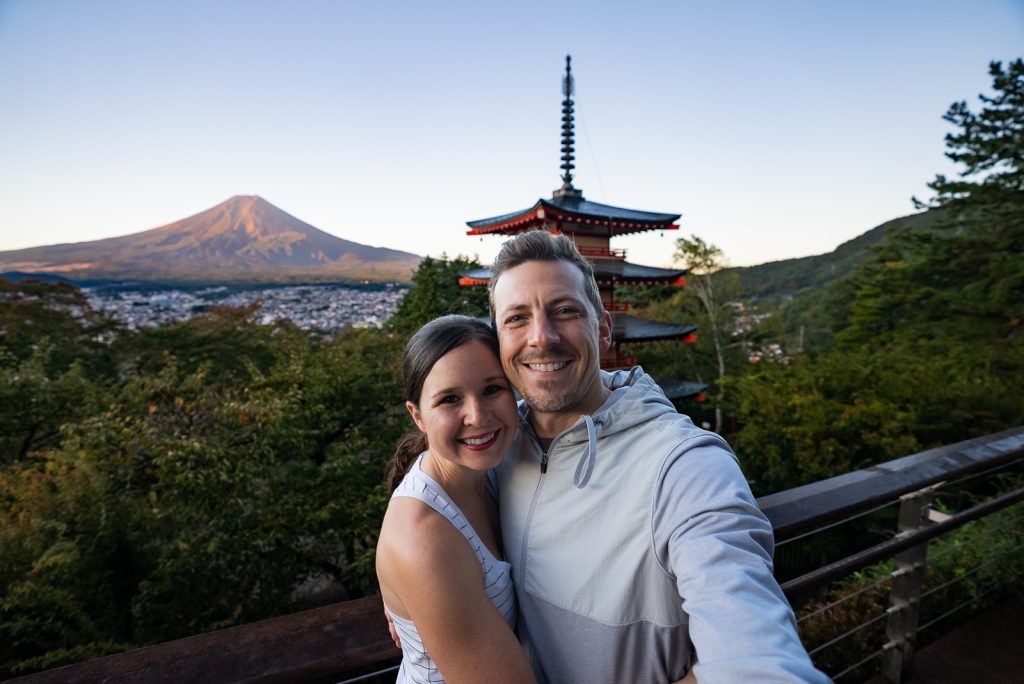
Standing at 3,776 meters (12,388 feet) tall, Mount Fuji is not only Japan’s tallest mountain, but also one of its 111 active volcanoes, last erupting in 1707. It has become one of the country’s most iconic symbols, known for its dramatic prominence, conical shape, and snow cap during certain seasons.
And while seeing the mountain with your own eyes (which is harder than you think!) is well worth experiencing, there are also many things to do in Mount Fuji. In this guide we’re sharing all of the best stops in the Fuji Five Lakes area, from scenic views, local eats, to fun activities. Plus some important things to know before you go. All based on our multiple days road tripping through the area!
Looking for more Japan travel tips & guides?
- 35+ fun things to do in Tokyo, Japan
- 4 days in Tokyo itinerary: See the best of the city!
- How to visit Tokyo for first timers: Important logistics & tips!
- 10 best places to visit in Tokyo for first timers (& What to do in each!)
- 12 best things to do in Hakone: Japan’s mountainous hot spring town!
- Hiking the Nakasendo Trail from Magome to Tsumago
- Renting a campervan in Japan: Everything to know!
- The 37 best things to do in Kyoto, Japan
- Read all of our Japan guides
- Watch our Japan video series
About Mount Fuji’s Five Lakes Region
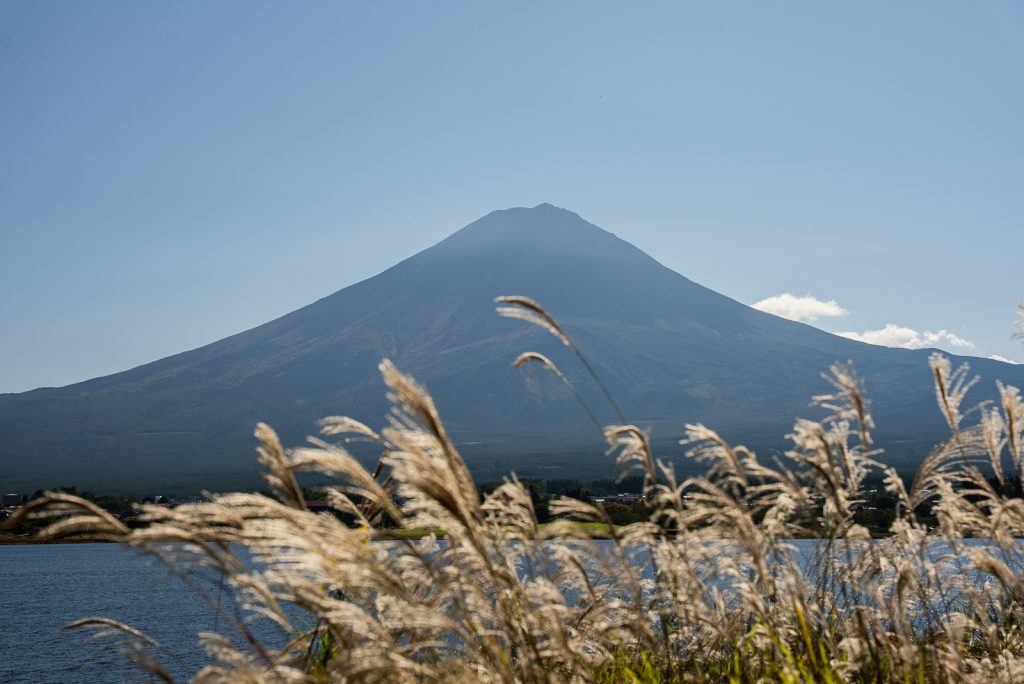
Mount Fuji is located about 100 km (62 miles) southwest of Tokyo. And the area that surrounds the peak is known as the Fuji Five Lakes. Here you’ll find Fuji-Hakone-Izu National Park, different towns, and five different lakes: Kawaguchiko, Yamanakako, Saiko, Shojiko, and Motosuko.
💡 Fun fact: “Ko” means “lake” in Japanese. So you can either call the lakes “Lake Kawaguchi” or just “Kawaguchiko.”
All of these different lakes vary in size and offer a variety of experiences. Kawaguchiko is the easiest to visit by public transportation and the most developed, therefore making it the most popular of the lakes. This is where you’ll find many of the best things to do in Mount Fuji! But some of the smaller lakes, like Shojiko, have beautiful scenery and are worth a visit as well.
We’ll be sharing things to do across all of these lakes, with the majority of the stops being at Kawaguchiko. Plus some activities outside of the lakes that are an easy add-on when exploring the area!
21 Fun things to do in Mount Fuji
1. Enjoy sunrise from Chureido Pagoda
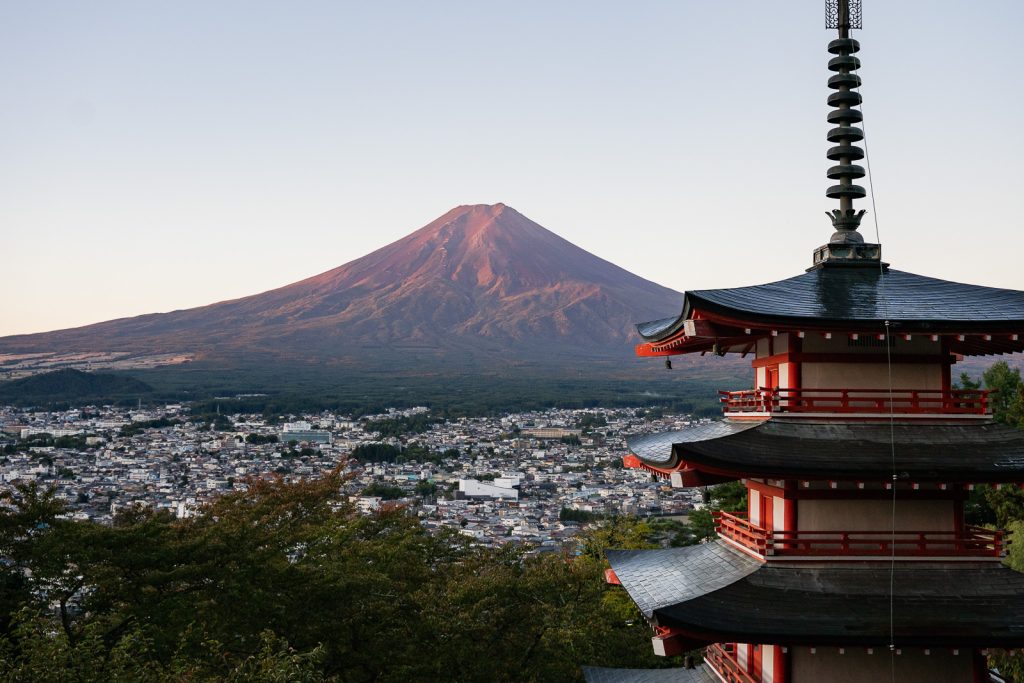
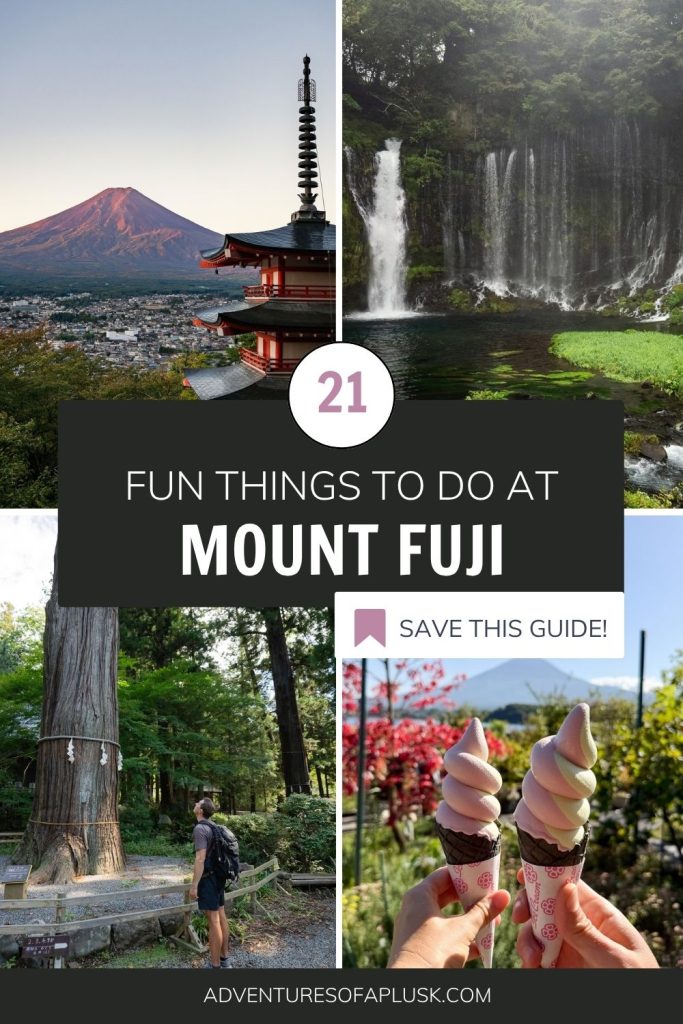
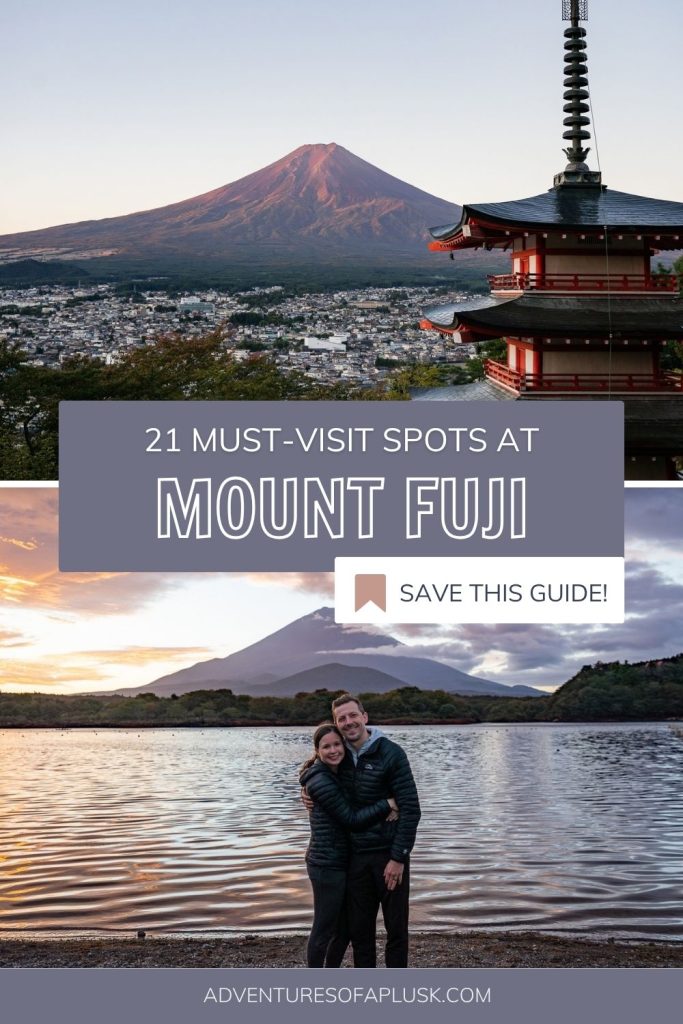
Quite possibly the most iconic thing to do in Mount Fuji is to see the views from Chureido Pagoda. This pagoda is part of the Arakura Sengen Shrine and was built in 1963 as a peace memorial. But today, it has become a popular viewpoint and photo spot, with the pagoda and Mount Fuji in frame together.
You can visit the Chureido Pagoda any time of day, but it’s very popular to visit at sunrise. And in our opinion, well worth getting up early for! If you catch it on a clear day, nothing beats seeing the alpenglow on Mount Fuji and watching the sunlight illuminate the valley below.
To visit the pagoda, you will have to do a short hike, which has about 400 stone steps. On a clear day, it is well worth the climb up!
If you want to visit at sunrise, first make sure it is going to be a clear morning. A foggy day may not be worth the wake up call. Then, make sure to look up the sunrise time. We suggest starting the hike up about an hour before sunrise. This will give you enough time to find a spot to stand and watch the different stages of the sunrise.
Just know that this spot is very busy, even at sunrise! You will have to stand shoulder to shoulder, in multiple rows. Make sure to pack your patience and be considerate of others. Everyone is hoping to get the same photos, so please do not hog an area and allow others to enjoy it as well. If you come mid-day, prepare for absolute madness. This is a common stop on all day trip tours to Mount Fuji.
Parking for the Chureido Pagoda
Parking is limited for the Chureido Pagoda and the best spot is the parking lot right at the base of the trail. There are about 88 spots in this lot, plus toilets. It costs ¥1,500 to park here for 6 hours, which is pretty expensive. There are other smaller and cheaper parking lots around the area, but they require you to walk a bit further.
And if you’re visiting during the Cherry Blossom season the parking lot will be closed and you’ll need to shuttle into the park or park further away at one of the lots listed here.
2. See the streets of Fujiyoshida
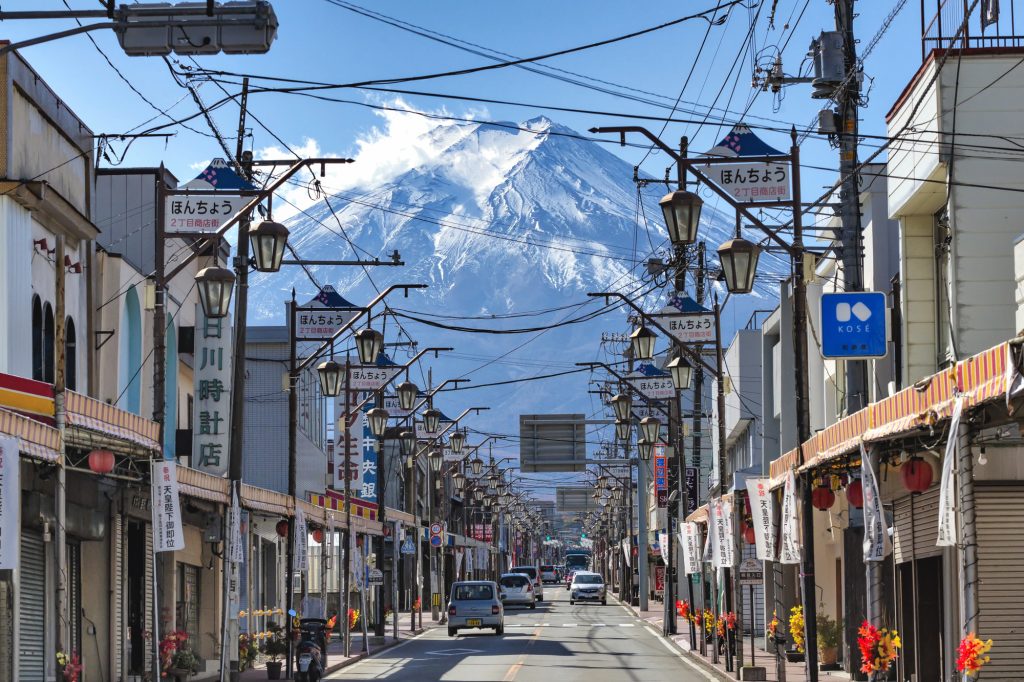
Another one of the most iconic views of Mt. Fuji is from the nearby town of Fujiyoshida. You’ve likely seen the view from Honcho Street, a retro street that looks like it was frozen in time, with cool old lanterns and Mount Fuji looming in the background. It’s very popular to snap a photo here, but please do not stand in the road or block traffic! You can also wander down the next couple streets over and get a similar vibe with less people.
There are a bunch of coffee shops and restaurants you can visit in this area as well, making it a good stop after sunrise. Unfortunately many coffee shops in Japan open a bit later than we are used to, but FabCafe Fuji opens at 8 AM. It has a really cool vibe and they serve both coffee and breakfast!
3. Get out on the water on one of the lakes
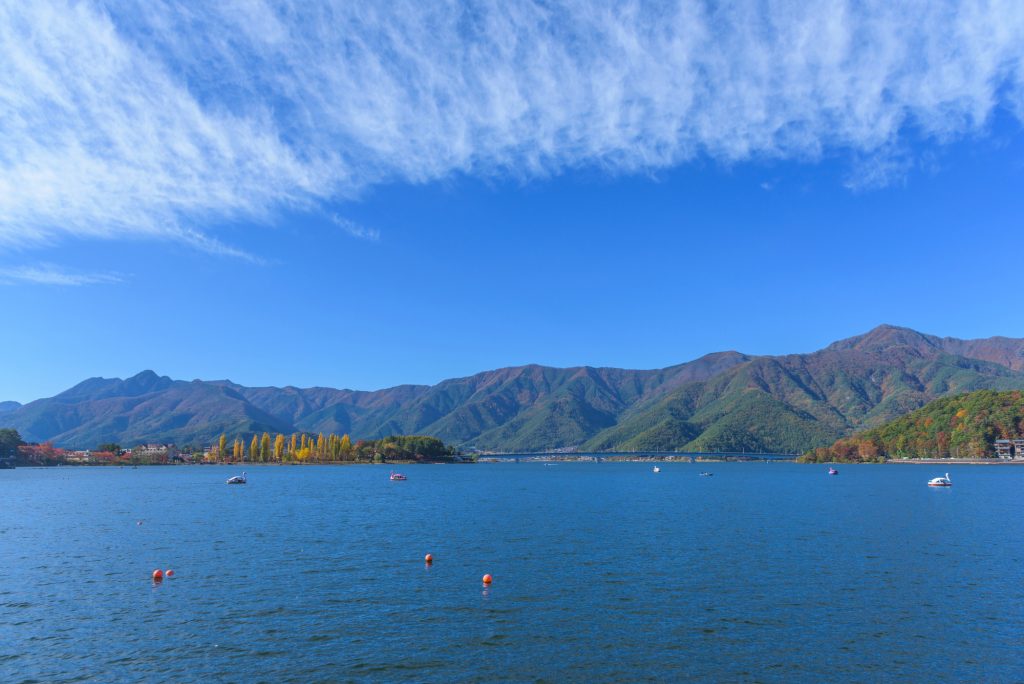
One of the best ways to experience Mount Fuji’s Five Lakes is to get out on the water! There are many different ways to do this across most of the lakes. Below are some of the best options!
Lake Kawaguchi
At Lake Kawaguchi, one popular way to explore the lake by water is to go on a sightseeing cruise. There are two different boats to choose from, which are both very unique! Their “Appare” boat is a Japanese-style pleasure boat with the motif of the Navy from the Warring States period. While their “Moguran” boat looks like a submarine (but stays above water)!
If you’d rather get out on the water on your own, you can rent a small pedal swan boat here or book a fishing tour in a dome boat or go on a kayaking tour with NaturaBase!
Lake Yamanaka
If a small swan boat isn’t grand enough for you, go out on a giant swan boat on Lake Yamanaka. Not going to lie, we wish we had visited this lake solely so we could’ve seen this boat on the water!
However, if you prefer to be on your own you can also rent a teacup boat or a small swan boat to pedal around.
NaturaBase also has a location on Lake Yamanaka where you can go on a kayaking tour and
AIRSTREAM offers both watercraft rentals and even ice fishing in the winter!
Lake Saiko and Lake Motosu
There are less water activity options on Lake Saiko and Lake Motosu, but you do have a couple options! On Lake Saiko, HOBIE JAPAN has a variety of rentals and tours. And on Lake Motosu, you can go on a kayak or SUP tour with Aqua Trail!
4. Cycle around Lake Kawaguchi
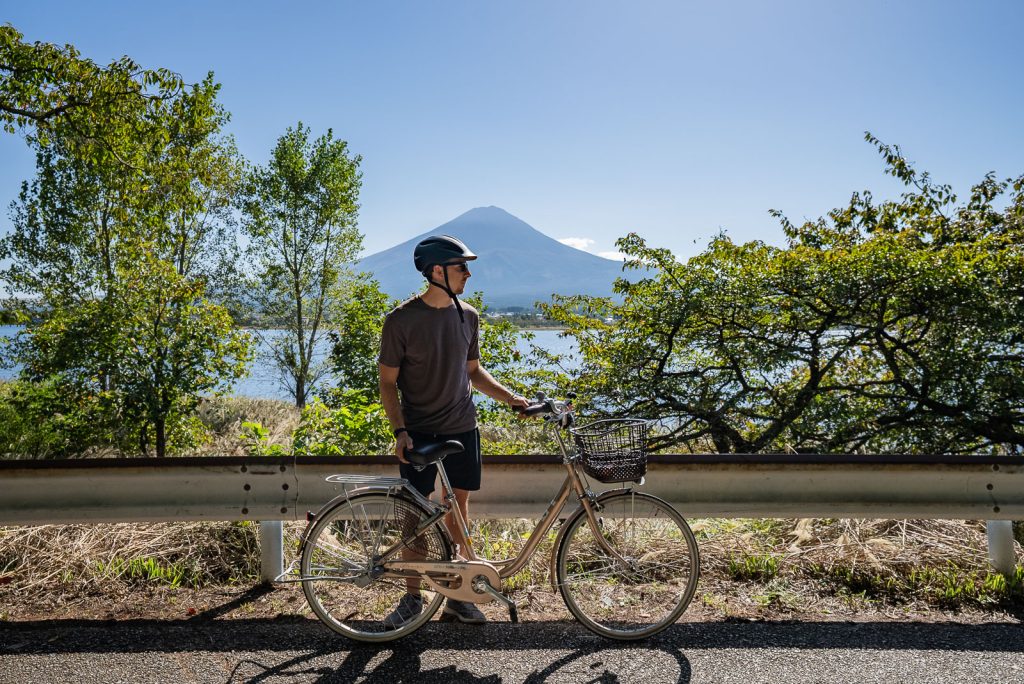
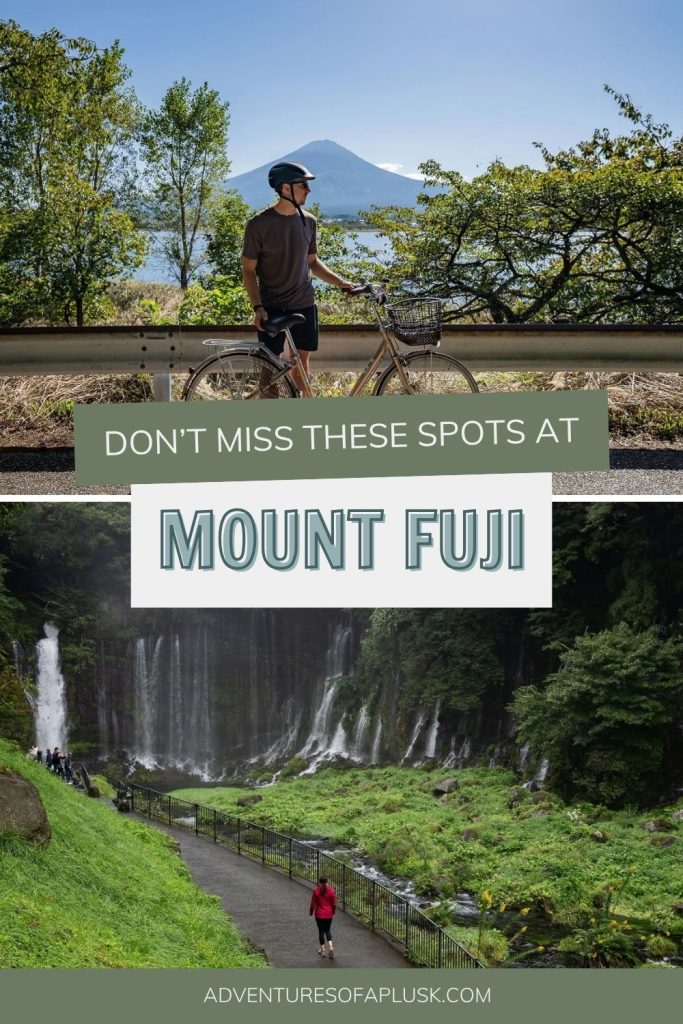
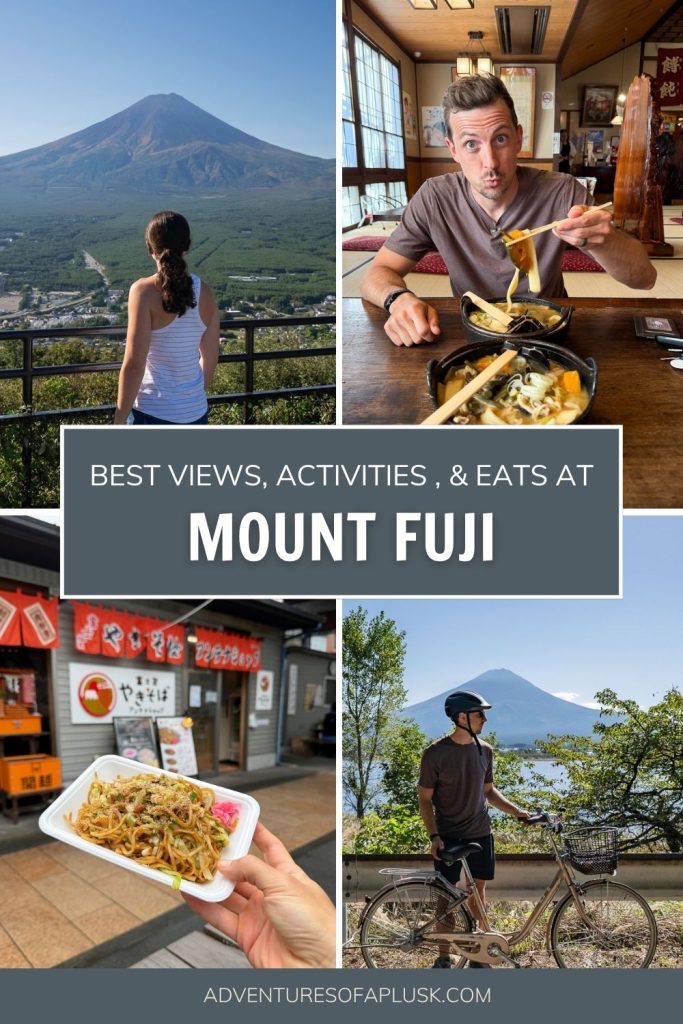
One of our favorite things we did at Mount Fuji was ride bikes around Lake Kawaguchi. Not only is it a scenic ride, but there are some big perks! For one, you won’t have to deal with parking at every single stop along the lake. This alone will save quite a few headaches! It also allowed us the chance to explore some spots that are less visited by most visitors and tour groups.
We mostly followed this route, which takes you past popular things to do in Mount Fuji, like Mt. Fuji Panoramic Ropeway and Oishi Park. But we also took a couple detours to visit some spots not along the lakeshore, like Nagasaki Coffee and Kawaguchi Asama Shrine.
The route was a mix of bike lanes and bike paths, but also some road riding. Since cycling is very popular in this area, we found that most drivers were very respectful of cyclists! We suggest doing the route counter-clockwise, so you’re always riding on the lake side. (Japan drives on the left!)
There are many places you can rent a bike at Lake Kawaguchi, but we rented from Carp Rental Bicycle. It was very affordable and the owner is super nice and friendly! This route was totally doable for us on a regular bike, but we did get a bit tired due to the sunshine. An eBike will definitely make you quicker and be even easier!
⛑️ Safety note: The bikes come with locks, but if you want a helmet, you will have to ask for one. For some reason, helmet wearing is not common in Japan, so you won’t see many people wearing one. But we believe in protecting our noggin’.
5. Ride the Mount Fuji Panoramic Ropeway
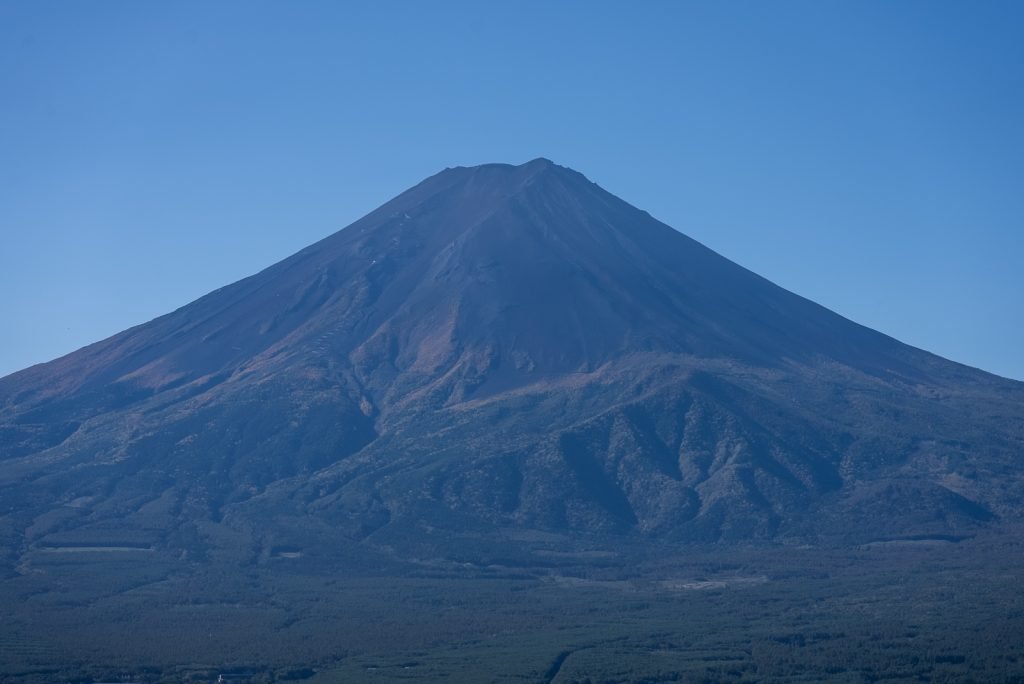
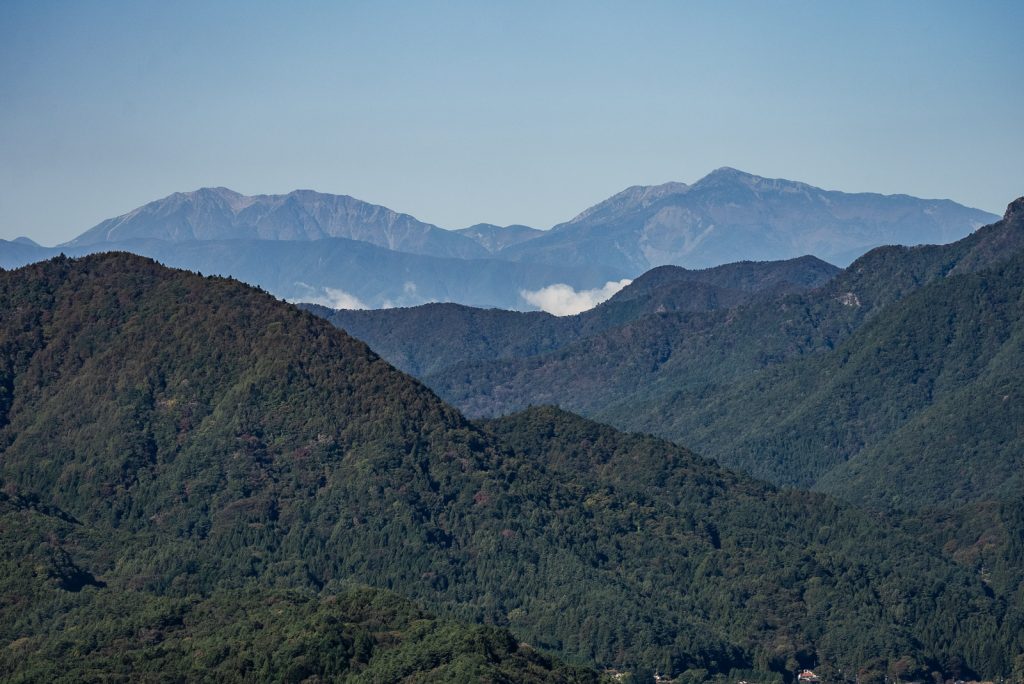
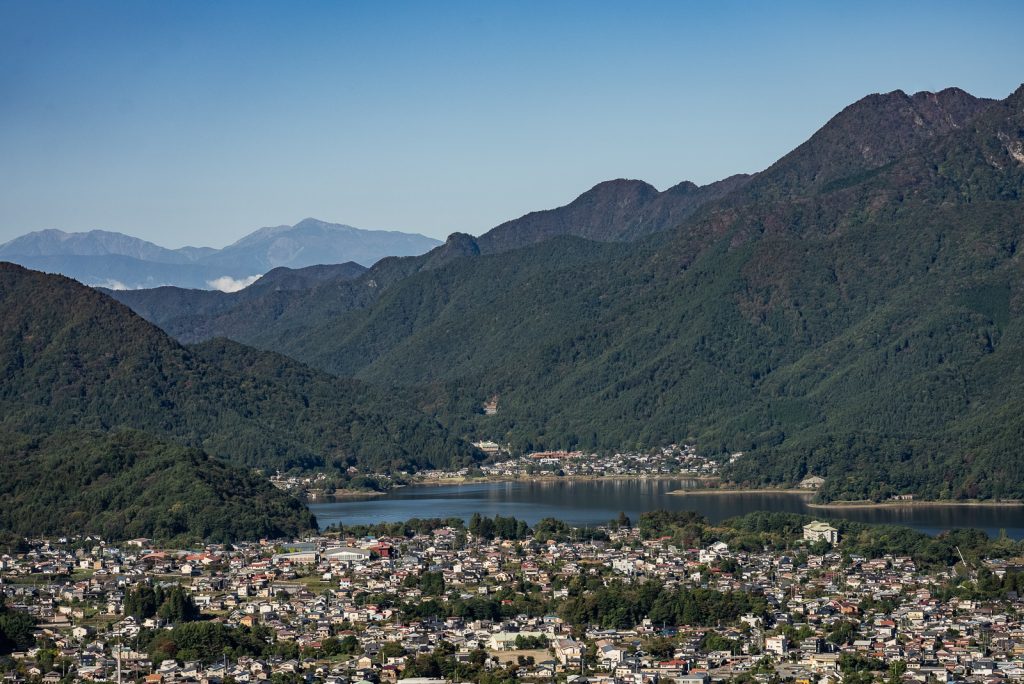
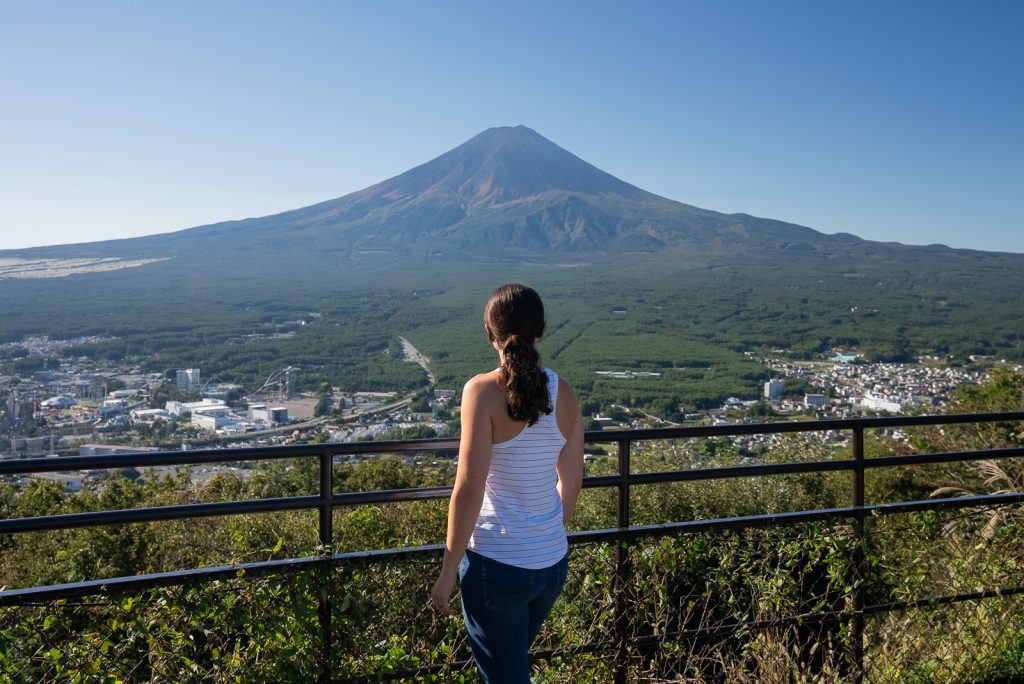
For an elevated view of Mount Fuji, ride the Mount Fuji Panoramic Ropeway! After a scenic 3 minute ride, you’ll reach a large observation deck with a head on view of Mount Fuji. There is a fee to ride, but we felt it was worth it not only for the view of Mount Fuji, but also for the high up views of Kawaguchiko and the surrounding mountains. It’s a view that would be hard to get from anywhere else!
The ropeway opens at 8:30 AM and we suggest getting there a little bit before they open to avoid waiting in a super long line. It can get pretty chaotic starting around 9 AM!
6. Grab a fried snack
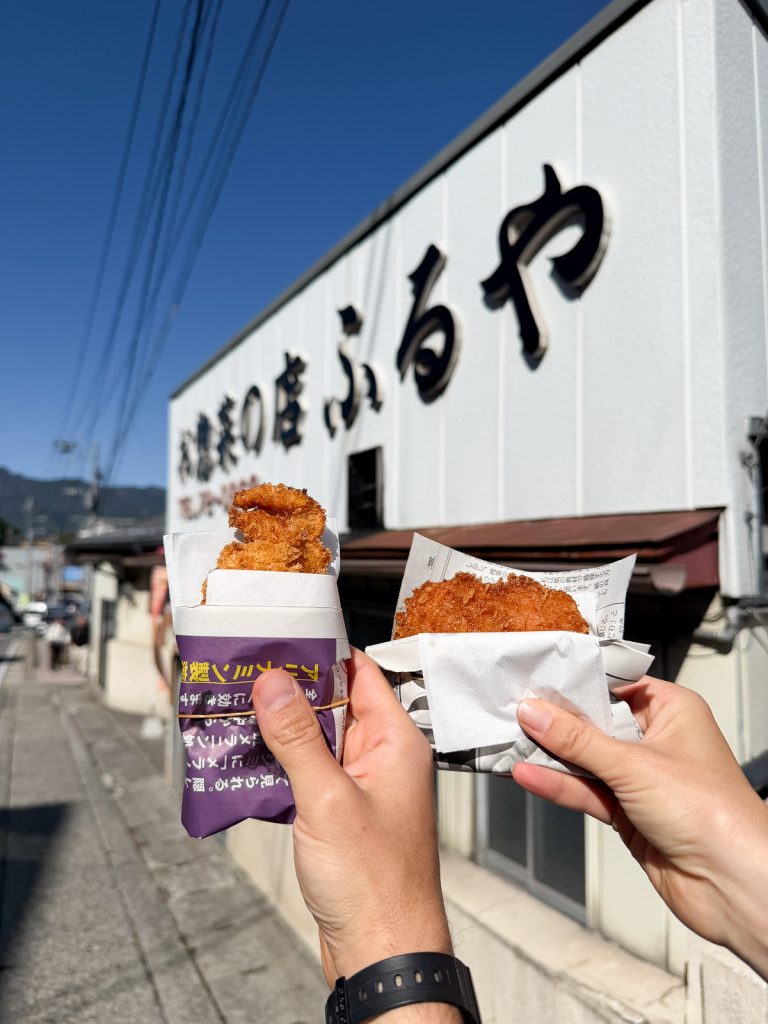
After picking up our bikes from Carp Rental Bicycle, our first stop was grabbing a delicious fried snack from Furuya Sozai-Side Dish Store! This small store has delicious croquettes, plus fried ham cutlets, pork, and fish. The items are fried upon order and then wrapped in newspaper, so they are super hot and fresh! Plus, the man running the store was so kind! After telling him how much we loved his food, he gave us a little origami that he made. 🥹
7. Visit the Kawaguchiko Music Forest Museum
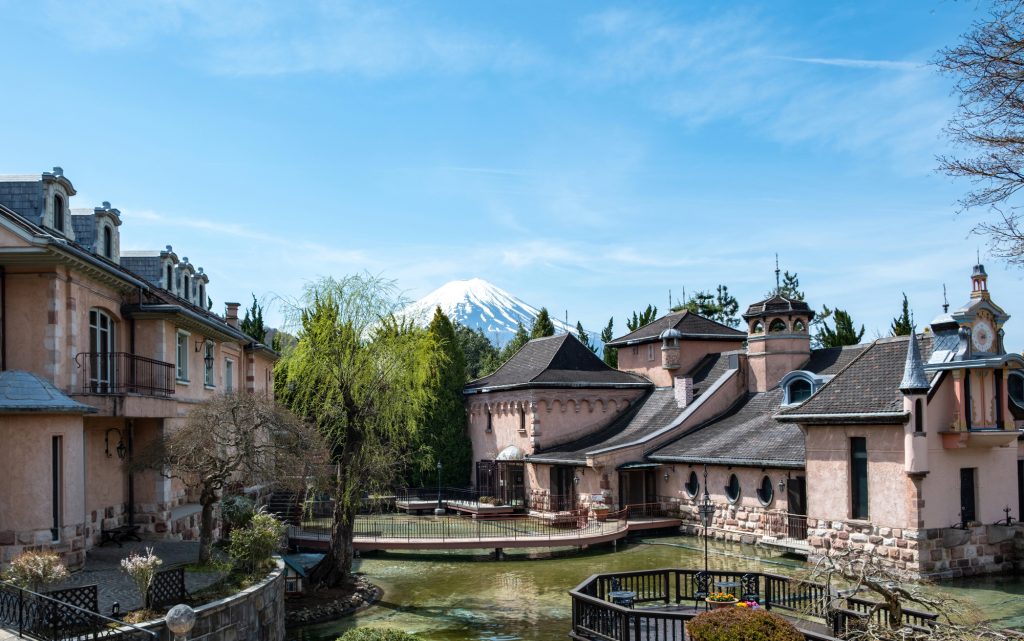
Located on the northeastern side of Kawaguchiko is the Kawaguchiko Music Forest Museum. This is a small theme park and museum dedicated to automatic musical instruments. And for those interested in classical music or antique musical instruments, this is one of the top things to do in Mount Fuji!
Inside the museum you’ll see lots of antique music boxes, mechanical organs, and other automatic musical instruments, mostly from European countries. There is also a concert hall in the main building where you can see daily musical performances!
Outside the museum you’ll find European style gardens with winding paths, a canal, and manicured lawns, plus great views of Mount Fuji. It feels like a blend of Japan and Europe!
8. See Kawaguchi Asama Shrine
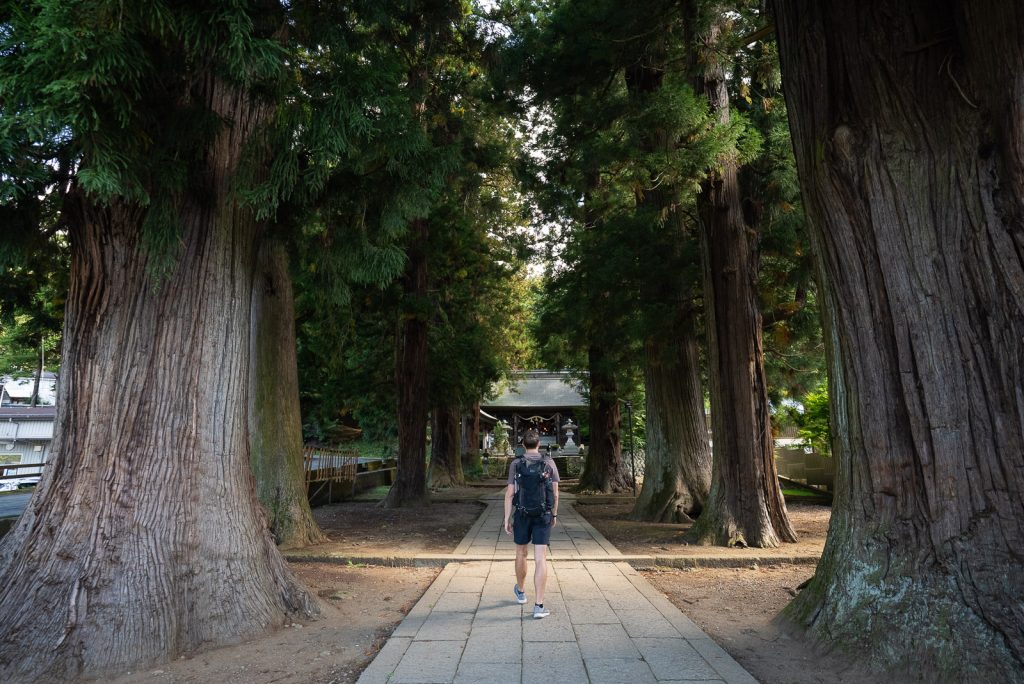
One of our top stops at Lake Kawaguchiko was the Kawaguchi Asama Shrine. This shrine is home to ancient cedar trees, many of which are over 1,200 years old and reach heights of 45 meters tall. The grounds of this shrine are peaceful and seeing the tall trees is very humbling. Plus, compared to some places we visited along the lake, it was much less busy!
9. Enjoy the area’s coffee shops

The coffee scene in Japan is hands down one of the best we have experienced around the world. And some of our best coffee experiences were near Mount Fuji!
Just down the road from the Kawaguchi Asama Shrine is Nagasaki Coffee. This spot would be easy to miss, as it’s very discreet, but if you’re in the area, we couldn’t recommend it more. Tucked in a traditional Japanese style building, it’s a very small coffee shop, with just a few tables inside, plus a small bench outside. But we loved its simplistic vibe, ample wood decor, and shelves of books.
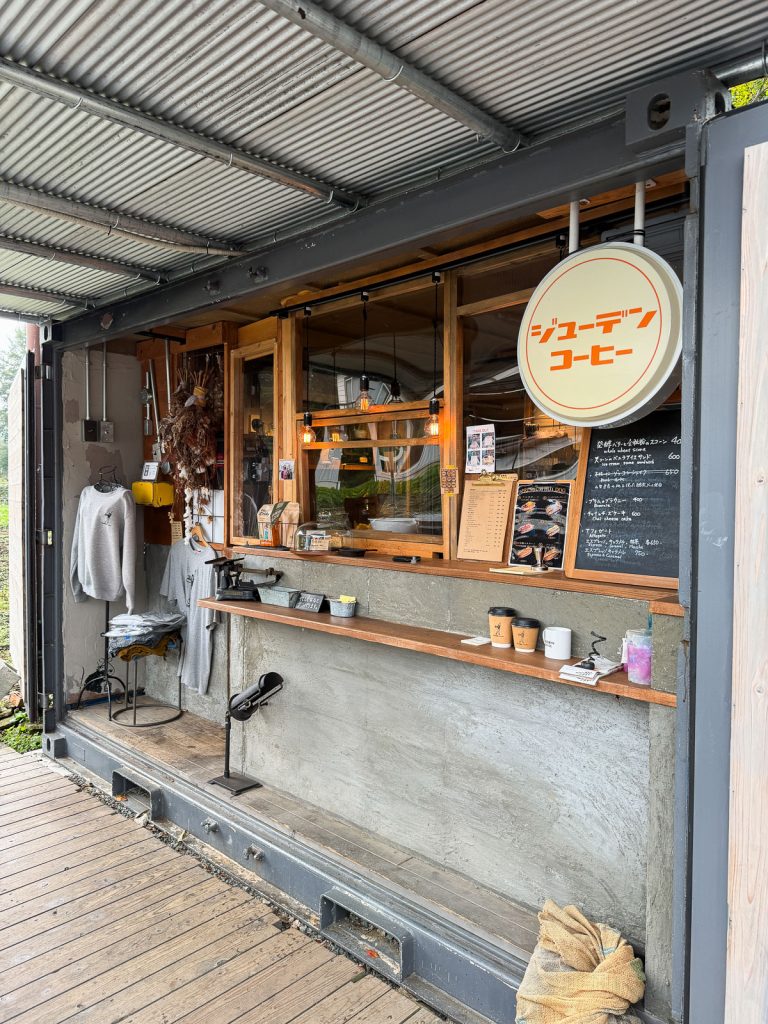
Another spot we loved in the Mount Fuji area was Juuden Coffee! It’s a really cool coffee stand located down some side roads, with a great outdoor space to enjoy your coffee. It’s definitely a hidden gem!
10. Visit Kubota Itchiku Art Museum
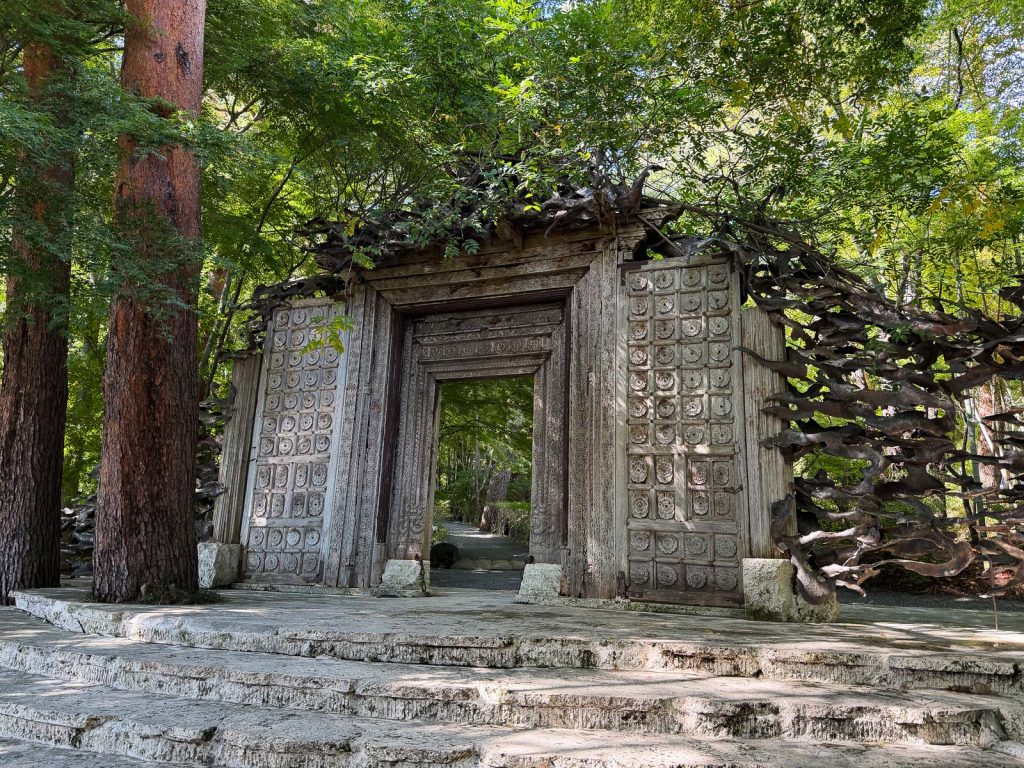
For the art enthusiasts, one of the best things to do in Mount Fuji is visit the Kubota Itchiku Art Museum. This museum shares the artwork of Itchiku Kubota, who is known for reviving the lost art of Tsujigahana silk dyeing to decorate kimonos. Inside you can see several of his kimono creations, plus parts of his unfinished masterpiece, the “Symphony of Light,” which includes 80 kimonos that form a picture of Mount Fuji. Unfortunately no photos are allowed, but trust us, the kimonos are stunning.
But not only is the kimono art impressive to admire, so are the buildings! The gift shop and cafe building has a unique shape and is made of stone, while the building the kimonos are in is a massive log structure. Plus there is an idyllic Japanese garden and a tea room that overlooks a courtyard!
11. Get ice cream at Oishi Park
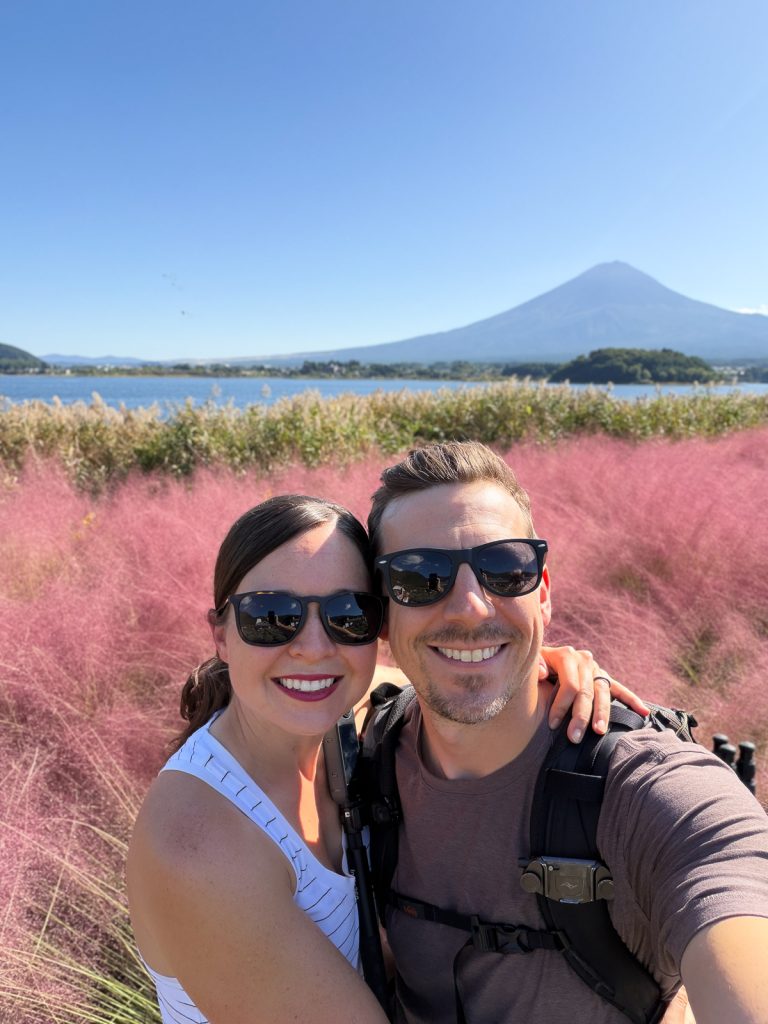
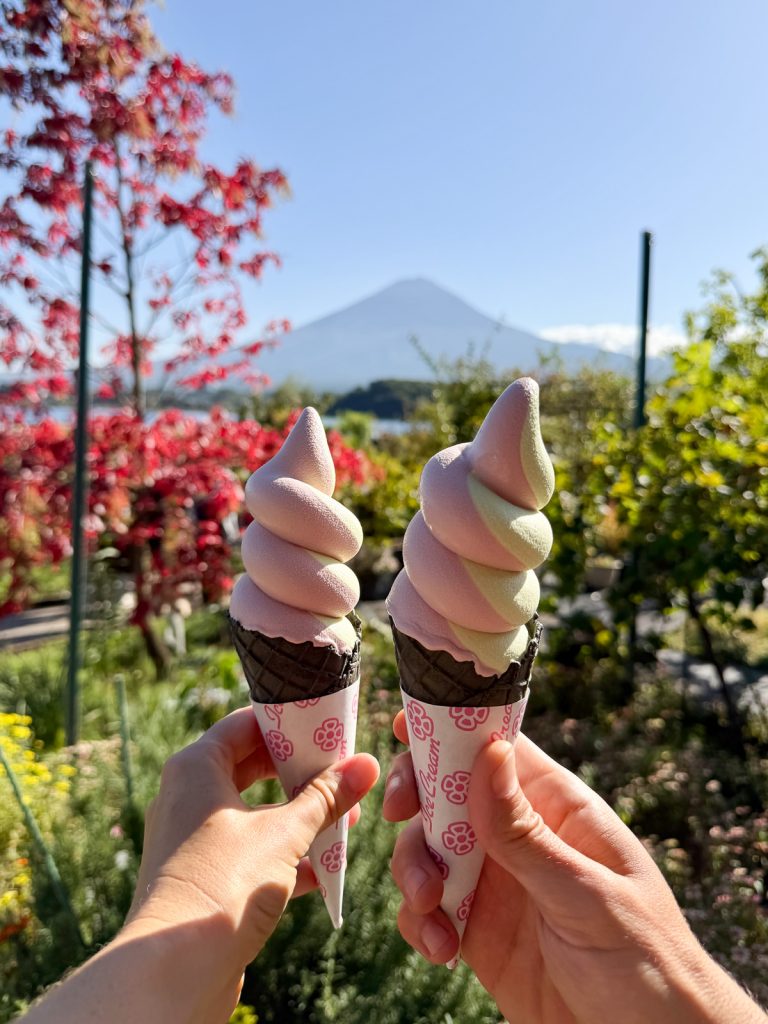
Oishi Park is one of the most popular stops along Lake Kawaguchi. This park has several different gardens, a lakeside promenade, and of course amazing views of the lake with Mount Fuji in the distance. There is lots to see here, especially if you’re into flowers!
But the main reason we visited Oishi Park was for the ice cream at Oishi Park Cafe. This cafe has a bunch of flavors to choose from, but we suggest trying the grape! This area of Japan (the Koshu Valley) is a prime grape growing region. There are two grape flavors you can try and we got them mixed. We truthfully couldn’t tell the difference between the two, but it was overall delicious and like most soft serve in Japan, so creamy.
Just be prepared to wait in a long line! This park as a whole was the busiest spot we visited at Mount Fuji. And it seemed like everyone wanted ice cream (rightfully so)!
12. Try Hoto noodle soup
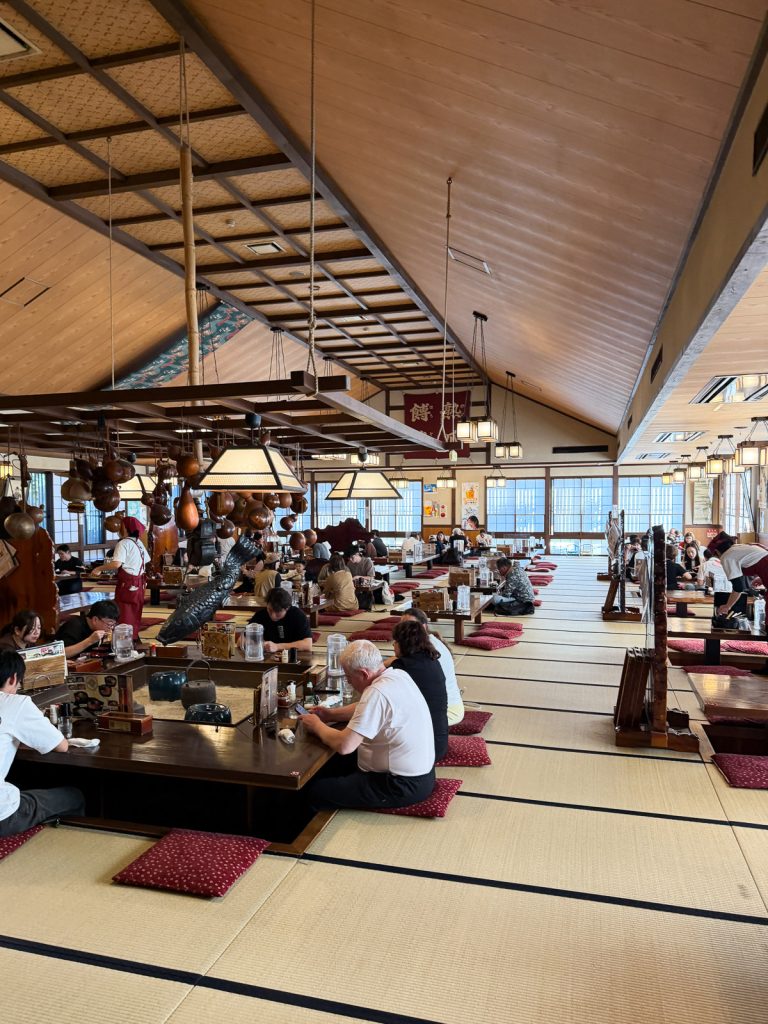
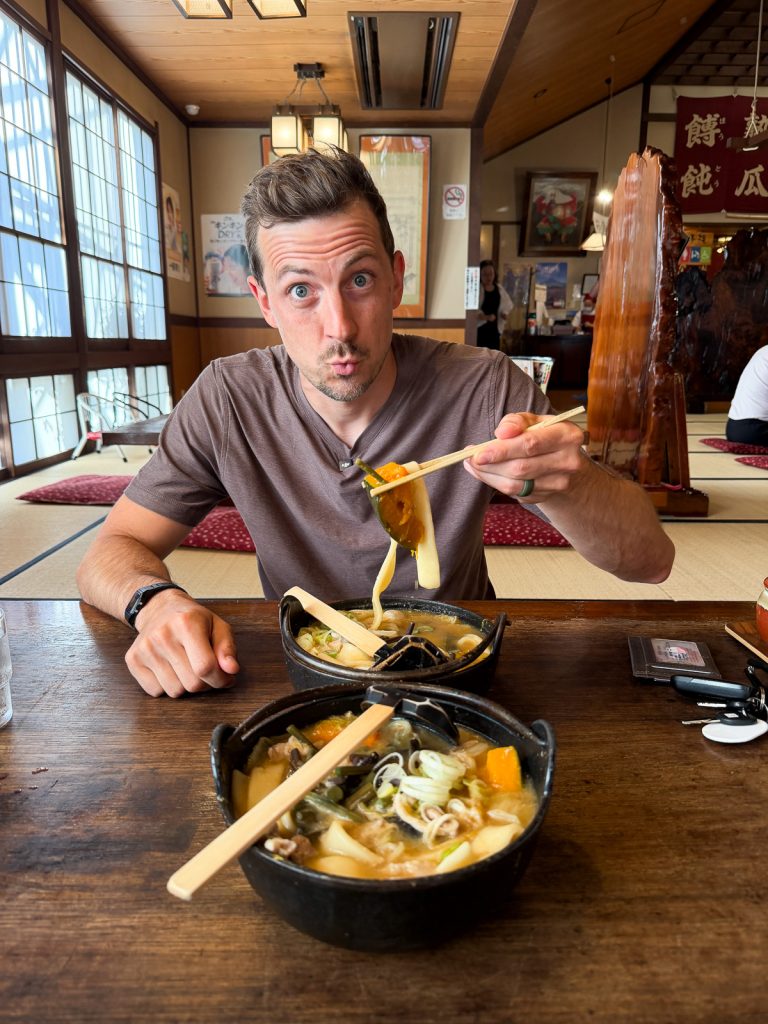
The Fuji Five Lakes region is located in the Yamanashi Prefecture, one of Japan’s 47 Prefectures, which are like a state or province. And this area is known for a specific dish called hoto. This is a soup made with a miso broth, thick, wide noodles, similar to udon, and filled with pumpkin and other vegetables.
You can try hoto noodles at lots of places, but we personally tried it at Kosaku Kawaguchiko Hoto Noodles. Not only was the hoto delicious, but we loved the environment, with tatami mats and seating on the floor. And when we went, it seemed like we were the only non-Japanese people there.
A few other good options to try hoto are Houtou Fudou Kawaguchiko North Main Shop, KANJYUKUYA, or Hoto Tempura Wakana, which are a little bit closer to Lake Kawaguchi.
13. Visit Oshino Hakkai
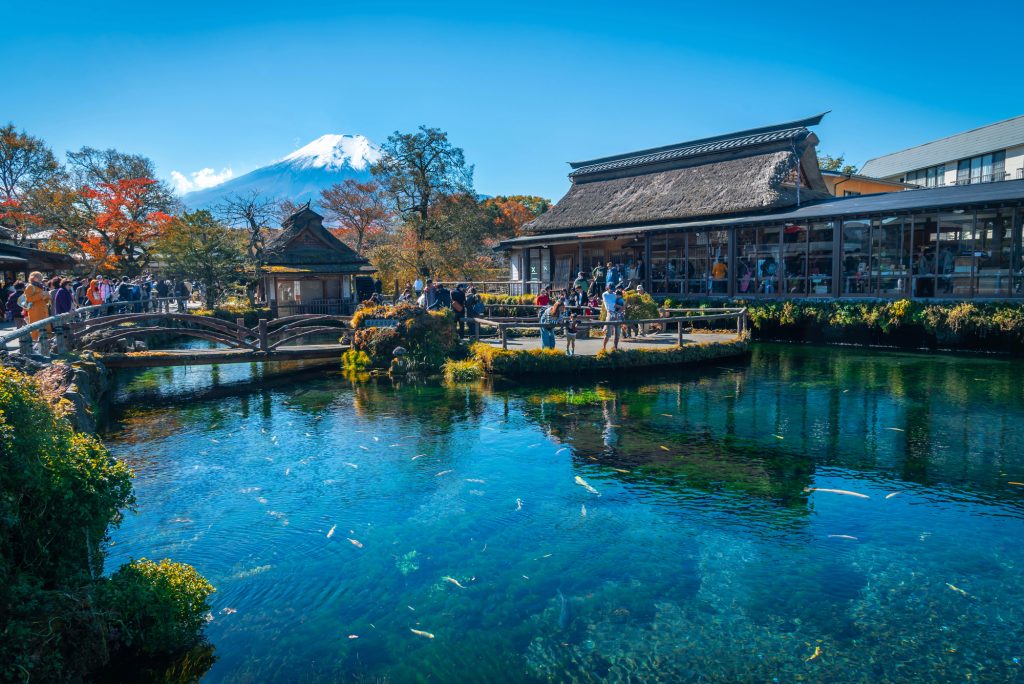
Located near Laka Yamanaka, Oshino Hakkai is a set of eight ponds that are fed by snow melt from Mount Fuji. This is a touristy area where you can find restaurants, food stalls, souvenir shops, and multiple ponds with views of the mountain. You can also visit Hannoki Bayashi Shiryokan while there as well, which is an open air museum that showcases a thatched roof farmhouse, farming tools, and samurai weapons.
Keep in mind this is a very popular stop for large tour groups, so it can get very busy!
14. Explore Saiko Iyashi-no-Sato Nemba (Traditional Japanese Village)
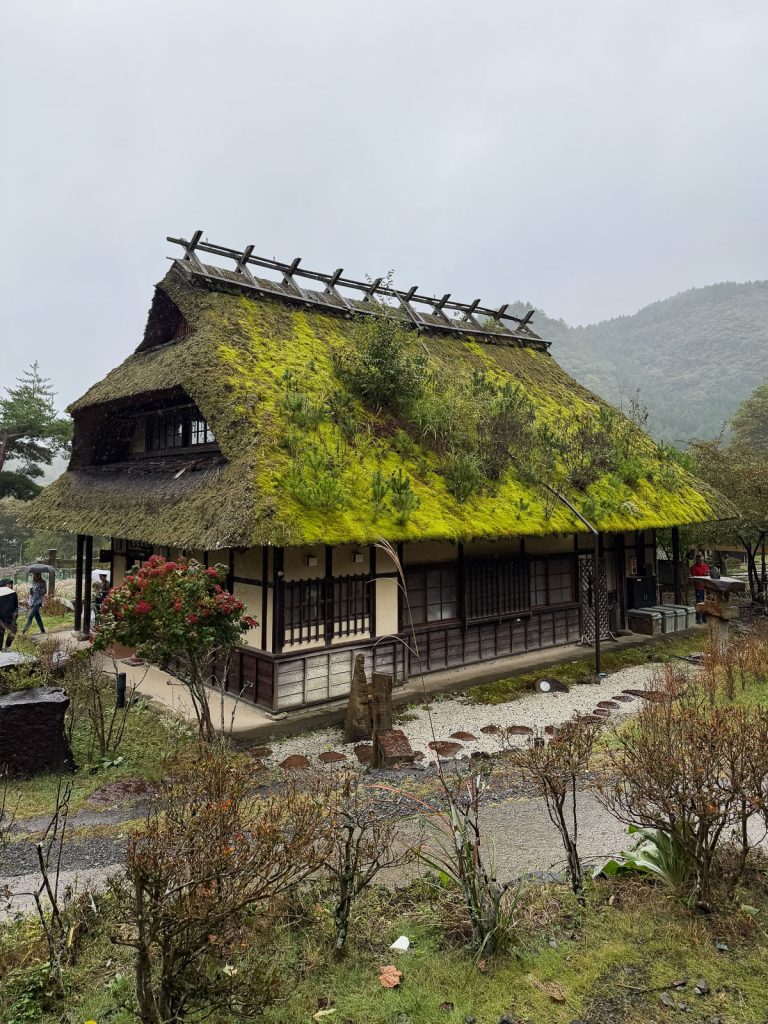
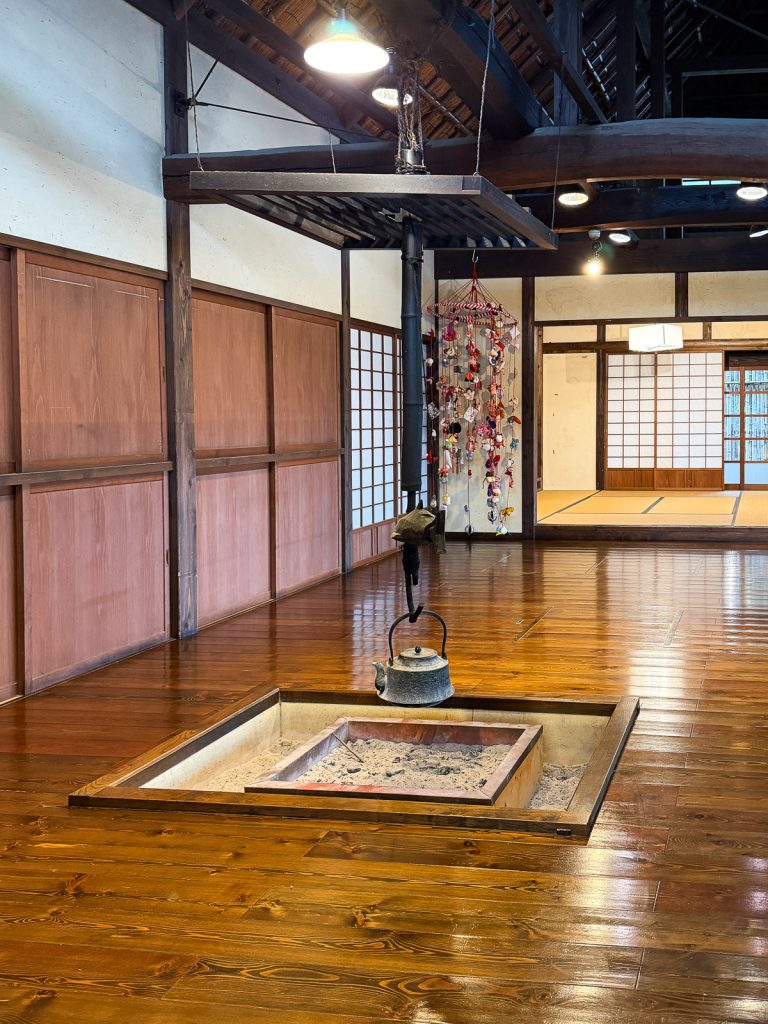
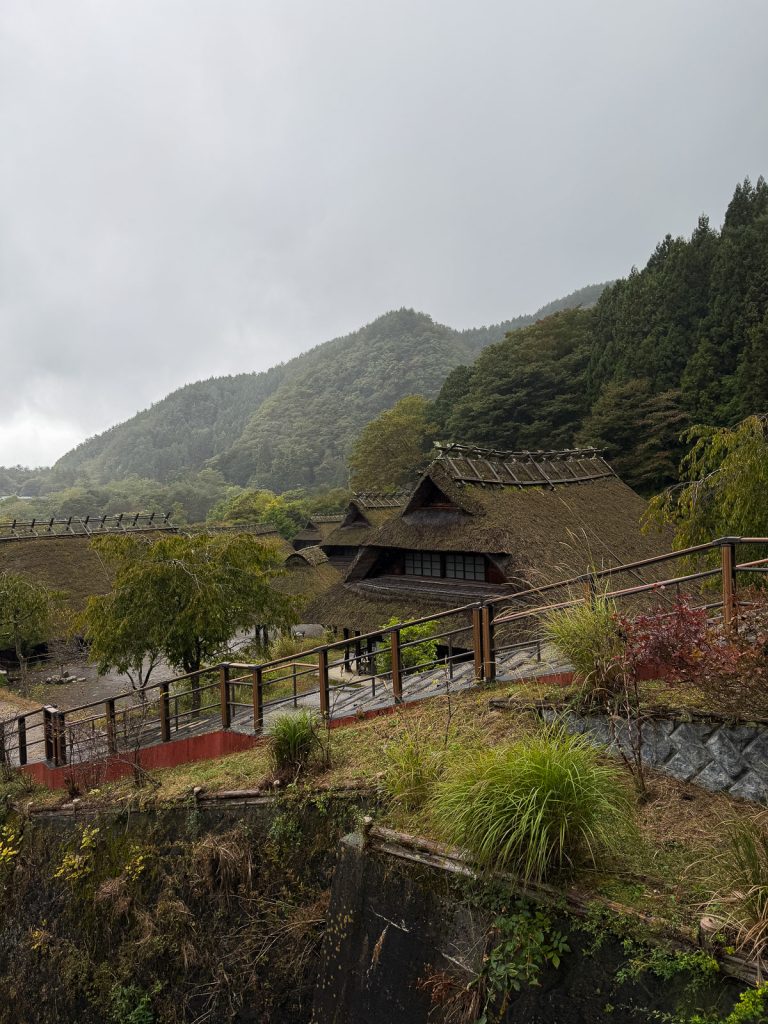
The Saiko Iyashi-no-Sato Nemba (Traditional Japanese Village) is one of the best things to do in the Mount Fuji area if you want to step back in time and experience some of Japan’s history!
Saiko Iyashi-no-Sato Nemba was said to be one of the most beautiful villages in Japan. However in 1966, a typhoon swept through the area, creating a mudslide that destroyed 37 of the 41 thatched-roof houses that stood at the time. Today, the village is an open-air museum that has been recreated into what it was before the disaster. Most of its 20 thatched roof houses have been converted into different local shops and restaurants.
We really enjoyed walking around here on a rainy day, but on a clear day, you can see some great views of Mount Fuji here as well!
15. Watch sunrise at Tatego-Hama Beach (Lake Shoji)
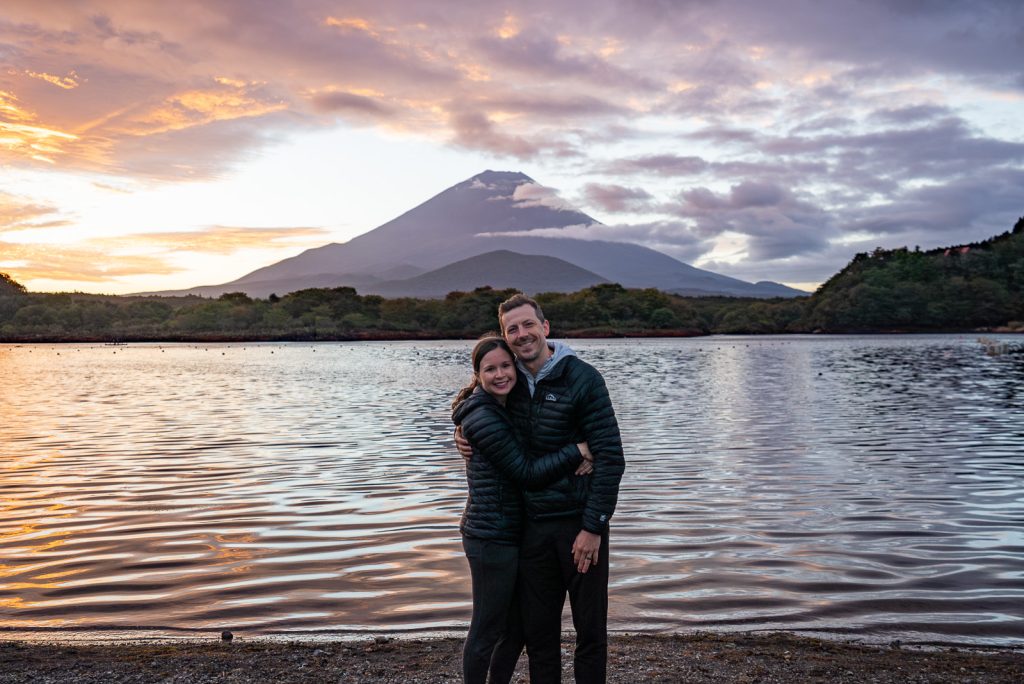
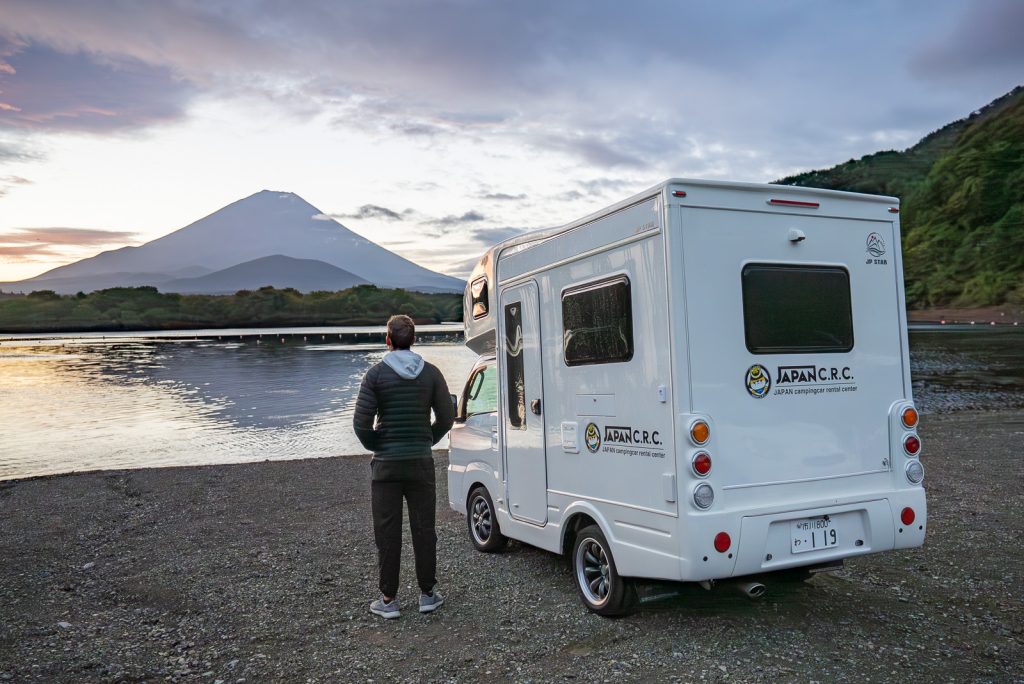
For our final morning in the Mount Fuji area, we headed to Tatego-Hama Beach to watch the sunrise. And it was a magical experience! We drove our little campervan rental down onto the beach, made some coffee, and watched as Mount Fuji turned shades of purple and pink. It was a huge highlight of our time at Mount Fuji!
To visit this beach, you will need to drive down a pretty steep access road, so make sure your vehicle is able to handle it. We had to floor it to get our mini campervan up the hill! 😅
16. Visit Shiraito Falls and Otodome Falls
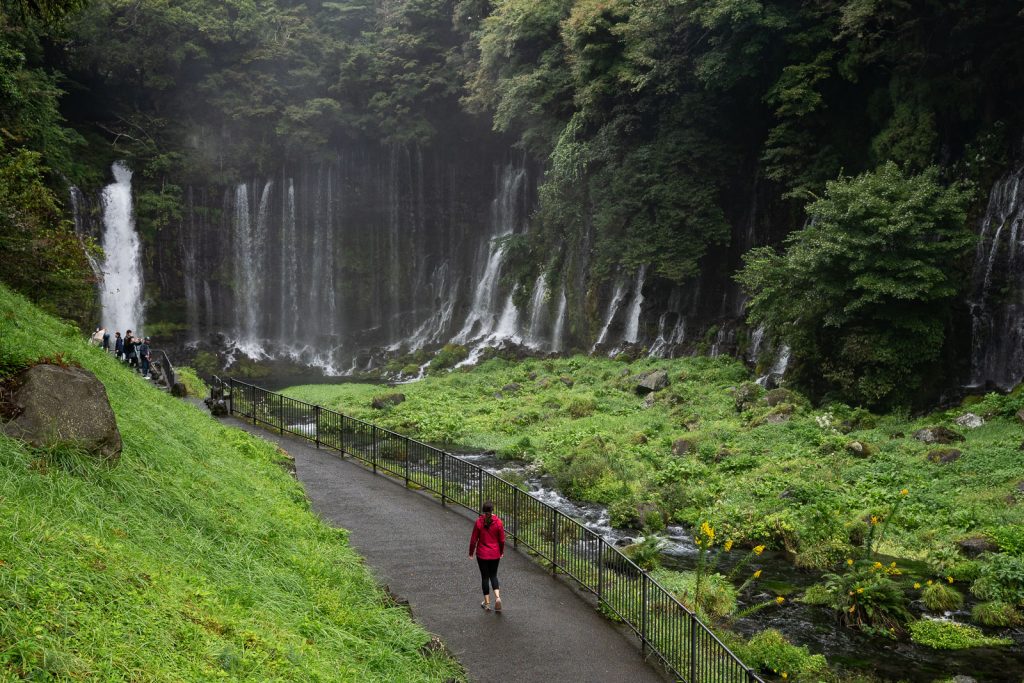
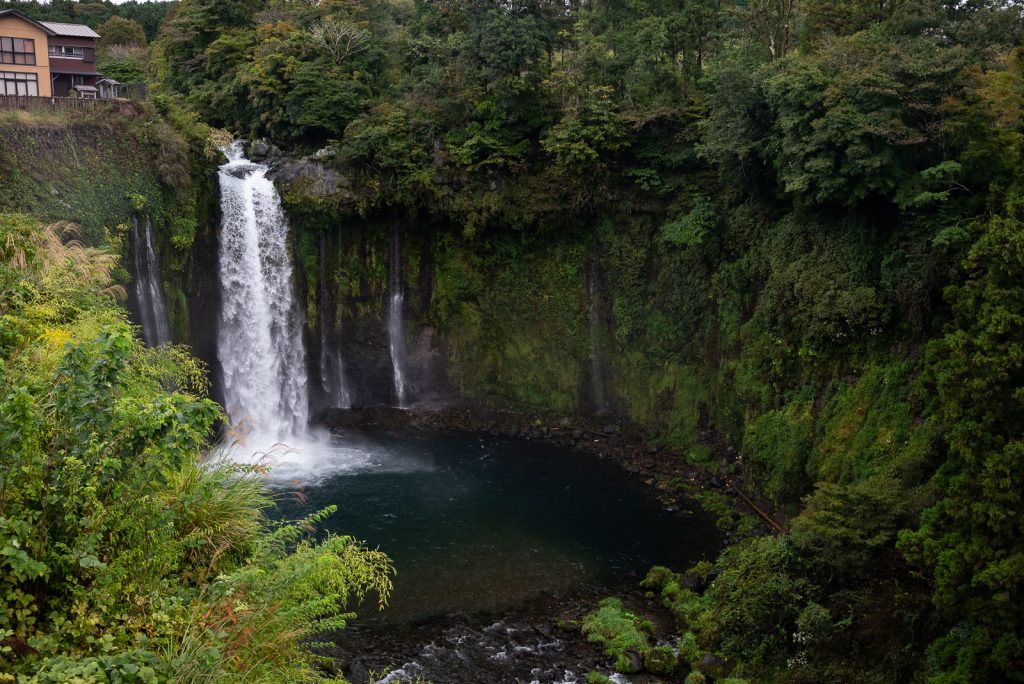
While in the Mount Fuji area, you must visit Shiraito Falls and Otodome Falls! Although these waterfalls are technically not at the Fuji Five Lakes, they’re just a short drive away on the southwestern slopes of Mount Fuji. They are said to be one of the top 100 waterfalls in Japan and based on the handful we saw in the country, we’d agree!
These waterfalls are located in the same park, with Otodome Falls dropping 25 meters (82 feet) and Shiraito Falls stretching across 150 meters (492 feet) and dropping from a height of 20 meters (66 feet)! While both waterfalls are spectacular, Shiraito Falls was our favorite because the rock wall it flows over is super lush and has hundreds of different smaller waterfalls streaming down.
Like most of the things to do in Mount Fuji, this spot can get pretty busy. We arrived around 8 AM and there were only a few other groups. But the crowds got a lot larger between 8:30 AM-9 AM. One other important thing to know is that while the waterfalls themselves are free to visit, there is a ¥500 (~$3.10 USD) fee to park.
17. Try Fujinomiya yakisoba
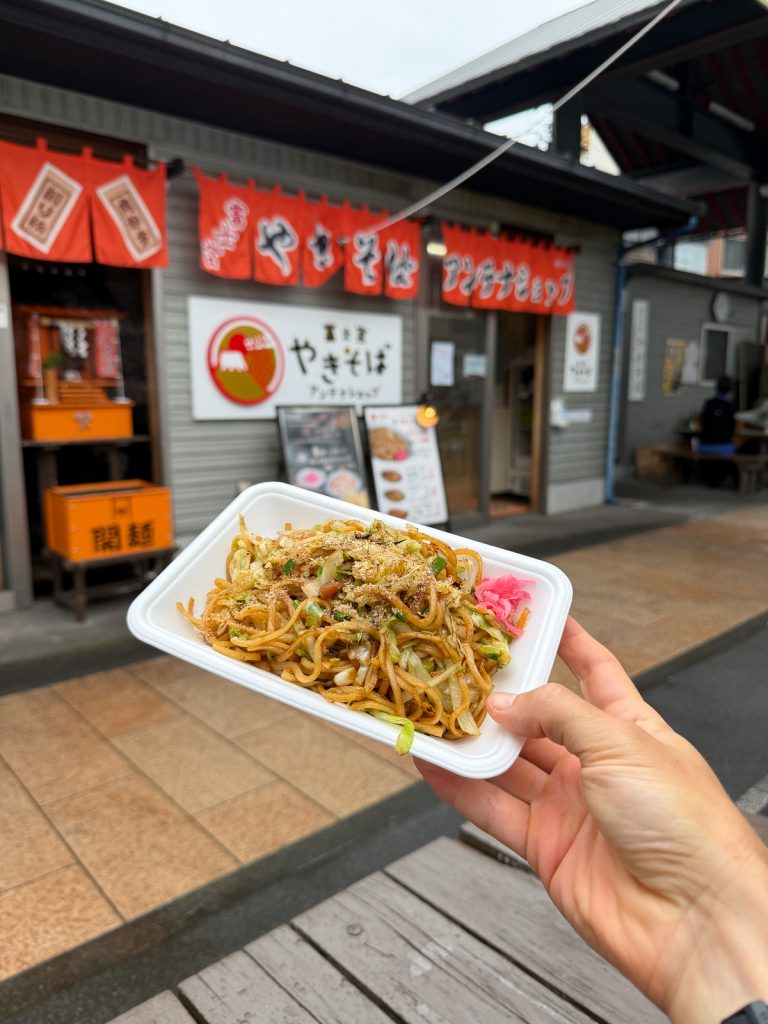
Besides hoto, another popular food to try while in the Mount Fuji area is Fujinomiya yakisoba. Yakisoba is a popular Japanese stir fry dish, but Fujinomiya yakisoba differs a bit in a couple ways.
First, its noodles are only steamed, without being boiled, which gives them a different texture. It also includes crispy bits of pork fat and is sprinkled with sardine or mackerel shavings, versus the more traditional bonito flakes.
There are lots of places to get it around town, but we really enjoyed our yakisoba from Fujinomiya Yakisoba Antenna Shop. So much so that we went back for seconds! And after trying a more traditional yakisoba on our Osaka food tour, we both agreed we liked the Fujinomiya version best.
18. Get your thrills at Fuji-Q Highland
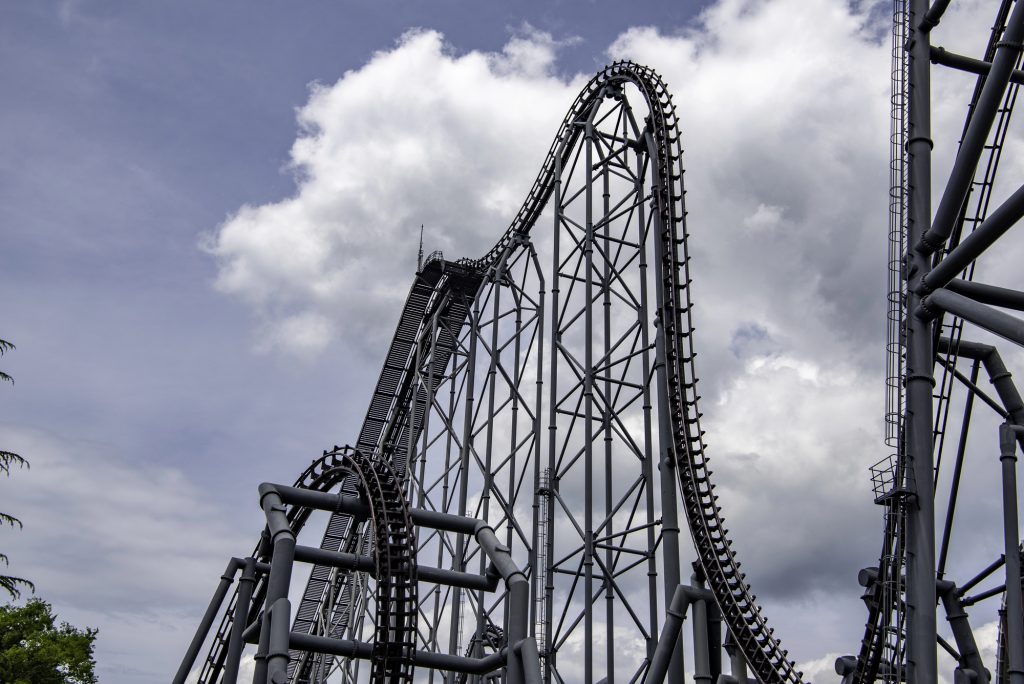
If you’re in the mood for some thrills, head to Fuji-Q Highland in Fujiyoshida! This theme park has five major roller coasters and is famous for its world record breaking rides. The first being Fujiyama, which when it opened in 1996, was the world’s tallest and fastest roller coaster. Today, Takabisha holds the record for the steepest roller coaster in the world.
Outside of the roller coasters, the park has a few large themed entertainment attractions based on popular anime series. You can also find your typical amusement park rides like tea cup rides, a ferris wheel, a tower drop, and more.
But one of the best parts about the park is that it has no admission fee and you just pay for what rides you’d like to go on, with the option of paying for unlimited rides.
19. Enjoy ice cream from Asagiri Dairy Factory
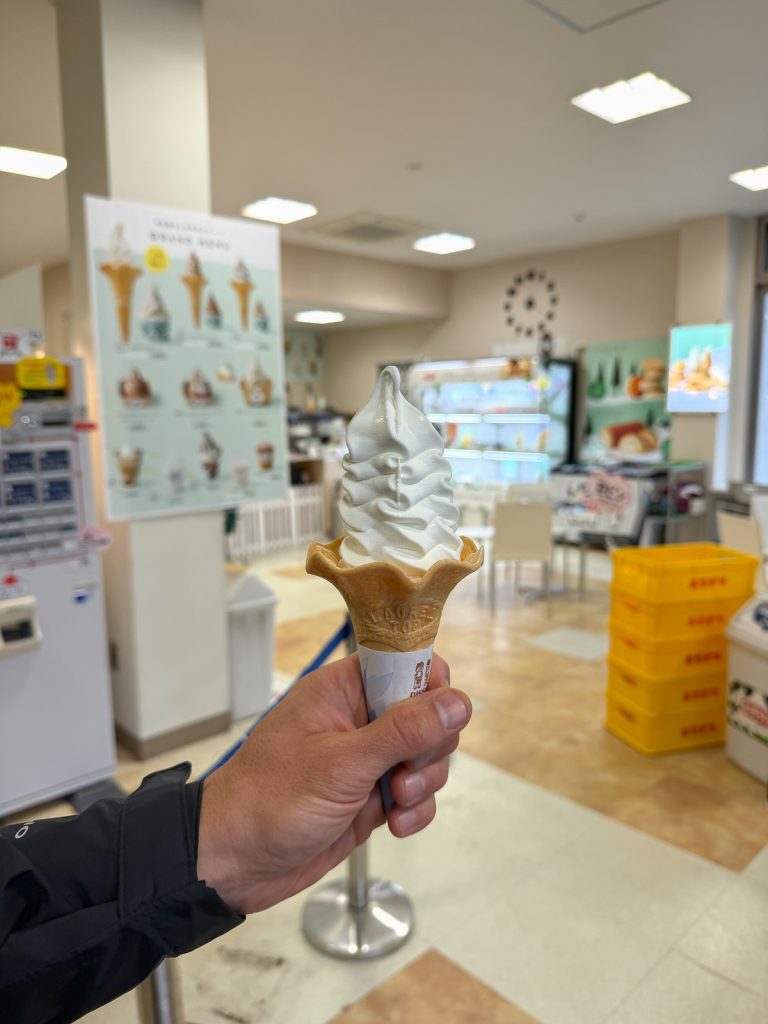
The milk in Japan is top tier! And our favorite way to enjoy it was in ice cream form. While the grape ice cream at Oishi Park was unique and delicious, if you want something a bit simpler, where the milk really shines through, head to Asagiri Dairy Factory!
Inside they sell soft serve ice cream that was life changing. Normally we prefer hard ice cream over soft serve, but the light sweetness of the milk, plus extremely creamy texture, made this some of the best ice cream we have ever had.
The milk they use is produced on the nearby Asagiri Plateau, so the production from start to finish is hyper local. You can really taste the difference in the ice cream!
If you’re looking for a meal, they also have a restaurant that serves pizza, curry, fresh baked bread, and other items.
20. Hike Mount Fuji
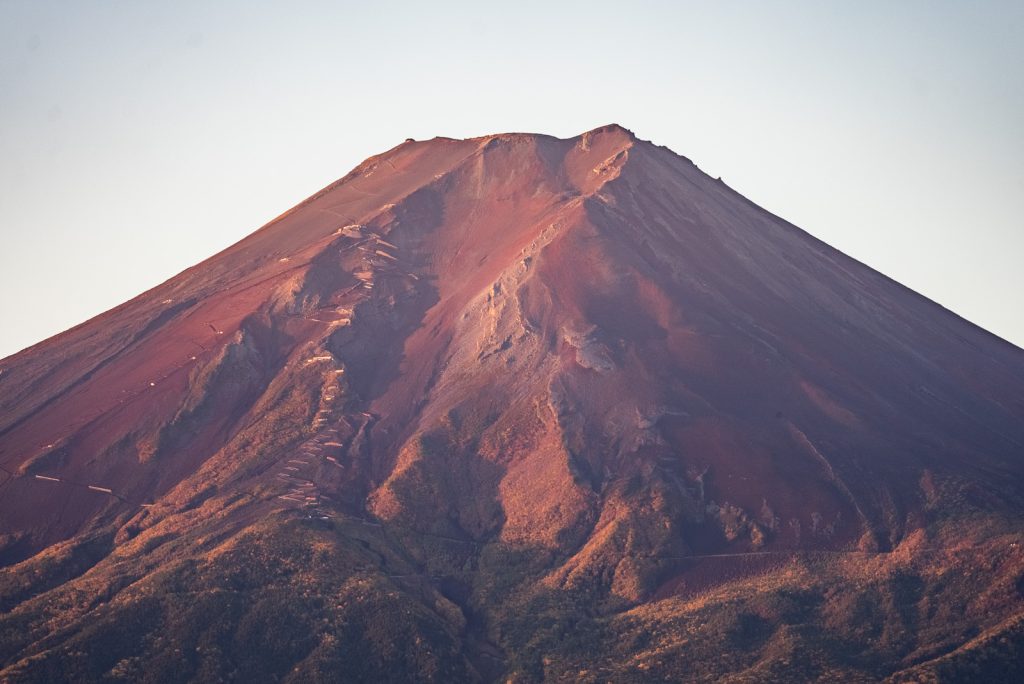
For the adventurous travelers, one of the best things to do in Mount Fuji is hike to the top of the mountain itself!
However, there is a lot to know before you attempt this:
- The hiking season for the mountain is between early July to mid September.
- It is a very tough hike at 16.6 km (10.3 mi) round trip and over 1,600 meters (5,249 feet) of elevation gain.
- You can climb Mt. Fuji with or without a guide. We read that the trails are very well marked, but if you are inexperienced or prefer to leave the planning to someone else, then look into hiring a guide
- There are 4 main routes you can take to the top, with the most popular being the Yoshida Trail. To hike this trail there is a ¥4,000 fee and it’s best to make a reservation ahead of time. The daily hiker limit is 4,000 hikers and it does sell out in the summer months!
- Along the way there are mountain huts where you can get food and even stay the night. For more information on hiking Mount Fuji visit the Japan Guide website.
Unfortunately, since we visited in mid October, we couldn’t hike it, but as avid hikers, we’d love to someday!
21. Visit Aokigahara Forest & Caves
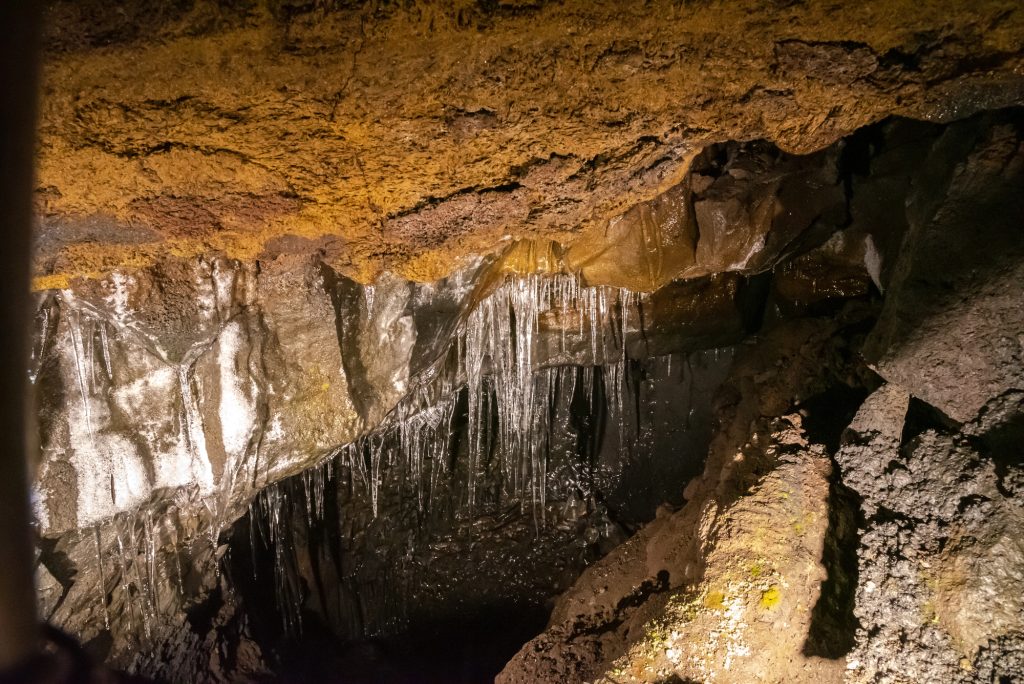
The Aokigahara Forest, also known as the sea of trees, is located on the northwestern slope of Mount Fuji. It has an infamous and dark reputation, often portrayed as a scary, haunted forest. And one of the most visited attractions in the forest are the Narusawa Ice Cave and Fugaku Wind Cave.
These caves were formed by the lava flow from a Mount Fuji eruption hundreds of years ago. And since the caves are very cold year round, the water that drips from the ceiling freezes, creating the ice caves. At some points in the year the stalactites and stalagmites touch to become columns!
While these caves are separate experiences, you can get a combo ticket to visit both. However, one important thing to know is that both cave experiences are pretty short, with each only being about 10-20 minutes. We heard mixed reviews on whether it’s worth it or not, so we didn’t personally visit. But if it sounds interesting to you, give it a shot!
Planning your visit to Mount Fuji
How to get to the Mount Fuji area
The Mount Fuji area is only 100 km (62 miles) from Tokyo, making it a relatively easy place to visit, regardless of your transportation method!
If you are visiting the area by public transportation, you can take a train from Shinjuku Station to Kawaguchiko Station in under 2 hours on a limited express line. Or you can take the JR Chuo line from Shinjuku to Otsuki Station then transfer to the Fujikyu Rail Line to Kawaguchiko Station. There are also bus options from Tokyo that only take around 2 hours and are a little cheaper.
We personally visited Mount Fuji in our rented campervan and think it makes for a great stop on a Japan road trip! Not only will having your own vehicle be easier to get around, but there are so many other fun areas to visit nearby, like Hakone and the Izu Peninsula.
If you’re limited on time or don’t want to navigate getting to Mount Fuji on your own, you can also book a tour from Tokyo. On these tours you’ll visit many of the best things to do in Mount Fuji. Here are a couple options to consider!
- Mount Fuji Full Day Sightseeing Tour from Tokyo (Group tour)
- Mount Fuji Adventures Private English Tour With Hotel Pick Up
Getting around the Five Lakes Region
Regardless of how you get to Mount Fuji, getting around the area is very easy. There are two transportation hubs at Kawaguchiko Station and Fujisan Station in Fujiyoshida. From these stations there are buses that go in all directions, connecting all five lakes and other attractions.
This map gives a great view of what routes you can take from Kawaguchiko Station, while you can see a list of routes from Fujisan Station here. You can even get to Shiraito and Otodome Falls by bus from Lake Kawaguchi!
But if you want even more freedom to get around, we recommend having a vehicle! We found driving around this area to be super easy. And like we mentioned above, there are many other destinations nearby that you can combine into a fun Japan road trip! Just make sure you have an International Drivers Permit if you plan to drive in Japan.
And lastly, it’s also fun and easy to get around by bike. We rented a bike from Carp Rental Bicycle and used it to tour the lake, but you could rent one for longer and use it as your main transportation to get between multiple lakes.
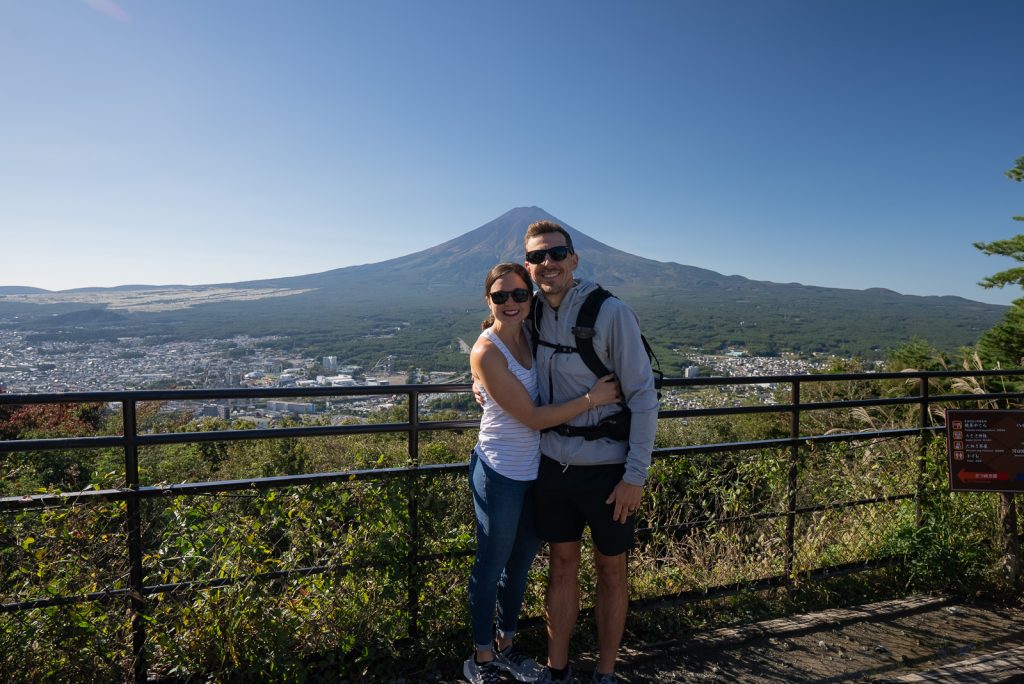
When to visit Mount Fuji
The Mount Fuji Five Lakes region can be visited year round, but each season provides a different experience.
Winter (December to February) offers the clearest weather and best chance of seeing Mount Fuji and with its iconic snowcap. This will be a less busy time to visit, but keep in mind that it will be very cold!
Spring (mid-April to May) is one of the most popular times to visit because of the blooming cherry blossoms. However, this is also a very busy time to visit. So if you dislike crowds, we suggest going before or after the cherry blossoms. During the spring the weather is warming up, but there should be plenty of opportunities to see the mountain, especially in the mornings.
Summer (June to August) is the best time to visit if you’re looking to climb Mount Fuji. But keep in mind that the climbing season doesn’t open until July. While this is the best time to summit the peak, it’s also a very warm and humid time to visit Japan. This also makes it tougher to see Mount Fuji, as it can sometimes be hazy or covered in fog.
Autumn (October to mid-November) is quite possibly the most beautiful time to visit! This is when the temperatures start to cool and the leaves begin to change. Areas like Lake Kawaguchi Maple Corridor explode with color! We personally visited in mid-October and were a bit too early for fall foliage. Typically fall foliage hits its peak in this area around early to mid November. Just keep in mind that this time can be very busy, especially with the Lake Kawaguchiko Autumn Leaves Festival bringing lots of visitors.
Where to stay near Mount Fuji
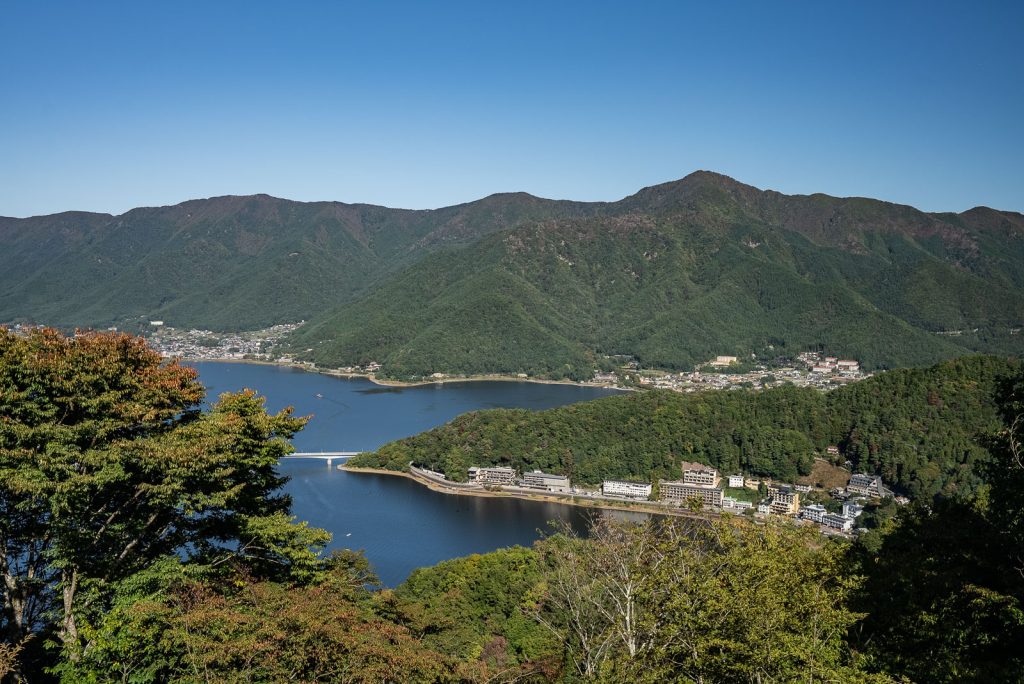
Hotels and vacation rentals
Most people who stay the night when visiting the Fuji Five Lakes area stay in Kawaguchiko. It is the most developed lake, has great views of the mountain, and there is a wide range of hotels available. Mizno Hotel and Fuji Lake Hotel are both highly rated and in convenient locations! For something a bit more spacious THE TOKI Fujikawaguchiko has villas with incredible views of Mount Fuji.
Camping
If you’re like us and are traveling around Japan in a campervan or just want to tent camp, there are lots of campgrounds in the area. Koan Camping Ground and Fumotoppara Campground are both extremely popular because you have amazing views of Mount Fuji. But camping here is more like everyone on a beach or lawn together, so there is limited privacy. & GREEN Fuji Camping Ground looks to have actual campsites among the trees, but privacy is still limited.
⌚ One important thing to know about some campgrounds in this area is that they have gates that close at night and reopen in the morning. If you plan to go on sunrise adventures, these gates may not open early enough for you. So make sure to check this in advance!
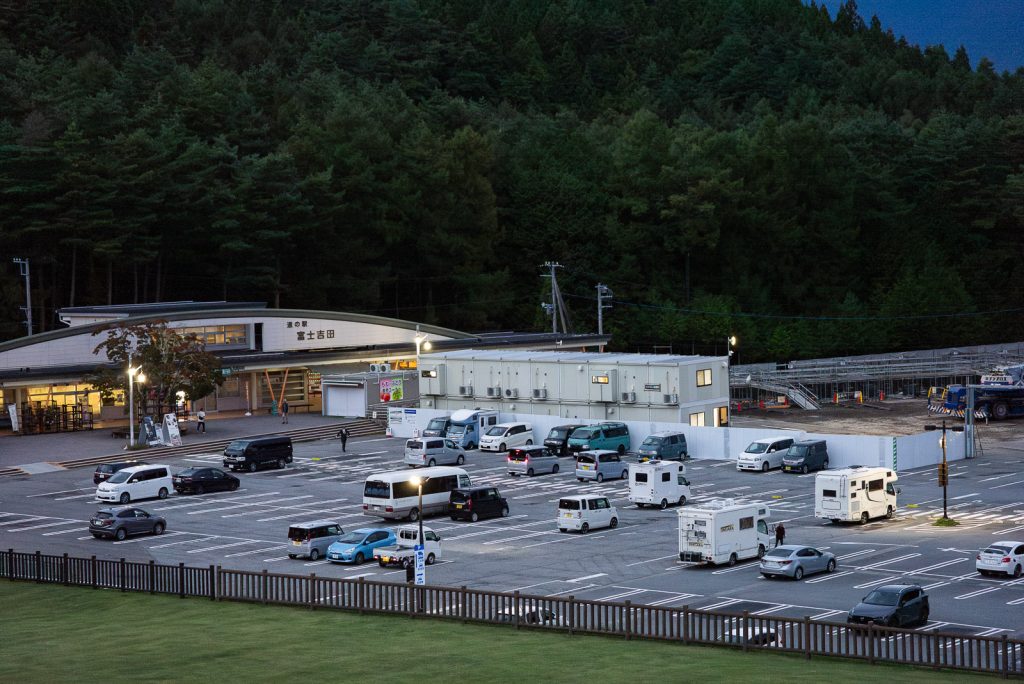
Roadside stations
Another option for those in a campervan or RV is to stay at Michi-no-Ekis, which are roadside stations. These are free, have food options during the day, and offer 24 hour toilets and vending machines. While in the area we stayed at these three roadside stations.
- Roadside Station Narusawa: This roadside station has great views of Mount Fuji and some good looking food and soft serve. Plus there is a Mount Fuji Museum and an onsen!
- Roadside Station Fujiyoshida: This roadside station is really big, close to Chureito Pagoda and Kawaguchiko. There’s also a Montbell store if you need some outdoor gear.
- Road Station Asagiri Kogen: This is a very convenient roadside station to visit Shiraito and Otodome Falls. It’s also where you can find Asagiri Dairy Factory (in a building behind the main roadside station).
How many days do you need in the Mount Fuji area?
While many people visit the Mount Fuji area on a day trip tour from Tokyo, we highly recommend spending at least two days here! Not only does this give you time to check out many of the best things to do in Mount Fuji. But it also gives you more opportunities for clear views of the mountain.
Looking for a ready to go Mount Fuji itinerary? We’re sharing how to spend two days in Mount Fuji here!
Things to know when visiting Mount Fuji
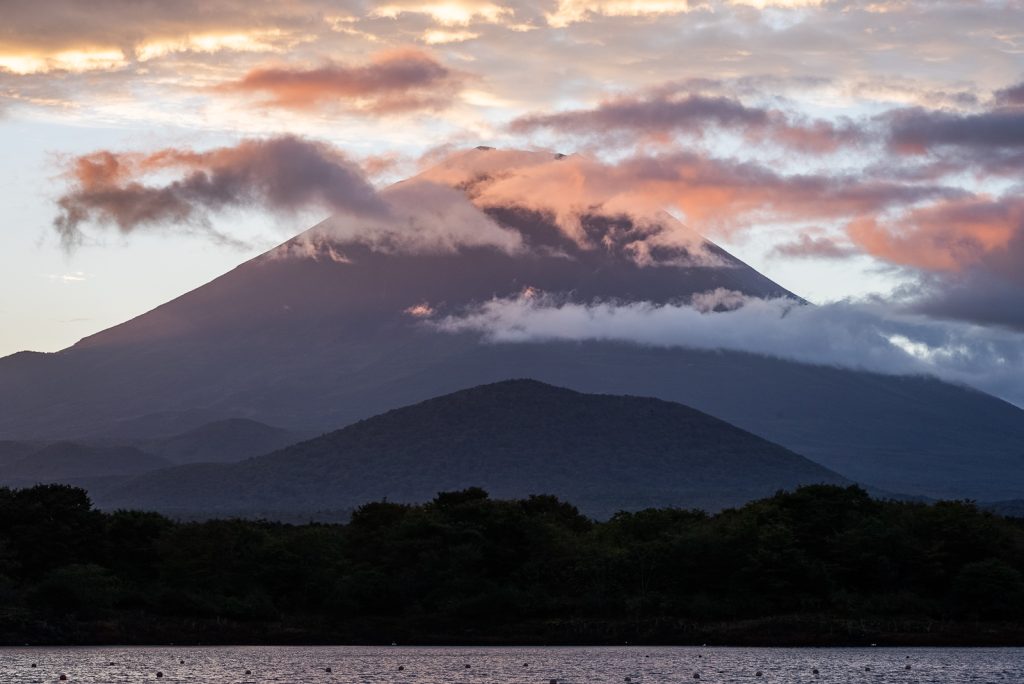
Are you guaranteed to see Mount Fuji?
Mount Fuji can be very fickle, with it only visible 20-30% of the time. So if you see it, consider yourself very lucky!
Leading up to your trip, we suggest checking Is Mt. Fuji Visible? and Mt Fuji Visibility & Weather Forecast to see predictions on its visibility from different sides of the mountain. As well as live webcams! Both of these websites were a huge help for us as we planned out our time in the area.
Don’t get lucky enough to see Mount Fuji? We still think this area is worth visiting for the waterfalls, local eats, and lake views. Also, just because it’s not visible in the morning doesn’t mean it won’t pop out later!
When does Mount Fuji have snow on top?
Mount Fuji typically has its iconic snowcap (which makes it look just like the 🗻emoji!) from late October to early June. As you can see from our photos, taken in mid October, Mount Fuji was still bare. In recent years, the first snow has been happening later and later, so for the best chances to see snow on top, we would visit in late November-May.
Get an early start
We spent 3 weeks in Japan and minus the major cities, Mount Fuji was hands down the busiest area we visited. So make sure to get an early start to avoid waiting in lots of lines and dealing with large crowds.
Be courteous and respect locals
The Mount Fuji area is a very popular world destination and deservedly so. But keep in mind there are thousands of Japanese locals who live here! As you explore, please be respectful of their rules and customs, just as you would want someone to be in your neighborhood. Do not park illegally, be overly loud, litter, or stand in a roadway to get photos.
Save this guide with things to do in Mount Fuji (Fuji Five Lakes)