Last updated on June 18th, 2026
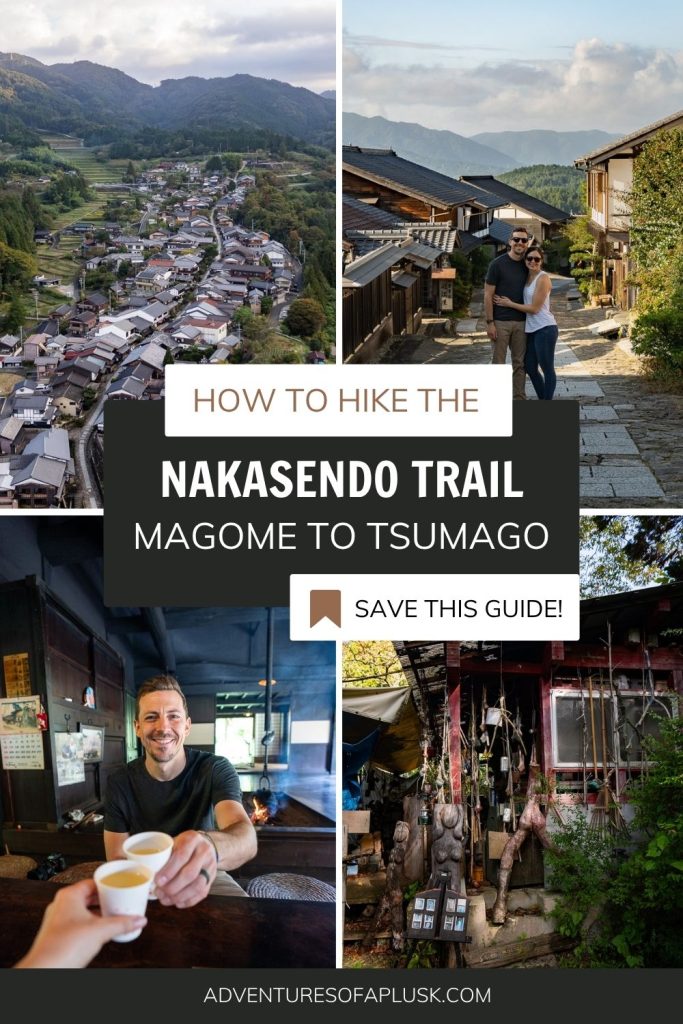
Want to experience the Japanese countryside? Walk the Nakasendo Trail from Magome to Tsumago! We’re sharing everything to know before you tackle this historic route.
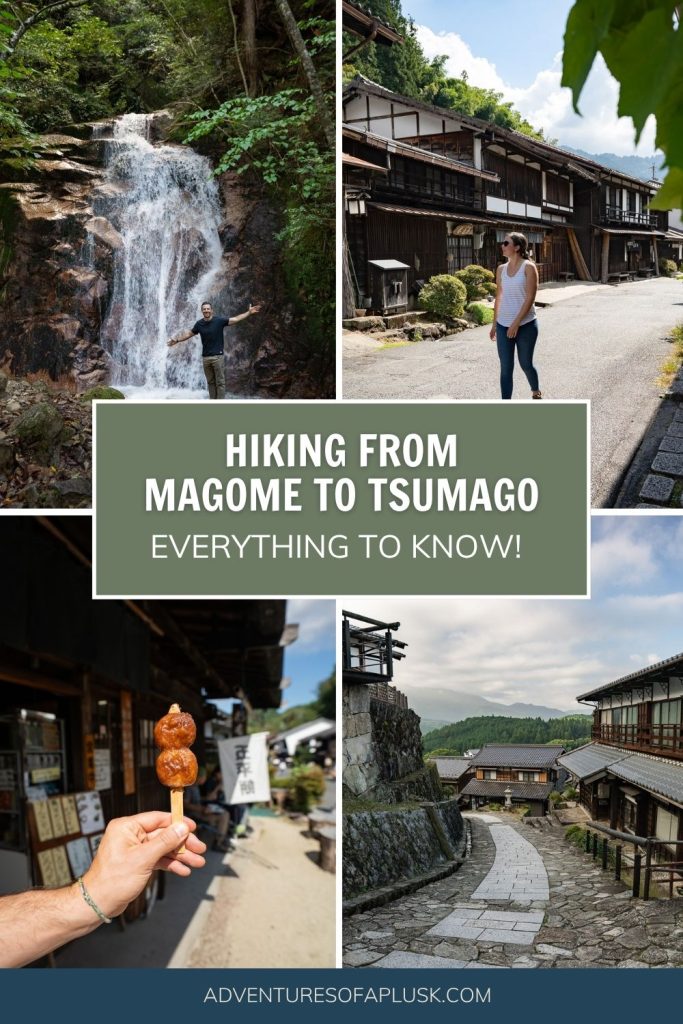
Without a doubt, one of our favorite experiences in Japan was hiking the Nakasendo Trail from Magome to Tsumago. This trail is the perfect mix of history, nature, and small town Japanese life. Over the course of half a day, we were able to visit two stunning historic towns, see waterfalls, sip tea in an old tea house, and try local foods. All while being surrounded by beautiful forests and mountain scenery!
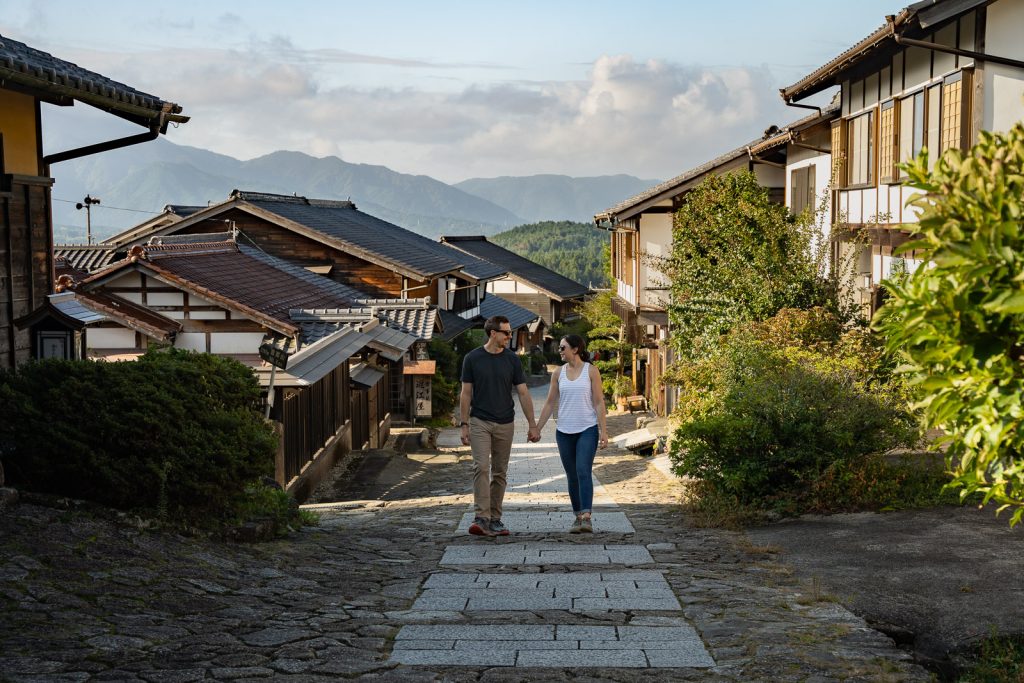
Whether it’s your first trip to Japan or you’ve been to the country multiple times before, the Nakasendo Trail needs to be on your Japan itinerary. Especially if you want to experience a quieter side of the country.
However, there is quite a bit to know before you go! In this guide we’re sharing all of the logistics, from how to get to the trail, the best stops to make along the way, and our top tips from our personal experience.
Looking for more Japan travel tips & guides?
- Renting a campervan in Japan: Everything to know!
- 35+ fun things to do in Tokyo, Japan
- 4 days in Tokyo itinerary: See the best of the city!
- How to visit Tokyo for first timers: Important logistics & tips!
- 10 best places to visit in Tokyo for first timers (& What to do in each!)
- What to eat at Tsukiji Outer Market: The 10 Best Foods & Drinks!
- Where to stay in Tokyo for first time visitors (The 5 BEST areas!)
- Staying at an onsen ryokan in Hakone, Japan: Everything to know!
- 12 best things to do in Hakone: Japan’s mountainous hot spring town!
- 2 days in Hakone itinerary: Our must-see stops & experiences!
- The 37 best things to do in Kyoto, Japan
- 22 FUN things to do in Mount Fuji, Japan (Fuji Five Lakes)
- The Perfect 2 Day Mount Fuji Itinerary
- Read all of our Japan guides
- Watch our Japan video series
What is the Nakasendo Trail?
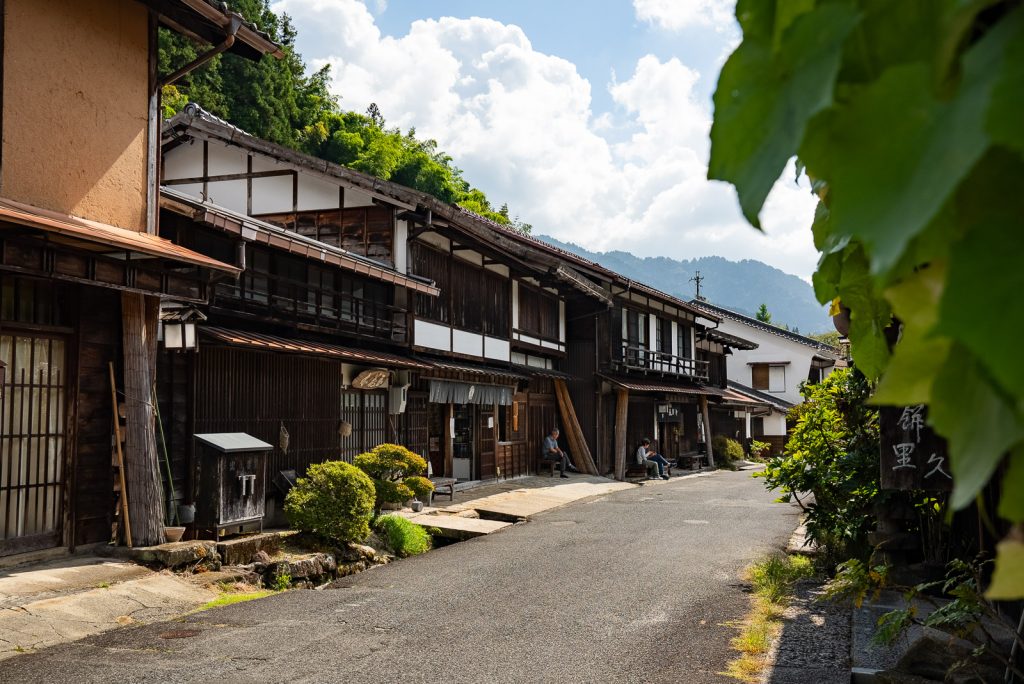
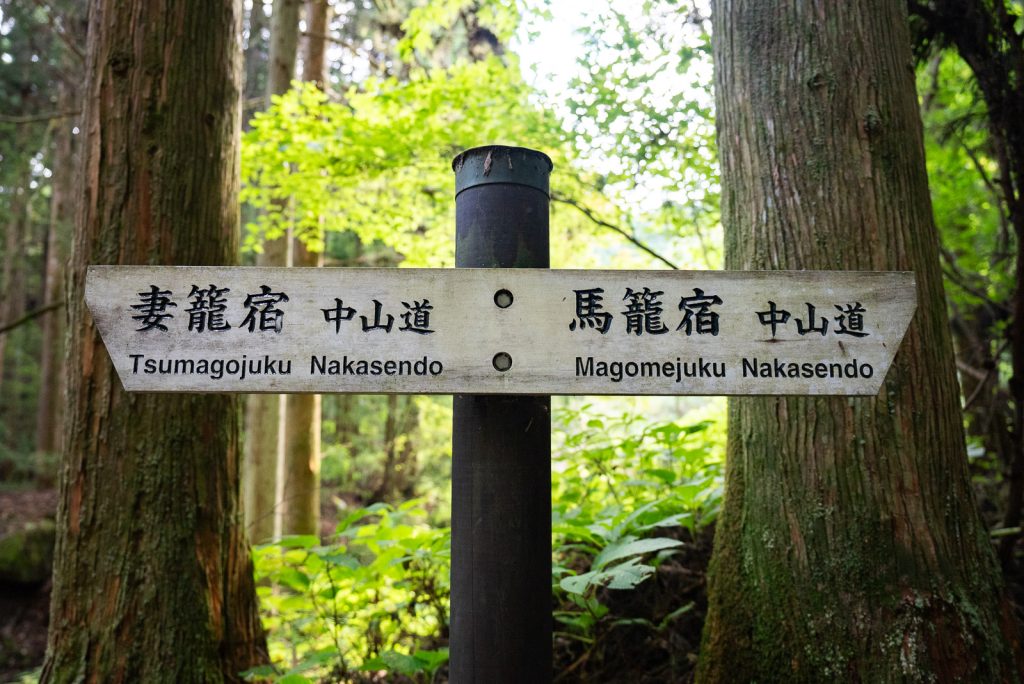
The Nakasendo Trail is a historic route that once connected Kyoto and what is now called Tokyo (formerly Edo) during the Edo period, which ran from 1603-1868. Along this route there are 69 post towns, which served as vital rest stops and commercial centers. Samurai, monks, merchants, and many others all walked this path!
Nowadays most of the original trail has been turned into roads or has been repurposed, but you can still walk the entire route, which spans 540 km (330 miles). However, most people just do a small portion of it.
The most famous section is from Magome to Tsumago, which is located in the Kiso Valley, both in Gifu Prefecture (Magome) and Nagano Prefecture (Tsumago). These were post towns No. 42 (Tsumago) and No. 43 (Magome) along the original route and are some of the best preserved sections of the trail!
This is the section we hiked and after experiencing it ourselves, we can totally see why it’s the most popular. It’s extremely beautiful and offers a lot to see along the way!
Note: You may see the towns being referred to as Magome-juku and Tsumago-juku. “Juku” indicates that it is a post town. For the sake of simplicity, we will be referring to the towns as just Magome and Tsumago, but they mean the same thing!
Want to see our experience on the Nakasendo Trail? Check out this YouTube video!
Hiking the Nakasendo Trail from Magome to Tsumago
Distance (one way): The AllTrails route says 7.2 km (4.5 miles), but expect to go at least 8 km (5 miles) with detours and wandering through towns.
Elevation gain: 267 meters (875 feet)
Route type: Point to point, but you can hike it out and back for double the distance.
Difficulty: Easy to moderate
Trail conditions & recent reviews
Hiking the Nakasendo Trail from Magome to Tsumago is the perfect one day adventure while in Japan. This route can be done in either direction, but we started in Magome and ended in Tsumago.
We liked doing it this way because you get the shorter uphill portion out of the way first and then the majority is downhill. If you start in Tsumago and hike to Magome, you will have a longer uphill stretch.
And while most people only hike it one direction and take a bus back to the start, you can hike it both ways if you want to spend the full day out here!
Getting to the Nakasendo Trail
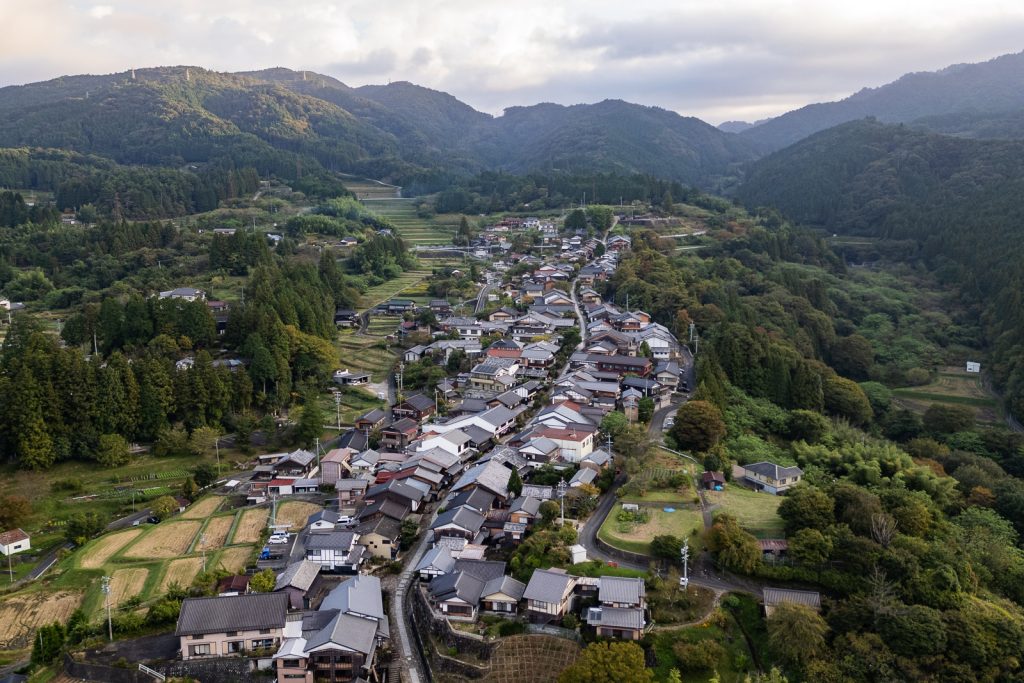
By car
The most flexible way to get to the Nakasendo Trail is by car. Which is what we did! We rented a campervan in Japan and visited the Nakasendo Trail as part of a larger Japan road trip.
Here’s how long you can expect to drive from nearby popular cities:
Tokyo to Magome: 3.5 hours (287 km | 178 mi)
Tokyo to Tsumago: 3.75 hours (293 km | 182 mi)
Kyoto to Magome: 3 hours (218 km | 135 mi)
Kyoto to Tsumago: 3.5 hours (221 km | 137 mi)
One important thing to know is that you cannot drive along the main streets of Magome or Tsumago. So you will need to park outside of town and walk in. In Magome, we found free parking here, but there are also paid lots scattered around the same road. If you start in
Tsumago, there is a paid lot here and here (both ¥500/~$3.20 USD).
By train
If you are exploring Japan by train, it is possible to hike from Magome to Tsumago on the Nakasendo Trail. If you want to start the trail in Magome, you will want to take a train to Nakatsugawa Station. Then you will take the bus to Magome, which is about a 25 minute ride.
To start from Tsumago, take the train to the Nagiso Station and then take a bus to Tsumago, which is about 10 minutes.
You can see the bus schedule for both train stations here! The price varies by route and you will want to have cash to pay your fare.
With a tour
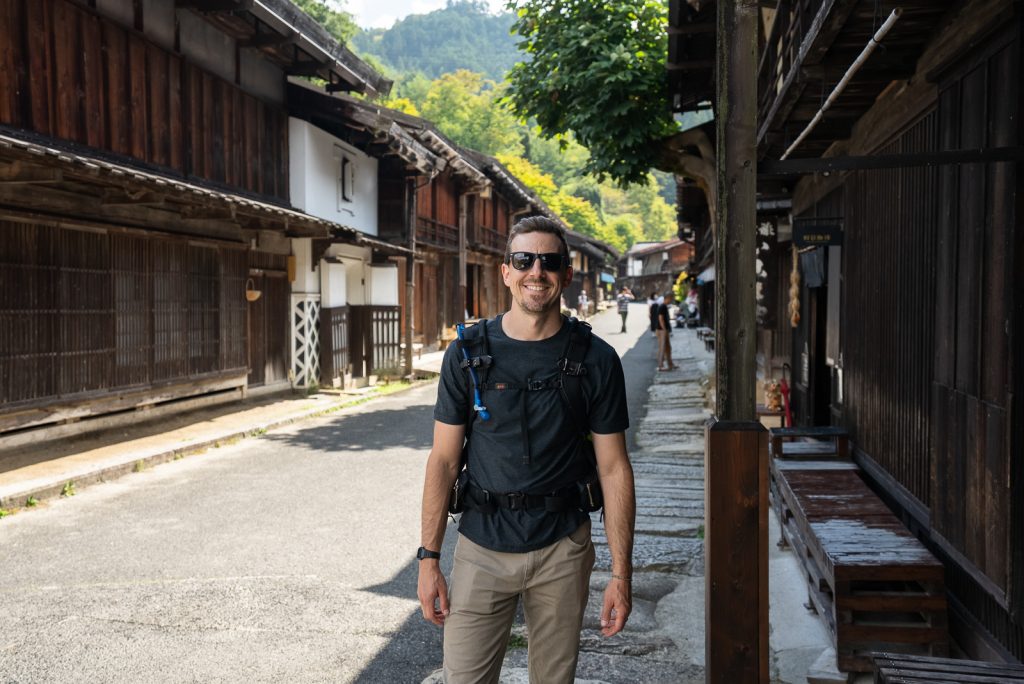
If you do not have a rental car and prefer to not deal with the train and bus logistics, you can take a tour to the Nakasendo Trail. There are a variety of tours that leave from Nagoya and Matsumoto, as well as from Magome and Tsumago. Here are a handful of options to consider!
- Full-Day Kisoji Nakasendo Trail Tour from Nagoya
- Hiking the Historic Nakasendo Trail [1 Day Tour from Nagoya]
- 1-Day Tour from Matsumoto: Walk the Nakasendo Trail
- Magome & Tsumago Nakasendo Trail Day Hike with Government-Licensed Guide
Not only do some of these tours provide your transportation to and from the trail, but they also will be able to give you much more context on the area as you walk.
Want to save some money on this tour or experience? Join Tripadvisor Rewards to earn 5% Trip Cash on any hotel or experience booking made in their app, which can be applied to future in-app bookings!
The best stops along the Nakasendo Trail (Magome to Tsumago)
Magome
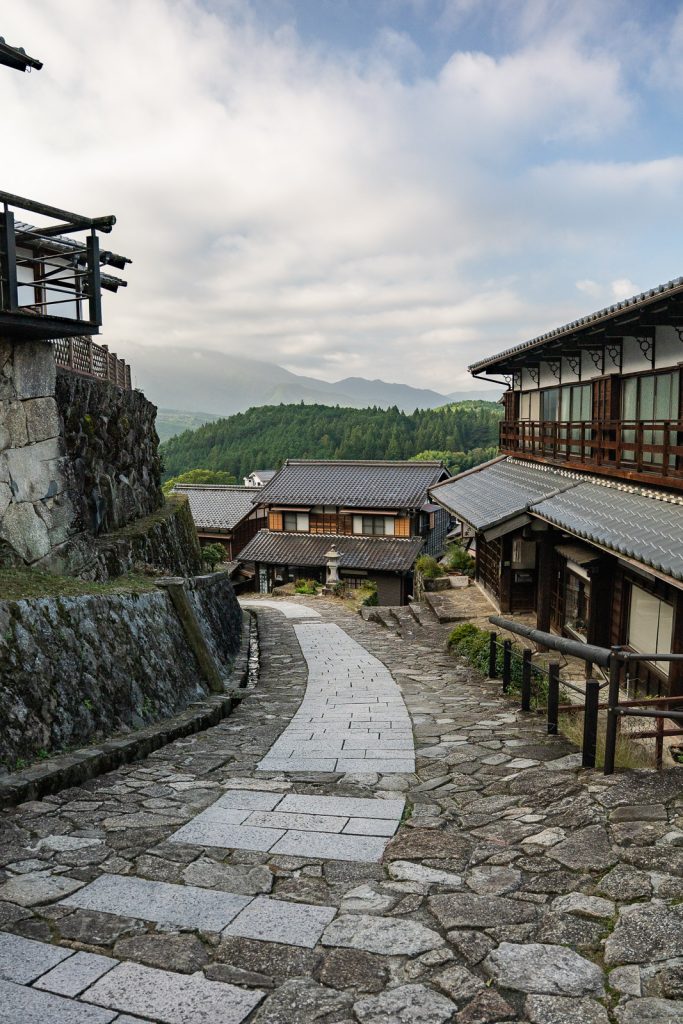
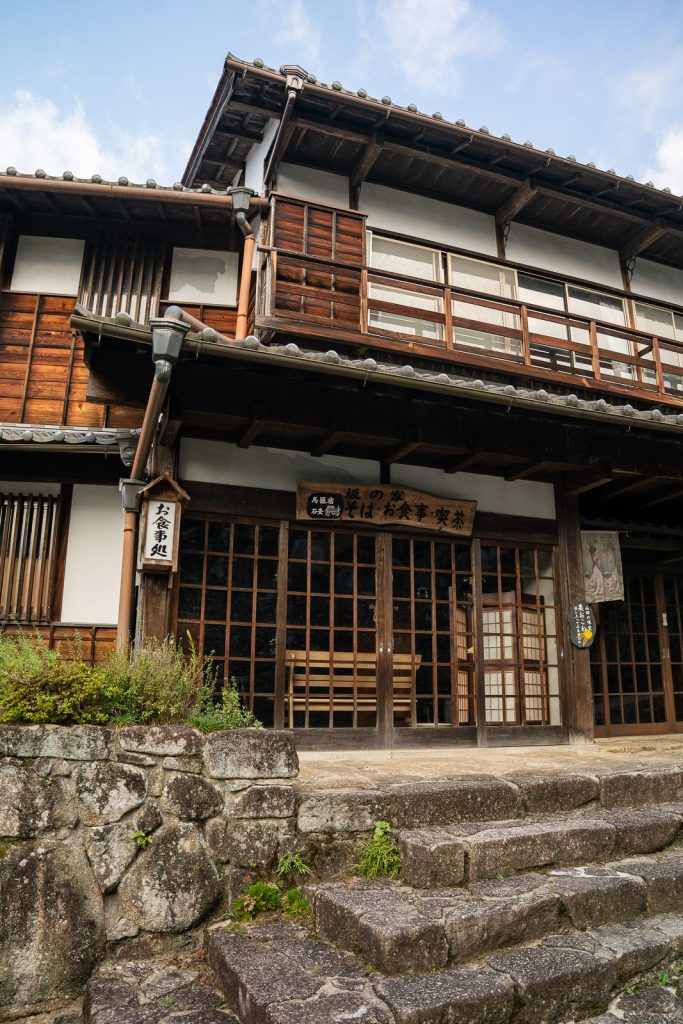
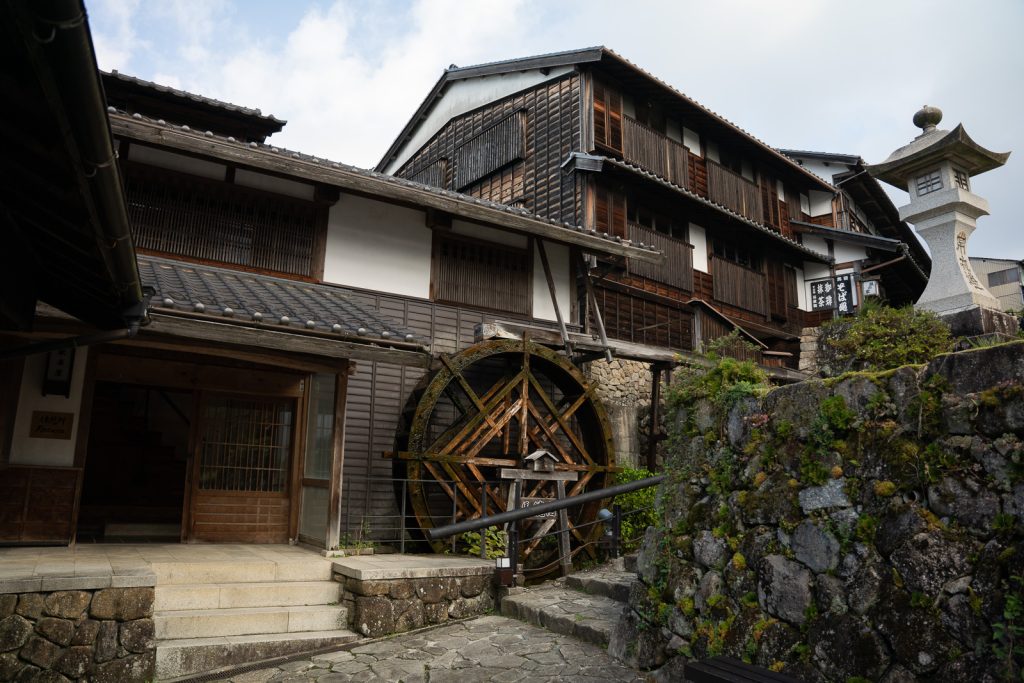
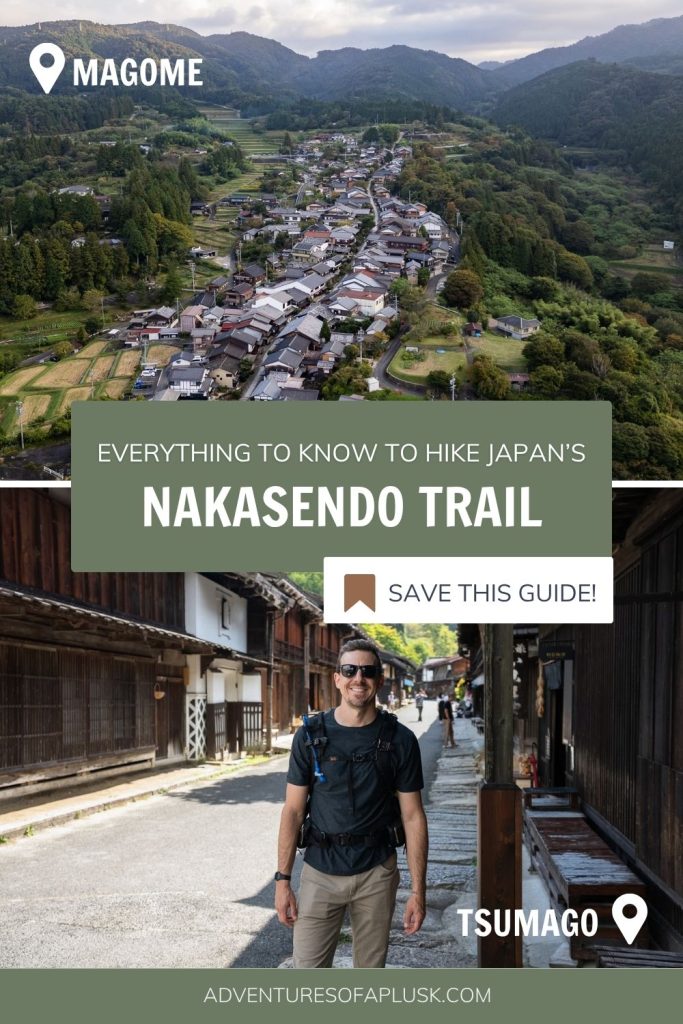
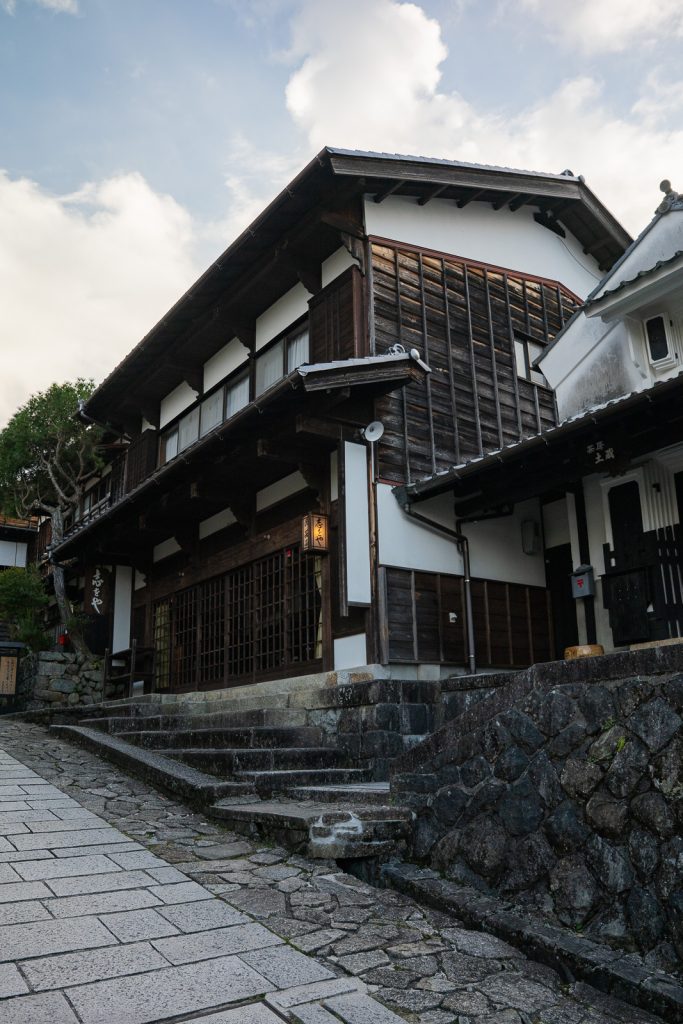
After parking your car or arriving by bus, it’s time to begin your Nakasendo Trail adventure! And you’ll kick things off right in Magome, which is an idyllic town. Here you’ll find countless historic buildings, streams and waterways running along the streets, including a picturesque water wheel. We spent way too much time walking the street here, as we were in awe of how beautiful it was.
To start the Nakasendo Trail you will go uphill through town. As you climb up, make sure to stop and admire the views behind you! Not only is this a cool perspective of town, but you’ll also get a great view of the surrounding mountains.

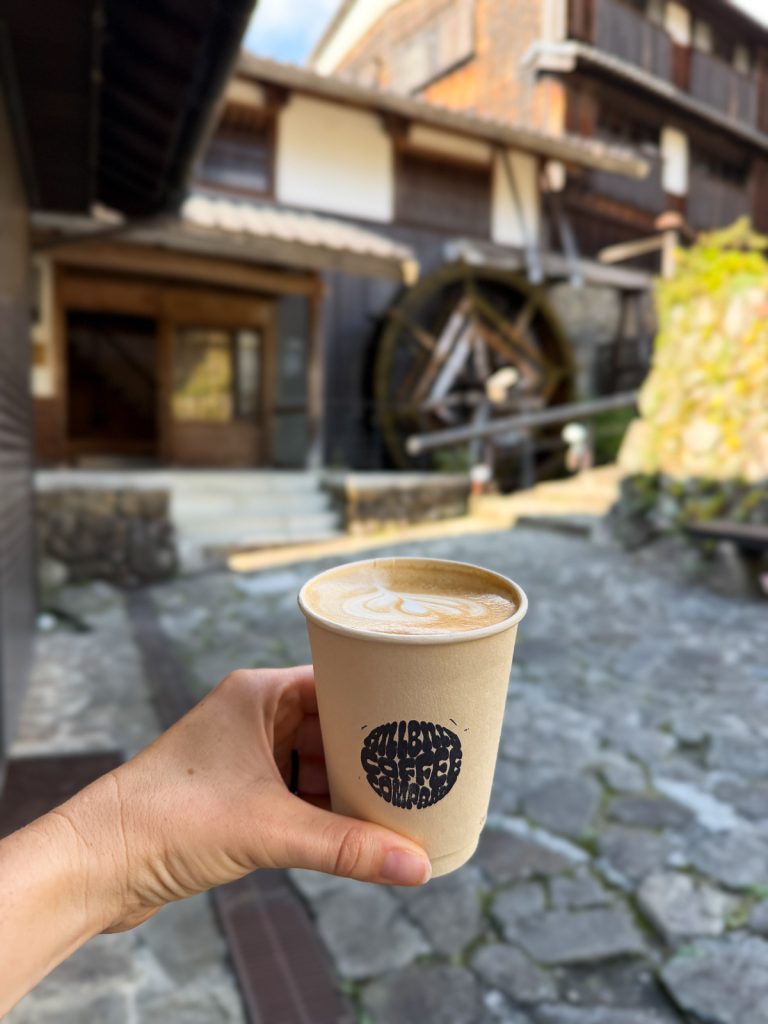
There are a handful of restaurants and cafes we suggest checking out in Magome. You can either visit these at the beginning or when you come back to town at the end.
We loved HillBilly Coffee Company for flat whites, Masuya is popular for hot and cold soba and gohei mochi, and Soba Restaurant Mikazukian is another popular restaurant to order soba. They also have tempura and shabu shabu (hot pot).
Magome Jinbakami Observatory
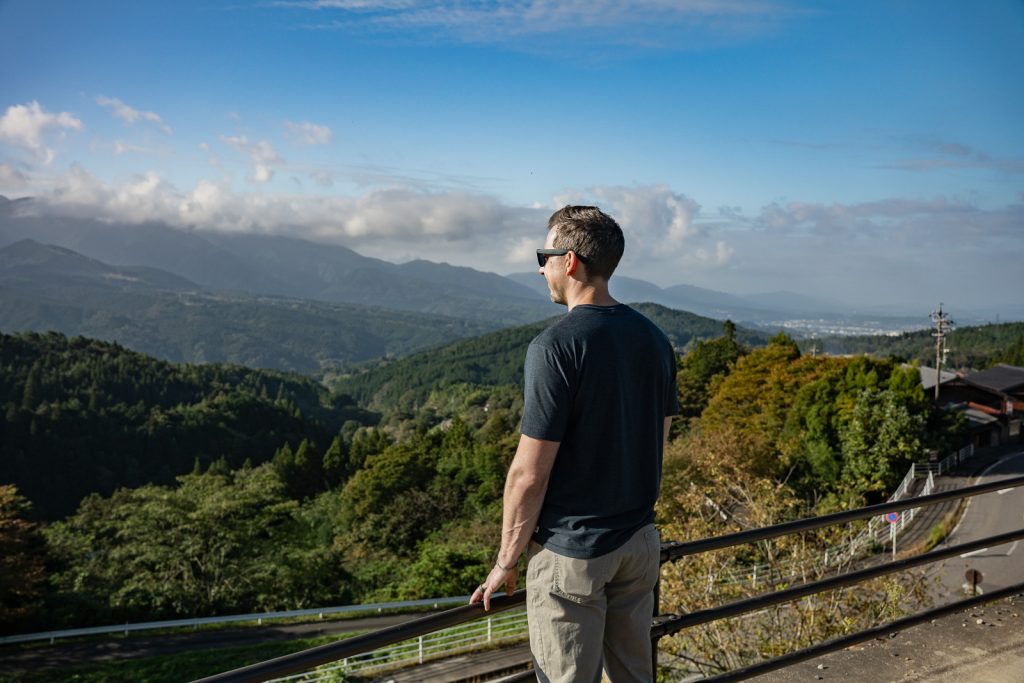
Right after reaching the top of the hill in Magome you’ll come across the Magome Jinbakami Observatory. This is a large observation deck that overlooks the town and the surrounding mountains. It’s impossible to miss, but make sure to stop here and see the views before continuing on!
Juri Restaurant
Both Magome and Tsumago have multiple places to grab a bite to eat, but along the trail itself, there aren’t any restaurants, with the exception of Juri! This restaurant is located about 1.45 km (0.9 miles) into the hike from Magome. They open at 10 AM, so we were unfortunately too early to try it, but if you’re hiking around that time, it makes for a great food stop.
Bear bells
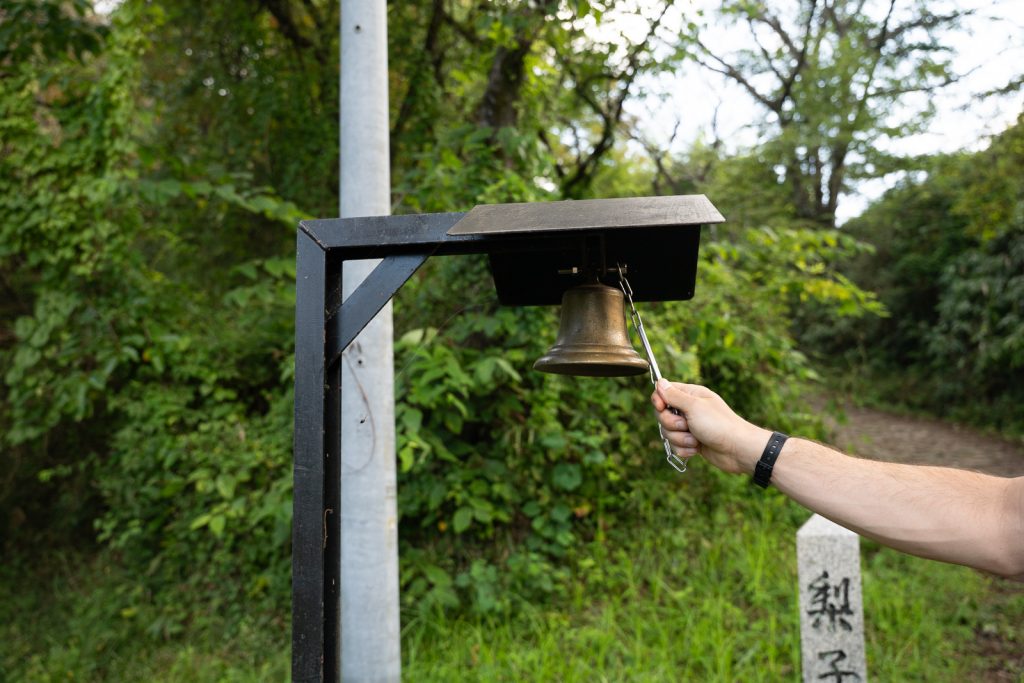
One thing you’ll notice along the Nakasendo Trail are bear bells. Japan is home to about 10,000 Asiatic black bears, plus some brown bears that live on the northern island of Hokkaido. And along this trail there are bear bells to ring to warn the black bears of your presence. While we haven’t heard of anyone seeing a bear along this route, Japan has seen an increase in bear attacks in recent years. So make sure to ring these as you walk along the trail!
Owaki’s Garden
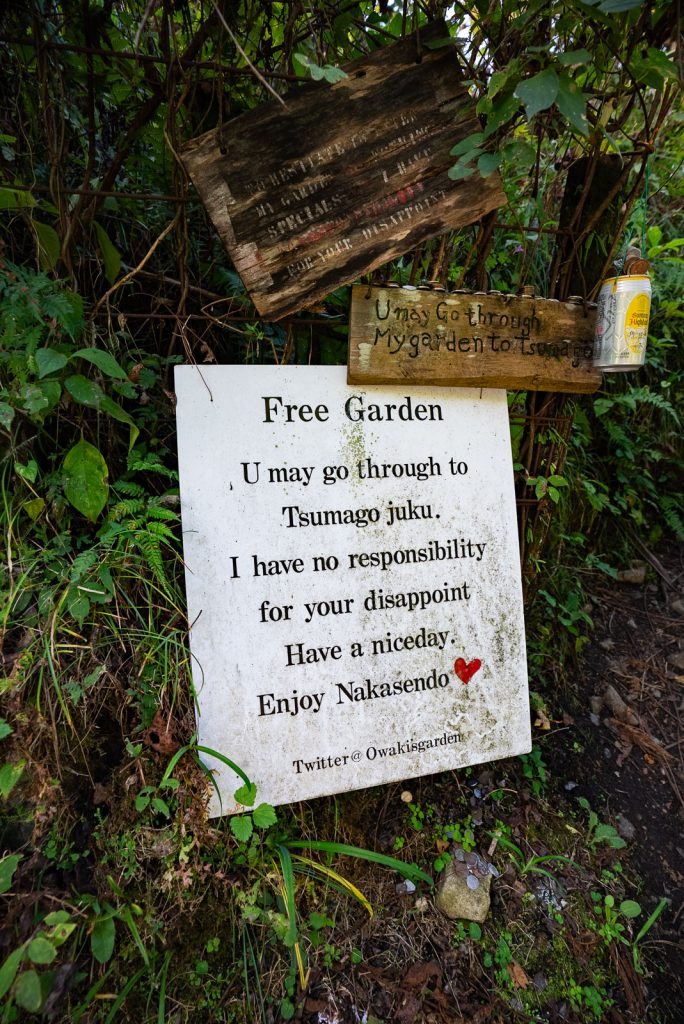
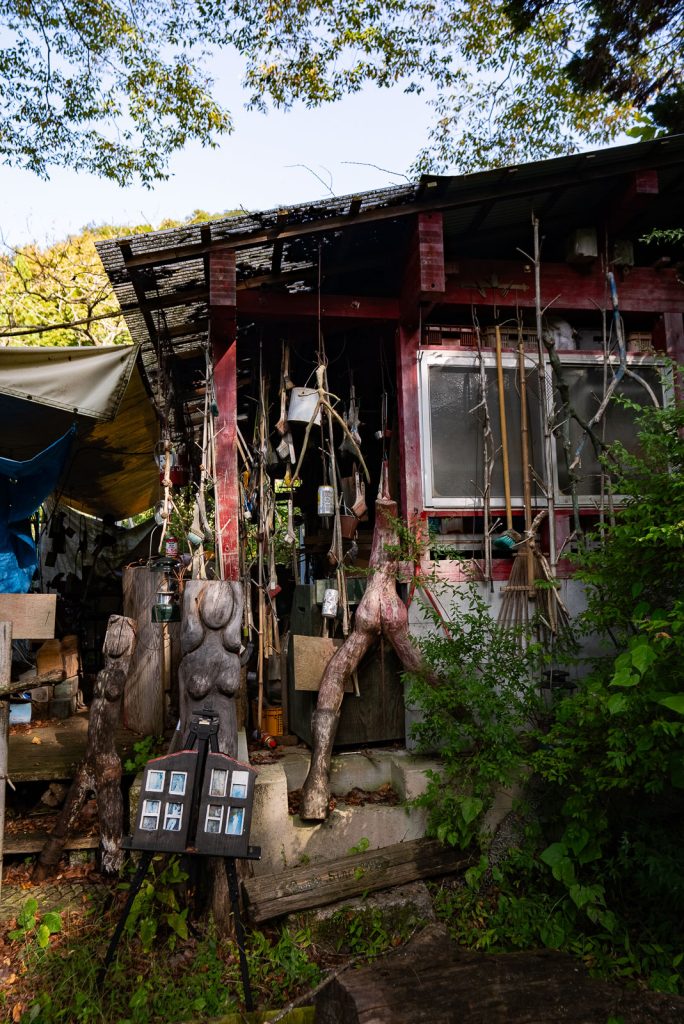
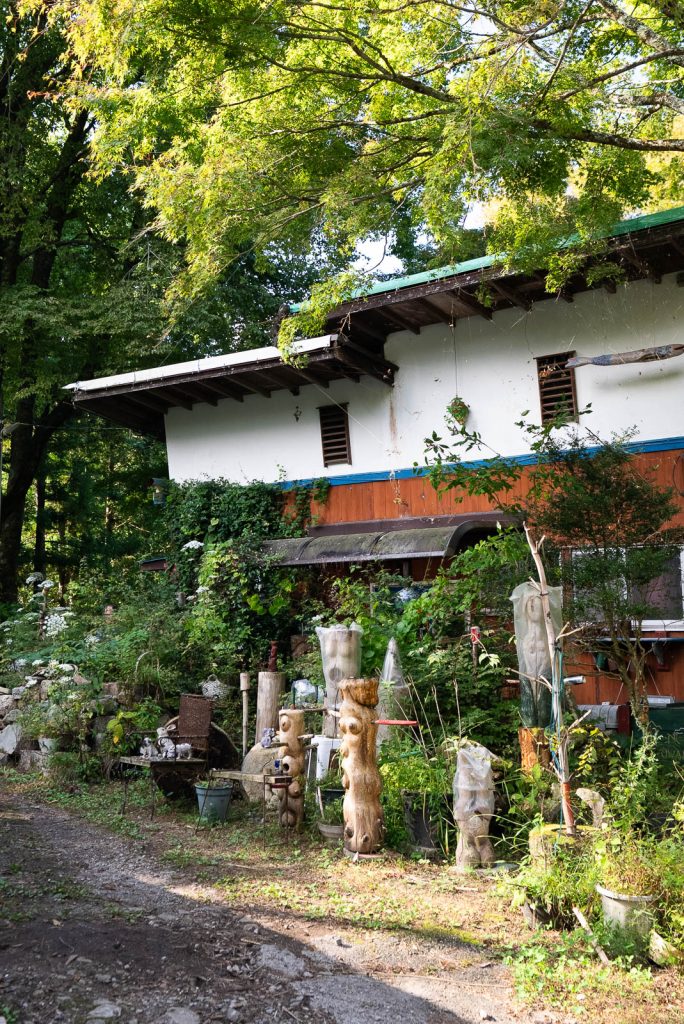

Owaki’s Garden is the next major stop you’ll come across. But it’s a bit of a hidden one! This is the personal garden of Mr. Owaki, which is filled with wooden sculptures, carvings, trinkets, and art.
Since 1998, he has opened it up to visitors and you are able to freely wander around. It’s a quirky, fun stop to make!
To get here, just keep an eye out for funny signs on the right side of the path that state you may enter. Like the one that states he has “no responsibility for your disappoint.”
Kumanojinja Shrine
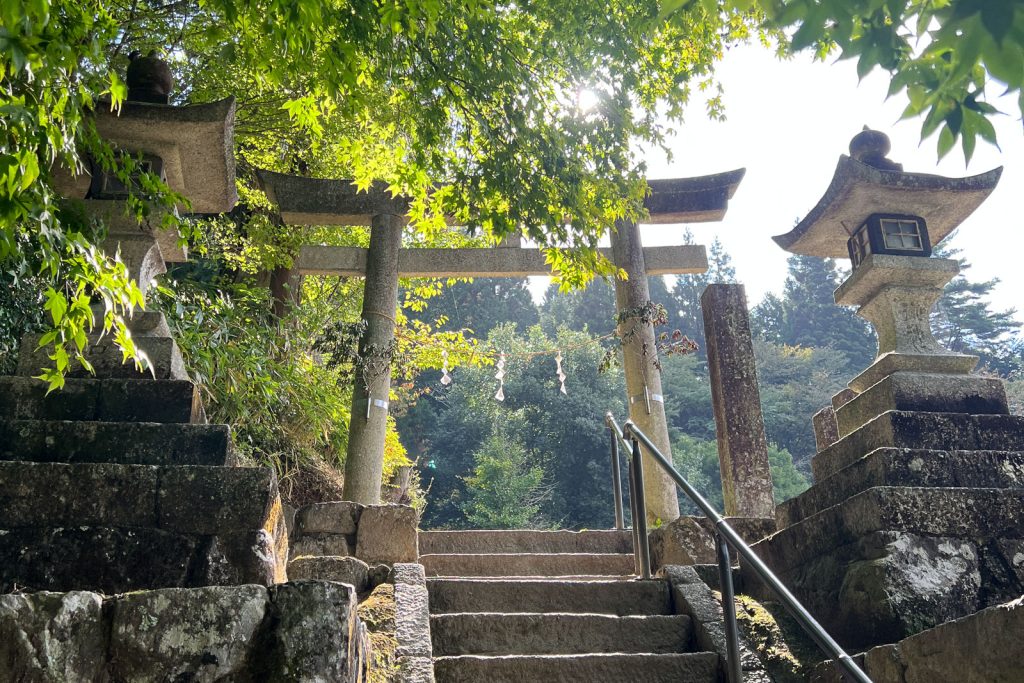
One very quick stop along the Nakasendo Trail is the Kumanojinja Shrine. On the right side of the trail you’ll see a stone torii gate, at the top of some steps. At the top, there’s a little courtyard. There isn’t much to see here, but we thought the torii gate was a beautiful site among the forest.
Magome Pass
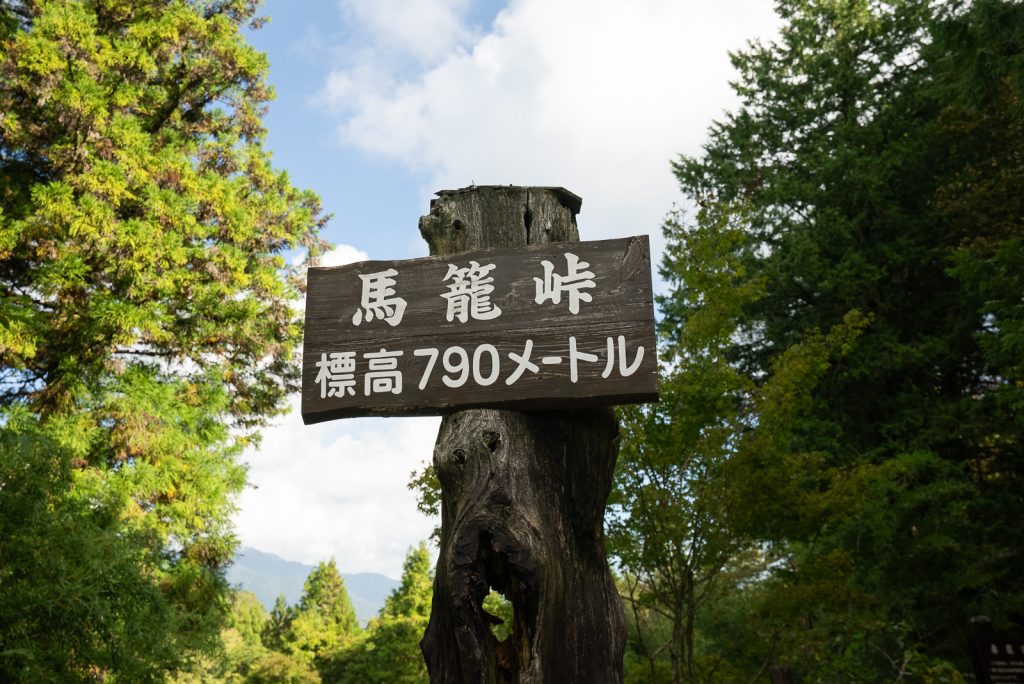
After about 2.7 km (1.7 miles) you will reach Magome Pass, the highest point along the trail at 790 m (2,592 ft). While there isn’t much of a view here, as there are a lot of trees, this means you will be going mostly downhill the rest of the way!
Note: Right before reaching here you do have to walk alongside the road for a minute or two. Besides this section, there are a couple other sections that do go on or right by the road, so be cautious.
Ichikokutochi Tateba Chaya

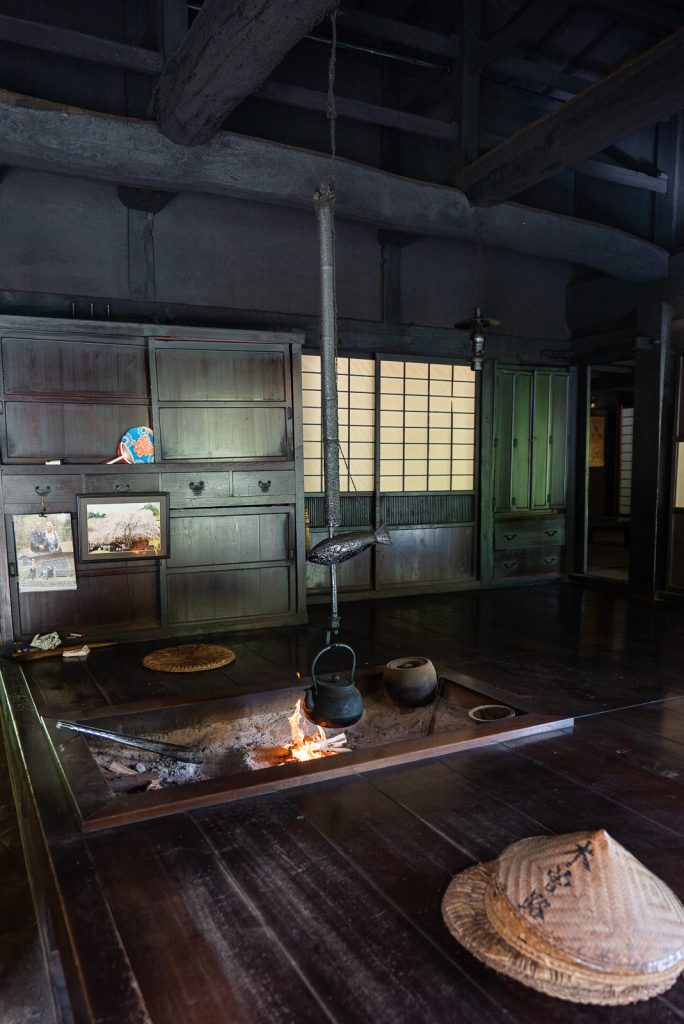
Roughly around the halfway point of the trail is one stop we consider a must-visit: Ichikokutochi Tateba Chaya. This is a beautiful, 250 year old teahouse, which is run by volunteers. Here you can get some green tea, candies, and rest for a bit. There is also sometimes a fire going in the irori (a traditional Japanese sunken hearth), which totally adds to the vibe!
The teahouse is open daily from 9 AM to 4 PM and is totally free to visit and get tea. But they do accept donations, so please make sure to help support them! There is also a public toilet here if you need to use one before continuing to Tsumago.
Otaki & Metaki Falls
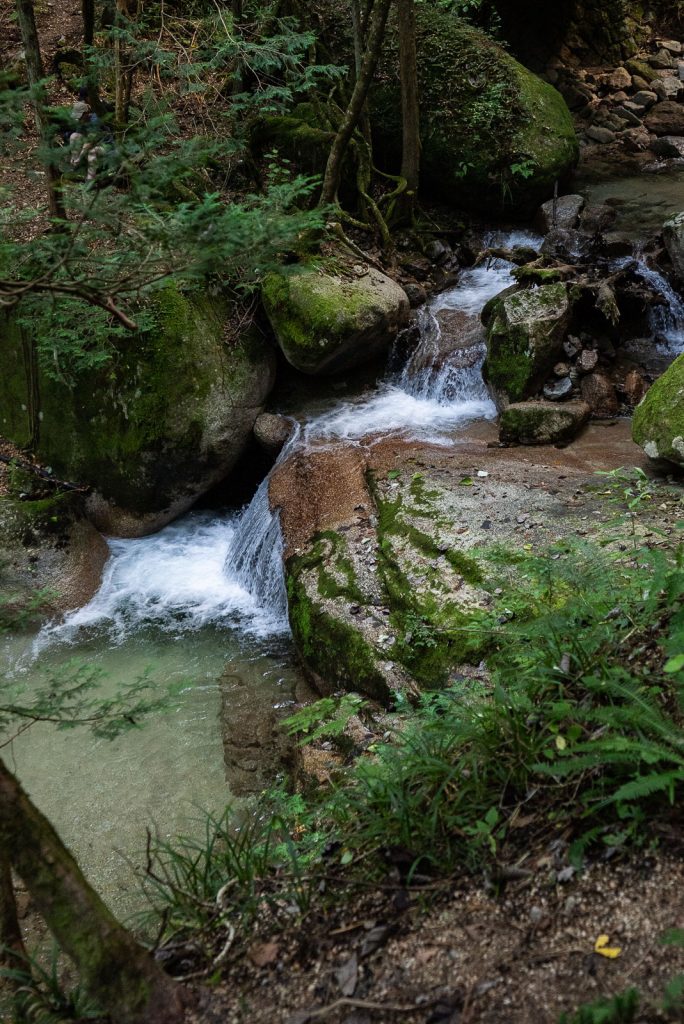
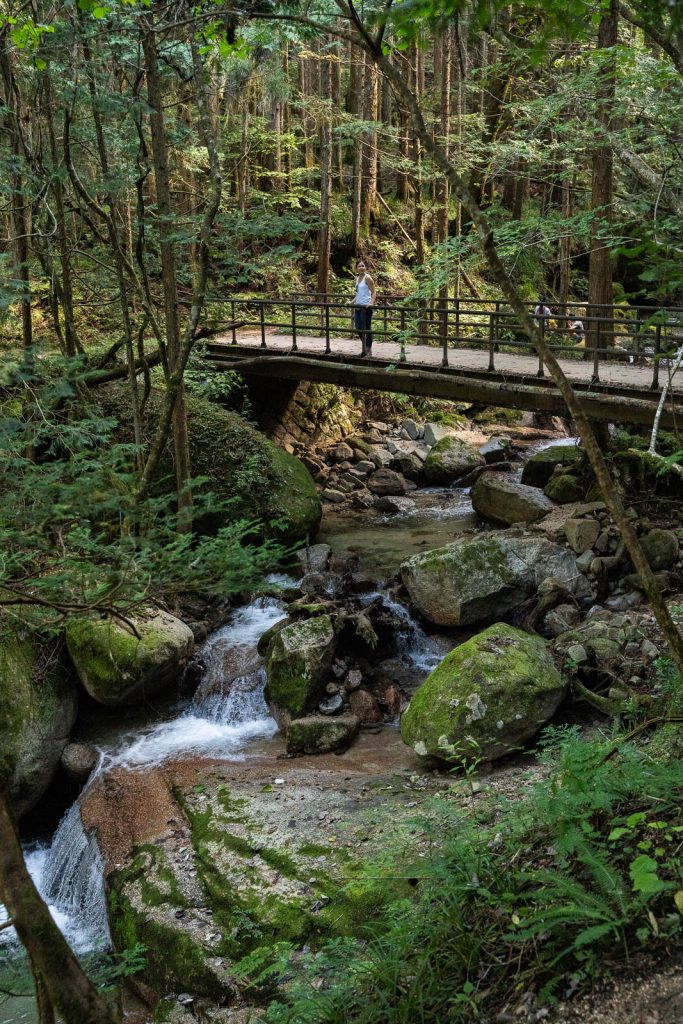
After leaving Ichikokutochi Tateba Chaya the hike will continue through the forest. This next section is one of the most scenic along the entire route! You will cross a bridge over a river, with small waterfalls rushing below it. And shortly after this, you’ll reach a turnoff where you can visit Otaki Falls and Metaki Falls.
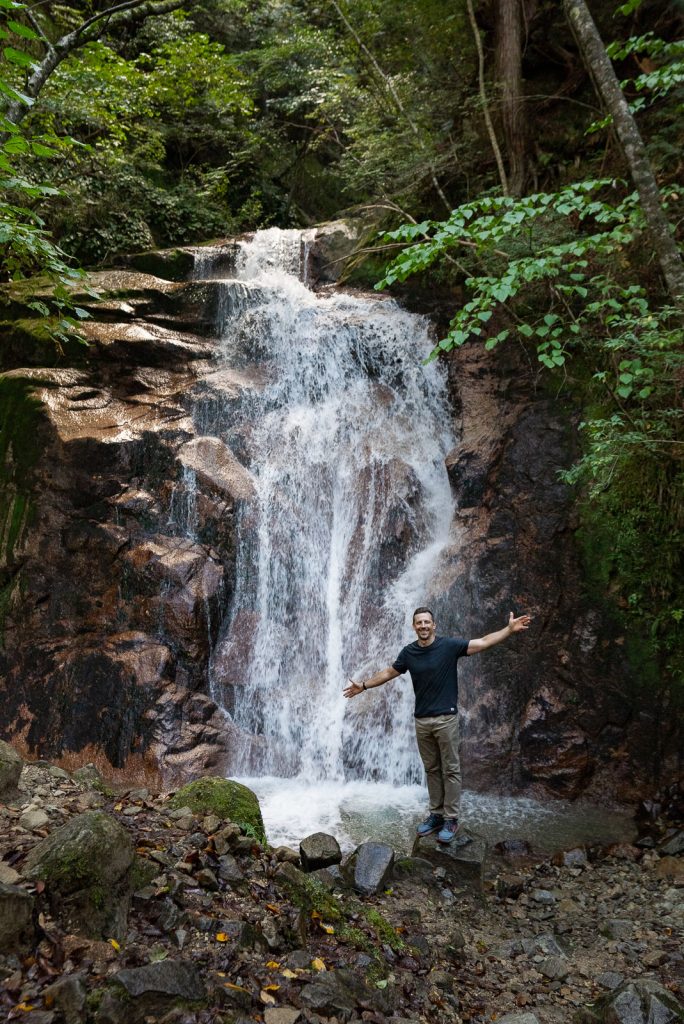
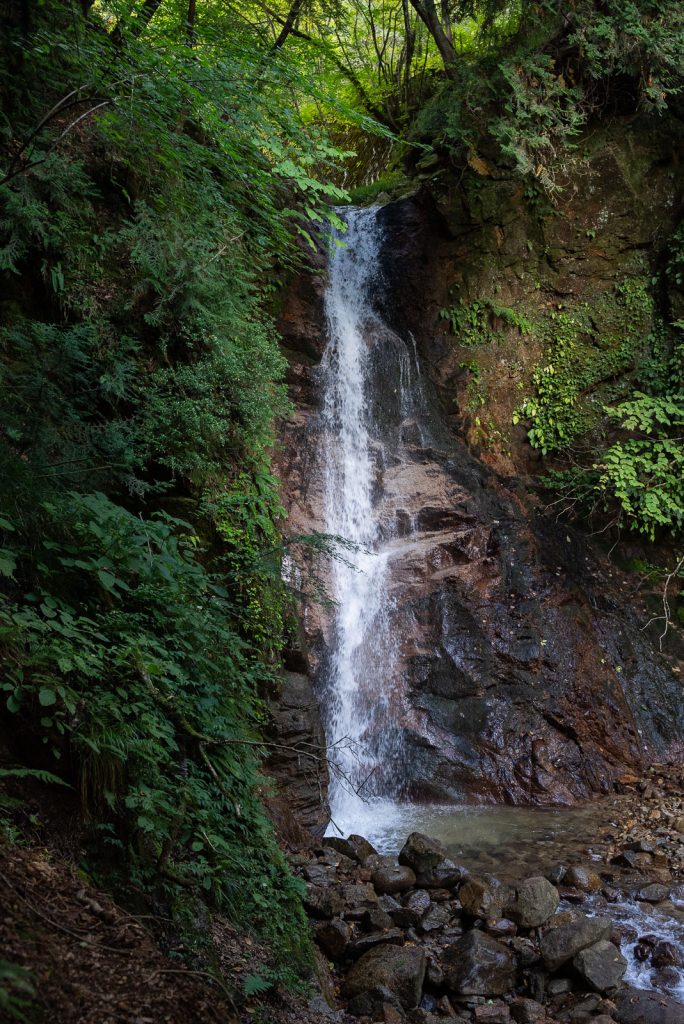
While this adds a little bit of extra walking, this was easily one of our favorite stops and is well worth the extra time.
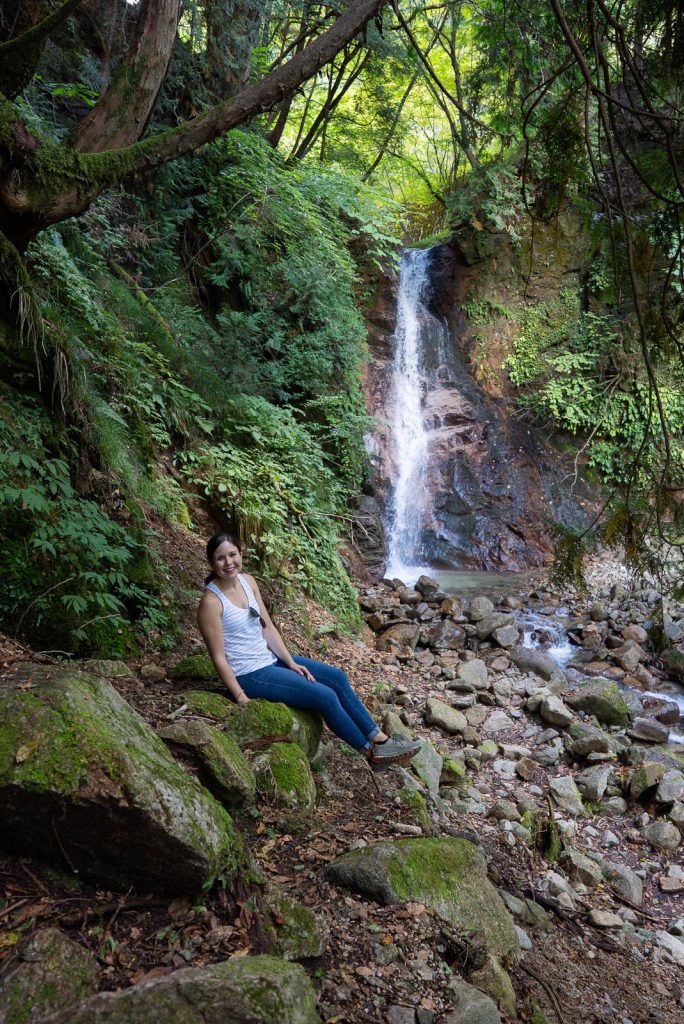
These falls are located right by each other, with Otaki translating to “man” and Metaki translating to “woman.” The larger waterfall on the left is Otaki Falls and Metaki Falls is a short walk to the right. They are both stunning waterfalls and you can get very close to them!
Cobblestone Path
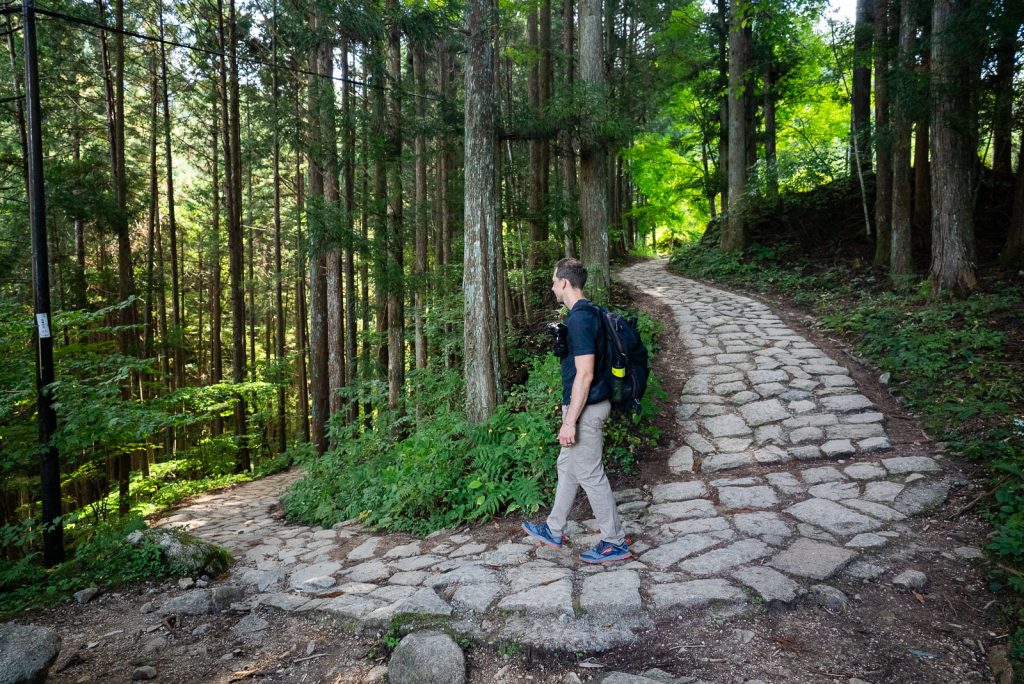
The Nakasendo Trail is a mix of terrain. At some points you’ll be on stone pathways, while other sections are dirt trails. But the next section after the waterfalls is one of the coolest sections of the trail because you’ll get to walk on a cobblestone path that is part of the original Nakasendo Trail. It is one of the best preserved sections of the trail!
Tsumago
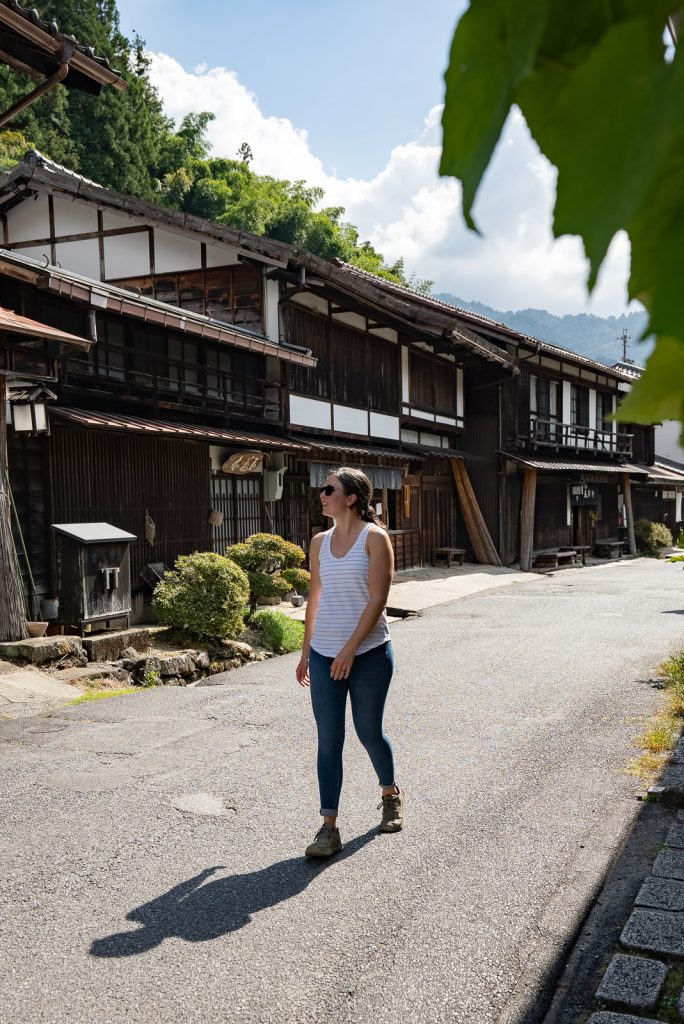
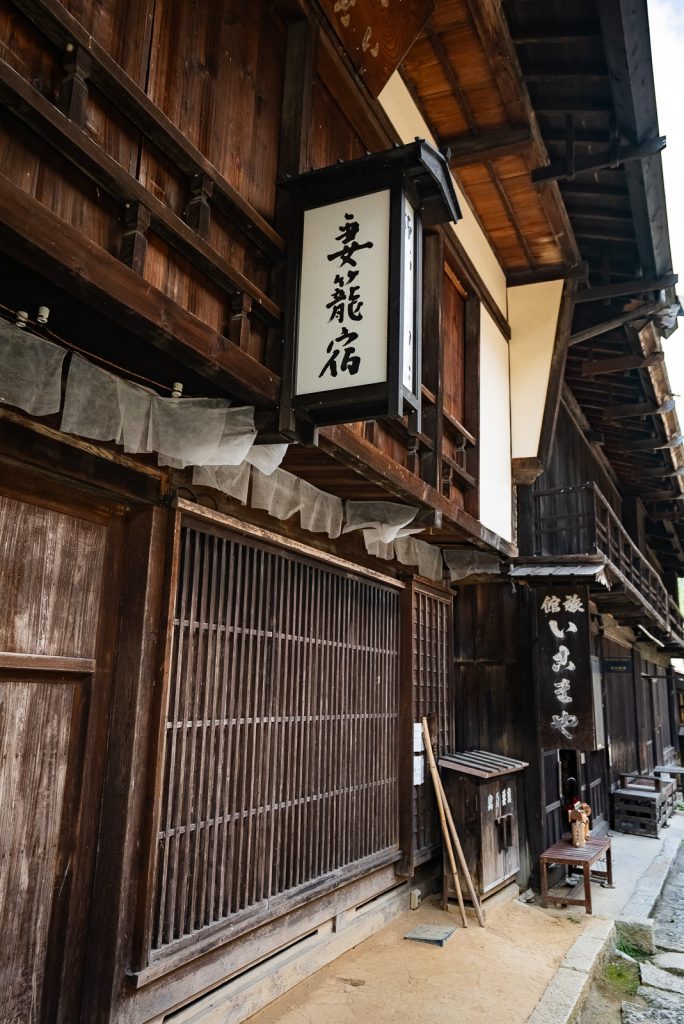
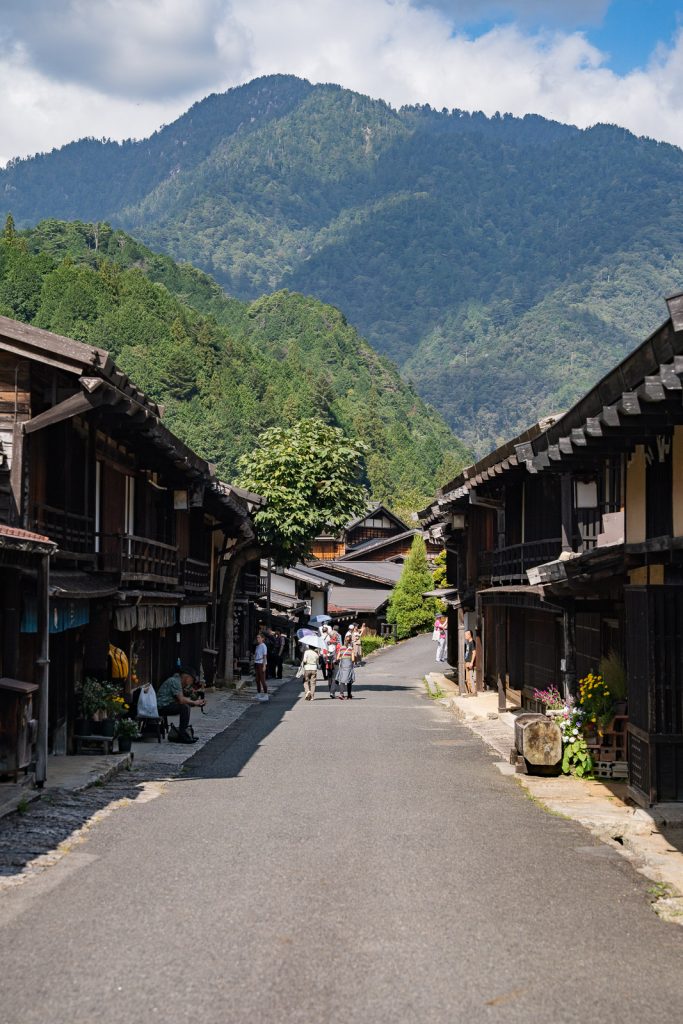
And for the grand finale of the hike, you will reach Tsumago! Similar to Magome, Tsumago is an extremely well-preserved post town. Cars are not allowed on the streets during the day and unlike most of Japan, you won’t find vending machines all along the streets. It really feels like you’ve stepped back into time!
In town you’ll find different shops, museums, and places to eat. We highly recommend trying a couple local dishes while here. We loved the oyaki from Wachinoya Pastry Shop. These are steamed buns with various fillings, either savory or sweet. We got their nozawana (a leafy green) and red bean paste oyaki. Both were hot, fresh, and delicious!
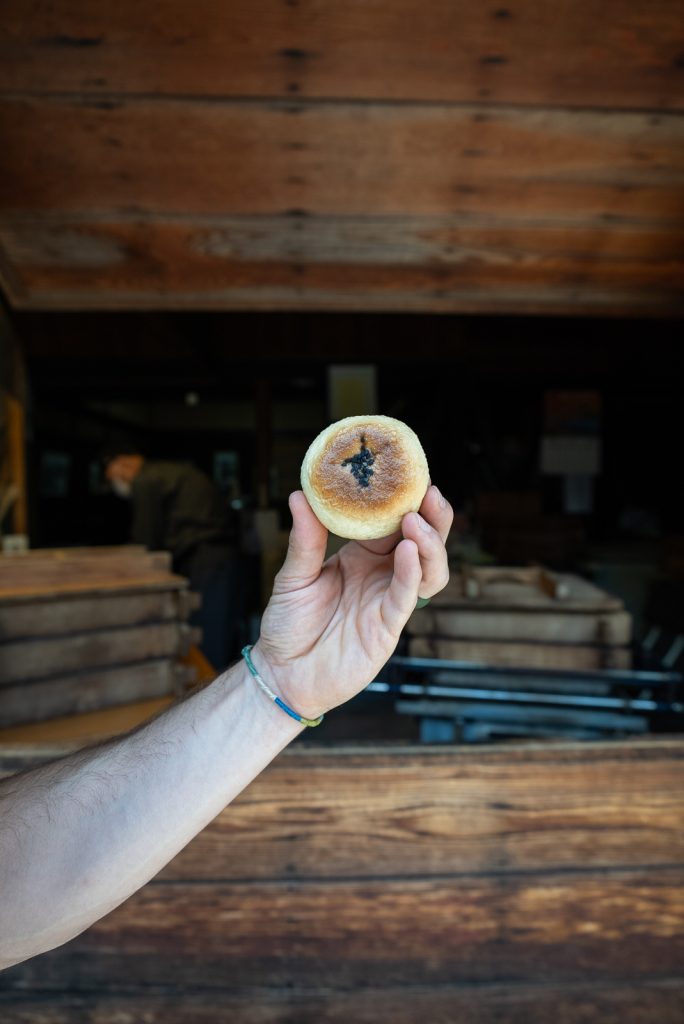
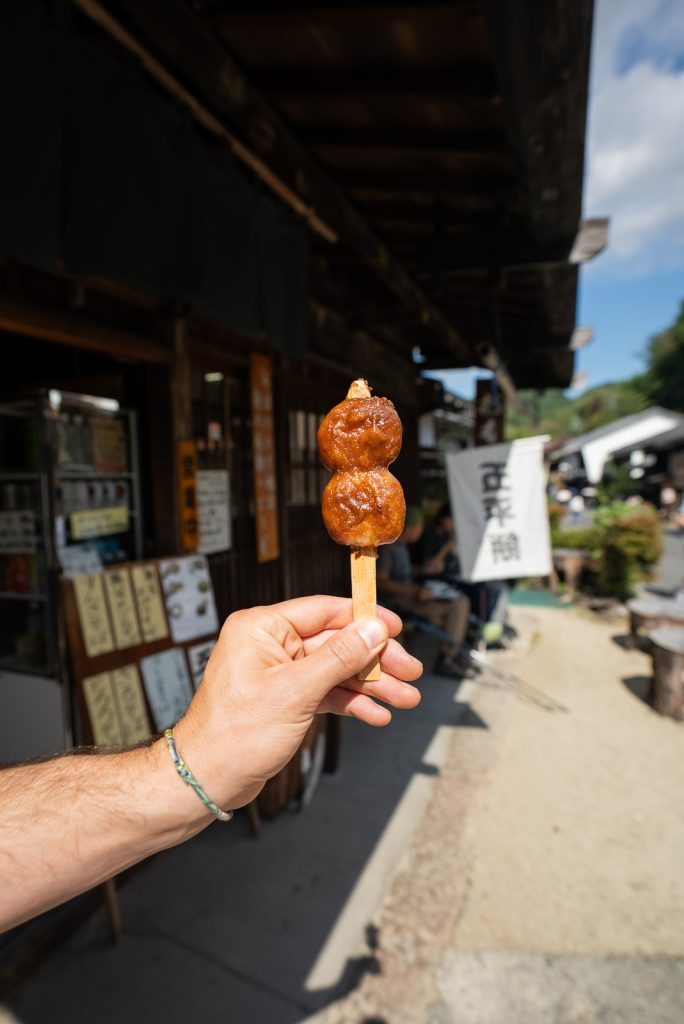
Another food that is a must-try either here or in Magome is gohei mochi! This is a skewer of mashed rice, which is grilled and coated in a sauce made of walnut and miso. It has a savory, nutty taste, with a hint of sweetness, almost like a peanut sauce. We grabbed a skewer of these at Omote soba.
And if you need coffee while in town, Good Day Coffee & Bar (Kojitsu Coffee) looks delicious!
How to get back to where you started
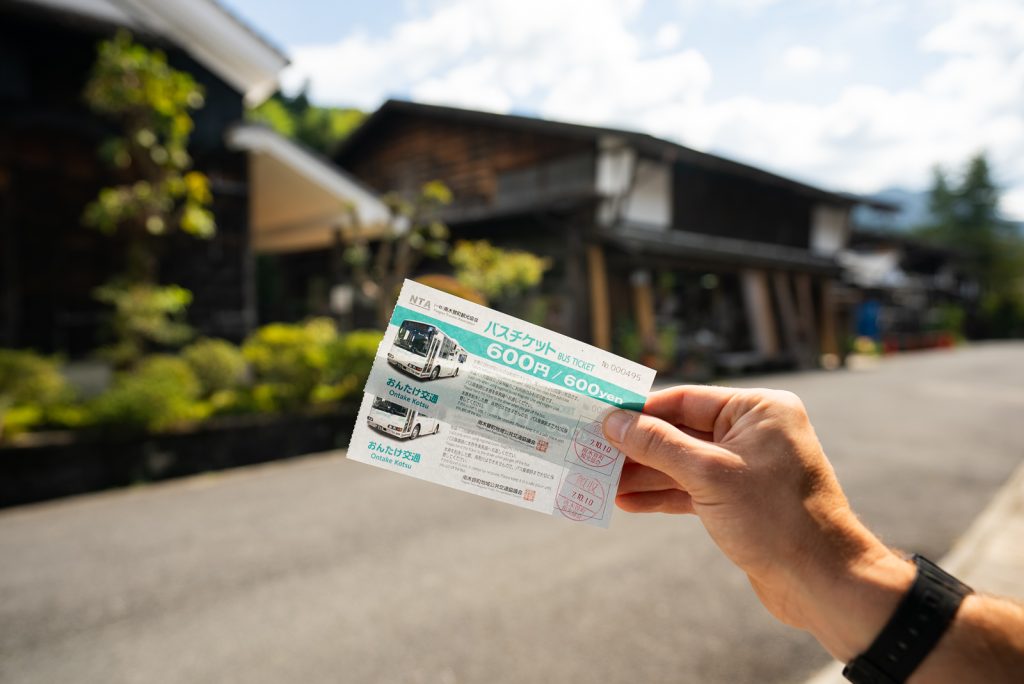
Unless you decide to stay the night in Tsumago, after exploring, you will need to head back to Magome!
You can walk back (on the same route) if you’re doing well on time and have the energy, but most visitors will take the bus. Tickets cost ¥1,000 (~$6.40 USD) and you can either get your tickets on the bus or buy them at the visitor center in Tsumago. Make sure to have cash for your ticket!
This bus has a pretty limited schedule, with the only options back to Magome being at 12:47 PM, 2:22 PM, and 4:42 PM. We started our walk around 7 AM and were able to catch the 12:47 PM bus even going at a slow pace.
The ride back to Magome from Tsumago will take about 30 minutes and there are multiple stops to get off. To get back to our car, we got off at one of the final stops, which was right next to our campervan. But most visitors got off at the top of Magome. So pay attention to where the bus is stopping so you don’t miss the best stop for you!
Where to stay before or after the Nakasendo Trail
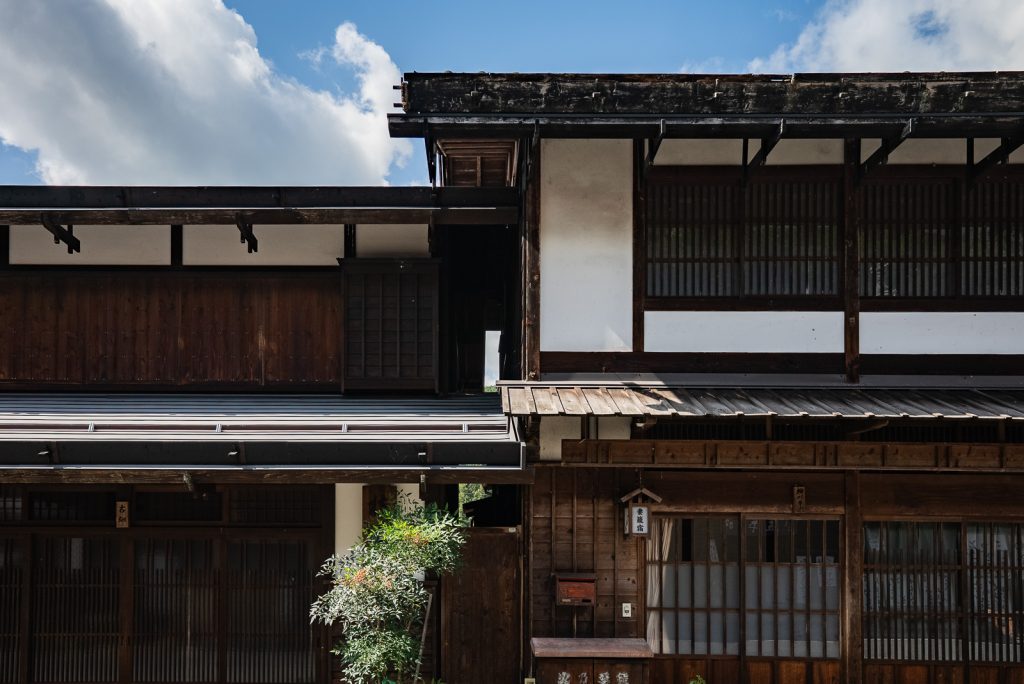
While the Magome to Tsumago stretch of the Nakasendo Trail is only a one day adventure, you may want to consider staying in either town. Especially the night before your hike, that way you can get an early start!
Both Magome and Tsumago offer accommodations, but the options are very limited. Make sure to book your accommodation as soon as possible in order to ensure you can secure something. Below are some options to consider!
Magome Lodging
Magome Furusato Gakkou: Ever wanted to stay in an old school? This hotel was transformed into a hostel/hotel a couple decades ago when it was no longer needed as a school. And it looks so cool! They offer a few different options like private rooms, bunk beds and shared rooms. Plus have a shared kitchen with pots, pans, and cooking utensils, as well as sell some snack items.
Tajimaya: Tajimaya offers Japanese style rooms with dinner and breakfast included. This is helpful if you arrive the night before and need dinner, plus gives you the chance to grab breakfast before your hike!
Magome Chaya: This hotel has traditional rooms with futon bedding and a tatami-mat floor. You have the option to reserve a traditional Japanese meal as well for a fee. The basic rooms have shoji paper screens and a low table, plus air-conditioning. However, the bathrooms and toilets are shared.
Motomiya: Located just a 12 minute walk from Magome, Motomiya is a traditional Japanese inn, with shared showers and toilets. Breakfast and dinner are included here as well!
Tsumago Lodging
Daikichi: Daikichi is a small Japanese inn in Tsumago with only 5 rooms. It has amazing reviews and looks like an awesome experience! With such limited availability, try to book as soon as possible.
Matsushiroya Ryokan: This is another traditional Japanese inn that has been meticulously maintained to retain its historical charm. There are no TVs or clocks, staying true to the town’s mission to transport you back in time.
MOUNTAinn Nagiso: Located in Nagiso, where the train to Tsumago arrives, this guest house looks awesome! It has a nice, clean design, has amazing river and mountain views, and access to a well equipped kitchen. You can book the entire guesthouse, making it great for larger groups!
Michi-no-eki (Japanese road side stations)
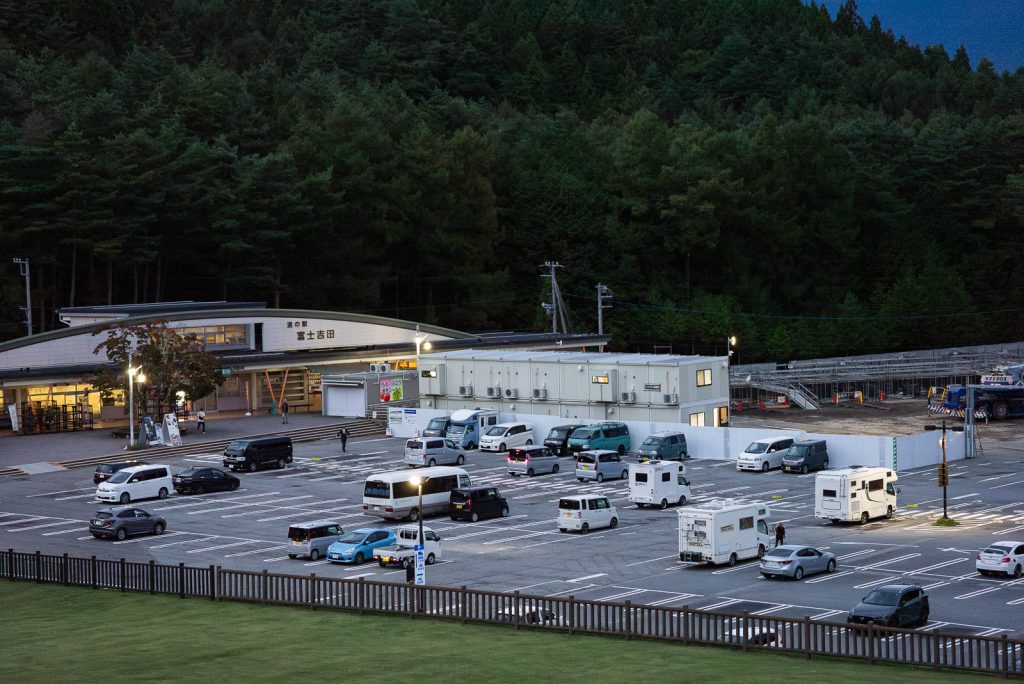
If you are traveling Japan by campervan (highly recommended!) then you’ll likely have spent a night or two at a michi-no-eki. Michi-no-ekis are Japanese roadside stations where you can sleep in your vehicle overnight for free. They all have public toilets and vending machines, plus many often have trash cans.
The night before hiking the Nakasendo Trail we stayed at the Karira Sakashita Roadside Station just 10 minutes from Magome. This made it easy to get up early and hit the trail!
Check out our guide to traveling Japan by campervan to learn where to rent a campervan in Japan, important logistics, and why we think it’s the best way to see the country.
What to bring on the Nakasendo Trail
Good walking shoes
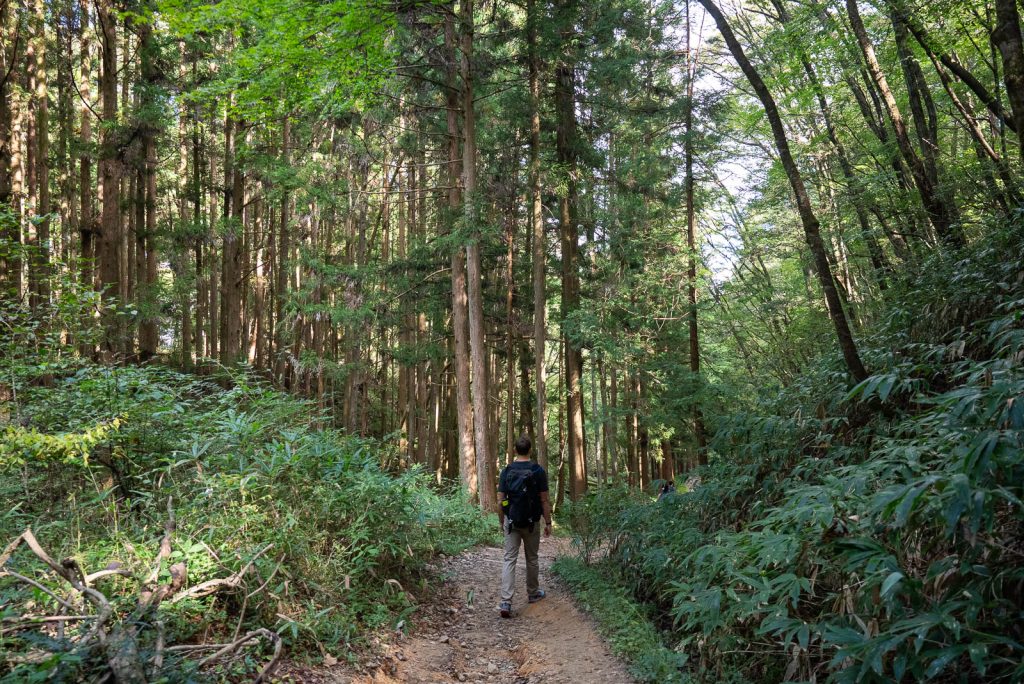
Between the distance and mix of terrain, you’ll definitely want some good walking shoes! We love our Altra Lone Peaks (Adam’s and Kathryn’s), because they are lightweight, have good grip, and dry out fast if they get wet.
Layers
Throughout your time on the Nakasendo Trail, the weather and temperature can change. So make sure to bring layers in case it gets warmer, colder, or starts raining. A light layer (Adam’s, Kathryn’s) and rain jacket (Adam’s, Kathryn’s) are perfect. If you visit in the winter, you’ll definitely want a puffy jacket (Adam’s, Kathryn’s) too!
Sun protection
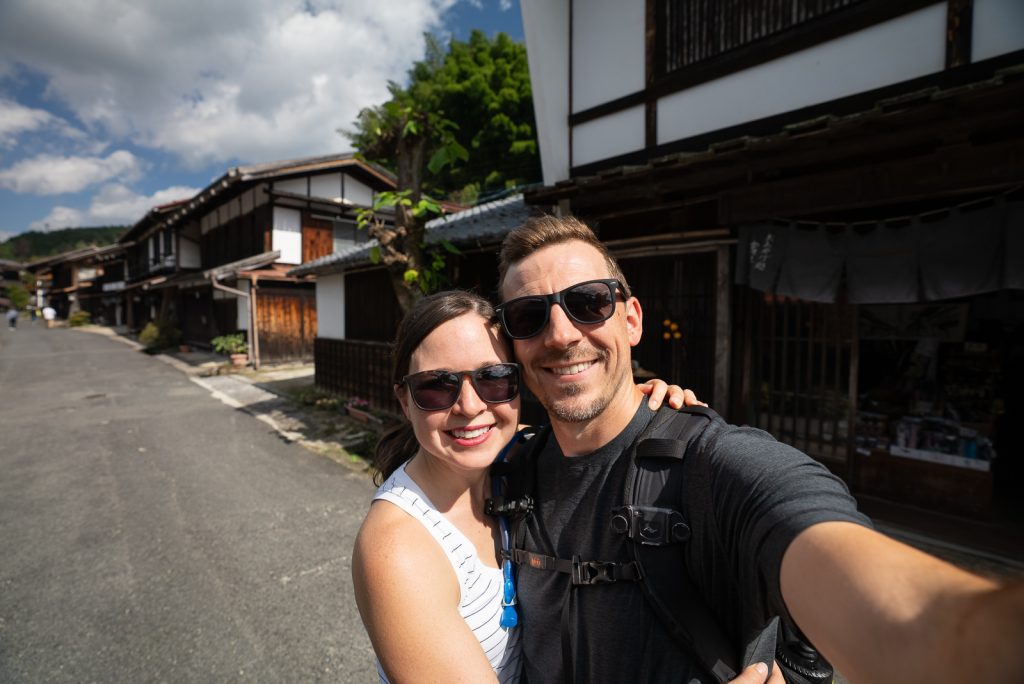
If you visit on a sunnier day, the sun can be pretty intense in the towns and outside of the forest. Bring sunscreen, a hat, and sunglasses. A sun hoodie wouldn’t be a bad idea either!
Water bottle
There will be opportunities to buy drinks in the villages. But to reduce our plastic waste, we bring our own water bottle. You can find some water fill up spots in the town as well!

Booklet for stamps
One of our favorite FREE souvenirs from Japan were eki stamps. These are rubber ink stamps that you can find at many train stations, temples, and tourist attractions. It’s super fun to collect them as you travel through the country!
Any type of notebook will work to collect your stamps. We bought a small, blank notebook from Ginza Itoya (an amazing stationary shop in Tokyo!).
Along the Nakasendo Trail you can collect a few stamps, including both in Magome (at this information center), at the tea house, and also in Tsumago at the visitor center.
Cash
Most places around here are cash only, so bring plenty of cash when walking this trail! You will especially need this for the bus ticket.
Downloaded AllTrails map
Be sure to have the AllTrails map downloaded to your phone! The trail is well signed and easy to follow, but having a map is one of the 10 essentials you should always bring with you. There are some junctions with the road that could be confusing. Plus, you won’t want to miss the turn off for the waterfalls.
Want to get 30% off an AllTrails Plus membership? Use our code aplusk30 (you must redeem this code on the website, not the app)!
We use AllTrails Plus on every single hike and it is the most helpful hiking tool out there! Some of the features we love are offline maps (so we can navigate even without cell service), wrong-turn alerts, and its 3D maps feature, so we can get a feel for trails before we hike.
Nakasendo Trail FAQ
When is the best time to hike the Nakasendo trail?
The Nakasendo Trail can be walked year round, but some seasons may be better than others depending on your preferences. In our opinion, spring and fall are the best times to hike, as you’ll be treated to cooler weather and either cherry blossoms (April) or fall foliage (November).
The summers out here can get very hot, humid, and even rainy, so we’d suggest avoiding this timeframe if you don’t want to be sweating like crazy. Even when we did this hike in early to mid October, the weather was still pretty warm!
On the other hand, winter can bring some cold temperatures, plus snow and ice. The daylight is also more limited during this timeframe, but you should still have plenty of light to walk.
A+K Tip: If you go in the more popular times April-May and October-November it will be harder to reserve accommodations. So make sure to plan ahead!
How long does the hike take?
Without stops, you could easily walk the route in 2-3 hours. However, we suggest taking your time. It took us a little over 4 hours total to get to Tsumago, including stopping at most of the stops above and filming and taking photos. And then we spent additional time wandering around Tsumago and eating snacks.
We started around 7 AM and took the 12:47 PM bus back, arriving in Magome around 1:15 PM, so the entire experience was a little over 6 hours.
Is the trail crowded?
We started the trail in Magome around 7 AM in October. As expected, at this hour it wasn’t very crowded, but as the morning went on it got busier. Around 9-10 AM we started to see a lot more people on the trail and by the time we made it to Tsumago around 11 AM there were quite a few people exploring the village. But the biggest shock was when we got back to Magome around 1 PM…it was packed! A very stark contrast from our 7 AM visit to town.
So if you can, we definitely recommend starting as early as possible! Having Magome mostly to ourselves in the morning was so peaceful and a highlight of the experience. While many shops in Magome won’t be open yet, you can visit them when you get back in the afternoon.
If you’re nervous about the crowds, one thing to keep in mind is that some people drive between the towns and skip the hike, so even if the towns are busy, the trail may not be as bad.
Do you have to stay overnight?
No overnight stays required! The hike itself will take most of the day, but you will have time to travel to and from the towns within the same day, assuming you’re staying close by. If you’ll be coming from further away, we suggest staying in the area the night before so you can get an early start!
Is the trail difficult or strenuous?
The trail gains about 267 meters (875 feet) along the way. How difficult and strenuous that feels is different for everyone. As regular hikers we felt the trail was easy to moderate. There are some areas that may have you breaking a sweat a bit, but overall the trail is well graded and is a leisurely walk through the forest.
Are there water or toilets along the trail?
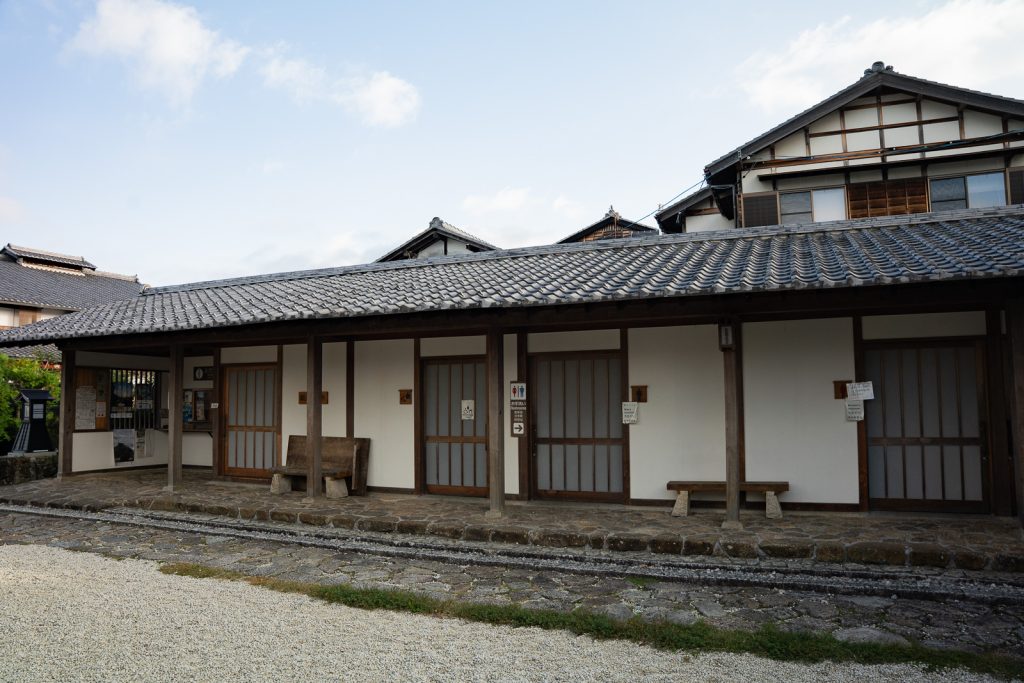
There are a handful of public toilets along the trail, including a few in Magome (here and here) and Tsumago (we used this one!), outside Ichikokutochi Tateba Chaya, and near the waterfalls. Google Maps also shows some other toilets as well!
We saw water fountains at the Magome Tourist Information Center, but don’t recall any other water fill up spots until Tsumago. So make sure to carry enough water!
Save this guide with how to hike the Nakasendo Trail from Magome to Tsumago