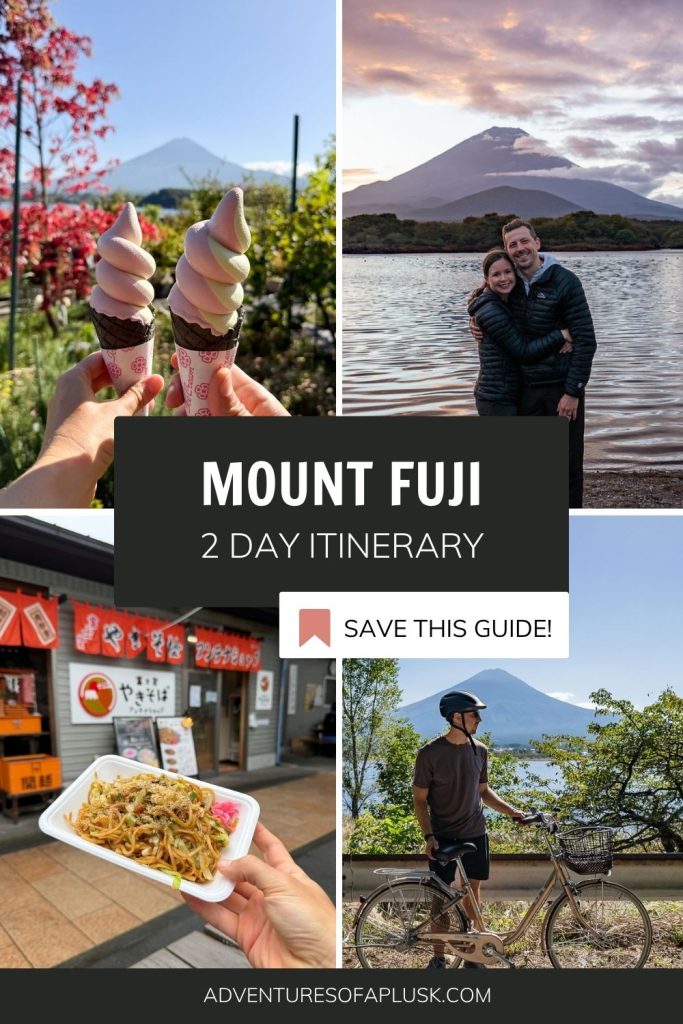
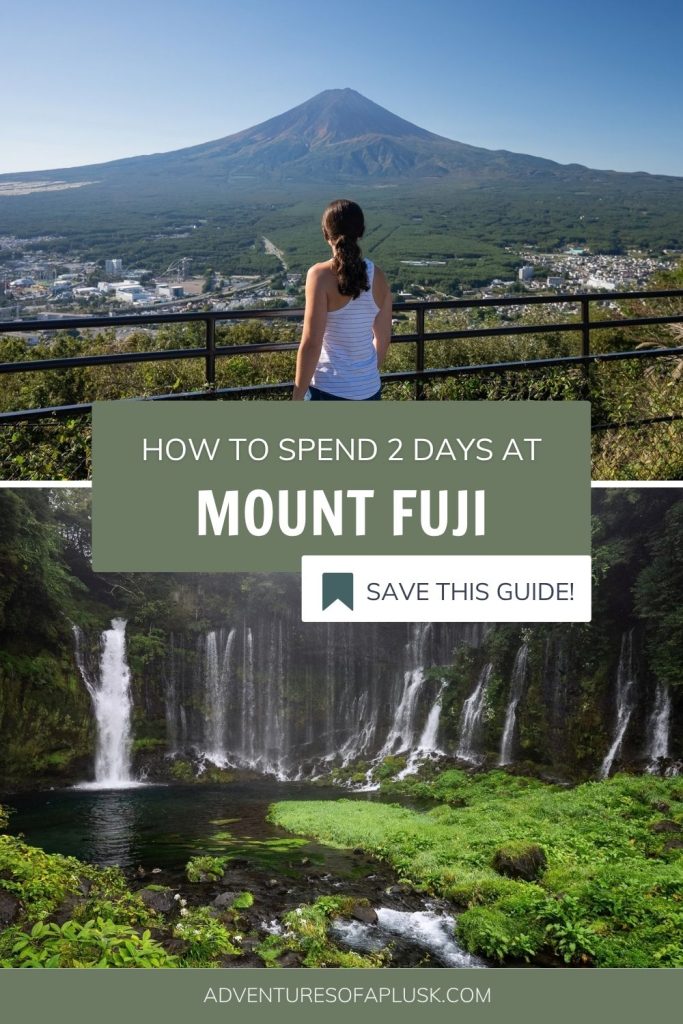
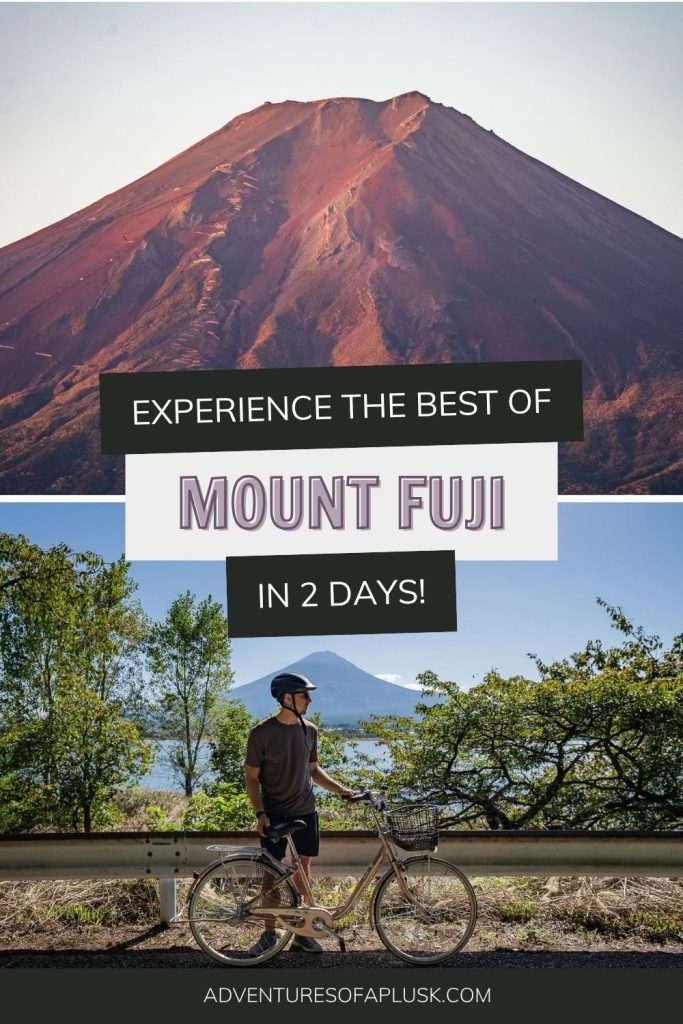
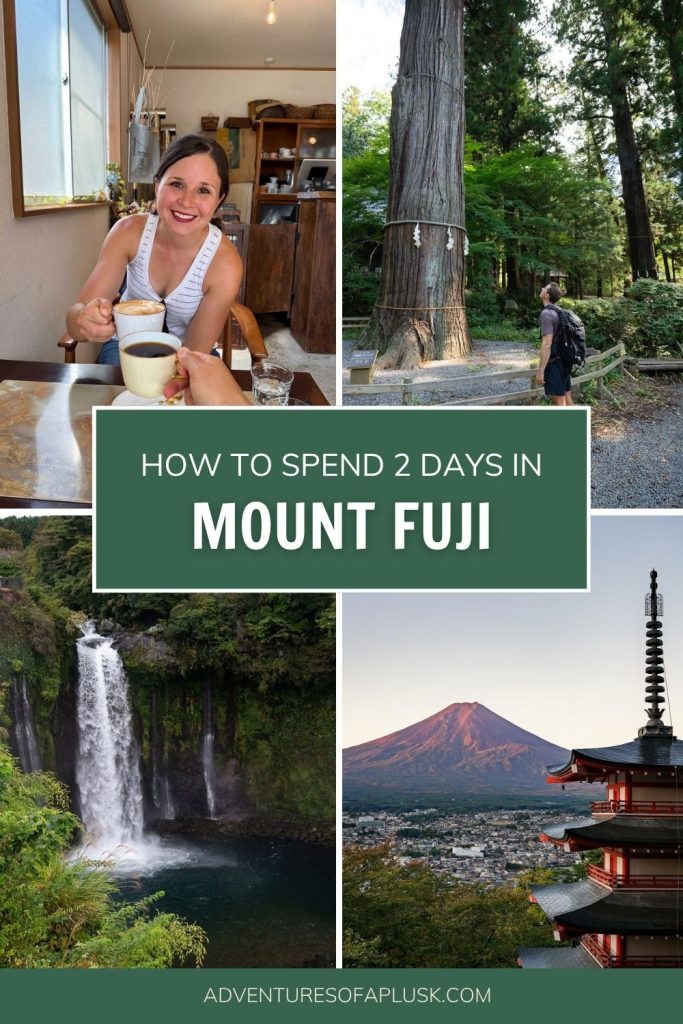
We’re sharing the perfect 2 day Mount Fuji itinerary filled with the area’s best views, activities, and local eats!
Seeing Mount Fuji is a must for many first time visitors to Japan. It is one of the country’s most iconic symbols afterall! If you catch it on a clear day, you can enjoy the views of Mount Fuji from many areas nearby. But in our opinion, the best way to experience it is to explore the Fuji Five Lakes region.
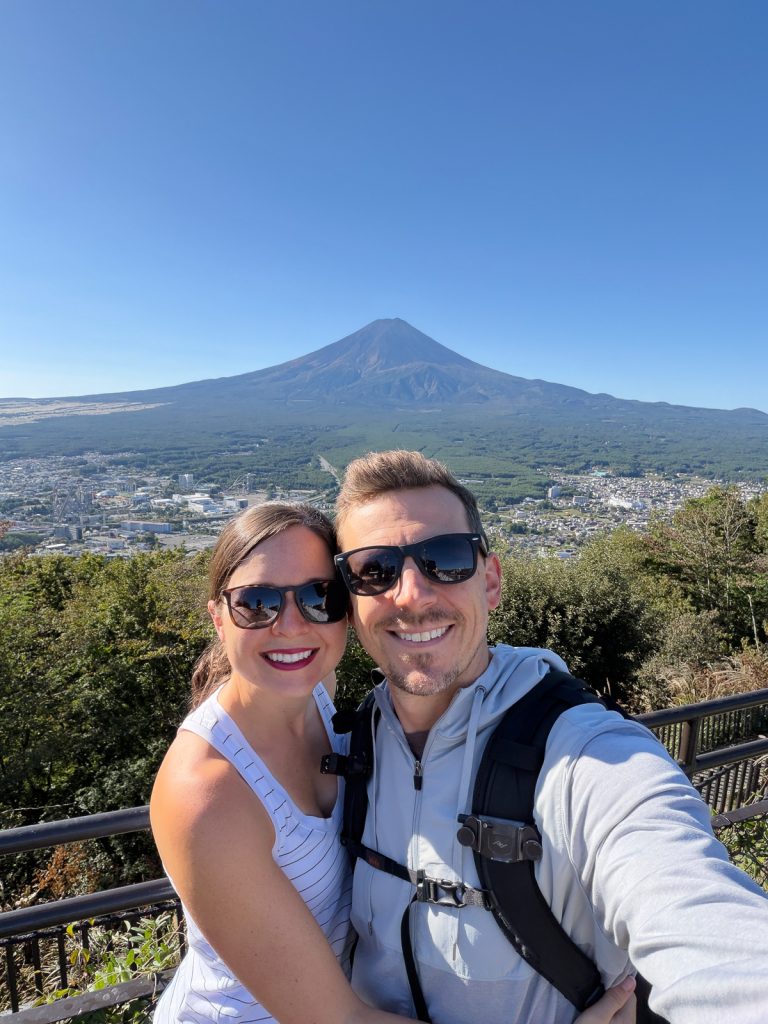
This area encompasses Fuji-Hakone-Izu National Park, different towns, and five main lakes: Kawaguchiko, Yamanakako, Saiko, Shojiko, and Motosuko. We spent 48 hours exploring this region and loved not only getting to see Mount Fuji from multiple vantage points, but also partaking in some of the region’s fun activities, like riding bikes, visiting gorgeous waterfalls, and trying local eats.
And if you want to experience Mount Fuji for yourself, we’re sharing a 2 day Mount Fuji itinerary based on our personal experience in the area. Fingers crossed you get as lucky as we did and get to admire Mount Fuji in all its glory! 🤞🏼
Looking for more Japan travel tips & guides?
- 21 fun things to do in Mount Fuji, Japan (Fuji Five Lakes)
- 35+ fun things to do in Tokyo, Japan
- 4 days in Tokyo itinerary: See the best of the city!
- How to visit Tokyo for first timers: Important logistics & tips!
- 10 best places to visit in Tokyo for first timers (& What to do in each!)
- 12 best things to do in Hakone: Japan’s mountainous hot spring town!
- Hiking the Nakasendo Trail from Magome to Tsumago
- Renting a campervan in Japan: Everything to know!
- The 37 best things to do in Kyoto, Japan
- Read all of our Japan guides
- Watch our Japan video series
2 Day Mount Fuji Itinerary
In this Mount Fuji itinerary we’re covering our favorite stops at Lake Kawaguchi, Lake Sai, and Lake Shoji, plus a few areas a bit south of the Fuji Five Lakes. The first day focuses on sights around Lake Kawaguchiko, where you would ideally want Mount Fuji to be visible, but even if it’s not, there’s still a lot to enjoy. While the second day is a great itinerary for a rainier or cloudier day, as it’s a bit less focused on seeing Mount Fuji itself.
Looking for even more things to do in the Fuji Five Lakes area? Check out our guide with over 20 fun ideas!
Day 1
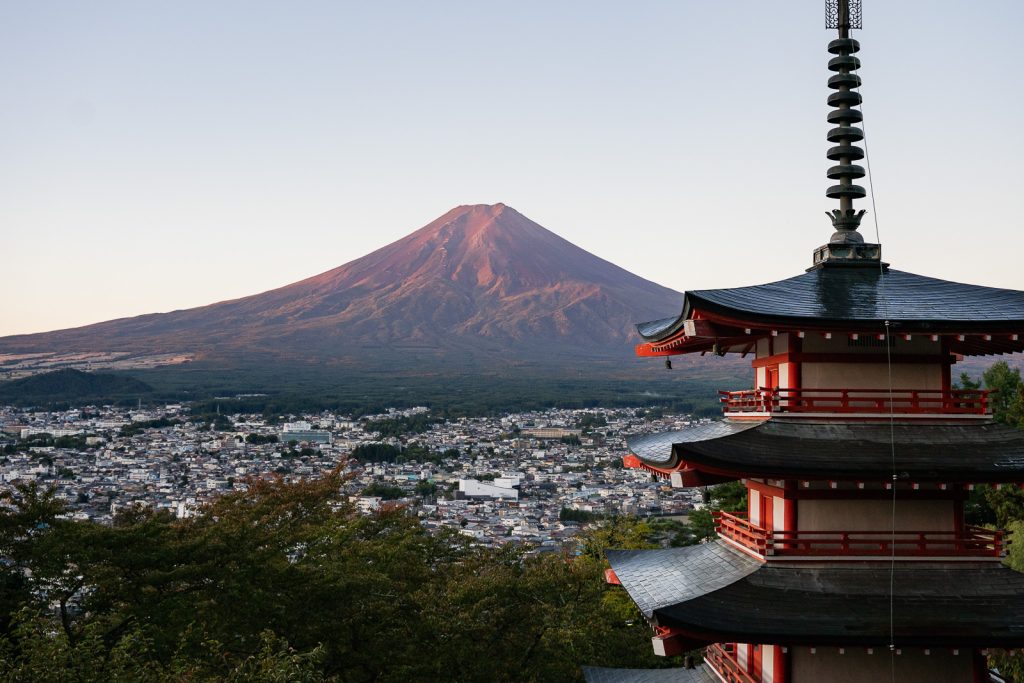
Watch the sunrise at Chureito Pagoda
Assuming you stayed the night before in the area and you have a clear day, the best way to kick off your 2 days at Mount Fuji is to watch the sunrise from Chureido Pagoda. Seeing the magnificent mountain towering behind the red pagoda is breathtaking and well worth the early wake up call!
A few things to know before you head up here for sunrise:
- You will have to do a short hike, which has about 400 stone steps. So to make sure you have enough time for the hike! We suggest starting the hike up about an hour before sunrise. This will give you enough time to find a spot to stand and watch the different stages of the sunrise.
- Parking is limited for the Chureido Pagoda and the best spot is the parking lot right at the base of the trail. There are about 88 spots in this lot, plus toilets. It costs ¥1,500 to park here for 6 hours, which is pretty expensive. There are other smaller and cheaper parking lots around the area, but they require you to walk a bit further.
- This spot is very busy, even at sunrise! You will have to stand shoulder to shoulder, in multiple rows. Make sure to pack your patience and be considerate of others.
☁️ Visiting on a cloudy day? We’d suggest sleeping in a bit, but still coming here very early. It is busy to begin with at sunrise, but only gets busier as soon as the tour groups start rolling in!
After seeing the sunrise, it will still be pretty early, so we suggest grabbing coffee and food at a konbini to hold you over until some of the food spots we are listing later on in this Mount Fuji itinerary. Or you can go grab coffee and breakfast at FabCafe Fuji, which opens at 8 AM.
Go up the Mount Fuji Panoramic Ropeway
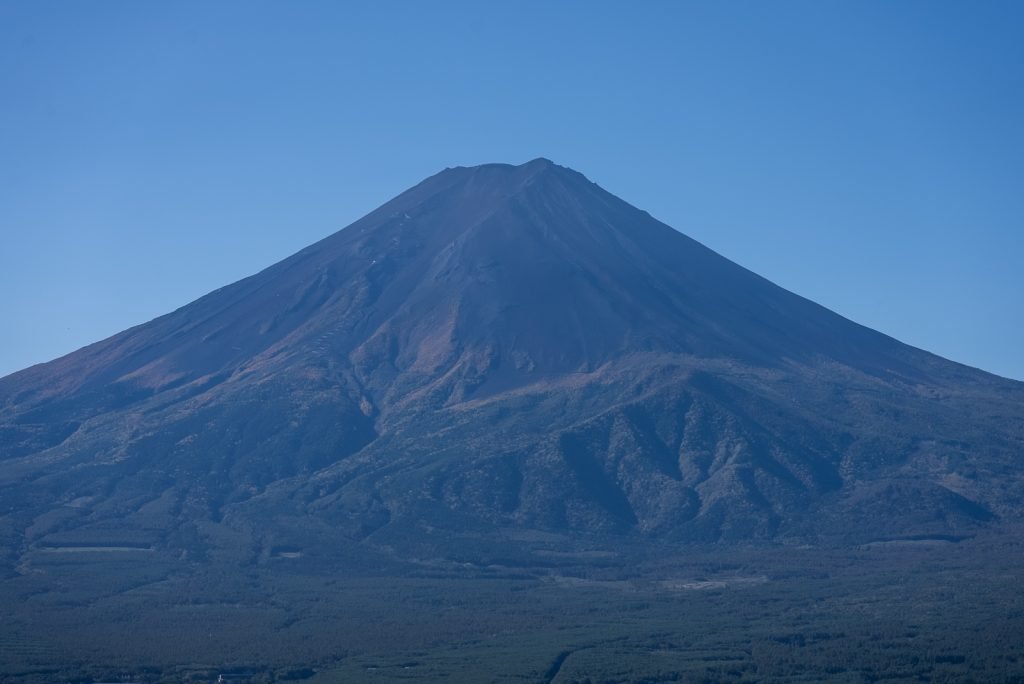
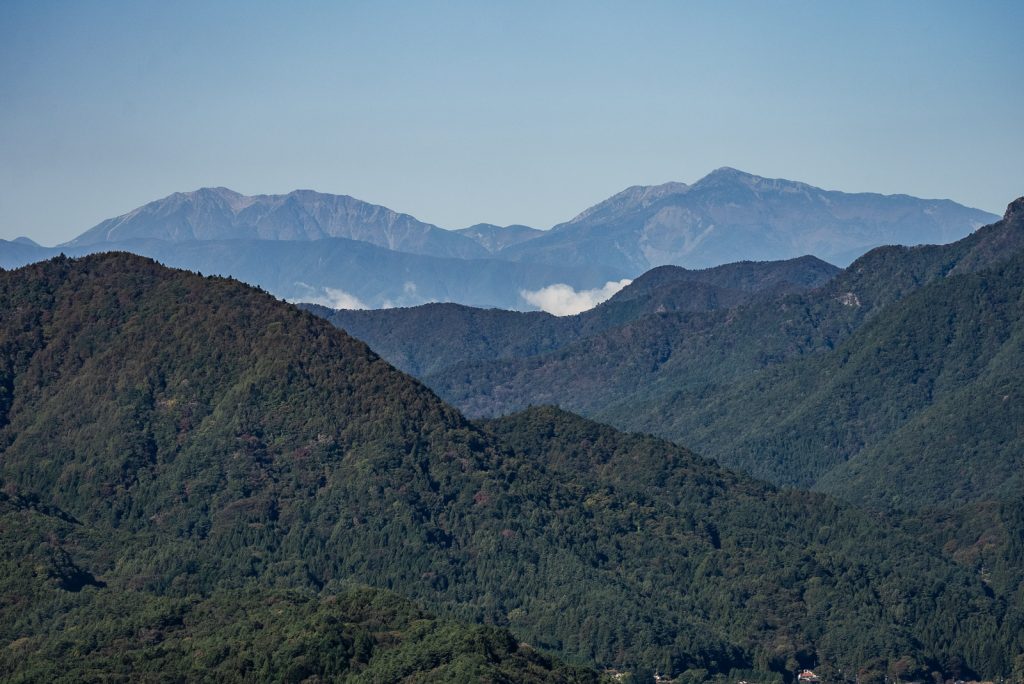
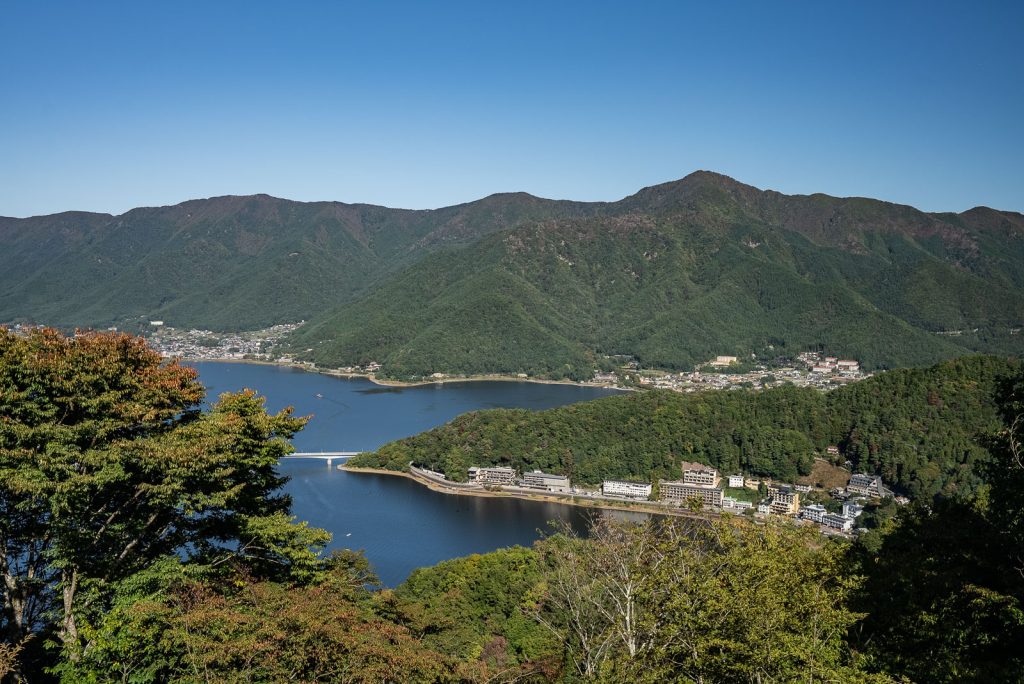
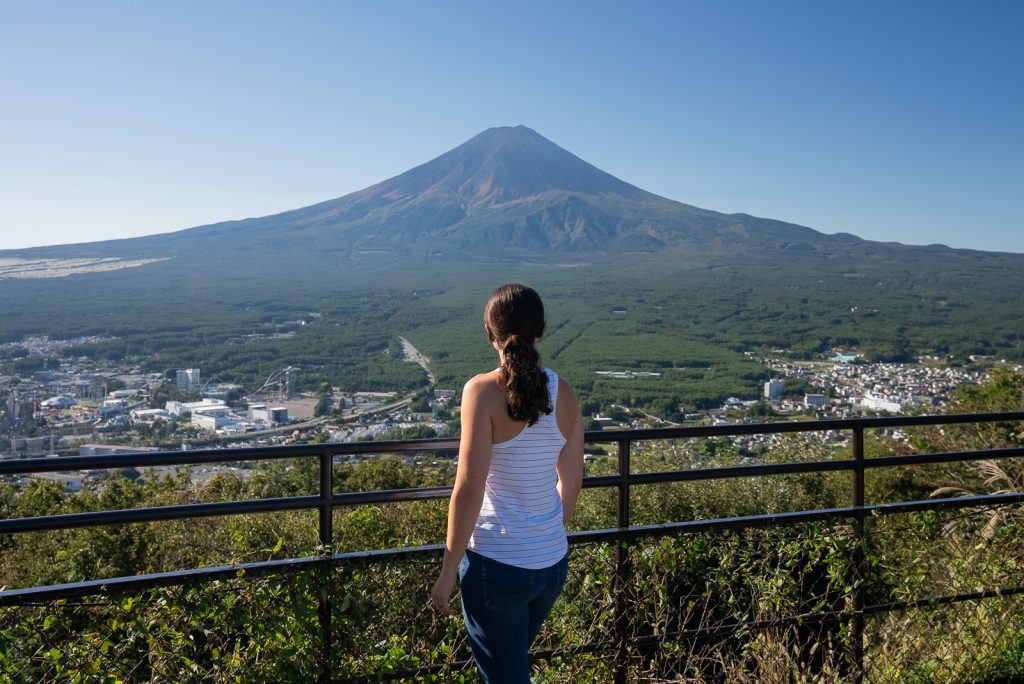
For your first stop at Lake Kawaguchi, ride up the Mount Fuji Panoramic Ropeway! This scenic 3 minute ride takes you up to an observation deck that not only has a head on view of Mount Fuji, but also of Kawaguchiko and the surrounding mountains. Even if it’s a bit of a gloomy day, we still think the lake views are worth the cost and time.
The ropeway opens at 8:30 AM and we suggest getting there as early as you can to avoid waiting in a super long line. It can get pretty chaotic starting around 9 AM!
Pick up your rental bike
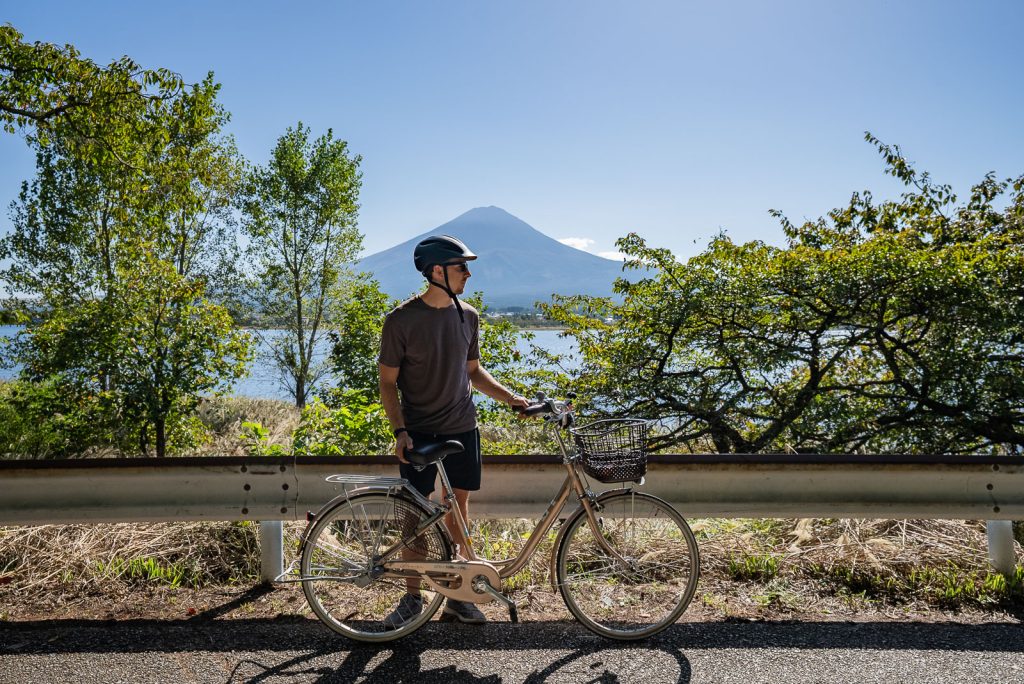
For the rest of the day, we suggest renting bikes to cycle around Lake Kawaguchiko! All of the stops we’re listing next on this Mount Fuji itinerary are places we visited on bike. The route is a total of around 19 km (12 miles) and while you could drive instead, it’s much easier to park your bike than a car. Plus, you’ll be able to experience more of the area by cycling!
There are many places you can rent a bike at Lake Kawaguchi, but we rented from Carp Rental Bicycle. They offer both regular bikes and eBikes, it was very affordable, and the owner is super nice and friendly! This route was doable for us on a regular bike, but an eBike will definitely be easier and quicker.
Included in your rental is a lock, but if you want a helmet you will need to ask. There is definitely a culture of not wearing helmets in Japan, but we personally prefer to wear them.
Grab a quick snack
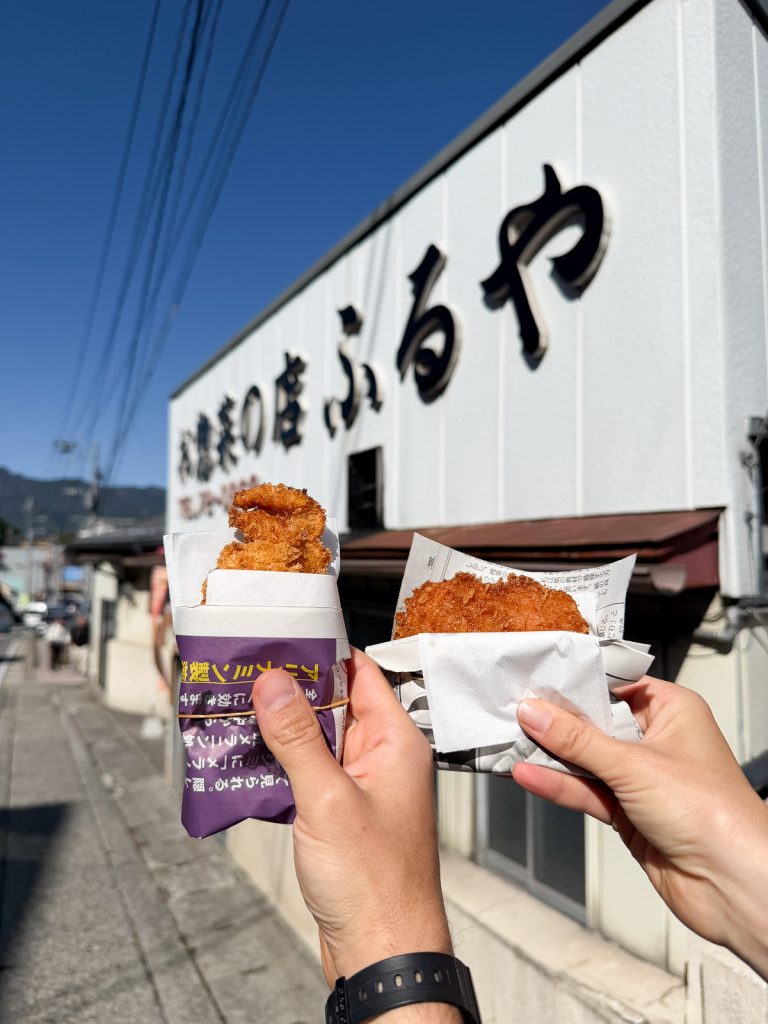
Once on your bike, take a slight detour off the lake to get a bite to eat at Furuya Sozai-Side Dish Store. This small store, with the kindest owner, is such a hidden gem in the area! They only serve croquettes, plus fried ham cutlets, pork, and fish, all of which are fried upon order, so they are super hot and fresh! It’s a great snack before truly beginning your bike ride.
Visit the Kawaguchi Asama Shrine
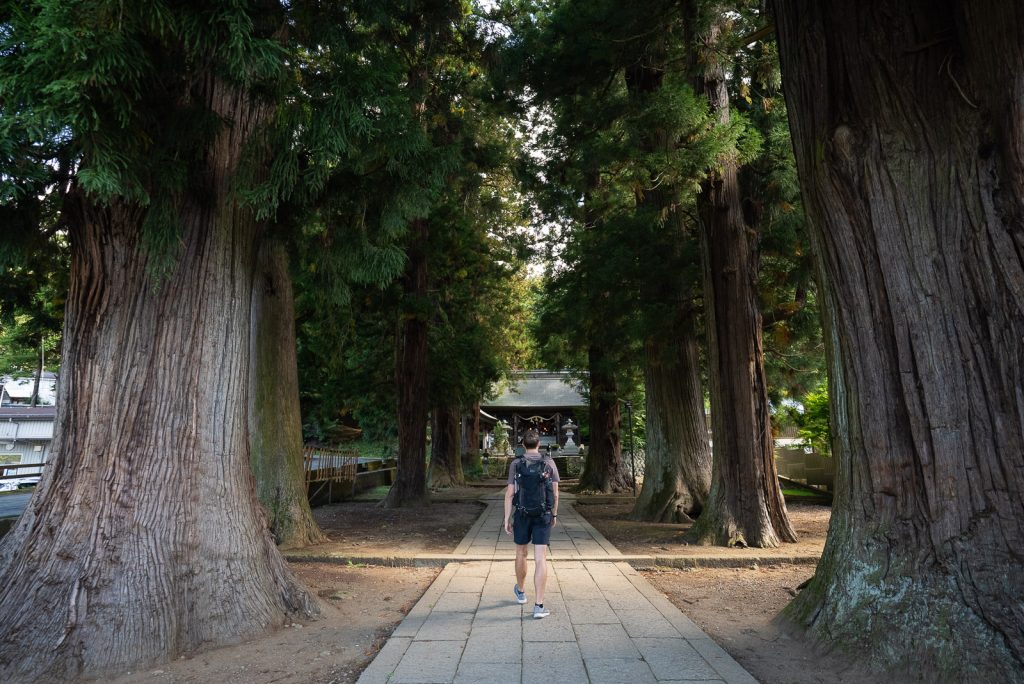
Next, you’ll begin riding around the lake, with the goal of getting to the Kawaguchi Asama Shrine at the northwest end. Here you’ll find beautiful grounds with ancient cedar trees, some of which are over 1,200 years old and reach heights of 45 meters tall. We loved walking among these giants and compared to other places we visited later in the day, it was way less busy here.
Grab a drink at Nagasaki Coffee
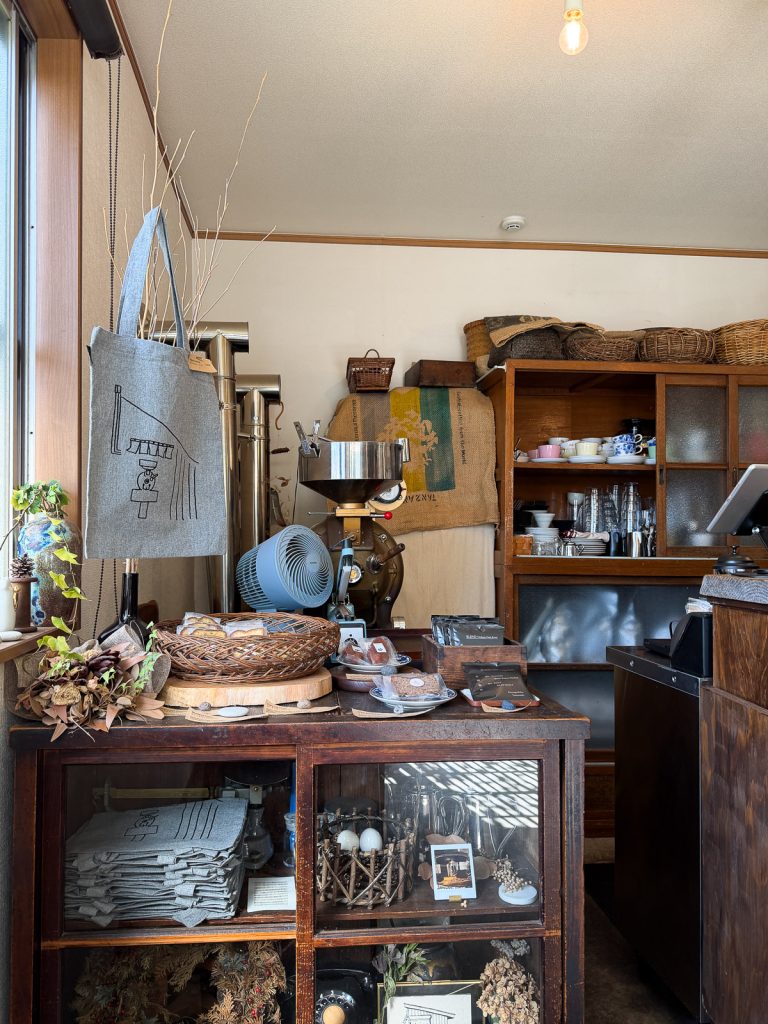

After exploring Kawaguchi Asama Shrine, it’s time for a coffee break! We loved Nagasaki Coffee, which is just seconds from the shrine. This spot would be easy to miss, as it’s tucked in a traditional Japanese style building and very discreet. So make sure to look at the Google photos to know which building it is!
The coffee shop itself is very small, with just a few tables inside, plus a small bench outside. But we loved its simplistic vibe, ample wood decor, and shelves of books. And the coffee was fantastic and made with precision!
⏰ Nagasaki Coffee is not open every day, so make sure to check their hours in advance!
Visit the Kubota Itchiku Art Museum
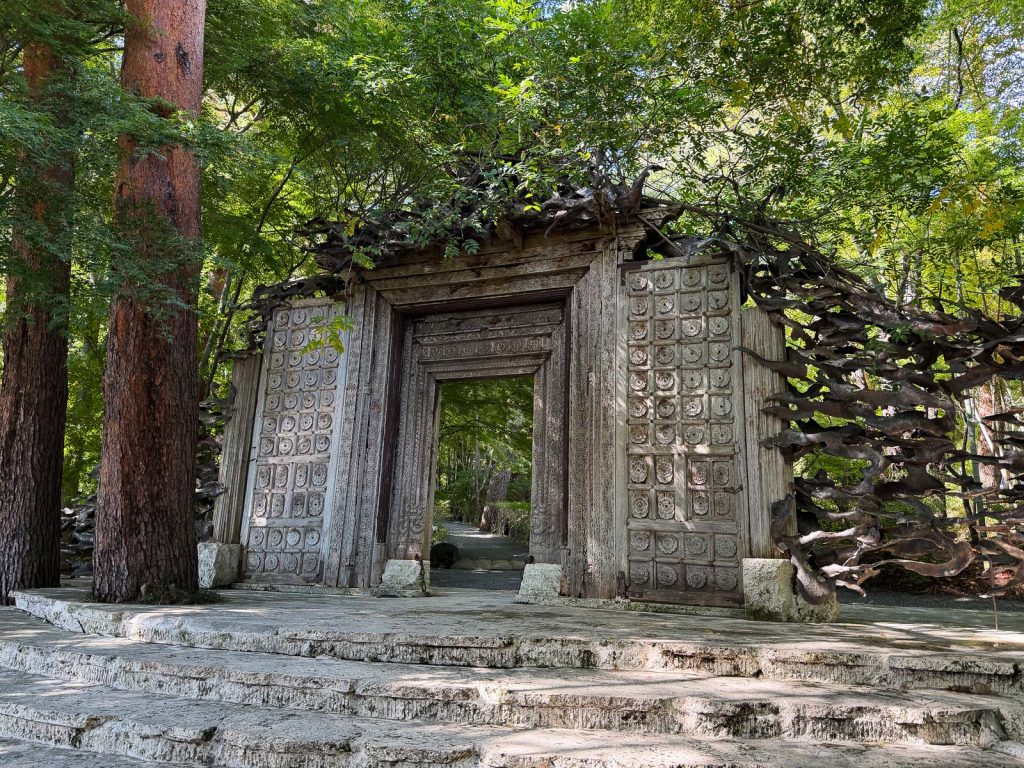
Continue exploring some of the side roads on the northwestern end of the lake until you get to the Kubota Itchiku Art Museum. This museum shares the artwork of Itchiku Kubota, who is known for reviving the lost art of Tsujigahana silk dyeing to decorate kimonos. It’s so interesting to learn about the process and see several of his kimono creations. Unfortunately you are not allowed to take photos of the kimonos, but they were gorgeous!
There’s also a really neat tea room that overlooks a courtyard in the garden if you want a drink or treat.
Even if you do not want to pay to enter the museum and see the kimonos, we suggest entering the intricate entrance gate and seeing the garden on the other side for free. We hear that during peak fall foliage, the grounds are especially stunning!
Explore Oishi Park
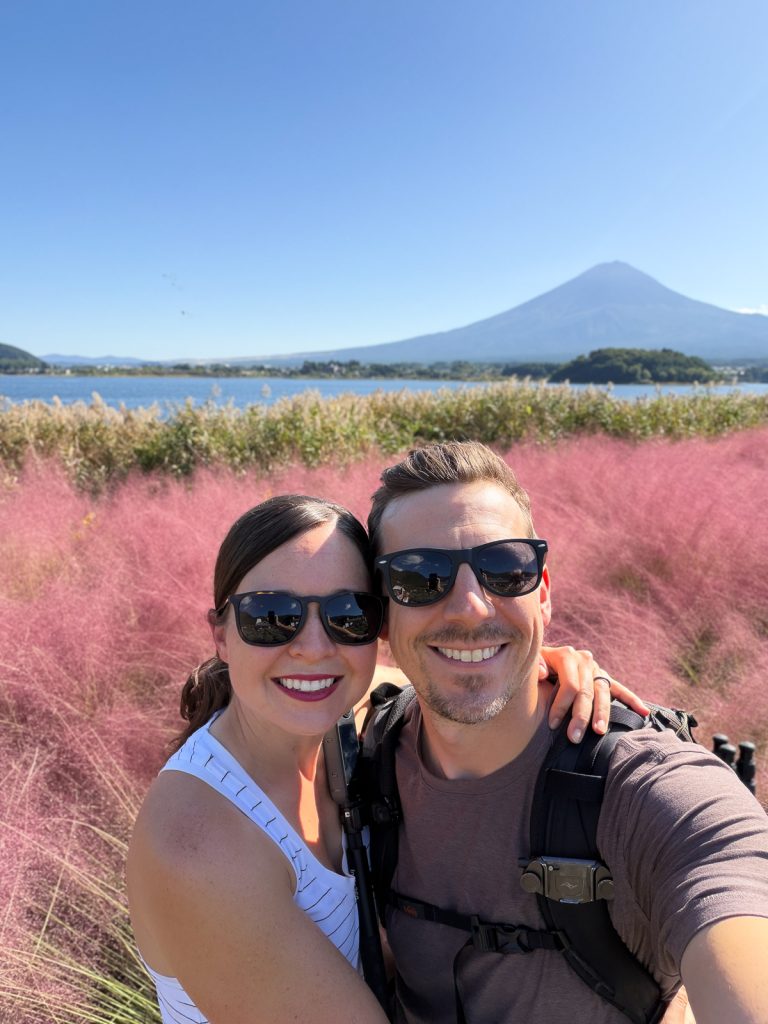
No Mount Fuji itinerary is complete without a visit to Oishi Park. While the crowds are pretty crazy here and you can truthfully get the same view from less busy spots along the lakeshore, there are a couple reasons we still suggest stopping here.
First, the park is covered with gardens full of colorful flowers, plus some seasonal plants that blanket the area. Seeing these gardens with the view of Mount Fuji in the background is gorgeous!
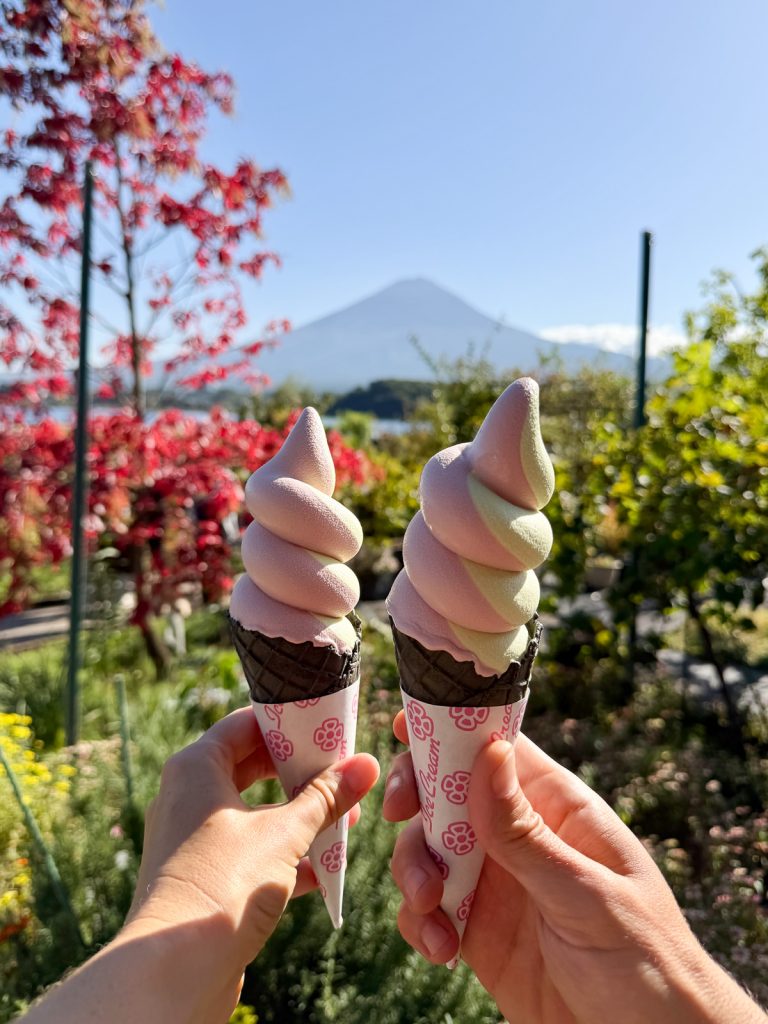
But the main reason we suggest visiting Oishi Park is for the ice cream at Oishi Park Cafe. This cafe has a bunch of flavors to choose from, but we suggest trying the grape! This area of Japan (the Koshu Valley) is a prime grape growing region. There are two grape flavors you can try and we got them mixed. We truthfully couldn’t tell the difference between the two, but the grape flavor was strong and unique and the ice cream was very creamy. Plus, it’s hard to beat ice cream with a view!
Return your rental bike
After leaving Oishi Park, you still have quite a bit left of the lake to explore! The west side of the lake is a lot less developed though and we personally didn’t make any stops. Despite this, it was one of our favorite sections to ride, as it had some nice bike paths, way less people, and a couple spots where you could go down to the water.
If you do want to make some stops on this side, both gris and CISCO Coffee look great!
Once you finish the loop around the lake, it’s time to return your bike. Make sure to return your bike before they close or arrange with who you rented from if you think you’ll return it late.
Try Hoto Noodles for dinner
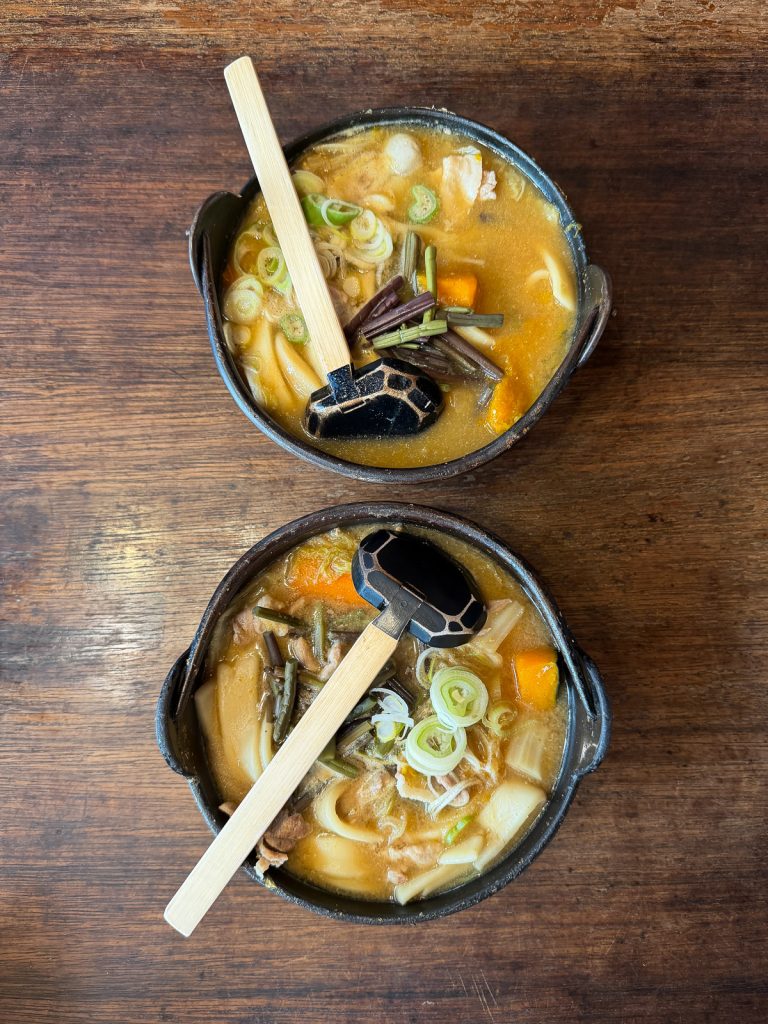
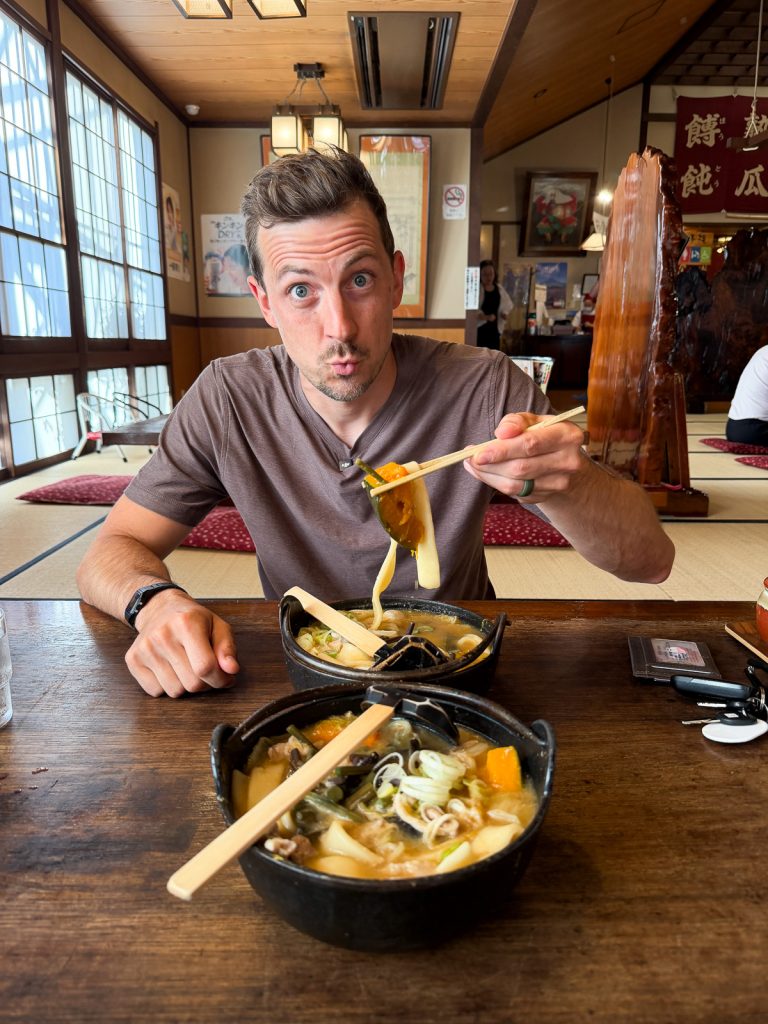
For dinner, it’s time to try one of the area’s specialities: hoto! This is a soup made with a miso broth, thick, wide noodles, similar to udon, and filled with pumpkin and other vegetables.
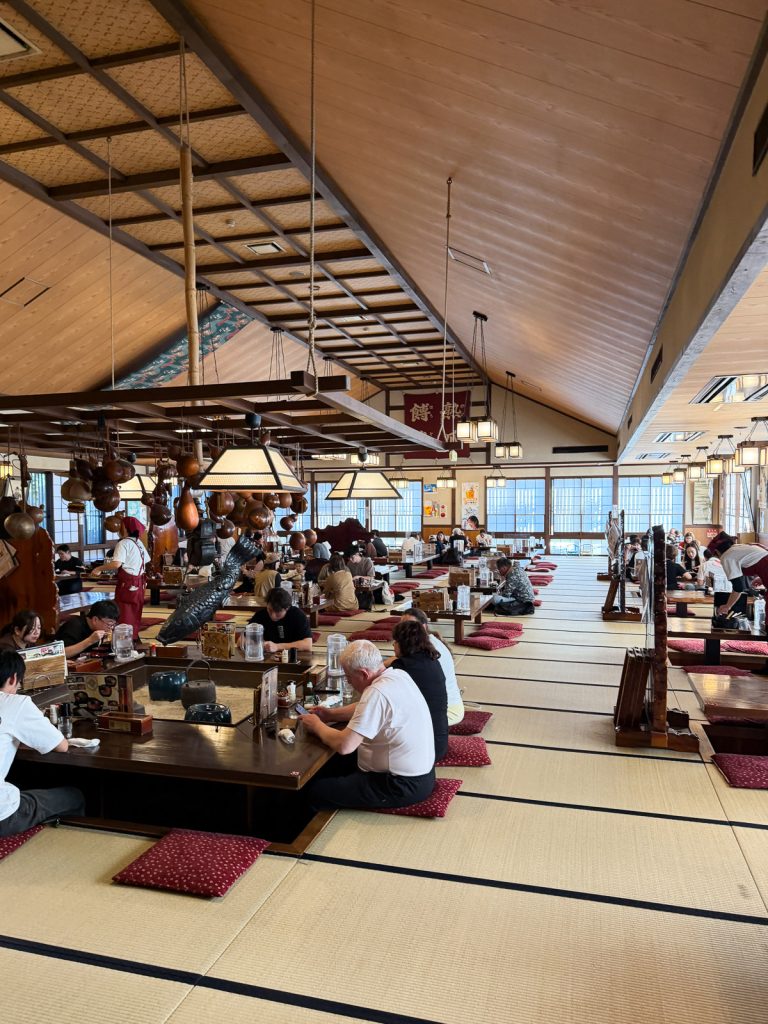
You can try hoto noodles at lots of places near Lake Kawaguchi, so if you decide you want it earlier in the day, you have options! But we personally tried it at Kosaku Kawaguchiko Hoto Noodles. Not only was the hoto delicious, but we loved the environment, with tatami mats and seating on the floor. And when we went, it seemed like we were the only non-Japanese people there.
A few other good options to try hoto are Houtou Fudou Kawaguchiko North Main Shop, KANJYUKUYA, or Hoto Tempura Wakana, which are a little bit closer to the lake.
Day 2
Shiraito Falls & Otodome Falls
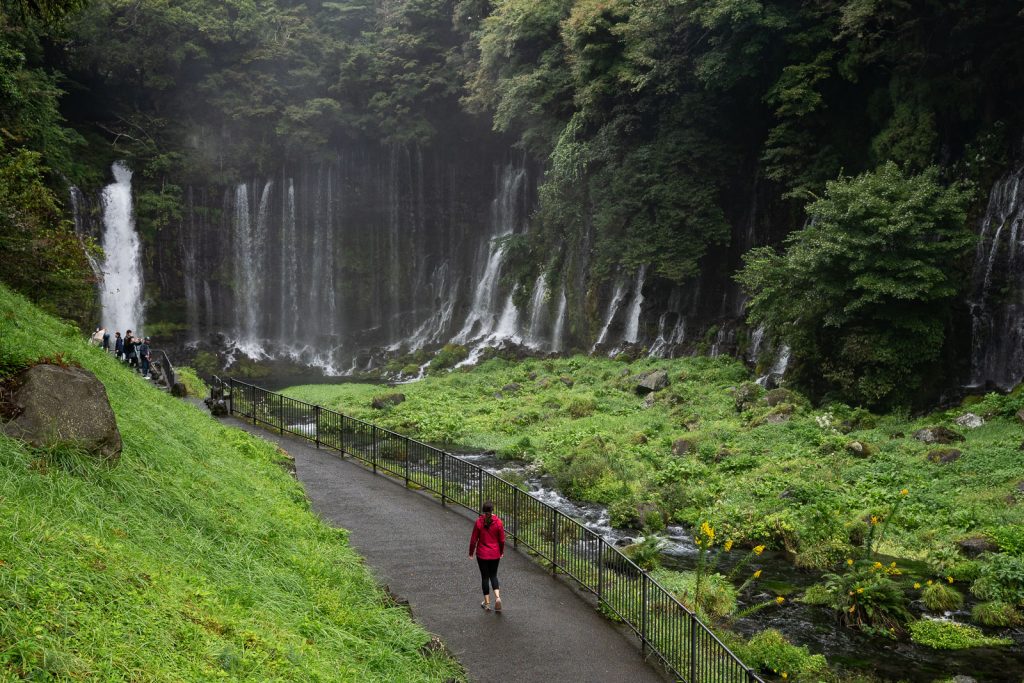
For the second and final day of your Mount Fuji itinerary, it’s time to see something a bit different! This morning, we suggest heading to Shiraito Falls and Otodome Falls. As big waterfall lovers, these were easily some of our favorite stops in the Mount Fuji area!
The waterfalls themselves are free to visit, but there is a ¥500 (~$3.10 USD) fee to park. After paying, you’ll follow a short path that takes you to both falls, which are located just a couple minutes from each other.
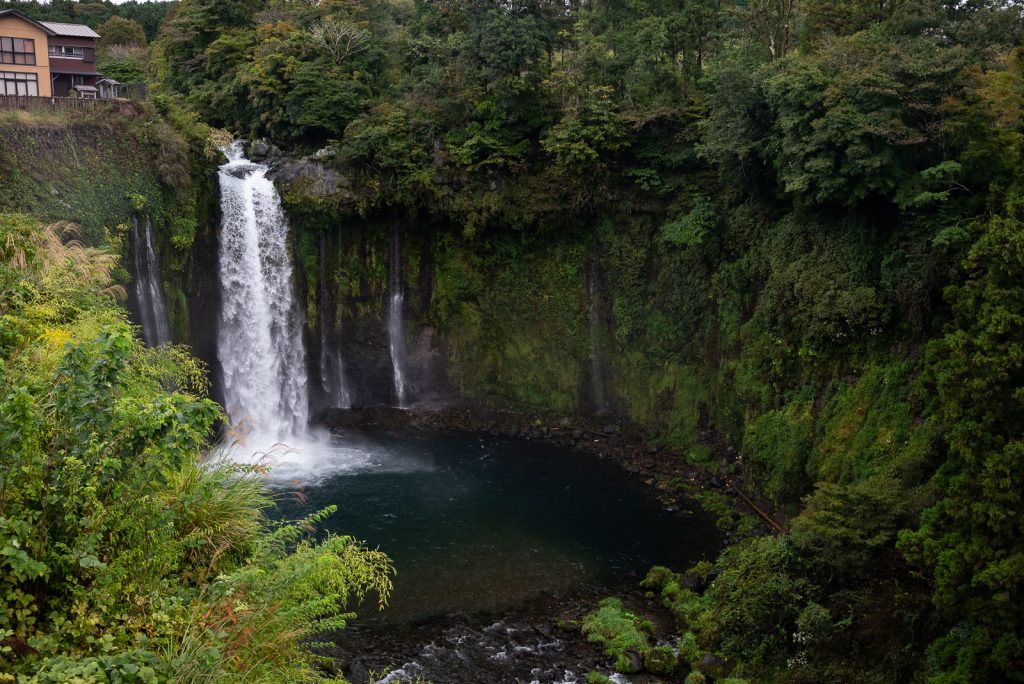
The first waterfall you’ll come across is Otodome Falls, which you view from an overlook. This waterfall stands at 25 meters (82 feet) tall and plunges into a deep blue pool.
Next up, you’ll hike down some stairs to catch your first glimpse of Shiraito Falls. This waterfall stretches across 150 meters (492 feet) and drops from a height of 20 meters (66 feet)! While both waterfalls are spectacular, Shiraito Falls was our favorite because the rock wall it flows over is super lush and has hundreds of different smaller waterfalls streaming down. Plus you can walk closer to it!
⏰ We suggest getting here by 8 AM if you can to beat the crowds and big tour groups. On the way, stop by a konbini to get some coffee and breakfast!
Lunch at Fujinomiya Yakisoba
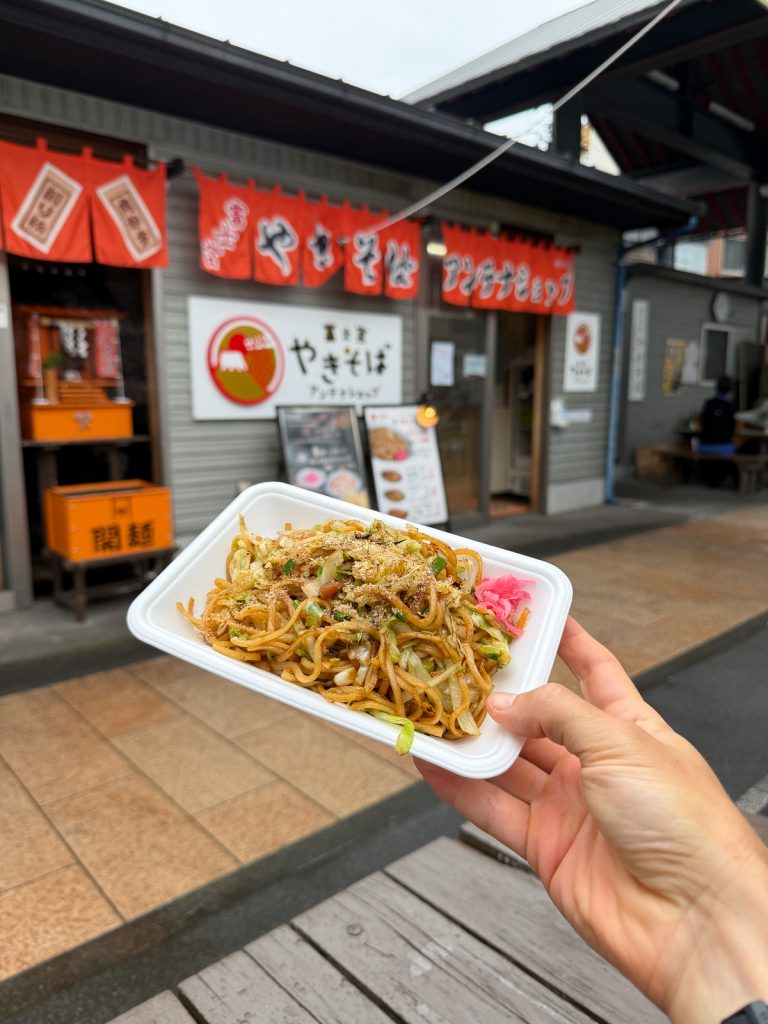
For lunch, continue your journey south to Fujinomiya to try another delicacy of the area, Fujinomiya yakisoba! Yakisoba is a popular Japanese stir fry dish, but Fujinomiya yakisoba differs a bit in a couple ways.
First, its noodles are only steamed, without being boiled, which gives them a different texture. It also includes crispy bits of pork fat and is sprinkled with sardine or mackerel shavings, versus the more traditional bonito flakes.
There are lots of places to get it around town, but we really enjoyed our yakisoba from Fujinomiya Yakisoba Antenna Shop. It has a savory umami flavor and we loved the crispy pork! They also open at 10 AM if you want an early lunch, which we’d recommend doing to have enough time for the rest of today’s stops.
Enjoy ice cream from Asagiri Dairy Factory
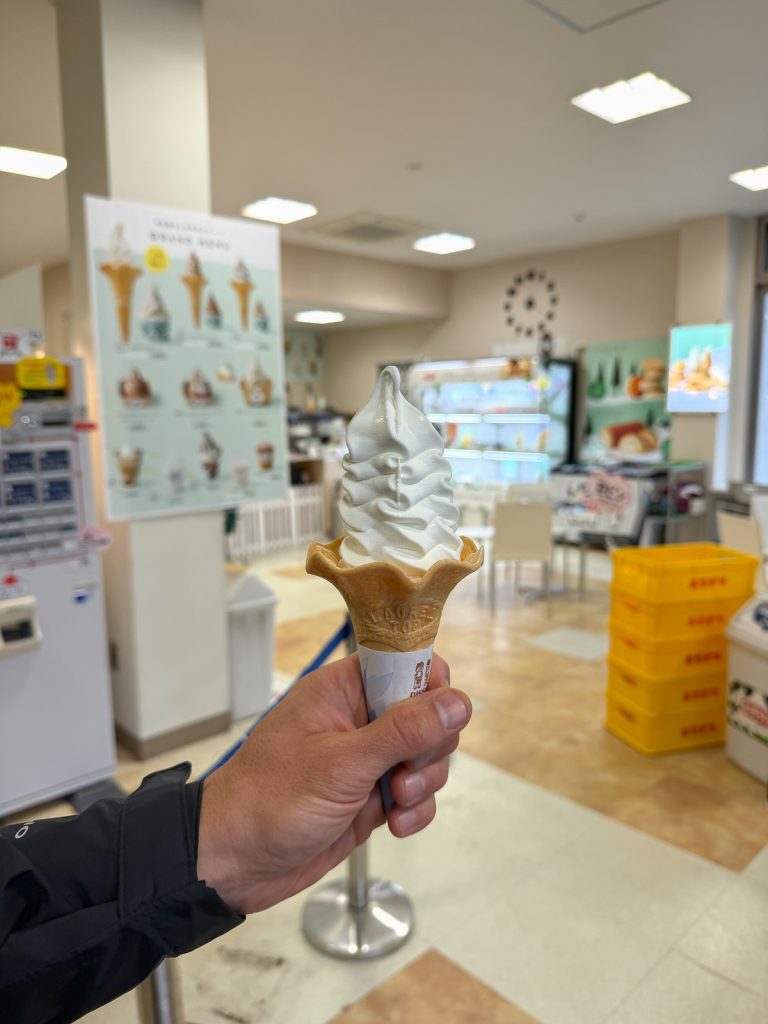
It’s time to begin your drive back north and along the way, stop by Asagiri Dairy Factory for some of the best ice cream we had in Japan!
The milk they use in the soft serve is produced on the nearby Asagiri Plateau, so the production from start to finish is hyper local. As with all Japanese milk, it is extremely high quality and the sweet flavor of the milk really shines through!
Juuden Coffee
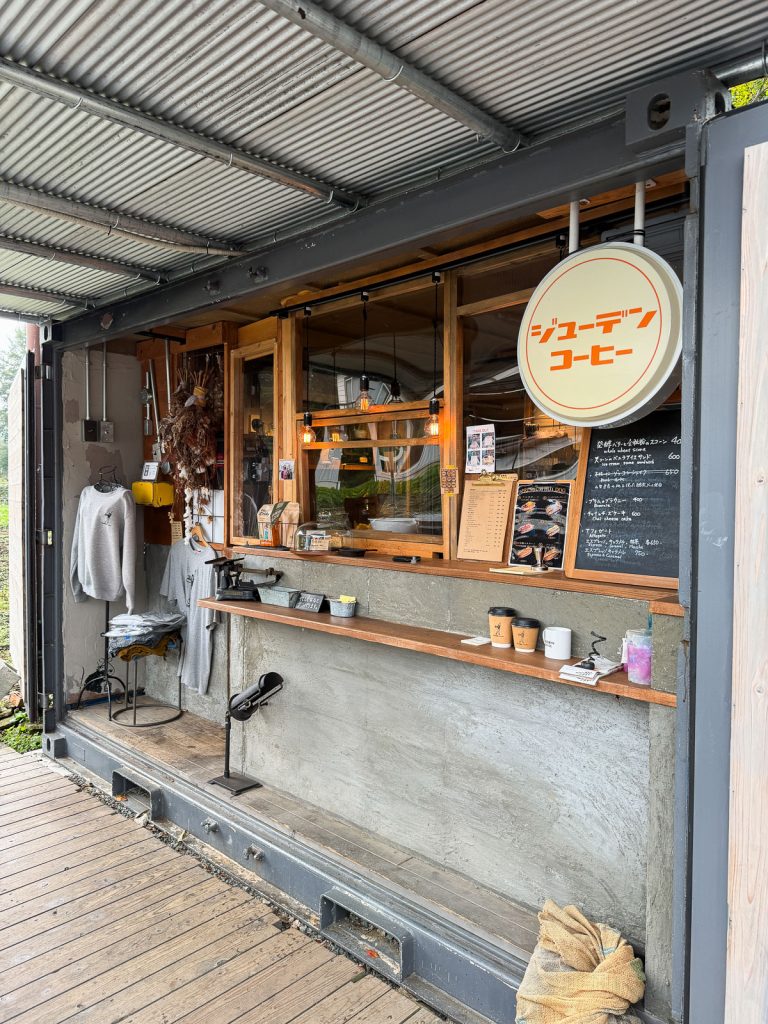
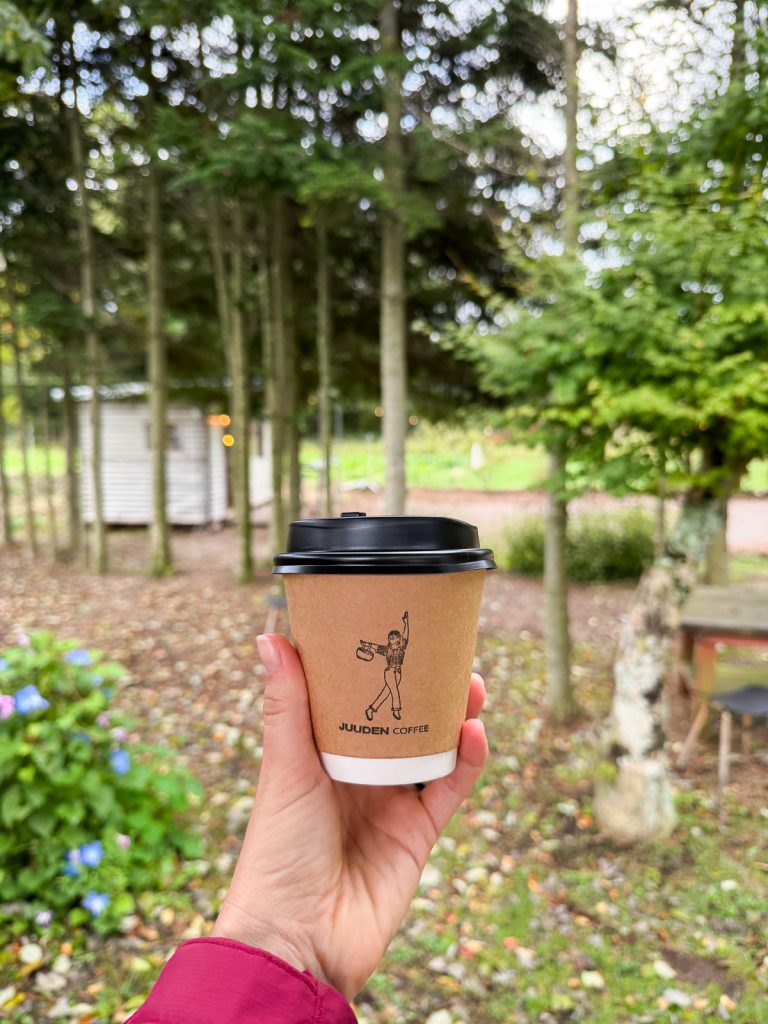
If you can’t tell, having ice cream and checking out a local coffee shop were daily itinerary items for us at Mount Fuji. And if you find yourself needing a little pick-me-up, head to Juuden Coffee! This coffee stand is located down some side roads and has a great outdoor space to enjoy your drink and take a little break.
Pick up dinner items at 7-Eleven
Before heading to your final stops of the day, we suggest swinging by 7-Eleven to grab some dinner for later! Make sure to get food items that are okay being in your bag for a couple hours.
Visit a traditional Japanese village
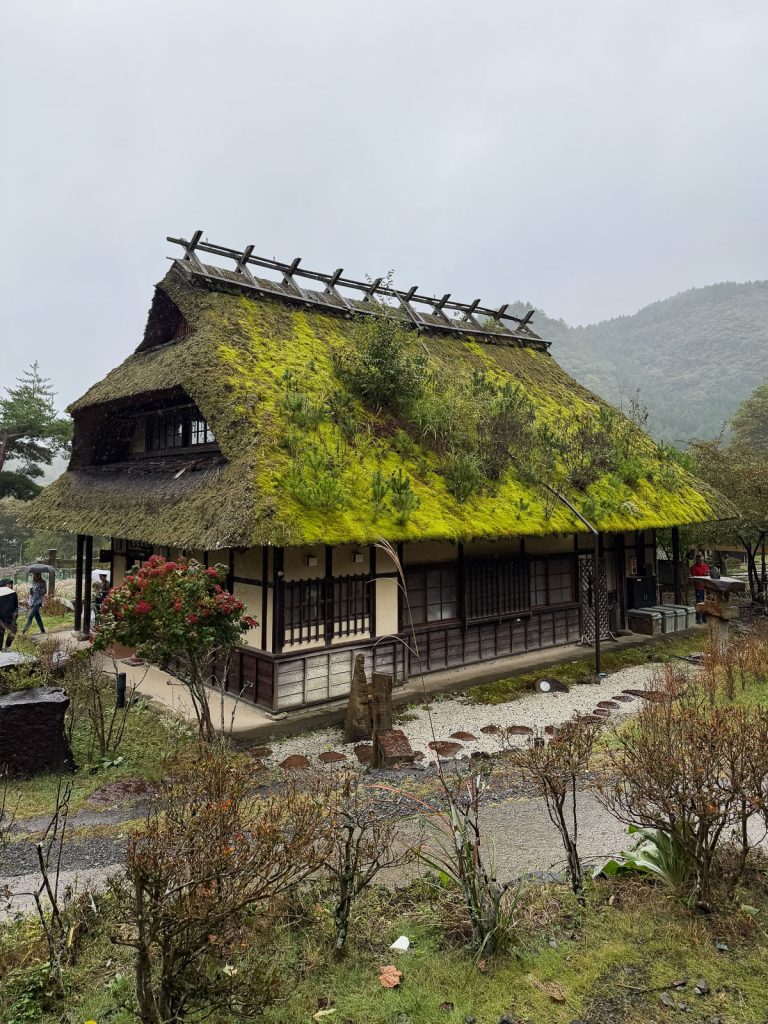
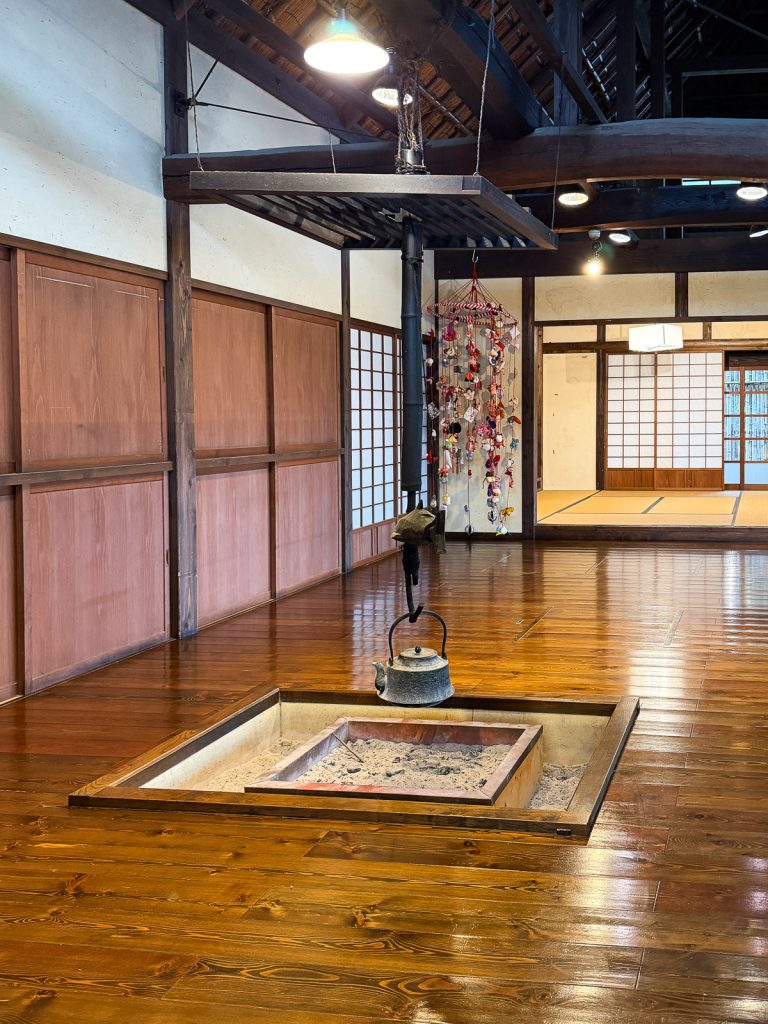
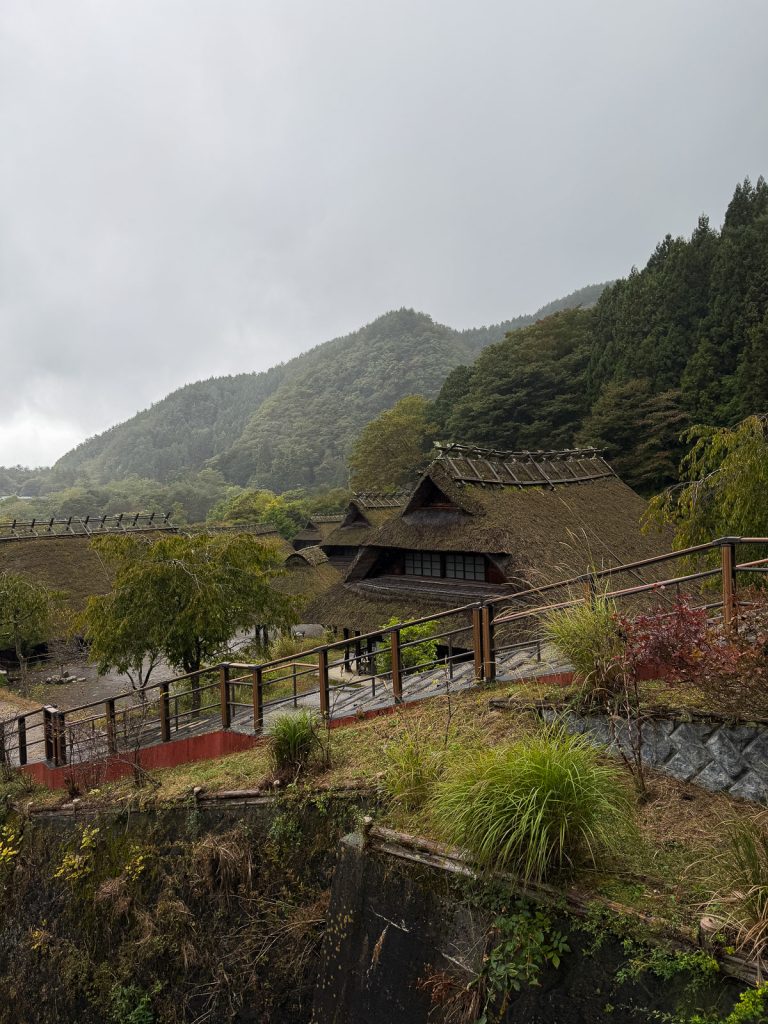
For the rest of the afternoon, visit Saiko Iyashi-no-Sato Nemba. This was once said to be one of the most beautiful villages in Japan. However in 1966, a typhoon swept through the area, creating a mudslide that destroyed 37 of the 41 thatched-roof houses that stood at the time.
Today, the village is an open-air museum that has been recreated into what it was before the disaster. Most of its 20 thatched roof houses have been converted into different local shops and restaurants. We really enjoyed walking around here and visiting the different buildings! There is an entrance fee to visit, but you also can see some of the buildings from the outside without paying.
Have a sunset picnic at Tatego-Hama Beach
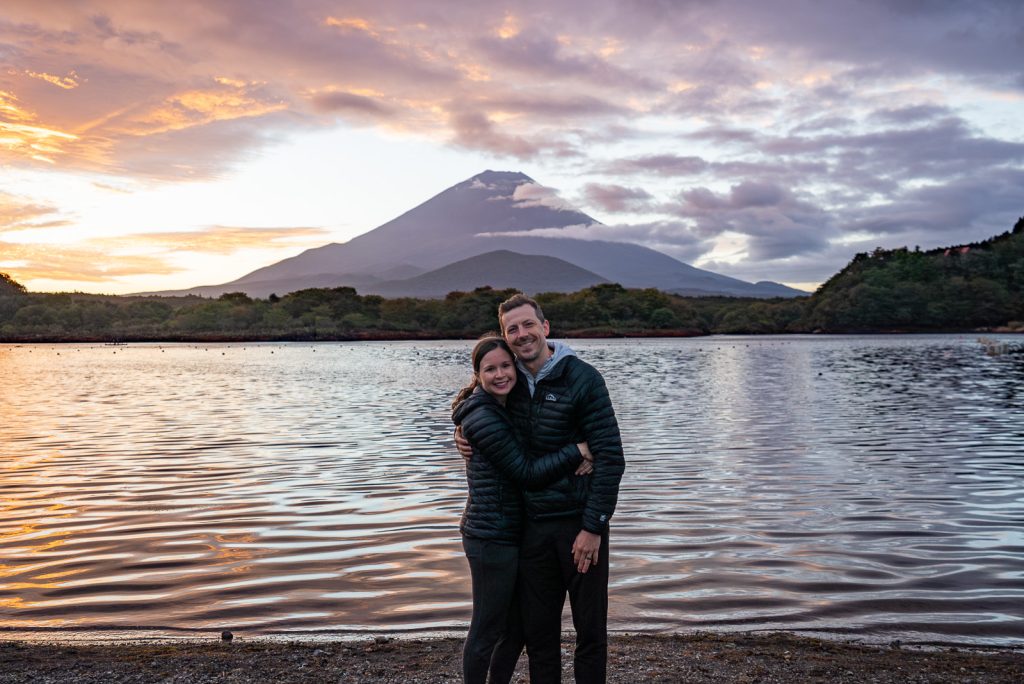
To end your 2 days at Mount Fuji, head to Tatego-Hama Beach for a sunset picnic! We personally visited for sunrise, which would be a great option if you don’t mind getting up early again. But it also would be a nice spot for sunset!
While the major highlight for us was seeing Mount Fuji turn shades of purple and pink, even if Mount Fuji isn’t out, it’s still a beautiful lake to spend some time at.
However, one important thing to know is that to visit this beach, you will need to drive down a pretty steep access road. So make sure your vehicle is able to handle it! We had to floor it to get our campervan rental back up the hill. 😅
Planning your 2 days in Mount Fuji
How to get to the Mount Fuji area
The Mount Fuji area is only 100 km (62 miles) from Tokyo, making it a relatively easy place to visit, regardless of your transportation method!
If you are visiting the area by public transportation, you can take a train from Shinjuku Station to Kawaguchiko Station in under 2 hours on a limited express line. Or you can take the JR Chuo line from Shinjuku to Otsuki Station then transfer to the Fujikyu Rail Line to Kawaguchiko Station. There are also bus options from Tokyo that only take around 2 hours and are a little cheaper.
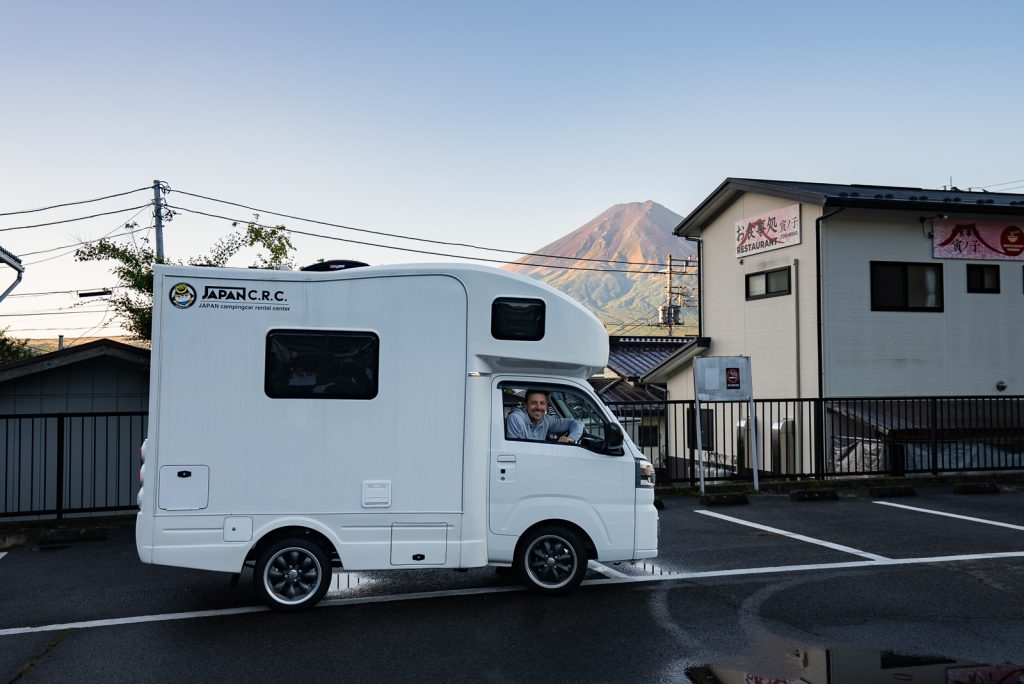
We personally visited Mount Fuji in our rented campervan and think it makes for a great stop on a Japan road trip! Not only will having your own vehicle be easier to get around, but there are so many other fun areas to visit nearby, like Hakone and the Izu Peninsula.
If you don’t have 2 days to spend in Mount Fuji or don’t want to navigate getting here on your own, you can also book a tour from Tokyo. On these tours you’ll visit a handful of the stops on our Mount Fuji itinerary, but you will not be able to see it all. Here are a couple options to consider!
- Mount Fuji Full Day Sightseeing Tour from Tokyo (Group tour)
- Mount Fuji Adventures Private English Tour With Hotel Pick Up
Getting around the Five Lakes Region
Regardless of how you get to Mount Fuji, getting around the area is very easy. There are two transportation hubs at Kawaguchiko Station and Fujisan Station in Fujiyoshida. From these stations there are buses that go in all directions, connecting all five lakes and other attractions.
This map gives a great view of what routes you can take from Kawaguchiko Station, while you can see a list of routes from Fujisan Station here. You can even get to Shiraito and Otodome Falls by bus from Lake Kawaguchi!
But if you want even more freedom to get around, we recommend having a vehicle! We found driving around this area to be super easy. Just make sure you have an International Drivers Permit if you plan to drive in Japan.
And lastly, it’s also fun and easy to get around by bike. This Mount Fuji itinerary has you renting a bike for day 1, but you could also rent one for longer and visit some other spots with it as well.
When to visit Mount Fuji
The Mount Fuji Five Lakes region can be visited year round, but each season provides a different experience.
Winter (December to February) offers the clearest weather and best chance of seeing Mount Fuji and with its iconic snowcap. This will be a less busy time to visit, but keep in mind that it will be very cold!
Spring (mid-April to May) is one of the most popular times to visit because of the blooming cherry blossoms. However, this is also a very busy time to visit. So if you dislike crowds, we suggest going before or after the cherry blossoms. During the spring the weather is warming up, but there should be plenty of opportunities to see the mountain, especially in the mornings.
Summer (June to August) is the best time to visit if you’re looking to climb Mount Fuji. But keep in mind that the climbing season only runs from early July to mid September. While this is the best time to summit the peak, it’s also a very warm and humid time to visit Japan. This also makes it tougher to see Mount Fuji, as it can sometimes be hazy or covered in fog.
Autumn (October to mid-November) is quite possibly the most beautiful time to visit! This is when the temperatures start to cool and the leaves begin to change. Areas like Lake Kawaguchi Maple Corridor explode with color! We personally visited in mid-October and were a bit too early for fall foliage. Typically fall foliage hits its peak in this area around early to mid November. Just keep in mind that this time can be very busy, especially with the Lake Kawaguchiko Autumn Leaves Festival bringing lots of visitors.
Where to stay near Mount Fuji
Hotels and vacation rentals
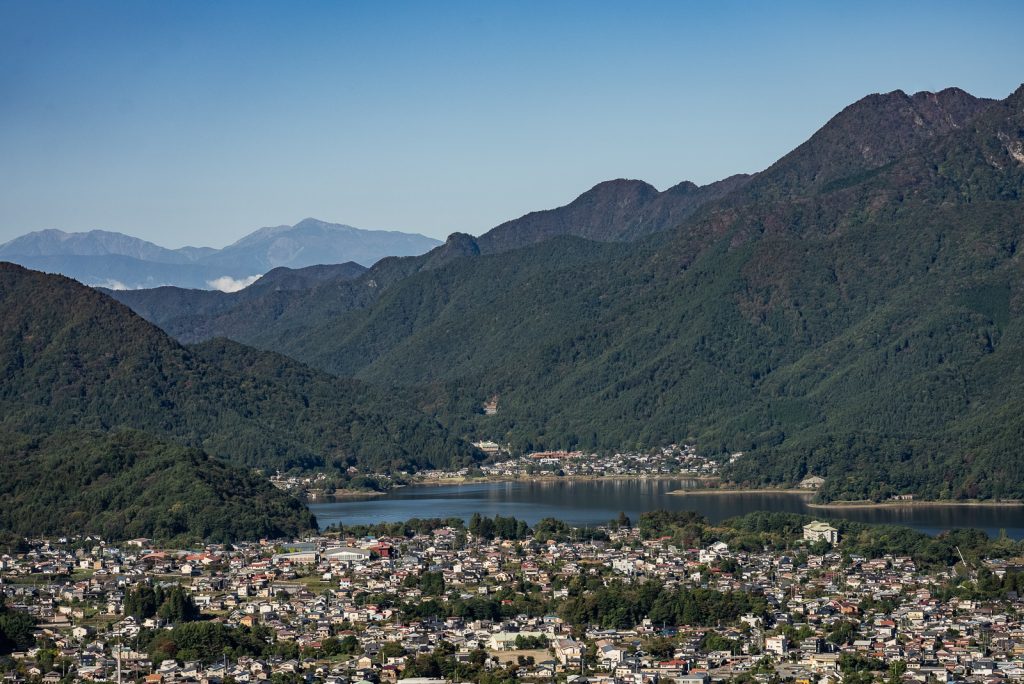
For this Mount Fuji itinerary, we suggest staying at Kawaguchiko. It is the most developed lake, has great views of the mountain, and there is a wide range of hotels available. Mizno Hotel and Fuji Lake Hotel are both highly rated and in convenient locations! For something a bit more spacious THE TOKI Fujikawaguchiko has villas with incredible views of Mount Fuji.
Camping
If you’re like us and are traveling around Japan in a campervan or just want to tent camp, there are lots of campgrounds in the area. Koan Camping Ground and Fumotoppara Campground are both extremely popular because you have amazing views of Mount Fuji. But camping here is more like everyone on a beach or lawn together, so there is limited privacy. & GREEN Fuji Camping Ground looks to have actual campsites among the trees, but privacy is still limited.
⌚One important thing to know about some campgrounds in this area is that they have gates that close at night and reopen in the morning. If you want to visit Chureito Pagoda at sunrise like we suggest, these gates may not open early enough for you. So make sure to check this in advance!
Roadside stations
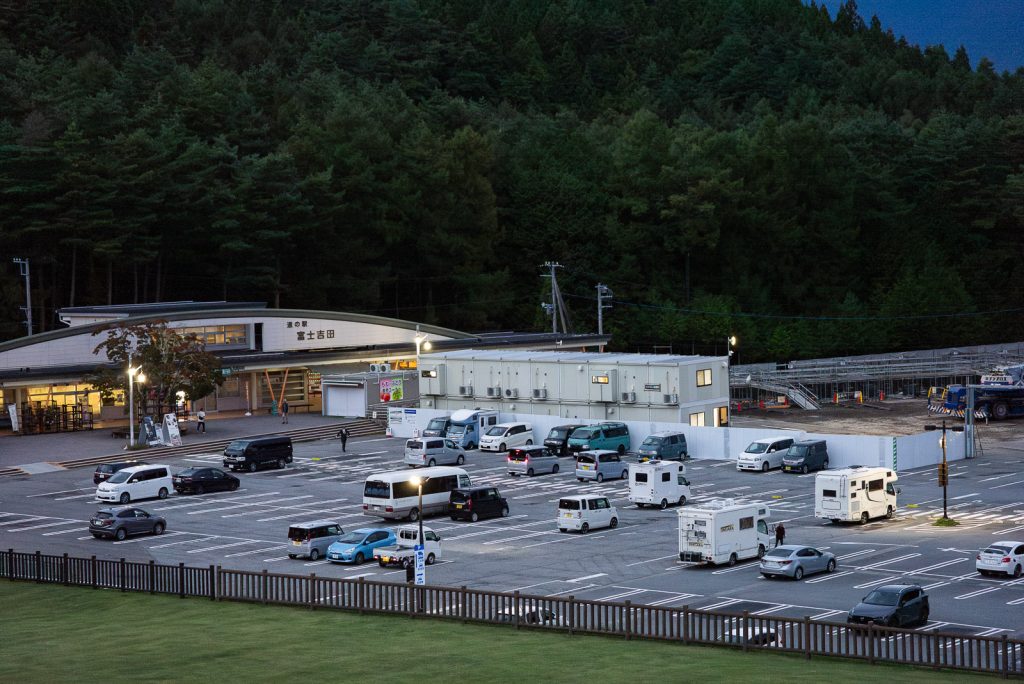
Another option for those in a campervan or RV is to stay at Michi-no-Ekis, which are roadside stations. These are free, have food options during the day, and offer 24 hour toilets and vending machines. While in the area we stayed at these three roadside stations.
- Roadside Station Narusawa: This roadside station has great views of Mount Fuji and some good looking food and soft serve. Plus there is a Mount Fuji Museum and an onsen!
- Roadside Station Fujiyoshida: This roadside station is really big, close to Chureito Pagoda and Kawaguchiko. There’s also a Montbell store if you need some outdoor gear.
- Road Station Asagiri Kogen: This is a very convenient roadside station to visit Shiraito and Otodome Falls. It’s also where you can find Asagiri Dairy Factory (in a building behind the main roadside station).
Things to know when visiting Mount Fuji
Are you guaranteed to see Mount Fuji?
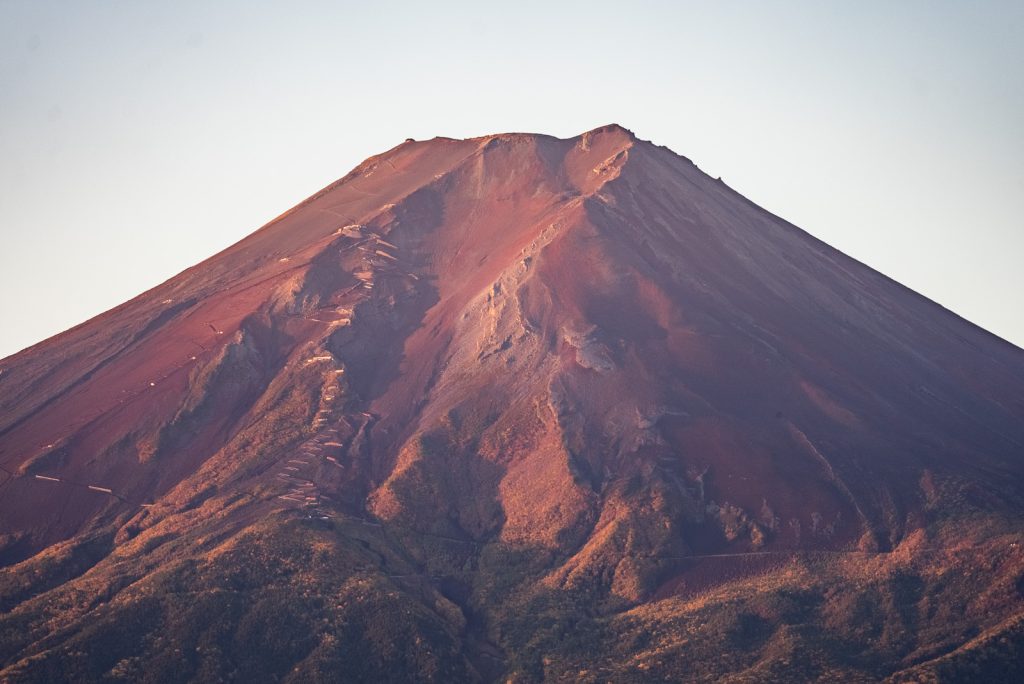
Mount Fuji can be very fickle, with it only visible 20-30% of the time. So if you see it, consider yourself very lucky! But having 2 days at Mount Fuji will help up your chances a bit.
Leading up to your trip, we suggest checking Is Mt. Fuji Visible? and Mt Fuji Visibility & Weather Forecast to see predictions on its visibility from different sides of the mountain as well as live webcams! Both of these websites were a huge help for us as we planned out our time in the area.
Don’t get lucky enough to see Mount Fuji? We still think this area is worth visiting for the waterfalls, local eats, and lake views. Also, just because it’s not visible in the morning doesn’t mean it won’t pop out later!
When does Mount Fuji have snow on top?
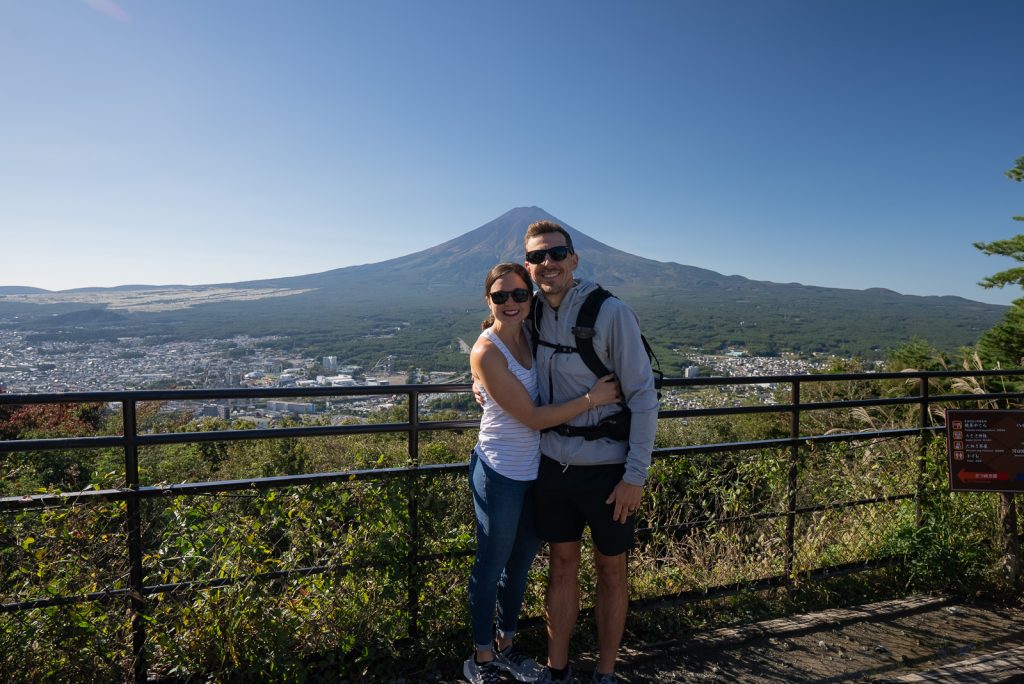
Mount Fuji typically has its iconic snowcap (which makes it look just like the 🗻emoji!) from late October to early June. As you can see from our photos, taken in mid October, Mount Fuji was still bare. In recent years, the first snow has been happening later and later, so for the best chances to see snow on top, we would visit in late November-May.
Get an early start
We spent 3 weeks in Japan and minus the major cities, Mount Fuji was hands down the busiest area we visited. So make sure to get an early start to avoid waiting in lots of lines and dealing with large crowds.
Be courteous and respect locals
The Mount Fuji area is a very popular world destination and deservedly so. But keep in mind there are thousands of Japanese locals who live here! As you explore, please be respectful of their rules and customs, just as you would want someone to be in your neighborhood. Do not park illegally, be overly loud, litter, or stand in a roadway to get photos.
Save this 2 day Mount Fuji itinerary