Last updated on March 15th, 2024
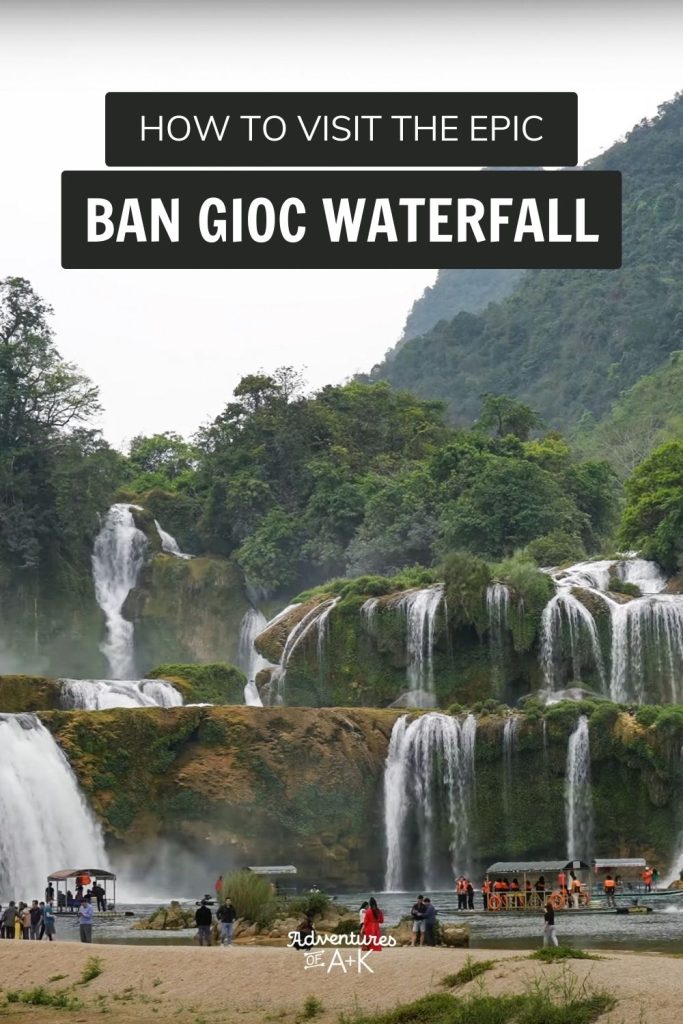
Located right along the border with China lies the Ban Gioc Waterfall, the tallest in Vietnam. And we’re sharing everything you need to know to visit!
While many Vietnam tourists head in droves to Ha Giang to complete the Ha Giang Loop, just hours east in the Cao Bang Province lies one of Vietnam’s greatest natural wonders, the Ban Gioc Waterfall.
This powerful, multi-level waterfall is the best waterfall in Vietnam and one of the most stunning places we visited during our 6 weeks in the country. As soon as we saw a photo of it, we knew we HAD to see it in real life. So when planning our big Northern Vietnam motorbike trip, we made sure to find a route and guides that would enable us to see it. And we’re so glad we did!
Watch our epic motorbike trip in Northern Vietnam, including the Ha Giang Loop, plus the Cao Bang Province, where we saw the Ban Gioc Waterfall!
Want to experience these majestic falls for yourself? In this guide we’re sharing everything you need to know to visit the Ban Gioc Waterfall in Vietnam. Including how to get there, when to visit, entrance fees, specific rules, and so much more!

- Why should you visit the Ban Gioc Waterfall in Vietnam?
- How to get to the Ban Gioc Waterfall in Vietnam
- When is the best time to visit Ban Gioc Waterfall?
- things to know before you visit the Ban Gioc Waterfall
- Things to do at the Ban Gioc Waterfall in Vietnam
- More things to do near the Ban Gioc Waterfall
- What to bring to the Ban Gioc Waterfall
- Where to stay near the Ban Gioc Waterfall
Why should you visit the Ban Gioc Waterfall in Vietnam?
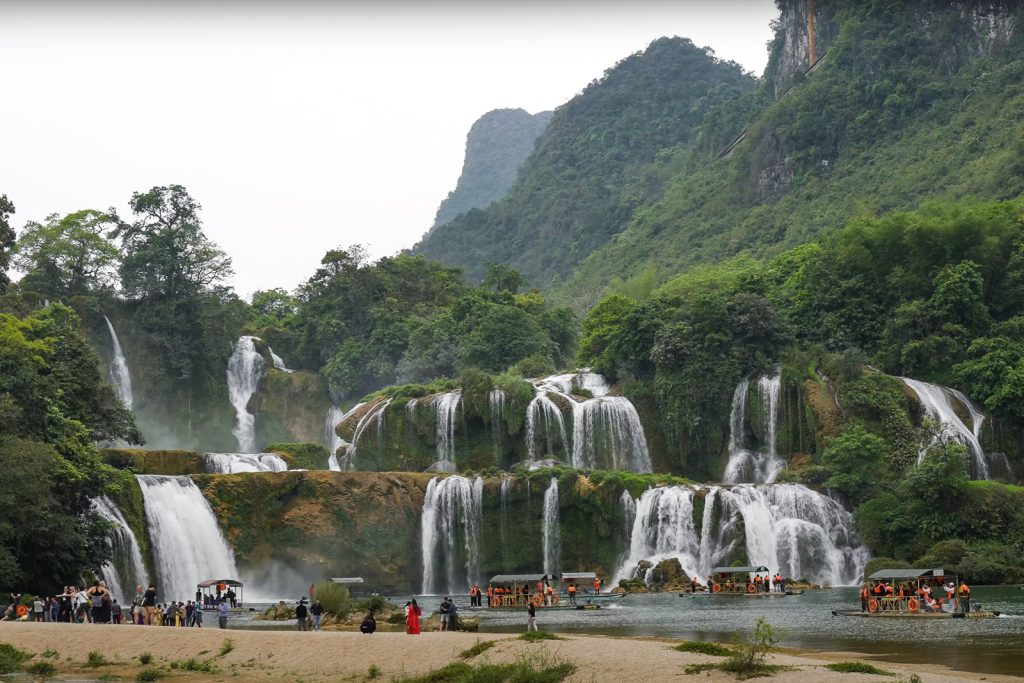
We’ve seen tons of incredible waterfalls in our travels like Burney Falls, Niagara Falls, and Shoshone Falls, but Ban Gioc (pronounced “bahn-zahk”) may be the most epic of them all!
At 30 meters (98 feet) tall by 300 meters (984 feet) wide, it is the largest waterfall in Vietnam. But what makes it even cooler is that the Ban Gioc Waterfall (called Detian Falls in China) is located right on the border of Vietnam and China. And after Iguazu Falls, Victoria Falls, and Niagara Falls, the Ban Gioc Waterfall is the fourth largest cross border waterfall in the world!
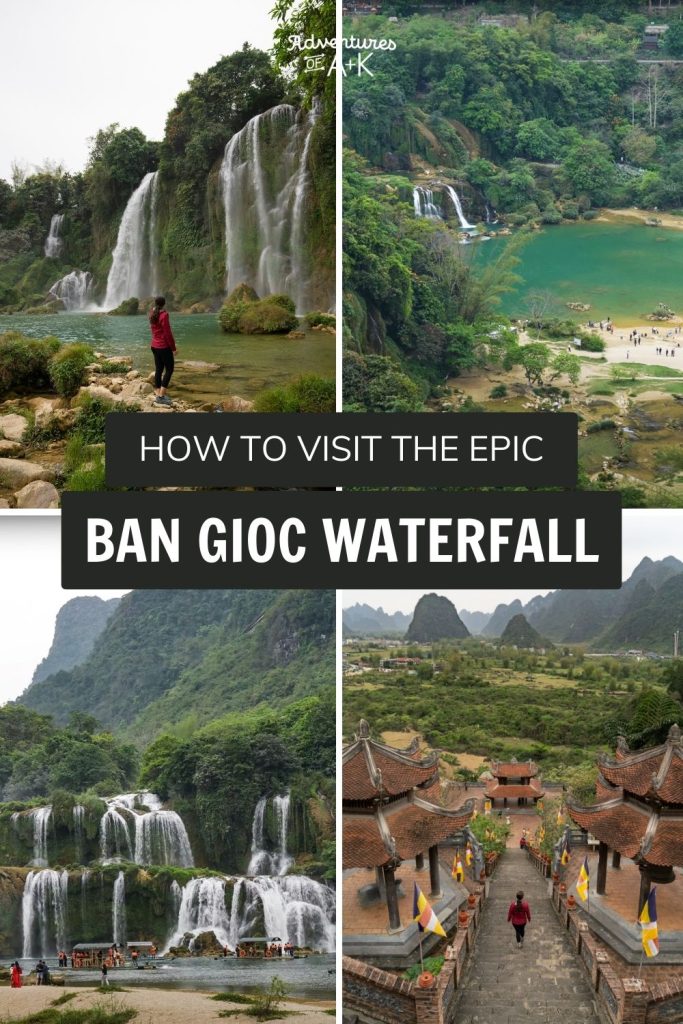
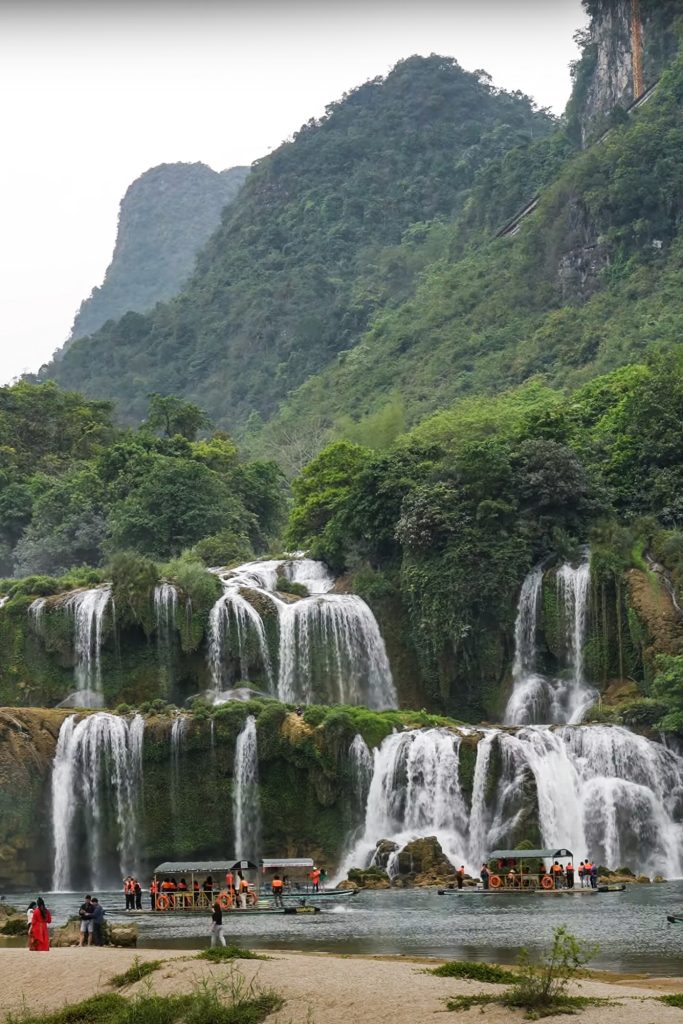
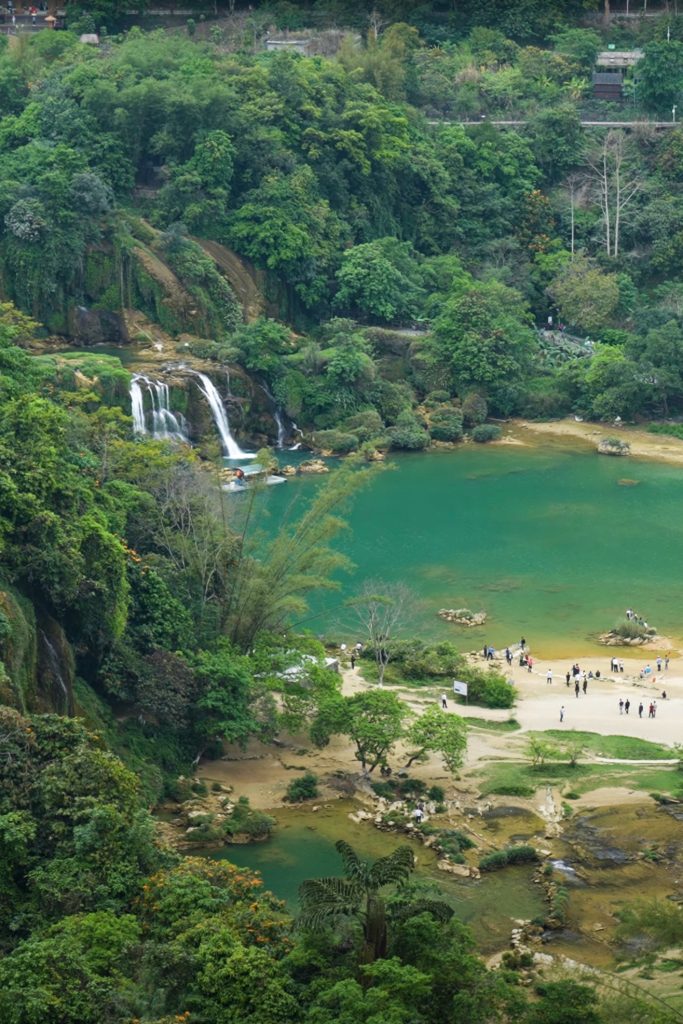
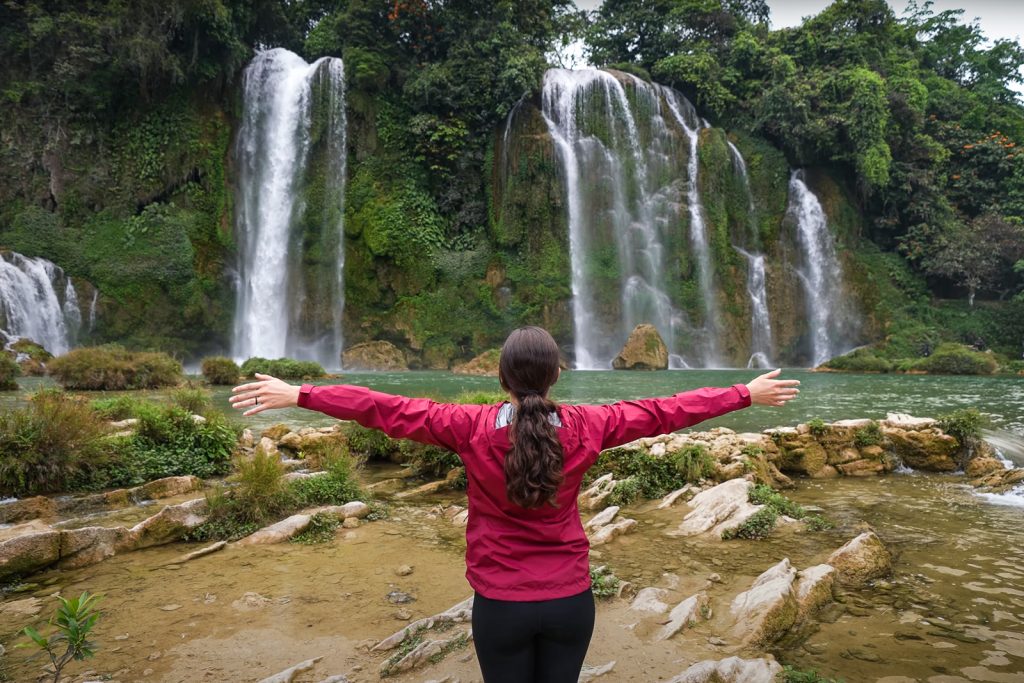
Beyond its impressive titles, what makes the Ban Gioc Waterfall worth a visit is the scenery around it. Looking at the falls you’ll notice that it’s not just one massive waterfall, but actually a collection of connected smaller falls, which flow down multiple tiers.
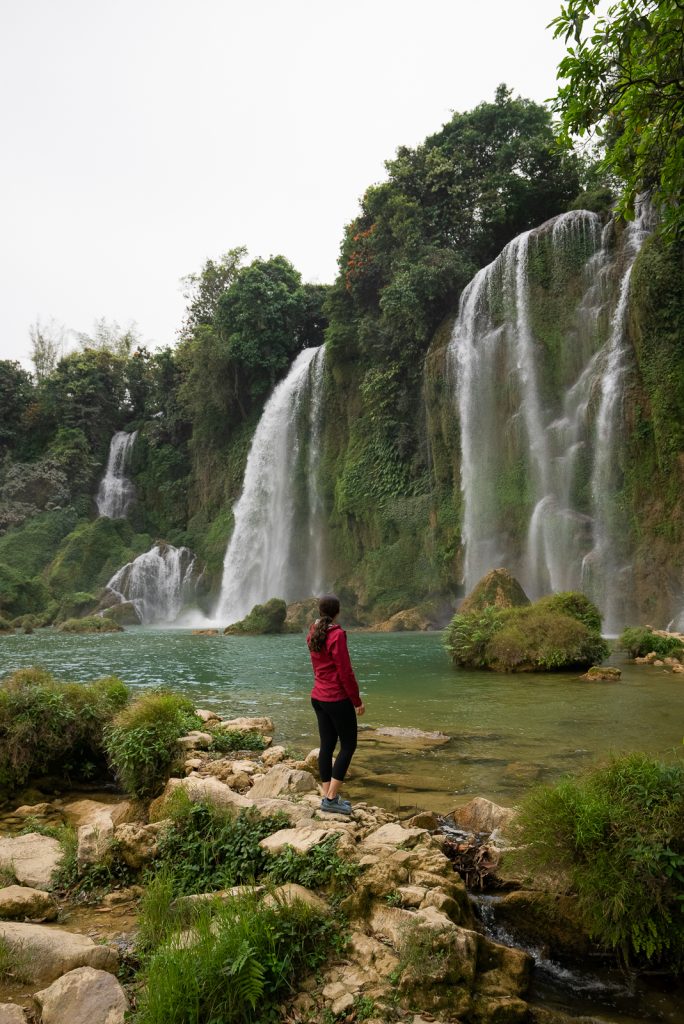
In addition to the main set of falls, there are a handful of smaller falls off to the side. Which were all impressive on their own!
And to top it all off, these falls are all surrounded by lush foliages and towering pointy peaks. It is quite the picturesque backdrop!
How to get to the Ban Gioc Waterfall in Vietnam
Compared to some of Vietnam’s other popular attractions, the Ban Gioc Waterfall isn’t as easy to get to. The waterfall is located in the Cao Bang Province in Northern Vietnam, about 83 km (52 miles) from Cao Bang, the largest city in the province.
Step 1: Getting to Cao Bang from Hanoi
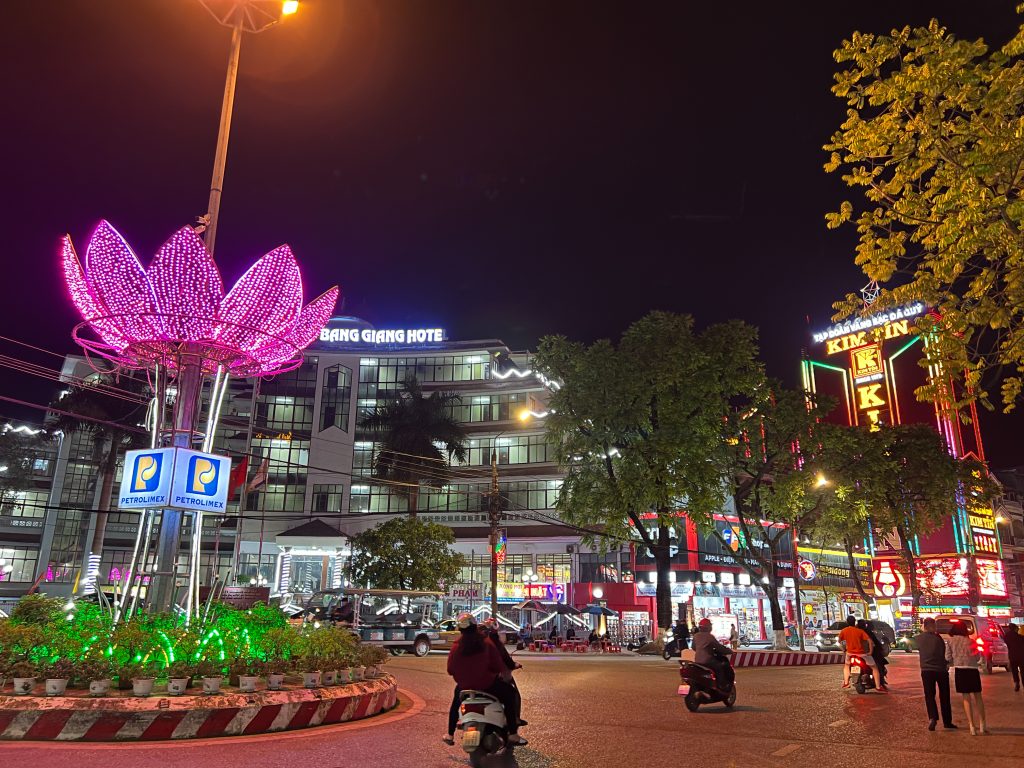
Getting to the city of Cao Bang itself is the first hurdle to visit the Ban Gioc Waterfall. Although it is the largest city in the province, it does not have an airport or a train station. The closest major city to Cao Bang is Hanoi, which is 330 km (205 miles) south.
If you’re coming from Hanoi, your best bet to get to Cao Bang is to take a bus or van. The ride will be about 5.5 to 9 hours, depending on which you choose, and cost between $15-25 USD. You can see all of your options on 12Go!
Ban Gioc Waterfall tours from Hanoi
Another popular way to visit the Ban Gioc Waterfall is through a tour. There are many private and group tours offered from Hanoi, which takes the hassle out of getting to the falls!
Ban Gioc 2 days 1 night from Hanoi
This tour includes all meals and accommodation, a visit to the waterfall, pagoda overlooking the falls, Nguom Ngao Cave, and Angel Eye Mountain. It’s an action packed itinerary!
Adventure tour to Ban Gioc Waterfall – Ba Be Lake 3 days 2 nights
This tour includes all meals and accommodation, as well as a visit to Ban Gioc and the gorgeous Ba Be Lake. Keep in mind there is a lot of driving on this tour, but the spots are well worth it!
For our visit to the Ban Gioc Waterfall, we took a private motorbike tour from Ha Giang with Ha Giang Road Trip (a custom tour we set up). We experienced most of the Ha Giang Loop and then continued east to Cao Bang and Ba Be Lake. It was the BEST experience and in our opinion, the ultimate way to visit this part of Vietnam!
Want to save some money on this tour or experience? Join Tripadvisor Rewards to earn 5% Trip Cash on any hotel or experience booking made in their app, which can be applied to future in-app bookings!
Step 2: Getting from Cao Bang to the Ban Gioc Waterfall

By bus or van
Once in Cao Bang, there are public buses from the city center, which cost 85,000 VND (~$3.45 USD). You’ll find the bus stop here, right along the main road. Look for the sign that says “Thác Bản Giốc.” The bus begins running at 6:30 AM and runs every 30 minutes.
It takes 2-3 hours to get there because it makes several stops along the way and the road is hilly and windy. So we’d recommend taking the earliest ride. The last returning bus from the Ban Gioc Waterfall to Cao Bang is around 4:50 PM.
Taxi
Once in Cao Bang, another way to get from Cao Bang to the Ban Gioc Waterfall is by taxi. This will be about 700,000 VND (~$28.50 USD) one way.
By motorbike
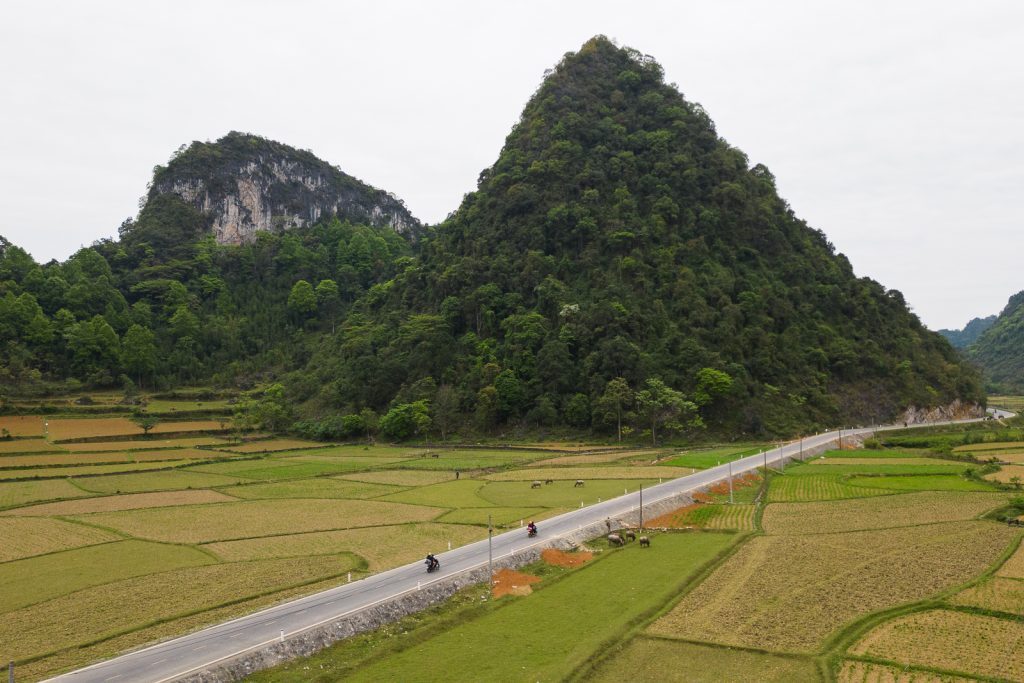
If you’re comfortable riding a motorbike, the Ban Gioc Waterfall is pretty straightforward to get to. You can rent a motorbike in Cao Bang or in Hanoi. It will be a gorgeous ride, but very mountainous and windy, so it should only be attempted by experienced motorbike drivers.
Keep in mind, if you rent a motorbike, make sure to check motorbike laws for your country’s driver’s license. You will need an IDP, which is an International Driver’s Permit. However, only IDPs from countries under the 1968 Vienna Convention are legal.
Unfortunately for US, Canadian, and Australian citizens, your IDP will not qualify. Without an IDP, the only way to legally drive a motorbike without a license is to drive one 50ccs or less. This will not be powerful enough in mountainous areas like the Cao Bang Province.
By driving illegally, you are risking not being covered by your insurance if you do get in an accident or get hurt.
When is the best time to visit Ban Gioc Waterfall?
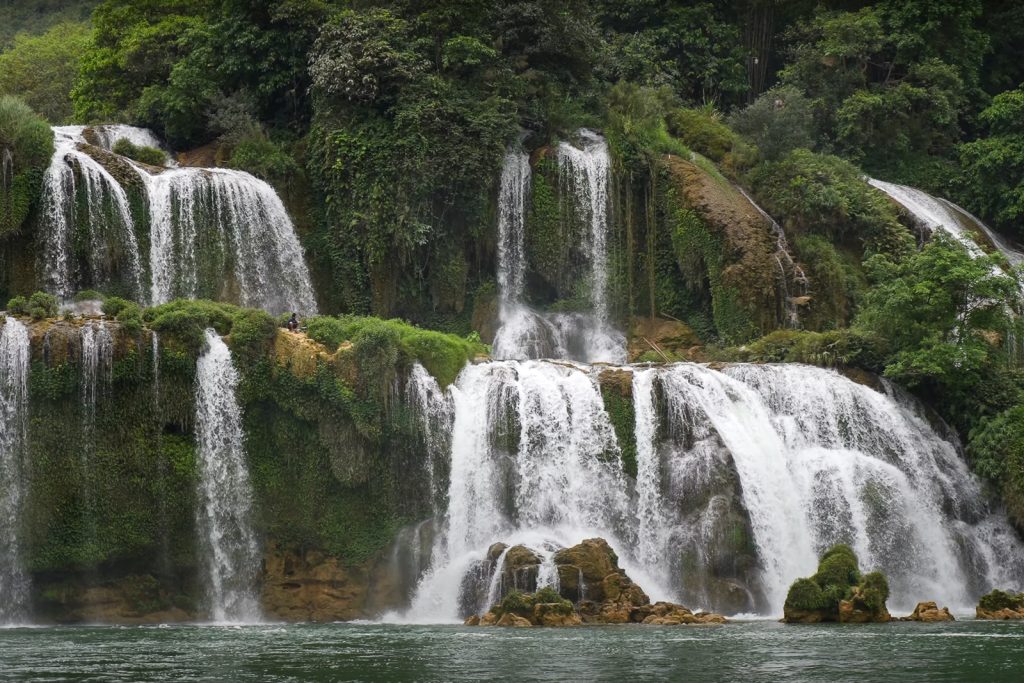
Despite being open year round, the region the Ban Gioc Waterfall lies in experiences a dry season (September to April) and a rainy season (May to August), which provide slightly different experiences.
Rainy Season
Visiting during the rainy season may sound appealing, because the falls would be very full, but in reality they can be too full. Several of the falls may merge together, giving it a different appearance than normal.
Another factor to consider is the water color. If you visit during the rainy season, the water may be more brown and murky due to the heavy downpours. During the dry season, the water is more clear and blue.
Dry Season
We visited in April, during the dry season, so the falls weren’t as raging as many of the photos we saw online. But it was still extremely impressive! And a big reason why is because of a dam upriver.
This dam controls the flow of the falls and during the dry season, it is usually released around 10:30 AM. If you get there before and you pay close attention, you’ll slowly start to notice the falls getting gradually stronger and fuller.
We hear the best time to visit the Ban Gioc Waterfall is between September and October, at the end of the rainy season. The waterfalls will still have lots of water from the previous months, the weather will be very pleasant, and the surrounding rice paddies will be golden and ready for harvest.

Is the Ban Gioc Waterfall worth it in the dry season?
You may be wondering, “is the Ban Gioc waterfall worth it in the dry season?” And the answer is YES! We debated if we should even go, since it wouldn’t look exactly like the photos we saw online. But we were still blown away!
The waterfalls, both the main Ban Gioc Waterfall, plus the smaller waterfalls to the side, are all spectacular, even with less water. Any of these falls could be a destination on their own!
things to know before you visit the Ban Gioc Waterfall
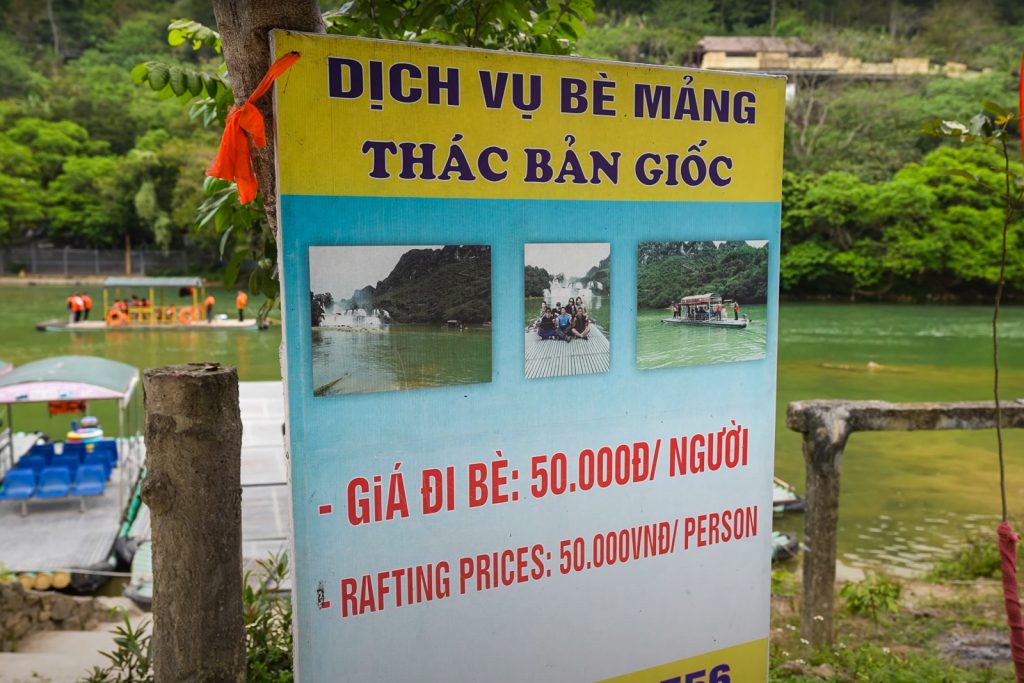
Cost to visit the Ban Gioc Waterfall
The cost to visit the Ban Gioc Waterfall is 45,000 VND (~$1.85 USD) per person. If you go on a tour, this will be included in your tour price.
If you want to ride the raft (more on that in a minute!), this costs an additional 50,000 VND (~$2 USD) per person. This was not included in our tour, but was well worth paying extra for.
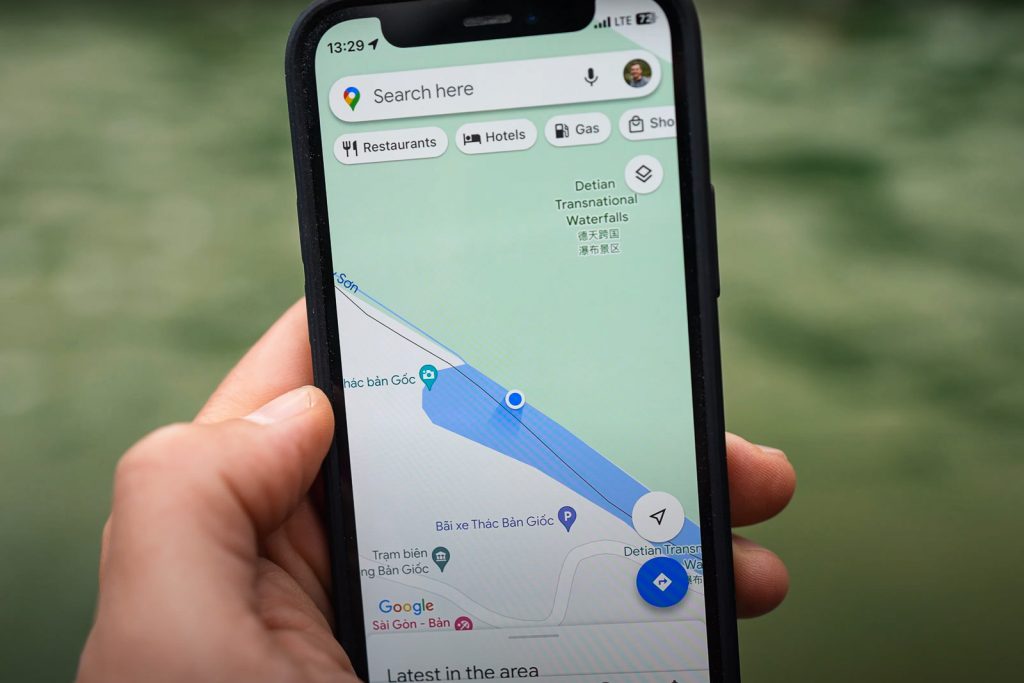
Time change
China is one hour ahead of Vietnam, so the clock on your phone may jump an hour ahead once you’re close to the Ban Gioc Waterfall. We noticed our phones saying different times once we got to the Phat Truc Tu Lam temple. You will also cross INTO China on the raft ride, which is pretty exciting!
Drones are NOT allowed
The most iconic photos of the falls are taken by drone. But there are many signs saying that they are prohibited. While some try to skirt the rules, we hear that you can get into trouble with the China side of the border. As much as we wanted the iconic shot, it was not worth the risk!
Things to do at the Ban Gioc Waterfall in Vietnam
We recommend giving yourself about two hours to truly soak up how magnificent Vietnam’s largest waterfall is. Here are a couple things to see and do while at the Ban Gioc Waterfall!

Admire Vietnam’s largest waterfall
After arriving at the Ban Gioc Waterfall, getting your ticket, and entering, you’ll have a short walk before BAM, there it is! While we had just seen the falls from above at a pagoda, seeing it from much closer, and at eye level, took our breath away.
There are quite a few spots near the base of the falls to view the falls and snap photos, including a small, rocky beach area. We wouldn’t expect to lay out here though, a lot of tour buses stop by here, so it wouldn’t be a relaxing spot.
See the smaller waterfalls
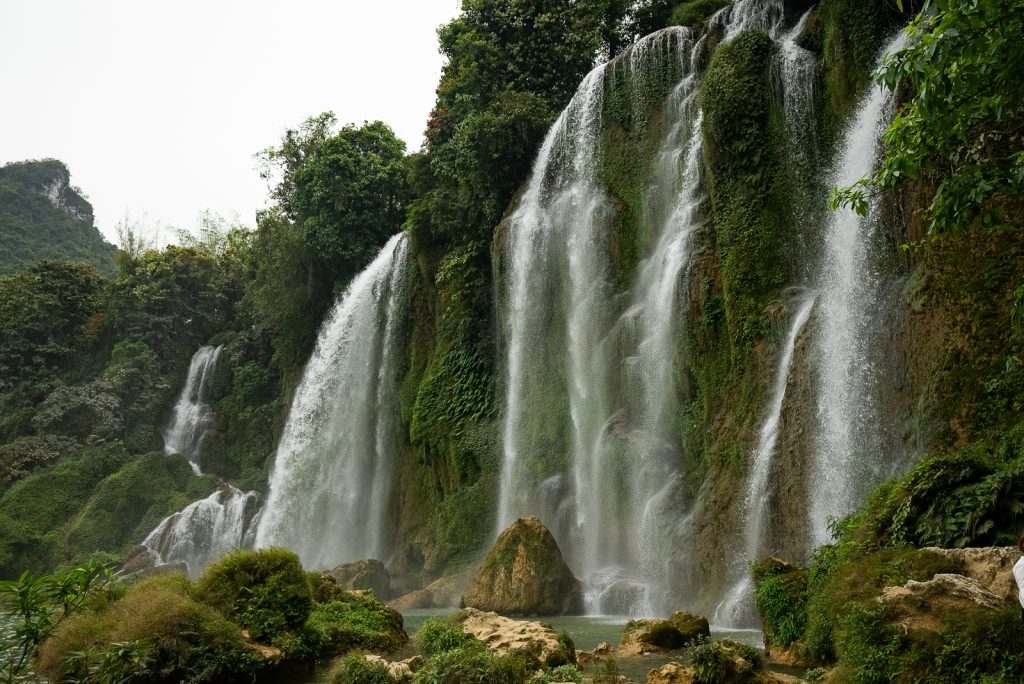
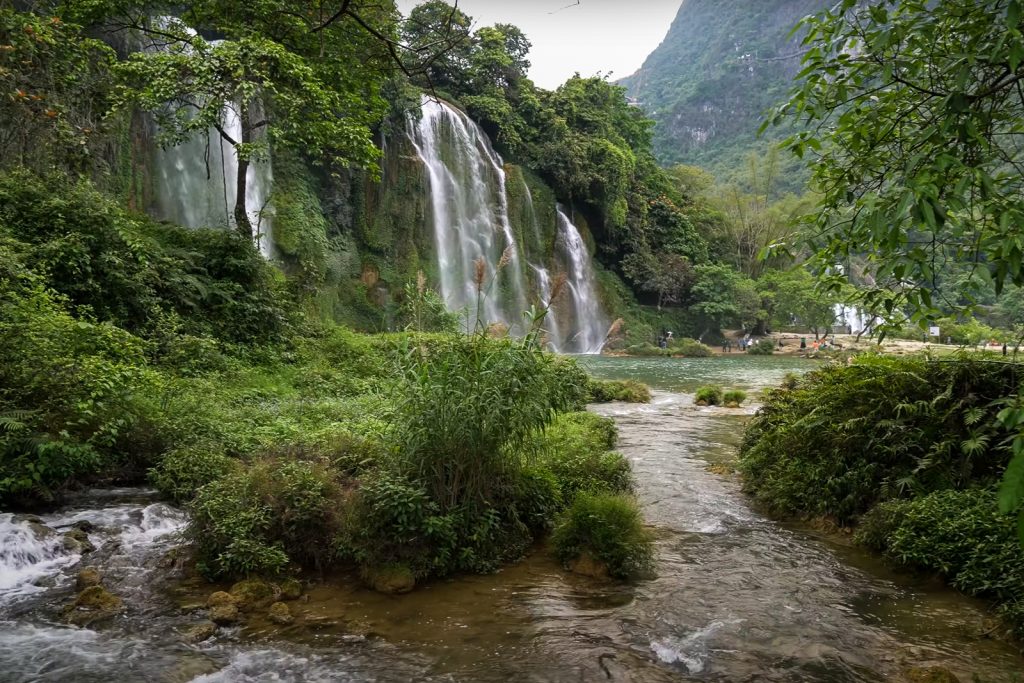
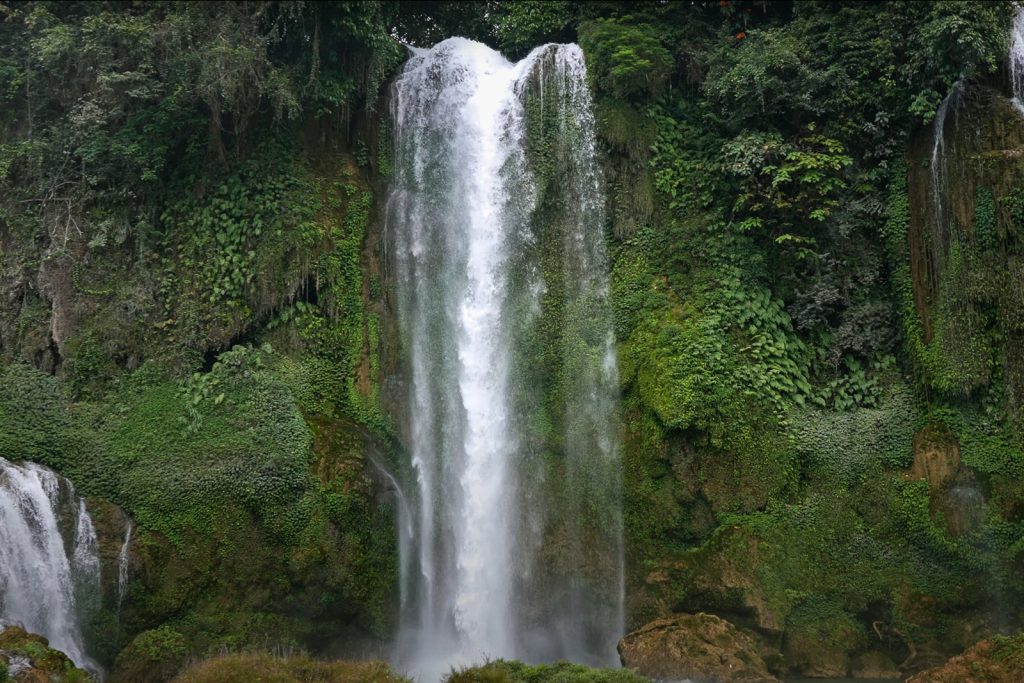

While the China side of the falls has some higher up viewpoints of the falls, one perk of visiting the Vietnam side is that you get access to many smaller waterfalls. These are all located to the left of the main Ban Gioc Waterfall.
Despite not being the most famous of the falls, these falls are all still amazing and worth checking out! Some of them are a single stream, while others have multiple streams of water.
Since most photos of the Ban Gioc Waterfall don’t show the waterfalls to the side, we didn’t expect to see more than just the main waterfall. So it was an awesome surprise!
There is a pathway that can take you to these falls, one of which requires crossing a small wooden bridge.
Ride a bamboo raft to get closer to the falls

Quite possibly our favorite thing to do at the Ban Gioc Waterfall was going for a ride on a raft. For 50,000 VND per person (~$2 USD) you can take a 10-15 minute ride that gets you up close and personal to the falls. Prepare to get wet! As we inched closer to the falls, mist totally covered our faces. It was so fun!
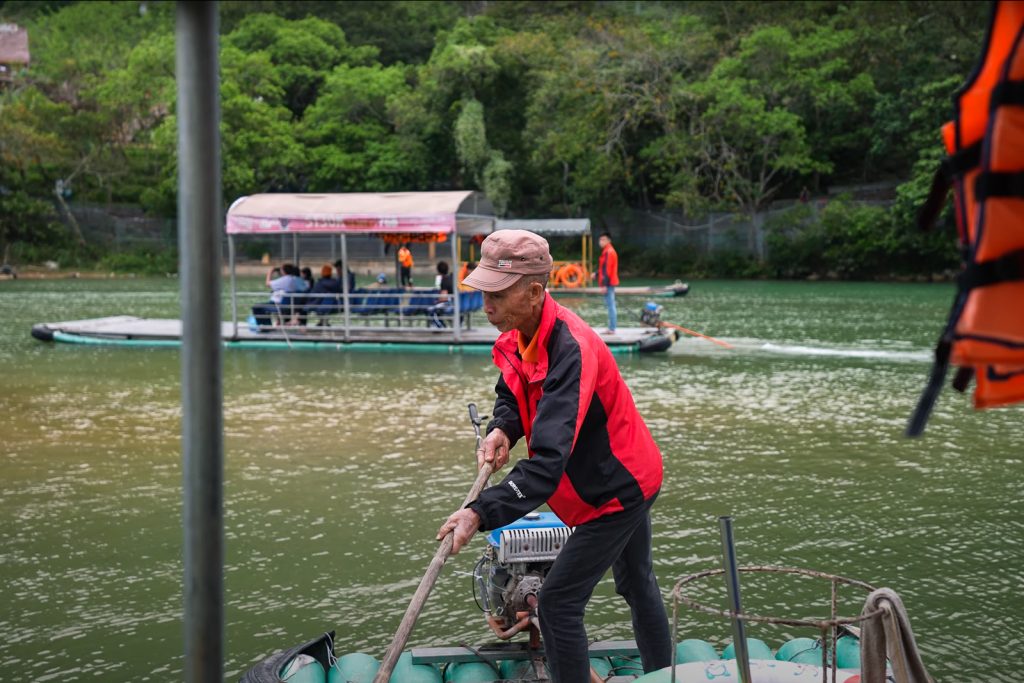
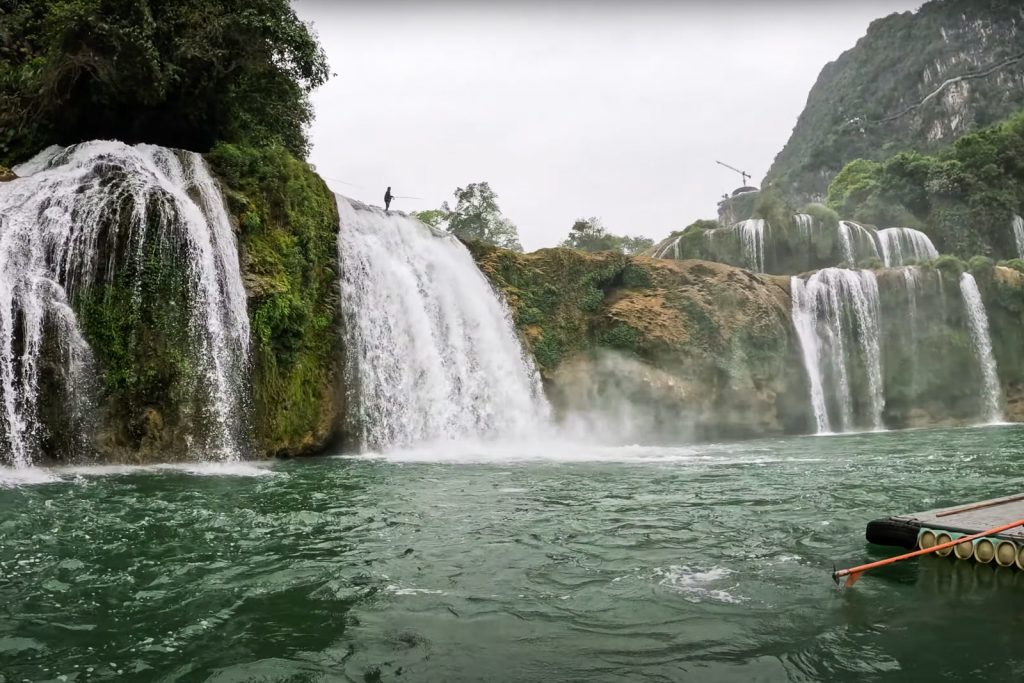
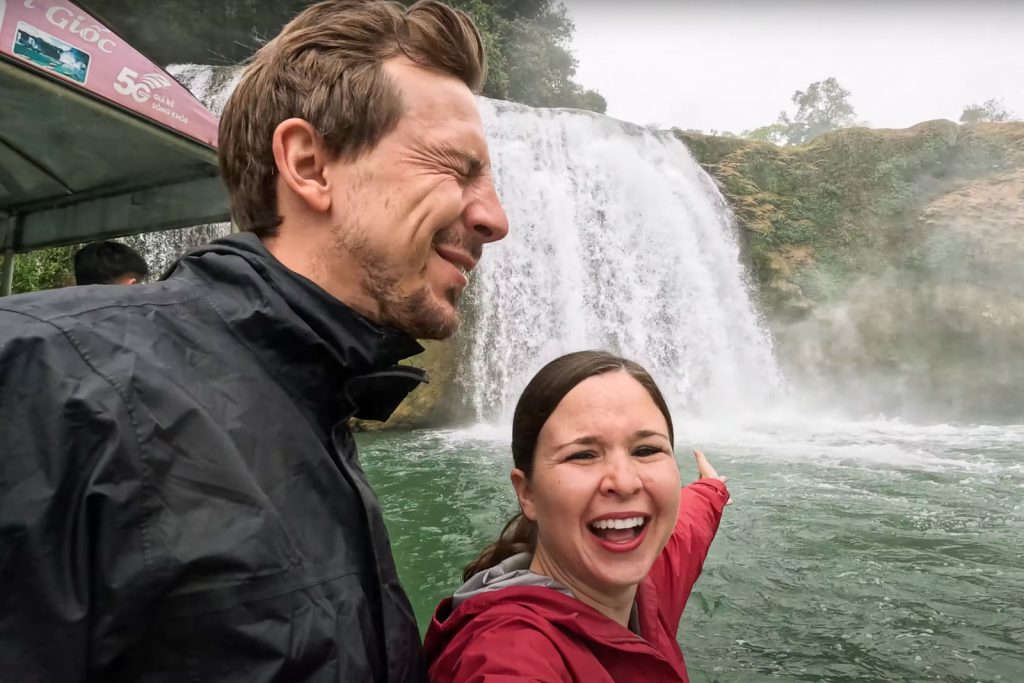
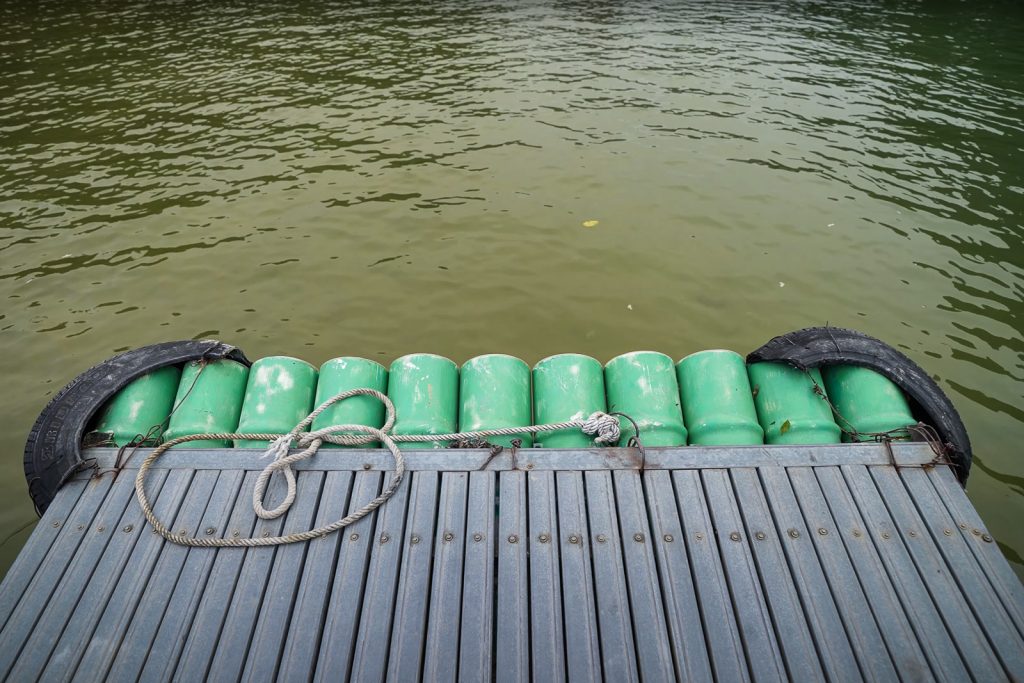
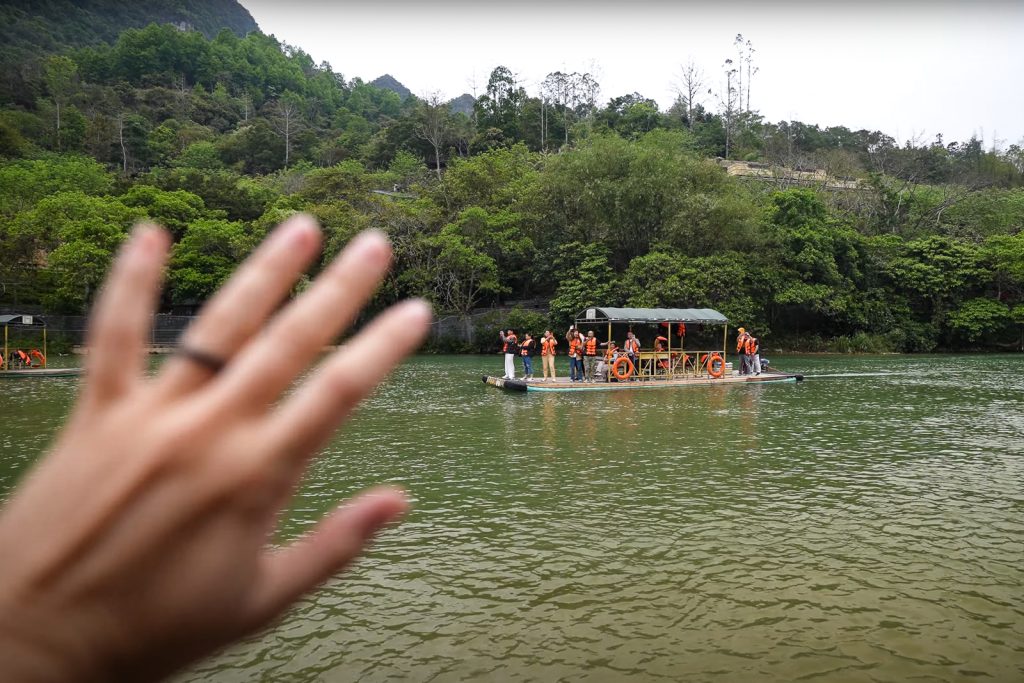
You won’t be the only boats out there, though. In addition to Vietnamese tourists, the falls are also visited by Chinese tourists from the China side. And they have their own boats!
The Vietnamese boats are blue and the Chinese boats are green. It was really neat to be rafting right next to Chinese tourists and think about how we were both in different countries, but enjoying the same thing together. We loved waving at them!
Can you swim in the Ban Gioc Waterfall?
Swimming is not allowed at the Ban Gioc Waterfall. There are signs that state this, so please follow them. Since the waterfall is located on a border, there are many eyes watching for rule breakers.
More things to do near the Ban Gioc Waterfall
Beyond visiting the Ban Gioc Waterfall itself, there are a few other things to do in the area that we’d highly recommend, if you have enough time!
Phat Tich Truc Lam Temple
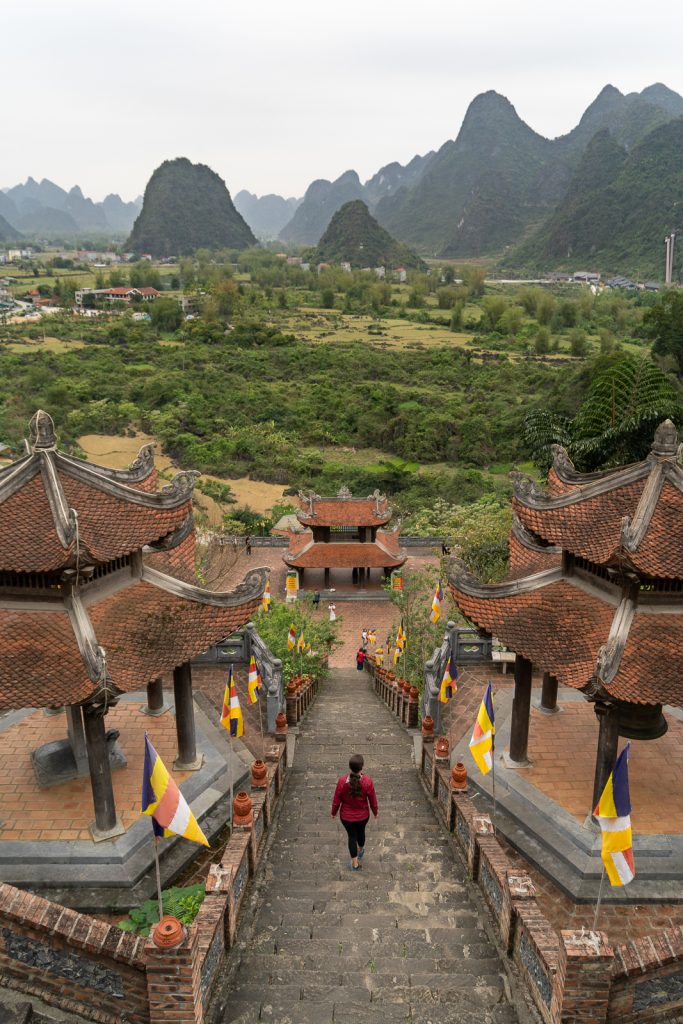
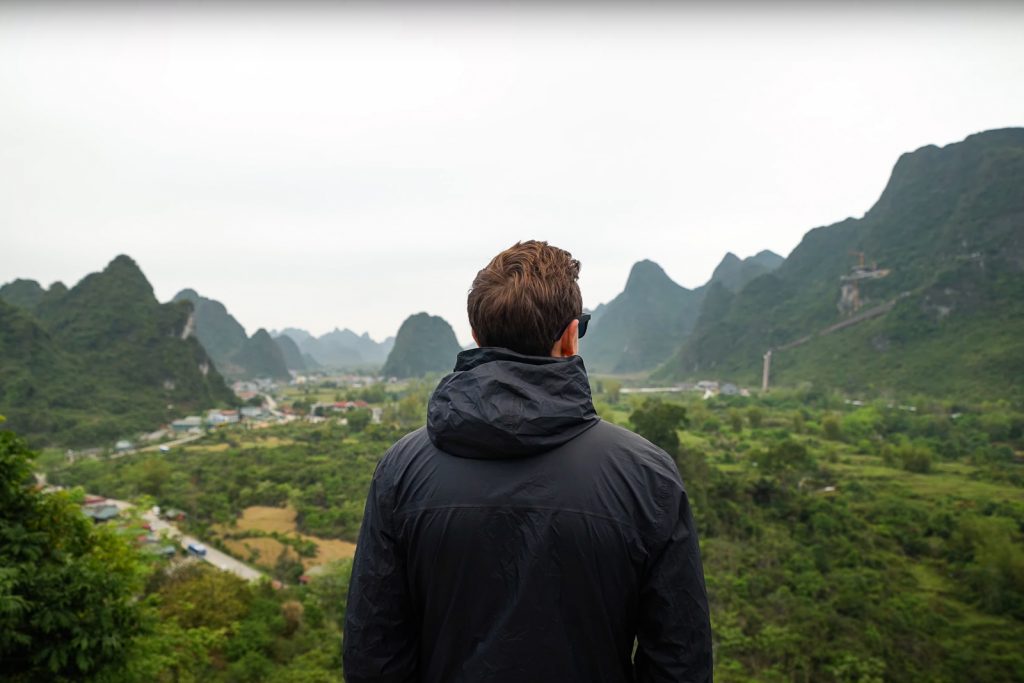
Phat Tich Truc Lam Temple is a beautiful temple just seconds from the entrance to the Ban Gioc Waterfall. The walk up is a steep one, but the sweeping views of the surrounding area and the Ban Gioc waterfall is more than worth it! It’s a must-visit before or after visiting the falls themselves. Plus, it’s free!
Nguon Ngao Cave (Tiger Cave)
The Nguom Ngao Cave, also known as Tiger Cave. The local legend about this cave is that it used to be home to fierce tigers, hence the name.
This is a 3 km long cave, with 1 km open for tourists to go through. It costs 45,000 VND (~$1.85 USD) to enter the cave and during certain times of the year there is a river running through it!
Angel Eye Mountain
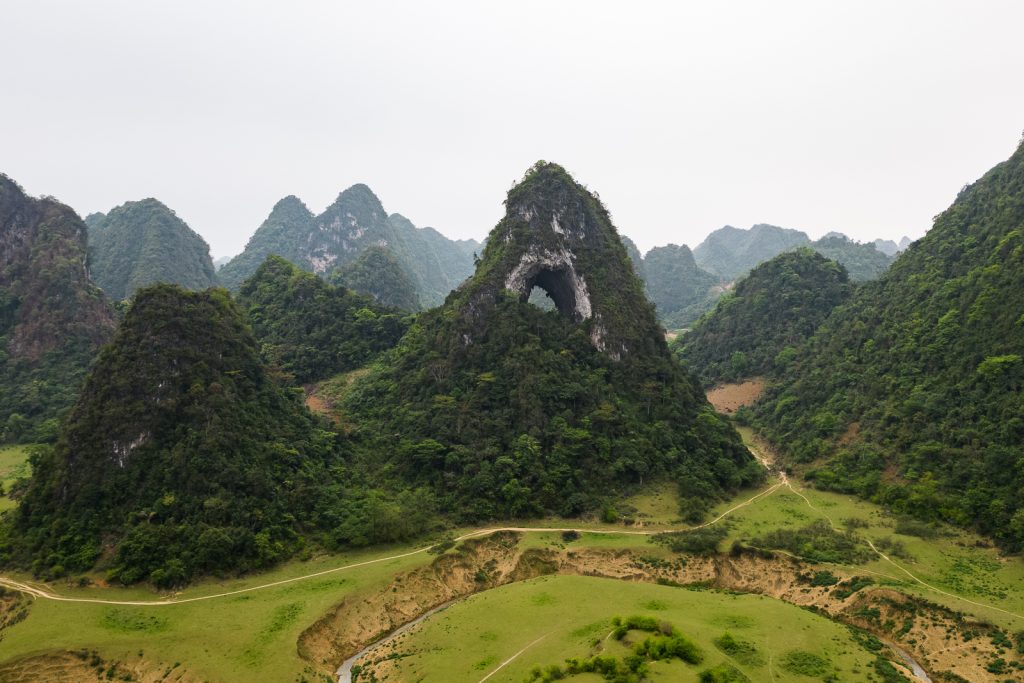
A beautiful stop between the Ban Gioc waterfall and Cao Bang is Angel Eye Mountain. This is a bit off the beaten path and hard to find, requiring you to go down narrow and steep dirt roads. But the view from the end is incredible!
It’s a huge valley with tons of mountains around, including one with a giant hole in it, the Angel Eye. During the rainy season, the valley floods and you cannot get very close. But during our visit in April, we were able to explore a bit.
And if you want to stay the night, you can even camp out here!
What to bring to the Ban Gioc Waterfall
Camera
You will definitely want to bring a camera to the Ban Gioc Waterfall. As we mentioned, drones are NOT allowed. If you have one, a GoPro or some sort of waterproof camera would be great for the raft ride, as it will get wet.
Curious what we use? You can see all of our camera gear here.
Rain jacket
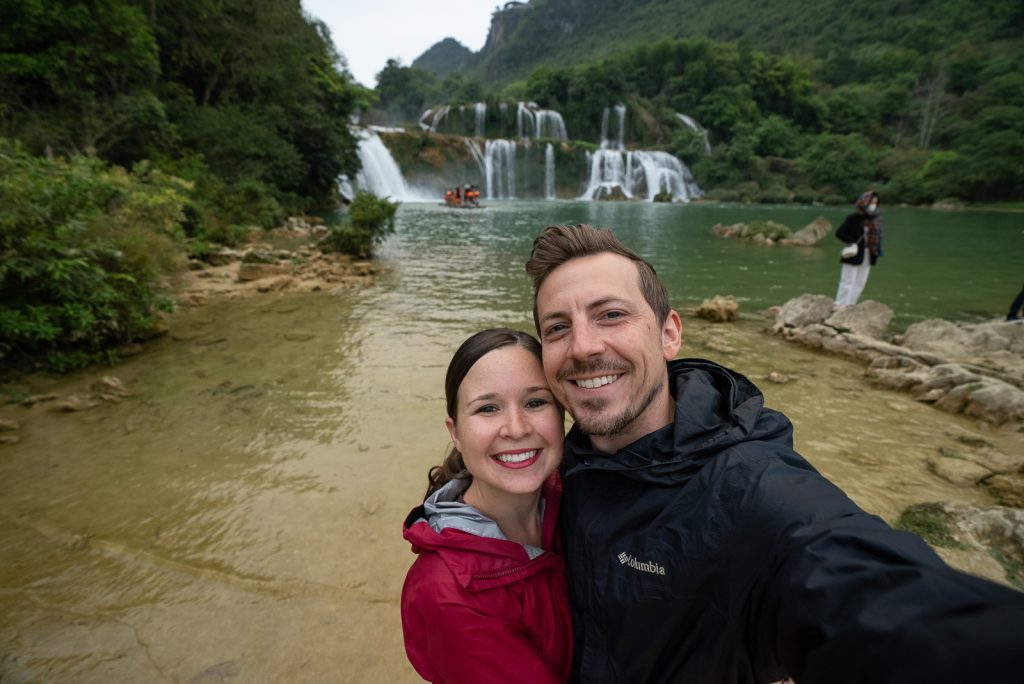
Even if you visit in the dry season, rain is a possibility. Plus, you’ll likely get a little wet on the raft, so we recommend having a rain jacket. Kathryn wears the Patagonia Torrentshell jacket and Adam wears a Columbia rain jacket.
Comfortable walking shoes
While the terrain around the Ban Gioc Waterfall is relatively easy, it may be wet from the mist. So we suggest wearing some good shoes, with decent grip. We both wore ALTRA Lone Peak 6 Trail Running Shoes!
Cash
Make sure to have cash handy to get into the falls, as well as for the raft ride. There are also some snack stands by the entrance to the Ban Gioc Waterfall. We enjoyed some roasted chestnuts after visiting the falls!
Temple attire
If you plan to visit the nearby Phat Tich Truc Lam Temple, make sure you have something to cover your knees and shoulders. We suggest bringing something light and airy to avoid getting too hot!
Where to stay near the Ban Gioc Waterfall
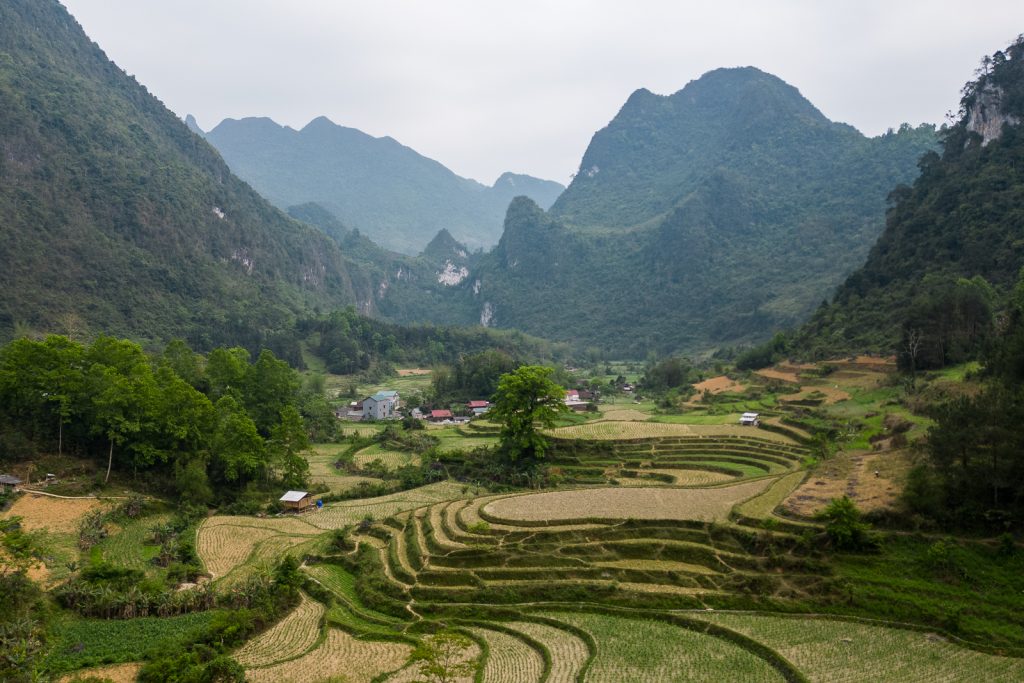
The night before we visited Ban Gioc we stayed at the Yen Nhi Homestay. The scenery here was amazing and the dining area was even in a cave! We had such a fun night here listening to traditional music and doing a traditional dance. They also had the cutest puppies!
Some other options:
Khuoi Ky Eco Homestay
Hoa Cong Homestay
Quang Tuan Homestay
Lan’s Home
Looking for more things to do in Vietnam?
- eBook: The ULTIMATE guide to visiting Vietnam
- Vietnam packing list
- The top 10+ Vietnamese foods to try in Vietnam
- The ULTIMATE guide to the Ha Giang Loop: Northern Vietnam’s BEST motorbike trip!
- 3 Days in Hanoi, Vietnam Itinerary
- 9+ AMAZING things to do in Ninh Binh! (+ 2 day itinerary)
- 13+ FUN things to do in Hoi An, Vietnam
- The BEST 3 day Ho Chi Minh City itinerary
- The ULTIMATE guide to planning a trip to Vietnam
- 20+ Vietnam tips: things to know before you go!
- Watch all of our Vietnam videos
Ready to visit Vietnam’s tallest waterfall?
Pin this guide to visiting the Ban Gioc Waterfall to help plan your trip!