Last updated on December 12th, 2025
Visiting Machu Picchu in 2026? We’re sharing a complete guide on how to visit Machu Picchu. Including the different circuits, important tips, and more!
No visit to Peru is complete without seeing Machu Picchu. Named one of the 7 New Wonders of the World, this historic Inca site is not only filled with impressive architecture, but also breathtaking scenery. Surrounding the ruins are lush, green mountains, river valleys, and a cloud forest. It’s easy to see why this is a bucket list spot for so many!
But despite being the most visited attraction in Peru, there is A LOT to know before you go. Machu Picchu isn’t a “show up and wing it” type of place. Visiting Machu Picchu requires advance planning, purchasing a variety of tickets, and making the tough choice of deciding what to see while there.
In this guide we’re sharing exactly how to visit Machu Picchu in 2026. Including a step by step breakdown of how to get there, the different circuits to choose from, and what you can (and more importantly cannot) bring.
Traveling to Peru? Check out our Peru guides:
- The 9+ BEST things to do in Aguas Calientes
- How to get to Machu Picchu (All of the options!)
- Machu Picchu Circuits in 2026: Which is the best?
- Machu Picchu’s Huayna Picchu Hike: Everything to know!
- How to hike Peru’s Salkantay Trek without a guide
- The 19+ BEST things to do in Lima, Peru
- 18 FUN things to do in Cusco, Peru
- The 12 BEST day trips from Cusco, Peru
- Our top 25 Peru travel tips & things to know
- The 13 BEST places to visit in Peru
- The Perfect 2 Weeks in Peru Itinerary for First-Timers
- The Ultimate Peru Packing List (with downloadable list!)
- Read all of our Peru travel guides
- Watch all of our Peru videos
- About Machu Picchu
- When is the best time to visit Machu Picchu?
- How to get to and from Machu Picchu
- How to buy Machu Picchu tickets
- Machu Picchu Circuits
- Which Machu Picchu circuit is the best?
- How long to spend at Machu Picchu
- Important things to know before visiting Machu Picchu
- What to bring to Machu Picchu
- What NOT to bring to Machu Picchu
- Where to stay to visit Machu Picchu
About Machu Picchu
Located in Southern Peru in the Andes Mountains, about 80 km (50 miles) northwest of Cusco lies the “Lost City of the Incas”, Machu Picchu. The Inca Empire was one of the largest empires in the history of the world, at one point stretching for thousands of miles across parts of modern day Peru, Ecuador, Columbia, and Chile.
Machu Picchu is the most famous and recognizable icon of the Inca Empire. It is believed to have been constructed around 1450 and occupied until the mid 1500s. The exact reason as to why the Inca left is unknown, but there are many theories, with epidemic or resource depletion being two of the most widely accepted ones.
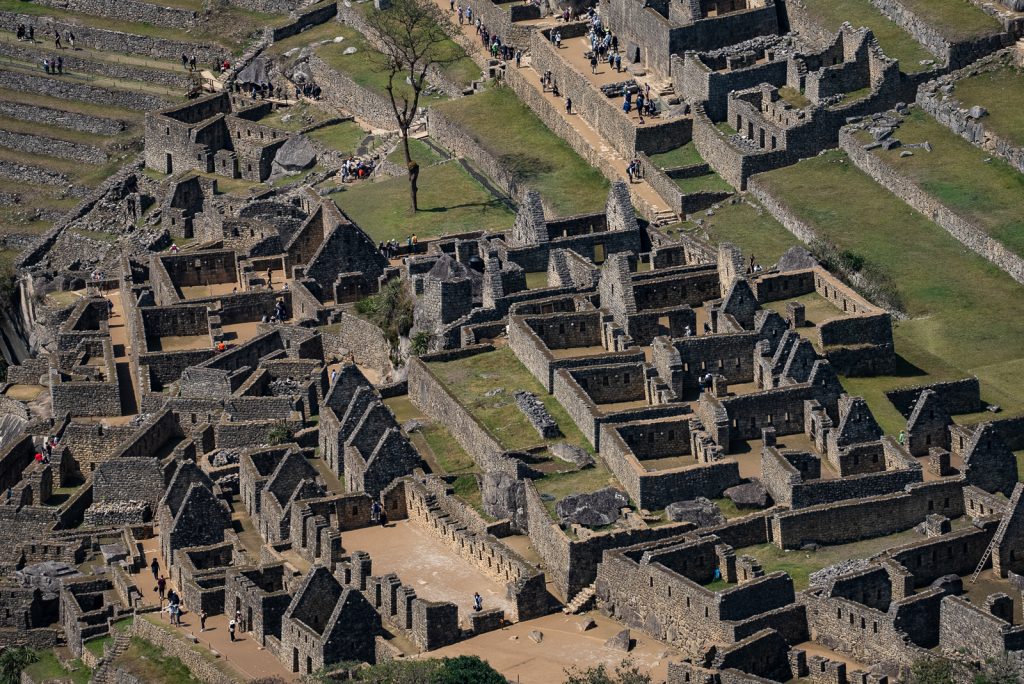
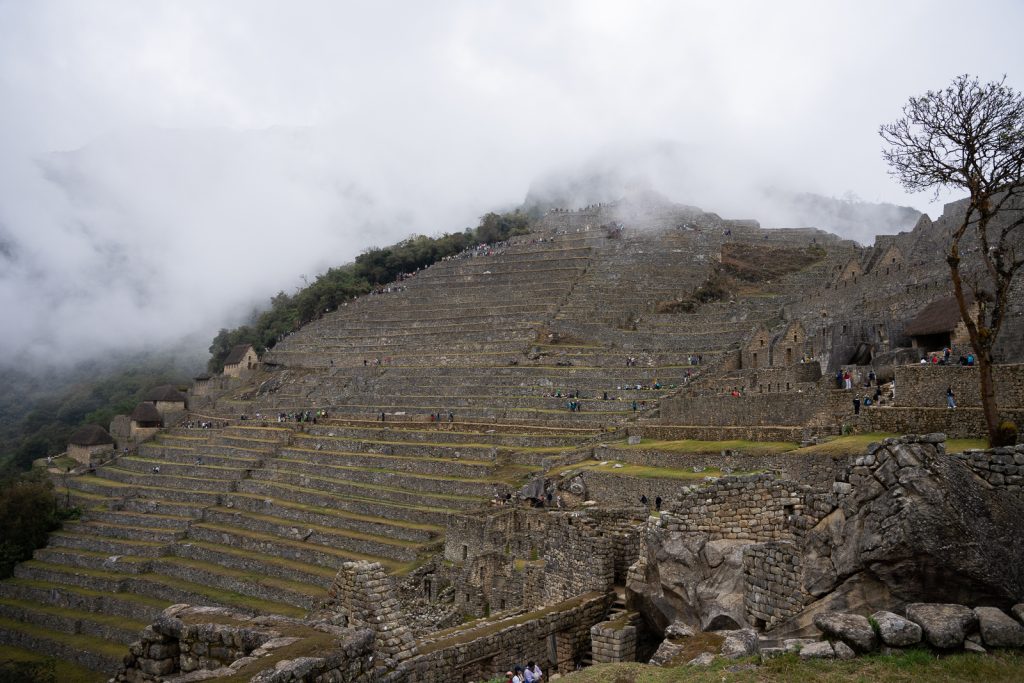
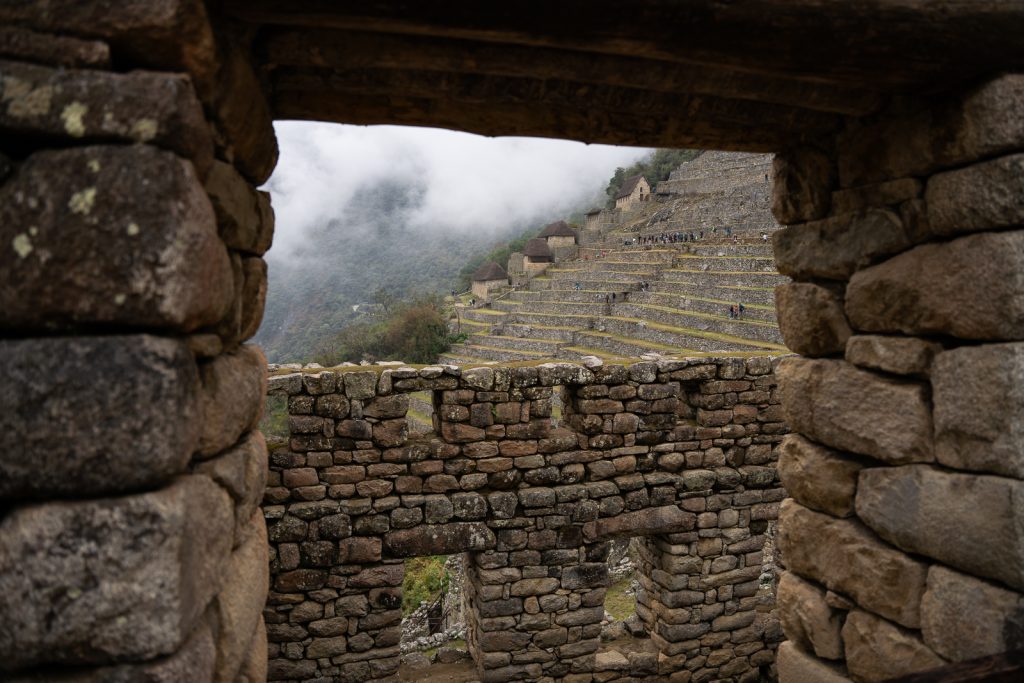
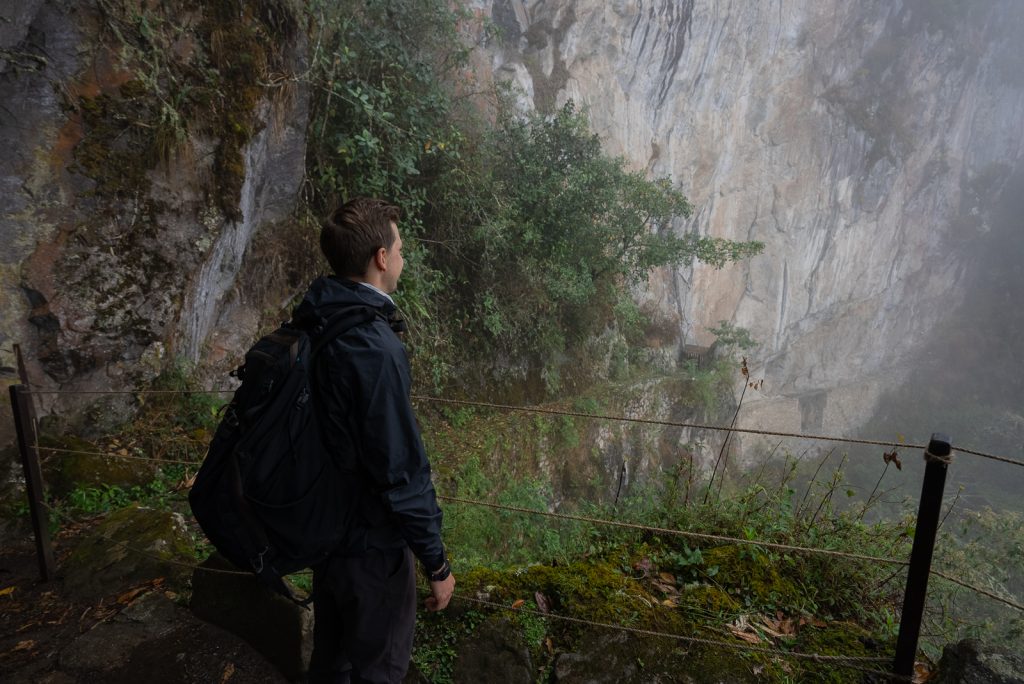
Machu Picchu was mostly unused for hundreds of years and it wasn’t until the early 1900s that Machu Picchu was “re-discovered.” Although first discovered by Agustín Lizárraga in 1902, American historian and explorer Hiram Bingham’s visit in 1911 is what brought Machu Picchu to the international stage.
In 1983, UNESCO designated the site a World Heritage Site because it is a “masterpiece of art, urbanism, architecture, and engineering.” And in 2007, it became one of the New Seven Wonders of the World.
When is the best time to visit Machu Picchu?
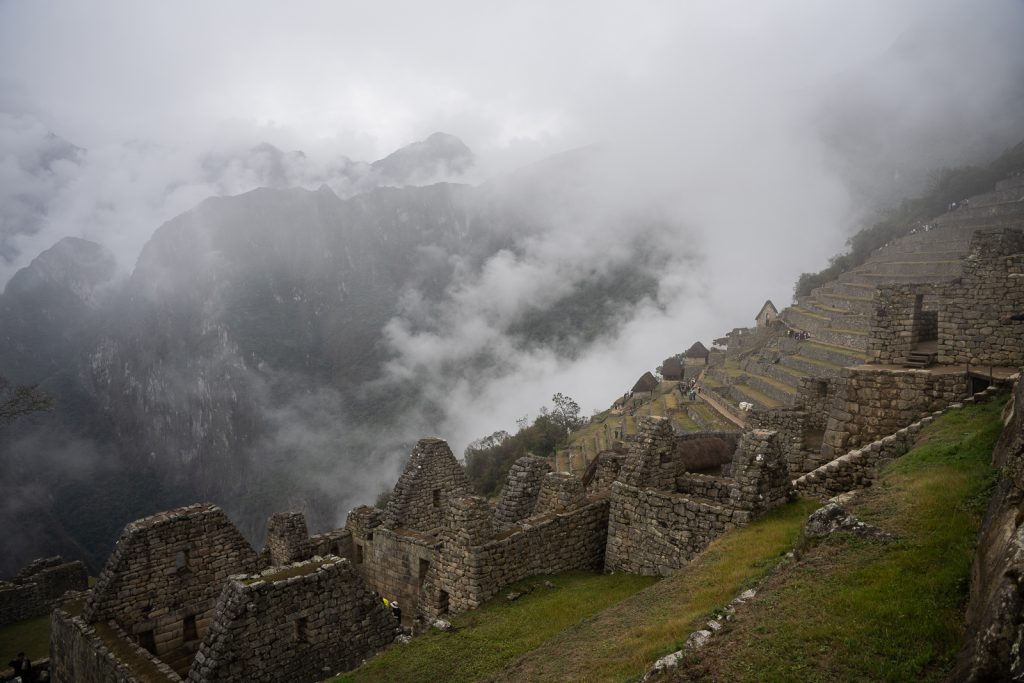
Machu Picchu is open year-round, but the best time to visit will depend on a variety of factors and what is most important to you. Here’s everything to know before making your decision of when to visit Machu Picchu!
Weather
Peru has two main seasons, a rainy season and dry season. The rainy season is typically from November through March, while the dry season is April through October.
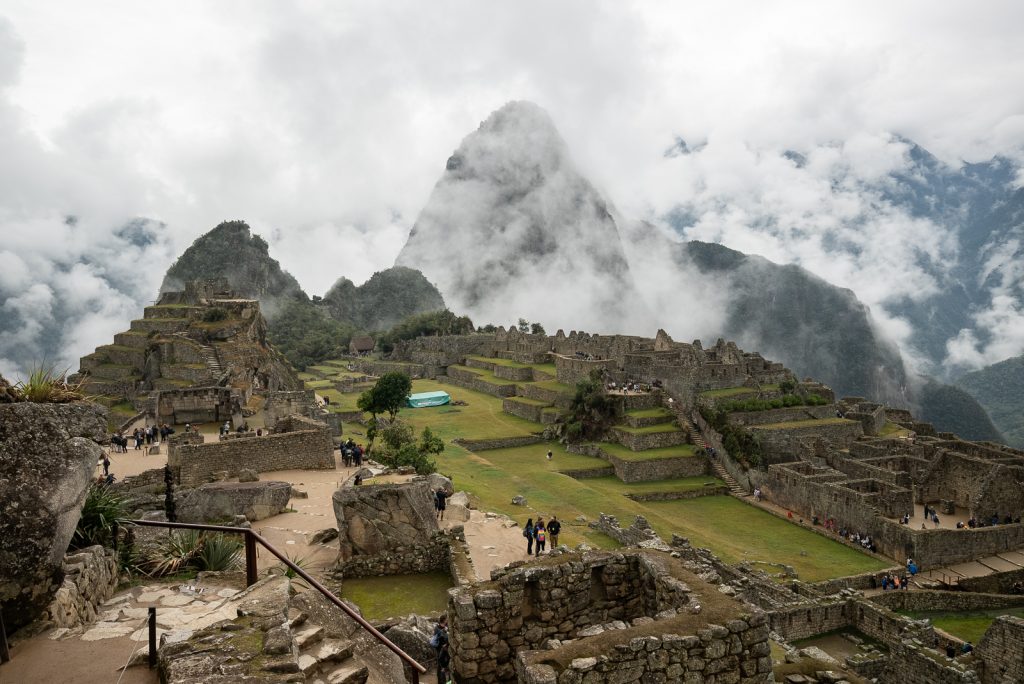
With Machu Picchu being located in a cloud forest, the rainy season can bring lots of fog and rain to the area. While this can add a mystical vibe to Machu Picchu, it is very common for the ruins to be engulfed in fog.
The dry season brings pleasant temperatures and sunny days, but the downside of this timeframe is that it is more crowded. While Machu Picchu does limit how many people can enter per day, you will have more competition to get the best circuits in the dry season.
So if the views are your top priority, make sure to visit in the dry season. However, the weather in the Andes Mountains can be very unpredictable and no matter how much planning you do, the weather always has its own mind. Even when we visited in late September, we still had fog and rain. This is why we recommend spending two days at the ruins if you can, as it ups your chances for good weather.
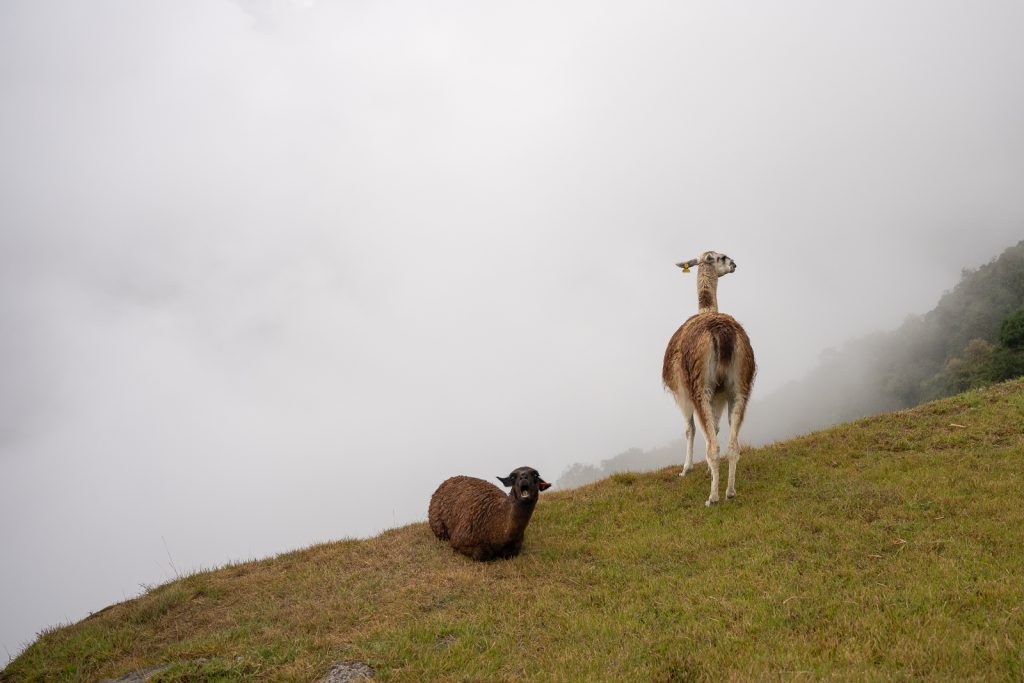
Crowd levels
As we mentioned, the dry season brings the most crowds, with the busiest months at Machu Picchu being June, July, and August. For the perfect mix of good weather and less crowds, the shoulder months of April, May, September, and October are, in our opinion, the best time to visit Machu Picchu.
Trekking to Machu Picchu
If you plan to trek to Machu Picchu on one of the three main routes (which we will discuss below!), we would suggest avoiding January and February. In fact, the famous Inca Trail is closed in February due to rain. The best months to trek are between April-October.
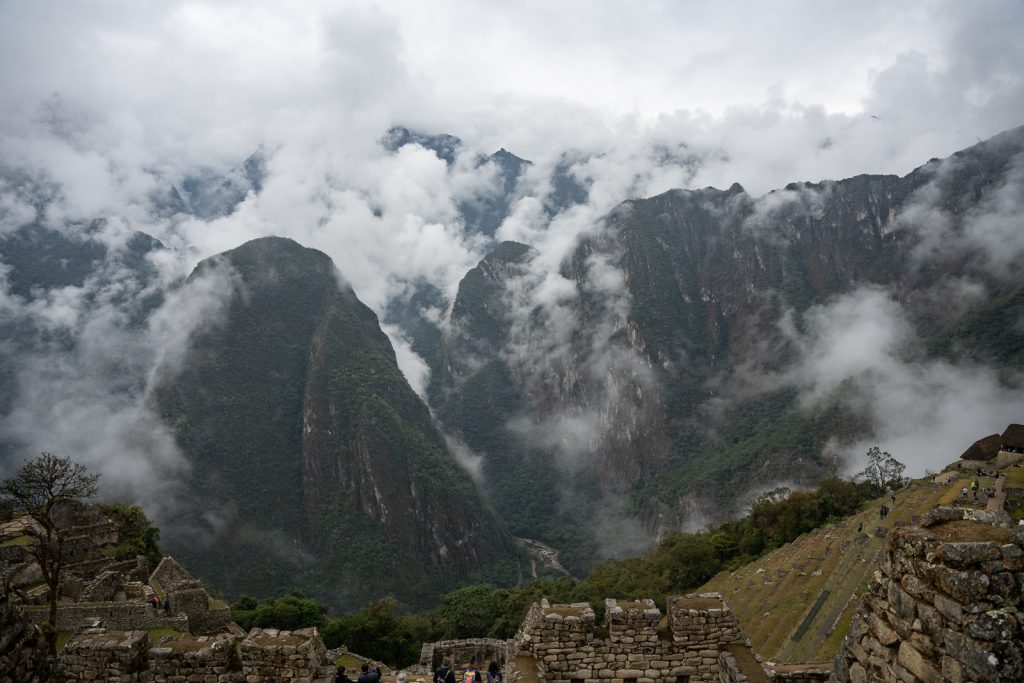
What time of day to visit
Beyond deciding the exact month and day to visit, you will also need to pick a time for your tickets. We are always big proponents of going as early as possible to beat crowds. However, at Machu Picchu there is one big drawback to this… the morning is usually the cloudiest. So if you want to give yourself the best chance for clearer weather, go a bit later in the morning.
How to get to and from Machu Picchu
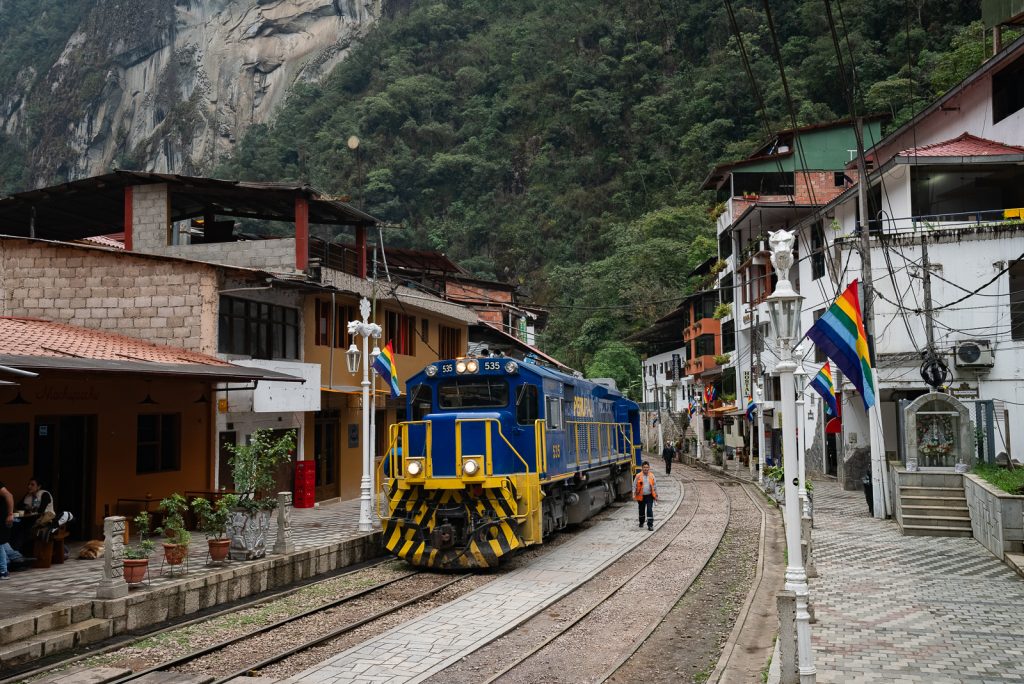
Aguas Calientes, the town below Machu Picchu, is the main staging point for visiting the Inca citadel. Even though it’s a major tourist destination, there are no roads to Aguas Calientes. So getting there isn’t as straightforward as just hopping in a car and arriving. But since this is the most popular tourist site in all of Peru, there are several options to get there!
Step 1: Arrive in Cusco
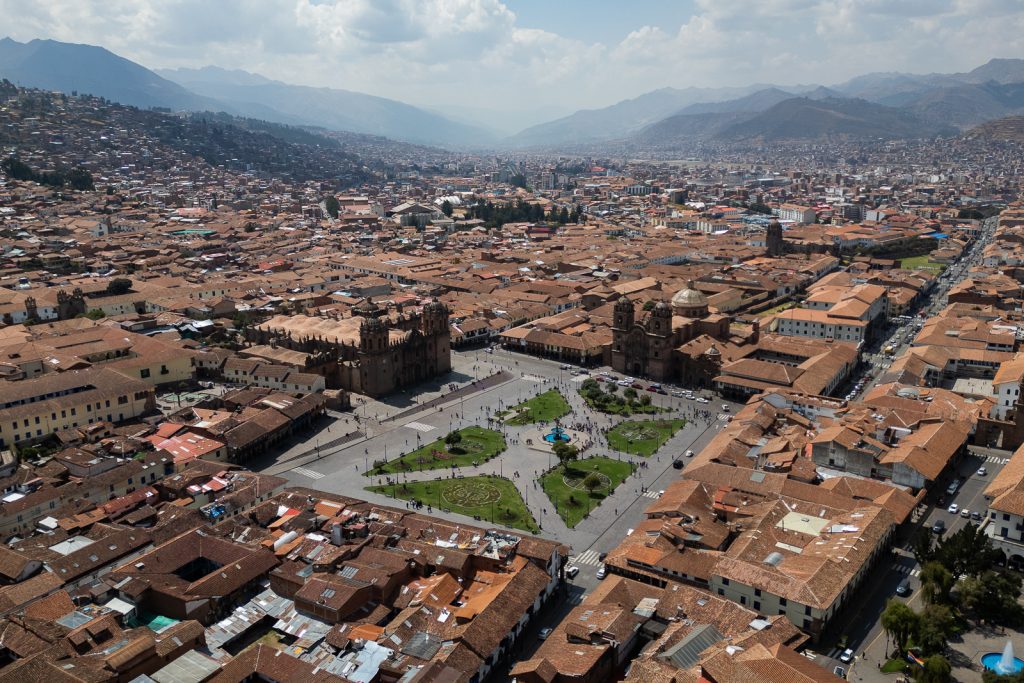
First, you’ll need to get to Cusco, which you can do by bus or plane. It’s a short plane ride from Lima, Arequipa, and other popular cities in Peru. While a bus ride can be upwards of 20+ hours! Since airfare within Peru is affordable, we’d suggest taking a plane to Cusco. But if you’re really on a budget, Cruz del Sur is a good tourist bus option.
Step 2: Cusco to Aguas Calientes
Once you arrive in Cusco, the next step is to get to Aguas Calientes. You can get here by train, trekking, or have a tour group coordinate the logistics for you.
Option #1: Take the train
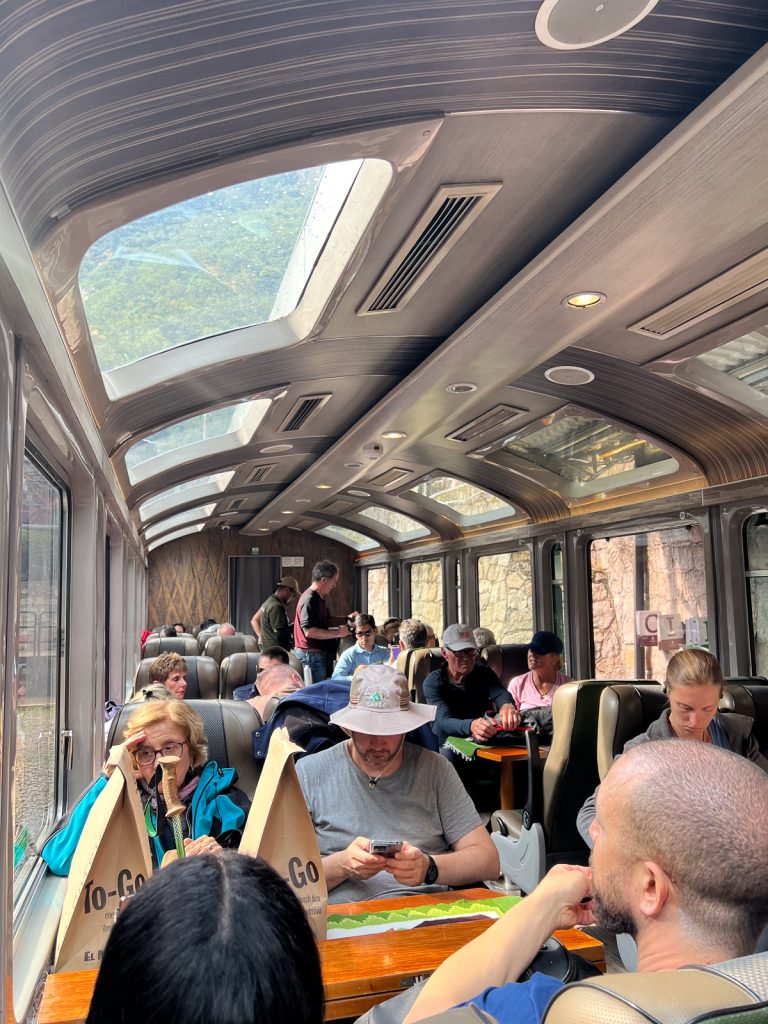
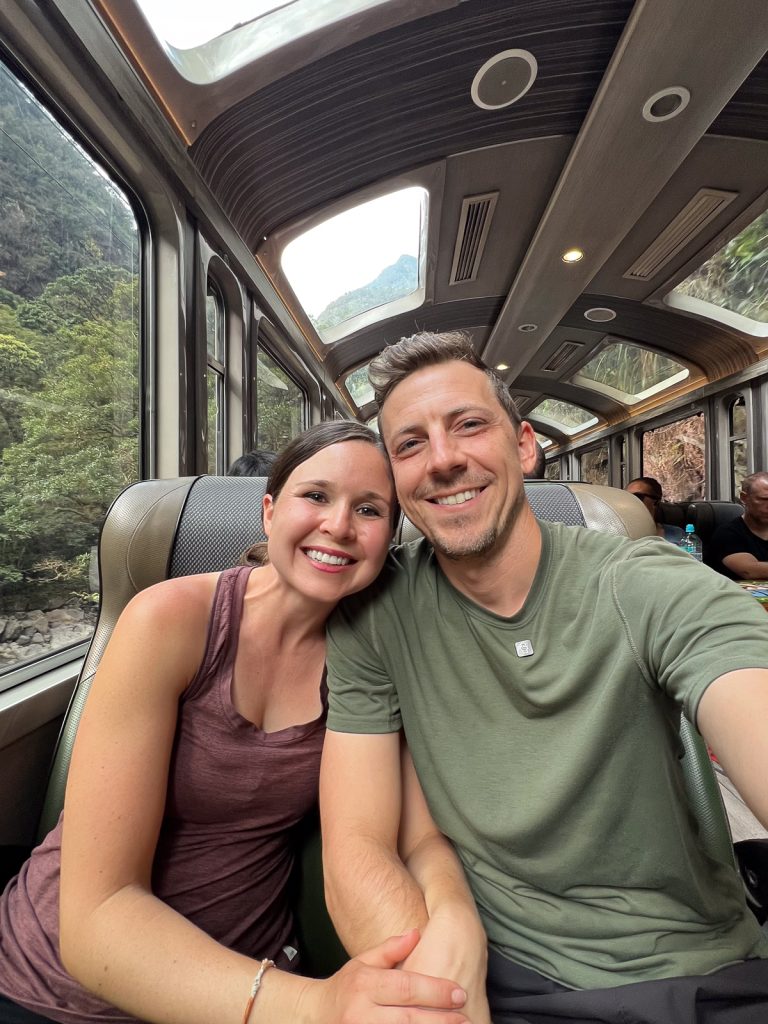
Since there are no roads to Aguas Calientes, the only way to arrive, unless you hike, is by train. There are two options: PeruRail and Inca Rail. Both trains offer multiple departures per day and a few different seating options for different budgets.
However, one very important thing to know about the train is that only PeruRail has a train that goes to and from Cusco. And there are only a couple departures. All others (including all Inca Rail rides) are bimodal services, which means you will take a train for the bulk of the ride, but have to switch to a bus for a small portion close to Cusco. This bus is run by the train company, so it is very straightforward.
During our visit to Machu Picchu, we trekked to Aguas Calientes (more on that in a second) and then took the train back. We went with PeruRail and took their Vistadome car, which has large windows both on the sides and ceiling, giving you amazing views along the way. On the way to Aguas Calientes, make sure to choose the left side of the train for the best views!
Option #2: Trek to Machu Picchu
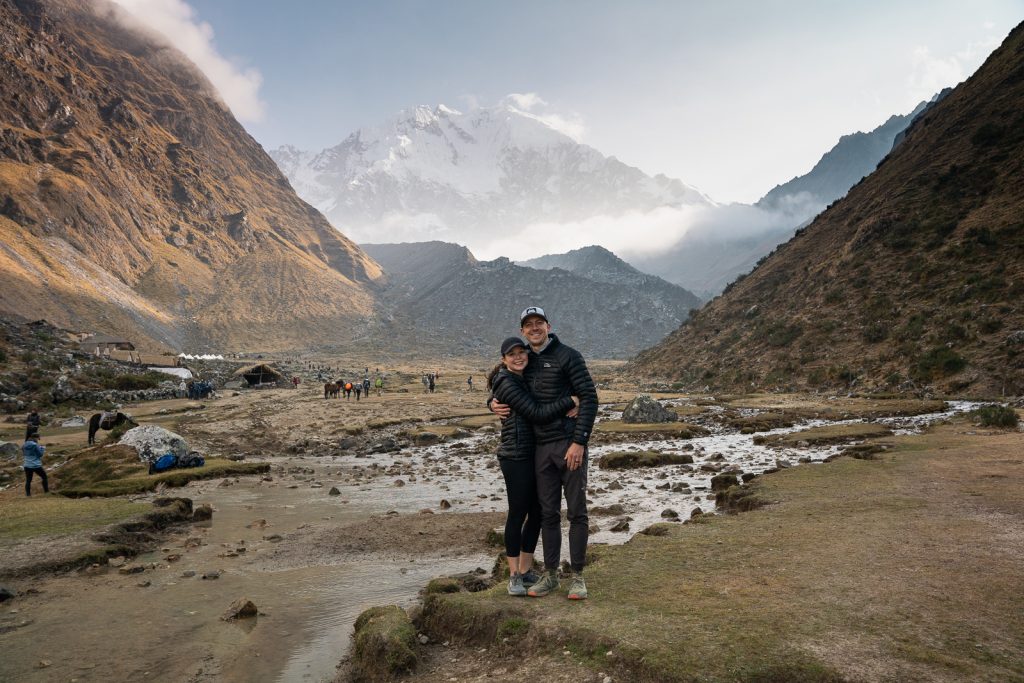
The most epic way to get to Machu Picchu is to trek there! There are several trails to trek to get to Machu Picchu, but the three most popular are the historic and famous Inca Trail, the popular Salkantay Trek, and the lesser known Lares Trek.
These treks all have different starting points, but if you go with a tour company, they will coordinate your transportation from Cusco to the start. They also have different ending points and only the Inca Trail actually ends IN Machu Picchu. The others will require taking a train or walking to Aguas Calientes and then the bus to Machu Picchu itself.
During our visit, we hiked the Salkantay Trek, which takes you through epic mountains with glaciers and a bright blue lake, down into a river valley, past coffee farms, and into the jungle. The scenery is very diverse! We opted to do this trek without a guide, which not only saved us money, but also gave us the chance to hike at our own pace. You can learn everything you need to know to hike the Salkantay Trek unguided in this guide! And if you want to learn more about each of these hikes, we share them in a bit more detail in our guide on how to get to Machu Picchu.
Important to know: The Inca Trail requires you to have a guide and there are limited spots per day for hikers. So make sure to book this in advance!
Option #3: Book a tour
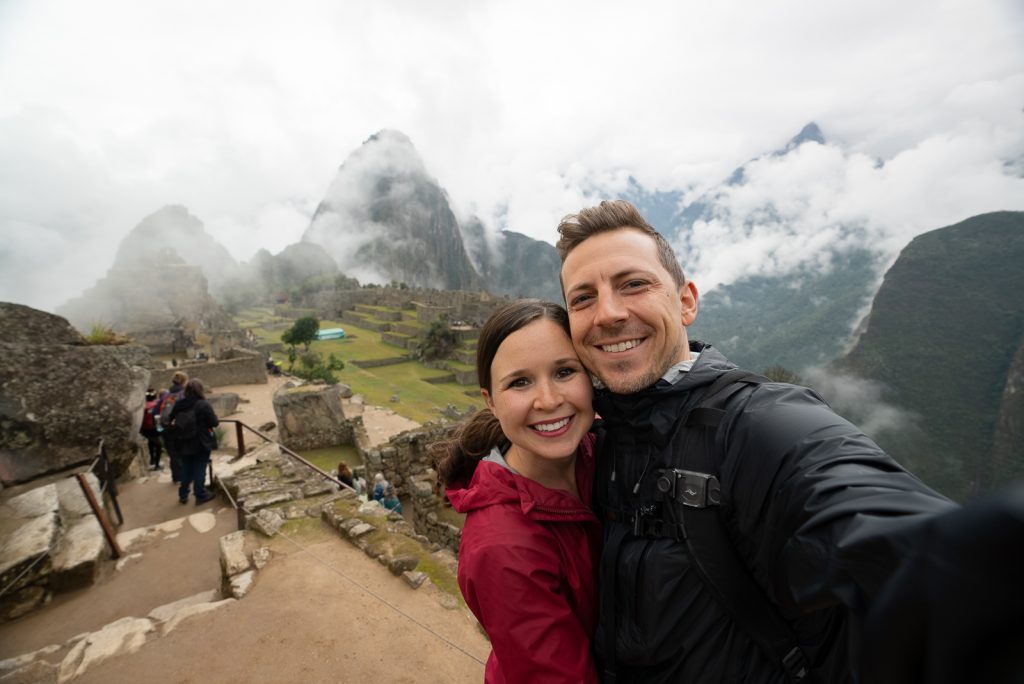
Another way to get to Machu Picchu is through a non-trekking tour. By booking a tour, you have all of the travel logistics, lodging, train and bus tickets, and some meals taken care of. You can do a one day tour, but it makes for a very long day trip from Cusco. Instead, we would suggest doing a two day tour, which will include other sites in the Sacred Valley and feel less rushed.
Want to save some money on this tour or experience? Join Tripadvisor Rewards to earn 5% Trip Cash on any hotel or experience booking made in their app, which can be applied to future in-app bookings!
Step 3: Getting from Aguas Calientes to Machu Picchu
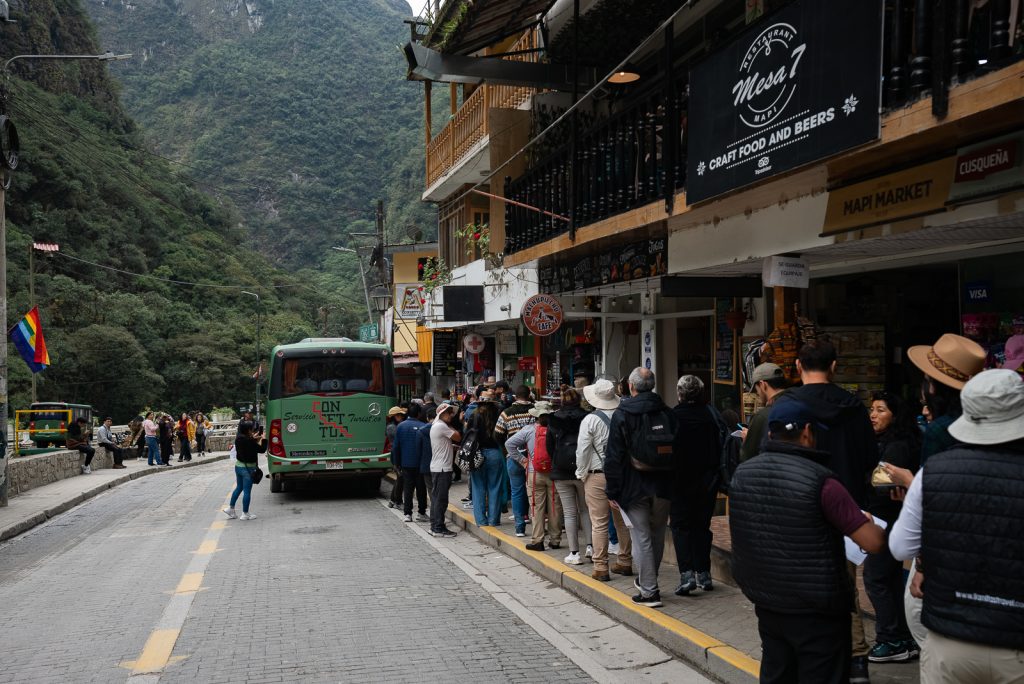
Once in Aguas Calientes, you still have to get to Machu Picchu itself. There are two options to do this: a bus or walking.
Option #1: Bus from Aguas Calientes to Machu Picchu
Taking the bus is by far the most popular option to get to Machu Picchu from Aguas Calientes. The bus runs continuously from 5:30 AM to 3:30 PM and it takes about 30 minutes one way on a windy, steep road.
You can purchase your bus tickets in advance online or once arriving in Aguas Calientes. Both round trip ($24 USD) and one way tickets ($12 USD) are available.
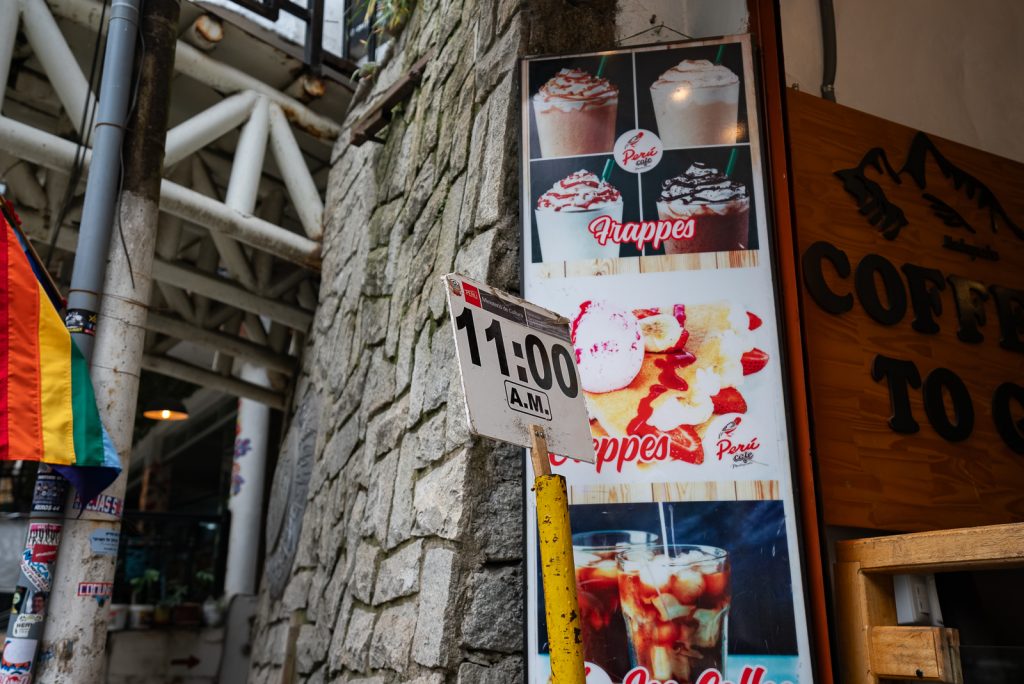
The bus tickets are not for a specific time, but once arriving at the bus stop, you will line up under a sign that corresponds with your Machu Picchu entrance time. We recommend getting in line at least 30 minutes before your departure time, as the lines get long. It does move quickly though!
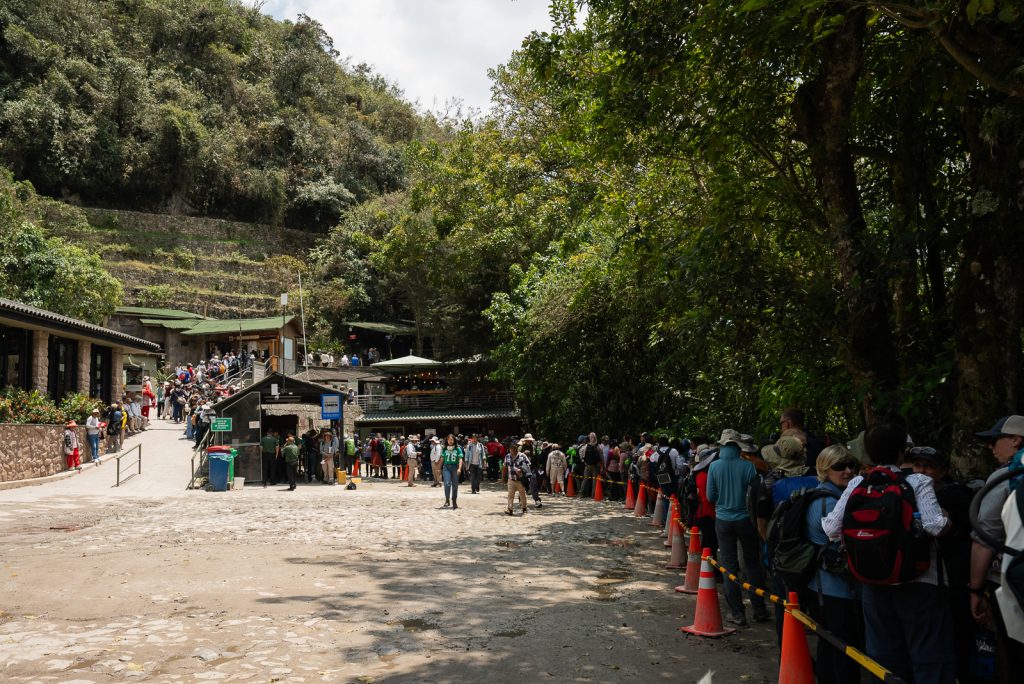
When you’re ready to leave Machu Picchu, you’ll get on the bus at the same area you got off, which is right in front of the entrance booths. However, the line can take a while. The first day we visited, the line was quick. But the second day, we waited in line for about an hour and there wasn’t much shade.
So if you’re taking the train back to Cusco right after visiting Machu Picchu, give yourself plenty of time to get back into town to not risk missing your train. Have extra time in Aguas Calientes? Check out the best things to do (and places to eat) in Aguas Calientes!
Option #2: Walk from Aguas Calientes to Machu Picchu
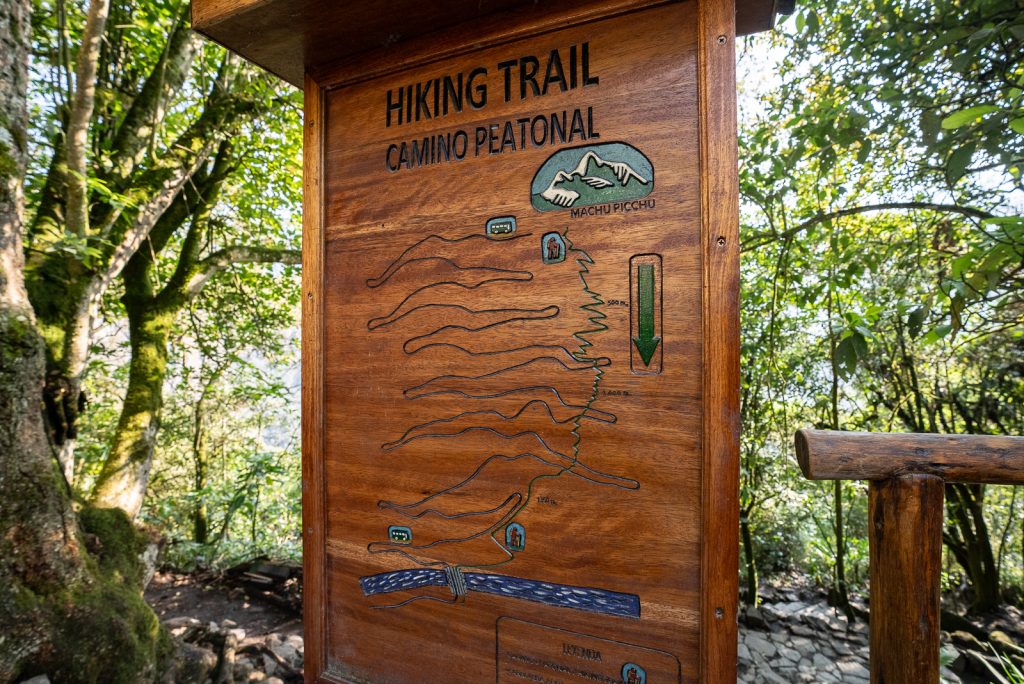
Another option to visit Machu Picchu is to walk from Aguas Calientes. You’ll start in town and walk along the dirt road to the beginning of the trail. Right at the river, you will come across a checkpoint where they will check your Machu Picchu entrance tickets and your passport.
The trail is 2.2 miles one way with over 1,700 feet of gain. It’s pretty steep, so you’ll be pretty sweaty and exhausted once you get up to Machu Picchu, but it is the cheapest option.
If you really want to walk and save some money, we’d recommend taking the bus up and walking down.
Step 4: Returning to Cusco
Regardless of how you go to Aguas Calientes and Machu Picchu, you will return to Cusco via the train. This is the only way to get back, as there are no roads that lead to Aguas Calientes.
Just like we mentioned above, most trains to Cusco are a bimodal service, which means you will likely take a train most of the way and then a bus for the final stretch. So keep this in mind when booking your tickets!
Also, if you trekked to Machu Picchu and this is your first time taking the train, we suggest booking a mid-afternoon train ride back, so you can enjoy the views for most of the way. When we visited, it got dark around 6 PM, so we took a 3:20 PM train. The right side of the train is also the best side for scenery on the ride back!
How to buy Machu Picchu tickets
One of the most important things to know about visiting Machu Picchu is that you must buy tickets in advance. While there is an option for last minute tickets, if you want the most choices for what you can experience, you will need to plan ahead.
Where to buy Machu Picchu tickets

To get your Machu Picchu ticket, head to https://tuboleto.cultura.pe/. This is the official website for tickets, so only use this website. While the website is in Spanish, if you have a Google Translate extension on your browser, it will translate the page for you.
In order to reduce crowds, Machu Picchu is organized into 3 different circuits, with 10 total route options. When buying your tickets, you will be required to choose a circuit and route. And once inside, you are ONLY allowed to follow your designated circuit. We will cover these circuits and routes in more detail below, plus share our top picks.
For the best chances of getting your ideal circuit(s) and timeslot, make sure to buy your tickets in advance. We suggest buying your tickets 3-4 months in advance! However, if you’re visiting early in the year, tickets for the next year do not go on sale until December or January.
Do Machu Picchu tickets sell out?
They can! During the peak months of July and August, tickets can sell out. But even during the less busy months, popular circuits can sell out as well.
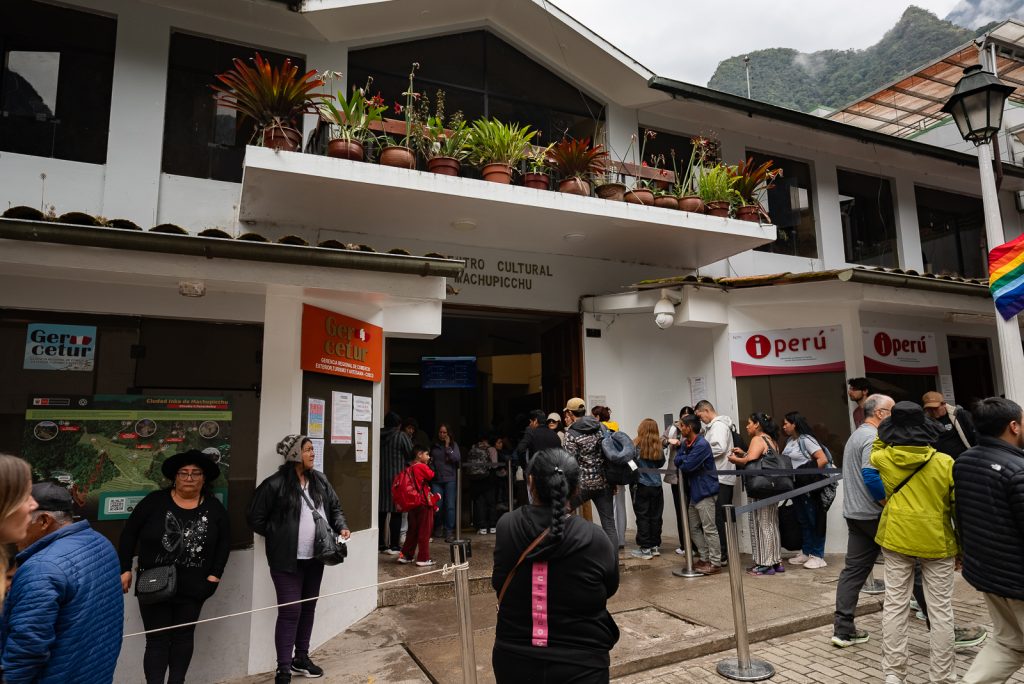
However, if the tickets for the circuit you want are sold out, you do have one other option and that is to get tickets at the Ministry of Culture office in Aguas Calientes the day before.
How this works is you will need to arrive very early in the morning on the day before you want to visit Machu Picchu. We hear that people line up sometimes as early as 3-4 AM to get in line. Alternatively, you can arrive the afternoon before this (so two days before your Machu Picchu visit), to pre-register and get into a faster line the next morning. Once in line in the morning, you will get a number and time to return and then at that time, you will get to choose from whatever tickets are left.
This method only works if you’re in Aguas Calientes a day early and have a lot of flexibility in what time and circuit you do. To us, it sounds like a huge hassle, so to avoid this, buy your tickets online in advance!
How much do Machu Picchu tickets cost?
The cost of Machu Picchu tickets depends on the circuit you choose, as well as if you’re a foreigner, local, or Peruvian resident. Plus your age! The cheapest option for adults is Circuit 1 or 2, which is S/152 or $40 USD. While the most expensive are the two big mountain hikes (Machu Picchu Mountain and Waynapicchu), which are S/200 or $53 USD.
Machu Picchu Circuits
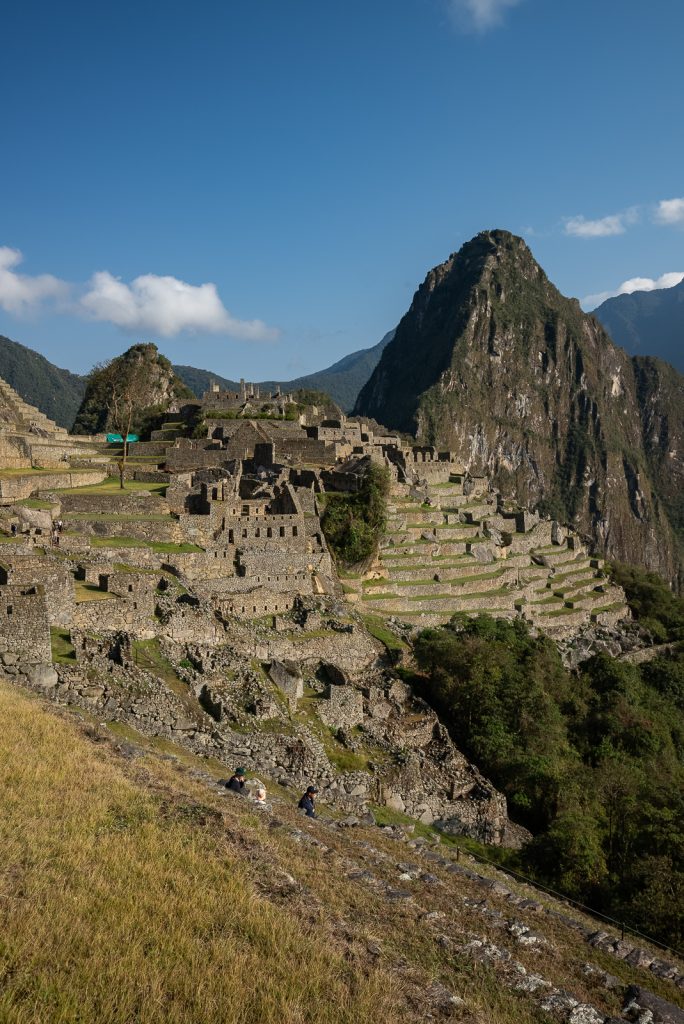
As we mentioned above, Machu Picchu is broken out into 3 circuits, with a total of 10 routes. You are required to stay on your designated circuit and route during your visit. However, you can choose multiple circuits, but will have to exit and re-enter.
Choosing your circuit and route is one of the most difficult parts of visiting Machu Picchu! There is no circuit that visits everything in the ruins, so you will have to decide what areas are the most important for you to see. Below is a rundown of all of the circuit and route options!
Circuit 1 (Panoramic Circuit)
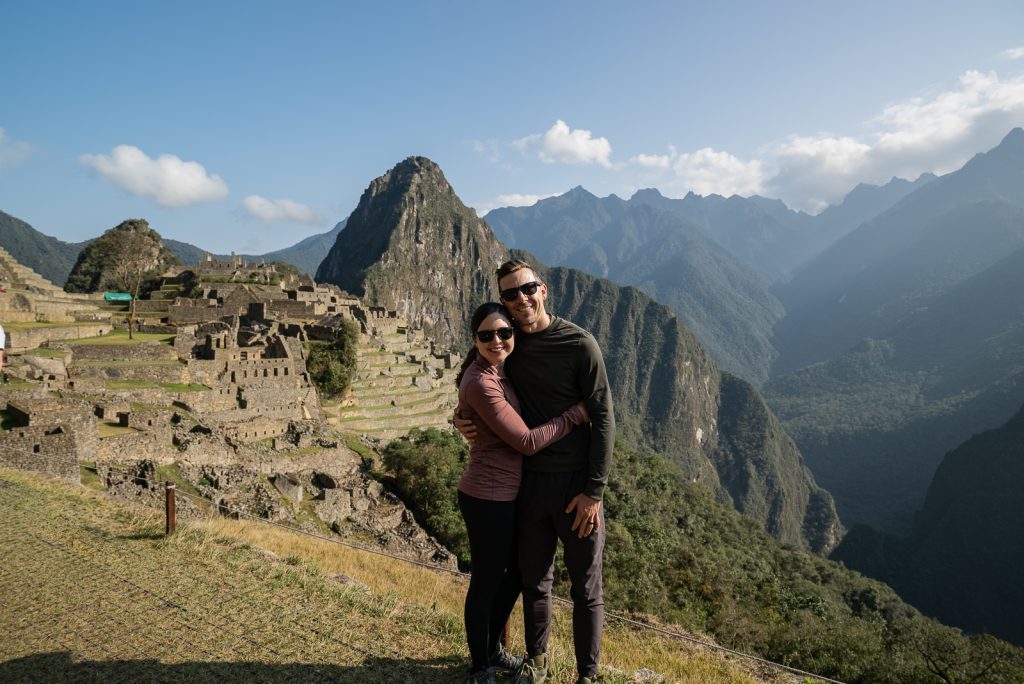
Circuit 1, known as the Panoramic Circuit, is a popular choice because it includes a visit to the classic postcard spot of Machu Picchu from the Guardian’s House. This circuit does not take you into the ruins, it mainly only provides higher up views of the complex from near the Guardian’s House.
There are 4 options to choose from in this circuit, which take you to different popular sites on this side of the site.
Route 1-A: Machu Picchu Mountain Route
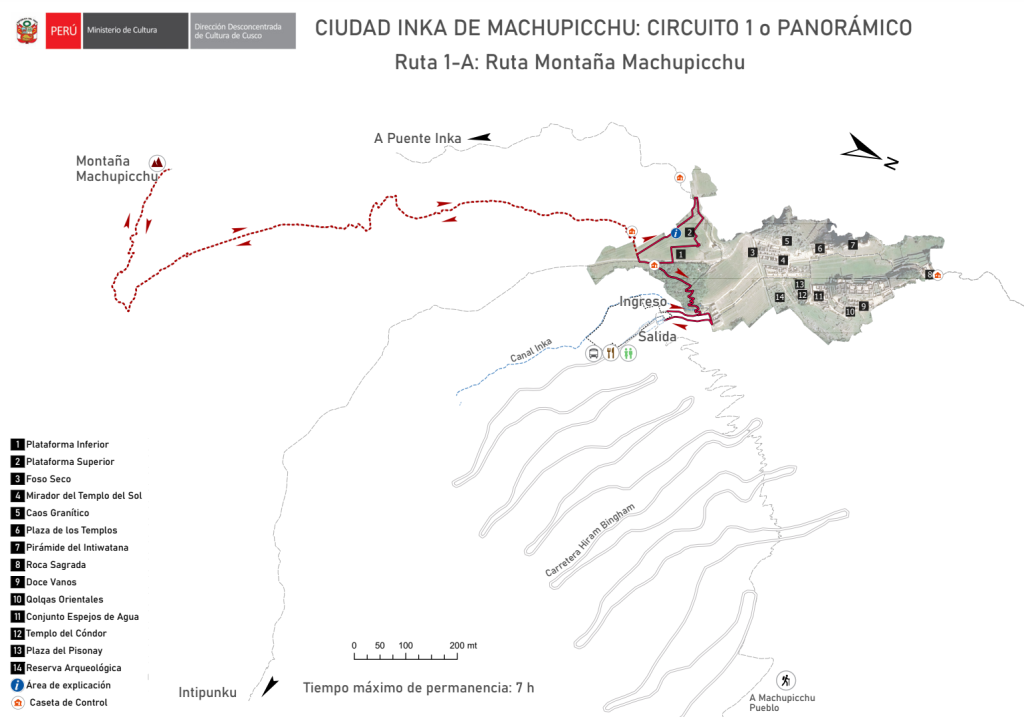
Machu Picchu is home to three different mountain peaks you can hike. And this route not only takes you to the upper platforms for the classic photo, but also up Machu Picchu Mountain. This is the highest point of the Inca city and offers sweeping views of the ruins and surrounding area!
However, it’s pretty tough! The hike to the top of Machu Picchu Mountain is over 3.2 km (2 miles) round trip with almost 610 meters (2,000 feet) of elevation gain.
Access to this hike is limited to 400 visitors per day and the hike entry windows are 7 AM and 9 AM, but you can enter Machu Picchu one hour before this to visit the upper platform.
Route 1-B: Upper Terrace Route
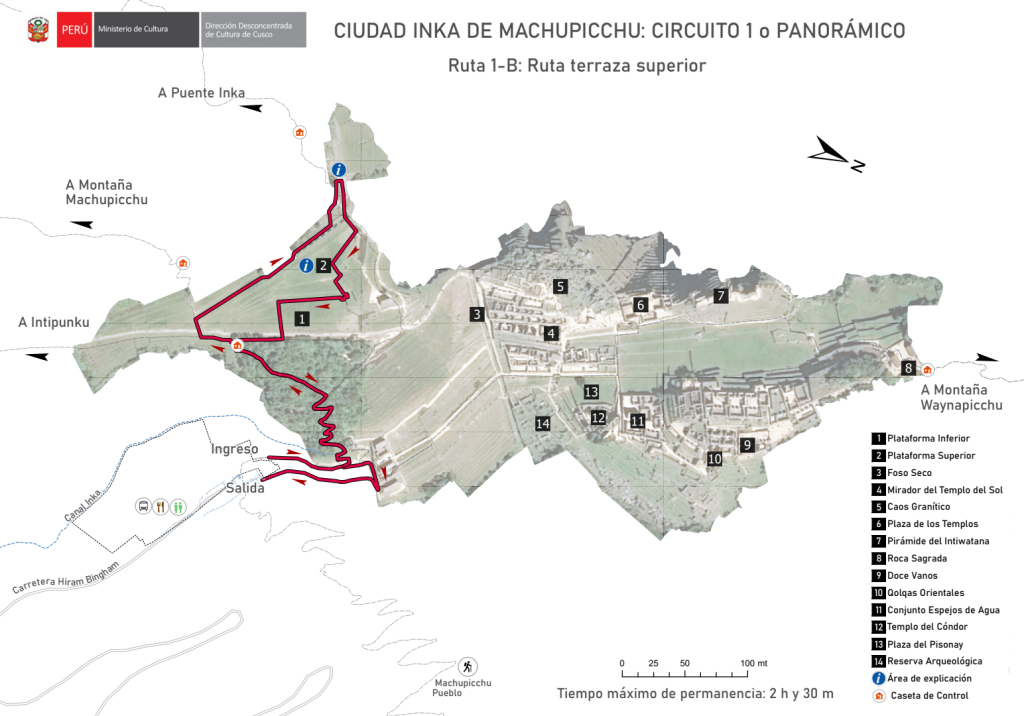
The Upper Terrace Route is the most basic route within Circuit 1. It only includes the upper terrace viewpoint, which is where the most iconic photos are taken from. From here you’ll be able to see popular landmarks, like the Temple of the Sun, the Sacred Plaza, and more, but you won’t be able to visit them.
Our thoughts? If getting the classic Machu Picchu photo is your top priority, this is a good choice. But only if you combine it with another circuit that takes you down into the ruins. Otherwise, you’re missing out on a lot.
Route 1-C: Intipunku Gateway Route
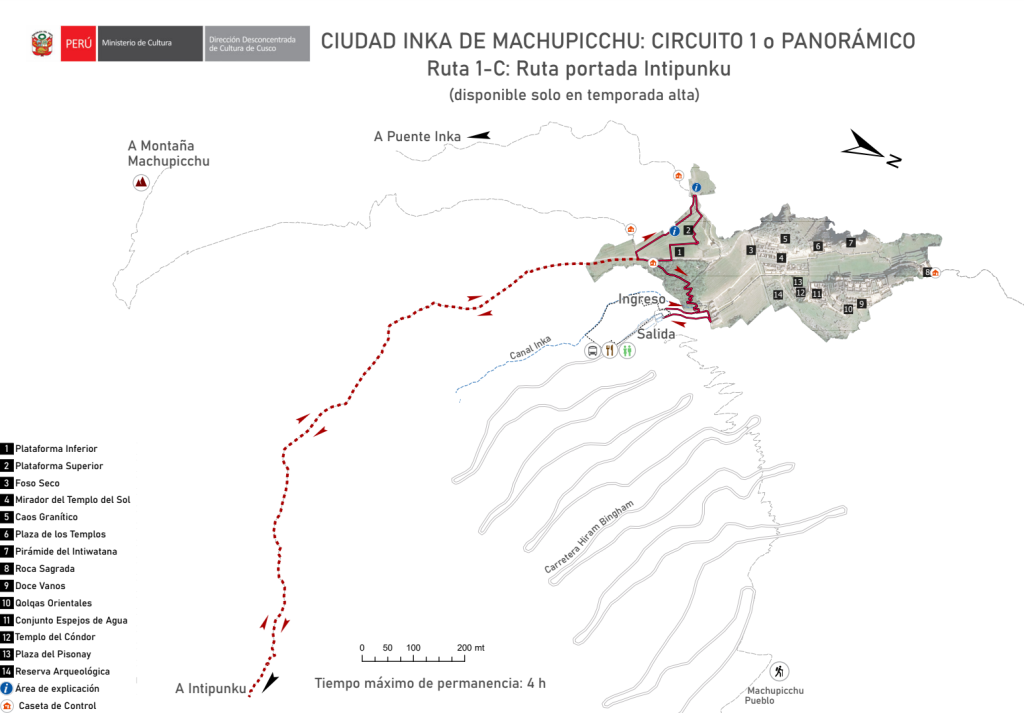
The third option within Circuit 1 takes you to the Intipunku or Sun Gate, which was the original entrance to Machu Picchu in the Inca era. It’s a 3.5 km (2.2 mile) round trip hike and takes about 2 hours.
Note: This route is only available in the high season, from June 1 to October 15, plus December 30 and 31. And you can only enter at 8, 9, 10, or 11 AM.
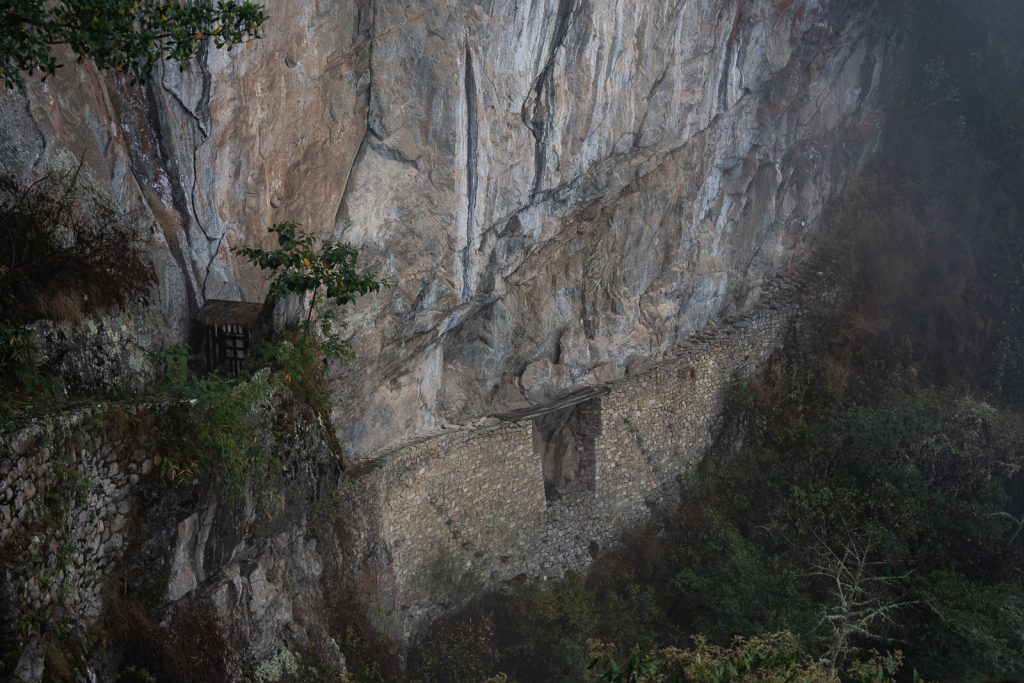
Route 1-D: Inka Bridge Route
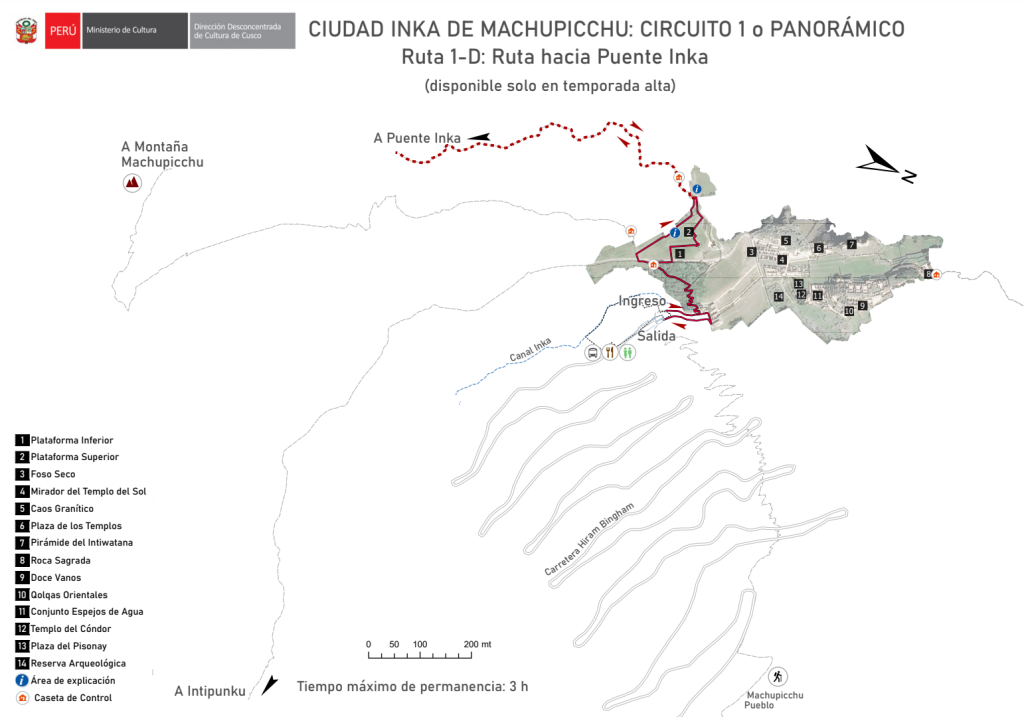
Lastly, Route 1-D takes you to a viewpoint of the Inka Bridge. This bridge was a defensive position for the Inca and from the viewpoint you have spectacular views of mountains in the distance. It’s important to know that you cannot walk on the bridge, you just view it from afar.
Note: This route is only available in the high season, from June 1 to October 15, plus December 30 and 31.
Circuit 2 (Classic Circuit)
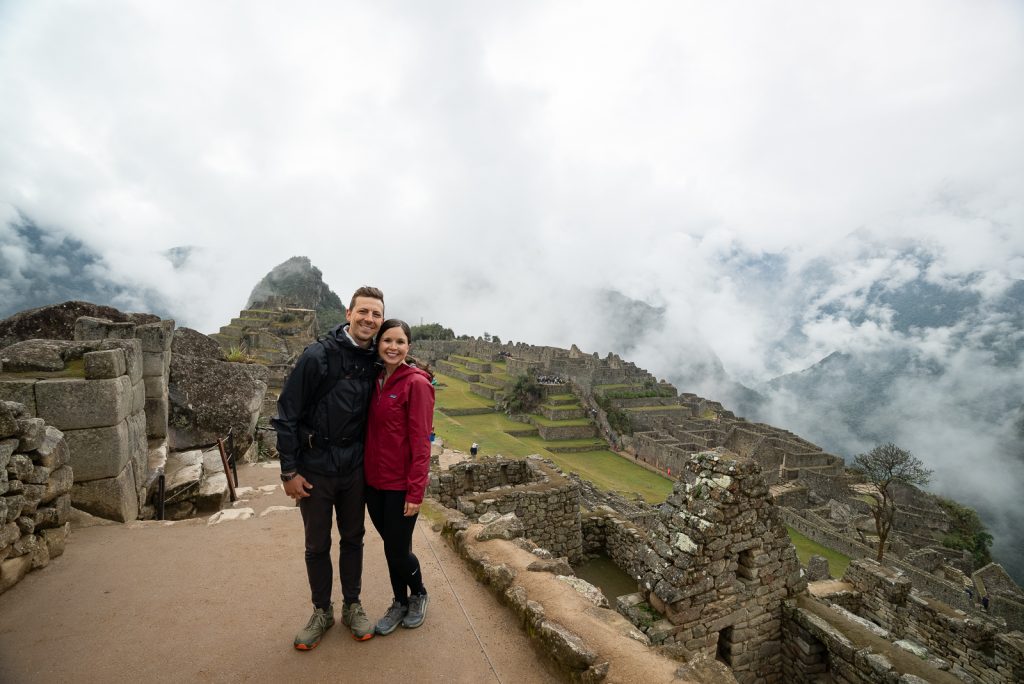
Circuit 2 is referred to as the Classic Circuit. With this ticket, you’ll still get the classic postcard view, just from a little bit lower. But what makes this circuit even better than Circuit 1 is that you’ll actually get to walk through the ruins! While you don’t get to visit all areas of the ruins, you will get to visit the perimeter of the lower terrace.
There are two routes within this circuit and they are almost identical.
Route 2-A: Classic Designed Route
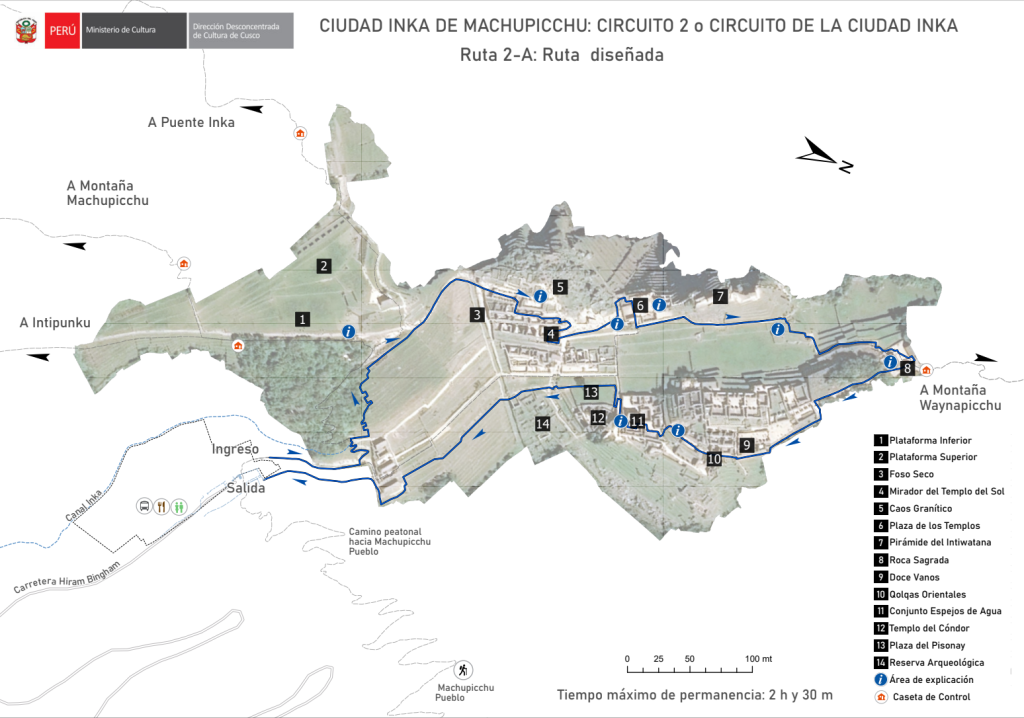
The Classic Route takes you through the urban and religious areas of the ruins. Along the way you’ll see the Temple of the Sun, Main Temple, Temple of the Condor, and more.
Route 2-B: Lower Terrace Route
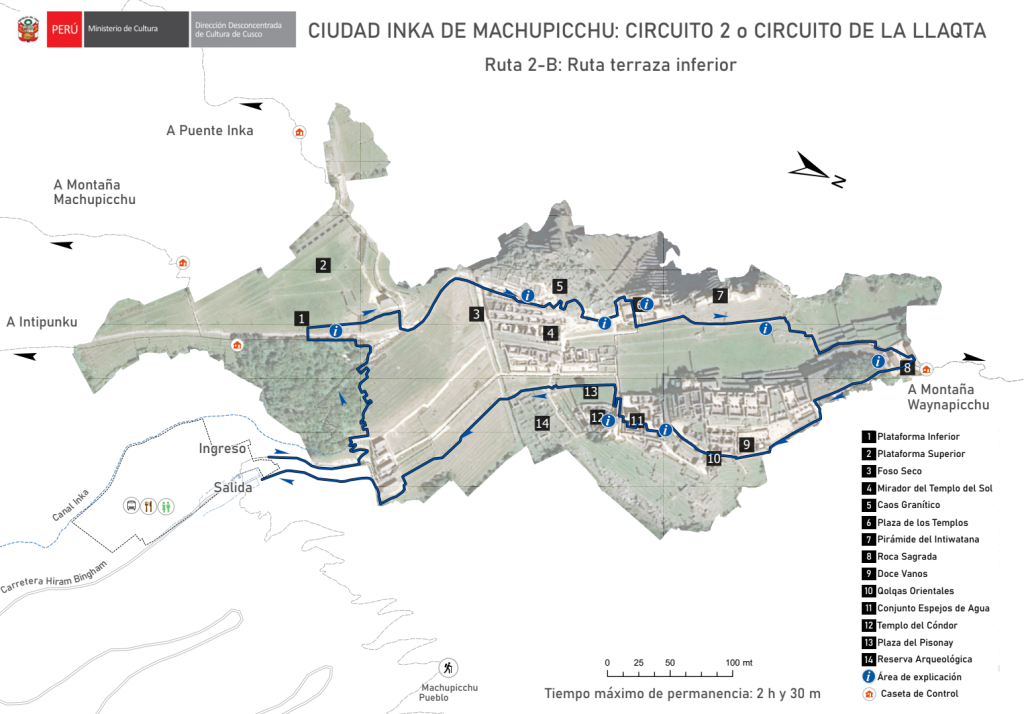
The Lower Terrace Route is very similar to the Classic Route, but gives you an additional viewpoint slightly higher.
Circuit 3 (Royalty Circuit)
The final circuit is known as the Royalty Circuit and walks you through the royal buildings of Machu Picchu. On this circuit, you will explore the bottom part of the lower region of Machu Picchu. It overlaps a tiny bit with Circuit 2, but takes you more within the lower ruins. And while it does not include the “iconic” view, after experiencing this circuit ourselves we can confirm that you still have an amazing view of Machu Picchu, just from lower down.
Route 3-A: Wayna Picchu Mountain Route
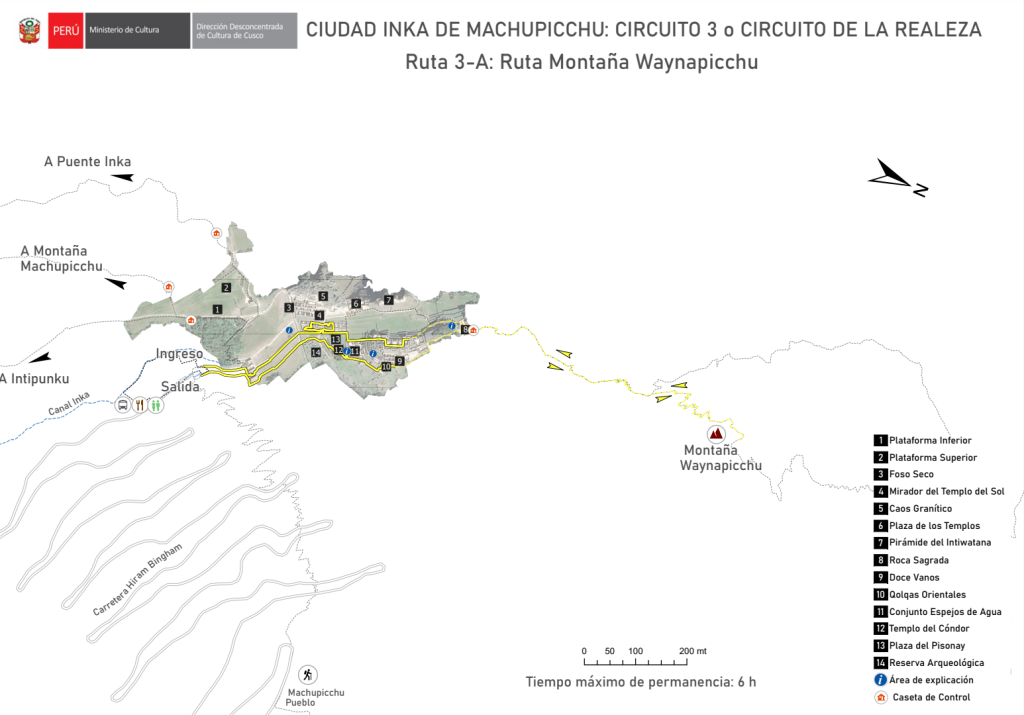
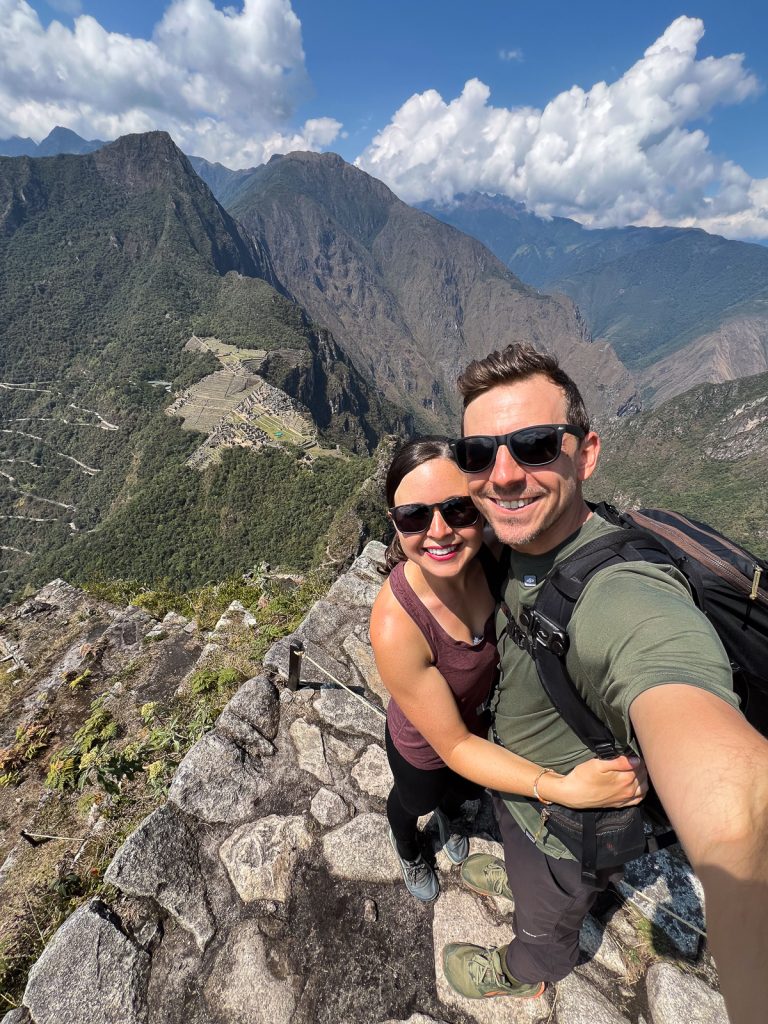
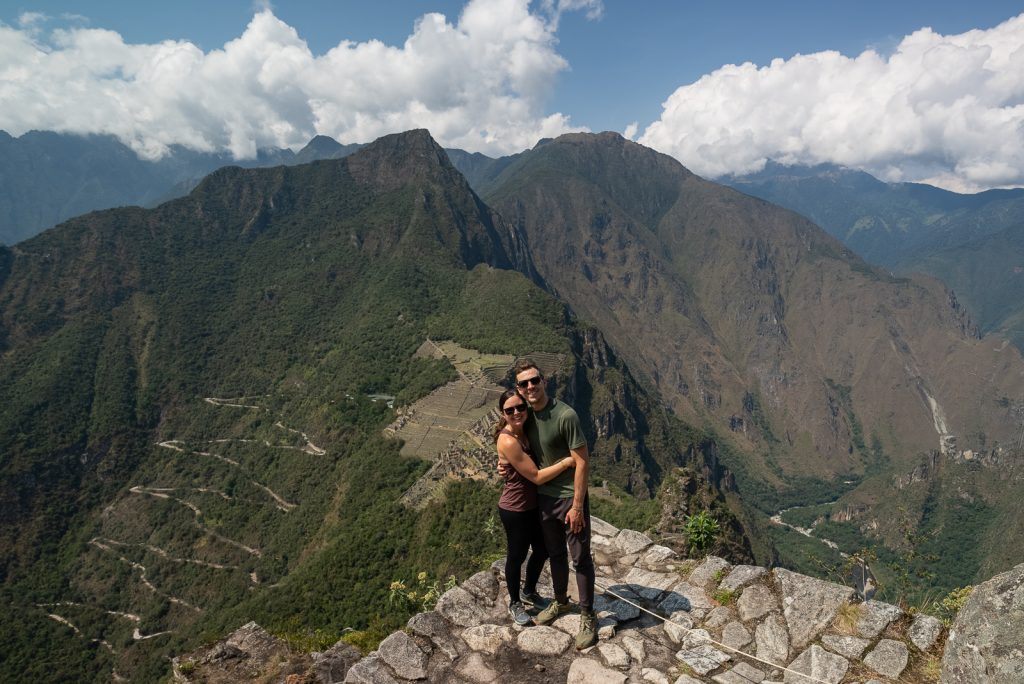
Another epic mountain to hike at Machu Picchu is Wayna Picchu, also spelled as Huayna Picchu. When looking at the site from the classic view of Machu Picchu, Wayna Picchu is the tall mountain in the background.
Climbing Wayna Picchu is a challenging hike, with tons of steps. It basically feels like a giant stairmaster! Once at the top, there is a very small summit area, with a rock people like to lay on for photos. We suggest continuing on and going down a bit lower for a more open viewpoint. From here, you will have an incredible high up view of Machu Picchu.
Access to this hike is limited to 400 visitors per day and the hike entry windows are 7 AM and 9 AM, but you can enter Machu Picchu one hour before this to visit the upper platform. So if you want to do this hike, make sure to book well in advance!
Note: Wayna Picchu can also be spelled as Huayna Picchu. The official ticket site spells it Wayna Picchu, so when buying your tickets don’t get Huayna and Huchuy confused like we did. We ended up buying the wrong ones and then had to pay again for the correct tickets…oops!
Want to learn more about this hike? Check out our full guide to hiking Wayna Picchu!
Route 3-B: Designed Royal Route
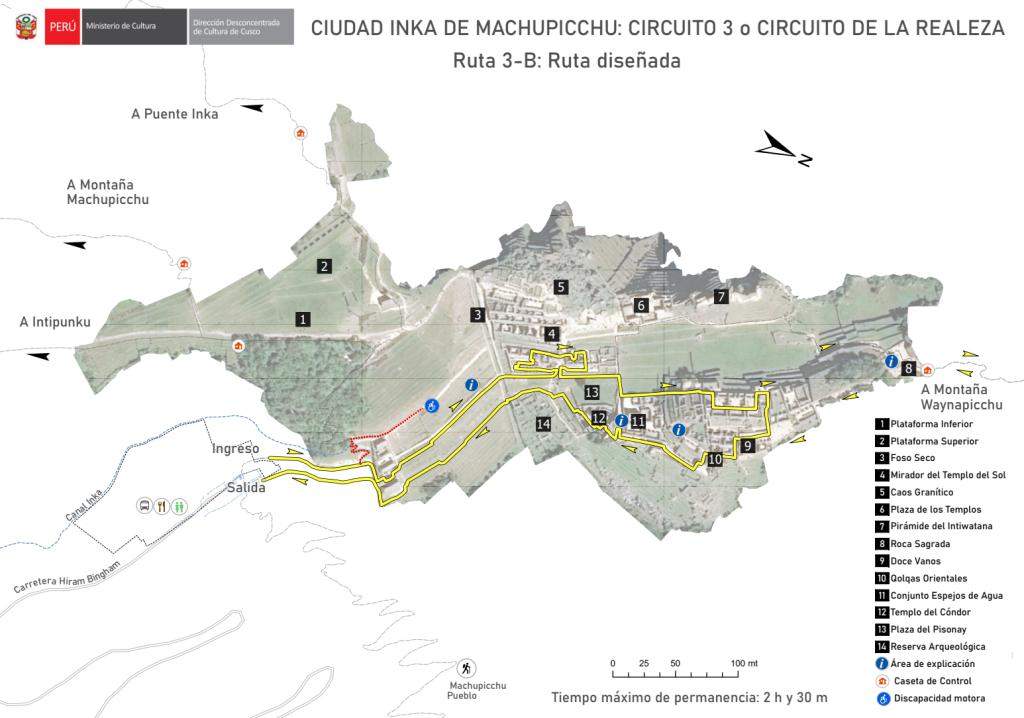
The Designed Royal Route only includes the lower part of the complex which includes the Temple of the Sun, Sacred Rock, Condor Temple, and more. If you want to experience a lot of the history and architecture of Machu Picchu, this route is extremely interesting.
Route 3-C: Great Cavern Route
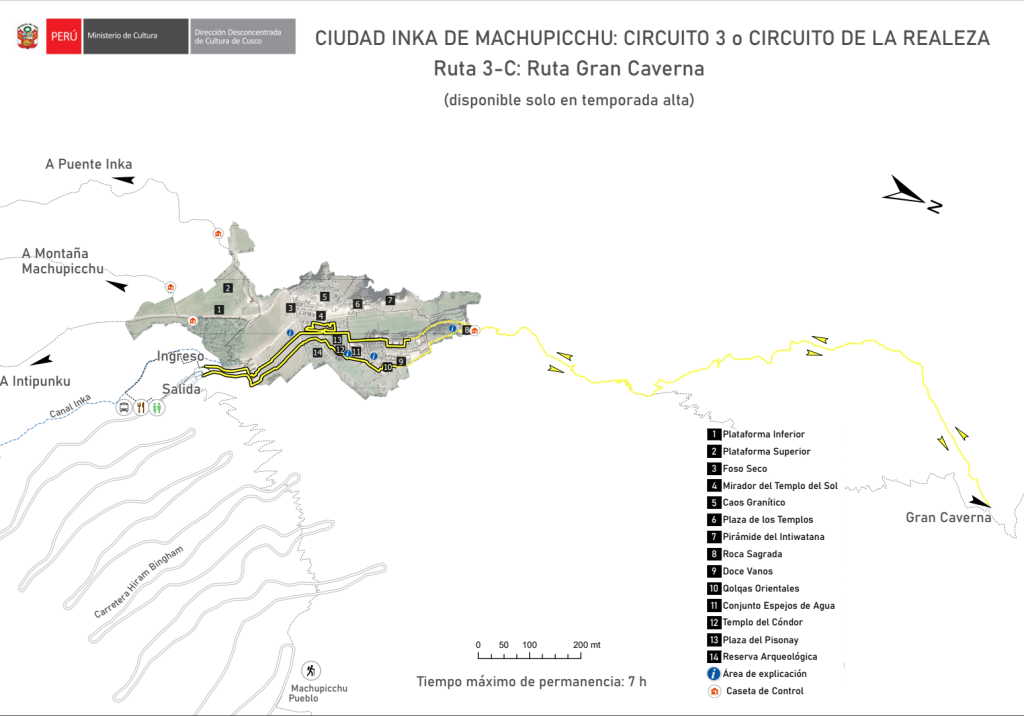
Your third option for Circuit 3 is the Great Cavern Route. This includes everything that Route 3-B offers, but with the addition of the Great Cavern or Temple of the Moon, which is a temple inside Wayna Picchu Mountain.
However, it is important to know that you get to the Great Cavern on a different route than Wayna Picchu, so you will not summit Wayna Picchu on this route. There is someone checking tickets at the Great Cavern and Wayna Picchu junction to ensure people follow their ticketed route.
Note: This route is only available in the high season, from June 1 to October 15, plus December 30 and 31.
Route 3-D: Huchuy Picchu Route
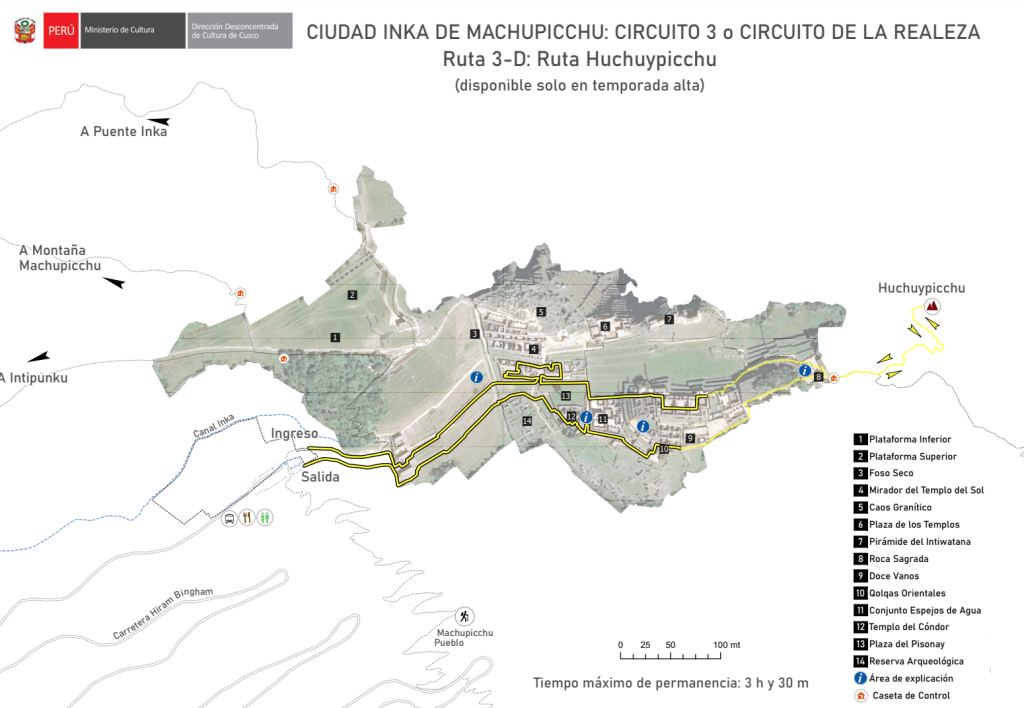
The last option is the Huchuy Picchu Route. This includes everything that Route 3-B offers, plus a hike up Huchuy Picchu, which is the shortest of the 3 mountains at Machu Picchu.
The trail is much shorter and doesn’t have nearly as much elevation. So if you want to get a higher up view of Machu Picchu without having to climb too much, then this is a great option.
Note: This route is only available in the high season, from June 1 to October 15, plus December 30 and 31. There are limits on how many people can hike it and it’s only accessible at 10 AM and 12 PM, but you can enter Machu Picchu an hour before this.
Which Machu Picchu circuit is the best?
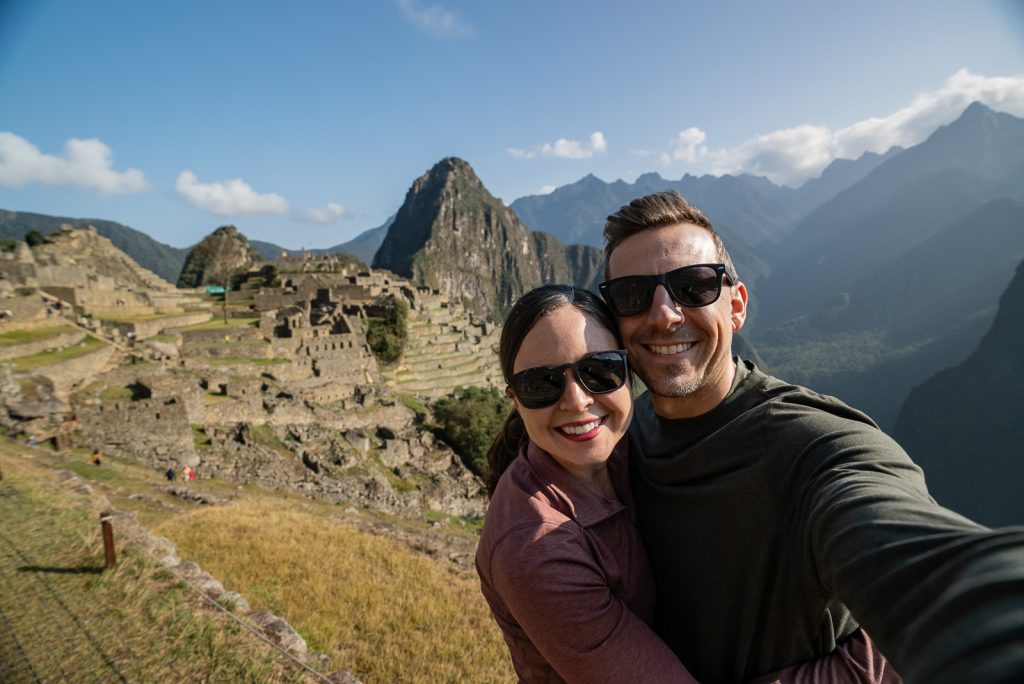
Our experience at Machu Picchu was a bit unique, as we bought tickets before they switched to these new circuits. The tickets for our first day included Circuit 1, Circuit 2, and Inka Bridge all in one. Despite this exact route no longer being offered, they still honored these tickets. Combine that with having Circuit 3-A (Wayna Picchu) tickets our second day and we essentially got to see all of Machu Picchu, minus some of the extra hikes.
Because of this, we have a pretty good idea of which circuits are the “best.” And in our opinion, if we could only pick two circuits we would pick Circuit 2 (Route 2-A OR Route 2-B, since they are almost identical) AND Circuit 3-A (Wayna Picchu).
These routes will give you access to almost all of the main citadel, plus high up views from Wayna Picchu!
But if you can only choose one, Circuit 2 (either route) is the best overall circuit at Machu Picchu. It takes you through the majority of the ruins and has the higher up, iconic view.
How long to spend at Machu Picchu
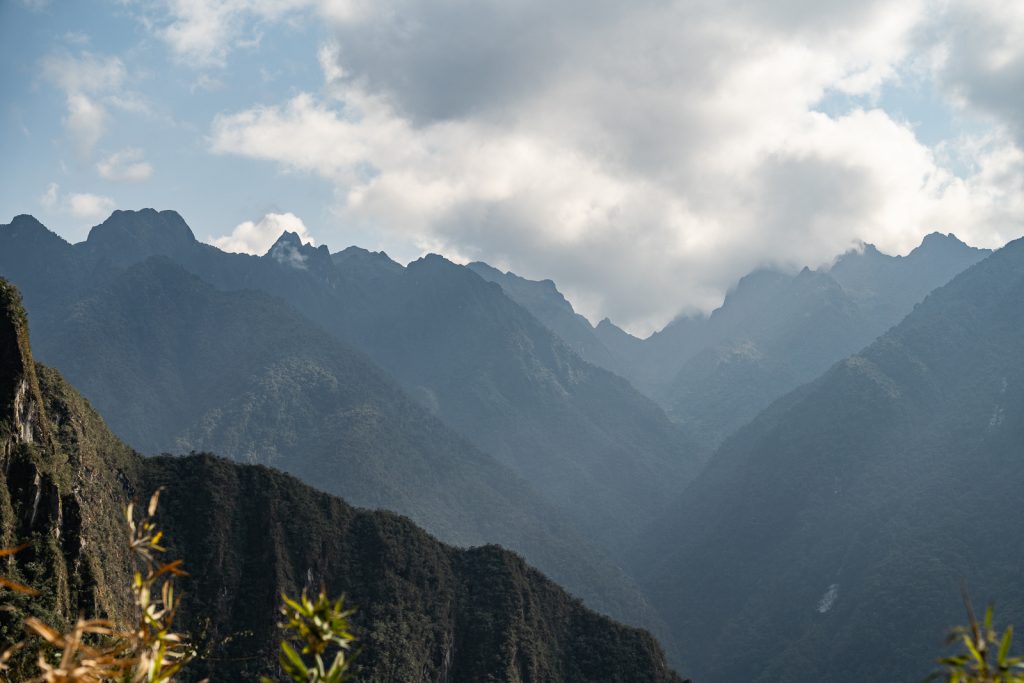
While many people will choose to visit Machu Picchu in one day, we suggest visiting on two different days. This will give you the best chance of seeing it in clear weather. Our first day was completely foggy, while our second day was sunny. So we were VERY glad to have two days at Machu Picchu.
However, we realize not everyone will be able to spend two days at Machu Picchu. So if you only have one day to spend and you want to get the most out of the experience, then we’d recommend getting tickets for two circuits.
We’d suggest doing Circuit 3 (Route 3-A Wayna Picchu) first thing in the morning and then doing Circuit 2 (either route) second. This is because Wayna Picchu has set entry hours (7 AM and 9 AM) and it would be too rushed to do Circuit 2 and then make it to your entrance time for Wayna Picchu.
Important things to know before visiting Machu Picchu
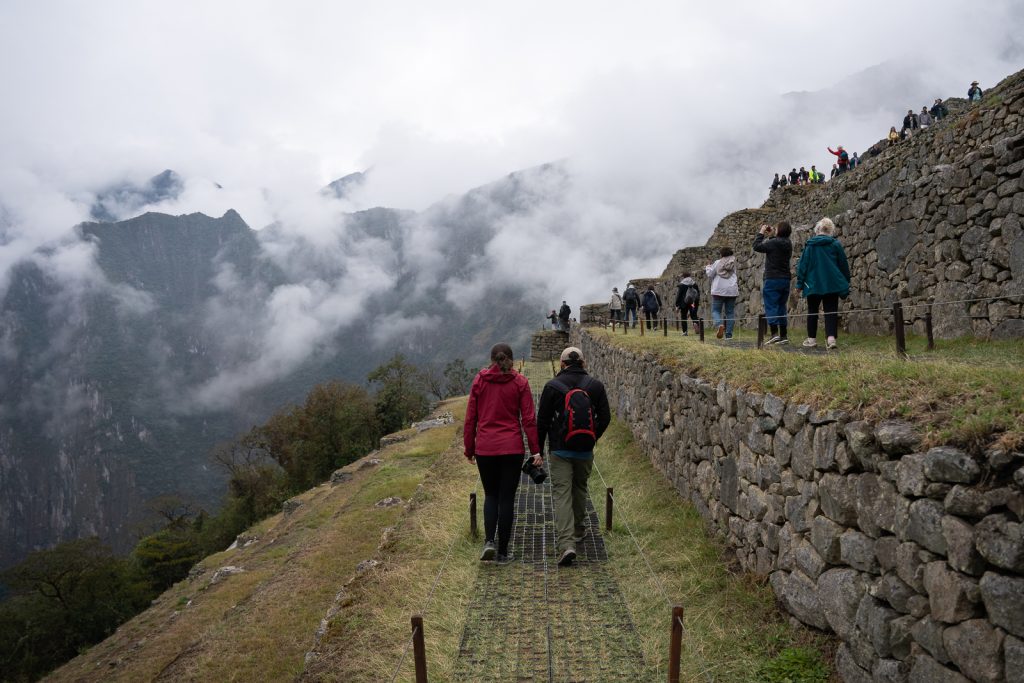
Book in advance!
We cannot stress this enough, book in advance! While it is possible to book transportation, entry tickets, and lodging last minute, we don’t recommend it.
We recommend booking the following items as soon as you can:
- Train tickets to get to and/or from Aguas Calientes (tickets TO Aguas Calientes are only needed if not trekking)
- Bus tickets from Aguas Calientes up to Machu Picchu
- Lodging in Aguas Calientes if you plan to visit more than one day
- Machu Picchu entry tickets
- Your guided tour or trek (if applicable). This is especially important for the Inca Trail, which has limited tickets.
No refunds
Tickets for Machu Picchu are non refundable and non transferable. So if your plans change or the people in your group change, you will have to buy new tickets.
Hire a guide for inside
If you aren’t visiting Machu Picchu with a tour group, we highly suggest getting a guide! There is no signage within the citadel to tell you what you’re looking at. So you won’t truly grasp how impressive this place is without one.
You can get a guide while waiting in line for the bus or at the entrance to Machu Picchu itself. We saw many guides going around asking if anyone needs a guide. But we suggest getting one in advance!
We booked our private Machu Picchu guide with Machu Picchu Edu Tours. It cost $85 USD for the two of us (before tip), which we paid via PayPal. Our guide met us at our hotel, walked us to the bus (you still need to get your own bus ticket), and gave us SO much information while inside Machu Picchu! You can book with them by contacting +51 994 357 470 on WhatsApp.
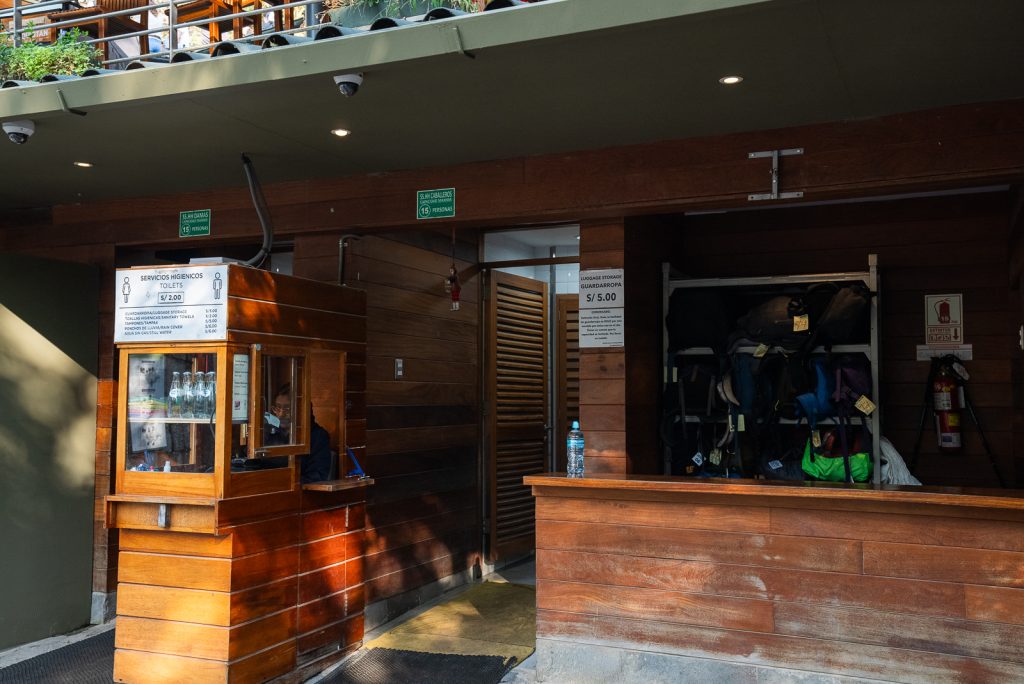
No bathrooms inside Machu Picchu
There are NO bathrooms inside Machu Picchu, so plan your liquid consumption accordingly, as most tours and circuits take 2-3 hours. The only bathroom is located outside the entrance gate and costs S/2 to use.
Luggage Storage
Large bags (more than 5 kg/11 lbs) are not allowed inside Machu Picchu. If you need to bring a large back, they do have luggage storage for S/5. This is located right by the restrooms, near the entrance.
You must stay on your designated route
As we stated above, you are required to stay on the route you purchased. Once you arrive at Machu Picchu, there are different entrance lines for the different circuits. And once inside the ruins themselves, there are many ropes blocking off areas, as well as signage to help you know where to go.
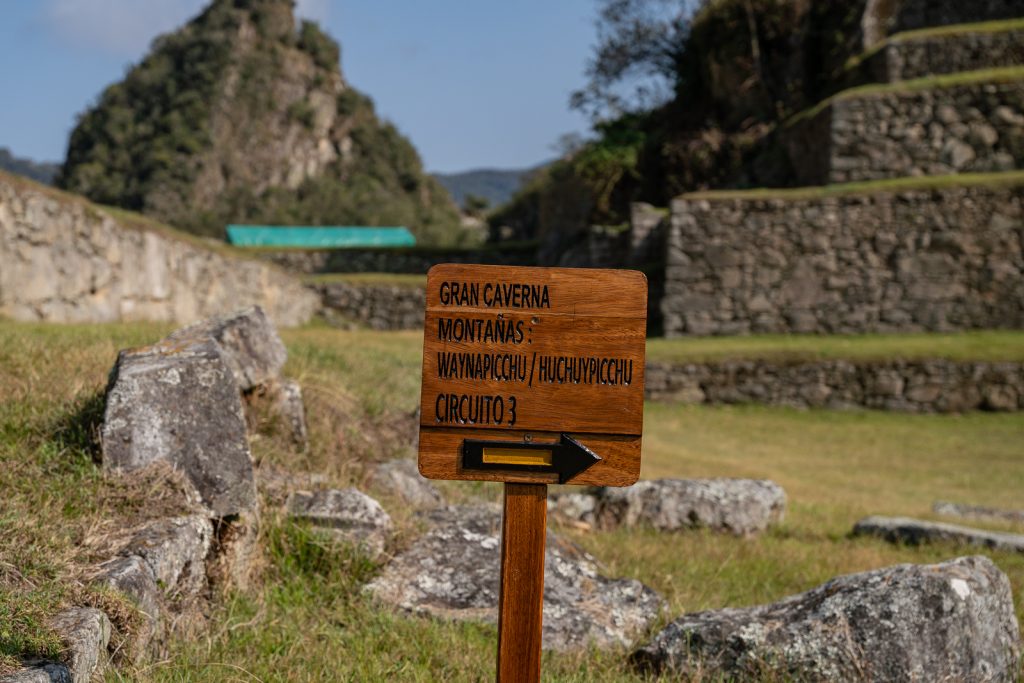
The circuits are one way
Besides having to stick to your circuit, another important thing to know is that the Machu Picchu Circuits are also one way. Make sure to get all of the photos you’d like at each spot because you won’t be able to backtrack.
There is a restaurant onsite
Right by the entrance booths to Machu Picchu you’ll find a snack bar. We personally wouldn’t eat here, as it’ll be more expensive and lower quality than restaurants in Aguas Calientes (check out our favorites here!). But it is an option if you need a drink or hanger strikes.
Passport stamps
A popular thing to do at many of the major tourist sites in Peru, like Rainbow Mountain and Machu Picchu, is to get your passport stamped with a novelty stamp.
We’d advise against this, as it could potentially invalidate your passport and prevent you from entering or exiting a country. On page 5 of the US passport it states only authorized officials can place stamps or additions to the passport.
If you’re one to collect these types of stamps or want to start, another way to do it is to take a journal with you. With a journal you can get the stamp and then even write down some memories from that experience and still make it home!
What to bring to Machu Picchu
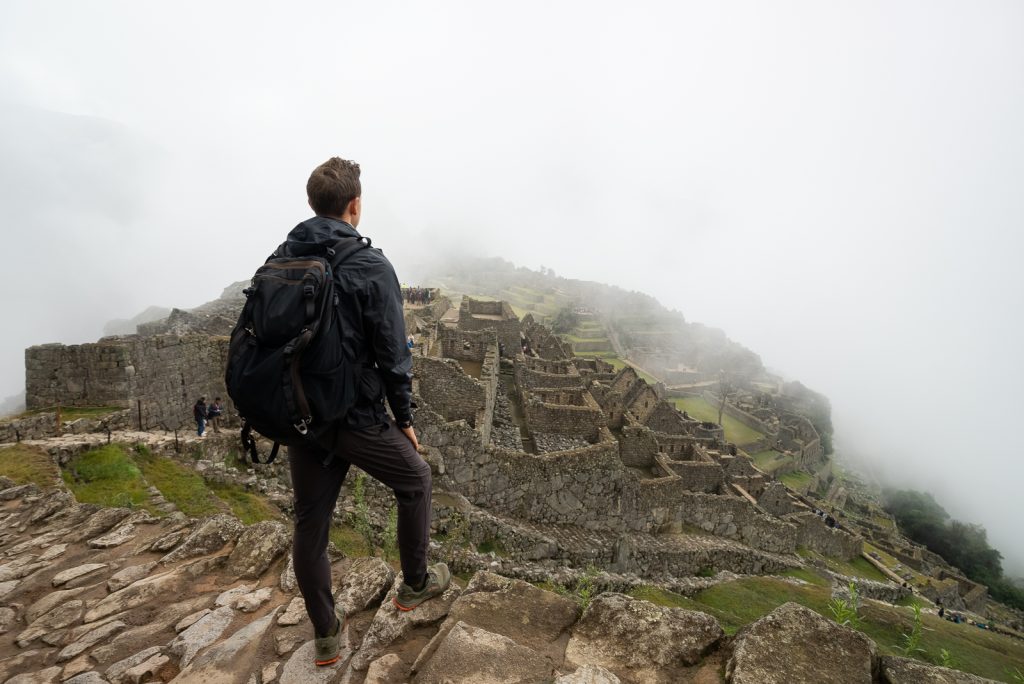
To see everything we suggest bringing to Peru, check out (and download) our FREE Peru packing list. But here are a few items we want to emphasize bringing to Machu Picchu.
Passport
Quite possibly the most important thing you need at Machu Picchu is your passport. You’ll need it when you show your tickets to enter and when getting on the bus. They won’t let you in without it!
Machu Picchu entry ticket
Your entry ticket for Machu Picchu is just as important as your passport. You can print your tickets or show the electronic copy on your phone.
Day pack
Having a day pack or hip pack is needed to keep your passport, water bottle, and other important items handy. Make sure at least one person in your group has a way to carry things!
Water and electrolytes
You’ll be doing lots of walking and climbing lots of stairs at higher altitude, possibly in direct sunlight in warmer weather. Make sure to carry some water! But remember, there will be no access to toilets once you enter. So pace yourself!
We also like to add electrolytes to our water to help us stay hydrated and our favorite electrolyte drink mix is LMNT. It tastes amazing and helps us avoid cramps, headaches, and fatigue.
Note: Plastic bottles are not allowed in Machu Picchu, so make sure you bring a reusable water bottle.
Snacks
While you aren’t allowed to bring large quantities of food, small snacks are allowed in Machu Picchu, but make sure to pack out ALL of your trash.
Layers
The weather in the Andes Mountains can change in a moment’s notice. Be prepared for wind, rain, direct sun, and cold and warm temperatures…all in the same day! Bring some layers like a quarter zip pullover, rain jacket, and puffy jacket.
Sun protection
The sun can be more intense at high altitude and most of Machu Picchu is fully exposed to the sun. Make sure to have a hat, sunscreen, and sunglasses.
Camera
Did you even go to Machu Picchu if you didn’t take a photo? While a phone camera will be sufficient for most, some may want to bring an actual camera. Check out all of our camera gear!
Cash
Make sure to carry cash in order to tip your guide, pay for the restrooms, and buy any snacks and drinks at Machu Picchu.
What NOT to bring to Machu Picchu

There are a few items you can’t bring into Machu Picchu. These include:
- Tripods
- Selfie sticks
- Drones
- Umbrellas
- Large bags or luggage (bags must be small and weigh less than 5 kg/11 lbs)
- Strollers
- Drugs, cigarettes or vape pens
- Weapons
Where to stay to visit Machu Picchu
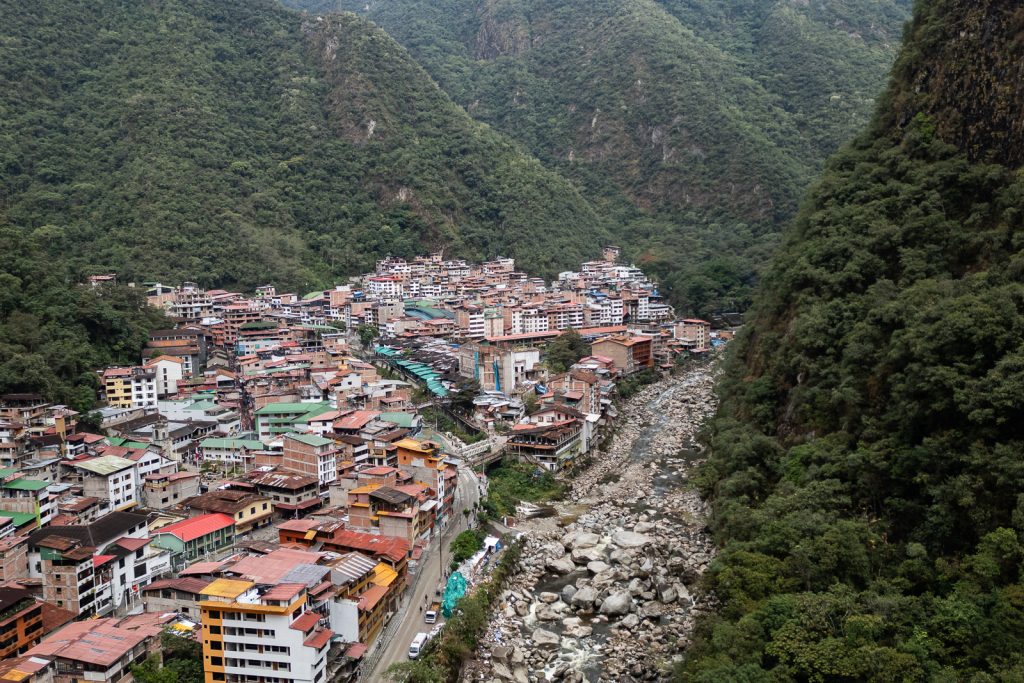
While Machu Picchu does have a hotel on site, it is VERY pricey, so for the average traveler, you will want to stay in Aguas Calientes. And since Aguas Calientes is such a popular town to visit there are tons of accommodation options for all budgets, ranging from hostels to luxury hotels.
We stayed at Inti Punku Machu Picchu, which was a good mid-range option. Our room was spacious and comfortable and they had free breakfast!
Here are a few more options!
Hotels
Tierra Viva Machu Picchu Hotel
ANDINO HOTEL
Fenix Hotel Machupicchu
Rupa Rupa High Jungle Eco B&B
Hostels
Save this guide with how to visit Machu Picchu