
Last updated on August 15th, 2026
Maui, Hawaii is known for its stunning beaches, but the island’s hiking scene is just as impressive and super diverse. Whether you’re chasing waterfalls along the Road to Hana, trekking into an otherworldly volcanic crater, or strolling along the coastline, there’s a trail here for every kind of adventurer. And our guide to the best hikes on Maui will help you pick the perfect trails for you to conquer during your trip to the island!
From easy coastal walks to serious summit hikes, here are the best hikes on Maui, broken down by region.
Why trust us to plan your Maui hikes?
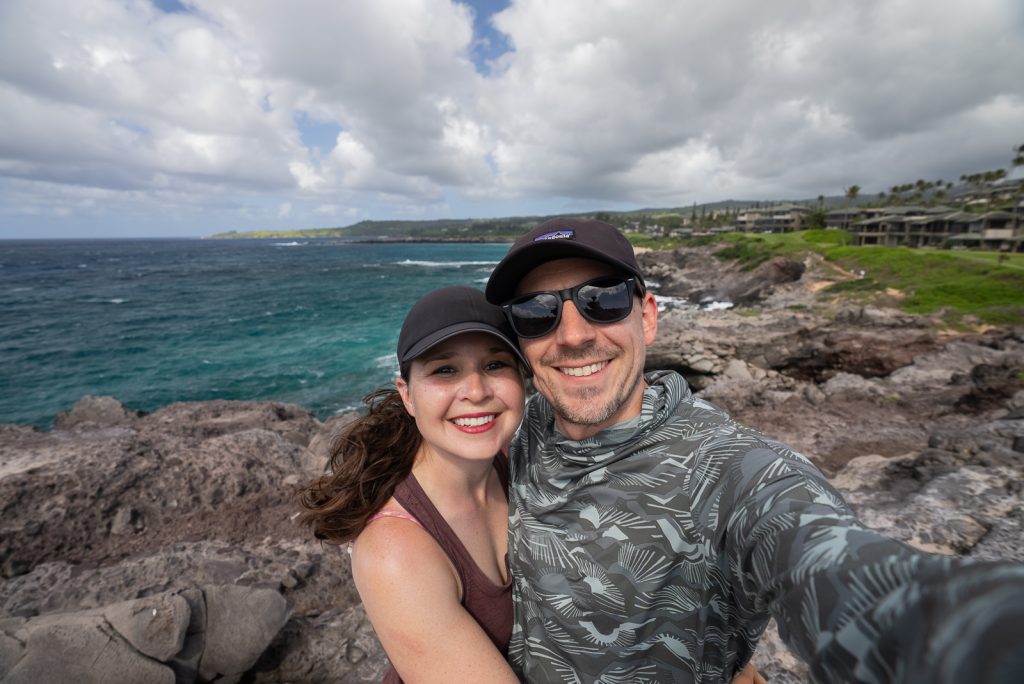
You can trust our Maui hiking recommendations because hiking is basically our full time job! We spend several hours each and every week hiking along the best trails in the United States. And we have specifically been to Maui three separate times, trying out new hikes every single time we go. We have explored almost all of the trails on Maui at this point, so we know what we’re talking about when we say we know the best hikes on Maui!
Best Hikes on Maui
Our list of the best hikes on Maui is listed by region to help you plan your itinerary by what is nearby. But you can get a quick look at the hikes we have included and their length below!
We have also included the AllTrails link for each trail, so that you can read current conditions before you head out. Be sure to get AllTrails Plus so that you can download the map and ensure you never get lost! (Use our code aplusk30 for 30% off!)
And while we’ve included many of these hikes in our list of the best things to do on Maui, there’s several other fun things to do on that list too. So be sure to read both guides before heading to the island!
Central Maui
- Waiheʻe Ridge Trail (4.3 miles)
- Iao Needle (0.5 miles)
East Maui
- Twin Falls (1.9 miles)
- Ke’anae Arboretum (0.9 miles)
- Wai’anapanapa State Park (0.9 miles)
- ‘Ohe’o Gulch (0.6 miles)
- Pipiwai Trail to Waimoku Falls (3.6 miles)
Haleakalā National Park’s Summit District
- Leleiwi Overlook Trail (0.3 miles)
- Hosmer Grove Loop (0.5 miles)
- White Hill Trail (0.5 miles)
- Sliding Sands Trail (11.7 miles)
- Halemau’u Trail (7.9 miles)
- Sliding Sands Trail to Halemau’u Trail (11.2 miles)
South Maui
- Wailea Beach Path (3.4 miles)
- Hoapili Trail (3.4 miles)
West Maui
- Lahaina Pali Trail (4.8-5.1 miles depending on the trailhead)
- Kapalua Coastal Trail (2.5 miles)
- Nakalele Blowhole (1-1.4 miles depending on the trail)
Central Maui
Central Maui is one of the rainiest places in all of Hawaii! This means lush, green trails and viewpoints, with both easier and more difficult options to choose from.

1. Waiheʻe Ridge Trail
Distance (round trip): 4.3 miles
Elevation gain: 1,601 feet
Difficulty: Hard
Where to Park
Reviews & Current Conditions
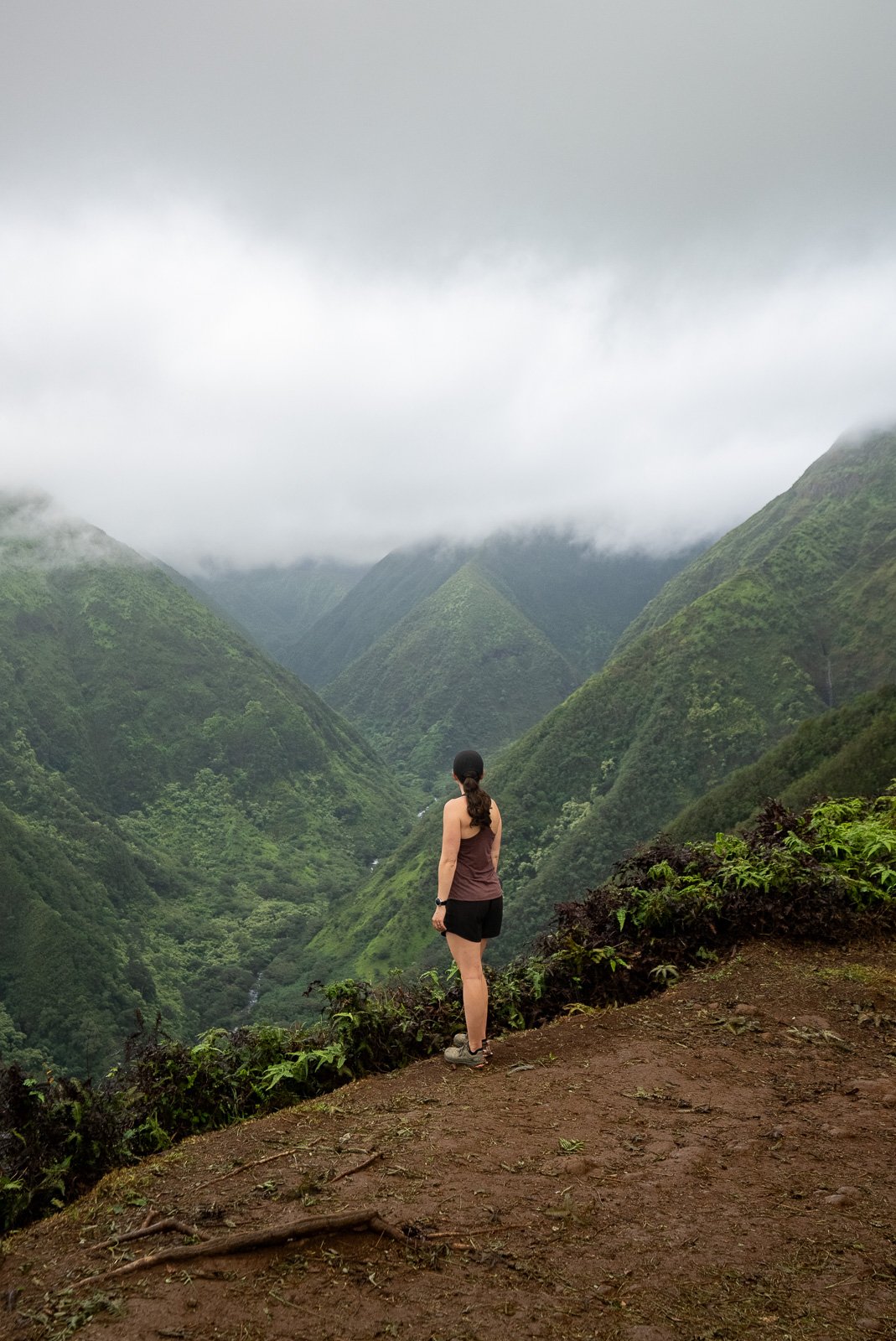
If you only do one hike in Central Maui, make it this one. The Waiheʻe Ridge Trail is a 4.3-mile out-and-back in the West Maui Mountains that earns every bit of its reputation. You’ll climb through dense rainforest on your way up the ridge, passing birds, ferns, and stunning views into Waiheʻe Valley, including a distant glimpse of Makamakaʻole Falls. The payoff at the summit is a sweeping 360° view of coastline, ocean, and Haleakalā. It’s truly one of the most scenic hikes on the island.
That said, it’s a workout! The trail gains about 1,450 feet in just over 2 miles. However, just under 1 mile into the hike you’ll find a wooden viewing platform that has amazing views. This is a good turnaround spot if you’re short on time or don’t think you’ll be able to hike the entire trail.
Another obstacle along the trail is that the terrain can get muddy and slippery, especially after rain. Shoes with good grip are a must, plus hiking poles!
Due to the hike’s popularity, we highly recommend you start early! Plus, clouds tend to roll in as the day goes on and can block those amazing views. However, the gate is only open 7 AM–7 PM, so plan accordingly. While the main parking lot can fit quite a few cars, it does fill up fast. If that’s full, there is an overflow parking lot near the start of the road to the trailhead, but it adds extra walking distance and elevation. Unfortunately, car break-ins have been reported at both parking lots, so don’t leave valuables in your vehicle.
2. Iao Needle Lookout Trail & Ethnobotanical Loop
Distance (round trip): 0.5 miles
Elevation gain: 147 feet
Difficulty: Easy
Where to Park
Reviews & Current Conditions
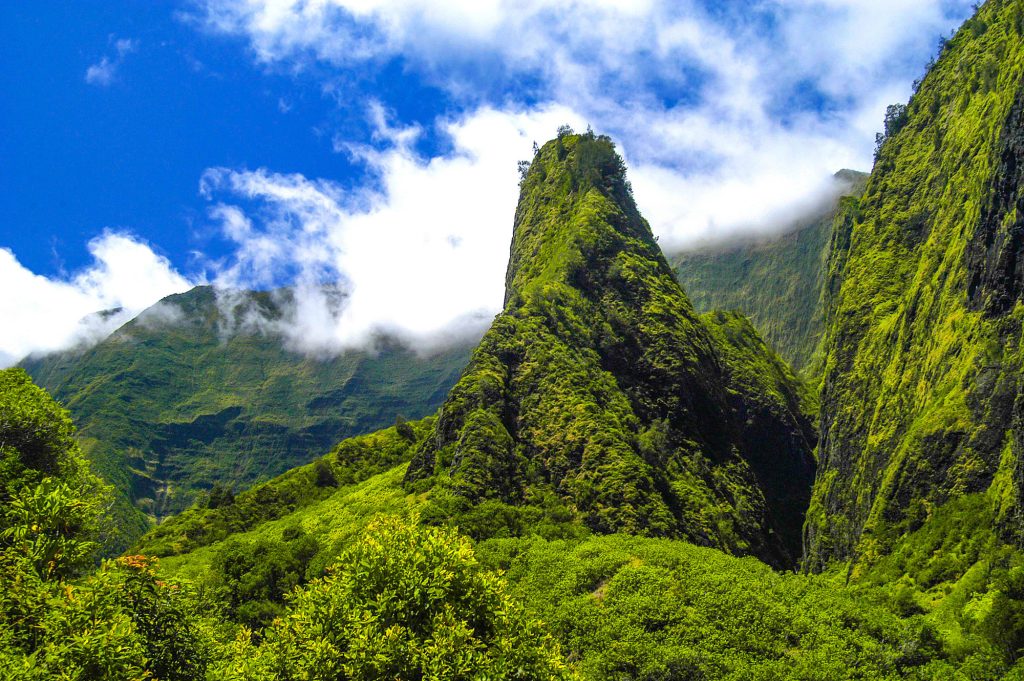
Don’t let the short distance fool you, this half mile paved trail packs in a lot! Along this trail you’ll wind through an ethnobotanical garden filled with native Hawaiian plants, cross a bridge over the stream, and climb about 200 feet (roughly 133 steps) up to a covered lookout with jaw-dropping views of Kukaʻemoku, better known as the Iao Needle.
This iconic 1,200-foot lava pinnacle rises from the lush valley floor and is one of the most photographed landmarks in all of Hawaii. Plus, the valley itself carries deep cultural significance. It was the site of a major 1790 battle in which King Kamehameha I defeated the Maui army, a turning point that eventually led to the unification of the Hawaiian Islands. Worth keeping in mind as you take in the scenery!
The whole hike takes about 30 to 45 minutes and is easy enough for families with young kids or anyone looking for a scenic, but easy experience.
Note: Iao Valley is one of the wettest spots in all of Hawaii, getting over an inch of rain per day on average. Go early for the best chance of clear views before afternoon clouds roll in, and always pack a rain jacket.
Timed entry reservations to Iao Valley State Park are required for out-of-state visitors.
East Maui
East Maui is home to some of the most magical hiking on the island, with much of it located on or near the Road to Hana. As this is the island’s rainier side, make sure to pack your rain jacket for these Maui hikes!
3. Twin Falls


Distance (round trip): 1.9 miles
Elevation gain: 347 feet
Difficulty: Moderate
Where to Park
Reviews & Current Conditions
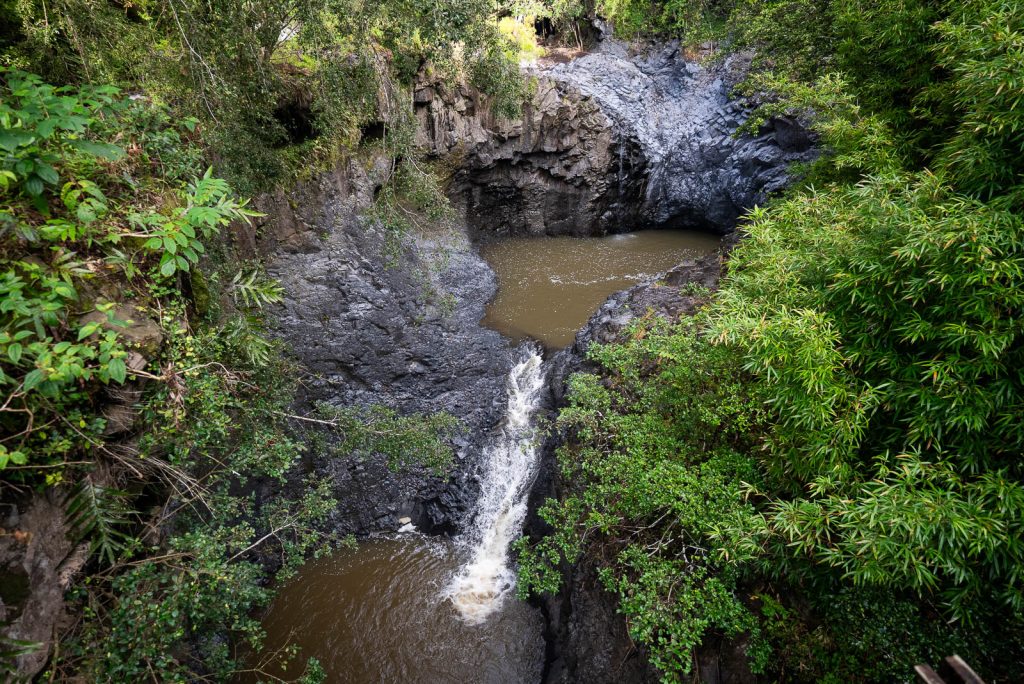
Twin Falls is the perfect first stop on the Road to Hana and a great intro to East Maui’s waterfalls. This easy 1.9-mile trail takes you through Hoʻolawa Valley, a working farm that graciously allows public access, past multiple swimming holes and cascades. The star of the show is the area known as Caveman Falls, tucked deeper into the jungle. You’ll wade through a couple of shallow stream crossings to get there, so wear shoes you don’t mind getting wet!
A small farm stand at the trailhead sells fresh coconut and other tropical snacks. It’s a great way to fill your belly before conquering the rest of the Road to Hana, and to support the locals! Plus, the banana bread and other snacks are so yummy.
Note: There’s a $10 parking fee and the lot fills up fast, so get there early! The park is closed to non-residents on the first Saturday of each month. Also, the trail may close temporarily after heavy rain.
4. Keʻanae Arboretum


Distance (round trip): 0.9 miles
Elevation gain: 164 feet
Difficulty: Moderate
Where to Park
Reviews & Current Conditions
The Keʻanae Arboretum is free to visit and a quieter gem along the Road to Hana. This peaceful, easy walk takes you through a curated collection of plants, including taro fields and tall tropical trees. But the real highlight here is the rainbow eucalyptus tree! The bark on these trees is multicolored and so pretty and unique. It’s easily one of the best stops on the Road to Hana, and is what makes this one of the best hikes on Maui as well!
Just make sure to pack bug spray. We got attacked by lots of mosquitoes here!
5. Waiʻanapanapa State Park
Distance (round trip): 0.9 miles
Elevation gain: 114 feet
Difficulty: Easy
Where to Park
Reviews & Current Conditions
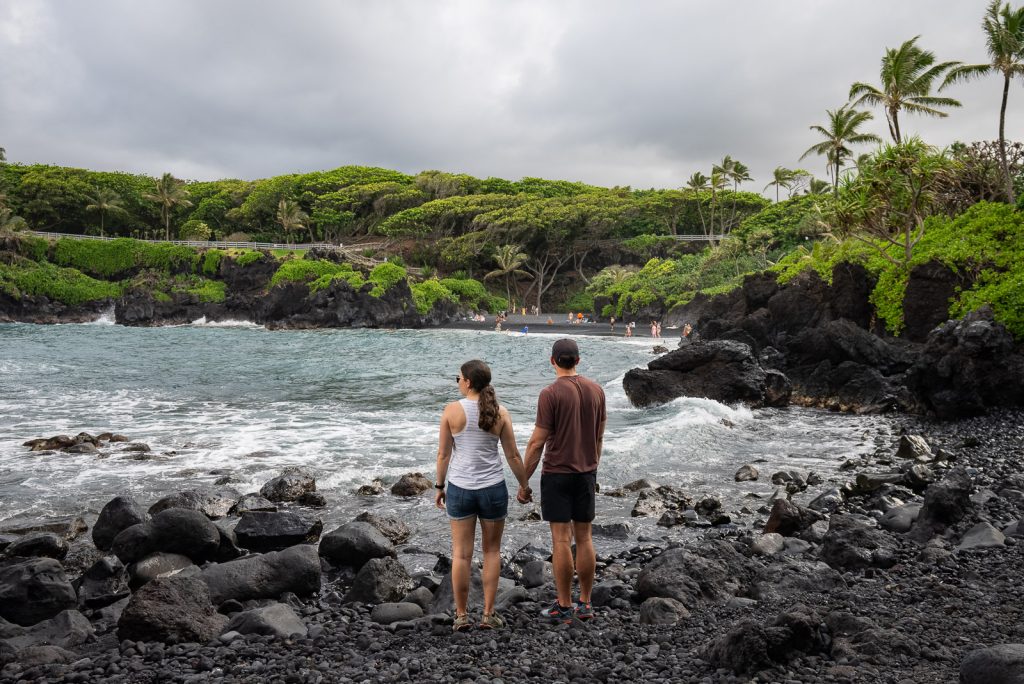
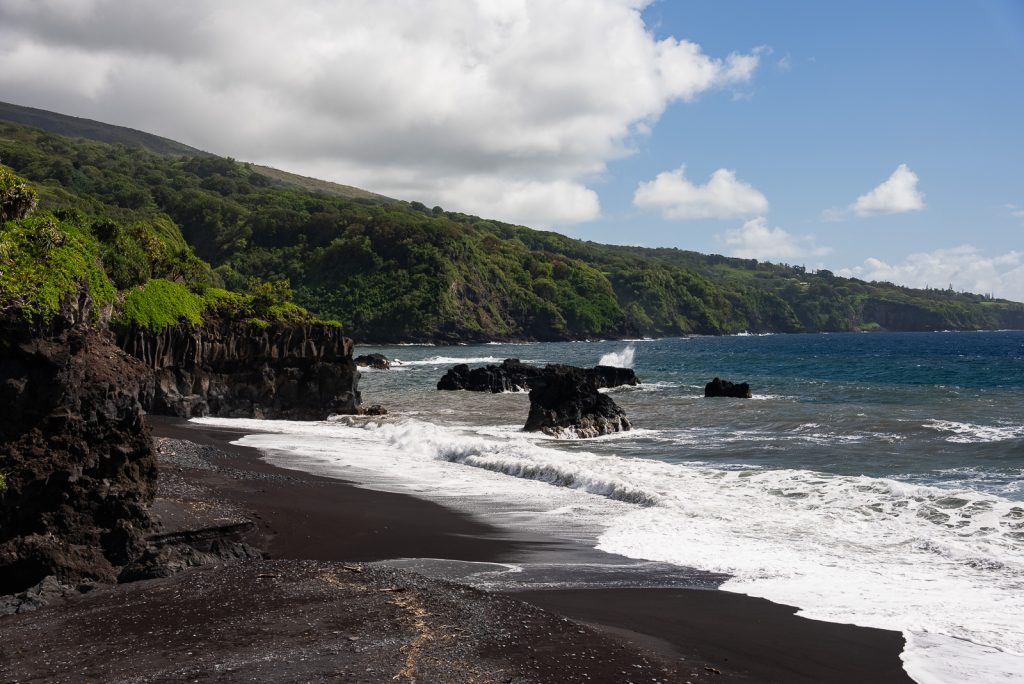
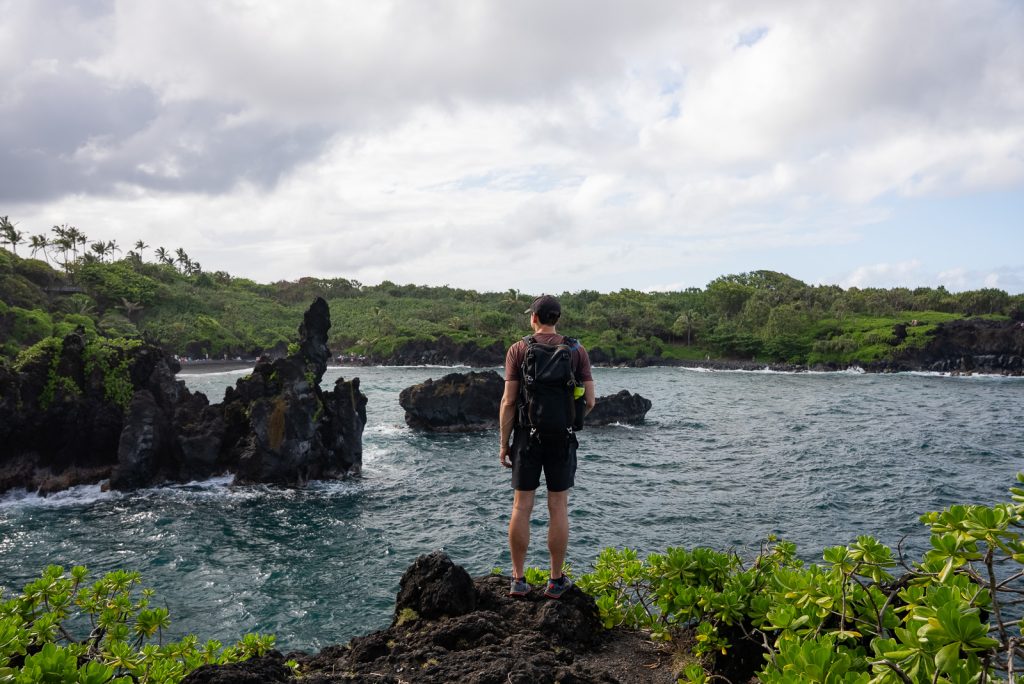
Waiʻanapanapa State Park is one of the most beautiful stops on all of Maui. Yes, the famous black sand beach is the main draw (that jet-black volcanic sand against bright blue water is surreal), but the coastal trail here is worth exploring too. You’ll be able to hike past lava rock formations, a blowhole, ancient sea caves, and a gorgeous hala tree grove that’s one of the largest in Hawaii.
There are two trails you can hike here, which are both part of the King’s Trail, an ancient footpath that connected Maui. You’ll find many Hawaiian cultural sites all along this trail. So please be respectful of signed and unsigned man made sites. Do not touch or move any stones!
For the first option you can go towards the right (when facing the ocean). The views are gorgeous the entire way. You will pass Hawaiian cultural sites and it gets a bit more rugged the further you go so feel free to turn around whenever you’d like.
There is also another beautiful coastal trail that you can access by going to the left once you’re on the black sand beach. This trail will take you along the rugged, lava rock cliffs, burial sites, and coves. Plus to Pukaula Point, which is a sacred site with burial mounds. Due to time constraints, we just walked a little bit of it, but if you have time, definitely check it out!
For the ultimate experience, stay at the Wai’anapanapa State Park Cabins! We just stayed here on our last trip to Maui and loved this experience so much. It gives you more time on the trails and to enjoy the black sand beach! Read all about what you need to know for staying at the cabins!
Note: Timed entry reservations are required to enter the park and must be made at least one day in advance. Book as far ahead as possible because this place fills up fast!
6. ʻOheʻo Gulch (Seven Sacred Pools)
Distance (round trip): 0.6 miles
Elevation gain: 98 feet
Difficulty: Easy
Where to Park
Reviews & Current Conditions
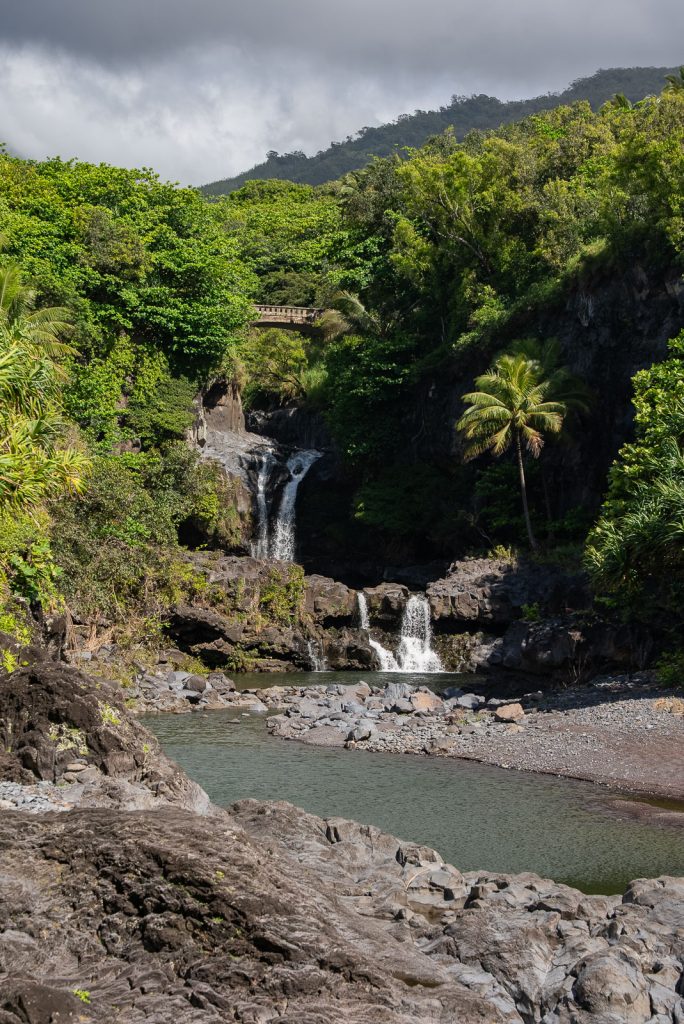
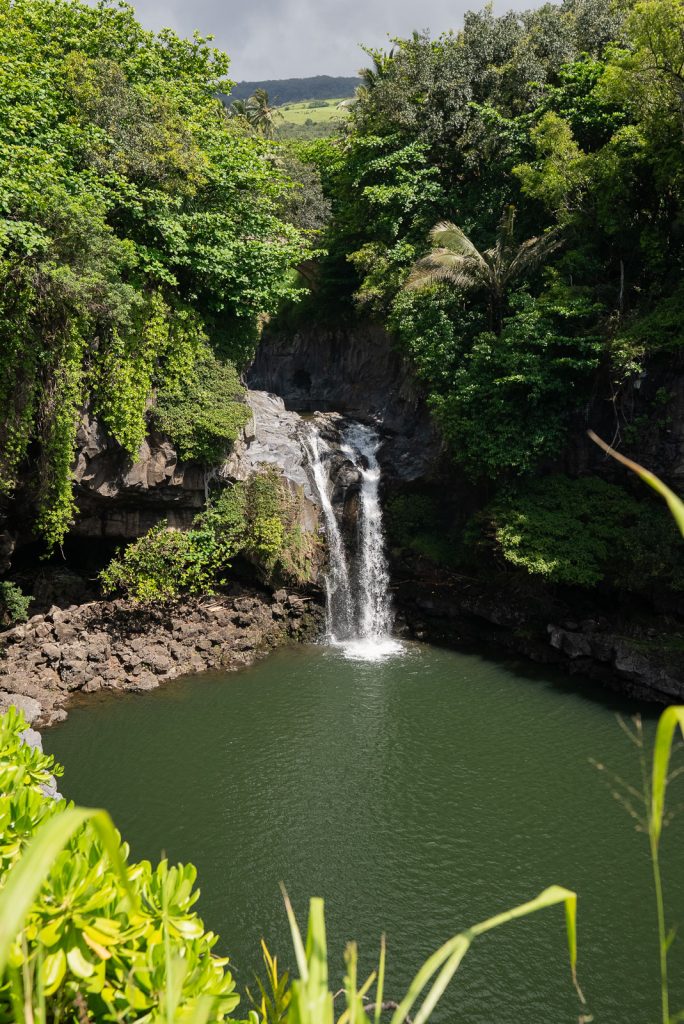
Located in the Kīpahulu District of Haleakalā National Park (at the far end of the Road to Hana), ʻOheʻo Gulch is a series of stunning freshwater pools and waterfalls that cascade down toward the ocean. The short trail winds along the gulch and offers beautiful views of the coast and the pools. It’s an easy, relatively quick hike and makes for a perfect add-on before or after the Pīpīwai Trail.
Note: Your Haleakalā National Park entry fee (or America the Beautiful Pass) covers both!
7. Pīpīwai Trail to Waimoku Falls

Distance (round trip): 3.6 miles
Elevation gain: 849 feet
Difficulty: Moderate
Where to Park
Reviews & Current Conditions
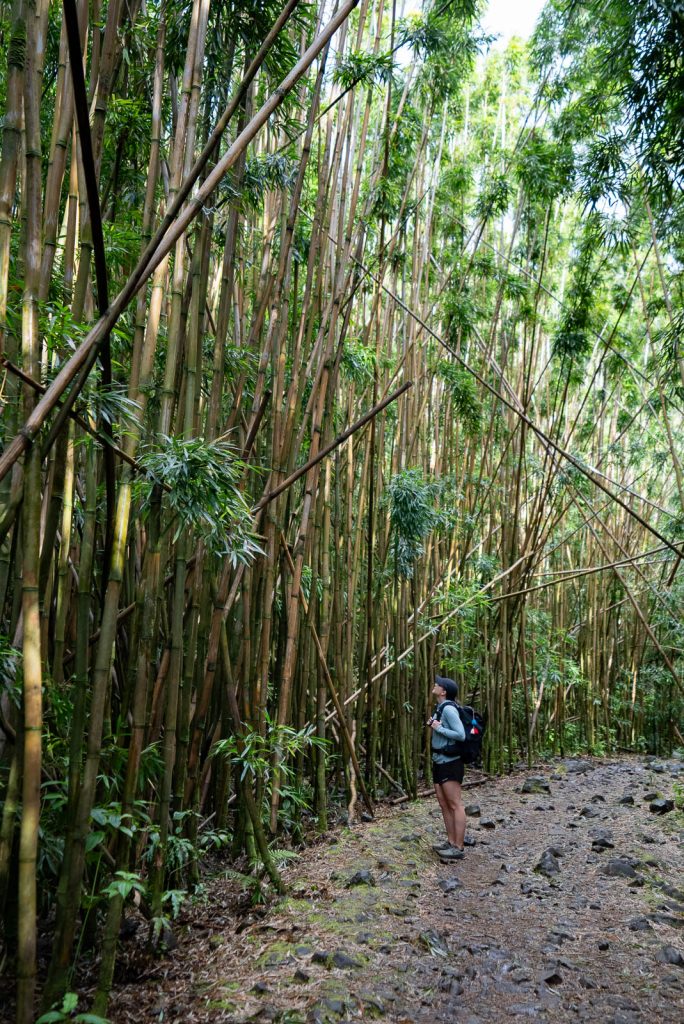
If we had to pick just one hike on all of Maui, this might be it. The Pīpīwai Trail is a 3.6 mile out-and-back that somehow packs in an ancient banyan tree, multiple waterfalls, a half-mile stroll through a towering bamboo forest, and the grand finale: 400-foot Waimoku Falls, the tallest single-drop waterfall on Maui. It’s loaded with stunning sights and unique features!
And the best part? It’s doable for most hikers! The hike is rated moderate, with about 849 feet of elevation gain. The biggest hurdle is that there’s one stream crossing near the end that can range from a dry rock hop to a rushing river depending on recent rainfall. Check conditions before you go, as the park service may close the trail after heavy rains.
For even more information on this hike, check out our detailed guide to hiking the Pipiwai Trail to Waimoku Falls.
Note: This trail is within Haleakalā National Park’s Kīpahulu District, so bring your entrance fee or America the Beautiful Pass.
Haleakalā National Park’s Summit District
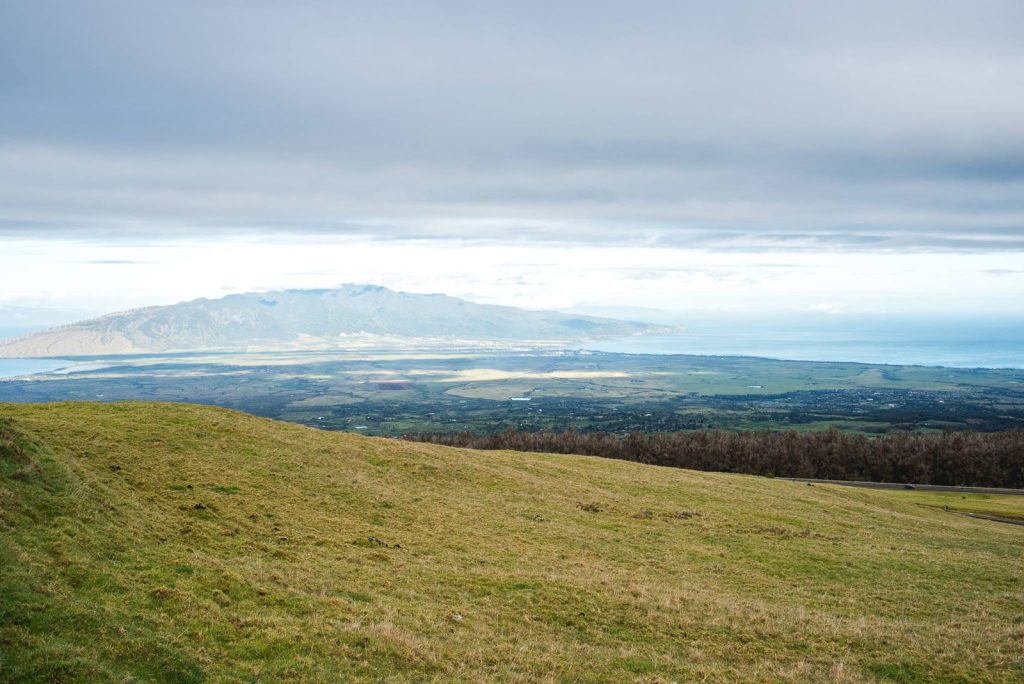
The Summit District at Haleakalā National Park is accessed via the steep Haleakalā Highway and goes up to Haleakalā’s peak at 10,023 feet. Here you’ll find otherworldly volcanic terrain, sweeping views of the island and ocean, and native flora and fauna, like Silverswords and Nēnē. Dress in layers (it gets cold and windy up here, even in summer!) and bring plenty of water, as the high altitude means you’ll dehydrate faster than you’d expect.
8. Leleiwi Overlook Trail
Distance (round trip): 0.3 miles
Elevation gain: 124 feet
Difficulty: Moderate
Where to Park
Reviews & Current Conditions
This short, easy walk takes you to one of the best viewpoints in the Summit District. The Leleiwi Overlook sits at around 8,800 feet and offers sweeping views into the crater and you can see the Halemau’u Trail winding through the crater floor. The scenery from here showcases both the lush and barren parts of the crater. It’s great if you’re short on time!
9. Hosmer Grove Loop
Distance (round trip): 0.5 miles
Elevation gain: 91 feet
Difficulty: Moderate
Where to Park
Reviews & Current Conditions
For something a bit different, the Hosmer Grove Loop winds you through an “alien forest.” This is the result of an experiment in the early 1900s, when Ralph S. Hosmer reforested this cleared area with species from all over the globe. Only 13 of the species survived and today you walk among a mix of native and non-native vegetation. You may even see some ʻIʻiwi (beautiful red birds) while here! This one is easy enough for all ages and a lovely, shaded contrast to the stark volcanic landscape elsewhere in the park.
10. White Hill Trail (Paʻa Kaʻoao)
Distance (round trip): 0.5 miles
Elevation gain: 114 feet
Difficulty: Moderate
Where to Park
Reviews & Current Conditions
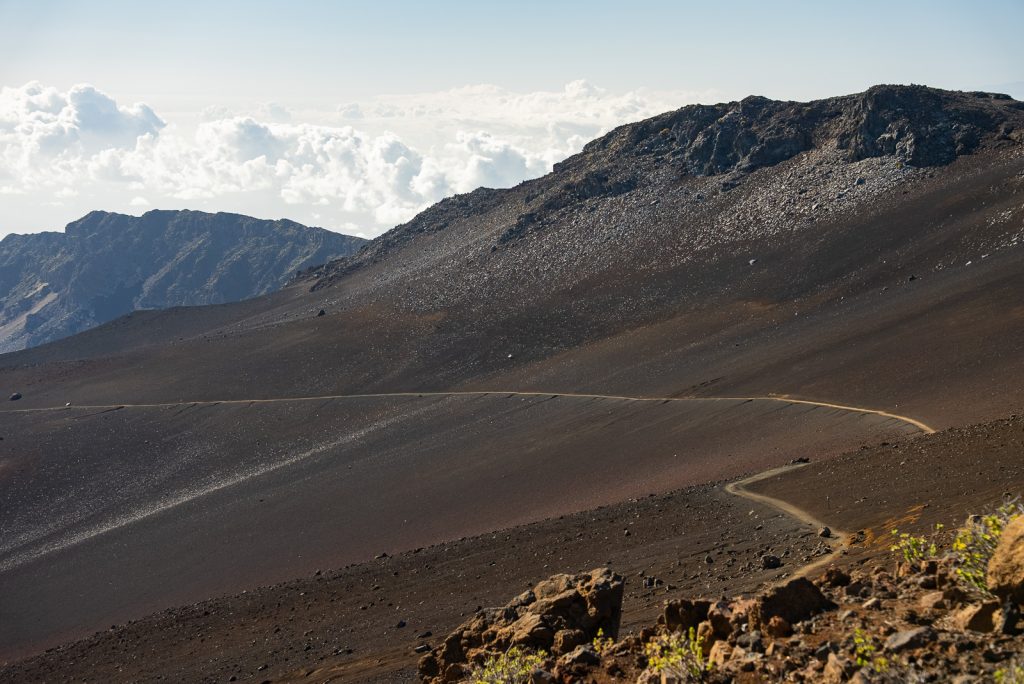
The White Hill Trail starts at the visitor center and overlooks the crater, giving you a glimpse of what the Sliding Sands Trail has to offer. At only 0.5 mile long, it’s a fantastic bang for your buck! We’d also suggest watching the sunrise from here, to avoid some of the summit crowds and have a more direct look into the crater.
11. Sliding Sands Trail (Keoneheʻeheʻe)
Distance (round trip): 11.7 miles
Elevation gain: 2,847 feet
Difficulty: Hard
Where to Park
Reviews & Current Conditions
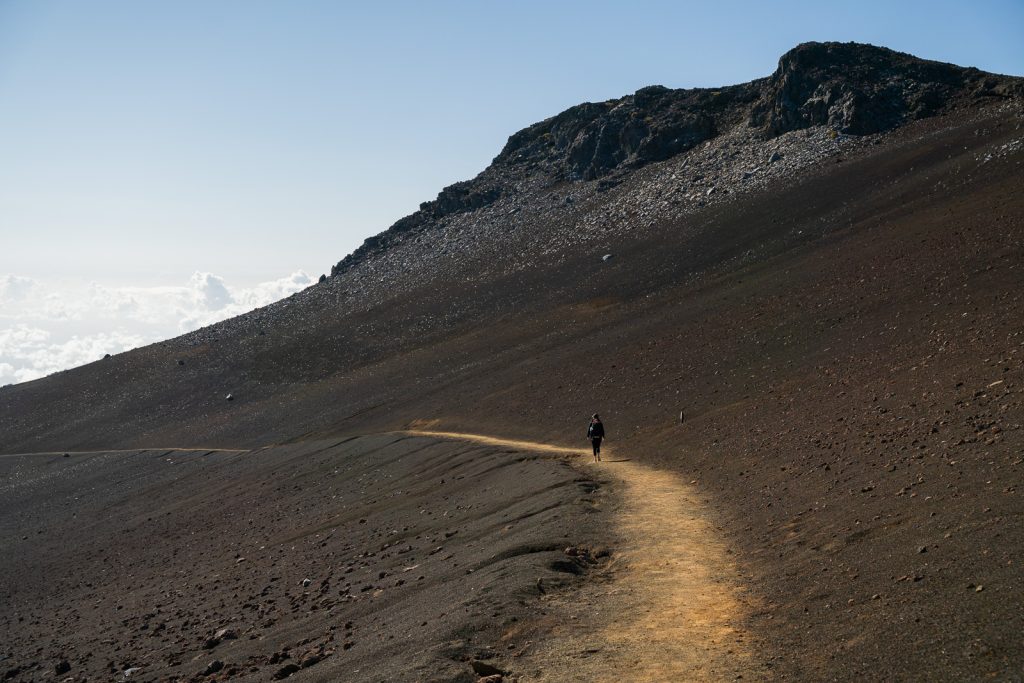
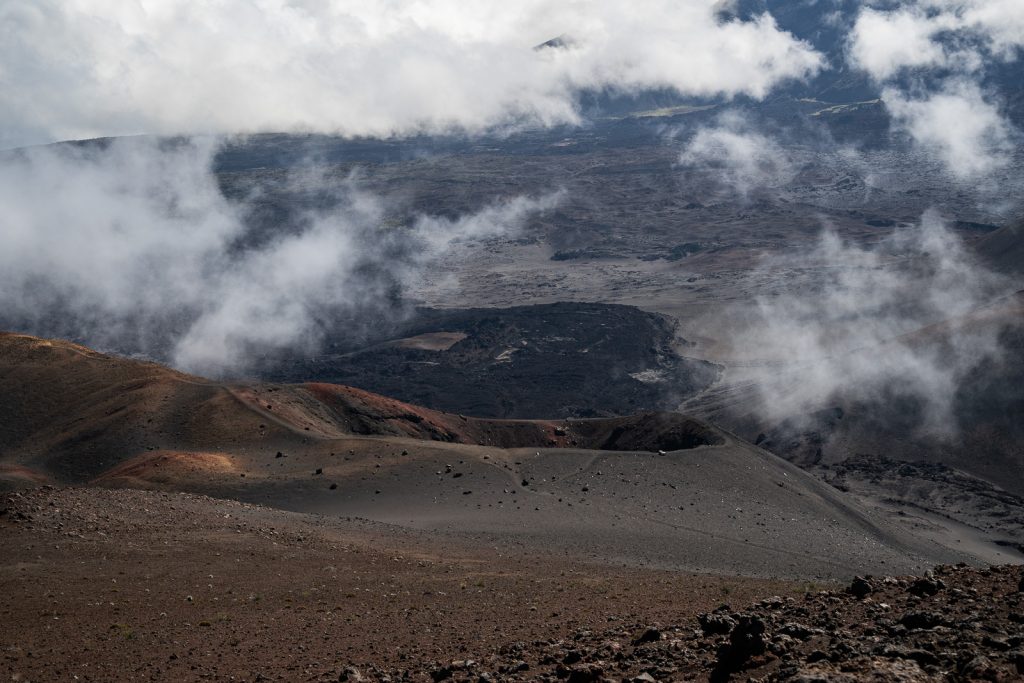
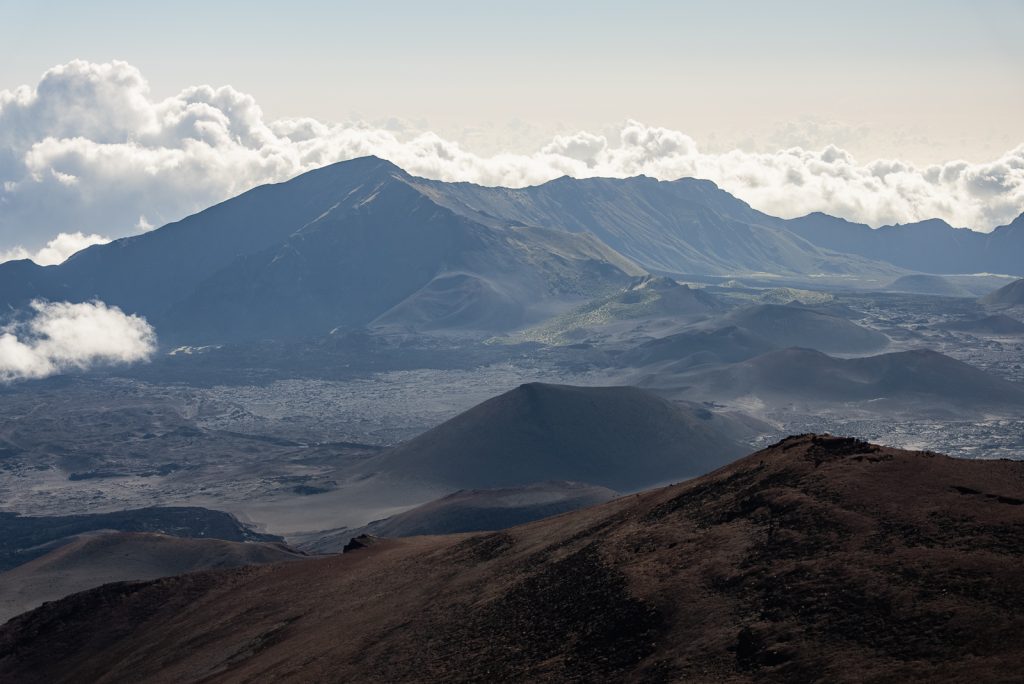
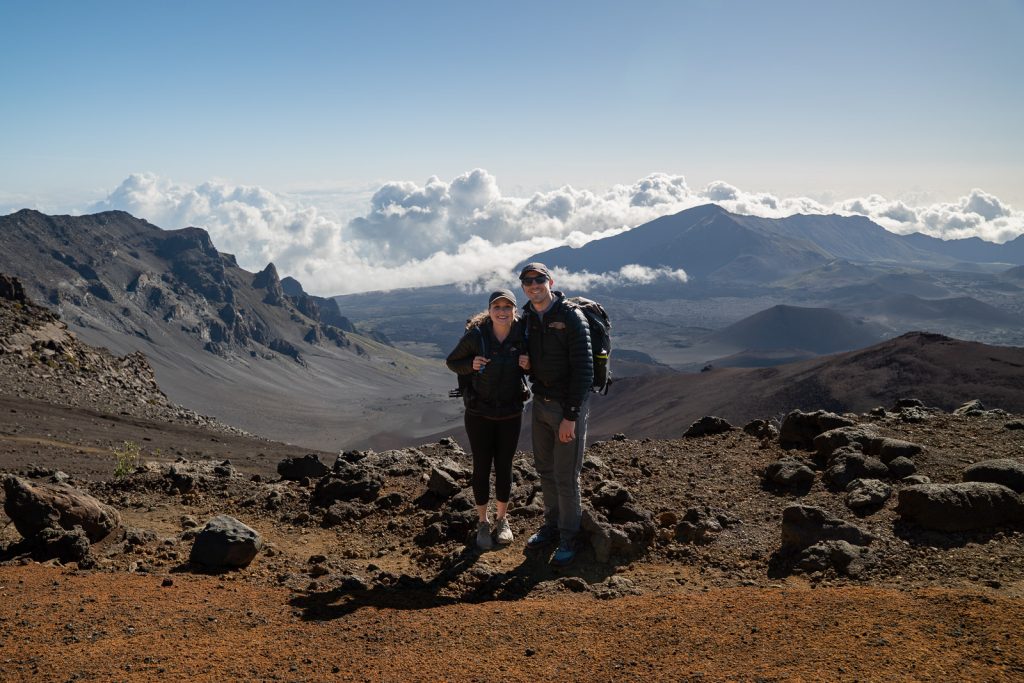
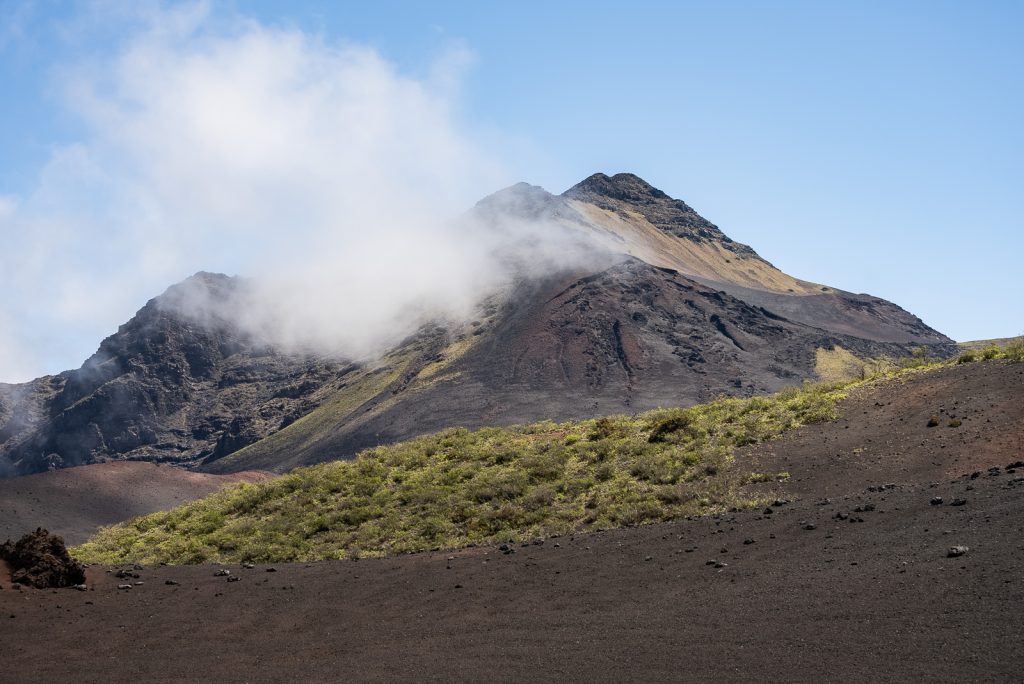
The Sliding Sands Trail descends from the summit rim into the heart of Haleakalā’s crater, and even just a mile or two in gives you incredible views of the volcanic landscape. If you want a natural turnaround point, the junction with the Halemauʻu Trail (around mile 3.7) is a great option, or push on to Kapalaoa Cabin for a longer adventure. The deeper you go, the more surreal it feels, like hiking on another planet.
Just remember: what goes down must come back up. The climb out at altitude is no joke. Save enough energy and water for the return!
12. Halemauʻu Trail
Distance (round trip): 7.9 miles
Elevation gain: 2,391 feet
Difficulty: Hard
Where to Park
Reviews & Current Conditions
Silversword Loop
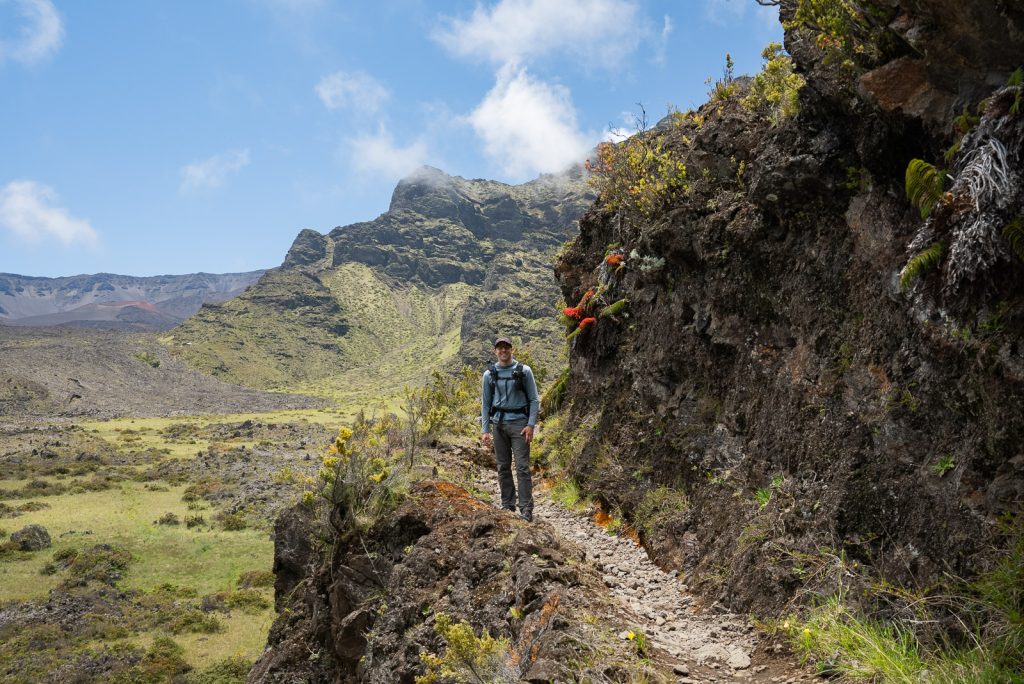
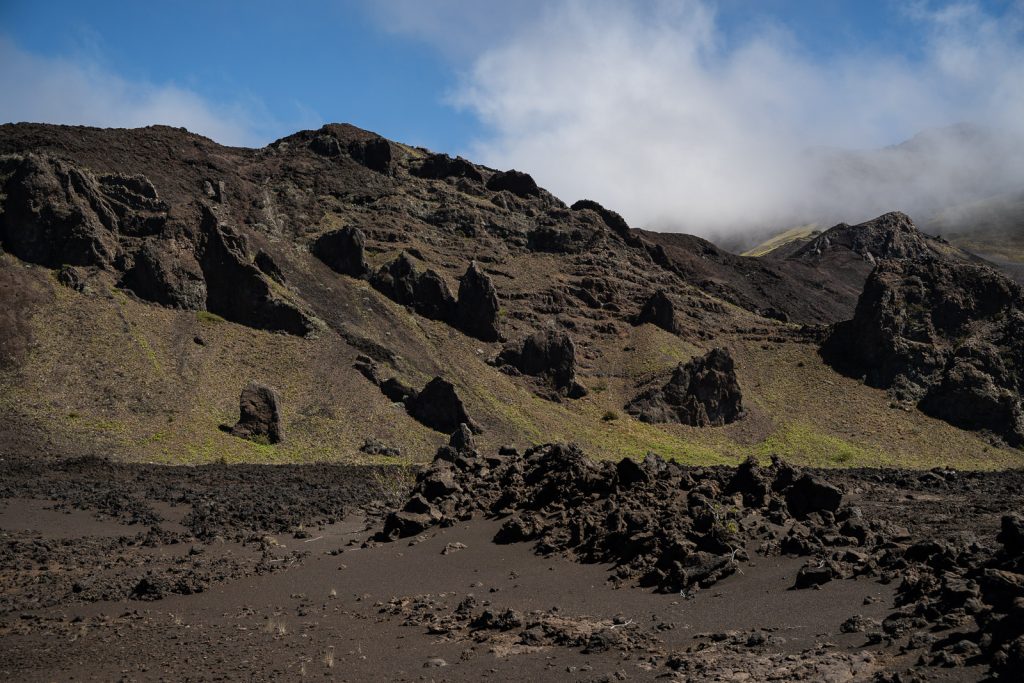
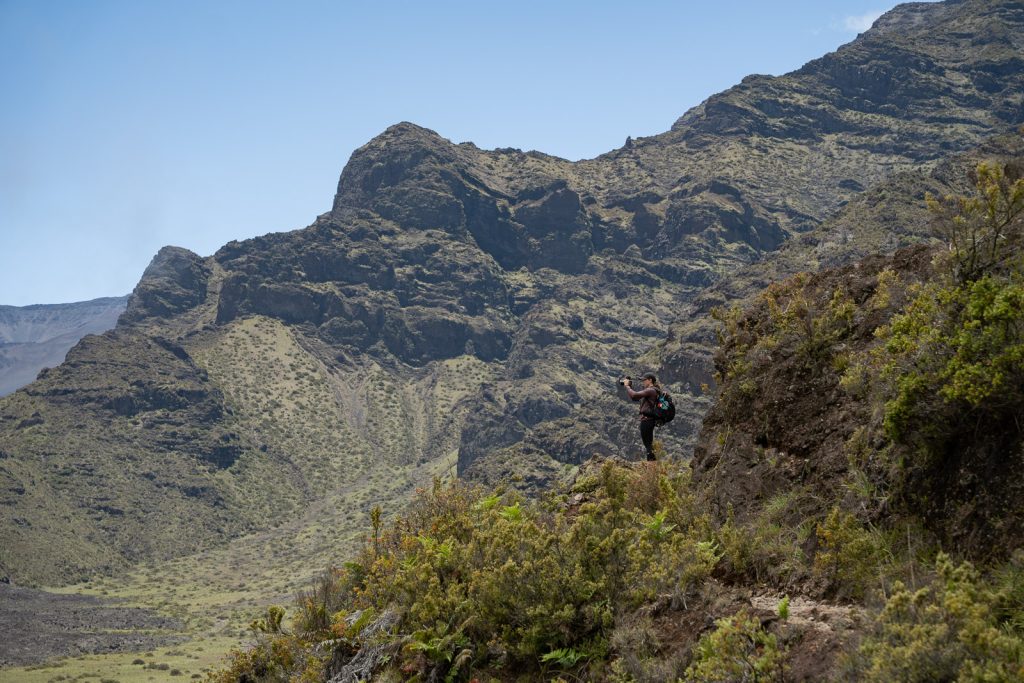
The Halemauʻu Trail offers its own dramatic entry into the crater, starting from a lower trailhead and climbing up to the rim before descending in. We’d suggest hiking at least to Holua Campground for a stunning payoff, and if you’re feeling ambitious, continue on to the Silversword Loop, a short detour through a field of the park’s iconic silversword plants, which can live up to 90 years and bloom only once in their lifetime. Seeing them is a pretty special experience.
13. Sliding Sands to Halemauʻu Trail (Point-to-Point)
Distance (round trip): 11.2 miles
Elevation gain: 2,385 feet
Difficulty: Hard
Where to Park
Reviews & Current Conditions
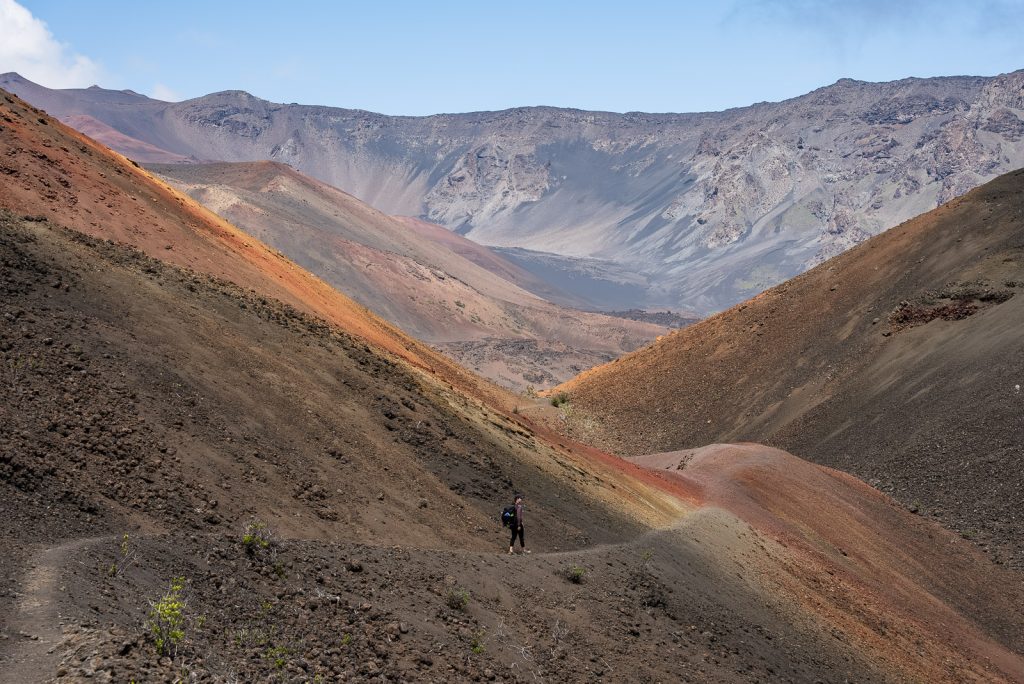
For hikers who want the ultimate Haleakalā experience, combine both the Sliding Sands and Halemau’u Trails! This 11+ mile point-to-point hike takes you from the summit rim all the way down into the crater and back up the other side, passing cinder cones, lava fields, silverswords, and cloud forests along the way. It’s a big day in both distance and elevation change, but one of the most unforgettable hikes in all of Hawaii.
Important note: Since this hike starts and ends at different spots, you will need to hitchhike, either before or after your hike. We recommend parking at the Halemau’u trailhead and hitchhiking up to the visitor center to the Sliding Sands Trail. That way, when you finish the hike, you’ll finish at your car. Plus we think going up the Halemau’u Trail is a bit easier than the Sliding Sands Trail.
There is a designated hiker pick up area near the Halemau’u Trailhead, which makes hitchhiking feel a bit safer. We lucked out and got picked up by the first car, but the park ranger told us she has never waited more than 30 minutes.
South Maui
South Maui is the sunny side of the island, where you can find the towns of Kihei and Wailea. And while this area tends to be more about the golden sand beaches than hiking, there are some nice walks and lava filled treks you can embark on!
14. Wailea Beach Path
Distance (round trip): 3.4 miles
Elevation gain: 124 feet
Difficulty: Easy
Where to Park
Reviews & Current Conditions
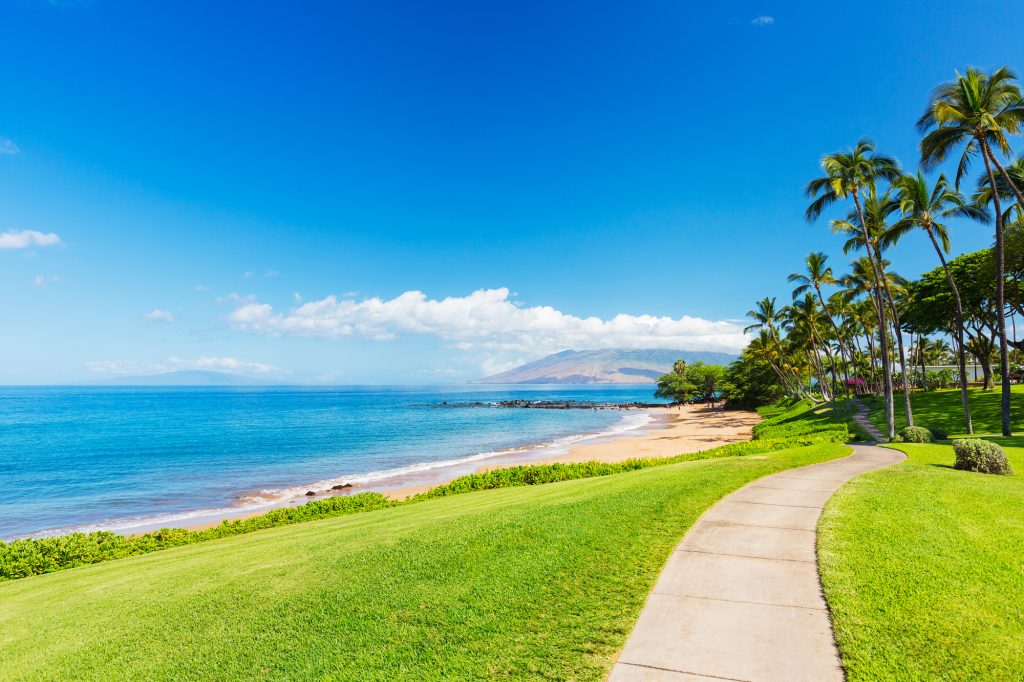
Want more of a relaxing walk than a hike? Check out the Wailea Beach Path! This paved, mostly flat path runs about 1.5 miles past Wailea’s gorgeous beaches and luxury resorts, with sweeping ocean views the whole way. It’s a wonderful option at sunset, and whale watching from the path in winter is spectacular. While not a rugged adventure, it is a genuinely lovely way to spend an hour or two.
15. Hoapili Trail (La Pérouse Bay)
Distance (round trip): 3.4 miles
Elevation gain: 134 feet
Difficulty: Moderate
Where to Park
Reviews & Current Conditions
One of the most unique hikes on Mau is the Hoapili Trail. The Hoapili Trail (also called the King’s Highway) crosses a vast, barren field of ʻaʻā lava from one of Maui’s most recent eruptions, sometime in the 1700s. The terrain feels stark and raw, and the contrast of black lava against the bright blue ocean is stunning. There’s very little shade and it gets very hot, so start early and bring plenty of water. The trail eventually leads to secluded coves and tide pools, and on a calm day, it’s an incredible place to explore. Keep an eye out for spinner dolphins in La Pérouse Bay!
West Maui
West Maui is where you’ll find the islands largest resorts in Kaanapali, Napili Bay, and Kapalua Bay. Similar to South Maui, the climate is much drier and sunnier on this side of the island. Because of this, the hikes here tend to be more rugged and coastal, but you can still find some trails that will take you to higher up views of the area.
16. Lahaina Pali Trail
West Trailhead
Distance (round trip): 4.8 miles
Elevation gain: 1,594 feet
Difficulty: Hard
Where to Park
Reviews & Current Conditions
Maʻalaea Trailhead
Distance (round trip): 5.1 miles
Elevation gain: 1,679 feet
Difficulty: Hard
Where to Park
Reviews & Current Conditions
The Lahaina Pali Trail is a rugged, steep trail that climbs up to the West Maui windmills with panoramic views of the ocean, Haleakalā, and neighboring islands. It’s not the most lush hike, but the exposed ridge walk and big views make it fun. You can hike it from either the Ukumehame (west) trailhead or the Maʻalaea trailhead. Both are rated as hard but are great options if you’re looking for a challenge!
Note: Like Waiheʻe Ridge, car break-ins have been reported at the trailheads here. Leave valuables at home or bring them with you on the trail.
17. Kapalua Coastal Trail
Distance (round trip): 2.5 miles
Elevation gain: 196 feet
Difficulty: Easy
Where to Park
Reviews & Current Conditions
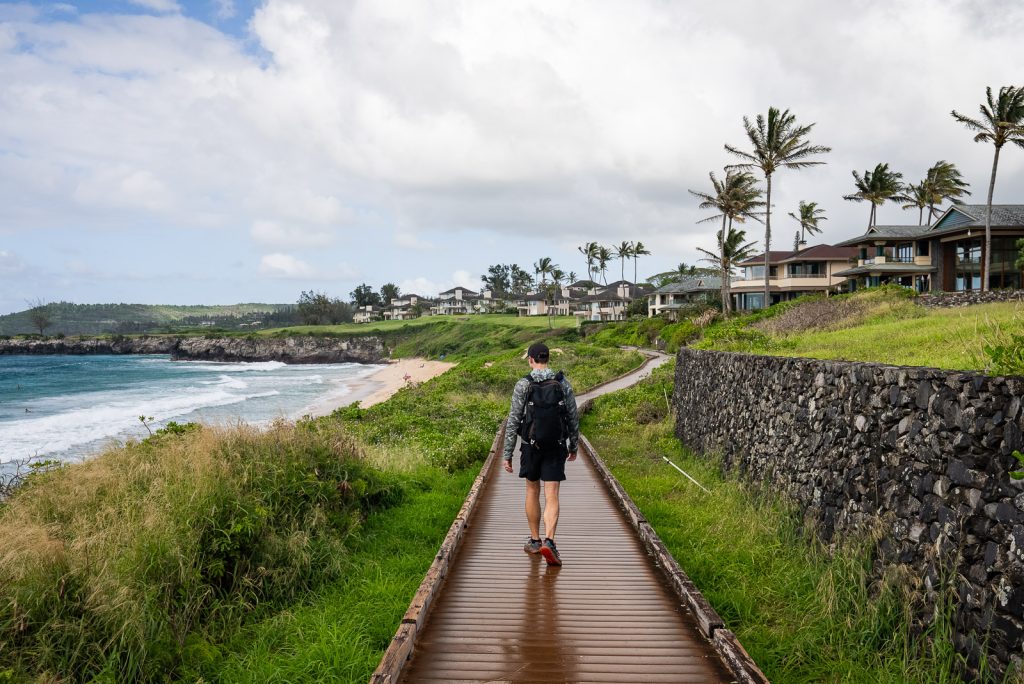
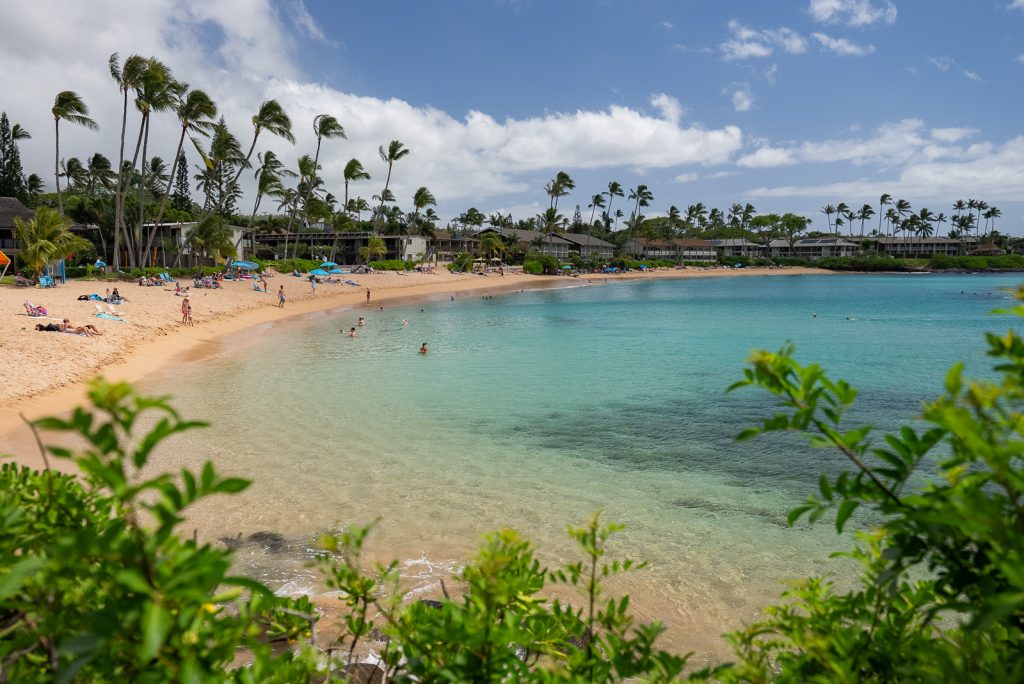
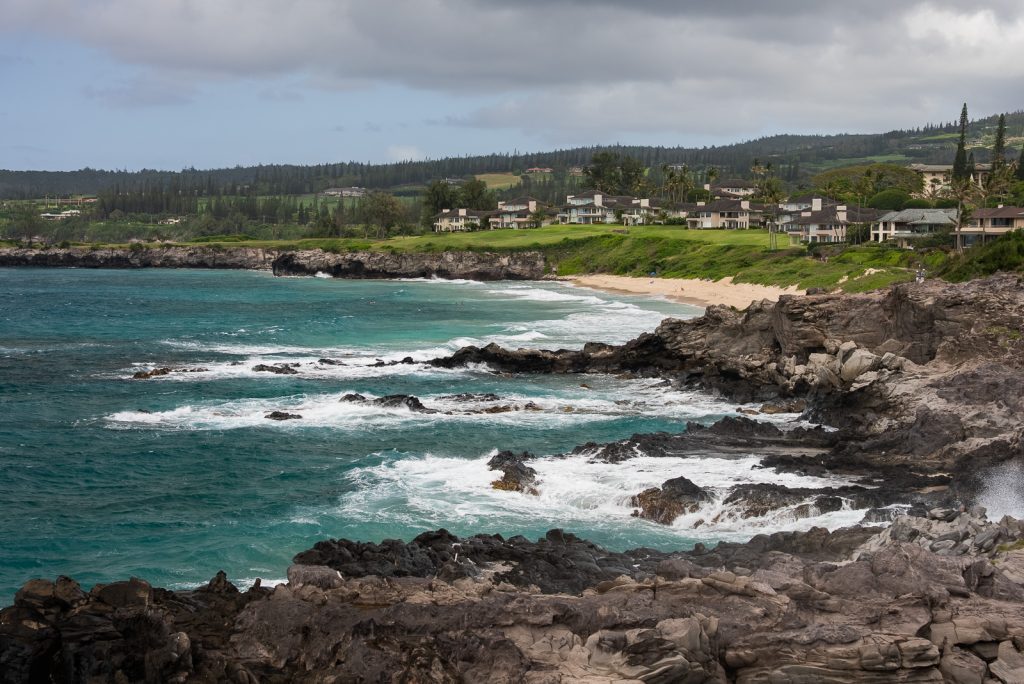
The Kapalua Coastal Trail is one of our personal favorite hikes on Maui! This is an easy, beautiful walk along West Maui’s northwestern coast between D.T. Fleming Beach Park and Kapalua Bay.
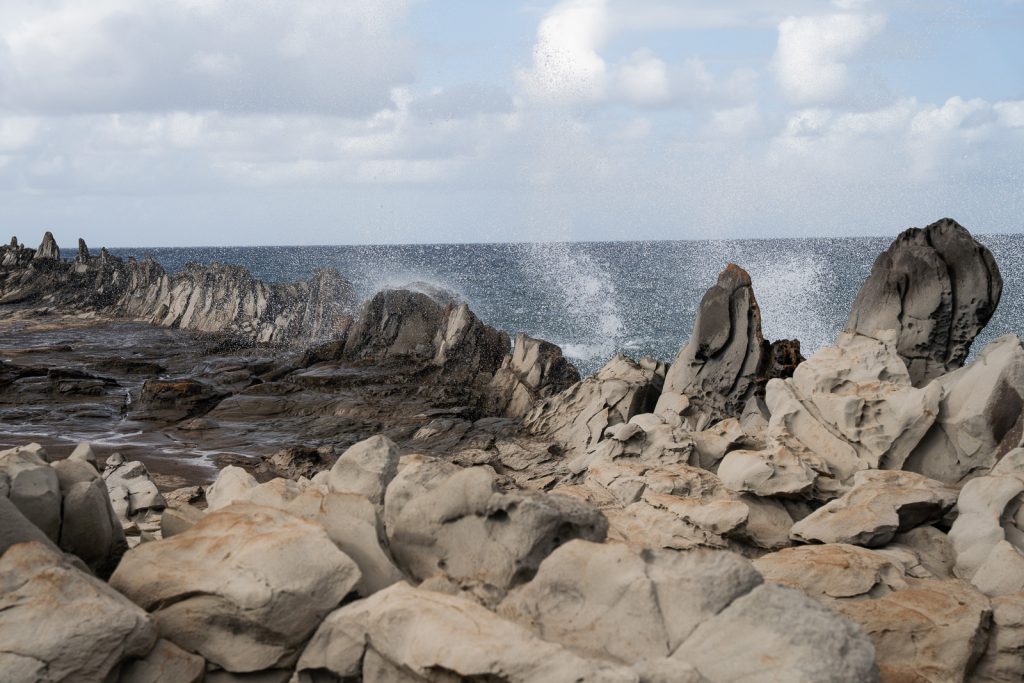
The trail winds along the shoreline past ocean cliffs, white sand beaches, tide pools, and dramatic lava rock formations, all with incredible ocean views. You can also use this trail to access Dragon’s Teeth along the way. This unique rock formation looks a bit like a set of teeth from some angles and is fun to watch waves crash onto!
It’s a mixed surface of pavement, boardwalk, dirt, and sand, and it’s accessible enough for most fitness levels. From December to April, keep your eyes on the water because humpback whales are frequently spotted offshore. And year-round, look for turtles! We saw 6 of them on the beaches along this trail.
Parking fee: Parking can be pretty expensive in this area ($20-$30/day), so we suggest finding free street parking. If you plan to spend a few hours in this area, make sure to find a spot you can park at for hours.
18. Nakalele Blowhole

Acid War Zone Trail
Distance (round trip): 1.4 miles
Elevation gain: 223 feet
Difficulty: Moderate
Where to Park
Reviews & Current Conditions
Nakalele Blowhole Trail
Distance (round trip): 1 mile
Elevation gain: 298 feet
Difficulty: Moderate
Where to Park
Reviews & Current Conditions
The Nakalele Blowhole is one of the coolest natural features in all of Hawaii. This lava tube along the coast can shoot ocean water up to 100 feet into the air!
There are two different ways to hike out to it. You can either hike the Acid War Zone Trail for more dramatic lava rock scenery or a slightly shorter route via the Nakalele Blowhole Trail. Just be warned, the terrain around the blowhole is rugged and the footing can be very uneven. Give lots of extra space between you and the blowhole, the eruptions are powerful and unpredictable!
Parking fee: You do have to pay to park here, which costs $20, regardless of how long you’re there. Since cell service is limited, we recommend paying for your parking in advance by texting 209 to 42222.
Tips for Hiking on Maui
Do not leave valuables in your car
This applies everywhere, but especially at the Waiheʻe Ridge and Lahaina Pali trailheads where break-ins have been reported. Take anything important with you or leave it at your accommodation.
Start early
Many of Maui’s hikes are exposed to the sun, and it gets hot and humid fast. An early start also helps you beat the afternoon clouds at higher elevation hikes like Waiheʻe Ridge. As a bonus, parking is much easier before 9 AM at popular trailheads.
Check conditions before you go
East Maui trails (especially Twin Falls and Pīpīwai) can close after heavy rain due to flash flooding. Always check the NPS website or AllTrails for current trail status before heading out.
Book reservations in advance
Several spots on this list require them, including Waiʻanapanapa State Park, Iao Valley, and Haleakalā’s sunrise viewing. Don’t wait until the last minute since popular time slots fill up weeks ahead.
Download offline maps
Cell service is spotty or nonexistent on many of these trails, especially up at Haleakalā and along the Road to Hana. Download your AllTrails maps before you leave your accommodation so you’re not caught without a map.
Respect the land and stay on marked trails
Many of Maui’s hiking areas are fragile and culturally significant. Stay on the trail, don’t pick plants, and leave everything as you found it.
Know your limits
The altitude at Haleakalā’s summit (over 10,000 feet) affects people differently, headaches, dizziness, and shortness of breath are common, even on short walks. Take it slow, drink water, and don’t push it if you’re feeling off.
Watch the weather
Maui’s microclimates are wild. It can be sunny in Wailea while it’s pouring in Hana. Check the forecast for the specific area you’re hiking in, not just the island overall.
What to Bring When Hiking on Maui

Hiking shoes
Maui’s trails vary wildly. Some are paved and mellow, while others involve rugged lava rock, muddy jungle paths, and stream crossings. We love our Altra Lone Peak trail runners (Adam’s, Kathryn’s) because they are lightweight and dry fast if they get wet.
Layers
This is especially important for Haleakalā, where summit temperatures can drop into the 30s and 40s°F even in summer. A warm, wind-resistant layer is essential up top!
Rain jacket
East Maui is the wet side of the island and can get drenched with little warning. Another important layer to pack is a rain jacket (Adam’s, Kathryn’s). This will especially be helpful if road tripping the Road to Hana or spending time on Maui’s Windward side (North and East Maui), where it’s a lot rainier.
Sun protection
Sunscreen, a hat, and sun-protective clothing are non-negotiable. The sun at high altitude (and on exposed coastal trails) is intense. We both wore a sun hoodie (Adam’s, Kathryn’s), sunscreen, sunglasses, and a hat pretty much every day. Adam wears KALIYADI sunglasses and Kathryn wears Ray-Bans.
Plenty of water & electrolytes
Maui is hot and humid, and you’ll sweat more than you expect. Bring more water than you think you need, and consider electrolyte packets to stay hydrated. Our personal favorite electrolytes are LMNT! Use this link to place your order and you’ll automatically get a free sample pack included with your purchase!
Bug spray
While most of Maui will be mosquito free, we regret not bringing bug spray on our most recent Road to Hana road trip. We got eaten alive at the Ke’anae Arboretum! So make sure to either pick up some spray when you get to the island or buy some before your trip.
America the Beautiful Pass
If you’re planning to hike at Haleakalā (both the Summit District and the Kīpahulu District), the America the Beautiful Pass pays for itself quickly and covers entry fees for the duration of your visit.
For more packing tips read our Maui Packing Guide before your trip.
Need more help planning your trip to Maui?
- 30+ Incredible Things to Do on Maui, Hawaii
- Ultimate 5 Day Maui Itinerary: Experience the best of the island!
- Our Top 20 Maui Travel Tips for First Time Visitors
- 15+ Must Visit Beaches on Maui
- 45+ Delicious Places to Eat on Maui, Hawaii
- The Ultimate Maui Packing List (with downloadable list!)
- Driving the Road to Hana in Maui: 20+ BEST stops & helpful tips!
- 9 fun things to do at Haleakalā National Park on Maui
- How to visit Haleakalā National Park at sunrise: Everything to know!
- Read all of our Hawaii travel guides
- Watch our Hawaii videos
Save this Guide to the Best Hikes on Maui
Pin this guide on the best hikes on Maui so that you can find it again later!



About the Author
This article was written by Tori, one of our Adventures of A+K team members. Learn a bit about her below!
Hi, I’m Tori! I live in Nashville, TN with my husband and two daughters. We travel as much as possible throughout the year, around a 9-5 schedule and with babies in tow! My travel blog, Tori Pines Travels, aims to help people plan action-packed and culture-rich vacations around their busy jobs, fitting in as much exploring as possible. When I’m not working for Adam and Kathryn or entertaining my little ones, I’m writing, cooking, crafting or exploring Music City!