Last updated on January 23rd, 2026
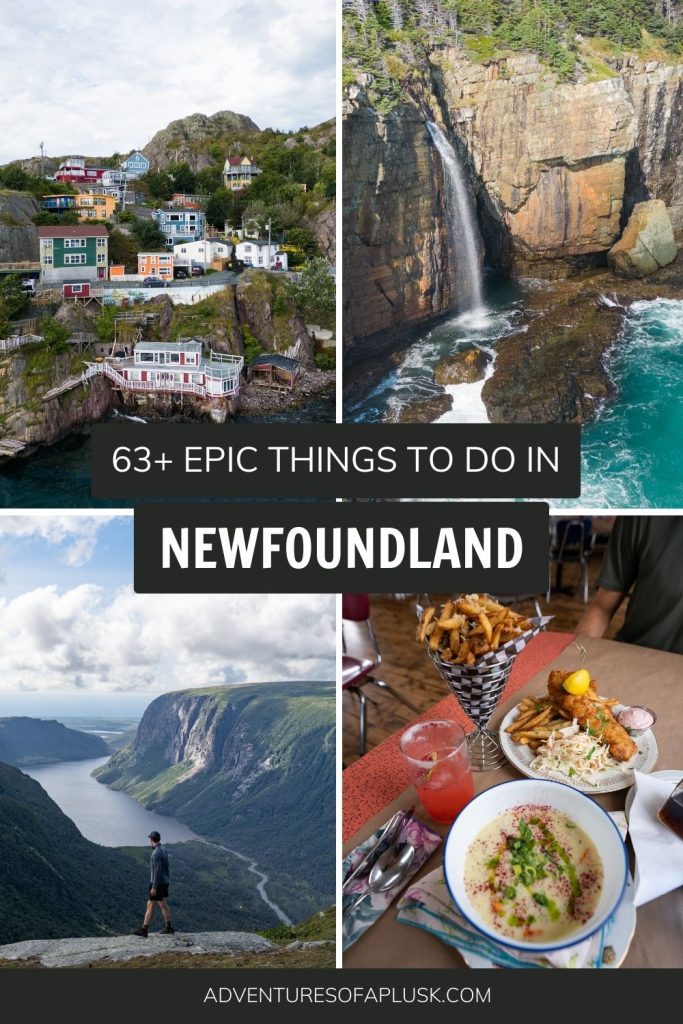
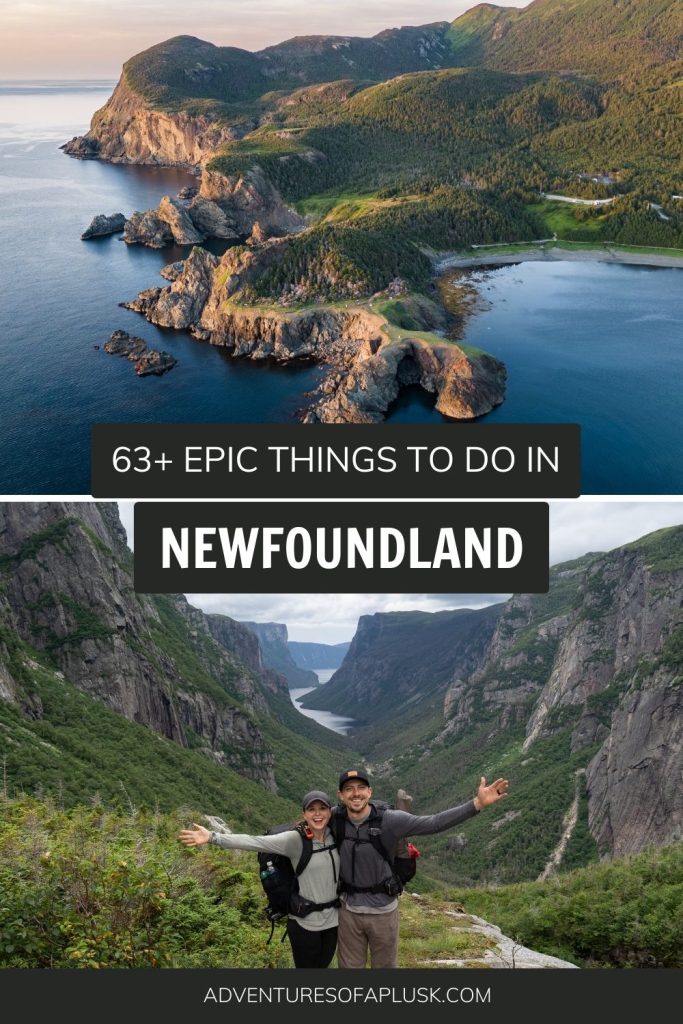
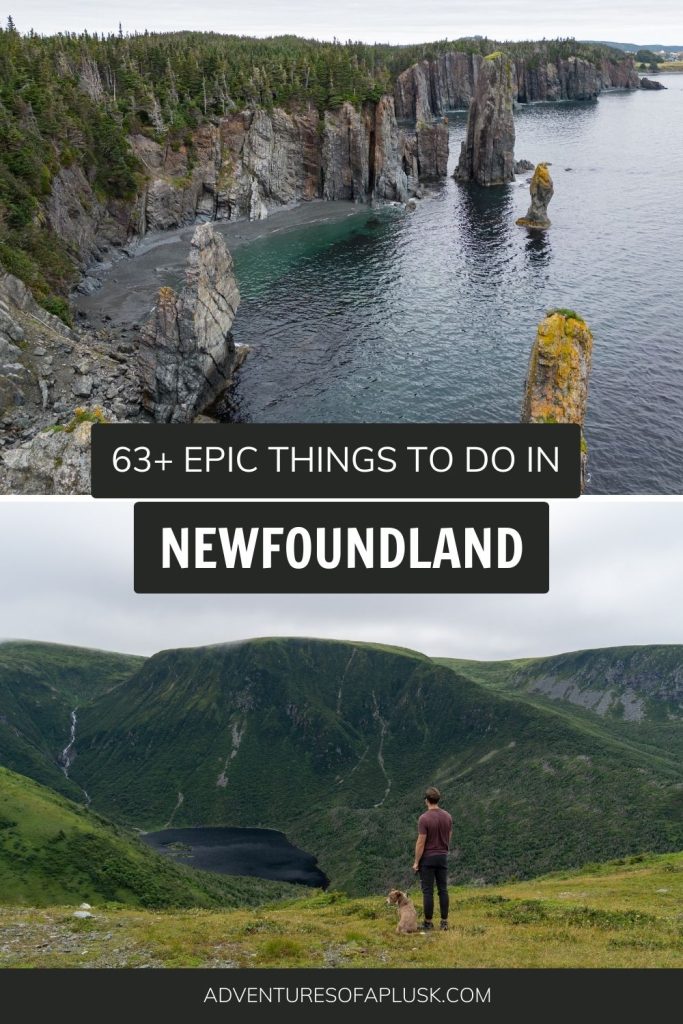
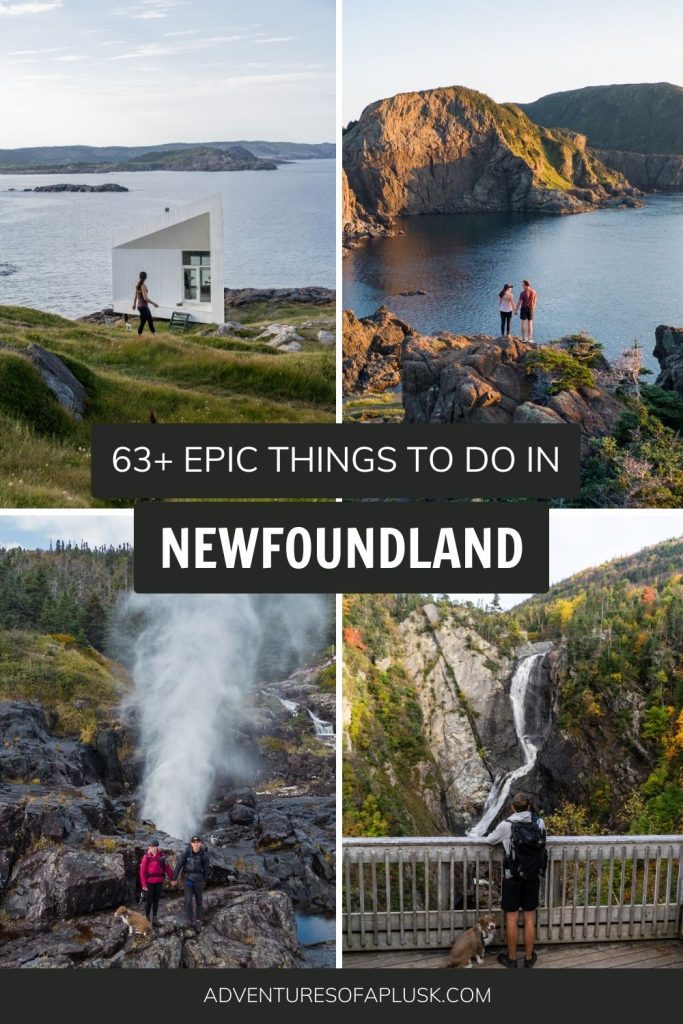
Newfoundland is North America’s best hidden gem. Discover 63+ EPIC things to do in Newfoundland, Canada from our experience!
Hands down our favorite province that we visited in Atlantic Canada was Newfoundland and Labrador.
Since it’s a bit more difficult to get to, it hasn’t experienced an explosion in tourism, giving it a more authentic and remote feel. Combine that with its EPIC scenery (like fjords!), charming villages, unique culture, plus kind locals, and it’s easily one of the best hidden gems in North America.
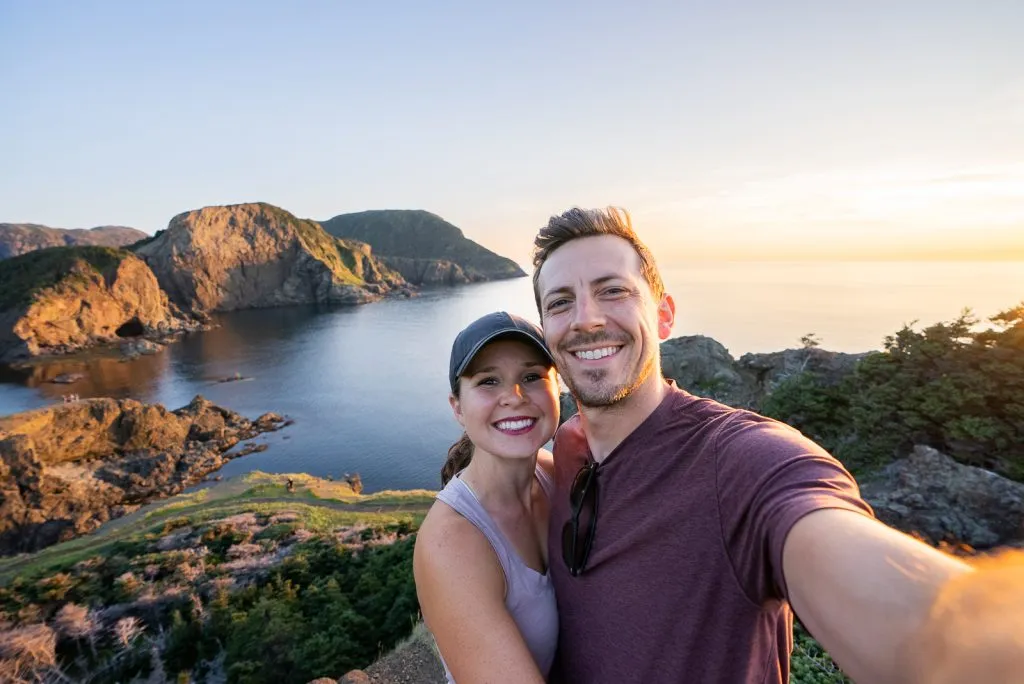
Watch us explore Newfoundland, including tons of gorgeous hikes, two National Parks, local eats, and so much more!
We spent about 7 weeks road tripping all around Newfoundland and fell in LOVE! During our time in the province we got to complete a bucket list backpacking experience, saw puffins, hiked on the earth’s mantle, had some of the best free campsites of our lives, and witnessed dramatic and grand scenery around every corner.
And if you want to visit this magical province for yourself, we’re sharing over 63 epic things to do in Newfoundland! Plus some helpful tips for your visit, like where to stay in each area, when to visit, and more.

- About Newfoundland and Labrador
- 55+ EPIC things to do in Newfoundland
- Channel-Port aux Basques
- Port au Port peninsula
- Corner Brook
- Gros Morne National Park
- St. Anthony
- Grand Falls-Windsor & Gander
- Twillingate Islands
- Fogo Island
- Terra Nova National Park
- Bonavista Peninsula
- St. John’s
- Avalon Peninsula
- Planning your trip to Newfoundland
Why trust us when planning a trip to Atlantic Canada?
We spent over 3 months traveling all around Atlantic Canada in our self-converted Sprinter van, visiting many of the popular sites, plus off the beaten path gems along the way. And instead of rushing through these areas like most people are forced to on vacation, we traveled slowly, allowing us to experience them more as locals. Because of this, we have tons of tips to help you plan your own Atlantic Canada adventure, whether it’s just for a week or for multiple months.
About Newfoundland and Labrador

Newfoundland and Labrador is one of four Atlantic Canada provinces, along with New Brunswick, Prince Edward Island, and Nova Scotia. It’s the easternmost province in Canada and consists of both the island of Newfoundland, plus Labrador, which borders Quebec on the mainland.
During our visit, we only spent time in the Newfoundland portion of the province. Nicknamed “The Rock,” this large island is home to copious wildlife (like moose, whales, puffins, and even some shy bears!), an annual migration of icebergs from the Arctic, its own unique dialect, fun traditions, and so much more. Being isolated from the rest of Canada, it has its own culture and feel, making you feel like you’ve been transported to another country.
63+ EPIC things to do in Newfoundland
Ready to explore Newfoundland? Below is our list of over 63 epic things to do in Newfoundland, based on our experience. Since we didn’t explore Labrador, we will only be sharing things to do in the Newfoundland part of the province.
We’ve organized this list by region, which we’ve color coded on the custom Google Map above. You can even save this map to your own Google Maps, so you can access it on the go! And if you’re trying to narrow down which places to visit in Newfoundland check out our guide outlining the 12 best stops!
Channel-Port aux Basques
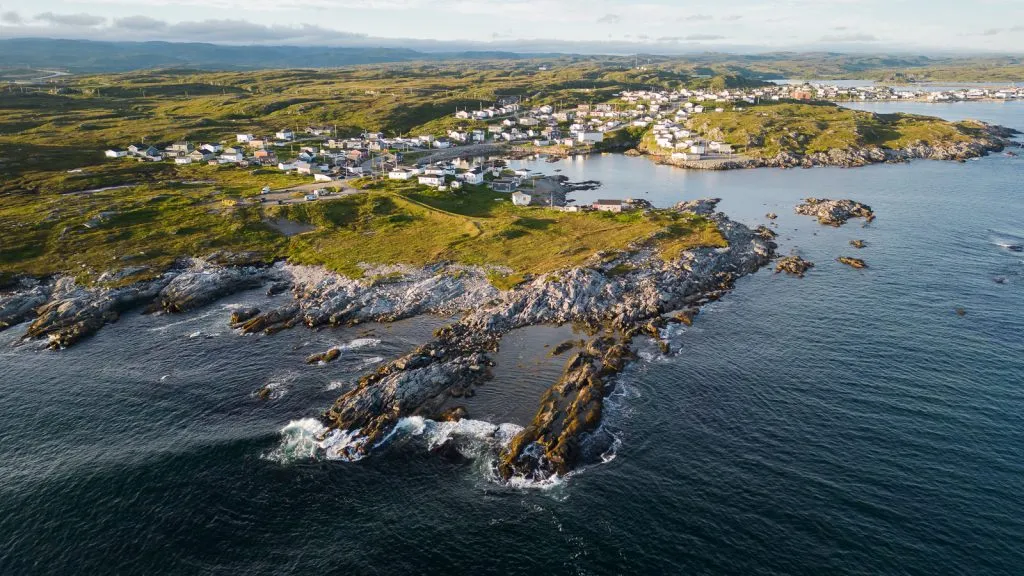
Channel-Port aux Basques is located in the far southwestern corner of Newfoundland. If you took the 7 hour ferry from North Sydney, Nova Scotia this is where you’ll start your Newfoundland adventure!
The area around Channel-Port aux Basques is beautiful (talk about a great welcoming view when you arrive!). But there isn’t much to do in Channel-Port aux Basques itself. So we suggest hitting the road right away, as there are a few cool spots to check out as you start driving north.
1. Get a photo at the visitor information center
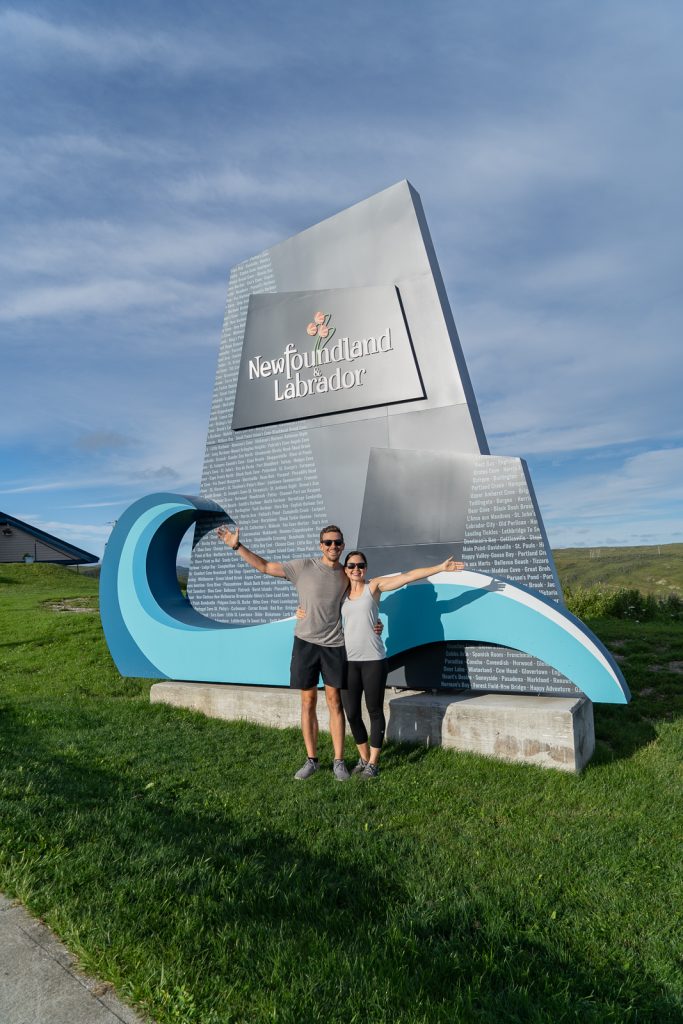
On your way out of Channel-Port aux Basques you’ll pass the Visitor Information Center. Be sure to stop here if you need any info and don’t forget to snap a photo with the big sign! This was our first stop when we got off the ferry and seeing the Newfoundland and Labrador sign was VERY exciting!
2. Visit the Wreckhouse
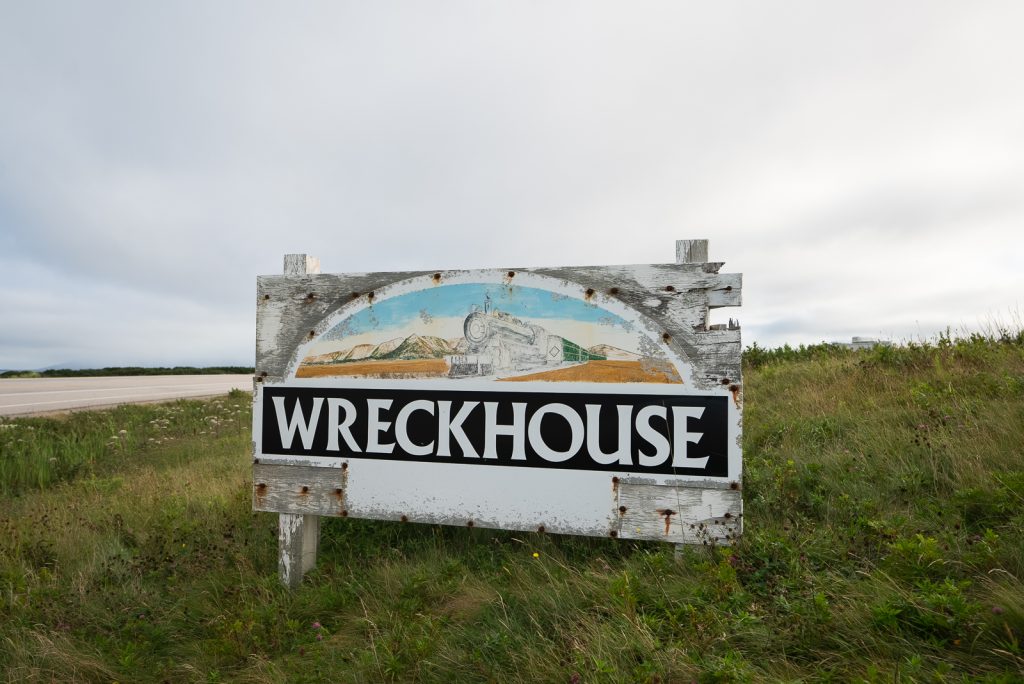
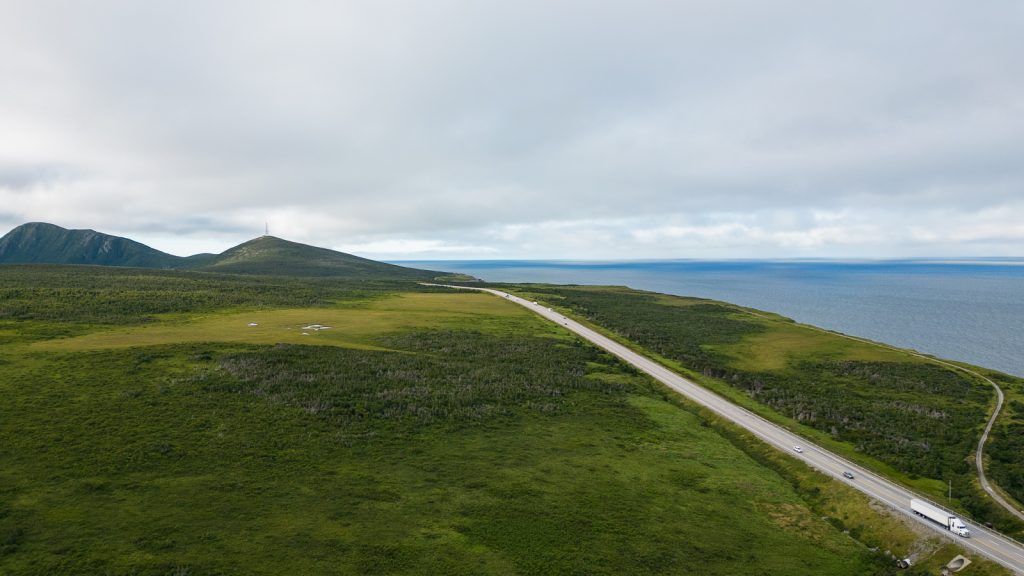
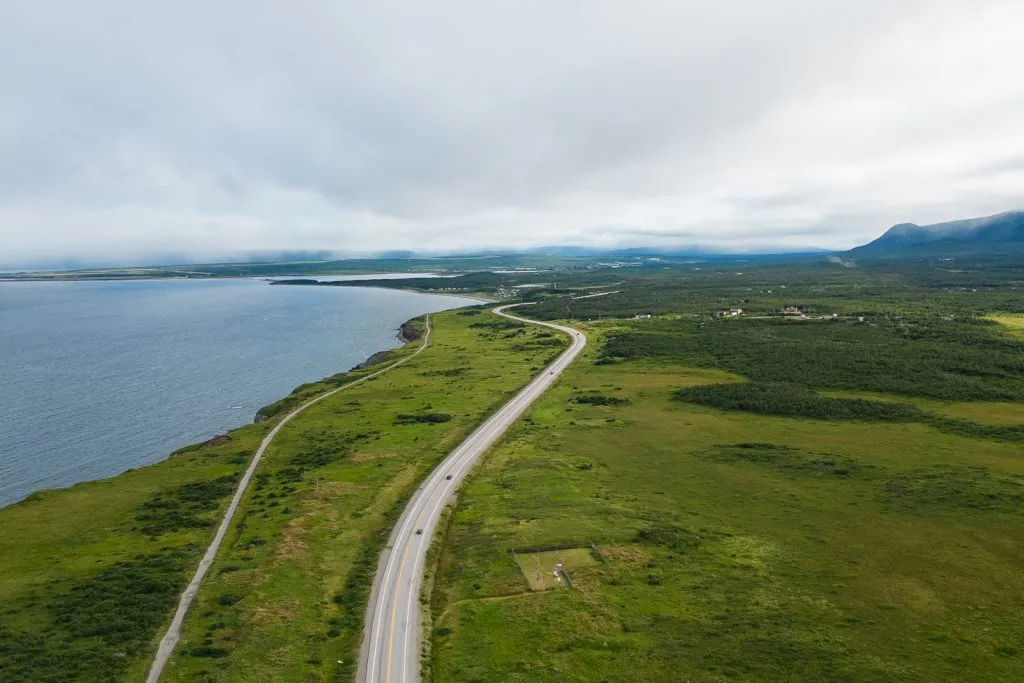
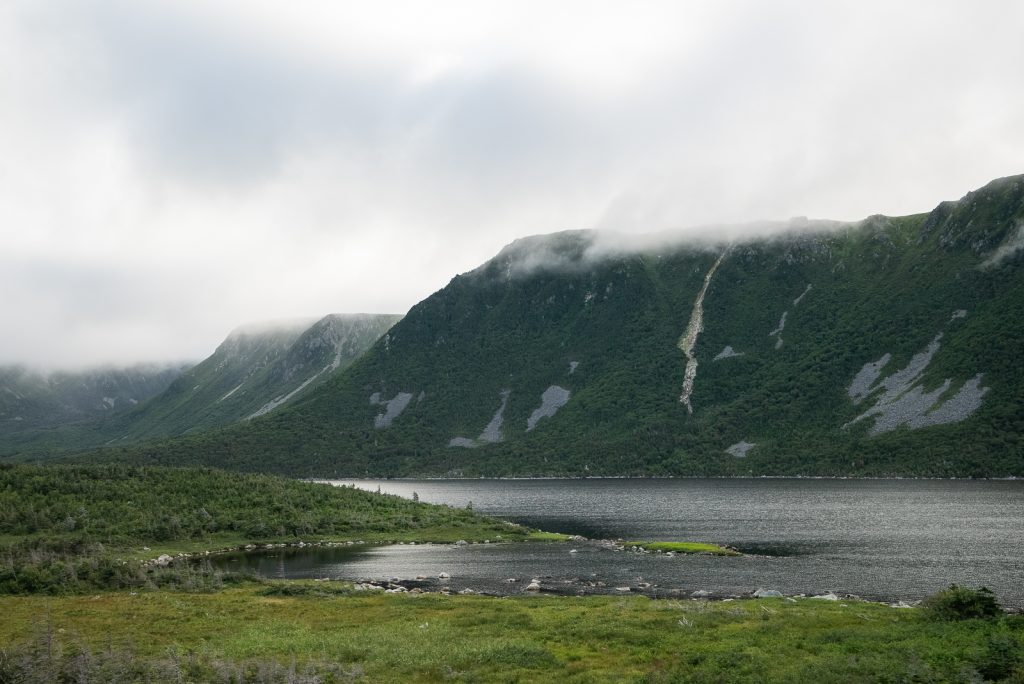
Newfoundland is known for being pretty windy and as you head north from Channel-Port aux Basques you’ll drive through an area called the Wreckhouse. This section is known for its crazy winds that can reach up to 200 km/h (124 mph) and has even blown trains off of tracks and fully loaded semi trucks off the road.
Thankfully there is a sign before you enter warning you of the current wind speed so you can either avoid the road or safely continue on.
Some people stay at this parking area after the ferry, but even if you don’t, we still suggest stopping here to see the views and the iconic Wreckhouse.
3. Hike the Starlite Trail
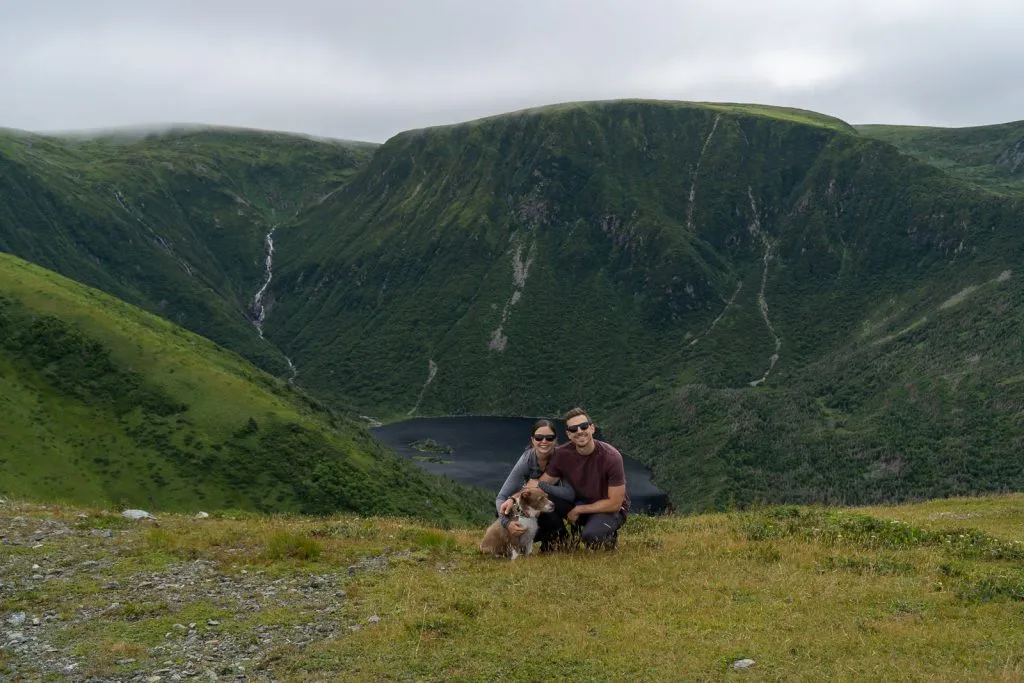
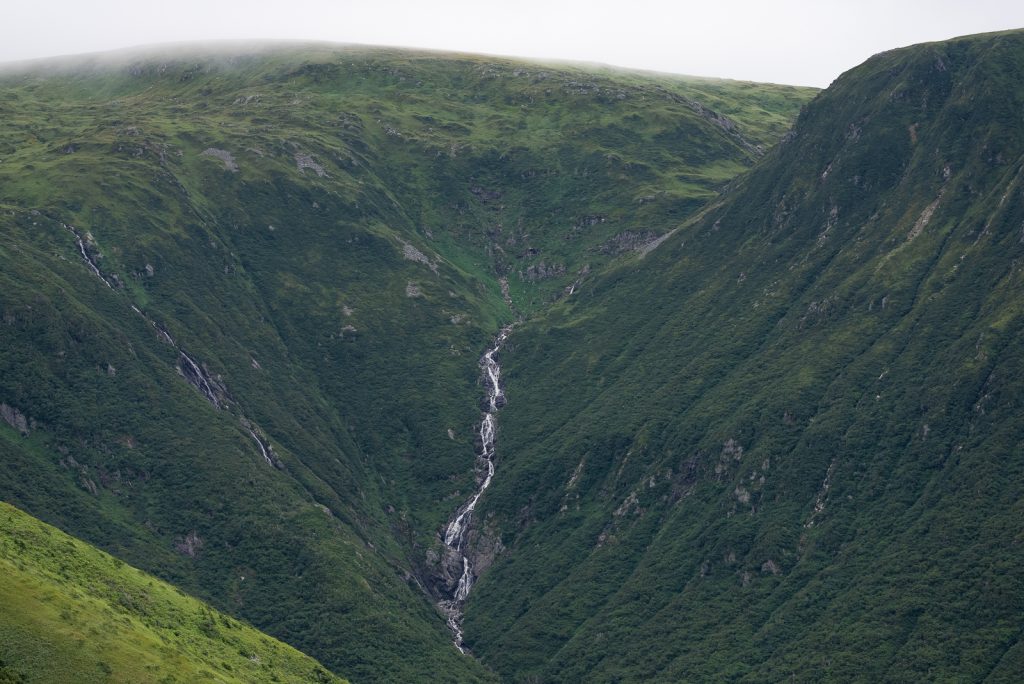
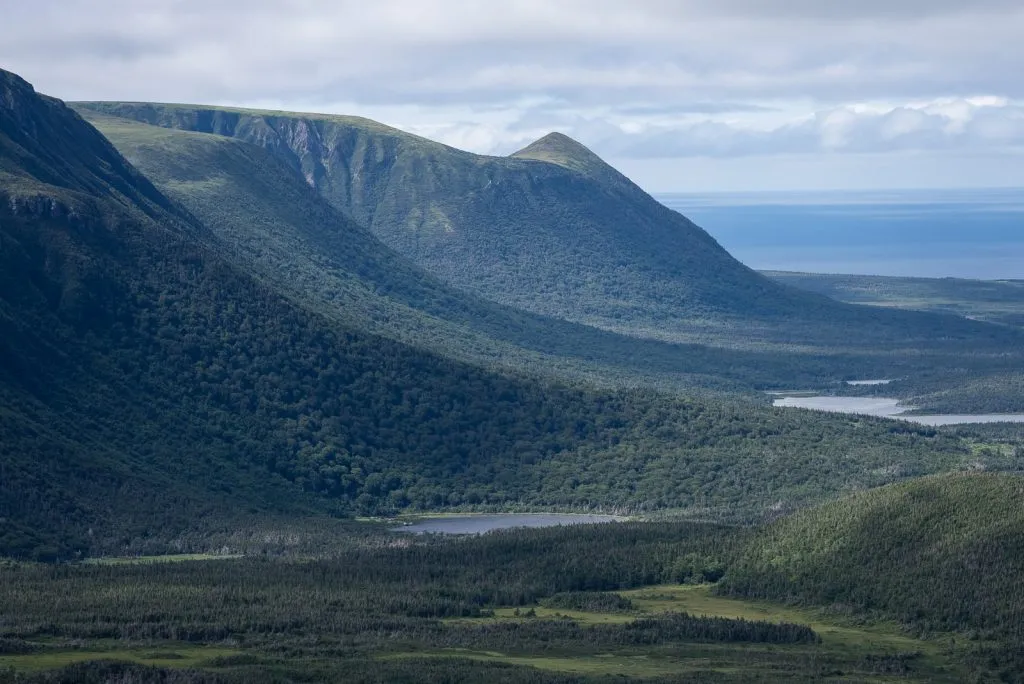
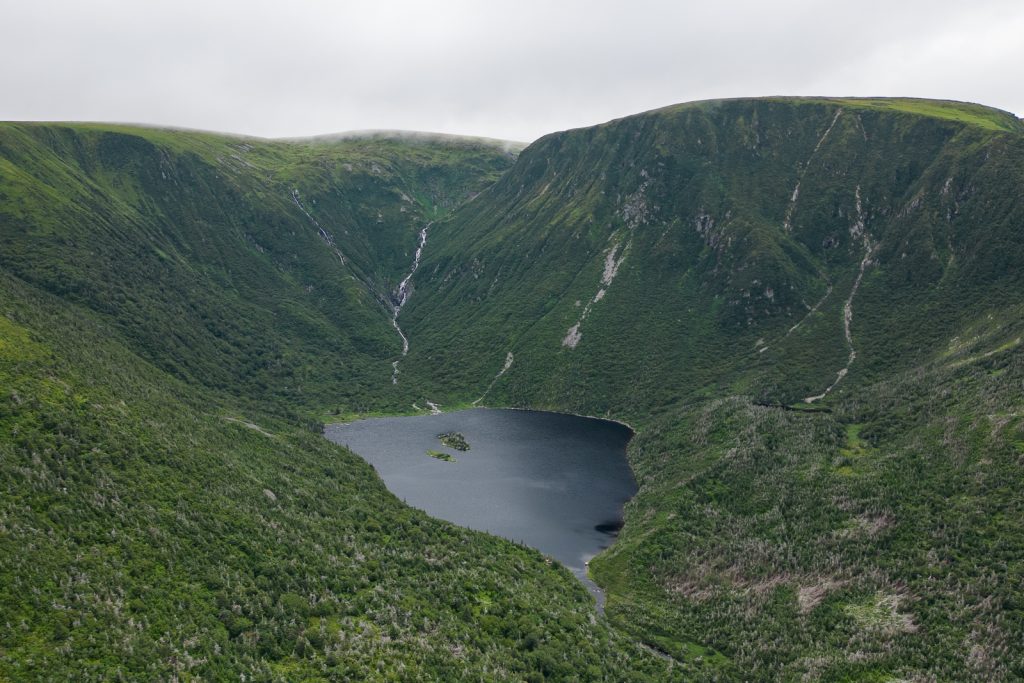
Just a 25 minute drive from Channel-Port aux Basques is one of our favorite trails in Newfoundland. The Starlite Trail is a 4.6 km (2.9 mile) trail that takes you to the top of a ridge overlooking a small lake with waterfalls in the background. It’s a quick (but steep) hike with a big bang for your buck!
Where to stay in and near Channel-Port aux Basques
Hotels and B&Bs: Hotel Port aux Basques, Right Off ‘Da Boat B&B, and St. Christopher’s Hotel.
Camping: JT Cheeseman Provincial Park and Grand Codroy RV/tent Camping.
Boondocking: Wreckhouse parking lot
Port au Port peninsula
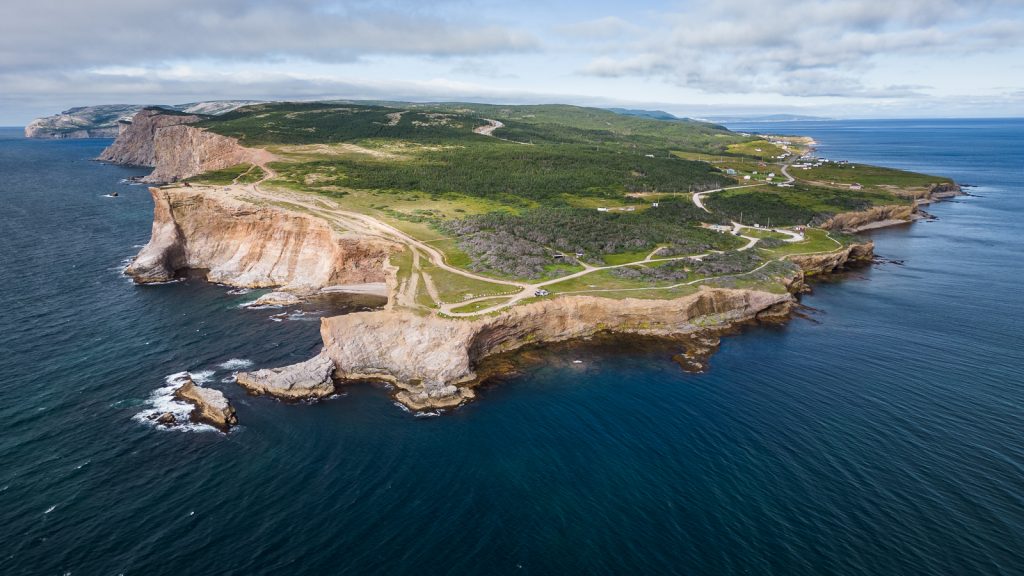
One thing that makes Newfoundland unique is its culture. It has a mix of French, Irish, English, and Indigenous cultures and is said to be unlike anywhere else in Canada. And one of those special places is the Port au Port Peninsula!
The Port au Port Peninsula is said to be the hub of French Newfoundland Culture. For hundreds of years, the French had fishing rights to the area and it wasn’t until 1904 that Newfoundland gained full control over the west coast. Because of this, the route on this peninsula is known as the French Ancestors Route.
Routes 460 and 463 make a circle around the perimeter of the peninsula and this drive can be done in about 1.5 hours. There is lots to see along the way and it’s a gorgeous drive with lots of tall cliffs, small communities, and beautiful vistas!
4. Walk The Gravels Trail
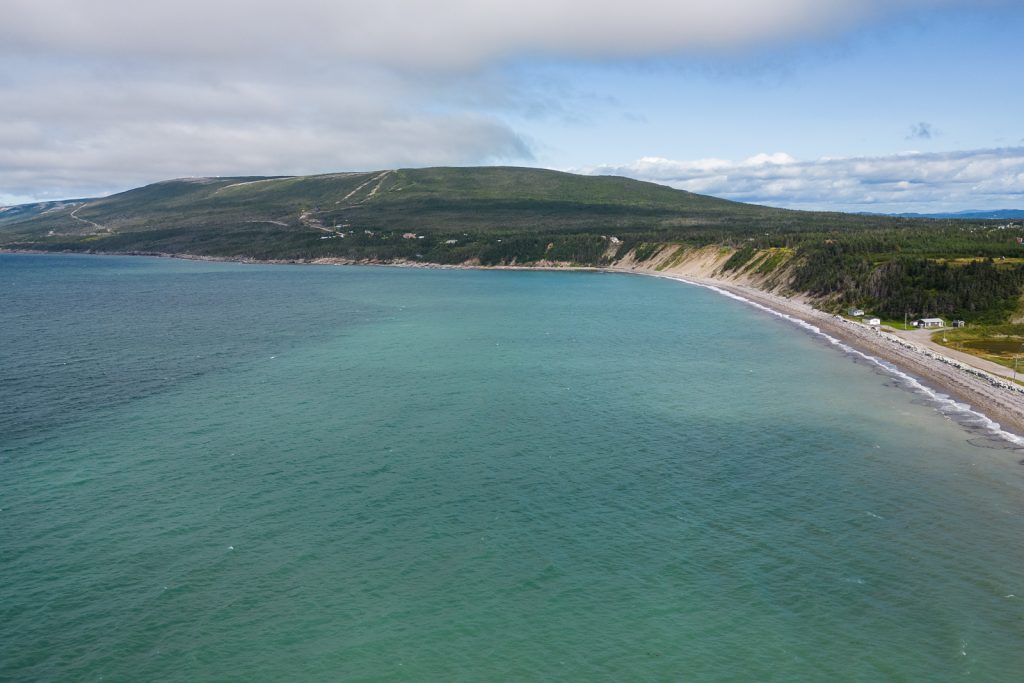
To reach the Port-au-Port Peninsula you’ll have to cross a small isthmus known as the Gravels. There is a nice rest area here as well as the Gravels Walking Trail, aka Danny’s Trail.
If you need to stop and stretch your legs, this looks like a great spot to do it! The trail is a flat 5.4 km (3.4 miles) with panoramic ocean and mountain views along Port au Port Bay.
5. See Hidden Falls at Sheaves Cove
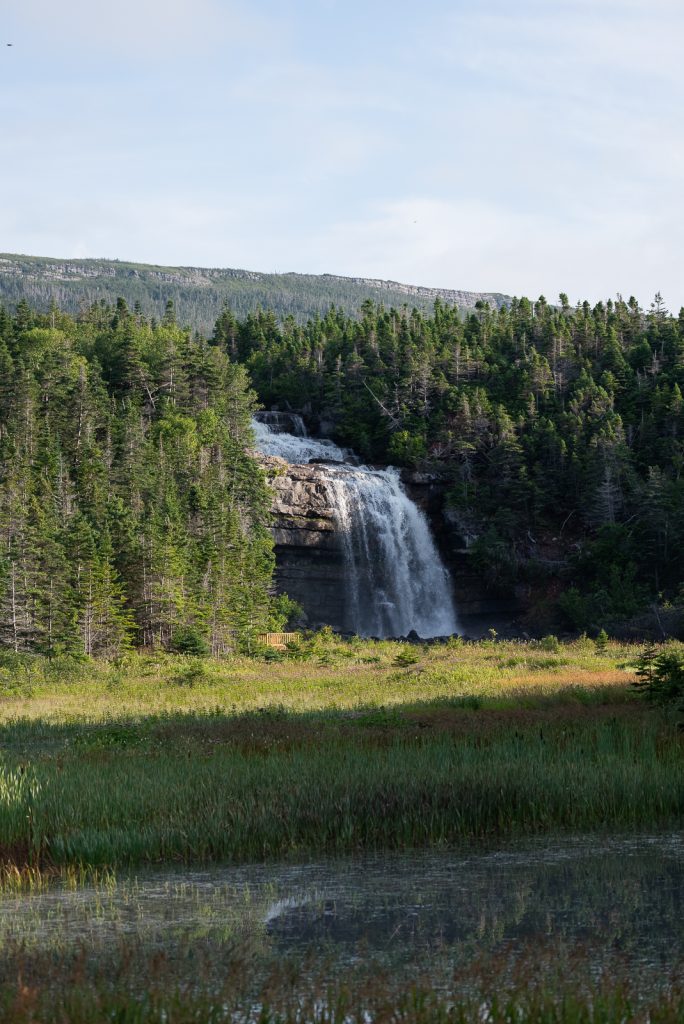
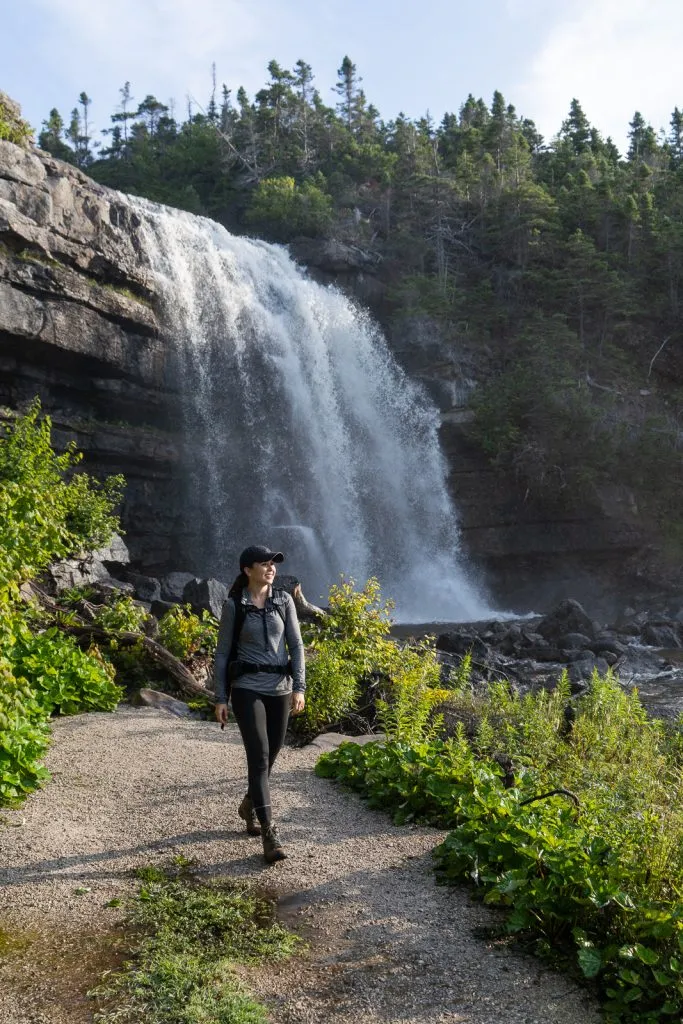
Hidden Falls is, as the name implies, a hidden waterfall from the road. If you didn’t know it was there you’d never see it. But this is a waterfall you don’t want to miss!
The waterfall is on private property, but thankfully the landowner has made this waterfall accessible and created a small park out of it. There are actually two waterfalls, a stream, a rocky beach, and nice paths to walk. You can camp here for free too!
6. Visit Cape St. George
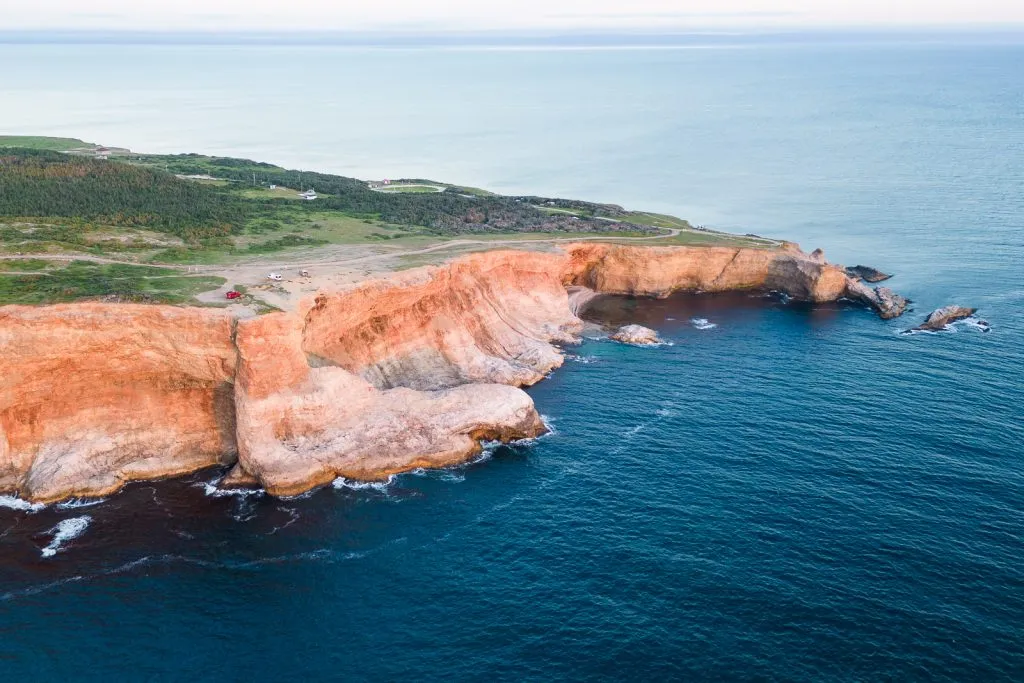
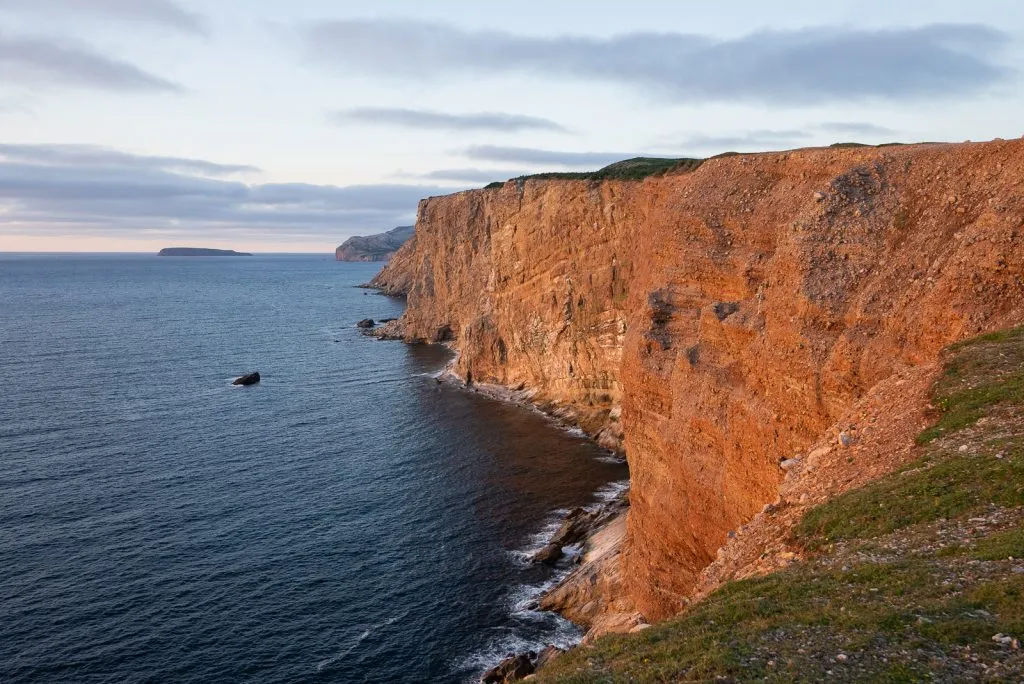
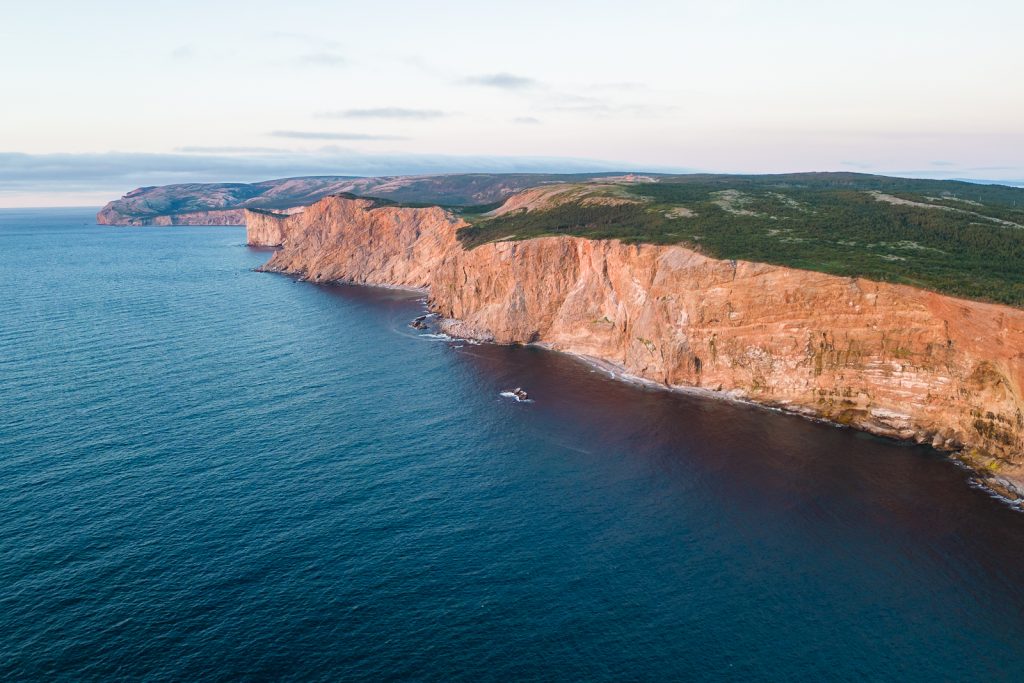
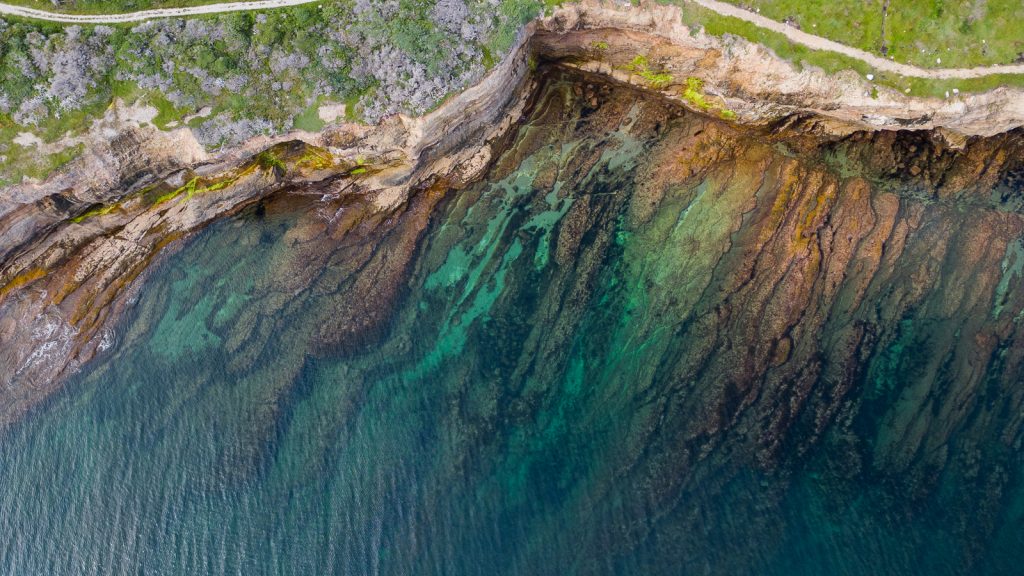
Boutte du Cap Park is a must visit spot! It sits at the southwest corner of the peninsula, hundreds of feet above the ocean. The views seem to go on forever from here!
At the park you’ll find some picnic tables, an Acadian monument, and the Breadcrumb Trail (7.7 km/4.8 miles) that follows the coast. There is also a traditional french bread oven that some locals still use and will sell bread during certain hours from July through August!
7. Have Tea by the Sea
If you’re looking for a spot of tea, stop into Tea by the Sea. This little cafe offers desserts, homemade baked goods, sandwiches, and of course tea all with a gorgeous view of the sea!
Where to stay on the Port au Port Peninsula
Hotels and B&Bs: Inn at the Cape, Razoolies Inn (Stephenville), Days Inn by Windham (Stephenville)
Vacation rentals: Momma’s Nest (Stephenville) and Lovely Beach Loft Getaway.
Camping: Zenzville RV Campground
Boondocking: The BEST free camping here is at Cape St. George. There are 3 designated campsites here, as well as potable water. These sites are free to use and are tucked in the brush to block the wind. If those are taken or you want a more open site, continue past them up the hill to a more open, flat area. There is lots of room for many rigs in this area.You can also stay at Hidden Falls!
Corner Brook
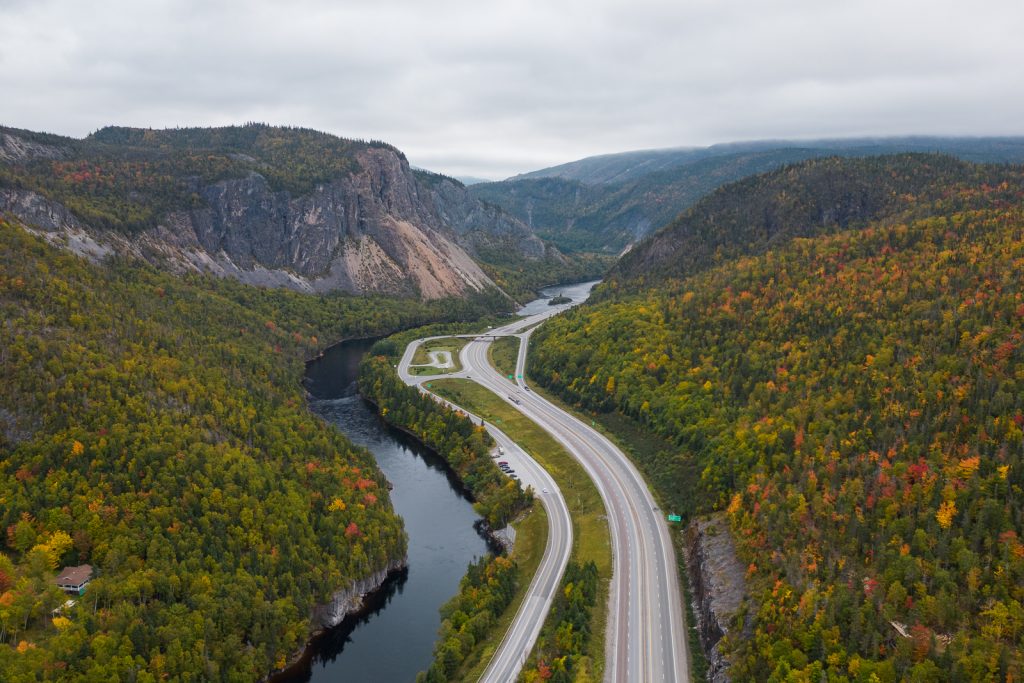
Corner Brook is the second largest city by population in Newfoundland, behind St. John’s and largest on the west side of the island.
The town and area was surveyed by the famous Captain James Cook in 1767, where he apparently honed his surveying and cartographic skills. It sits at the mouth of the Humber River and is surrounded by a large body of water and mountains.
Since it is the largest city on the west side, it is the best spot to provision when road tripping across the province. Here you’ll find multiple large grocery stores (we love Dominion!), a Walmart, and Canadian Tire. Make sure to stock up, as the smaller town grocery stores have limited options, especially with meat and produce. For instance, we could not find boneless chicken in many smaller towns.
8. Visit Bottle Cove
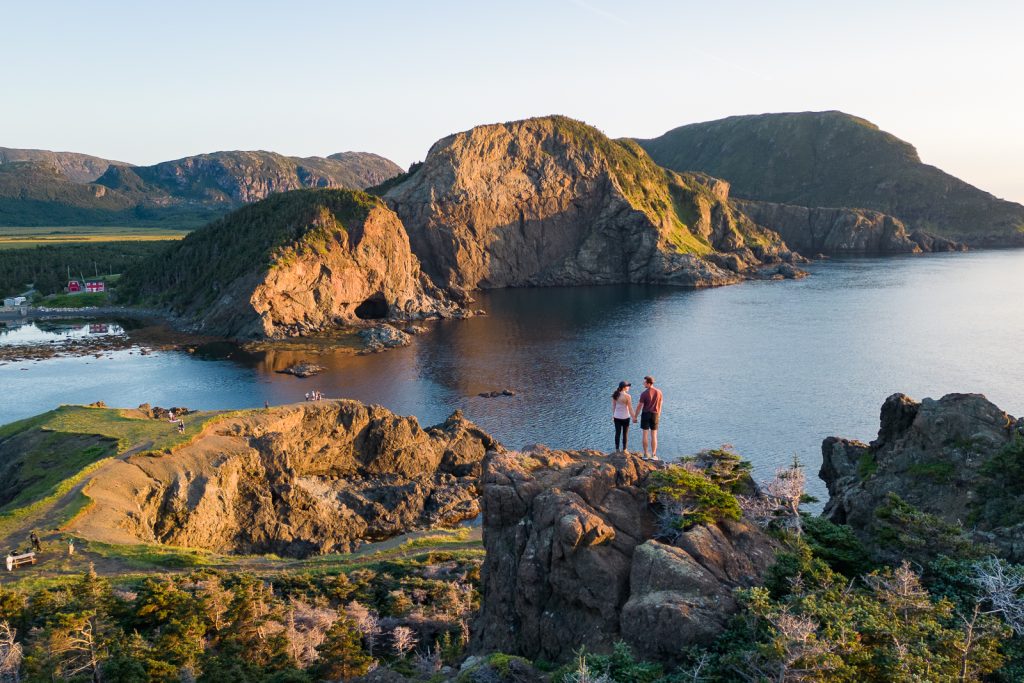
One of our absolute favorite spots in all of Newfoundland is Bottle Cove near Lark Harbour, just under an hour (very scenic) drive from Corner Brook. While you can view the cove from ground level, the best view is from Sunset Rock. You can take this short trail to reach this rock outcrop for spectacular views of the whole area. And the rock is named “sunset” for a reason, we highly recommend watching the sun set from here!
To learn more about this area and the best things to do, check out our guide to visiting Bottle Cove and Lark Harbour!
9. Hike the Cedar Cove Trail
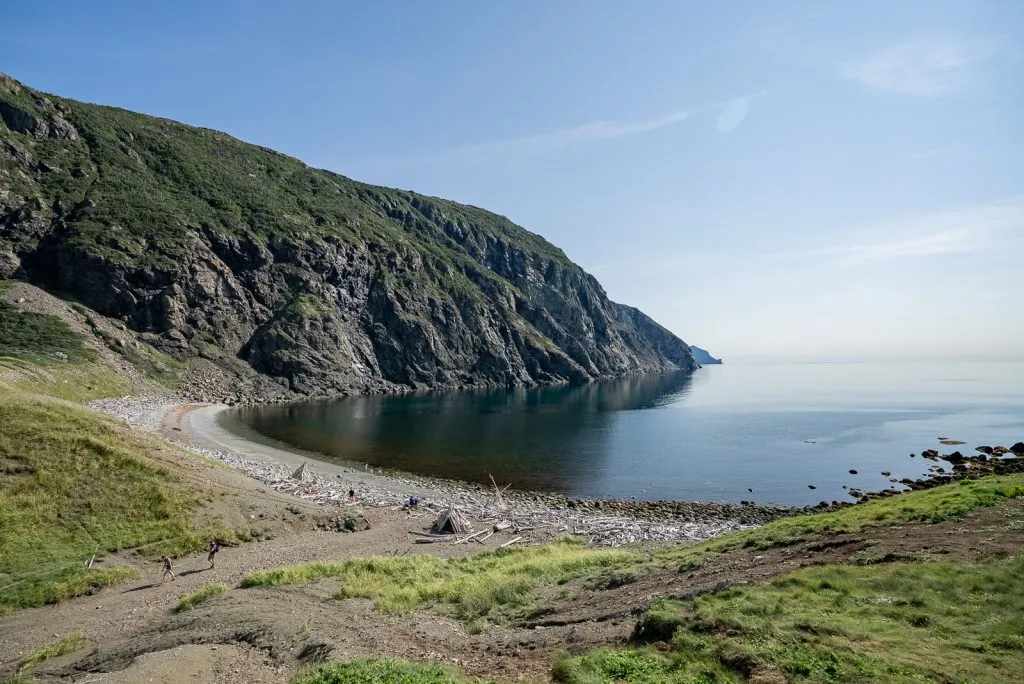
Not far from Bottle Cove is Cedar Cove, also known as Wild Cove, which is another gorgeous trail and area to explore.
You’ll need to take the 3.7 km (2.3 miles) Cedar Cove Path to reach the cove. It is a pretty flat, but wonderful trail. You’ll walk through a bit of forest adorned with recycled sea trash that has been repurposed as art. Once at the cove, you can hike down the small cliff to reach the rocky beach that is bookended by tall cliffs. This was a spot we would have loved to relax at for the day!
10. Cape Blow Me Down Trail and Copper Mine Falls Trail

The Cape Blow Me Down Trail is a pretty steep one, but so worth it! You start the hike from the Copper Mine Falls Trail parking. The trail leads you up a steep climb through the forest, before emerging above the trees the rest of the hike.
Once you’re on top, you’ll have amazing panoramic views of the Bay of Islands, rolling hills, and mountains.
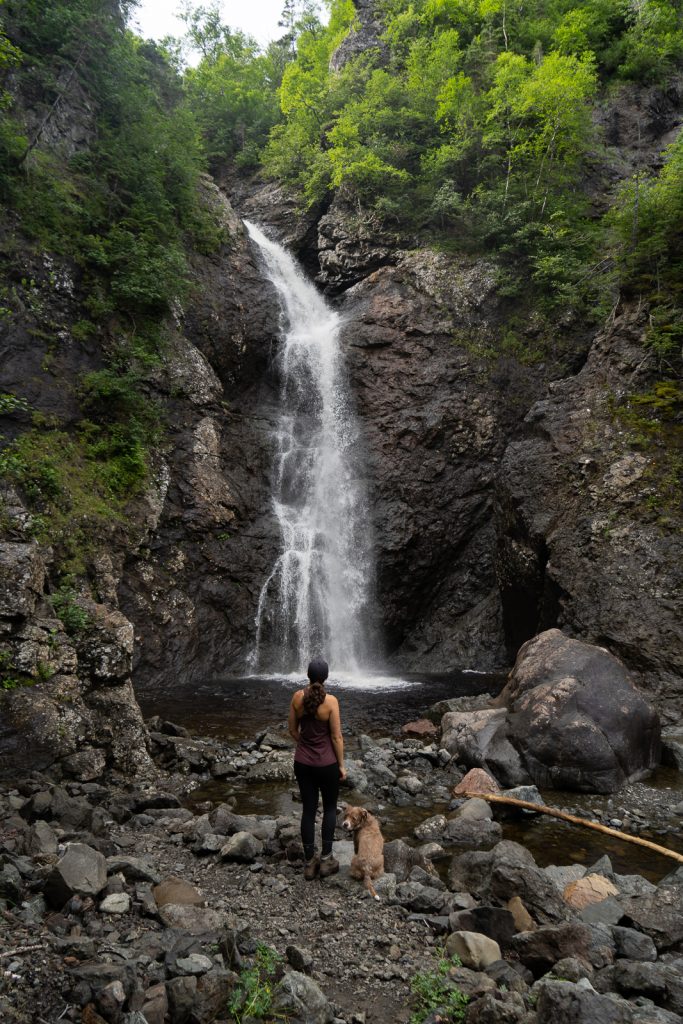
After hiking back down, don’t forget to follow the less than 1 km (0.5 mile) Copper Mine Falls Trail. This is a tall waterfall with a large pool at the bottom. And on a warm day it is a perfect spot to take a dip or just feel the mist!

11. Hike the Man in the Mountain Trail
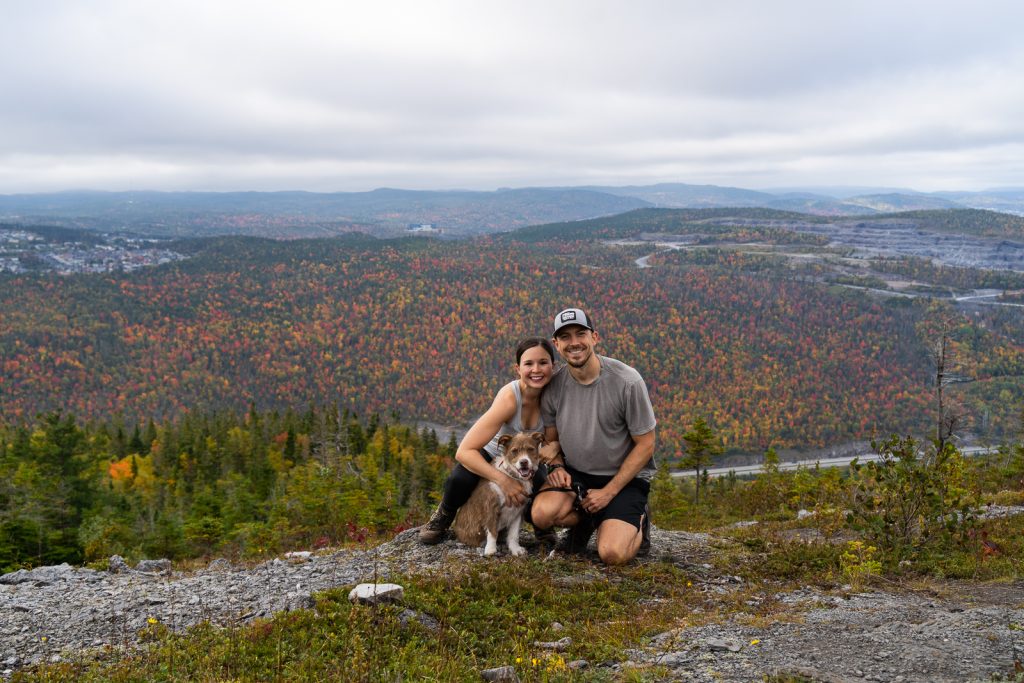
Just east of Corner Brook is the Man in the Mountain Trail, also known as the Humber Valley Trail. It climbs over 500 meters (1,702 feet) with some rooty and rocky sections. But once you reach the top, you’ll have amazing views of the Humber River Valley below. We hiked this trail to see some of the area’s beautiful fall colors and loved it!
12. Visit Marble Mountain Ski Resort
If you happen to be in Corner Brook in winter, you can check out Marble Mountain Ski Resort for some skiing! In the summer, you can take a chairlift ride for amazing views and go ziplining.
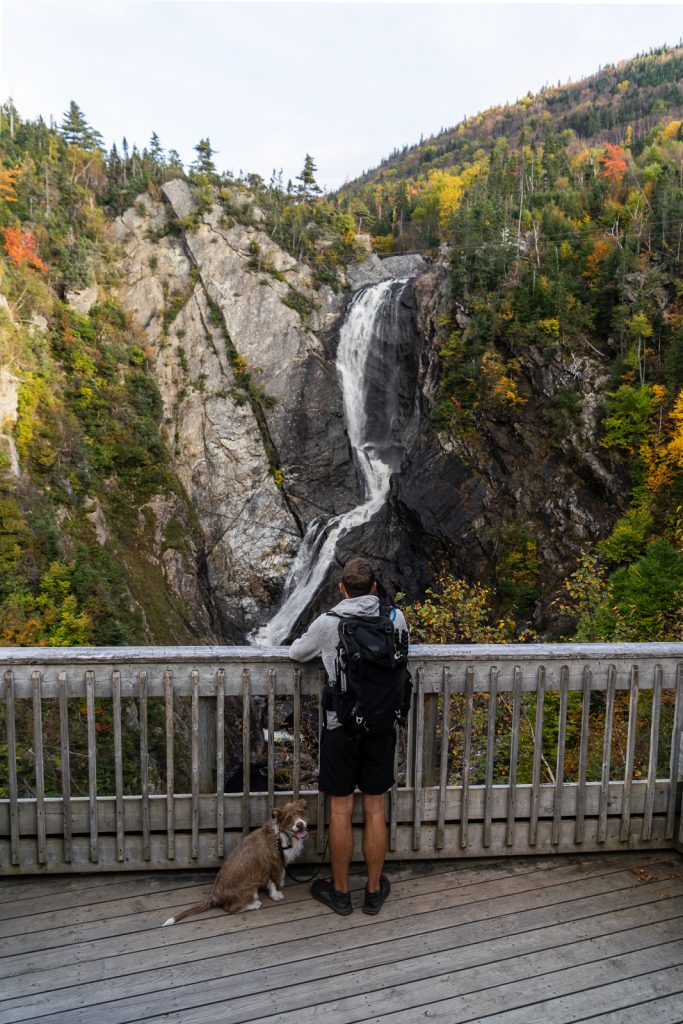
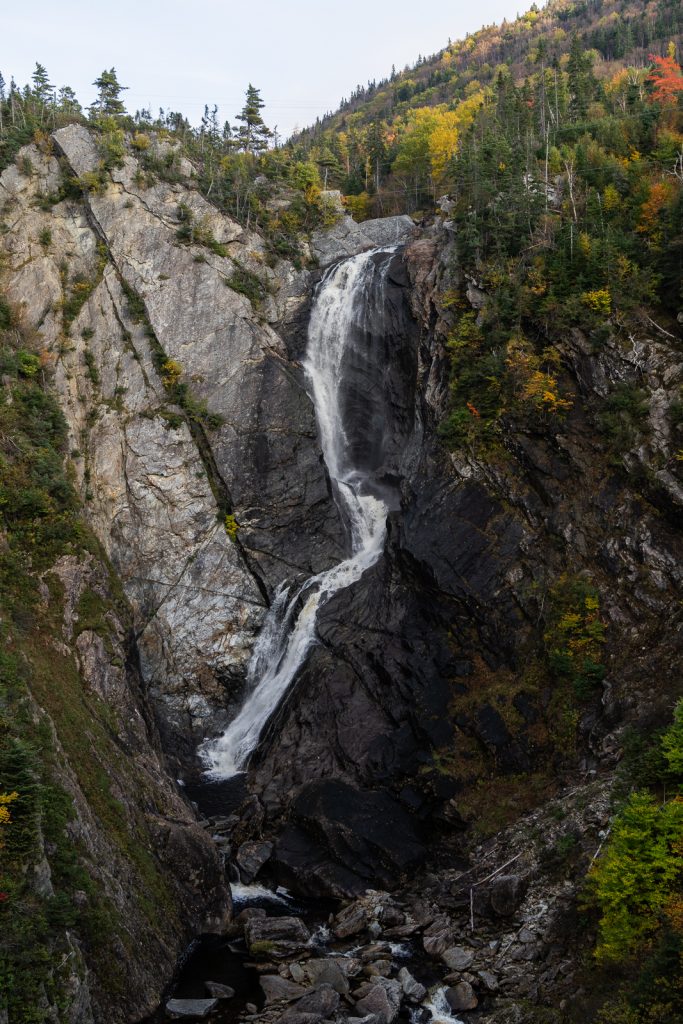
13. See Steady Brook Falls
Near Marble Mountain Ski Resort is Steady Brook Falls. It is a quick hike to reach a nice viewing platform overlooking the impressive waterfall. You can continue on further to get up close to it too!
14. Explore Margaret Bowater Park
Margaret Bowater Park is a beautiful public park in Corner Brook. At the park you can find your typical park amenities like picnic areas and a playground for the kids, plus a swimming area and our favorite part, the Corner Brook Stream Trail Network. The network has some leisurely strolls along the river and pond, plus some trails with more challenging elevation changes. We loved walking with Kona here!
Where to stay in Corner Brook
Hotels: The Hew & Draw Hotel and Appalachian Chalets & RV.
Vacation Rentals: Central Corner Brook 2 bedroom apartment, Tiny Home with Ocean View, Downtown Ocean View, and Bottle Cove Chalets & Glamping.
Camping: Blow Me Down Provincial Park, Kinsmen Prince Edward Campground & RV Park, and Appalachian Chalets & RV (we stayed here on our way out of Newfoundland to charge our van batteries)
Boondocking: Cape Blow Me Down trail parking lot (we stayed here and recommend it if hiking the trail early), Steady Brook Falls parking lot, and Humber Arm South Day.
Gros Morne National Park

Gros Morne National Park is located on the west coast of Newfoundland, north of Corner Brook. The park is known for its fjords, sea caves, glacial valleys, and unique geology. This was our favorite part of Newfoundland, with some of the best hikes on the island. Below are some of our favorite things to do in Gros Morne National Park, but you can find even more ideas here!
15. Go on the Western Brook Pond Boat Tour
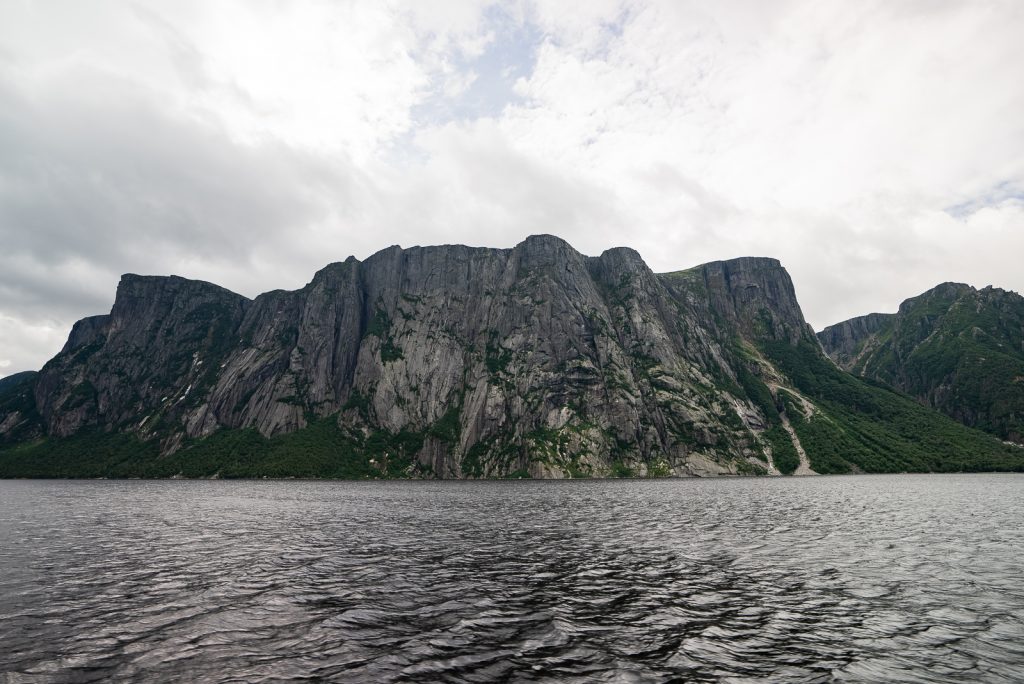
One of the best things to do in Newfoundland’s Gros Morne National Park is the Western Brook Pond boat tour (additional fee). This is a 16 km long freshwater fjord, carved out by glaciers during the ice age 10,000 to 25,000 years ago. Its towering rock walls, with waterfalls that cascade down, reach up to 600 meters (1968 feet) tall and make you feel absolutely tiny as you cruise alongside them. It is a truly jaw dropping sight and one of the most spectacular things we have seen in North America!
Note: This boat tour does require a flat 2.7 km (1.7 mile) walk from the parking area out to the boat terminal.
16. Explore the Tablelands

The Tablelands area of Gros Morne National Park is quite possibly the most unique place we have ever hiked because you get to hike ON the earth’s mantle…which is WILD!
About 500 million years ago, huge sections of the earth’s mantle were pushed up from underneath the ocean in a tectonic plate collision. And over the past 250 million years, the top layer has been eroding away. While this isn’t the only place in the world where the mantle is exposed, it is one the most accessible.
To experience it, you can hike the Tablelands Trail on your own, both on a maintained or off trail route, or go on a free guided hike with a ranger! For more information on all of the options, check out our complete guide to hiking the Tablelands Trail.
17. Hike the Baker’s Brook Falls Trail
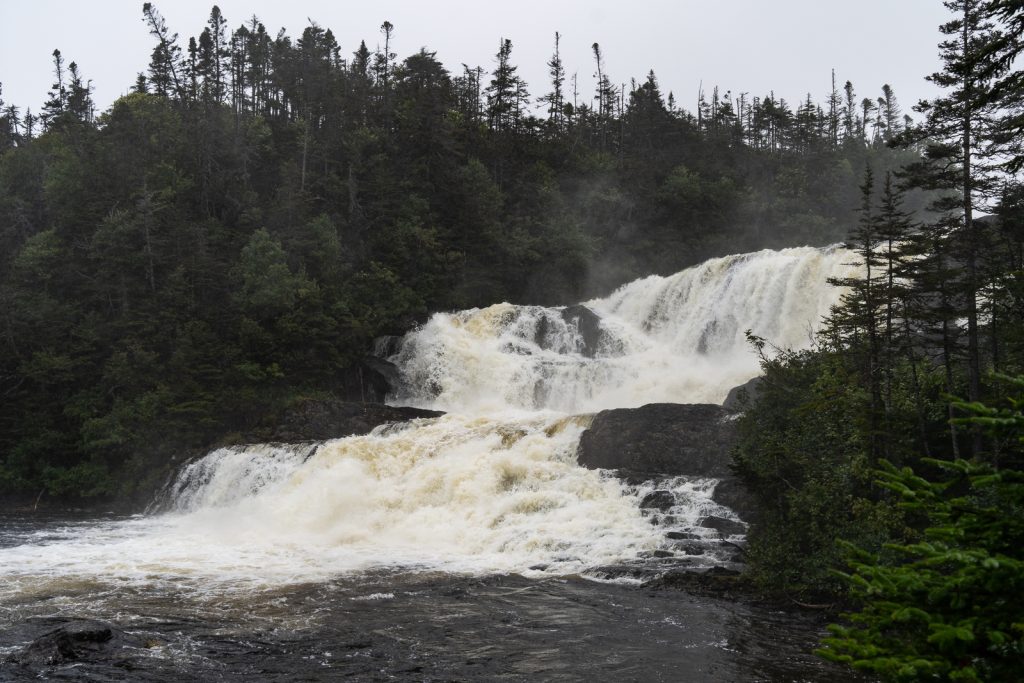
The Baker’s Brook Falls Trail is a 9.1 km (5.7 miles) trail that takes you through the forest and by a pond, to an impressive waterfall, with multiple viewpoints. Along the way, you’ll get to walk through a moose exclosure, which is designed to keep moose out in order to demonstrate the effects moose have on the forest.
18. Summit Gros Morne Mountain

One of the most popular trails in the park is the park’s namesake, Gros Morne Mountain Trail, which is the second tallest mountain in the park at 806 meters (2,644 feet). This is a beast of a trail, but so worth it!
The summit of the mountain can be accessed two ways, from the Long Range Traverse, which requires a permit and off trail navigation, which is what we did. Or from the trailhead, which is the most common approach.
This trail climbs roughly 864 meters (2,847 feet) over about 8 km (5 miles) one way. The first part of the trail is very well maintained and along the way there are a few features to admire like a raging waterfall and Gros Morne Lake.
The trail ends about 4.5 km (2.8 miles) in. You can either turn around here or continue to reach the summit. This should ONLY be done by those who have hiking experience, plenty of water with them, and are physically able.
From here, you’ll climb a steep scree field to the top. Alternatively there is another option through Ferry Gulch, but it is recommended to take the scree field up and Ferry Gulch down. Once at the top, the best view is if you go to the northern edge, which overlooks Ten Mile Pond!
19. Hike the Lookout Trail
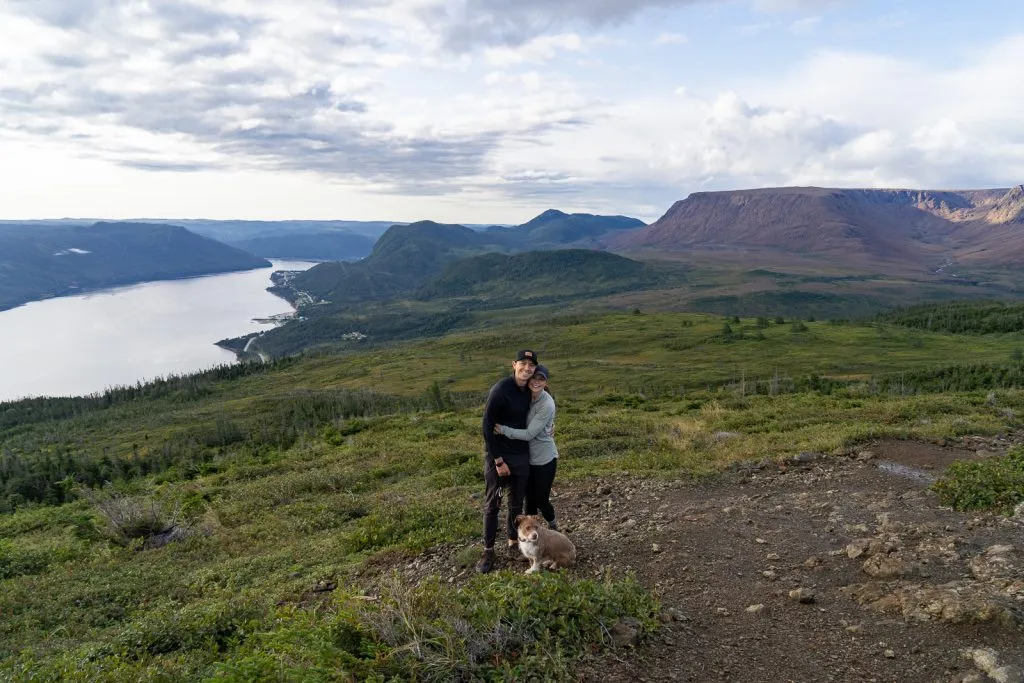
Located in the southern section of the park, near the Discovery Centre is the Lookout Trail. The trail climbs through the forest, but you’ll quickly emerge onto a highland plateau with views of Bonne Bay, Gros Morne Mountain, the Tablelands, and the Lookout Hills. We think this hike has the best effort-to-view ratio in the park!
20. Hike the Green Gardens Trail

One of the more unique hikes in Gros Morne National Park is the Green Gardens Trail. The trail starts in the barren Tablelands, leads you through the forest to the coast, where you can hike down to the beach, plus see beautiful coastline, sea stacks, and cliff top meadows. And since this area was long used as a summer range for livestock of the residents of Trout River, you may even see some sheep! We didn’t get so lucky, but we saw evidence of them.
21. Visit Rocky Harbour

Rocky Harbour is the closest town to the main area of Gros Morne National Park. While not in the park, it is the perfect basecamp. You can find different lodging options, plus restaurants. We recommend going to Treasure Box to try a moose burger and Sweet Rock Ice Cream for some of the best ice cream in the province! (But you also have to check out Cows Creamery in Charlottetown, PEI if you’re going there for more delicious ice cream!)
And if you need any last minute camping meals or gear, check out Out East Adventure Centre. They are super friendly and have a great selection! They also offer tours, including the Western Brook Pond day hike and multi day guided trips.
22. See the Lobster Cove Head Lighthouse
Right in Rocky Harbour is the Lobster Cove Head Lighthouse, which was built in 1897. And while you can’t go to the top, you can go inside to learn a bit more about it! You can also explore the tide pools around the lighthouse at low tide.
23. Conquer the Long Range Traverse

In the summer of 2023, we tackled one of our bucket list backpacking trips: the Long Range Traverse in Newfoundland’s Gros Morne National Park. This almost 50 km (31 mile) hike gains around 1,700 meters (5,577 feet) of elevation as it traverses the Long Range mountains, the northernmost section of the Appalachian Mountains.
With zero maintained trail to follow, thick tuckamore, river crossings, and wet, boggy terrain, it’s a challenge that is said to be both miserable and rewarding. And it lived up to the hype! Along the way you’ll be rewarded with insane views of fjords, lakes, untouched wilderness, and seclusion, with only 12 people per day allowed to hit the trail.
To learn more about this hike, check out our detailed guide about backpacking the Long Range Traverse! In this guide we share the cost, how to get permits, boat ride logistics, the best campsites along the way, and so much more!
Where to stay in Gros Morne National Park
Gros Morne National Park is spread out into a couple areas, which require a little bit of driving to get between. There are a handful of lodging options near each region!
Hotels and B&Bs: Out East Adventure Centre (Rocky Harbour), Ocean View Suites (Rocky Harbour), The Rooms at Woody Point (Woody Point), and Bonne Bay Inn (Woody Point).
Vacation rentals: The Peridot Retreat(Rocky Harbour), Elephants Head RV Park & Gros Morne Glamping (Trout River), and Gros Morne Shed (Trout River).
Camping: Gros Morne National Park has5 campgrounds, plus oTENTik, primitive sites, and cabins. Outside of the park you can stay at the Water’s Edge RV Campground or Gros Morne / Norris Point KOA.
Boondocking: We boondocked along this lake multiple times throughout our stay in Gros Morne National Park. There are at least 6 spots to camp at, including some by the water, and during our many stays, it was never full. This spot was located outside of the park’s boundaries. Similar to other Canadian National Parks, you cannot sleep overnight in a van or RV in the park’s parking lots.
St. Anthony
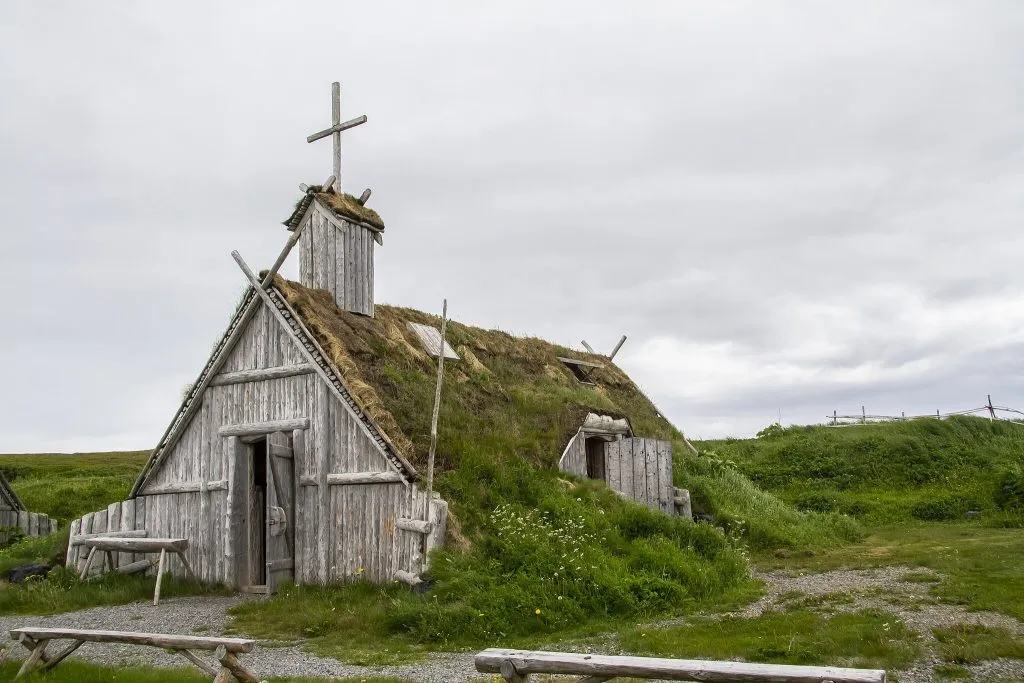
Located on the northern peninsula of Newfoundland is the small town of St. Anthony. It was here, over 1,000 years ago, that Leif Erickson led Icelanders and Greenlanders and established the first European settlement in North America. 500 years before Columbus and Cabot ventured the North American waters!
To get to St. Anthony you’ll likely travel along the Viking Trail that begins in Deer Lake. As neat as the Viking history and settlement is, we didn’t make this drive because it is 9-10 hours round trip and we had other areas we wanted to visit more. But we’d like to visit next time we’re in Newfoundland!
24. Visit L’Anse aux Meadows National Historic Site
The idea of a Norse settlement in North America had been the stuff of legends until 1968, when Heldge and Anne Stine Ingsted made a discovery that led to uncovering the remains of an 11th century Viking settlement.
The L’Anse aux Meadows National Historic Site is the only confirmed Norse site in North America. It is a UNESCO World Heritage Site and here you can interact with costumed Viking interpreters who will bring Viking history to life.
The park puts on a tour that includes Viking stories around a campfire in a sod building, plus you can see how the Vikings lived and worked here with recreations of many artifacts.
25. Go on more Hikes in the area
There are a variety of hiking options near St. Anthony. The Camel’s Back Trail is a short and flat trail in Saint Lunaire that is a great walk to see icebergs! You can also venture to the Burnt Cape Ecological Reserve for beautiful coastal views.
Fishing Point Municipal Park is another spot located in St. Anthony. There are a few hiking trails, with one of the best being the Santana Trail. On this trail you can climb the 476 steps to the top of Fishing Point Head for panoramic views over the area. You can also visit Fox Point Lighthouse!
26. Take the Ferry to Labrador
Here on the tip of the Great Northern Peninsula is also where you can take the ferry over to Labrador. The ferry leaves from St. Barbe, Newfoundland, crosses the Gulf of St. Lawrence, and arrives in Blanc Sablon, Quebec a little under 2 hours later. From there it’s a short drive to Labrador.
The ferry runs all year long, but difficult ice conditions could make the crossing a little longer. Check the Newfoundland-Labrador transportation website for more info.
27. Go Iceberg and whale watching
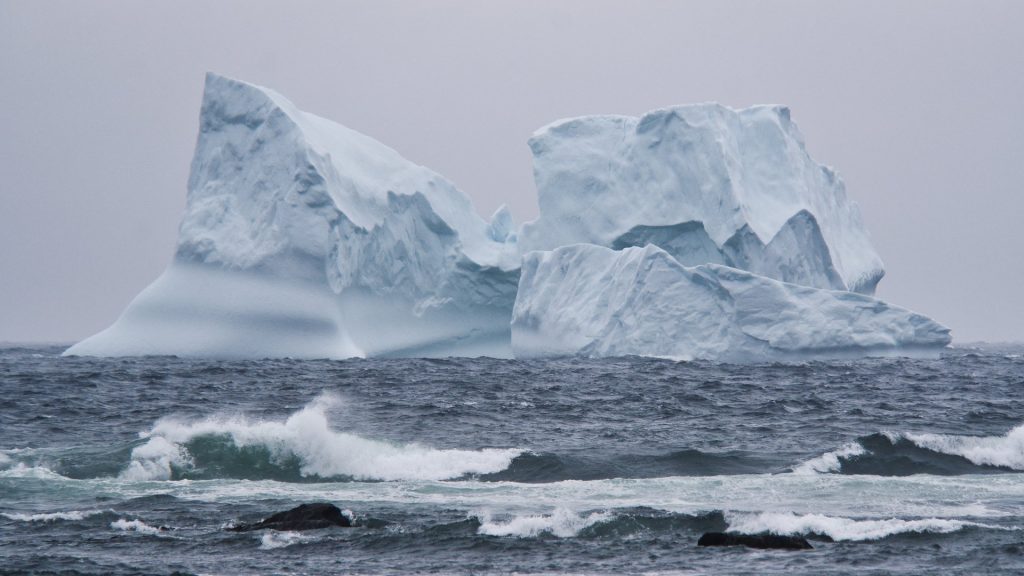
One of the absolute best things to do in Newfoundland, especially this area and the northern coast, is look for icebergs. Every year, huge chunks of glaciers break off in Greenland and Arctic Canada and float down Iceberg Alley all the way to Newfoundland. And what is especially crazy is that most of them are over 10,000 years old!
The best time to see icebergs is late May and early June, but you can see some stragglers in July as well.
This part of the Great Northern Peninsula has the longest iceberg watching season. And while you can often see some of the icebergs from land, an even better way to experience them is on an iceberg tour. Not only will you get to get up close to the icebergs, but you’ll also get to see whales. Here are a few tour operators in the area:
Northland Discovery Boat Tours
Iceberg Alley Boat Tours
Dark Tickle Expeditions
You can track the icebergs at icebergfinder.com and if you visit St. Anthony in June, you can attend the Iceberg Festival!
Where to stay in St. Anthony
Hotels: Grenfell Heritage Hotel & Suites, Viking Village B&B, and Saint Brendan’s Motel.
Vacation Rentals: Cozy Seaside Cabin and Petal’s Cottage.
Camping: Viking RV Park and Pistolet Bay Provincial Park.
Boondocking: Harbor Overlook boondocking and Burnt Cape boondocking.
Grand Falls-Windsor & Gander
Once leaving the western side of Newfoundland, the next major towns you’ll come across are Grand Falls-Windsor and Gander. These towns are located within an hour of each other and are good places to fuel up, get groceries, and take care of any other tasks.
To be honest, there isn’t a ton to do in Grand-Falls Windsor and Gander. We wouldn’t recommend spending much time in either, especially if visiting with limited time. But there are a couple stops worth noting!
28. See Thunder Brook Falls
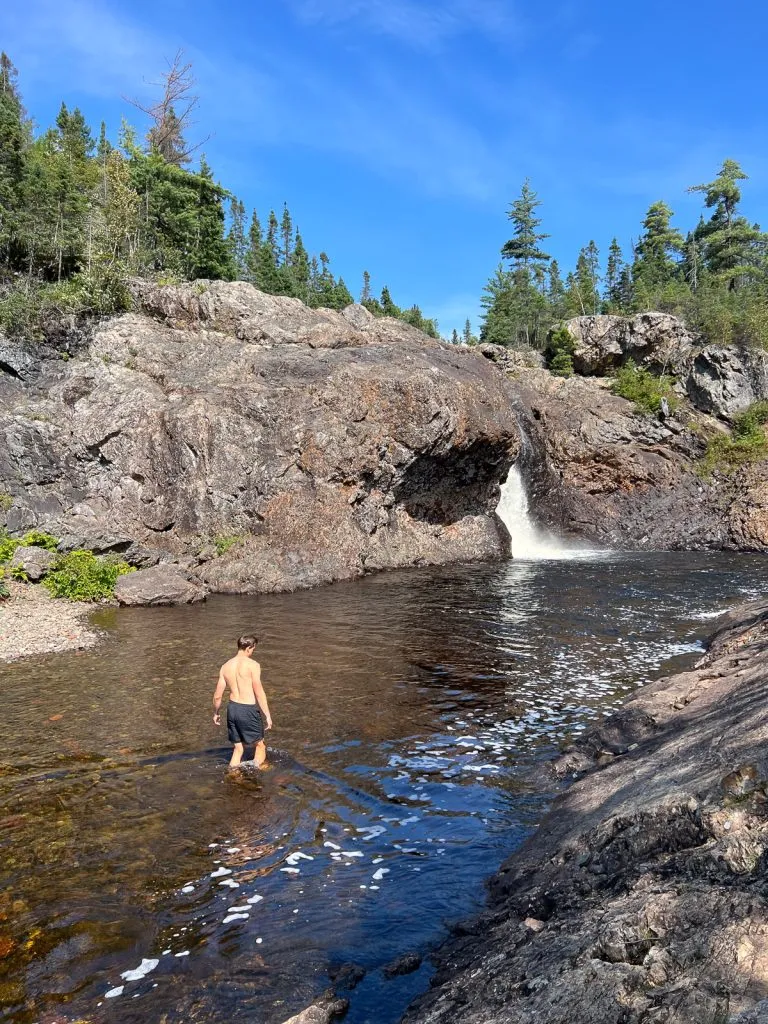
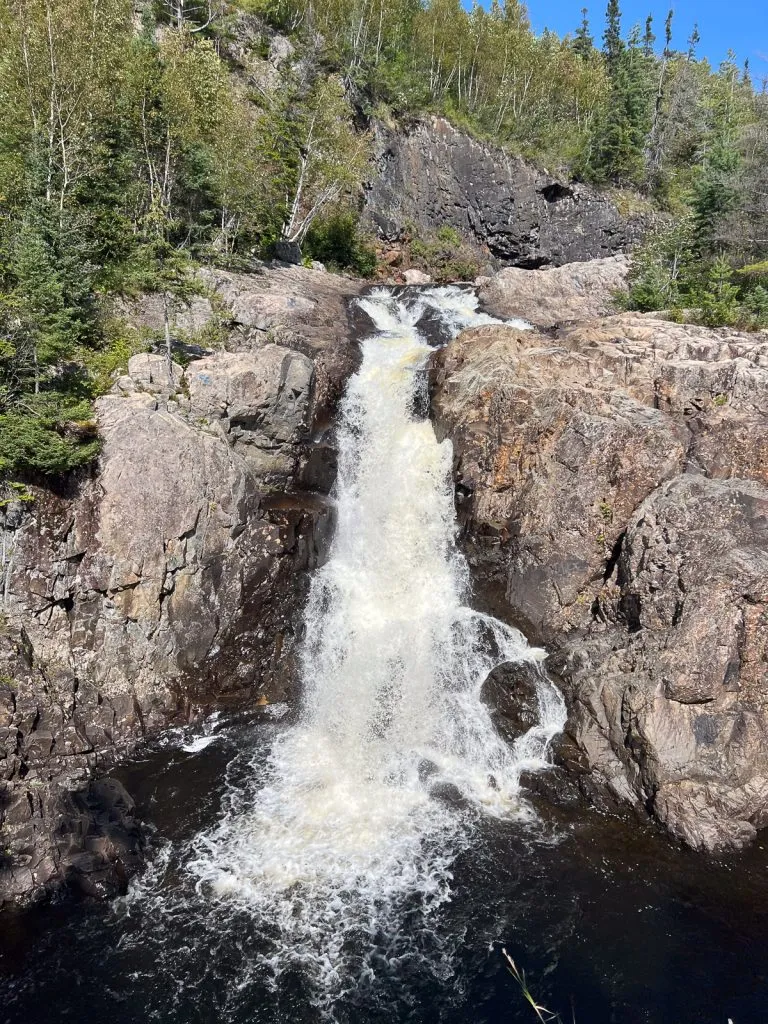
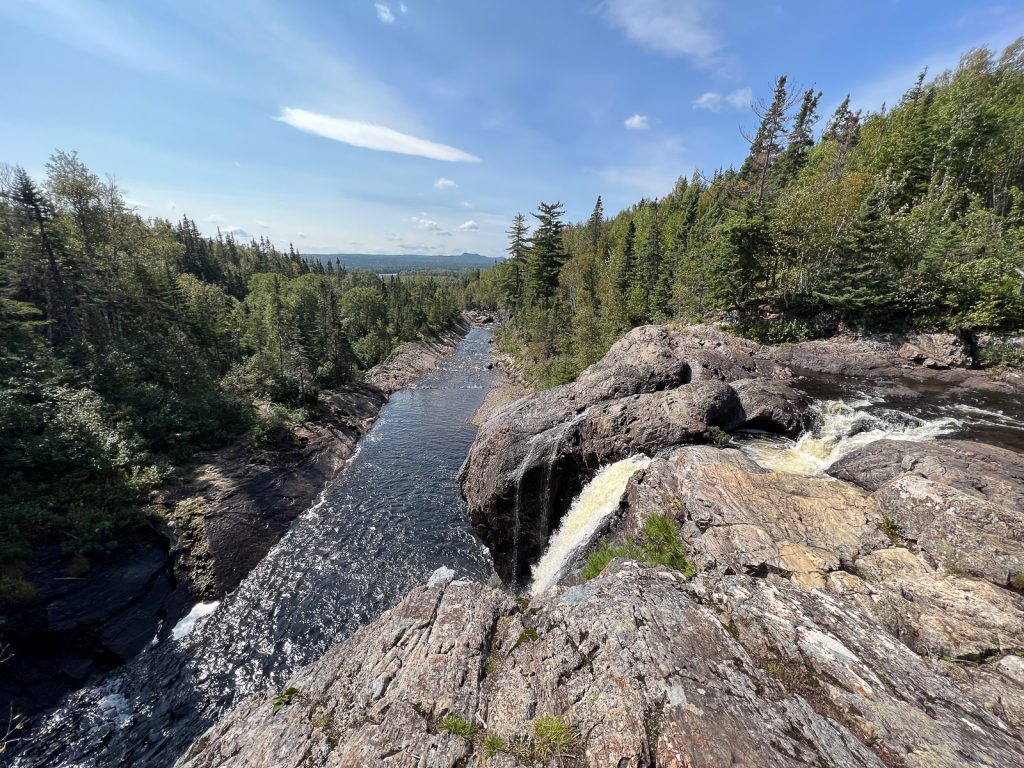
On our way to Grand Falls-Windsor, we stopped at Thunder Brook Falls to stay the night. It isn’t the most scenic boondocking spot we’ve ever had, as it’s just a parking area. But the best part is the river and waterfalls you can explore. You can follow this short trail along the river to find a couple large waterfalls with nice pools to swim in. It’s a wonderful hidden gem! Just be careful of the frogs…we encountered tons along the trail.
29. Watch Come from Away
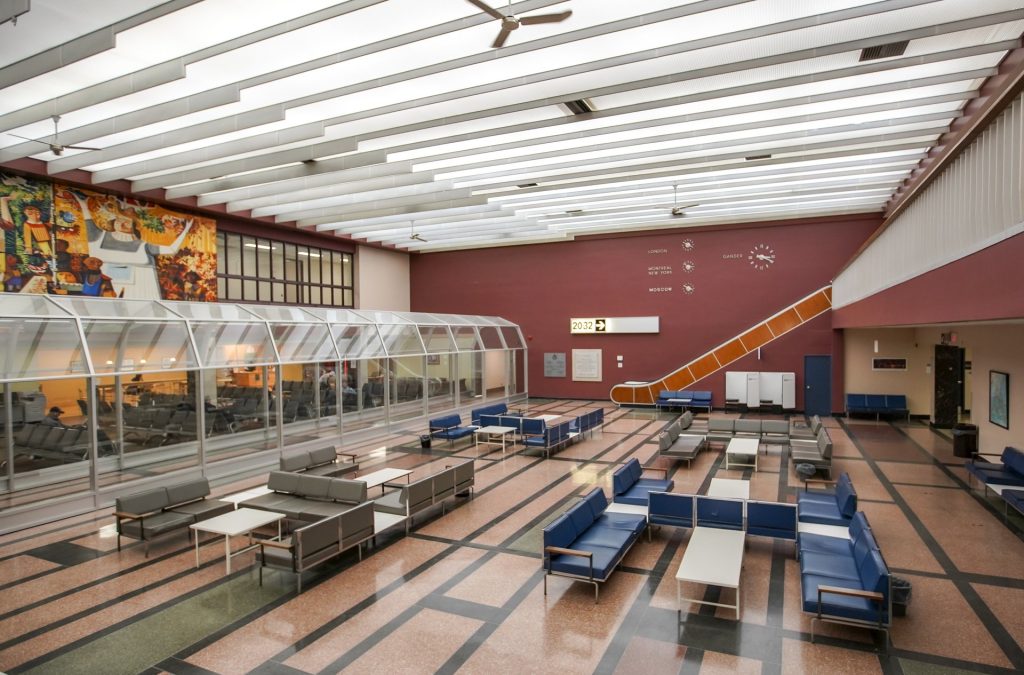
During the 1950s and 60s Gander Airport was a required refueling stop for almost every transAtlantic flight, giving it the nickname “the Crossroads of the World.”
Then, on September 11, 2001 the small town airport was required to step up again. After the 9/11 attack, all US airspace was closed and 34 planes had to be rerouted to Gander. There were a total of around 6,600 passengers and crew, growing Gander’s 9,600 population by 70% in just a few hours.
Gander, and many nearby towns, stepped up to feed, house, and keep the “plane people” as comfortable as possible during their stay. During this time friendships were formed and many people keep in contact to this day. It is a fascinating and wonderful story that is retold in the musical “Come From Away.” The town of Gander puts on the musical in the summer as well!
30. Visit the North Atlantic Aviation Museum
If you’re an aviation fan or find yourself in the area longer than planned, you can pop into the North Atlantic Aviation Museum. The museum is dedicated to preserving Gander’s role in the development of Trans Atlantic Aviation.
Where to stay in Grand Falls-Windsor and Gander
Hotels: Quality Inn – Gander, Carriage House Inn (Grand Falls-Windsor) and Comfort Inn – Gander (Gander).
Boondocking: Thunder Brook Falls boondocking (Grand Falls-Windsor) and Little Harbor on Gander Lake boondocking (Gander).
Twillingate Islands
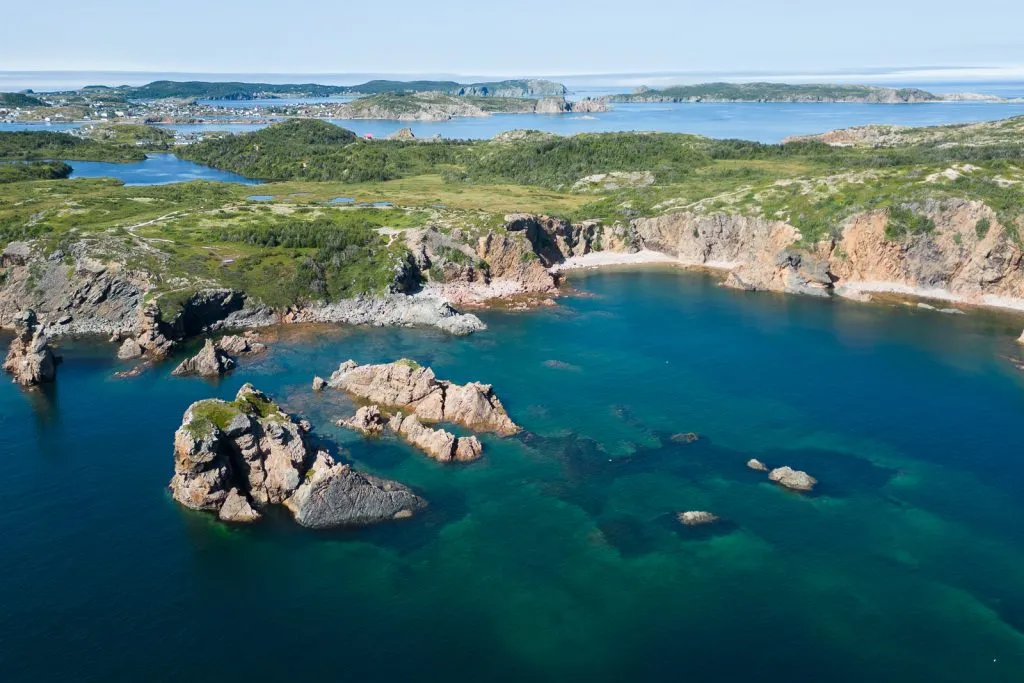
The Twillingate Islands are located on the northeast coast of Newfoundland along “Iceberg Alley.” It consists of two islands that are connected to Newfoundland through bridges and causeways.
Visiting Twillingate is one of the best things to do in Newfoundland. And it’s easy to see why! Here you can enjoy boat tours, coastal hiking, amazing seafood, local entertainment, and so much more. We loved this area!
31. Go on an Iceberg boat and kayak tour
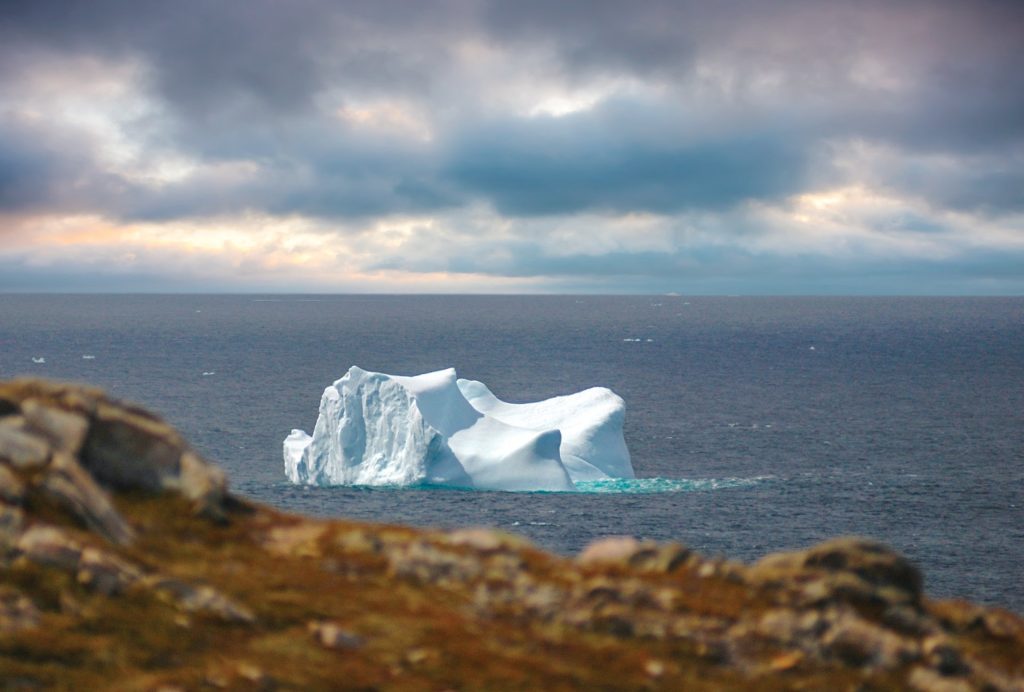
Since Twillingate is located along Iceberg Alley, it has billed itself as the “Iceberg capital of the world.” There are a variety of ways you can watch for icebergs. You can view them from land, go on a boat tour, and even kayak near them.
There are a handful of tour companies in the area that can take you on iceberg and wildlife watching tours! This is something we wish we could have done during our visit, but unfortunately we weren’t there at the right time of year. Instead we went Kayaking at the Hopewell Rocks in New Brunswick!
32. Visit the Prime Berth Fishing Museum
The Prime Berth Fishing Museum is a private collection of fishing equipment, artifacts and exhibits that share and interpret Newfoundland inshore fishing. Prime berth refers to the annual lottery where cod fishermen would find out where they could set up their cod fishing traps in the coming summer. Everyone hoped for the best spot, or the “prime berth.”
The museum was created by David Boyd as a tribute to his fisher forefathers. There are seven buildings to explore and a massive whale skeleton!
33. hike the Rockcut Trails
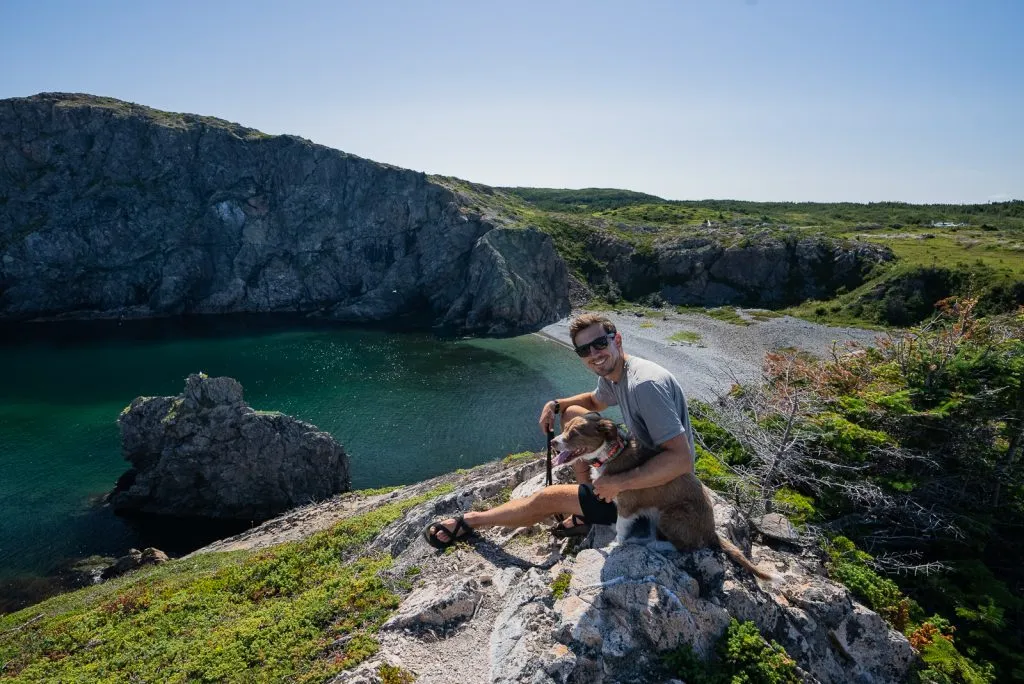
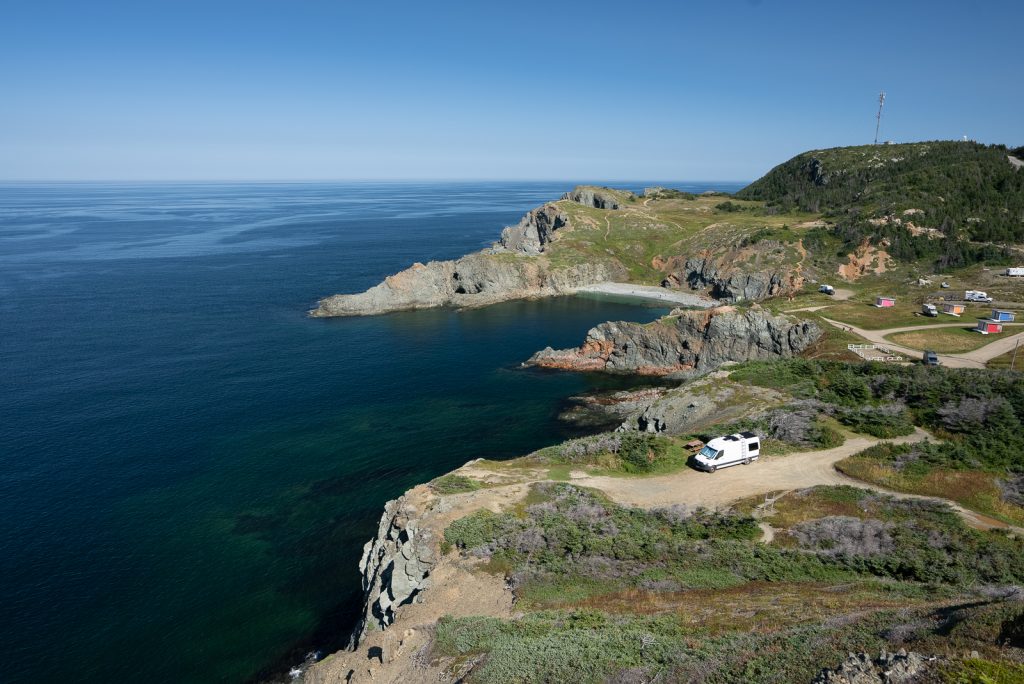
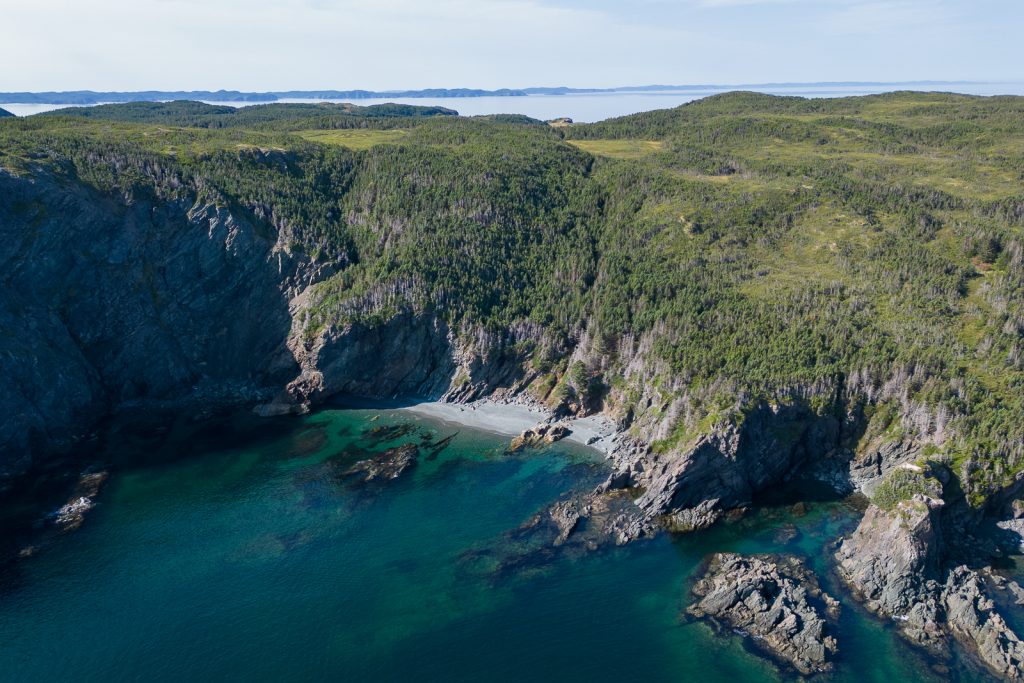
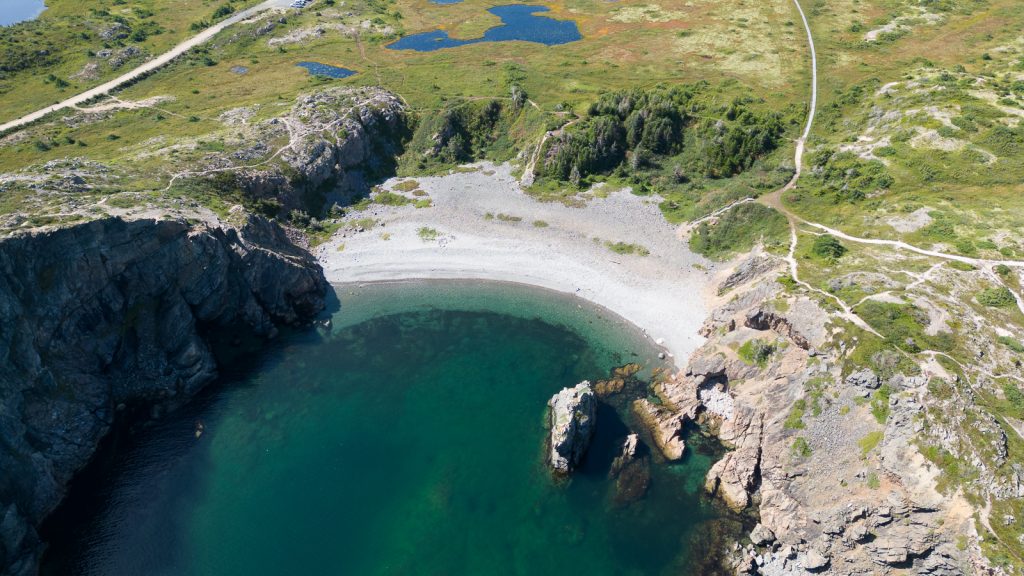
The Twillingate Islands have an amazing trail system called the Rockcut Trails. These trails traverse rugged coastline, pass by rocky beaches, sea stacks, and have endless gorgeous views. And when in season you can find blueberries, partridgeberries, and bakeapples. This was one of our favorite things about hiking in Newfoundland. The berries are built in trail snacks!
Here are two trails we loved!
Nanny Hole and Long Point Lighthouse Loop
Located on the North Twillingate Island, the rugged Nanny Hole and Long Point Lighthouse Loop follows the cliffs and coastline. Along the way you’ll come to the Long Point Lighthouse and see rocky bays with vibrant blue water. It’s a more difficult hike than it looks, but so worth it!
Spillers Cove and French Beach
The Spillers Cove and French Beach is located on the south island and is another spectacular hike in the area. Spillers Cove is an epic rocky beach cove with high cliffs on either side and rock columns jutting from the water. We hiked the trail counter clockwise so that we ended at French Beach for a refreshing dip in the water. French Beach was such a treat after a warm day hiking!
34. See the Long Point Lighthouse
You can also visit the Long Point Lighthouse by car. It’s built high on a rocky cliff and sits 300 feet above the ocean. Not only is the lighthouse a popular site, but from this vantage point you have wonderful views of the Atlantic ocean. On top of that, it’s a great spot to watch for icebergs, whales, and other wildlife.
35. Have a time

One experience you need to have while in Twillingate is to “have a time.” The Newfoundland phrase “a time” means a celebration or party. There are a variety of ways you can have a time in Twillingate, like seeing the Split Peas, the Grand Old Shed Party Show, and attending a kitchen party. Or what we highly recommend, the Twillingate / New World Island Dinner Theatre!
This is a dinner and variety show (late May to mid September) that mixes Newfoundland music and comedy skits that reflect the people and culture of the region. The same people who prepare and serve the dinner are up on stage after dinner performing the music and skits. All the songs had us toe tapping and singing along, the food was delicious and a large portion, and the skits had us laughing!
It’s a popular activity, bringing in locals and tourists from all over the world, so make sure to make a reservation in advance. During our visit there were a few people from Europe, but we were surprised when the host polled the audience and many were from Newfoundland. We were the only people from the US!
36. Explore town
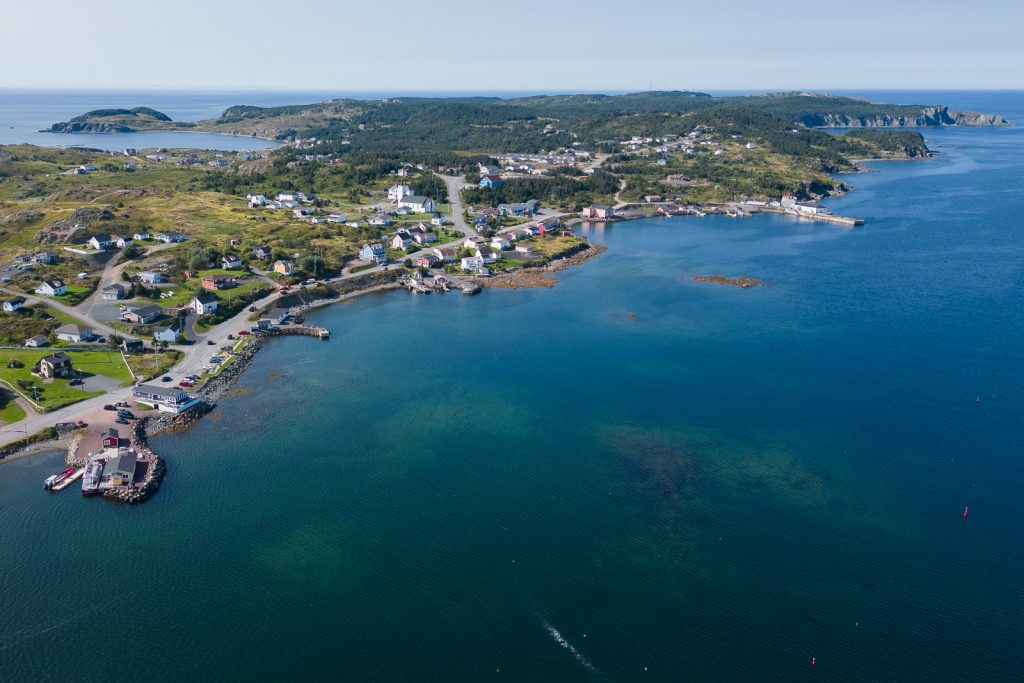
Make sure to wander around downtown Twillingate. It is small, but there are some cool stores, like Artisan Market, Twillingate & Beyond Inc. and Scot Lewis Pencil Art Studio.
As for food, one spot we were really excited to try, but unfortunately missed due to holiday closures, is the Crow’s Nest Cafe. They serve coffee, tea, baked goods, and delicious looking soups and sandwiches. A couple other spots to check out are Canvas Cove Bistro and Pier 39.
Where to stay in Twillingate
Hotels: Admirals Inn B&B, Captain’s Legacy Historic B&B, Anchor Inn Hotel, and Sunshine Inn.
Vacation rentals: The Viking Vacation Home, Old Salt Box Co., The Robins Nest Cottage, andOceanfront Carriage Hill Cottage.
Camping: Peyton’s Woods RV Park & Campground and Dildo Run Provincial Park (yes, that’s really its name!)
Boondocking: One of the BEST boondocking spots we had was on Crow Head. It’s a bit tricky to get up to and you can also stay a bit lower at Sleepy Cove.
Fogo Island
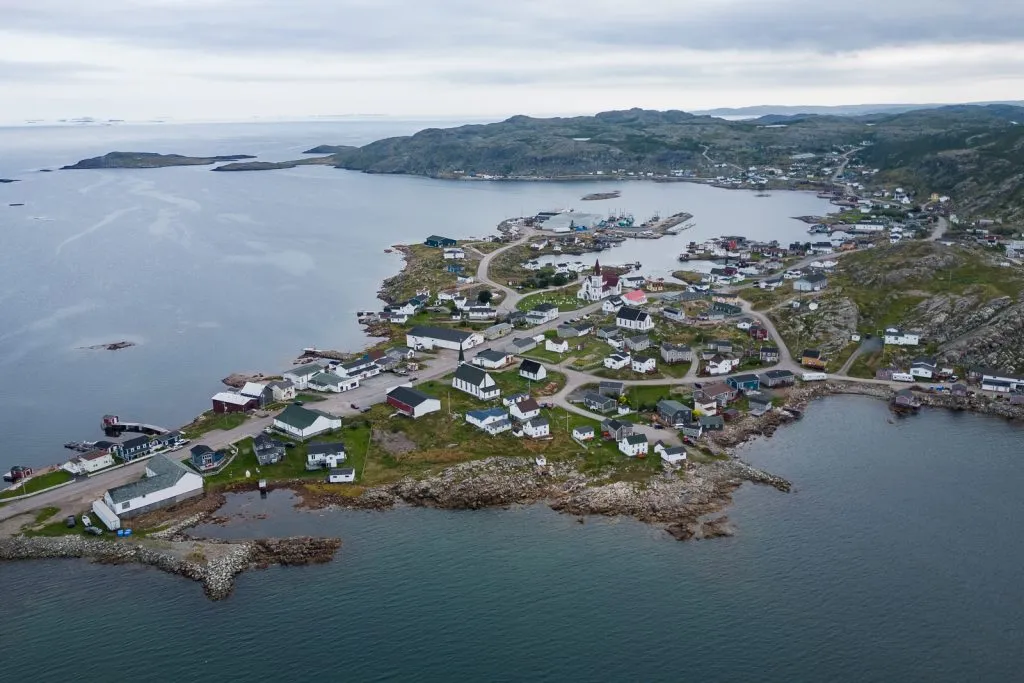
Located off the northeast coast of Newfoundland lies Fogo Island, the largest of the province’s offshore islands. This island is known for its Irish history, seafood, small fishing communities, sweeping views, and some pretty interesting architecture, including the Fogo Island Inn.
Getting here requires taking a ferry from the mainland, which is either 45 minutes (direct) or 1 hour, 15 minutes if the ferry stops at the Change Islands. It doesn’t take reservations and during peak season, can fill up. So make sure to arrive early! You can spend one long day on the island, but we spent two and were able to see a lot!
37. Hike one of the trails
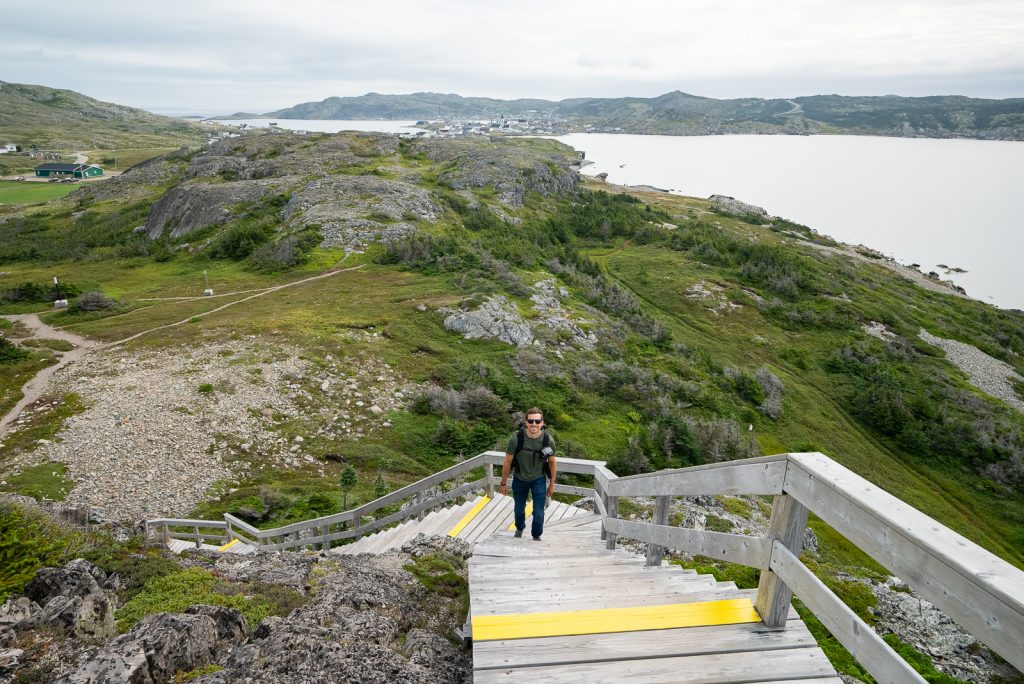
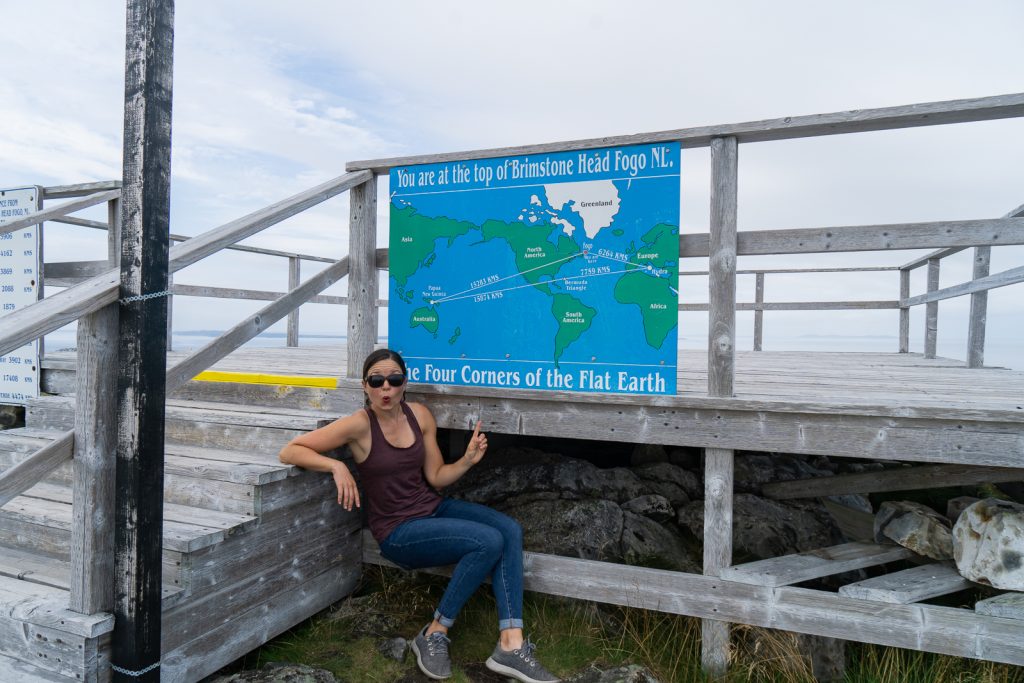
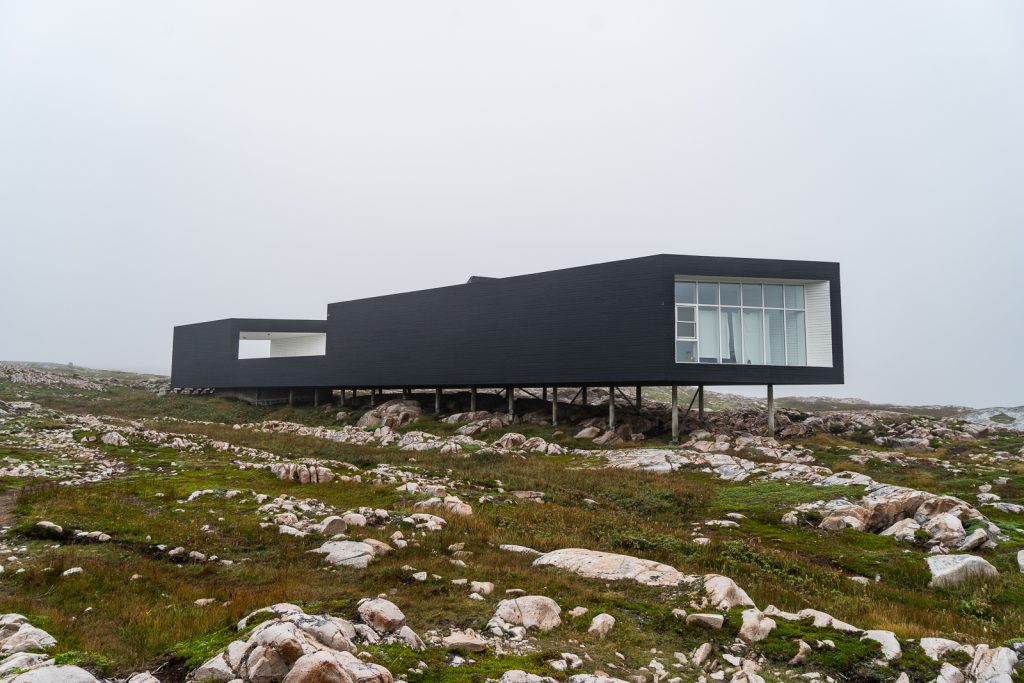
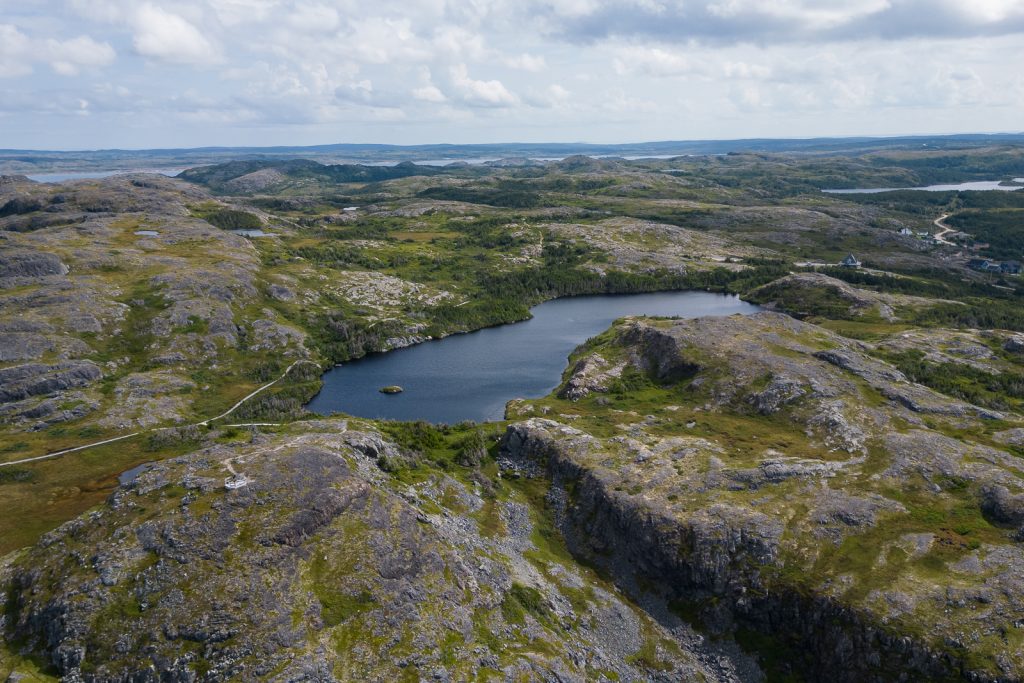
Despite its size, Fogo Island is loaded with trails! Here are a few of our favorites from our time on the island.
Brimstone Head Trail
The Brimstone Head Trail is a short, but stair filled hike to the top of Brimstone Head. At the top you have wonderful views of the ocean and the town of Fogo below. But what makes it very unique is its designation. According to the Flat Earth Society this is one of the “four corners of the flat Earth.” In case you’re concerned, we do not believe the Earth is flat, but it is too quirky to pass up!
Lions Den Trail
Another must-do hike on Fogo Island is the Lions Den Trail. Not only is the scenery beautiful (you have views the entire time), but it also has some interesting history!
This area right around Fogo was once home to 4 settlements, including Eastern Tickle and Shoal Tickle. These 4 settlements all played a big role in the fishing industry on Fogo Island. And along the trail you can see where they used to be, view old photos, and learn more about them.
Joe Batt’s Trail
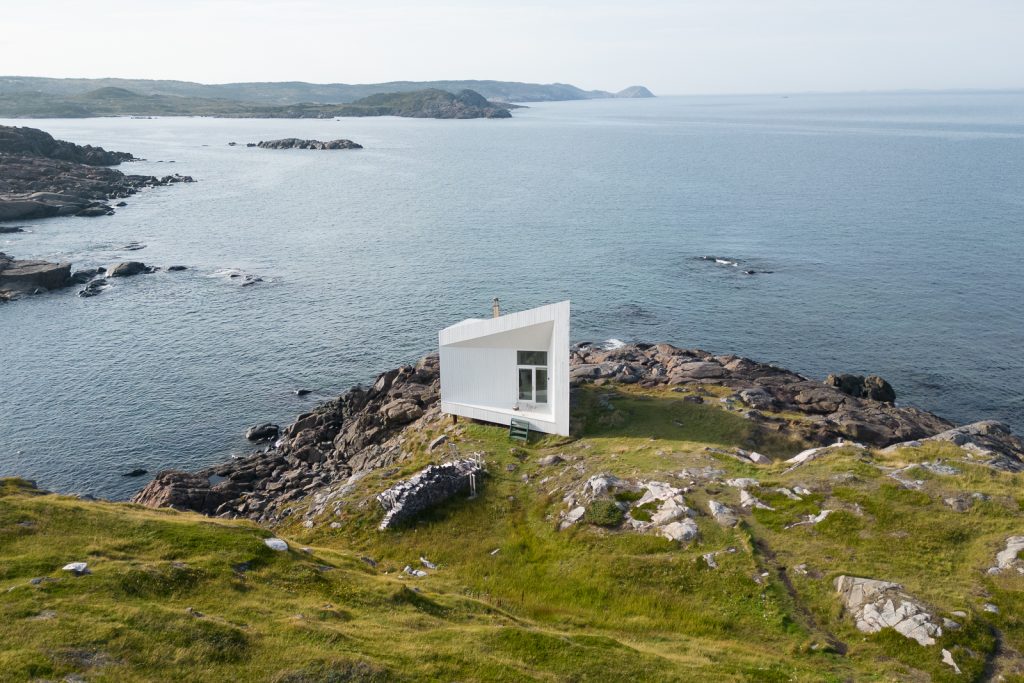
The Joe Batt’s Trail is a unique hike that combines nature, art, and architecture all into one! Not only do you have a view of Fogo Island Inn from across the water, but you also get to see the Long Studio. This is one of the four artist residences that are part of Fogo Island Art, a project by Zita Cobb, the owner of the Fogo Island Inn.
These minimalistic designed buildings are totally off grid (minus Wi-Fi). They collect rainwater for kitchens and showers, have a composting toilet, solar panels, and wood burning stoves!
Besides the studio, there is also a sculpture of the now extinct Great Auk at the end of the trail. It was created by Todd McGrain as part of his Lost Bird Project, which includes sculptures of extinct bird species placed in the last location they were known to live.
Some other trails to check out on Fogo Island: Oliver’s Cove Path, Turpin’s Trail, and the Waterman’s Brook Trail.
38. Explore the town of Fogo


The town of Fogo is tiny, but it packs a pretty big punch when it comes to food! One of the best meals we had not only in Newfoundland, but in all of Atlantic Canada was at Bangbelly Bistro.
We tried their cod fish and chips with partridgeberry tartar sauce and their cod and corn chowder. Both were fantastic and we highly recommend them! Not only is the food delicious, but the decor is beautiful and the people are so friendly,
Before our meal at Bangbelly we popped into their coffee stand across the street, Punch Buggy Pizza & Coffee Co. This super cute, bright pink stand is hard to miss!
39. Visit Tilting
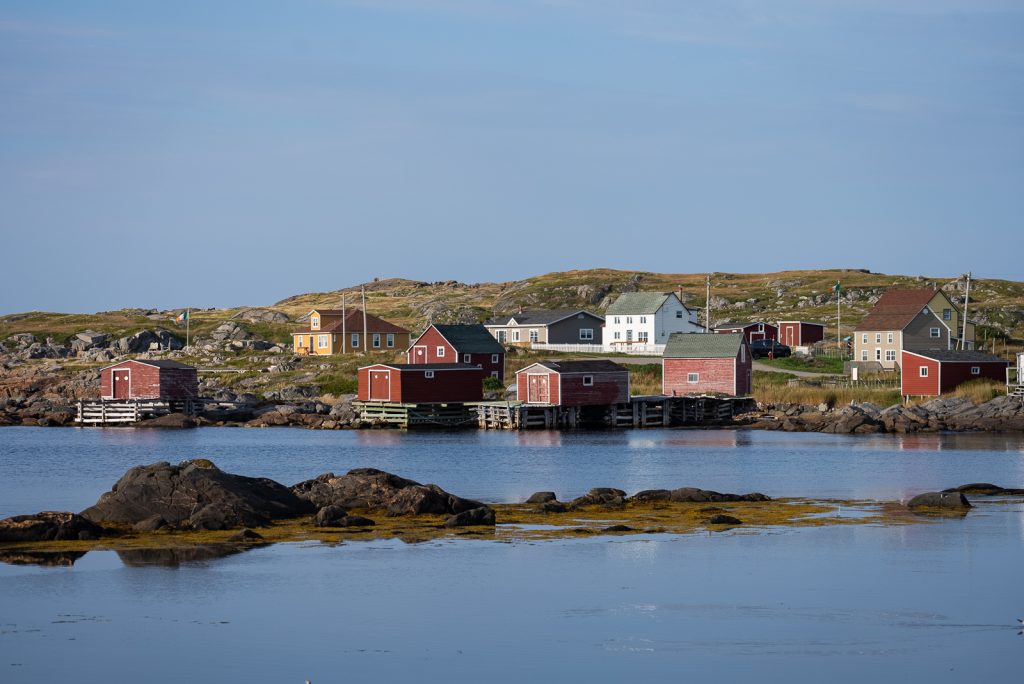
Tilting is a small fishing village in the northeast corner of the island. The town has a ton of Irish influence, with Irish settlers first developing the area around the 1730s. And the town still retains many traditional buildings that shaped its past, giving it the designation of a National Historic Site.
One thing that we really enjoyed about Newfoundland is that nothing felt overdeveloped or touristy. And Tilting was no exception! It felt very authentic here and like we had a glimpse into the past.
While in Tilting, make sure to visit Squish Studio and Dwyer Premises! But to really learn about the area, go on a tour with Al’s Walking Tour.
Visiting Tilting in mid September? You’re in for a treat, as Féile Tilting will be happening! This is a celebration of Irish-Newfoundland heritage with music, song, and storytelling.
40. Relax at Sandy Cove
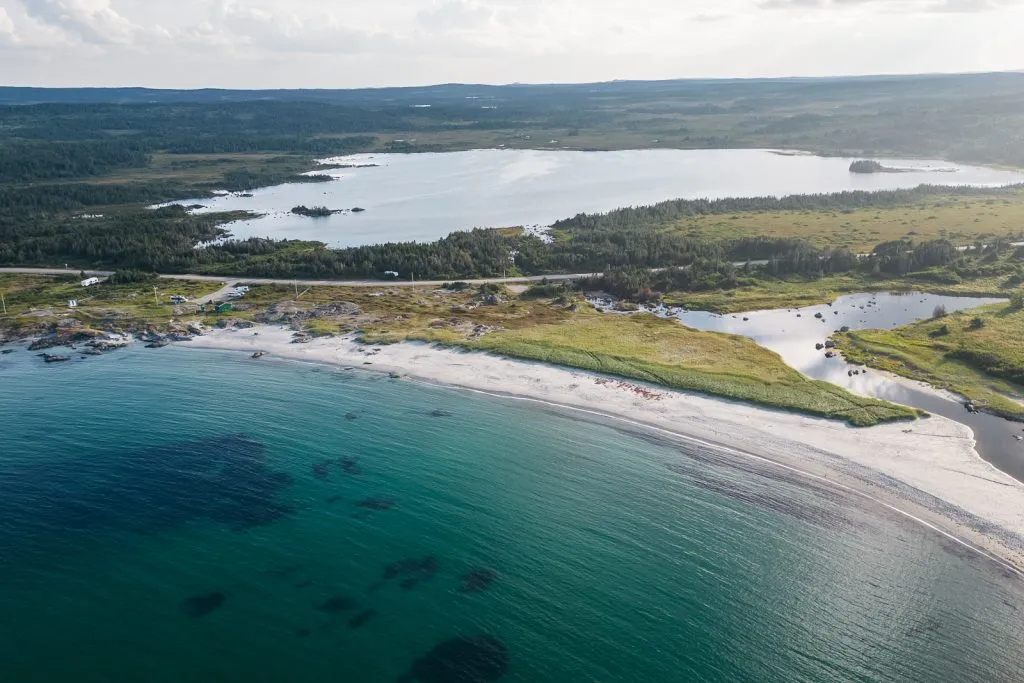
Quite possibly the most beautiful beach we encountered in Newfoundland was right outside of Tilting at Sandy Cove. With white sand and bright, crystal clear water, it is picture perfect! To visit the beach, you will want to park here.
41. Enjoy ice cream at Growlers Ice Cream


We can’t explore an area without a couple scoops of ice cream. And lucky for us, Fogo Island is home to some of the best ice cream in Newfoundland, Growlers Ice Cream! This homemade ice cream shop was one of the biggest reasons we came to Fogo Island and it lived up to the hype!
Where to stay on Fogo Island
Hotels and B&Bs: Fogo Island Inn, Peg’s Place, and Sunset House.
Vacation rentals: The Old Salt Box Co. Fogo, Annie’s Place by the Inn, and Longliners Loft.
Camping: Brimstone Head Park
Boondocking: We slept in the parking lot of Sandy Cove along with a couple others and it was a quiet night. Plus the beach is stunning!
Terra Nova National Park
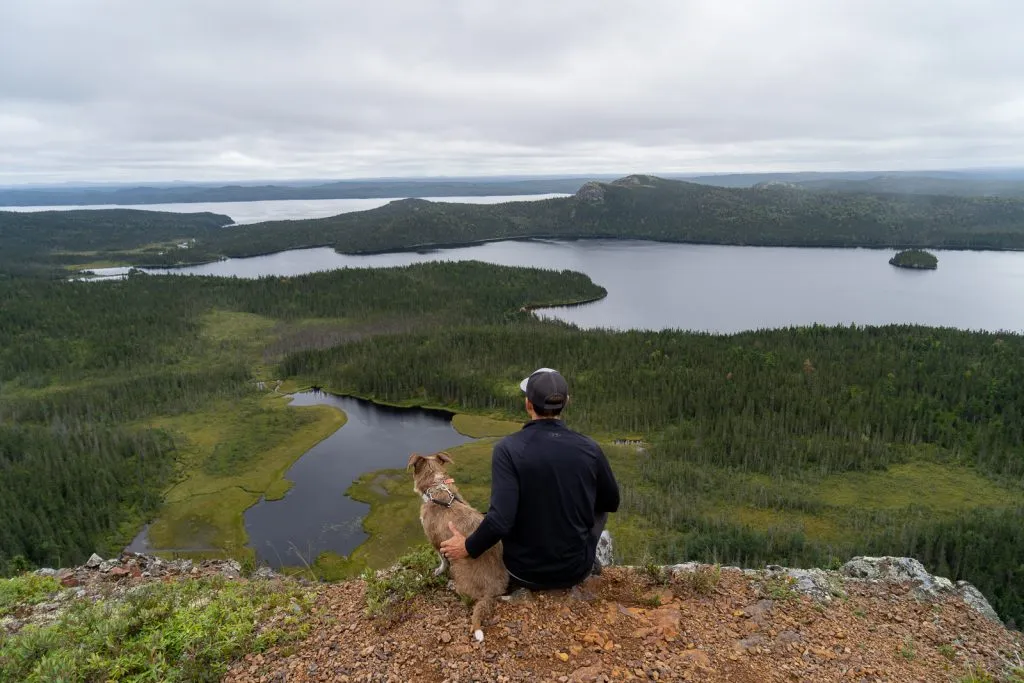
Terra Nova National Park is Canada’s most easterly National Park, located about two and a half hours northwest of the capital, St. John’s. The park boasts over 80 km (50 miles) of trails, kayaking opportunities, camping, and wildlife spotting. We even saw a bear here!
Gros Morne gets most of the National Park love in Newfoundland, but this park is also gorgeous. Plus, way less busy! While it seems to be skipped by many visitors, we think it’s well worth the stop in Newfoundland.
42. Hike the Ochre Hill Trail
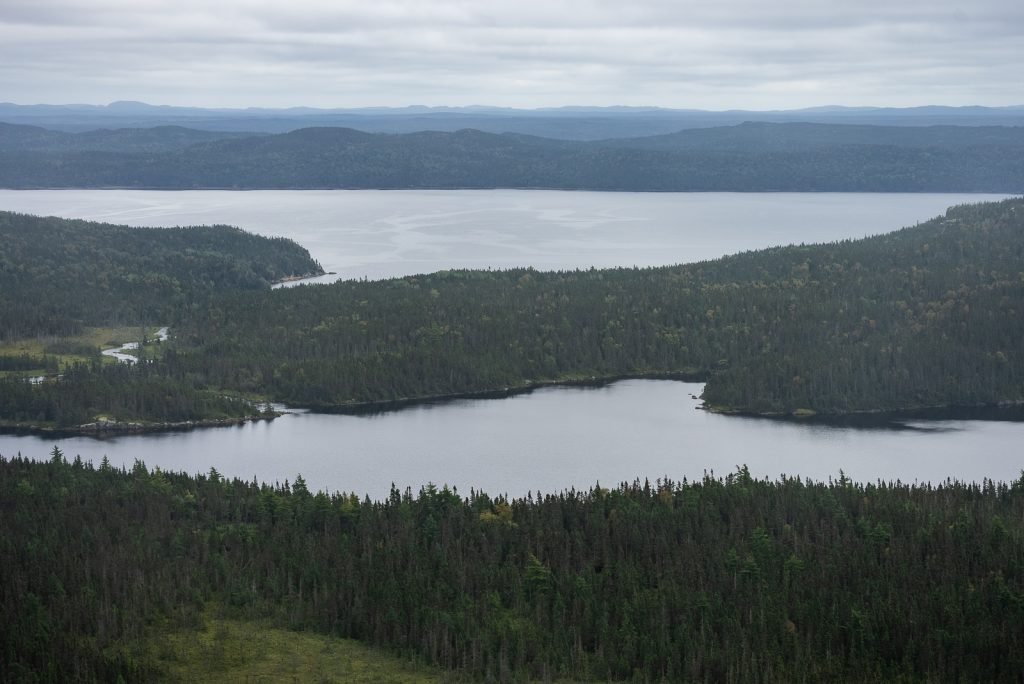
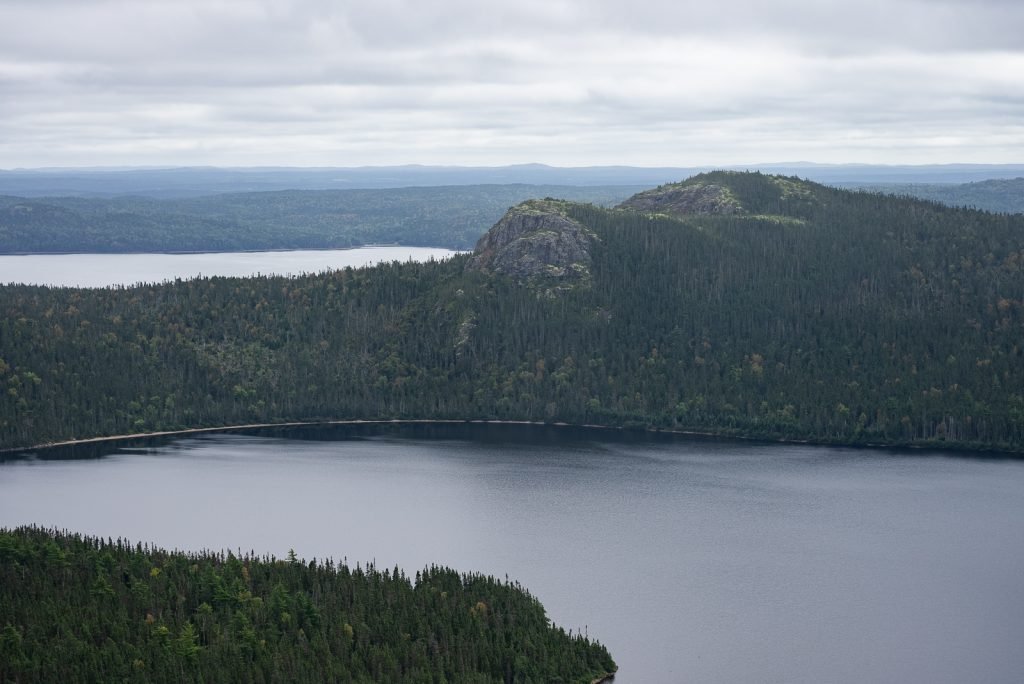
The Ochre Hill Trail travels through a bit of forest and along a pond to the top of Ochre Hill. At the top you’ll have spectacular views of green forest, dark blue lakes, and the Clode Sound. It reminded us a lot of the Pacific Northwest!
For another hike with sweeping views, check out the Mill Cove Lookout.
43. Visit the Beaches
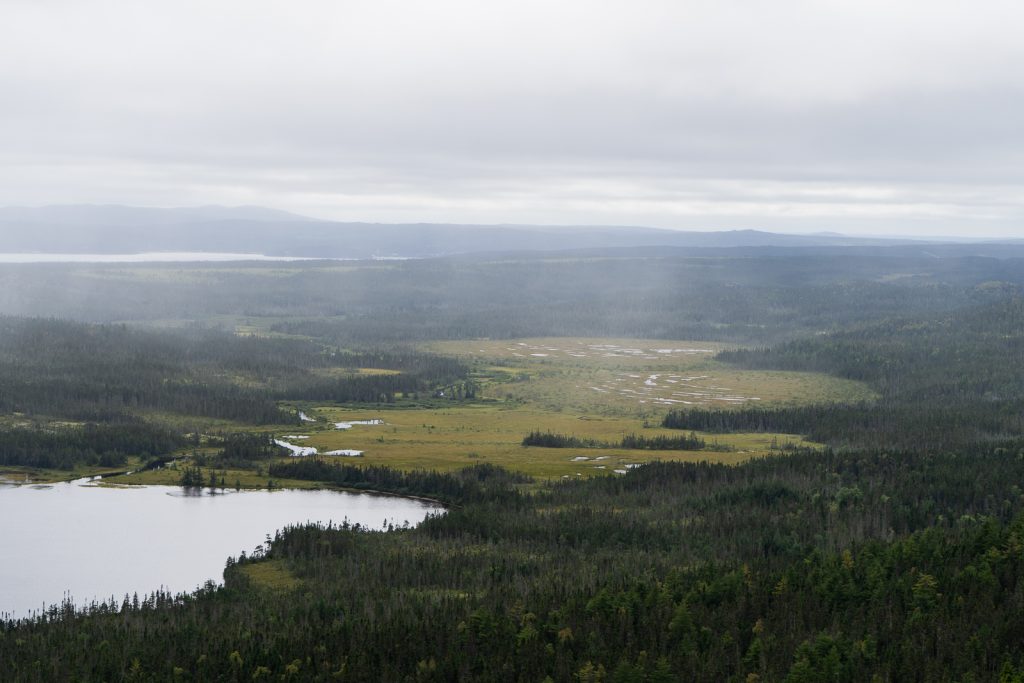
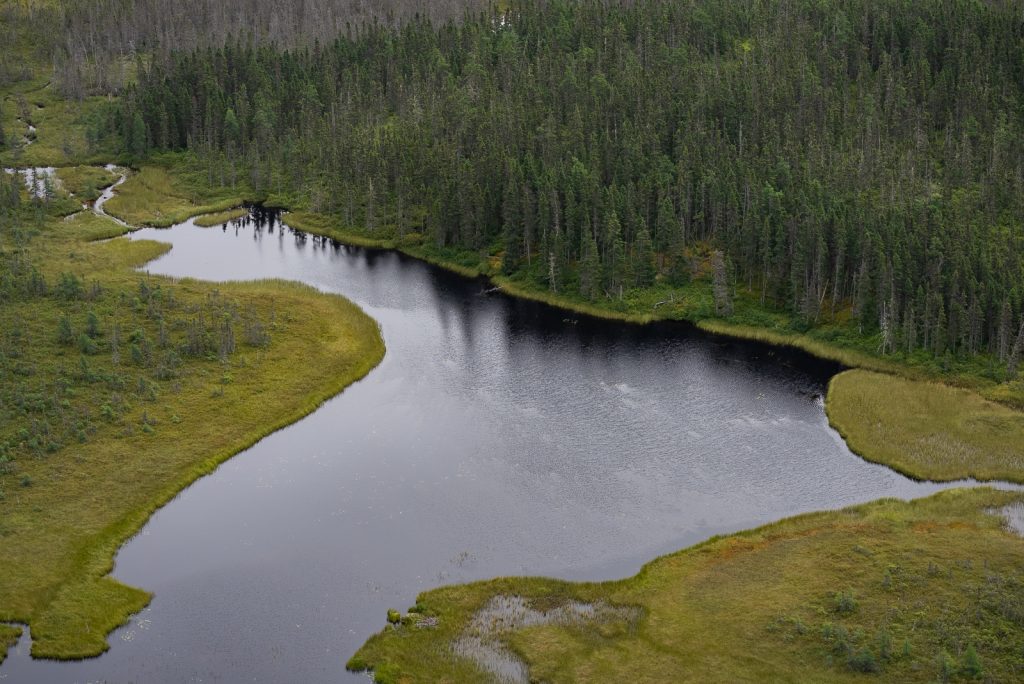
Terra Nova National Park and the surrounding areas are known for their fresh and saltwater beaches. Check out Sandy Pond, plus Eastport Beach and Sandy Cove nearby.
44. Go Paddling
A popular activity in the park is paddling. There are opportunities to paddle from as short as a few hours or multi day adventures. You can venture out on your own or go on a guided trip with Happy Adventure Tours, who are based right in the visitor centre. They also offer kayak rentals!
45. Stop by the Visitor Centre
As van lifers, one of our favorite features of Terra Nova National Park is the Visitor Centre. What does that have to do with van life? Well, at the Visitor Centre there are showers and coin laundry. This was a huge help, as public showers and laundry facilities were tough to find in this part of Newfoundland.
If you don’t need those facilities there are also exhibits, helpful staff, gear rentals, and a cafe.
Where to stay at Terra Nova National Park
Terra Nova National Park has 2 campgrounds, plus oTENTiks and backcountry camping. This would be the best place to stay to enjoy the park!
Bonavista Peninsula
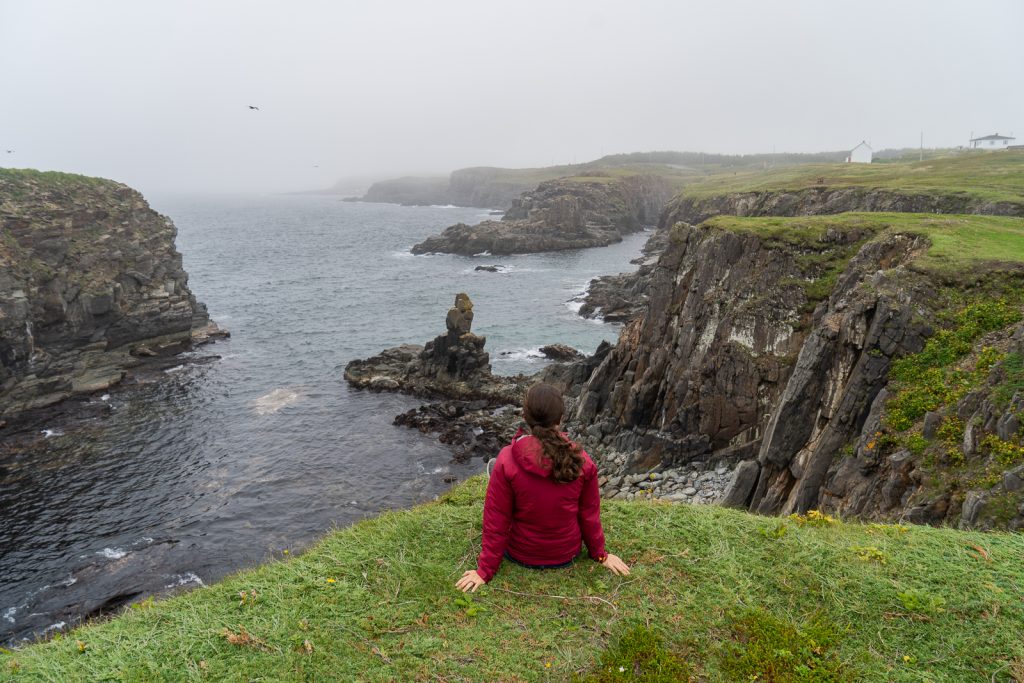
The Bonavista Peninsula is located about 1.5 hours from Terra Nova National Park and is said to be one of the most scenic areas of the province. And we agree! Here you’ll find quaint small towns, unique geologic features, puffins, and dramatic coastal scenery.
Visiting the Bonavista Peninsula is hands down one of the top things to do in Newfoundland. It was one of our favorite spots!
46. See Tickle Cove Sea Arch
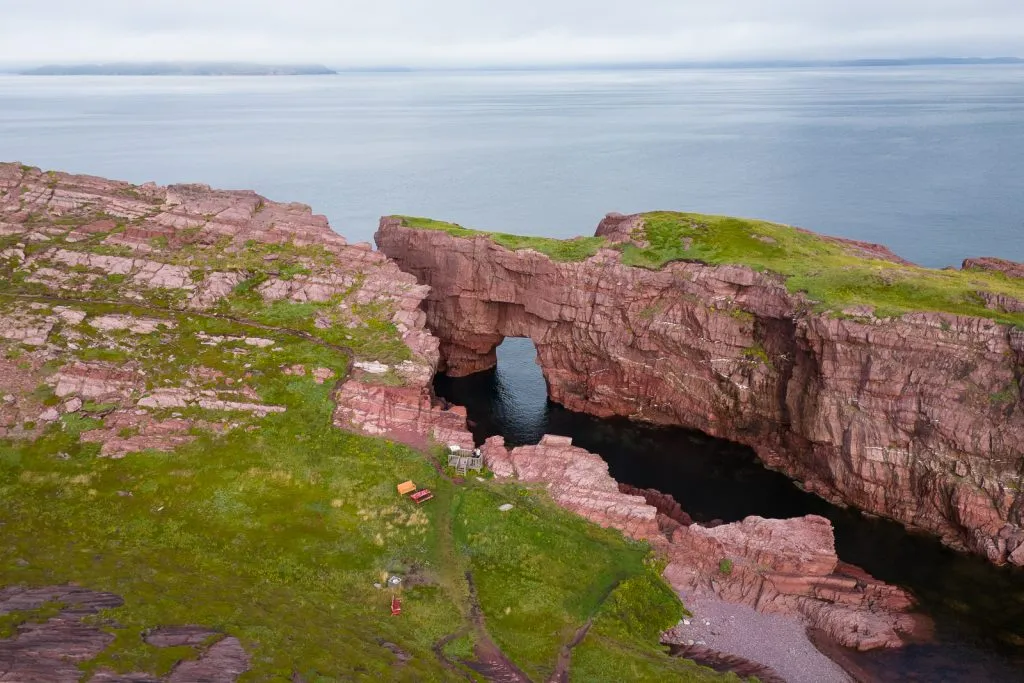
Tickle Cove Sea Arch is tucked away in a little cove, surrounded by clear, blue water. The arch and surrounding rock is an interesting shade of reddish purple that you don’t see much of in Newfoundland. It is a quick stop, but we consider it a must on any Bonavista Peninsula trip!
47. Explore Bonavista


Near the town of Bonavista is where the famous explorer, John Cabot, is thought to first set foot on North America in 1497. Apparently when he first laid eyes on the land he exclaimed, “o buono vista!”
Bonavista is a wonderful mix of old world industry and modern entrepreneurial spirit. You’ll see working harbours mixed with new businesses, restaurants, and coffee shops working out of restored historical buildings.
While here, try some classic Newfoundland dishes, like toutons, Fisherman’s brewis, and fish cakes at Mifflin’s Tea Room. And for a historical stop, check out the Ryan Premises National Historic Site. James M. Ryan, the son of an Irish immigrant, along with his brothers built one of the largest salt fish mercantile firms in the province. And this is a preserved example of a large-scale merchant operation.
48. Go to the Puffin viewing site
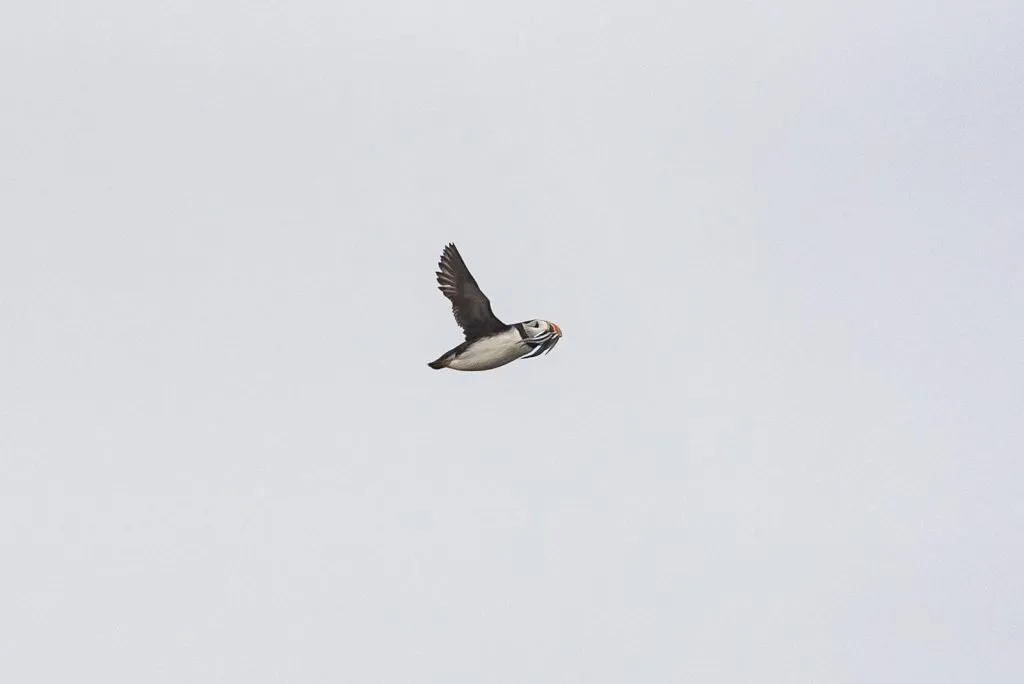
Besides icebergs, another thing Newfoundland is known for is its wildlife. It is a hotspot for whale watching in the summer and on the Bonavista Peninsula you have the chance to see puffins!
And to see them up close, visit the Puffing Viewing Site in Elliston. The puffins are usually here from May to August. But we visited in September and got lucky and saw some stragglers! Watching the puffins fly out to the water, fish, and then bring back food to their babies was incredible.
While you’re here, make sure to check out the root cellars. These are traditional food storage systems built right into the ground. Elliston is said to be the root cellar capital of the world, with more than 130 in the area!
49. See the Cape Bonavista Lighthouse
At the tip of the Bonavista Peninsula is the Cape Bonavista Lighthouse. This is one of the few lighthouses in the world where you can climb the stone tower and see the seal oil fueled catoptric light used in the 1800s!
You can also see puffins here, plus watch for icebergs, whales, and other marine life.
50. Visit Spillars Cove

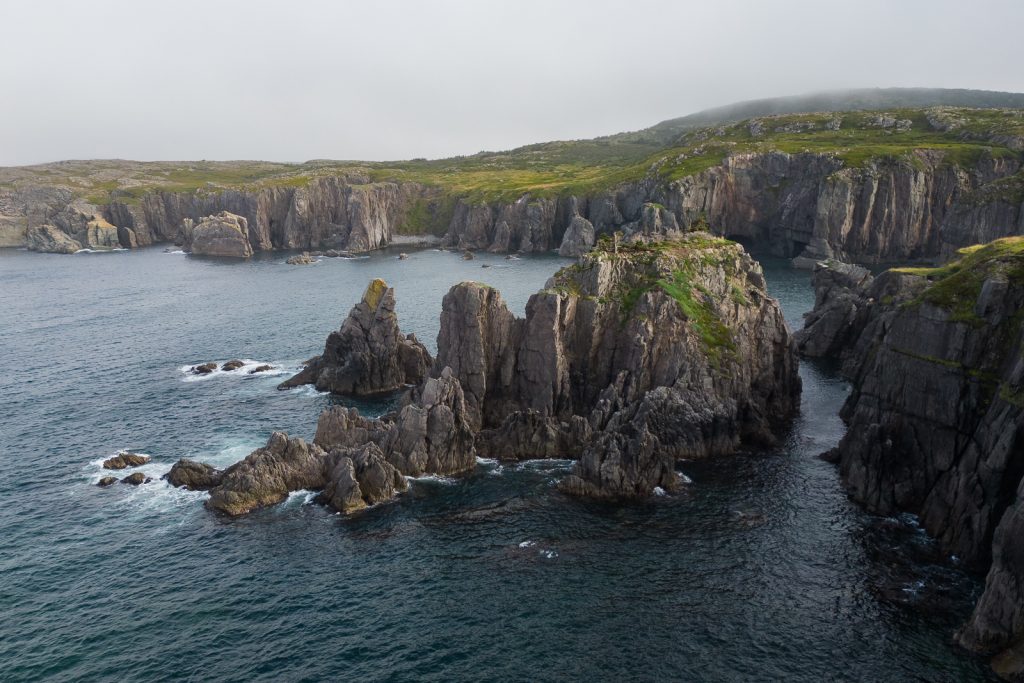
One of the most epic spots we visited in all of Newfoundland was Spillars Cove. This massive cove has towering rock columns and outcroppings scattered throughout. It’s one of the most rugged sections of coastline that we saw across the province. You can park here or drive down a rough, dirt road to the main viewpoint. And if you have enough time, there is a 3.4 km (2.1 mile) trail you can hike to see even more!
51. Explore Dungeon Provincial Park
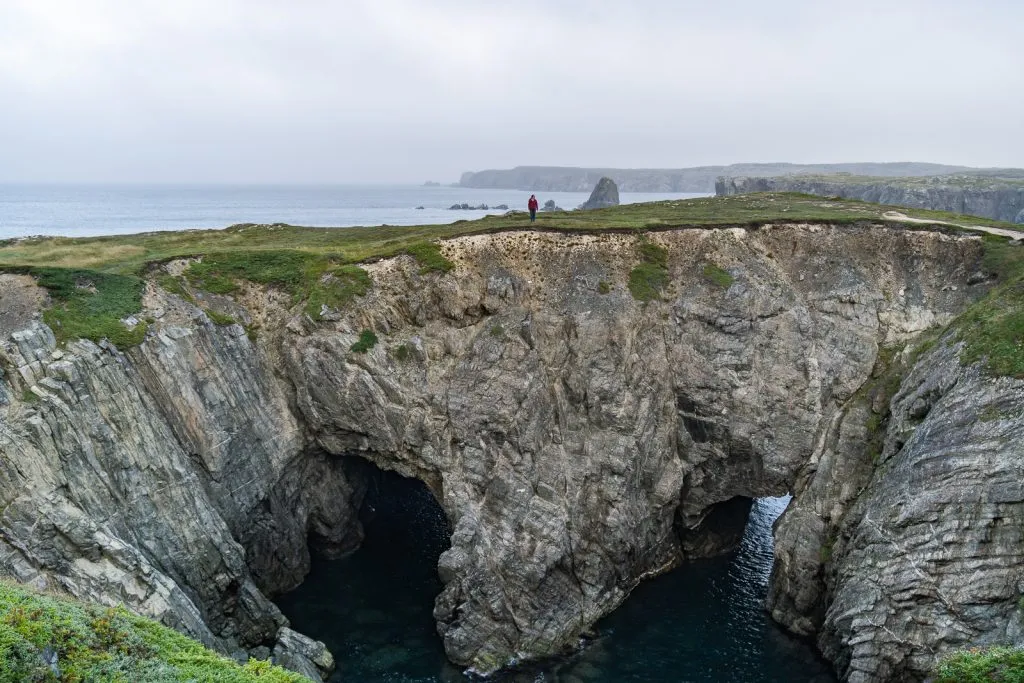
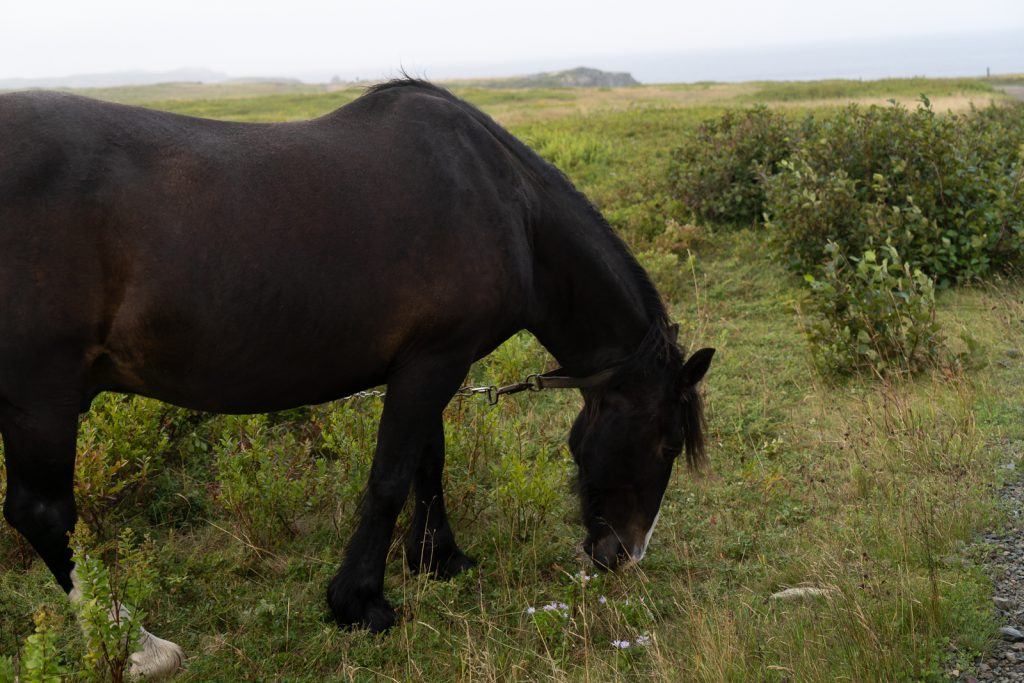
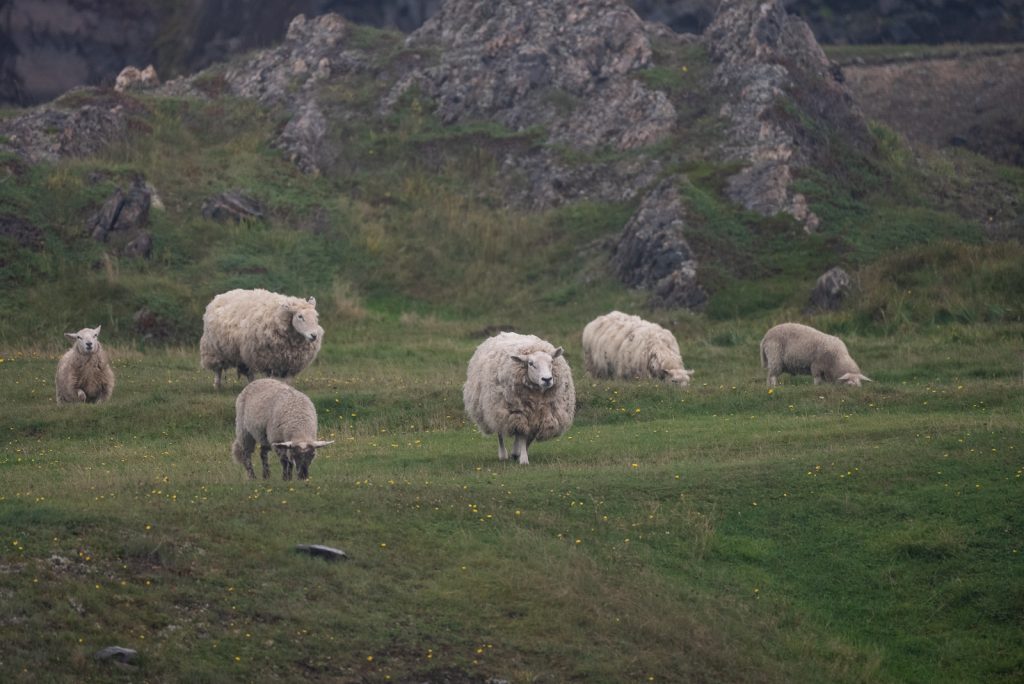
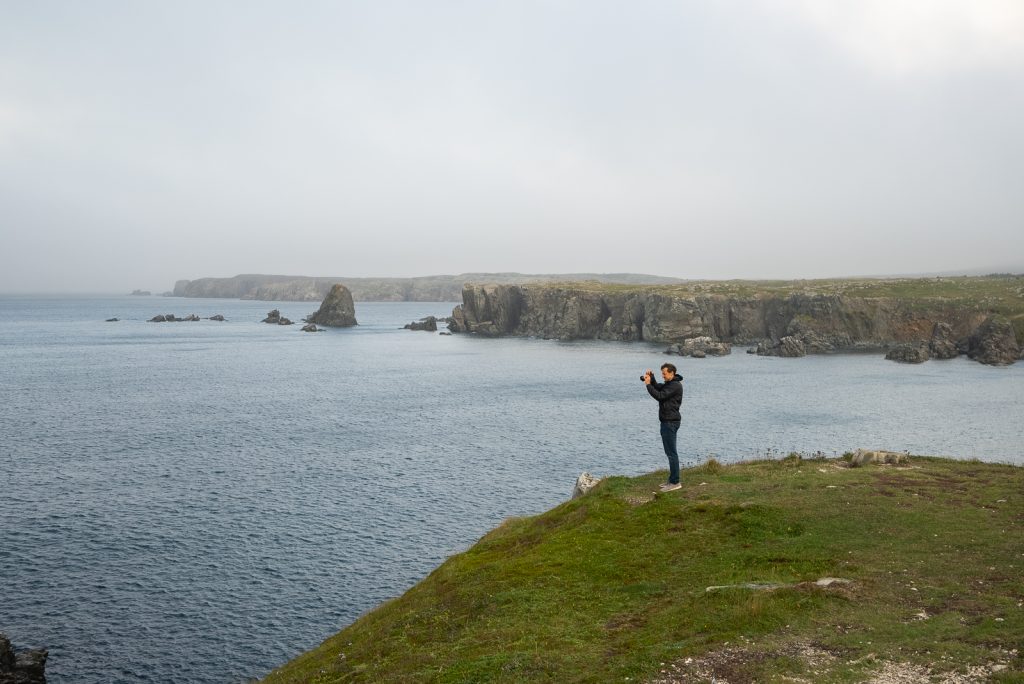
Just up the road from Spillars Cove is Dungeon Provincial Park. This park is known for its collapsed sea cave with a natural archway. Plus horses and sheep that roam about!
You can view the collapsed sea cave from a quick pull out, but we recommend driving further down the dirt road to see even more of the coast. And for those camping, you can boondock just outside of the park’s boundaries!
52. Hike the Skerwink Trail
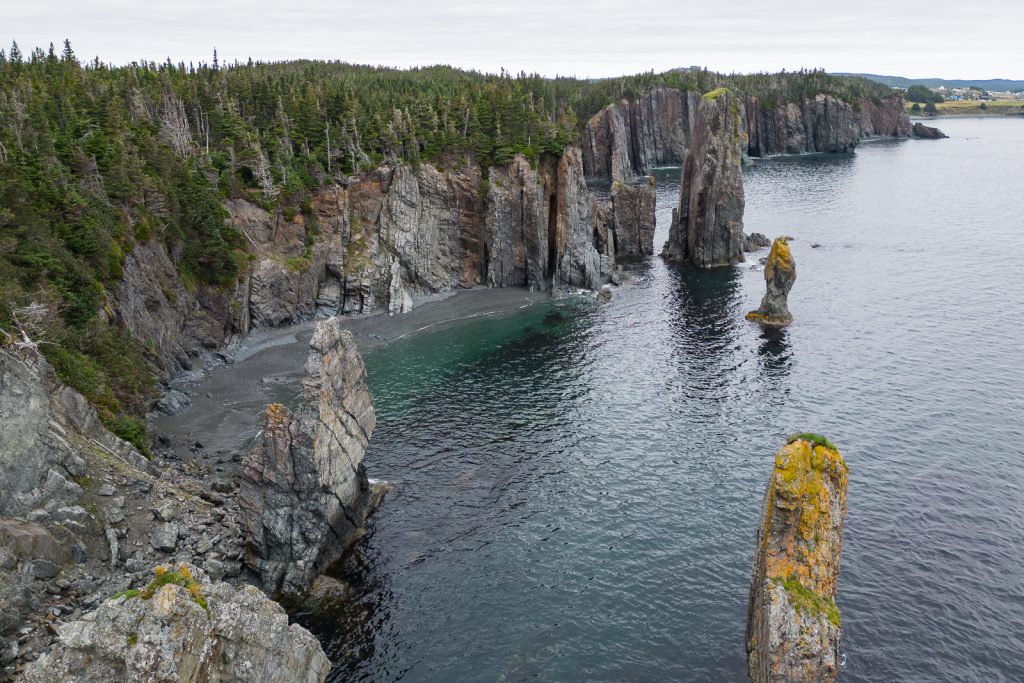
The Skerwink Trail is the #1 rated trail in Newfoundland according to AllTrails. It’s only about 5 km (3.2 miles), but is loaded with jaw dropping coastal views! You’ll get to see rock column sea stacks and panoramic views of multiple areas of the Bonavista Peninsula as you go along the coastline. While it may not have been our #1 hike (the Long Range Traverse wins on that one!), it was definitely in our top 5!
Need coffee and food before or after you hike? Head to Two Whales Coffee Shop just up the road in Port Rexton. This coffee shop, plus cafe, is in an old house, with a garden and chickens in the back. Some other places to eat nearby are Oh my Cheeses, Port Rexton Brewery + Tap Room, Sweet Rock Ice Cream, and BRIGHTSIDE BISTRO.
53. Visit Trinity
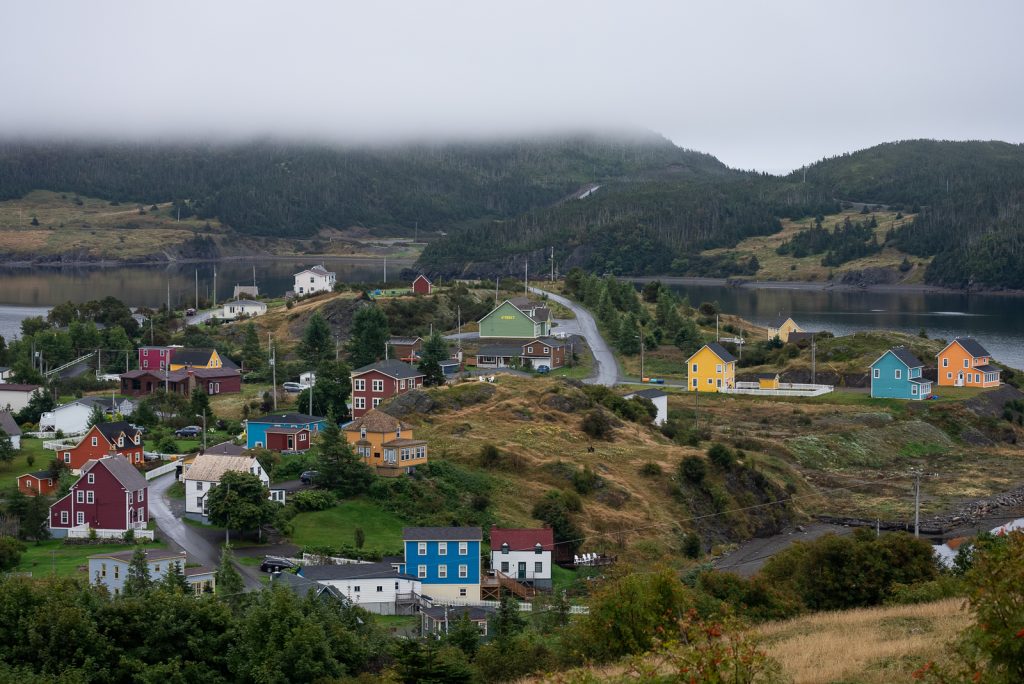
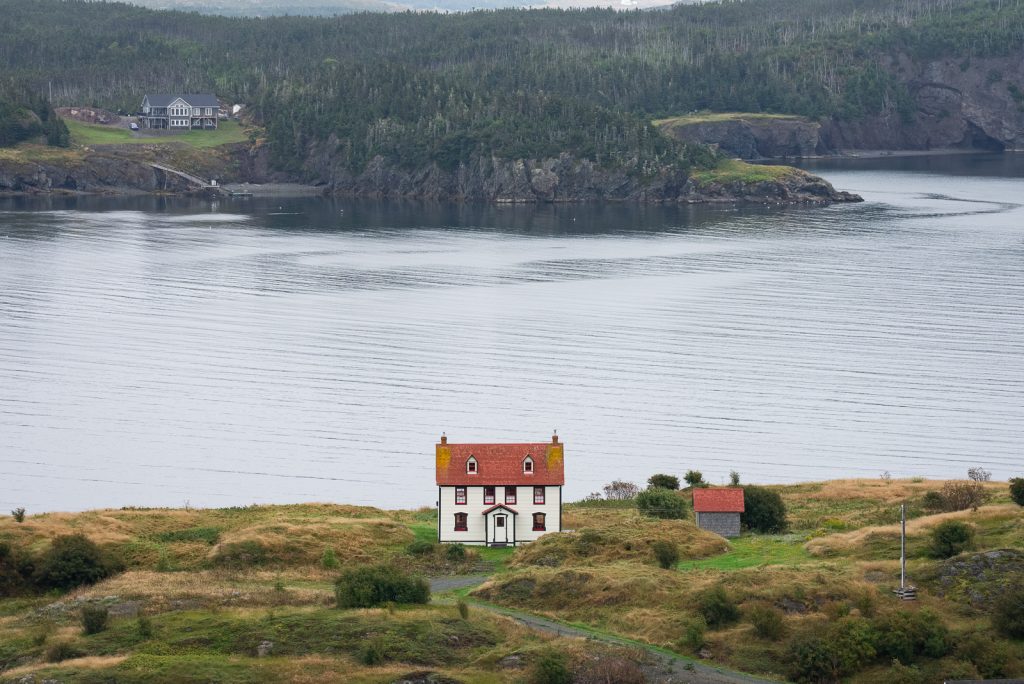
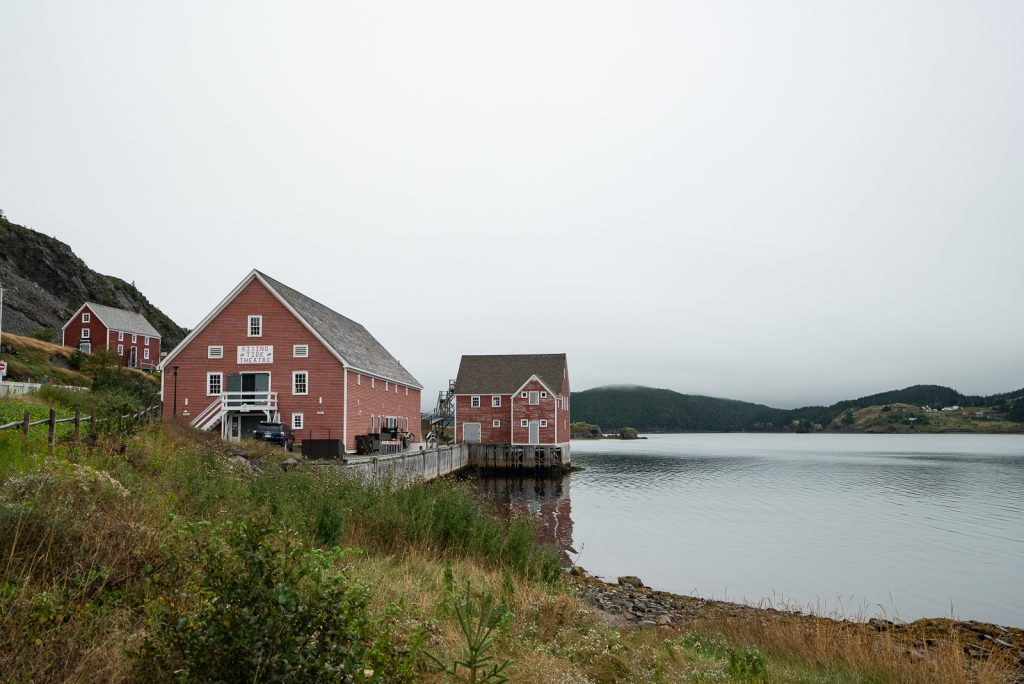
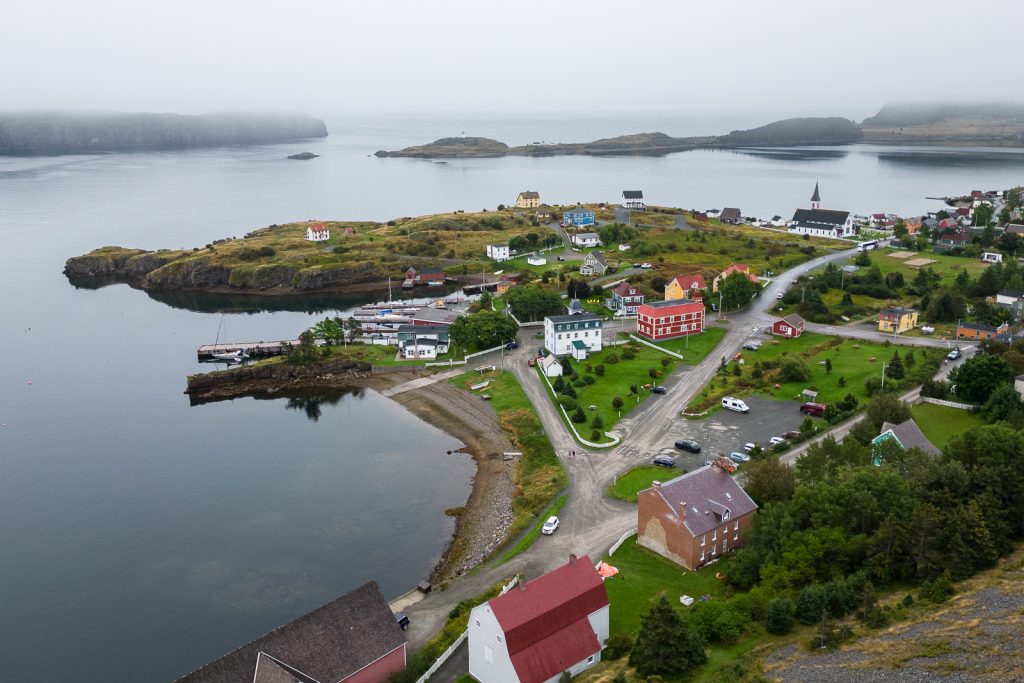
Trinity is one of the most picturesque and historic towns in Newfoundland. Back in the 18th and 19th centuries Trinity was a major trading port for northeast Newfoundland. And the history is still alive today! It’s one of those towns that when you walk around, you feel like you’re walking through the past. The buildings are so well preserved and the town has done an amazing job keeping the authenticity alive.
While here, catch a show at Rising Tide Theatre, plus check out some of the Trinity Historical Society sites like the Green Family Forge, the cooperage, and the Lester Garland House. You can also go on an iceberg kayaking tour!
And to see the town from above, hike up to the Gun Hill Lookout. It is one of the highest points in the area so you can see the cliffs of Skerwink, Fort Point Lighthouse, the town of Trinity and Trinity Harbor!
54. See the Fort Point Lighthouse
On a skinny peninsula in Trinity Bay sits the Fort Point Lighthouse. It’s a pretty windy and bumpy road to get out there, but it’s a neat spot with great views of Trinity and the ocean. Plus, there is some boondocking near the lighthouse!
Where to stay on the Bonavista Peninsula
Hotels and B&Bs: Artisan Inn,Rosewood Suites, and Fisher’ Loft Inn.
Vacation Rentals: Sea Loft(Champney’s West), Cape View Escape(Bonavista), Vintage inspired home (Bonavista), and Modern full home in Bonavista.
Camping: Lockston Path Provincial Park, Princehaven Campground,andCabot Hi-way cabins and RV park.
Boondocking: Cape Shore Road (Bonavista), John Cabot Municipal Park (Bonavista), and Fort Point Lighthouse (Trinity). You can also boondock at Spillars Cove (Bonavista)!
St. John’s
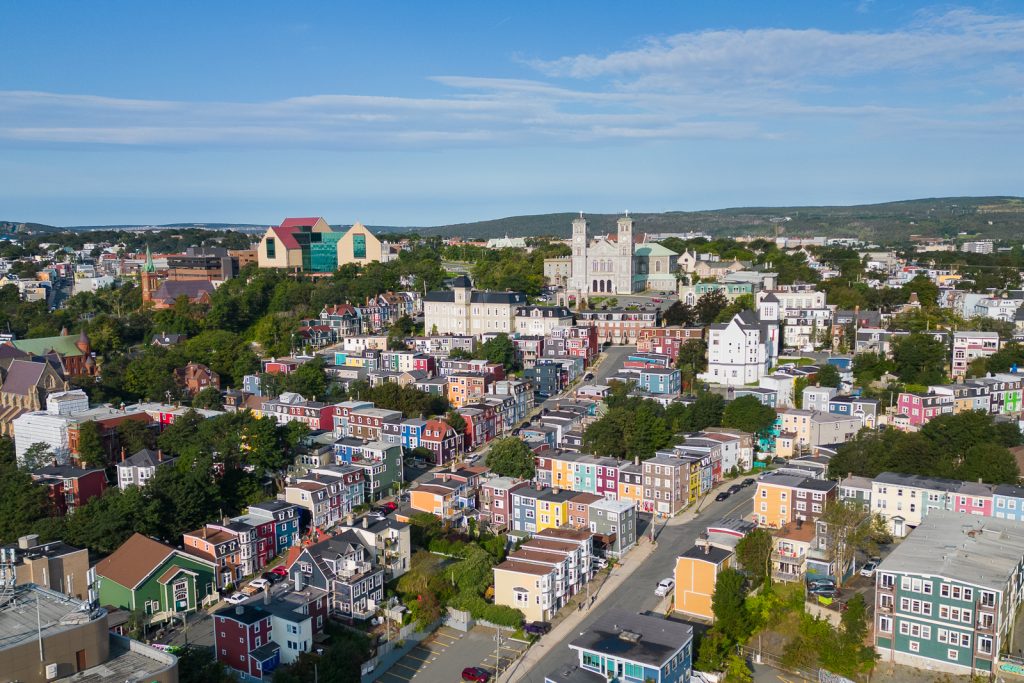
St. John’s is the capital and largest city in Newfoundland and Labrador, plus one of the oldest cities in North America. And we LOVED it here! The city is so colorful, the scenery is as beautiful as you’d expect in Newfoundland, and it has a mix of the luxuries of a big city, while maintaining a small town charm. Plus there’s so many great things to do in St. John’s.
55. Watch the sunrise at Cape Spear
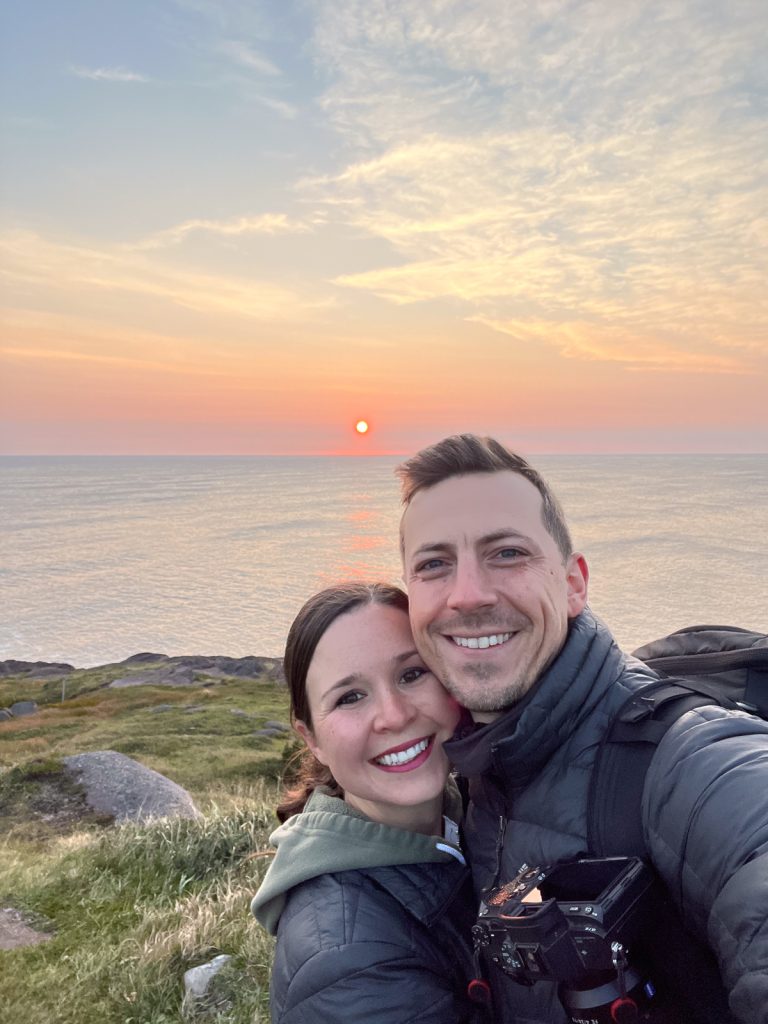
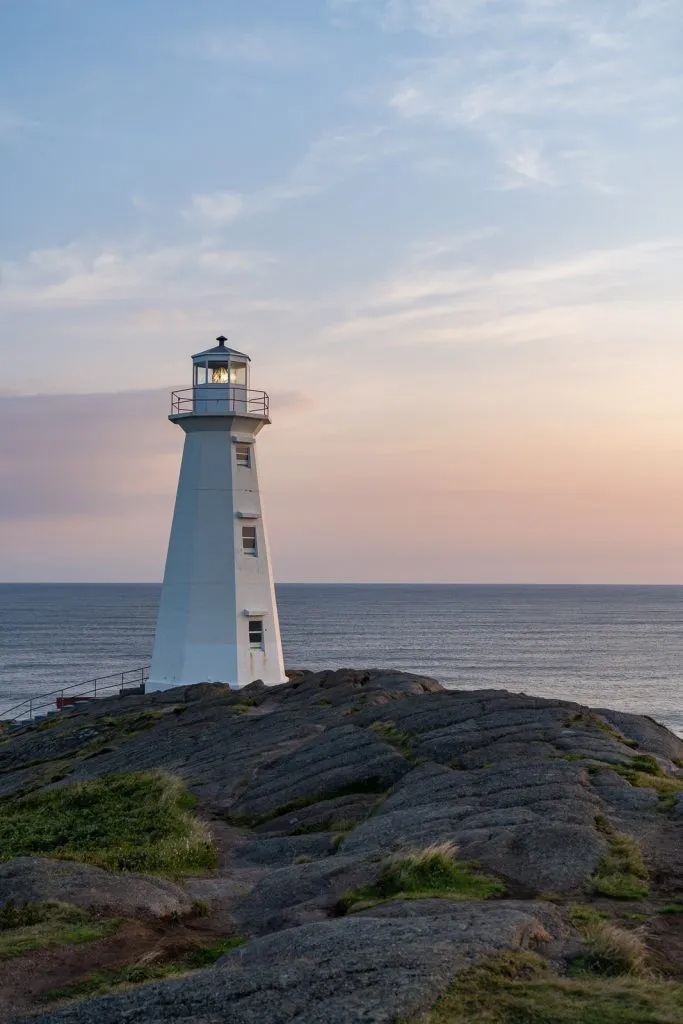
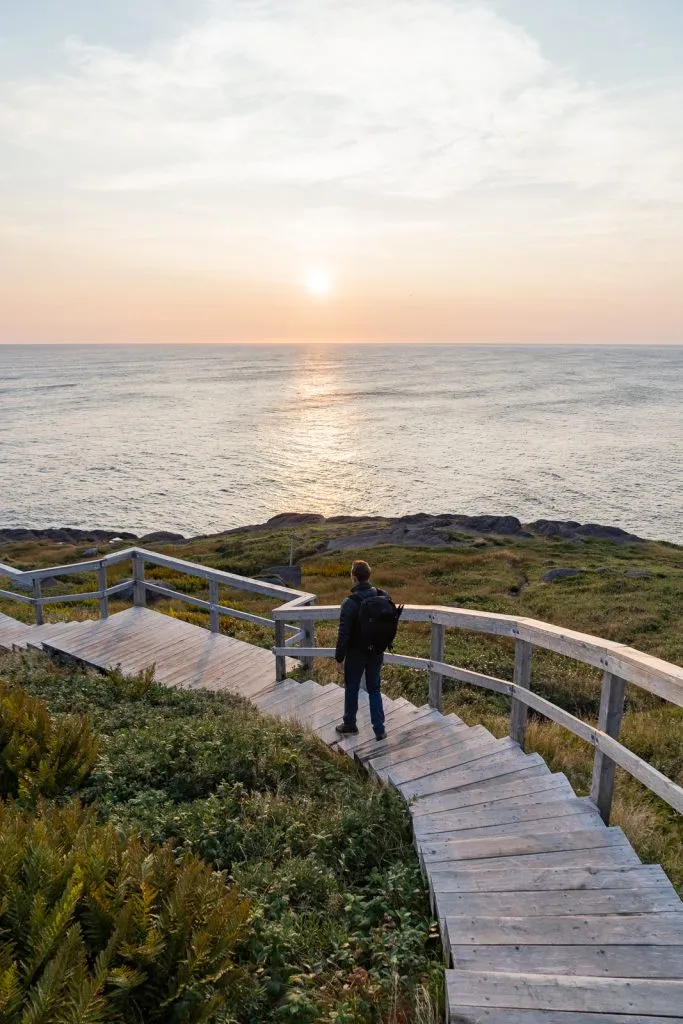
Cape Spear is said to be the easternmost point in North America. However, this is heavily debated and depends on how you determine the easternmost point. But to be 100% accurate, we can say that it is the easternmost point in Canada!
And since it faces east, one of the best things to do here is see the sunrise. You’ll be one of the first people to welcome the sun in all of Canada and North America!
Besides sunrise, this Parks Canada site is home to the oldest lighthouse in all of Newfoundland, built in 1836. And you can go on a guided tour of the inside of the lighthouse and keeper’s quarters where guides will regale you with stories of the life of a light keeper and family.
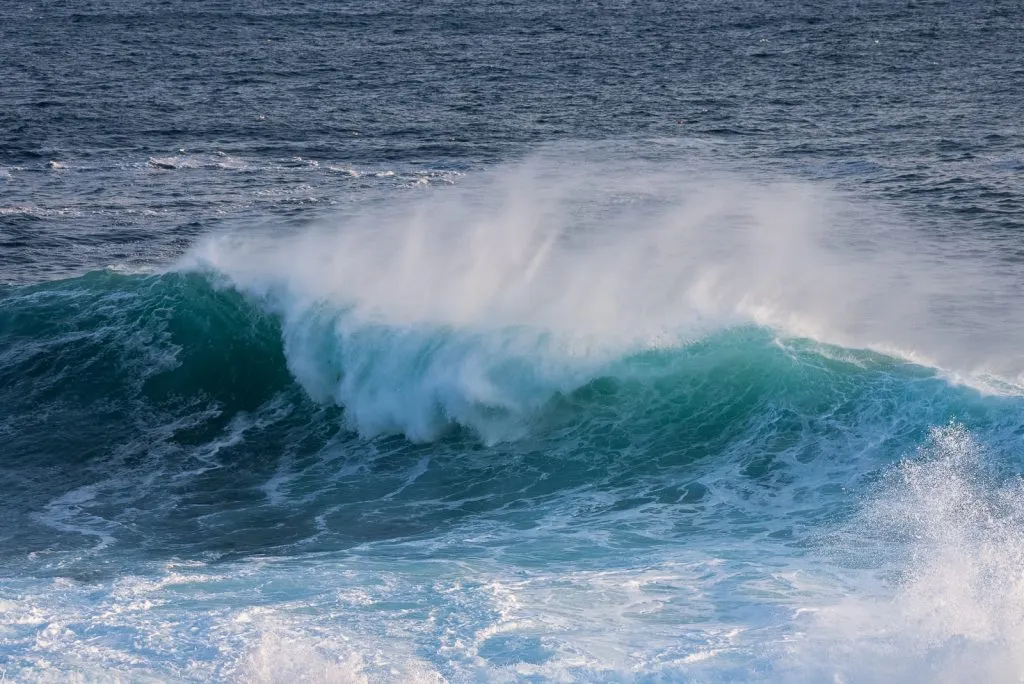
But quite possibly our favorite thing to do here was see the MASSIVE waves! This region is known for having some huge waves and we were absolutely mesmerized by them.
56. Get “Screeched-in”
In Newfoundland they have a ceremony called a “screech-in,” where non-Newfoundlanders or “Come From Aways” can become honorary Newfoundlanders. You recite some local sayings, kiss a cod, and do a shot of Screech, a rum with 40% alcohol content.
It kind of reminds us of the sour toe cocktail in Dawson City, but trade the frostbitten toe for cod lips. Since we don’t drink, we passed on this ceremony, but if you do drink, you gotta do it!
A couple popular places to get screeched-in in St. John’s are Christian’s Pub and Trapper John’s.
57. See Jellybean Row
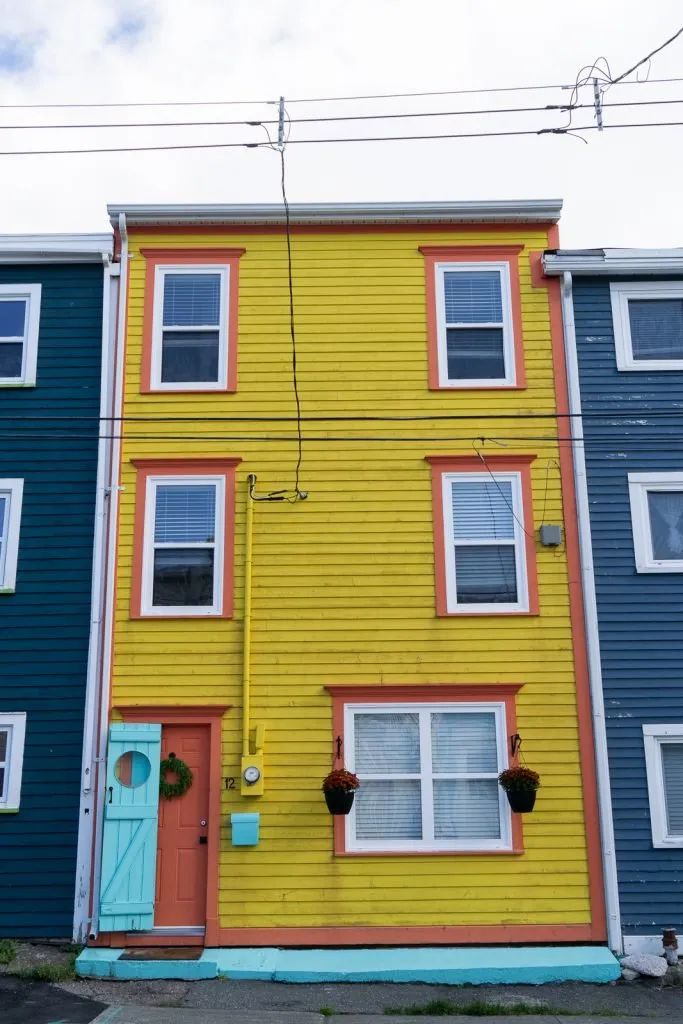
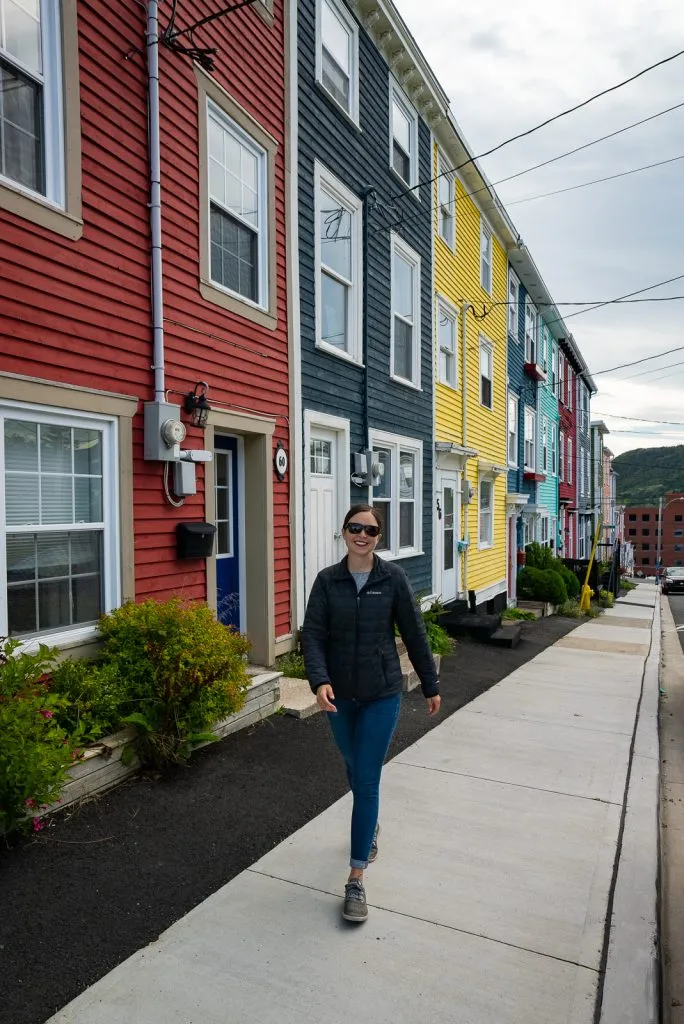
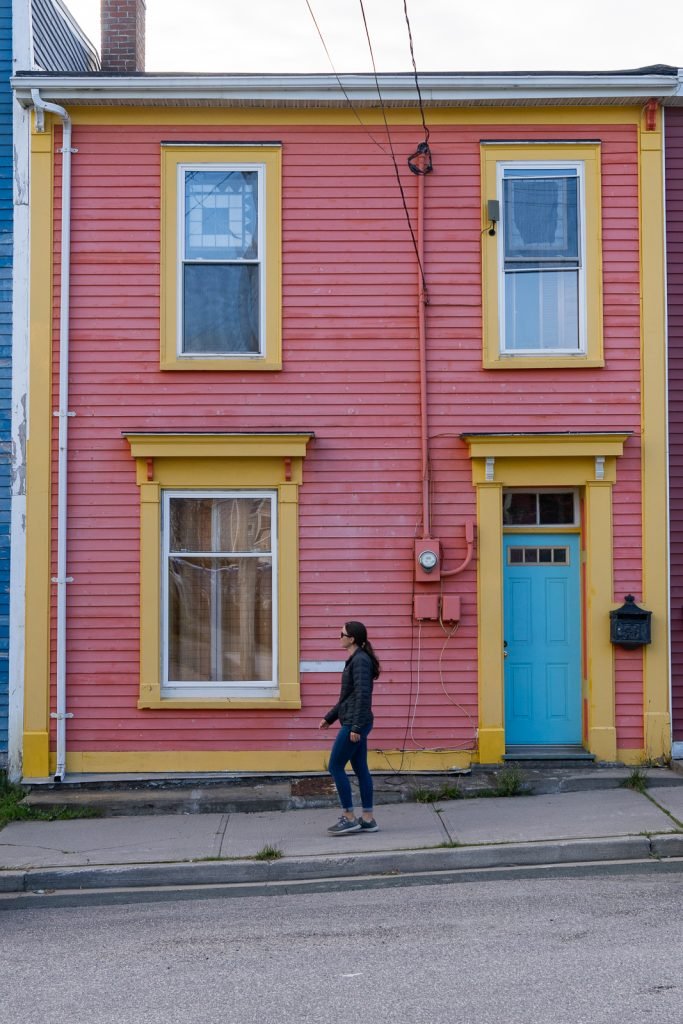
St. John’s may be the largest city in Newfoundland, but you won’t find many tall buildings here. Instead, you’ll find some very colorful ones! St. Johns is known for its vibrant, colorful buildings, which have the nickname Jellybean Row. But it’s not just one row of them, you can find them all over!
We have heard two theories as to why the houses are so colorful. One was so that it was easier for fishermen to spot in the fog. And another was that it was to revitalize the town. Either way, it gives the city a fun pop of color!
58. Try one of the local restaurants


Being the largest city in Newfoundland, St. John’s has some delicious eats! We loved Bannerman Brewing, which is a popular brewery in town that also serves coffee and their own homemade sparkling waters. But what makes them even better is that they have a Thai food spot inside called Namjim and it is top notch! The food we got here was some of the best in Atlantic Canada!
Some other delicious spots to try in town are Toslow, The Nook and Cannery, The Duke of Duckworth, Newfoundland Donut Company, The Parlour Gelato + Coffee, Chinched, and Rocket Bakery.
59. Visit The Rooms

The Rooms houses the province’s most extensive collection of artifacts, art and historical records.
There are a variety of exhibits, like an Irish history exhibit, exhibit on wildlife and indigenous history, and multiple art galleries. One of our favorites was an exhibit on Newfoundland’s military, where you can even play dress up!
Besides the exhibits, the building itself is super neat. Its design mirrors Newfoundland fishing rooms and it has a huge wall of windows, plus an observation deck with an amazing view of the city!
60. See The Battery
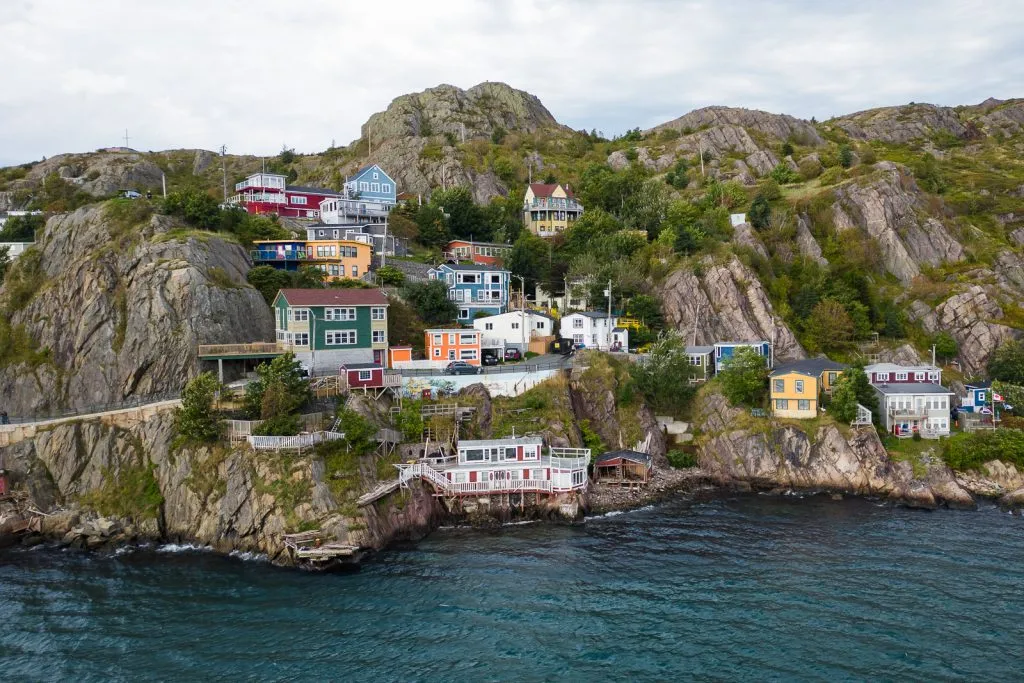
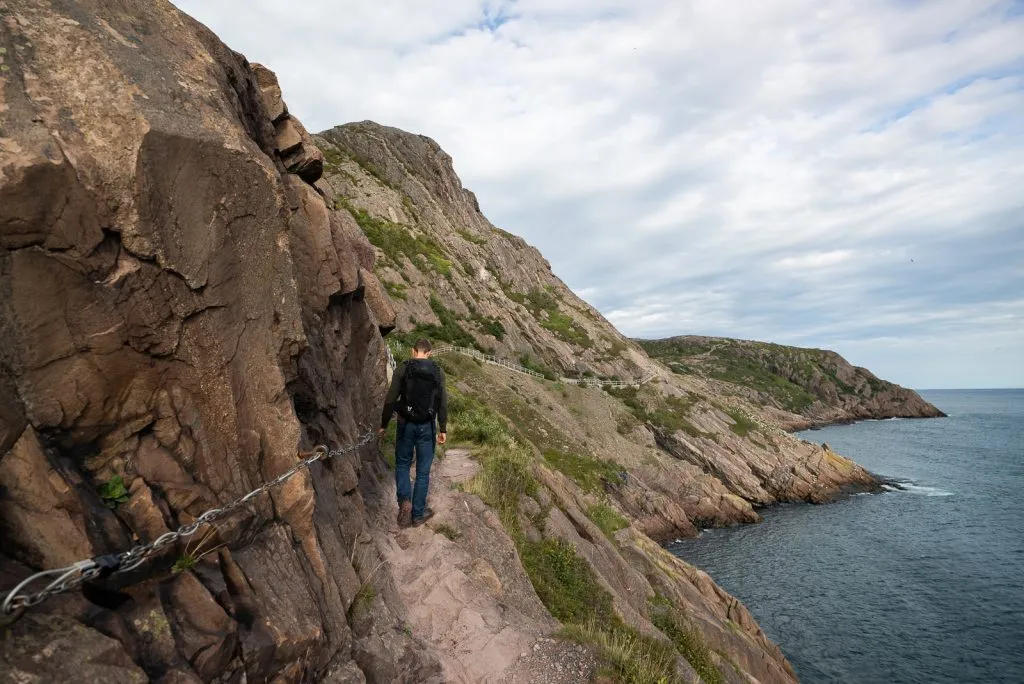
One of the most iconic photos of St. John’s is The Battery. This neighborhood has super narrow streets, with colorful houses perched on the cliffside. Many people go there to simply walk around, but you can also access the North Head Trail from here to get to Signal Hill National Historic Site. Which we highly recommend! The trail takes you along some narrow cliff sides, with a few chain sections, so it’s not for those with a fear of heights. But for those who can handle it, it’s a lot of fun! And possibly VERY windy, like it was for us.
61. Go to the Signal Hill National Historic Site
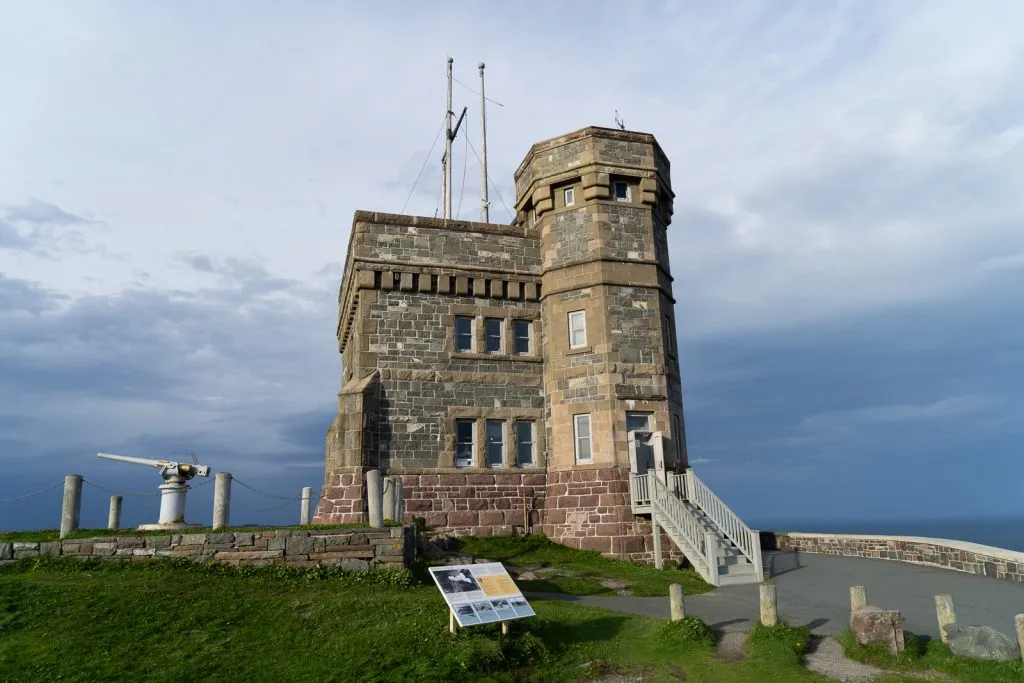
Signal Hill National Historic Site is a popular historic site in St. John’s that sits high above the city and harbor. And because of its location, it played an important role in military signaling, as well as commercial vessel signaling. Plus a fog gun that was also used to warn about foggy conditions.
But besides signaling, it also was an important site for transatlantic communication. There have been many communication feats that have happened here, but the most famous was in 1901, when Guglielmo Marconi received the first trans-Atlantic, wireless signal on Signal Hill. The letter “S” was transmitted from a station in Cornwall, England, 3,500 km (2,174 miles) away!
There are a variety of things to do at the historic site like take a guided history tour, fire a historic musket, and fire the noon day gun. You can also go inside the Cabot Tower, where there is an exhibit about Marconi.
Even if you aren’t a big history buff, it’s still worth coming up here for the 360º views of St. John’s!
62. Explore Quidi Vidi

Quidi Vidi is a quaint, historic fishing village tucked into a narrow harbor, less than 10 minutes from downtown St. John’s. It’s not only known for being super picturesque, with colorful fishing stages, but also for a couple popular businesses.
First is the Quidi Vidi Brewery, which is famous for its iceberg beer, made out of water from the icebergs that float to Newfoundland. It’s also home to Mallard Cottage, which was built in the 1800s and is one of the oldest residential structures in St. Johns. Today it is a well loved restaurant (make sure to make a reservation) that is said to be one of the top 20 restaurants in Canada and was even visited by Anthony Bourdain.
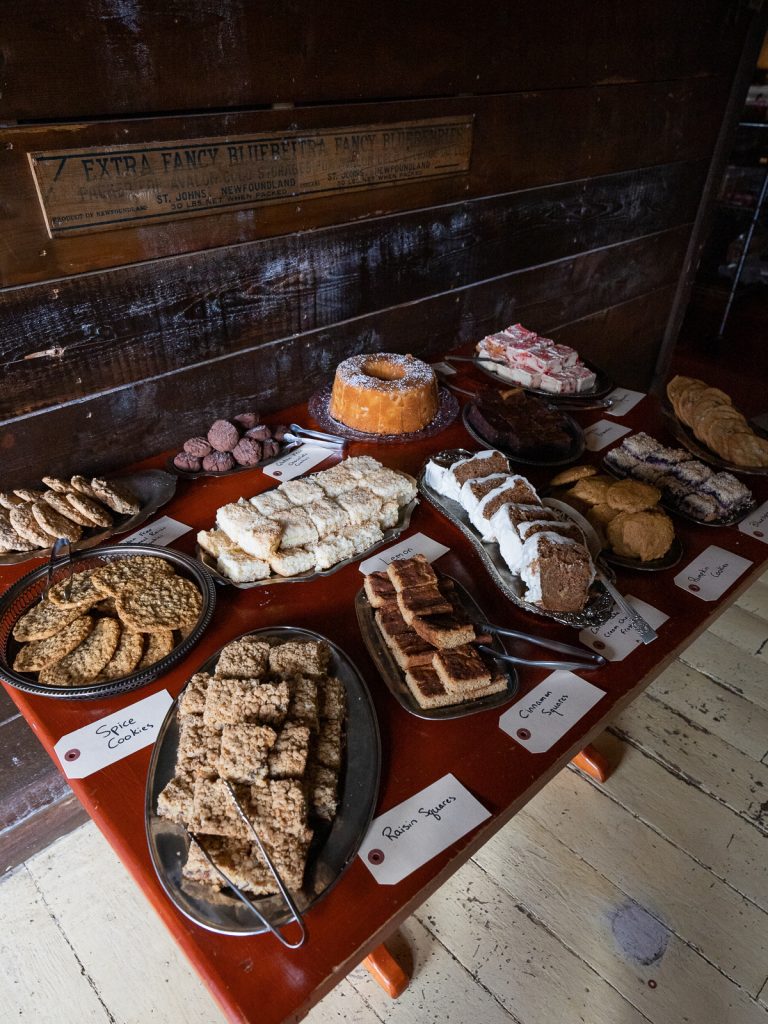
We LOVED its cozy, rustic vibe, high quality food, plus weekend cake table. Yes, that’s right, a cake table! You pay for a small or large box and you can fill it with as many desserts as you can fit in it!
After eating and drinking, head to Quidi Vidi Lake or hike the Sugarloaf Path to get some exercise!
Where to stay in St. John’s
Hotels: Courtyard by Marriott, Alt Hotel St. John’s, and JAG Boutique Hotel.
Vacation Rentals: Downtown apartment w/fireplace, House on Grand Concourse Trail, and Jelly Bean Row bottom floor apartment.
Camping: Pippy Park Campground and Waterford River Valley Campground.
Boondocking: Walmart (north side of town), Middle Cove Beach parking (this is a great spot for beach campfires), and Blackhead Path parking.
Avalon Peninsula
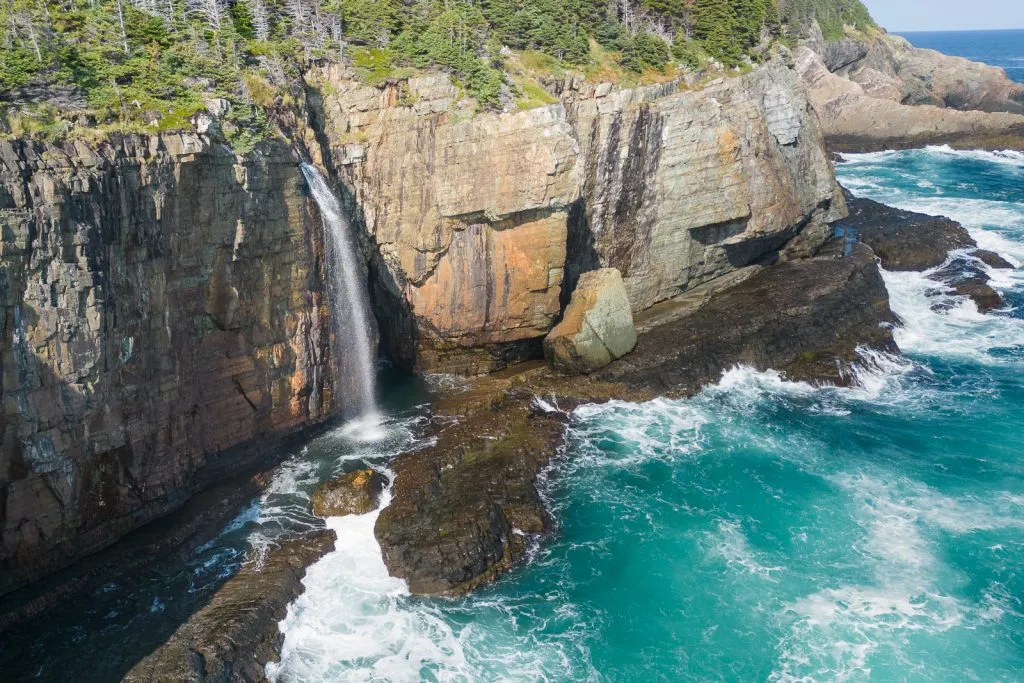


Last, but certainly not least, one of the best things to do in Newfoundland is visit the Avalon Peninsula.
While St. John’s is located on the Avalon Peninsula, the peninsula offers so much more than just the city! The Avalon Peninsula is also home to the East Coast Trail, a 336 km (227 mile) long trail system that runs along the coast and is popular for thru hikers and day hikers.
63. Hike part of the East Coast Trail
There are 25 different paths that make up the East Coast Trail, with quite a few of them close to St. Johns.
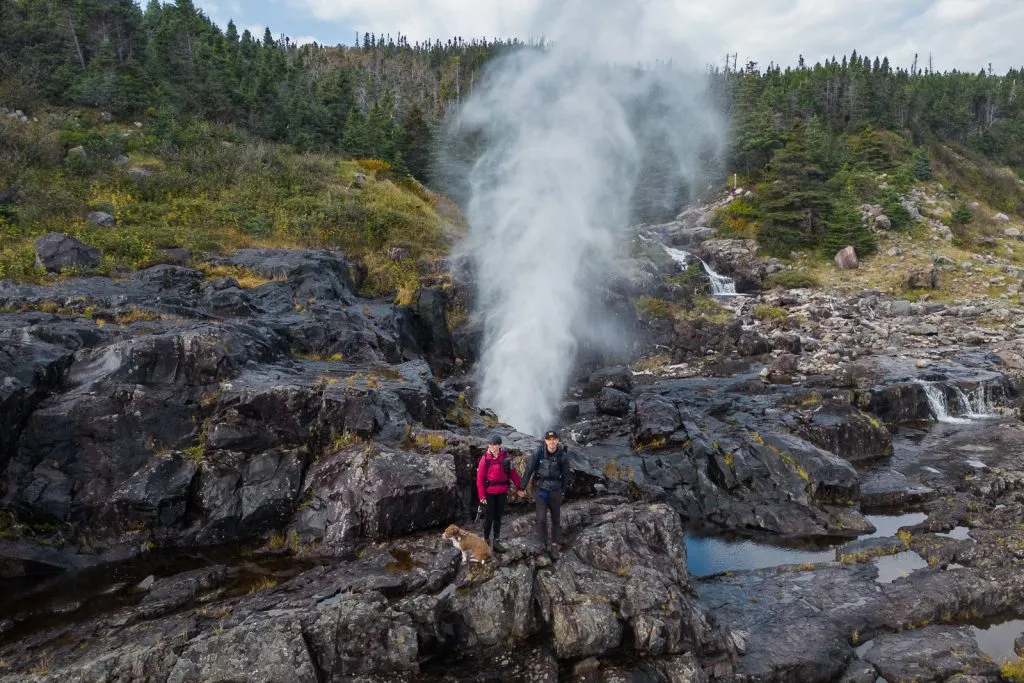
During our trip we hiked the Stiles Cove Path segment which had tall cliffs, waterfalls, and gigantic waves. We also hiked the Spout Path, which is a 22 km (13 mile) round trip hike with a wave powered geyser. Some people will hike it as a very long day hike, but many will camp overnight instead, which is what we did.
We’d love to complete the whole East Coast Trail one day and some additional sections we’d like to check out are the Cobbler’s Path, La Manche Suspension Bridge, Flamber Head Path, and Biscan Cove Path.
Besides hiking the East Coast Trail, you can go on a puffin and whale watching tour with Gatherall’s from here. If you visit during the right season, this is a must!
Where to stay on the Avalon Peninsula
While you could stay further south on the Avalon Peninsula, all of the hikes and activities we mentioned above are doable from St. John’s. So we’d suggest staying in St. John’s and doing day trips to other areas of the peninsula!
Planning your trip to Newfoundland
Taking the ferry to Newfoundland
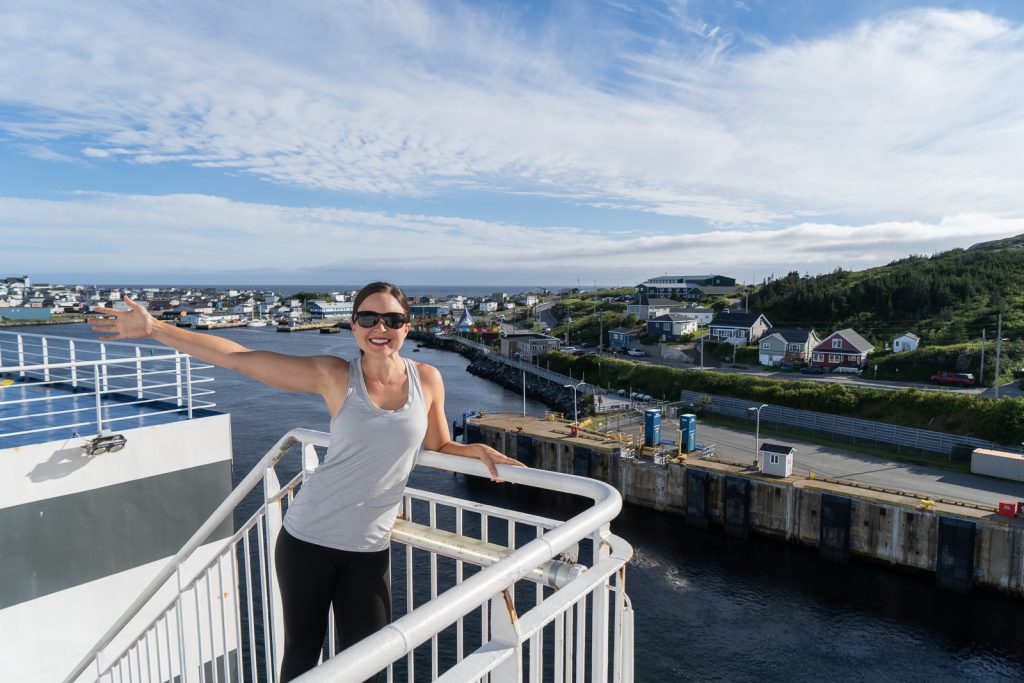
With Newfoundland being an island, it is a bit trickier to get to. The most common way to get there is to take a ferry. There are 2 ferry routes to Newfoundland from Nova Scotia and 1 from Quebec:
- Most popular: 7 hour option from North Sydney, Nova Scotia to Channel-Port aux Basques, Newfoundland. This is what we did!
- 16 hour ferry from North Sydney to Argentia near St. John’s.
- 1 hour, 45 minute ferry from Blanc-Sablon, Quebec to Saint Barbe, Newfoundland near St. Anthony.
To learn more about taking the ferry from Nova Scotia to Newfoundland, check out our complete guide about the experience and what to expect!
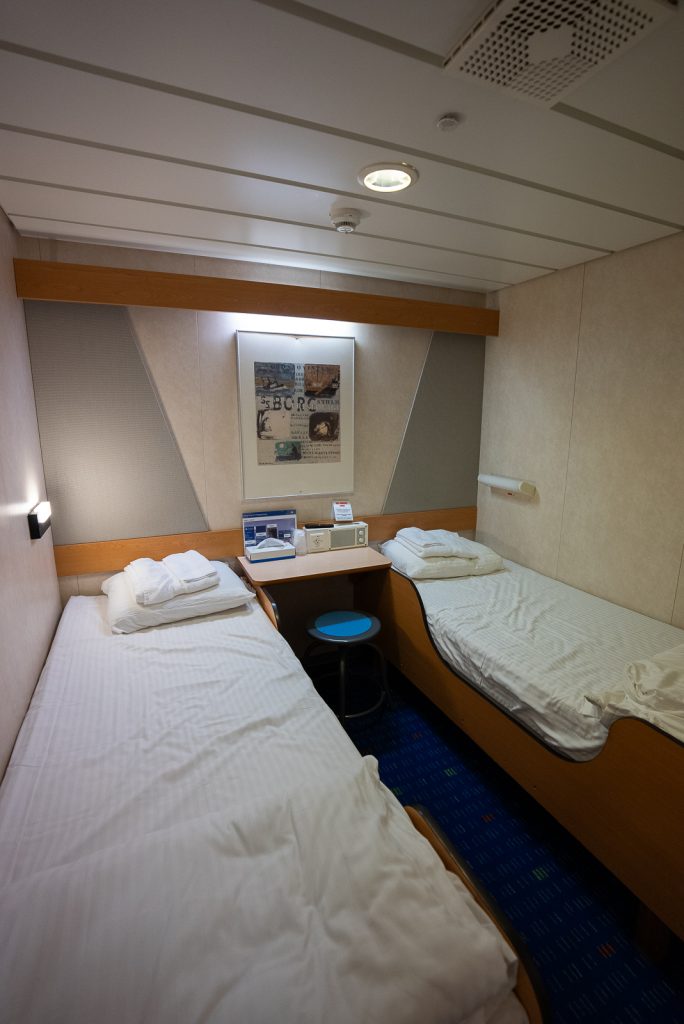
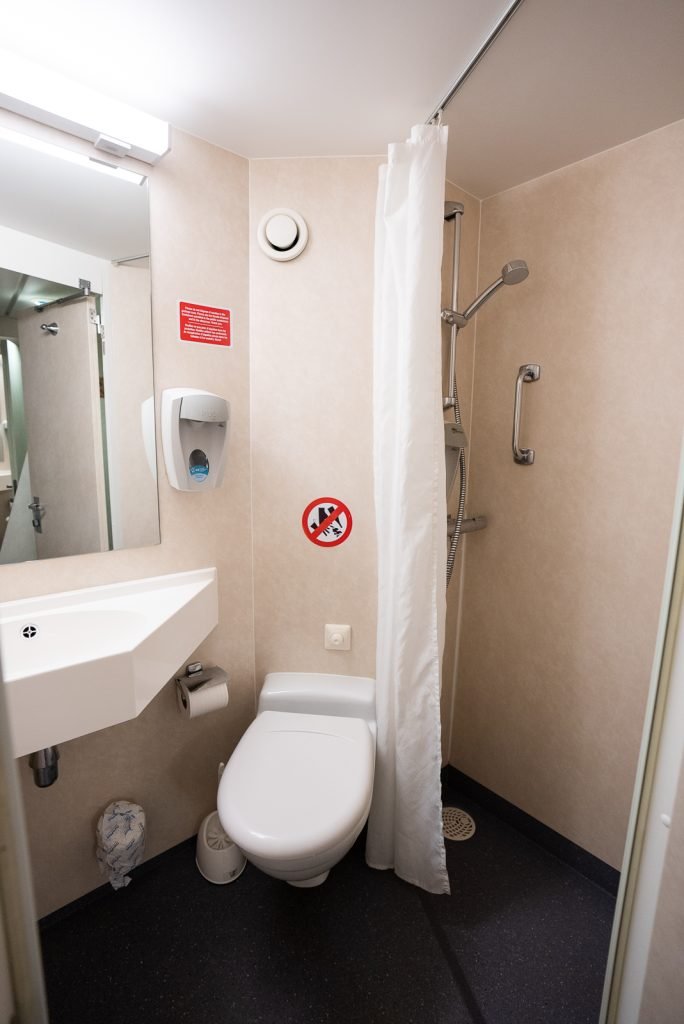
Traveling with a pet? You can book a pet friendly cabin, reserve an onboard kennel space, or keep them in your vehicle. We opted to leave Kona in the van, which is where she feels most comfortable. If you go with this option, keep in mind that you cannot get back to your vehicle on the parking deck. So your pet will have to be able to hold their business for the duration of the ride.
Flying to Newfoundland
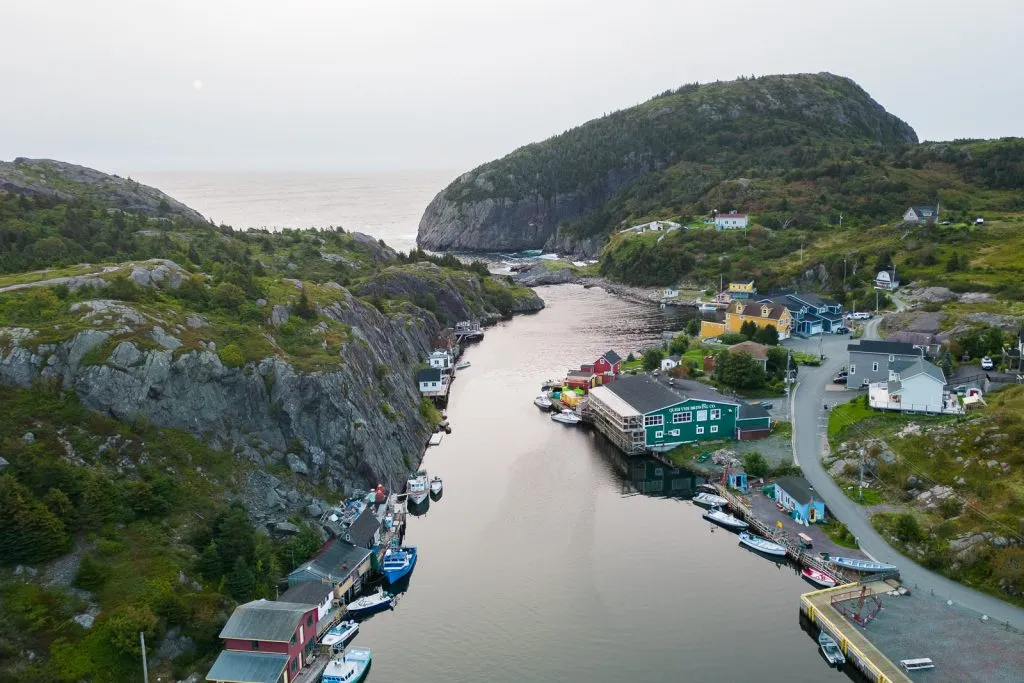
Flying to Newfoundland instead? Newfoundland has three airports for visitors: St. John’s (YYT), which is the largest, Gander (YQX), which is the central option, or Deer Lake (YDF), near Gros Morne National Park.
The province is serviced by AirCanada, WestJet, and several smaller airlines. As of right now, flights are only within Canada, so you will have a connecting flight if traveling from outside of Canada.
Getting around Newfoundland
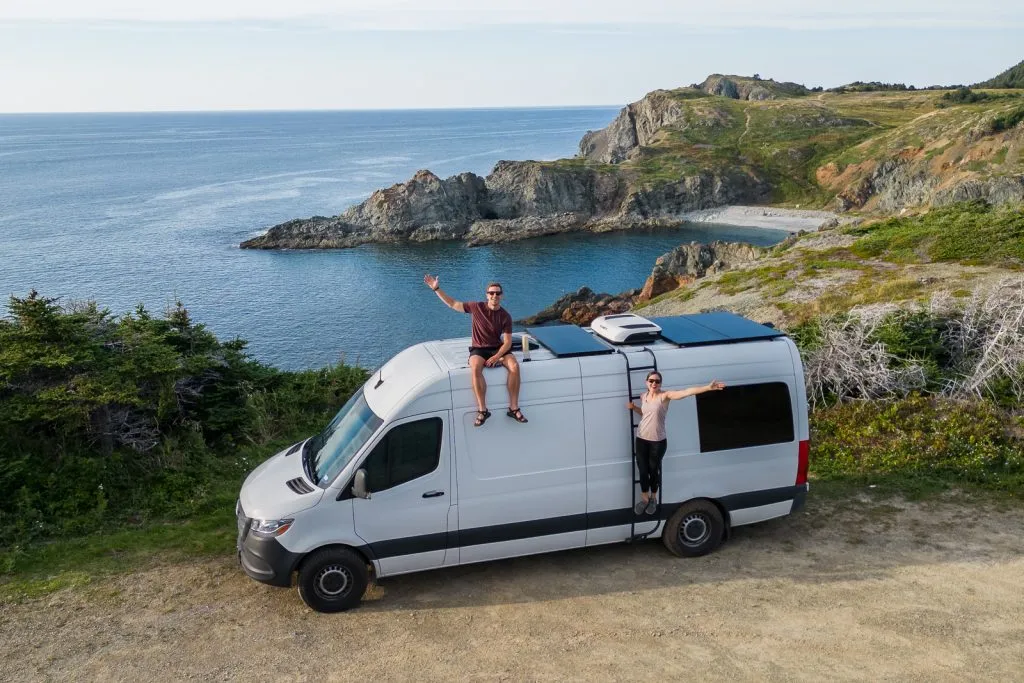
Newfoundland is very spread out, so you will need a car. While some of the best things to do in Newfoundland require driving on a dirt road, any car will be okay for getting around to the major highlights. If you are able, a vehicle with some clearance wouldn’t hurt!
But in our opinion, Newfoundland is best explored by RV or camper, as some areas are more remote and have limited lodging options. And one thing we loved about our time in the province is that the boondocking is excellent! There are some really incredible spots that you are allowed to park your RV or van for the night…completely for free!
We listed many camping and boondocking options above, but you can see our complete list of the best free camping in Newfoundland here!
Curious how we find free campsites in North America? Check out our guide to finding free camping!
Lastly, when driving around Newfoundland, watch out for moose! There are on average 500 moose collisions in Newfoundland a year and multiple people from Newfoundland emailed us to warn us about not driving in the dark, since they’ll dart out right in front of you. So try to stick to daylight driving while here!
When is the best time to visit Newfoundland?
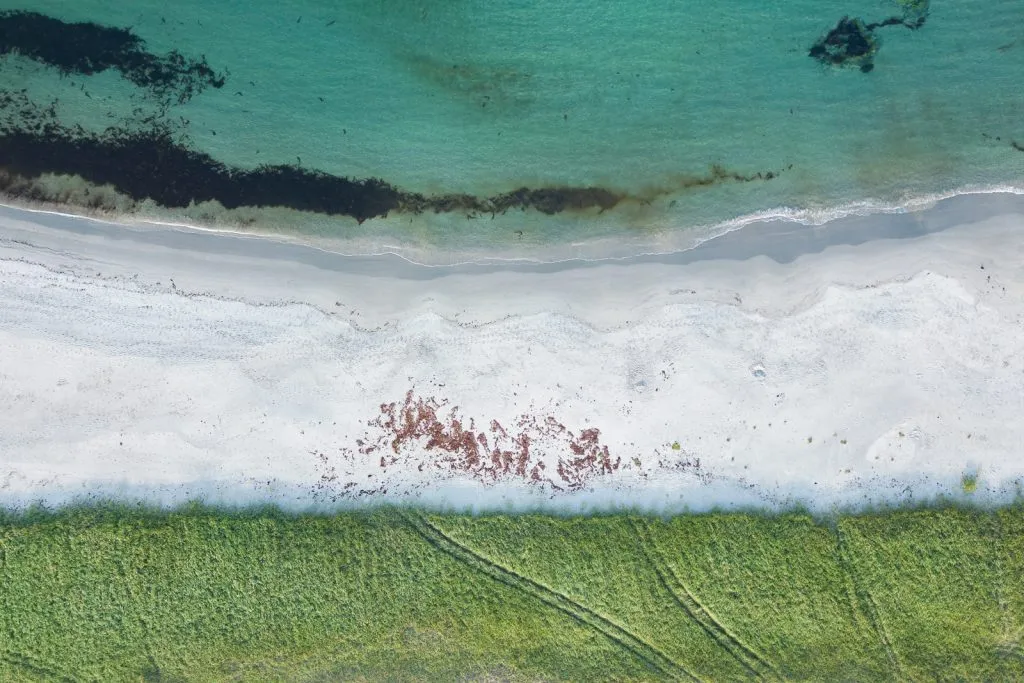
While you technically could visit Newfoundland anytime of the year, we recommend only visiting between late May until mid September. This is when most attractions will be in full swing, more businesses will be open, and the weather will be pleasant.
Starting in mid September, many local businesses and campgrounds will shut down though, which we experienced quite a bit of. So we’d personally suggest leaving by mid September.
Icebergs and whales
If you want to see the icebergs, specifically visit between late May and late June. And for whales, July and August are the best months, but you can technically see whales from May until October. To see both, try to visit around June!
Hiking
Want to visit when it’s best to hike? We suggest visiting in July, August, and early September. This is when trails will be snow free and the vegetation will be more lush.
We visited Newfoundland from mid August until early October. This was mostly due to us wanting to have the best hiking weather and also timing our visit to Nova Scotia for the fall. While we missed out on the icebergs, we got to experience so many amazing hiking trails that we may not have been able to in the earlier months!
The weather app lies!
When planning your days in Newfoundland, be very skeptical of the weather forecasts and apps. They are not very dependable or accurate at all. We had plenty of days where no rain was called for and we ended up getting caught in clouds of fog, rain, and mist. It can also be VERY windy in Newfoundland, so keep that in mind!
How much time do you need in Newfoundland?
Despite being an island, Newfoundland is deceptively large, with the majority of civilization located on the perimeter, and pure wilderness in the interior of the province. It can take a very long time to get around the province. For example, from Channel-Port aux Basques to St. John’s is a 9.5 hour drive.
All that to say, make sure you plan out your drives and give yourself enough time to drive between destinations. You will not be able to visit as much as you may think, solely due to how long it takes to get around.
Have one week in Newfoundland? We’d suggest sticking to one side of the province! Either focus on the western side and Gros Morne National Park or head to St. John’s, hike some East Coast Trails, and experience the Bonavista Peninsula.
Have two weeks in Newfoundland? With two weeks in Newfoundland you likely could experience both sides of the island, but you will have to move quickly. You could spend a couple days in Gros Morne National Park, head to Twillingate, visit the Bonavista Peninsula, and spend a couple days in St. John’s and the surrounding area.
Have three weeks in Newfoundland? Three weeks in Newfoundland will enable you to add on some hidden gems and more remote areas, like the Port Au Port Peninsula, Fogo Island, and Terra Nova National Park!
For detailed Newfoundland itineraries, check out our Atlantic Canada eBook! We not only share itinerary options for Newfoundland, but also itineraries to road trip around multiple Atlantic Canada provinces.
What to bring to Newfoundland
Here are some specific items that you especially want to pack for your time in Newfoundland! For a more general packing list, you can download our go to packing list here.
Hiking Gear
Newfoundland is LOADED with epic hikes so you’ll likely be spending a lot of time on the trails. Make sure to bring the proper gear, including good shoes and water storage (like a Camelbak)! We also always suggest having the 10 essentials on you, just in case.
Offline Maps
We had cell service most of the time in Newfoundland, but in some more rural areas it became spotty. Make sure to download offline AllTrails and Google Maps to navigate on the road and on hikes.
Want to get 30% off an AllTrails Plus membership? Use our code aplusk30 (you must redeem this code on the website, not the app)!
We use AllTrails Plus on every single hike and it is the most helpful hiking tool out there! Some of the features we love are offline maps (so we can navigate even without cell service), wrong-turn alerts, and its 3D maps feature, so we can get a feel for trails before we hike.
Layers
The weather can be very unpredictable and change quickly on The Rock. We had more than a few crazy weather days! Including LOTS of wind, some rain, and also pure sunshine. We always recommend bringing layers, like pullovers and puffy jackets. Even in the summer, the temperatures can be pretty cold with a cold wind. And you’ll want to be prepared for winter weather any day of the year!
Rain Jacket
During our time in Newfoundland we did experience a decent amount of rain. So make sure to bring a rain jacket!
Sun protection
Just as quickly as it can become cloudy and rainy in Newfoundland, the clouds can break and be full sun. Bring along a hat, sunscreen, and your sunglasses.
Passport
If you are visiting from the US or another country, make sure to pack your passport! And if you have a NEXUS card, bring that too.
Looking for more things to do in Atlantic Canada?
- Taking the ferry to Newfoundland: Everything to know!
- 12 BEST places to visit in Newfoundland from coast to coast
- The 31 Best Hikes in Newfoundland
- Things to do in New Brunswick (+ itinerary!)
- 32+ FUN things to do on a Prince Edward Island road trip
- How to go on a one week Nova Scotia road trip (2 itinerary options!)
- Get our Atlantic Canada Road Trip eBook
- Watch our Newfoundland videos
- Read all of our Newfoundland travel guides
Ready to explore Newfoundland?
Pin this guide with all of the best things to do in Newfoundland to start planning!