Last updated on July 24th, 2026
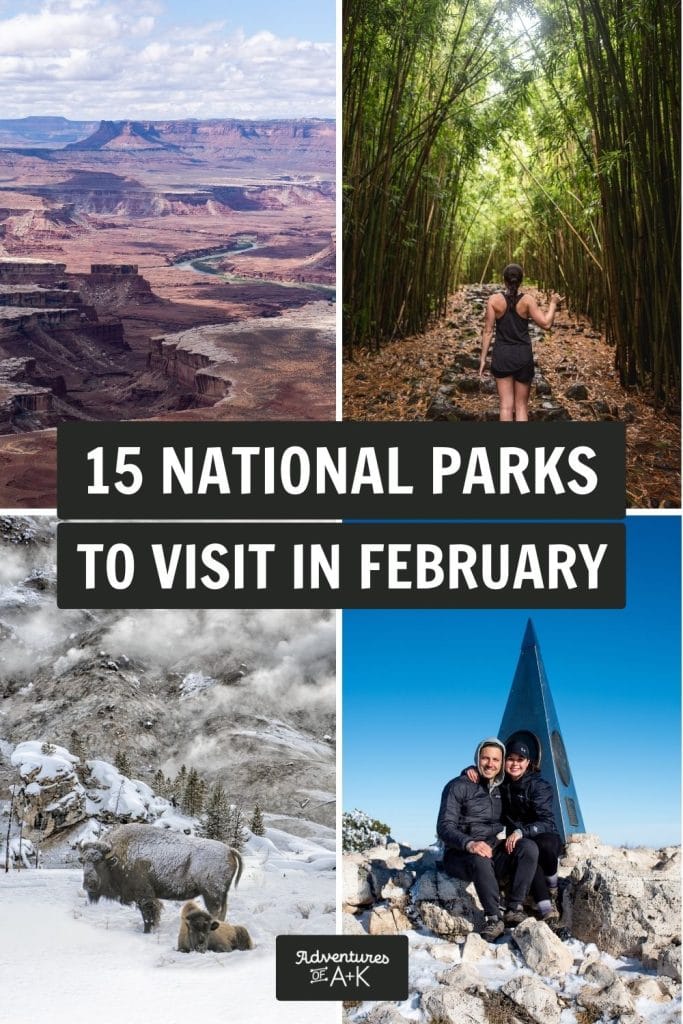
Looking for an epic adventure in February? It’s not just the month of love; it’s also the perfect time for a winter escape. We’re sharing the best National Parks to visit in February. Plus everything you need to know about the weather, the best hikes to explore, and what you need to know before you go!
February, often dubbed the month of love, packs quite a punch despite being the shortest month of the year. While many associate it with Valentine’s Day roses and heart-shaped chocolates, there’s another aspect that’s equally exciting—America’s National Parks!

You might think, “it’s still winter, why would I venture outdoors?” But hear us out. Many parks transform into winter wonderlands, where you can explore the landscape beneath a fresh blanket of snow.
If you’re not a fan of frosty temperatures, we’ve got you covered! Parks located in milder climates provide a comfortably cool setting for your adventures—minus the summer crowds. In fact, February’s lower visitor numbers make it a paradise for those looking to dodge the masses.
We’ve been to 48 out of the 63 national parks (yes, we’re slightly obsessed), and we believe February is an extraordinary month to explore them! So we’ve rounded up a list of the 15 best national parks to visit in February to guide you through this underappreciated travel season.
Quick Disclaimer About Our Monthly National Parks Series
Welcome to our ongoing monthly feature, where we curate a selection of America’s finest National Parks to visit each month! Our mission is to showcase each and every park we’ve personally stepped foot in, giving each its moment to shine. And you might notice that some parks make repeat appearances as the year unfolds—they’re just that good!
While our journey to explore every single U.S. National Park is still a work in progress, you can count on our recommendations being handpicked and seasoned with personal experience.
- Tips for Visiting National Parks in February
- 15 Best National Parks to Visit in February
- 1. Arches National Park
- 2. Death Valley National Park
- 3. Zion National Park
- 4. Everglades National Park
- 5. Guadalupe Mountains National Park
- 6. Haleakala National Park
- 7. Joshua Tree National Park
- 8. Big Bend National Park
- 9. Biscayne National Park
- 10. Canyonlands National Park
- 11. Carlsbad Caverns National Park
- 12. Hawaii Volcanoes National Park
- 13. Saguaro National Park
- 14. Yellowstone National Park
- 15. Mammoth Cave National Park
- Ready to explore the National Parks?
Tips for Visiting National Parks in February

Book in Advance: Popular parks can still attract crowds, even in the off-season. Secure your accommodations and any special permits well in advance to make sure you’re not left out in the cold—literally.
Invest in the America the Beautiful Pass: If you’ve got a year of adventuring in mind, it’s worth snagging the America the Beautiful Pass. This pass gives you access to over 2,000 federal playgrounds, including National Parks, saving you some serious cash in entrance fees.
Don’t Rely on Your Cell: Spoiler alert—your phone won’t be too reliable at any national parks. For safety and navigation, download maps for offline use if you’re going into really remote areas.
Want to get 30% off an AllTrails Plus membership? Use our code aplusk30 (you must redeem this code on the website, not the app)!
We use AllTrails Plus on every single hike and it is the most helpful hiking tool out there! Some of the features we love are offline maps (so we can navigate even without cell service), wrong-turn alerts, and its 3D maps feature, so we can get a feel for trails before we hike.
Boots on the Ground Early: Parking lots at popular trailheads fill up quick. Get up with the sun (or before it) to snag a prime parking spot for your adventure.
Mind the Pet Rules: While our pets might be part of the family, National Parks have rules about where they can go. This is for the protection of wildlife and to keep the parks pristine. Check out the pet policies in advance so you know what to expect.
Follow Leave No Trace ethics: Take out whatever you bring in, stick to the marked paths, and tread lightly on the land. You’ll be doing your part to keep these natural wonders, well, wonderful.
15 Best National Parks to Visit in February

1. Arches National Park
Arches National Park is situated in the high desert of southeastern Utah. Once a seabed, the area underwent significant transformation through eras of sedimentation, uplift, and erosion, eventually revealing the over 2,000 natural stone arches we see today.
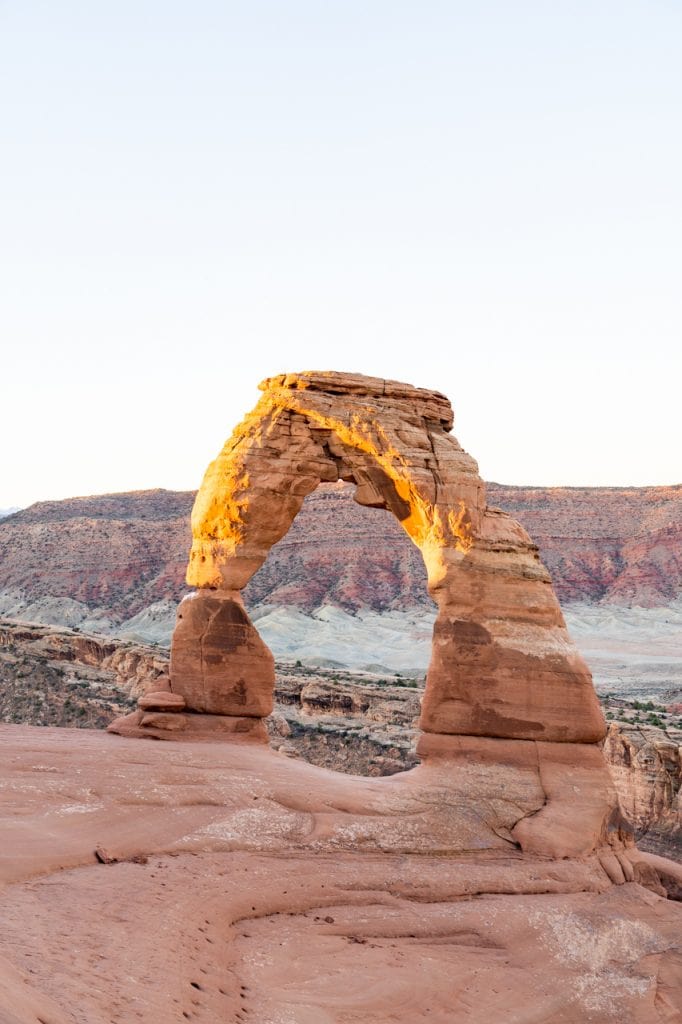
The park is most famous for Delicate Arch, a freestanding natural arch that has become an iconic symbol of Utah. However, there’s so much more to see! The park also features spires, balanced rocks, and intricate fins that seem almost too perfect to be carved by nature alone.
Where is Arches National Park?
Arches National Park is located in eastern Utah, situated in the Colorado Plateau region. The park is near the town of Moab and is approximately 5 miles north of the town center.

Why Visit in February?
By February, the heavy snowfalls usually seen in other parts of Utah are mostly a miss here, letting you experience the park’s iconic arches and trails in relative peace.
Weather in February
Daytime temps roam from the upper 40s to mid-50s°F (8-12°C), perfect for hiking without breaking too much of a sweat. Nighttime is a different story; temps can plummet to the 20s°F (-6 to -2°C), so bring your winter gear. While February is generally dry, sporadic snowfall isn’t unheard of. Pack layers, friend.

Best Things to Do in Arches National Park
Delicate Arch: Easily the most iconic formation in the park, Delicate Arch is a must-see. A 3.2-mile round-trip hike with a 629-foot elevation gain brings you to this massive rock formation.
Devil’s Garden: The Devil’s Garden Loop is a 7.9-mile hike that will take you to seven impressive arches, including Landscape Arch, one of the longest natural arches in the world!
Fiery Furnace: This labyrinthine collection of narrow sandstone canyons offers a unique hiking experience through some seriously tall fins. A permit for a self-guided tour is required.
Know Before You Go
Pack Your Walking Shoes: Some of the most iconic arches, like Delicate Arch, require a hike to truly appreciate their grandeur, so dress appropriately!
Stay Hydrated: Even in February, the desert air can be dry, and you’ll be covering some serious ground. Don’t forget to pack plenty of water to keep yourself hydrated and your spirits high during your adventures!
Learn more about Arches National Park
Blog post
The BEST things to do in Arches National Park (+ itineraries)
YouTube videos
Hiking the Devil’s Garden Trail (with 8 arches!) at Arches National Park
Our first time at Arches National Park! (Delicate Arch, Park Avenue, Double Arch, & MORE!)
2. Death Valley National Park

Located on the border of California and Nevada, Death Valley National Park is a land of extremes. Spanning over 3.4 million acres, it holds the title as the hottest, driest, and lowest national park in the United States!
Created through complex geological processes involving volcanic eruptions, erosions, and seismic activity, Death Valley is a graben (a block of the Earth’s crust dropped by fault action). Crazy, right?
Where is Death Valley National Park?
Death Valley National Park is located in eastern California, with a small portion extending into Nevada. It’s part of the larger Mojave Desert. The closest towns to Death Valley National Park are Beatty, 33 miles away, and Pahrump, 60 miles distant. Both offer basic amenities.
Why Visit in February?
While not guaranteed every year, Death Valley can experience spectacular wildflower blooms when conditions are right, and February is one of the months when this phenomenon starts to occur.
Weather in February
Daytime temperatures in February typically range from the mid-60s to low 70s°F (around 18-22°C), although it can sometimes climb into the 80s°F (around 27°C).

Best Things to Do in Death Valley National Park
Badwater Basin: Say hello to the lowest point in North America, sitting at a staggering 282 feet below sea level. Walk on the salt flats and watch as the landscape literally crunches beneath your feet.
Dante’s View: Drive up to this sky-high viewpoint that offers a panoramic view of the valley below. At 5,476 feet, it’s like looking at a real-life painting where the desert meets the sky.
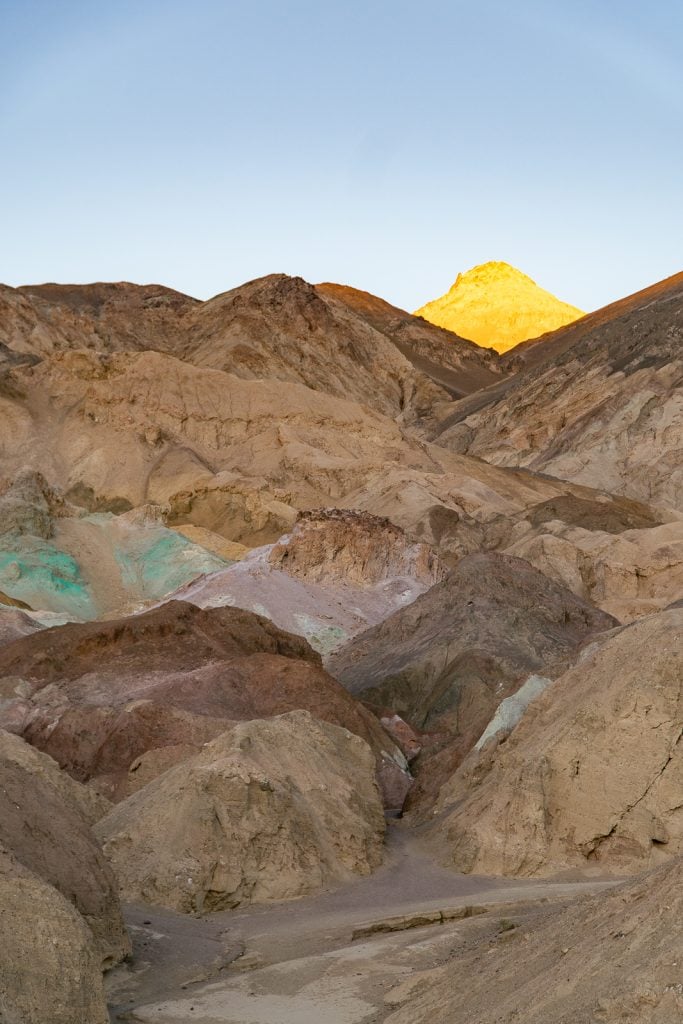
Artist’s Drive and Palette: Buckle up for a nine-mile, one-way scenic drive that’s bursting with color. Iron deposits paint the hills a myriad of hues, making this drive feel like you’re cruising through a watercolor painting.
Know Before You Go
Be Prepared for Limited Connectivity: Cell service is hit or miss, so do yourself a favor and download maps for offline use before venturing deeper into the park.
Pack Your Essentials: Don’t count on frequent water or food stops. You’ll find refill stations at Furnace Creek Visitor Center and Stovepipe Wells Ranger Station, but it’s wise to bring your own supplies.
Fuel Up: Death Valley is massive, boasting over 800 miles of road. With just three gas stations in the park (and only two offering diesel) so keeping your tank full is crucial. And heads up, fuel prices inside the park can lean towards the pricey side.
Learn more about Death Valley National Park
Blog posts
The ULTIMATE guide to visiting Death Valley National Park (Things to do + itinerary options)
How to hike Golden Canyon at Death Valley National Park (+ Red Cathedral & Gower Gulch)
Hiking the Mosaic Canyon Trail in Death Valley National Park
How to hike to Darwin Falls in Death Valley National Park (A year round waterfall in the desert!)
YouTube videos
The ULTIMATE 3 days in DEATH VALLEY National Park!
An EPIC drive to Death Valley (Ash Meadows, Wild Burros, Rhyolite GHOST town, & Titus Canyon!)
3. Zion National Park

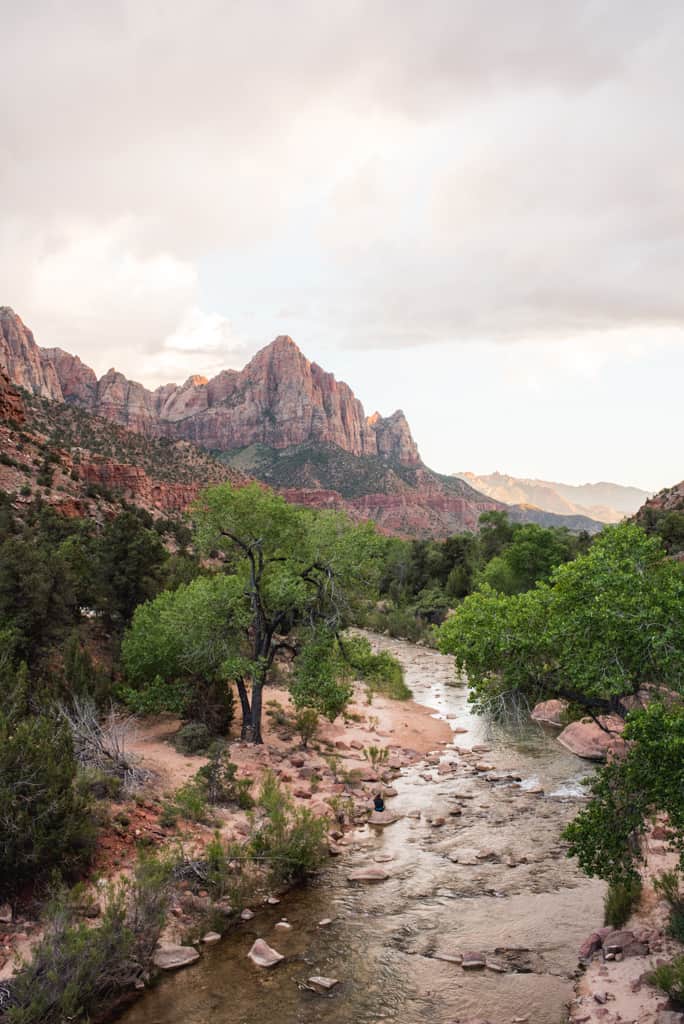
Nestled in Utah’s southwestern corner, this park is a collection of towering sandstone cliffs, narrow canyons, and the beautiful Virgin River. Often dubbed a “heaven on earth,” Zion National Park was sculpted by millions of years of natural forces like wind, water, and snow, and meticulously carved by the Virgin River.
Where is Zion National Park?
Zion National Park is located in southwestern Utah, just over 1 mile from Springdale, and approximately 40 miles northeast of St. George.
Why Visit in February?
Want the trails pretty much to yourself? February’s your ticket. It’s a hush-hush time in the park, perfect for soaking in the scenery with fewer crowds. Plus, Some trails in the park are only accessible during the winter months, such as the Narrows Riverside Walk and the Angels Landing Winter Route.
Weather in February
The weather in Zion National Park in February is typically cold, with average highs of 57°F (14°C) and lows of 31°F (-1°C). Snow is a rare guest, but it makes the red rocks pop when it shows.

Best Things to Do in Zion National Park
Observation Point: If heights are your thing, but Angels Landing sounds too intense, Observation Point is a solid alternative. This 7-mile round-trip hike offers spectacular views from an elevation of 6,521 feet. It’s our personal favorite hike in the park!
Emerald Pools: For a more family-friendly option, the Emerald Pools offer a series of short hikes. The lower pool is just a 1.4-mile round-trip hike, but you can extend it to see the middle and upper pools, too.
Canyon Overlook Trail: This quick but rewarding 1-mile round-trip hike offers stunning views of Pine Creek Canyon and culminates in a panoramic overlook of Zion Canyon’s iconic formations like the West Temple and Towers of the Virgin.
Know Before You Go
Beat the Crowds: Zion is one of the most visited national parks in the U.S., so an early start isn’t just a recommendation—it’s necessary for dodging tourists.
Learn more about Zion National Park
Blog posts
Hiking the Narrows at Zion National Park (Everything you need to know!)
How to hike to Observation Point at Zion National Park
3 Days at Zion and Bryce Canyon National Parks Itinerary
YouTube videos
Hiking to the AMAZING Kanarra Falls + Kolob Canyons at Zion National Park (Timber Creek Overlook)
The BEST VIEW at Zion National Park: Observation Point (via the East Mesa Trail)
Zion National Park WITHOUT the shuttle | Canyon Overlook, Northgate Peaks, & the Watchman Trail
4. Everglades National Park

Situated at the southern tip of Florida, Everglades National Park is an ecological marvel, often described as a “river of grass” that flows from Lake Okeechobee to Florida Bay.
The park protects not just countless plant species but also a wide range of wildlife, including endangered creatures like the American crocodile, the Florida panther, and the West Indian manatee.
Where is Everglades National Park?
Everglades National Park is located in the southern tip of Florida, United States. The park covers approximately 1.5 million acres, making it the largest tropical wilderness of its kind in the U.S.
Why Visit in February?
February falls within the dry season of the Everglades, offering more comfortable conditions for outdoor activities. The heat and humidity are lower than in the wet season, making hikes and boat tours much more enjoyable. The dry season is an excellent time for wildlife observation, as many animals congregate around the limited water sources.
Weather in February
February is one of the cooler months in the Everglades, but it is still relatively warm compared to much of the United States. Daytime temperatures usually range between the 60s and 70s°F (around 16-26°C), while nighttime temperatures can drop a bit lower.


Best Things to Do in Everglades National Park
Kayaking in the Ten Thousand Islands: Get those paddles ready and navigate your way through this labyrinth of mangrove islets. It’s peaceful, it’s beautiful, and you’re likely to have some incredible animal encounters.
Shark Valley Tram Tour: Sit back and relax as you glide through a 15-mile loop in Shark Valley, guided by experts who’ll point out all the critters and plants that call the Everglades home. Spoiler: You’re probably going to see a gator or two.
Slough Slog: Ready to get muddy? Join a ranger-led “slog” through a cypress dome. It’s like a hike but wetter, offering a unique tour of the park’s freshwater swamp ecosystem.
Know Before You Go
Know the Tides: Planning to kayak or canoe? The tides can be your best friend or your worst enemy. Get a tide chart and plan accordingly.
Multiple Access Points: The park provides a range of entryways—Homestead for the Flamingo Visitor Center and Royal Palm, Shark Valley for its signature vistas, and Ernest F. Coe, your gateway to the Anhinga Trail.
Skip the Dip: While the waters might seem tranquil, they’re brimming with wildlife you’d rather not encounter—like alligators, crocodiles, and snakes. Best to appreciate the view from a distance.
Learn more about Everglades National Park
Blog post
7 FUN things to do in the Everglades (Florida)
YouTube video
The BEST day at Everglades National Park! 🐊 (Hiking, biking, milkshakes, & MORE)
5. Guadalupe Mountains National Park

Tucked away in the far reaches of West Texas, Guadalupe Mountains National Park is a geological and ecological gem that’s often overlooked, yet incredibly rewarding for those who venture its paths.
Spanning over 86,000 acres, this park safeguards one of the world’s most extensive Permian fossil reefs—essentially a time capsule dating back over 250 million years.
The mountains themselves are an ancient limestone reef formed around 265 million years ago in a sea that once covered this arid landscape. Through eons of uplift and erosion, this reef transformed into the towering peaks and intricate canyons we see today.
Where is Guadalupe Mountains National Park?
Guadalupe Mountains National Park is located in the western part of the Guadalupe Mountains, in far West Texas. It is approximately 56 miles south of Carlsbad, New Mexico, and 110 miles northeast of El Paso, Texas.
Why Visit in February?
Summers in West Texas can be extremely hot, making outdoor activities strenuous. Visiting in February allows you to explore the park in more moderate temperatures, and with fewer tourists around, you’ll have the rare opportunity to witness the stark beauty of the desert landscape alongside snow-capped peaks.
Weather in February
February is one of the cooler months at the Guadalupe Mountains National Park. Daytime temperatures can range from the mid-50s to mid-60s°F (around 12-18°C), while nighttime temperatures can drop significantly, sometimes to below freezing.


Best Things to Do in Guadalupe Mountains National Park
Guadalupe Peak Hike: Let’s start with a bang, shall we? Tackle the highest peak in Texas at 8,749 feet. It’s challenging, but the bragging rights and sweeping vistas at the summit? Totally worth the effort.
Salt Basin Dunes: Think sand dunes are only for beachside locations? Think again. Head out to the Salt Basin Dunes for a surreal, sandy landscape that will have you questioning which state you’re really in.
Devil’s Hall Hike: A natural staircase of rocky ledges and boulders takes you to a narrow, scenic hallway flanked by vertical cliffs. If you want nature’s version of dramatic architecture, this is your 3.8-mile out-and-back hike.
Know Before You Go
Dress for Success: And by that, we mean dress in layers. Mornings can be chilly, afternoons hot, and evenings cold again. Versatile clothing is your best friend here.
Wildlife Watch: Keep an eye out for the locals. You might spot mule deer, elk, and various bird species. Just remember, they’re as wild as the landscape—maintain a respectful distance.
Learn more about Guadalupe Mountains National Park
Blog post
5 Things to Do at Guadalupe Mountains National Park
YouTube videos
El Paso + Guadalupe Mountains National Park | US Road Trip Days 7-9
Guadalupe Peak + Saguaro National Park | US Road Trip Days 9 & 10
6. Haleakalā National Park
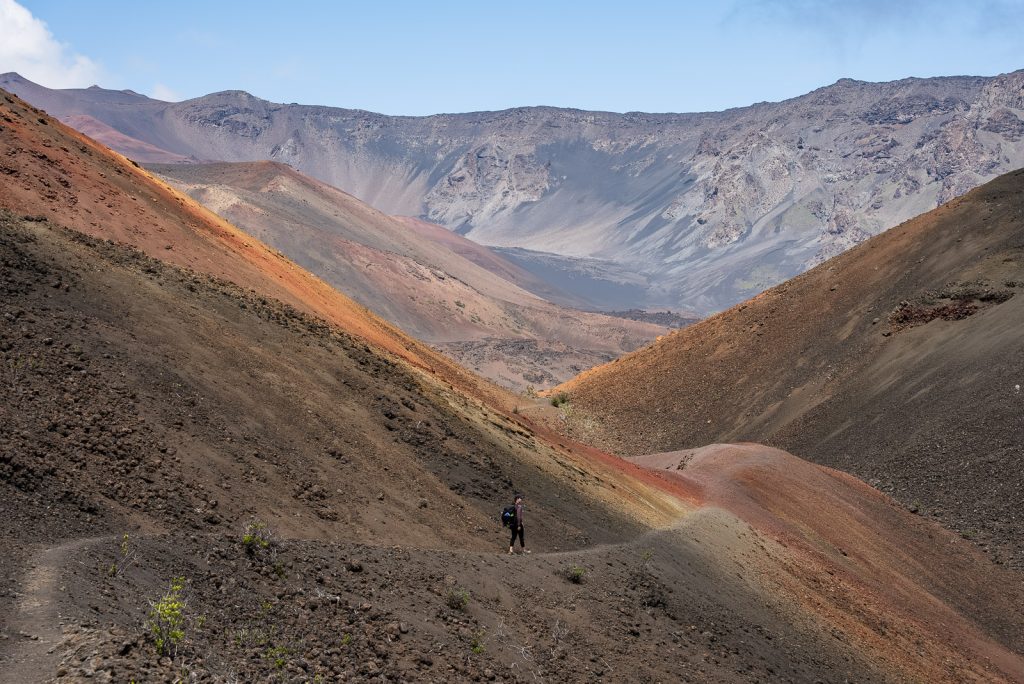
Perched high above the Pacific Ocean on the island of Maui, Haleakalā National Park features two main areas—the Summit District, home to the dormant Haleakalā volcano, and the coastal Kīpahulu District, a haven of tropical biodiversity.
The volcano’s name, Haleakalā, translates to “House of the Sun” in Hawaiian—a fitting name given that its summit is one of the most breathtaking spots on Earth to witness a sunrise. Its summit crater stretches across 19 square miles!
Beyond its natural marvels, Haleakalā has so much Hawaiian culture. Classified as a wahi pana, or sacred place, in native tradition, the park offers the chance to walk trails dotted with ancient temples and learn about Hawaiian myths and spiritual practices.
Where is Haleakalā National Park?
Haleakalā National Park is located on the island of Maui in the U.S. state of Hawaii. The park is named after Haleakalā, a dormant volcano that is one of the key features of the park, and has been dormant since the 18th century.
Why Visit in February?
February is one of the prime months for whale watching in Hawaii, and the waters off Maui are one of the best places to witness humpback whales.
Weather in February
During February, the weather in Haleakalā National Park tends to be dry, crisp, and cool. Average temperatures range from highs in the mid-70s Fahrenheit (24°C) to lows in the mid-60s Fahrenheit (18°C).
The weather at the summit of Haleakalā can be very chilly, especially during early mornings and late evenings. Temperatures can drop below freezing, and there’s a possibility of snow. Daytime highs can be in the 50s°F (about 10-15°C).


Best Things to Do in Haleakalā National Park
Sunrise at Haleakalā Crater: Rise and shine, early birds! There’s nothing like witnessing the first rays of sunlight paint the sky from an elevation of 10,023 feet! But remember, you’ll need a reservation, so plan ahead. For more information on what to expect, how to get a reservation, and what to bring, check out our guide to visiting Haleakalā at sunrise.
Pipiwai Trail and the Bamboo Forest: Located in the Kīpahulu District, this 3.4-mile round-trip trail is a scenic gem. You’ll pass through a dense bamboo forest and end up at the 400-foot Waimoku Falls
Sliding Sands Trail: Ready for a Martian-like experience? This 11-mile round-trip trek takes you deep into the crater, providing a surreal landscape unlike anything you’ve experienced. Even if you just do a mile or two, it’s totally worth it!
Know Before You Go
Book Your Sunrise Spot: If you’re eyeing that perfect sunrise, plan ahead. These spots fill up fast, so make sure to reserve yours through the National Park Service website.
Watch Out for Fog: Elevation plays a role here, and fog can roll in quickly. For the best shot at a clear view, especially at sunrise, it’s a good idea to arrive early.
Altitude Alert: The summit’s elevation can be intense. You might feel shortness of breath, so take it easy, stay hydrated, and monitor how you’re feeling.
Learn more about Haleakalā National Park
Blog Posts
9 fun things to do at Haleakalā National Park on Maui
How to visit Haleakalā National Park at sunrise: Everything to know!
YouTube Video
Backpacking Haleakala National Park: 20 miles on Maui’s EPIC volcano!
7. Joshua Tree National Park
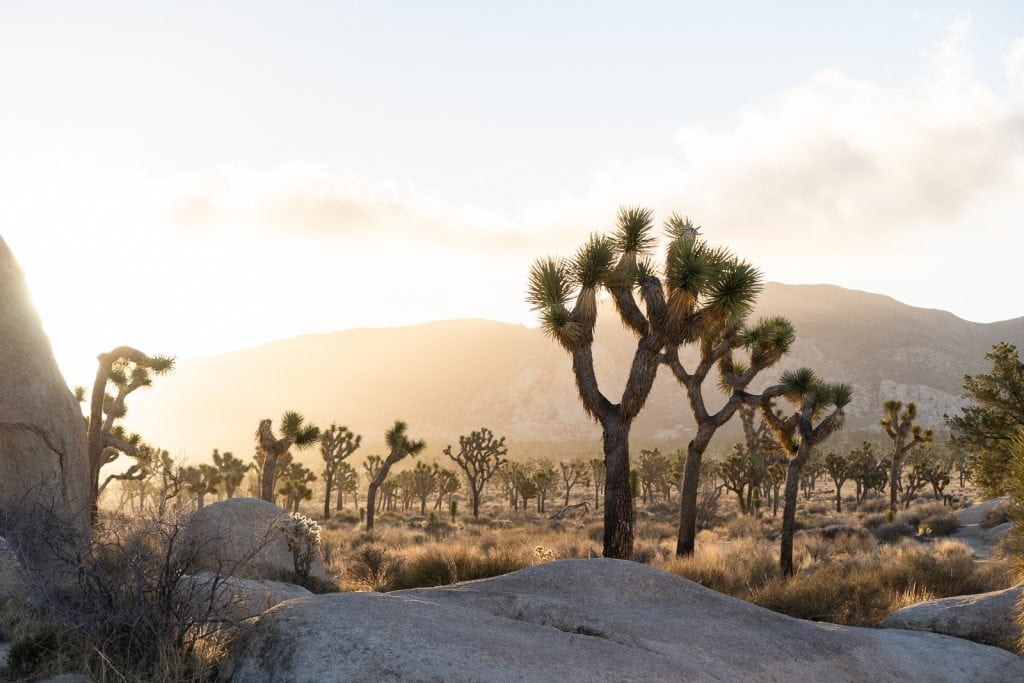
Nestled in California’s sprawling desert, Joshua Tree National Park is situated in southeastern California and straddles two different deserts: the Colorado and the Mojave.
The park is named after its most famous residents—the Joshua Trees! But it’s not just the whimsical trees that draw visitors; this park boasts expansive desert panoramas and impressive rock formations, a rock climber’s dream. And the best part? You can experience a lot of this unique landscape in just one day!
Where is Joshua Tree National Park?
Joshua Tree National Park is located in southern California, approximately 120 miles east of Los Angeles.
Why Visit in February?
February is a great time to see wildflowers in Joshua Tree National Park. The park is home to over 800 species of wildflowers, and many of them bloom in the spring. You can see a variety of wildflowers, such as poppies, lupines, and desert lilies.
Weather in February
In February, Joshua Tree National Park experiences relatively mild weather. Daytime temperatures typically range from 60-70°F (15-21°C), while nighttime temperatures can drop to as low as 35-45°F (1-7°C). It’s a generally dry season, but occasional rain showers are possible.

Best Things to Do in Joshua Tree National Park
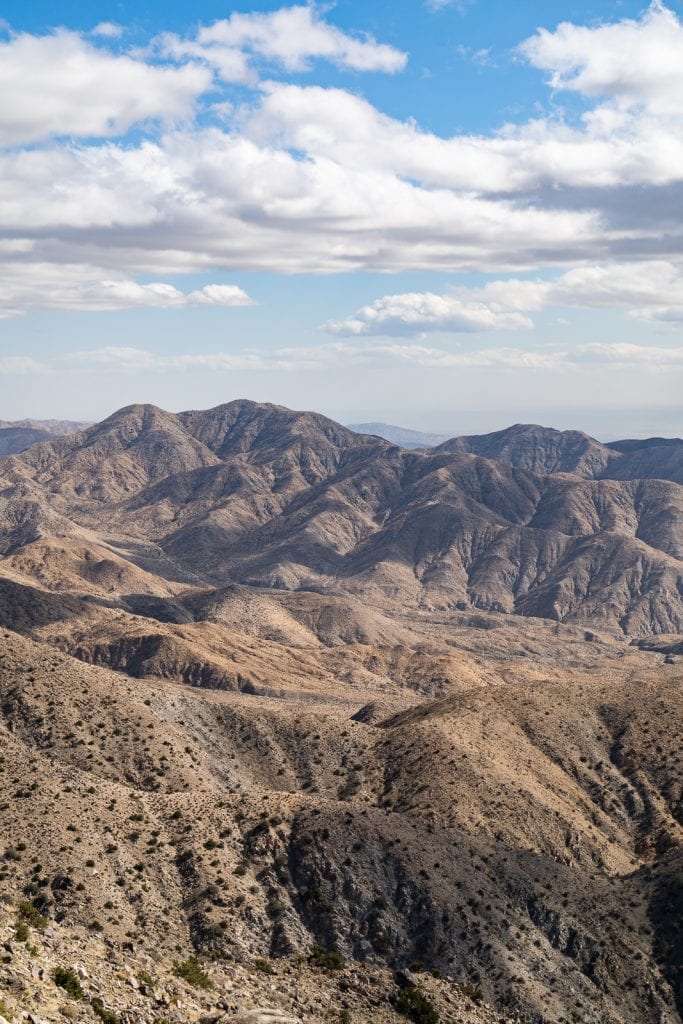
Keys View: Drive up to this overlook sitting at an elevation of 5,185 feet for panoramic vistas of the Coachella Valley, the San Andreas Fault, and even Mexico on a clear day. No hiking needed—just a camera!
Arch Rock: Located in the White Tank Campground, a quick 1.2-mile trek gets you to this naturally formed granite arch.
Cholla Cactus Garden: A field of cacti that looks like it’s glowing during sunset? Yup, it’s as magical as it sounds. It’s a short 0.25-mile walk—but the views are pure gold. Literally.
Know Before You Go
If You’re Camping, Prepare for Cool Nights: Even in the desert, temperatures can dip significantly after sunset. It’s a good idea to bring layered clothing and perhaps a sleeping bag liner. If camping is not your style, there are Airbnb options near the park.
Refuel Before You Enter: Joshua Tree National Park is relatively isolated, so make sure to fill your gas tank before you enter, as there are no gas stations within the park boundaries.
Don’t Forget to Hydrate: Water sources are limited in the park, so bring your own supplies. The recommended amount is at least 2 liters per person per day to stay adequately hydrated.
Learn more about Joshua Tree National Park
Blog post
The Best Things to do in Joshua Tree National Park (+ a one day itinerary!)
YouTube video
One Day in Joshua Tree National Park (Ryan Mountain, Keys View, Cholla Cactus Garden, & MORE!)
8. Big Bend National Park

Big Bend National Park is situated along the sweeping curve of the Rio Grande in southwestern Texas. Encompassing more than 800,000 acres, Big Bend is unique in that it houses an entire mountain range within its boundaries—the Chisos!
This park is home to so much biodiversity and geology, with terrains that range from arid deserts to verdant river valleys and imposing mountain peaks. Its diverse ecosystems make it a hotspot for bird-watching, with over 450 species recorded—more than in any other U.S. national park!
Where is Big Bend National Park?
Big Bend National Park is located in southwest Texas, bordering Mexico. The closest towns are Terlingua, about 50 miles away, and Lajitas, which sits roughly 61 miles from the park.
Why Visit in February?
If you’re all about the great outdoors without the great big crowds, February is your window. The weather is mild, making those epic hikes to Emory Peak or a jaunt through the Santa Elena Canyon far more enjoyable. Wildlife is active, giving you a chance to spot creatures like roadrunners or even elusive mountain lions.
Weather in February
In February, you’re looking at daytime highs that swing between the 60s and 70s°F (15-24°C). But don’t be fooled by the sun; when it sets, temperatures can drop to the 40s°F (4-9°C), so a cozy jacket is non-negotiable. As for rain, it’s a rarity in February, part of Big Bend’s dry season.


Best Things to Do in Big Bend National Park
Santa Elena Canyon: This 1.3-mile round-trip Santa Elena Canyon Trail is a jaw-dropping experience where you’ll explore the mouth of a towering, 1,500-foot deep limestone canyon where the Rio Grande takes a sharp turn.
Hike up Emory Peak: Tackle Big Bend’s highest point, Emory Peak. This strenuous hike is around 9.8 miles round-trip with an elevation gain of 2,493 feet. The payoff? Panoramic vistas that stretch as far as you can see.
The Window Trail: This 5.2-mile round-trip trek begins in Chisos Basin, leading you through Oak Creek Canyon to “The Window” rock formation.
Know Before You Go
Check Your Vehicle: The main attractions have paved roads suitable for most cars, but for the more rugged trails, a four-wheel drive with at least 10-inch clearance is advisable.
Plan for Parking: Due to the park’s growing popularity, parking, especially at popular trailheads, can be limited. Arriving early could save you some time and stress.
Fuel Up: Keep in mind, Big Bend is vast (larger than Rhode Island), and fuel options are limited. There are only two gas stations, at Panther Junction and Rio Grande Village, so plan your fuel stops carefully.
Learn more about Big Bend National Park
Blog post
The ULTIMATE West Texas Road Trip: Marfa and Big Bend
YouTube video
Big Bend National Park + Marfa, TX | US Road Trip Days 4-7
9. Biscayne National Park

Biscayne National Park, perched on the edge of the Florida mainland, just a short drive south of Miami, is a submerged wonder unlike any other U.S. national park.
Covering 172,971 acres, this park is predominantly water (95% of it to be exact).
Home to one of the largest coral reefs in the world, Biscayne is a living, breathing underwater museum teeming with vibrant marine life, including exotic fish, endangered sea turtles, and manatees!
Where is Biscayne National Park?
Located in southern Florida, Biscayne National Park spans from just south of Key Biscayne down to just north of Key Largo, just 35 miles south of Miami!
Why Visit in February?
The winter crowds have thinned out, but the weather? Absolutely prime. Expect milder temperatures, making water activities like snorkeling and kayaking a pure joy. And let’s not forget, the marine life is bustling this time of year, offering some of the best underwater sightseeing you could hope for.
Weather in February
The February weather in Biscayne National Park is just what you’d wish for—mild and dry. Daytime temps typically hover in the upper 60s to mid-70s°F (high teens to mid-20s°C). And because it’s the dry season, those unpredictable summer storms are a thing of the past, leaving you with clear skies for your adventure.

Best Things to Do in Biscayne National Park
Maritime Heritage Trail: Located within the park’s boundaries, the Maritime Heritage Trail offers snorkelers and scuba divers a unique opportunity to explore six shipwrecks, ranging from wooden sailing ships to modern-era vessels. Each site is marked by a buoy on the water’s surface!
Explore Boca Chita Lighthouse: Discover the historic gem on Boca Chita Key, a lighthouse with a rich past dating back to the 1930s, thanks to industrialist Mark C. Honeywell. Standing at 65 feet, it grants visitors a breathtaking 360-degree view that encompasses the bay, ocean, nearby islands, and even the skyline of Miami!
Canoe or Kayak in the Mangroves: If you prefer to stay above the water, paddling through the park’s extensive mangrove forests is a unique, up-close way to experience its quieter beauty. No specific length here; you set the pace and the distance.
Know Before You Go
Get on a Boat: To really dive into Biscayne’s beauty (think islands, reefs, and underwater marvels), a boat trip is a must. Look into authorized tour operators like Diver’s Paradise or Island Queen Cruises for your adventure.
Book in Advance: Biscayne is a hotspot for guided tours and boat rentals, so it’s a smart move to secure your spot ahead of time. This way, you won’t miss out on what makes this park special.
10. Canyonlands National Park

Canyonlands National Park, situated in southeastern Utah near the town of Moab, is a rugged and expansive wilderness that serves as a grand stage for geological drama.
Spread over 337,598 acres, the park is divided into four districts: Island in the Sky, The Needles, The Maze, and the rivers that carved these intricate landscapes, primarily the Colorado and Green Rivers.
Where is Canyonlands National Park?
Canyonlands National Park is located in southeastern Utah’s high desert near the confluence of the Colorado and Green Rivers. The closest town? That’d be Moab, just 30 miles away.
Why Visit in February?
So why visit Canyonlands in February? Fewer crowds, cooler hiking weather, and the kind of peace and quiet that you just can’t put a price on (you’ll enjoy trails and overlooks largely to yourself). Though nights can be cold, the trade-off is a serene winter landscape, occasionally dusted with snow, and exceptional stargazing opportunities thanks to clear skies and the park’s International Dark Sky designation.
Weather in February
February typically brings cooler winter weather in Canyonlands. Daytime temperatures range from around 40-50°F (4-10°C), while nighttime temperatures can drop significantly, often falling between 20-30°F (-6 to -1°C).


Best Things to Do in Canyonlands National Park
Hiking the Mesa Arch Trail: This easy, short loop offers one of the most iconic views in the park—a stone arch framing a dramatic drop and far-reaching vistas of the Colorado River canyons below. It’s especially magical at sunrise!
White Rim Road Overlook: Perfect for those with a 4WD vehicle, this challenging road provides panoramic views of the intricate canyon systems and the Colorado and Green Rivers, offering an off-road adventure like no other.
Upheaval Dome via Syncline Loop Trail: This hike in Island in the Sky district will have you pondering geology, snapping photos, and maybe even scratching your head. Is it a meteor impact site? A salt dome? The theories about its formation are as numerous as the switchbacks on the trail. The total loop, if you’re up for it, clocks in at about 8.3 miles.
Know Before You Go
Bring Your Own Wheels: The park is huge, and public transportation is non-existent. You’ll need your own vehicle, preferably a high-clearance one, if you’re aiming to tackle the park’s rugged dirt roads.
Districts do not connect: To fully experience all the park’s districts, prepare to visit them separately. Unlike what may seem on the map, there are no connecting bridges or roads between them.
No Facilities at Canyonlands: Canyonlands National Park does not offer any food services, lodging accommodations, or gas stations within its boundaries. Come well-prepared with your own supplies.
Learn more about Canyonlands National Park
Blog post
The Best Things to do in the Needles District at Canyonlands National Park
YouTube videos
Hiking to Druid Arch and Chesler Park at Canyonlands National Park (Needles District)
One day at Canyonlands National Park (Island in the Sky) | Mesa Arch, Upheaval Dome, & overlooks!
11. Carlsbad Caverns National Park

Nestled in the Guadalupe Mountains of southeastern New Mexico, Carlsbad Caverns National Park is home to more than 119 caves, with the star attraction being the Carlsbad Cavern itself—a colossal limestone chamber that stretches more than 30 miles and reaches depths of up to 1,000 feet!
The iconic Big Room, one of the largest natural limestone chambers in the Western Hemisphere, offers a self-guided tour that lets you explore at your own pace, marveling at features like the Giant Dome, Bottomless Pit, and the Hall of Giants.
Where is Carlsbad Caverns National Park?
Covering an area of 46,766 acres, Carlsbad Caverns National Park is located in the Guadalupe Mountains of southeastern New Mexico. The closest town is Carlsbad, just 20 miles up the road.
Why Visit in February?
The park’s underground temps stay pretty consistent year-round, making any winter chill a non-issue once you’re exploring below the surface. Plus, February’s lower visitor numbers mean you practically get the caverns all to yourself!
Weather in February
Above ground, February temperatures can vary widely, ranging from daytime highs of around 50-60°F (10-15°C) to nighttime lows that can drop below freezing. Inside the cave, the temperature is a constant 56°F (13°C) year-round with high humidity, so you’ll need a light jacket or sweater regardless of the season.


Best Things to Do in Carlsbad Caverns National Park
The Big Room Tour: Step into one of the largest cave chambers on Earth. This is a self-guided wonderland of stalactites, stalagmites, and jaw-dropping formations that define Carlsbad Caverns.
King’s Palace Guided Tour: Dive deeper into the cave system with this guided expedition. This tour consists of four large chambers, festooned with intricate formations like draperies and helictites.
Slaughter Canyon Cave Tour: For those craving a wild cave experience, this tour is complete with crawling, climbing, and, yes, some tight squeezes. Hard hats and headlamps are part of the getup, and you’ll feel like a true spelunker exploring this less-visited cavern.
Know Before You Go
Foot Gear: The cave floors can be wet and slippery, so wear sturdy footwear with good grip.
Bring a Flashlight: You might think your smartphone flashlight is strong, but trust us, you’ll need more than that. Pack a reliable flashlight with new batteries. The caves are dark, and you want to see every nook and cranny, right?
Don’t touch: As tempting as it is to touch the stalactites and stalagmites—don’t. Let’s keep this natural marvel pristine for generations to come.
Learn more about Carlsbad Caverns National Park
Blog post
One Day at Carlsbad Caverns National Park
YouTube video
Weekend in New Mexico: White Sands, Las Cruces, & Carlsbad Caverns National Park
12. Hawaii Volcanoes National Park

Located on the Big Island of Hawaii, Hawaii Volcanoes National Park is home to two of the world’s most active volcanoes—Kīlauea, known for its frequent activity, and Mauna Loa, the largest shield volcano on Earth!
Ecologically, the park is a hotbed of biodiversity. From steamy rainforests to stark lava fields, the range of habitats here is mind-boggling.
Plus, Hawaii Volcanoes National Park holds immense cultural significance with ancient trails and archaeological sites, including intricate petroglyphs and hallowed temples.
Where is Hawaii Volcanoes National Park?
Hawaii Volcanoes National Park is located on the island of Hawaii, also known as the Big Island. The nearest town to the park is Volcano, which is just 10 miles away from the main entrance.
Why Visit in February?
It’s a great time for wildlife sightings, as many native birds and plants are active and in bloom. While primarily known for its volcanic features, this park offers opportunities for unique experiences like gorilla trekking, best enjoyed in the dry season, including February.
Weather in February
In February, Hawaii Volcanoes National Park experiences mild but variable weather. In the lower elevations of Hawaii Volcanoes National Park, which include areas like the visitor center and coastal regions, temperatures range from 65-80°F (18-27°C). At the Kīlauea summit, temperatures can range from 50-65°F (10-18°C). The month is part of the wet season, so be prepared for rain.


Best Things to Do in Hawaii Volcanoes National Park
Kīlauea Caldera Overlook: Take in the power of a live volcano from the safety of the Kīlauea Caldera Overlook, sitting at an altitude of about 4,000 feet. The view here puts you face-to-face with one of Earth’s most active volcanoes.
Chain of Craters Road: Strap in for a 19-mile drive that descends from the mountain summit to sea level. Along the way, pull over to check out petroglyphs, lava flows, and, if you’re lucky, some lava spewing into the ocean.
Sulfur Banks and Steaming Bluff Trail: This easy 1.4-mile round-trip hike takes you through fumaroles and sulfur deposits, offering a sensory overload of sounds and smells.
Know Before You Go
Be Lava-Safe: Lava viewing is captivating but not something to mess around with. Stick to the park’s guidelines and marked areas for a safe experience.
Check for Lava Flow Updates: Given that Kīlauea has been putting on its fiery show since 1983, it’s wise to check road closures related to lava flows. The National Park Service website is your go-to for the latest updates.
Learn more about Hawaii Volcanoes National Park
Blog post
One Day at Hawaii Volcanoes National Park Itinerary
YouTube video
Exploring Hawaii Volcanoes National Park (Our 20th National Park!) | Big Island Day 5
13. Saguaro National Park

Ever wanted to step into a classic Western film scene, minus the cowboys and tumbleweeds? Well, Saguaro’s your ticket to the quintessential American desert experience.
But the real star of the show? You guessed it—the Saguaro cactus. These green giants can live up to 200 years and reach heights of 50 feet!
Where is Saguaro National Park?
Saguaro National Park is located in southern Arizona, just east of Tucson. It is divided into two districts: the Tucson Mountain District and the Rincon Mountain District.
Why Visit in February?
February is one of the best months to visit Saguaro National Park, as the weather is mild and sunny. February is a great time to see wildflowers in Saguaro National Park. The park is home to over 2,000 species of cacti, and many of them bloom in the spring. You can also see other wildflowers, such as poppies, lupines, and penstemons.
Weather in February
Daytime temperatures generally range from 60-70°F (15-21°C), while nighttime temperatures can dip into the 40s°F (4-9°C). It’s a relatively dry month, but occasional rain showers are possible.

Best Things to Do in Saguaro National Park
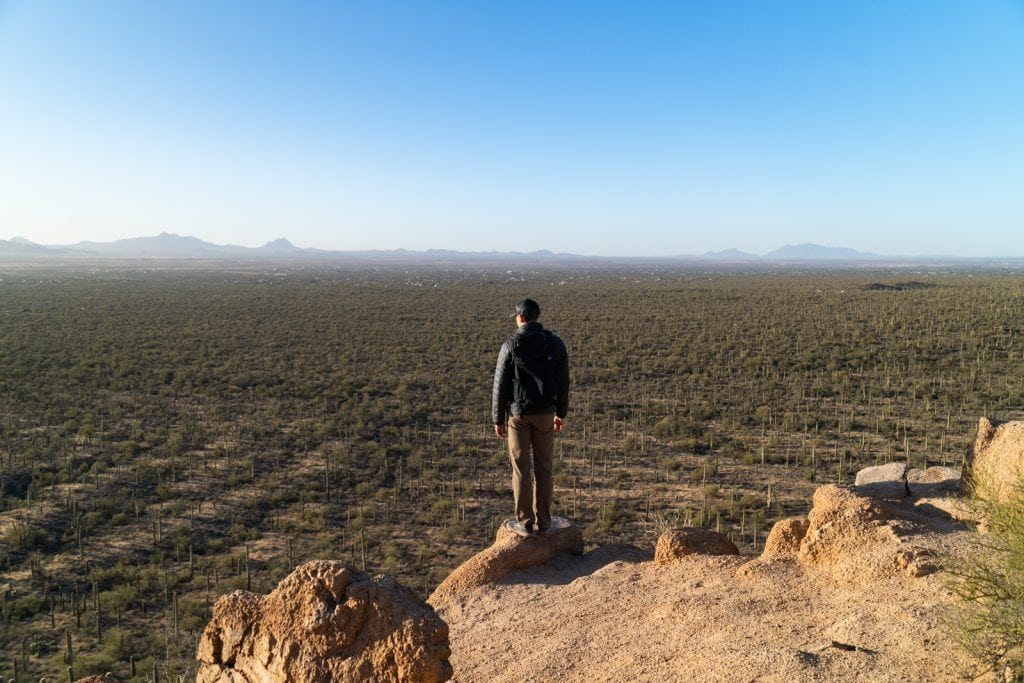
Valley View Overlook: This is the hike for the “I want epic views but not the epic sweat” crowd. We’re talking a mere 0.8-mile round-trip hike, with sweeping views of the valley filled with saguaro cacti.
Signal Hill Petroglyphs: A 0.3-mile round-trip trail leads you to ancient rock art that’ll make you wonder what was going on in the desert thousands of years ago. We don’t have the answers, but we can confirm it’s worth the trek.
Mica View Loop: This 3.8-mile loop is flat, easy, and chock-full of—yup, you guessed it—saguaros! Seriously, you’ll be surrounded by these iconic giants.
Know Before You Go
Tire Check: Planning to explore beyond the main roads? Some of the park’s more remote areas require a high-clearance vehicle. Make sure your tires are up for the challenge.
Respect the Wildlife: From rattlesnakes to Gila monsters, the desert is teeming with critters that you won’t want to mess with. Keep a safe distance, and always hike with caution.
Learn more about Saguaro National Park
Blog posts
Hiking Wasson Peak at Saguaro National Park in Tucson, Arizona
The BEST Things to do in Saguaro National Park West
YouTube video
One Day at Saguaro National Park (West) 🌵 | Hiking Wasson Peak, Valley View Overlook, & more!
14. Yellowstone National Park
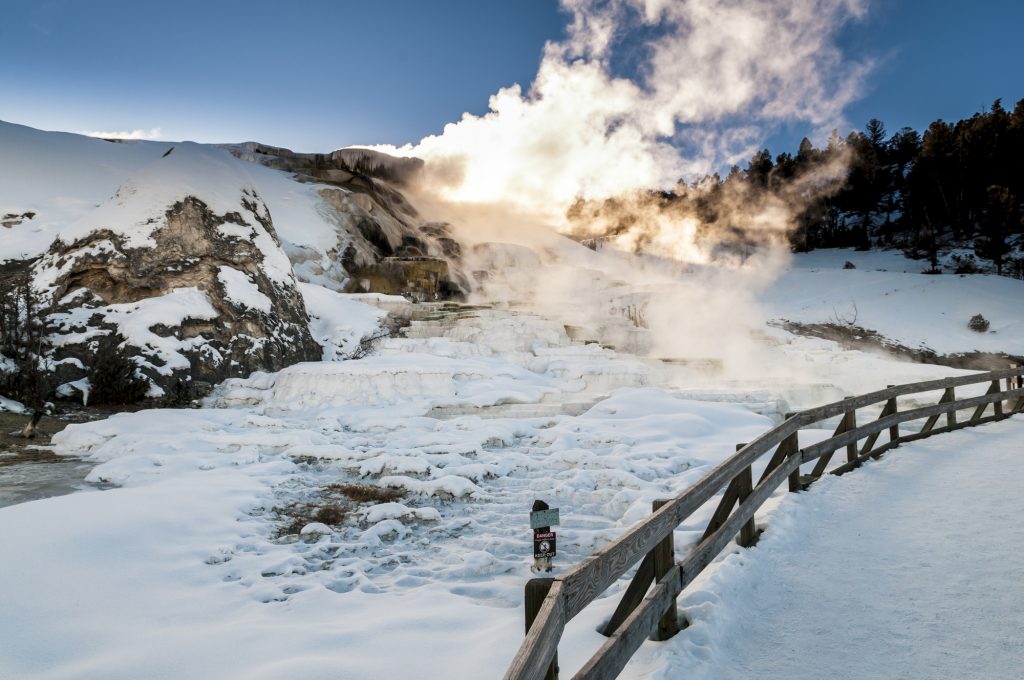
Situated primarily in Wyoming, but also spilling into Montana and Idaho, Yellowstone’s got the goods: geysers, hot springs, canyons, rivers, and so much more!
Did you know that most of Yellowstone sits in a volcanic caldera? Yep, it’s a massive underground cauldron of magma, reminding us of its presence through geysers like Old Faithful and hot springs like the Grand Prismatic. Mind-blowing, isn’t it?
Where is Yellowstone National Park?
Yellowstone National Park is located in the western United States, in the states of Wyoming, Montana, and Idaho. It is the first and oldest national park in the world!
Why Visit in February?
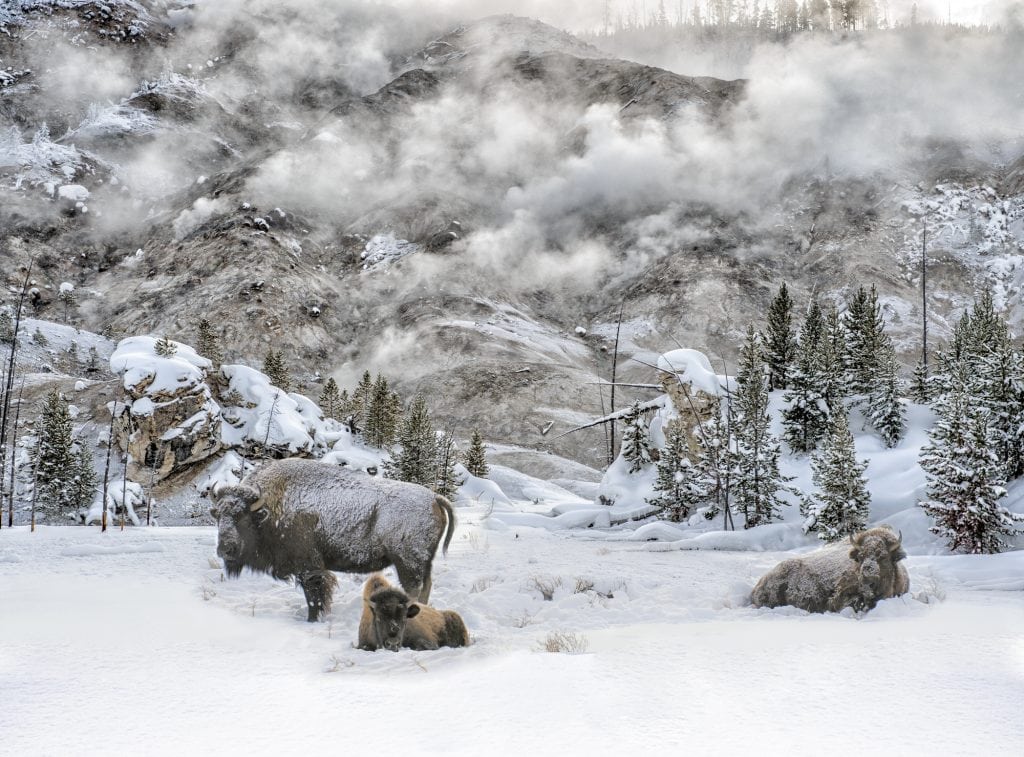
February will give you a unique experience at Yellowstone that many visitors do not have. You’ll get to witness the park’s steamy features surrounded by snow! It is one of the least visited months, so you can enjoy the park with fewer people around. Plus, many of the park’s animals are more active in the winter, as they are looking for food and shelter. You will likely see bison, elk, moose, and even wolves!
Weather in February
The weather in Yellowstone National Park in February is typically cold and snowy. Average temperatures range from highs in the mid-20s Fahrenheit (-5°C) to lows in the mid-teens Fahrenheit (-9°C). And snow? Oh, there’s snow—a few feet of it, actually.
Best Things to Do in Yellowstone National Park
Old Faithful: It’s not just a geyser; it’s THE geyser. Old Faithful erupts approximately every 90 minutes, so your odds of catching this steamy spectacle are pretty darn good.
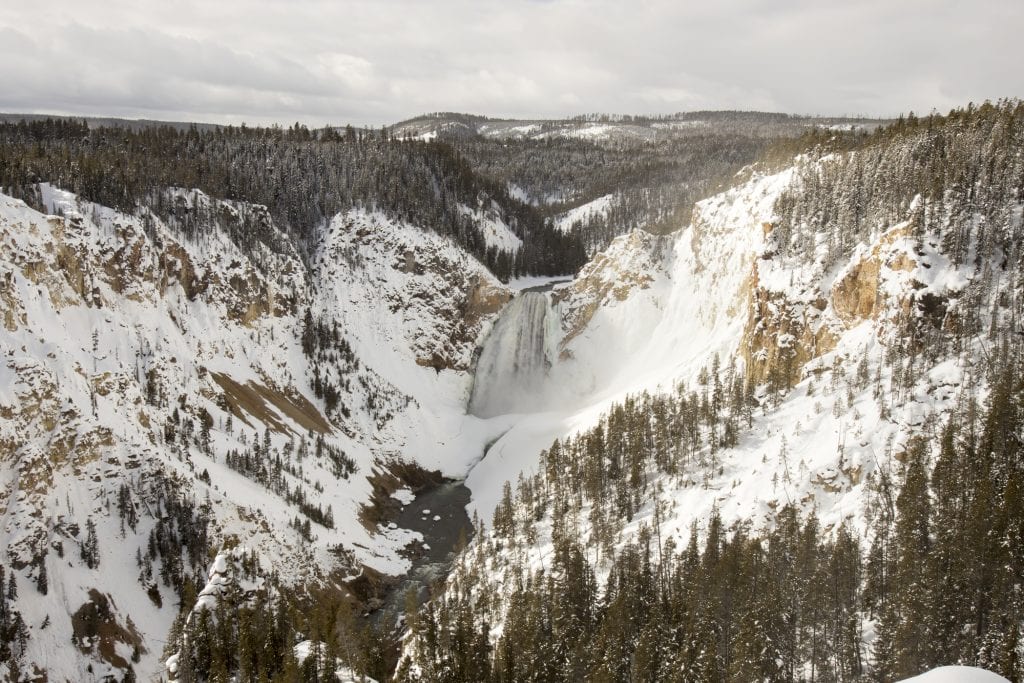
Grand Canyon of the Yellowstone: The South Rim’s 0.2-mile round-trip hike to Artist Point will treat you to the most stunning view of the 308-foot Lower Falls.
Mammoth Hot Springs Terraces: These limestone terraces look like a completely different world. Boardwalk trails ranging from 1 to 2 miles offer varying perspectives of these natural wonders.
Ride a snowcoach: Want a unique experience? Book a tour on a snowcoach! These monster vehicles will transport you around the park’s snowy terrain, while giving you some insight to the park along the way. For many sights in the park, you can only access it via a snowmobile or a snowcoach!
Know Before You Go
Check Road Closures: Most roads in the park are closed in the winter, so you may need to hire a tour to get around. You can learn more about the closures here.
Limited Accommodation Availability: Some lodges and campsites operate on a limited schedule or may be closed altogether in February. Make sure to plan ahead to snag one of the limited rooms!
Pack the Snow Gear: Yellowstone in February is a winter wonderland, perfect for snow activities but you’ve got to be prepared. Think boots, hats and all things warm because temperatures can drop below zero.
Learn more about Yellowstone National Park
Blog post
2 Days at Yellowstone National Park Itinerary
YouTube videos
Yellowstone National Park Day 1: Old Faithful, Grand Prismatic Spring, & Fairy Falls
Yellowstone National Park Day 2: Canyons, Waterfalls, and Mammoth Hot Springs
15. Mammoth Cave National Park
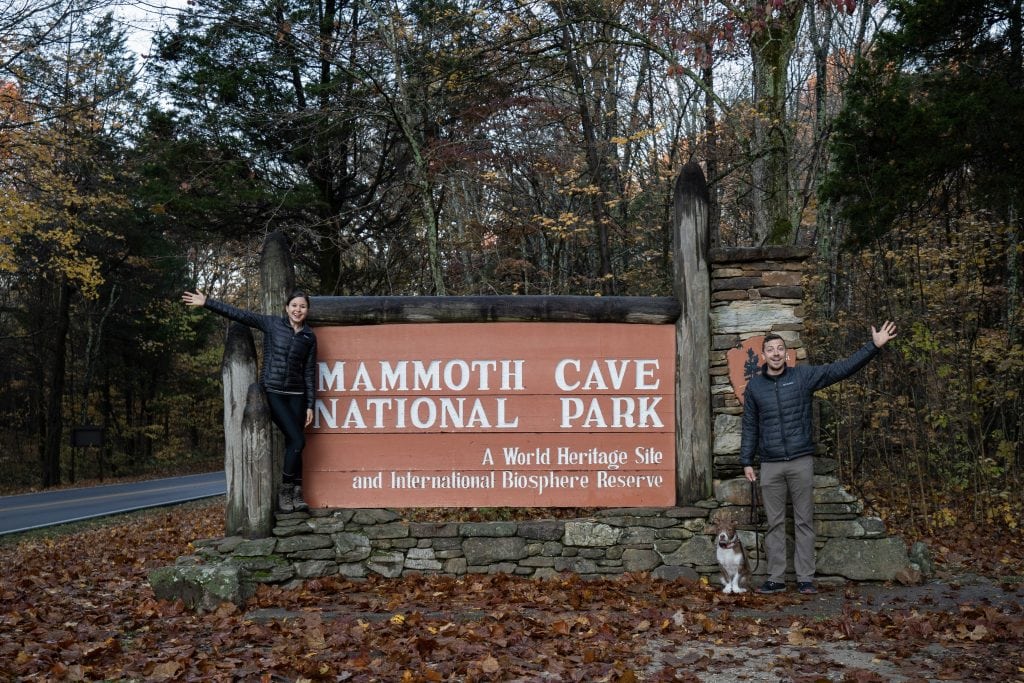
Mammoth Cave National Park is home to the world’s longest-known cave system. Yes, you read that right—the world’s longest, with more than 400 miles of surveyed passageways! Oh, and the formations? Stalactites, stalagmites, and flowstones, oh my!
Where is Mammoth Cave National Park?
Mammoth Cave National Park is located in south-central Kentucky, approximately 90 miles south of Louisville and 90 miles north of Nashville, Tennessee.
Why Visit in February?
The park offers several special cave tours in February, including the Frozen Niagara Tour and the Violet City Lantern Tour. Plus, the crowds will be lighter!
Weather in February
The weather in Mammoth Cave National Park in February is typically cold, with average highs of 48°F (9°C) and lows of 30°F (-1°C). Snow is also common in February. However, the cave’s temperature stays around a consistent 54°F year-round, making it a “warm” escape.
Best Things to Do in Mammoth Cave National Park
Gothic Avenue Cave Tour: Famous for its Gothic-like rock formations, this tour offers a 2-hour historical journey through Mammoth Cave, covering 1 mile. This tour lets you step into the 1800s world of cave tourism, with visitors’ signatures and artifacts to prove it.
Historic Tour: The classic Mammoth Cave Tour takes you on a journey through the very tunnels that humans have traversed for millennia. And when we say classic, we mean it—these are the passages that made Mammoth Cave famous! This 2-hour, 2-mile adventure includes 540 stairs.
Cedar Sink Trail: If you’ve had your fill of the underground, head topside to explore Cedar Sink, a massive sinkhole. The trail is a moderate 1.8-mile round-trip hike and showcases the park’s surface beauty.
Know Before You Go
Pack Smart for the Cave: It can be a cool 54°F year-round in the cave. A light jacket and sturdy shoes are essentials for your subterranean exploration.
Physical Requirements: Cave explorations vary, and some might throw stairs, tight passages, and low ceilings your way. So, know your fitness comfort zone and select a tour that fits your style.
Learn more about Mammoth Cave National Park
We planned to spend a day here, but Kathryn took a tumble early in the day and injured her hand. You can see the attempted adventure here.
Visiting the National Parks a different month?
- 10 best National Parks to visit in January
- 15 best National Parks to visit in February
- 12 best National Parks to visit in March
- 11 best National Parks to visit in April
- 17 best National Parks to visit in May
- 15 best National Parks to visit in June
- 14 best National Parks to visit in July
- 15 best National Parks to visit in August
- 19 best National Parks to visit in September
- 16 best National Parks to visit in October
- 10 best National Parks to visit in November
- 10 best National Parks to visit in December
About the author
This monthly national park series was written by our writer Nicoll, using our monthly lists and incorporating our experiences at each park. Learn a bit about her below!
I’m Nicoll, an adventurous soul fueled by hiking, dirt biking, and traveling. When I’m not busy crafting captivating tales, you’ll find me exploring the world alongside my partner-in-adventure, Jake. Back in 2019, our insatiable wanderlust led us to embrace the nomadic lifestyle with our fearless pack of canine sidekicks, including a mid-content wolf dog. You can catch my adventures and musings on livingtinywithawolf.com.
Ready to explore the National Parks?
Pin this guide with the best National Parks to visit in February to plan your adventure!