Last updated on October 3rd, 2026
June marks the beginning of summer, when National Parks across the country come to life in a big way. We’ve got a list of the 15 best National Parks to visit in June that will make your summer truly unforgettable.
June is not just the start of summer. This month is widely recognized as one of the peak months for National Parks in the US, attracting a significant surge in visitors. This influx is largely due to the near-perfect weather conditions.
In fact, many parks report some of their highest visitor numbers in June. For example, parks like Yellowstone and Yosemite can have thousands of visitors every single day!

Out of the 63 amazing National Parks in the US, we’ve checked off 55 from our bucket list. And our June experiences have been nothing short of amazing.
We’ve hiked through countless forests, huffed and puffed up some epic mountains, and gawked at waterfalls all over the country. And we’re here to share the best National Parks to visit in June in one complete guide!
Quick Disclaimer About Our Monthly National Parks Series
Welcome to our monthly roundup, where we’re excited to share our top picks for the best national parks to visit each month! Our mission? To shine a spotlight on every National Park in the US that we’ve had the opportunity to visit, at least once. (And trust us, we’re on a mission to see them all!).
Some parks are so impressive they pop up in guide after guide. So, if you see some repeat names, it’s because they’re just that good!
Our goal here is to share the details that can make or break your park experience. Think best times to dodge crowds, hikes that are worth your time, viewpoints you don’t want to miss, and a whole lot more.
Although we haven’t conquered every National Park just yet, you can trust that each and every tip we share comes from real-life adventures and a ton of love for our national parks.
Visiting the national parks in a different month?
- 10 best National Parks to visit in January
- 15 best National Parks to visit in February
- 12 best National Parks to visit in March
- 11 best National Parks to visit in April
- 15 best National parks to visit in May
- 12 best National Parks to visit in July
- 13 best National Parks to visit in August
- 15 best National Parks to visit in September
- 15 best National Parks to visit in October
- 10 best National Parks to visit in November
- 10 best National Parks to visit in December
- Visiting the national parks in a different month?
- Tips for Your June National Park Adventure
- 1. Denali National Park
- 2. Yosemite National Park
- 3. Hot Springs National Park
- 4. Indiana Dunes National Park
- Know Before You Go
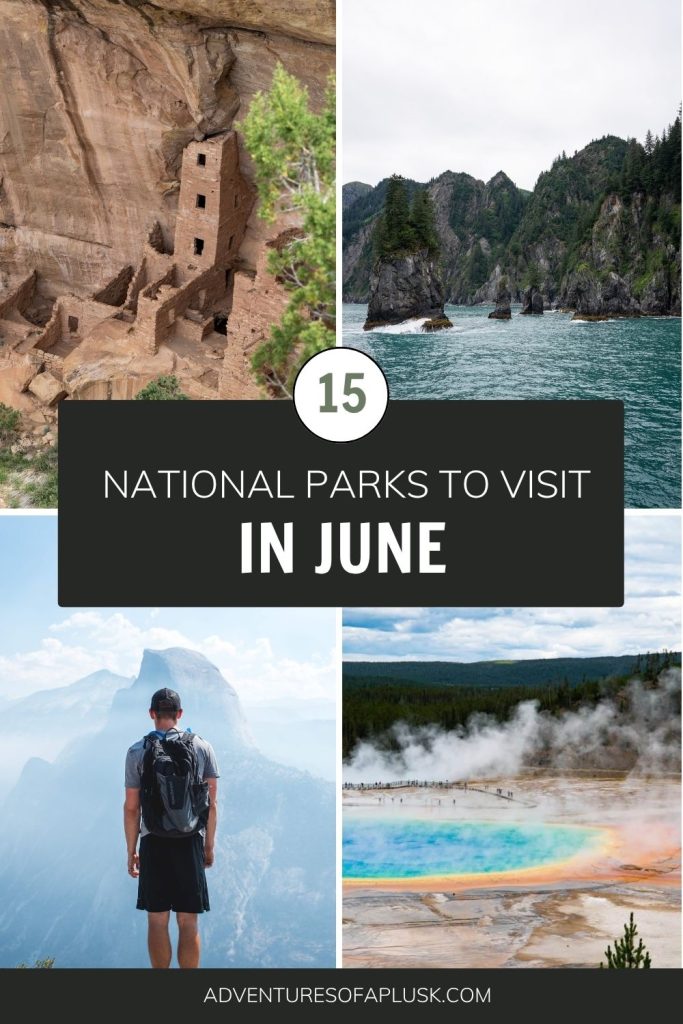
- 5. Kenai Fjords National Park
- 6. Grand Teton National Park
- 7. New River Gorge National Park
- 8. Olympic National Park
- 9. Rocky Mountain National Park
- 10. Theodore Roosevelt National Park
- 11. Yellowstone National Park
- 12. Wind Cave National Park
- 13. Wrangell-St. Elias National Park
- 14. Mesa Verde National Park
Tips for Your June National Park Adventure
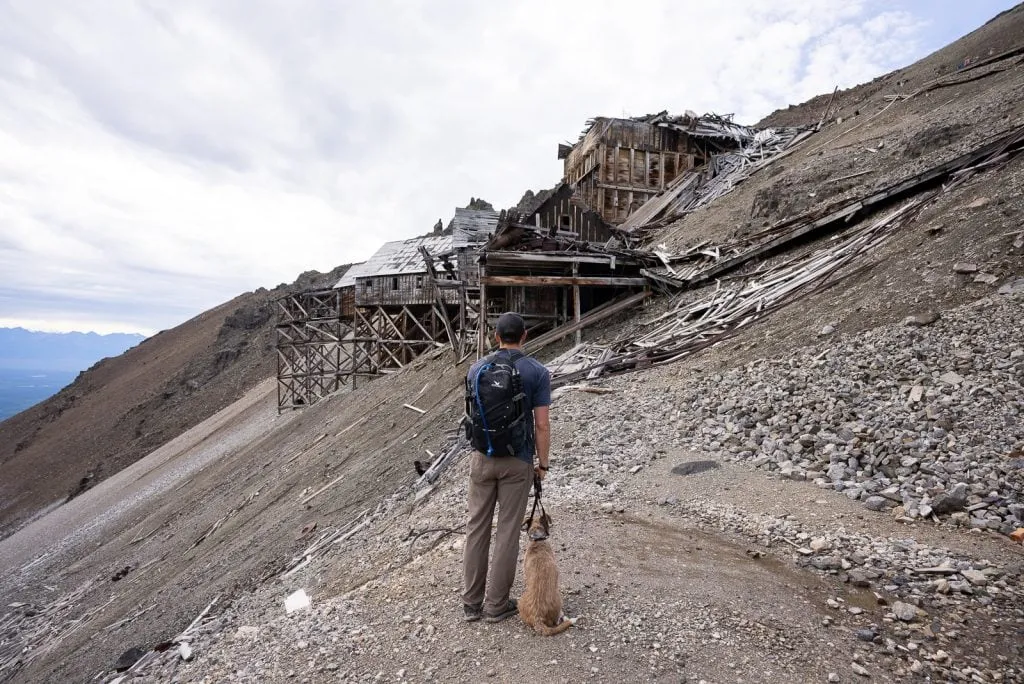
Plan Ahead: June is when everyone seems to have the same great idea—visit the National Parks! Beat them to it by getting there early, snagging the best parking spots, and if you’re planning to camp or stay in park lodgings, make those reservations early.
Invest in the America the Beautiful Pass: If you’re planning several National Park visits throughout the year, consider getting the America the Beautiful Pass. This pass costs about $80 and offers access to over 2,000 federal recreation sites, including ALL National Parks. It really pays for itself after just a couple of visits.
Download Maps in Advance: Signal can be hit or miss in the parks, so be sure to download your maps before you head out. We’re big fans of AllTrails—it’s super handy and has been a real lifesaver on more than one occasion, making sure you’re never lost, even when off the grid.
Want to get 30% off an AllTrails Plus membership? Use our code aplusk30 (you must redeem this code on the website, not the app)!
We use AllTrails Plus on every single hike and it is the most helpful hiking tool out there! Some of the features we love are offline maps (so we can navigate even without cell service), wrong-turn alerts, and its 3D maps feature, so we can get a feel for trails before we hike.
Traveling with a Furry Friend? If your best hiking buddy is your dog, make sure to check the park’s pet rules first. Some trails might be off-limits for pets.
Leave no trace: Always stick to the trails, carry out your trash, and leave nothing but footprints behind. Let’s work together to keep our parks beautiful for all the adventurers who’ll come after us.
15 best National Parks to visit in June

1. Denali National Park
Denali National Park is one of the most remote and rugged parks in the heart of Alaska, full of untouched wilderness. And it’s located so far North that the sun barely sets! Known for its diverse landscapes, this park boasts everything from low-elevation taiga forests to high alpine tundra and snowy mountains, including North America’s tallest peak, Denali (formerly known as Mount McKinley), at 20,310 feet! Wildlife here is as varied as the terrain, with grizzly bears, caribou, and wolves roaming freely.
Where is Denali National Park?
Located in the heart of Alaska, Denali National Park spans a massive 6 million acres. The park offers a sense of scale that’s hard to comprehend until you see it for yourself (it’s really that BIG!) The nearest town is Healy, is located about 11 miles north of the park entrance.
Why Visit in June
June is an incredible time to visit Denali. The days are super long (hello, almost 24-hour daylight!), the wildlife is particularly active, and the park’s vegetation is in full bloom. Plus, the weather is milder than you’d expect for Alaska, making it ideal for outdoor activities. Though starting to get busier, June is generally less crowded compared to peak summer months like July and August. The Denali Park Road, the main artery through the park, is typically fully accessible by mid-June.
Weather in June
While June marks the beginning of summer, weather in Denali can be a bit unpredictable with daytime temperatures averaging between 55°F to 65°F (13°C to 18°C). Nighttime can still be cool, dipping down to around 33°F to 40°F (1°C to 4°C).
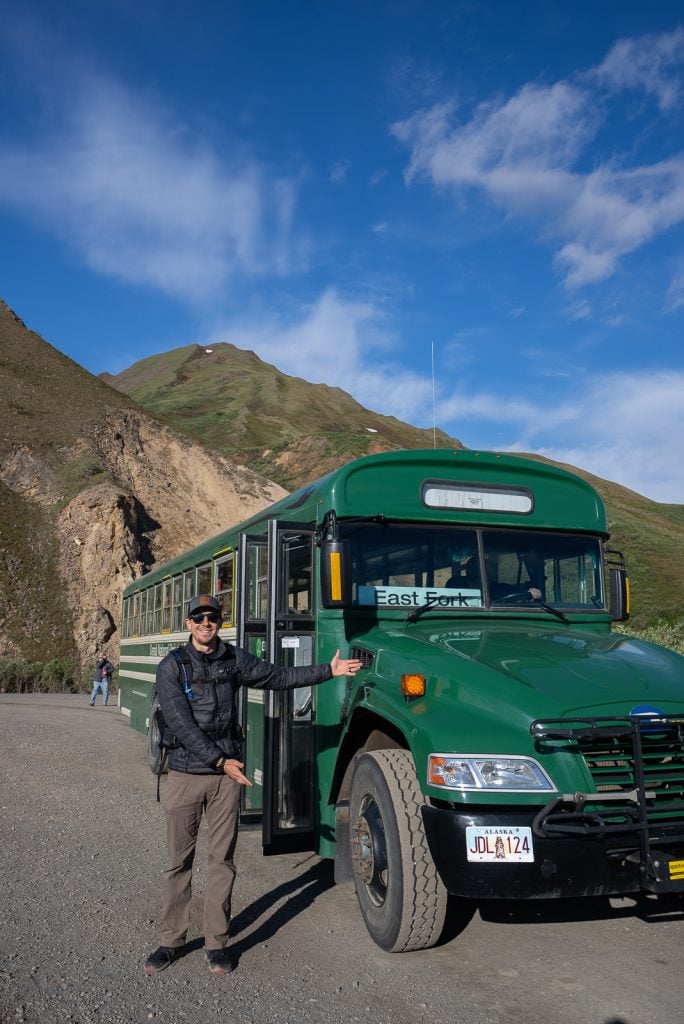

Best Things to Do in Denali National Park
Hike Savage River Loop: This trail is an easy 2.1-mile loop that gives you a good chance to spot local wildlife, including caribou and eagles. The trailhead is easily accessible, located at the Savage River checkpoint, 15 miles from the park entrance.
Mount Healy Overlook: This 4.9-mile climb will test your legs, but the payoff? Panoramic views of the Alaska Range that’ll make you gasp for air (literally, it’s that high up!). And if the clouds cooperate, you might even snag a glimpse of Denali herself.
Bus Tour on the Denali Park Road: Experience the heart of the park on this 92-mile scenic drive. These tours, varying in length from a couple of hours to a full day, are the primary way to explore the park’s interior.
Know Before You Go
Limited Cell Service: Cell service here is spotty at best. Right around the visitor center, cell coverage is great. We had no issues working from the parking lot for days. But, as soon as we ventured just a few miles away, the cell service started to drop off big time.
Check road conditions on Denali Park Road: The Denali Park Road is typically closed to private vehicles beyond mile 15. Due to a recent landslide, the road is currently closed beyond the East Fork River at mile 43, including buses.
Views of Denali Not Guaranteed: Sadly, Denali, the tallest mountain in North America, often hides behind clouds! Only about 30% of visitors get a clear view. But don’t lose hope! Keep your eyes peeled along Park Road, especially after mile 9—that’s your best shot at catching this elusive giant.
Learn more about Denali National Park
Blog posts
The ULTIMATE guide to visiting Denali National Park + things to do!
How to camp at the Teklanika River Campground in Denali National Park (& what to do while there)
Hiking the Mount Healy Overlook Trail at Denali National Park
How to hike the Savage Alpine Trail (+ Savage River Loop Trail) in Denali National Park
Hiking the Horseshoe Lake Trail in Denali National Park
YouTube videos
Denali National Park past MILE 15! (Camping at Teklanika River, riding the bus, & off trail hiking)
Our FIRST time in DENALI National Park! (Savage Alpine, Mount Healy, sled dogs, & Horseshoe Lake)
2. Yosemite National Park
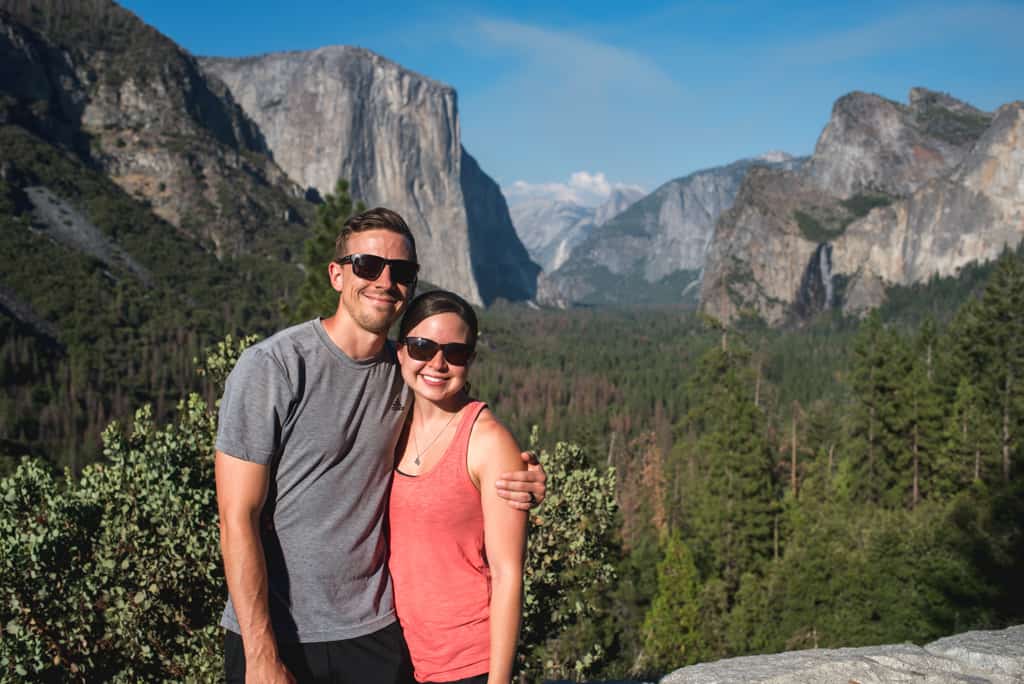
Yosemite National Park is an absolute must-visit for those seeking jaw-dropping natural beauty and epic outdoor adventures. This iconic park, nestled in the heart of sunny California, is loaded with seriously impressive stuff. Here, you’ll find colossal granite cliffs and ancient sequoias that are so darn tall, you’ll wonder why the heck you haven’t visited sooner.
But the real showstoppers here are the cascading waterfalls. Yosemite boasts some of the most mind-blowing cascades you’ll ever lay your eyes on. And, if you’re lucky, you might even catch a rainbow dancing in the spray. And speaking of iconic, Yosemite is home to landmarks like El Capitan and Half Dome, truly living up to its reputation.
Where is Yosemite National Park?
Located in the Sierra Nevada Mountains of California, Yosemite National Park covers approximately 747,956 acres. The nearest town to Yosemite Valley, one of the park’s most popular areas, is Mariposa, located about 30 miles away.
Why Visit in June
Yosemite is without a doubt one of the best National Parks to visit in June. The snow has melted, opening up access to the high country trails, and the waterfalls are at their most spectacular, fed by the melting snow. The meadows are lush and green, dotted with wildflowers. Plus, the weather is simply ideal for hiking, camping, and wildlife spotting.
Weather in June
June graces Yosemite with its finest weather, with daytime highs averaging around 70°F to 80°F (21°C to 27°C) and nighttime lows around 40°F to 50°F (4°C to 10°C). Expect sun-soaked days with the occasional dramatic afternoon thunderstorm, particularly in the park’s elevated regions.

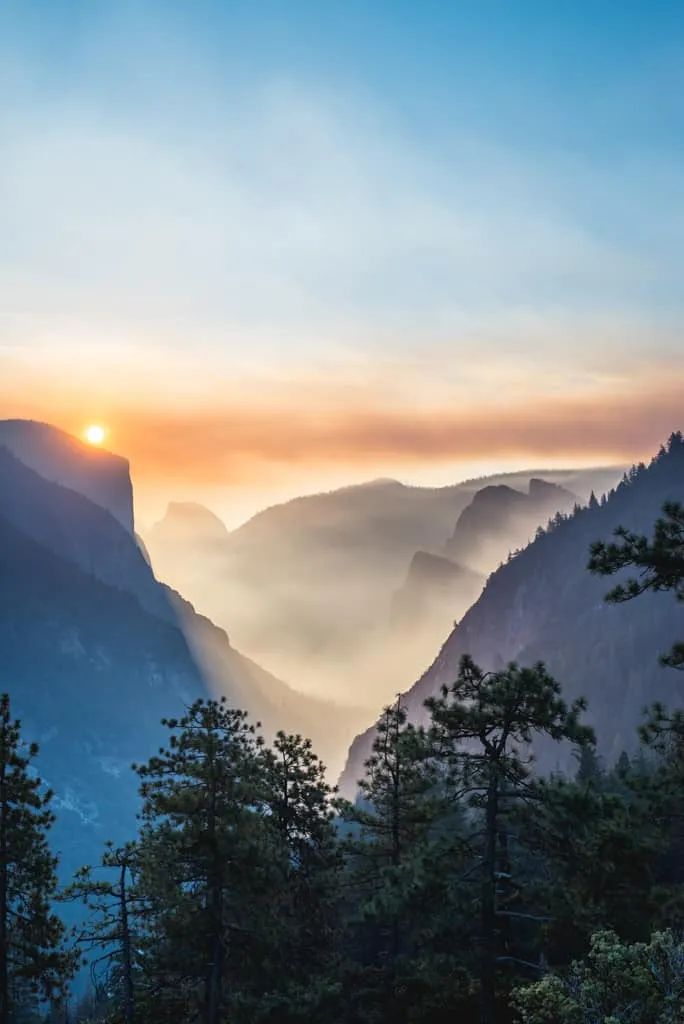
Best Things to do in Yosemite National Park
Hiking to Yosemite Falls: Experience the raw power of North America’s tallest waterfall. The trail to lower Yosemite falls is 1.2 miles round-trip.
Exploring Mariposa Grove: Home to over 500 mature giant sequoias, this grove is simply stunning. The Grizzly Giant and California Tunnel Tree are must-sees here.
Glacier Point: For a panoramic view of Yosemite Valley, Half Dome, and the High Sierra, Glacier Point is the place to be. It’s accessible by car and offers some of the most epic views in the park.
Know Before You Go
You May Need a Reservation: During weekends and holidays in June, reservations are required to enter Yosemite National Park from 5 AM-4 PM. If you have a lodging reservation inside the park, wilderness permit, or Half Dome permit, you will not need one. You can also enter before or after these times without a reservation.
Plan for Crowds: June is a popular time, so expect crowds. Arrive early to popular spots to avoid the rush.
Stay Bear Aware: Store your food properly and be cautious with wildlife. Yosemite is home to black bears, and keeping them wild is crucial.
Wilderness Permits: If you plan to venture into the park’s wild backcountry to camp overnight, get a wilderness permit. Keep in mind that certain areas, like the famous Half Dome and popular trailheads, demand advance reservations for permits.
Learn more about Yosemite National Park
Blog posts
33+ things to do in Yosemite National Park
How to spend ONE day in Yosemite National Park
The PERFECT 2 Day Yosemite National Park itinerary
The Ultimate Yosemite National Park itinerary: Options for 1-6 days!
Where to stay near Yosemite National Park
The Best Day Hike in Yosemite: The Four Mile Trail, Panorama Trail, and Mist Trail
Videos
The BEST 4 days in Yosemite National Park!
3. Hot Springs National Park


Hot Springs National Park, often referred to as “The American Spa,” is a unique and historically rich park located in Arkansas. The name itself conjures up images of bubbling springs, Victorian bathhouses, and a touch of Southern magic. And while this park is particularly famous for its 47 naturally flowing springs, which have been a big attraction for centuries, it offers more than just a soak and a spa day (though those are pretty darn good, too!). Hot Springs National Park also features a network of hiking trails, stunning scenic drives, and tons of cultural history.
Where is Hot Springs National Park
Situated in central Arkansas, Hot Springs National Park is easily accessible, enveloping part of the city of Hot Springs. The park itself is relatively small, covering about 5,500 acres, but it’s packed with a ton of character. Its urban setting, just adjacent to the city, makes it unique among national parks.
Why Visit in June
June is one of the best times to visit Hot Springs National Park. The weather is just right for enjoying the outdoor activities without the summer’s peak heat. The town of Hot Springs, with its charming shops and vibrant cultural events, is bustling in June. Plus, this time of year, the park is just so green!
Weather in June
In June, the weather at Hot Springs National Park is just right for exploring. Expect daytime highs around 88°F (31°C), while the evenings cool down to around 67°F (19°C). This warm weather is ideal for enjoying the hot springs and taking leisurely strolls through the park’s lush paths.


Best Things to Do
The Grand Promenade: Rent a bike or simply stroll along this scenic path lined with shops, cafes, and galleries. Keep an eye out for street performers and soak in the vibrant Southern atmosphere.
Bathing in the Hot Springs: You can’t visit the park without trying the hot springs! The bathhouse row offers a range of options from historic to modern spas, like the Buckstaff or the Quapaw Baths & Spa.
Visiting the Fordyce Bathhouse: Now serving as the park’s visitor center, the Fordyce Bathhouse is a neat place to learn about the history and culture of the area. It’s beautifully restored and gives a glimpse into the spa culture of the early 20th century. (And it’s free!)
Know Before You Go
Parking: Parking can be tricky, especially near Bathhouse Row. Consider using the park’s shuttle service or exploring on foot.
Spring Water Collection: Bring your own containers to collect the famous spring water—it’s free and said to be “the best water in the world!”
Check for Events: The park and city often host fun events, especially in the summer months. Check the local calendar—you might find something totally fun and unexpected!
Learn more about Hot Springs National Park
Things to do in Hot Springs National Park
4. Indiana Dunes National Park

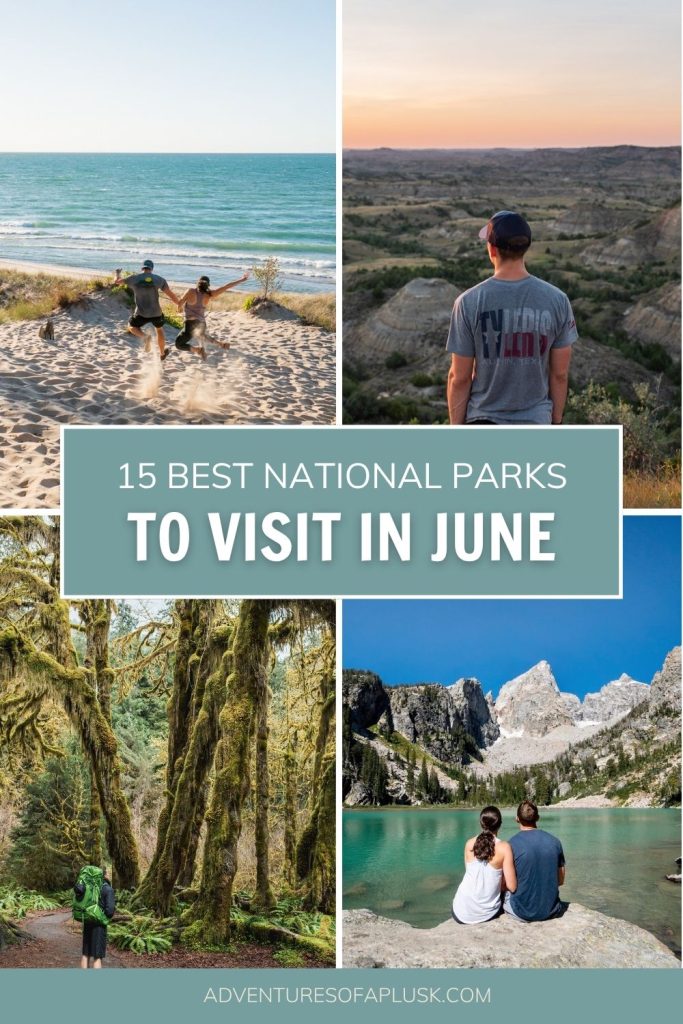
Nestled along 15 miles of Lake Michigan’s southern shore, Indiana Dunes National Park in Indiana boasts over 15,000 acres of landscapes, including windswept sandy beaches, rolling dunes, wetlands and prairies. Although this park is particularly well-known for its towering dunes (some reaching over 200 feet!), it’s also a haven for bird watchers, with over 350 species recorded in the area!
Where is Indiana Dunes National Park?
Indiana Dunes National Park is located within the state of Indiana, on the southern shore of Lake Michigan. It spans approximately 15 miles of coastline and includes the towns of Porter, Beverly Shores, and parts of Chesterton and Ogden Dunes. The nearest town is Chesterton, located just a few miles from the park’s entrance. Despite its relatively small size, Indiana Dunes National Park is a super interesting place to explore. Its proximity to Chicago, about 50 miles away, makes it an accessible and popular destination for both day-trippers and longer stays.
Why Visit in June
June is an ideal time to visit Indiana Dunes National Park. The weather is just starting to warm up, making it perfect for beach activities and hiking. The park’s unique biodiversity comes to life in June, with wildflowers blooming and wildlife becoming more active. It’s also a great time to see a bunch of migratory birds like herons and colorful warblers. Plus, visiting in June lets you beat the high-traffic tourist season that comes later in the summer.
Weather in June
The weather in June at Indiana Dunes is typically pleasant and warm. Average high temperatures hover around 77°F (25°C), while the nightly lows are around 56°F (13°C). This range is ideal for all sorts of activities, offering comfortable conditions for enjoying the dunes, hiking trails, and beaches. (It’s always a good idea to bring a light jacket for those cooler evenings by the lake!)

Best Things to Do Indiana Dunes National Park
Beach Bumming: Stretch out on the golden sands of Indiana Dunes National Park’s 15 miles of shoreline. Build sandcastles, splash in the waves, or collect unique driftwood and beach glass (the possibilities are endless!).
Cowles Bog: Hike the 4.3 mile loop through forests, marshes, and black oak savannas before reaching a sandy beach. Part of the trail features an elevated boardwalk offering close-up views of carnivorous plants and the unique bog ecosystem.
Exploring the Dunes: The park’s namesake dunes are a must-visit. The 3 Dune Challenge, covering 1.7 miles, takes you over the park’s three highest dunes and offers impressive views of Lake Michigan.
Know Before You Go
Check Beach Conditions: Lake Michigan can have strong currents, so it’s important to check beach conditions and swim safely.
Be Prepared for Varied Terrain: The park’s trails can be sandy, wet, or wooded, so wear appropriate footwear and be ready for lots of different hiking conditions.
Tick Check: Summer in the dunes means tick season. Stay on the paths, and check for ticks after your adventures.
5. Kenai Fjords National Park


Located on the stunning southern coast of Alaska, Kenai Fjords National Park is known for its dramatic landscape. It’s home to rugged glaciers, fjords, towering ice-capped mountains, and crystal-clear lakes. It’s famous for the Harding Icefield, one of the largest ice fields in the country, with glaciers that extend down to the ocean. Visitors are treated to an incredible landscape where mountains meet ice and sea, offering opportunities for seeing abundant amounts of marine life, glacier hiking, and scenic boat tours.
Where is Kenai Fjords National Park
Covering an area of about 669,984 acres, Kenai Fjords National Park showcases some of the most dramatic and rugged terrains in the United States. Located on the southern coast of Alaska, Kenai Fjords spans the Kenai Peninsula, extending from the town of Seward westward along the Gulf of Alaska coastline. This national park is easily accessible from Anchorage, Alaska’s largest city!
Why Visit in June
Kenai Fjords is easily one of the best National Parks to visit in June and a big reason is because it’s the first month you can truly visit in the year! During this month, the park is fully accessible, and the days are long, like really long, with almost 24 hours of daylight! (June is perfect for catching the midnight sun phenomena—it’s super cool!) June falls just before the peak summer tourist season in Alaska, so you can enjoy the park with fewer crowds. The warmer weather contributes to increased ice melt and calving, where chunks of ice break off and crash into the sea.
Weather in June
The weather in June in Kenai Fjords National Park can be quite variable, with average highs around 54°F (12°C) and lows near 41°F (5°C). While it’s one of the warmer months, the weather can change rapidly, so it’s important to be prepared for everything from sunshine to rain or even a bit of snow. (Always pack layers and waterproof gear!)

Best Things to Do Kenai Fjords National Park
The Harding Icefield Trail: This 8.6-mile round-trip hike, is your Everest of Alaska (minus the oxygen tanks, thankfully). This challenging trail takes you through stunning scenery, eventually leading you to the heart of a 700-square-mile ice sheet.
Exit Glacier Hike: Prefer to admire glaciers without breaking a sweat? The Exit Glacier is a scenic 2.5-hour drive from Anchorage. Hop out for a leisurely 2.2-mile stroll to its face.
Glacier Cruises: Taking a boat tour is a must to see the park’s impressive glaciers and abundant marine wildlife, including whales, seals, and sea otters.
Know Before You Go
Weather can change Quickly: Be prepared for rain, wind, and even sunshine all in one day. Pack layers and waterproof gear.
Limited Amenities: You won’t find fancy restaurants or souvenir shops. Pack your own food and supplies.
Learn more about Kenai Fjords National Park
Blog posts
8 EPIC things to do in Kenai Fjords National Park in Alaska
Hiking the Harding Icefield Trail at Kenai Fjords National Park
How to experience the Exit Glacier Hike in Alaska’s Kenai Fjords National Park
YouTube videos
The BEST three days at Kenai Fjords National Park! (Exit Glacier, Harding Icefield, + BOAT tour!)
6. Grand Teton National Park

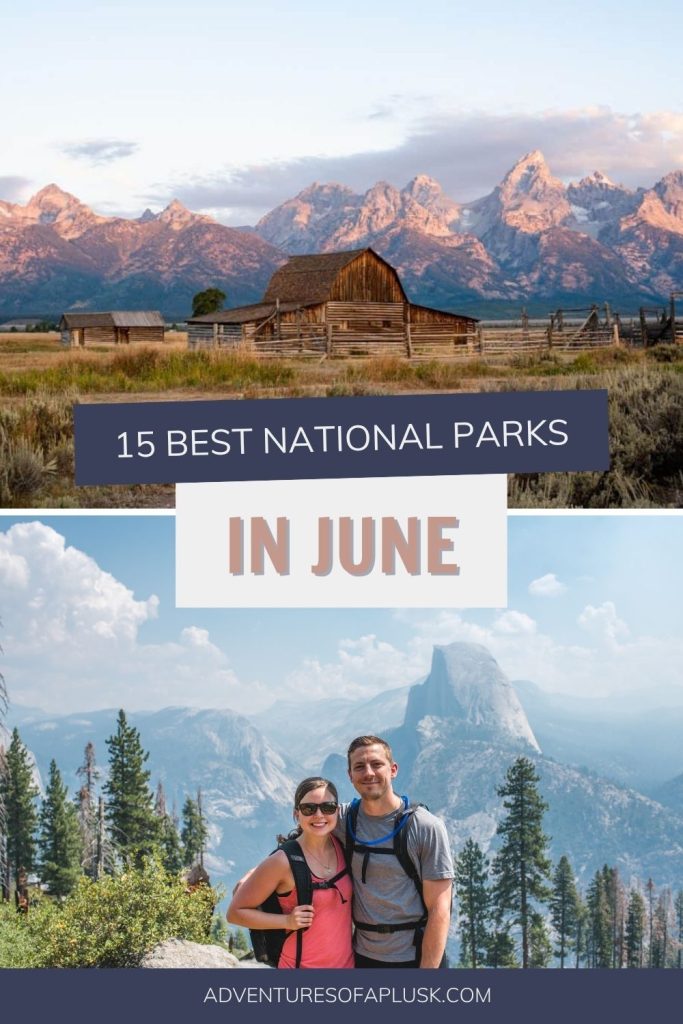
Think Grand Teton National Park is just another park with mountains? Think again! Often referred to as “the Tetons,” this park’s main attraction is, you guessed it, the Grand Teton mountain range, with its impressive, jagged peaks that are a big draw for visitors (And personally, I can never get enough of those stunning mountain views!) Besides its famous mountain scenery, the park is home to a bunch of wildlife. Here, you’ll find bison, pronghorns, and maybe even a grizzly bear! Plus, there’s tons of historical sites to check out like Mormon Row, viewpoints such as Schwabacher’s Landing, and river rafting experiences on the Snake River.
Where is Grand Teton National Park?
In the northwest corner of Wyoming, Grand Teton National Park stretches over a grand 310,000 acres. It lies near the town of Jackson Hole, about 12 miles to the south, making it super accessible.
Why Visit in June
June in Grand Teton National Park is simply unbeatable! June brings long, glorious days, perfect for soaking up the sun and the scenery. This month marks the start of peak rafting season, offering whitewater adventures down the Snake River. The wildlife is super active, so keep your eyes peeled for moose, bears, and a bunch of other critters. Plus, with the snow mostly melted, it’s the ideal time for hiking, kayaking or just lounging by the water at one of the many lakes!
Weather in June
June in Grand Teton is a delight with daytime temperatures ranging between 60°F to 70°F (15°C to 21°C) and cooler nights around 40°F (4°C). It’s warm enough to enjoy all the outdoor activities the park offers, yet cool enough for comfortable hiking and camping. (Do bring layers, though, as mountain weather can change quickly!)


Best Things to Do Grand Teton National Park
Whitewater Rafting on the Snake River: The Snake River, with its Class II and III rapids, is perfect for both beginners and seasoned rafters. You’ll navigate twists and turns, paddle through canyons carved by glaciers, and maybe even spot some bald eagles.
Jenny Lake Trail: This 7.2-mile loop around Jenny Lake is super popular for a reason. It offers some of the most impressive views of the Tetons reflecting on the glacial waters. It’s a moderate hike and totally worth it for the scenery.
Hiking to Inspiration Point: This is a popular 1.8-mile round-trip hike that offers stunning views over Jenny Lake and the Tetons. You can take a shuttle across the lake, cutting down the distance and offering a unique view of the Tetons from the water.
Know Before You Go
Stay Bear Aware: This park is in prime bear country. Always carry bear spray and know how to use it. (I never hike without it!).
Altitude Awareness: Remember, you’re at a higher elevation here. Stay hydrated and give yourself time to acclimatize, especially if you’re not used to it.
Learn more about Grand Teton National Park
Blog post
3 Days at Grand Teton National Park Itinerary
YouTube videos
Grand Teton National Park Day 1: Hiking to Hidden Falls & Inspiration Point
Grand Teton National Park Day 2: Hiking to Delta Lake!
7. New River Gorge National Park

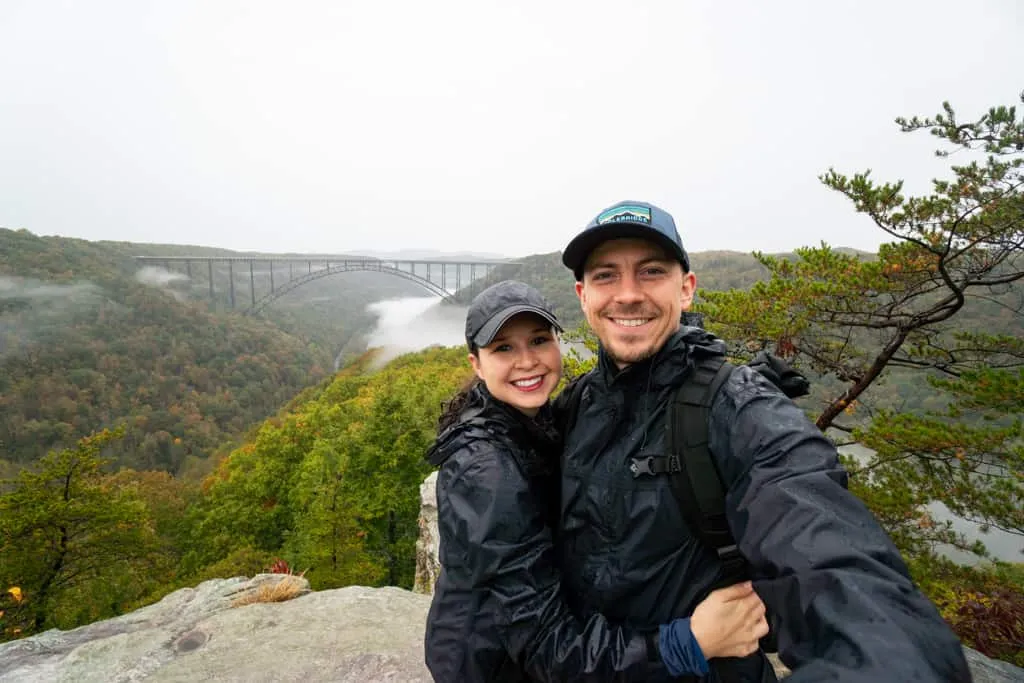
From its lush forests and rolling hills to the ancient New River, New River Gorge National Park in West Virginia is famous for its stunning landscapes, world-class whitewater rafting, and incredible rock climbing opportunities. Plus, the famous New River Gorge Bridge is super impressive! The New River, one of the oldest rivers in North America, cuts through the gorge, creating a landscape that is both rugged and beautiful. In addition to its natural wonders, the park also features remnants of coal mines and historic settlements, providing a glimpse into the area’s rich history.
Where is New River Gorge National Park?
Located in the heart of the Appalachian Mountains in West Virginia, New River Gorge National Park is near the town of Fayetteville. This central location in the state makes it a convenient destination for a big adventure. The park itself is expansive, covering approximately 70,000 acres along 53 miles of the New River. Its proximity to Fayetteville provides easy access to local amenities, making it super convenient for visitors to enjoy both the wilderness and the comforts of town.
Why Visit in June
June is an awesome time to visit New River Gorge National Park. The weather is warm and perfect for enjoying all the outdoor activities the park has to offer. The river levels are usually ideal for whitewater rafting. The forests are lush and full of life, creating a beautiful backdrop for hiking and exploring. (The long days in June are great for packing in a bunch of activities!)
Weather in June
The weather in June is perfect for exploring. Expect daytime highs around 80°F (27°C) and cooler nights around 60°F (15°C). This comfortable weather makes it an ideal time for both water-based and land-based adventures.
Best Things to Do in New River Gorge National Park
White Water Rafting: Get ready for an adrenaline rush! The New River offers some of the best white water rafting in the country. With rapids ranging from class III to V, it’s an experience that will leave you drenched!
Hiking the Endless Wall Trail: This 3.2-mile trail is seriously impressive. The views of the gorge are mind-blowing, especially from Diamond Point.
Bridge Walk: The New River Gorge Bridge is an engineering marvel, and walking beneath it on a guided Bridge Walk tour is a really neat experience. You’re 300 feet above the river—how cool is that?
Know Before You Go
Park Roads Are Narrow and Winding: New River Gorge National Park has a number of narrow roads, which are often winding and steep. They can be slippery when wet. Refrain from bringing trailers or oversized RVs.
Learn more about New River Gorge National Park
Blog post
7 Day West Virginia Road Trip Itinerary
YouTube video
A rainy day in the New River Gorge (West Virginia): Long Point, food, & fall views!
8. Olympic National Park
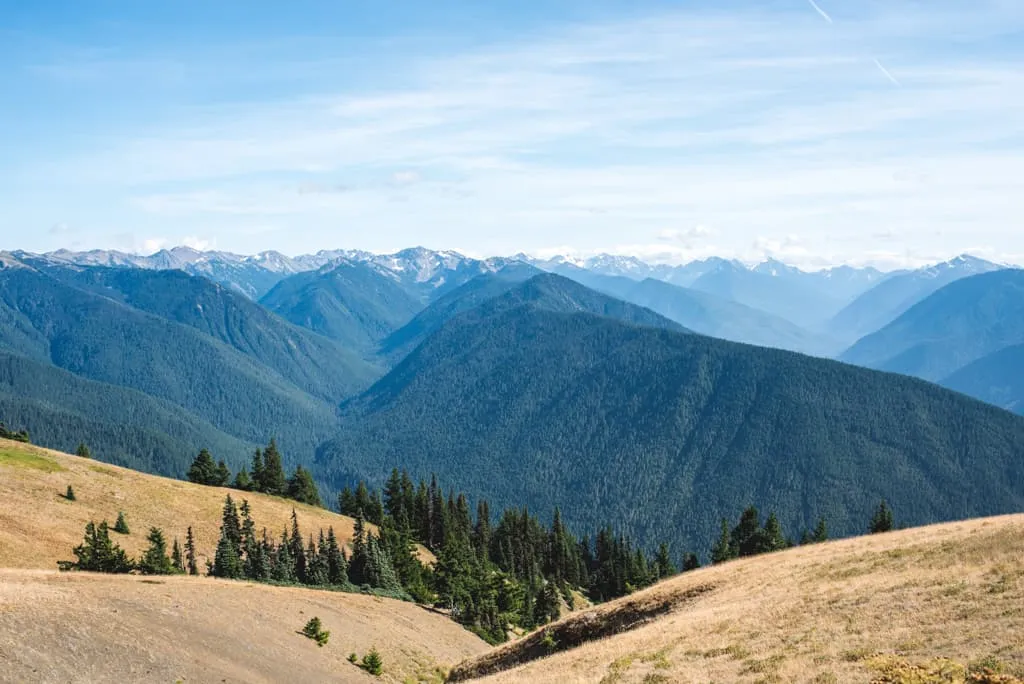
Olympic National Park is an absolute showstopper, boasting some of the most diverse ecosystems you’ll come across in the US, and it’s one of our favorite places to explore! One of the most iconic features of Olympic National Park is the Hoh Rainforest, which is one of the few temperate rainforests in the world. But Olympic National Park isn’t just about rainforests. It’s also home to rugged coastlines and, of course, those towering mountain peaks of Mount Olympus.
Where is Olympic National Park?
Located in the state of Washington, Olympic National Park is massive, covering approximately 922,651 acres. Olympic National Park has five primary entrances: the Hurricane Ridge Entrance, the Hoh Rain Forest Entrance, the Lake Crescent Entrance, the Sol Duc Entrance, and the Elwha Entrance.
Why Visit in June
June is the ideal time to visit the Olympic National Park. The park springs to life with vibrant greenery and wildlife. It’s when the trails become more accessible, the days are longer, and the entire park is blooming with new life.
Weather in June
June in Olympic National Park offers comfortable and mild weather. Daytime temperatures average around 65°F (18°C), while night temperatures can dip to 45°F (7°C). It’s cool enough for comfortable hiking and warm enough to enjoy the beaches. (Just a heads-up, always carry a rain jacket, the weather can be a bit unpredictable!)

Best Things to Do in Olympic National Park
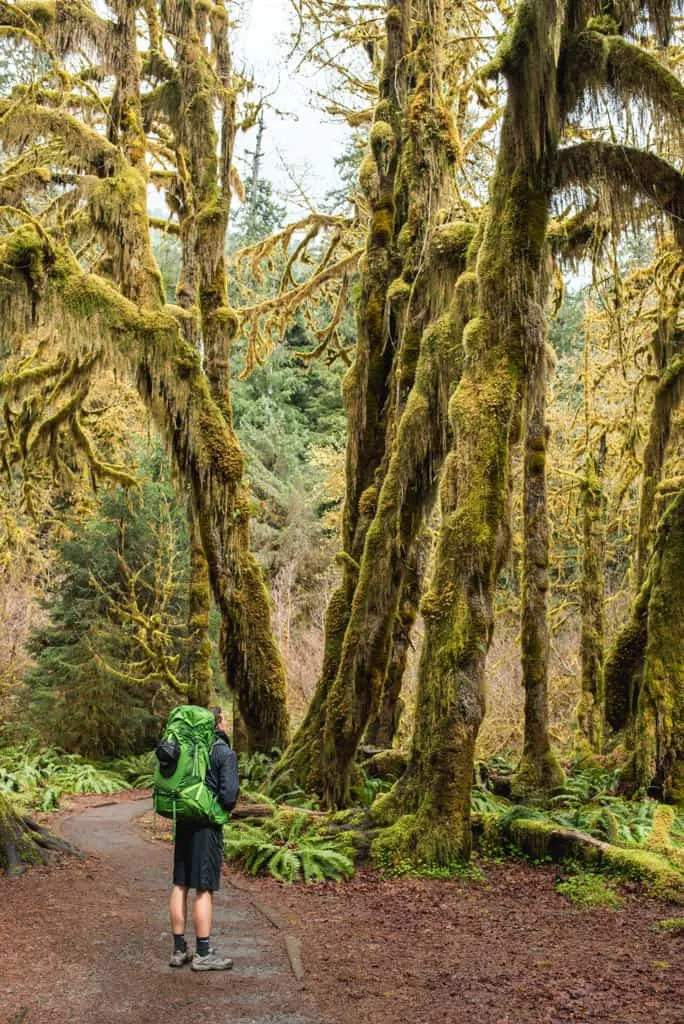
Explore the Hoh Rainforest: The Hoh Rainforest is a must-visit! The Hall of Mosses Trail is an easy 1.1-mile loop that takes you through a green wonderland of moss-draped trees and ferns.
Hike to Sol Duc Falls: For a big waterfall experience, the hike to Sol Duc Falls is top of the list. It’s a relatively easy 1.6-mile round trip, taking you to a breathtaking waterfall.
Stroll along Ruby Beach: Experience the rugged Pacific coastline at Ruby Beach, with its dramatic sea stacks, driftwood, and tide pools.
Know Before You Go
Be Prepared for Rain: The park experiences a maritime climate, which means it can be rainy and foggy, especially in the coastal areas. So, that means even in June, rain is common in the park, so waterproof gear is a must.
Wildlife Awareness: Olympic National Park is home to tons of wildlife, including black bears and cougars. Be bear-aware and carry bear spray if you plan on hiking in the backcountry.
Multiple Entrances: The park has multiple entrances (Port Angeles, Lake Crescent, and Forks). So think about what you want to see and plan your route accordingly. (And a quick tip: always check for any road closures or restrictions before heading out. It’s a bummer to arrive and find the road closed)
Learn more about Olympic National Park
Blog post
The ULTIMATE Olympic Peninsula Road Trip Itinerary
27+ Fun Things to do on the Olympic Peninsula
20+ Best Things to Do in Olympic National Park (A Locals Guide!)
YouTube videos
Exploring the Olympic Peninsula | Cape Flattery, Hurricane Ridge, Mount Ellinor, & Murhut Falls
Conquering Mount Storm King + visiting a lavender farm and hobbit house! (Olympic Peninsula)
5 days on Washington’s MAGICAL Northern Olympic Peninsula
9. Rocky Mountain National Park

Known for its towering peaks, abundant wildlife, and the most colorful wildflowers you’ll ever see, Rocky Mountain National Park is loaded with opportunities for fun and adventure. It’s famous for its scenic drives, like Trail Ridge Road, which is the highest continuous paved road in the United States and offers some of the most amazing views of the Rockies.
The park’s hiking trails are equally impressive, leading you to stunning alpine lakes and mountain vistas that will totally blow your mind. But that’s not all, the park is loaded with opportunities for rock climbing and backcountry camping. Want to try something a bit different? Go for a horseback ride through the park–it’s a great way to see the sights.
Where is Rocky Mountain National Park?
Located in northern Colorado, Rocky Mountain National Park is a short drive from the town of Estes Park to the east and Grand Lake to the west. The park covers a huge area of about 265,000 acres.
Why Visit in June
June is the perfect time to visit Rocky Mountain National Park. The snow has mostly melted, revealing lush green meadows and crystal-clear lakes. It’s the season when the wildflowers start to bloom, painting the landscapes in vibrant colors. Plus, the wildlife is extremely active during this time. (I’ve spotted so many elk and deer, it’s incredible!)
Weather in June
In June, the weather in Rocky Mountain National Park is ideal for exploring. Daytime highs average around 60°F to 70°F (15°C to 21°C), while night temperatures can dip to 30°F to 40°F (-1°C to 4°C). (Remember to dress in layers, as mountain weather can be unpredictable!)


Best Things to Do in Rocky Mountain National Park
Hiking to Emerald Lake: This 3.6-mile round-trip hike is impressive. It takes you past Nymph Lake and Dream Lake before reaching the stunning Emerald Lake, with jaw-dropping views along the way.
Driving Trail Ridge Road: For some of the park’s most spectacular views, drive along Trail Ridge Road. It’s the highest continuous paved road in the United States, offering panoramic views and cool photo ops.
Deer Mountain: For those seeking a moderate hike, Deer Mountain is an excellent choice. It’s about 6 miles round trip with an elevation gain of 1,400 feet. The summit offers fantastic views of the park, including Longs Peak.
Know Before You Go
Altitude Awareness: The park’s high elevation can be challenging, so take it easy and stay hydrated.
Timed Entry Permit: During peak times, including June, the park requires a timed entry permit, so plan ahead and reserve your spot.
Learn more about Rocky Mountain National Park
Blog posts
How to hike to Sky Pond at Rocky Mountain National Park
Hiking the Emerald Lake Trail at Rocky Mountain National Park (+ Lake Haiyaha)
The Ultimate Guide to Visiting Rocky Mountain National Park
YouTube videos
Hiking to the GORGEOUS Sky Pond at Rocky Mountain National Park
A gloomy day at Rocky Mountain National Park (Attempting Mount Ida, Trail Ridge Road, & wildlife!)
10. Theodore Roosevelt National Park

Theodore Roosevelt National Park, located in the North Dakota Badlands, is a testament to the rugged, unspoiled beauty of the American wilderness. This park is known for its striking landscapes, abundant wildlife, and rich history. It’s famous for its scenic drives like the 36-mile-long Scenic Loop Drive, and the chance to see wild bison roaming freely. The park’s distinct geology, characterized by colorful buttes and deep canyons, makes it a must-visit! (The Painted Canyon, with its layers of colors, is a sight I’ll never forget!)
Where is Theodore Roosevelt National Park?
Located in western North Dakota, Theodore Roosevelt National Park covers over 70,000 acres of breathtaking landscape. It is divided into three units: the North Unit, the South Unit, and the Elkhorn Ranch Unit. Theodore Roosevelt National Park is conveniently located near several towns in North Dakota. The South Unit is adjacent to the town of Medora, while the North Unit is approximately 14 miles from Watford City.
Why Visit in June
June is an ideal time to visit Theodore Roosevelt National Park. The spring rains breathe life into the grasslands, making the park vibrant and teeming with wildlife. This time of year offers comfortable temperatures for hiking and exploring, and the park’s vegetation, including wildflowers, is in full bloom.
Weather in June
The weather in June is perfect for outdoor activities, with daytime highs averaging around 70°F to 80°F (21°C to 27°C) and nighttime lows around 50°F to 55°F (10°C to 13°C). It’s warm enough to enjoy all the park has to offer, but not too hot to be uncomfortable.

Best Things to Do in Theodore Roosevelt National Park
Scenic Loop Drive: This 36-mile drive is filled with stunning viewpoints and abundant wildlife sightings, including bison and wild horses.
Hike the Petrified Forest Trail: For a unique experience, the Petrified Forest Trail is a must. This 10.2-mile loop takes you through ancient petrified woodlands and offers a glimpse into the park’s ancient past.
Wildlife Watching at Maltese Cross Cabin: Visit the cabin where President Roosevelt once lived and enjoy wildlife watching in the surrounding area, where you might spot elk, prairie dogs, and even wild turkeys.
Know Before You Go
Wildlife alert: You might see bison, elk, deer, and prairie dogs. Just remember to keep a safe distance and never feed them.
Learn more about Theodore Roosevelt National Park
Road trip across North Dakota: Theodore Roosevelt National Park, trying North Dakota foods, & MORE!
11. Yellowstone National Park
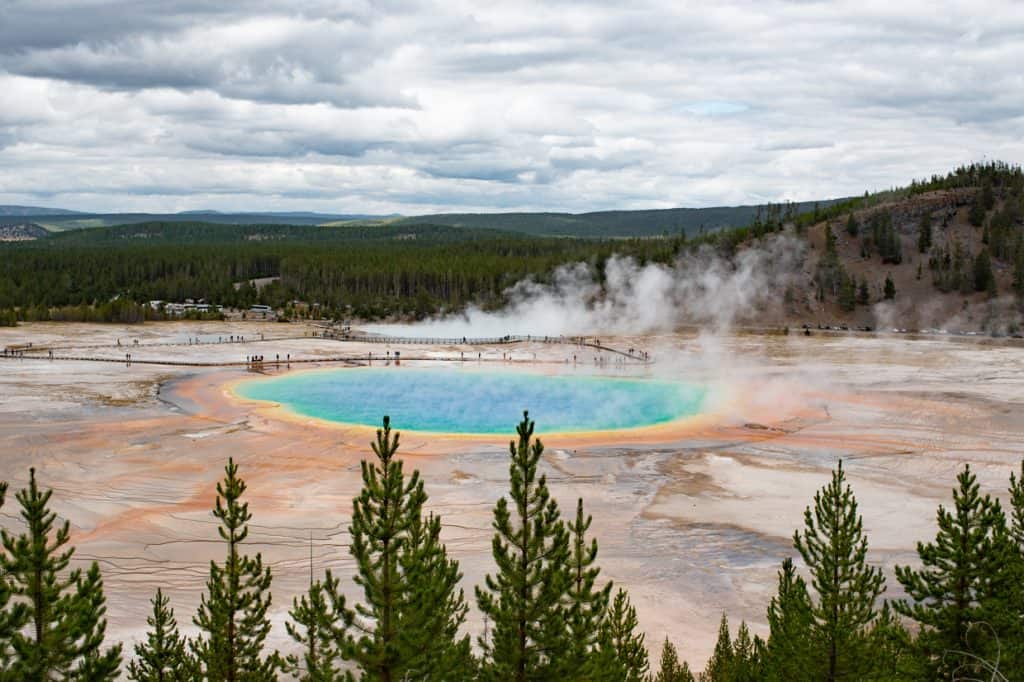
Prepare to be amazed by Yellowstone National Park, the first national park in the world! This park boasts a bunch of geothermal features like geysers and hot springs (it’s home to more than half of the world’s geothermal features!).
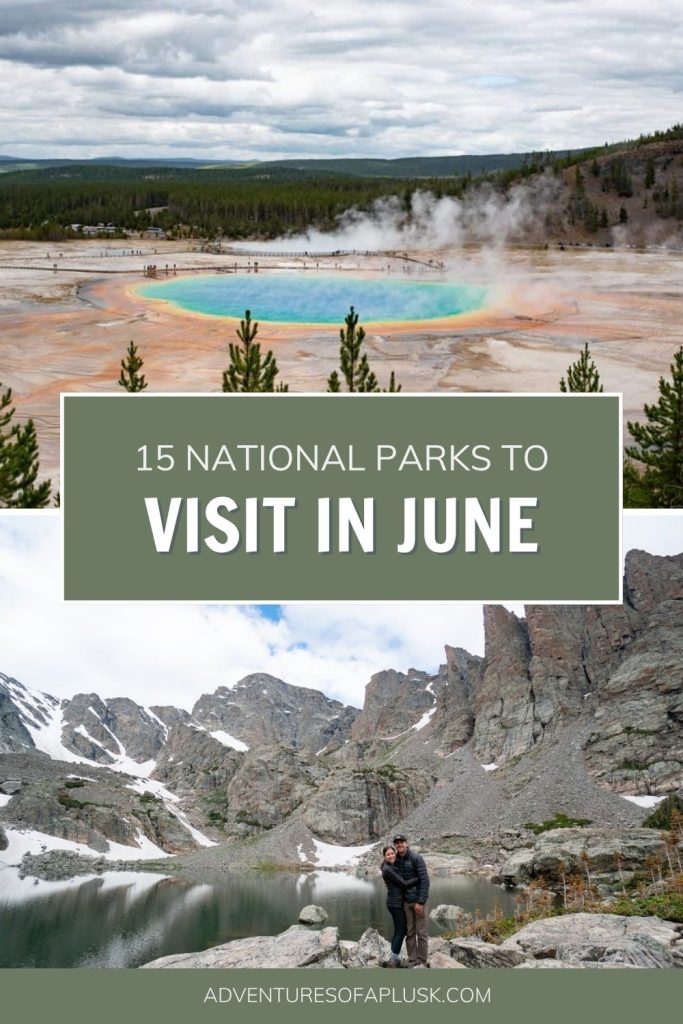
Yellowstone is most famous for Old Faithful, but that’s just the beginning. The park is also home to towering peaks, deep canyons, and lush forests. The sheer size of this park is mind-boggling! It’s also a wildlife haven, with bison, elk, wolves, and even grizzlies roaming its expansive landscapes.
Where is Yellowstone National Park?
Spanning across three states (Wyoming, Montana, and Idaho), Yellowstone is a massive park covering over 2.2 million acres. That’s a LOT of nature to explore! The nearest towns are West Yellowstone in Montana and Jackson in Wyoming.
Why Visit in June
June is a fantastic time to visit Yellowstone. The park is fully awake after the long winter, with wildflowers blooming and wildlife becoming more active. The days are long, allowing for more exploration time. Plus, many of the park’s roads and facilities that were closed during winter are now open, giving you access to all the activities!
Weather in June
The weather in June is just perfect for exploring. Expect daytime temperatures around 60°F to 70°F (15°C to 21°C), with cooler nights that can drop to 30°F to 40°F (-1°C to 4°C). This variation means packing layers is a smart move, as the weather can change quickly in the mountains.


Best Things to Do in Yellowstone National Park
Old Faithful: Witnessing this iconic geyser erupt is a must! It erupts approximately every 90 minutes. Don’t forget your camera for this one!
Grand Canyon of the Yellowstone: This 20-mile-long canyon is a feast for the eyes, with its vibrant colors and two big waterfalls. The hikes around the canyon rim offer breathtaking views.
Lamar Valley: Known as the Serengeti of North America, this is the place to spot wildlife like wolves, bison, and bears. Early morning or evening are the best times for wildlife viewing.
Know Before You Go
Be Bear Aware: Carrying bear spray and knowing how to use it is essential in Yellowstone. Always keep a safe distance from wildlife.
Stay on Designated Paths: With so many geothermal areas, it’s super important for your safety to stay on the boardwalks and trails.
Start Early: As the 5th most visited national park, trails can get pretty busy. By getting to the park a bit earlier, you’ll have a head start to beat the crowds.
Learn more about Yellowstone National Park
Blog post
2 Days at Yellowstone National Park Itinerary
YouTube videos
Yellowstone National Park Day 1: Old Faithful, Grand Prismatic Spring, & Fairy Falls
Yellowstone National Park Day 2: Canyons, Waterfalls, and Mammoth Hot Springs
12. Wind Cave National Park

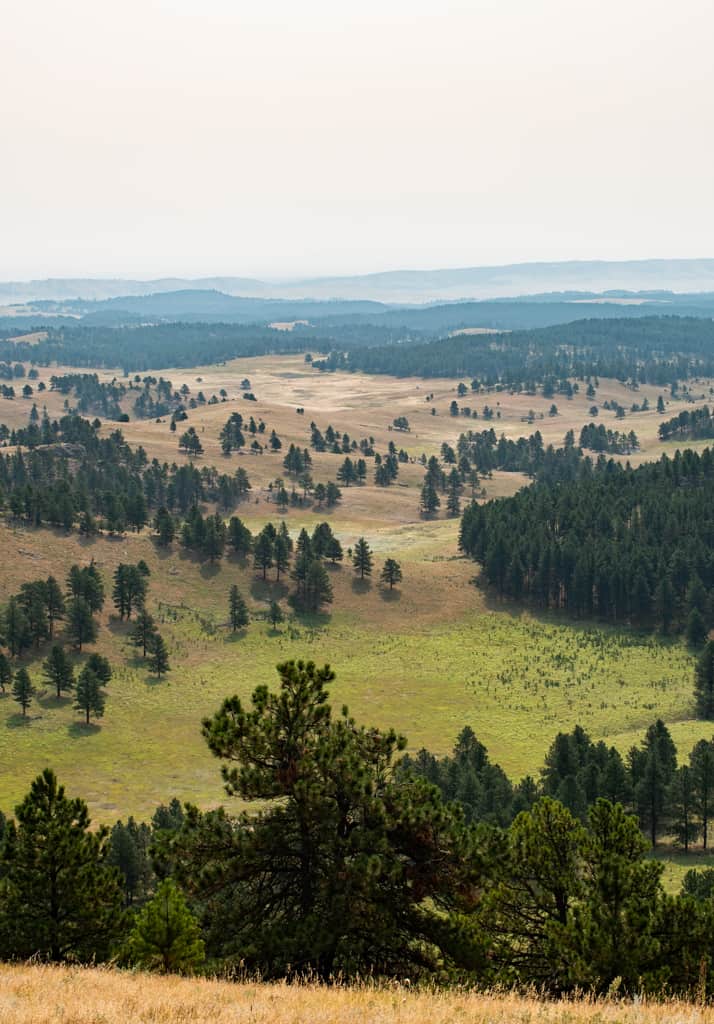
Nestled in the heart of the Great Plains, is a place where intricate cave formations meet sweeping prairies and pine forests. That’s Wind Cave National Park for you! This lesser-known park may not be on everyone’s radar, but trust us, it’s a must-visit destination. Located in South Dakota, this unique park is known for its complex and extensive cave system (one of the longest in the world!). It’s also famous for its rare boxwork formations, which you’ll find in abundance here. Above ground, the park is a sanctuary for bison, elk, and pronghorns!
Where is Wind Cave National Park?
Tucked away in the scenic Black Hills of South Dakota, Wind Cave National Park is about 10 miles north of the town of Hot Springs and spans a whopping 33,970 acres. That’s a lot of nature to explore!
Why Visit in June
June is the perfect time to visit Wind Cave National Park! Why, you ask? Well, this is when the park really comes to life. Wildflowers are in full bloom, wildlife is super active, and the weather is just right for exploring. Plus, the summer programs are in full swing, offering tons of opportunities to learn about the park’s history!
Weather in June
Expect pleasant days and cool nights in June at Wind Cave National Park. The average highs hover around 75°F (24°C), while the lows can dip to a chilly 45°F (7°C). This means you’ll need to pack both shorts and a jacket! The weather is generally stable, but it’s always good to be prepared for occasional rain showers.

Best Things to Do in Wind Cave National Park
Touring the Cave: First on the list is exploring the cave itself. The tours here are really impressive, offering a glimpse into a hidden underground world. Remember, the cave temperature is around 53°F (12°C) year-round, so bring a jacket!
Rankin Ridge Trail: This 1-mile trail is a must! It’s relatively easy and takes you to the highest point in the park and rewards you with panoramic views of the prairie and the Black Hills.
Wildlife Loop Road: Drive through this 18-mile loop for a chance to see bison, elk, and other wildlife. It’s super neat, especially during the early morning or late evening when animals are most active.
Know Before You Go
Variable Weather: The weather can change quickly, so dress in layers. It’s better to have it and not need it than the other way around!
Protect the Cave: Remember, no touching the cave formations! Oils from human skin can damage them. Let’s keep this place beautiful for generations to come.
Learn more about Wind Cave National Park
7 Day South Dakota Road Trip Itinerary: Black Hills to Badlands
13. Wrangell-St. Elias National Park

Get ready to be blown away by the sheer size and raw beauty of Wrangell-St. Elias National Park! This park is seriously massive, making it the largest national park in the US. It’s a landscape filled with towering mountains, (including some of the tallest in North America), vast glaciers, and an array of wildlife. Known for its rugged wilderness, the park offers a true adventure for those seeking to explore its untouched beauty. From breathtaking vistas to the remnants of historic mining sites, there’s a bunch to see and do here!
Where is Wrangell-St. Elias National Park?
This enormous park is located in eastern Alaska, stretching over 13.2 million acres. (That’s bigger than Switzerland!) Due to its immense size and remote wilderness character, the park is not directly adjacent to major towns or cities. However, Copper Center is approximately 8 miles from the northern entrance, while Chitina is about 66 miles west and serves as a gateway to the park’s interior. Within the park, the historic towns of McCarthy and Kennecott are accessible via the McCarthy Road.
Why Visit in June
Similar to some of the other best National Parks to visit in June, Wrangell-St. Elias is really only a summertime park. The snow has mostly melted, revealing lush, green landscapes, making it ideal for hiking and sightseeing. Plus, it’s the start of the season for many tourist facilities and guided tours, so you’ll have access to all the park has to offer.
Weather in June
In June, the weather in Wrangell-St. Elias starts to warm up. Daytime temperatures average around 60°F (15°C), while nights can still be a bit chilly, dropping to around 40°F (4°C). It’s a time of year when the weather can be unpredictable, so it’s best to be prepared for anything!
Best Things to Do in Wrangell-St. Elias National Park
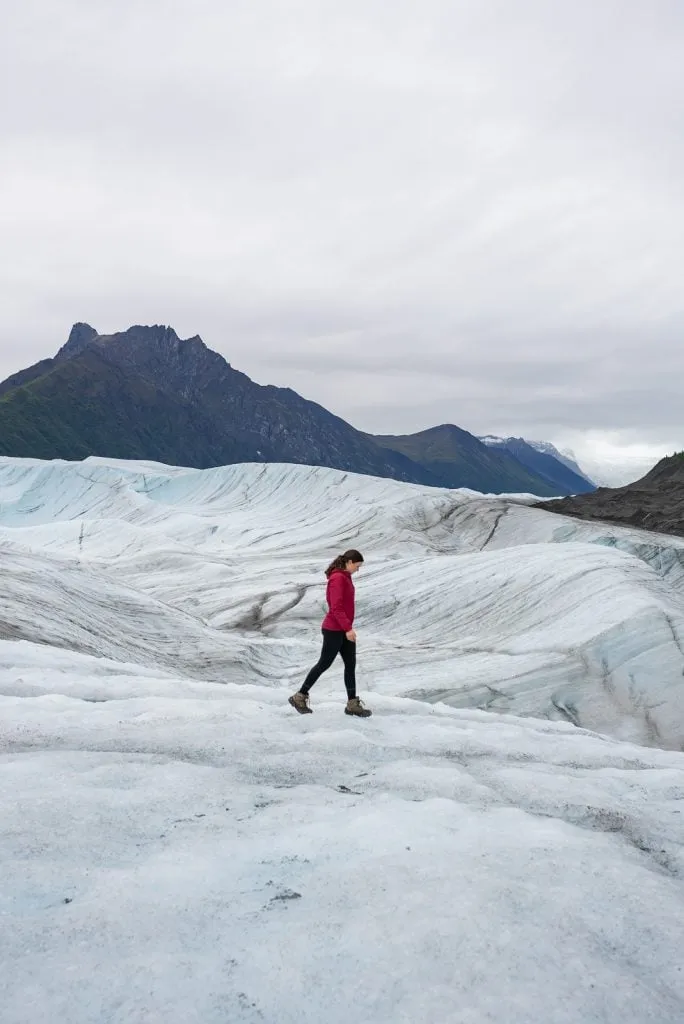
Root Glacier Hiking and Ice Climbing: This is an absolute must-do. Hike the 4-mile trail to Root Glacier for an up-close experience with this massive ice formation. Guided ice climbing tours are available, too (it’s an incredible experience!).
Flightseeing Tours: To really grasp the park’s enormity, take a flightseeing tour. It’s the best way to see the vast glaciers and towering peaks.
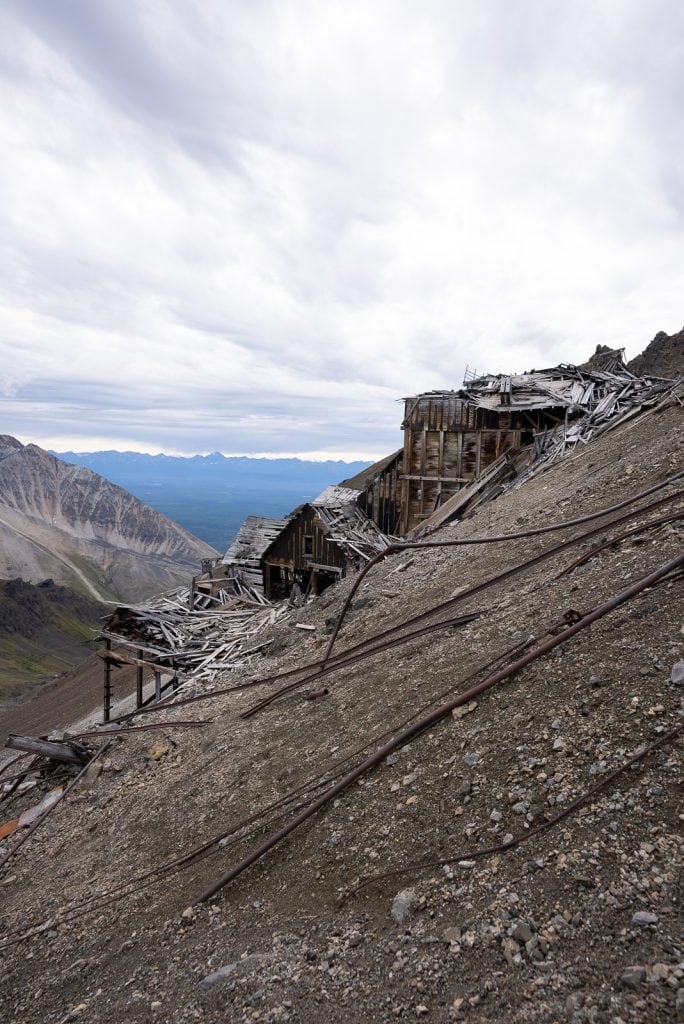
Kennecott Mines National Historic Landmark: Explore the historic mining town of Kennecott. A 5-mile hike from McCarthy, this well-preserved ghost town offers a glimpse into Alaska’s mining history.
Know Before You Go
Be Bear Aware: The park is home to both black and grizzly bears. Always carry bear spray and know how to store your food properly.
McCarthy Road Access: If you are driving to McCarthy, note that upon arriving at McCarthy Road, alternative modes of transport are required to get to Kennecott. Options usually include walking, cycling, or using a shuttle service for the final 5-mile journey. This should be considered when organizing your travel plans.
Limited Services: Remember, this park is remote. Services are few and far between, so pack all the essentials.
Learn more about Wrangell-St.Elias National Park
Blog posts
The BEST Things to do at Wrangell-St. Elias National Park
How to hike the Root Glacier trail in Wrangell-St. Elias National Park
Hiking the Bonanza Mine trail in Wrangell-St. Elias National Park
How to drive McCarthy Road to Wrangell-St. Elias National Park
YouTube video
Visiting Wrangell-St. Elias (the LARGEST national park!) | Kennecott, Root Glacier, & Bonanza Mine
14. Mesa Verde National Park
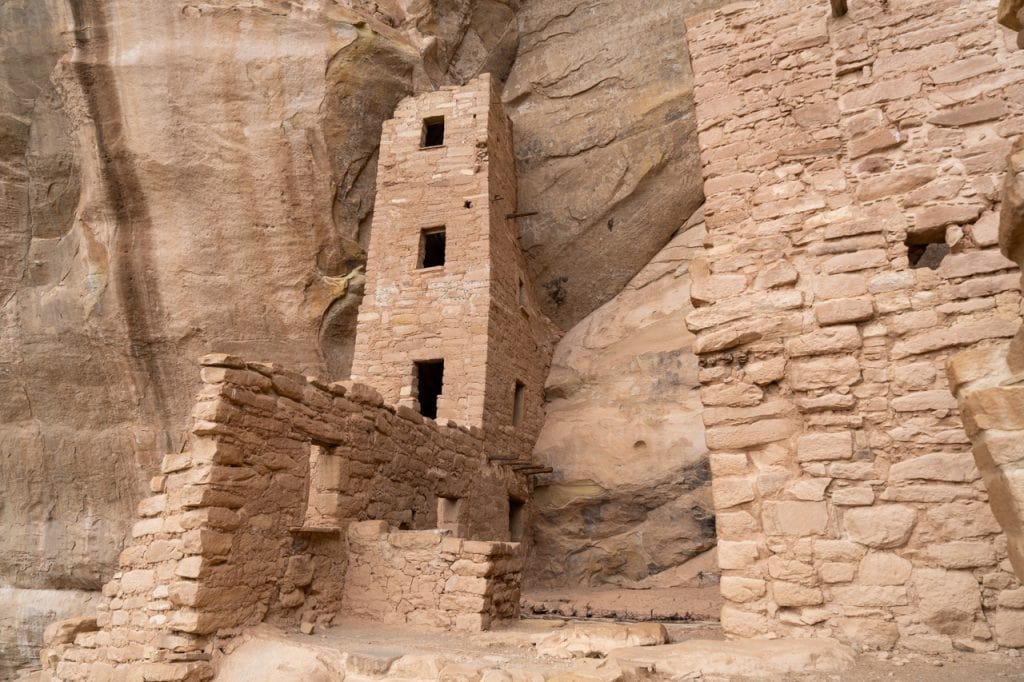
Mesa Verde National Park, located in the southwestern United States, is known for its Ancestral Puebloan cliff dwellings and structures dating back to the 12th century! This park is home to some of the best-preserved archaeological sites in the United States, including over 600 cliff dwellings and include pit houses, kivas, and petroglyphs. Visitors can explore sites like Cliff Palace and Balcony House on guided tours and see what life was like for the Pueblo people. Besides its archaeological significance, the park also features stunning high desert landscapes, vast mesas, and deep canyons.
Where is Mesa Verde National Park?
Mesa Verde National Park is located in the southwestern part of the United States, specifically in the state of Colorado. Covering about 52,485 acres, the park is situated 10 miles away from the town of Cortez and 35 miles from Durango.
Why Visit in June
June is an excellent time to visit Mesa Verde National Park. The weather is warm and perfect for exploring the vast network of trails and archaeological sites. This time of year offers longer days, giving you more time to discover the park’s many wonders. Plus, visiting in June means you’ll beat the high-season crowds, making your experience more enjoyable.
Weather in June
The weather in June at Mesa Verde National Park is typically warm and sunny. Daytime highs average around 80°F (27°C), with cooler evenings that can drop to around 50°F (10°C). This comfortable climate is ideal for hiking and sightseeing. (Don’t forget a hat and sunscreen, as the sun can be pretty strong during the day!)


Best Things to Do in Mesa Verde National Park
Tour the Cliff Dwellings: The Cliff Palace and Balcony House tours offer a look at ancient Puebloan architecture and lifestyle. These guided tours are informative and a must-do experience.
Hiking Petroglyph Point Trail: This 2.4-mile trail not only offers great views but also leads you to ancient rock carvings left by the Ancestral Puebloans.
Drive the Mesa Top Loop Road: This 4.6-mile drive takes you to several pit houses, cliff dwellings, and panoramic overlooks, perfect for those who want to see a lot without a ton of walking.
Know Before You Go
Book Tours in Advance: To visit the cliff dwellings, such as Cliff Palace, Long House, and Balcony House, you must book a ranger-led tour. These tours operate from May 14 to October 21, so you’ll need to snag your tickets online, at least 14 days in advance.
Be Prepared for Altitude: Mesa Verde sits at over 7,000 feet above sea level. If you’re not used to high altitudes, take it slow to avoid sickness.
Respect the Sites: Remember, these are sacred and historical sites. Always follow park guidelines, stay on designated paths, and do not touch the ancient structures.
Learn more about Mesa Verde National Park
Blog post
A Complete Guide to Visiting Mesa Verde National Park
YouTube video
Mesa Verde National Park Highs & Lows | Square Tower House Tour, Far View Sites, & a hit and run
15. Isle Royale National Park
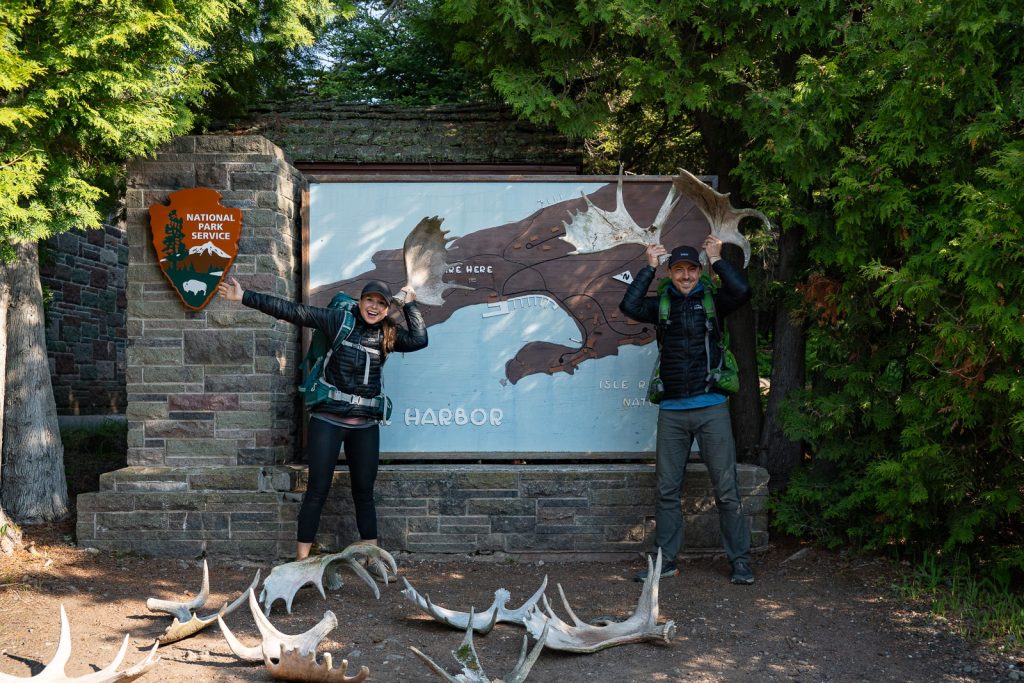
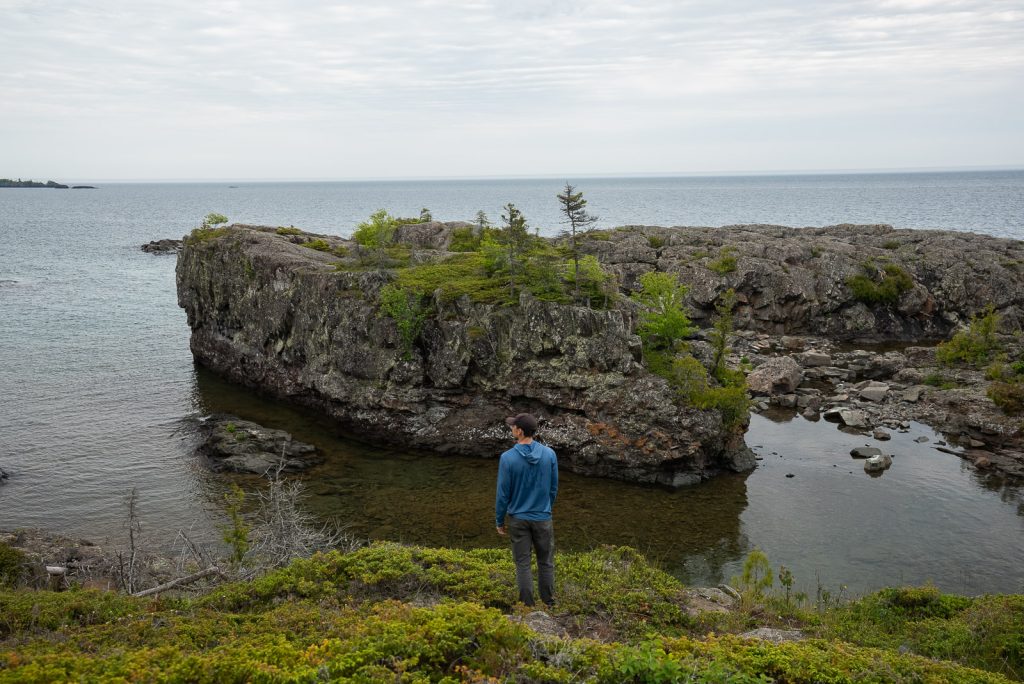
Located on the frigid waters of Lake Superior, Isle Royale National Park spans almost 900 square miles, with one major island and 450 smaller islands that surround it. Here you’ll find pristine forests, countless inland lakes, wildlife, rocky shorelines, and lots of camping opportunities.
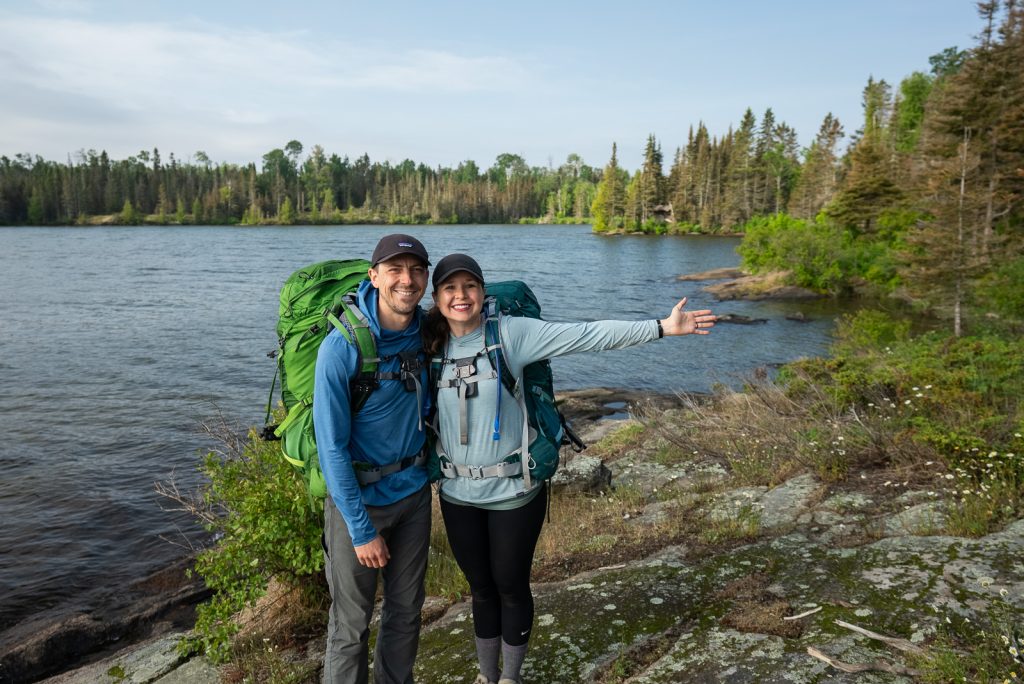
However, due to its location and vast wilderness, it’s a place that not many people get to experience. In 2025, it was the least visited US National Park in the Lower 48, with just under 29,000 visitors! And in 2026, we got to be some of them, as we embarked on a 7 day backpacking trip across the island. The trip was full of highs and lows, but through it all, we got to experience so much of what makes this island special.
Where is Isle Royale National Park?
While Isle Royale looks close to Minnesota on the map, it’s actually in Michigan! Because it is an island, the only way to get to it is by seaplane, private boat, or a ferry from either Michigan or Minnesota. For our full overview of the options and important things to consider, check out our detailed guide on how to get to Isle Royale National Park.
Weather in June
One important thing to know about visiting Isle Royale is that the weather can really vary depending on where you are on the island. Up on the island’s ridgelines, it can get a bit warm. While along the shores of Lake Superior you’ll find chilly temperatures, even in the summer. During our time on the island, we went from tank tops to puffy jackets, depending on where we were.
But in June, expect to have cooler days than later in the summer, plus higher chances of rain. During our visit we experienced one day of rain, but overall had sunshine or clouds.
Why visit Isle Royale National Park in June?
We personally visited Isle Royale at the end of June and while it did have some cons (the bugs are a bit worse this time of the year!), one major advantage of visiting during this time was the lack of crowds. If you plan to backpack on the island, like we did, campsites are first-come, first-served. During the later summer months, it can be pretty competitive to get a campsite and while there are some overflow options, you could get stuck having to hike further to the next campground. But if you visit during June, crowds are a bit lower and you won’t have as much of an issue snagging a site.
Best things to do in Isle Royale National Park in June
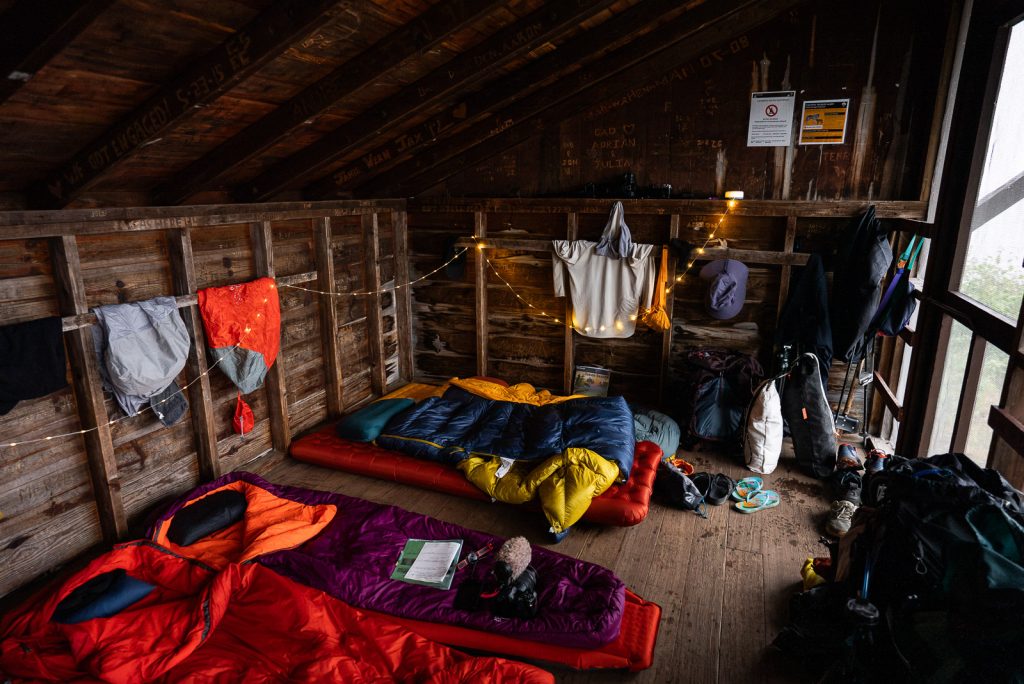
Go backpacking! With no roads on the island and very limited traditional lodging, the best way to experience Isle Royale is by backcountry camping. There are many different backpacking routes you can tackle, ranging in length and difficulty.
Hike to Scoville Point. In our opinion, the best day hike on Isle Royale is the Stoll Trail to Scoville Point. Leaving from Rock Harbor, this hike takes you along the island’s rugged lakeshore, to a peninsula with stunning views of Lake Superior!
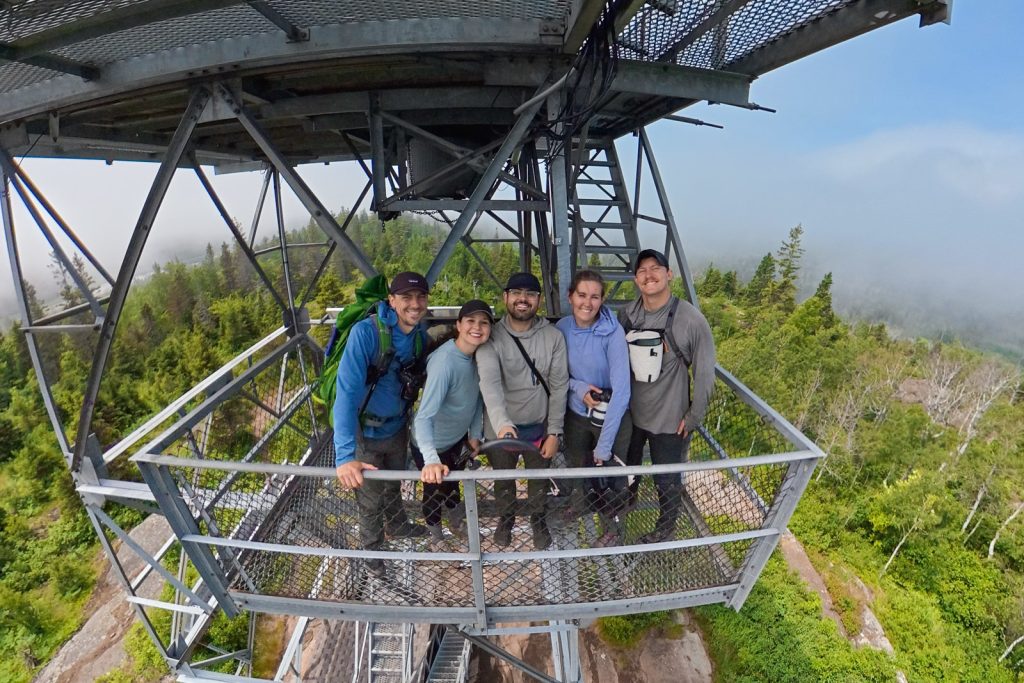
Climb up the Mount Ojibway Tower. One of our favorite detours on our backpacking trip was a day hike up to the Mount Ojibway Tower. From the viewing platform you have 360 degree views of the island!
Go on a ranger-led boat tour. The park offers a variety of different boat tours once you’re on the island. You can check out all the available tour options here!
Know before you go
Book far in advance: Transportation to the island and lodging on the island (for the lodge and cabins) book up fast! Make sure to plan well ahead if you want to visit Isle Royale National Park.
Be aware of wildlife: The island is home to moose, wolves, and foxes. Make sure you understand what to do if you encounter them and always store food properly.
Pack bug spray: Isle Royale is a bit notorious for its mosquitoes. Make sure you bring bug spray, a bug head net, and pre-treat any clothing and gear to reduce the nuisance.
Download The Greenstone: The Greenstone is the park’s newspaper and is full of so much helpful information, including a park map, a chart with distances between campsites, wildlife information, ranger program schedules, and more!
Learn more about Isle Royale National Park
Blog posts
10 Incredible Things to Do at Isle Royale National Park
How to Get to Isle Royale National Park: Ferries, Seaplane & Logistics Guide!
Video
We backpacked across Isle Royale National Park: The LEAST visited in the lower 48!
Visiting the National Parks a different month?
- 10 best National Parks to visit in January
- 15 best National Parks to visit in February
- 12 best National Parks to visit in March
- 11 best National Parks to visit in April
- 17 best National Parks to visit in May
- 15 best National Parks to visit in June
- 14 best National Parks to visit in July
- 15 best National Parks to visit in August
- 19 best National Parks to visit in September
- 16 best National Parks to visit in October
- 10 best National Parks to visit in November
- 10 best National Parks to visit in December
About the Author
This monthly national park series was written by our writer Nicoll, using our monthly lists and incorporating our experiences at each park. Learn a bit about her below!
I’m Nicoll, an adventurous soul fueled by hiking, dirt biking, and traveling. When I’m not busy crafting captivating tales, you’ll find me exploring the world alongside my partner-in-adventure, Jake. Back in 2019, our insatiable wanderlust led us to embrace the nomadic lifestyle with our fearless pack of canine sidekicks, including a mid-content wolf dog. You can catch my adventures and musings on livingtinywithawolf.com.
Ready to visit the National Parks?
Pin this guide with the best National Parks to visit in June to plan your summertime adventure!